As we continue our What a Character blog series, today we get to talk about the woman behind one of my favorite characters, Lillian Bakerman from The Bob Newhart Show. That woman is Florida Friebus.
Friebus was born in Massachusetts in 1909. She was named for her mother’s favorite aunt, not the southern state. Weirdly, her paternal grandmother was also named Florida. Her family was involved in the theater. Her father Theodore was a leading stage actor with Boston’s Castle Square Players and a silent film star. Her mom’s mother, Georgine Flagg, was part of the Augustin Daly stock company in Manhattan.
When she was only eight years old, Florida’s father passed away. Her mother had studied at the Dana Hall Schools and applied for a position of housemother there. Florida was able to study at Tenacre during this time. She participated in the first Christmas pageant in 1921. Florida not only learned a lot about acting, but she also was presented with classes in political history, music, art, languages, and literature.
📷facebook.com with Richard Waring
Friebus moved to New York to study at the Theater Guild School. She began her acting career in 1929 in when she appeared with the Civic Repertory Theater in “The Cradle Song.” In 1932, she worked on an adaptation of “Alice in Wonderland” with Eva Le Gallienne, and she took on the role of the Cheshire Cat.
In 1934, Friebus married Richard Waring. They would divorce in 1952, and she never remarried.
Friebus was elected to the Council of the Actors’ Equity Association in 1949, and she spent 16 years on the board.
Florida read stories to children on her KNXT show, Look and Listen, in Los Angeles.
📷imdb.com
Her first television role was in 1948 on The Ford Theater Hour. Her television drama appearances continued into the 1950s and she also appeared on several sitcoms, including The Goldbergs, Father Knows Best, Bachelor Father, and The Donna Reed Show. In 1959 she accepted a role that made her a household name: Winnie Gillis on The Many Loves of Dobie Gillis. For four seasons she tried to defend Dobie and his crazy dilemmas when his father became exasperated with him.
The show was based on a 1951 book, The Many Loves of Dobie Gillis by Max Shulman about the romantic adventures of a student at the University of Minnesota. Shulman wrote for the series. He would also write The Tender Trap which became a movie in 1955 and House Calls which became a 1978 movie; Shulman became head writer for the television series based on House Calls.
The sixties and seventies found Florida in a variety of both dramas and sitcoms. A few of these series included Ben Casey, Peyton Place, The Doris Day Show, The Mary TylerMoore Show, The Partridge Family, Gunsmoke, Room 222, and Barnaby Jones.
📷sitcomsonline.com
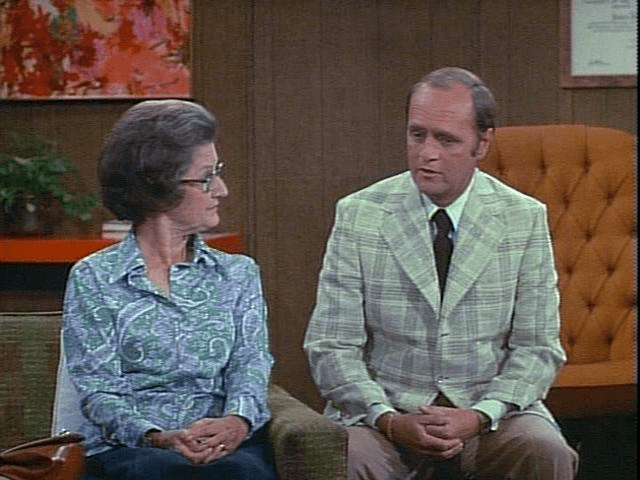
In 1972 she accepted the role of Lillian Bakerman on The Bob Newhart Show. During the show’s run, she made 19 appearances trying to encourage the other patients in her therapy group. She is often seen knitting while the group talks. One of her fears is flying, and her catchphrase is “Isn’t that nice.”
Her last appearance was in 1982 on The New Odd Couple as, who else but Mrs. Bakerman.
In 1988, Friebus passed away from cancer at 78 years old.
From 1972-1978 we were able to benefit from the sage advice of Dr. Robert Hartley from the comfort of our own living rooms. Created by David Davis and Lorenzo Music, and produced by MTM Enterprises, The Bob Newhart Show gifted us with 142 episodes for us treat ourselves to after the show left the air.
Photo: tvtropes.com
In an online article by Marc Freeman in April of 2018, Dave Davis discussed the evolution of the sitcom. “Lorenzo and I wrote a segment for Bob on Love American Style. Bob wasn’t available. So, we got Sid Caesar. A few years later, we did a script for Bob for the Mary Tyler Moore Show. Again, Bob wasn’t available. After we became story editors on Mary’s show, MTM Enterprises decided to branch out and asked Lorenzo and me to do a pilot. We knew exactly what we wanted to do. We wanted a show with Bob.”
Photo: wikipedia.com
When Bob Newhart was approached about starring in the show, he required two changes from the original concept. First, he wanted his character to be a psychiatrist instead of a psychologist. This seems like a minor request, but he was very wise because he did not want anyone to think the show was making fun of mental illness. He also insisted that his character not have children. The “father doesn’t know best but thinks he does” underlying concept was not one he wanted the show to focus on. Bob was careful when creating the character of Bob Hartley. Newhart once said “the key to building a show around a stand-up is maintaining the integrity of the persona you create.” This was definitely true for the Bob Newhart Show.
Photo: connectcollectorz.com
The show has a very simple premise in that we see Bob dealing with the same everyday problems the rest of us did. It was grounded in reality. Bob was the straight man. He was surrounded by all these quirky characters, but they were believable and likeable.
Photo: sitcomsonline.com
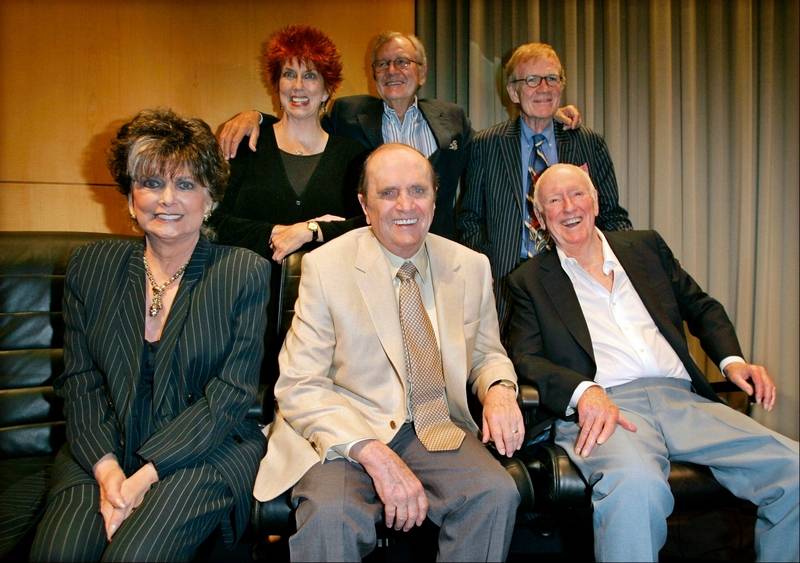
The show moves back and forth between Bob’s practice and his home; we get to know his co-workers and his friends and family. At work, he shares his floor and receptionist Carol Kester (Marcia Wallace) with orthodontist Jerry Robinson (Peter Bonerz) and urologist Bernie Tupperman (Larry Gelman). Carol and Jerry become two of his best friends. We also get to know some of his regular patients including Elliot Carlin (Jack Riley), Emile Peterson (John Fiedler), and Mrs. Bakerman (Florida Friebus).
Photo: imdb.com
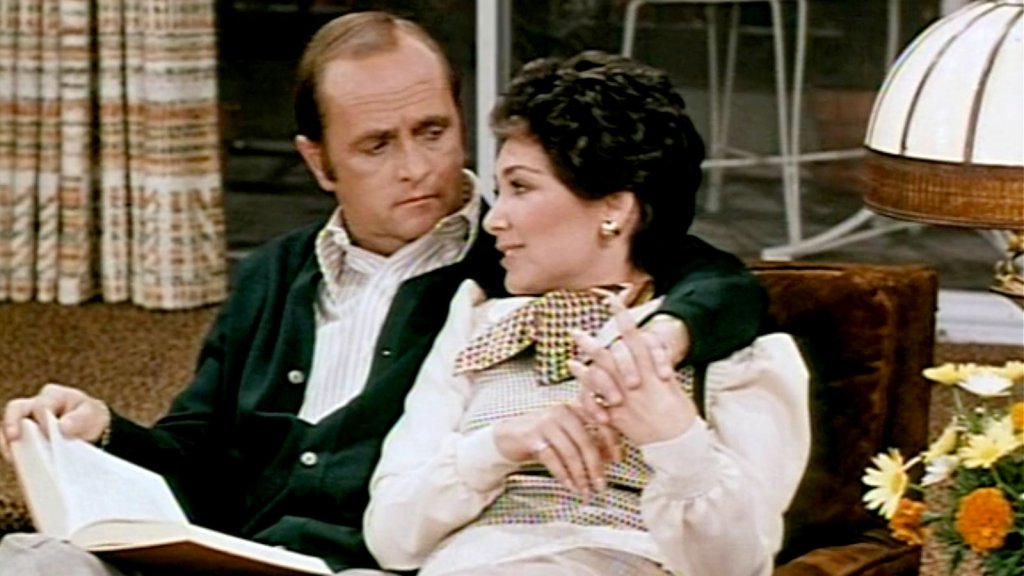
Bob is married to Emily (Suzanne Pleshette) who is a school teacher. Across the hall is the apartment of their friend and neighbor Howard Borden (Bill Daily), an airline navigator. Although Bob insisted on no children, in many ways, Howard was Bob and Emily’s child.
Photo: sitcomsonline.com
In season four of the show, Howard meets and begins dating Bob’s sister Ellen (Pat Finley) and they eventually marry, making Howard a legal family member.
Photo: thefrog’seyebrows blogspot.com
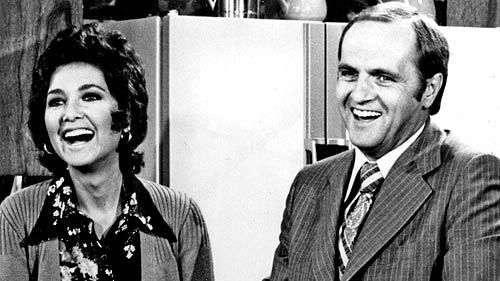
Bob and Emily were the only characters to appear in all 142 episodes. Suzanne Pleshette was asked to play Emily after she appeared on The Tonight Show Starring Johnny Carson one night. She was seated next to Bob, and the producers thought the two of them had great chemistry. In real life Bob and Suzy, as he called her, were best friends. He spoke at her funeral. When he recalled their time together, he said “Her laugh. Her laugh. We just laughed. We just had a great time. We all loved each other and respected each other and we got paid for it.” Bob also remains close friends with Marcia Wallace.
Photo: nytimes.com
They worked so well as a couple because Emily is very bright and funny. She and Bob argued because they were both a bit stubborn, but they always found a way to compromise at the end of the day. Bob often shared his wisdom through stories. He would do a bit of a monologue that related to what was happening on the show. It was referred to as the “Emily, sit down” moment.
Photo:kennethinthe212.com
The phone is also important on the show. If you are familiar with Newhart’s career, you realize some of the first skits that escalated his stand-up career were phone conversations. On this show, we often hear a one-sided conversation when he chats with friends or patients. One example of this is:
Bob: “Yes, this is Dr. Hartley. What can I do for you?
Well, Mr. Johnson, smiling and whistling while you work doesn’t seem to be a problem you should – you should see a psychologist about.
You drive a hearse?”
Although all the major characters on the show were like family to the Hartleys, the mailman on the show was truly family. Bill Quinn who played the postman was Bob Newhart’s father-in-law.
Photo: imdb.com
Bonerz who played Jerry became interested in directing. He ended up directing 29 episodes of this show and then went on to a successful career as a director. He directed episodes on a variety of shows including E/R, Alf, Wings, Murphy Brown, Friends, and Home Improvement. His view of the importance of the show was that “the most interesting thing about the show and why its successful is that it brings up things that come up in your life. That’s what art’s supposed to do. That’s what TV should be doing. When it does, people remember it and reflect how much they like it.”
Photo: allmovie.com
The show was on Saturday nights. For the first five seasons, it followed The Mary Tyler Moore Show airing at 9:30 EDT and its competition on NBC was Saturday Night at the Movies. For season five, the show was changed to earlier in the evening against Starsky and Hutch on ABC. For its final year, The Mary Tyler Moore Show was off the air and Bob’s show aired at 8 pm Saturday opposite Fish and The Bionic Woman. The sitcom placed in the top 20 for the first three seasons and the top 30 for season four.
Photo: blogspot.com, holiday film reviews
Bob had requested the network move the show to a different night. That didn’t happen, and the television executives wanted Emily to have a baby, even though Bob had specified that not be part of the plot. So, he ended the show after six years. When asked about ending the show, he said, “I could see what was coming in situation comedy, and I didn’t want to be a part of it. If we’d gone another year, they’d have had the guy and two girls living in the apartment above us, a Martian living on the same floor next door to three girl detectives. The floor below us would have been occupied by a fraternity and a sorority.”
If you read my blog on Bob Newhart recently, you know how incensed I was that this show never won an Emmy, and was only nominated once, and Newhart never received an Emmy for any of his sitcoms in the seventies and eighties. It would take his recurring role on The Big Bang Theory as Professor Proton for him to win the Emmy.
However, the show was ranked ninth and fiftieth on “TV Guide’s 100 Greatest Episodes of All Times in 1997.”
Photo: flickr.com
In 2004, TV Land picked this show as one of the series it commemorated with a sculpture. A statue of Newhart seated in a chair facing an empty couch is located in the Navy Pier entertainment complex.
I have to admit I was not a big fan of the finale of The Bob Newhart Show. Bob closes his practice in Chicago and accepts a teaching position at a small college in Oregon. I just don’t picture Bob and Emily being happy in a small Oregon town. However, the finale for Bob Newhart’s sitcom, Newhart, more than makes up for this ending.
Photo: pinterest.com
Bob Newhart credits his wife Ginnie with coming up with the idea for the finale of Newhart. Newhart is set in Vermont where Bob and his wife Joanna run a historic inn. They have to deal with some wacky locals and their maid and handy man. This show ran eight years. In the finale, Bob wakes up in bed. We hear him restless and wanting to talk about his dream. Suddenly we realize he and Emily Hartley are in bed together. Part of their conversation is:
Emily: All right, Bob? What is it?
Bob: I was an innkeeper in this crazy little town in Vermont.
Emily: No more Japanese food before you go to bed.
Another great television moment occurred on Murphy Brown in 1994. Bonerz was the director of the sitcom. Of course, we remember how fast Murphy went through secretaries. She found fault with all of them. In this episode, Marcia Wallace appears as Carol Kester. She is Murphy’s 66th secretary. Murphy thinks Carol is a wonderful secretary, and she is finally satisfied. However, Bob Newhart shows up as Bob Hartley, begging Carol to come back to work for him.
Photo: pinterest.com
One of the iconic lines from the show was “Hi Bob.” Howard Borden said it 118 times, Jerry said it 43, Carol came in at 36, and Emily at 17. Even minor characters would utter the line from time to time, and Bob said it once himself. College students turned this into a drinking game watching the reruns, taking a shot whenever the line occurred.
Photo: dailyherald.com
The best evidence that this was one of the best sitcoms ever produced is that people still love it today, more than four decades after it went off the air. The comedy is timeless. Let’s give Bob Newhart the final word about what the show meant to him. As he reflected the show’s legacy, he said, “I’m very proud of the show, the cast and the writing. Look at how long it’s lasted and how long people have enjoyed it. I run into people more and more who come up to me and say, ‘We used to sit as a family and watch your show.’ They look upon it as a wonderful time in their life. It’s very real to them and an important part of their life. It’s nice to be remembered that you made people laugh.”






 thewritelife61