Barbara Feldon Did Not Have to Get Smart: She Was Born That Way

This month’s blog is taking a look at some Supportive Women. First up is Barbara Feldon, costar with Don Adams in Get Smart.

Photo: getsmartwikifandom.com

Feldon was born Barbara Anne Hall in 1933 in Pennsylvania, near Pittsburgh. During an interview with Emerson College, Barbara talked about the ecstasy of performing in a little band in first grade. When things stopped, she got to play her triangle, and the thought that everyone was watching her, and her mother’s pride in seeing her made her want to perform more. In sixth grade she went into the gym to watch her friend doing her ballet lessons. The teacher invited Barbara to join them and played Tchaikovsky’s Nutcracker music; that combination of music and movement took her away to another place. She was hooked at that point, and she knew that she wanted to dance.

She trained at the Pittsburgh Playhouse and then graduated from Carnegie Mellon University with a BA in drama in 1955. They didn’t have a dance program, and her mother thought Bennington, where she wanted to go for dance, was too expensive and too liberal. While she enjoyed acting, it never had the enchantment for her that dance did.

Feldon made her way to New York and studied at the HB Studio. She briefly had a career as a showgirl at the Copacabana. She said “that was my first professional job in New York and it was probably the highlight of my whole career. We got to dance with Jimmy Durante. Oh, my God, it was a thrill.” They replaced the girls every three months so, then she went on to appear in The Ziegfield Follies. She landed one job that never made it to Broadway. A friend of hers who was a model talked her into exploring a modeling career.
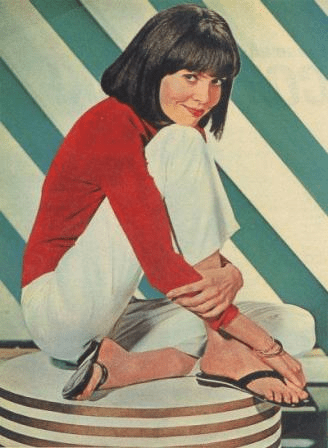
Photo: punkglobe.com

She worked as a model and was in a Revlon commercial about a hair pomade for men, Top Brass. Feldon said commercials were excellent training to get experience in acting. You do the same scene over and over, maybe more than forty times, but you have to keep that spontaneity. “You must remember to stress each word properly and come in on a split-second when that camera rolls.”

Like several actresses that we have discussed in this blog, before Feldon got her first big break, she appeared on a game show. In this instance, she was on The $64,000 Question in 1955, and she won the grand prize of $64,000 in the category of Shakespeare.

She didn’t use her winnings to buy a mansion or live the typical party life. She opened an art gallery with a man who was a photographer and ad man who was no longer interested in advertising named Lucien Verdoux Feldon. Barbara would be the subject of a Warhol pop art painting in 1965.

In 1958 Barbara married Lucien Feldon. They divorced nine years later. She had a longer relationship with one of the Get Smart producers, Burt Nodella and when that ended, she moved back to New York City.

After her commercial debut, she received offers for several television roles in the early sixties including The Man From U.N.C.L.E. and Flipper. She was also offered a chance to appear on East Side/West Side with George C. Scott. Colleen Dewhurst was her mentor and Scott’s wife. He asked her to play his girlfriend in the next episode. Talent Associates which produced the show was working with Mel Brooks and Buck Henry on a potential spy spoof called Get Smart. Her second television role was as a spy. So, when Talent Associates was casting for a spy on Get Smart, she was an obvious choice.
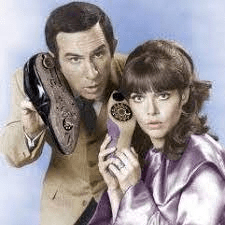
Photo: facebook.com

She turned down the role at first because she didn’t want to move from New York to California, but she did love the script. They agreed to offer her a two-year contract instead of a five-year contract, and she accepted. Her first review was in TV Guide which compared her to the dog and concluded that the dog came off better. She was devastated and humiliated. In later years, the reviewer rated her performance much better.

From 1965 till 1970, Feldon was known as Agent 99 working with Maxwell Smart for CONTROL. In both 1968 and 1969, she was nominated for an Emmy for Outstanding Lead Actress in a Comedy Series. Lucille Ball won for The Lucy Show in 1968 and Hope Lange won for The Ghost and Mrs. Muir in 1969.

Women at the time looked at Feldon as an example of a powerful woman; Feldon commented that young women said “she was a role model for them because she was smart and always got the right answer.” If you look closely in the early seasons, you will typically see Feldon sitting and Adams standing because she was taller than he was. Once she even had to bury her feet in the sand. While Adams was the blundering, awkward Smart, it was Agent 99 who was really the “smart” one, getting him out of trouble during their spy missions.

Feldon said that she is not a comedienne; she is an actress who can play comedy. She said that she is the worst person to tell a joke to because she doesn’t always get it. She never enjoyed drama much because the actual acting on camera was wonderful but the long, boring hours waiting were very tedious, and if you have a tearful scene, you have to be able to keep the momentum.

During the run of Get Smart, Feldon also appeared on Rowan & Martin’s Laugh In and The Dean Martin Show.

Photo: imdb.com

After the show ended, she would appear on 20 additional television series including Cheers and Mad About You. She made fifteen made-for-tv movies, one of which was a 1989 movie, Get Smart, Again. She also could be found in six big-screen films including The Last Request, her last acting role, in 2006.

During my research, I read an article where pop culture historian Geoffre Mark commented on one of her movies, Fitzwilly, which I admit I have never seen. He said that it was a gem of a movie and that “Dick Van Dyke is brilliant in it and Barbara plays his love interest and she’s brilliant in it. She was playing a version of herself: a beautiful, sensual, highly intelligent woman with a strong moral compass and a loving heart. That’s what the character is and that’s who Barbara is.” According to imdb.com, the plot of the 1967 movie is that a butler and the staff of an eccentric aged philanthropist whose family wealth is exhausted engage in larceny and crimes to maintain her lifestyle and provide funds for her charitable activities.

Feldon was offered a cameo in the Get Smart movie with Anne Hathaway and Steve Carrell in 2008, but she declined. She said that “times have changed too much. The psychology of the writers and the audience has changed radically. Get Smart belongs in the 1960s, or it’s not going to be Get Smart.”

Despite her comment of Get Smart staying in the sixties, in 1995 Feldon took on the role of Agent 99 again in a brief reboot of Get Smart. Feldon discussed that series with The (Westchester County NY) Journal News reporter Karen Croke in 2017. She said that she and Adams never became friends after the original Get Smart. She said he was a lovely man and very funny, but they had their jobs to do and did their acting and then parted ways for the day. After they worked together on this series, they became very close friends in a way they could not have in their original show. She said once Don Adams died, Max also died and she can’t do any work as 99 without Max now. That might be the real reason she turned down the cameo in the Carrell-Hathaway film.

Photo: imdb.com

Barbara said it’s hard to make friendships on a set because it’s more like a factory and when you’re not acting, you might be resting or talking to your agent. The only person she said she was able to maintain a good relationship with after acting with him, was Alan Alda.

Apparently, she still enjoyed games shows and she appeared regularly in several of them including Hollywood Squares and The $20,000 Pyramid.

Feldon lost interest in acting, but she did numerous television and radio commercials and documentaries. In 1977, Barbara hosted a news show called Special Edition. In the 1990s she had a one-woman show she took around the country. She has also taken up writing and had two of her pieces published in Metropolitan Magazine. She wrote a book about living as a single person in 2003 called Living Alone and Loving It. She also enjoys writing poetry. In talking about her book, Barbara said, “I had been in relationships my whole life. I’d been married, then had lived with someone for several years. After those, I just assumed I would find another relationship. But it didn’t happen. As time went on with some good guidance, I learned how to live alone really happily. I’ve met a number of people—men and women—who feel living by themselves is a second-rate life. I thought that was sad, and since I had this technique of living alone, I decided to write a book. And I’m really glad I did.”

Photo: pixels.com

Feldon said that she has nothing but gratitude for Get Smart. She said acting is not a kind career and you only have a few years to be able to find your place, and she is grateful for being in the right place at the right time. I think after learning about Barbara Feldon, she manages to put herself in the right place at the right time often.

Now, her life sounds almost perfect. She lives where she wants to, is open to meeting a lot of people, attends concerts, advocates for the arts, and travels and writes whenever she wants to. During her life, she has managed to learn from so many experiences and during her life journey she definitely “got smart.”
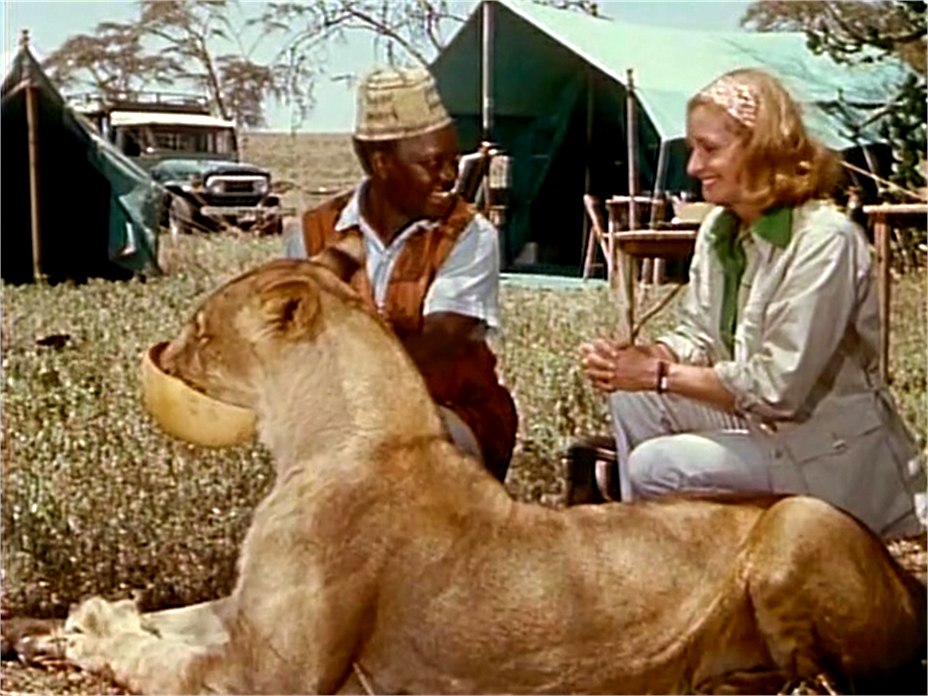
Born Free: A Roaring Good Time

Before we get into this month’s series, I just wanted to say a big THANK YOU to all of you who read my blog. Today is my 300th blog post. I have absolutely thoroughly enjoyed getting to know so many classic television cast and crew members, and I have learned so much the past six years. This month we are looking at “Life with Pets” blog series by learning a bit more about some of the classic shows about families and their pets. So far, we have learned about some unusual pets: monkeys, dolphins, and bears. Today is no exception; we are looking at the series Born Free which featured a lion.

Photo: imdb.com

Like Flipper and Gentle Ben, Born Free was also based on a movie titled Born Free. which was released in 1966. In 1974, it became a television series. The film was based on a true story. Considering how many people fondly remember the show, I was surprised to learn that it only was on the air from September to December.

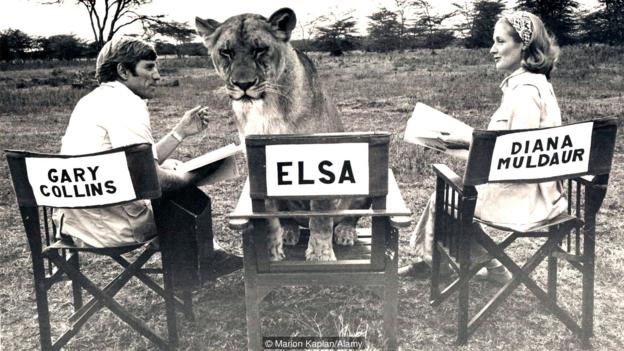
Muldaur and Collins Photo: imdb.com

The show tells the story of George (Gary Collins) and Joy Adamson (Diana Muldaur) who lived in Kenya with their lioness Elsa. George and Joy were game wardens who helped care for wildlife. They primarily protected them from weather disasters and poachers. Part of the show’s mission was to educate viewers about animal conservation. Other cast members included Hal Frederick as Makedde; Dawn Lyn, Dodie from My Three Sons, as Reagan one of their friend’s granddaughters who lives with them for a while; and Peter Lukoye as Nuru.

In the Adamsons’ true story, Elsa and her sisters who were orphaned were treated like pets by the couple. George was forced to kill their mother when she charged him, but he later said he understood she felt threatened. Joy fed the four-day-old cubs unsweetened milk mixed with cod liver oil, glucose, bone meal, and salt. After the first couple of weeks, they took their food from baby bottles. They were allowed to roam like house pets but at night they were put into a pen of rock and sand to protect them from hyenas, jackals, elephants, and other lions.

Eventually, Elsa’s two siblings were sent to a zoo in the Netherlands, but Elsa being a runt, could not make the trip. Joy then taught her how to behave like a wild lion so she could survive with the other animals.

On the show, the episodes were a bit different. In “Maneaters of Merti,” two lions have begun killing humans, so George leads a search with villagers and game wardens to find them.

In the middle of the season, “The Flying Doctor of Kenya” aired with Juliet Mills starring as Dr. Claire Hanley who is making her first village medical tour. She needs to learn the customs of the villagers as well as how to adapt to the tough living conditions. Joy helps her get acclimated to the new job.

The theme song was composed by John Barry which was the same song used in the movie. Barry won an Oscar for the film’s soundtrack. Lyrics were provided by Don Black. Most of us remember the words to the song from hearing it on the radio. They were:

Born free, as free as the wind blows
As free as the grass grows
Born free to follow your heart

Live free and beauty surrounds you
The world still astounds you
Each time you look at a star

Stay free, where no walls divide you
You’re free as the roaring tide
So there’s no need to hide

Born free, and life is worth living
But only worth living
’cause you’re born free

(Stay free, where no walls divide you)
You’re free as the roaring tide
So there’s no need to hide

Born free, and life is worth living
But only worth living
’cause you’re born free

To walk with others... | Kate on Conservation
George Adamson Photo: kateonconservation.com

I was also surprised to learn that the show was actually filmed in Kenya. NBC put the show on Monday night against The Rookies and Gunsmoke which were both in the top 20-30% of popular shows. After 13 episodes, the show was canceled due to low ratings.

62 George and Joy Adamson ideas | george, lions, out of africa
Joy Adamson and Elsa Photo: pinterest.com

Although Joy and George were divorced by the time the television series was created, she served as a consultant for the show and supervised the stories. Sadly, she was stabbed to death in 1980, and George was shot by poachers in 1989 while trying to help a tourist.

Elsa did acclimate to the wild but visited George and Joy from time to time. She brought her three cubs to show the couple. Elsa was five when she contracted a tick-borne blood disease similar to malaria. She passed away and was buried in the Meru National Park. When Joy died, she was buried next to Elsa. George was buried in the Kora National Park in northern Kenya where he was working. He was buried near his brother and Boy, another lion featured in the film version.

The legacy of the film and television show is that the Born Free Foundation has a mission to protect the lions of Meru National Park.

Photo: twitter.com

Although I was surprised by a few things in this show, one thing I was not surprised by was its quick cancellation. For some reason, so many shows in the sixties were adapted from movies and could not be sustained as a weekly show. M*A*S*H was one of the few shows to do this well. It seems though it would be a tough thing to sustain interesting shows when you are limited to natural disasters and poachers. Here again, you would assume the scenery would almost be a character you could develop. I’m also sure it was not cheap to film the show in Africa which would make it harder to keep if it was not producing decent ratings.

While none of the shows we have learned about in the series became long-running shows, next week we wind up our series with a look at one of the enduring pet shows.

Gentle Ben: A Bear Hug for Everyone

As we continue our blog series about The Life of Pets, we feature a show about a boy and his bear: Gentle Ben. In 1965, Walt Morey published his novel, Gentle Ben. He had written adult books, but then his wife, a teacher, challenged him to write an adventure kids’ book similar to a Jack London story. Gentle Ben is the story about Mark and his bear Ben. He set the story in Alaska, where he had worked, and he said many of the characters were based on real people. He also said the story of a boy befriending a bear was also based on real stories he read and heard about. The book sold almost 3 million copies.

Photo: ebay.com

The Morey family owned some land which became the Walt Morey Park in Wilsonville, Oregon, a bear-themed adventure. An eight-foot statue of Gentle Ben is one of the park sights.

Photo: metv.com

The book became a movie on the big screen, and like Flipper, it moved to the small screen a few years later. In fact, the house for the Ricks family on Flipper is the same house used by the Wedloe family on Gentle Ben.

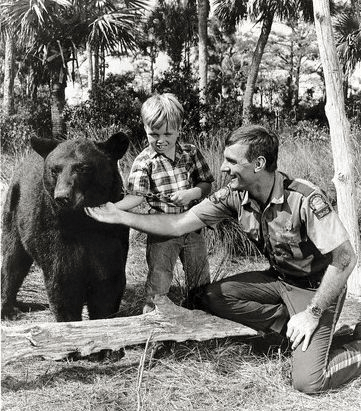
The television show debuted on CBS in 1967 and continued for two seasons, with 58 episodes. The series was produced by Ivan Tors who also produced Flipper, Sea Hunt, and Daktari. The TV show was set in Florida instead of Alaska. Tom Wedloe (Dennis Weaver) is a wildlife officer in the Everglades and he lives with his wife Ellen (Beth Brickell) and son Mark (Clint Howard, Ron’s brother) and his pet bear, Ben. Clint and Ron’s father Rance also penned a few of the scripts for the show.

Other characters showing up weekly included Hank Minegar (Robertson White), a local squatter, and Mark’s friend Willie (Angelo Rutherford).

Photo: DVDTalk.com

Like Flipper, there were several bears who played Ben, but the bear used most was Bruno, a black bear. Bruno had a good disposition and a variety of facial expressions. Bruno and his friends traveled from Canada because they had thicker coats which photographed better. They were declawed and most of their teeth had been removed.

Ben only made animal noises but they were spoken through Candy Candido, a voice actor and musician. I’m not sure why a kookaburra was used for Flipper and a human for Ben; you would think they could have used recordings of a dolphin and a bear. Bruno later moved to Hollywood to continue acting and died about 1980.

Most of the stories featured Tom’s work with wildlife and included animal management, children getting lost in the Everglades, weather disasters, and illegal activities such as poaching.

Gentle Ben was a great success and reached #2 in the ratings its first season. The popularity of the show was translated into a lot of merchandise including a board game, books, a stuffed bear, and comic books. The show was on Sunday nights sandwiched between Lassie and The Ed Sullivan Show.

During its second season, the show failed to even get into the top twenty. Lassie also suffered and received a significant drop in the ratings. I think the fact that the shows were on opposite Walt Disney’s Wonderful World of Color probably had a lot to do with its ratings drop. Also, if you liked animals you had to make a choice because Lassie competed with Wild Kingdom.

While the show highlighted family values and respect for nature, it was criticized for portraying wildlife as a pet. Ben even stayed indoors with the family sometimes. In 1971, National Park Service Officer John Hast recalled that “the television series Gentle Ben was the worst thing that ever happened to us. People saw this big, lovable bear on television and when they see a bear in the park, I guess they think it’s the same one. They don’t realize how wrong they are till they are bleeding.”

Photo: pinterest.com

I think kids from the sixties have fond memories of Gentle Ben, and many kids remember watching it. However, I guess the novelty of the show wore off quickly. You can only have so many things a real bear can do. Compare this show to Mister Ed where featuring a talking horse might seem far-fetched; however, that show lasted on the air eight years because Ed was as much of a character as anyone else on the show.

Shows like Flipper and Gentle Ben had their place, but they just didn’t have the memorable characters, quality scripts, or lush photography that might have extended their popularity. However, they are worth remembering and discussing. They prodded kids to imagine having their own special animal that only they could tame and love.