We Love Spending Time with “Perfect Strangers”

Linn -Baker and Pinchot Photo: tvfinales.com

We are talking about our favorite duos from the eighties and nineties in our blog August series. Although most of these shows feature husband and wife teams, today we are turning the dial back to a show about two cousins: Perfect Strangers. I am always envious of my husband because they have a group of first cousins who are very close and grew up together. While I have scads of second cousins, once removed and such, I have no first cousins and always missed those relationships. Perfect Strangers is about two cousins who develop that type of relationship.

Perfect Strangers is another one of those shows that was quite popular when it was on the air, and it was for eight years, but it doesn’t get much recognition any longer.

The series was created by Dale McRaven for ABC; McRaven was also the creative force behind Mork and Mindy. Bronson Pinchot had appeared in Beverly Hills Cop as Serge, a gay art gallery employee who had a foreign accent. ABC signed on to the project based on Pinchot starring. However, in the meantime, Pinchot had signed on to Geena Davis’s sitcom, Sara. Sara was quickly canceled and Bronson became available, so a pilot was made with Louie Anderson in the role of the American cousin. It was obvious that this was not the best pairing, and eventually the role was offered to Mark Linn-Baker after an appearance he made on Moonlighting. He and Pinchot had great chemistry and the show was placed between Who’s the Boss and Moonlighting, very popular shows, on Tuesday nights.
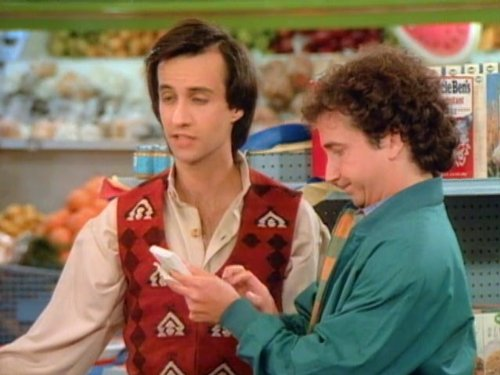
Photo: imdb.com

The short first season of six episodes debuted in March of 1986. The show was about Larry Appleton (Linn-Baker), a Wisconsin boy, who moved to Chicago and was enjoying life on his own after growing up in a large family. His utopia is shattered when his cousin Balki Bartokomous (Pinchot), arrives from Mypos, a Mediterranean island, intending to move in with him. Balki’s name was originally Vev, but Pinchot suggested Balki based on his sister’s nickname for her dog. Larry Appleton got his name because Lawrence University is in Appleton, Wisconsin, where I graduated from high school. Neither actor went to Lawrence, but both of them are Yale alumni. Both Linn-Baker and Pinchot got not only their BA degree from Yale but also both received their Masters of Fine Arts in drama.

Larry tells Balki he needs to live somewhere else. Balki had been a shepherd, and most of his impressions of what America was like were taken from pop culture, television shows, and commercials. Larry, a photographer, relents and invites Balki to live there, thinking of himself as more worldly and able to teach Balki the truth about American life. Ironically, it is often Larry who is more inept and gets the pair into some interesting situations.
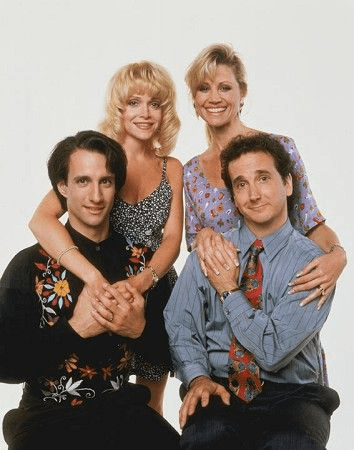
Photo: pinterest.com

Season two found the show on Wednesday nights. The cousins begin dating flight attendants–Jennifer (Melanie Wilson) dates Larry and Mary Anne (Rebeca Arthur) dates Balki. They meet the girls at the gym and realize that they live in the same building.

In season three, Balki is able to stop sleeping on the living room sofa and gets his own room when the pair moves into a much larger apartment. Somehow Jennifer and Mary Anne still live in their building but no one ever talks about moving. Larry is hired as a reporter for the Chicago Chronicle, and Balki is hired for the mail room. For some reason, halfway through the season the show was moved from its successful spot on Wednesdays to Fridays.

During season five, Harriette (Jo Marie Payton-France), the elevator operator, was given a new show, Family Matters which was also on Friday nights. That show, which for better or worse, introduced America to Steve Urkel, was on the air for nine years. Larry and Jennifer are still going strong while Balki and Mary Anne are lukewarm. Larry proposes to Jennifer during season six.

Season seven finds Jennifer and Larry in a large Victorian house. Of course, they realize they need renters to afford the expensive Chicago mortgage and who moves in but Balki and Mary Anne. Balki becomes an animator with his own comic strip at the newspaper. Eventually, Mary Anne moves out but in the finale, they reconcile, marry, and travel to Mypos for their honeymoon. The show retained its viewers but then it was moved to Saturday nights in February of 1992 before returning to Fridays. The TGIF campaign for ABC’s Friday night shows was very successful, and the network was trying to do something similar for Saturday nights.

Season eight, ironically also a six-episode season, picks up several months after the wedding, and we realize that both Jennifer and Mary Anne are noticeably pregnant. In the finale of the series, babies Robespierre and Tucker join the show.
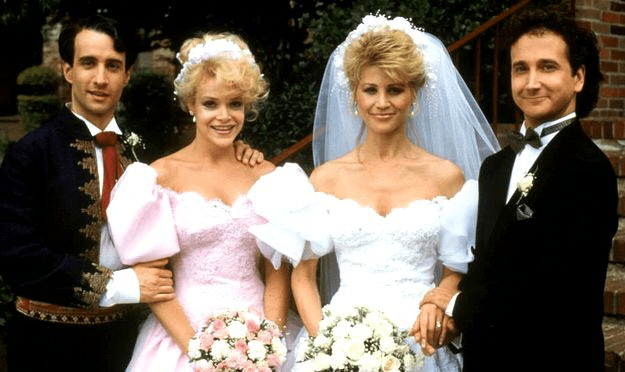
Photo: pinterest.com

The first six seasons found the show consistently in the top forty. Given its placement between two popular shows in its debut year, five of the first six episodes landed in the top ten. After the show was moved to Saturdays, it experienced a drastic decline in viewers. When the show was moved back to Fridays, it found its audience again. The show’s final season was supposed to be thirteen episodes but it was shortened to six. It was in the top twenty for the final season, and 15 million households watched the finale.

The theme song for the show, “Nothing’s Gonna Stop Me Now,” was written by Jess Frederick and Bennett Salvay. They composed the themes for Full House, Step-by-Step, and Family Matters as well.

We have talked about a lot of shows who have some famous fans and this show was no exception. Bronson Pinchot said Nelson Mandela was a fan of the show. Pinchot was invited to a banquet in South Africa where President Mandela was in attendance. One of the President’s assistants gave Bronson a note that read, “I’m dying to meet you, but if I go to your table, I have to go to everyone’s table. But I wanted you to know that I know my cousin is here.” Later that evening Bronson met Winnie Mandela.

Photo: pinterest.com

The Emmys also recognized the show. In 1987 Bronson Pinchot was nominated for a Lead Actor in a Comedy Series. He did not win, but had some tough competition with Ted Danson for Cheers, Harry Anderson for Night Court, Bob Newhart for Newhart, and, winner, Michael J. Fox for Family Ties. Two years later, Doris Roberts was nominated for Outstanding Guest Actress in a Comedy and lost to Colleen Dewhurst for Murphy Brown. Other nominees included Diahann Carroll for A Different World, Eileen Brennan for Newhart, and Maxine Stewart for The Wonder Years.

I’m sure that Perfect Strangers is in syndication somewhere, but I cannot remember the last time I saw it listed on television. There is a DVD set out for the entire series. I do remember watching this show most weeks and enjoying it, although it was not in my Top Ten. Yes, it had some too-typical and obvious plotlines like the girls living in the same building and both Balki and Mary Anne moving into the Appletons’ new house. However, the writing was pretty good and the characters were fully developed. The twist of naïve Balki often being wiser than native Larry is also a fun influence. It’s definitely a show that deserves more recognition than it has received in the past three decades. I’d love to know if you take some time to watch the DVDs, find it on the air somewhere, or just have fond memories of watching it in the past.
Don’t Blink: Shows That Received Pink Slips by the Holidays

One thing I have learned doing blogs the past four years is how many shows don’t make it. Although every year has its share of flops, some years are just notorious for having weak programming. The late 1970s was a period of just truly awful shows. Bob Newhart who starred in The Bob Newhart Show decided to quit in 1978. When asked about ending the show, he said, “I could see what was coming in situation comedy, and I didn’t want to be a part of it. If we’d gone another year, they’d have had the guy and two girls living in the apartment above us, a Martian living on the same floor next door to three girl detectives. The floor below us would have been occupied by a fraternity and a sorority.” As bad as that sounds, the shows that the networks put on the air during this time were even worse. Let’s take a look at some of the programming that didn’t make it through a season in the late 1970s.

A Year at the Top

Photo: imdb.com
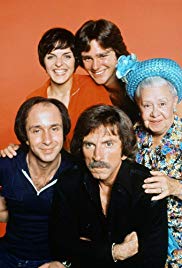
Note the young Paul Shaffer

Believe it or not, in 1976 Norman Lear teamed up with Don Kirshner of Rock Concert fame for a sitcom about the music business. This show was supposed to begin in January of that year but was delayed until summer with an entirely different cast. Two young pop stars Greg and Paul (Greg Evigan and Paul Shaffer—yes the Paul Shaffer from David Letterman) move to LA for their big break. They meet a potential agent named Hanover (Gabriel Dell) who agrees to sign them if . . . and if you think the concept is weird so far, get this: Hanover is the devil’s son, and they need to sign over their souls to become famous. The pair never actually sign the contract. It might have taken a year to get on the air but it only lasted five weeks.

Quark

Photo: newyorktimes.com

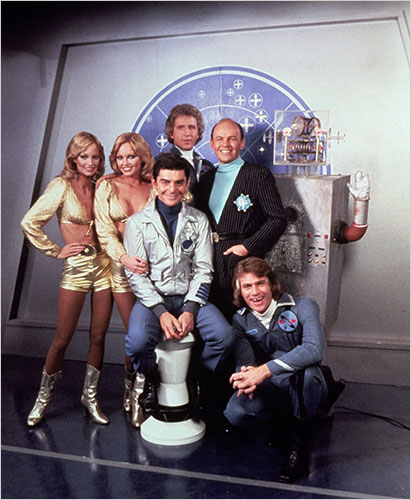
This show’s concept was also a bit of a reach. It took place on Perma 1, a space station in 2222. Adam Quark (Richard Benjamin) had a mission to clean up all the trash in outer space. Quark took orders from a giant disembodied head called, what else, The Head, along with Perma 1’s architect Otto Palindrome (Conrad Janis). If you think this sounds crazy, wait till you learn about Quark’s crew: a part fish/part fowl first officer, a humanoid vegetable named Ficus, clones Betty 1 and Betty 2, and Andy the Robot, a walking junk pile. I was surprised not that it was cancelled after two months, but that it lasted two months. I was also surprised to learn that Buck Henry was the creative force behind this series.

Sanford Arms

Photo: humormillmag.com

A year later in 1977 we have another interesting set-up. When Redd Foxx and Demond Wilson, the two stars, the only stars, left the show Sanford and Son, Norman Lear was left with a show title only. Aunt Esther (LaWanda Page) had been one of the cast members on Sanford and Son and suddenly she was at the hub of this new show. Phil Wheeler (Theodore Wilson) a widower with teenagers buys the house, the junkyard and Esther’s rooming house and tries to start a residential hotel. A month or so later, before he could even make his first payment, the show was done.

Another Day

Photo: wikipedia.com

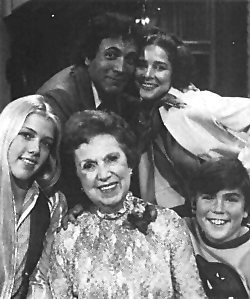
David Groh (who had played Rhoda’s husband) is Don Gardner, a struggling businessman who can’t make ends meet. His wife Ginny (Joan Hackett) has to get a job, and they both had to deal with their introverted son Mark (Al Eisenmann) and their extroverted daughter Kelly (Lisa Lindgren), as well as Don’s mom Olive (Hope Summers who had played Clara on The Andy Griffith Show) who is critical of all of them. Don struggled through a few episodes and was finished.

Apple Pie

Photo: wikipedia.com

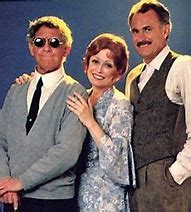
A lonely hairdresser played by Rue McClanahan named Ginger-Nell Hollyhock placed ads in the newspaper for a family. The family that she “found” included a daughter (Caitlin O’Heaney) who tap-danced, a son (Derrel Maury) who wanted to fly like a bird, an elderly grandfather (Jack Gilford), and con-artist Fast Eddie (Dabney Coleman). The show was set in Kansas City in 1933. It took place during the Depression and depression is what anyone watching felt, although the pain was fleeting. After one episode the network decided no one wanted this family.

Hanging In

This one was so bad they didn’t want any evidence so there are no photos.

Another flop came along with a star who had been another star’s spouse. Bill Macy who played Maude’s long-suffering husband starred in this show as Louis Harper, a former football hero who did not have the right credentials to be a university president. He has a desire to help the underprivileged, but the rest of the faculty is more concerned about raising money. Other cast members included high-pressure dean Maggie Gallager (Barbara Rhoades), PR man Sam Dickey (Dennis Burkley), and housekeeper Pinky Nolan (Nedra Volz). No finals for this series; it was cancelled after a few weeks.

Hizzoner

Photo: imdb.com

David Huddleston plays Mayor Cooper who runs a small Midwestern town. The cast included the mayor’s secretary Ginny (Diana Muldaur), the mayor’s daughter (Kathy Cronkite, yes Walter’s daughter) and several other quirky characters. While the mayor is quite conservative, his children are left-wing liberals. Apparently, the mayor broke out into song at least once an episode. I guess, he was singing the blues because the show was cancelled after 7 episodes.

In the Beginning

Photo: collectors.com

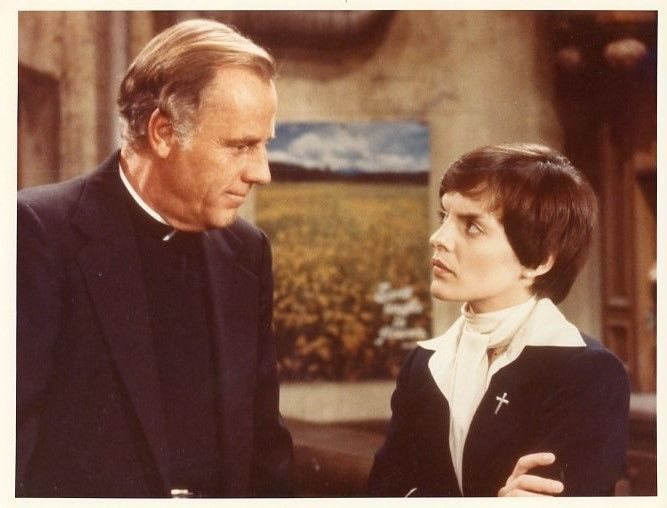
The year 1978 just keeps getting worse for television series. Father Daniel Cleary, played by McLean Stevenson, works in a community center in the heart of Baltimore. Sister Agnes (Priscilla Lopez) works with him. She loves her neighborhood; Father Cleary does not. She is fairly liberal and he is not. It ended almost before it began after seven episodes.

Miss Winslow & Son

Photo: sitcomsonline.com

In this one, an unmarried woman (Darleen Carr) who is an art designer, decides rather than marry a man whom she doesn’t love, she will become a single mother after getting pregnant. Her next-door neighbor Mr. Neistadter (Roscoe Lee Browne) hates kids. Her wealthy and snobby parents are divided about her situation; her father (Elliot Reed) is much more sympathetic than her mother (Sarah Marshall). Before the baby had its first check-up, the show was off the air.

13 Queen’s Boulevard

Photo: sitcomsonline.com

This show was about “a hilarious group of tenants in a garden complex in Queens, New York.” In the first episode, one of the tenants, Felicia Winters (Eileen Brennan) decides to host a class reunion and invites her best friend and spouse, her ex-husband, the class “sexpot,” Fat Hughie, and the class photographer. I don’t know what could possibly go wrong; however, not much went right since it was gone within two months.

Turnabout

Photo: bionicdisco.com

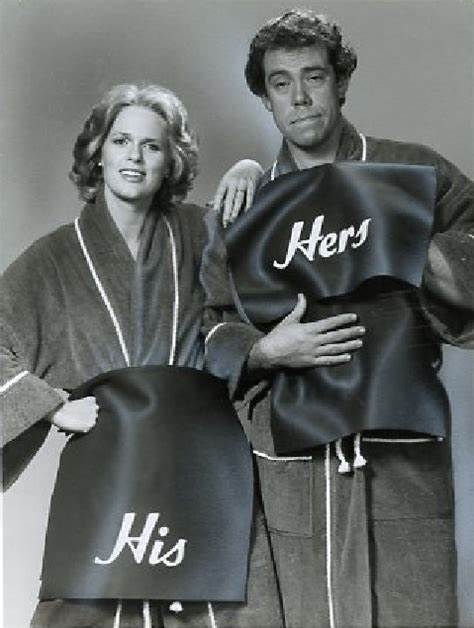
I get Freaky Friday, but in this series the husband and wife switch places. A magic statue allows them to inhabit each other’s bodies.  Sam Alston (John Schuck) is a sportswriter and his wife Penny (Sharon Gless) is a cosmetics executive. The couple tries to live both their own life and their spouse’s life whenever they switch back and forth. They also must focus on keeping the switch a secret. We never know who is who, and all the audience knew is they didn’t like either one of them, and the show was cancelled after a few weeks.

Waverly Wonders

Photo: sitcomsonline.com

NBC decided Joe Namath would be a good person to build a sitcom around. However, he’s not a football player in this show; he’s a former pro basketball player, Joe Casey, who now teaches history at Waverly High in Wisconsin. Linda Harris (Gwynne Gilford) is the principal and Mr. Benton, who they call “Old Prune Face” (Ben Piazza) was the former coach. The only problem is Joe Casey is a bad history teacher and a bad coach. That apparently makes for a bad show because it was cancelled after three episodes aired, although nine were made.

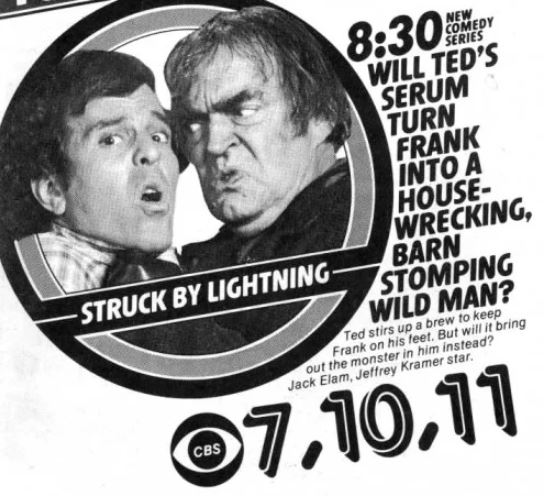
Struck by Lightning

Photo: metershow.com

If you think the concept of some of these shows was weird, wait to you hear about this one. Frank (Jack Elam) is the caretaker of an old inn in Massachusetts. A science teacher, Ted Stein (Jeffrey Kramer) inherits the inn and decides to sell it. Then he realizes that Frank was really a 231-year-old Frankenstein monster. Ted just happens to be the great-great-grandson of the original Dr. Frankenstein. So, they decide to run the inn together. Rounding out the cast was Glenn (Bill Erwin) who had been living there forever, Nora (Millie Slavin) who managed the inn before Ted came, Noras son Brian (Jeff Cotler), and real estate agent Walt (Richard Stahl). Apparently, the only thing “great” about the show was Ted’s relationship to Frankenstein because the network canceled it after five episodes.

So, you might be wondering with all these awful shows, what made it on the air more than a couple of months during the late 1970s. In 1977 the only shows that made it to the next season were Three’s Company and Soap. In 1978 Mork and Mindy and Taxi were the “classics” followed by Diff’rent Strokes and WKRP in Cincinnati. Without Robin Williams, Mork and Mindy would probably have been another concept that would have lasted a couple of weeks. In 1979, out of 21 shows that debuted that fall, Facts of Life was the only one that returned for a second season. With the exception of Taxi and WKRP, I would not rate any of these shows true classics, although you could make a good case for Soap. Anyway, the bar was set pretty low for success during the late 1970s.

At least television viewers could go to the movies for a bit of entertainment.  This was the era of Animal House, Annie Hall, Close Encounters of the Third Kind, Grease, Kramer vs Kramer, Rocky, Saturday Night Fever, and Smokey and the Bandit. Things stayed pretty glum on the small screen until 1982 when Cheers, Newhart, and Family Ties saved us.