77 Sunset Strip: A Bit Kookie

As we continue with our “Favorite Crime Solvers of the Past,” we turn to 77 Sunset Strip. Even if you never watched the show, you might be familiar with the theme song where they snapped and kept repeating “77 Sunset Strip.”

📷facebook.com

Created by Roy Huggins, the show debuted on ABC in 1958 and ran until spring of 1964. This was the third appearance by Detective Stuart Bailey. In 1946, Huggins’ novel, The Double Take, was published. In 1948, Bailey stepped into the big screen, starring in I Love Trouble played by Franchot Tone. A decade later he showed up on television played by Efrem Zimbalist Jr.

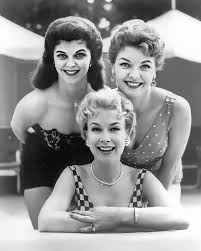
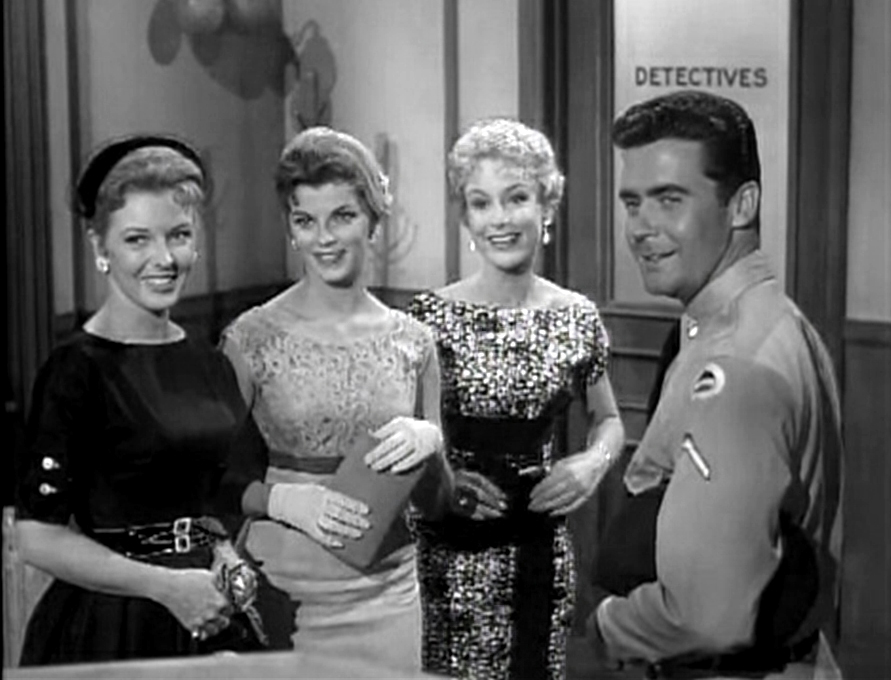
Bailey, a former WWII secret agent and foreign languages professor, works with former government agent Jeff Spencer (Roger Smith). Their office is at 77 Sunset Strip, Suites 101 and 102. Suite 103 is occupied by Suzanne Fabry (Jacqueline Beer), a French switchboard operator who handles phones for several clients including Bailey and Spencer. Occasionally she helps them solve a crime.

Other characters come and go from the offices including Roscoe (Louis Quinn), who gives out horse-racing tips when he’s not at the track; he often is an operative for the duo.

📷allposters.com

Gerald “Kookie” Kookson (Ed Byrnes) is a bit of a kook. He loves rock and roll, is witty, appreciates looking good, and works as a valet at the club next door. But he wants to be a private detective and makes full partner during the show. Kookie provides some comedy with his slang like “ginchiest” for coolest or “piling up Zs” for sleeping. During season 2, Byrnes asked for more money with his character expanding his role, but the answer was a firm no, so he left the show. Warner Brothers eventually settled with him, and he returned in May of that year.

Other occasional visitors include Lt. Roy Gilmore (Byron Keith) and the Frank Ortega Trio (played by themselves), a jazz band, who perform next door. They recorded for Warner Brothers who was also behind the television show.

The show had a fun, witty edge to it making it interesting to watch the interactions of the characters in addition to the crime solving. Bailey and Spencer were updated versions of forties’ noir detectives. Some of the shows had very different plots, something like the shows Moonlighting would feature a few decades later. “The Silent Caper” had no dialogue and, in another one, Bailey finds himself in a ghost town and he’s the only main character in the episode. During the last season in “The Target,” roles were played by crew members who were usually behind the camera including director William Conrad, associate producer James Lydon, and writer Tony Barrett.

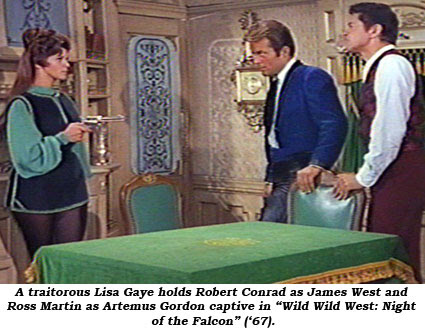
Guest stars were plentiful and included Robert Conrad, Dyan Cannon, Cloris Leachman, Shirley MacLaine, Elizabeth Montgomery, Mary Tyler Moore, Roger Moore, William Shatner, Marlo Thomas, Robert Vaughn, and Adam West.

📷starstills.com

Mack David and Jerry Livingston wrote the famous theme which became a top 10 hit on the Billboard chart. The duo worked on several other Warner Brothers crime shows including Surfside Six, Bourbon Street Beat, and Hawaiian Eye, all based on the 77 Sunset Strip formula and exotic location.

By 1963, ratings were declining and the show revamped. If you read my blog often, you realize this is one of my pet peeves. If they want to change the casts, I understand that. However, in this one, like so often, Bailey is suddenly working alone and there is no mention made of any of the other characters, just as if they never existed. They did this on Happy Days, The Doris Day Show, and several other popular series.

In addition to booting the cast, Jack Webb was brought in as executive producer and William Conrad as director. And if the name William Conrad sounds familiar, yes, it is the same person as the man who starred on Cannon. During the fifties and sixties, Conrad racked up 32 directing credits.

Bailey is now a solo investigator. The title didn’t change, but the old office is no longer there nor the club nor the theme song. A new one written by Bob Thompson was used, and the show took on a darker, more serious nature. Bailey gets a secretary named Hannah who we rarely see.

📷ebay.com

The show was on Fridays for its entire run, just switching time slots now and then. By season two it was in the top ten. In seasons three through five, it got its biggest competition from Route 66, which it beat in the ratings. The final season, the show got moved to a later slot, going up against The Alfred Hitchcock Hour but, neither of them were in the top thirty.

Big surprise, viewers weren’t fans of the changes or the more serious tone of the show, and they drifted away. The show was cancelled in February. Efrem Zimbalist Jr. moved over to the FBI. Roy Huggins had a hugely successful career. He would write for and create more top shows including Run for Your Life, Maverick, Alias Smith and Jones, The Rockford Files, and The Fugitive. Viewers at least got the satisfaction of knowing that making such drastic changes to the show caused the end of that story. Stream a few of the early seasons on Philo, Roku, or Pluto TV and let me know what you think.

Julie Newmar: Batman’s Most Beautiful Villain

This month we are learning a bit about the Batman villains and their careers. No study of Batman’s favorite nemesis would be complete without Cat Woman, Julie Newmar. Julie shared the role of Cat Woman with Eartha Kitt who appeared the final television season and Lee Meriwether who was so catty in the Batman movie. What else did Julie Newmar do during her career? Let’s find out.

📷pinterest.com

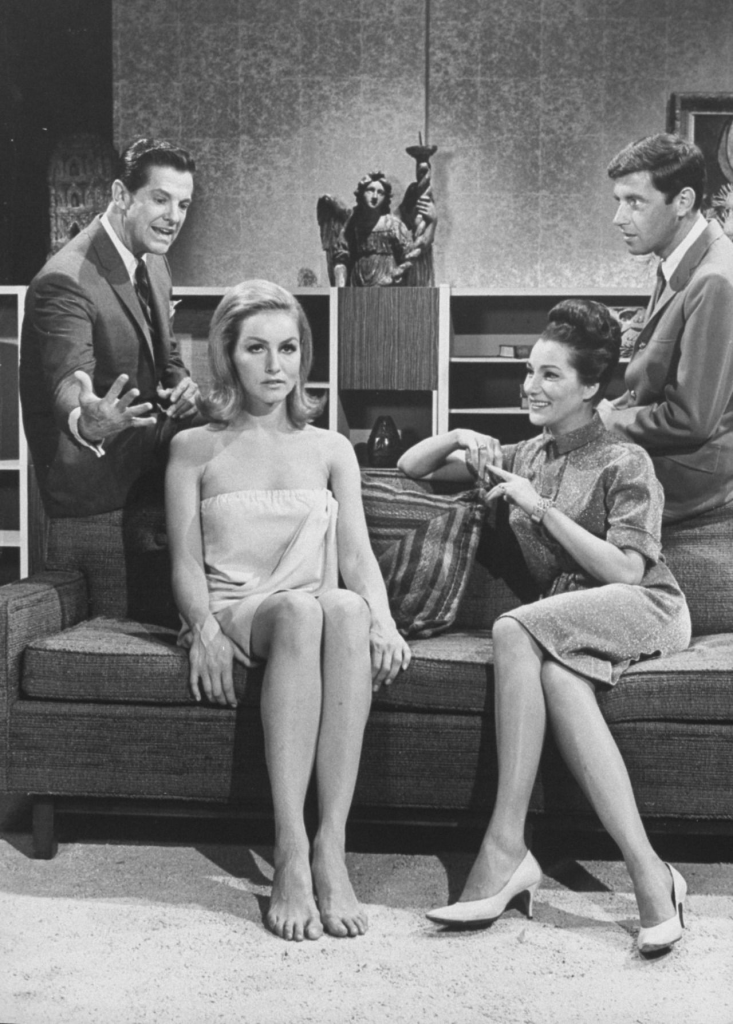
Born Julia Chalene Newmeyer in 1933, Julie Newmar as she is known in the acting world, was a television and film actress, dancer, singer, and stage performer. But, as they say in the commercials, that’s not all. She also was known for writing, designing lingerie, and managing real estate investments.

Newmar was born in LA. Her father Don was head of the physical education department for the Los Angeles College. Her mother, of both Swedish and French descent, was a fashion designer under the name Chalene and later worked in real estate.

Julie began dancing early in life and performed as a prima ballerina with the Los Angeles Opera when she was only 15. With an IQ of 135, Newmar graduated from John Marshall High School at age 15. She continued dancing in films in the early fifties. At age 19, she was also working as a dancer/choreographer for Universal Studios. In 1954, she appeared in Seven Brides for Seven Brothers as Dorcas, one of the seven brides.

📷facebook.com

In 1955 she got her first Broadway appearance in “Silk Stockings.” She continued her movie and Broadway careers throughout her years in entertainment, appearing in 33 films in all.

Television is where Newmar gained most of her fame. Her first television appearance was on The Phil Silvers Show in 1957 and then Ominbus in 1959. But it was in the sixties that she became a household name. She started the decade in Adventure in Paradise in 1960, followed by a variety of shows including The Defenders, Route 66, and The Twilight Zone in the early sixties.

In 1964 she was offered the role of Rhoda on My Living Doll, where she played a robot. She was not enthralled with the choice of Bob Cummings as her costar and did not seem to enjoy her time on this show. She said that “They originally wanted Efrem Zimbalist Jr. It was not a flip part—it needed a straight actor who could play opposite this bizarre creature so the comedy would come off. That quality was lost when they hired Bob. The show could have been wonderful. I think it would have run for many seasons had they hired Efrem because he had the right qualities.”

📷classicfilmandtvcafe.com

After appearing in several comedies including The Beverly Hillbillies and F Troop, she received another recurring role as Cat Woman in Batman. She would appear in the series 13 times, 12 as Cat Woman, the only villain to make Batman question his morals, because we knew he was in love with her, and if she showed any sign of remorse, who knows where things might have gone. Her Cat Woman costume now lives at the Smithsonian Institution.

Newmar lived in Beekman Place in New York in the mid-sixties. One weekend her brother had come to visit her from Harvard. They were sitting around chatting when the phone rang. She was asked if she would like to play Cat Woman on the Batman series. She was a bit miffed because they said they were casting in California, and the role started on Monday. Her comment was “That’s how television is done: they never know what they are doing until yesterday.” When her brother heard Batman, he jumped up and said that was the favorite show at Harvard and they even skipped classes to watch it. He told her to take the role, so she did.

📷firstforwomen.com

After Batman, she finished out the sixties in The Monkees, Star Trek, Get Smart and It Takes a Thief. With 11 seventies offers, you can see her in shows such as Bewitched, Columbo, McMillan and Wife, Love American Style, The Bionic Woman, and The Love Boat. One of my favorite made-for-tv movies was The Feminist and the Fuzz. It had an exceptional cast, including Newmar who appeared in the movie along with Barbara Eden, David Hartman, Jo Anne Worley, Farrah Fawcett, Harry Morgan, Herb Edelman, Penny Marshall, and John McGiver. This ensemble was directed by Jerry Paris, who directed so many great shows from The Dick Van Dyke Show to Happy Days.

Her other starring role in the seventies was a marriage to J. Holt Smith, an attorney. After the wedding, Newmar moved to Forth Worth, Texas until 1984 when they divorced.

📷remindmagazine.com

The eighties was a more quiet decade for the actress but she did accept roles on CHiPs, Fantasy Island, and Hart to Hart. In 1992, she appeared in George Michael’s music video, “Too Funky,” She was still working in 2016 and 2017 in Batman animation features.

If you were a fan of Batman and Dark Shadows in the sixties, you were in luck when Newmar took on the role of Dr. Julia Hoffman (played in the original series by Grayson Hall) in Dark Shadows: Bloodline, the audio drama miniseries.

She was not just a pretty face, however. She received two US patents for pantyhose and one for a bra, under the name Nudemar. She also began investing in LA real estate and was credited with helping to improve the neighborhoods of La Brea Avenue and Fairfax Avenue. In one episode of My Living Doll, Rhoda is asked to play Chopin’s “Fantasie Impromptu” on the piano. Newmar played the piece herself. She had studied under concert pianist Dr. MacIntyre, and she said that scene is the only one she’s done with her playing the piano which had been her career choice before acting. One of Julie’s comments about herself was “Tell me I’m beautiful, it’s nothing. Tell me I’m intellectual—I know it. Tell me I’m funny, and it’s the greatest compliment in the world anyone could give me.”

📷closerweekly.com

Julie also enjoys art and gardening. She has a rose, a day lily, and an orchid named for her. Her gardens are often chosen as a spot for holding charity events.

Like Barbara Feldon from Get Smart, Julie Newmar is beautiful, bright, and funny. I hope she enjoyed her career. Obviously, she could have been a brain surgeon or any other profession of her choice. She seems like she would be a fun person to just hang out with and the conversation would never run out. Thank you, Julie Newmar for choosing the entertainment business over medical science for our sakes.

How My Living Doll Became Cat Woman

This month we are learning more about some of our favorite robots in this blog series called “I Robot.” Today we go back to the mid-sixties for My Living Doll.

Photo: pinterest.com

This was both a science fiction and comedy show that debuted in September of 1964. Jack Chertok produced it for Television Productions with CBS. The show was filmed at Desilu studios. Chertok had been the creative force behind My Favorite Martian. James Aubrey, president of CBS, approached Chertok about doing another show. He did not even require a pilot to be made. Chertok’s writers from My Favorite Martian, Bill Kelsay and Al Martin, created the show from an idea proposed by Leo Guild. Kelsay wrote many of the episodes for Date with the Angels starring Betty White and several My Three Sons plots. Martin wrote for many earlier shows and screenplays including Roy Rogers.

The plot they created was that Dr. Bob McDonald (Bob Cummings), a psychiatrist for the Air Force, was given Rhoda Miller (Julie Newmar), a lifelike robot to protect. He was trying to keep her out of the hands of the military. Rhoda’s formal name was AF709. Dr. Carl Miller (Henry Beckman) built her for the US Air Force but she eventually lands in McDonald’s care when Miller is transferred to Pakistan. His job is to help educate her to be the perfect woman while keeping her true identity a secret. Beauty marks on her back were the control buttons. Her main power switch was on her right elbow. Her eyes could be covered to prompt a system relaxation. Rhoda’s memory bank contained 50 million pieces of information. Bob told his coworkers Rhoda was Dr. Miller’s niece, and she took on the role of his secretary at the office, typing 240 words a minute. On other episodes, she learned to calculate where dice would fall and how to make trick shots playing pool.

In one episode, Rhoda is asked to play Chopin’s “Fantasie Impromptu” on the piano. Newmar actually played the piece herself. She had studied under concert pianist Dr. MacIntyre, and she said that scene is the only one she’s done with her playing the piano which had been her career choice before acting.

Meeting the Robot Photo: pinterest.com

Like I Dream of Jeanne, many of the episodes deal with Bob trying to keep Rhoda out of trouble while she is learning what society and the current culture is like. Rhoda learns human emotions throughout the first season; perhaps this would have led to a romantic relationship between the robot and the doctor.

Rounding out the cast was Peter Robinson (Jack Mullaney), Bob’s neighbor and coworker who thinks Rhoda is someone he wants to date. Irene Adams (Doris Dowling) plays Bob’s sister who moves in to act as housekeeper and chaperone so the neighbors are not suspicious of a single woman living there. On Love That Bob, Rosemary DeCamp played Bob’s sister who moves in to take care of the household for him. Mrs. Moffat was added later on as Peter’s housekeeper.

The show never really found its viewer base. The New York Times reviewer Jack Gould noted that it “very probably had the makings of a popular novelty hit . . . with Miss Newmar giving a light and amusing performance as the automated dish, the premise could work out . . . Bob Cummings, an old hand at chaperoning pretty girls, again is cast in his familiar assignment.”

Newmar didn’t feel that Cummings was the right actor for the role. She said that “They originally wanted Efrem Zimbalist Jr. It was not a flip part—it needed a straight actor who could play opposite this bizarre creature so the comedy would come off. That quality was lost when they hired Bob. The show could have been wonderful. I think it would have run for many seasons had they hired Efrem because he had the right qualities.”

Photo: yiddio.com

The ratings were not good; however, another issue was the fact that it was on Sunday nights against Bonanza, one of the most popular shows ever. In December, CBS moved the show to Wednesday nights but the ratings did not improve. In January, Cummings asked to be written off the show. CBS agreed but never got a replacement for him. He was said to have been transferred to Pakistan, and Robinson took over caring for Rhoda with his housekeeper living in his house again to keep the neighbors from talking.

Apparently, Cummings and Newmar never hit it off. She complained that he had tried to teach her to act and that he seemed unhappy that she was getting more press attention. Later Newmar stated that the real trouble on the set was Cumming’s addiction to methamphetamines. She said he had erratic behavior and became increasingly more depressed and insecure.

In her new home Photo: imdb.com

After Cummings left the show, another five episodes were aired, and then the show was canceled. The show ended up ranking 79th out of 96 shows. Two decades later, producer Howard Leeds would go on to create the show we will discuss next week, Small Wonder.

I was not able to confirm it, but I read several sources that said this show coined the term, That does not compute” which is what Rhoda said when she was asked something she did not understand.

During the summer of 1965, CBS aired repeats of the show. After that, the show was never seen on television again in the United States. Rumors were rampant about whether the 26 episodes had been damaged in a fire, hidden by Chertok, or destroyed. Two episodes seemed to have survived, but there were also reports that six or ten existed in all. CBS was able to obtain about half the episodes somewhere and released a DVD with them on it. We will have to see if the additional episodes ever show up or not.

Transitioning to Cat Woman Photo:designyoutrust.com

This was another of those shows that seemed to suffer from an identity complex. Cummings was known as a ladies’ man to viewers from his seasons on Love That Bob. If the show was not going for romance, then it seems that Newmar was correct in her assessment of Cummings being the wrong person for the role. With Bewitched debuting the same year and I Dream of Jeanne coming right on the heels of My Living Doll, it seems like one of the shows might not obtain enough viewers. Cummings’ addiction problems certainly did not help the show. Newmar should probably be happy the show ended when it did, allowing her to step into the role of Cat Woman on Batman. Like My Living Doll, Cat Woman had all the qualities Batman admired and wanted in a romantic partner, but unlike Rhoda who was not human, Cat Woman was all too human and too much of a villain to allow Batman to act on his passion for her.

Although the show debuted almost sixty years ago, many of the issues of working with a robot are still with us today as scientists work on giving robots a sense of humor and some empathy. We are seeing more of them in the workplace, and it will be interesting to see if any new shows take up the subject in the near future.

The Case of the Long-Running Law Show—“Incompetent, Irrelevant, and Immaterial” Did Not Apply to Perry Mason

A blog series on Murder, Mystery and Mayhem just wouldn’t be complete without the inclusion of Perry Mason. The show was based on the books by Erle Stanley Gardner in the 1930s and aired nine seasons from 1957 to 1966, producing 271 episodes, along with numerous movies. Perry Mason was the first weekly one-hour series. Fun fact, Gardner was a big fan of Youth’s Companion magazine which was quite popular for a hundred years until it merged with another periodical in 1929; it happened to be published by a Boston company, Perry Mason & Co.

automotivemileposts.com

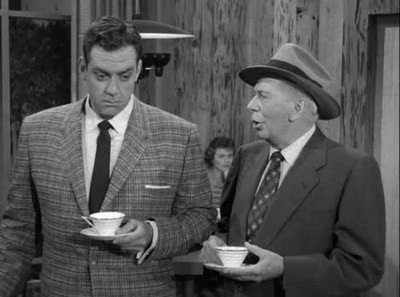
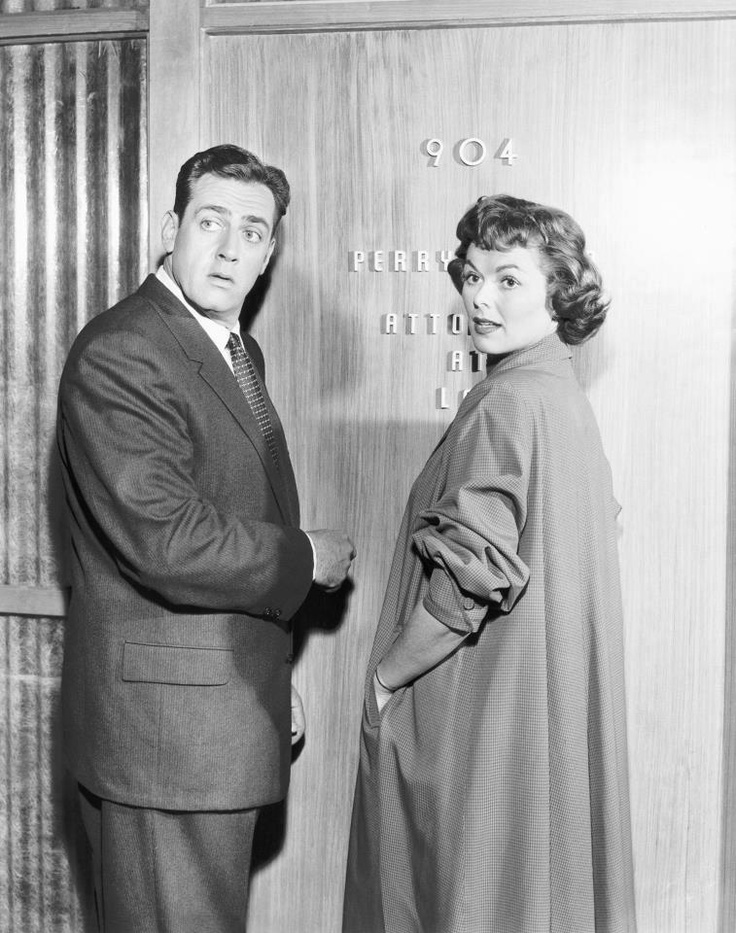
Perry Mason (Raymond Burr) is a criminal defense attorney. His right-hand is secretary Della Street (Barbara Hale) and they are both aided by

parasoldreams.blogspot.com

investigator Paul Drake (William Hopper).

The cast is rounded out by DA Hamilton Burger (William Talman) and Lt. Arthur Tragg (Ray Collins).

William Talman
Photo: directexpose.com

Due to an illness, Collins was only able to appear in a handful of episodes after 1960; however, his name was kept in the credits which allowed him to continue receiving medical benefits from the actors’ union. He passed away in 1965.

perrymasonandcontemporaryviolence.blogspot.com

While the main cast members were in a minimum of 225 episodes, little-known actor Don Anderson appeared in 128 episodes during the nine years. He is seen in minor roles and played a variety of characters including a courtroom spectator, a wedding guest, a rescue boat skipper, a bartender, a downhill snow skier, a bank employee, and a German border guard.

Mason’s practice in Los Angeles attracts clients who have been falsely accused. The first half of the show typically set up the situation, the investigation was conducted, and usually the DA decides to prosecute Mason’s innocent client. The second half of the show was conducted in the courthouse. Usually the action occurs in a preliminary appearance because casting realized quickly that appearing before a judge would save having to find twelve jury members for each show. Burger would often object with his declaration of “Incompetent, irrelevant, and immaterial!” Della often pursues leads while Perry is in court. Mason pays attention to every detail and is often able to trick the guilty person into admitting their crime.

e-discoveryteam.com

Gardner’s literary agent was Thomas Cornwell Jackson. In 1947 he married Gail Patrick, who had studied law before becoming an actress. She and her husband had discussed bringing Gardner’s Mason character to television. Gardner had also been an attorney before becoming a writer, so he wanted some creative control.  He had no desire to see Perry’s personal life or a love interest. He wanted the show to feature the law as its primary character. Gardner, Jackson, and Patrick formed a production company, Paisano, to film a pilot. CBS picked up the show for 1957.

Gail Patrick Jackson
pinterest.com

Patrick began auditions for the role of Mason. Richard Carlson, Mike Connors, Richard Egan, William Holden, and Efrem Zimbalist Jr. were all frontrunners. CBS wanted Fred MacMurray and were in negotiations with him. Raymond Burr had been in to audition for the role of Hamilton Burger. When the production company realized they could not afford a big-name actor, Burr was offered the role of Mason. In another role switch, William Hopper, Hedda Hopper’s son, auditioned for Perry Mason but was offered the role of Paul Drake. Barbara Hale was asked to take the role of Della Street. Her children were little and she was not really interested in a series, but when she found out Burr would play the title character, she opted in since they had known each other since they both worked for RKO.

eccentricroadside.blogspot.com

The production staff also included people who were well versed in law. Ben Brady, producer, practiced law before entering show business and story editor Gene Wang went to law school in Florida. Luckily, they had 69 Gardner novels featuring Perry Mason at their disposal; all but three episodes in the first year were adapted from Gardner novels.

Each episode had a budget of $100,000. The Superior Oil Company building in Los Angeles was used for the exterior of Mason’s Brent Building location, a modern structure built in 1956. In 2003, it received a historical landmark designation and is now The Standard Downtown LA Hotel. Filming was primarily done in and around Culver City. The early seasons were shot at William Fox Studios. When it closed in the early 1960s, production moved to General Service studios and finally to the Chaplin Studios until the end of the series.

thefrogseyebrows.blogspot.com

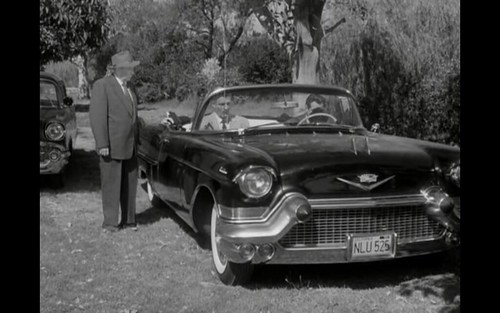
Auto sponsorship for the first season see-sawed between GM and Ford who alternated episodes. In an odd set of circumstances, Mason would drive a Ford Skyliner one week, and the next week he would find himself behind the wheel of a Cadillac convertible. Drake and Tragg’s cars also staggered from week to week. In one episode, Mason can be seen using a car telephone. Back then it was considered a radio, and you had to phone the operator to make a call, but it was still a cool technology feature.

directexpose.com

Even people who never watched the show are familiar with the theme song composed by Fred Steiner. Steiner says he wanted to write a theme that portrayed sophistication and toughness. He called the song, “Park Avenue Beat,” a symphonic R&B piece.

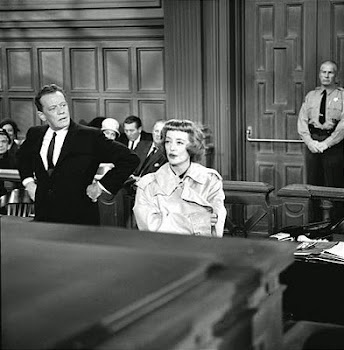
The show featured an interesting substitution during the middle of its run. Burr was unable to film several episodes in 1963 while he was recuperating from dental surgery. Mason was temporarily replaced by attorneys played by Bette Davis, Walter Pidgeon, Hugh O’Brian, Michael Rennie, and Mike Connors.

Bette Davis fills in
pinterest.com

When Burr was making made-for-tv movies about Perry Mason, he was suffering from cancer. Hale, who was friends with Burr for the rest of his life, said “He was my hero. He was in such pain, such terrible pain. But that man had such strength and such willpower.” After his death, she described him as “a very, very strong, beautiful human. I shall miss him all my life.”

pinterest.com

Perry Mason got the slot of Saturday nights at 7:30 pm for its first five seasons where it was easily getting the most ratings, even against Bonanza. In 1961, Bonanza was moved to Sunday nights and Perry Mason to Thursdays at 8 pm where it also continued to win the ratings for the night. In 1963 it moved to Thursdays at 9 pm before being switched back to 8 pm for 1964. Before the 1965 season, Paley decided to move the lawyer to Sunday nights back against Bonanza, and when Bonanza received a higher rating that season, Perry Mason was cancelled, even though the show was receiving more mail than ever and the network had discussed a tenth season shot in color to be able to compete with the western.

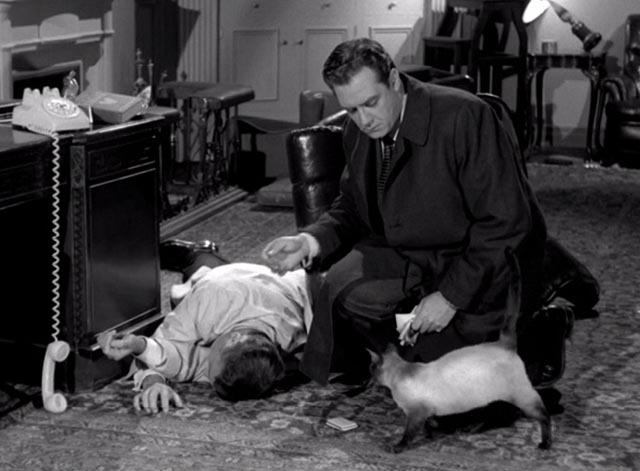
cinemacats.com

The show was loved by both viewers and critics and did well at annual Emmy awards shows. In 1958 it was nominated for the best dramatic series; in 1961 it was nominated for film editing; and in 1962 it won for audio engineering. Raymond Burr received a best actor nomination in 1960 and won best actor in both 1959 and 1961. Barbara Hale was nominated for best supporting actress in 1961 and won the best supporting Emmy in 1959. William Hopper was nominated for best supporting actor in 1959 as well.

While the show was winning awards, Mason was winning cases. However, there were three clients who were found guilty. In season six, “The Case of the Witless Witness,” the client lost. In both season one and seven, the client was found guilty but they were both proved innocent later and avoided jail time.

In the final episode, “The Case of the Final Fade-Out,” Erle Stanley Gardner can be spied as judge.

Erle Stanley Gardner
thepulp.net

Although all but one episode was filmed in black and white, the show has been in syndication almost continually since its cancellation.

In her book, My Beloved World, Sonia Sotomayor commented on the series. She said she was influenced greatly by the show which ignited a passion to be a prosecutor. She wrote she enjoyed watching Mason, “but my sympathies were not entirely monopolized by Perry Mason. I was fond of Burger, the prosecutor, too. I liked that he was a good loser, that he was more committed to finding the truth than to winning his case. If the defendant was truly innocent, he once explained, and the case was dismissed, then he had done his job because justice had been served.”

I feel like this is becoming a cliché for almost every blog I write, but like so many shows from the past, a new Perry Mason series is in the works for HBO. Originally, Robert Downey Jr. was to portray the attorney, but his schedule precludes him from starring. However, his production company has cast Matthew Rhys as Perry. Tim Van Patten has signed on as director and Tatiana Maslany will fill the Della Street spot. John Lithgow joined the series in May, as an attorney who will mentor Mason.

pinterest.com

I find it impressive when any show, made more than fifty years ago continues to win viewers and create new generations of fans. However, I find it especially remarkable that a show first filmed almost 63 years ago in black and white continues to hold its own alongside so many current law-themed shows in production. Perry Mason can currently be seen on FETV, METV, and the Hallmark Channel.