My Sister Eileen: Version Five

As we look at a few little-remembered shows from the past, today we are learning about My Sister Eileen. The series was adapted from short stories by Ruth McKenney published in The New Yorker. The stories became a book in 1938, a play in 1940 and two movies in 1942 and 1955.

đź“·wikipedia.com

In the 1955 Hollywood movie, two small-town sisters — an aspiring writer, Ruth (Betty Garrett), and a would-be actress, Eileen (Janet Leigh) — move to New York City. They find lodging in a shabby apartment and struggle to locate promising gigs. Ruth eventually meets magazine editor Bob Baker (Jack Lemmon), who tells her to write about her life experiences rather than fiction. As it turns out, Eileen’s life, with her various romantic encounters, is far more interesting, so Ruth steals the stories for herself.

This show joined the television schedule in 1960 and featured Elaine Stritch and Shirley Bonne (Ruth and Eileen Sherwood), who move to New York City. Like the movie, one is a writer and one is an actress. Living in a Greenwich brownstone, they become friends with a reporter Chick Adams (Jack Weston) and Ruth’s coworker Bertha (Rose Marie). Rounding out the cast is Eileen’s agent Marty Scott  (Stubby Kaye), their landlord Mr. Appopoplous (Leon Belasco), Ruth’s boss D.X. Beaumont (Raymond Bailey), and their Aunt Harriet (Agnes Moorehead). The sisters are stereotyped with Ruth being the smart, plain one and Eileen being the beautiful and naĂŻve one.

The pilot was seen on the Alcoa-Goodyear Theater with Anne Helm portraying Eileen.

Earl Hagen who composed “The Fishing Hole” for The Andy Griffith Show composed this theme as well.

đź“·imdb.com Rose Marie on the show

Rose Marie talked about being on this sitcom for the Television Academy. She said she was friends with the producer Dick Wesson. She said her character Bertha was a wise-cracking one similar to Sally on The Dick Van Dyke Show. Rose Marie didn’t like working with Elaine Stritch. She felt she was not very professional on this show; she said she came to work late and goofed off a lot.

In 1960 it appeared on the schedule on CBS opposite Hawaiian Eye and Perry Como’s Kraft Music Hall. Hawaiian Eye was on the air four years, and this was it’s second season. With Connie Stevens, Robert Conrad and Poncie Ponce, it was about two private investigators in Hawaii, a Korean war vet and a former police detective.

I don’t think the writing helped the show stay on the air too long. During the first season some of the plots included: Ruth’s boss ignores her pleas for a pay increase until he encounters her working as a waitress in a German restaurant — and in a skimpy costume and the Sherwood sisters decide to break their lease with a wild party to which they invite a one-man band, a junior Tarzan, and a fireman with his siren.

đź“·moviesanywhere.com 1955 film version

I’m guessing part of the problem was that it had appeared in so many versions already. Many people read the book. Lots of people saw one, if not two, of the movies. And the play was being featured around the country. I can see that having a television series which has to expand the hour-and-a-half play and film might not have enough material to draw out the same old plot and keep it interesting for more than a few episodes.

This one is another one that you’re probably better off watching the 1955 silver screen adaptation and skipping the television series.
The Mod Squad: The Show That Oozed Hip, Groovy, and Cool

As we continue our Murder, Mystery, and Mayhem series, we move from Maine where senior citizen Jessica Fletcher solved mysteries to the streets of Los Angeles, where a hip trio infiltrates the counterculture to solve crimes.

Photo: pinterest.com

Airing from 1968 till 1973, The Mod Squad was a unique concept. Created by Buddy Ruskin, a Los Angeles police officer, the show took eight years to become a reality. Ruskin based the concept on his time as a squad leader for an undercover narcotic division in the 1950s.

Aaron Spelling was the executive producer. Spelling worked on a number of projects from 1960 onward, but his biggest hit shows were still in his future when he took the helm of The Mod Squad.

As soon as the jazzy theme song by Earl Hagen began, we knew this was a different type of show. The sixties hippie culture and counterculture drug scene had not been explored in depth on television before.

Photo: pinterest.com

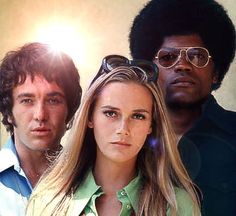
In order to get the necessary evidence, three young team members were trained to go undercover to solve cases. Michael Cole was Pete Cochran, a wealthy kid who was arrested for stealing a car; Peggy Lipton was Julie Barnes, who had run away from a bad home situation; and Clarence Wlliams II was Linc Hayes, who was arrested during the Watts riots. Captain Adam Greer (Tige Andrews) supervised the trio. He mentored them and provided “parently” advice and wisdom. He hand-picked them for his team. (Similarly, Spelling’s Charlie’s Angel’s would also feature a father figure hand picking three non-traditional members for his crime-solving team.)

None of these kids were innocent, and their records were eliminated when they chose to work with the LA police. But they soon realized they had the ability most cops did not to inconspicuously fit in to help stop criminals from killing or hurting other young adults.

Photo: pinterest.com

Similar to Room 222, which aired almost the same time, The Mod Squad covered a lot of socially relevant topics: abortion, domestic violence, drug addiction, child abuse, police brutality, illegal immigration, and racism. Though the pilot was written sixty years ago, these issues are still on the front page today.

The writers, including Tony Barrett, Harve Bennett, Sammy Hess, and Buddy Ruskin, created realistic characters. These three outcasts were a bit rebellious; they lived in the gray instead of black or white. They understood good people sometimes did bad things, and racism and domestic violence were not to be tolerated. Their speech and clothing marked them as quintessentially 1960s. Linc often said “Solid” or “Keep the faith.” You would probably hear “groovy” at least once an episode.

Photo: tvinsider.com

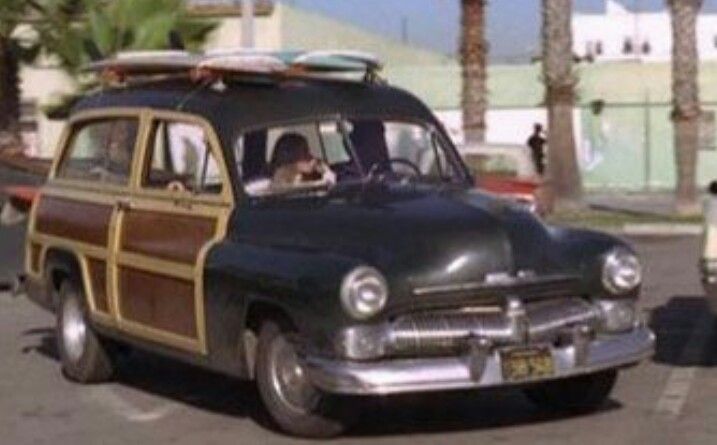
The team traveled in an old green 1950 Mercury wood-paneled station wagon that they affectionately referred to as “Woody.” Unfortunately, it was burned in an accident at the end of the second season.

Photo: pinterest.com

The show was definitely controversial. It aired at a time when westerns, rural sitcoms, and Lawrence Welk were popular. The episodes pushed the envelope a bit on topics that had been taboo on television in the past. The team was like a family and on one episode, Linc gave Julie a brotherly kiss on the cheek which had the network up in arms, but not one complaint came in. Their relationship with Captain Greer helped America see how the generation gap could be bridged.

Photo: davidcassidy.com
Stars David Cassidy and Marion Ross

Despite the controversy, the show attracted a lot of famous guest stars. Some of the actors who can be spotted during the show’s run include Ed Asner, Jim Backus, Tom Bosley, David Cassidy, Tyne Daley, Sammy Davis Jr., Tony Dow, Andy Griffith, Carolyn Jones, Leslie Nielsen, Stefanie Powers, Vincent Price, Robert Reed, Marian Ross, Sugar Ray Robinson, Martin Sheen, Bobby Sherman, Danny Thomas, Daniel Travanti, and Billy Dee Williams.

Each episode ended with the squad walking away from the camera.

Photo: gettyimages.ca

The show was extremely popular given its uniqueness. It was the 28th most popular show its first year and number 11 in its third season. The show received seven Emmy and four Golden Globe nominations. In 1970, it was nominated for Outstanding Series. During its final year, it only ranked 54 and the “hipness” of the show was starting to age a bit, so it was cancelled.

It did have an afterlife. In 1979, a tv movie, The Return of the Mod Squad, aired on ABC with the original cat. In 1999, a big-screen film was released starring Giovanni Ribisi, Omar Epps, Claire Danes, and Dennis Farina. Don’t feel bad if you don’t remember it; not many people do.

Photo: pinterest.com

The Mod Squad could be seen on MeTV in 2014 and 2015. Apart from that, it has not fared well in syndication. Like Room 222, the show can feel dated quickly due to its language and fashion.

Photo: eaumg.com

The show is still celebrated for its ground-breaking scripts, and in 1997, TV Guide included an episode, “Mother of Sorrow” as 95th of the greatest 100 episodes of all time.

Photo: nndb.com

While you probably won’t find it on television, it is available on DVD. Although the show may not be known by many people today, it was one of the first shows to break the barriers of going where television had not been before. In many ways, it paved the way for the creation of shows such as All in the Family, The Mary Tyler Moore Show, and Miami Vice. What more could you ask for: relevant topics, well-rounded characters, and exciting plots. Although its language and fashions date it, it captures a unique time in our history and is worth exploring.