The Secret Word is George Fenneman

I am cheating just a bit with this post. During this Oddly Wonderful series, I think I can push the envelope enough. You Bet Your Life was a very different type of game show. If ever there was a person who personifies oddly wonderful it was Groucho. But I really wanted an excuse to write about George Fenneman.

George Fenneman is best remembered for his role on Groucho Marx’s quiz show, You Bet Your Life which began on radio in 1947 and transitioned to television in 1950. The show went off the air in 1961, the year I was born. Obviously, I don’t remember the original show, but I saw it in reruns and always had a crush on George; I think it was his smile that always got me.
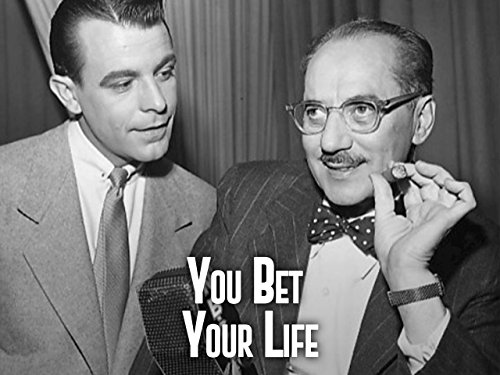
Photo: imdb.com

George was born in Beijing (then Peking), China in 1919. His father was in the importing/exporting business. When he was not quite one, his parents moved to San Francisco where he grew up. After high school, he attended San Francisco State College. He graduated in 1942 with a degree in speech and drama. He took a job with a local radio station KGO for a short time. He married his college sweetheart Peggy Clifford in 1943 and they would stay married until George died. The couple had two daughters and a son.

Photo: collectors.com

Poor eyesight and asthma prevented Fenneman from military action in World War II, but he was able to become a broadcast correspondent for the War of Information. In 1946 he was back in California, in the radio industry again. One of the shows he announced for was Gunsmoke. After the episode concluded, he would introduce Matt Dillon (William Conrad) to discuss the sponsor’s products which often was cigarettes such as L&M or Chesterfield.

Some of the other radio shows he announced for included The Orson Welles Show, The Eddie Albert Show, and the Hedda Hopper Show.

Photo: aveleyman.com

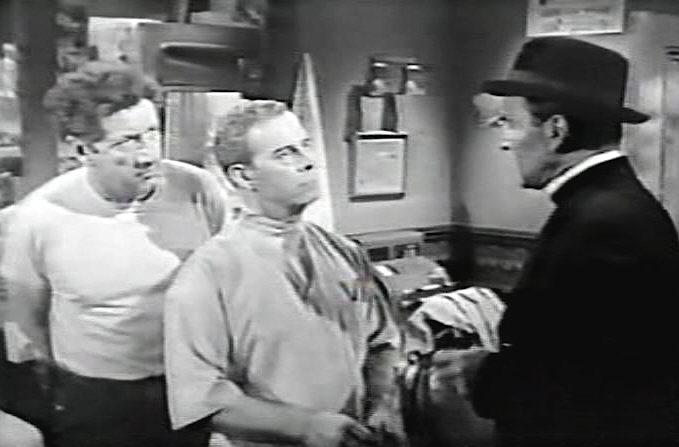
He and Peggy were neighbors of Christian Nyby. In 1951, Nyby was hired as director for the film, The Thing from Another World. George joined the cast as in the minor role of Dr. Redding who has an important scene at the end of the film. It took 27 takes for him to get the speech right, and he realized he was better suited for radio. However, he would appear in two additional films, the little-known Mystery Lake in 1953 and How to Succeed in Business Without Really Trying in 1967. While his voice was part of several other films, most notably in the original Ocean’s 11 as the man talking on the phone to Sheriff Wimmer.

Jack Webb had worked on broadcasts with George during the war. He hired Fenneman as announcer for his radio show, Pat Novak, For Hire. When Dragnet aired the same year, Jack took George with him. George, along with Hal Gibney took on the role of narrator for the show. They both continued with the show in 1951 when it moved to television. Dragnet was off the air for a number of years and returned to television in 1967. Fenneman was again hired as narrator with John Stephenson for that version. George was the one who was heard saying, “The story you are about to see is true. The names have been changed to protect the innocent.” Stephenson handled the closing narration. Fenneman was also cast as a news reporter in a variety of shows including Please Don’t Eat the Daisies, The Man from U.N.C.L.E., The Name of the Game, and on Batman in 1966 in the episode, “The Yegg Foes in Gotham.”
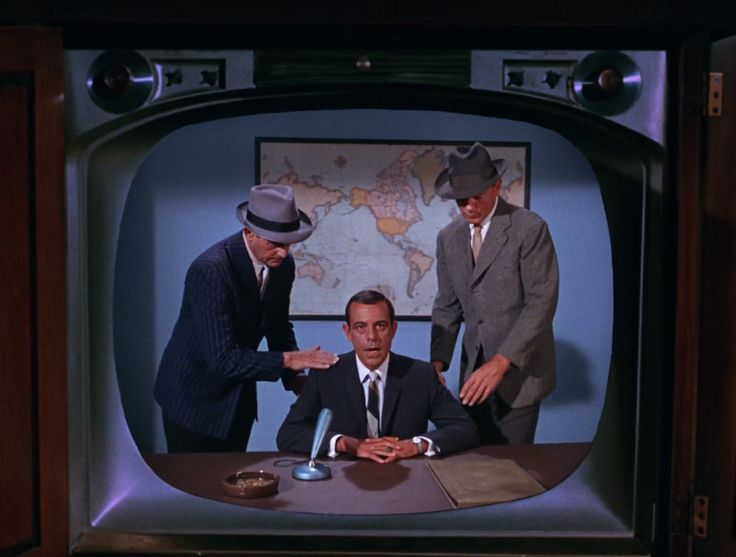
Photo: pinterest.at
On Batman

In addition to appearing on Groucho’s show on television, Fenneman was the host or announcer for several other shows. He emceed two games shows during his time with Groucho: Anybody Can Play in 1958 and Your Surprise Package in 1961. In 1963, He hosted a show on ABC titled Your Funny, Funny Films which was a cousin to the later Candid Camera and America’s Funniest Home Videos.

He was usually an unseen announcer on The Ed Sullivan Show, but in 1964, the night the Beatles were on the show for the second time, he did a spot on the air for Lipton Tea. From 1978-1982 he hosted a show on PBS, Talk About Pictures. In this show, Life magazine photographer Leigh Weiner and George interviewed respected photographers and looked at their best photos.

Photo: pinterest.com
With Leigh Weiner on PBS

He also was the voice for Home Savings & Loan commercials from the late 1960s until his death from emphysema in 1997. He also acted as announcer for shows such as Dean Martin and Jerry Lewis, Donny and Marie, The Jim Nabors Show, and The Life of Riley.

Photo: hollywoodphotographs.com
With Martin and Lewis

In 1993, The Simpsons aired an episode that spoofed Dragnet, and Fenneman can be heard on the show delivering his famous line about names being changed to protect the innocent.

Despite his large cannon of work as an announcer and emcee, Fenneman became a household celebrity when he went to work for Groucho on You Bet Your Life. One day George was standing on the corner of Hollywood and Vine. Robert Dwan, who had hired him at KGO Radio, came up and told him he was holding an audition for a new show for Groucho. Fenneman went up against thirty other announcers and won the job which paid $55 a week. He was hired just to do commercials. At some point, Groucho decided he should also be scorekeeper, as well as his straight man.

Photo: usawoopro.blogspot.com

When discussing Groucho, George said, “I have to say he was unique, and he was fearless. It was a great privilege to work with him for 15 years and to be his friend for 30.” After Fenneman’s death, Peggy did an interview for an article by Lawrence Van Gelder for the NY Times in June of 1997. She said that George was always a fan of Groucho and the Marx Brothers. She remembered them often going to the Golden Gate Theater when they were in college. They went to watch the Marx Brothers rehearse future movie scenes for comic timing. She remembered watching scenes from A Night at the Opera and A Day at the Races.

Groucho, known for his quick wit and acid tongue, found an agreeable and attractive man in Fenneman. When viewers queried George whether the show was scripted or ad-libbed, he always said yes. Actually, it was about 50/50.  Groucho was fed some lines from the interviews with the contestants, but he never met them ahead of time and was given the freedom to interject whatever comments he chose.
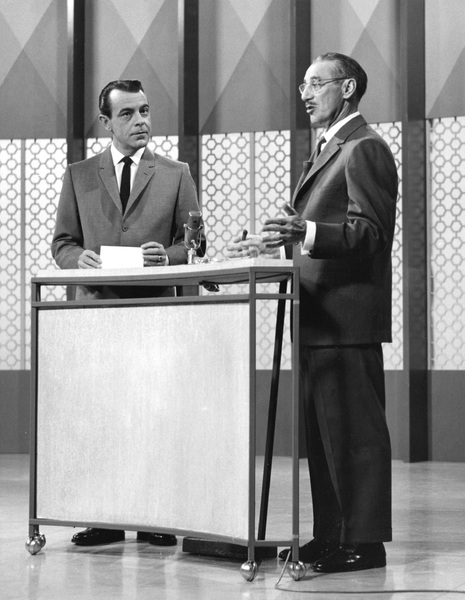
Photo: mptvimages.com

George often took the brunt of Groucho’s humor. One time he had to inhale helium, one day he came down from the ceiling when the secret word was said in place of the usual duck, or he would be questioned about something on the show. For example, one evening each of the contestants was a very attractive woman and Groucho made it seem that Fenneman had set that up on purpose. One contestant mistakenly referred to George as Mr. Fidderman, and Groucho called him out to discuss his double life.

Photo: popflock.com

George never knew what Groucho had in store for him. Often Marx would summon George from behind the curtain, and he always looked uncomfortable which was quite genuine. But Groucho had great affection and appreciation for him, calling him the perfect straight man.

At times on the show, George could also be quite funny, but he knew his main role was straight man, and he usually toed that line carefully.

George and Groucho remained friends long after the show was cancelled. They often got together before Groucho’s death in 1977 at age 87. Groucho never lost his sense of humor. At one of their last visits, Groucho was in very frail health. Helping Groucho get across the room, George lifted him out of his wheelchair and carried him. He had his arms around his torso and began to shimmy him across the floor. Groucho’s rasping voice said, “Fenneman, you always were a lousy dancer.”
Photo: en.wikipedia.org

Although the shows have never been released in a chronological DVD collection, they are available. The programs were recorded in full and then edited to the desired length. On MP3 discs, some of the unedited tapes are available which provide a very different perspective than the aired show.

There are a few announcers still well known in the business. I think of Rod Roddy, Johnny Gilbert or Johnny Olson who have game show fame, but it is a career that is being phased out. There is something charming about watching the former announcers for shows promoting products and interacting with the stars. Harry Von Zell from the Gracie Allen and George Burns Show comes to mind or Don Wilson from the Jack Benny Show. Like rotary phones, transistor radios, and Polaroid cameras, they are fondly remembered from a slower and less technological period in history.

With this series being Oddly Wonderful, I am stretching it a bit by focusing on George. In our definition of oddly wonderful, he was definitely the wonderful.

The Alliterative Harry Morgan (Famous for saying Horse Hockey and Beaver Biscuits as Colonel Potter)

morgan1


When it comes to prolific actors in television and film, few people can equal Harry Morgan’s career. Known for his deadpan delivery, he was in more than 100 films. He also starred in 11 television series and appeared on 6 TV Guide covers.


Born Harry Bratsberg in 1915, he grew up in Muskegon, Michigan. His parents came from Norway and Sweden.  Harry went to the University of Chicago, planning on becoming an attorney but got interested in acting instead. In 1937, he began appearing with stock companies, followed by Broadway roles.

Harry Morgan From 'December Bride'


His first wife was Eileen Detchon who he was married to from 1940 until her death in 1985. Her photo appears on Colonel Potter’s desk on M*A*S*H. They had four sons: Christopher, Charley, Paul and Daniel. Morgan remarried in 1986 and was married to Barbara Bushman until his death.

morgan8


He was signed by Twentieth Century Fox in 1942. His screen debut was The Shores of Tripoli under the name Henry Morgan. Later that year he appeared in Orchestra Wives and a few years later was in The Glenn Miller Story with Jimmy Stewart. In 1943, he starred with Henry Fonda in the highly acclaimed The Ox-Bow Incident.


In 1954, he was offered the role of Pete Porter in December Bride which ran until 1959. In the show, he complained about his wife Gladys a lot, but we never meet her. When the show ended, he starred in a spin-off Pete and Gladys from 1960-1962. Pete Porter is an insurance salesman. His scatter-brained, but beautiful, wife is played by Cara Williams.


The next year he was cast in The Richard Boone Show from 1963-1964. This was an anthology series which Richard Boone hosted.  A cast of 15 actors appeared in different roles each episode. Morgan appeared in all 25 episodes. The show never captured viewers, probably because it was on against Petticoat Junction.

richard boone


Almost immediately upon its ending, he was again cast in a television show with a role on Kentucky Jones during 1964 and 1965. Kentucky Jones is a veterinarian and former horse trainer.  He and his wife adopted a Chinese boy named Dwight Eisenhower “Ike” Wong. After his wife’s death, the local Asian community and handyman Seldom played by Morgan helps him raise Ike.

ky jones


Morgan had a couple of years of guest starring in shows such as The Wackiest Ship in the Army and Dr. Kildare, and then he was cast in Dragnet from 1967-1970. He and Jack Webb were friends before the show and continued to be best friends throughout Harry’s life. Webb had directed the previous Dragnet show in the 1950s and revived the show in 1967, convincing his friend to play the role of Officer Joe Gannon who helped Sergeant Joe Friday (Webb) solve crimes in Los Angeles.

morgan4


Between 1970 and 1972 he would show up in The Partridge Family in two different roles and Love American Style among other shows. 1972 would find him starring in another show, Hec Ramsey, until 1974. This show reunited Morgan with Richard Boone who starred in it and Jack Webb who produced it. Ramsey was a western detective who preferred to solve crimes with his brain rather than his gun. The show only lasted for ten episodes.

morgan23


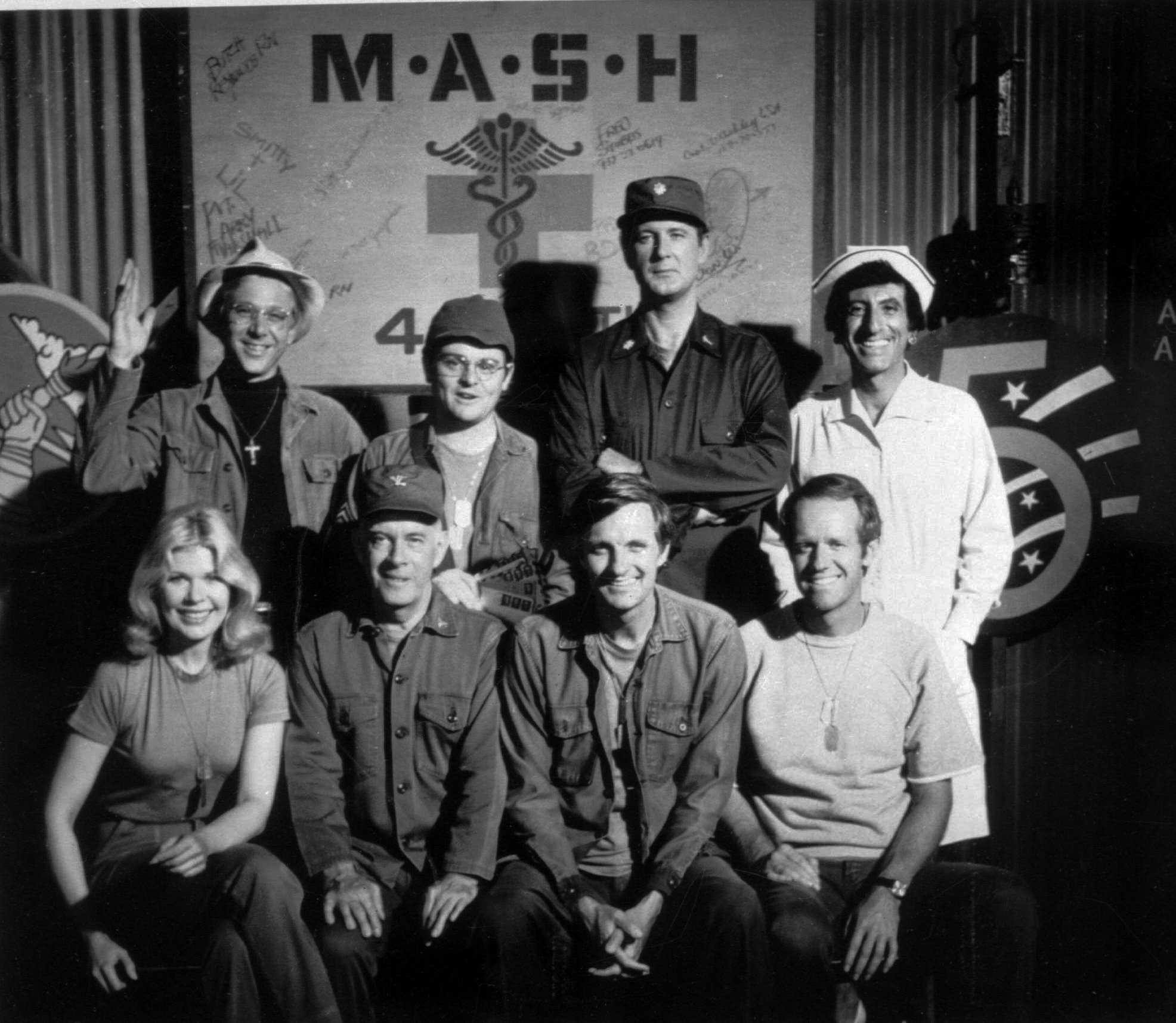
From 1974-1983, he was cast in his most famous role, that of Colonel Potter on M*A*S*H. A military hospital staff treating soldiers during the Korean war rely on laughter to get through the gruesome work. The show combined heartache and joy to tell the story of the 4077th. When the show was cancelled, Harry continued the role in the spin-off, After M*A*S*H from 1983-1985.

morgan14

On M*A*S*H Morgan painted the portraits attributed to Colonel Potter. He won the Emmy for Outstanding Supporting Actor in 1980, receiving 11 nominations overall during the run of the show.

morgan13

His description of Colonel Potter was: He was firm. He was a good officer, and he had a good sense of humor. I think it’s the best part I ever had. I loved playing Colonel Potter.”

morgan11

When asked if he was a better actor after working with the show’s talented cast, Morgan responded, “I don’t know about that, but it’s made me a better human being.


MBDCHAN EC021

Morgan also appeared in several Disney movies during the 1970s, including The Barefoot Executive, Snowball Express, Charley and the Angel, The Apple Dumpling Gang, The Cat from Outer Space, and The Apple Dumpling Gang Rides Again.

In 1986 he was cast in Blacke’s Magic. The show featured a magician and his father, a con man, who solve crimes. Unfortunately, like many of the shows he was a part of, this one only lasted 15 episodes. When it ended in 1987, Harry was immediately given a role in You Can’t Take It with You where he appeared on three episodes during 1987 and 1988. Morgan starred as Martin; the show was based on the original play, but the television series was set in the 1980s.  Although Morgan was only in three episodes, he was in the majority of them, because the entire show consisted of four episodes.

morgan22blackes


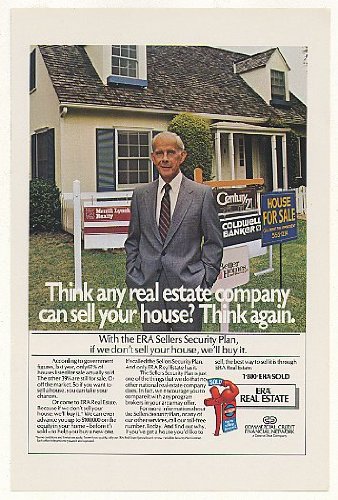
In the 1980s, he appeared in commercials for ERA realty and Toyota.

era


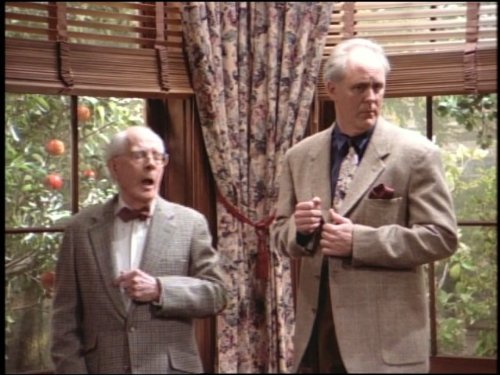
During the late 1980s and early 1990s, he appeared in six different shows, with recurring roles on The Simpsons and Third Rock from the Sun. In 1996 he retired.

morgan25thirdrock


In 2006, Morgan was inducted into the Hall of Great Western Performers at the National Cowboy & Western Heritage Museum.


Many of his western films were done with James Stewart. They did five films together, and Morgan says Stewart was one of the nicest men he ever met and extremely professional.


In addition to Jack Webb, he was good friends with Tim Conway and Don Knotts.

A very interesting man, in his spare time, he enjoyed golfing, fishing, travel, spending time with his family, reading, raising horses, horse riding, painting, and poetry.

morgan5

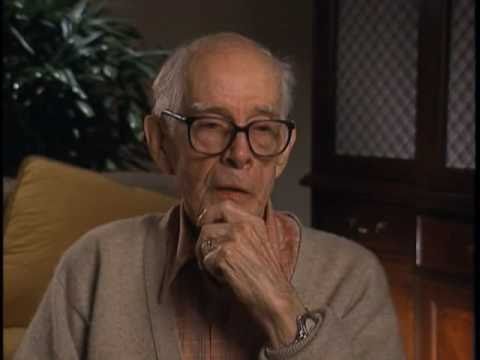
He died in 2011 from pneumonia.

Following Morgan’s death, Mike Farrell, who played B.J. Hunnicutt, starring with Morgan in M*A*S*H, released the following statement:

“He was a wonderful man, a fabulous actor and a dear and close friend since the first day we worked together. As Alan [Alda] said, he did not have an unadorable bone in his body . . . He was a treasure as a person, an imp at times, and always a true professional. He had worked with the greats and never saw himself as one of them. But he was . . . He was the rock everyone depended on and yet he could cut up like a kid when the situation warranted it. He was the apotheosis, the finest example of what people call a ‘character actor’. What he brought to the work made everyone better. He made those who are thought of as ‘stars’ shine even more brightly . . . The love and admiration we all felt for him were returned tenfold in many, many ways. And the greatest and most selfless tribute to the experience we enjoyed was paid by Harry at the press conference when our show ended. He remarked that someone had asked him if working on M*A*S*H had made him a better actor. He responded by saying, ‘I don’t know about that, but it made me a better human being.’ It’s hard to imagine a better one.”

morgan6


“The Ultimate Definition of Success is to Repeat It” says Jeffrey Benjamin

After reading about That Girl and what a tough time Marlo Thomas and Ted Bessell had finding new roles that did not stereotype them as Don and Ann, I thought about actors who were able to transcend that hurdle.  I could think of numerous actors and actresses who were able to have two important television roles.  Mary Tyler Moore began as Laura Petrie but Mary Richards was also a strong character.  Ron Howard grew up from Opie Taylor to Richie Cunningham.  Kristy McNichol lived out her adolescence in Family and then moved to Florida as Barbara in Empty Nest.

I started to do some research and found the following actors who had numerous television series.

Alan Alda – Of course, his iconic role was Hawkeye Pierce in M*A*S*H.  From 1972-83 he kept us laughing or crying in Korea.  Since M*A*S*H he has taken on roles in several television series including ER (1999), West Wing (2004-06), 30 Rock (2009-10), The Big C (2011-13), and The Blacklist (2013-14).

Fun Fact:  He got his start on the Phil Silvers Show in 1957.


Meredith Baxter – Most people remember her as Elyse Keaton in Family Ties (1982-89), but for me it was Nancy in Family (1976-80).  Other shows include Bridget Loves Bernie (1972-73), The Faculty (1996), Cold Case (2006-07), The Young and the Restless (2014), and Finding Carter (2014-15).

Fun Fact:  Her mother was Whitney Blake, Missy on Hazel.


Sally Field – I think most people will always think of Sally Field as the Flying Nun (1967-70).  Her first show was Gidget (1965-66). As we discussed a couple of weeks ago, she had a role in the forgettable Hey Landlord (1967) and she was The Girl with Something Extra (1973-74).  Like Alan Alda, she also had a recurring role in ER (2000-06), and her most recent show is Brothers and Sisters (2006-11).

Fun  Fact:  She won an Emmy for her appearance on ER.


John Forsythe – While younger people only know him as the voice of Charlie on Charlie’s Angels (1976-81) or Blake Carrington from The Colbys (1980-86) which led to Dynasty (1981-89), one of my favorite sitcoms of all is Bachelor Father which John starred as Bentley Greg from 1957-62.  Before Bachelor Father, he starred in Lights Out (1951-2), Suspense (1951-52) and Studio One (1949-55). Before Charlie’s Angels, he was in the John Forsythe Show (1965-66) and To Rome with Love (1969-71). His last show was The Powers That Be (1992-93).

Fun Fact: Along with Harry Morgan and Meredith Baxter, he was on episodes of The Love Boat.


Harry Morgan – Harry Morgan is the king of shows, with 12 series to his credit.  He is probably best remembered for three of them–Pete and Gladys (1960-62), Dragnet (1967), and M*A*S*H (1974-83). His first sitcom was December Bride (1954-59) which spun off Pete and Gladys.  In the 60s before Dragnet he was in Kentucky Jones (1964-65) and Dr. Kildare (1965).  The seventies saw him in Hec Ramsey (1972-74) and Gunsmoke (1970-75).  After M*A*S*H, he literally was in After M*A*S*H (1983-85), Blacke’s Magic (1986), You Can’t Take It With You (1987-88), and Third Rock From the Sun (1996-97).

Fun Fact:  He was in an episode of the Partridge Family in the first season.


Bob Newhart – Bob Newhart gets the award for having the most shows with his name it in.  Fans fondly remember The Bob Newhart Show set in Chicago when he played Dr. Hartley (1972-78) or Newhart where he was the inn owner Dick Loudon (1982-90).  His first show was The Bob Newhart Show (1961).  After Newhart, he tried out Bob (1992-93) and George and Leo (1997-98).  Like Alan Alda and Sally Field, he also had a recurring role on ER (2003) and most recently has had a recurring role on The Big Bang Theory (2013-15).

Fun Fact:  The 1982-90 show had the best finale ever when the show ended with Bob in bed with his wife from the 1972-78 series thinking Newhart had been a dream.


Ed O’Neill – If any actor should have been stereotyped after a role, Ed O’Neill seemed doomed after Al Bundy in Married. . . With Children (1987-97), yet he now has an even bigger hit in Modern Family as Jay Pritchett (2009-16).  In between he was on the Big Apple (2001), Dragnet (2003-4), a remake of Harry Morgan’s show, and John From Cincinnati (2007).  Like Alan Alda, he took on a role on The West Wing (2004-05).

Fun Fact:  He signed as an undrafted free agent with the Pittsburgh Steelers in 1969 but was cut in training camp.


Dick Van Dyke – Finally, we have Dick Van Dyke.  Before I researched this blog, I thought he and Bob Newhart might have the most sitcoms to their credit.  He comes in with only four starring shows overall.  Like Bob, he never wanted to stray far from his name:  We had the iconic Dick Van Dyke Show as Rob Petrie (1961-66), The New Dick Van Dyke Show (1971-74), The Dick Van Dyke Show (1988), and then Diagnosis: Murder (1993-2001). Like so many of these actors who have something in common with Alan Alda, Dick Van Dyke’s first appearance in a sitcom was also The Phil Silvers Show (1957-8).

Fun Fact:  He can trace his family line back to the Mayflower.


Why do some stars get locked into a role that they are never able to separate themselves from?  Think Henry Winkler as the Fonz, Lucille Ball as Lucy, or Don Knotts as Barney.  I think part of it is that we get so attached to these characters we almost want to believe they are real and the actor moving on destroys that image.

The above actors all had different situations that allowed them to move on more easily.  Alan Alda never had that hit show again.  After M*A*S*H, he took on dramatic recurring roles.  Meredith Baxter was in a  mixed genre of shows. Of her two hit shows, one was a drama, Family, and one a sitcom, Family Ties.  Dick Van Dyke had the same formula:  The first Dick Van Dyke Show, a sitcom, and Diagnosis: Murder, an action/mystery series.  John Forsythe and Harry Morgan came into show business during the golden days of television.  They were able to have extremely successful shows and characters and then start over.  Forsythe had 10 series to his credit, Morgan had 12. Sally Field, although starting out in television, was certainly better known as a movie actress.  Audiences were seeing her on the big screen as other characters so they perhaps don’t pigeon hole her into one role so much.  Ed O’Neill actually had success on two sitcoms about families.  Maybe Jay Pritchett is so successful because he shows what Al Bundy may have been like growing up in a more enlightened era where the fathers help parent and run the house.  And Bob Newhart, I think, was successful because he actually plays the same character in most of his shows, and we love that character so we keep looking for him, no matter what the show is actually titled.