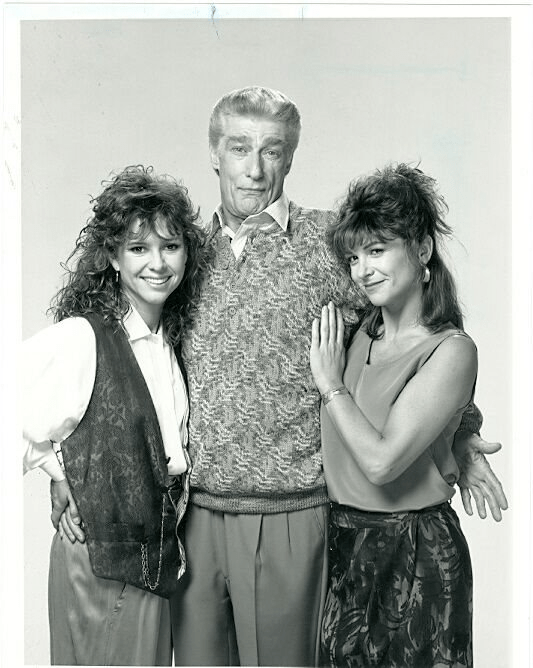
This month we are learning about sitcoms with one name, and today is Angie. Angie had a short run from February 1979 until September of 1980, producing 36 episodes. It was one of the few Garry Marshall shows not to be a long-running hit. He created it with Dale McRaven. We all know Marshall’s amazing career with Happy Days, Laverne and Shirley, The Odd Couple, not to mention all of his great movies. McRaven also had a prolific career as a producer and writer. He’s listed as producer for The Partridge Family, The Betty White Show, Mork and Mindy, and Perfect Strangers. His writing credits includes all of these shows, as well as The Dick Van Dyke Show, That Girl, Get Smart, The Odd Couple, and Room 222 among others.
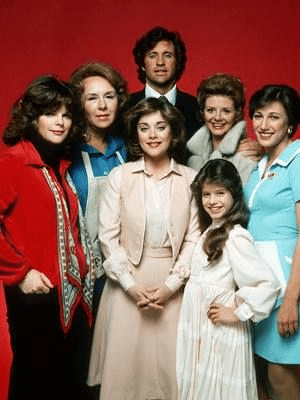
📷ihearthollywood.com
The cast was quite talented: Donna Pescow played Angie, Robert Hays was her boyfriend-later-husband, the amazing Doris Roberts was her mother Theresa before Raymond came along, and Debralee Scott played her sister Marie.
Bradley Benson is a young pediatrician who comes from a wealthy family comprised of his stuffy father Randall (John Randolph), his overbearing sister Joyce (Sharon Spelman), and her daughter Hillary (Tammy Lauren). The show is set in Philadelphia.
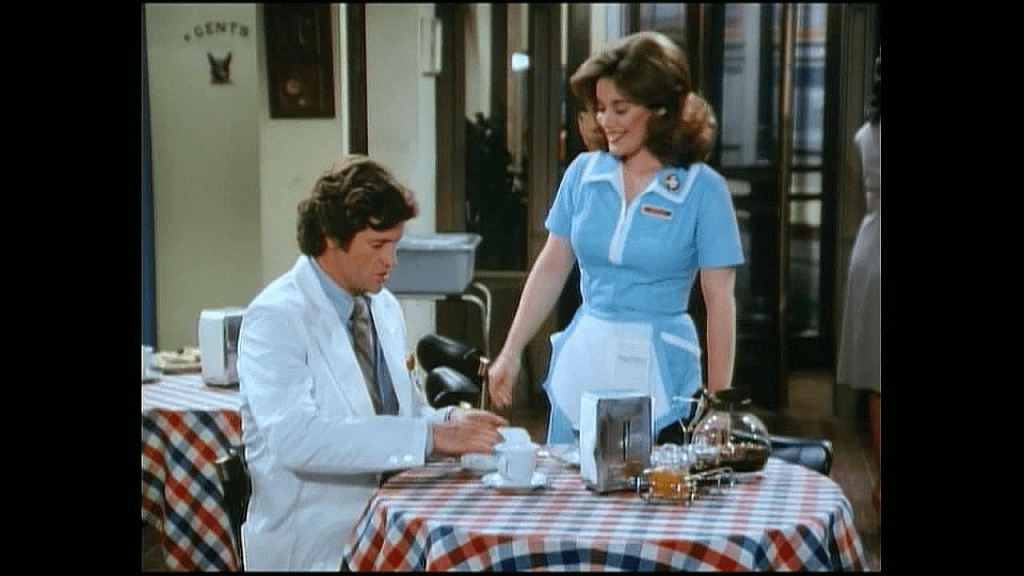
Angie is a coffee-shop waitress who falls in love with Brad. Many scenes are set in the diner with Angie’s friend and co-waitress Didi (Diane Robin). When their families argue about wedding plans, Brad and Angie elope. Later Angie’s mother plans a small family wedding for the two families to get to know each other, and Brad buys the coffee shop for Angie.
At the beginning of the second season, Angie sells the coffee shop to buy a salon with her mother.
📷imdb.com
The theme song was “Different Worlds,” written by Norman Gimbel and Charles Fox. Gimbel is still hard at work and has amassed 494 credits so far while Fox has 131 credits for many impressive television series and big-screen films. Maureen McGovern sang it; she’s best known for her top-forty hit “The Morning After.”
The show was sandwiched between Happy Days and Three’s Company on Tuesday nights, which ensured great ratings. This one was fifth its first week. The show just could not find its fan base. By the end of the season, the Nielsen ratings had fallen drastically, and the show had moved to Monday nights following Monday Night Football. Angie wasn’t the only show to struggle in this time slot. Once it was moved, three other shows—One in a Million, Goodtime Girls, and Laverne and Shirley—all tried this scheduling spot. I’m not sure if the shows were just not very good in 1979, if people were too busy to watch television, or the network heads were inexperienced, but when you look at the schedule from 1979 most prime times had a different show in the slot every season of the year. When it’s not only one show on a network moving, but many shows on a network moving and then all networks having a bunch of shows moving, how are viewers supposed to figure out where anything was? Out of the 54 new shows debuting in 1979, by the next season every network basically had one hit show out of the bunch: ABC-Hart to Hart, CBS-Trapper John MD, and NBC-The Facts of Life. While these are all decent shows, none of them were classics in my opinion. In 1980 another 30 shows were brand new.
📷rewatchclassictv.com
The show was put on hiatus. It did return in April on Saturday nights, but it was officially canceled in May.
When you look at this show on paper, it had all the right elements. First of all, we have Garry Marshall and Dale McRaven, very successful creators and writers. The cast was amazing. Even the theme song was composed and sung by extremely talented people. Then you have the fact that there were not a lot of great shows debuting this year; a decent show should have crushed it. So, what happened here?
I think I’m putting the blame for this one on the network. I watched the pilot and while pilots are meant to pull you back for the next one, most pilots aren’t the best of the series. Some of the pilots for shows I love are almost dreadful. This pilot was not dreadful. The characters were likable, the writing was funny, and the theme was not overdone over the years. It was similar to The Mothers-In-Law from a decade earlier but more of a Dharma and Greg (which came two decades later) where they fall in love despite their economic differences.
📷youtube.com
This series was better than a lot of shows that are currently on the air. I did watch another later episode where the couple elopes. Once again, the writing was good and the characters were a bit eccentric, but the writers knew how far to go to keep them likable and charming rather than odd. If ABC had kept it in a time slot for more than a month or two and given it a bit of time, it might have been a big hit.
If you want to check it out, let me know what you think. For a late seventies/early eighties show, it’s aged very well.
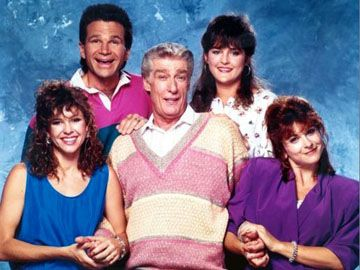
This month we are looking at sitcoms dealing with careers in our “Work It Out” series. Today I also am learning a lot about a show that I thought was okay but had a big following and was quite popular for seven seasons: Empty Nest.
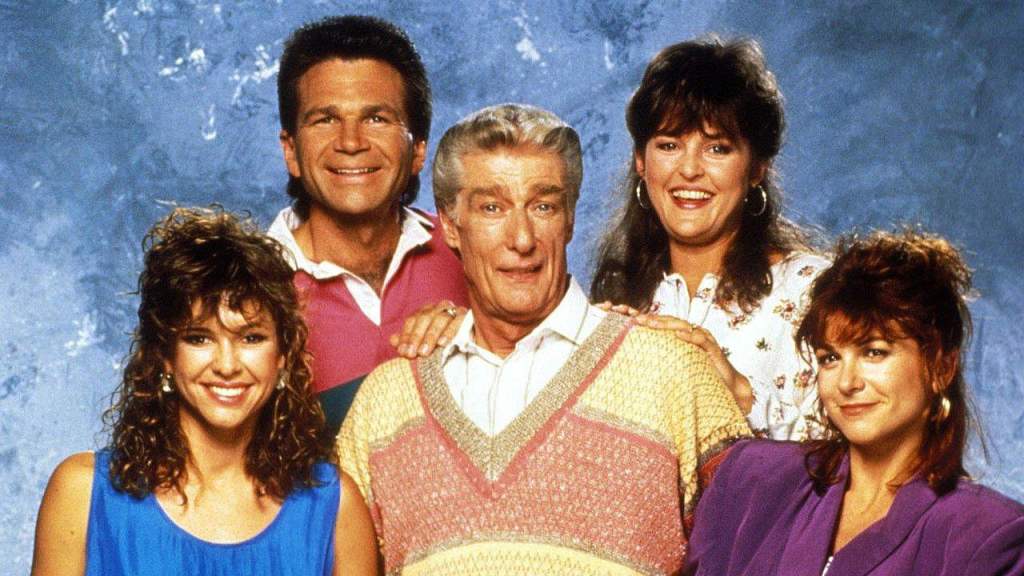
Cast Photo: omigods.com
This show was produced by Witt/Thomas/Harris Productions, the same team that produced Benson which we learned about last week. It was a spin-off of The Golden Girls which also was produced by the group. However, it is a stretch to connect the original episode and this series. In 1987 George (Paul Dooley) and Renee (Rita Moreno) were a couple who lived next to the Girls. They were suffering from Empty Nest Syndrome after their daughter (Jane Hamick) left for college and their son (Geoffrey Lewis) lived on his own. They had a neighbor Oliver (David Leisure).
Rita did not think the show was very well written. She said Susan Harris was ill at the time. The Corliss house and neighbor was about the only thing that was included in the new show.
On Empty Nest, Dr. Harry Weston (Richard Mulligan) is a widowed pediatrician. His two adult daughters Barbara (Kristy McNichol) and Carol (Dinah Manoff) move back in with him. Rounding out the cast was neighbor Charley (David Leisure) and Weston’s nurse Laverne (Park Overall). Carol is the oldest and had gone through a bad divorce. Barbara was the middle child and was a tough, undercover cop. Their youngest sister Emily was off at college and never seen in the first three seasons. When McNichol left the show early in the fifth season, Emily (Lisa Rieffel) moved back home but she left after that year, and for the final two seasons, only Carol remained at home, although McNichol did return for the finale. Charley bonded with Harry and considered him a surrogate father figure. Their dog Dreyfuss (Bear) also lived with the crew.
Photo: sitcomsonline.com
Bear’s father was a Golden Retriever mix and his mother was a St. Bernard. Bear’s entire family was in show business. His father was in Father Murphy and Summer Rental with John Candy. His brother was in both Steel Magnolias and The Bodyguard. His children continued the tradition taking roles in several movies including Homeward Bound II. Mulligan and Bear were close. Richard would greet him every morning and give him a treat.
The cast was well aware of each other before working together. McNichol had worked with Manoff who played her friend on Family earlier in the 80s. Mulligan had played Manoff’s father on Soap. Mulligan and McNichol worked together on The Love Boat. And, McNichol and Leisure were in the movie You Can’t Hurry Love in 1988.
Photo: mattbrowningbooks.com
The reason this show is considered in this month’s blog is that a lot of the show revolved around Harry’s medical practice. He worked at a hospital for the first five seasons with his nurse Laverne. The two are good friends. For the final two seasons, Harry retires and then decides to help out an inner city clinic run by Dr. Maxine Douglas (Marsha Warfield). When Laverne is fired by Harry’s replacement, he hires her at the clinic.
Photo: imdb.com
Some notable guest stars who showed up along the way included Don Adams, Diana Muldaur, Loni Anderson, Mayim Bialik, Angie Dickinson, Zsa Zsa Gabor, Shirley Jones, Audrey Meadows, and Doris Roberts.
The theme song was “Life Goes On,” written by John Bettis and George Tipton; it was performed by Billy Vera.
Critics liked the show. In 1988, TV Guide said “it’s a simple premise, but it’s vintage Harris and like everything else she does, Empty Nest has been meticulously thought out and superbly cast. Each of the regulars is carefully drawn, consistently realized . . . as for Empty Nest, it’s warm and entertaining comedy . . if you like the humor in Golden Girls, you’ll enjoy Empty Nest. And even if you don’t like Golden Girls, sample Empty Nest anyway. Trust us.” In 1992, TV Guide still liked the show and said, “Harry Weston is delicious and Dreyfuss the dog is delightful. Empty Nest is home to an experienced ensemble that knows its way around a sitcom.”
Mulligan was nominated for an Emmy for Outstanding Actor in a Comedy in 1989, 1990, and 1991, winning in 1989. He was beat out by Ted Danson for Cheers in 1990 and Burt Reynolds for Evening Shade in 1991.
Photo: sunny107.9.com
Most viewers loved the show the first four seasons, but after McNichol left and Harry retired, the quality seemed to wane. The show was in the top for seasons one through three. However, after that, it slowly declined, coming in #23 for season four, #45 for season five, #62 for season six, and #118 for season seven, so there was no surprise when it was canceled.
Grace Zabriskie appeared in the very first and very last episode of the series. In episode one, she was a woman who dated Harry, and in the finale, she played Laverne’s mother.
One of the typical plots that a lot of people mentioned as one of their favorites was episode 22 from season 1 where we watch Dr. Weston visit five different patients during one episode. At the end of the show, we realize that we have been following Billy from a newborn to 18 years of age, and we understand how much influence a family doctor can have on one patient.
Rue McClanahan talked about how Park Overall would spend her breaks roller skating in the parking lot. However, during season five, she broke her leg doing so and had to miss several episodes and spend several more with crutches in a cast.
Mayim Bialik Photo: wordpress.com
I have read a few times in the past few years doing research that Bea Arthur could be very difficult to work with. She was not the favorite on The Golden Girls set and, apparently, she caused an issue on Empty Nest as well. She despised gum chewing and would make the crew spit out their gum. When she guest starred on Empty Nest, she saw Manoff chewing gum and told her to get rid of it. When Manoff declined, Arthur stormed off the set. Speaking of Manoff, she was able to direct seven episodes of the series during the last three seasons. She directed five other shows including an episode of Sabrina, the Teen-Aged Witch. She was also credited with writing two of the Empty Nest episodes.
I do remember watching the early seasons of this show and thinking it was a decent show. I did not remember that McNichol had to leave for mental health reasons, so I’m guessing I stopped watching it before she quit. However, being in the top ten for three years is, or at least was at the time, a good indication of quality and then you add in TV Guide liking the show and Mulligan’s nominations for Emmy awards, and it presents good evidence of a well-rounded show. I did read that Overall could be a bit difficult on the set, and one of those comments came directly from her.
Photo: collectors.com
Marty Pollio, guest starred in season six when things weren’t so great and still had good things to say about the cast. He said that “it was an honor to be doing scenes with Richard Mulligan, he was talented beyond belief, and a great guy too. I never realized what a good actress Dinah Manoff was until I watched her work on this particular episode . . . nice person as well. The set was pretty relaxed and friendly. . . I had a really good time on this one.” It would probably have been better for the quality of the show to be a four-season show than a seven-season show.
I agree with TV Guide. If you were a fan of Golden Girls, you definitely should check out the first three seasons of Empty Nest. And even if you are in that small group of people who did not like Golden Girls, you should watch a few episodes and see what you think. However, that is easier said than done. There is no official DVD set; however, there are bootlegs on several places. I also could not find any streaming channels showing it. YouTube does have at least the first episode. Perhaps with all the classic tv channels out there, this show will make a comeback.
Today we are winding up our blog series, “Examining Some of Our Favorite Medical Shows.” Six years seems to be the magic number of seasons for many medical shows and it was no different for our series today: St. Elsewhere.
Photo: starstills.com
St. Elsewhere was created by Joshua Rand and John Falsey. It aired on NBC from 1982-88. It was produced by MTM Enterprises, Mary Tyler Moore’s company that also produced Hill Street Blues; both shows had large casts, realistic plots, and continuing storylines.
The show was talked about a lot, but I was surprised to learn that it never ranked higher than 47th in the Nielsen ratings, and that was in the final season. The reason it stayed on the air so long despite lower ratings was that it did very well with the 18-49 year age group with the networks were trying to appeal to. It did win 13 Emmys for writing, acting, and directing. (Overall the show won 13 Emmys out of 62 nominations.)
St. Elsewhere was set in St. Eligius Hospital, a rundown Boston teaching hospital. Its elevators don’t work and they still use an ancient tube system to send messages from one floor to another. Apparently “St. Elsewhere” was a slang term that referred to not well-equipped hospitals that served patients who were turned away from more well-respected institutions. The building that served as the hospital façade was the Franklin House on East Newton Street in Boston, which was originally a hotel for women. Young working women lived there including Faye Dunaway after she graduated from Boston University.
The show intertwined the professional and private lives of the medical staff and patients. It dealt with many cutting-edge social issues including heart transplants, artificial hearts, AIDS, religious conflicts, suicide, and gender identities.
Photo: people.com
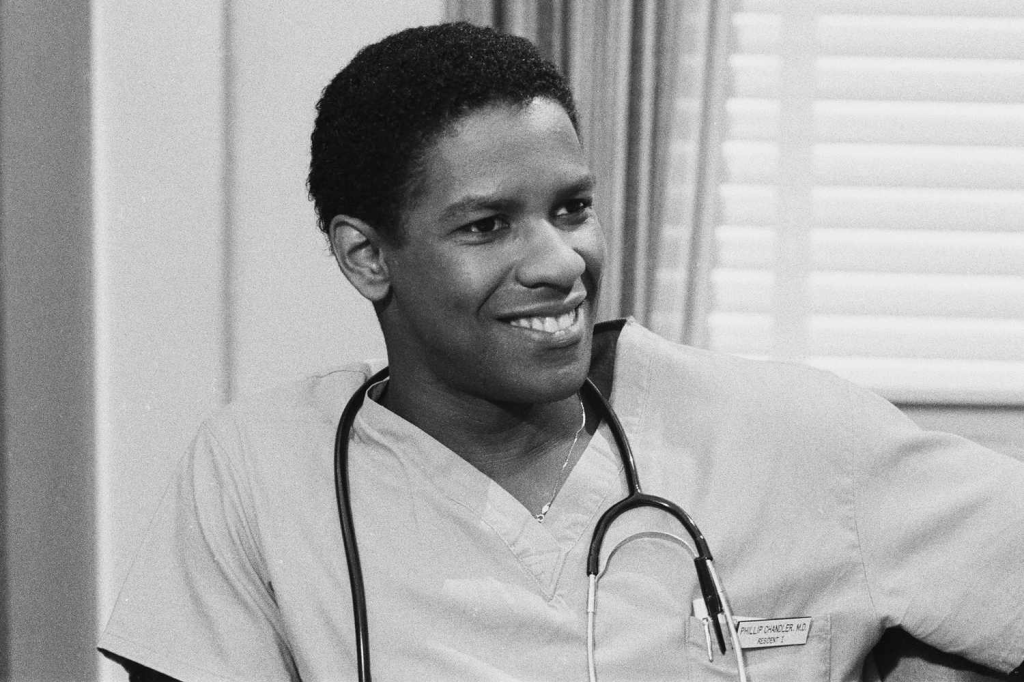
Surgeon Dr. Mark Craig (William Daniels) informs the staff that their hospital was considered a “dumping ground.” Craig helped train the interns along with Dr. Donald Westphall (Ed Flanders) and Dr. Auschlander (Norman Lloyd). Flanders was a popular character and the role was originally offered to Hal Linden who turned it down. Other members of the stellar cast included Ed Begley Jr. (playing Dr. Ehrlich), David Birney (playing Dr. Samuels), Mark Harmon (playing Dr. Caldwell), Ronnie Cox (playing Gideon), Helen Hunt (playing Clancy Williams), Howie Mandel (playing Dr. Fiscus), Christina Pickles (playing Nurse Rosenthal), and Denzel Washington (playing Dr. Chandler). This was a fitting role for Denzel who was a pre-med student in college.
Daniels was sent five scripts. He thought the writing was wonderful and having so many scripts displayed how the ensemble cast would be used. He might have a large part one week and then three weeks with small parts. He said Dr. Craig was like him in many ways. He ran the gamut from angry to nice in minutes. It fit his temperament and was wonderful to play him.
Daniels met a surgeon and followed him around the hospital, including in the operating room for an open-heart surgery procedure. He said he used some of the medical information, but he did not like the surgeon as a person and did not model Dr. Craig on him. He said using so much medical jargon was difficult and he had to learn about it before he went in to rehearse. He said that Dr. Craig had some funny lines in the show. He said he did not have any input with the writers on his character; in fact, they never really saw the writers.
Photo: ebay.com
Among the many guest stars were James Coco and Doris Roberts who both picked up Emmys as a mentally challenged boyfriend and a bag lady. It was an interesting storyline where two couples are followed through their medical care. One couple is upper middle class and the other has no money. Nothing is said; there are only observations of the action. The wealthier woman leaves the hospital with no cure but a high hospital bill for many tests. The bag lady, Cora, learns she needs to have both feet amputated because of gangrene, but she needs to take care of Arnie, her mentally challenged boyfriend, so she refused the surgery.
Roberts was asked about her role on the show in a Television Academy interview. She said Coco had received the script and called her to say she needed to audition for the role of his girlfriend. When Doris reached out, they declined, so she reached out to Bruce Paltrow, who was a producer and writer for the show, and she was hired. She did a lot of research watching homeless people. She realized that most people squatted because they did not want to lie down because they were worried about having things stolen. This is how her character got gangrene. When asked about what she thought happened to the character she said she thinks she died shortly after. Roberts got emotional discussing the role and said it still makes her cry. She said it was the best dramatic role she ever played.
Doris said one funny moment came at the Emmy Awards. When they called her name, she did not know what to do with her purse, so she handed it to Jimmy Coco. The next name called was his so he came on stage with the purse and mentioned he didn’t use one often but it came from Doris. Then a few nights later he was on the Tonight Show, and when he came on stage he had her purse and in it was a cigar, a half-eaten sandwich, and a few other items.
Photo: ebay.com
The show was classified as a drama, but it included comedy, as well as inspiring moments of interaction and care. One of these scenes is when Jack, a resident, has to deal with his wife’s death. She is an organ donor, and her heart is given to a female patient. Jack sneaks into the patient’s room when she is sleeping so he can listen to his wife’s heart.
Jazz musician Dave Grusin composed the theme. Grusin won twelve Grammys. He won an Academy Award for his score of The Milagro Beanfield War in 1988. He also scored some popular films including The Graduate, On Golden Pond, The Fabulous Baker Boys, and Tootsie. Before writing the theme for St. Elsewhere, he cowrote the themes for Good Times and Baretta.
One of the most interesting things about the writing on St. Elsewhere was the number of allusions to other television shows and movies and several cross-overs. There are many of these but some of the most fun ones for me included (1) the public loudspeakers often page characters from other television shows, (2) one of the characters on The White Shadow, Warren Coolidge, becomes an orderly and sometimes wears Carver high school shirts, (3) a psychiatric patient who watches The Mary Tyler Moore Show believes that he is Mary Richards and has an encounter with Betty White, and she says she is not Sue Anne Nivens, (4) Dr. Craig once mentions serving in Korea with B.J. Hunnicutt, and (5) the teaching doctors are seen at the bar at Cheers in one episode.
Photo: imdb.com
The hour-long show started on Tuesday nights. The show was canceled after the first year. Then Grant Tinker changed his mind and they were back on the air. For the second season, it was moved to Wednesdays where it remained until it was canceled.
The finale of this show gets talked about almost as much as Newhart. However, while fans loved the Newhart ending, there was a lot of controversy over the ending of St. Elsewhere.
Warning: This is a spoiler alert if you haven’t seen the show and want to watch it. After wrapping up several storylines, the final scene is a much younger Dr. Westphal and his son Tommy (Chad Allen) who has autism. Westphal is obviously a construction worker. Dr. Auschlander appears to be Westphal’s father. Tommy is playing with a snow globe and the two “doctors” discuss the fact that Tommy spends much of his day staring at the snow globe. They set the globe down and when the camera goes in close, we see St. Eligius inside.
We are left to assume that the entire series had been Tommy’s imagination. In other words, the show was fiction but the fiction was also fiction inside someone’s mind. Viewers understandably were confused and upset.
Photo: paleymatters.com
Later the cast did a special on Entertainment Weekly and was asked to share their thoughts about the finale. Here are a few of the comments. Chad Allen said, “From the mind of a young person whose fantasies were coming to life before him, it was neat.” William Daniels said he was “shocked, actually. I had no idea of their plans to do that. . . it was a provocative ending. A surprise to everybody.” Ed Begley Jr. felt that “it was quite fitting for what they had done the previous six years. They always tried to be out there, beyond the limits of what was being done before. They tried to think outside the box. . . . It was bold and shocking and upset some people. . . . It was highly unpredictable, just like every episode.” Howie Mandel knew it would offend half the viewers and appeal to the other half, but he described it as “ahead of its time, pretty ingenious, and creative and not like anything else.” Mark Harmon had been killed off earlier in the series, but said, “It made me smile when I heard about what they did because it was so them. They made a choice. and the choice is interesting.” Noman Lloyd said he “never bought it. I said at the time we were shooting, ‘This is a cheat.’ For me, it was a cheat.”
I will admit this was not a show I regularly watched. I find the entire philosophy of the ending fascinating. Many felt they had been cheated by getting pulled into the lives of characters for six years that never existed. However, if they are on a television series, did they ever exist? It shows how real characters become to us when we invest in a show and invite these people into our homes every week.
If you didn’t watch the show in the eighties, you can find it on Hulu and make your own decision about the finale. I do admit that I never look at snow globes the same way anymore.
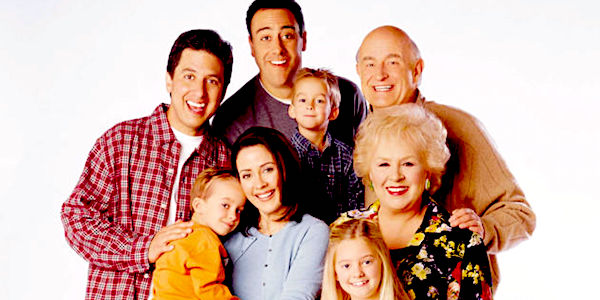
We are winding up this month’s blogs about some popular sitcoms. In 1986, the Barone family visited our living rooms. The show might be titled Everybody Loves Raymond, but the family was a package deal. Ray (Ray Romano), a sportswriter, (his column is “More Than a Game”) lives in a beautiful home with his funny and smart wife Debra (Patricia Heaton), and picture-perfect kids (played by real life siblings Madylin Sweeten, Sawyer Sweeten, and Sullivan Sweeten). However, once you probe a bit you find the same dysfunctional family all your neighbors and friends have.
Photo: cinemablend.com
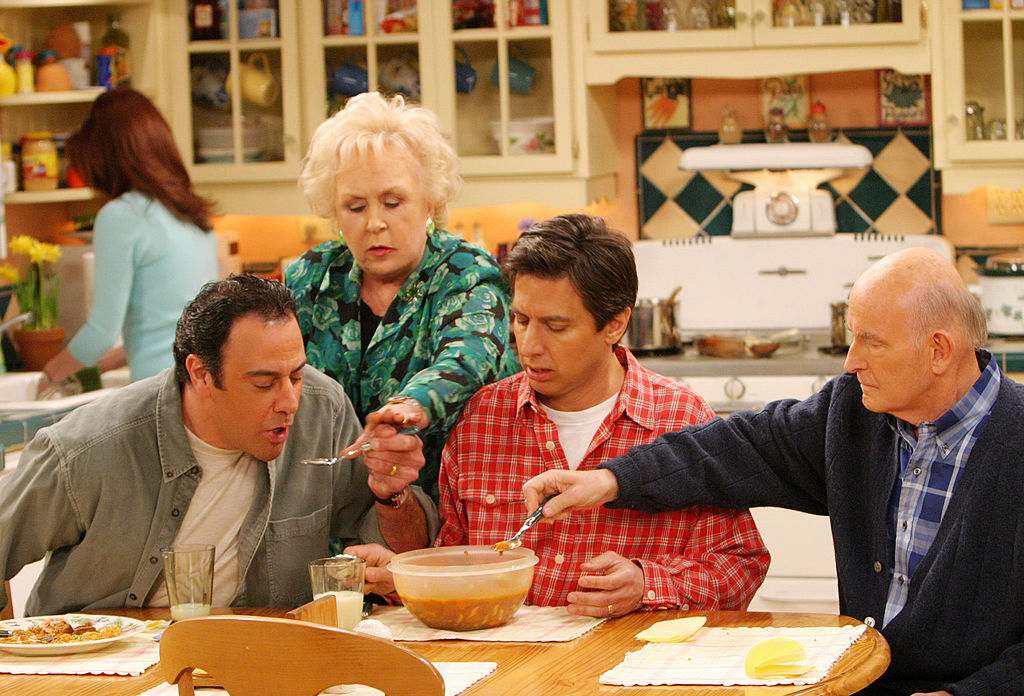
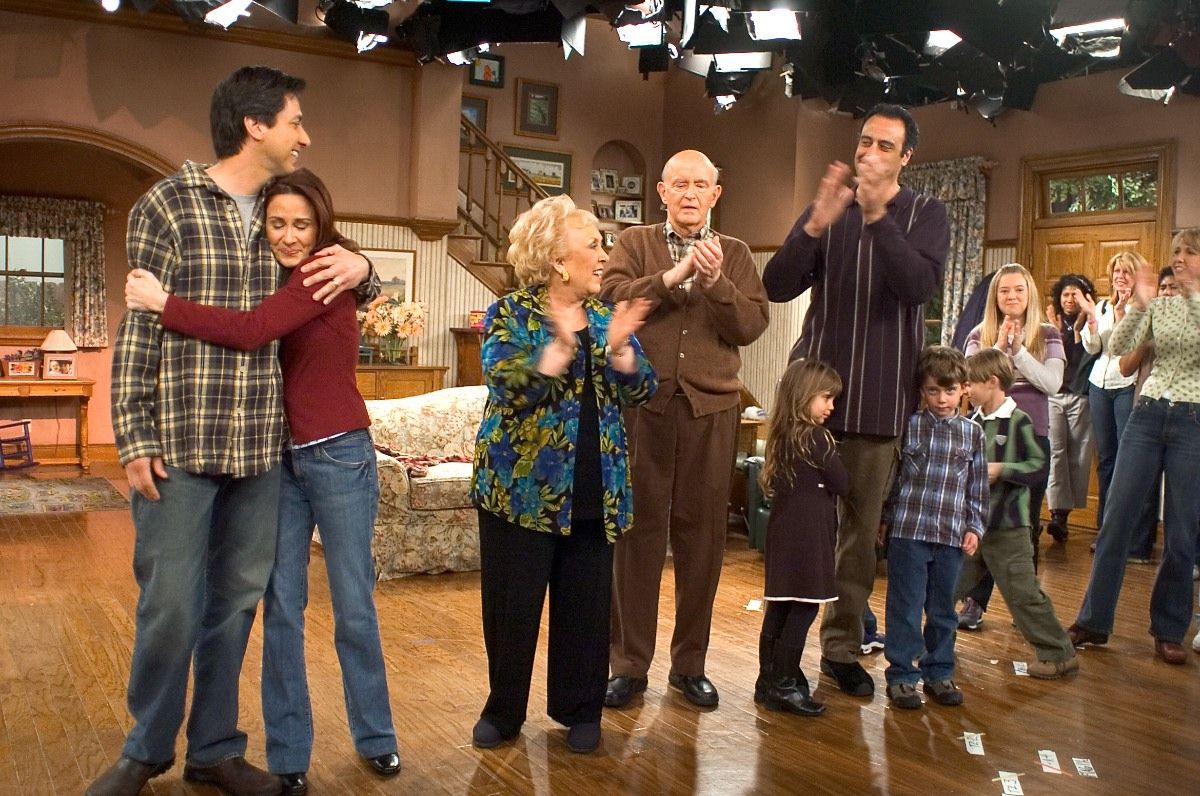
His parents Marie (Doris Roberts) and Frank (Peter Boyle) and his brother Robert (Brad Garrett), a policeman, live across the street and no one has anything that even looks like privacy. The exterior shots of the two Barone homes are located on Margaret Blvd in Merrick, New York and really are across the street from each other.
Romano told Larry King in 2005 that he was doing stand-up comedy for a dozen years when he appeared on Letterman. The next week, his company called to say they wanted to develop a show around his stories. He met with Philip Rosenthal who had been a writer for Coach.
Rosenthal Photo: vulture.com
Philip Rosenthal then created this show which debuted in September of 1996 and stayed on the air until May of 2005, producing 210 episodes. (Romano and Roberts were the only two characters to appear on every one of the 210 shows.) The shows were filmed with a live audience for most of the nine years.
Real life intersects with television life in a variety of ways in this show. In addition to the Barone kids being real siblings, Ray’s daughter Alexandra appears on the show from time to time as Ally’s friend Molly. Ray’s brother in real life was also a police officer at the NYPD. Rosenthal’s wife Monica Horan later joins the show as Amy and marries Robert. Ray’s father Albert portrays Frank’s friend Albert. And, Heaton’s real-life husband David Hunt plays Bill Parker on several episodes.
Photo: amazon.com
Ray tries to keep peace between his wife and his mother but fails most of the time. Marie often criticizes Debra and the way she behaves as a wife and mother. He often leaves most of the children and household responsibilities to Debra. Marie obviously favors Ray, the younger of the boys, to Robert’s frustration. Ray and Robert are often seen arguing like ten-year-old boys. Frank is a bit of a gruff and rough man. Anyone is a potential target for his many insults, especially his wife. However, deep down he loves his family a lot, and we get to know him better as the show continues.
Boyle claimed that he got lost on the way to his audition, so when he showed up he was sarcastic and frustrated which helped him get the part. Garrett was the first actor given a role. Roberts was busy with a play so she came to the audition without any preparation and acted by her intutiion, obtaining the role over 100 other women. Heaton was a bit stressed, earning a living by babysitting and clipping coupons and the execs found her “real and focused.” The role came down to Heaton and Jane Sibbett but Ray preferred Heaton.
Photo: vox.com
The show has a timeless quality about it since it focused more on telling stories and reflecting on busy lives. Rosenthal said writing sessions started with everyone talking about their lives until they got an idea. Rosenthal admitted that “ninety percent of everything you hear on the show has been said to me or Ray Romano or one of the writers.” An episode was filmed every week. The actors did a read through and rehearsed on Monday, rehearsed with the tweaks made Tuesday, CBS running rehearsal Wednesday, camera blocking Thursdays, and filming Fridays.
The critics liked the show from the beginning. Los Angeles Daily News critic David Kronke said it “was the quintessentially honest sitcom. It’s neither too hokey nor too crass. It depicts families as dissolute yet inextricably bound together, just like they really are, and finds the humor in those real frictions that threaten, yet never manage, to burst family units apart. Its characterizations are among the most finely defined on TV. Debra, with her vaguely no-nonsense disgust of Raymond’s simpleton-ness, is unlike any sitcom mom ever. Doris Roberts’ Marie had a sinister streak long before Nancy Marchand’s Livia showed up on The Sopranos. Raymond is also one of the few contemporary sitcoms that has figured out how to implement and even exploit the four-camera, live-audience situation, which is no simple feat.”
Betsy Wallace gave the show 4 out of 5 stars, claiming “the cast is stellar and plotlines shed light on universal human insecurities, such as doubting that your spouse still finds you attractive as you grow older.” In 1997, Bruce Fetts said the series “may now be the best sitcom on the air.”
Photo: thecheatsheet.com
The show received 69 Emmy nominations, winning 15 of them. Roberts won four times, Garrett three, Heaton twice, Romano once. Boyle was the only nominee never to win.
After nine seasons, the fans were still on board, but the writers felt they had run out of ideas to keep a tenth season interesting, so the show ended. Knowing when it’s time to terminate a show and allow it to end gracefully is a wonderful gift for viewers.
Photo: throwbacks.com
With nine years of amazing shows you’re not going to be able to binge watch the entire series in a week-end, but it’s a great way to spend a season’s worth of cold, winter days. Thanks for nine years of memorable shows; we love you all.
To begin the new year, we are looking at some of my favorite female television stars. We begin the series with Doris Roberts, everybody’s favorite mother.
Photo: findagrave.com
Doris was born in 1925 in St. Louis. When her parents split up, she went to the Bronx with her mother, and they lived with her grandparents. Her parents ran the Z.L. Rosenfield Agency which provided stenographic services to playwrights and actors. After studying journalism at New York University, she decided to try her hand acting, taking classes at The Neighborhood Playhouse School of the Theatre in New York City and working with Lee Strasberg at the Actor’s Studio. In the fifties, she could be seen in a variety of Broadway shows including The Desk Set, The Last of the Red-Hot Lovers, and Bad Habits. She worked with Shirley Booth on The Desk Set and credited Booth with being her acting mentor.
Photo: NY Daily News
In 1951 she accepted her first role in television, appearing on the show Starlight Theatre. She accepted roles on several 1950s drama shows. In 1956, Doris married Michael Cannata. They divorced in 1962, and a year later she married William Goven, a playwright. They would stay together until his death in 1986.
Doris was offered her first film role in Something Wild in 1961. She would go on to appear in more than 30 movies.
Her television career also began to expand in the sixties when she appeared in about nine drama series. However, it was the seventies when she hit her stride. During that decade, she would make appearances in Mary Hartman, All in the Family, Family, Rhoda, and The Mary Tyler Moore Show in addition to several others.
Helping Phyllis find a job on The Mary Tyler Moore Show Photo: METV.com
On All in the Family, Doris played a bar patron who befriends Edith. Originally, Roberts was offered the role of Vivian on Norman Lear’s show, Maude but at the last minute, Lear asked Rue McClanahan to take the role over. Later Norman stated that he thought Roberts’ character was too similar to Bea Arthur’s Maude. On Mary Hartman, Mary Hartman, she played a faith healer Dorelda Doremus.
Photo: yahoosports.com
Doris mentioned that Lily Tomlin encouraged her to move to Los Angeles in 1973. After her relocation, Roberts received her first recurring character roles. She would appear in Soap as Flo Flotsky on four episodes, five episodes of Barney Miller, and she had a regular spot as the star’s mother on Angie which ran from 1979-1980.
Photo: SBS.com
Her career continued to flourish throughout the eighties. She had recurring roles on as a gabby hairdresser on Maggie and on Alice as Lavin’s mother, and she was a regular on Remington Steele where Roberts played a former IRS agent who becomes the receptionist for the agency. In addition, she could be seen on Fantasy Island, St. Elsewhere, The Love Boat, Mr. Belvedere, and Cagney and Lacey, along with a variety of other shows.
Her appearance on St. Elsewhere gave her an Emmy win for a guest appearance, playing a homeless woman.
Roberts on St. Elsewhere Photo: amazon.com
In the decade of the nineties, we saw her on Empty Nest, Murder She Wrote, and The King of Queens, among others. However, it was in 1996 when she was offered the role that would change her life. From 1996-2005 she came into our living rooms every week as Marie Barone on Everybody Loves Raymond.
Photo: KTLA.com
More than 100 actresses were considered for the role. She was nominated for seven Emmys, winning four of them (2001, 2002, 2003, and 2005). Amazingly, Ray Romano as Ray Barone, Peter Boyle as his dad Frank, Patricia Heaton as his wife Debra, Brad Garrett as his brother Robert and Doris Roberts appeared in all 210 episodes of the series.
Photo: wonderwall.com
Ray Romano discussed the appeal Roberts had for viewers: “Here’s how good she was: She played the most intrusive, overbearing, nosy woman—always starting fights and whatnot and meddling in our business—and yet, when I asked the fans who their favorite character was, all the time it was her. She was so good at portraying the love that was underneath.” In an interview with Entertainment Tonight, Doris described the character of Marie Barone: “Nine glorious years; everything good comes to an end. She doesn’t give in, she doesn’t give up and she never takes no for an answer.”
Doris remained friends with the cast, especially her on-screen husband Frank played by Peter Boyle. After his death, Roberts remembered him: “Peter was so different from the characters he played. He was brilliant, well read, sensitive, a gentleman.” Roberts was able to visit him at home and in the hospital and to be with the family after his passing.
Photo: today.com
From 2006-2014, her work continued. In addition to a recurring role on The Middle, she appeared on Law and Order, Grey’s Anatomy, Hot in Cleveland, and Desperate Housewives, along with six other less-known shows. Her role on The Middle gave her a chance to work with her Everybody Loves Raymond costar, Patricia Heaton again.
In addition to her acting career, Roberts was a dedicated activist. She testified before Congress about age discrimination in Hollywood, worked with a variety of animal rights groups, and was chairwoman for the Children with AIDS Foundation. She also had a variety of hobbies including traveling, philanthropy, collecting wine, dancing, singing, and cooking. She claimed her favorite movie was Gone with the Wind.
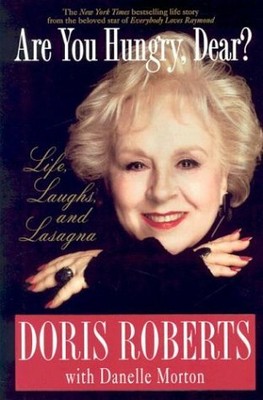
In 2003, Roberts published her memoir cowritten with Danelle Morton, titled, Are You Hungry Dear? Life, Laughs, and Lasagna. She included many of her favorite recipes in the biography.
In 2016, Roberts died following a stroke. Romano said “Doris Roberts had an energy and a spirit that amazed me. She never stopped. Whether working professionally or with her many charities, or just nurturing and mentoring a green young comic trying to make it as an actor, she did everything with such a grand love for life and people, and I will miss her dearly.”
Patricia Heaton said Doris’s television husband Peter Boyle was sick so the cast was able to prepare themselves for his death, but Doris died quickly. Heaton said “Roberts was funny and tough and loved life, living it to the fullest.”
Photo: televisionacademy.com
One of my favorite quotes by Doris Roberts is that “everybody is a teacher if you listen.” Thanks for teaching and entertaining us for more than six decades.
We are wrapping up our series, “Girls, Girls, Girls.” At the beginning of the month, we learned about a show that featured four women who spent much of their life together for seven years (Designing Women). Today we end our series with another show that featured a quartet of women that also ran for seven years.
In September of 1985, a new type of sitcom debuted. This show featured four retired women who lived life together, relying on humor to make things work. The show, Golden Girls, was on the air seven years, ending in 1992 and producing 177 episodes. The show was always on Saturday nights with the seventh season moving to an earlier hour.
Photo: tvseriesfinale.com
I read two different versions about the creation of the show, so take your pick. Maybe the truth is somewhere in the middle. One version is that the idea came from Brandon Tartikoff, an NBC executive. When he was visiting his aunt one day, he noticed that she and her next-door neighbor who was her best friend, argued a lot but loved each other. He thought the concept would make a great show.
The other version
credits NBC senior vice president Warren Littlefield. He was in the audience
when Selma Diamond and Doris Roberts acted in a skit called “Miami Nice,” a parody
of the popular Miami Vice. The skit featured old people living in Miami.
Either way, Susan Harris created the show itself, and it was produced by Witt/Thomas/Harris Productions, with Tony Thomas and Harris serving as original executive producers. After the first year, Harris was not as involved with the show, but still oversaw the scripts.
Photo: housebeautiful.com
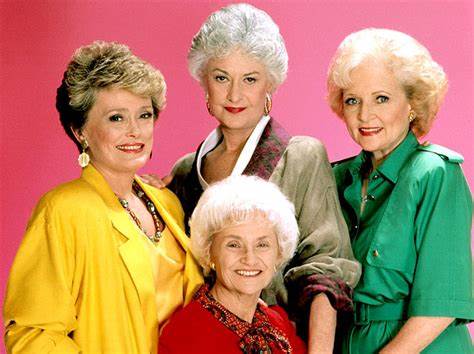
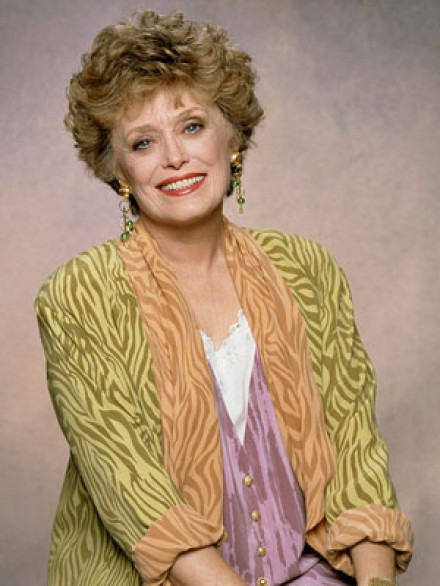
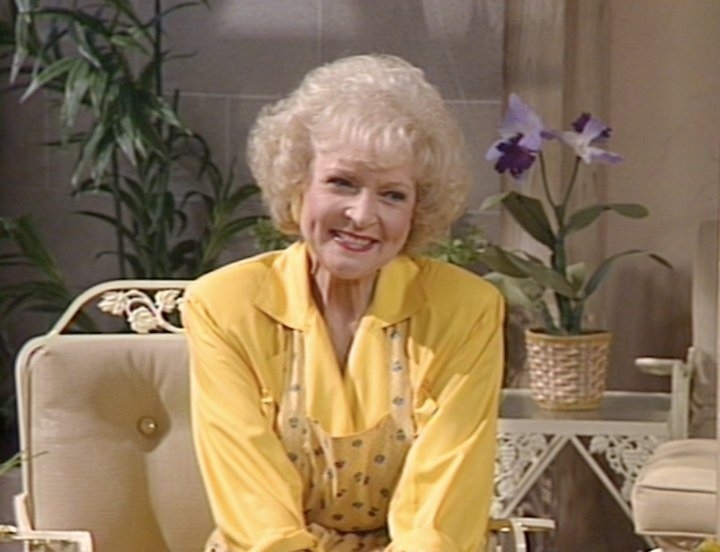
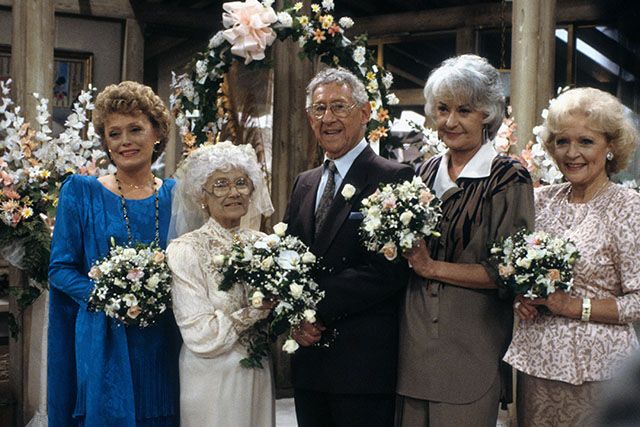
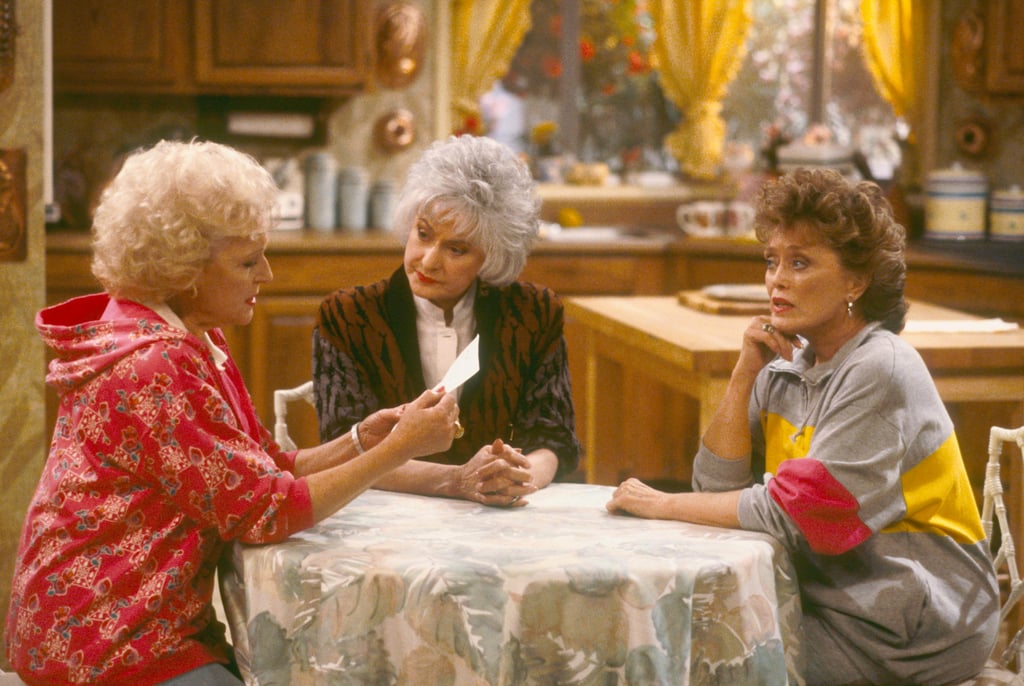
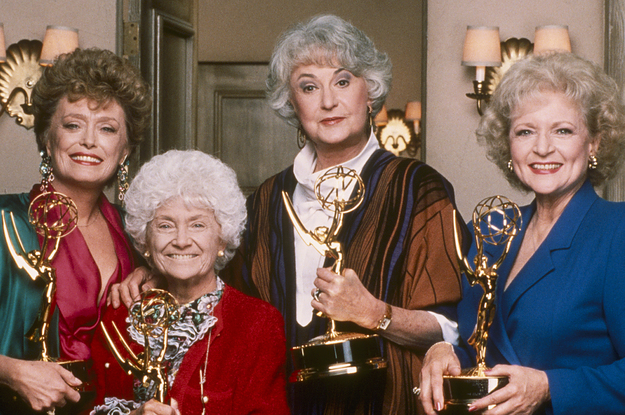
The four main characters are quite different which is probably why the series was so successful. Blanche (Rue McLanahan) owns the house in Miami. Two women, widow Rose Nylund (Betty White) and divorcee Dorothy Zbornak (Bea Arthur) respond to an ad on a grocery store bulletin board to become Blanche’s roommates. In the pilot episode, the retirement home where Dorothy’s 80-year-old mother Sophia (Estelle Getty) lives burns down, so she joins the trio. All four of the characters appeared in every episode.
Photo: marginallyhuman@wordpress.com
Blanche worked for an art museum. She grew up in a wealthy family, living on a plantation outside Atlanta. When she married her husband George, they moved to Miami. With six kids, Blanche should be a busy family matriarch, but she was man-hungry and always involved in some romantic entanglement much to the chagrin of Rose.
Photo: goldengirls.wikia.com
Dorothy was a substitute teacher. She became pregnant in high school and married the father, Stanley. Stan and Dorothy moved to Miami but after 38 years of marriage, he had an affair with an airline stewardess and left Dorothy.
Photo: buzzfeed.com
Rose lived most of her life in a small farming town, St. Olaf, Minnesota. She and husband Charlie were happily married with five children. After he passes away, she moves to Florida and works at a counseling center. At one point she works for a consumer reporter at a local television station. Rose had an on-again, off-again relationship with a college professor, Miles Webber, during the run of the show.
Photo: thebettergoldengirls.wikia.com
Sophia left Italy to get out of an arranged marriage and ended up in New York where she met Salvadore Petrillo. Sophia also has a variety of jobs on the show, including a fast-food worker and a developer of a spaghetti sauce and sandwich business. Sophia is the only character to marry during the seven seasons. She married Max Weinstock, but they separated soon after the wedding.
The role of Sophia was the first one cast. Estelle Getty had received rave reviews for her performance in Torch Song Trilogy. Although Getty played Dorothy’s mother, in reality she was a year younger than Arthur. It took Getty three hours in make-up to transform into the older Sophia, donning a white wig, heavy make-up and thick glasses. Apparently, even though she was an experienced actress, she suffered from stage fright and often froze on camera. This affliction got worse as the show continued, and by the fifth season, she was reading her lines from cue cards. McClanahan tried to describe what Getty suffered with, “She’d panic. She would start getting under a dark cloud the day before tape day . . . you could see a big difference in her that day. She’d be walking around like Pig-Pen under a black cloud. By tape day, she was unreachable. She was just as uptight as a human being could get. When your brain is frozen like that, you can’t remember lines.”
Photo: refinery29.com
Originally McClanahan
was cast as Rose and White as Blanche. White had portrayed Sue Ann Nivens, a
man-crazy woman, on the Mary Tyler Moore Show. Director Paul Bogart felt
they should switch roles.
McClanahan came
up with the idea that Blanche should have a southern accent which she exaggerated
to make the character more interesting. Apparently, one of the set jokes was
where Rue McClanahan might be sleeping on the set. She was often found napping
in different places.
Although Harris created Dorothy as a “Bea Arthur type,” the producers originally wanted Elaine Stritch for the part, but her audition did not go well. Arthur didn’t want to do the show because she didn’t want her and McClanahan to be portrayed as Maude and Vivian as they were in the show Maude. After reading the script and learning about the role switch of her coworkers, she came on board.
Costume designer Judy Evans created a different look for each of the cast members. Rose was down home and Midwestern. Sophia relied on comfortable clothing. Dorothy had a “pulled-together, no nonsense” look. Blanche was sexy with flowing outfits. Rue had a clause written into her contract that she be allowed to keep all Blanche’s clothing, which was custom made. By the end of the series, she filled thirteen closets with the designer wardrobe. Late McClanahan would create a more affordable line of clothing for QVC, “A Touch of Rue” based on Blanche’s show wardrobe.
(Left to right) The cast of television series The Golden Girls Rue McClanahan, Betty White, Estelle Getty and Beatrice Arthur are shown in a scene from the show in this undated publicity handout photo. Photo: sydneymorningherald.com
While the characters argued from time to time, you knew they loved and cared about each other and were a family, even if they made each other crazy at times. In reality, Arthur was very difficult to get along with. Betty White, who seems to love everyone, admits she did not have a good relationship with Arthur. Apparently, White’s positive and perky manner irritated Bea. McClanahan said Bea was very eccentric and hard to be friendly with. However, White, always the professional, never revealed their difficulties until after Arthur passed away. White and McClanahan became close friends during the show’s run. White always loved game shows and she found a kindred spirit in Rue. They frequently played games between takes.
Photo: entertainmentweekly.com
The house was
often a fifth character on the show. The exterior of the home, which was supposed
to be at 6151 Richmond Street, was part of the backstage studio tour ride at
Disney’s Hollywood Studios for the first two seasons. Designer Ed Stephenson
used a “Florida look” for the home with wooden accents, columns, cypress doors,
rattan furniture, and tropical prints. Of course, Blanche’s bedroom featured pink
carpeting and a vanity table. Dorothy’s room was filled with books and
intricate wallpaper. Rose’s walls are covered with clouds, and her room contained
a lot of ruffles and chintz. Sophia’s room was also modern with dainty floral
wallpaper and mahogany furniture covered by bedding with a satin trim.
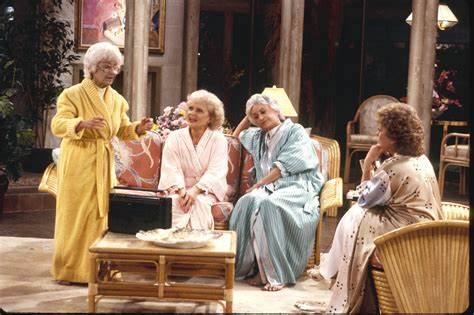
If you watch the scenes in the kitchen, you will notice that although four people live there, there are only three chairs at the table. If all four girls were sitting there, someone had their back to the camera, so the director solved the problem by only having three of them in the scene at a time.
Photo: popsugar.co.uk
Often the
plots would feature one of the characters mired in a problem, typically
involving their family, their love life, or ethical dilemmas. When they gathered
around the table to talk, the stories they told would help each other, even
though Rose’s stories from her youth typically had no connection to the current
problem and Sophia’s stories were often made up. Many controversial issues were
covered during the show including same-sex marriage, elder care, homelessness,
HIV/AIDS, immigration, death, assisted suicide, and discrimination whether racial,
sexual or gender.
The critics praised the show, and the public adored it. For six of the seven seasons, the show ranked in the top ten. Both Betty White and Estelle Getty received seven Emmy nominations during the seven-year period, while Bea Arthur and Rue McClanahan each received four. Fun fact, all of them won an Emmy during the run of the show. Overall, the show received 68 Emmy nominations.
Photo: aarp.com
The Queen
Mother loved the show so much that she asked the quartet to come to England and
perform for her personally. When the cast assembled in London, they appeared in
an episode about the visit to the Queen.
After the
seventh season, when the show had dropped into the top 30, Bea Arthur decided
to leave the show. In the finale, Dorothy finally meets the man for her, who
happens to be Blanche’s uncle Lucas (Leslie Nielsen), and they move to Atlanta.
Sophia is uncertain whether she should move with them or stay in Miami and, in
the end, decides to stay in Florida.
When the
series ended, White, McClanahan, and Getty reprised their Golden Girls roles
and starred in The Golden Palace about a hotel. The series ended after
the first year and never enjoyed the rankings of the original, coming in 57th
for the year.
Harris developed two spinoffs from the original series. Empty Nest starred Richard Mulligan as pediatrician Harry Weston who lives next to the women with his two grown daughters. The show was also very popular and lasted seven years as well.
The Cast of Empty Nest Photo: 123movie.care
Empty Nest then launched a show about some of the nurses who worked in Weston’s hospital, simply titled Nurses. While this series was never as popular as Golden Girls or Empty Nest, it did last three years.
The cast of Nurses Photo: tvseriesfinale.com
Although I
enjoyed The Golden Girls, I actually did not watch it often. I think maybe because it was on Saturday
nights during a time that I was not likely home in the evening. I did enjoy it
when I caught an episode but was never the fanatic many of my friends were. I
think I should let the “Girls” have the last words about their series:
Dorothy: You know, sometimes I can’t believe my ears. Sophia: I know. I should’ve taped them back when you were seven.
UNITED STATES – MAY 13: THE GOLDEN GIRLS – 9/24/85 – 9/24/92, ESTELLE GETTY, BEA ARTHUR, (Photo by ABC Photo Archives/ABC via Getty Images)
[Dorothy and
Sophia come home after Sophia’s best friend’s funeral]
Sophia: Well,
I guess Phyllis Glutman will be my new best friend.
Dorothy: I thought you hated Phyllis Glutman.
Sophia: I do, but at the rate my friends are going, I won’t have to spend too much time with her.
As we wind up our series of “oddly wonderful” shows, we take a look at two shows that were set in the same community and may be two of the most unusual shows to ever air on television—Mary Hartman, Mary Hartman and Fernwood 2-Night.
If you read my blog often, you know I am not usually a fan of Norman Lear shows, and while these two series are very different from a typical Norman Lear show, unfortunately, I only enjoyed one of them. Lear’s shows were filmed at Metromedia Square in Hollywood. When he got ready to tackle these shows, there was no room left there. He arranged to rent space from KTLA which was across Fernwood Street. The staff started calling KTLA “Fernwood” which became the name of the town in Ohio where Mary lives.
Photo: next-episode.net
Lear said he
created the show to deal with consumerism.
The original show was was a campy show but had likable and thoughtful characters. Like Soap, this show had a brilliant cast and satirized soap series. It was called Mary Hartman, Mary Hartman, because the writers said dialogue on a soap opera was often said twice. Lear filmed the pilot and offered it to the three major networks who all passed. The show began as a syndicated show (it began on 50 stations) and was only on from January 1976 till May 1977. Unlike Soap, this show produced a huge number of episodes, 325 to be exact. It aired daily on weekdays.
Like the Tates and Campbells, Mary suffered through bizarre plots and unbelievable story lines, including adultery, mass murder, disease, homosexuality, religious cults, UFO sightings, and a nervous breakdown.
Photo: imdb.com Dodie Goodman as Martha
Louise Lasser (who had been married to Woody Allen) portrayed Mary. She was married to Tom (Greg Mullavey). Tom worked at an auto assembly plant. Dody Goodman played Mary’s mother Martha. Debralee Scott played her sister Lorraine. The cast was rounded out by amazing supporting characters including Mary Kay Place as Mary’s best friend Loretta; Graham Jarvis as Charlie, Loretta’s husband and Tom’s best friend; Claudia Lamb as Heather, Mary and Tom’s daughter; Martin Mull as Garth Gimble who killed his wife; Dabney Coleman, Fernwood’s mayor; Gloria DeHaven who had an affair with Tom; Orson Bean as Rev. Brim, Shelley Fabares as Eleanor Major, a woman Tom falls in love with after Mary leaves him; Ed Begley Jr. as Steve; and Doris Roberts as Dorelda Doremus, a faith healer.
Photo: tumblr.com Mary Kay Place as Loretta
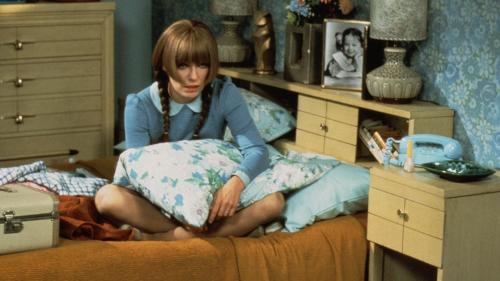
Mary wore her hair in braids like Pippi Longstocking. One article described her as a life-size Raggedy Ann. She was indecisive and switched her emotions quickly and without reason. Mary went through one crisis after another until she couldn’t function anymore. One of the things that led to Mary’s breakdown was that she believed everything she saw on television and it made her crazy that she could not see the waxy yellow build up the commercials claimed was on her floor. She was also dealing with marital problems and boredom.
Photo: moviestillsdb.com
Right from the beginning, the show displayed its weird story lines. In the first episode, the Lombardi family of five is murdered and the neighborhood tries to catch the Fernwood Flasher, who later turned out to be Mary’s grandfather. There were a lot of strange deaths in this show. Jimmy Joe Jeeter was electrocuted in the tub, Coach Leroy drowned in chicken noodle soup, and Garth Gimble impaled his wife on a bottle brush Christmas tree.
In 1977, Lasser decided to leave the show. The rest of the cast continued on and accounted for her disappearance by announcing that she had run off with Sgt Dennis Foley. The show then became Forever Fernwood.
Photo: tumblr.com
Later that year, Fernwood 2-Night was spun off. Martin Mull was now Garth’s twin brother Barth and was the host of a late-night talk show with Jerry Hubbard (Fred Willard) as his “Ed McMahon”.
One of my favorite things about this show was Frank DeVol, the composer, who played Happy Kyne with his band the Mirth Makers (Eddie Robertson, Tommy Tedesco, Frank Marocco, and Colin Bailey) on the show. Happy never looked happy; he had a side business, a fast-food restaurant called Bun ‘n Run.
Photo: sonypicturesmuseum.com
Alan Thicke was the head writer on the show. Lear thought it should all be improvised, but Thicke said it needed a balance of scripting with ad-lib.
In the same way Mary Hartman satirized soap operas, this show satirized late-night talk shows. The guests were a mix of real and fictional people. For example, Tom Waits appeared on the show when his bus broke down in Fernwood. I don’t remember a lot about this show specifically, but I remember thinking it was very funny.
Photo: sonypicturesmuseum.com
After the first season, the show was moved to California where celebrities would be more likely to appear on the show.
Photo: nostalgiacentral.com
I have never seen either of these shows in reruns and like most of the shows we learned about this month, I think they are better left as a remnant of the era they debuted in. Although few people seem to remember Mary Hartman, Mary Hartman, it was listed #21 on TV Guide’s list of best one-hundred shows in 2003. When thinking about the classic shows that had been on the air by 2003, that says a lot about what TV Guide thought about the quality of this show.
Lear had to tow a fine line on this show. With the types of crises Mary encountered and the bleak life that was portrayed of a housewife in Fernwood, Ohio, it was close to tragic. The exaggerated number of catastrophes and despairing situations kept it slightly in the humor genre. The demise of the show is often blamed on Lasser’s leaving, but in my opinion, it could not have continued to sustain viewers much longer than it was on the air. How many crises can be cooked up that hadn’t happened, and when did the tragic overtake the comedy for most viewers? Again, it’s a show best viewed in its decade.
In my rating of odd, wonderful, or oddly wonderful, I give Fernwood 2-night wonderful, and I’m afraid I have to give Mary Hartman an odd rating. It was a hard show to watch. If you wanted drama, there was too much humor in it, but if you wanted comedy, it was way too dark. I’d love to hear from you on your ratings for these two little-remembered shows.









:no_upscale()/cdn.vox-cdn.com/uploads/chorus_asset/file/7168985/GettyImages-53015270.jpg)











 thewritelife61