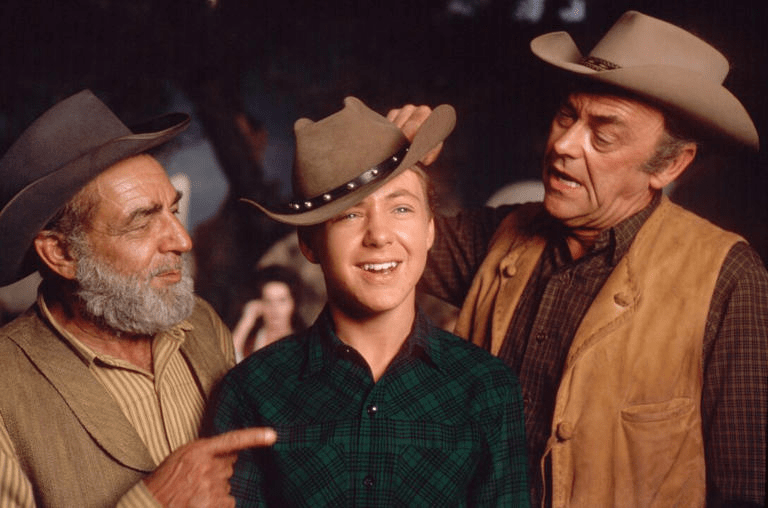
This month we are celebrating, “Go West Young Man” by taking a look at some of the westerns from the fifties and sixties. Up today is Wagon Train. This series debuted on NBC in 1957; in 1962 it moseyed over to ABC for its final three seasons. Lew Wasserman was involved with Universal which produced Wagon Train. When they sold the series to ABC, NBC was not happy, but Wasserman told them that he had a new show for them, The Virginian, which we’ll learn about in two weeks.
📷pinterest.com
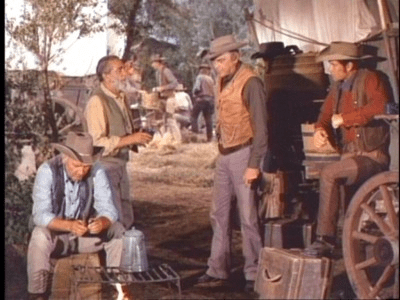
The series was very popular, jumping to number one immediately. The plot is that a large wagon train is traveling through the west from Missouri to California. Ward Bond starred as the wagon master Seth Adams (when he died in 1960, John McIntire took over). Robert Horton played scout Flint McCullough; eventually he opted to leave and was replaced by Robert Fuller. Oddly, Horton and Fuller shared a birthday and were six years apart in age.
If I listed all the guest stars during the eight seasons, you would still be reading this next Monday. Just know, there were a lot.
The show was adapted from a 1950 John Ford film titled Wagon Master. In a 1960 episode, John Ford stepped in to direct an episode, “The Colter Craven Story.” One guest star I have to mention in this one was John Wayne. He speaks from the shadows as General Sherman (Wayne’s real name was Marion Michael Morrison, so for this credit, he went by Michael Morris) in this episode.
The original theme song was written by Henri Rene and Bob Russell and conducted by Stanley Wilson. A more contemporary theme accompanied season two, and it changed a few more times during the run of the show.
📷msn.com
The show had a huge budget for the time: $100,000 (about a million in today’s world of television). It was about 40% more expensive than most westerns at the time, and that is part of why it was able to feature so many guest stars.
When Gene Roddenberry pitched Star Trek to the networks, he described it as “a Wagon Train traveling across the universe.” He also hired writer Gene L. Coon who wrote 23 episodes of Wagon Train.
While wagon trains are considered an icon from our history, so was the product of the series’ first sponsor, the Edsel Division of the Ford Motor Co.
The show was an hour long and shot in black and white for the first six seasons. For season seven, the network filmed the show in color and increased the length to 90 minutes. The ratings were still high but didn’t increase, so the network could not justify the changes, and the television show went back to an hour in black and white.
📷dvdtalk.com
The show was placed on Wednesday nights up against Leave it to Beaver and Disneyland. Even with that competition, it was in the top thirty and by its second season, had jumped to the top ten where it stayed until it was sold to ABC. ABC kept the show on Wednesday nights, and it ran against The Virginian, both being in the top thirty in 1962.
So many people have fond memories of this show. It was on six seasons, but I think it was finally cancelled even though it was in the top thirty because of the western overload, ushering in the shows like Get Smart, The Man From UNCLE, Lost in Space, and The Smothers Brothers Show. Check out your favorite guest stars who were on the show and watch those episodes to see what it was like.
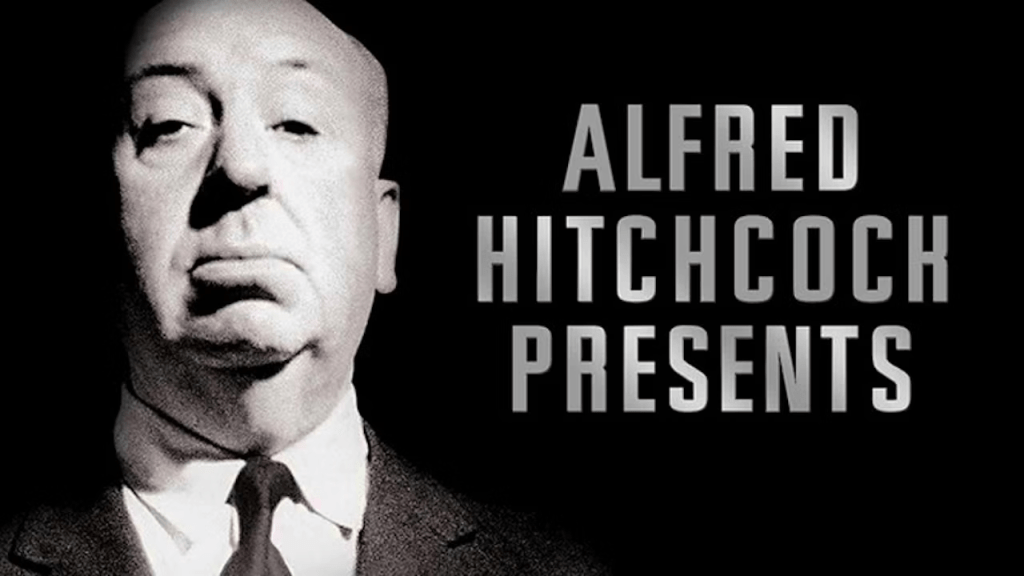
In October, we are tackling a blog series on Eerie Shows. It would be almost impossible to not include Alfred Hitchcock Presents which was on television for a decade.
The show premiered in 1955. Hitchcock had been directing films for more than three decades at that time. The series experienced several changes. It began as Alfred Hitchcock Presents on CBS but would switch both nights and networks during its run. In 1962 it became an hour-long show and was called The Alfred Hitchcock Hour.
Many fans recall the opening. There is a line-drawing of Hitchcock’s profile with the “Funeral March of a Marionette” playing in the background. Hitchcock appears at the edge of the screen and walks to the center where he fades into the caricature line drawing. Then he said, “Good evening.” The silhouette was one that Alfred drew. He began his entertainment career illustrating title cards for silent movies.
📷peacock.com
Hitchcock himself directed 17 of the episodes of the series. Two of those were nominated for Emmy awards: “The Case of Mr. Pelham” in 1955 with Tom Ewell and “Lamb to the Slaughter” in 1958 with Barbara Bel Geddes.
Hitchcock’s job during this series was to introduce the story and then to wrap it up at the end. Both the openings and closings were written by James B. Allardice. Allardice wrote for 38 different shows, many of them very popular series in the fifties and sixties. Norman Lloyd, who produced the show and appeared in five episodes, said Hitchcock respected Allardice so much that he never even changed a comma that he wrote.
The network demanded that if a character got away with murder during the show, then Hitchcock would let them know during the closing that he was eventually brought to justice; in the TV Guide, Hitch described this as “a necessary gesture to morality.” Lloyd gave an example of this in a Television Academy interview. In one episode, a woman kills her husband with a frozen lamb’s leg and gets away with it. At the end of the show, Alfred explains that she later remarried and tried the same trick again but when she took out the leg and hit her husband with it, it was not frozen enough, so he caught her in the act and turned her in.
📷genresnaps.com
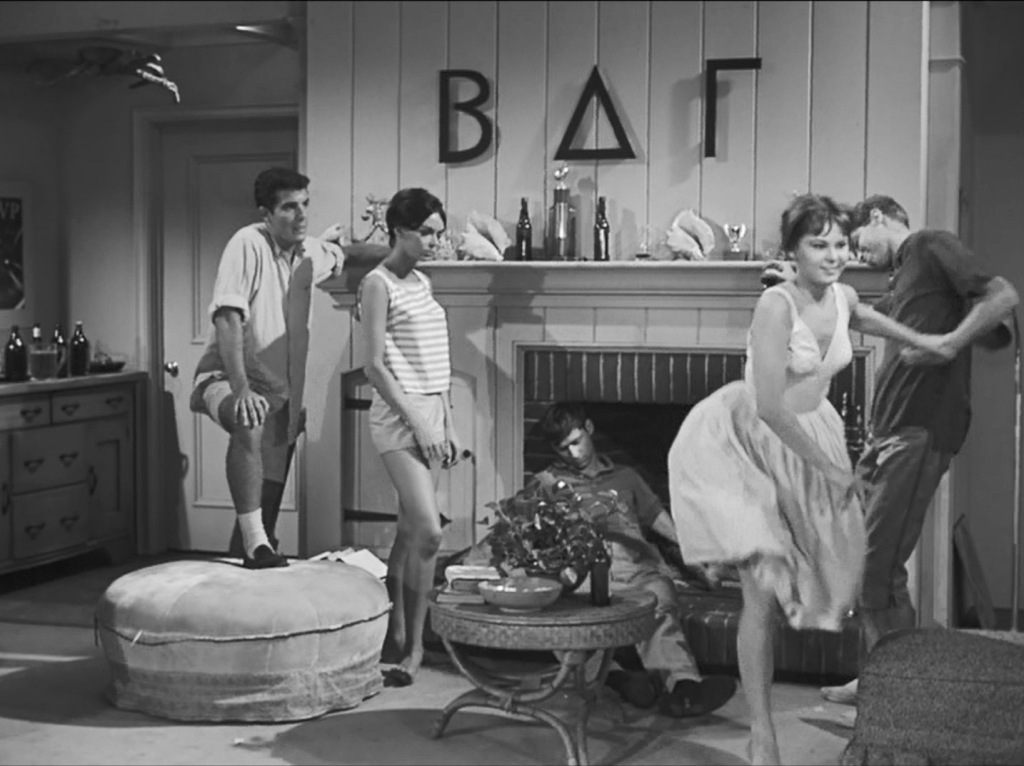
The episodes were not your average thriller shows. They included drama, suspense, and humor. Audiences never knew just “who done it” till the end.
The show debuted on CBS on Sunday nights for five years, up against drama anthologies for two years and then competing with The Dinah Shore Show for three years. For the next two seasons it moved to NBC on Tuesday nights. It aired against The Many Loves of Dobie Gillis on CBS those years and against Wyatt Earp on ABC. For three months it went back to CBS on Thursdays before moving to Fridays on CBS the next season with The Price is Right and 77 Sunset Strip. The ninth year found it on CBS on Fridays with little competition and the final year it showed up on NBC’s schedule on Mondays against Ben Casey. I could never find the reason for cancelling the show. I’m assuming ratings began to decline but if anyone knows, I’d love to hear it.
NBC chose not to air a 1962 episode called “The Sorcerer’s Apprentice” because the sponsor felt the ending was too gruesome. In the episode, a magician’s helper is supposed to help in a trick where he “sawed” a woman in half, but he doesn’t realize he truly saws her in half.
📷thecompletehitchcock.com
As you might guess, with a new story every week, many celebrities appeared on the show including Charles Bronson, Bette Davis, Bruce Dern, Robert Duvall, Clint Eastwood, Peter Falk, Joan Fontaine, Peter Lorre, Walter Matthau, Steve McQueen, Vera Miles, Claude Rains, Robert Redford, Burt Reynolds, Thelma Ritter, George Segal, and Jessica Tandy.
In addition to the Hitchcock-directed episodes, the show received Emmy nominations for Best Series four times. In 1956 it was up for Best Action or Adventure Series, but it lost to Disneyland. The following year found the show in the Best Series – Half Hour or Less category, but it lost to The Phil Silvers Show. 1958 found it in the category of Best Dramatic Anthology Series. You would think that would be a no-brainer win for this show, but it lost to Playhouse 90. It had its fourth category nomination in 1959 as Best Dramatic Series – Less Than One Hour and lost to Alcoa Theatre. I guess the Emmy committee had a hard time determining categories for a few years.
In a different twist, NBC tried to air the show again in 1985. Hitchcock had passed away five years earlier from renal failure. A made-for-TV-movie combined new stories with colorized segments from the original show. It lasted a year before NBC canceled it. USA picked it up for three more seasons.
📷screentunes.com
The original show can still be seen on a few different networks including MeTV.
With Hitchcock’s popularity in 1955, it’s no wonder that this show was a successful series for a decade. The episodes were well written, and they had a wonderful cast of actors. Many people probably tuned in just to see Hitchcock, and his personality was larger than life, even if his behavior was a bit despicable at times. One of Alfred’s quotes about the show was that “television has brought murder back into the home – where it belongs.”
This month we are learning about America’s favorite families. Today we are spending some time with the Cleaver family. In the past we have talked quite a bit about The Brady Bunch, and in some ways, Leave It to Beaver is like that show. The Brady Bunch portrayed the 1970s and although they have been on the air since that first episode debuted, the show never cracked the top twenty. The Cleavers taught us about the 1950s. That show also never got into the top thirty during its six-season run but has been on the air most of the past 65 years.
📷thetodayshow.com
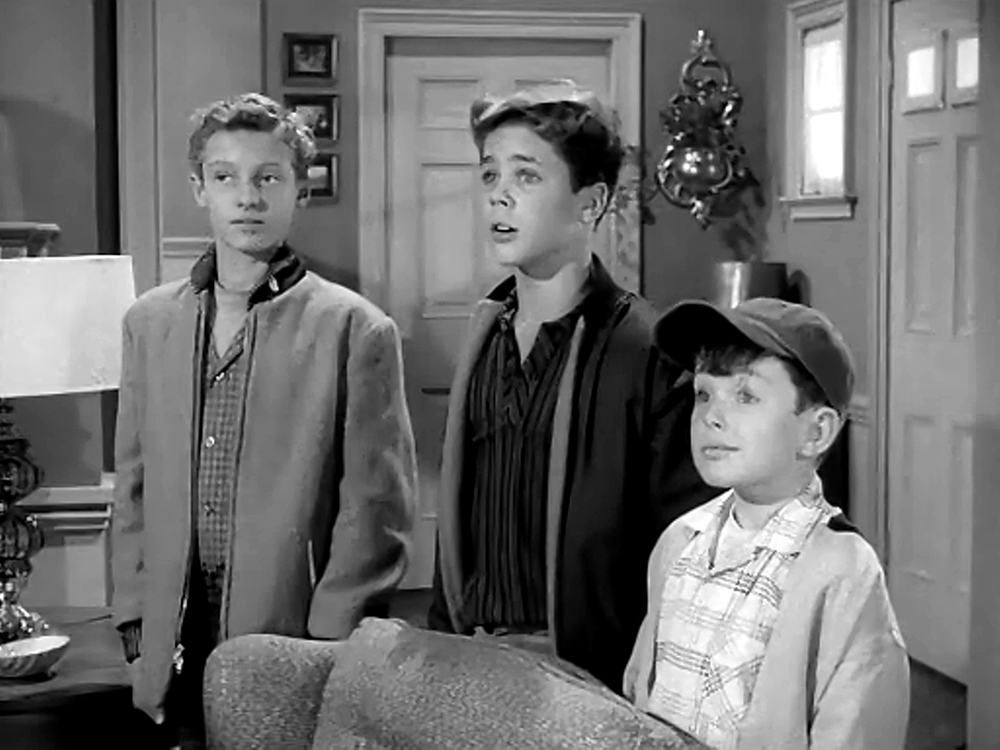
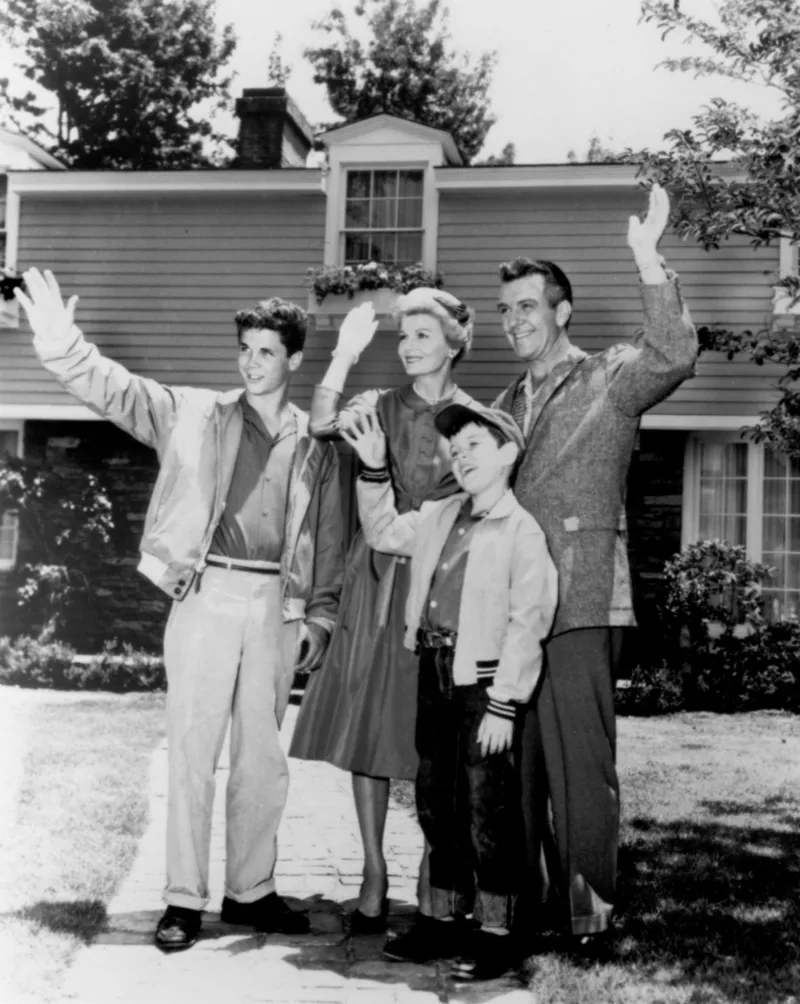
The show was originally written to feature Theodore or Beaver played by Jerry Mathers. Beaver gets into a lot of mischief, but he is a good kid and always means well. He has an older brother Wally, played by Tony Dow. His parents are Ward (Hugh Beaumont) and June (Barbara Billingsley). I thought it was interesting that all four of the stars appeared in every single episode of the show, 234 of them.
We also got to know some of the boys’ best friends as well. Beaver hangs out with Larry Mondello (Rusty Stevens) and Gilbert Bates (Stephen Talbot). He also spends time with Gus an old fireman played by Burt Mustin who seemed old even then. Wally is often with Clarence “Lumpy” Rutherford (Frank Bank) whose father is friends with Ward and Eddie Haskell (Ken Osmond). Eddie is overly polite to Ward and June who are never fooled by his manners; he often picks on Beaver.
Mathers said that when he went to the audition, he went in his Cub Scout uniform because he didn’t want to be late for the den meeting. He was so honest and innocent about wanting to get to his Scout meeting that the producers hired him.
📷imdb.com With Eddy Haskell
Tony Dow never planned on getting a part. He had been in one commercial but no television series. He was an athlete and a diving champion and great swimmer. He had been working out at the Hollywood athletic club and a lifeguard there asked Dow’s mom if Tony could go with him to the audition. Dow ended up getting the part. Mathers later corroborated the story in his blog, saying that the actor who was in the pilot grew five inches the following year and was as tall as Beaumont, so they decided to hire another kid for the role. They wanted someone who looked like an athlete, so they chose Dow.
Beaumont took some inspiration from his studies to be a wise and caring father. He held a Master of Theology degree from USC and was an ordained minister. In addition to acting, Beaumont wrote one entire episode, contributed to several others, and directed 23 episodes.
While Beaumont contributed to the scripts, the show was primarily created by Joe Connelly and Bob Mosher, and many of the plots were based on their children.
📷metacritic.com
CBS put Leave It to Beaver on the air Wednesday nights in 1957. I can see where the ratings might suffer because the show was on during the last half of both Wagon Train and Disneyland, so a lot of viewers were watching another show at the time.
The network decided to drop the show at the end of the year, but ABC picked it up and extended its run for five more years. The new network aired it Thursday nights up against repeats of I Love Lucy and a show I know nothing about called JeffersonDrum. The description is that a widowed father starts a newspaper in a western town. The next season the show appeared on Friday nights with another move the following year to Saturday nights. In its fifth season it stayed on Saturday nights but switched times and the sixth season found it on Thursday nights against PerryMason and Dr. Kildare. At that point, Jerry Mathers wanted to have a normal high school life, and the show ended.
The theme of the show is probably one of the best-known television themes. It was “The Toy Parade” composed by David Kahn, Melvyn Leonard, and Mort Greene.
📷dvnet.com Still the Beaver
In 1983, “Still the Beaver” aired to catch us up on the Cleaver family. Beaumont had passed away, but the rest of the cast showed up for the reunion. It led to a reboot that ran for four years from 1985-89 called The New Leave It to Beaver. Beaver and Lumpy run Ward’s business. Beaver lives in their family home. June is still living there, taking care of Beaver’s two boys. Eddie Haskell is still in Mayfield with his son Freddie. Wally is now a lawyer living in town, married and expecting his first child.
Ward and June took a lot of heat for being stereotypical parents in the show. While there was definitely some unrealistic behavior, fans continued to flock to the show for decades and now, almost 70 years after the first airing, it is still on the air and gaining new generations of viewers. June gets made fun of for wearing pearls and high heels, but when she was asked about that, she admitted that she wore the pearls because she had an indentation on her neck that she thought did not look good on film and the pearls covered it up. She said she wore heels because she had to be taller than the boys.
📷latimes.com
Mathers is the only remaining primary cast member; the rest of the crew has passed away. He has admitted that the family on television was also close off the air. Mathers became good friends with Ken Osmond. When Dow passed away, Matters wrote, “It is with the utmost sadness I learned this morning of my costar and lifelong friend Tony Dow’s passing. He was not only my brother on tv but in many ways in life as well. Tony leaves an empty place in my heart that won’t be filled. He was always the kindest, most generous, gentle, loving, sincere, and humble man, that it was my honor and privilege to know. Of Beaumont, he said, “we had a good chemistry and . . . I was very glad that he was picked for the role and we had a wonderful friendship for his entire life until he passed away from a heart attack. Hugh and my dad had become friends and he occasionally came to our house to play cards with my father and his friends.” He also had fond words for Billingsley, that she was “a good friend and an even better mentor. . . I was lucky enough to work with her for six years and have a life-long relationship with her. She was a very kind woman and a generous philanthropist who supported many charities.”
Like some of the Brady kids, Mathers thought once he left the show, he left show business behind him. He attended Notre Dame High School in Sherman Oaks, California and had a typical teenage life. He enlisted in the US Air Force Reserves, attaining the rank of sergeant. He also was in a band called Beaver and the Trappers. After graduation, he worked as a loan officer at a bank and got involved in real estate. At the end of the 1970s, he decided to star with Dow in a stage production of “Boeing, Boeing” in Kansas City and afterward, the two of them toured in “So Long, Stanley” for 18 months. In 1981, Mathers began working as a DJ and, not long after, the reunion movie and reboot of the tv show was offered to him.
📷heraldweekly.com
I will admit that I have never been a huge fan of Leave It to Beaver. I never thought of it as a bad show, but I was just interested in other shows more. It is pretty incredible that it has been on the air for so many decades and still finds new viewers. I think I gravitate more to The Brady Bunch because it reflects the decade that I grew up in. It must be very strange for a person to live a role for six years, walk away at age 15 or so and then come back to it two decades later. From everything I read, both Mathers and Dow came away from their acting careers unscathed from so much of what you read other child actors had to endure. Along with Ron Howard, they seem to have been able to have a fairly normal life off the set. I think it’s great that Hugh Beaumont became friends with Mather’s father. They seem to have experienced the same great relationships with their tv parents that Patty Duke, Shelley Fabares, and Paul Petersen did. It’s always nice to hear that a show about a favorite American family in pop culture is also a great family away from the set.







 thewritelife61