Verna Felton Saves the Day

We are winding up our blogs for May, and I have a confession to make. For some reason, I failed to notice that there were five Mondays in May, so when I published my blog last week, I realized that I was short one blog. While scrambling to find a topic that still fit in with the other shows we learned about this month, it occurred to me that this week’s actress appeared on The Ann Sothern Show and I Love Lucy. She was also part of the cast of December Bride and Pete and Gladys. So, today we will learn about the woman behind Hilda Crocker: Verna Felton.

Photo: imdb.com

Verna Felton was born in Salinas, California in 1890. Verna entered show business at the young age of nine. Her father died just before her ninth birthday. He was a doctor, but he kept no records of payments due, and there was little cash in his account. Verna had performed at a local benefit for flood victims, where she caught the attention of a road show manager. He offered Verna a job, and after the death of her father, her mother accepted the job on her behalf. Verna grew up involved in theater community.
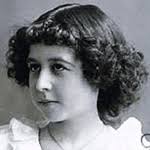
Photo: agecalculator.com

She was called “Little Verna Felton, the Child Wonder. By age 13 she was performing with the Allen Stock Company that toured the western United States and British Columbia in Canada. By age 20, she had a play written specifically for her by Herbert Bashford called “The Defiance of Doris.”

Photo: wix.com

She continued building her stage resume, acting in a variety of plays.

In 1923 Verna married Lee Millar who conducted the band in the acting troop. He was also a movie actor in the thirties and forties. Verna and Lee were married until his death in 1941. Their son Lee Carson Millar was born in 1924 and would also go on to become an actor who appeared on many of the most popular shows in the fifties and sixties.

From about 1930-1950, Verna could be heard on the radio. Her voice could be detected on a variety of shows including Red Skelton, Hattie Hirsch on Point Sublime, Dennis Day’s mother on his show, and a regular on both The Abbott and Costello Show and The Great Gildersleeve.

Photo: wiki.com

After transitioning from stage to radio, it was no surprise that Verna’s career in the forties and early fifties was spent on the big screen.

Television was a natural progression, and, in 1951, Verna had her first tv roles: as a nurse on Amos and Andy and as Mrs. Day on the Enzio Pinza Show. She continued her radio role as Dennis Day’s mother on his television show in 1952.

With Lucille Ball

During the early fifties, you could catch her on many of the most popular shows: The Adventures of Ozzie and Harriet, I Love Lucy, Burns and Allen, The Bob Hope Show, The Halls of Ivy, I Married Joan, and Where’s Raymond?

Verna would become best known as Hilda Crocker. She played that character on December Bride from 1954-1959 and again on Pete and Gladys during the 1960-61 season, a total of 182 episodes. She was nominated for an Emmy for Best Supporting Actress in 1958 and 1959. In both years, she lost to Ann B. Davis for Love That Bob.

With Spring Byington on December Bride
Photo: pinterest.com

Between the two series, she made appearances on The Many Loves of Dobie Gillis, The Real McCoys, The Ann Sothern Show, Miami Undercover, and The Jack Benny Show. She also accepted roles on a handful of shows after her life as Hilda, including My Three Sons, Wagon Train, and Dennis the Menace.

Felton had voiced several animation characters for Disney including the fairy godmother in Cinderella, the Queen of Hearts in Alice in Wonderland, Aunt Sarah in Lady and the Tramp, and Winifred the Elephant in The Jungle Book.

After voicing these fun characters, it was only natural for her to find a television animation character to play, and she found the perfect one in Pearl Slaghoople, Wilma’s mother on The Flintstones. Pearl looked a lot like Wilma but not as young or slim. She originally had red hair like her daughter which later became gray. She did not care for Fred and didn’t think he was good enough for Wilma and often nagged him to do better.

In 1966 Verna passed away from a stroke. Walt Disney would die a few hours later. About 25% of the movies Verna made were for Walt. Jungle Book, the last movie she made for him would debut a year after the two stars died.

Fred has a hard time loving his mother-in-law. Hence the phrase he said  repeatedly 'I love my mother-… | Flintstones, Classic cartoon characters,  Flintstone cartoon

Although Verna’s television career only spanned fourteen years, she appeared in many of the era’s best shows.  She did Broadway, radio, cinema, and animation as well and had a very full and successful career. It was fun getting to know Verna Felton a bit better.

Jack Benny: Perhaps the Nicest Guy in Television

Photo: cinema.ucla.edu

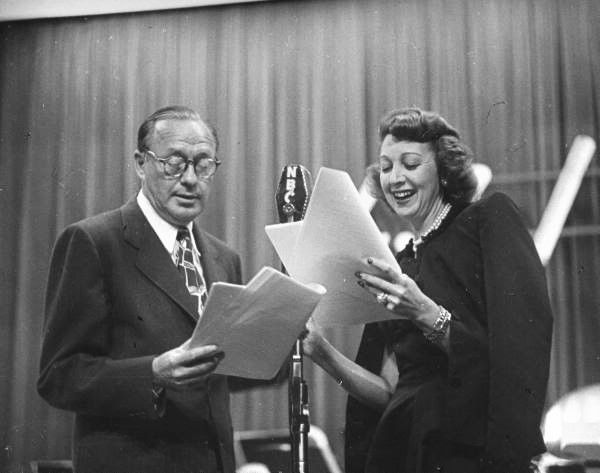
We kick off this new year getting to know one of my favorite entertainers, Jack Benny. While many radio stars had a hard time transitioning to television, Jack, along with his best friend George Burns, made it look easy. Jack’s radio show started in 1932. In 1950 he decided to make the leap to tv, and his show would be on the air until 1965 when he decided it was time to quit.

The series produced 258 episodes. Jack tested the water first, appearing randomly on television before settling into a weekly schedule ten years after the first show debuted (From 1955-1960 he was on every other week). George Balzer and Sam Perrin would write for the show for the entire run, given credit for 255 episodes. Ralph Levy, who helped George and Gracie get their show underway, came on board in 1951 and left in 1962. The well-respected Fred De Cordova directed the most episodes, 75.

Photo: thisdaybenny.com 

Jack’s first shows were filmed at Burns’ McCadden Productions studio and later at Universal Television. His opening and closing monologues were done in front of a live audience but a laugh track was inserted for consistency. Jack brought his quirky radio crew with him: Don Wilson, Eddie “Rochester” Anderson, Dennis Day, Mary Livingstone, and Mel Blanc. Benny’s wife was Sadie Marks. He met her at age 14 in 1919, and they didn’t exactly hit it off. However, in 1927 they realized they were in love and married that year. Benny asked his wife to fill in for a live comedy show to play “Mary Livingstone.” Sadie did and showed her comic persona. She began to appear regularly and later legally changed her name to Mary Livingstone.

Photo: pinterest.com

Benny understood the radio show was so successful because listeners bonded with the characters and considered them friends. Television just added another dimension for viewers to be able to see the characters.

Jack always underplayed his character, often giving the best lines to his cast. He had great timing, knowing when to tell a joke and when to say nothing. It was often said that he did not say funny things, but he said things funny. His catchphrases, “Well” (with a long pause) and “Now, cut that out” are still part of pop culture today.

In the classic age of comedy, sponsors were the key to survival, and Jack was always able to obtain some of the most well-known companies. During his run, he was sponsored by Lucky Strike, Lever Brothers Lux, State Farm Insurance, Lipton Tea, Miles Laboratories, and most memorably, General Foods’ Jell-O. The sponsors never minded that he often made fun of them or their ads. Often, they were some of the funniest moments in the show.

The first show aired in October of 1950. Benny’s first line on that live Sunday night telecast was, “I’d give a million dollars to know what I look like!”

The show’s format didn’t vary much from week to week. Typically, it began with a monologue. The orchestra might play a song or Jack and announcer Don Wilson might have a discussion such as:

DonWilson: I don’t think you know how much it means to me to do the commercial. After all I’m not a funny man. I can’t sing or dance. I don’t lead a band. What are you paying me for?

Jack: Don, you’re hanging yourself.

Photo: oldtimeradiodownloads.com

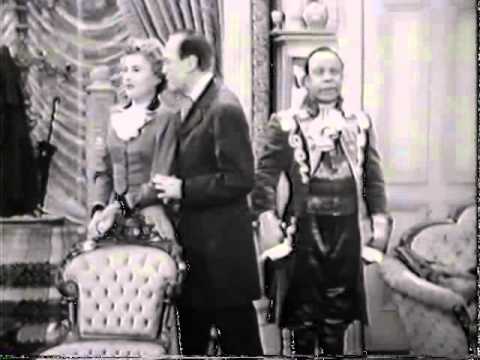
The cast would discuss a current situation, often referring to Benny’s age or frugality, or Mary would read a letter from her mother. Dennis Day would then sing a song followed by a skit, a mini-play, or a satire of a movie. Before Carol Burnett’s incredible movie satires, Jack Benny’s writers created some humorous shows. One example was a 1952 show. It was based on Gaslight from 1944. Called “Autolight,” it starred Barbara Stanwyck.

Photo: youtube.com

Jack continued to feature special guest stars, was a penny pincher, refused to admit he was over 39 years old, and continued to drive his old Maxwell. Here he is with Marilyn Monroe discussing his age:

Marilyn Monroe: What about the difference in our ages?

Jack: Oh, it’s not that big a difference. You’re twenty-five and I’m thirty-nine.

Marilyn Monroe: I know, Jack. But what about twenty-five years from now when I’m fifty and you’re thirty-nine?

Jack: Gee, I never thought of that.

Photo: worthpoint.com

Jack’s view on saving money: “Any man who would walk five miles through the snow, barefoot, just to return a library book so he could save three cents – that’s my kind of guy.”

Photo: imdb.com

Mel Blanc not only “played” the Maxwell but portrayed a variety of characters. Once Benny made the comment, “There’s only five real people in Hollywood.  Everyone else is Mel Blanc.”

Viewers today criticize the way Rochester was treated on the show, but when comparing Benny’s show to Amos ‘n Andy and other shows during the time period, a stark difference can be seen. Rochester was the first black actor to have a recurring role on a radio show. He called Jack, “Jack” or“Mr. Benny” and quite often got the best of him by outwitting him or pointing out one of his deficiencies.

Here’s a typical conversation between Jack and Rochester:

Jack: What do you think of this card I wrote for Don? “To Don from Jacky, Oh golly, oh shucks. I hope that you like it, it cost forty bucks.”

Rochester: It would’ve been hard to rhyme a dollar ninety-eight.

Jack Benny: We’re a little late, so good night, folks.

Photo: americacomesalive.com

The character interactions and the great skits are what made the show so popular. In Jim Bishop’s book about President John F. Kennedy, A Day in the Life of President Kennedy, he wrote that JFK was too busy to watch television, but he always made time for The Jack Benny Show.

Photo: tvnewfrontier.blogspot.com

Jack passed away in 1974. In real life, he was the opposite of the character he played, very generous and a gifted violin player.

His papers, including television archives of his series and special broadcasts and more than 296 television scripts were given to UCLA.

The Jack Benny Program can currently be seen early mornings Sunday through Thursday on Antenna TV.

Stars Who Jump From the Big Screen to the Small Screen Don’t Always Land on Their Feet

While it is not uncommon for stars to transition from television to movies–think about Robin Williams, Sally Field, Melissa McCarthy, and Tom Hanks–it is less likely to see stars move from the big screen to the small screen.  Jane Fonda has transitioned to television in Frankie and Grace and Fred MacMurray did it with My Three Sons.  For most stars, the move has not worked out very well. Let’s look at a few stars who tried to make the conversion.

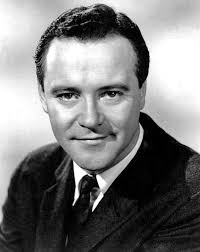
That Wonderful Guy – Jack Lemmon (1949)

Neil Hamilton (best known as Commissioner Gordon on Batman) plays Franklin Westbrook, a conceited drama critic who dislikes almost everything. Jack Lemmon plays Harold, a Midwesterner who thinks working for Westbrook will help him become worldly and give a boost to his acting career. His girlfriend is played by his real wife Cynthia Stone. The episodes revolved around his romantic and business adventures in New York City.  Perhaps Westbrook panned the show because it was cancelled after three episodes.

movielemmon1


Heaven for Betsy – Jack Lemmon (1952)

Three years later, Lemmon gave it another try. In this show, Lemmon plays Peter Bell, a toy store buyer. His wife Cynthia again played his wife Betsy. The series was based on a sketch “The Couple Next Door” that Lemmon and his wife played regularly on the Frances Langford/Don Ameche Show. Each episode lasted 15 minutes, and it told about the newlyweds’ struggles in New York City. Instead of three episodes, this series lasted three months.

movieslemmon2


Honestly Celeste – Celeste Holm (1954)

After playing Ado Annie in Oklahoma, Holm tried her hand at television. She plays Celeste Anders, a Minnesota college professor living in Manhattan, who is getting journalism experience working for the NY Express. Celeste wrote stories ranging from modern art to underprivileged families. She also dated the publisher’s son Bob Wallace, played by Scott McKay. After three months, she was sent back to school in Minnesota. What was most surprising about this failure was that Norman Lear (who would go on to create dozens of shows) and Larry Gelbart (who later created M*A*S*H) were both part of the writing staff.


Going My Way – Gene Kelly (1962)

Bridging television and movies, Gene Kelly redid Bing Crosby’s movie from 1944 for the small screen. Kelly is Father Chuck O’Malley, a progressive priest assigned to the slums of New York. Father Fitzgibbon played by Leo G. Carroll is a cantankerous, old priest. Dick York was his boyhood pal Tom Colwell who ran the community center. Mrs. Featherstone (Nydia Westman) played the rectory housekeeper. The list of guest stars on the show was very impressive, but after a year, the network told Kelly to keep going and cancelled the show.


The Bing Crosby Show – Bing Crosby (1964)

I guess Bing decided if Gene Kelly could enter television with his old movie, he might also give it a try. He plays Bing Collins a former singer. He is now an electrical engineer married to Ellie (Beverly Garland) with two daughters Janice (Carol Faylen), 15, and boy crazy and Joyce (Diane Sherry), 10, who had a high IQ. It lasted one season. Not surprisingly, this series also attracted a lot of big-name guest stars including Frankie Avalon, Jack Benny, Dennis Day, Joan Fontaine, and George Gobel. Apparently, Garland had a thing for engineers because she would marry aeronautical engineer Steve Douglas on My Three Sons.


Mickey – Mickey Rooney (1964)

Mickey plays Mickey Grady who leaves the Coast Guard to manage a posh hotel, Newport Arms in California, with his wife Nora (Emmaline Henry) and two young boys. His real son plays one of his sons on the show. Sammee Tong plays the hotel’s manager. The former supervisor has left a lot of problems for Mickey. The show was cancelled in January airing only 17 episodes.


One of the Boys – Mickey Rooney (1982)

After vowing never to work on television again, Rooney tried it again 18 years later. Now he plays 66-year-old Oliver Nugent, rescued from a nursing home by his grandson Adam Shields (Dana Carvey). Adam is a college student who takes him in. Adam’s roommate, Jonathan Burns (Nathan Lane) is not so happy about the situation. Oliver looks for a job and lands one singing in a restaurant. Also appearing in the cast was Scatman Crothers who sang with Oliver and had also left the nursing home.  A young Meg Ryan played Adam’s girlfriend Jane. The show debuted at 18th place in the ratings but by within a month it had dropped to 68th. Even with this cast, the show was cancelled after an unlucky 13 episodes.

movies10


Jimmy Stewart Show – Jimmy Stewart (1971)

Jimmy Stewart jumped to the small screen with great anticipation and excitement by viewers. He  played anthropology professor Jim Howard. Howard teaches at Josiah Kessel College, started by his grandfather.  His house is full with his wife, his son Peter, Peter’s wife Wendy, and his grandson Jake. He also has a young son Teddy, who happens to be the same age as his grandson. His friend Luther Quince often stops by to eat and give advice. Jim talks to the audience during the show and wishes them love, peace, and laughter at the end of each episode. Even beloved Jimmy Stewart was unable to save this show which was cancelled after one season.


The Doris Day Show – Doris Day (1968)

Doris Day was the most successful actor moving from film to television. However, I think the reason she managed to keep her show on the air for five seasons was because she changed the format so often that CBS did not realize it was the same show.  In 1968, Day is Doris Martin, a widow with two kids. She moves from the city to Mill Valley, CA to live on her father’s ranch.

The second season she commutes to San Francisco after accepting a job as an executive secretary to Michael Nicholson (MacLean Stevenson), the editor of Today’s Magazine. Rose Marie was Myrna Gibbons and Denver Pyle again played her father Buck Webb.

In 1970, Doris and the kids move to an apartment over an Italian restaurant run by Kaye Ballard and Bernie Kopell. Billy De Wolfe was her neighbor. Now Doris is writing feature stories for the magazine.

When the show returned the next fall, Doris was single and a reporter for a magazine. Her new boss was Cy Bennett (John Dehner) and she had a boyfriend Peter Lawford but later her boyfriend turned into Patrick O’Neal. There was no restaurant.

By 1973, the network caught up with all the changes and cancelled the show.


It was interesting that so many actors failed in television when they were such celebrated movie stars. The radio stars seemed to have better luck making the transition. Jack Benny and Burns and Allen had long-lasting and popular shows. It’s hard to imagine actors like Ryan Gosling, Amy Adams, Julia Roberts, or Ben Affleck bombing on a television series today.

I think for now I will continue to choose to watch Pillow Talk, Move Over Darling, Harvey, The Philadelphia Story, Some Like It Hot, Singing in the Rain, and Hope and Crosby’s Road movies and set aside the television DVDs these stars appeared in.