The Debbie Reynolds Show: Her Sponsorship Went Up in Smoke

Before we get into our topic of the week I’m celebrating today. This is my 475th post! Thank you to everyone who has joined me in my journey.
We are in the final week of our blog series this month, “It’s Their Show.” We are winding down with The Debbie Reynolds Show. While most of the shows we learned about this month were on air in the late fifties and early sixties, The Debbie Reynolds Show appeared in 1969 on NBC.

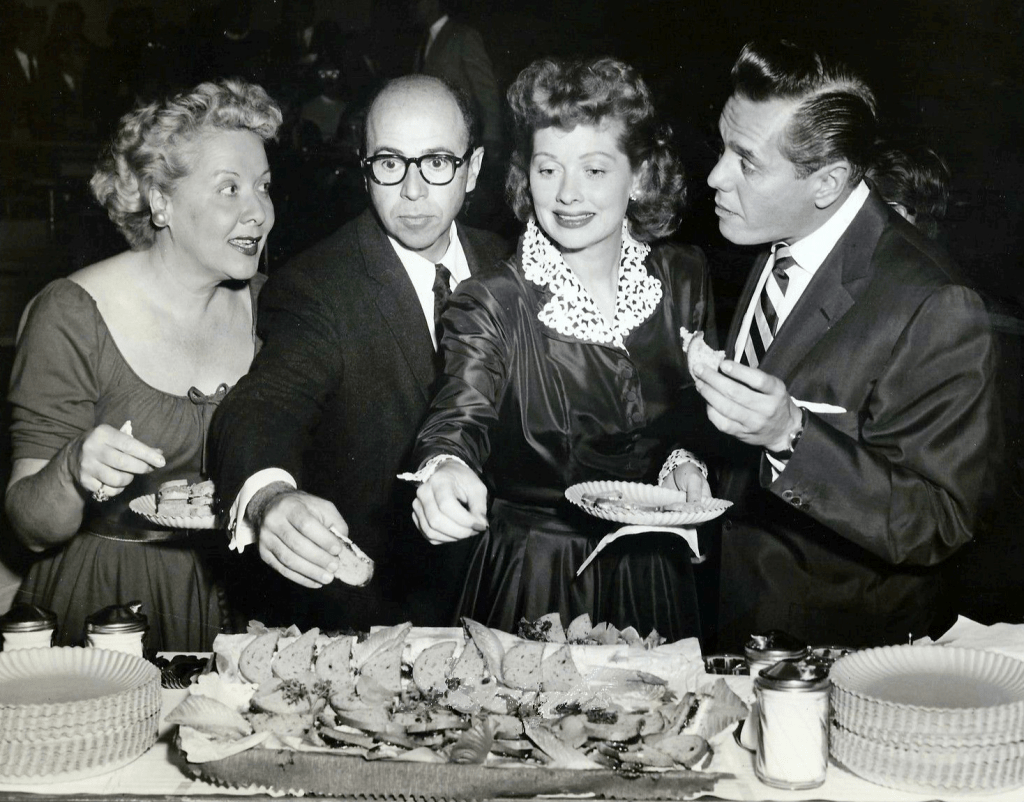
The show was created by Jess Oppenheimer who Lucille Ball called “the brain” behind creating I Love Lucy. This month we learned a bit about Bob Carroll Jr. and Madelyn Pugh Davis who created and wrote for I Love Lucy and The Tom Ewell Show, and they are back to write for this sitcom as well.

The show didn’t get off to a great start because Reynolds was clear that she wanted no cigarette commercials on her show. However, NBC was courting American Tobacco as the sponsor and Debbie threw a fit. When the tobacco company learned Reynolds was threatening to quit, they pulled their funding. Reynolds assured NBC that she would agree to forego NBC’s promise of a second year of the series, and she gave up her ownership in an NBC film What’s the Matter with Helen?, although she was able to star in the film.

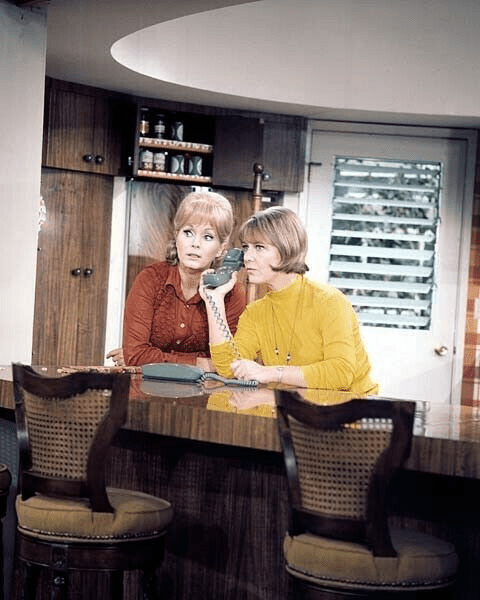
The plot of this show was that Reynolds was married to Jim (Don Chastain), a sportswriter for the Los Angeles Sun. Like Lucy always trying to get into show business, Debbie Thompson wants to be a reporter, and she comes up with various schemes to get her that job. Jim just wants her to be a stay-at-home wife.

📷📷pinterest.com

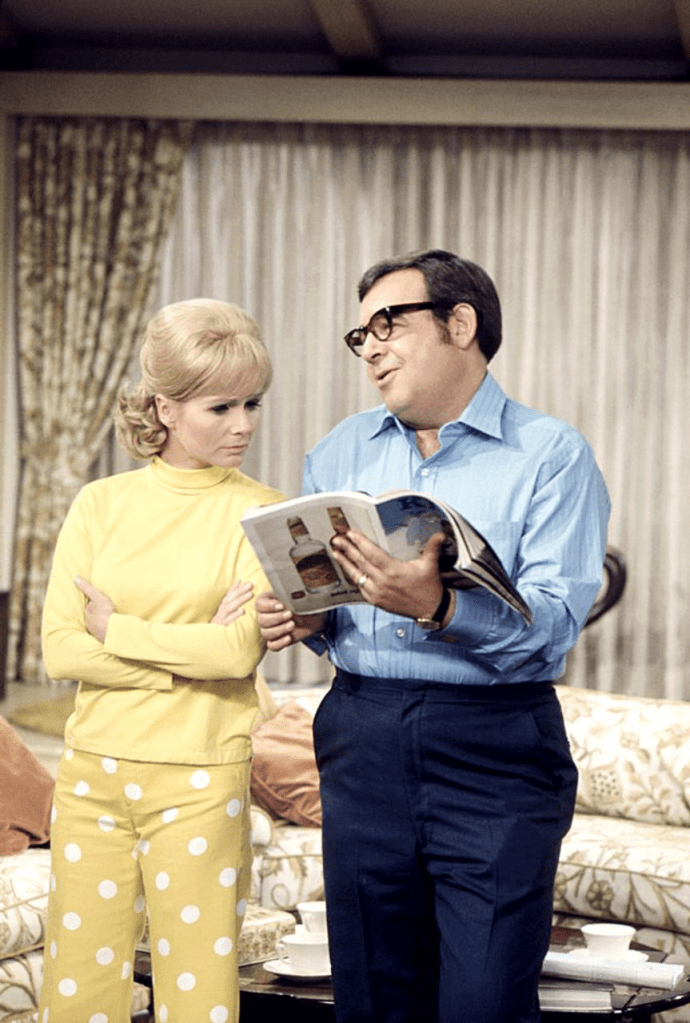
Rounding out the cast were Debbie’s sister Charlotte (Patricia Smith), Charlotte’s husband Bob (Tom Bosley) and Bruce (Bobby Riha), Debbie’s son. Like George Burns had done in his show, Debbie often addresses the audience directly.

Debbie Reynolds did double duty in this one, singing the theme for the show, “With a Little Love.”

Sadly, Reynolds was not in the same financial situation that many screen stars were when they agreed to try a television series. When the show was canceled after one season, she lived in her car for a while and her career never got back on track. For 35 years after this sitcom was canceled, Reynolds played bit parts, appeared as herself, or did animation. It must have been hard to tolerate after being a big star on the silver screen.

Tom Bosley talked about appearing in this sitcom in his interview with The Television Academy. He said the network allowed the cast to make seventeen episodes, but from the beginning they knew the show would be canceled because of the stunt Debbie and her PR rep pulled regarding the sponsorship.
📷moviemarket.com

Bosley thought Oppenheimer was a genius, but Bosley said even without the issue Reynolds had with the network, the show needed reworking for it to remain on the air. Bosley said Reynolds was very energetic, but she was bitter about her husband leaving her for Elizabeth Taylor, and her second husband was a gambler who left her with half a million dollars of debt to pay off.

To make ends meet, she went to Las Vegas to perform and started a costume museum to preserve the artifacts.

Unfortunately, this show was doomed from the start. While I admire Reynolds for standing up for what she believed in, the way she went about it was not helpful. It should have been written into her contract or handled in a nonpublic discussion. If Reynolds had let the network take care of sponsorships, things would have been okay. A few months after this show debuted, Congress took their anti-smoking initiative one step further and passed the Public Health Cigarette Smoking Act, banning the advertising of cigarettes on television and radio starting in 1971, so many shows walked away from tobacco companies in 1970. However, when Reynolds dug her heels in and threatened to quit, she not only lost her two-year minimum deal and her upcoming movie profits, but the studio was just biding its time because it had already decided to cancel the series because of her behavior.  
📷posterazzi.com

Even though Oppenheimer was described by everyone as an amazing creator and producer, this show felt like another I Love Lucy with a different occupation, and I’m guessing viewers felt that way too. It was similar to Sherwood Schwartz who kept revising The Brady Bunch for decades and kept writing sitcoms with the main characters somehow “lost” that were all duplicates of his Gilligan’s Island.

By 1969, it was time to move away from the hard-to-restrain wife in the sixties concept. In addition to being a copycat of I Love Lucy, I have to be honest. While I found something fun and charming about the other series we learned about this month, the episodes I tried to watch for this blog were painful. The characters were not likable, the writing was not witty or even easy to listen to, and considering what a great cast they had, the show just fell flat. Sadly, I recommend avoiding this one unless you are trying to put yourself to sleep some night.

Shirley’s World: Doomed to Fail

As we ponder the What in the World? blog series this month, today we are taking a look at Shirley’s World.

This sitcom starred Shirley MacLaine as a photographer. For a variety of reasons, this show was doomed to fail. Let’s learn why that was the case.

📷imdb.com

ABC aired this show in 1971. It was co-produced by ITC Entertainment, a British company and American producer Sheldon Leonard. As I’ve said many times, Sheldon is one of my favorite classic television people. When he did a show, quality was guaranteed. In this sitcom, Shirley Logan (Shirley MacLaine) worked at World Illustrated magazine and her editor Dennis Croft (John Gregson) sent her around the world on assignments. However, Shirley always managed to find herself in dangerous situations while trying to help clients she was only supposed to photograph. One site described it as “the indomitable and highly resourceful Shirley met more than her share of high drama and intrigue—meeting would-be Soviet defectors, interviewing film stars, and even becoming a circus clown—with a few hilarious moments along the way.”

The opening of the show is very confusing. It’s a collage of photos one after another of Shirley with her camera out and about. If you didn’t know what the show was about, and it sounds like a lot of the crew and cast never did figure that out, you would assume this was a documentary or a mystery show. It does not read as a comedy.

There is a similarity to Sheldon Leonard’s series I Spy with shows set around the world. Rather than being videotaped, this series was shot on film. Because it was set all over, the producers decided against a laugh track or live audience. This gave the sense of a mini film; although laugh tracks can be annoying, the lack of laughter was also a detriment for a sitcom.

📷rewatchclassictv.com

I could not determine what set things off, but MacLaine and her British crew had what was often described as a “mutual loathing” of each other. She also seemed to have issues with the writers. After voicing often how much she disliked some of the scripts, she was banned from seeing them until 48 hours before shooting began. Eleven writers were credited with scripts, including Rob Reiner. From what I read about “fans,” the writing did leave a lot to be desired.

The show aired Wednesday nights. It was up against the second half of Medical Center and the NBC Mystery Movie which included Columbo, McMillan and Wife, and McCloud. So not only was it against two shows in the top 20, but if someone began watching either of those two shows, they were not switching halfway through the episode to watch Shirley’s World.

David Hofstede reviewed the show in his Comfort TV blog in February of 2023 (https://comforttv.blogspot.com/2023/02/shirley-you-cant-be-serious-visiting.html). As he tells us, “I gave up after ten episodes because all of them suffered from the same flaws. There’s nothing here for a viewer to follow that seems at all credible. Shirley MacLaine’s acting talent is unquestionable, from The Apartment to Sweet Charity to Terms of Endearment. Yet here she doesn’t seem to know what to do with the character or the situations she encounters. She laughs in serious moments—is that because she didn’t know what else to do?”

📷rewatchclassictv.com

Another review mentioned that apart from one small reference to Shirley being from Idaho, we don’t know anything about her.

In the early decades of television, we saw many stars who made that transition to television beautifully—Burns and Allen, Jack Benny, Debbie Reynolds, but there are also plenty like Henry Fonda and Jimmy Stewart who didn’t.

I understand 20/20 is everything as we look back in time, but it’s hard to understand how this show even got on the air. We have a great film star in MacLaine and an amazing producer in Leonard, and that is about it for the positives.

The show was expensive to create due to overseas locations and untypical filming techniques, it was poorly written, the character was never developed, the bi-nation crew didn’t get along, it was put on the schedule against two top-twenty shows that were an hour long, and never seemed to figure out if it was a sitcom, a drama, or a mystery.

Some things are just not meant to be, and Shirley’s World appears to be one of them.

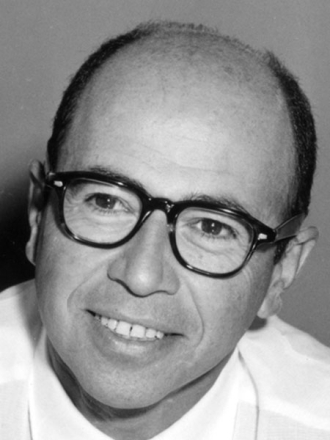
Jess Oppenheimer: The Brains Behind I Love Lucy

As we are learning all about Lucille Ball and her shows this first month of 2025, the month would not be complete without getting to know Jess Oppenheimer, the man Lucy called “the brains” behind I Love Lucy. He was also the producer and head writer of the show. Director William Asher said “he was the field general. Jess presided over all the meetings and ran the whole show. He was very sharp.”

📷televisionacademy.com

Oppenheimer was born in San Francisco in 1913. He took part in a study of gifted children in Stanford Professor Lewis Terman’s project. Ironically, one of Terman’s quotes about Jess was that he “could detect no signs of a sense of humor.” Jess’s father James owned the largest luggage store in San Francisco, but he died in an accident when Jess was 16.

Oppenheimer went on to attend Stanford in the 1930s. He started to spend a lot of his free time at radio station KFRC and performed in a comedy sketch he wrote for the show “Blue Monday Jamboree.”

In 1936 he moved to Hollywood and was hired as a writer on Fred Astaire’s radio show. He later went to work for Jack Benny as well as Edgar Bergen and Charlie McCarthy, George Burns and Gracie Allen, Bing Crosby, Marlene Dietrich, Judy Garland, Bob Hope, and Ginger Rogers.

When World War II began, Oppenheimer joined the US Coast Guard where he met Jack Dempsey and Cesar Romero. While he was there, he was diagnosed with double vision which had bothered him his entire life but had never been addressed.

Agent Ray Stark was Fanny Brice’s son-in-law and later Stark recruited him to write for her Baby Snooks Show based on his reputation in the Coast Guard.

In 1942, Oppenheimer met Estelle Weiss, an employee of Wallichs Music City. They married in 1947 and were together for the rest of his life.

📷wikipedia.com

In 1948, CBS hired Oppenheimer to write a script for a new radio show, “My Favorite Husband.” Several of the scripts portrayed the wife, played by Lucille Ball, as a sophisticated socialite. When Jess added slapstick comedy and transitioned her to a childlike, impulsive, naïve wife, the show was a big success.

In 1950, CBS moved the show to television to star Lucy and her real-life husband Desi Arnaz. Lucy demanded that Oppenheimer stay in charge. Jess suggested doing a show “about a middle-class working stiff who works very hard at his job as a bandleader and likes nothing better than to come home at night and relax with this wife who doesn’t like staying home and is dying to get into show business.” He suggested the title “I Love Lucy.”

For the first five seasons, Oppenheimer was the producer and head writer, with help from Madelyn Pugh and Bob Carroll Jr. as other writers. As part of his contract, Oppenheimer received 20% of the ownership in the show. He gave Pugh and Carroll each 5% of that amount.

A wannabe actor, Oppenheimer appeared on I Love Lucy in two episodes. In #6, “The Audition,” he was one of three TV executives who audition Desi and in #127, “The Tour,” he walks in front of the bus before Ethel and Lucy board it. In one of the more famous episodes, #30, “Lucy Does a TV Commercial,” Jess is the voice that tells Lucy to go ahead and begin her commercial.

📷

In 1956, Oppenheimer moved to NBC where he became a producer of special shows.

During the sixties, Oppenheimer created and produced three other sitcoms. In 1960 he worked with Annie Farge and Marshall Thompson on Angel; in 1963 with Glynis Johns on Glynis, and with Debbie Reynolds on The Debbie Reynolds Show. He also was listed as writer, producer, and director for the 1967 season of Get Smart.

Oppenheimer received two Emmys and seven nominations. His Emmys were for Producer for Best Situation Comedy, I Love Lucy, in 1953 and 1954. He was also nominated for Producer for Best Situation Comedy, I Love Lucy, in 1952 and 1955; for Best Comedy Writer, I Love Lucy, in 1955 and 1956; for Best Single Program of the Year, General Motors 50th Anniversary Show in 1958; Program of the Year, The Danny Kaye Show with Lucille Ball in 1963; and Outstanding Program Achievement in Humor, The Danny Kaye Show with Lucille Ball in 1963.

He was also an inventor with 18 patents. One of his inventions was an in-the-lens teleprompter.

In 1962, Lucille Ball brought a new sitcom to television; however, Oppenheimer sued the show, claiming that Lucy Carmichael was Lucy Ricardo, his character, He received a financial settlement, and the character was changed, but unfortunately, it ruined the friendship between Oppenheimer and Ball.

The Oppenheimer family lived on Burlingame Avenue in Los Angeles. In a funny twist, Jess bought the house from MGM hairstylist Sydney Guilaroff; he was the person who turned Ball into a redhead for the 1943 movie, DuBarry was a Lady.

📷instagram

Jess’s best friends were Mel Blanc, Hans Conried, and Jerry Hausner, who had played Ricky’s agent on I Love Lucy.

In 1988, Oppenheimer had an intestinal surgery; he died shortly after from heart failure. At his death, Lucille Ball said he was “a true genius” and said that “she owed so much to his creativity and his friendship.”

I love hearing stories about people like Jess Oppenheimer and Sheldon Leonard who are creative geniuses and are the influence and inspiration for so many of the classic television shows.

Verrry Interrresting!

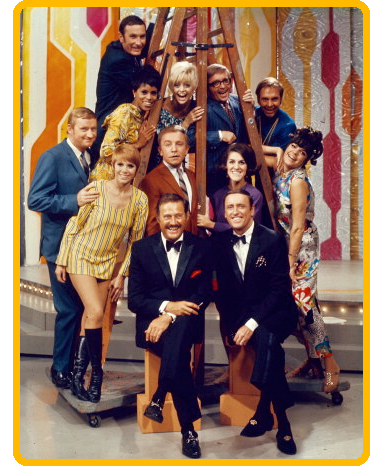
Occasionally, a show is so entrenched in the time and culture it debuts in, it becomes almost impossible to describe or understand away from its original setting. Dan Rowan and Dick Martin were nightclub comics who co-hosted a special called Laugh-In in 1967.  The name was a play on words based on the love-in’s and sit-in’s happening in the 1960s.  The special was so popular it was turned into a weekly series. I think of Laugh-In as Sesame Street for adults.  Both shows debuted in the late 60s and had a rapid-fire approach, continually moving on to the next segment so the viewer would not get bored. The show captured the counterculture movement and the lime green, turquoise, fuschia, deep orange, bright yellow, and paisley flowers kept our eyes moving as quickly as the jokes did. The show lasted six seasons.

laughin1

Regular cast members who went on to other careers included Ruth Buzzi, Gary Owens, Alan Sues, Arte Johnson, Henry Gibson, Lily Tomlin, Richard Dawson, Jo Anne Worley, Goldie Hawn, Judy Carne, Dave Madden, and Flip Wilson.

Numerous celebrities flocked to the show.  Movie stars that were reeled in included John Wayne, Jack Benny, Peter Lawford, Zsa Zsa Gabor, Charles Nelson Reilly, Debbie Reynolds, Rock Hudson, Jack Lemmon, Edward G. Robinson, Sally Field, Orson Welles, and Rita Hayworth.  Noted musicians included Sammy Davis Jr., Dinah Shore, Johnny Cash, Perry Como, Liberace, Bing Crosby, Cher, Rosemary Clooney, and Liza Minelli. Sports stars tackled the chore including Joe Namath, Wilt Chamberlin, Sugar Ray Robinson, and Howard Cosell.  Comedians who laughed their way on the show included Rich Little, Don Rickles, Bob Hope, Bob Newhart, Paul Lynde, and Carol Burnett. Classic tv stars who accepted starring roles were Tim Conway, Carl Reiner, Steve Allen, Jim Backus, Ernest Borgnine, Eve Arden, Andy Griffith, Desi Arnaz, and Wally Cox.

The format rarely changed from week to week.  Rowan and Martin opened each show with a dialogue; Rowan acted as the straight man, and Martin took on the gullible role. Then the regular cast, along with celebrities, danced against a psychedelic background, firing off one-liners and short gags. Comedy bits, taped segments, and sketches filled in the rest of the hour and always ended with Rowan telling Martin to “Say goodnight, Dick” and Dick replying, “Goodnight Dick.”

Some of the regular features were:

laughinn

The Cocktail Party where the cast stood around spouting politically and sexually suggestive jokes.

Letters to Laugh-In where the cast read letters.

ROWAN AND MARTIN'S LAUGH-IN,  Teresa Graves, Pamela Rodgers, 1969-1970.

It’s a Mod, Mod World where go-go dancers danced in bikinis with puns and word play phrases painted on their bodies.

farkel

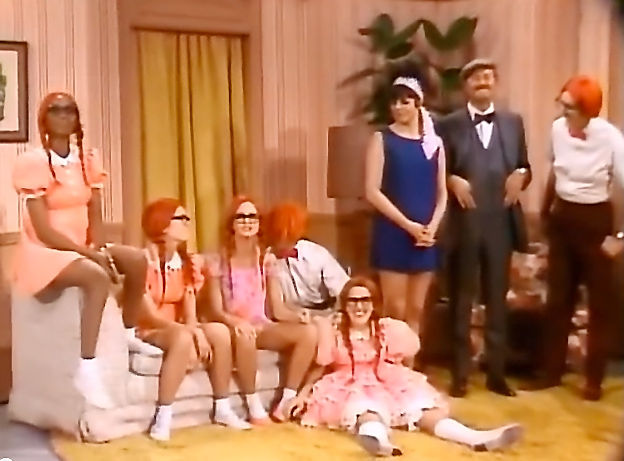
The Farkel Family about a group of red-headed, freckled family members.

fickle

The Flying Fickel Finger of Fate Award where dubious achievements were celebrated.

Laugh-In Looks as the News was comparable to the Saturday Night Live news sketches of today.

New Talent Time showing various weird skills.

Many of the regular cast members had their own skits that were repeated during the series’ run:

carne

Judy Carne was always tricked into saying “Sock it to Me” which then caused her to get doused with water, fall through a trap door, or endure some other indignity. Sometimes celebrities ended up being the ones to say “Sock it to me,” the most famous being Richard Nixon when he was campaigning for president.

buzzi

Arte Johnson played Tyrone, an inappropriate senior citizen who tries to seduce geriatric Ruth Buzzi as Gladys, forcing her to eventually hit him with her purse.

laughinc

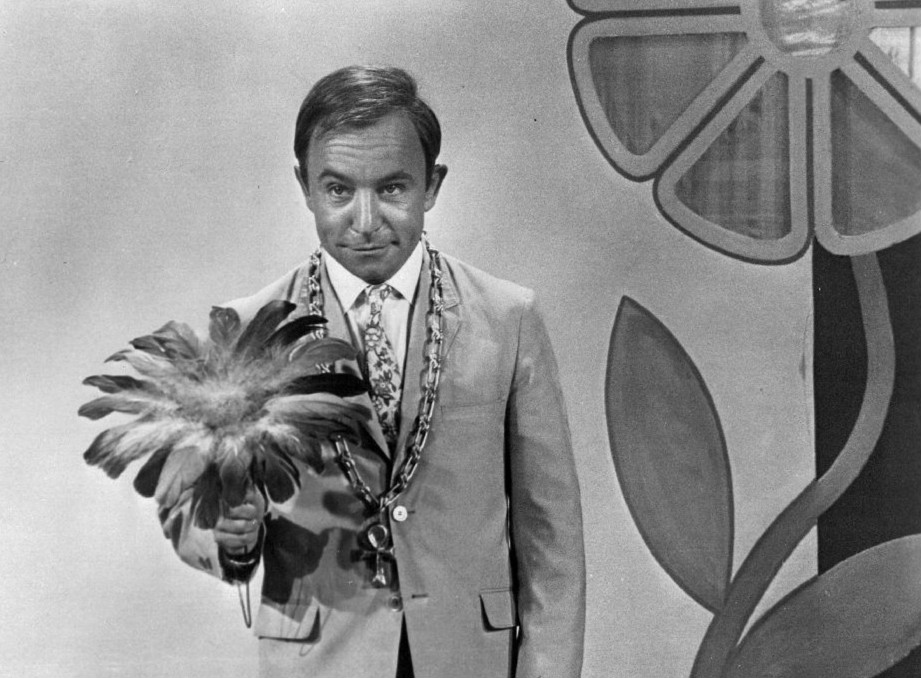
Henry Gibson came on stage holding an oversized paper flower, reciting poetry.

Lily Tomlin performed skits as Ernestine, a telephone operator or Edith Ann, a young girl sitting in a rocking chair. (Personal note:  When I was in 4th grade, I performed an Ernestine and an Edith Ann skit for our talent show.  Why a 9-year-old was watching Laugh-In and the school approved the skits, I can’t say, but I remember getting a lot of compliments.  And Lily Tomlin didn’t sue me for stealing her material!)

sues

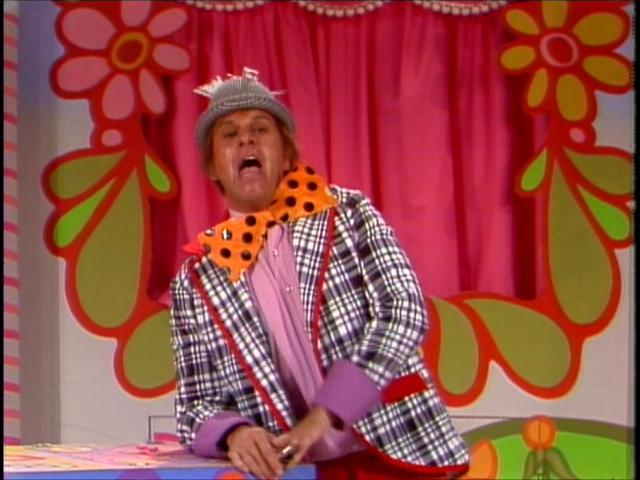
Alan Sues portrayed Uncle Al, a children’s show host, who was short tempered and often in bad shape from his late partying nights.

laughinh

Flip Wilson was Geraldine.

laughin6

Jo Anne Worley would say “Bor-ing” in the midst of jokes.

laughing

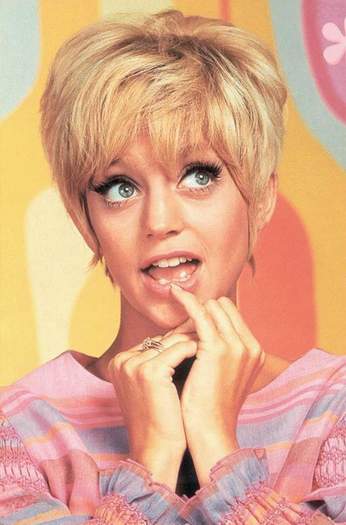
Goldie Hawn as the ditzy blonde.

The series also became known for some of its catch phrases including “Look that up in your Funk & Wagnalls,” “You bet your sweet bippie,” “Beautiful downtown Burbank,” “Is that a chicken joke?,” “Sock it to me,” “Here come de judge,” and “Verrrry Interesting.”

The show was one of the highest rated shows in the late 1960s. It was in the top 4 of the top 40 shows for its entire run. It won Emmy and Golden Globe awards. The Nielsen polling determined it was the most-watched show in seasons 1 and 2.

The show had its own magazine for a year.  Trading cards were sold with catch phrases and images from the show. Several records were produced capturing the humor of the time.  There was even a set of View-master reels made, as well as lunch boxes and other memorabilia.

laughinrev

Laugh-In debuted fifty years ago, but still feels new and edgy. Because the show has not been syndicated in re-runs, it is hard for the current generation to imagine how very different this show was from anything else that appeared on television before it.  The closest show to capturing any of its essence since then is Saturday Night Live.  This was a time when everything was changing: civil rights, Vietnam, women’s lib, the hippie lifestyle, psychoactive drugs, anti-authoritarianism, freedom of speech and assembly, and environmental concerns, especially littering and pollution.

The Generation Gap was a real concept in the 1960s but this show might have come as close as anything else to bridge that gap. Families sat down together to watch the show. Many of the phrases still have a life of their own decades later even thought decades of kids have never seen the show.  Plan your own little sit-in when you check out a couple of the you-tube videos to get a flavor of what the series was like.

Write On!

Happy Monday.  It’s National Encourage a Young Writer Day.  I love to encourage writers of all ages.  If you’re a writer, you know the two golden rules of writing.  (1) Write what you know and (2) Be original.  With those two qualifiers, one would think there would be a myriad of great shows out there about writers.  Not so.  It took a lot of exploring on my part to come up with 12 shows about writers in the past 70 years!

If writers are writing what they know, it seems writers know much more about incompetent parents, complex medical surgeries, and dating bachelors than they do about writing and writers.

Don’t get me started on being original. Unfortunately, any viewer knows that when one genre show succeeds, the next year will feature ten more just like it;  hence, the number of medical and police dramas currently on the schedule.  This doesn’t hold true anywhere else in life.  No grocer says avocados are so popular, let’s replace the oranges and apples with them.  No radio station decides to play the top five songs to the exclusion of the other songs.  That being said, I’ll jump off my soapbox before ranting about how the shows on today’s schedule are either amazingly written or not worth the time it takes to turn on the television. So, let’s look at shows about writers.

Apartment 3-C. In 1949 John and Barbara Gay played themselves.  Living in New York City, he was a writer.  The 15-minute show went off the air after one season. They moved to California where they raised their family and spent 66 years together. As far as I can tell, neither of them acted again, but John went on to be a prolific scriptwriter.

bethel leslie

Young and Gay/The Girls. Debuting in 1950 as Young and Gay, this series was based on an autobiographical novel written by Cornelia Otis Skinner and Emily Kimbrough. CBS bought the rights. After the first two episodes, the name was changed to The Girls.  The premise of the show was that two Bryn Mawr graduates come to Greenwich Village after spending time in Europe, trying to develop careers as an actress and a writer.  After a few more episodes, their acting career ended when the show was cancelled.

Dear Phoebe. In 1954, ex-college professor Bill Hastings, played by Peter Lawford, decided he wanted to try his hand at journalism.  The option he receives is becoming Phoebe Goodman, providing advice to the lovelorn. Ironically, his girlfriend, Mickey (Marcia Henderson), is the paper’s sports writer. After one season, they both received advice to seek new work when the show was cancelled.

mysistereileen1

My Sister Eileen. It would take half a decade before another show about a writer was produced. In 1960, My Sister Eileen aired.  The concept will sound vaguely familiar.  It’s based on a book and two movies about two sisters from Ohio who move to Greenwich Village wanting to be an actress and a writer. The sisters were played by Elaine Stritch and Shirley Boone. The only memorable thing about the show was the pairing of Rose Marie and Richard Deacon who went on to try their hand at another show a year later called The Dick Van Dyke Show.

The Dick Van Dyke Show. Hands down, this was the best comedy to debut about a writer.  It was also the longest running show, going off the air five years because the cast wanted to quit while the show was still successful. Rob Petrie (Dick Van Dyke) is the head writer of the Alan Brady Show, creating scripts with Sally (Rose Marie) and Buddy (Morey Amsterdam). Mel (Richard Deacon) is the long-suffering producer. This is one of the first shows to concentrate on work life. We get to see what goes on behind the scenes of a comedy/variety show. While Rob, Sally, and Buddy have lives outside the office, they are somewhat married to their work. Sally is always hunting for Mr. Right.  Buddy deals with more comedy at home because of his not-so-bright wife Pickles, although it’s obvious he is in love with Sally. Rob and Laura (Mary Tyler Moore) are both confident and intelligent adults and insecure parents, raising their son Richie (Larry Mathews) in New Rochelle. The show won an Emmy its first year and never left the top 20, producing 157 of the best-written sitcom episodes ever created.

Window on Main Street. Mention the name Robert Young, and most viewers fondly recall Father Knows Best or Marcus Welby.  In this 1961 show, Robert Young plays Cameron Garrett Brooks, an author.  After his son and wife pass away, he returns to his small home town of Millsburg to write about the town’s citizens. It must have been a very small town with few people to write about, because the series was cancelled after one year.

The New Loretta Young Show. Loretta Young starred in several shows using her name so it gets a bit confusing, but in this 1962 version, she plays Christine Massey, a children’s author and widow with 7 children. Living in Connecticut, she decides to get a job with Manhattan Magazine.  However, after meeting the editor she falls in love and marries him. Perhaps the network had a policy banning inter-company marriages, because the show was cancelled after six months.

writersblog2

Glynis. In 1963 Glynis Granville (played by Glynis Johns) moved to town. She is an amateur sleuth who solves crimes to have something to write about. Her husband Keith (Keith Andes) is an attorney.  She consults with a former policeman Chick Rogers (George Mathews). The show only lasted three months.  Jess Oppenheimer, the producer of I Love Lucy, apparently forgot this was a different show, airing episodes that were very Lucy-esque.

Please Don’t Eat the Daisies. In 1968, Please Don’t Eat the Daisies came to the small screen.  Based on Jean Kerr’s book, it was also a movie starring Doris Day about the Nash family.  James (Mark Miller) is a college professor and his wife Joan (Patricia Crowley) is a free-lance writer. The show featured their four sons, two of whom were twins, their large dog, and their housekeeper Martha (Ellen Corby). Faring better than most of our shows, this one lasted two years.

The Ghost and Mrs. Muir. This show about a writer, a widow Carolyn Muir (Hope Lange) who moves into an old house in Schooner Bay in New England, appeared in 1968. The house turns out to be haunted by Captain Daniel Gregg (Edward Mulhaney), a captain who built the house in the 1800s. This show was also based on a movie. Captain Gregg is annoyed with the interruption and noise of the new family, but ultimately falls in love with Carolyn. Charles Nelson Reilly plays the Captain’s nephew Claymore Gregg. Dabbs Greer is Noorie Coolidge, the owner of a local lobster restaurant, and Reta Shaw is their housekeeper Martha. The show was on NBC for one year then moved to ABC for one year.  Apparently, CBS declined its turn, so the show was cancelled.

The Debbie Reynolds Show. In 1969, another show produced by Jess Oppenheimer eerily reminiscent of I Love Lucy was on the fall schedule. Jim Thompson (Don Chastain) is a sports writer. His wife Debbie (Debbie Reynolds) is a stay-at-home wife who wants to be a feature writer. Jim discourages her, wanting her to stay home.  Instead of Ethel and Fred, we have her sister Charlotte (Patricia Smith) and her brother-in-law Bob (Tom Bosley).  After one season, the network decided they did not care if  Debbie worked or stayed home and sent the crew packing.

Suddenly Susan. Jump almost thirty years to 1996 and we have another show about a writer, Suddenly Susan, starring Brooke Shields. Susan leaves her husband-to-be at the altar and is forced to ask her ex brother-in-law (Judd Nelson) to hire her back at his magazine.  Most of the show is set in the workplace.  Luis Rivera (Nestor Carbonell), Vicki Groener (Kathy Griffith), and Nana (Barbara Barrie) round out the cast and appear on all the episodes.  (The photo above also includes Andrea Bendewald [the blonde] and David Strickland [laying down] who were in about half the episodes.) The show continued until 2000.

I should mention that because I focused on comedies I did not include Murder She Wrote or Castle, both having long runs of 12 and 8 years respectively. I did not include Everybody Loves Raymond because that show concentrated on his family life, and rarely revealed his writing profession.

I wish I had more encouraging words for writers who wanted to get involved in television.  About the only thing I can tell you, is if you want to develop a successful show around a writer, make it a drama for job security.

“Time to Get Things Started”

John Lennon said, “Reality leaves a lot to the imagination.”  That is especially true when looking at our two television shows today.  We are going to explore two shows that mixed reality and fantasy, or humanity and puppets more accurately.  Madame’s Place and The Muppets are both what they now call a mockumentary. Both shows featured a puppet hosting a late-night tv show, interacting with humans.  On Madame’s Place, Madame was the only non-human, while The Muppets blended muppets and humans throughout the show. We’ll also take a quick peek at the men behind the fantasy: Wayland Flowers and Jim Henson.

Madame’s Place debuted in 1982 while The Muppets began in 2015, 33 years apart.  Both shows lasted one season and featured celebrities interacting with the characters.  Both Madame and Miss Piggy had Jay Leno on their show. Both shows also went beyond the professional lives of their stars, featuring their personal lives as well.

Madame’s Place

madame9

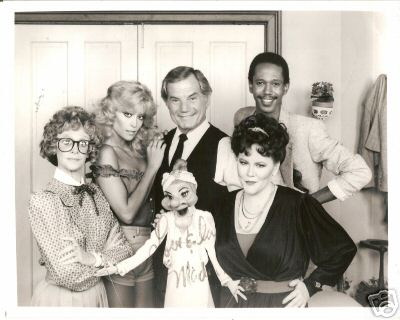
Madame lived in a large mansion. All 51 episodes included her three-person staff:  Bernadette Van Gilder (Susan Tolsky) who was her secretary; Walter Pinkerton (Johnny Haymer) who was an ex-boxer, now butler; and her niece Sara Joy Pitts (Judy Landers) who was a bit of a dumb blonde.   A young Corey Feldman appeared in half the shows as Buzzy St. James, the next-door neighbor boy.

madame4

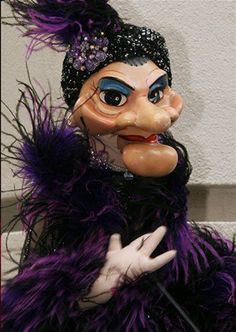
Madame clad herself in feathers and sequins. Madame was never described as politically correct, and she did not mince words with her staff or her nightly guests. She always had a witty comeback.

Some of the guests on her show included Frankie Avalon, Joyce Brothers, Scatman Crothers, Phyllis Diller, Eva Gabor, George Gobel, Arsenio Hall, Pee-Wee Herman, Jay Leno, Anthony Newley, Charles Nelson Reilly, Debbie Reynolds, John Schneider, William Shatner, Toni Tenille, Betty White, and Fred Willard.

I was surprised to learn that Wayland Flowers was actually born Wayland Parrott Flowers in Georgia in 1939.  He passed away in 1988 in California from cancer. He always performed with Madame, and their first break happened when they were cast on The Andy Williams Show in the mid-1960s.  They appeared on Laugh-In, The Hollywood Squares, and The Mike Douglas Show, as well as four years on Solid Gold.

wayland

Flowers once said that Madame had a mind of her own, and sometimes what she said shocked him.

If you wish to see Madame in action, there are several youtube videos of her. Madame’s Place s0le13 is an episode where Madame holds a contest to determine her next (and 7th) husband.

The Muppets

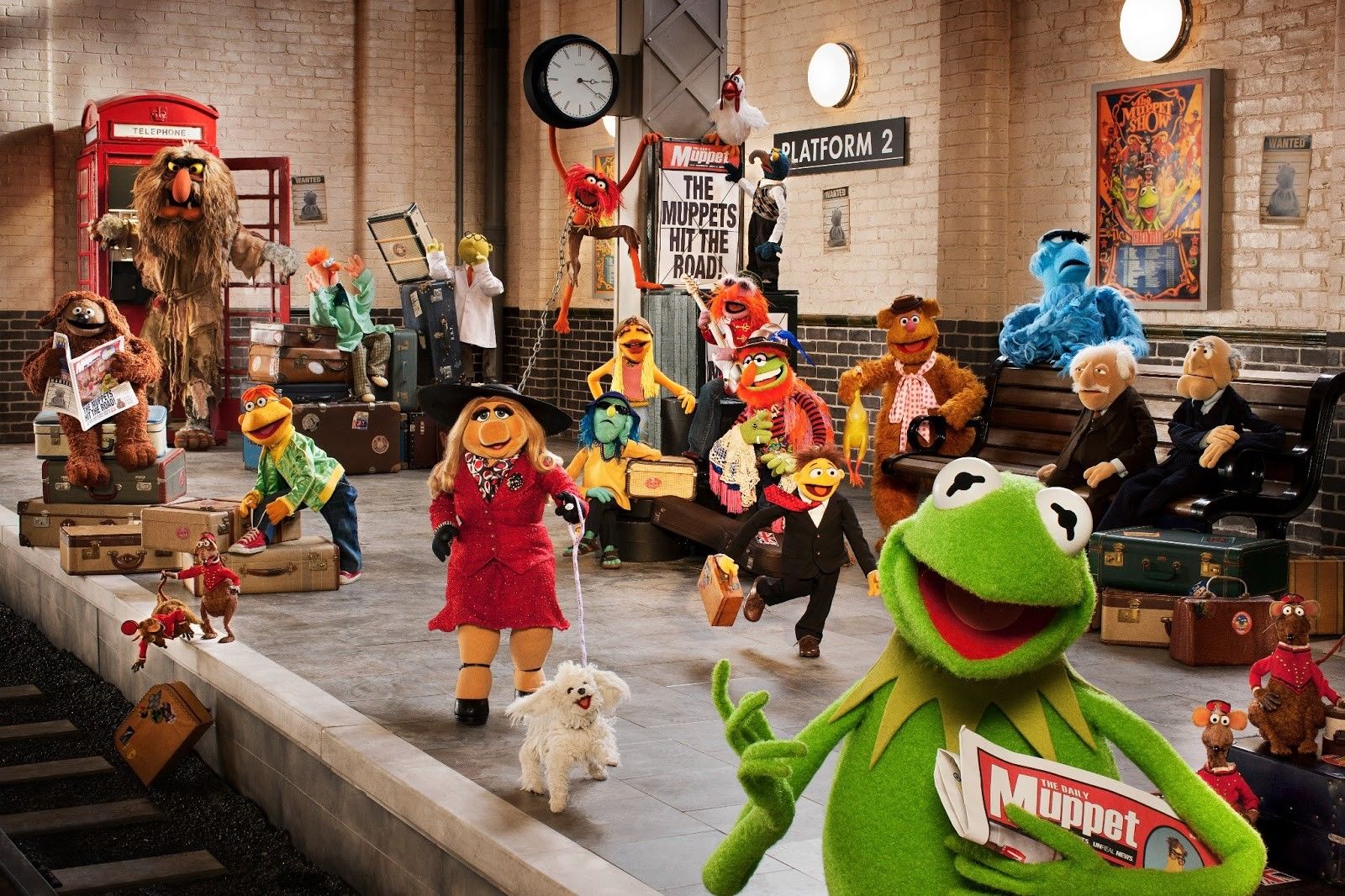
Like Madame’s Place, The Muppets showed life on a late-night talk show.  The gang is all here. Kermit and Miss Piggy have ended their relationship, but it is obvious they still have feelings for each other.  The show is Up Late with Miss Piggy. Before the show went live, Kermit always said, “Time to get things started.”

Kermit is the executive producer; his best friend, Fozzy Bear, is the co-host; Gonzo is the head writer with fellow writers Rizzo the Rat and Pepe the King Prawn; Scooter is in charge of talent, Bobo is the stage manager; Dr. Bunsen Honeydew and Beaker are the prop handlers; Uncle Deadly is in charge of Miss Piggy’s wardrobe; Sam the Eagle is in charge of the network’s Standards and Practices; Denise, another Pig, and Kermit’s current girlfriend, is in charge of marketing; the house band is the Electric Mayhem; and we’re not totally sure what the Swedish Chef actually does. Rowlf the Dog owns a bar across the street and many of the characters retire there after the show to talk about the evening’s performances.

The show mixes humans and muppets.  For example, Fozzy is dating a human girl, and her parents don’t approve.

The show cleverly made fun of a lot of the late-night shows. Some of the guests who came to dish with Piggy included Christina Applegate, Elizabeth Banks, Jason Bateman, Jere Burns, Kristen Chenoweth, Laurence Fishburn, Josh Groban, Joan Jett, Mindy Kaling, Jay Leno, Willie Nelson, and Reese Witherspoon.

The show was cancelled after one year.  A lot of people complained about The Muppets living as adults in adult situations.  This was unfair criticism because the Muppets began as a show aimed at adults.

Jim Henson was born in Mississippi in 1936 and died in New York in 1990. He began creating puppets in high school.  While at the University of Maryland, he created a show starring Kermit among other now-unknown puppets called Sam and Friends, an adult show.  The show appeared in television in the Washington, DC area from 1955-1961.The puppets lip-synched popular songs and acted in sketches spoofing television shows.  Henson founded Muppets, Inc. in 1958. The Muppets then appeared on late night talk shows.

henson

In 1969, the Muppets moved to Sesame Street where they became famous. The Muppet Show was on television from 1976-81, and the crew made several movies including The Muppet Movie, The Great Muppet Caper, and The Muppets Take Manhattan.

muppets3

In the 1980s, Disney became involved with the Muppets and several television shows occurred (The Jim Henson Hour in 1989 and Muppets Tonight from 1996-98), along with a couple more movies. In 2004, Disney acquired all rights to the Muppets and made additional movies.

I’m not sure why neither of these shows made it to year two.  Maybe people just couldn’t accept the interaction of puppets and humans.  With The Muppets, I think some people who would have liked the show assumed it was for kids while people who assumed it was for kids were unhappy it was an adult show.

I found both shows a lot of fun.  They didn’t take themselves or celebrities too seriously. Another show I fell in love with that put kids’ characters into modern situations was the New Looney Tunes, but that’s a show we’ll explore in detail in a future blog.


I could not find an author for the following quote:  “It’s not reality that shapes us, but the lens through which your brain views the world that shapes your reality.” I don’t know about you, but in watching the news and reading newspapers (ok, almost no one reads newspapers anymore), I find reality is not a fun place to dwell in.  I will happily add a bit of fantasy.  It seems to produce a lot of great one-liners.

Piggy: I’m telling you this because we’re friends: we are no longer friends.

********************************************************************

Fozzie: I knew you wouldn’t approve it so I went over your head.
Kermit: I’m the boss.
Fozzie: Oh that’s right. So I went behind your back.

********************************************************************************

Cousin Charlie: Well, if you need me I’ll be in my dressing room practicing my collection of one-liners.
Madame: Well, be sure to do a good job darling. They’re all in your face.
*********************************************************************************

Madame: These are my Summer Diamonds. Some are diamonds, some are not.