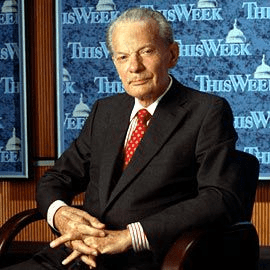
Good Night David: The Career of Chet Huntley

This month we are learning about some of our favorite newscasters from the past. Last week, we explored the career of David Brinkley who partnered with Chet Huntley, so it seems fitting to talk about Huntley this week.
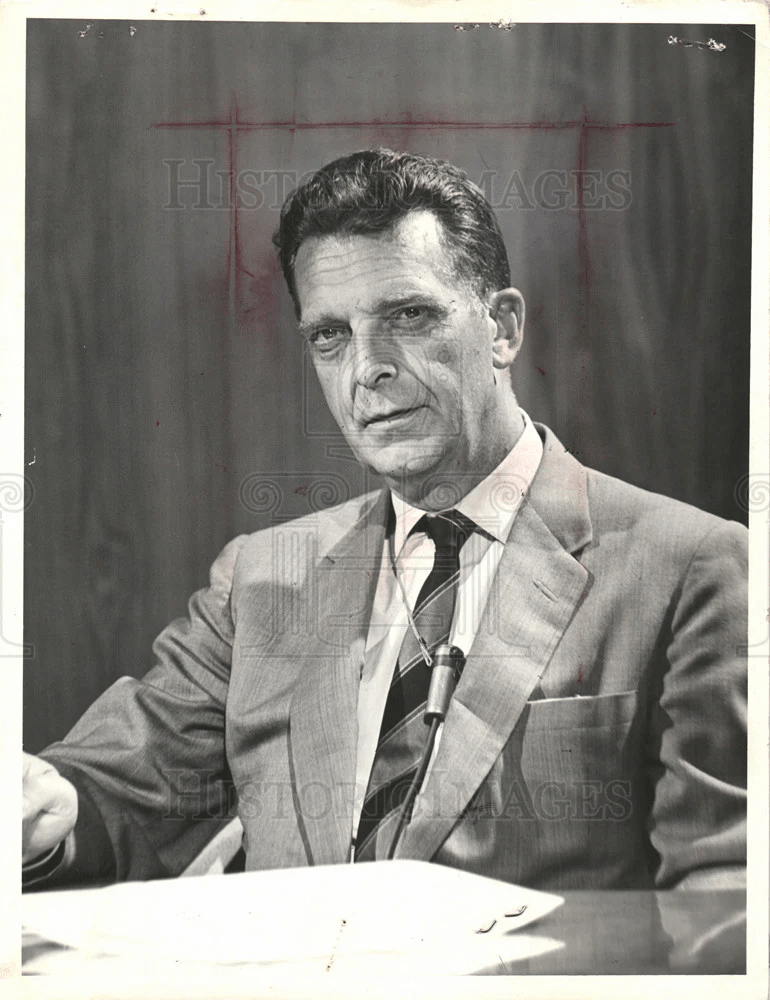
đź“·historicimages.com

Huntley was born in Cardwell, Montana in 1911. His father was a telegraph operator for the Northern Pacific Railway, and the family moved often for his career. He continued his pattern of moving around during college. After graduating from Whitehall High School in Montana, he attended Montana College in Bozeman, the Cornish College of the Arts in Seattle, and the University of Washington, which he graduated from in 1934 with a degree in speech and drama.

After graduation, he was hired by Seattle’s KIRO AM radio station. After working in Spokane and Portland, he moved to Los Angeles in 1937 working at KFI before moving to CBS Radio from 1939-1951, ABC Radio from 1951-1955, and NBC Radio beginning in 1955 where he would remain for the rest of his career. During his time in California, he covered the Pacific War and the Civil Rights movement.

As we learned last week, national party conventions were being covered and John Cameron Swayze had stepped down, leaving an opening. Huntley and Brinkley were the leading candidates, and they became a team.

đź“·ebay.com

Their partnership transitioned to the national nightly news with Brinkley in Washington DC and Huntley in New York. Chet was the straight man with David the witty commentator.

In 1959 the Huntley marriage ended in divorce and later that year, Chet married Tippy Stringer.

One of Huntley’s most memorable newscasts occurred November 22, 1963, when he reported on President John F. Kennedy’s assassination. Along with Bill Ryan and Frank McGee, they provided live coverage and analysis of the ongoing story.

I was disappointed to learn that in the late sixties, Huntley joined a New York advertising agency. In exchange for him attending a few meetings and adding his name to the agency now known as Levine, Huntley, Schmidt Plapler & Beaver, he got a ten percent share in the business. I just felt his integrity and reputation as an objective newscaster was compromised a bit with this collaboration.

Huntley’s last broadcast was July 31, 1970. He then returned to Montana where he built Big Sky, a ski resort south of Bozeman.

đź“·visitbigsky.com

Before retiring, he also wrote a memoir of his Montana upbringing titled The Generous Years. Chet captured the ups and downs of his life in Montana. He fondly recalls his idyllic boyhood growing up hills and grasslands with friends and family and attending a one-room schoolhouse. He also discussed the tragedies of crop failures, severe drought, hailstorms, locust hordes, and a lightning hit that burned down their barn.

Four years later, Huntley passed away from lung cancer at 62.

Huntley had a successful news career. In 1970 he was named the International Radio and Television Society’s 1970 “Broadcaster of the Year” and in 1988 he was posthumously inducted into the Television Hall of Fame.  He and David Brinkley won eight Emmy awards for their joint news coverage.

They were an amazing team, keeping America in the know.

“Good night Chet”: The Career of David Brinkley

This month we are learning about some of our favorite newscasters from the past. We start with David Brinkley who was a newscaster for more than fifty-five years.

đź“·rollingstone.com

Brinkley was born in 1920 in North Carolina. He began writing for the Wilmington Morning Star in high school. One of his memoirs discussed his story about the nonappearance of a bloom on a century plant which was reprinted by the Associated Press in newspapers around the country. After graduation, he enrolled in the University of North Carolina, Chapel Hill; Emory University; and Vanderbilt University before joining the US Army in 1940.

After being medically discharged due to kidney problems, he worked for United Press International (UPI) in Atlanta before being sent to other cities, including Nashville as a bureau manager. In 1943, he moved to Washington DC because he mistakenly thought he had been offered a job in the radio industry and ended up at NBC News as the White House correspondent.

Brinkley’s first marriage occurred in 1946 to Flora Ann Fischer; they divorced in 1972. That same year he married Susan Melanie Benfer; they would remain married until his death.

In 1952, Brinkley made the transition to television, reporting the evening news on John Cameron Swayze’s program. When John J. O’Connor reviewed Brinkley’s television career, he said he was “one of the more articulate and persuasive practitioners” of television news reporting. Despite NBC executives’ lack of confidence in the decision, Brinkley was paired with Chet Huntley in 1956 to cover the Democratic and Republican political conventions. In reflecting on Brinkley’s career later in life, Jeff Greenfield, CNN news analyst, said “David Brinkley created a whole generation of political junkies.” At the time, Roger Mudd said “Brinkley, above all the TV guys here, probably has the best sense of the city—best understands its moods and mentality. He knows Washington and he knows the people.”

đź“·wikimediacommons. Brinkley and Huntley

The Huntley-Brinkley Report was the most popular television newscast until the end of the sixties when Walter Cronkite appeared on the CBS Evening News. Huntley reported from New York and Brinkley from Washington DC. The pair continued working together until 1970 when Huntley retired. The team won an Emmy every year from 1959-1964. (Brinkley would receive ten Emmys overall during his career.) Each broadcast ended with Brinkley saying, “Good night Chet,” and Huntley replying “Good night David.”

During the seventies he appeared on NBC Nightly News as co-anchor or commentator. He switched gears in the eighties and nineties, hosting This Week with David Brinkley. This show established the Sunday morning news program format, featuring correspondents, interviews, and a roundtable discussion.

Brinkley added Author to his resume, penning three books including his 1988 bestseller, Washington Goes to War about World War II. He also got into documentaries with “The Battle of the Bulge: 50 Years On” featuring interviews with survivors of the battles which aired in 1994.

đź“·entertainmentweekly.com

Literally days before his retirement, Brinkley made a major slip on the air. During what he thought was a commercial break, he was asked about Clinton’s re-election chances, and his response mentioned Clinton being a bore and a derogatory description of what his time in the white house would be like. Unfortunately, the mic was still on, and America immediately began calling to agree or disagree with his opinion.

Brinkley was inducted into the Television Hall of Fame in 1988. In 1992, President George H.W. Bush awarded him the Presidential Medal of Freedom.

Brinkley passed away in 2003 from complications after a fall in Wyoming. Many of the newscasters of the fifties, sixties, and seventies were seen as celebrities. We relied on them to provide us with what was happening around the world before 24/7 news and the internet became real things. They helped us get through Korea, Vietnam, Kennedy’s assassination, Watergate, and other national and international events. The cover of Brinkley’s 1995 memoir noted that during his career he had covered “11 Presidents, 4 Wars, 22 Political Conventions, 1 Moon Landing, 3 Assassinations, 2000 Weeks of News and Other Stuff on Television and 18 Years of Growing Up in North Carolina.” That is pretty amazing to think about not only what he lived through but what Americans trusted him to help them to live through as well.