This month we are discussing Classic TV Shows. Many of our series this month were adapted from books, movies, or radio. Today’s show is no exception. Join me as we learn about the television series, The Thin Man.

The Thin Man was introduced in 1933 by Dashiell Hammett. It became a big-screen film feature in 1934 starring Myrna Loy and William Powell. In 1957, it showed up on television where it would air for two years on NBC. The show was a half-hour show scheduled on Friday nights, producing 72 episodes.
Peter Lawford took over Powell’s role of Nick Charles with Phyllis Kirk stepping in for Myrna Loy as Nora. (In the years after this show, Kirk only had five other acting credits; Lawford, on the other hand, was known for his friends, The Rat Pack and would go on to act in more than sixty additional shows during his career.) Their famous dog Asta was played by three different dogs during the run of the show.
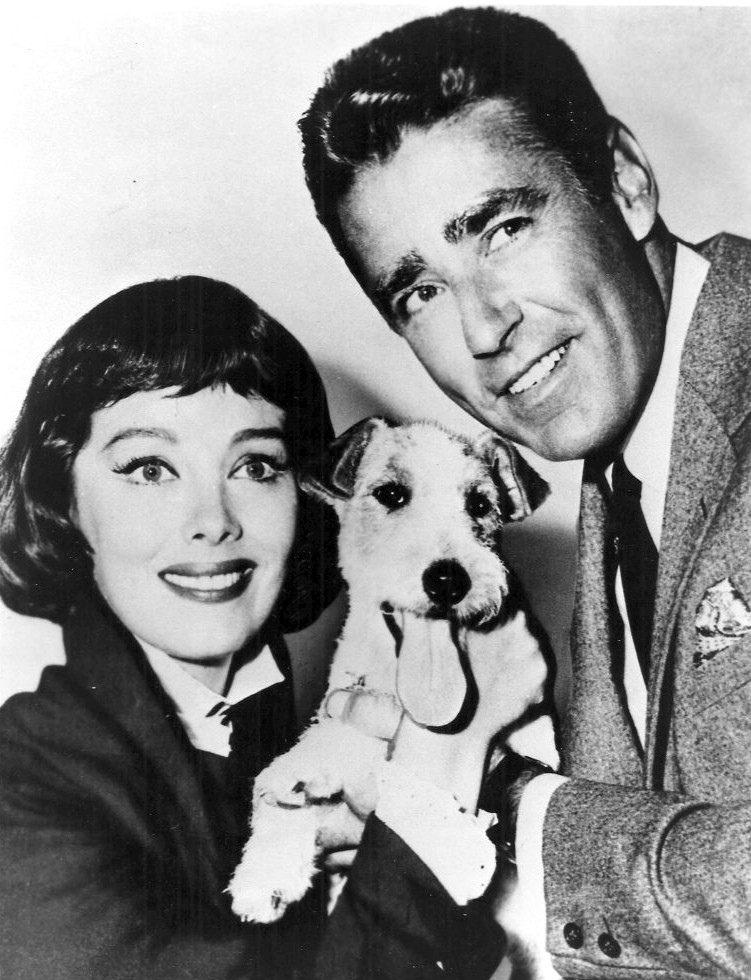
Rounding out the cast was Jack Albertson as Lt. Harry Evans of the NYPD, Patricia Donahue played the Charles’ neighbor Hazel, and Nita Talbot was Beatrice Dane, a criminal who often got Nick and Nora involved in awkward or criminal situations. Before he was Chief O’Hara on Batman, Stafford Repp showed up in NY as Lt. Ralph Raines.
Nick was a former private detective who got out of crime and became a mystery editor in Manhattan. He has an eye for the ladies, and the ladies definitely have an eye for him. Hazel and Beatrice both hit on Nick often much to Nora’s chagrin. Nora is heir to a family fortune. The couple seems to get pulled into crimes and can never resist solving the mystery. Both Raines and Evans agree to help the duo out. Unfortunately for Lawford and Kirk, the show just could not compete with the Powell-Loy banter and wit. After two seasons, the show was canceled.
One of the directors on this show was William Asher. Asher would go on to direct many shows, including I Love Lucy and Bewitched.

By the early fifties, most of the movie studios had realized that television was here for good, and they began creating quality shows for the industry. However, MGM refused to believe that television would cause any threat to the film world. In order to prove that, they resisted getting into television until the very last minute. As television continued to grow, and big-screen films lost their domination in the entertainment business, the drowning company finally began searching for a life preserver. However, it was too little too late. By recycling a movie series that had been loved by millions and starred actors who were still alive, and then not putting the quality into the new series that would make it a hit, MGM almost guaranteed that the show would fail. However, the concept would be recycled several times during television history, most notably in Hart to Hart where the glamorous couple solved crimes that seemed to draw them like a magnet.
Apparently, the episodes have never been released on DVD, and I could not find out why. However, even if they existed, I would advise you to watch the Powell-Loy films instead. Most of our television recollections are about shows we love, but there are plenty of shows that did not work, and I like to reflect on those shows as well, and why they did not fare so well. Sometimes it’s just the timing of their introduction; other times, it was just because the shows lacked quality and that seems the case here.
 thewritelife61