We Love Spending Time with “Perfect Strangers”

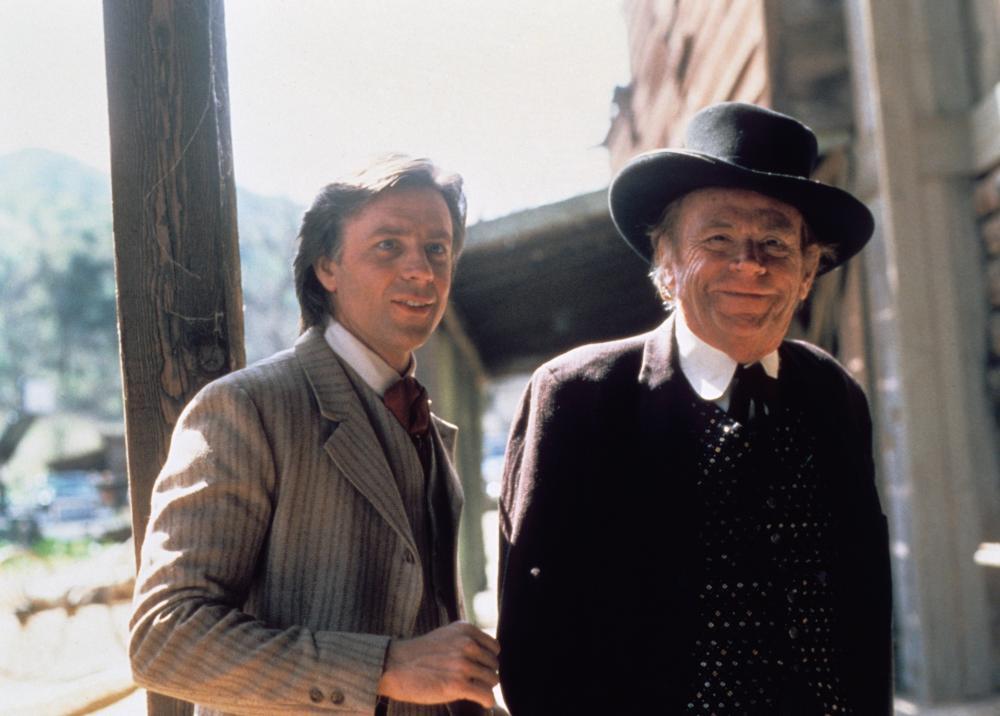
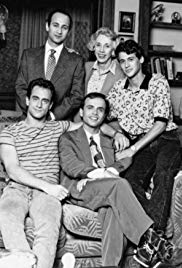
Linn -Baker and Pinchot Photo: tvfinales.com

We are talking about our favorite duos from the eighties and nineties in our blog August series. Although most of these shows feature husband and wife teams, today we are turning the dial back to a show about two cousins: Perfect Strangers. I am always envious of my husband because they have a group of first cousins who are very close and grew up together. While I have scads of second cousins, once removed and such, I have no first cousins and always missed those relationships. Perfect Strangers is about two cousins who develop that type of relationship.

Perfect Strangers is another one of those shows that was quite popular when it was on the air, and it was for eight years, but it doesn’t get much recognition any longer.

The series was created by Dale McRaven for ABC; McRaven was also the creative force behind Mork and Mindy. Bronson Pinchot had appeared in Beverly Hills Cop as Serge, a gay art gallery employee who had a foreign accent. ABC signed on to the project based on Pinchot starring. However, in the meantime, Pinchot had signed on to Geena Davis’s sitcom, Sara. Sara was quickly canceled and Bronson became available, so a pilot was made with Louie Anderson in the role of the American cousin. It was obvious that this was not the best pairing, and eventually the role was offered to Mark Linn-Baker after an appearance he made on Moonlighting. He and Pinchot had great chemistry and the show was placed between Who’s the Boss and Moonlighting, very popular shows, on Tuesday nights.
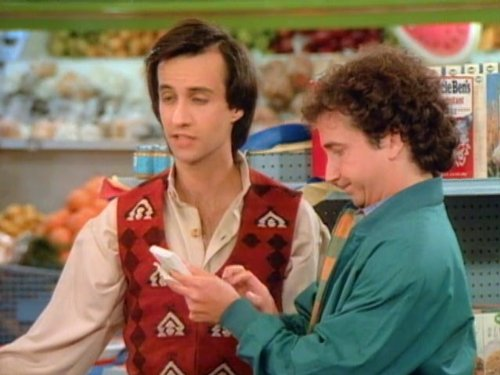
Photo: imdb.com

The short first season of six episodes debuted in March of 1986. The show was about Larry Appleton (Linn-Baker), a Wisconsin boy, who moved to Chicago and was enjoying life on his own after growing up in a large family. His utopia is shattered when his cousin Balki Bartokomous (Pinchot), arrives from Mypos, a Mediterranean island, intending to move in with him. Balki’s name was originally Vev, but Pinchot suggested Balki based on his sister’s nickname for her dog. Larry Appleton got his name because Lawrence University is in Appleton, Wisconsin, where I graduated from high school. Neither actor went to Lawrence, but both of them are Yale alumni. Both Linn-Baker and Pinchot got not only their BA degree from Yale but also both received their Masters of Fine Arts in drama.

Larry tells Balki he needs to live somewhere else. Balki had been a shepherd, and most of his impressions of what America was like were taken from pop culture, television shows, and commercials. Larry, a photographer, relents and invites Balki to live there, thinking of himself as more worldly and able to teach Balki the truth about American life. Ironically, it is often Larry who is more inept and gets the pair into some interesting situations.
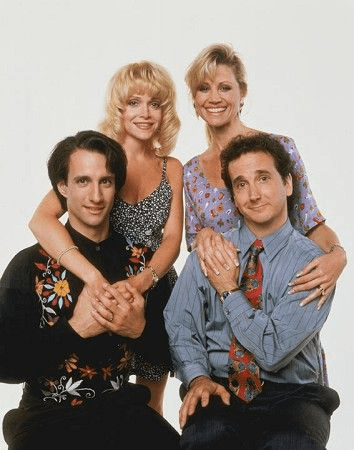
Photo: pinterest.com

Season two found the show on Wednesday nights. The cousins begin dating flight attendants–Jennifer (Melanie Wilson) dates Larry and Mary Anne (Rebeca Arthur) dates Balki. They meet the girls at the gym and realize that they live in the same building.

In season three, Balki is able to stop sleeping on the living room sofa and gets his own room when the pair moves into a much larger apartment. Somehow Jennifer and Mary Anne still live in their building but no one ever talks about moving. Larry is hired as a reporter for the Chicago Chronicle, and Balki is hired for the mail room. For some reason, halfway through the season the show was moved from its successful spot on Wednesdays to Fridays.

During season five, Harriette (Jo Marie Payton-France), the elevator operator, was given a new show, Family Matters which was also on Friday nights. That show, which for better or worse, introduced America to Steve Urkel, was on the air for nine years. Larry and Jennifer are still going strong while Balki and Mary Anne are lukewarm. Larry proposes to Jennifer during season six.

Season seven finds Jennifer and Larry in a large Victorian house. Of course, they realize they need renters to afford the expensive Chicago mortgage and who moves in but Balki and Mary Anne. Balki becomes an animator with his own comic strip at the newspaper. Eventually, Mary Anne moves out but in the finale, they reconcile, marry, and travel to Mypos for their honeymoon. The show retained its viewers but then it was moved to Saturday nights in February of 1992 before returning to Fridays. The TGIF campaign for ABC’s Friday night shows was very successful, and the network was trying to do something similar for Saturday nights.

Season eight, ironically also a six-episode season, picks up several months after the wedding, and we realize that both Jennifer and Mary Anne are noticeably pregnant. In the finale of the series, babies Robespierre and Tucker join the show.
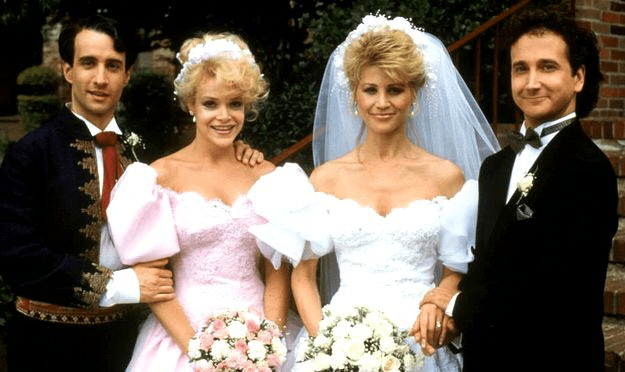
Photo: pinterest.com

The first six seasons found the show consistently in the top forty. Given its placement between two popular shows in its debut year, five of the first six episodes landed in the top ten. After the show was moved to Saturdays, it experienced a drastic decline in viewers. When the show was moved back to Fridays, it found its audience again. The show’s final season was supposed to be thirteen episodes but it was shortened to six. It was in the top twenty for the final season, and 15 million households watched the finale.

The theme song for the show, “Nothing’s Gonna Stop Me Now,” was written by Jess Frederick and Bennett Salvay. They composed the themes for Full House, Step-by-Step, and Family Matters as well.

We have talked about a lot of shows who have some famous fans and this show was no exception. Bronson Pinchot said Nelson Mandela was a fan of the show. Pinchot was invited to a banquet in South Africa where President Mandela was in attendance. One of the President’s assistants gave Bronson a note that read, “I’m dying to meet you, but if I go to your table, I have to go to everyone’s table. But I wanted you to know that I know my cousin is here.” Later that evening Bronson met Winnie Mandela.

Photo: pinterest.com

The Emmys also recognized the show. In 1987 Bronson Pinchot was nominated for a Lead Actor in a Comedy Series. He did not win, but had some tough competition with Ted Danson for Cheers, Harry Anderson for Night Court, Bob Newhart for Newhart, and, winner, Michael J. Fox for Family Ties. Two years later, Doris Roberts was nominated for Outstanding Guest Actress in a Comedy and lost to Colleen Dewhurst for Murphy Brown. Other nominees included Diahann Carroll for A Different World, Eileen Brennan for Newhart, and Maxine Stewart for The Wonder Years.

I’m sure that Perfect Strangers is in syndication somewhere, but I cannot remember the last time I saw it listed on television. There is a DVD set out for the entire series. I do remember watching this show most weeks and enjoying it, although it was not in my Top Ten. Yes, it had some too-typical and obvious plotlines like the girls living in the same building and both Balki and Mary Anne moving into the Appletons’ new house. However, the writing was pretty good and the characters were fully developed. The twist of naïve Balki often being wiser than native Larry is also a fun influence. It’s definitely a show that deserves more recognition than it has received in the past three decades. I’d love to know if you take some time to watch the DVDs, find it on the air somewhere, or just have fond memories of watching it in the past.

St. Elsewhere: Medicine Doesn’t Always Give Us The Ending We Wanted

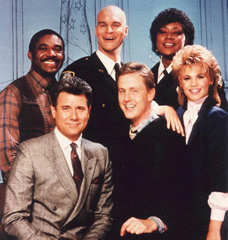
Today we are winding up our blog series, “Examining Some of Our Favorite Medical Shows.” Six years seems to be the magic number of seasons for many medical shows and it was no different for our series today: St. Elsewhere.

Photo: starstills.com

St. Elsewhere was created by Joshua Rand and John Falsey. It aired on NBC from 1982-88. It was produced by MTM Enterprises, Mary Tyler Moore’s company that also produced Hill Street Blues; both shows had large casts, realistic plots, and continuing storylines.

The show was talked about a lot, but I was surprised to learn that it never ranked higher than 47th in the Nielsen ratings, and that was in the final season. The reason it stayed on the air so long despite lower ratings was that it did very well with the 18-49 year age group with the networks were trying to appeal to. It did win 13 Emmys for writing, acting, and directing. (Overall the show won 13 Emmys out of 62 nominations.)

St. Elsewhere was set in St. Eligius Hospital, a rundown Boston teaching hospital. Its elevators don’t work and they still use an ancient tube system to send messages from one floor to another. Apparently “St. Elsewhere” was a slang term that referred to not well-equipped hospitals that served patients who were turned away from more well-respected institutions. The building that served as the hospital façade was the Franklin House on East Newton Street in Boston, which was originally a hotel for women. Young working women lived there including Faye Dunaway after she graduated from Boston University.

The show intertwined the professional and private lives of the medical staff and patients. It dealt with many cutting-edge social issues including heart transplants, artificial hearts, AIDS, religious conflicts, suicide, and gender identities.

Photo: people.com

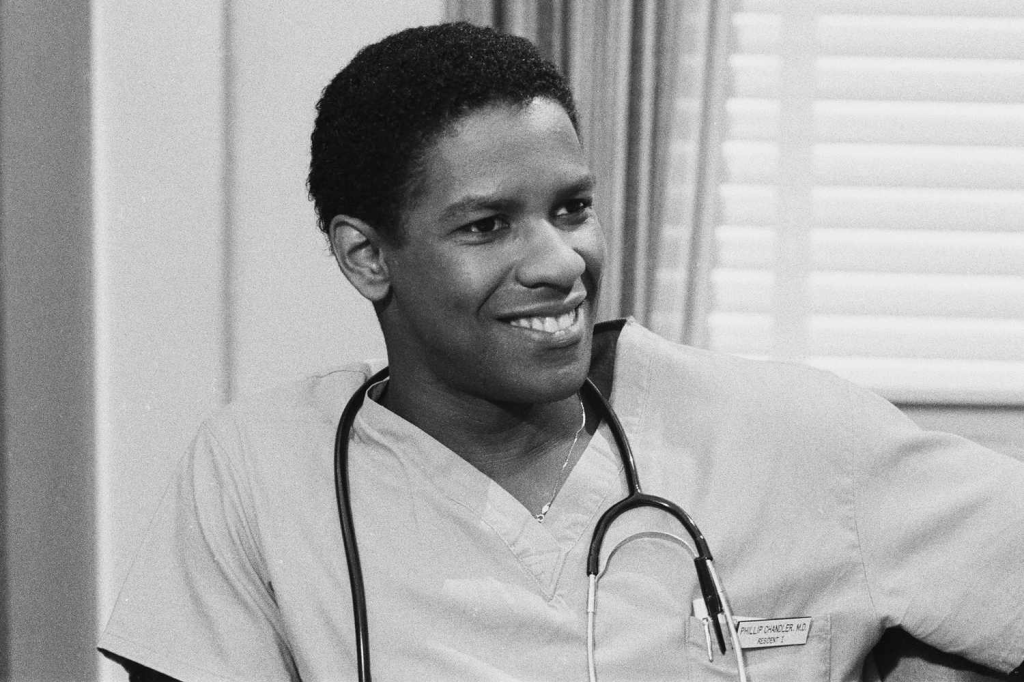
Surgeon Dr. Mark Craig (William Daniels) informs the staff that their hospital was considered a “dumping ground.” Craig helped train the interns along with Dr. Donald Westphall (Ed Flanders) and Dr. Auschlander (Norman Lloyd). Flanders was a popular character and the role was originally offered to Hal Linden who turned it down. Other members of the stellar cast included Ed Begley Jr. (playing Dr. Ehrlich), David Birney (playing Dr. Samuels), Mark Harmon (playing Dr. Caldwell), Ronnie Cox (playing Gideon), Helen Hunt (playing Clancy Williams), Howie Mandel (playing Dr. Fiscus), Christina Pickles (playing Nurse Rosenthal), and Denzel Washington (playing Dr. Chandler). This was a fitting role for Denzel who was a pre-med student in college.

Daniels was sent five scripts. He thought the writing was wonderful and having so many scripts displayed how the ensemble cast would be used. He might have a large part one week and then three weeks with small parts. He said Dr. Craig was like him in many ways. He ran the gamut from angry to nice in minutes. It fit his temperament and was wonderful to play him.

Daniels met a surgeon and followed him around the hospital, including in the operating room for an open-heart surgery procedure. He said he used some of the medical information, but he did not like the surgeon as a person and did not model Dr. Craig on him. He said using so much medical jargon was difficult and he had to learn about it before he went in to rehearse. He said that Dr. Craig had some funny lines in the show. He said he did not have any input with the writers on his character; in fact, they never really saw the writers.

Photo: ebay.com

Among the many guest stars were James Coco and Doris Roberts who both picked up Emmys as a mentally challenged boyfriend and a bag lady. It was an interesting storyline where two couples are followed through their medical care. One couple is upper middle class and the other has no money. Nothing is said; there are only observations of the action. The wealthier woman leaves the hospital with no cure but a high hospital bill for many tests. The bag lady, Cora, learns she needs to have both feet amputated because of gangrene, but she needs to take care of Arnie, her mentally challenged boyfriend, so she refused the surgery.

Roberts was asked about her role on the show in a Television Academy interview. She said Coco had received the script and called her to say she needed to audition for the role of his girlfriend. When Doris reached out, they declined, so she reached out to Bruce Paltrow, who was a producer and writer for the show, and she was hired. She did a lot of research watching homeless people. She realized that most people squatted because they did not want to lie down because they were worried about having things stolen. This is how her character got gangrene. When asked about what she thought happened to the character she said she thinks she died shortly after. Roberts got emotional discussing the role and said it still makes her cry. She said it was the best dramatic role she ever played.

Doris said one funny moment came at the Emmy Awards. When they called her name, she did not know what to do with her purse, so she handed it to Jimmy Coco. The next name called was his so he came on stage with the purse and mentioned he didn’t use one often but it came from Doris. Then a few nights later he was on the Tonight Show, and when he came on stage he had her purse and in it was a cigar, a half-eaten sandwich, and a few other items.

Photo: ebay.com

The show was classified as a drama, but it included comedy, as well as inspiring moments of interaction and care. One of these scenes is when Jack, a resident, has to deal with his wife’s death. She is an organ donor, and her heart is given to a female patient. Jack sneaks into the patient’s room when she is sleeping so he can listen to his wife’s heart.

Jazz musician Dave Grusin composed the theme. Grusin won twelve Grammys. He won an Academy Award for his score of The Milagro Beanfield War in 1988. He also scored some popular films including The Graduate, On Golden Pond, The Fabulous Baker Boys, and Tootsie. Before writing the theme for St. Elsewhere, he cowrote the themes for Good Times and Baretta.

One of the most interesting things about the writing on St. Elsewhere was the number of allusions to other television shows and movies and several cross-overs. There are many of these but some of the most fun ones for me included (1) the public loudspeakers often page characters from other television shows, (2) one of the characters on The White Shadow, Warren Coolidge, becomes an orderly and sometimes wears Carver high school shirts, (3) a psychiatric patient who watches The Mary Tyler Moore Show believes that he is Mary Richards and has an encounter with Betty White, and she says she is not Sue Anne Nivens, (4) Dr. Craig once mentions serving in Korea with B.J. Hunnicutt, and (5) the teaching doctors are seen at the bar at Cheers in one episode.

Photo: imdb.com

The hour-long show started on Tuesday nights. The show was canceled after the first year. Then Grant Tinker changed his mind and they were back on the air. For the second season, it was moved to Wednesdays where it remained until it was canceled.

The finale of this show gets talked about almost as much as Newhart. However, while fans loved the Newhart ending, there was a lot of controversy over the ending of St. Elsewhere.

Warning: This is a spoiler alert if you haven’t seen the show and want to watch it. After wrapping up several storylines, the final scene is a much younger Dr. Westphal and his son Tommy (Chad Allen) who has autism. Westphal is obviously a construction worker. Dr. Auschlander appears to be Westphal’s father. Tommy is playing with a snow globe and the two “doctors” discuss the fact that Tommy spends much of his day staring at the snow globe. They set the globe down and when the camera goes in close, we see St. Eligius inside.

We are left to assume that the entire series had been Tommy’s imagination. In other words, the show was fiction but the fiction was also fiction inside someone’s mind. Viewers understandably were confused and upset.

Photo: paleymatters.com

Later the cast did a special on Entertainment Weekly and was asked to share their thoughts about the finale. Here are a few of the comments. Chad Allen said, “From the mind of a young person whose fantasies were coming to life before him, it was neat.” William Daniels said he was “shocked, actually. I had no idea of their plans to do that. . . it was a provocative ending. A surprise to everybody.” Ed Begley Jr. felt that “it was quite fitting for what they had done the previous six years. They always tried to be out there, beyond the limits of what was being done before. They tried to think outside the box. . . . It was bold and shocking and upset some people.  . . . It was highly unpredictable, just like every episode.” Howie Mandel knew it would offend half the viewers and appeal to the other half, but he described it as “ahead of its time, pretty ingenious, and creative and not like anything else.” Mark Harmon had been killed off earlier in the series, but said, “It made me smile when I heard about what they did because it was so them. They made a choice. and the choice is interesting.” Noman Lloyd said he “never bought it. I said at the time we were shooting, ‘This is a cheat.’ For me, it was a cheat.”

I will admit this was not a show I regularly watched. I find the entire philosophy of the ending fascinating. Many felt they had been cheated by getting pulled into the lives of characters for six years that never existed. However, if they are on a television series, did they ever exist? It shows how real characters become to us when we invest in a show and invite these people into our homes every week.

If you didn’t watch the show in the eighties, you can find it on Hulu and make your own decision about the finale. I do admit that I never look at snow globes the same way anymore.

If We Were the Prop Master: Our Favorite Items On TV

    This month is our blog series is “Potpourri Month” and we have a sub-theme every day; today’s is Propourri” for the pro who handles props. When you think of your favorite shows, there are props included in those great memories: the couch at Central Perk, Fonzie’s leather jacket, or the cereal boxes on Seinfeld’s refrigerator. First let’s learn a little about the Props Master and then we’ll take a look at some of our most-loved props.

The Fonz’s jacket Photo: ebay.com

    The Prop Master heads up the Props Department. They are charged with acquiring, organizing, and safely handling the props for the shows.

    Each episode has a list of props that will be needed for the show. The props master reviews the scripts and has meetings with various department heads to ensure everything that is needed is on the list.

    Sometimes the props master does research to see what would be appropriate for a specific era or place. Cars were quite different in the fifties than the eighties. A grocery store does not look the same in China as it does in Atlanta.

    During filming, the props master has to keep track of props and make sure everything is put back in its place.

    So, what are some of the props that have become synonymous with our favorite series? Let’s put together a prop list that includes props from our favorite shows.

    Living rooms have a lot of cool furniture. When you think of comfortable places to sit, you have to think of Modern Family’s couch, Archie’s chair from All in the Family, Chandler and Joey’s Barcaloungers from Friends, and Martin Crane’s duct-taped, worn chair on Frasier.

The Bunkers’ Chairs Photo: comparativemediastudies.com

Many of the Modern Family characters are interviewed on their couch which sits in front of their stairs to the second floor right as you enter the front door. The walls are Benjamin Moore’s Labrador Blue. The couch itself is from Sofu-U-Love and the primary-colored striped pillows are from Pottery Barn just in case you want an interview sofa of your own.

Archie Bunker’s chair is from the 1940s. It’s covered in an orange and yellow woven fabric. The props master purchased the chair from a thrift store in Southern California. Whenever anyone but Archie sits in the chair, it is made obvious to them that they need to find another seat.

The barcaloungers Joey and Chandler use were originally made in Buffalo New York, named after the company that made them. They have moving parts to allow for footrests and reclining. Joey’s Barcalounger is brown leather and he calls it “Rosita.”

Martin Crane’s chair is in the same color family as Archie Bunker’s. The prop department made it, so it’s a one-of-a-kind piece. It’s striped and quite unattractive looking especially with Frasier’s expensive tastes echoing in the rest of the room, but Martin loves it and Frasier loves Martin so it stays. In the first episode, a guy carries in the chair when Martin and his dog Eddie move in with Frasier. On the last episode, the same guy carries the chair out when Martin gets married and moves out. The chair is really almost a character during the run of the series.

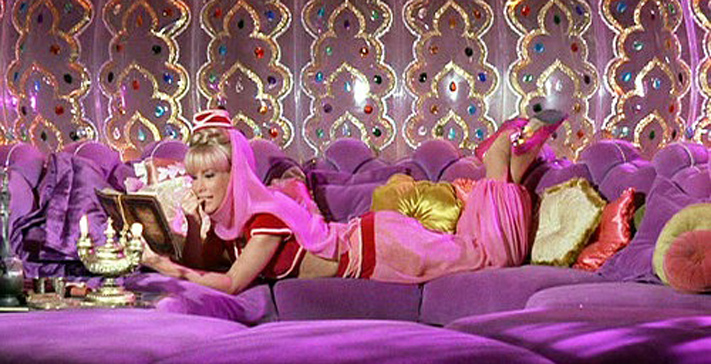
Jeannie in her bottle Photo: blazenfluff.com

There are a lot of fun accessories from our favorite living rooms. Just a couple include Jeanne’s bottle from I Dream of Jeanne, the “M” that was on the wall in Mary Richard’s apartment on The Mary Tyler Moore Show, and the Chihuly sculpture from Frasier. Who can remember The Dick Van Dyke Show without thinking about the ottoman Rob Petrie might trip over?

Jeannie uses her Arabian glass bottle to sleep in and to hide in when someone other than Tony and Roger is in the house. The bottle has a long, purple couch with her blankets and pillows. She also has an Arabian candle, a photo of Tony, a mirror, and her book about genies.

Mary’s “M” stood for so much more than her first name. We knew that an independent, smart woman lived in that apartment. Everyone wanted to grow up and be able to put their own initial on the wall just like the brass one Mary had. When she moved to her newer, more modern apartment, the M went with her.

Martin’s chair on Frasier Photo: jacksonville.com

In contrast to Martin’s puke-colored chair on Fraiser, Frasier had so many expensive items scattered around his home. One of them was Dale Chiuly’s Macchia. This blown-glass vase was green and brown. It was worth $30,000 at the time, and the props master locked it up after filming each episode.

We all recall the opening of The Dick Van Dyke Show. Will he or won’t he? I think most of us remember him falling over the ottoman, but do you know sometimes he walked around it? Reiner wanted a clever opening for the show and while talking with John Rich, the director, they decide Rob will fall. But then Reiner suggested a variation, so they filmed him not tripping. No one ever knew from episode to episode if he would fall or not.

Burns and Allen have their closet adjoining the living room. While Fibber McGee and Molly have a ton of items in their closet, whenever Gracie opens hers, we see a collection of hats that men have left when they are in a hurry to get out of the Burns house after dealing with Gracie’s logic.

When I think of some of my favorite kitchen items, I think about Jerry Seinfeld’s refrigerator with its revolving display of cereals. I know if I visited My Three Sons, I would get to sit around the kitchen table where all the action happens on the show. And Gracie would definitely take me into her kitchen to have some coffee from the pot she almost always kept full for her and Blanche to talk over.

Jerry always has cereal in his cupboard. Some sources say he had up to seventeen at a time. Knowing that cereal doesn’t last all that long, he ate a lot of cereal. I’m hoping Fruit Loops was one of those choices.

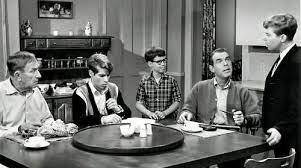
My Three Sons’ table Photo: pinterest.com

While as viewers we love that the kitchen was the heart of the Douglas home. From the first episode when Steve got Chip to help him with the dishes to talk to him about “love,” to the grown boys gulping down orange juice at the table to leave early for their busy day, we spent a lot of time in that room. Uncle Charlie’s bedroom was just off the area, so he could come and talk with someone getting warm milk in the middle of the night. The actors might not have had the same warm, fuzzy feelings. Barry Livingston discussed their filming schedule because Fred MacMurray did all his filming in two short groups of days. He said sometimes, “you would sit at the kitchen table all day long and they would do close-ups. You would be sitting in the same place at the same table and you would do a close-up from 12-15 different episodes. All you would do was change your shirt because they couldn’t see anything below.”

Burns and Allen Photo: pinterest.com

Gracie and Blanche always made time to have coffee to talk over things. Whether it was 7 am, 1 pm, or 7 pm, the coffee pot was always on. Burns and Allen also did coffee ads for Maxwell House, so I am assuming that it was Maxwell House the friends drank daily on Burns and Allen.

I know if I explained every item to you in detail, we would still be on this blog next week, so I’ll just some up the rest of the categories.

Bedrooms: Beds are definitely the focal point. We have the Petries’ twin beds that are not convenient for a married couple. Lisa and Oliver Douglas had a very large bed on Green Acres; unfortunately, it was open to the outside where anyone could come in or out. Oscar Madison had a bed on The Odd Couple, but no one knew it because his room was so messy. We definitely remember Bob and Emily Hartley’s bed because not only was it important in The Bob Newhart Show but it was in the finale of Newhart. It is also hard not to recall Alex Keaton’s Ronald Regan poster that took up one of his bedroom walls on Family Ties.

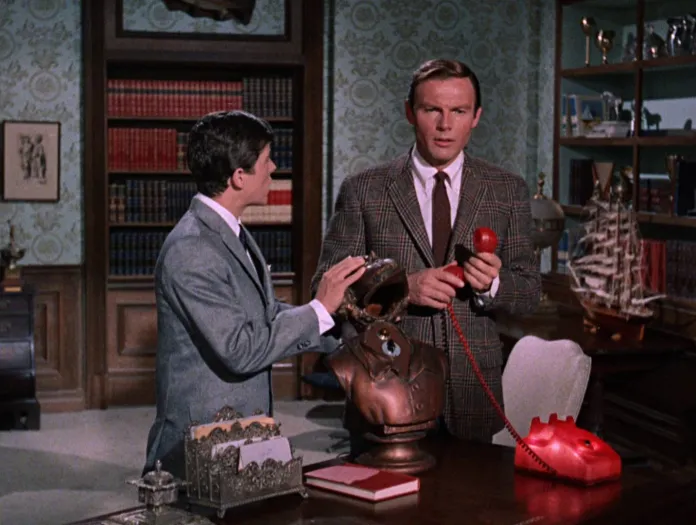
Batman with bust and phone Photo: batnews.com

Libraries and Dens.  Three specific rooms come to mind. On Batman, we had the Shakespeare bust that hid the bat phone in their library. We had George Burn’s television on Burns and Allen where he could watch was going on during the show without the other characters knowing he was listening in. Finally, we think back to The Brady Bunch where the six kids fought over what to watch on television and did their homework after school.

Garages: The Jetsons they kept their flying car in the garage, Last Man Standing where Tim kept his antique car, and The Adventures of Ozzie and Harriet, where they kept everything but the car. Ozzie was always out there looking for something.

Workplace: When characters go to work, we get a whole new scene full of fun props. Who would visit Dunder Mifflin without stopping by to see Pam at the front reception desk? Rob Petrie had a couch where the writers worked their magic. Central Perk featured the orange couch everyone remembers from Friends. The sofa was so beloved that replicas of it went on a world tour in 2019 for the shows’s 25th anniversary. The actual sofa used on the set was sold at auction in 2011 and it went for about $5000. Of course, Cheers would not have been the same without the stools for Norm and Cliff. Get Smart had so many fun props, it’s hard to choose; the Cone of Silence was certainly fun for everyone who could hear what was said inside by characters who thought they were speaking where no one could hear them. And Hogan’s Heroes also had a lot of fun items including the coffee pot that could relay anything said in Colonel Klink’s office.

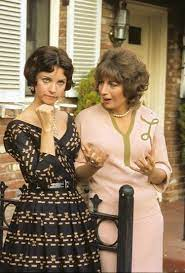
Laverne Photo: pinterest.com

Clothing: While I love almost everything they wore on Burns and Allen, The Brady Bunch, and The Partridge Family, there are a few other pieces that really stand out. Who would not want to wear Fonzie’s leather jacket? Columbo’s coat might be a bit rumpled but it had been around to solve a lot of mysteries. Sally on McMillan and Wife had the San Francisco jersey that she wore to bed. And talk about special clothing, Laverne’s wardrobe with her iconic “L” on everything was a big part of Laverne and Shirley.

Unusual Items: Last, but definitely not least, we have those special objects that belong to specific characters. When you think about Radar on M*A*S*H, don’t you also think about his teddy bear? Barney Fife would never leave the house without his silver bullet. Half the plots would disappear if Gilligan’s Island did not have a radio for the Professor to try to repair and hear about the world outside the island. Buffy’s Mrs. Beasley on Family Affair was very popular; the doll was sold for decades after the show went off the air. Kojak’s lollipops had to be on the list. Also, if you are talking about “things,” how could we not include the “Thing” from The Addams Family?

I hope you enjoyed getting to know something about some of our favorite furniture and recalling special props from well-loved shows. If you want to see a couple of these items, visit The Smithsonian Museum in Washington D.C. where you can see Archie’s chair and Fonzie’s leather jacket. I’d love to hear your favorites.

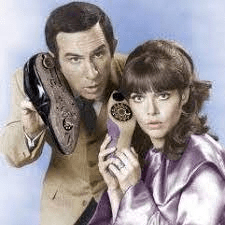
Barbara Feldon Did Not Have to Get Smart: She Was Born That Way

This month’s blog is taking a look at some Supportive Women. First up is Barbara Feldon, costar with Don Adams in Get Smart.

Photo: getsmartwikifandom.com

Feldon was born Barbara Anne Hall in 1933 in Pennsylvania, near Pittsburgh. During an interview with Emerson College, Barbara talked about the ecstasy of performing in a little band in first grade. When things stopped, she got to play her triangle, and the thought that everyone was watching her, and her mother’s pride in seeing her made her want to perform more. In sixth grade she went into the gym to watch her friend doing her ballet lessons. The teacher invited Barbara to join them and played Tchaikovsky’s Nutcracker music; that combination of music and movement took her away to another place. She was hooked at that point, and she knew that she wanted to dance.

She trained at the Pittsburgh Playhouse and then graduated from Carnegie Mellon University with a BA in drama in 1955. They didn’t have a dance program, and her mother thought Bennington, where she wanted to go for dance, was too expensive and too liberal. While she enjoyed acting, it never had the enchantment for her that dance did.

Feldon made her way to New York and studied at the HB Studio. She briefly had a career as a showgirl at the Copacabana. She said “that was my first professional job in New York and it was probably the highlight of my whole career. We got to dance with Jimmy Durante. Oh, my God, it was a thrill.” They replaced the girls every three months so, then she went on to appear in The Ziegfield Follies. She landed one job that never made it to Broadway. A friend of hers who was a model talked her into exploring a modeling career.

Photo: punkglobe.com

She worked as a model and was in a Revlon commercial about a hair pomade for men, Top Brass. Feldon said commercials were excellent training to get experience in acting. You do the same scene over and over, maybe more than forty times, but you have to keep that spontaneity. “You must remember to stress each word properly and come in on a split-second when that camera rolls.”

Like several actresses that we have discussed in this blog, before Feldon got her first big break, she appeared on a game show. In this instance, she was on The $64,000 Question in 1955, and she won the grand prize of $64,000 in the category of Shakespeare.

She didn’t use her winnings to buy a mansion or live the typical party life. She opened an art gallery with a man who was a photographer and ad man who was no longer interested in advertising named Lucien Verdoux Feldon. Barbara would be the subject of a Warhol pop art painting in 1965.

In 1958 Barbara married Lucien Feldon. They divorced nine years later. She had a longer relationship with one of the Get Smart producers, Burt Nodella and when that ended, she moved back to New York City.

After her commercial debut, she received offers for several television roles in the early sixties including The Man From U.N.C.L.E. and Flipper. She was also offered a chance to appear on East Side/West Side with George C. Scott. Colleen Dewhurst was her mentor and Scott’s wife. He asked her to play his girlfriend in the next episode. Talent Associates which produced the show was working with Mel Brooks and Buck Henry on a potential spy spoof called Get Smart. Her second television role was as a spy. So, when Talent Associates was casting for a spy on Get Smart, she was an obvious choice.

Photo: facebook.com

She turned down the role at first because she didn’t want to move from New York to California, but she did love the script. They agreed to offer her a two-year contract instead of a five-year contract, and she accepted. Her first review was in TV Guide which compared her to the dog and concluded that the dog came off better. She was devastated and humiliated. In later years, the reviewer rated her performance much better.

From 1965 till 1970, Feldon was known as Agent 99 working with Maxwell Smart for CONTROL. In both 1968 and 1969, she was nominated for an Emmy for Outstanding Lead Actress in a Comedy Series. Lucille Ball won for The Lucy Show in 1968 and Hope Lange won for The Ghost and Mrs. Muir in 1969.

Women at the time looked at Feldon as an example of a powerful woman; Feldon commented that young women said “she was a role model for them because she was smart and always got the right answer.” If you look closely in the early seasons, you will typically see Feldon sitting and Adams standing because she was taller than he was. Once she even had to bury her feet in the sand. While Adams was the blundering, awkward Smart, it was Agent 99 who was really the “smart” one, getting him out of trouble during their spy missions.

Feldon said that she is not a comedienne; she is an actress who can play comedy. She said that she is the worst person to tell a joke to because she doesn’t always get it. She never enjoyed drama much because the actual acting on camera was wonderful but the long, boring hours waiting were very tedious, and if you have a tearful scene, you have to be able to keep the momentum.

During the run of Get Smart, Feldon also appeared on Rowan & Martin’s Laugh In and The Dean Martin Show.

Photo: imdb.com

After the show ended, she would appear on 20 additional television series including Cheers and Mad About You. She made fifteen made-for-tv movies, one of which was a 1989 movie, Get Smart, Again. She also could be found in six big-screen films including The Last Request, her last acting role, in 2006.

During my research, I read an article where pop culture historian Geoffre Mark commented on one of her movies, Fitzwilly, which I admit I have never seen. He said that it was a gem of a movie and that “Dick Van Dyke is brilliant in it and Barbara plays his love interest and she’s brilliant in it. She was playing a version of herself: a beautiful, sensual, highly intelligent woman with a strong moral compass and a loving heart. That’s what the character is and that’s who Barbara is.” According to imdb.com, the plot of the 1967 movie is that a butler and the staff of an eccentric aged philanthropist whose family wealth is exhausted engage in larceny and crimes to maintain her lifestyle and provide funds for her charitable activities.

Feldon was offered a cameo in the Get Smart movie with Anne Hathaway and Steve Carrell in 2008, but she declined. She said that “times have changed too much. The psychology of the writers and the audience has changed radically. Get Smart belongs in the 1960s, or it’s not going to be Get Smart.”

Despite her comment of Get Smart staying in the sixties, in 1995 Feldon took on the role of Agent 99 again in a brief reboot of Get Smart. Feldon discussed that series with The (Westchester County NY) Journal News reporter Karen Croke in 2017. She said that she and Adams never became friends after the original Get Smart. She said he was a lovely man and very funny, but they had their jobs to do and did their acting and then parted ways for the day. After they worked together on this series, they became very close friends in a way they could not have in their original show. She said once Don Adams died, Max also died and she can’t do any work as 99 without Max now. That might be the real reason she turned down the cameo in the Carrell-Hathaway film.

Photo: imdb.com

Barbara said it’s hard to make friendships on a set because it’s more like a factory and when you’re not acting, you might be resting or talking to your agent. The only person she said she was able to maintain a good relationship with after acting with him, was Alan Alda.

Apparently, she still enjoyed games shows and she appeared regularly in several of them including Hollywood Squares and The $20,000 Pyramid.

Feldon lost interest in acting, but she did numerous television and radio commercials and documentaries. In 1977, Barbara hosted a news show called Special Edition. In the 1990s she had a one-woman show she took around the country. She has also taken up writing and had two of her pieces published in Metropolitan Magazine. She wrote a book about living as a single person in 2003 called Living Alone and Loving It. She also enjoys writing poetry. In talking about her book, Barbara said, “I had been in relationships my whole life. I’d been married, then had lived with someone for several years. After those, I just assumed I would find another relationship. But it didn’t happen. As time went on with some good guidance, I learned how to live alone really happily. I’ve met a number of people—men and women—who feel living by themselves is a second-rate life. I thought that was sad, and since I had this technique of living alone, I decided to write a book. And I’m really glad I did.”

Photo: pixels.com

Feldon said that she has nothing but gratitude for Get Smart. She said acting is not a kind career and you only have a few years to be able to find your place, and she is grateful for being in the right place at the right time. I think after learning about Barbara Feldon, she manages to put herself in the right place at the right time often.

Now, her life sounds almost perfect. She lives where she wants to, is open to meeting a lot of people, attends concerts, advocates for the arts, and travels and writes whenever she wants to. During her life, she has managed to learn from so many experiences and during her life journey she definitely “got smart.”

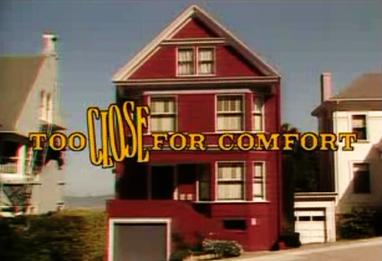
This Show was Too Close for Comfort

When I looked up the definition for “too close for comfort” it said “close enough to make a person feel nervous, worried or upset.” That is exactly how this show made me feel.

Photo: sitcomsonline.com

I realize that I was hard to please in the 1980s. Coming out of the 1970s with M*A*S*H, The Mary Tyler Moore Show, and The Bob Newhart Show, I did not enjoy All in the Family, The Jeffersons, Alice, Maude, or Diff’rent Strokes. I did watch Cheers, Family Ties, The Cosby Show, Who’s the Boss, and Moonlighting during that decade. Too Close for Comfort, along with Three’s Company, just didn’t strike me as funny.

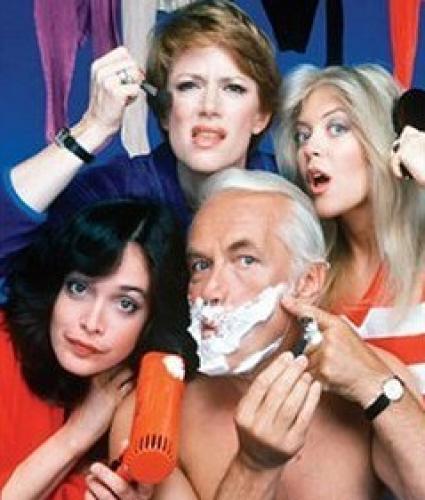
When you invest in a show, you feel like these characters are part of your life. Ted Knight’s role of Ted Baxter on The Mary Tyler Moore Show was a flawed human being for sure, but I felt like we had spent a lot of time together, and I was able to see beyond the brash, obnoxious exterior to the vulnerable and kind being inside. It was if we had spent lots of hours over the kitchen table having coffee. Characters like Baxter teach us about the world and about ourselves. Ted Knight as Henry Rush was more like the neighbor whom I caught glimpses of out the kitchen window but there was no way to learn more about the character other than the surface appearances. The show was based more on plots than characters.

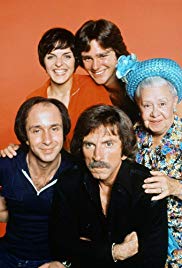
Too Close for Comfort was based on the British sitcom Keep It in the Family. It debuted in 1980. Henry Rush is a cartoonist who writes about the Cosmic Cow (a space crime fighter) and lives in San Francisco with his wife Muriel, a photographer (Nancy Dussault) and his two adult daughters Jackie (Deborah Van Valkenburgh) who works at a bank and Sara (Lydia Cornell) who is a college student.

Photo: wikipedia

The house was a two-family residence and the girls decide to rent from their parents. Henry is not sure it’s a good idea, but it’s the only apartment they can afford because he charges $300 rent for the bottom of the Victorian house. Monroe (Jim Bullock) is a friend of Sara’s who was cast only in one episode but ended up joining not only the cast but living with Henry and Muriel.

The show was on Tuesday nights. The show followed Three’s Company and its main competition was BJ and the Bear.

In season two, Muriel becomes pregnant and Henry’s niece April also comes to live with the Rushes.

See the source image
Photo: pinterest.com

One of the signatures of Henry Rush was the variety of college sweatshirts he wore. Fans from around the country would send them to the network hoping to see them on the series. The first sweatshirt to make an appearance was the University of Michigan.

The third season found the show on Thursday nights and ratings declined significantly. The show was up against Cheers on NBC and Simon and Simon on CBS. April moves out and Muriel’s mother Iris (Audrey Meadows) moves in to help with the baby. The show was cancelled by the network. The fourth season went into syndication with new episodes.

See the source image
Photo: sitcomsonline.com

A fifth season began, but the show changed so much it really was a new series. The title was changed to The Ted Knight Show, the family now lived in Marin County where Henry bought a newspaper, a new theme song was created, a new opening was shot, and both daughters left the show. However, Monroe moved with Henry and Muriel. The new episodes began airing in April of 1986; 22 episodes were taped and after the first 12 aired, Knight passed away from colon cancer. The final ten episodes were run, and then the series ended.

See the source image
Photo: sitcomsonline.com

During the various seasons, the girls changed careers a lot. Jackie moved from the bank to a department store to a fashion designer. Sara held a bunch of part-time jobs while she was in college. She then became a bank teller, a weather woman at the local station KTSF, and an entrepreneur who sells Cosmic Cow Cookies.

In a Fox News interview, Cornell discusses how she received the role of Sara. She said she had to take a bus for the audition and showed up an hour late after being in the rain. The secretary told her auditions had closed but Arne Sultan said to let her audition as long as she came in. They gave her a script to read and a line said “She gives her dad a raspberry.” Sara picks up an imaginary raspberry and hands it to her dad. Sultan asked her what she was doing, and then explained a raspberry was a Bronx cheer. She felt very stupid and they were all laughing. The casting director and executives decided at that time she was perfect for the part and asked her to report to work the next day.

See the source image
Photo: episodate.com

I know that there have been far worse shows than Too Close for Comfort, but I’m not content having the bar set there because there have also been far better shows. Rather than my usual recommendation of buying the DVDs for a weekend of binge watching, I’m going to tell you to buy a good book instead.

Let the Record Show That Night Court Was a Hit

In July we learned about Sirota’s Court which Night Court seemed to be a clone of. Debuting on NBC in January of 1984, Night Court ran for nine seasons until May of 1992. The series was supposed to begin in fall of 1983, but the executives at NBC were concerned about Harry Anderson’s lack of experience as an actor. They delayed the show; every show that debuted in fall of 1983 was cancelled, so Night Court was put on the schedule mid-season.

Photo: tvseriesfinale.com

Thursday nights on NBC were part of “Must See Thursday.” The schedule featured The Cosby Show, Family Ties, and Cheers followed by Night Court.

An unconventional judge, Harry Stone (Harry Anderson) presided over a Manhattan night court overseeing petty crime and dealing with a lot of wacky clients, odd coworkers, and bizarre situations. The role of Judge Stone was originally offered to Robert Klein, but he could not come to an agreement on the salary with NBC.

The main characters include Judge Stone, a public defender, a prosecutor, a couple bailiffs, and a clerk of court.

No Merchandising. Editorial Use Only. No Book Cover Usage. Mandatory Credit: Photo by NBC-TV/Kobal/REX/Shutterstock (5882810g) Harry Anderson Night Court – 1984-1992 NBC-TV TV Portrait

Harry Stone is a humorous judge (and magician). Although he was young, he was appointed because when the outgoing mayor called prospective judges, Harry was the only one who answered the phone. Stone likes old movies, Jean Harlow and adores Mel Tormè. The show’s creator Reinhold Weege discusses Stone’s admiration for Tormè on the DVD commentary. He said Tormè said he began to notice a younger audience at his concerts which he attributed to the Night Court references and happily appeared on an episode of the show.

Photo: wikia.com

The public defender role went through several changes during the course of the show. Gail Strickland was Sheila Gardner in the pilot. Paula Kelly was Liz Williams during the first season. Ellen Foley was brought on board for season 2 as a possible romantic interest for Judge Stone. Markie Post showed up for season 3 as Christine Sullivan and stuck around for the next seven seasons. Post was the first choice for the role in 1984 but was committed to The Fall Guy. When that show was cancelled, she was hired. Christine  was a bit naïve and committed to helping others. She was a fan of the royal family and collected Princess Diana memorabilia as well as porcelain thimbles.

Photo: pinterest.com

The prosecutor was Dan Fielding (John Larroquette). He was a sex-obsessed, somewhat witty, egotistical and greedy man. However, at times he could display compassion for others but not for long. He was always trying to get Christine to go out with him, but there was always a romantic tension between her and Stone.

Photo: pinterest.com

Nostradamus “Bull” Shannon (Richard Moll) was on the show for its entire run.  He came off as a bit dim-witted but was patient, kind, and devoted to Judge Stone.

Photo: amazon.com

For the first two seasons, he worked with Selma Hacker (Selma Diamond), a chain-smoking older bailiff who had been married six times. Diamond was diagnosed with cancer after season 2 and passed away shortly after. Florence Kleiner (Florence Halop) came on for season 3. Older like Selma, they had similar personalities. “Flo” loved motorcycles and heavy metal music. Halop also was diagnosed with and died from cancer after season 3. Rosalind Russell (Marsha Warfield) began in season four and stayed for the duration of the show. She was a practical, no-nonsense woman.

Roz Russell Photo: ebay.com

Clerk Lana Wagner (Karen Austin), was asked to leave the show after only ten episodes. I could not substantiate it, but she claims it was her diagnosis of Bell’s palsy that ended in her being asked to resign. Macintosh “Mac” Robinson (Charles Robinson) would take over in season two for the rest of the series. A Vietnam veteran, he was easy going and funny and always wore a cardigan, plaid shirt and knit tie.

Photo: lastagetimes.com

Weege also mentioned in a DVD commentary that he named a lot of the pimps and hookers on the show after friends of his.

Although there were a lot of great crooks on the show, one of the most interesting episodes featured Seinfeld’s Kramer, Michael Richards. He appeared as a burglar who thought he was invisible and showed up naked in court. He was one of the funniest criminals on the show.

Photo: screenrant.com

Like many of the 1980s shows, Night Court had a jazz instrumental theme song. This one was written by Jack Elliott and featured Ernie Watts on saxophone.

Critics loved the show. It was nominated for Outstanding Comedy Series in the Emmy awards in 1985, 1987, and 1989. In 1985, the show was up against Kate and Allie and the rest of the shows that was part of the Must-See Thursday with The Cosby Show winning. In 1987 it was up against the same slate except Kate and Allie was replaced with The Golden Girls which won. In 1989 it lost to The Wonder Years. Larroquette, who was the most popular character in the show, won the Emmy for Best Supporting Actor four years in a row and then asked that his name be taken out of consideration. Overall, the show was nominated for 31 Emmys and won 7 of those. In an aside, Larroquette was offered his own spin-off show, but he turned down the offer.

Photo: pinterest.com

Anderson received credit for writing five of the episodes and Anderson, as well as Larroquette and Robinson directed several episodes of the series.

After season seven, the show began losing its audience. The cast members were getting tired of their characters, and the writers had a hard time coming up with new plots. Season eight was supposed to be the last one. Among other character wrap-ups, Harry and Christine would get married and Dan would become a priest. However, at the last minute, NBC renewed the show for another season, so the marriage did not take place and Dan ended up with Christine in the finale. The cast was offered more money to return for a tenth season, but they declined.

Mel Torme on Night Court Photo: wikia.com

In doing a bit of research, I learned that New York’s real night court operates from 5 pm to 1 am. Because of the crazy goings on that happen there, it has become a tourist attraction. It’s the only place where courts operate during these hours. One reporter wrote that “At 12:30 am on a freezing Wednesday morning, it’s not just New York City’s famously 24/7 bar and club scene that’s a hive of activity. Deep in the heart of Manhattan, a man in handcuffs is standing in front of a judge, listening to a string of firearm and assault charges as a crowd of lawyers hum around him and solemn family members watch from the benches. This is night court, an operation that has become a strange kind of tourist attraction for visitors in New York looking for something a little out of the ordinary.”

This show was based on characters rather than plots, and the wrong actors would have made the show a disaster. This cast was able to pull it off. They were quirky but still allowed the audience to get to know them and like them. The fact that the show was set in the same setting for most of the nine seasons and did not seem to be repeating plots over and over again is pretty impressive. I don’t think they should have done a season 9 but hindsight is always 20/20 as they say. The show holds up well after almost four decades. It’s worth watching just to see how the main characters interact and grow during the run of the show.

Viewers Found Best of the West “So-So of the West”

As we continue the “Living in the Past: Timeless Comedies,” we travel back to the frontier for Best of the West. Like the show we discussed in my last blog, When Things Were Rotten, this series was also a rapid fire of gags, puns, and one-liners.

Photo: wikipedia.com

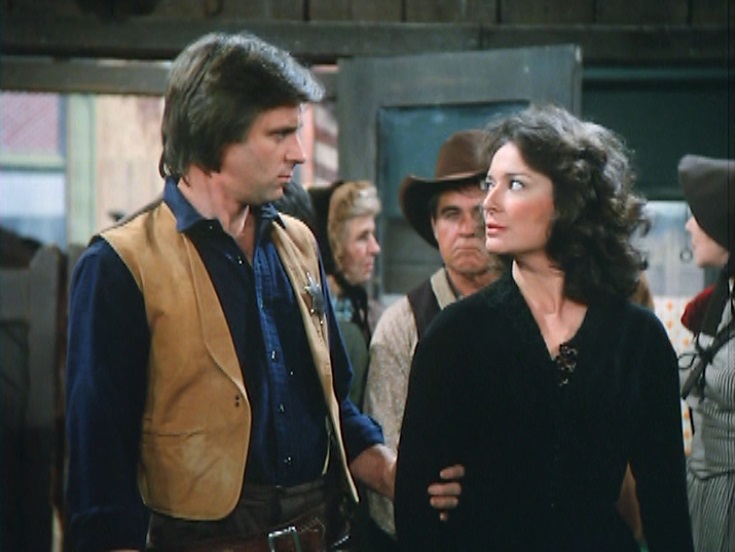
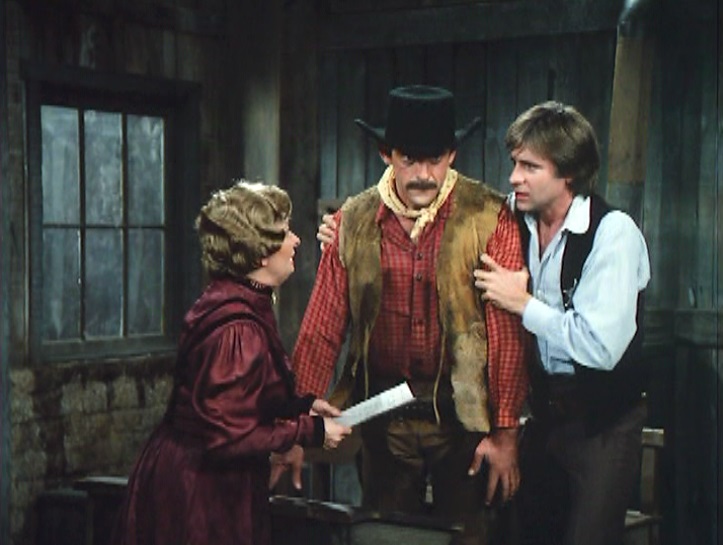
Westerns ruled the airwaves in the 1950s, but with the demise of Gunsmoke in 1975, the cowboys shows had all ridden off into the sunset.  The Best of the West made its debut in 1981. The show, created by Earl Pomerantz, was a parody of the previous decades of oaters. Civil War veteran Sam Best (Joel Higgins) moves his family from posh Philadelphia to Copper Creek at the western border in 1865. He was not your typical western hero—more of a city slicker.

Photo: imdb.com

A store owner by trade, he knew little about guns or fighting. After arriving in the town, he accidentally scares off The Calico Kid (Christopher Lloyd), one of the “bad guys,” and the townspeople lobby him to be their mayor.

Sam’s nemesis is Parker Tillman (Leonard Frey), who runs the saloon with a slew of other bad guys, most notably his sidekick Frog Rothchild Jr. (Tracey Walter). With Sam are his southern belle wife Elvira (Carlene Watkins) and his smart-alecky son Daniel (Meeno Peluce). Sam is also friends with the town doctor, Jerome Kullens (Tom Ewell), who is a bit of a lush.

Photo: imdb.com

Sam reminds me a bit of F-Troop’s Will Parmenter. He’s a likable guy placed in a situation that he did not pursue. Sam’s family is not happy in their new setting. They had gotten used to the comforts of a big city. Elvira is beside herself because she can never get the dirt off the floor, until Sam reminded her it was literally a dirt floor.

Photo: imdb.com

The plots on this show were a bit similar to many of the story lines we became familiar with from decades of westerns. In one show the doctor’s mail-order bride is described as having a vivid personality with a past to match. In one episode, Sam and Tillman try to convince the railroad company to connect with Copper Creek. Another example is when Sam shoots himself in the leg and the jail begins to fall apart, and the town reconsiders his ability to lead them, or the classic tale of Elvira and Daniel exploring a cave that is booby-trapped and ready to collapse around them.

Photo: imdb.com

The show never seemed to catch on with viewers. It was hard to fault the writers. David Lloyd, Sam Simon, and Earl Pomerantz were working together on Taxi, and they would go on to write for Cheers in 1982.

Photo: imdb.com
Dixie Carter

The show also had some amazing celebrity guest stars: Dixie Carter, Chuck Connors, Andy Griffith, Al Lewis, and Betty White.

Photo: imdb.com
Andy Griffith

For a while, parodies like Airplane! were all the rage, and maybe the fad had just played out.

Perhaps, western fans, with their fond memories of growing up with Bonanza and The Rifle Man, just weren’t ready to make fun of their childhood shows.

Photo: imdb.com
Betty White

It was hard to find information about the show. As you can see in these photos, the majority of them came from imdb.com; there just aren’t many photos out there otherwise.

ABC didn’t outright cancel the show, but they took a lot of time trying to decide whether to renew it or not. In the meantime, Joel Higgins got tired of waiting and accepted the role of Edward Stratton on Silver Spoons. With the star gone and the ratings mediocre, the show ended after 22 episodes.

Photo: pinterest.com

Silver Spoons would be the show that brought Joel Higgins success. However, he had an interesting career. He graduated from Michigan State with a degree in advertising. He went to work for General Motors for six months. When he enlisted in the Army, his title was Special Services Sergeant in Charge of Entertainment. This role seemed to redirect his path. Post-Army life, he was busy with both television roles and theater performances. He also started a business with two friends. They wrote more than 200 jingles for a variety of products, including Kool-Aid, M&Ms, Schwepps Soda, and Coors beer, as well as several themes for shows such as Life with Lucy, one of Lucille Ball’s many shows.

Photo: imdb.com
The Calico Kid

His family members Carlene Watkins and Meeno Peluce never found their “Silver Spoons.” Carlene had been on The Secret Empire in 1979. After Best of the West, she would go on to be part of the cast of five more shows–It’s Not Easy, Mary, The Tortellis, Dear John, and Bob–none of which lasted very long. Peluce was part of the Bad News Bears from 1979-80 and later would land a regular role on Voyagers from 1982-83. He did make appearances on many shows, including Silver Spoons in 1984.

Photo: collider.com

Many viewers seem to have fond memories of this show. If you want to see what the show was like, CBS-DVD released the show as a manufactured-on-demand DVD in 2017. While this series might not portray the best of the west, it certainly was not the worst of the west either.

Don’t Blink: Shows That Received Pink Slips by the Holidays

One thing I have learned doing blogs the past four years is how many shows don’t make it. Although every year has its share of flops, some years are just notorious for having weak programming. The late 1970s was a period of just truly awful shows. Bob Newhart who starred in The Bob Newhart Show decided to quit in 1978. When asked about ending the show, he said, “I could see what was coming in situation comedy, and I didn’t want to be a part of it. If we’d gone another year, they’d have had the guy and two girls living in the apartment above us, a Martian living on the same floor next door to three girl detectives. The floor below us would have been occupied by a fraternity and a sorority.” As bad as that sounds, the shows that the networks put on the air during this time were even worse. Let’s take a look at some of the programming that didn’t make it through a season in the late 1970s.

A Year at the Top

Photo: imdb.com
Note the young Paul Shaffer

Believe it or not, in 1976 Norman Lear teamed up with Don Kirshner of Rock Concert fame for a sitcom about the music business. This show was supposed to begin in January of that year but was delayed until summer with an entirely different cast. Two young pop stars Greg and Paul (Greg Evigan and Paul Shaffer—yes the Paul Shaffer from David Letterman) move to LA for their big break. They meet a potential agent named Hanover (Gabriel Dell) who agrees to sign them if . . . and if you think the concept is weird so far, get this: Hanover is the devil’s son, and they need to sign over their souls to become famous. The pair never actually sign the contract. It might have taken a year to get on the air but it only lasted five weeks.
Quark

Photo: newyorktimes.com

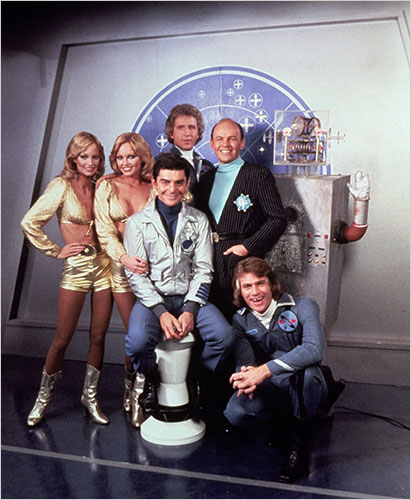
This show’s concept was also a bit of a reach. It took place on Perma 1, a space station in 2222. Adam Quark (Richard Benjamin) had a mission to clean up all the trash in outer space. Quark took orders from a giant disembodied head called, what else, The Head, along with Perma 1’s architect Otto Palindrome (Conrad Janis). If you think this sounds crazy, wait till you learn about Quark’s crew: a part fish/part fowl first officer, a humanoid vegetable named Ficus, clones Betty 1 and Betty 2, and Andy the Robot, a walking junk pile. I was surprised not that it was cancelled after two months, but that it lasted two months. I was also surprised to learn that Buck Henry was the creative force behind this series.

Sanford Arms

Photo: humormillmag.com

A year later in 1977 we have another interesting set-up. When Redd Foxx and Demond Wilson, the two stars, the only stars, left the show Sanford and Son, Norman Lear was left with a show title only. Aunt Esther (LaWanda Page) had been one of the cast members on Sanford and Son and suddenly she was at the hub of this new show. Phil Wheeler (Theodore Wilson) a widower with teenagers buys the house, the junkyard and Esther’s rooming house and tries to start a residential hotel. A month or so later, before he could even make his first payment, the show was done.

Another Day

Photo: wikipedia.com

David Groh (who had played Rhoda’s husband) is Don Gardner, a struggling businessman who can’t make ends meet. His wife Ginny (Joan Hackett) has to get a job, and they both had to deal with their introverted son Mark (Al Eisenmann) and their extroverted daughter Kelly (Lisa Lindgren), as well as Don’s mom Olive (Hope Summers who had played Clara on The Andy Griffith Show) who is critical of all of them. Don struggled through a few episodes and was finished.

Apple Pie

Photo: wikipedia.com

A lonely hairdresser played by Rue McClanahan named Ginger-Nell Hollyhock placed ads in the newspaper for a family. The family that she “found” included a daughter (Caitlin O’Heaney) who tap-danced, a son (Derrel Maury) who wanted to fly like a bird, an elderly grandfather (Jack Gilford), and con-artist Fast Eddie (Dabney Coleman). The show was set in Kansas City in 1933. It took place during the Depression and depression is what anyone watching felt, although the pain was fleeting. After one episode the network decided no one wanted this family.

Hanging In

This one was so bad they didn’t want any evidence so there are no photos.

Another flop came along with a star who had been another star’s spouse. Bill Macy who played Maude’s long-suffering husband starred in this show as Louis Harper, a former football hero who did not have the right credentials to be a university president. He has a desire to help the underprivileged, but the rest of the faculty is more concerned about raising money. Other cast members included high-pressure dean Maggie Gallager (Barbara Rhoades), PR man Sam Dickey (Dennis Burkley), and housekeeper Pinky Nolan (Nedra Volz). No finals for this series; it was cancelled after a few weeks.

Hizzoner

Photo: imdb.com

David Huddleston plays Mayor Cooper who runs a small Midwestern town. The cast included the mayor’s secretary Ginny (Diana Muldaur), the mayor’s daughter (Kathy Cronkite, yes Walter’s daughter) and several other quirky characters. While the mayor is quite conservative, his children are left-wing liberals. Apparently, the mayor broke out into song at least once an episode. I guess, he was singing the blues because the show was cancelled after 7 episodes.

In the Beginning

Photo: collectors.com

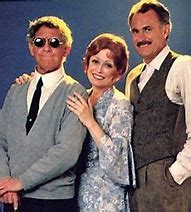
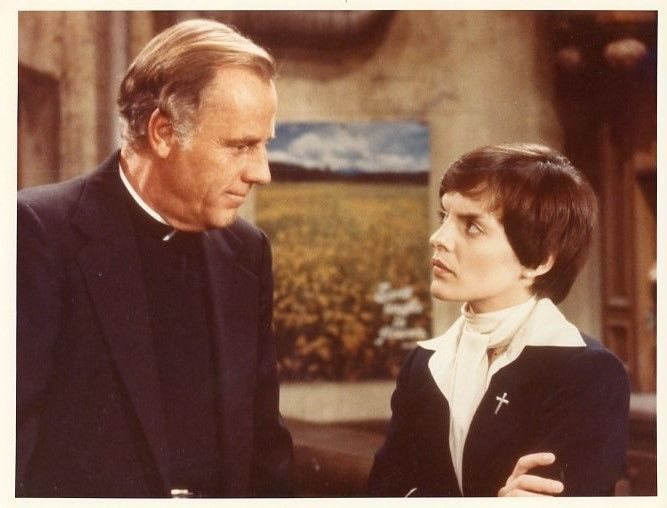
The year 1978 just keeps getting worse for television series. Father Daniel Cleary, played by McLean Stevenson, works in a community center in the heart of Baltimore. Sister Agnes (Priscilla Lopez) works with him. She loves her neighborhood; Father Cleary does not. She is fairly liberal and he is not. It ended almost before it began after seven episodes.

Miss Winslow & Son

Photo: sitcomsonline.com

In this one, an unmarried woman (Darleen Carr) who is an art designer, decides rather than marry a man whom she doesn’t love, she will become a single mother after getting pregnant. Her next-door neighbor Mr. Neistadter (Roscoe Lee Browne) hates kids. Her wealthy and snobby parents are divided about her situation; her father (Elliot Reed) is much more sympathetic than her mother (Sarah Marshall). Before the baby had its first check-up, the show was off the air.

13 Queen’s Boulevard

Photo: sitcomsonline.com

This show was about “a hilarious group of tenants in a garden complex in Queens, New York.” In the first episode, one of the tenants, Felicia Winters (Eileen Brennan) decides to host a class reunion and invites her best friend and spouse, her ex-husband, the class “sexpot,” Fat Hughie, and the class photographer. I don’t know what could possibly go wrong; however, not much went right since it was gone within two months.

Turnabout

Photo: bionicdisco.com

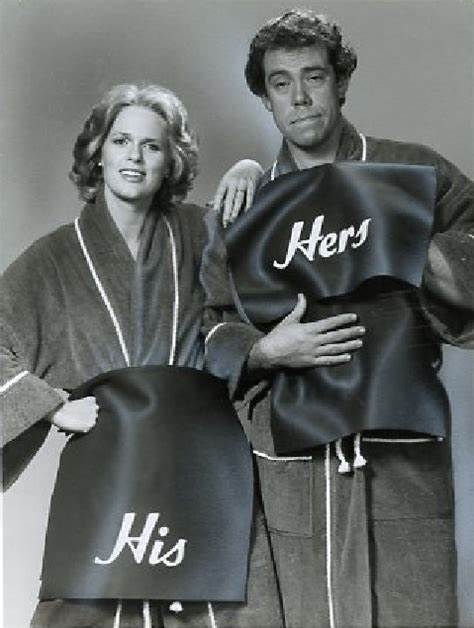
I get Freaky Friday, but in this series the husband and wife switch places. A magic statue allows them to inhabit each other’s bodies.  Sam Alston (John Schuck) is a sportswriter and his wife Penny (Sharon Gless) is a cosmetics executive. The couple tries to live both their own life and their spouse’s life whenever they switch back and forth. They also must focus on keeping the switch a secret. We never know who is who, and all the audience knew is they didn’t like either one of them, and the show was cancelled after a few weeks.

Waverly Wonders

Photo: sitcomsonline.com

NBC decided Joe Namath would be a good person to build a sitcom around. However, he’s not a football player in this show; he’s a former pro basketball player, Joe Casey, who now teaches history at Waverly High in Wisconsin. Linda Harris (Gwynne Gilford) is the principal and Mr. Benton, who they call “Old Prune Face” (Ben Piazza) was the former coach. The only problem is Joe Casey is a bad history teacher and a bad coach. That apparently makes for a bad show because it was cancelled after three episodes aired, although nine were made.

Struck by Lightning

Photo: metershow.com

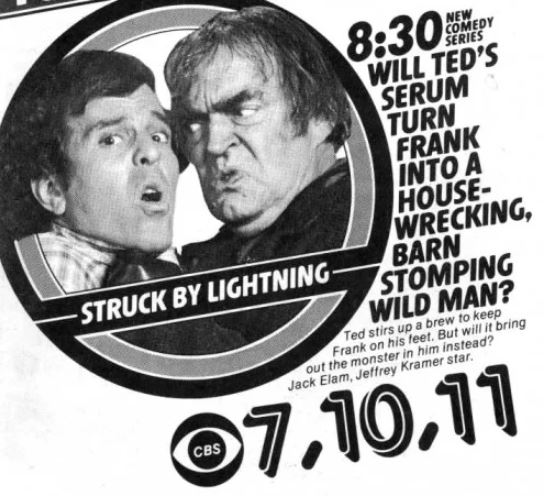
If you think the concept of some of these shows was weird, wait to you hear about this one. Frank (Jack Elam) is the caretaker of an old inn in Massachusetts. A science teacher, Ted Stein (Jeffrey Kramer) inherits the inn and decides to sell it. Then he realizes that Frank was really a 231-year-old Frankenstein monster. Ted just happens to be the great-great-grandson of the original Dr. Frankenstein. So, they decide to run the inn together. Rounding out the cast was Glenn (Bill Erwin) who had been living there forever, Nora (Millie Slavin) who managed the inn before Ted came, Noras son Brian (Jeff Cotler), and real estate agent Walt (Richard Stahl). Apparently, the only thing “great” about the show was Ted’s relationship to Frankenstein because the network canceled it after five episodes.

So, you might be wondering with all these awful shows, what made it on the air more than a couple of months during the late 1970s. In 1977 the only shows that made it to the next season were Three’s Company and Soap. In 1978 Mork and Mindy and Taxi were the “classics” followed by Diff’rent Strokes and WKRP in Cincinnati. Without Robin Williams, Mork and Mindy would probably have been another concept that would have lasted a couple of weeks. In 1979, out of 21 shows that debuted that fall, Facts of Life was the only one that returned for a second season. With the exception of Taxi and WKRP, I would not rate any of these shows true classics, although you could make a good case for Soap. Anyway, the bar was set pretty low for success during the late 1970s.

At least television viewers could go to the movies for a bit of entertainment.  This was the era of Animal House, Annie Hall, Close Encounters of the Third Kind, Grease, Kramer vs Kramer, Rocky, Saturday Night Fever, and Smokey and the Bandit. Things stayed pretty glum on the small screen until 1982 when Cheers, Newhart, and Family Ties saved us.

“Oh, Millie”: The Career of Ann Morgan Guilbert

Anyone who watched the Dick Van Dyke Show knows that the supporting cast was a big part of the show. While Sally and Buddy helped Rob come up with the perfect jokes at work, Millie and Laura were a great comedy team at home. Ann Guilbert continued to find other great supporting roles after the show ended. She was still fine-tuning those roles when she passed away in 2016. She was then playing a grandmother on Life in Pieces.

Ann Morgan Guilbert was born in Minneapolis, MN in 1928. She was an only child and her father worked for the Veterans’ Administration. He moved the family around for jobs quite often. Growing up, she lived in Tucson, AZ; Asheville, NC; Livermore, CA; and El Paso, TX. The family was in Milwaukee, WI during her high school years.

Until she was 14, Ann wanted to be a nurse, but from that time on, she knew she had the acting bug.

When her father took a job in San Francisco, Ann decided to go with her parents and attended Stanford University where she majored in theater arts. Her first part there was as Topsy in “Uncle Tom’s Cabin.” She realized that she liked to make people laugh.

Photo: hollywoodreporter.com

While in school, she met fellow major George Eckstein. They married in 1951. Although they majored in theater arts, George went to law school and Ann worked as a legal secretary. During the summer when George was off, they went to Ashland, Oregon for the Shakespeare Festival where she specialized in playing “nutty” ladies. George was drafted and sent to El Paso; Ann went with him. She was involved in the Little Theater there.

When Ann joined the Screen Actors Guild, there was an actress named Ann Gilbert, so Ann was asked to change her name. She went with her real name, Ann Morgan Guilbert. Morgan was her mother’s maiden name. (Her mother was related to Mayflower passenger William Brewster.)

George practiced law for a short time and decided he wanted to get back into the entertainment business. He got a job producing The Billy Barnes Revue. Ann had a part in the show and Carl Reiner saw her in that performance in two different cities.

Before The Dick Van Dyke Show, Guilbert made three appearances on television on My Three Sons, Hennessey, and Alfred Hitchcock Presents.

Jerry Paris, who played her husband on The Dick Van Dyke Show, had been a friend of her and her husband for a long time. He took Ann in to audition for the role of Millie, his wife. She was hired and was on the show for the entire five years it was on the air. Millie was based on one of Reiner’s neighbors from New York who would do things like take out the garbage on the wrong day or paint herself into a corner of a room. She said she wasn’t given a contract for the first two years. During the third season, Reiner wanted to provide her with one, but she said things had been going along well enough.

Photo: nytimes.com

Ann became pregnant early in the first season. She was afraid to tell Reiner, worrying she would be replaced because it was so early in the show’s life. However, he was very happy for her, and they hid her pregnancy behind large tops or props. That baby is actress Hallie Todd, who is best known as Lizzie’s mother on Lizzie McGuire. George and Ann would have another daughter Nora, an acting teacher and writer.

Ann’s favorite part of the show was Thursdays when the cast would sit around the table with the writers to look at the new script. Ann thought their writers were hysterical. Some of them included Reiner, Garry Marshall (who would go on to create The Odd Couple, Happy Days, Laverne and Shirley, and Mork and Mindy), as well as Bill Persky and Sam Denoff (who wrote for many shows, including That Girl.) Everyone had a say in the script and could throw out one-liners or make suggestions.

The Dick Van Dyke Show ended in 1966 and that same year George and Ann divorced. George was best known for being the writer and producer of The Fugitive.

Photo: weaversdepartmentstore.com

Guilbert said she never watched the reruns much. She recalled, “When I do see them, it seems like it never happened. I just can’t remember it at all.” Once the show ended, Ann, like so many fellow actresses, was typecast as Millie. During the 1970s and 1980s, she would guest star on some of the best sitcoms on the air including The Andy Griffith Show, I Dream of Jeannie, Room 222, The Partridge Family, Love American Style, Barney Miller, Cheers, and Newhart.

In 1969 Ann married character actor Guy Raymond. About that time, she decided to give Broadway a try. Her daughter said Ann loved performing on stage and that is when she felt her career was most important. She appeared in “The Matchmaker,” “Arsenic and Old Lace”, “Waiting for Godot”, “To Kill a Mockingbird”, “Harvey”, “Green Grow the Lilacs”, among others. She won the Helen Hayes Award for Outstanding Lead Actress in a Non-Resident Production in 1988 for her role of Alma in “The Immigrant: A Hamilton County Album”.

She also appeared in eight movies during her career including A Guide for the Married Man, Viva Max!, and Grumpier Old Men.

Photo: imdb.com

But Guilbert didn’t give up on television. In 1990, she starred in The Fanelli Boys. Ann played Teresa Fanelli. She is a recent widow living in Brooklyn and heading for Florida to live when her adult boys all move back in. Frankie is a ladies’ man, Ronnie dropped out of school, Dom is a scammer, and Anthony runs the family business, a funeral home which is $25,000 is debt. Teresa’s brother Angelo is a priest who gives advice to the boys, but not always good advice.

Photo: syracuse.com

She made several guest appearances in the 1990s but had recurring roles on Empty Nest, Picket Fences, and Seinfeld.

Photo: today.com

The role many younger tv fans know her best is Yetta in The Nanny. She would join the cast, appearing in 56 shows between 1993 and 1999. She had fun doing the role. When she met with the wardrobe staff, they decided she would dress outrageously. She was able to wear sequined jackets, jazzy pants, and crazy tops. She also appreciated working with Ray Charles, who played her boyfriend.

During this time, her second husband passed away in 1997.

Photo: express.co.uk

Ann would continue guesting on shows into the 2000s, including Grey’s Anatomy in 2015 and Modern Family in 2013. She also was cast in the show Getting On from 2013-2015. This was a dark comedy on HBO that took place in the geriatric wing of a financially failing hospital. Laurie Metcalf of Roseanne and The Big Bang also was part of the cast.

MODERN FAMILY – “ClosetCon ’13” – With some urging from Claire, Jay begrudgingly agrees to return to ClosetCon this year, and things get interesting when Jay is reunited with some old colleagues. Cam takes Mitch and Lily to the Tucker family farm for the first time and is excited to fold them into country life, that is until Grams pays an unexpected visit. And back at home, Phil, Gloria and the kids get into some mischief involving Jay’s very delicate Apollo 13 spacecraft model, on “Modern Family,” WEDNESDAY, NOVEMBER 20 (9:00-9:31 p.m., ET), on the ABC Television Network. (ABC/Ron Tom) ANN GUILBERT

Her last series was Life in Pieces. She played Gigi, Joan’s mother. She was in two episodes before she passed away in 2016. One of the episodes, “Eyebrow Anonymous Trapped Gem” was dedicated to her memory. In a tribute to her, each of the four stories involve her character.

Photo: mashable.com
Unfortunately, her Yetta character and Ann both refused to give up smoking.

Her doctor had been trying to convince her to give up her several-pack-a-day cigarette habit, but she refused and talked about it often. She died from cancer at age 87.

Cheers to a funny lady who kept us laughing for more than fifty years.

Jeopardy: What is My Favorite Game Show?


Three games shows have been around for a majority of my life: The Price is Right, Wheel of Fortune, and Jeopardy. As a fan, I think most viewers fall in one of the three camps. I am definitely in the Jeopardy camp.

The Back Story of Jeopardy

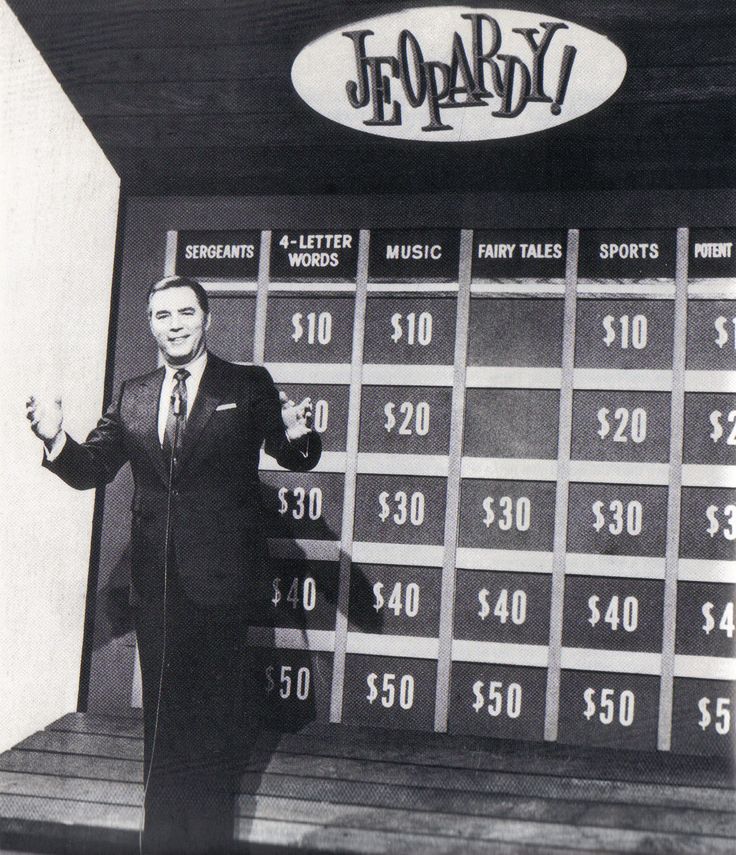
The original Jeopardy was created by Merv Griffin in 1964. On the site, mervgriffinabc.blogspot, a story is included where Merv explains how Jeopoardy was created: “My wife Julann just came up with the idea one day . . . She noted that there had not been a successful “question and answer” game on the air since the quiz show scandals. Why not do a switch and give the answers to the contestants and let them come up with the question? . . . I loved the idea, went straight to NBC with the idea, and they bought it without even looking at a pilot show.”

jeop22stl

Photo: stl.com

It was hosted by Art Fleming and ran until 1975. While Jeopardy’s format of giving contestants the answers and requiring them to provide the answer is unique, it was not the first tv game show to do that.  Television Quiz, airing in 1941-1942, also used this structure.

jeopcpinterest

Photo: pinterest.com

A nighttime syndicated show was on in the evenings from 1974-1975. Don Pardo was the announcer for both the original and the nighttime show. John Harlan was hired as the announcer for a show titled The All-New Jeopardy which aired in October 1978 and ended in March 1979.

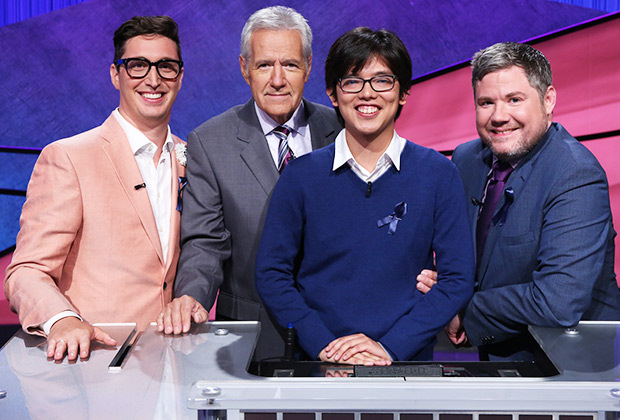
In September of 1984, the current version hosted by Alex Trebek (whose real name is George), began and continues today. Johnny Gilbert has partnered with Alex as announcer during the show’s run. The current version has produced more than 7000 episodes, just in case you wanted to watch them before you audition. Five shows are taped a day for 46 days. That would be a fun job to have with lots of time to recharge every year.

jeopfjohnnygilbert.tv

Photo: johnnygilbert.tv

When I was in college in the mid-1980s, I remember listening to a radio show on Sunday nights from St. Louis that Art Fleming hosted and, as I remember it, it was very similar to Jeopardy.

Jeopardy has won a record-setting 34 Emmys. It also won the Peabody Award in 2011 for “decades of consistently encouraging, celebrating and rewarding knowledge of this, that and the other.” It has won several other awards including the Writers Guild of America Award in 2014.

The Rules of the Game

While there have been a few changes to the Jeopardy format over the years, the game has remained basically the same. Three contestants answer questions. Whoever buzzes in first is allowed to answer. Until 1985 contestants could answer as soon as the clue was revealed. In September of 1985, it was required that the contestant not hit the buzzer until the clue is read. The Jeopardy round has a clue where the contestant can bet an amount of their money, or up to $1000 if they have less than that amount. In the Double Jeopardy round, there are two clues available and players can bet up to $2000 or the amount of money they have.

A contestant chooses from categories of clues. Each of the clues vertically increases in monetary value. The second round, Double Jeopardy, features six new categories of clues. Clue values are doubled from the Jeopardy round.

jeop1

The Final Jeopardy round features a single clue. Contestants write their wagers using a light pen to write on an electronic display on their lectern. The contestants have 30 seconds to write their responses, while the show’s iconic “Think!” music plays in the background. In the event that either the display or the pen malfunctions, contestants can use an index card and a marker to manually write their response and wager.

The contestant with the highest score at the end of the round is that day’s winner. If all three contestants finish with $0, no one returns as champion for the next show. The second and third place winners receive a small amount of money.  The top scorer(s) in each game retains the value of the winnings in cash and return to play in the next day’s show. If there is a tie, both players can come back the next day.

Seven times a show has ended with no winner. Three new contestants then show up the next day.

The Clue Crew

jeopemaximumfun.org

Photo: maximumfun.org

In 2001, the Clue Crew was formed. They travel around the world to tape clues. More than 5000 people applied for the three positions. The current crew is comprised of Sarah Whitcomb, Joe Cannon, and Kelly Miyahara. The team has been to more than 280 cities, including all 50 states and 44 other countries.

The Writers

Nine writers and five researchers create the categories and clues for Jeopardy.

You’ve Probably Hummed the Theme Even if You Don’t Watch the Show

Since the debut of Jeopardy in 1964, several different songs and arrangements have served as the theme music for the show, most of which were composed by Griffin. The main theme for the original Jeopardy series was “Take Ten” composed by Griffin’s wife Julann. The best-known theme song on Jeopardy is “Think!” originally composed by Griffin under the title “A Time for Tony”, as a lullaby for his son. “Think!” has always been used for the 30-second period in Final Jeopardy when the contestants write down their responses, and since the syndicated version debuted in 1984, a rendition of that tune has been used as the main theme song.

jeop2youtube

Photo: youtube.com

Even Game Shows Have Spin-offs

In addition to the daily show, three other versions of Jeopardy have been created: Rock & Roll Jeopardy which was on VH1, Jep! which was on the Game Show Network, and Sports Jeopardy! hosted by Dan Patrick.

More Than Fifteen Minutes of Fame

Ken Jennings holds the record for the longest appearance on Jeopardy, June 2 – November 30, 2004. He won $2,520,700.  Many people have studied Jennings’ streak and determined that due to filming fatigue, no one is likely to break his record.

The highest earner is Brad Rutter who won $4,355,102 between his first appearances and his tournaments. Roger Craig has the all-time record for a single day of winning. In 2010, he won $77,000.

AP TV-JEOPARDY TOURNAMENT A ENT FILE USA CA

Photo: usatoday.com

Julia Collins who was on in 2014 holds the record for female both for number of games and total winnings. She won $429,100.

Another famous contestant is buzz kill Arthur Chu. He was the first contestant to consistently skip around the board trying to find the daily doubles. Since Chu’s appearance, many contestants have jumped around the board instead of trying to run the categories from top to bottom. Often the categories can be understood better if contestants pick them in order. Personally, I admit that I did hold a grudge against Chu for many years for “ruining” Jeopardy.

Watson, I Presume

jeopwatsonyoutube

Photo: youtube.com

The IBM Challenge aired February 14–16, 2011, and featured IBM’s Watson computer facing off against Ken Jennings and Brad Rutter in a two-game match played over three shows. Watson won both the first game and the overall match to win the grand prize of $1 million, which IBM divided between two charities (World Vision International and World Community Grid). Jennings, who won $300,000 for second place, and Rutter, who won the $200,000 third-place prize, both pledged to donate half of their winnings to charity.

Tournaments

During the most recent version of Jeopardy, various tournaments have been held annually. Currently, there is a Tournament of Champions featuring the top fifteen winners from the past year, The Teen Tournament, The College Championship, Celebrity Jeopardy, and the Teachers Tournament.

jeop8berkeleyside

Photo: berkeleyside.com

Portrayals and Parodies

Jeopardy has been part of several television shows and movies over the years. In 1988, a show titled “Mama on Jeopardy” featured Thelma Harper (Mama’s Family) competing on the show when Iola was rejected. She doesn’t know many answers but starts to make a comeback and is able to move into Final Jeopardy. She ends up in second place but wins a trip to Hawaii for herself and her ungrateful family.

In 1990, an episode titled “What Is . . . Cliff Clavin?” aired on Cheers. Cliff appears on Jeopardy and wins $22,000, way more money than his competitors have. However, for Final Jeopardy, Cliff bets everything. The answer is “Archibald Leach, Bernard Schwartz, and Lucille LeSueur” and the correct question is “What are the real names of Cary Grant, Tony Curtis, and Joan Crawford,” but Cliff’s answer is “Who are three people who have never been in my kitchen” and he ends up with no money.

jeop23metv

Photo: metv.com

In 1992 on the Golden Girls in “Questions and Answers,” Dorothy auditions but is rejected because they don’t think she’s likable enough for the viewers to root for her. She has a dream that night where she does appear, competing against Rose and neighbor Charlie.

jeop21imdb

Photo: imdb.com

Perhaps the most famous show to host Jeopardy was Saturday Night Live with their version.

Happy New Year

In honor of its 35th anniversary, Jeopardy is holding a special All-Star tournament this year. Six teams will compete in February during a two-week period. Some of our favorite contestants will be part of the celebration. Captains were chosen and they each drafted their own team. Captains include Buzzy Cohen, Colby Burnett, Julia Collins, Austin Rogers, Ken Jennings, and Brad Rutter. This should be a fun couple of weeks.

I admit these three were my favorite contestants during a tournament. This was a fun couple days. One of my favorite moments was during the introduction of the contestants when they portrayed See No Evil, Hear No Evil,  Speak No Evil. (Buzzy Cohen, Alex Trebek, Alan Lin, Austin Rogers)

 jeopbtvline.coom

Photo: tvline.com

Will You Marry Me?

One of the contestants in 2018 was Michael Pascuzzi. When it came time for Alex to talk with the contestants after the first commercial break, he announced he had no information on his card about Pascuzzi. So, Alex told him to say whatever he wanted. He then proposed to his girlfriend, Maria Shafer, who was in the audience. She must also be a fan, because not only did she say yes, she answered “What is yes.”


To Be-ard or Not to Be-ard

bearddailymail.co.us

Photo: dailymail.co.uk

Of course one of the most asked questions at the beginning of each fall season is will Alex have the mustache or not. This year, Alex took it a step further. He began the year with a full beard in addition to the mustache and let viewers decide whether it was a keeper or gotta go. Spoiler alert: You will only see the beard for a few shows.


jeop3dailymotion

Photo: dailymotion.com

So, You Want to Be on the Show

Auditioning for the current version of the show begins with a written exam, comprising fifty questions in total. This exam is administered online periodically, as well as being offered at regional contestant search events. If you have considered auditioning for Jeopardy, here is what you should know. I took these paragraphs directly from the Jeopardy site:

“First, you must take and pass the online test. If you pass the test and meet the minimum eligibility requirements, you will be placed into a random selection process for an invitation to an audition. Assuming you perform well at the audition, you will be placed into the contestant pool and could be invited to compete up to 18 months from your audition date. Making it to an audition is not a guarantee of being invited to compete on the show.

There is no fee to take any of the tests, but any costs you incur in connection with the test are your responsibility. Likewise, if you are invited to participate in an in-person audition, all costs (including, but not limited to, accommodations, meals, transportation and parking) must come at your own expense.

If you pass the test and do well at your audition, you will be placed in a pool of potential contestants for 18 months after your audition date. But attending an audition and being put in the pool does not guarantee that you will be invited to appear on the show. If you are selected to compete on the show, our contestant coordinators will contact you with full details. Prospective contestants are notified about a month in advance of their tape date.”

What is My Favorite Jeopardy Story?

Some of the most entertaining parts of Jeopardy are when Alex talks to the contestants. I remember one woman who was in Yellowstone and while the rest of the family was taking a class about what to do if bears show up, her mom was alone at the campsite with several bears. One lady said she and her mom learned Swedish because they loved Abba songs. One guy said he met his wife because she came over and introduced herself. Later he found out, she did that because she thought he was very smart and talking about philosophy because she heard him discussing Plato. He had to inform her they were discussing play-doh, nothing enlightening. One poor girl said her parents got pregnant late in life and could not decide on a name. Her mom asked her bridge club for suggestions. She ended up taking the first letter from each of their names and calling her daughter “Pidge.”

brooksyoutube

Photo: youtube.com

One of my favorite facts about Jeopardy was discovered on a Seinfeld episode of Comedians in Cars Getting Coffee, but it has also been discussed on the show.  Mel Brooks and Carl Reiner get together every night for dinner to watch Jeopardy. Watching an episode with them is definitely on my bucket list.

There are a lot of shows that made me sad when they left the air, but when Jeopardy is cancelled, I will go into a major withdrawal. Like so many Jeopardy fans, it’s a multi-generational interest. my son Brice and daughter-in-law Melanie and I share many texts about watching Jeopardy shows and how we feel about categories or contestants. For my entire life I’ve counted on people dying, paying taxes, and watching Jeopardy. I can give up the first two, but the last one is gonna be a challenge!