Angie: Always on the Move

This month we are learning about sitcoms with one name, and today is Angie. Angie had a short run from February 1979 until September of 1980, producing 36 episodes. It was one of the few Garry Marshall shows not to be a long-running hit. He created it with Dale McRaven. We all know Marshall’s amazing career with Happy Days, Laverne and Shirley, The Odd Couple, not to mention all of his great movies. McRaven also had a prolific career as a producer and writer. He’s listed as producer for The Partridge Family, The Betty White Show, Mork and Mindy, and Perfect Strangers. His writing credits includes all of these shows, as well as The Dick Van Dyke Show, That Girl, Get Smart, The Odd Couple, and Room 222 among others.
📷ihearthollywood.com

The cast was quite talented: Donna Pescow played Angie, Robert Hays was her boyfriend-later-husband, the amazing Doris Roberts was her mother Theresa before Raymond came along, and Debralee Scott played her sister Marie.

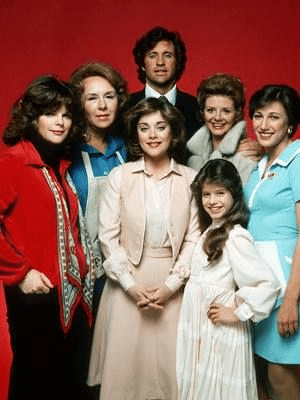
Bradley Benson is a young pediatrician who comes from a wealthy family comprised of his stuffy father Randall (John Randolph), his overbearing sister Joyce (Sharon Spelman), and her daughter Hillary (Tammy Lauren). The show is set in Philadelphia.

Angie is a coffee-shop waitress who falls in love with Brad. Many scenes are set in the diner with Angie’s friend and co-waitress Didi (Diane Robin). When their families argue about wedding plans, Brad and Angie elope. Later Angie’s mother plans a small family wedding for the two families to get to know each other, and Brad buys the coffee shop for Angie.

At the beginning of the second season, Angie sells the coffee shop to buy a salon with her mother.

📷imdb.com

The theme song was “Different Worlds,” written by Norman Gimbel and Charles Fox. Gimbel is still hard at work and has amassed 494 credits so far while Fox has 131 credits for many impressive television series and big-screen films. Maureen McGovern sang it; she’s best known for her top-forty hit “The Morning After.”

The show was sandwiched between Happy Days and Three’s Company on Tuesday nights, which ensured great ratings. This one was fifth its first week. The show just could not find its fan base. By the end of the season, the Nielsen ratings had fallen drastically, and the show had moved to Monday nights following Monday Night Football. Angie wasn’t the only show to struggle in this time slot. Once it was moved, three other shows—One in a Million, Goodtime Girls, and Laverne and Shirley—all tried this scheduling spot. I’m not sure if the shows were just not very good in 1979, if people were too busy to watch television, or the network heads were inexperienced, but when you look at the schedule from 1979 most prime times had a different show in the slot every season of the year. When it’s not only one show on a network moving, but many shows on a network moving and then all networks having a bunch of shows moving, how are viewers supposed to figure out where anything was? Out of the 54 new shows debuting in 1979, by the next season every network basically had one hit show out of the bunch: ABC-Hart to Hart, CBS-Trapper John MD, and NBC-The Facts of Life. While these are all decent shows, none of them were classics in my opinion. In 1980 another 30 shows were brand new.

📷rewatchclassictv.com

The show was put on hiatus. It did return in April on Saturday nights, but it was officially canceled in May.

When you look at this show on paper, it had all the right elements. First of all, we have Garry Marshall and Dale McRaven, very successful creators and writers. The cast was amazing. Even the theme song was composed and sung by extremely talented people. Then you have the fact that there were not a lot of great shows debuting this year; a decent show should have crushed it. So, what happened here?

I think I’m putting the blame for this one on the network. I watched the pilot and while pilots are meant to pull you back for the next one, most pilots aren’t the best of the series. Some of the pilots for shows I love are almost dreadful. This pilot was not dreadful. The characters were likable, the writing was funny, and the theme was not overdone over the years. It was similar to The Mothers-In-Law from a decade earlier but more of a Dharma and Greg (which came two decades later) where they fall in love despite their economic differences.
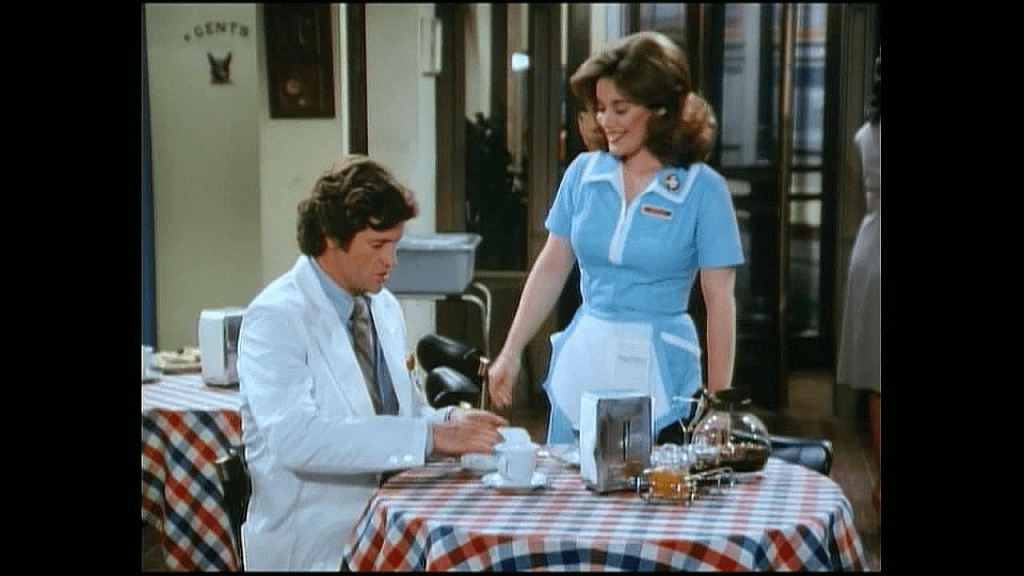
📷youtube.com

This series was better than a lot of shows that are currently on the air. I did watch another later episode where the couple elopes. Once again, the writing was good and the characters were a bit eccentric, but the writers knew how far to go to keep them likable and charming rather than odd. If ABC had kept it in a time slot for more than a month or two and given it a bit of time, it might have been a big hit.

If you want to check it out, let me know what you think. For a late seventies/early eighties show, it’s aged very well.

The Love Boat: Overflowing with Celebrities

📷themeanderingtraveler.com

This month in Casting for Celebrities, we are looking at some of the shows that used television and movie stars in their casts every week. The Love Boat was on the water from 1977 until 1986. An extension of the show, The Love Boat: The Next Wave, was on from 1998-1999 with many of the original characters.  There were also four three-hour specials aired in 1986, 1987, and 1990.

If you are one of the five people in America that have never seen the show, it aired on ABC on Saturday nights. It was another Aaron Spelling production like Fantasy Island which we discussed last week.

A book, The Love Boats, by Jeraldine Saunders who was a cruise director for a passenger cruise line was used as the basis for the original made-for-tv movie in 1976.

The stars on this show played guests (and occasionally themselves) on the MS Pacific Princess run by Captain Merrill Stubing (Gavin MacLeod). His crew included Dr. Adam Bricker (Bernie Kopell), Purser Gopher Smith (Fred Grandy), bartender Isaac Washington (Ted Lange), and cruise director Julie McCoy (Lauren Tewes). In season three, Stubing’s daughter Vickie (Jill Whelan) came aboard. During the last three seasons, photographer Ace Covington Evans (Ted McGinley) joined the group and Judy McCoy (Patricia Klous) who was Julie’s sister took her place for the final two seasons.

📷julienslive.com

Lucky crew, this series was sometimes set on board the Pacific Princess or the Island Princess, depending on their schedules. A handful of other boats were used in several episodes and movies as well. Many of the shows were filmed in California. Unfortunately, both the Pacific Princess and the Island Princess were sold for scrap in 2013 and 2015 respectively.

Each episode contained several stories and all three titles are combined in one series title; for example “Captain & the Lady/Centerfold/One If by Land.”

Jack Jones sang The Love Boat theme. (Note: Dionne Warwick recorded the song for the final season, but I never learned why.) The lyrics were written by Paul Williams and the music was composed by Charles Fox. The words were:

Love, exciting and new
Come aboard, we’re expecting you
Love, life’s sweetest reward
Let it flow, it floats back to you

Love Boat soon will be making another run
The Love Boat promises something for everyone
Set a course for adventure
Your mind on a new romance

Love won’t hurt anymore
It’s an open smile on a friendly shore
Yes, love
It’s love

Love Boat soon will be making another run
The Love Boat promises something for everyone
Set a course for adventure
Your mind on a new romance

Love won’t hurt anymore
It’s an open smile on a friendly shore
It’s love, it’s love, it’s love
It’s the Love Boat, it’s the Love Boat

📷reddit.com

For its first seven seasons, the show was very successful. It usually ranked in the top twenty. However, after falling out of the top thirty and then the top fifty the next year, the show was canceled after nine years.

Spelling offered McLeod the role of Captain Stubing. Ted Lange did not have to audition. He was offered the role after being seen on a previous show, That’s My Mama. Spelling’s first choice for Dr. Bricker was Dick Van Patten but because he was involved with Eight is Enough, Kopell got the role. Lauren Tewes was chosen from a group of more than a hundred actresses auditioning for the role.

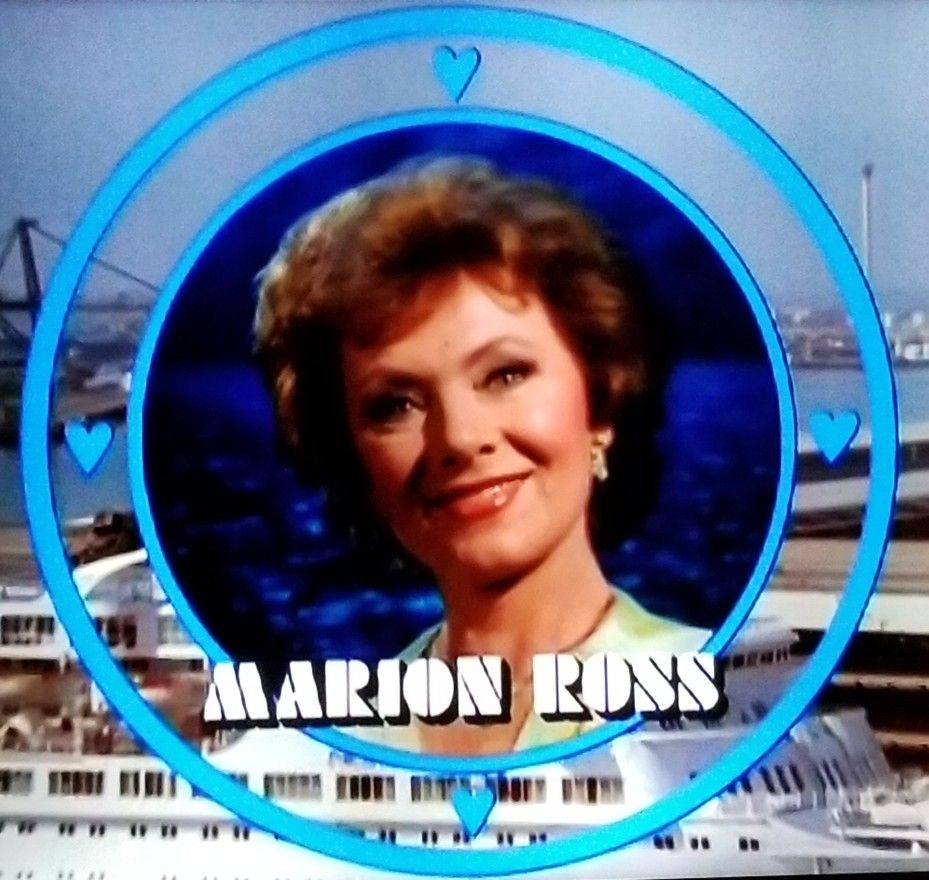
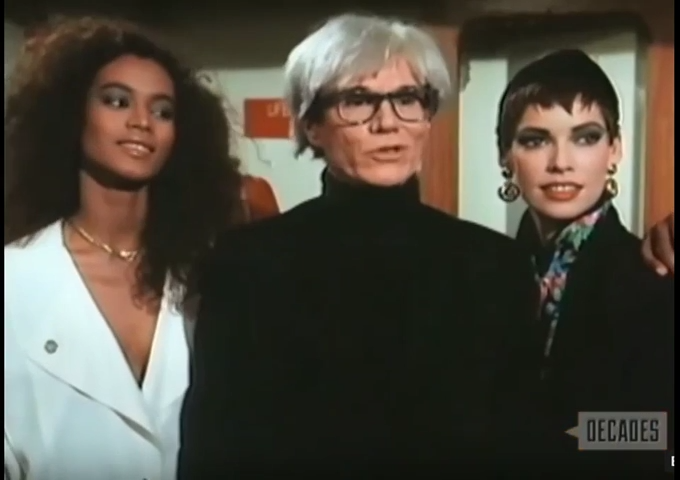
More than 550 guest stars appeared on the show during its run. There were movie stars like Gene Kelly, Ginger Rogers, and Joan Fontaine. There were Broadway stars including Ethel Merman and Robert Goulet. TV stars abounded like Don Adams, Lorne Greene, Florence Henderson, and Eve Arden. Music was represented by The Pointer Sisters, Cab Calloway, and Janet Jackson. Sports stars were on board including Dick Butkus and Joe Namath. And then there were the celebrities like Bob Mackie and Andy Warhol. Marion Ross holds the record with 14 appearances.

📷boingboing.com

For some reason, The Love Boat does not have the same “time warp” problems as Fantasy Island. It’s been translated into more than 29 different languages and appeared in more than 93 countries. It’s very popular in syndication.

Before the Hallmark Channel debuted, this is where you went to watch people fall in love every week. It’s hard to remember how many people just happened to run into an ex on the ship or meet the perfect soul mate after being mistreated.

Apparently, the cast is still close. In a recent interview, Lange said his experience on The Love Boat was life changing. He also said that the beauty of the show was that they are all still friends. “I just directed Fred in ‘Give ‘em Hell Harry’ in Indiana and I’m going to New York to stay with Bernie and his wife. . . . Bernie is more like my brother, and Fred is like my best friend.”

Whelan described McLeod as an “incredible, protective man. He was just like a dad.”

If you need a reminder that love is still alive and well, you can check out the show on DVD or on ME TV on Sundays.

The Audience Did Not Have a Good Time Watching The Goodtime Girls.

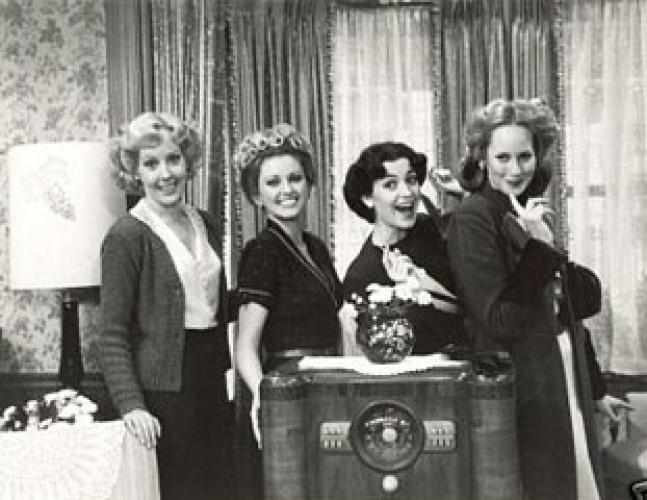
During our blog journey this month, we have gone back in time to Sherwood Forest and then sped forward to the 1860 Wild West. Today, as we continue with “Living in the Past: Timeless Comedies,” we time travel 80 years ahead and land in Washington DC in 1942. When we arrive, we find ourselves in the midst of The Goodtime Girls, a show that debuted in 1980 and was created by Lenora Thuna in association with Garry Marshall’s Henderson Productions and Paramount Television.

Photo: episodate.com

The women, all familiar stereotypes, live together in a small attic apartment. There is dumb-blonde Loretta (Georgia Engel), girl-next-door Betty (Lorna Patterson), level-headed Edith (Annie Potts), and arrogant Camille (Francine Tacker). They must learn to depend on each other and navigate life working in jobs to help aid the war effort.

Rounding out the cast were their landlords, Mr. and Mrs. Coolidge (Marcia Lewis and Merwin Goldsmith), their buddy Frankie (Adrian Zmed) who’s a cab driver, and was rejected from military duty because of his flat feet, and his pal Benny (Peter Scolari). Frankie and Benny lived on another floor of the home.

Photo: sitcomsonline.com

Edith, Betty, and Loretta were living in the apartment and already feeling confined and crowded. Camille, a reporter, covering the plight of people dealing with a housing shortage in the capital, is then added by the landlords when she loses her apartment. Camille’s personality didn’t help her earn a warm welcome by the other women. Edith works for the Office of Price Admissions, Betty was at the US Secretary of War’s office, and Loretta worked for General Culpepper (Richard Stahl) at the Pentagon. I was not sure what the Office of Price Admissions was. After a little research, I learned that it began in 1941 and was set up to establish price controls on nonagricultural commodities and rationing essential consumer goods during WWII. One of the first products to receive their ruling on rationing was automobile tires. The Office was disbanded in May of 1947.

Photo: sitcomsonline.com

The shortage of consumer goods and men didn’t help the situation the women found themselves in either. Loretta was the only married tenant, but Edith is the one who tended to “mother” the other girls, doling out advice and wisdom. Frankie and Benny often joined the girls’ adventures.

This was one of the few Garry Marshall series that didn’t become a hit. Several guest stars appeared during the season including Happy Days’ Scott Baio as Edith’s brother and Laverne and Shirley’s Michael McKean as a bitter soldier confined to a wheelchair.

The mostly forgotten theme song, “When Everyone Cared” was written by Charles Fox and Norman Gimbel.

Photo: nostalgiacentral.com

The show never connected with viewers. It began life on ABC on Tuesday nights following Happy Days which should have ensured its success. It tested very well with audiences. Rather than a fall debut, the show began January 22, 1980. After the February sweeps (older viewers will fondly recall the exciting sweeps month followed by “nothing new in March”), the show went off the air. Its competition was the White Shadow and a show I don’t remember at all, California Fever. (The description on imdb was “Vince and Ross are suburban LA teenagers enjoying disco, surfing, cars, and the rest of the Southern California lifestyle. Musical Vince runs an underground radio station and mechanical Ross is into custom cars.”  It only lasted ten episodes, so I guess I’m not the only one who doesn’t remember it.)

Goodtime Girls returned in April for three weeks on Saturday night and then was pulled again. Although the show was cancelled in May, five of the remaining episodes were aired in August on Friday nights. For some reason, episode 3, “Night and Day” was never shown.

Photo: imdb.com

I’m not sure why the show never caught on. It had a great cast but most viewers didn’t appreciate the comic aspects of the show. Laverne and Shirley and Mork and Mindy could get away with more slapstick routines than many shows airing in the eighties. At this time, M*A*S*H was still going strong, and if you were doing war humor, it would be a hard show to compete with. Maybe this show just seemed too banal and predictable. It was always discussed as being character driven; perhaps the characters were too typecast to be interesting.

As a noteworthy item of information, I don’t think Betty and Camille got along much better after the show ended. Robert Ginty who was married to Francine Tacker for three years later wed Lorna Patterson only fifty days after his divorce became final. However, their marriage only lasted six years.

Unfortunately, the audience was not having as good a time as the cast. I have never seen the show in reruns, and there is no mention of a DVD ever having been released. Learning about so many shows that didn’t make it helps us appreciate those series that became mega-hits. If nothing else, the demise of this show made it possible for Scolari to accept a role on Bosom Buddies.