Don Adams: Always Smart

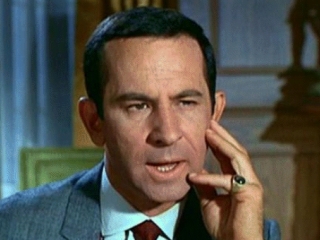
This month our blog series is titled “All About The Bill Dana Show.” The first week in March we learned about the show and now we have been spending time with some of the cast. We end our series with Don Adams.

Adams was born Donald James Yarmy in Manhattan in 1923. Don was a blend of cultures, Hungarian Jewish on his dad’s side and Irish-American on his mom’s. Don was raised Catholic while his brother Dick was raised Jewish. I could not find out what their sister decided to do. She later became a writer under the name Gloria Burton and wrote a script for Get Smart. His brother was also an actor. Dick has about 50 acting credits and appeared in many of the most popular sitcoms during the sixties and seventies, including three appearances on Get Smart.

Adams dropped out of high school and went to work as a theater usher. In 1941 he joined the US Marine Corp. At one point he was injured during a Japanese assault on Tulagi. He was the only survivor from his platoon. While recovering, he came down with blackwater fever, a side effect from malaria and was evacuated to New Zealand. He was not expected to recover, but when he did, he was sent back to the US as a Marine drill instructor.

After his discharge, he moved to Florida to work as a comedian. He refused to do material he considered “blue” and was fired.

In 1947 he married Adelaide Efantis, and her stage name was Adelaide Adams. Don decided to take the name Adams as well for his stage name. He worked as a commercial artist and cashier to support their family.

In 1954, Don was the winner of Arthur Godfrey’s Talent Scouts with a comedy act written by Bill Dana. He began making appearances on The Steve Allen Show, where Dana was a writer. In 1961 he became a regular on the Perry Como Show.

About this time, Don and Adelaide divorced, and Adams married Dorothy Bracken, another actress. They split up in 1977 when he married Judy Luciano, also an actress but that marriage also ended in divorce. (I could only find one credit for his last two wives; Bracken was on Get Smart, while Luciano appeared on The Love Boat.)

While discussing his marriages, Don said “I’m no longer independently wealthy. I guess it’s the result of too many wives, too many kids and too much alimony. I’ve been paying alimony since I was 14 and child support since 15. That’s a joke, but not by much. . . I like getting married, but I don’t like being married.”

In 1963 Adams was offered the role of Byron Glick, hotel detective on The Bill Dana Show. As we’ve discussed this month, the show was on the air for a season and a half. While working on the show, Don was also the voice of cartoon Tennessee Tuxedo which he continued doing until 1973.

During those years he also made an appearance on The Danny Thomas Show and on Pat Paulsen’s Comedy Hour.

In 1965 he was offered the role of Maxwell Smart in a new spy satire, Get Smart.

The sixties saw westerns being overtaken by spy shows such as The Man From U.N.C.L.E., I Spy, The Pink Panther, and The Avengers. Mel Brooks and Buck Henry decided to try their hand at writing a campy sitcom and Get Smart was born.

The role of Smart was created for Tom Poston, but ABC turned it down, and NBC said yes. They had Adams under contract, so he got the part. Rounding out the cast was Edward Platt as the Chief and Barbara Feldon as Agent 99.

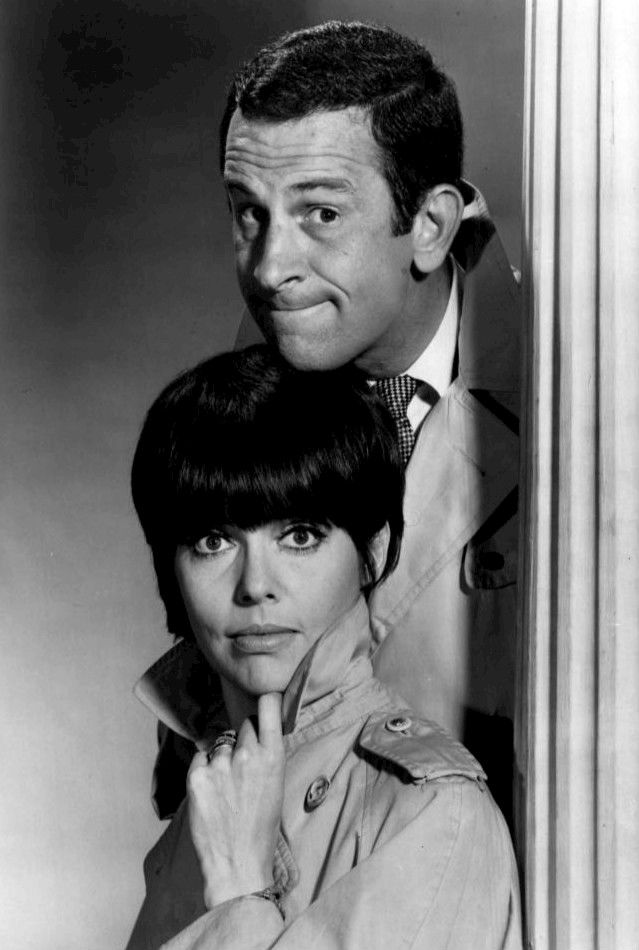
Smart and 99 had great chemistry and married in a later season. Feldon and Adams remained life-long friends.

One of the most memorable parts of the show was all the catch phrases Adams created on the show including “Sorry about that Chief,” “Would you believe,” and “Missed it by that much.”

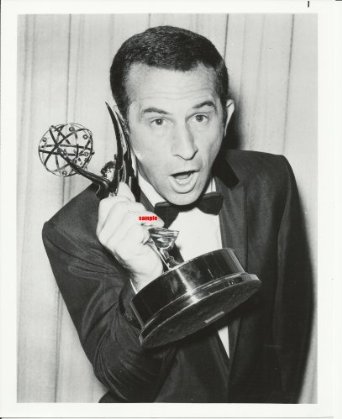
In addition to acting, Adams worked as a producer and director on the show. He was nominated for an Emmy from 1966-1969. He won three of those, losing to William Windom for the little-remembered one-season show, My World and Welcome to It. Lloyd Haynes from Room 222 and Bill Cosby for The Bill Cosby Show were also nominated that year.

The show moved to CBS for the final season, but the ratings never recovered, and the show was canceled after that year.

Like so many of our successful actors with unusual characters, Adams suffered from typecasting after the show ended. He did become part of two additional sitcom casts during his career.

In 1971 he was on The Partners. According to imdb.com, the plot is that “Lennie Crooke and George Robinson are inept detectives teamed up to solve crimes. Captain Andrews is their exasperated boss, Sgt. Higgenbottom is a smarmy co-worker, and Freddy confesses to most of the neighborhood crimes.” Adams played Crooke, but the show only produced 20 episodes.

In 1985, Adams tried a sitcom again on Check it Out. This one was about a grocery store and its employees. Adams played Howard Bannister. The show lasted three seasons, ending in 1988. The show was not very popular in the US but was a hit in Canada.

In between those two shows, Adams appeared in a handful of series including Fantasy Island, The Fall Guy, The Love Boat, Empty Nest, and Nick Freno: Licensed Teacher. He made most of his salary appearing in nightclubs. He also had his Smart character resurrected in several big screen films and television series.

Because of the typecasting, he returned to animation and found a lot of success, especially with Inspector Gadget which he voiced from 1983-1999.

He also tried his hand at a game show. Called Don Adams’ Screen Test, it had an interesting concept. The show was filmed in two 15-minute parts; Adams would randomly select an audience member to recreate a scene from a Hollywood movie such as From Here to Eternity with Adams as director. It ended after 26 episodes.

In his spare time, it sounds like he visited the racetracks, betting on horses. He also spent a night a week at the Playboy Mansion playing cards with Caan and Rickles. He loved history and studied Abraham Lincoln and Adolf Hitler in depth. He also wrote poetry and painted.

Don passed away in 2005 from a lung infection and lymphoma. The eulogists at his funeral included James Caan, Bill Dana, Barbara Feldon, and Don Rickles.

It’s hard to know what to make of Adams’ career. Obviously, he was hard working, an excellent Marine, and a man of many interests. He was fired for not performing blue material but then put horse racing and gambling above the needs of his family, according to several of his friends. He created the amazing role of Maxwell Smart, one of the best characters in television history, but that feat kept him from achieving other great roles in the following decades due to typecasting. It sounds like Check It Out was very popular in Canada, so maybe if he had been given a few chances to create characters different from Smart in a couple other sitcoms, it would have helped.

I feel bad for those actors who are so successful in the characters they help create that they are barred from future jobs, but then again, those characters are some of the best actors in television: George Reeves as Superman, Ray Walston as My Favorite Martian, Henry Winkler from Happy Days, Frank Cady from Green Acres, and Jack Klugman from The Odd Couple. I guess you trade being warmly remembered for fewer quality roles.

Apart from Get Smart, I knew little about Adams before writing this blog, so it was fun to get to know him a bit.

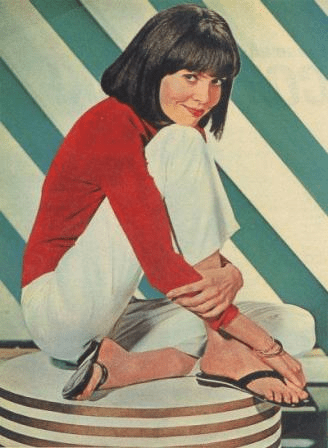
Barbara Feldon Did Not Have to Get Smart: She Was Born That Way

This month’s blog is taking a look at some Supportive Women. First up is Barbara Feldon, costar with Don Adams in Get Smart.

Photo: getsmartwikifandom.com

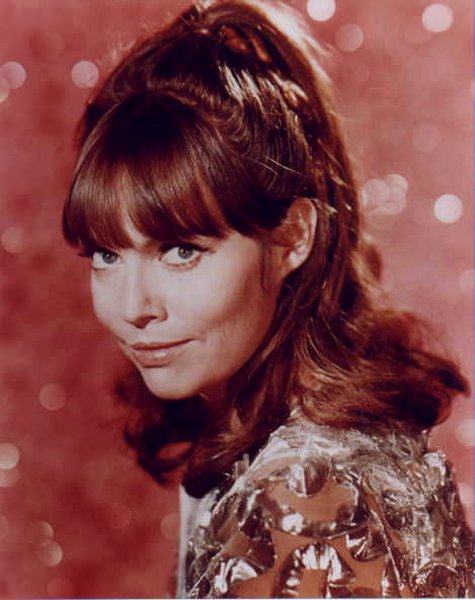
Feldon was born Barbara Anne Hall in 1933 in Pennsylvania, near Pittsburgh. During an interview with Emerson College, Barbara talked about the ecstasy of performing in a little band in first grade. When things stopped, she got to play her triangle, and the thought that everyone was watching her, and her mother’s pride in seeing her made her want to perform more. In sixth grade she went into the gym to watch her friend doing her ballet lessons. The teacher invited Barbara to join them and played Tchaikovsky’s Nutcracker music; that combination of music and movement took her away to another place. She was hooked at that point, and she knew that she wanted to dance.

She trained at the Pittsburgh Playhouse and then graduated from Carnegie Mellon University with a BA in drama in 1955. They didn’t have a dance program, and her mother thought Bennington, where she wanted to go for dance, was too expensive and too liberal. While she enjoyed acting, it never had the enchantment for her that dance did.

Feldon made her way to New York and studied at the HB Studio. She briefly had a career as a showgirl at the Copacabana. She said “that was my first professional job in New York and it was probably the highlight of my whole career. We got to dance with Jimmy Durante. Oh, my God, it was a thrill.” They replaced the girls every three months so, then she went on to appear in The Ziegfield Follies. She landed one job that never made it to Broadway. A friend of hers who was a model talked her into exploring a modeling career.

Photo: punkglobe.com

She worked as a model and was in a Revlon commercial about a hair pomade for men, Top Brass. Feldon said commercials were excellent training to get experience in acting. You do the same scene over and over, maybe more than forty times, but you have to keep that spontaneity. “You must remember to stress each word properly and come in on a split-second when that camera rolls.”

Like several actresses that we have discussed in this blog, before Feldon got her first big break, she appeared on a game show. In this instance, she was on The $64,000 Question in 1955, and she won the grand prize of $64,000 in the category of Shakespeare.

She didn’t use her winnings to buy a mansion or live the typical party life. She opened an art gallery with a man who was a photographer and ad man who was no longer interested in advertising named Lucien Verdoux Feldon. Barbara would be the subject of a Warhol pop art painting in 1965.

In 1958 Barbara married Lucien Feldon. They divorced nine years later. She had a longer relationship with one of the Get Smart producers, Burt Nodella and when that ended, she moved back to New York City.

After her commercial debut, she received offers for several television roles in the early sixties including The Man From U.N.C.L.E. and Flipper. She was also offered a chance to appear on East Side/West Side with George C. Scott. Colleen Dewhurst was her mentor and Scott’s wife. He asked her to play his girlfriend in the next episode. Talent Associates which produced the show was working with Mel Brooks and Buck Henry on a potential spy spoof called Get Smart. Her second television role was as a spy. So, when Talent Associates was casting for a spy on Get Smart, she was an obvious choice.

Photo: facebook.com

She turned down the role at first because she didn’t want to move from New York to California, but she did love the script. They agreed to offer her a two-year contract instead of a five-year contract, and she accepted. Her first review was in TV Guide which compared her to the dog and concluded that the dog came off better. She was devastated and humiliated. In later years, the reviewer rated her performance much better.

From 1965 till 1970, Feldon was known as Agent 99 working with Maxwell Smart for CONTROL. In both 1968 and 1969, she was nominated for an Emmy for Outstanding Lead Actress in a Comedy Series. Lucille Ball won for The Lucy Show in 1968 and Hope Lange won for The Ghost and Mrs. Muir in 1969.

Women at the time looked at Feldon as an example of a powerful woman; Feldon commented that young women said “she was a role model for them because she was smart and always got the right answer.” If you look closely in the early seasons, you will typically see Feldon sitting and Adams standing because she was taller than he was. Once she even had to bury her feet in the sand. While Adams was the blundering, awkward Smart, it was Agent 99 who was really the “smart” one, getting him out of trouble during their spy missions.

Feldon said that she is not a comedienne; she is an actress who can play comedy. She said that she is the worst person to tell a joke to because she doesn’t always get it. She never enjoyed drama much because the actual acting on camera was wonderful but the long, boring hours waiting were very tedious, and if you have a tearful scene, you have to be able to keep the momentum.

During the run of Get Smart, Feldon also appeared on Rowan & Martin’s Laugh In and The Dean Martin Show.

Photo: imdb.com

After the show ended, she would appear on 20 additional television series including Cheers and Mad About You. She made fifteen made-for-tv movies, one of which was a 1989 movie, Get Smart, Again. She also could be found in six big-screen films including The Last Request, her last acting role, in 2006.

During my research, I read an article where pop culture historian Geoffre Mark commented on one of her movies, Fitzwilly, which I admit I have never seen. He said that it was a gem of a movie and that “Dick Van Dyke is brilliant in it and Barbara plays his love interest and she’s brilliant in it. She was playing a version of herself: a beautiful, sensual, highly intelligent woman with a strong moral compass and a loving heart. That’s what the character is and that’s who Barbara is.” According to imdb.com, the plot of the 1967 movie is that a butler and the staff of an eccentric aged philanthropist whose family wealth is exhausted engage in larceny and crimes to maintain her lifestyle and provide funds for her charitable activities.

Feldon was offered a cameo in the Get Smart movie with Anne Hathaway and Steve Carrell in 2008, but she declined. She said that “times have changed too much. The psychology of the writers and the audience has changed radically. Get Smart belongs in the 1960s, or it’s not going to be Get Smart.”

Despite her comment of Get Smart staying in the sixties, in 1995 Feldon took on the role of Agent 99 again in a brief reboot of Get Smart. Feldon discussed that series with The (Westchester County NY) Journal News reporter Karen Croke in 2017. She said that she and Adams never became friends after the original Get Smart. She said he was a lovely man and very funny, but they had their jobs to do and did their acting and then parted ways for the day. After they worked together on this series, they became very close friends in a way they could not have in their original show. She said once Don Adams died, Max also died and she can’t do any work as 99 without Max now. That might be the real reason she turned down the cameo in the Carrell-Hathaway film.

Photo: imdb.com

Barbara said it’s hard to make friendships on a set because it’s more like a factory and when you’re not acting, you might be resting or talking to your agent. The only person she said she was able to maintain a good relationship with after acting with him, was Alan Alda.

Apparently, she still enjoyed games shows and she appeared regularly in several of them including Hollywood Squares and The $20,000 Pyramid.

Feldon lost interest in acting, but she did numerous television and radio commercials and documentaries. In 1977, Barbara hosted a news show called Special Edition. In the 1990s she had a one-woman show she took around the country. She has also taken up writing and had two of her pieces published in Metropolitan Magazine. She wrote a book about living as a single person in 2003 called Living Alone and Loving It. She also enjoys writing poetry. In talking about her book, Barbara said, “I had been in relationships my whole life. I’d been married, then had lived with someone for several years. After those, I just assumed I would find another relationship. But it didn’t happen. As time went on with some good guidance, I learned how to live alone really happily. I’ve met a number of people—men and women—who feel living by themselves is a second-rate life. I thought that was sad, and since I had this technique of living alone, I decided to write a book. And I’m really glad I did.”

Photo: pixels.com

Feldon said that she has nothing but gratitude for Get Smart. She said acting is not a kind career and you only have a few years to be able to find your place, and she is grateful for being in the right place at the right time. I think after learning about Barbara Feldon, she manages to put herself in the right place at the right time often.

Now, her life sounds almost perfect. She lives where she wants to, is open to meeting a lot of people, attends concerts, advocates for the arts, and travels and writes whenever she wants to. During her life, she has managed to learn from so many experiences and during her life journey she definitely “got smart.”

It Only Takes One Episode to Get Smart

In the mid-1960s, spy shows were all the rage.  James Bond drew large audiences to theaters:  Dr. No in 1962, From Russia with Love in 1963, Goldfinger in 1964, and Thunderball in 1965. Inspector Clouseau was big at the box office too appearing in The Pink Panther in 1963 and A Shot in the Dark in 1964. If you were checking out books at the library, you probably would have read Len Deighton’s The IPCRESS File (1962), The Spy Who Came in From the Cold (1963), or Harriet the Spy (1964). On the small screen, The Avengers was ahead of the curve, premiering in 1961, but in the mid-1960s, we would see some of the classic television shows debut: Mission Impossible began in 1966, The Man from UNCLE showed up in 1964 and in 1965, The Wild, Wild West and I Spy got network approval.

smart7

Another show came on the air in 1965 as well – on September 18, 1965, Get Smart was seen for the first time. Dan Melnick, a partner in Talent Associates thought a spy satire might be a good fit for their upcoming schedule. He recruited Buck Henry and Mel Brooks to write the show. The team took the show to ABC. ABC bought it but they wanted a few changes.  They wanted Tom Poston to take the role of Maxwell Smart. They wanted a dog on the show to add “heart.” Finally, they wanted Smart’s mother to be a major role and envisioned Smart coming home at the end of the episode to explain the case to his mother. Henry and Brooks said no to the mother, so ABC rejected the show and sold it back to Talent Associates.

Grant Tinker from NBC agreed to buy the show with the caveat that Don Adams star in place of Tom Poston.  And so, the creative talent of Brooks and Henry brought Maxwell Smart (Don Adams), Agent 99 (Barbara Feldon), and the Chief (Edward Platt) to life. The show would stay on the air for five seasons, producing 138 episodes.

The first four seasons were filmed at Sunset Bronson Studios.  In 1970, the show moved to CBS and the last season was filmed at CBS Studio Center.

Mel Brooks left the show after the first year, but Buck Henry stayed through 1967 as the story editor.

smartgun

Most of the administrative cast stayed with the show for its run. Leonard B. Stern was the executive producer for all the shows. Irving Szathmary was the music and theme composer, as well as conductor, for all five seasons. Gerald C. Gardner and Dee Caruso were the head writers for the series. Don Adams would get to direct 13 episodes and write 2 of them.

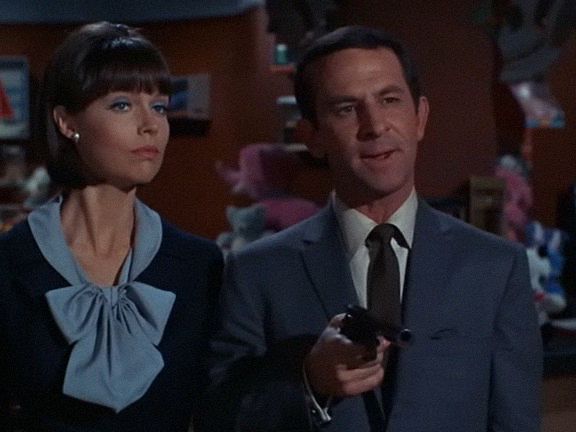
The show centered around the three main characters. Maxwell Smart is Agent 86.  He works for CONTROL, a US government counter-intelligence agency in Washington DC. Max is resourceful.  He is a adept marksman, has hand-to-hand combat skills and is extremely lucky. He uses several cover identities, but the one he uses most often is greeting card salesman. He insists in going by the book and this, along with his clumsy nature, cause problems for him.

smartsmart

He and his partner Agent 99 take on world threats. We never learn Agent 99’s real name, although we think we have in one episode.  In “99 Loses CONTROL”, she says her name is Susan Hilton but at the end of the episode, we learn she was lying. Agent 99 is smart and competent.  Her father was apparently a spy as well.  (In real life, Barbara Feldon was also smart; she won on The $64,000 Question with the category of Shakespeare.) If you look closely, you will often see Agent 99 slouching, sitting, or leaning on something to conceal the fact that she was a bit taller than Adams.

smart15

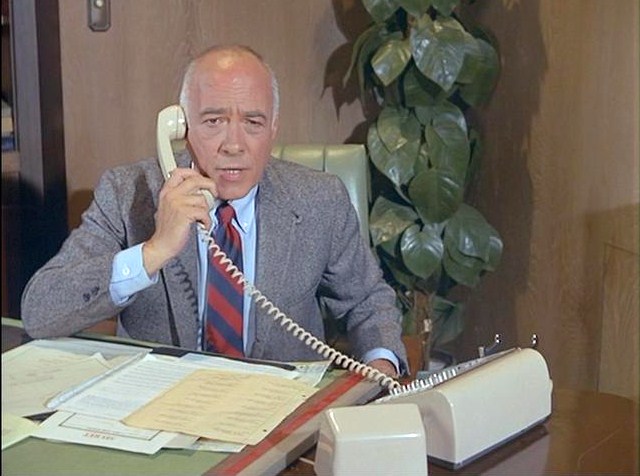
Their boss, Chief, whose real name is Thaddeus, is sarcastic and grouchy but also serious, sensible, and smart. He began his career as Agent Q and his cover name is often Harold Clark. Other CONTROL agents we meet during the series are Agents 8, 13, and 14, as well as Larrabee, the Chief’s highly inefficient and bumbling assistant.

smart10

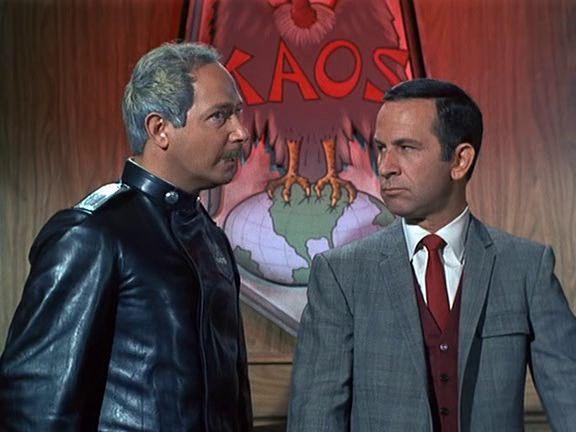
Their primary enemy is KAOS, an international organization of evil founded in Romania in 1904 (a Delaware corporation for tax purposes!). The two KAOS employees we see most often are Conrad Siegfried (Bernie Kopell), the VP for Public Relations and Terror and his assistant Shtarker (King Moody), whose personality can change from sadistic to childlike. While Siegfried and Smart are mortal enemies, they respect each other.  Sometimes they begin talking like old friends.  In one episode, they are discussing the flavor of cyanide pills each side has that month.  CONTROL is giving out raspberry, and Smart tries to give one to Siegfried.  Like CONTROL, KAOS has a bowling team to build rapport and fellowship among their employees.

smart13

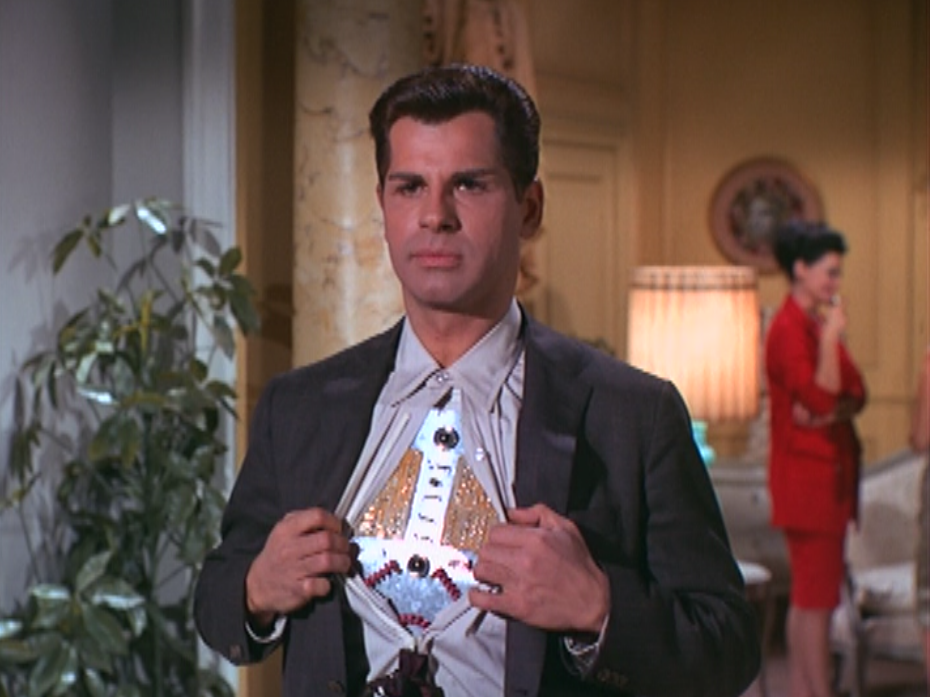
Another KAOS agent is Hymie the Robot played by Dick Gautier. Dr. Ratton of KAOS built Hymie for evil, but Smart manages to turn the robot into a CONTROL agent. Hymie is faster and stronger than any human.  He also has the ability to swallow any poison and then identify it. He has emotions and a need to maintain neatness.  Unfortunately, he takes commands literally; if Smart says “Get ahold of yourself,” he literally wraps his arms around himself.

smart8

The opening sequence of the show is one of the most spoofed openings in television.  Smart walks through doors that continue to other doors. It was ranked as the number 2 opening out of the top ten by TV Guide viewers in 2010.

The show is still known for its catch phrases that became part of the American vocabulary including “Would you believe?”, “Sorry about that Chief,” “And loving it,” and “I asked you not to tell me that.”

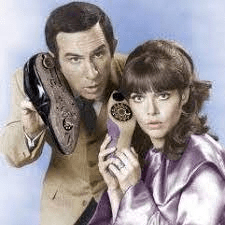
The series is identified with its James Bond-like gadgets.  Telephones could be concealed in neckties, combs, and watches, but most often it is in Smart’s shoe which he had to take off to answer. Agent 99 has a compact phone and a fingernail phone which forces her to look like she is nervously biting her nails to talk on it.

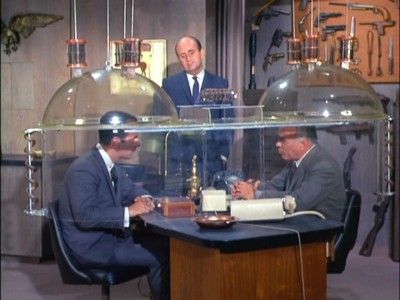
The show features a bullet-proof invisible wall in Smart’s apartment which lowers from the ceiling; he often forgets to put it back up and runs into it. Cameras can be in a bowl of soup.  A laser weapon was concealed in a suit jacket button, the blazer laser. The Cone of Silence are two glass domes that cover Smart and the Chief when they talk about a case.  Smart insists on using it because it’s  regulation; however, they can hardly hear each other, but anyone on the outside can hear their conversation clearly and often reports what the other person said.

smart3

Other weapons and aids for the spies included a parking meter telegraph, a perfume bottle radio transmitter, invisible icing, and a pencil listening device. Guns were hidden in a charm on a charm bracelet, in a pool cue, as a hairbrush, as a flashlight, and in a crutch. CONTROL even had gloves with fingerprints already on them – the fingerprints were KAOS agents so they would get the blame for a break-in.

Blowing up stuff is always good on a spy show and Get Smart had explosive rice; toothpaste that is really a fuse; an exploding wallet, ping pong ball and golf ball; and a horoscope book or lipstick case that contained knock-out gas.

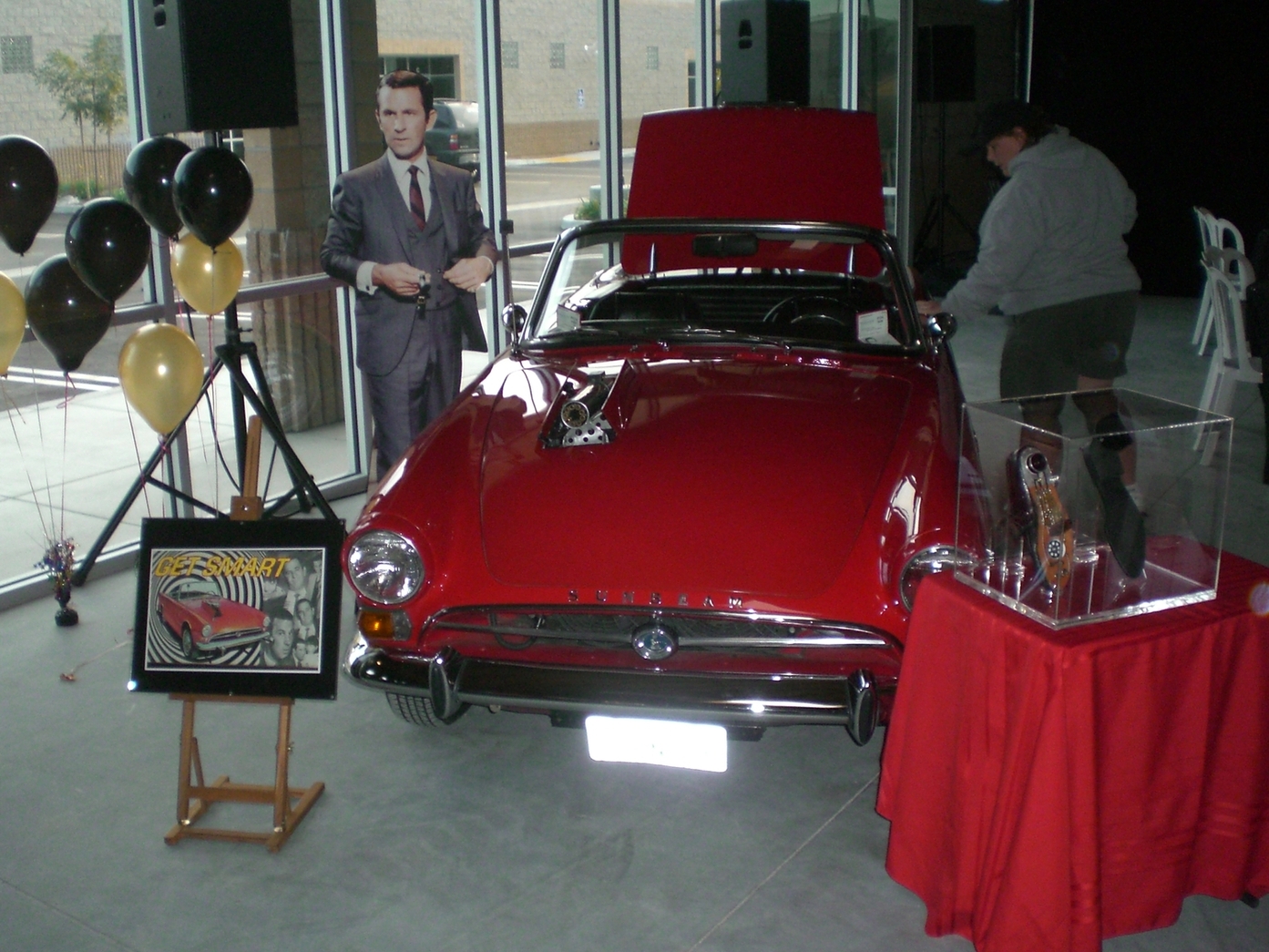
Smart had several cars but his most famous was a red 1965 Sunbeam Tiger.  The two-seat roadster had a machine gun built in, a smoke screen, a radar tracker, and an ejection seat.  When the series went off the air, Don Adams received the car and continued to drive it for ten years.

smart14

Get Smart probably had some of the most famous guest stars of any show.  Just a few of these celebrities include Steve Allen, Barbara Bain, Milton Berle, Ernest Borgnine, Carol Burnett, James Caan, Johnny Carson, Wally Cox, Robert Culp, Phyllis Diller, Jamie Farr, Jack Guilford, Bob Hope, Martin Landau, Julie Newmar, Pat Paulson, Tom Poston, Leonard Nimoy, Vincent Price, Don Rickles, and Fred Willard.

The show stayed true to its character through its entire run.  In Season 1, Hymie is introduced and the dog, Fang, disappears. In Season 2, we meet Siegfried. Smart and Agent 99 get engaged and marry in Season 4.  NBC demanded the change to boost ratings. In Season 5, they have twins.  Agent 99 continues working and is one of the first, if not the first, mother to be viewed as a working woman.  When the ratings did not increase, the show was cancelled. It went into syndication where it was very successful. Unfortunately, the DVD set was held up in legal battles and only came out weeks before Adams died.

Get Smart was one of the most clever and creative sitcoms ever airing on television.  It had `21 Emmy nominations including two for Feldon and won 7 of those awards.  Don Adams won best actor on a comedy three times and the show won best comedy twice.

smartemmy

William Johnston came out with 9 paperbacks based on the series in the late 1960s and Dell Comics issued 8 comic books in 1966 and 1967. For the March 5-11, 1966 TV Guide, Andy Warhol designed a pop art piece using Barbara Feldon. Numerous collectibles were created:  board games, lunch boxes, dolls, and model cars.

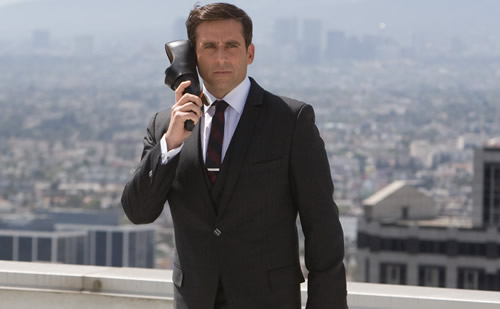
The show produced many spin-off projects. The Nude Bomb was a theatre release in 1980 with Feldon and Smart reprising their roles. Get Smart Again debuted in 1989 as an ABC TV movie.  After its release, a show appeared on FOX starring Feldon and Smart again called Get Smart in 1995.  In 2008 a movie was made starring Steve Carell and Anne Hathaway. Don Adams was known to later generations as the voice of Inspector Gadget.

carell

Of course, everyone has their favorite episodes, but after reviewing several polls and interviews with Nick at Nite and other 50th anniversary celebrations, I have come up with these top five.  Take a rainy fall day and give them a peek. However, if we are looking just at titles, I have to give a shout out to “Spy, Spy Birdie”, “Bronzefinger”, “Impossible Mission”, and “Tequila Mockingbird”.

  1. A Spy for a Spy
  2. The Not-So-Great Escape
  3. Ship of Spies
  4. The Amazing Harry Hoo
  5. The Little Black Book


smarttrench

Unfortunately, this is one of those shows that doesn’t get as much recognition and respect as it deserves.  Considering how much technology has developed in the last 50 years, the show is still up to date. The dialogue is witty; the characters are likable, even when they’re mortal enemies; and the show is just plain fun.