Taxi: The Hip Fleet of Sunshine Cab Co.

Cast Photo: clickamericana.com

As we continue with our “Work It Out” blog series, today we are taking a long ride with Taxi. This show was created for ABC by James L. Brooks, Stan Daniels, David Davis, and Ed Weinberger and produced by John Charles Walters Co. The show was apparently inspired by an article in The New Yorker, “Night Shifting for the Hip Fleet” by Mark Jacobson in 1975. The article profiled several drivers who worked the night shift for a New York cab company. Taxi was in business from the Fall of 1978 to the Spring of 1982 on ABC and then drove over to NBC for a year.

The show is set primarily at the Sunshine Cab Company in Manhattan. Louie De Palma (Danny DeVito) is the dispatcher that everyone loves to hate. Brooks said that when they went to visit a company as the night drivers were just coming back from their shifts, they saw a dispatcher taking a bribe from a driver for a clean cab. That gave them the idea of Louis. DeVito described Louie as someone who “made life miserable for everyone. The manifestation of what was going on inside of him came out in a mean-spirited way to those around him. Deep down he just wanted people to love him.”

Photo: vodkaster.com

Drivers included Alex Reiger (Judd Hirsch) who considers cab driver his profession as opposed to a temporary get-by job. Elaine Nardo (Marilu Henner) is a single mother who also works at an art gallery. In the first episode when Elaine is hired, Reiger introduces the crew by saying, “You see that guy over there? Now he’s an actor. The guy on the phone? He’s a prize fighter. This lady here: She’s a beautician. The guy behind her? He’s a writer. Me? I’m a cab driver. I’m the only cab driver in this place.”

Tony Banta (Tony Danza) a boxer, and Bobby Wheeler (Jeff Conaway) a struggling actor are other coworkers. We also get to know the Reverend Jim Ignatowski (Christopher Lloyd), an aging hippie who gets a job driving and Latka Gravas (Andy Kaufman), an immigrant mechanic. Latka was a weird character, and I have to say that I did not enjoy him on the show. Andy Kaufman invented the character for a comedy act. During the show, he met and married Simka (Carol Kane).

The person who probably had the easiest audition was Danza. He said that when he went to read for the show, he had broken his third metacarpal on his right hand and had a black eye from knocking out a guy in the ring in Brooklyn. He had never acted before and didn’t really know what he was doing.

Although the show was a sitcom, there were a lot of important issues tackled during the run of the show including addiction, parenthood, obesity, animal abuse, homosexuality, racism, gambling, grief, divorce, and sexual harassment, among others.

Ruth Gordon Photo: ebay.com

This show had more than its share of important guest stars. Ruth Gordon and Eileen Brennan both were nominated for Emmys for their guest appearances, with Gordon winning hers. Other stars who showed up included Marcia Wallace, Penny Marshall, Dr. Joyce Brothers, Edwin Newman, George Wendt, Ted Danson, Tom Selleck, Tom Hanks, and Bubba Smith.

Brooks wrote for The Simpsons and The Mary Tyler Moore Show. Daniels also wrote for The Mary Tyler Moore Show and was best known for The Tonight Show. Davis was one of the writers behind The Bob Newhart Show and Weinberger would go on to write for The Cosby Show. It was no surprise that this show was known for its amazing writing, and the series was nominated for 31 Emmys during its five seasons, it won 18 of them, most impressively it won Outstanding Comedy in 1979, 1980, and 1981. Kane, Hirsch, DeVito, and Lloyd and all won Emmys for acting. James Burrows won two for directing.

Taxi had one of the most-recognized theme songs from the 1980s. “Angela” was written and performed by Bob James.

I did not hear much about conflict on the set, although several performers, including Hirsch, indicated they did not care much for Kaufman. Kaufman had it written in his contract that he only work two days a week, so for most of the filming a guy with a sign around his neck that said “Andy” worked with the cast, so I don’t think there was necessarily a lot of bonding with him anyway.

Conaway was fired after 69 episodes. It was apparently well-known that he had a major addiction problem, and when one of the producers discovered him passed out when he was supposed to be filming, they wrote him out of the episode and then wrote him out of the show.

The cast seemed very happy and like a family. Henner said that they could always express an opinion about their character and thoughts on a scene. Brooks said Burrows was able to bridge the two worlds of writers and actors. He spent time with actors all day and then went to the writers’ room to talk to them and was the liason between the two. Henner agreed and said that Burrows was brilliant at adding memorable moments to a scene. She said in one episode she was losing her mind a bit and someone says the champagne is flat and the producer had her bend over and blow bubbles in the glass. She said it was brilliant.
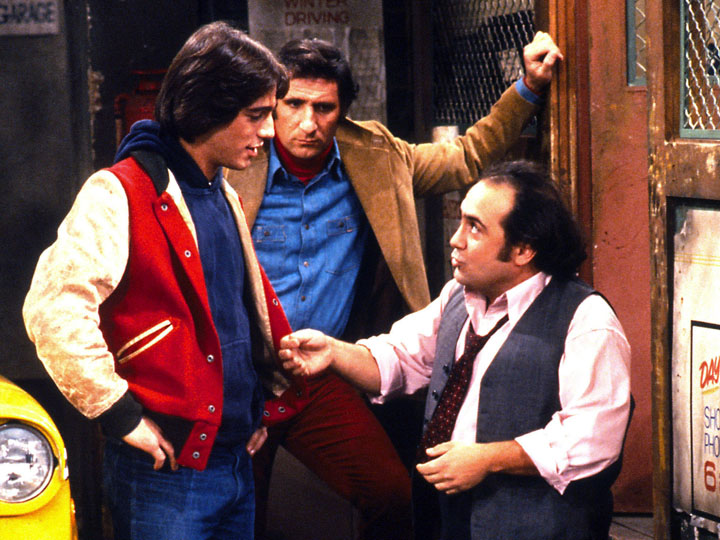
Photo: rottentomatoes.com

DeVito also mentioned a scene that was special for him. One night when Louie was all alone in the garage, he took out the mic and sang a song. Then he said, “I always wanted to do that.” It was a very heart-warming moment and made Louie more interesting and gave him more depth.

Burrows said that most of the cast was young and they all bonded so well. Sometimes they went roller skating, to dances, and they even had a softball team. Rhea Perlman was on the show off and on and during one of their lunch breaks, she and DeVito got married.

Henner talked about their weekly parties. She said everyone at Paramount wanted to hang out with them including the cast of Happy Days, Mork & Mindy, Laverne & Shirley, and Bosom Buddies. She said that John Travolta and Frances Ford Coppola stopped by. John Belushi hung out with DeVito a lot and was there for one of their get-togethers and he died the next day.

Photo: tvguide.com

Hirsch said the group wanted something to do after the show because they didn’t want to go home; they wanted to hang out together more than anything else.

Brooks probably summed up the show the most eloquently. He said that “there’s a lot of things that take a glow in retrospect. The great thing about Taxi was that there wasn’t a moment on the show they didn’t appreciate how lucky there were to have it. That was the show’s energy. I’ve never seen anything like it. . . People show up at the right time and everyone’s lucky enough to have each other at a certain point. It becomes a beautiful team sport.”

Isn’t that the best tribute anyone could give a show?  I’m glad they all had an appreciation for it, and I’m glad they included us in their family.
The Audience Did Not Have a Good Time Watching The Goodtime Girls.

During our blog journey this month, we have gone back in time to Sherwood Forest and then sped forward to the 1860 Wild West. Today, as we continue with “Living in the Past: Timeless Comedies,” we time travel 80 years ahead and land in Washington DC in 1942. When we arrive, we find ourselves in the midst of The Goodtime Girls, a show that debuted in 1980 and was created by Lenora Thuna in association with Garry Marshall’s Henderson Productions and Paramount Television.

Photo: episodate.com

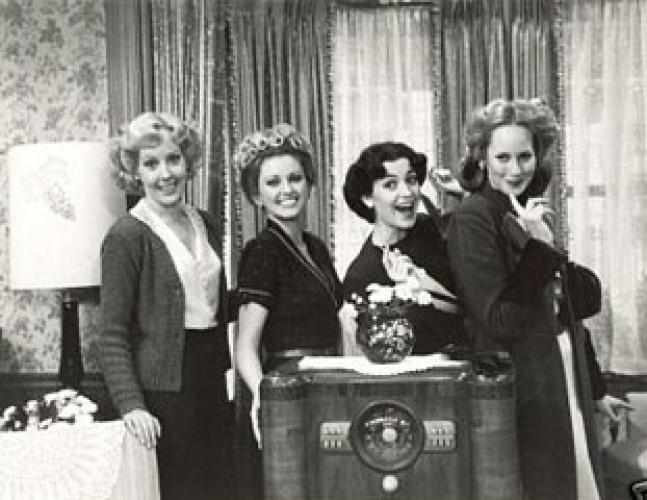
The women, all familiar stereotypes, live together in a small attic apartment. There is dumb-blonde Loretta (Georgia Engel), girl-next-door Betty (Lorna Patterson), level-headed Edith (Annie Potts), and arrogant Camille (Francine Tacker). They must learn to depend on each other and navigate life working in jobs to help aid the war effort.

Rounding out the cast were their landlords, Mr. and Mrs. Coolidge (Marcia Lewis and Merwin Goldsmith), their buddy Frankie (Adrian Zmed) who’s a cab driver, and was rejected from military duty because of his flat feet, and his pal Benny (Peter Scolari). Frankie and Benny lived on another floor of the home.

Photo: sitcomsonline.com

Edith, Betty, and Loretta were living in the apartment and already feeling confined and crowded. Camille, a reporter, covering the plight of people dealing with a housing shortage in the capital, is then added by the landlords when she loses her apartment. Camille’s personality didn’t help her earn a warm welcome by the other women. Edith works for the Office of Price Admissions, Betty was at the US Secretary of War’s office, and Loretta worked for General Culpepper (Richard Stahl) at the Pentagon. I was not sure what the Office of Price Admissions was. After a little research, I learned that it began in 1941 and was set up to establish price controls on nonagricultural commodities and rationing essential consumer goods during WWII. One of the first products to receive their ruling on rationing was automobile tires. The Office was disbanded in May of 1947.

Photo: sitcomsonline.com

The shortage of consumer goods and men didn’t help the situation the women found themselves in either. Loretta was the only married tenant, but Edith is the one who tended to “mother” the other girls, doling out advice and wisdom. Frankie and Benny often joined the girls’ adventures.

This was one of the few Garry Marshall series that didn’t become a hit. Several guest stars appeared during the season including Happy Days’ Scott Baio as Edith’s brother and Laverne and Shirley’s Michael McKean as a bitter soldier confined to a wheelchair.

The mostly forgotten theme song, “When Everyone Cared” was written by Charles Fox and Norman Gimbel.

Photo: nostalgiacentral.com

The show never connected with viewers. It began life on ABC on Tuesday nights following Happy Days which should have ensured its success. It tested very well with audiences. Rather than a fall debut, the show began January 22, 1980. After the February sweeps (older viewers will fondly recall the exciting sweeps month followed by “nothing new in March”), the show went off the air. Its competition was the White Shadow and a show I don’t remember at all, California Fever. (The description on imdb was “Vince and Ross are suburban LA teenagers enjoying disco, surfing, cars, and the rest of the Southern California lifestyle. Musical Vince runs an underground radio station and mechanical Ross is into custom cars.”  It only lasted ten episodes, so I guess I’m not the only one who doesn’t remember it.)

Goodtime Girls returned in April for three weeks on Saturday night and then was pulled again. Although the show was cancelled in May, five of the remaining episodes were aired in August on Friday nights. For some reason, episode 3, “Night and Day” was never shown.

Photo: imdb.com

I’m not sure why the show never caught on. It had a great cast but most viewers didn’t appreciate the comic aspects of the show. Laverne and Shirley and Mork and Mindy could get away with more slapstick routines than many shows airing in the eighties. At this time, M*A*S*H was still going strong, and if you were doing war humor, it would be a hard show to compete with. Maybe this show just seemed too banal and predictable. It was always discussed as being character driven; perhaps the characters were too typecast to be interesting.

As a noteworthy item of information, I don’t think Betty and Camille got along much better after the show ended. Robert Ginty who was married to Francine Tacker for three years later wed Lorna Patterson only fifty days after his divorce became final. However, their marriage only lasted six years.

Unfortunately, the audience was not having as good a time as the cast. I have never seen the show in reruns, and there is no mention of a DVD ever having been released. Learning about so many shows that didn’t make it helps us appreciate those series that became mega-hits. If nothing else, the demise of this show made it possible for Scolari to accept a role on Bosom Buddies.

It’s The Professor and a Whole Lot of Other People: Russell Johnson and Guest Stars

johnson2

Russell Johnson was born in Pennsylvania in 1924. He had six siblings. His father died from pneumonia when Russ was only 8, and his youngest brother died the following year. He was sent to Girard College, a boarding school for fatherless boys located in Philadelphia. He struggled early in his education, being held back for a year. In high school he made the National Honor Society.

In 1943, he married Edith Cahoon. They would divorce in 1948.

During World War II, Johnson joined the Army Air Corps and received the Purple Heart after his plane was shot down in the Philippines in 1945. Johnson flew 44 combat missions in the Pacific Theater. Once the war was over, Russ used his GI Bill to enroll in the Actors’ Lab in Hollywood to study acting. While there he met Kay Cousins, and they married in 1949 and were married until her death in 1980.


johnson4movie

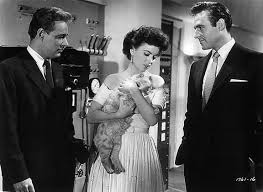
Johnson’s big-screen career began in 1952. He was a friend of Audie Murphy and would appear in three of his films in the early 1950s. He was in a variety of movies throughout the 1950s, mainly westerns and sci fi classics such as It Came from Outer Space.


johnson3

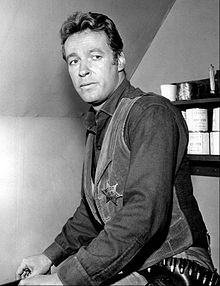
Russell began receiving roles on television in 1950. In the 1950s he would be seen on 28 different shows. In 1959 he was offered a role in a western, Black Saddle. Johnson was Marshal Gib Scott. The show was on for one season.


johnson1

During the 1960s, Russell’s television work increased, and he appeared on 39 series including The Twilight Zone, Route 66, Ben Casey, Laramie, 77 Sunset Strip, Outer Limits, and Big Valley. In 1964 he was offered the role of The Professor on Gilligan’s Island, replacing John Gabriel who was a teacher in the pilot. Roy Hinkley was a genius who made complex inventions from the simple materials he found on the island. As we have learned, most of the cast of Gilligan’s Island was typecast after the show was cancelled, and they had a hard time getting other roles. Johnson discussed this circumstance in a later interview: “It used to make me upset to be typecast as the Professor . . . but as the years have gone by, I’ve given in. I am the Professor, and that’s the way it is. . . Besides, the show went into syndication and parents are happy to have their children watch the reruns. No one gets hurt. There are no murders, no car crashes. Just good, plain, silly fun. It’s brought a lot of joy to people, and that’s not a bad legacy.”

gilligan11


Although he had trouble at first, he did go on to appear in 45 different shows from 1970-1997, including That Girl, Marcus Welby, Cannon, McMillan and Wife, Lou Grant, Bosom Buddies, Dallas, Fame, Newhart, ALF, and Roseanne. He had a recurring role on Owen Marshall, Counselor at Law from 1971-1973.

johnson1


In 1982, Russell married for a third time. He married Connie Dane, and they were married until his death from kidney failure in 2014.

In 1993, he published his memoirs, Here on Gilligan’s Isle.

gilligan9

Like so many of the tv icons in the 1960s—Barbara Eden, Adam West, Butch Patrick, David Cassidy, Maureen McCormick—Russell struggled with his alter ego, eventually accepting his role as the Professor. While being tied to one character for 50 years makes it tough to get the roles you want, it’s hard to be critical of a personality that gives such pleasure to decades of viewers and makes you a household name for half a century. Being given the chance to portray a character that America loves is a hazard of the business but is certainly better than never receiving a starring role.

You Never Know Who Might Show Up

With a show like Gilligan’s Island, you would assume it would be almost impossible to have guest stars. After all, they are on a deserted island. Except for the native people who might be living there, where would stars come from? Amazingly, Gilligan’s Island featured many guest stars over the years. Let’s look at a few of them.

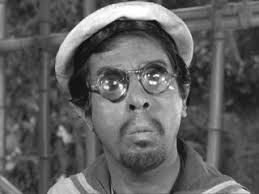
Vito Scotti appeared on four different episodes playing Dr. Boris Balinkoff, mad scientist, twice, a Japanese sailor, and a Japanese soldier who does not believe World War II is over.

vito


Mel Blanc could be heard portraying a parrot several times and a frog.

blanc


Hans Conried visited the island twice as Wrongway Feldman, an incompetent pilot who had crashed on the island years before.

conried


Kurt Russell was a modern-day Tarzan.

russell


Richard Kiel, a Russian agent, pretended to be a ghost to scare the castaways off the island so he could have the oil rights. When the cast turns the tables and acts like ghosts, he didn’t stick around long.

kiel


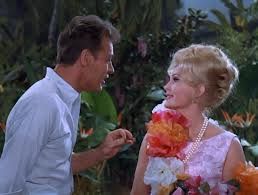
Zsa Zsa Gabor was a rich socialite who falls in love with the Professor.

gabor


Larry Storch is a robber hiding out on the island and pretending to be a doctor.

storch


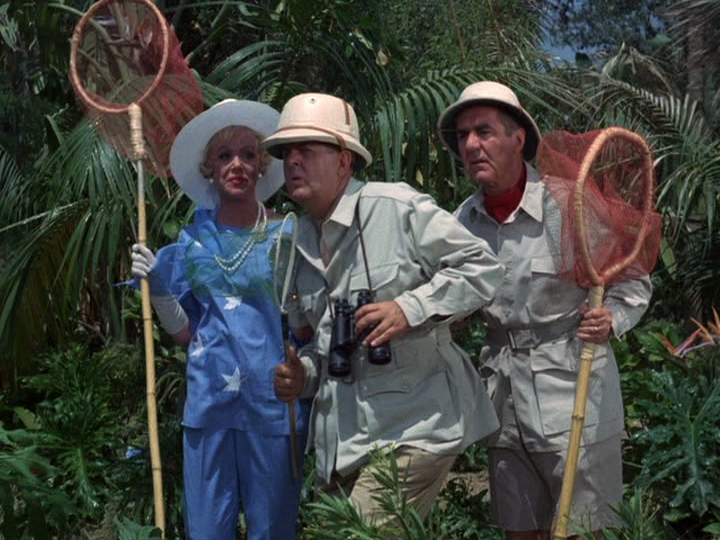
John McGiver was Lord Beasley Waterford, famous butterfly collector.

mcgiver


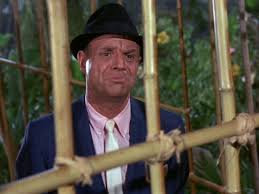
Don Rickles is con man Norbert Wiley who is hiding out on the island.  He kidnaps Mrs. Howell and later Ginger, planning on getting ransom for each castaway.  After the Professor puts him in jail, Ginger convinces them to let him out for a party.  Norbert steals jewelry and other items from the castaways and leaves the island.

rickles


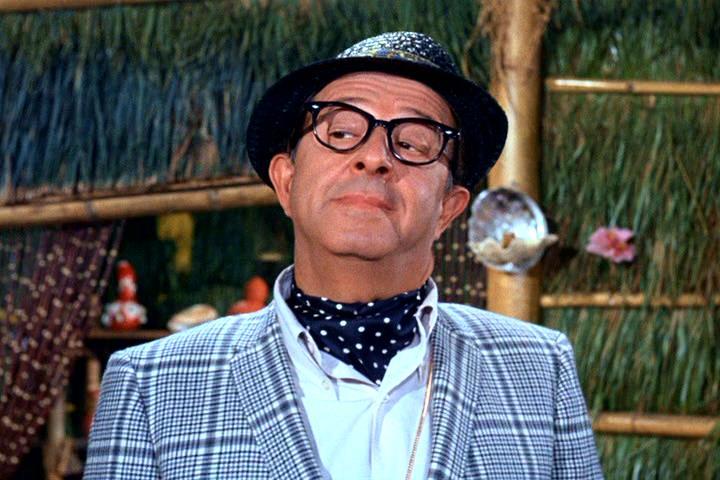
Phil Silvers crashes onto the island as Herbert Hecuba, arrogant movie producer. He orders everyone around like they’re his servants.  He is not impressed with Ginger’s acting ability, so the castaways write and perform a play to show off her talents. In the middle of the night, Hecuba takes off with their play, claiming it as his own back in the US.

silvers


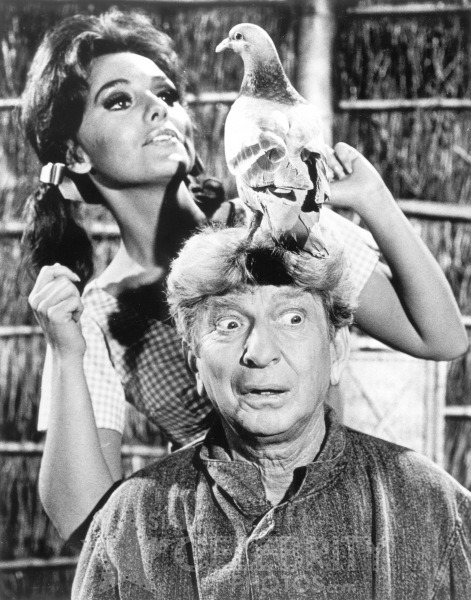
Sterling Holloway is an escapee from a prison and the owner of a pigeon. The Professor thinks he can get a message back to the States through the pigeon, but when Birdy finds out he is paroled, he sends the bird off first.

holloway

A variety of actors played natives on the show. In all, there were 54 guest stars given credit on the show.

In addition, Bob Denver, Tina Louise, and Jim Backus all had guest starring roles playing people who were look-alikes for Gilligan, Ginger, and Mr. Howell.

I guess it’s a good lesson to always keep up appearances because you never know who might show up when you’re stranded on an island.