Cesar Romero: Batman’s Most Joy-Filled Villain

We are winding up our series: Bam! Pow! Batman Villains. Today it’s all about The Joker: Cesar Romero.

📷turnerclassicmovies.com

Romero was born in New York City in 1907. His father was an import/export merchant, and his mother was a concert singer. He grew up in Bradley Beach, New Jersey. His father lost most of his money during the 1929 Wall Street Crash.

Romero teamed up with dancer Lisbeth Higgins and they formed a professional dance partnership, appearing in nightclubs and theaters throughout New York City including the Ambassador Roof and the Montmartre Café. Although he had no professional training, he was often compared to Fred Astaire. He also was cast in several off-Broadway productions including “Stella Brady” and “Dinner at Eight.”

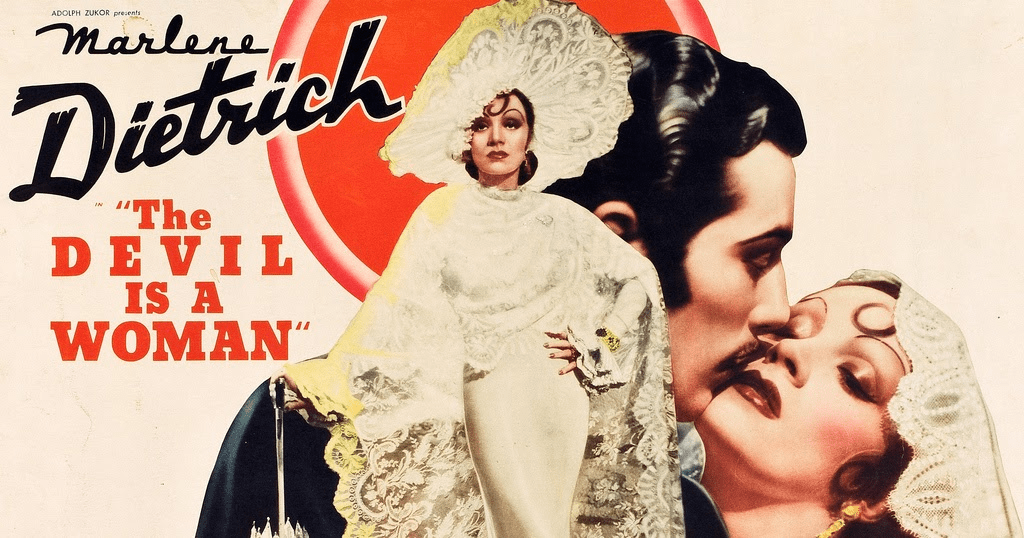
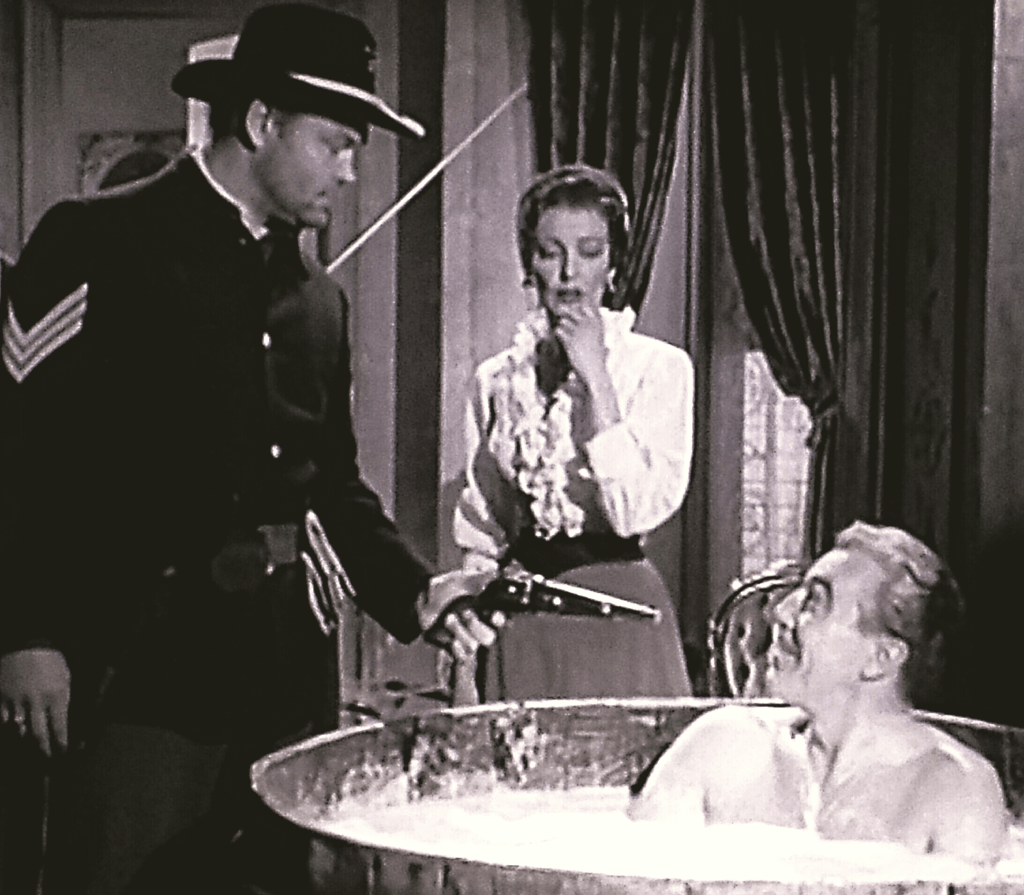
Later Romero would refer to himself as the Latin from Manhattan and he provided for his family members who followed him to Hollywood. He played the stereotypical Latin lover during the thirties and forties, including The Devil is a Woman with Marlene Dietrich in 1935. However, he also made westerns and did a bit of dancing during these decades on the big screen.

His friendship with Frank Sinatra brought him roles in Around the World in 80 Days, Pepe, Marriage on the Rocks, and Oceans’ 11.

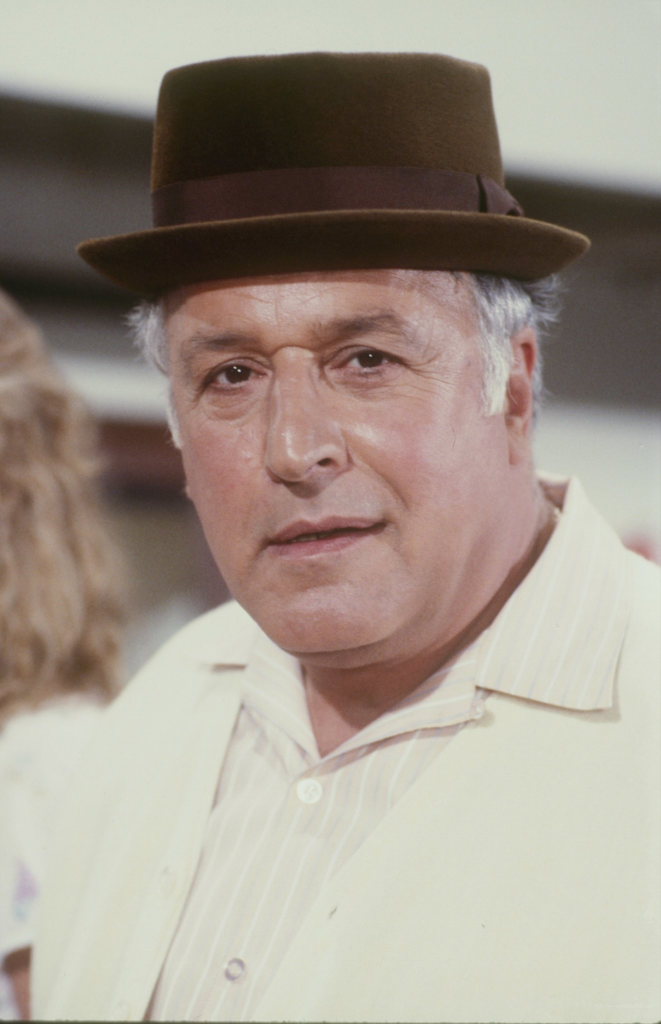
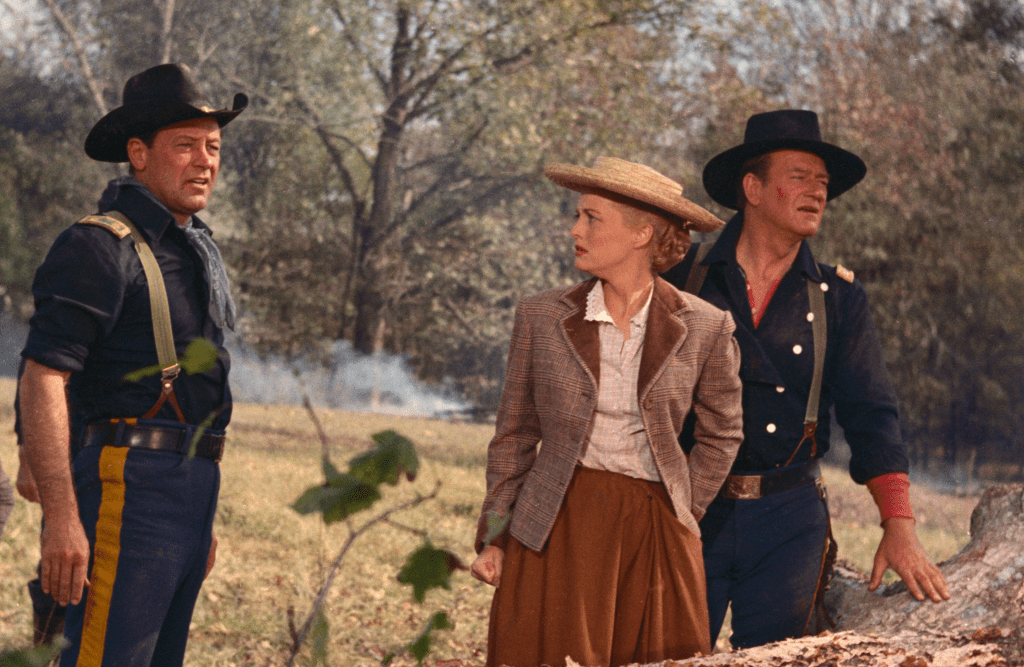
📷imdb.com Wagon Train

In 1942, Cesar enlisted in the US Coast Guard, serving in the Pacific Theater of Operations. After his military career ended, Romero returned to his acting career.

His television career began in 1948 in the show, Variety. During the fifties he was primarily appearing on dramas, but he did show up on Private Secretary with Ann Sothern and continued his western roles on Wagon Train, Zorro, and Death Valley Days.

The sixties kept him extremely busy on television. He kept people laughing on Pete and Gladys, The Ann Sothern Show, Get Smart, and Here’s Lucy. He rode the range on Stagecoach West, Bonanza, Rawhide, and Daniel Boone. He stayed dramatic on shows including 77 Sunset Strip, Dr. Kildare, and Ben Casey.

📷wallpaper.com

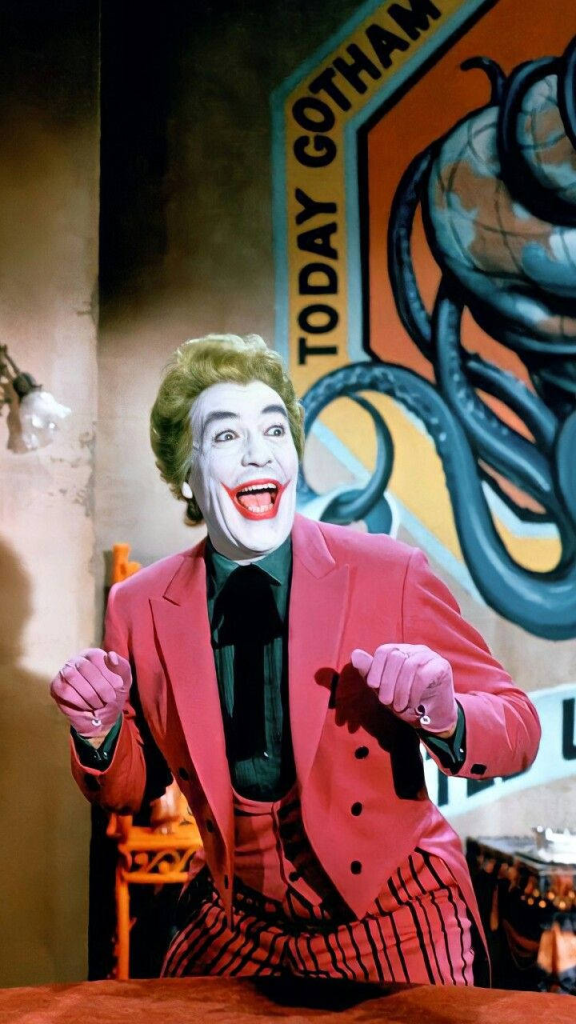
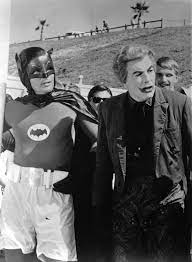
However, the show he was best known for in the sixties, is the show that made him part of my blog series this month, Batman. He had to endure a long time in the make-up chair. He refused to shave his mustache for the role, so white face makeup was smeared all over his face until it was hidden.

Romero admitted that this role reinvigorated his career. When he was offered the role of the Joker, he was 59 years old. Romero said the role was “the kind of part where you can do everything you’ve been told not to do as an actor. You can be as hammy as you want.”

He discussed how surprised he was when William Dozier called him about the show. He said Dozier told him that “the important characters were all villains. They had done the first two with the Riddler and the Penguin with Frank Gorshin and Burgess Meredith, and now they were ready to do the third, and the villain was the Joker. He said, ‘I would like you to play the part.’ So, I said I would like to read the script and know what it is all about. He said, ‘Come on over to the studio, and I will show you the film of the first episode.’ Of course, it was great. I said, ‘Let me read this Joker part, and if it is as good as the first one, hell yes, I will do it.’ So I read the script, and I thought it was a gas, and I said, ‘Sure, I’ll do it.’”

No serious villain, the Joker was cheerful and extroverted. He oozed goofiness and always appeared to be having a great time carrying out his nefarious activities. Dressed in his famous purple costume, he had his own automobile that could rival the Batmobile.

📷facebook.com

While most of the villains saw Batman and Robin as roadblocks in their evil schemes and problems to take care of, the Joker found great joy in taking down the superheroes. In one episode he says “Oh, but I must, I must! Why, outwitting Batman is my sole delight, my heaven on earth, my very paradise!”

You couldn’t miss him if you watched almost any television in the 1970s and 1980s. He appeared on a ton of shows, just a few of which included Bewitched, Nanny and the Professor, Love American Style, The Love Boat, Night Gallery, Mod Squad, Ironside, Medical Center, Charlie’s Angels, and Hart to Hart.

From 1985-88, he was a regular on Falcon Crest. Earl Hamner Jr., the creator of The Waltons, created this show featuring the Gioberti family, owners of Falcon Crest Winery. Romero played the love interest of matriarch Angela Channing, played by Jane Wyman.

He finished his career in the 1990s. He was in his eighties when he appeared on The Golden Girls, and Murder She Wrote, his last television role.

Romero also played a role in politics. As a registered Republican, he was very involved in many campaigns. He worked for Nixon-Lodge in 1960 and later supported Lodge in his run for President. When Lodge did not get the results that he hoped for, Romero turned his support to Barry Goldwater for the general election. He also worked for his friend George Murphy in his run in the California senate race. He later helped Ronald Reagan in his gubernatorial runs in California as well as his presidential campaigns.

It was reported in many articles that Romero had 30 tuxedos and more than 500 suits. That is not surprising because he had a clothing line, Cesar Romero Ltd. He was also a model and spokesperson for Petrocelli suits in the sixties.

Romero stopped acting in 1990. He remained busy though with several ventures including hosting classic movie programs on television. In 1994, Romero died from complications of a blood clot on New Year’s Day. He was being treated for bronchitis and pneumonia.

I enjoyed getting to know a bit more about Cesar Romero, but, I have to admit, that I don’t feel like I know him much better than I did before. He seemed to have been stereotyped as a Latin lover and then again as the Joker. I would like to go back and watch some of his appearances on westerns. It was hard to find much information about Romero beyond his career and political interests.

📷etsy.com

I know The Joker was not his most challenging role, but he will always have a place in America’s heart for the work he did on Batman as will these fun super villains we got to know this month.

Burgess Meredith: America’s Favorite Villain

Bam! Pow! It’s Batman Villain Month. We will be looking at the career of an actor who played a Batman baddie every week this month. We are beginning with my favorite, The Penguin, played by Burgess Meredith.

📷pinterest.com

Oliver Burgess Meredith was born in Cleveland, Ohio in 1907. His father was a physician, and his mother was born into a family of Methodist revivalists. Burgess followed his Methodist faith for his entire life. After high school, he enrolled at Amherst College, until 1932 when he became a reporter for the Stamford Advocate. He worked in a variety of jobs while getting started in acting including retail, an editor, a merchant marine, and a runner on Wall Street.

He joined Eva Le Gallienne’s Civic Repertory Theatre in New York City. His Broadway debut was in this company’s “Romeo and Juliet” in 1930. His film debut came in 1935 in Winterset. Later in his career, he would return to Broadway as a director. He shared a Tony Award with James Thurber for their collaboration on “A Thurber Carnival” in 1960, and he earned a Tony nomination for his staging of “Ulysses in Nighttown” in 1974. In the late seventies, he directed Fionnula Flanagan’s one-woman play, “James Joyce’s Women” which toured for several years.
Meredith had more success in acting than marriage. Helen Derby Merrien Burgess was his wife from 1932-1935. His marriage to actress Margaret Perry only lasted two years, ending in 1938.

In 1942, Burgess enlisted in the US Army Air Forces for WWII, reaching the rank of captain. He was discharged in 1945. Meredith married another actress, Paulette Goddard, and they were together from 1944-1949. However, in 1951 he married Kaja Sundsten and they were together until his death.

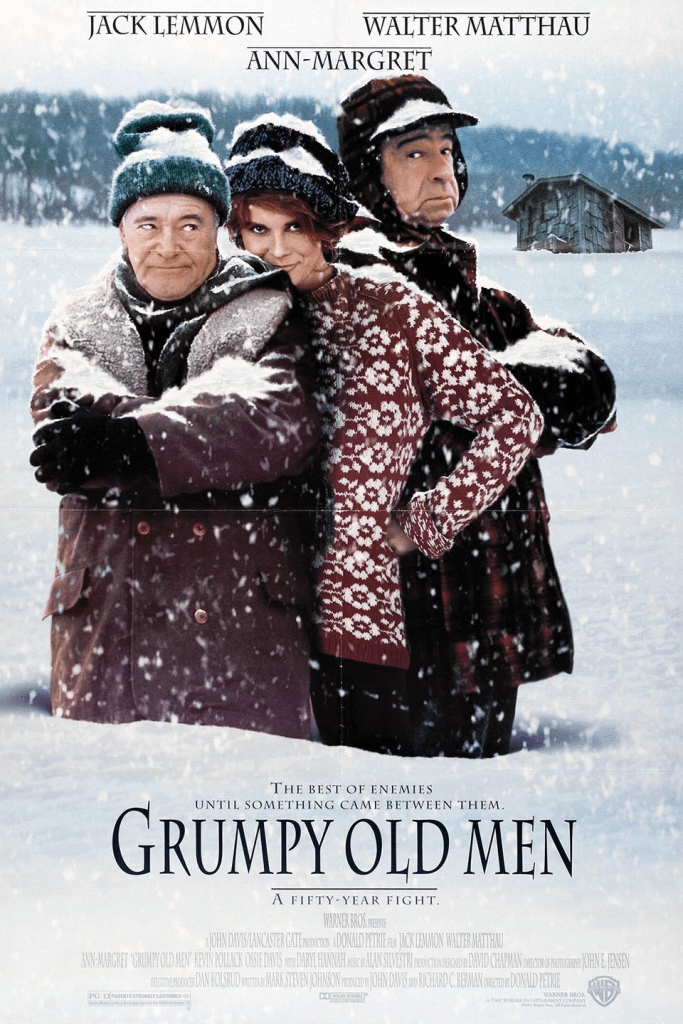
Meredith would appear in 80 movies during his career, as well as a number of made-for-television movies. He might be best known in the past few decades for Grumpy Old Men and Grumpier Old Men in the 1990s.

However, it was television where he found the most acclaim. His first appearances came in 1949 on the Ford Theater Hour and The Silver Theater. Throughout the fifties he continued receiving offers for theatric roles on these types of programs. During the early sixties, he was everywhere. You could catch his appearances on dramas such as The Naked City, Ben Casey, The Twilight Zone, The Bold Ones, Room 222, Ironside, and Mannix. He rode onto many western sets including Wagon Train, Rawhide, The Wild, Wild West, Bonanza, Daniel Boone, and The Virginian. He found his way onto several comedies such as Please Don’t Eat the Daisies and The Monkees.

Given the astounding number of drama shows that he chose roles on, it is a bit surprising that one of his best-known roles was the campy, humorous 1960s series Batman. From 1966-1968, he made 21 appearances as the Penguin. When he appeared on The Monkees, it was also as the Penguin. Originally the producers wanted Spencer Tracy for the role of Penguin. Tracy said he would not accept the offer unless his character was allowed to kill Batman. So, Meredith got the role. The cast loved him, and the producers made sure there was always a Penguin script waiting so whenever Burgess was free, it could be filmed.

📷dcdatabase.com

He was perfect for the role with his raspy voice and that iconic Penguin laugh. The laugh came about because Burgess had given up smoking but had to smoke for his role on Batman. When he coughed, he covered it up with his trademark laugh. When asked why he did Batman, he replied that he did it “for two reasons, one of which was the salary. The other was that, after the first few episodes, Batman became the in-thing to do. Everybody would either play a villain or appear as himself in that cameo showcase where a celebrity would poke his head through the window of a building that Batman and Robin were climbing. Actually, we didn’t get as much money from the show as you might think, although we were paid decent money for the feature film version. The main impetus to continue appearing on Batman—beyond the desire to get some TV work—was that it was fashionable.”

Later in his career, Burgess continued appearing on the big screen and provided voice-over work and a bit of animation. Unfortunately, he was named as an unfriendly witness by the House Un-American Activities Commission which ended his studio work for several decades. Burgess also did commercial work and was known for his roles for Skippy Peanut Butter and United Air Lines.

📷imdb.com

Meredith was a life-long Democrat and was generous to the Democratic party. He was an environmentalist and tried to end pollution. He was also fascinated by intelligent animals, especially dolphins. One night he said he felt a dolphin needed help while staying at a friend’s beach house. He ran out to the beach and found a dolphin caught in a net under a dock and was able to save its life. He was nominated for two Academy Awards, both for Supporting Actor in Rocky and The Day of the Locust. A 21-acre park in Pomona, New York was named for him; he provided the funding to incorporate the village.
In 1997, Meredith died from complications of Alzheimer’s. His former Batman costar, Adam West, spoke at his memorial service.

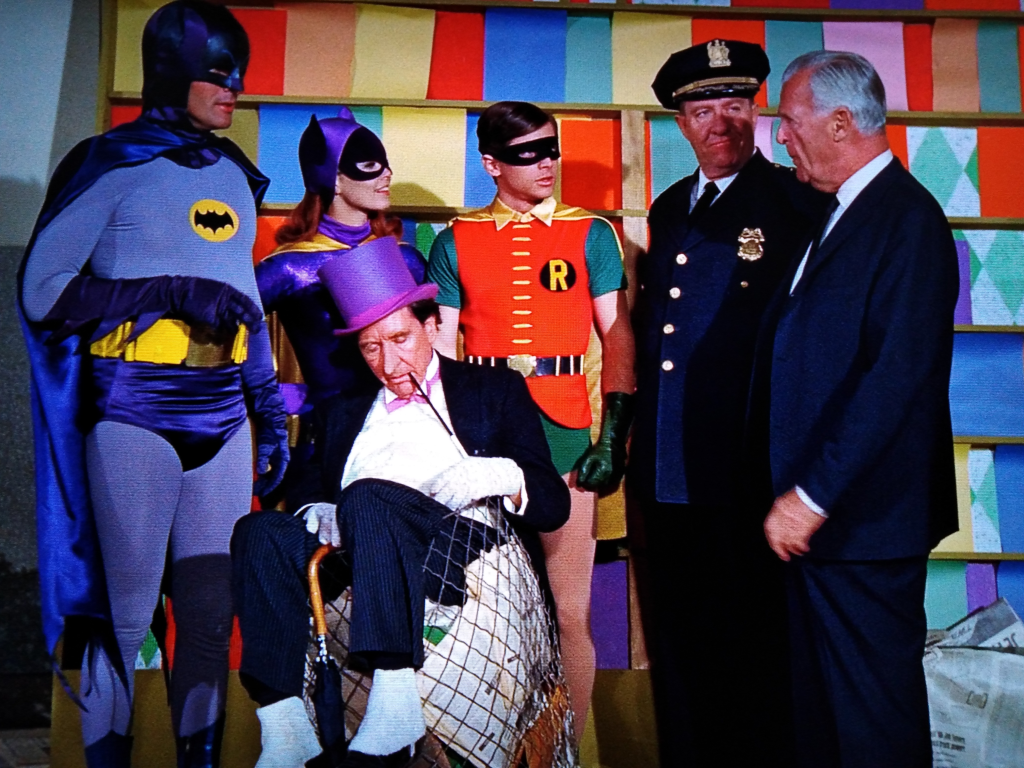
While almost all of the bad guys on Batman were memorable, the Penguin and Cat Woman were by far my favorites. We will look at the career of Julie Newmar next week.

Little House on the Prairie: Drama On and Off the Set

This month we are visiting with some of our favorite families. I absolutely would have included The Waltons this month if we had not covered the show recently. However, another historic family, the Ingalls, is on the schedule. Little House on the Prairie was on the air for nine seasons. Many of us got to know the family through Laura Ingalls Wilder’s books.
📷lovemoney.com

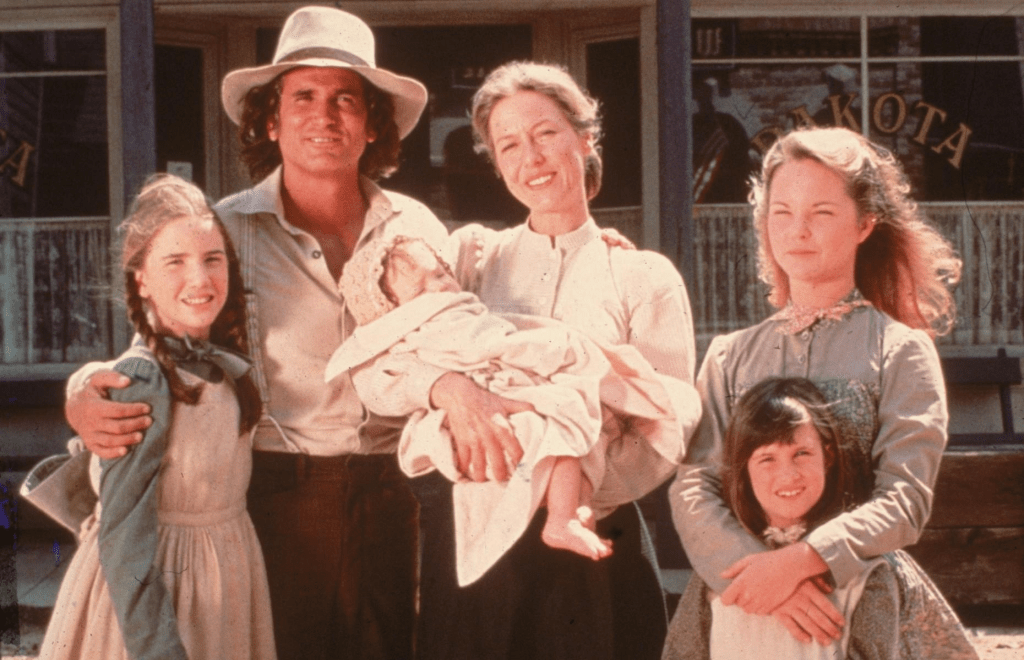
Television producer Ed Friendly acquired the film and television rights from the books. Oddly enough, the other show Friendly is known for as producer is Rowan and Martin’s Laugh In. He decided to make Little House a two-hour pilot and asked Michael Landon to direct it. Landon agreed to do so if he could also play Pa, Charles Ingalls. The pilot aired in March of 1974, and in September the series began.

Along with starring in the show, Landon continued to direct as well; he directed 87 of the 204 episodes. The other directors included William F. Claxton, Victor French, Maury Dexter, and Leo Penn.

Landon also got in on the writing of several episodes. He had written several scripts for Bonanza when he appeared on that show, and several of them were recycled for Little House.

📷showbizcheatsheet.com

Like The Waltons, while this series was often happy with comedic notes, it dealt with many serious issues as well, including alcoholism, drug addiction, poverty, racism, child abuse, and rape. The show focused on the struggles and joys of a pioneer family living in the late 1800s.

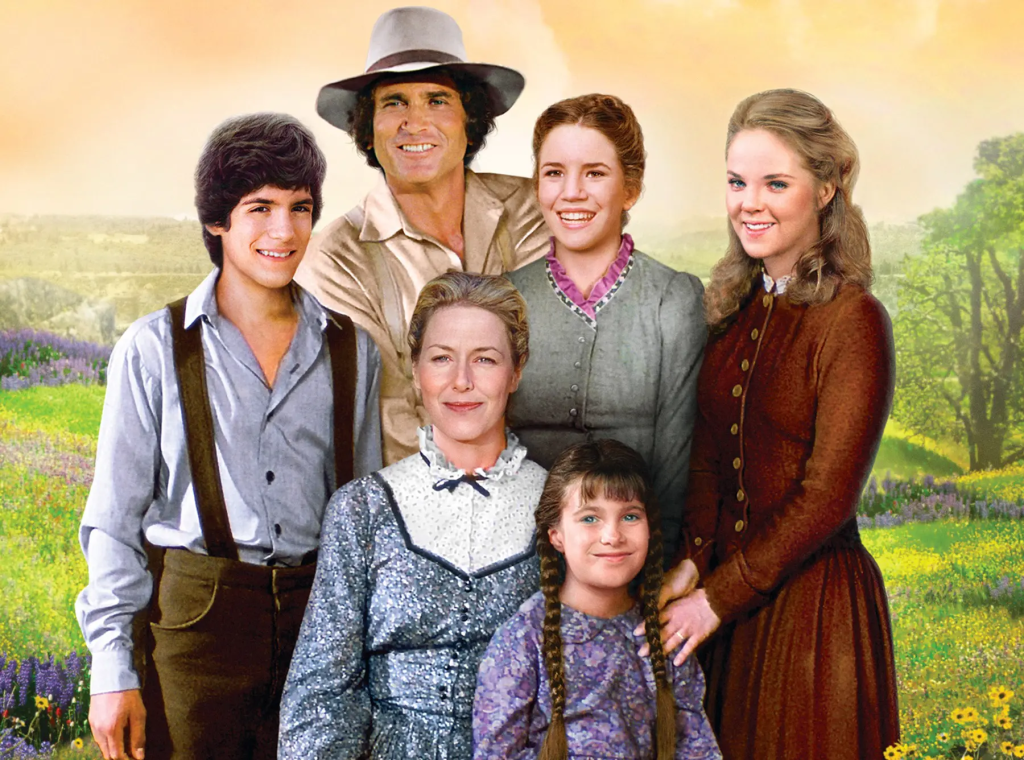
Along with Landon, Karen Grassle played Ma, Melissa Gilbert played Laura, Melissa Sue Anderson was Mary, with Lindsay and Sidney Greenbush alternating as Carrie. In addition to the Ingalls family, other town folk on the show included Nellie Oleson (Alison Arngrim), Nels Oleson (Richard Bull), Harriet Oleson (Katherine “Scottie” MacGregor, and Miss Beadle (Charlotte Stewart).

Some of the guest stars included Willie Aames, Anne Archer, Lew Ayres, Hermione Baddeley, Ken Berry, Ray Bolger, Ernest Borgnine, Johnny and June Carter Cash, Burl Ives, Charles Lane, Vera Miles, Sean Penn, and Ray Walston.

📷wikifandom.com

The theme song, “The Little House,” was written and conducted by David Rose. Rose won two Emmys for his work on the show.Although the pilot ranked #3 for the 1974 ratings, the first two seasons were much lower. Season 3 found the show on Monday nights where it remained one of the highest-ranking series through season 7. Season 8 had a significant decline and season 9, with the loss of most of the family members, never really caught on with viewers. However, season two is the only year the show was not in the top 30. The schedule was a bit crazy when you analyze it. Although, this show did have to compete with The Jeffersons and WKRP in Cincinnati, because they were half-hour shows and this was an hour show, many people probably continued watching the second half. For many of these years, there were up to six different shows in this time spot on CBS and many of them changed from year to year, so there were rarely shows in this spot against Little House for more than a month or two.

After eight seasons, both Michael Landon and Karen Grassle were ready to move on; however, Landon did stay on as a director and writer. The show focused on Laura Almanzo and the younger generation for the ninth and final season.

The show was loved by critics as well as viewers and received sixteen Emmy nominations. The series won four of them, all for music and cinematography. The only cast member nominated was Melissa Sue Anderson; she lost to Sada Thompson for Family.

📷littlehouseontheprairie.com

Viewers were not ready to leave the Ingalls for good. Three made-for-tv movies were written: Little House: Look Back to Yesterday in 1983, Little House: The Last Farewell and Little House: Bless All the Dear Children, both in 1984. In 2008 the Ingalls’ lives also became a musical at the Guthrie Theater.

One fun story is when the show moved from Paramount to MGM Studios in the late seventies, they were uncovering sets so they could build new ones and found the yellow brick road from the Wizard of Oz which delighted the kids in the cast; I’m guessing it delighted many of the adults as well.

Another fun story was learning what the cast ate on the show. Since beef stew was a popular meal in the 1800s, the family often had that for its meal and when they did, they were actually eating Dinty Moore Beef Stew. When they had chicken, it was KFC that appeared on their plates.

The kids must have been troopers because each episode took about seven days to shoot. They were on location at Big Sky Ranch for four days and in the studio for interior shots about three days. In addition, they were probably witnesses to off-air scenes that were not the best. Grassle and Landon were not close, probably because his role seemed much bigger than hers and he was directing as well. Unfortunately, both Grassle and Landon were alcoholics, and alcohol was part of their life on set. During season four, Grassle quit when she realized the seriousness of her problem. Landon was never able to kick his dependence and died from pancreatitis.

📷pinterest.com

Gilbert said that Michael Landon had interesting ways to inspire his kids to get emotional on the set. He worked himself up to become very emotional and with eyes full of tears would ask her “Do you know how much I love you?” which would bring tears to her eyes as well.

It might have been a way to get her to cry, but it was not a lie. Gilbert lost her own father when she was eleven, and Landon became a second father to her. He often had Gilbert at his house on the weekends. She said it was a huge house and the kids ran through the house at will. Often Landon would hide behind doorways and jump out and scare them. Gilbert said Landon provided her with a lot of great advice. The most memorable for her was that nothing is more of a priority than home and family, and no success is as important as loving your people and contributing to a community. And to have fun above all in your career.

That is sage fatherly advice for us all to remember.

Stefanie Powers Has a Hart for Acting

Today in our Supportive Women blog series, today we are delving into the career of Stefanie Powers.

Photo: themoviestore.com

Stefania Zofya Paul was born in 1942 in Hollywood, California, Her parents divorced when she was little, and she rarely saw her father again. At age fifteen, she began dancing for Jerome Robbins. During her career she has appeared on the stage many times, the first time in 1964 in “Under The Yum-Yum Tree.” She also appeared on the British stage in several productions including “The King and I.”

She graduated from Hollywood High, although she was given her first contract at age 16 with Columbia Pictures. She made 15 films in those early years with some of the great stars including James Caan, Bing Crosby, Sammy Davis, Ava Gardner, Maureen O’Hara, Roger Moore, Lana Turner, and John Wayne.

Her first role was in the made-for-tv movie Now is Tomorrow in 1958. Out of her 118 acting credits, 25 would be big-screen movies with 37 made-for-tv movies. The other half of her appearances were on television series.

The Girl From U.N.C.L.E. Photo: pinterest.com

In the 1960s she showed up in many shows including the sitcoms The Ann Sothern Show and Please Don’t Eat the Daisies and dramas including Bonanza and Route 66.

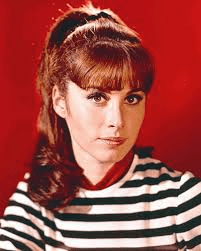
In the middle of the decade, she was cast in her first starring television role as April Dancer on The Girl From U.N.C.L.E. Although it would only last one season, she became well known for her spy missions on the series.

In 1966 Stefanie married Gary Lockwood, another actor; with 95 credits, he also had a long and successful career. They divorced in 1972. Shortly after her divorce, she met William Holden and they were together until his death in 1981; Powers described them as soul mates.

Powers was kept busy in the seventies, making appearances on a variety of shows including Love American Style; The FBI; Owen Marshall, Counselor at Law; The Mod Squad; Barnaby Jones; McCloud; Marcus Welby, MD; Medical Center; Cannon; The Rockford Files; and McMillan and Wife.

Although she made a few random appearances on small screen series, her last three major roles were as a regular cast member on three shows: The Feather and Father Gang, Hart to Hart, and The Doctors.

The Feather and the Father Gang is not a show I remember at all. She starred with Harold Gould as a con man and she was his daughter, a lawyer, who helped him solve crimes.

Hart to Hart Photo: thetelegraph.com

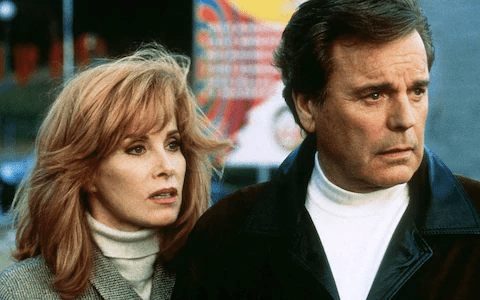
Jennifer Hart is the role that Powers was best known for. She starred with Robert Wagner as her husband Jonathan on Hart to Hart. They are a wealthy married couple similar to Nick and Nora Charles on The Thin Man who continued to get mixed up in murders wherever they go. The show was on the air for five years from 1979 to 1984. Stefanie received two Emmy nominations for her role of Jennifer Hart. In 1981 she was beat out by Barbara Babcock for Hill Street Blues and in 1982 she was beat out by Michael Learned for Nurse.

Wagner lobbied for Powers to be cast as his wife because she had worked with him in an earlier show of his in 1968, To Catch a Thief.

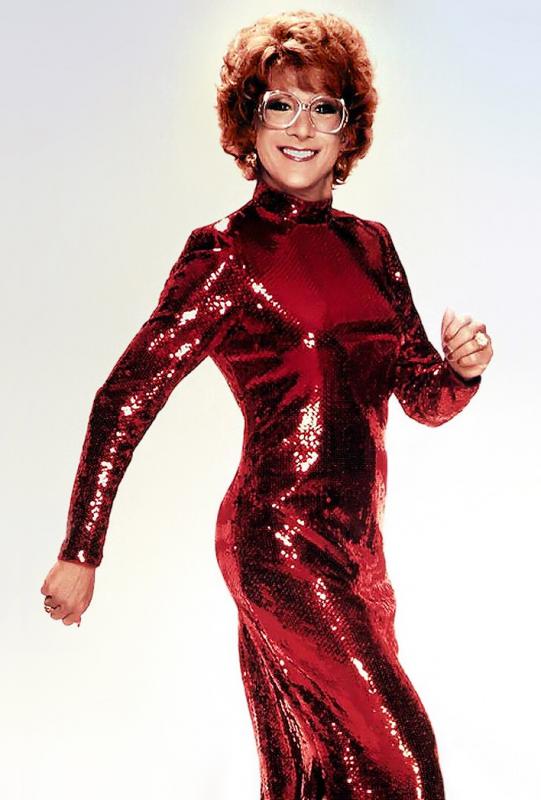
Several other actresses who were being considered for the role were Lindsay Wagner and Suzanne Pleshette. Fun fact, if you watch Tootsie with Dustin Hoffman, you will see him wearing a red, sequenced dress that was worn by Powers as Jennifer two years earlier in the episode “Color Jennifer Dead” in 1980.

After the show was canceled, they paired up again for eight made-for-tv movies about the Harts. The couple also starred in a stage production of “Love Letters” at the Chicago Theater in 1993.

Ironically, Powers was in the same ballet class with Natalie Wood and Jill St. John. While Powers played Robert Wagner’s wife on the show, Wood and St. John were married to him in real life.

In 1993 she tried marriage again with Patrick Houitte de La Chesnais. They were together for six years before divorcing.

Powers has kept busy in the last two decades. In 2003, she released a CD, “On the Same Page,” songs from the great composers. She is a polo player and was one of the first foreign members of the Royal County of Berkshire Polo Club; in 2005 she competed in the Joules United Kingdom National Women’s Championship which was held in Ascot.

In 1982, Stefanie founded the William Holden Wildlife Foundation and became a director of the Mount Kenya Game Ranch and Wildlife Conservancy in Kenya. She and Holden were passionate about wildlife conservation. She also works with the Cincinnati and Atlanta zoos.

Powers spends her time in residences in Los Angeles, London, and Kenya. She apparently speaks six different languages.

With Soulmate William Holden Photo:tumblr.com

After smoking for twenty years, Powers was diagnosed with alveolar carcinoma, a type of lung cancer. She underwent surgery to remove part of her lung in 2009.

She was cast in a movie, Prism, that is in pre-production currently. It was apparently inspired by true events—as imdb describes it, “the infiltration of the Sinaloa Cartel and the inner sanctum of Joaquin El-Chapo Guzman by a US task force detective who goes deep undercover to expose Chapo and his criminal empire.”

Powers has had an amazing career and an even more amazing life. She is able to live on three different continents, enjoys a variety of activities, has a purpose in her life, and found her soul mate. Her life could easily become a movie script but if she was not available, I’m not sure who they would get to play her.

How My Living Doll Became Cat Woman

This month we are learning more about some of our favorite robots in this blog series called “I Robot.” Today we go back to the mid-sixties for My Living Doll.

Photo: pinterest.com

This was both a science fiction and comedy show that debuted in September of 1964. Jack Chertok produced it for Television Productions with CBS. The show was filmed at Desilu studios. Chertok had been the creative force behind My Favorite Martian. James Aubrey, president of CBS, approached Chertok about doing another show. He did not even require a pilot to be made. Chertok’s writers from My Favorite Martian, Bill Kelsay and Al Martin, created the show from an idea proposed by Leo Guild. Kelsay wrote many of the episodes for Date with the Angels starring Betty White and several My Three Sons plots. Martin wrote for many earlier shows and screenplays including Roy Rogers.

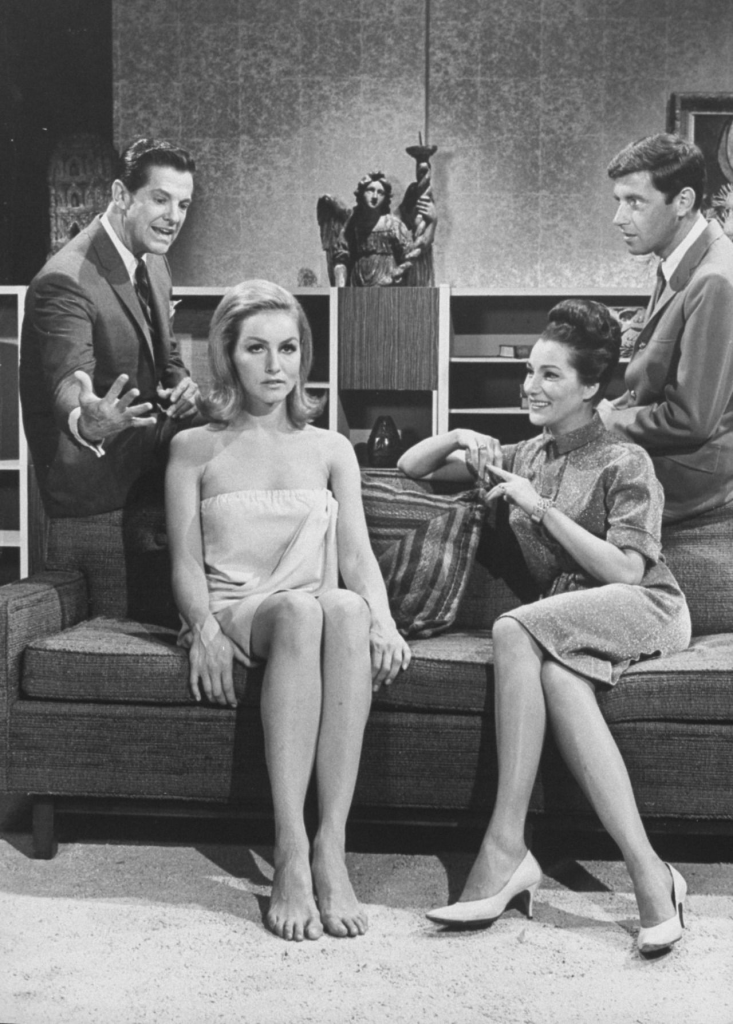
The plot they created was that Dr. Bob McDonald (Bob Cummings), a psychiatrist for the Air Force, was given Rhoda Miller (Julie Newmar), a lifelike robot to protect. He was trying to keep her out of the hands of the military. Rhoda’s formal name was AF709. Dr. Carl Miller (Henry Beckman) built her for the US Air Force but she eventually lands in McDonald’s care when Miller is transferred to Pakistan. His job is to help educate her to be the perfect woman while keeping her true identity a secret. Beauty marks on her back were the control buttons. Her main power switch was on her right elbow. Her eyes could be covered to prompt a system relaxation. Rhoda’s memory bank contained 50 million pieces of information. Bob told his coworkers Rhoda was Dr. Miller’s niece, and she took on the role of his secretary at the office, typing 240 words a minute. On other episodes, she learned to calculate where dice would fall and how to make trick shots playing pool.

In one episode, Rhoda is asked to play Chopin’s “Fantasie Impromptu” on the piano. Newmar actually played the piece herself. She had studied under concert pianist Dr. MacIntyre, and she said that scene is the only one she’s done with her playing the piano which had been her career choice before acting.

Meeting the Robot Photo: pinterest.com

Like I Dream of Jeanne, many of the episodes deal with Bob trying to keep Rhoda out of trouble while she is learning what society and the current culture is like. Rhoda learns human emotions throughout the first season; perhaps this would have led to a romantic relationship between the robot and the doctor.

Rounding out the cast was Peter Robinson (Jack Mullaney), Bob’s neighbor and coworker who thinks Rhoda is someone he wants to date. Irene Adams (Doris Dowling) plays Bob’s sister who moves in to act as housekeeper and chaperone so the neighbors are not suspicious of a single woman living there. On Love That Bob, Rosemary DeCamp played Bob’s sister who moves in to take care of the household for him. Mrs. Moffat was added later on as Peter’s housekeeper.

The show never really found its viewer base. The New York Times reviewer Jack Gould noted that it “very probably had the makings of a popular novelty hit . . . with Miss Newmar giving a light and amusing performance as the automated dish, the premise could work out . . . Bob Cummings, an old hand at chaperoning pretty girls, again is cast in his familiar assignment.”

Newmar didn’t feel that Cummings was the right actor for the role. She said that “They originally wanted Efrem Zimbalist Jr. It was not a flip part—it needed a straight actor who could play opposite this bizarre creature so the comedy would come off. That quality was lost when they hired Bob. The show could have been wonderful. I think it would have run for many seasons had they hired Efrem because he had the right qualities.”

Photo: yiddio.com

The ratings were not good; however, another issue was the fact that it was on Sunday nights against Bonanza, one of the most popular shows ever. In December, CBS moved the show to Wednesday nights but the ratings did not improve. In January, Cummings asked to be written off the show. CBS agreed but never got a replacement for him. He was said to have been transferred to Pakistan, and Robinson took over caring for Rhoda with his housekeeper living in his house again to keep the neighbors from talking.

Apparently, Cummings and Newmar never hit it off. She complained that he had tried to teach her to act and that he seemed unhappy that she was getting more press attention. Later Newmar stated that the real trouble on the set was Cumming’s addiction to methamphetamines. She said he had erratic behavior and became increasingly more depressed and insecure.

In her new home Photo: imdb.com

After Cummings left the show, another five episodes were aired, and then the show was canceled. The show ended up ranking 79th out of 96 shows. Two decades later, producer Howard Leeds would go on to create the show we will discuss next week, Small Wonder.

I was not able to confirm it, but I read several sources that said this show coined the term, That does not compute” which is what Rhoda said when she was asked something she did not understand.

During the summer of 1965, CBS aired repeats of the show. After that, the show was never seen on television again in the United States. Rumors were rampant about whether the 26 episodes had been damaged in a fire, hidden by Chertok, or destroyed. Two episodes seemed to have survived, but there were also reports that six or ten existed in all. CBS was able to obtain about half the episodes somewhere and released a DVD with them on it. We will have to see if the additional episodes ever show up or not.

Transitioning to Cat Woman Photo:designyoutrust.com

This was another of those shows that seemed to suffer from an identity complex. Cummings was known as a ladies’ man to viewers from his seasons on Love That Bob. If the show was not going for romance, then it seems that Newmar was correct in her assessment of Cummings being the wrong person for the role. With Bewitched debuting the same year and I Dream of Jeanne coming right on the heels of My Living Doll, it seems like one of the shows might not obtain enough viewers. Cummings’ addiction problems certainly did not help the show. Newmar should probably be happy the show ended when it did, allowing her to step into the role of Cat Woman on Batman. Like My Living Doll, Cat Woman had all the qualities Batman admired and wanted in a romantic partner, but unlike Rhoda who was not human, Cat Woman was all too human and too much of a villain to allow Batman to act on his passion for her.

Although the show debuted almost sixty years ago, many of the issues of working with a robot are still with us today as scientists work on giving robots a sense of humor and some empathy. We are seeing more of them in the workplace, and it will be interesting to see if any new shows take up the subject in the near future.

Everyone is Welcome on The Waltons

As we celebrate some of our favorite families, The Walton family has to be on the list. Those of us who were kids in the seventies grew up with the Walton kids. Debuting in 1971, the show was canceled a decade later.

The Cast of The Waltons Photo: theguardian.com

The show was listed as a historical drama, but it had a lot of humor in it as well. Based on the book Spencer’s Mountain by Earl Hamner Jr. from 1961, the show was incredibly popular. In 1963 a movie was released based on the book. Hamner created the book from his childhood memories, and many of the plots and characters were based on real events and people. The ending of the episodes has often been parodied, and even if you never watched the show, you recognize the ending when the kids all said “Goodnight John Boy”, “Goodnight Ben”, “Goodnight Erin”, etc until they were told to go to sleep. Hamner said this was a regular activity in his home, and he did have six siblings.

In 1971 a made-for-tv movie called The Homecoming: A Christmas Story received great ratings, so the show was ordered by CBS for a new series. It was produced by Lorimar Productions and distributed by Warner Bros. Domestic Television Distribution in syndication. After the show went off the air, both CBS and NBC aired a total of six sequel movies.

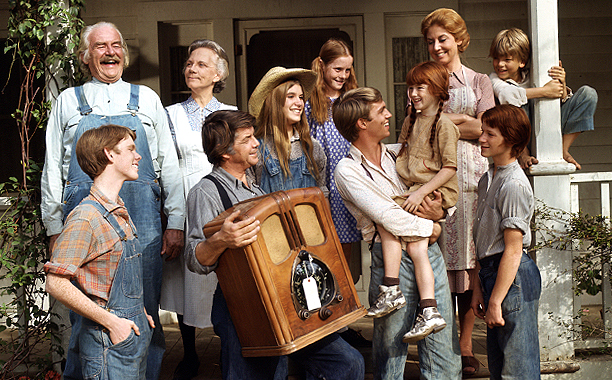
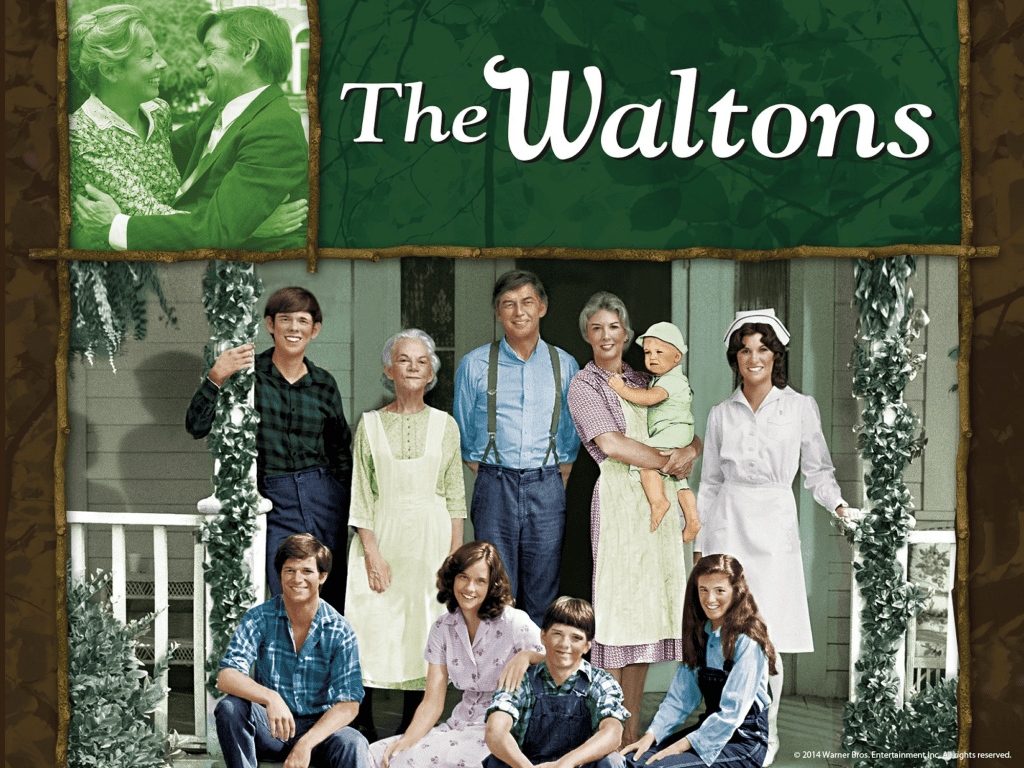
The Waltons have a big family. John (Ralph Waite) and Olivia (Michael Learned) live with John’s parents Zebulon (Will Geer) and Esther (Ellen Corby). The couple has seven children: John Boy (Richard Thomas), Jason (Jon Walmsley), Mary Ellen (Judy Norton Taylor), Erin (Mary Elizabeth McDonough), Ben (Eric Scott), Jim Bob (David W. Harper), and Elizabeth (Kami Cotler).

The story was set in Virginia in Walton’s Mountain, a fictional town based on Spencer’s hometown of Schuyler. During the years that the show was on television, it covered 1933 to 1946. John runs a lumber mill, and the family does some farming. Halfway through the series, Grandma Walton has a stroke and Grandpa Walton passes away; in real life Corby did have a stroke and Geer died that year.

The Baldwin Sister Photo: thewaltons.com

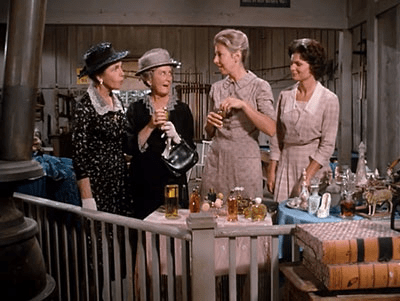
During the run of the show, we get to know a lot of the community members including The Baldwin sisters, Emily and Mamie (Mary Jackson, Helen Kleeb), who sell Papa’s recipe, otherwise known as moonshine; Ike Godsey (Joe Conley) who runs the general store; Flossie Brimmer (Nora Marlow), a widow who owns a boarding house and communicates the town gossip; Yancy Tucker (Robert Donner), a local handyman; Sheriff Ep Bridges (John Crawford), and Reverend Fordwick (John Ritter).

Although the Depression is hard for the family to navigate, WWII caused even more hardship in their community. All four Walton boys serve in the military as does Mary Ellen’s husband. John Boy’s plane is shot down, and Curtis (Tom Bower), Mary Ellen’s husband, a physician, was sent to Pearl Harbor and believed to have died. However, years later Mary Ellen learns he has been alive the entire time, and she finds him living under an assumed name, depressed from his wounds. They divorce, and she later finds love and marries a second time. In later seasons, Olivia volunteers at the VA hospital and is not an active member of the series. She later is said to develop TB and moves to a sanitarium in Arizona. Her cousin Rose (Peggy Rea) moves into the house to help take care of the family, and a couple of years later, John moves to Arizona as well. The sequel movies took place in 1947, 1963, 1964, and 1969.

John Boy grows up to be a journalist and a novelist; he narrates the opening and closing of each episode, and the voice of the adult John Boy is Earl Hamner, the author. He is able to attend Boatwright University in a nearby town before moving to New York to begin his writing career. Jason is interested in music, and Mary Ellen becomes a nurse.

Walton’s Mountain was part of the Hollywood Hills range near the Warner studios in Burbank, and the town was built at the studio as well. Because the original set was destroyed when the show was canceled, later sequels had to recreate the home. That building is still being used and became the Dragonfly Inn on Gilmore Girls.

Photo: entertainment weekly.com

Although the network did not think the show would last, the show was very popular with both the viewers and critics. The networks had just done the “rural purge” where they canceled all shows with rural themes even those like Green Acres that were receiving high ratings. However, congressional hearings were held to discuss the moral compass of programming on television, and President Bush wanted more family shows, so the network gave it a go. I’m guessing they did not want the show to do well considering it was definitely a rural show, and they put it up against The Flip Wilson Show and Mod Squad. Ralph Waite did not want to be tied to a series long term but his agent told him not to worry about it, the show would never sell.

When Thomas was asked about the show’s popularity, he said, “It was kind of a miracle and a mystery. Certainly, the last thing any of us expected was that it would be embraced the way it was. I think our competition on Thursday night was Flip Wilson and Mod Squad, which were hugely popular and terrific shows for people. I think we premiered in 34th place and finished the season in first. It was just this steady climb. The critical community certainly came and went to bat for us.”

In 1973 the series won the Emmy for Outstanding Drama Series. That same year Richard Thomas won the Emmy for Lead Actor. Michael Learned received the Emmy in 1973, 1974, and 1976. Will Geer and Ellen Corby also were presented with awards: Corby won for Supporting Actress in 1973, 1975, and 1976 while Geer received the honor in 1975 as well.

The show’s ratings began declining in the late seventies. I’m not sure why Learned left the show; I do know she admits she suffered from alcoholism during those years. Waite was let go to save money for the series. The network wanted the show to concentrate on the younger viewers, but apparently, it was too late, or the show had come to the natural end of its life.

In the finale episode, the Walton family members and the Godseys attend a party at the Baldwin sisters’ mansion. If you look closely, you will see several unknown guests in the group–they included Hamner and other cast and crew members.

If you want to experience the life of this show, I have two suggestions for you. You can watch several seasons of the show on DVD, or you can check out John & Olivia’s Bed & Breakfast Inn which is located just behind the boyhood home of Hamner. It’s a five-bedroom, five-bathroom home inspired by the depression-era home of the Waltons.

Photo: amazon.com

It’s hard to explain the popularity that The Waltons had in the 1970s. I’m trying to come up with a show that was as critically acclaimed and was watched by the entire family for almost ten years. The only shows I can compare it to are Bonanza which aired for fourteen years and Little House on the Prairie which was on the air for nine years. Viewers embraced the characters and the values of the Walton’s Mountain community. We all felt we knew the family intimately and cared about what happened to them. It left a legacy, and I’m sure it influenced many people currently in the television industry. If you have never seen the show, you definitely want to watch a couple of seasons and if you grew up with it, you might want to revisit your old friends.

Pernell Roberts: A Man of Many Talents

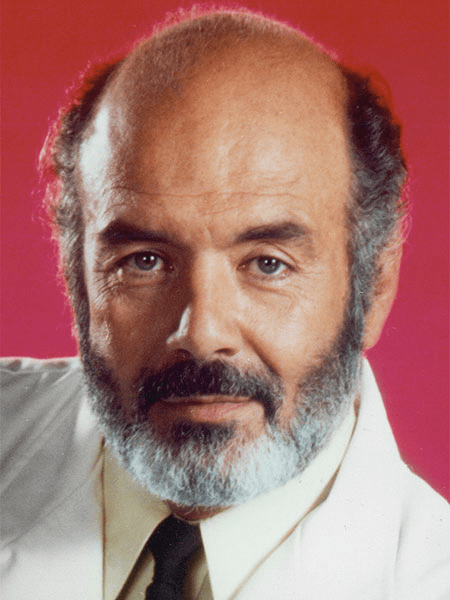
We are up close and personal this month with some of our favorite male television stars, and Pernell Roberts is definitely on that short list. Pernell Roberts was well known to television viewers in the early sixties and the early eighties. Some fans might not even realize the two characters he was best known for, Adam Cartwright on Bonanza and Dr. John McIntyre on Trapper John, MD were played by the same man.

The Family of Bonanza Photo: toledoblade.com

Pernell Elven Roberts Jr. was born an only child in 1928. He was named for his father who was a Dr. Pepper salesman. During high school, Roberts played the horn, acted in several school and church plays, played basketball, and sang in the local USO shows. He enrolled at Georgia Tech but then enlisted in the US Marine Corps. He played both the tuba and horn in the Marine Corps Band while sometimes tackling the sousaphone and percussion parts. After his time in the Marines, he enrolled at the University of Maryland where he enjoyed participating in classical theater. He left college to continue his acting career.

In 1949, he had his professional stage debut in “The Man Who Came to Dinner” with Moss Hart and Kitty Carlisle. He then took on several roles in Philadelphia.

In 1951, Roberts married Vera Mowry; she was a professor of theatre history at Washington State University. They divorced in 1959. They had one son who was killed in a motorcycle accident in 1989.

In 1952, Roberts made the big move to New York City appearing in off-Broadway shows. Several of his costars were Joanne Woodward and Robert Culp. He performed several Shakespeare roles.

In 1956, Roberts made his television debut in Kraft Theatre. In 1957, he signed with Columbia Pictures. His first big-screen role was as Burl Ives’ son in Desire Under the Elms. His second role was with Glenn Ford and Shirley MacLaine in The Sheepman.

Roberts continued to accept television roles with ten appearances in 1958 and six in 1959.

Photo: simple.wikipedia.org

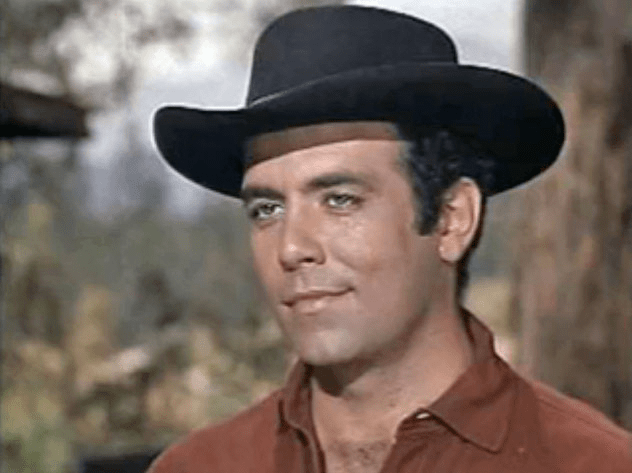
From 1959-1965 he would portray Adam Cartwright, Ben’s oldest son on Bonanza. Each of the brothers had a different mother, and Adam was the only Cartwright to attend college, studying architectural engineering. After acting in classical theater for so much of his early career, the transition to a weekly series was a difficult one for Roberts. He thought it a bit ridiculous that the independent sons had to get their father’s permission for everything they did. He wanted to act in a show with greater social relevance. So, although the show would continue until 1973, he left in 1965 after appearing in 202 episodes. The storyline was that Adam was traveling in Europe or living on the east coast. Bonanza producer David Dortort said Roberts was “rebellious, outspoken . . . and aloof, but could make any scene he was in better.”

The Odd Couple Photo: sitcomsonline.com

During this time on the show, Roberts married again in 1962; he wed Judith Roberts and they would divorce in 1971.

After leaving Bonanza, Roberts returned to theater, playing a variety of roles. He toured with many musicals including “The King and I”, “Kiss Me Kate”, “Camelot”, and “The Music Man.”

Pernell also became involved in the civil rights movement, joining Dick Gregory, Joan Baez, and Harry Belafonte in the sixties demonstrations including the March on Selma.

On Mission Impossible Photo: ebay.com

From 1972-1996, Roberts was married to Kara Knack. They also divorced.

Throughout the late sixties and seventies, Pernell continued appearing in television series and made-for-tv movies. You’ll see him in westerns such as Gunsmoke, The Big Valley, and The Virginian; spy genres including Wild Wild West, Mission Impossible, and The Girl from U.N.C.L.E.; crime shows including Hawaii Five-0, Mannix, Police Story, Ironside, Cannon, and The Rockford Files; and several medical series—Marcus Welby, West Side Medical, and Quincy. He even showed up on The Twilight Zone and The Odd Couple.

Photo: televisionacademy.com

Perhaps he enjoyed those medical shows because he returned to television to star in his own series in 1979, playing Trapper John, MD. The plot was featured Trapper John from M*A*S*H later in his career at San Francisco Memorial Hospital where he was Chief of Surgery. He worked with a young surgeon who had also served in a MASH unit, Alonzo “Gonzo” Gates (Gregory Harrison). The series lasted seven seasons.

In 1979, he told TV Guide that he chose to return to a weekly show because he had “seen his father age and realized it was a vulnerable time to be without financial security.” Roberts felt the role allowed him to use his dramatic range of acting skills and to address important social issues.

In the 1990s, Roberts took on very few television appearances; his last television performance was in Diagnosis: Murder in 1997.

Roberts would attempt marriage one last time in 1999 when he wed Eleanor Criswell. When Pernell passed away in 2010 from pancreatic cancer after being diagnosed in 2007, they were still together.

Photo: Facebook.com

Pernell also enjoyed golfing, swimming, playing tennis, running, reading, cooking, and singing. He appeared on two record albums during his career. The cast of Bonanza recorded an album in 1959 and he released a folk music album in 1962, titled “Come All Ye Fair and Tender Ladies.”

He certainly had a long and varied career: music, movies, Broadway, and television. He also used his fame to help causes he believed in. I don’t think he is remembered as well as he should be. Maybe it’s because he left Bonanza too early to be included on a lot of the memorabilia that came out of that show or because there was such a gap between his two series that he starred in. Whatever the reason, I hope this blog has helped recall some of our memories of the three decades he spent entertaining us.

Denver Pyle: Oil Was Just His Side Business

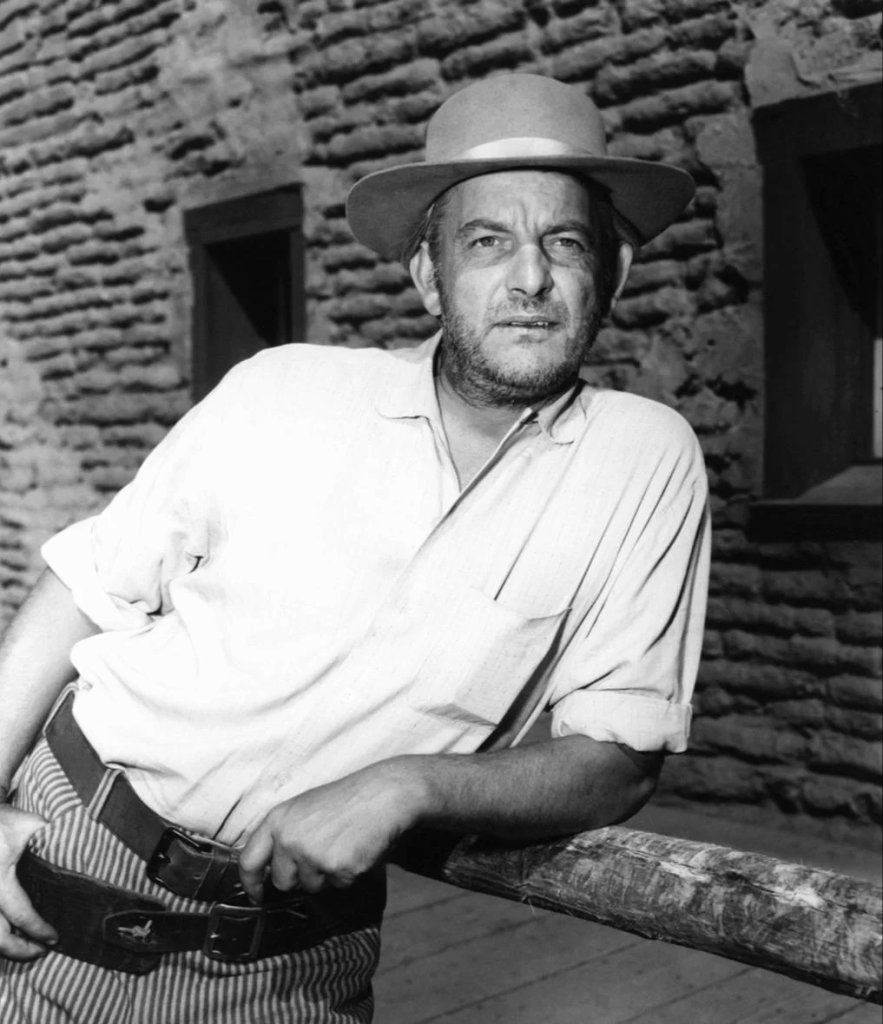
This month we are getting up close and personal with some of our favorite television stars. Today we are getting to know one of the most prolific actors to appear on classic television: Denver Pyle. Denver amassed acting credits for 263 different television series and movies during a fifty-year career.

Photo: Facebook.com

Denver was born Denver Dell Pyle in 1920 in Colorado, but not in Denver, in Bethune. His father was a farmer. His brother Willis became an animator who worked at the Walt Disney Animation Studios and UPA. Also, an interesting note is that Ernie Pyle, the famous journalist and war correspondent, was his cousin.

Photo: reddit.com

After his high school graduation, Pyle enrolled at Colorado State University but dropped out to pursue a show business career. He was a drummer for a band and then bounced around in different jobs including working in the oil fields, working shrimp boats in Texas, and as an NBC page. When WWII began, he joined the Merchant Marine. He was injured in the battle of Guadalcanal and received a medical discharge. Following his stint in the war, Pyle worked as a riveter at a Los Angeles aircraft plant. While there, he was spotted by a talent scout in an amateur theater production. Pyle decided he wanted a career in the entertainment business and trained under Maria Ouspenskaya and Michael Chekhov.

His first movie roles occurred in 1947 in The Guilt of Janet Ames and Devil Ship. He would continue polishing his film career for the next fifty years, with his last big-screen feature being Maverick in 1994.

When he was filming The Alamo with John Wayne in 1960, Wayne realized Pyle had an eye for photography. He made arrangements with the PR office to hire Pyle as the official set photographer for the film.

Photo: ladylavinia’s1932blog.wordpress.com

He received his first television role in 1951 in The Cisco Kid. He gravitated toward westerns and in the fifties would appear in many of them including Roy Rogers, Gunsmoke, The Range Rider, Hopalong Cassidy, Annie Oakley, The Gene Autry Show, The Adventures of Kit Carson, The Lone Ranger, The Adventures of Jim Bowie, and The Tales of West Fargo.

In 1955, Pyle married Marilee Carpenter. They had two children and divorced in 1970.

The sixties still provided many roles in westerns (The Life and Legend of Wyatt Earp, Have Gun Will Travel, Bonanza, The Rifleman, Gunsmoke, and Death Valley Days among others), but he also began appearing on dramas and sitcoms: to name a few, Route 66, The Dick Van Dyke Show, Dr. Kildare, The Twilight Zone, Perry Mason, and Gomer Pyle USMC.

On Dick Van Dyke Photo: sitcomsonline.com

In many of these shows, he returned nine or ten times to guest star in episodes. During the run of Perry Mason, Pyle would play a victim, a defendant, and a murderer on the show.

He received the first recurring roles of his career during this era on sitcoms. On Tammy, he played Grandpa Tarleton in 1965-66, and from 1963-66, he portrayed Briscoe Darling on The Andy Griffith Show. He only appeared in Mayberry six times but left a lasting impression on fans.

After playing Briscoe, Pyle invested in oil, buying oil wells thought to be near the end of their production. In the eighties, technology allowed the wells to produce more oil; Pyle made much more from oil than he did acting. However, he continued his career because he said, “I look at it this way, acting provides the cash flow I need for oil speculation, and besides that, I like acting. It’s fun.”

Doris Day Show Photo: thrillingdaysofyesteryear.com

His career did not slow down too much throughout the seventies and eighties. In the seventies, you could watch him in The Waltons, Streets of San Francisco, Cannon, and Barnaby Jones. The eighties featured him in The Love Boat, Murder She Wrote, Dallas, and LA Law.

During this time, he also received three other regular cast roles. From 1968-1970, he played Doris Day’s father in The Doris Day Show. From 1977-78. He was Mad Jack in The Life and Times of Grizzly Adams, and in 1979-85, he took on Uncle Jesse in The Dukes of Hazard. In fact, his last acting credit was for a made-for-tv movie where he once again portrayed Jesse in The Dukes of Hazzard Reunion! in 1997.

Dukes of Hazzard Photo: twitter.com

In 1991, Pyle married a second time. He wed Tippie Johnston and they remained married until his death. The couple did a lot of fundraising for charity including Special Olympics and Denver Pyle’s Children’s Charities. In addition, Pyle sponsored Uncle Jesse’s Fishing Tournament in Texas. For the ten years, he ran it, it raised more than $160,000 to support children’s needs.

In 1997, Pyle died on Christmas from lung cancer.

If you watch reruns from any decade of classic television, you will be very familiar with Denver Pyle. Although he was part of the cast in five very popular shows, it would have been fun to see him get the starring role in a show. It’s amazing to realize how many shows he was a part of. Considering he was in the television business for forty years and for almost fifteen of those years, he was busy being part of the cast of a weekly show, that left 25 years to amass 250 other series that he found time to appear on; that is almost one a month for 25 years—very impressive.

Maudie Prickett: What a Character – Prim and Proper

As we look at some of our favorite character actors, today we learn more about Hazel’s friend Rosie: Maudie Prickett. Prickett had a prolific career with more than 300 credits between the stage, film, and television.

Photo: bewitchedwikifandom.com

Maudie was born in 1914 in Oregon. Her birth name was Maudie Marie Doyle; she married Charles Fillmore Prickett II in 1941 and used her married name for her career. Charles was the co-founder and manager of the Pasadena Playhouse and later became an orthopedic surgeon. They remained married until his death in 1954 and had two children.

Prickett would amass 64 movie credits, with her first being Gold Mine in the Sky in 1938. Her last three movies were made in 1969: The Maltese Bippy, Rascal, and Sweet Charity. She typically played maids, secretaries, spinsters, or nosy neighbors. One of her most recognized movie roles was as Elsie the Plaza Hotel maid in North by Northwest.

In 1952 she received her first television roles, appearing on This is the Life, Hopalong Cassidy, The Doctor, and The Adventures of Superman. While most people are familiar with Hopalong Cassidy and Superman, they may not recognize the other shows. This is the Life was a religious show that began in 1952 and ended in 1988; each episode was a mini-drama that ends with someone becoming a Christian. The Doctor was a medical show where Warner Anderson as the doctor presented a story and then provided comments after the episode. Most of the series dealt with some type of emotional problem.

The look we were used to with Maudie Photo: imdb.com

For the next two decades, Maudie was quite busy with her television career. She often made multiple appearances on a show as different characters. She had a nice blend of both dramas and comedies on her resume.

In 1961 she married Dr. Eakle Cartwright who died in 1962. In 1966 she would try marriage one more time when she wed the mayor of Pasadena, Cyril Cooper who lived five more years.

While watching your favorite classic television shows, you will see her on westerns including Wagon Train, Bonanza, and Gunsmoke. She made her mark on medical series including Ben Casey and Marcus Welby MD. She also appeared in quite a few dramas including The Millionaire, The Untouchables, Lassie, Daniel Boone, The Mod Squad, and McMillan and Wife.

However, it was the sitcom genre that kept her busiest. During the fifties, she could be seen on Topper, Father Knows Best, Leave It to Beaver, and The Donna Reed Show. The sixties found her on Dennis the Menace, Bachelor Father, The Danny Thomas Show, Mister Ed, My Three Sons, Petticoat Junction, The Andy Griffith Show, The Doris Day Show, Gomer Pyle USMC, and Get Smart. During the seventies, she took roles on Mayberry RFD, Bewitched, Love American Style, and Room 222.

Best Friends – with Shirley Booth on Hazel Photo: pinterest.com

All of her recurring roles were on sitcoms: Date with the Angels, The Jack Benny Show, and Hazel. Date with the Angels was Betty White’s second sitcom, and Maudie played Cassie Murphy, a neighbor of the newlyweds. On The Jack Benny Show, she played Mrs. Gordon, the secretary of the Jack Benny Fan Club. Many people remember Prickett from Hazel where she played Rosie. Hazel and Rosie were best friends and always came through for each other but were also very competitive, especially when an eligible bachelor was involved.

In 1976, Maudie passed away from uremic poisoning at the young age of 61. Uremia occurs when there is an increase of toxins in the blood and usually occurs when the kidneys no longer filter them out. It can be treated with medication, dialysis, and transplant surgery, but for some reason, hers must have been untreated which lead to her death.

On Bewitched Photo: sitcomsonline.com

Maudie was a very busy lady, accumulating 164 acting credits between 1938 and 1974. I’m not sure if she was okay with being typecast or if she would have liked some other types of roles, but she certainly made the roles her own. You have to wonder how much more she would have accomplished if she had lived another twenty or thirty years. Her personal life was sad, having three husbands die before her and then she herself dying as middle age was beginning.

I know you read this comment a lot if you follow my blog, but we have another one of those character actors I wish we knew more about. The Television Academy rarely interviews them, and it is tough to find much information beyond their professional resume. One day I will make good on my promise and write a book about these wonderful people who made classic television so fun and believable.

Bob Barker: Celebrity Game Show Host

This month we are learning about game shows, and no one is better known for game show hosting than Bob Barker. Born in 1923 in the state of Washington, Robert William Barker was best known for hosting the two games shows we discussed the past two weeks: Truth or Consequences and The Price is Right.

Photo: cnn.com

Barker’s family did not have much money, and he spent most of his youth on the Rosebud Indian Reservation in Mission, South Dakota with his mother. The U.S. Indian Census Rolls list Barker as an enlisted member of the Sioux tribe. His mother was a school teacher, and his father was an electrical line worker for the state of Washington. When his mother remarried, she and Bob moved to Springfield, Missouri. Bob met Dorothy Jo Gideon at an Ella Fitzgerald concert when he was in Missouri going to high school. They began dating at that time. Barker received a basketball scholarship at Drury University in Springfield, Missouri. Later the street behind Drury University would be changed to Bob Barker Boulevard. Barker has contributed more than 3 million dollars to the University as well.

On Bonanza Photo: cnn.com

Bob enlisted in the Navy during WWII, hoping to train as a fighter pilot but did not have any active duty. On one of his military leaves, he and Dorothy married. After he was discharged, he returned to Drury, graduating with a major in economics. During his college studies, he was also working part time in radio on KTTS FM. Bob and Dorothy moved to Florida, and he took a job as news editor and announcer at WWPG AM in Palm Beach. In 1950, he moved to California to pursue a career in broadcasting. He received his own radio show in the early fifties, The Bob Barker Show. Ralph Edwards caught Barker’s show and thought he had a nice voice and asked him to work on Truth or Consequences.

In 1956 he began his game show hosting with Truth or Consequences. In 1967 he was asked to host the Miss Universe and Miss USA pageants which he continued to do until 1987. Bob joined The Price is Right in 1972. Barker would win 19 Emmys and the Lifetime Achievement Award. Before Bob Barker, emcees dyed their hair to look younger on the air. In 1987 Barker decided to stop coloring his hair and go with his natural gray.

Dian, Holly, Bob, and Janice Photo: worthpoint.com

There was one disturbing part of Barker’s career which never seemed to affect his emcee duties. In 1994, one of the former models, Dian Parkinson filed a lawsuit alleging sexual harassment after she and Barker had a three-year affair. She later dropped the lawsuit, citing it was putting her under too much stress. The following year, another long-time model, Holly Hallstrom, sued Barker saying he had fired her because she gained weight caused by one of her medications and because she would not testify falsely in Parkinson’s case. Barker countersued for slander, but Hallstrom won the case in 2005. Then in 2007, Deborah Curling, a CBS employee on the show, filed a suit against Barker and the producers saying that she was forced to quit her job after testifying against Barker in a lawsuit made by a former producer. Barker was later removed from the lawsuit and later the case was dismissed.

Photo: insideedition.com

In 2007 he decided to retire, reaching fifty years in the entertainment business. Bob would revisit The Price is Right three times after retirement: in 2009 he showed up to promote his recent biography, in 2013 he returned to the set to celebrate his 90th birthday, and in 2015 he walked out as the emcee instead of Carey for an April Fool’s Day prank.

The autobiography is titled Priceless Memories and discusses his fifty years in show business. It was authored with LA Times book review editor Digby Diehl.

With wife Dorothy Photo: amomama.com

Bob has made other appearances in addition to his game-show hosting duties.

In 1960 Bob received a part on Bonanza, playing Mort.

In the seventies, he hosted the Pillsbury Bake-Off. During the seventies and eighties he also took over hosting duties for the Rose Bowl Parade several times.

Barker made his way around the talk show circuit, appearing on Dinah, Larry King Live, The Arsenio Hall Show, Crook & Chase, Donny & Marie, The Rosie O’Donnell Show, The Ellen DeGeneres Show, The Wayne Brady Show, The Late Show with David Letterman, and the The Late Late Show with Craig Ferguson.

Barker could be seen on a number of game shows as a celebrity. He and his wife were on Celebrity Tattletales, and he sat in for Richard Dawson after he left Match Game.

HOLLYWOOD, CA – NOVEMBER 29: PETA Goes Postal: Bob Barker unveils Vegetarian Icons Postage Sheet at Hollywood Post Office on November 29, 2011 in Hollywood, California. (Photo by Jonathan Leibson/WireImage)

In 1996, he appeared in his first big-screen film, playing himself in Happy Gilmore.

In 2009 he even managed to guest host a show for WWE Raw or The Price is Raw. He agreed to be a rotating host for Mike Huckabee’s show beginning in 2010.

He took part in a State Farm commercial when a woman who needed a new car was presented with her new car by him. He made a few public service announcements for the networks and did some campaigning for a Republican candidate in Florida.

And if all that was not enough, he voiced the character of Bob Barnacle on Sponge Bob Square Pants.

Photo: yahoo.com

When his wife Dorothy died from lung cancer in 1981, he decided to become a vegetarian and an animal activist. He worked for animal rights and gave his support to such groups as The United Activists for Animal Rights and the Sea Shepherd Conservation Society. In 2010 the Society secretly purchased and outfitted a ship to intercept Japanese whaling operations which Barker contributed $5,000,000 to. In 1989 he created the DJ&T Foundation for his wife and mother and the fund has contributed millions of dollars to fund animal neutering and animal rescue and park facilities construction around the US. He was known for reminding viewers to have their pets spayed or neutered at the end of his shows. In 1987, Barker requested the removal of real furs on the Miss USA pageant and when the show refused, he quit as emcee. In 2004, Bob donated one million dollars to Columbia Law School to support the study of animal rights. In 2009 he wrote several businesses in North Carolina to ask them to close their bear exhibits. In 2010 Barker gave 2.5 million dollars to renovate a building for PETA’s office which opened in 2012.

In 1999, Barker was asked to testify before Congress regarding proposed legislation that would prohibit traveling shows with elephants. During his preparation, he realized something was wrong with his hand. He was admitted to the hospital where he was diagnosed with a partially blocked left carotid artery. The procedure was successful and he returned to work a few months later. He had a stroke in 2002 and was hospitalized for six weeks. Shortly afterward, he underwent surgery for prostate cancer. He also experienced mild bouts of skin cancer over the years.

Photo: usatoday.com

Bob had several episodes with falls and one bout with severe back pain. For the last decade or so he was confined to his house with a caretaker, primarily going out only to visit his wife’s gravesite.

It’s hard for me to disregard the lawsuits brought against Barker while hosting The Price is Right. Before that time, I thought he was a pretty great guy. He has had a long and full career, becoming a celebrity and able to pursue his own causes to help animals. Many of us who grew up in the seventies and eighties have fond memories associated with watching The Price is Right. You have to give him credit for helping to make the show a successful one for decades.