The Jim Backus Show: It Was Hot Off the Wire

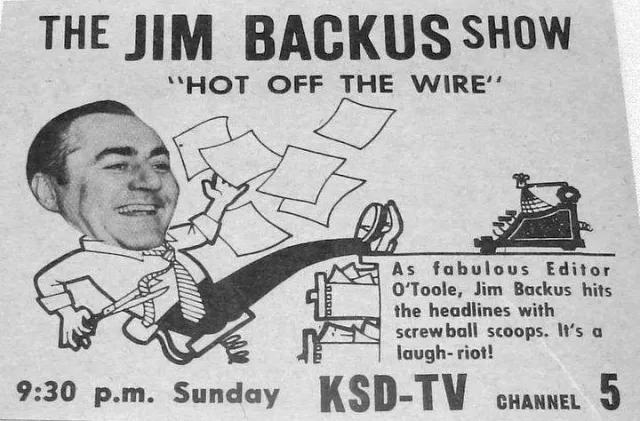
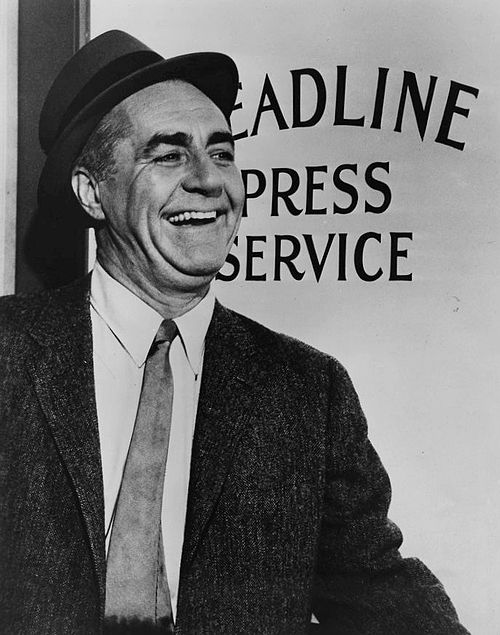
This month we are in a blog series, “It’s Their Show.” Today we are taking a closer look at The Jim Backus Show. Most people know Backus today as Mr. Howell on Gilligan’s Island. While he did show up on several television series, cartoons, and made-for-tv movies for Gilligan’s Island, Backus had a long and successful career without any Gilligan appearances. He started in the movies in 1948 and wound up his career with an amazing 253 credits.
📷thrillingdaysofyesteryear.com

In addition to being the voice of Mr. Magoo, Backus starred in several other series including I Married Joan and Blondie.

In 1960, The Jim Backus Show debuted.  It was one of the first syndicated shows, so it’s hard to gauge how it did against its competition. However, I will say what I can tell you is that there were still 13 westerns on the air during the week, so while the influence of the Plains was waning, it was still very popular. It was also a year that lots of stars had made the plunge to dip their toe into the television industry. There were 11 stars with their own shows that year in addition to Backus, including Jack Benny, Ann Sothern, Danny Thomas, Andy Griffith, and Donna Reed. 

The series had a great cast. They had several good directors, including Gene Reynolds who produced MASH and Lou Grant and a lot of good writers, including Jay Somers who would go on to create and write Green Acres. However, they had 14 directors and more than 40 writers to produce those 39 episodes. They also had a great line up of guest stars including Ken Berry, Charles Lane, Jayne Meadows, Zasu Pitts, Tom Poston, and Bill Quinn.
📷youtube.com

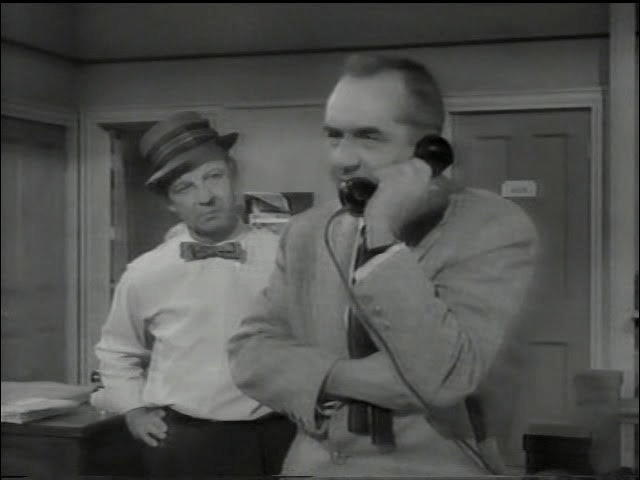
Backus is Mike O’Toole, the editor and owner of a news service struggling to make a go of it. He often doesn’t have the money to pay his rent or his staff’s salaries. Working with O’Toole are reporters Dora (Nita Talbot) and Dave (Bill McLean) as well as Sidney (Bobs Watson), their office boy. When they weren’t working, they spent some time at Heartless Harry’s, a bar downstairs that was popular with newspaper people. He truly was heartless, because he wouldn’t let anyone from Mike’s company in the bar unless they put down a $10 deposit.

One of the episodes I watched for this blog was #5, “No Help Wanted.” The opening pans the big city before moving down to the office of the wire service with Mike in the window joined by Dora.

The episode begins with Mike and Dora’s car breaking down in the middle of nowhere. There’s a large estate in the distance, but Mike won’t let Dora ask them for help until he’s tried to fix the problem himself.
Directed by Gene Reynolds and written by Dick Chevillat and Jay Sommers, the plot is that a retired stage actress, Catherine Lyden (Linda Watkins), has lots of money and loves living a normal life. Her former agent keeps trying to lure her back into show business. She decides to clean the maid’s house so she can hire someone, but when Dora and Mike meet her, they recognize her, and they think she is destitute and try to help her. After they get back to the office, they buy her some groceries and clothes. She tries to tell them that she has plenty of things and she doesn’t need their help. O’Toole writes a story about her having to work as a maid to make ends meet and puts a photo in the paper with her holding a pail and looking disheveled. When the article appears, several people contact her to try to help her out. When Mike and Dora get her contract from the playwright who is trying to hire her, they tell her that it’s a form to get a retraction from the paper.

After she signs it,  they tell her the truth, that it’s a five-year contract and she begins to cry. Surprisingly they never do find out she wasn’t down and out. They think she is crying from gratitude, and they leave.

📷internetarchive.com

There were some fun bits of dialogue especially between Dora and Mike, and the filming was very different from most sitcoms, but I was drawn in by it. One of the things that I found most interesting about this episode is the soundtrack. There is some laughter in the background, but you hear birds, the office machinery running, and the sounds of the city. It’s like you’re right in the location with the cast and hear what they would hear.

This was a tough episode for me though. First of all, I kept waiting for Lyden to be touched by the fact that they were trying to help her and maybe that made her realize the public missed her. However, she never cared that they were spending their hard-earned money on her. She truly was upset when they tricked her, and I found it tough to watch because they never learn she was not destitute and truly was happy and they have now made her miserable for five years. It just didn’t have that feel-good ambiance we expect our sitcoms to feature.
📷wikipedia.com

The series produced 39 episodes before being canceled. I’m guessing the fact that it didn’t make it had something to do with the fact that it was on different nights and times across the country.

Sometimes these shows are hard to find. They all had two names. The Tom Ewell Show was known as The Trouble with Tom, The Phyllis Diller Show was known as The Pruitts of South Hampton, and The Jim Backus Show went by Hot Off the Wire.  With so much competition from other stars trying to vie for their spot on the schedule and being a syndicated show, I’m guessing it was hard to lure enough fans to make it worthwhile to produce a second season of the show.

The Rifleman: Spinning Through Life

As we wind up our Riding the Range blog series, we end with another show set in the 1880s: The Rifleman.

📷boomermagazine.com

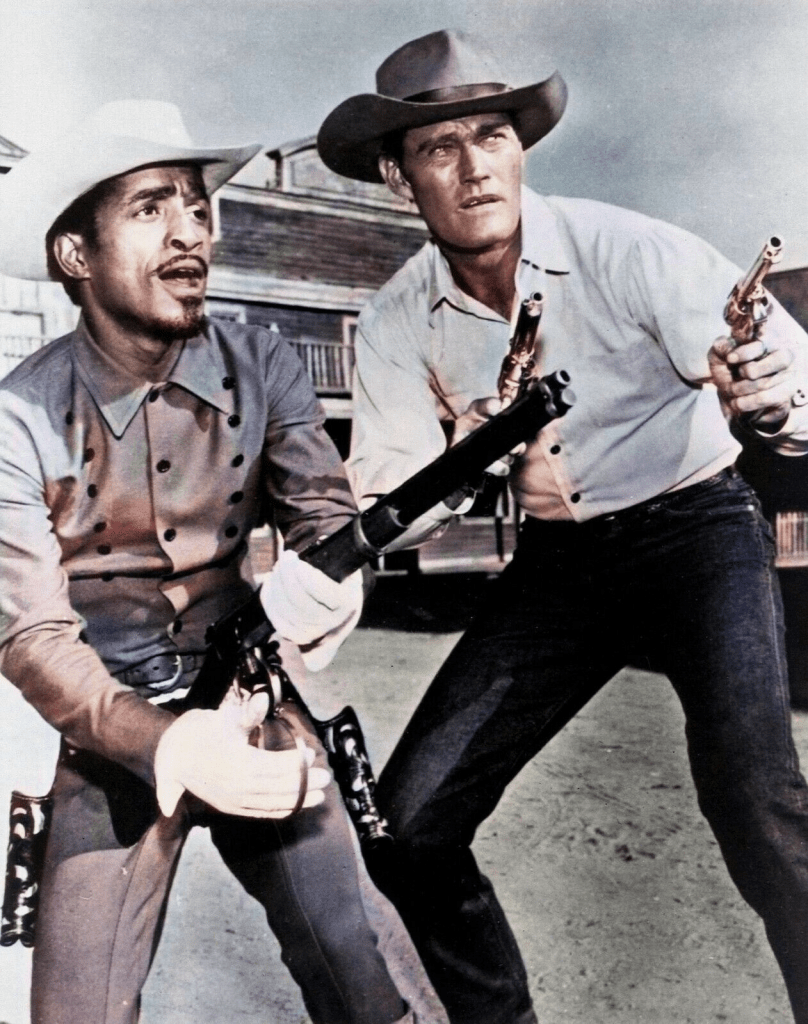
The series was set in the New Mexico Territory and starred Chuck Connors as Lucas McCain and Johnny Crawford as his son Mark.  The show was on ABC from 1958 through April 1963. Lucas McCain was one of the first single parents on television.

The show was created by Arnold Laven and developed by Sam Peckinpah. Peckinpah would go on to direct many famous westerns. The pilot episode was written by Peckinpah and Dennis Hopper starred in it. It was aired on Dick Powell’s Zane Grey Theatre. Some famous people worked behind the scenes. Connors would write several of the episodes and Robert Culp, who would become the co-star of I Spy, wrote a two-part episode. Ida Lupino directed “The Assault” in 1961.

McCain was a Union soldier in the American Civil War. His wife died from smallpox when their son was six, and McCain and Mark move from Oklahoma to New Mexico where Lucas buys a ranch outside North Fork. McCain is not a perfect father; he is often stubborn and opinionated. Sometimes he seems overprotective of his son. He tries to teach Mark life lessons. In one episode, he tells him “A man doesn’t run from a fight, Mark, but that doesn’t mean you go looking to run to one.”

📷remmetsweeney.com

Chuck Connors was offered the role of McCain but turned it down because he thought the salary was too low. Several other actors were tested but no one had the same chemistry with the young boy that Connors did, so they made him another offer with a higher salary.

There are some North Fork folk who show up on many of the shows including bartender Marshal Micha Torrance (Paul Fix), Frank (Bill Quinn), hotel owner Lou (Patricia Blair), blacksmith Nels (Joe Higgins), banker John (Harlan Warde), general store owners Milly (Joan Taylor) and Hattie (Hope Summers), and hotel clerk Eddie (John Harmon). Bill Quinn was Bob Newhart’s father-in-law. Patricia Blair left in 1963 to star in Daniel Boone. Hope Summers moved to Mayberry after the show ended and became Aunt Bee’s best friend. Joan Taylor only did a few shows after The Rifleman, but she came into the show with quite a few television appearances. Higgins, Warde, and Harmon were prolific actors who had very successful careers.

📷amazon.com

Quite a few well-known stars make their appearance during the run of the show. Some of them include Harry Carey Jr., John Carradine, Lon Chaney Jr., Ellen Corby, Robert Culp, Sammy Davis Jr., Jack Elam, Dabbs Greer, Buddy Hackett, Michael Landon, Agnes Moorehead, Denver Pyle, Pernell Roberts, Robert Vaughn, and Adam West.

There were so many westerns on the air during the fifties and sixties that most of them needed a hook to set them apart. McCain was called The Rifleman because he used a modified Winchester Model 1892 rifle with a large ring lever. The lever design allowed him to cock the rifle by spinning it in his hand and it was rigged to rapid fire which we saw demonstrated in the opening of every show. I guess no one was bothered by the fact that McCain used a rifle that would not be invented until ten years later than the time the show was set in.

The show was on Tuesday nights for the first three seasons. For season four, it moved to Mondays. After the fifth season, the show was canceled due to low ratings. However, Connors and Crawford remained life-long friends. Connors admired Crawford’s work on the set and said he always respected the cast and crew.

📷ebay.com

Crawford began his career as a Mouseketeer, one of the original 24. After the show ended, he became a pop singer with five hits. “Cindy’s Birthday” was his most famous and it was No. 8 on the Billboard 100 in 1962. Crawford came into the show with thirty acting credits, and he would go on to have thirty more after the show ended, but he never starred in another series.

Fun fact, The Rifleman was one of the few American shows that was allowed to be shown on Russian television. Apparently Breshnev loved the show. Later he met Chuck Connors when he came to the US. The actor made several trips to Russia.

I have seen this show on MeTV, and it is okay. I’m guessing that the reason it was on five seasons, and the reason it was canceled after five seasons, is because it was another western. Almost every western seemed to be successful in the fifties and sixties, but five years seems to be about the length of most of them with the exception of Gunsmoke, Bonanza and a handful of others. I have to admit that I am not drawn to McCain as a character, although I didn’t dislike him either. If you like westerns and have not seen it, it might be worth checking out.

Hi Bob! We’re Always Happy to See The Bob Newhart Show

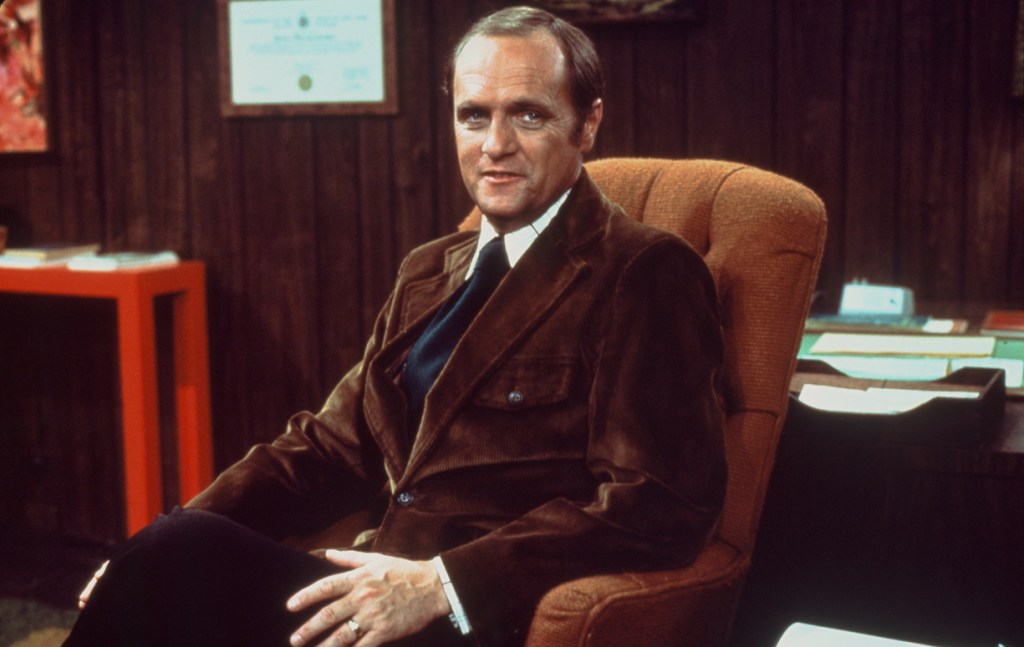
From 1972-1978 we were able to benefit from the sage advice of Dr. Robert Hartley from the comfort of our own living rooms. Created by David Davis and Lorenzo Music, and produced by MTM Enterprises, The Bob Newhart Show gifted us with 142 episodes for us treat ourselves to after the show left the air.

Photo: tvtropes.com

In an online article by Marc Freeman in April of 2018, Dave Davis discussed the evolution of the sitcom. “Lorenzo and I wrote a segment for Bob on Love American Style. Bob wasn’t available. So, we got Sid Caesar. A few years later, we did a script for Bob for the Mary Tyler Moore Show. Again, Bob wasn’t available. After we became story editors on Mary’s show, MTM Enterprises decided to branch out and asked Lorenzo and me to do a pilot. We knew exactly what we wanted to do. We wanted a show with Bob.”

Photo: wikipedia.com

When Bob Newhart was approached about starring in the show, he required two changes from the original concept. First, he wanted his character to be a psychiatrist instead of a psychologist. This seems like a minor request, but he was very wise because he did not want anyone to think the show was making fun of mental illness. He also insisted that his character not have children. The “father doesn’t know best but thinks he does” underlying concept was not one he wanted the show to focus on. Bob was careful when creating the character of Bob Hartley. Newhart once said “the key to building a show around a stand-up is maintaining the integrity of the persona you create.” This was definitely true for the Bob Newhart Show.

Photo: connectcollectorz.com

The show has a very simple premise in that we see Bob dealing with the same everyday problems the rest of us did. It was grounded in reality. Bob was the straight man. He was surrounded by all these quirky characters, but they were believable and likeable.

Photo: sitcomsonline.com

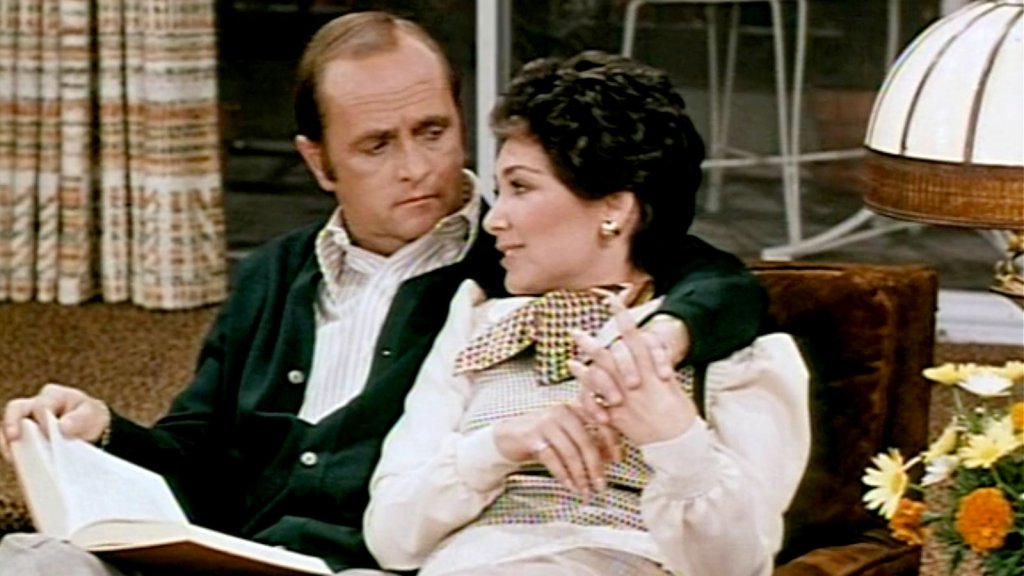
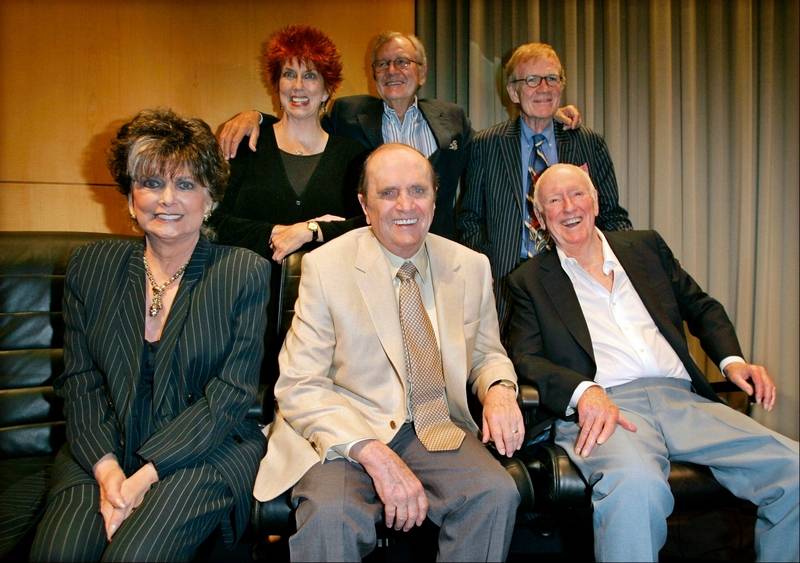
The show moves back and forth between Bob’s practice and his home; we get to know his co-workers and his friends and family. At work, he shares his floor and receptionist Carol Kester (Marcia Wallace) with orthodontist Jerry Robinson (Peter Bonerz) and urologist Bernie Tupperman (Larry Gelman). Carol and Jerry become two of his best friends. We also get to know some of his regular patients including Elliot Carlin (Jack Riley), Emile Peterson (John Fiedler), and Mrs. Bakerman (Florida Friebus).

Photo: imdb.com

Bob is married to Emily (Suzanne Pleshette) who is a school teacher. Across the hall is the apartment of their friend and neighbor Howard Borden (Bill Daily), an airline navigator. Although Bob insisted on no children, in many ways, Howard was Bob and Emily’s child.

Photo: sitcomsonline.com

In season four of the show, Howard meets and begins dating Bob’s sister Ellen (Pat Finley) and they eventually marry, making Howard a legal family member.

Photo: thefrog’seyebrows blogspot.com

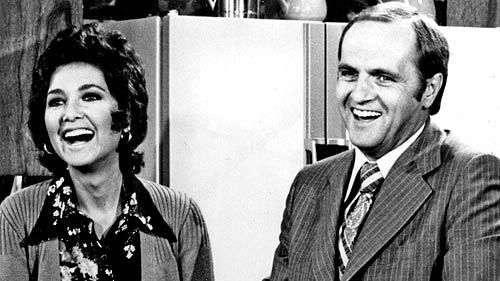
Bob and Emily were the only characters to appear in all 142 episodes. Suzanne Pleshette was asked to play Emily after she appeared on The Tonight Show Starring Johnny Carson one night. She was seated next to Bob, and the producers thought the two of them had great chemistry. In real life Bob and Suzy, as he called her, were best friends. He spoke at her funeral. When he recalled their time together, he said “Her laugh. Her laugh. We just laughed. We just had a great time. We all loved each other and respected each other and we got paid for it.” Bob also remains close friends with Marcia Wallace.

Photo: nytimes.com

They worked so well as a couple because Emily is very bright and funny. She and Bob argued because they were both a bit stubborn, but they always found a way to compromise at the end of the day. Bob often shared his wisdom through stories. He would do a bit of a monologue that related to what was happening on the show. It was referred to as the “Emily, sit down” moment.

Photo:kennethinthe212.com

The phone is also important on the show. If you are familiar with Newhart’s career, you realize some of the first skits that escalated his stand-up career were phone conversations. On this show, we often hear a one-sided conversation when he chats with friends or patients. One example of this is:

Bob:  “Yes, this is Dr. Hartley. What can I do for you?

Well, Mr. Johnson, smiling and whistling while you work doesn’t seem to be a problem you should – you should see a psychologist about.

You drive a hearse?”

Although all the major characters on the show were like family to the Hartleys, the mailman on the show was truly family. Bill Quinn who played the postman was Bob Newhart’s father-in-law.

Photo: imdb.com

Bonerz who played Jerry became interested in directing. He ended up directing 29 episodes of this show and then went on to a successful career as a director. He directed episodes on a variety of shows including E/R, Alf, Wings, Murphy Brown, Friends, and Home Improvement. His view of the importance of the show was that “the most interesting thing about the show and why its successful is that it brings up things that come up in your life. That’s what art’s supposed to do. That’s what TV should be doing. When it does, people remember it and reflect how much they like it.”

Photo: allmovie.com

The show was on Saturday nights. For the first five seasons, it followed The Mary Tyler Moore Show airing at 9:30 EDT and its competition on NBC was Saturday Night at the Movies. For season five, the show was changed to earlier in the evening against Starsky and Hutch on ABC. For its final year, The Mary Tyler Moore Show was off the air and Bob’s show aired at 8 pm Saturday opposite Fish and The Bionic Woman. The sitcom placed in the top 20 for the first three seasons and the top 30 for season four.

Photo: blogspot.com, holiday film reviews

Bob had requested the network move the show to a different night. That didn’t happen, and the television executives wanted Emily to have a baby, even though Bob had specified that not be part of the plot. So, he ended the show after six years. When asked about ending the show, he said, “I could see what was coming in situation comedy, and I didn’t want to be a part of it. If we’d gone another year, they’d have had the guy and two girls living in the apartment above us, a Martian living on the same floor next door to three girl detectives. The floor below us would have been occupied by a fraternity and a sorority.”

If you read my blog on Bob Newhart recently, you know how incensed I was that this show never won an Emmy, and was only nominated once, and Newhart never received an Emmy for any of his sitcoms in the seventies and eighties. It would take his recurring role on The Big Bang Theory as Professor Proton for him to win the Emmy.

However, the show was ranked ninth and fiftieth on “TV Guide’s 100 Greatest Episodes of All Times in 1997.”

Photo: flickr.com

In 2004, TV Land picked this show as one of the series it commemorated with a sculpture. A statue of Newhart seated in a chair facing an empty couch is located in the Navy Pier entertainment complex.

I have to admit I was not a big fan of the finale of The Bob Newhart Show. Bob closes his practice in Chicago and accepts a teaching position at a small college in Oregon. I just don’t picture Bob and Emily being happy in a small Oregon town. However, the finale for Bob Newhart’s sitcom, Newhart, more than makes up for this ending.

Photo: pinterest.com

Bob Newhart credits his wife Ginnie with coming up with the idea for the finale of Newhart. Newhart is set in Vermont where Bob and his wife Joanna run a historic inn. They have to deal with some wacky locals and their maid and handy man. This show ran eight years. In the finale, Bob wakes up in bed. We hear him restless and wanting to talk about his dream. Suddenly we realize he and Emily Hartley are in bed together. Part of their conversation is:

Emily:  All right, Bob? What is it?

Bob: I was an innkeeper in this crazy little town in Vermont.

Emily: No more Japanese food before you go to bed.

Another great television moment occurred on Murphy Brown in 1994. Bonerz was the director of the sitcom. Of course, we remember how fast Murphy went through secretaries. She found fault with all of them. In this episode, Marcia Wallace appears as Carol Kester. She is Murphy’s 66th secretary. Murphy thinks Carol is a wonderful secretary, and she is finally satisfied. However, Bob Newhart shows up as Bob Hartley, begging Carol to come back to work for him.

Photo: pinterest.com

One of the iconic lines from the show was “Hi Bob.” Howard Borden said it 118 times, Jerry said it 43, Carol came in at 36, and Emily at 17. Even minor characters would utter the line from time to time, and Bob said it once himself. College students turned this into a drinking game watching the reruns, taking a shot whenever the line occurred.

Photo: dailyherald.com

The best evidence that this was one of the best sitcoms ever produced is that people still love it today, more than four decades after it went off the air. The comedy is timeless. Let’s give Bob Newhart the final word about what the show meant to him. As he reflected the show’s legacy, he said, “I’m very proud of the show, the cast and the writing. Look at how long it’s lasted and how long people have enjoyed it. I run into people more and more who come up to me and say, ‘We used to sit as a family and watch your show.’ They look upon it as a wonderful time in their life. It’s very real to them and an important part of their life. It’s nice to be remembered that you made people laugh.”

Photo: pinterest.com

Bob Newhart: Laughing Through Life

This month I wanted to honor one of our most beloved television comedians: Bob Newhart. Next week we’ll spend some time learning more about The Bob Newhart Show.

Photo: spotify.com

Newhart was born George Robert Newhart in 1929 in Oak Park, IL. He grew up in a typical midwestern family where his father was part owner of a plumbing and heating supply company, and his mom was a housewife. As a young boy, he always wanted to be called Bob. He had a Catholic education and went on to Loyola University of Chicago in 1947. Graduating in 1952 with a business degree, he was soon drafted into the US Army in the Korean war where he stayed until 1954. He considered getting a law degree and went back to Loyola. He decided not to pursue that; some sources site that he was asked to behave unethically during an internship which led him down a different career path.

He worked as an accountant and as an unemployment office clerk. In 1958 he was hired as a copywriter for Fred Niles who was a television producer in Chicago. It was while working here that Newhart and a colleague began entertaining each other by making telephone calls about absurd scenarios. They sent these to radio stations as audition tapes. A radio station disc jockey Dan Sorkin introduced Newhart to a Warner Brothers Records executive who signed him in 1959 based on those recordings. Bob then began creating stand-up routines which he performed at nightclubs.

Photo: discogs.com

He released an album in 1960 which changed his life. Titled, The Button-Down Mind of Bob Newhart, the comedy album made number one on the Billboard charts, and he won a Grammy for best new artist. A follow-up album, The Button-Down Mind Strikes Back was released soon thereafter. He would continue releasing comedy albums in 1961, 1962, 1964, 1965, 1967, 1971, and 1973.

During a 2005 interview for American Masters on public television, Bob stated that his favorite routine was Abe Lincoln vs Madison Avenue which was on his first album. A promoter for Abraham Lincoln has to deal with his reluctance to boost his image. A tv director named Bill Daily suggested the routine to him. Daily would be known later as Howard Borden on The Bob Newhart Show (as well as Roger Healey on I Dream of Jeannie).

The success of that first album led to a variety show titled The Bob Newhart Show. It only lasted a year, but it did receive both an Emmy nomination and a Peabody award. Apparently, he didn’t enjoy his time during the show so much. Halfway through the season he wanted to quit, but his agent explained that being under contract meant that was not possible. At a later date, he referred to his first show, saying “It won an Emmy, a Peabody Award, and a pink slip from NBC. All in the same year.”

He began making the rounds on television shows, appearing on The Dean Martin Show 24 times and The Ed Sullivan Show 8 times. He guest hosted The Tonight Show Starring Johnny Carson 87 times. When discussing his appearances on Johnny’s show, he stated “I remember once when I emceed The Tonight Show in New York, I arrived with my manager’s son. After a while, they asked, ‘When are the rest of your people coming?’ I had to say, ‘This is it.’”

Photo: huffingtonpost.com

In 1962 Newhart accepted his first movie role, Hell is for Heroes, starring Steve McQueen. He would continue to do movie roles throughout his career including the Christmas classic Elf, but the small screen would make him famous.

In 1963 Buddy Hackett introduced Bob to Virginia Quinn, whose father was character actor Bill Quinn. They wed in January of 1963 and 57 years later are still happily married.

Photo: zimbio.com

For the next decade, he continued to accept movie and television roles. In 1972, television history was made when The Bob Newhart Show debuted. Until 1978, Newhart played Bob Hartley, psychologist, and we got to know his unusual patients, quirky co-workers, and eccentric friends, including neighbor Howard Borden. Bob chose a psychologist based partly on his old telephone routines. As he said, “Much of my humor comes out of reaction to what other people are saying. A psychologist is a man who listens, who is sympathetic.”

Photo:epiguides.com

In 1982, Bob gave television another go for another eight years. Simply titled Newhart, the show featured Bob as Dick Loudon, an innkeeper and author from Vermont. He still had quirky co-workers and eccentric friends.

Photo: austenauthors.net

On cue a decade later in 1992, Bob showed up in a new show even more simply titled, Bob as Bob McKay a comic book writer and artist who had retired long ago and was trying to get back into the workplace. Unfortunately, after 33 episodes the show was canceled due to low ratings.

Photo: imdb.com

In 1997, Newhart starred in his last sitcom, George and Leo. As George Stoody, a bookstore owner, Newhart offers a temporary home to a full-time magician and part-time criminal who recently robbed a Mafia-owned casino. The series failed to catch on with viewers, and it was canceled after a season as well.

Photo: listosaur.com

Though he never took on another sitcom, Newhart has made appearances with recurring characters in several shows. In 2003, he showed up on ER as Ben Hollander. In 2005, he was Morty on Desperate Housewives. As Judson, he guest starred on The Librarians.

Photo: thewrap.com

Perhaps, younger audiences know him best as Arthur Jeffries or Professor Proton on The Big Bang Theory. He had been Sheldon’s boyhood hero who played the professor on television. Sheldon idolized the professor while the professor tolerated Sheldon.

Photo: upi.com

It’s hard to believe with all of his years being a successful television comedian, but Newhart won his first Emmy in 2013 for his role of Professor Proton. I can’t argue with the nominees for most of the 1970s during the airing of The Bob Newhart Show–names like Tony Randall, Jack Klugman, Alan Alda, and Hal Linden. Even with my bias of Norman Lear shows, I get nominating Carroll O’Connor every single one of those years. I understand the tough competition. What I don’t understand is the fact that he was never nominated during that eight-year period. When Jack Albertson wins, and Bob Newhart is not even nominated that is wrong. During the Newhart years, he was at least nominated three times. But I don’t understand it when John Ritter wins for Three’s Company or Richard Mulligan for Soap and no nomination for Bob Newhart. What especially appalls me is the fact that The Bob Newhart Show was only nominated one year; I can accept the fact that it got beat out by The Mary Tyler Moore Show. I cannot accept is that during this same time, Three’s Company, Mork and Mindy, and Welcome Back Kotter received nominations, and The Bob Newhart Show did not. Anyway, this blog is not about the television academy and its procedures, so let’s move on.

Photo: flickr.com

Even though he was never awarded with an Emmy for his time as Bob Hartley, TV Land placed a life-sized statue of Newhart in front of Navy Pier, complete with an empty couch. He was best friends with Suzanne Pleshette, his wife from the show, and spoke at her funeral. He remembered their time together, “Her laugh. Her laugh. We just laughed. We just had a great time. We all loved each other and respected each other and we got paid for it.” Bob also remains close friends with Marcia Wallace who played his receptionist Carol on the show.

Photo: sitcomsonline.com

While Bob has appeared as different characters throughout his career, he has also remained the same character. With his deadpan delivery and slight stammer, he perfected the straight-man role, surrounding himself with wacky castmates. He has often cited George Gobel and Bob and Ray as influences in his comedy career. When discussing his career choice, he explained “I like the humor to come out of character. When you’re going for a joke, you’re stuck out there if it doesn’t work. There’s nowhere to go. You’ve done the drum role and the cymbal clash and you’re out on the end of the plank.”

Photo: barnesandnoble.com

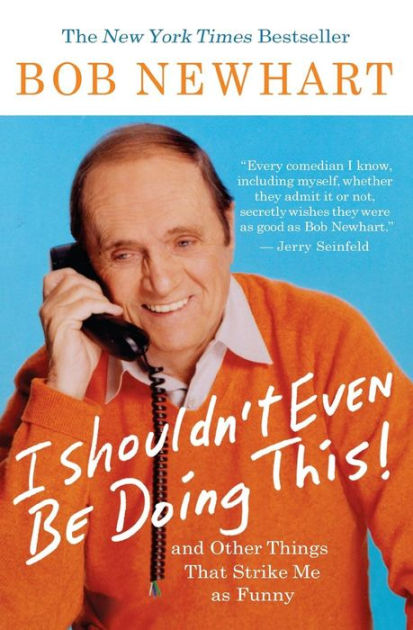
In 2006, he released a book I Shouldn’t Even Be Doing This. It’s a memoir with some of his classic comedy routines. Actor David Hyde Pierce reported that “the only difference between Bob Newhart on stage and Bob Newhart offstage is that there is no stage.”

Photo: parade.com

I am so appreciative of those stars who agree to entertain us for our entire life, such as Betty White, Carol Burnett, and Bob Newhart. They are classic comedians who can make us laugh no matter what. Bob’s view on comedy was that “laughter gives us distance. It allows us to step back from an event, deal with it and then move on.” What an amazing career and what an amazing man. With all its negatives and sometimes destructive tendencies, television can be a harmful place, but a comedian like Bob Newhart demonstrates what a positive and uplifting experience television can be when done right. Thanks for doing it right for sixty years.