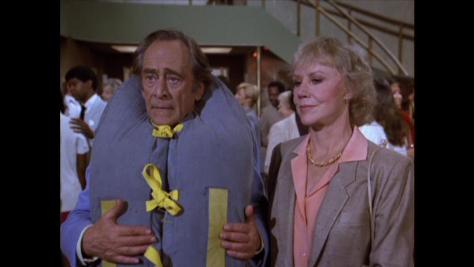
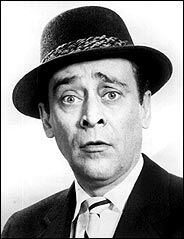
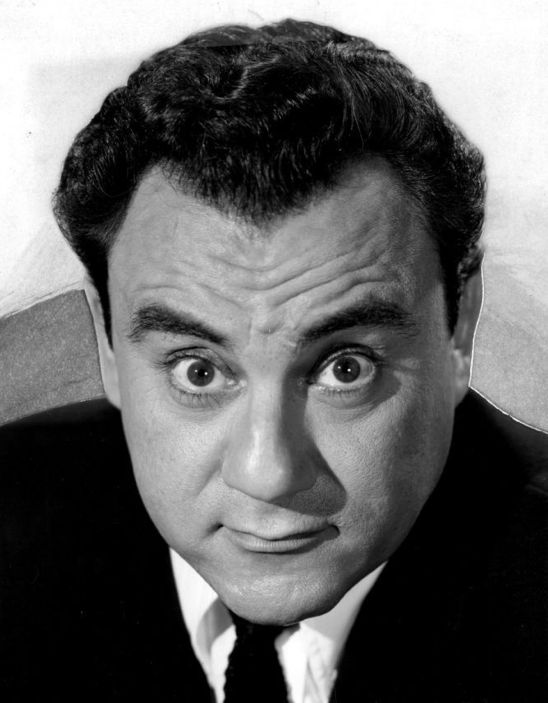
Don Adams: Always Smart

This month our blog series is titled “All About The Bill Dana Show.” The first week in March we learned about the show and now we have been spending time with some of the cast. We end our series with Don Adams.

Adams was born Donald James Yarmy in Manhattan in 1923. Don was a blend of cultures, Hungarian Jewish on his dad’s side and Irish-American on his mom’s. Don was raised Catholic while his brother Dick was raised Jewish. I could not find out what their sister decided to do. She later became a writer under the name Gloria Burton and wrote a script for Get Smart. His brother was also an actor. Dick has about 50 acting credits and appeared in many of the most popular sitcoms during the sixties and seventies, including three appearances on Get Smart.

Adams dropped out of high school and went to work as a theater usher. In 1941 he joined the US Marine Corp. At one point he was injured during a Japanese assault on Tulagi. He was the only survivor from his platoon. While recovering, he came down with blackwater fever, a side effect from malaria and was evacuated to New Zealand. He was not expected to recover, but when he did, he was sent back to the US as a Marine drill instructor.

After his discharge, he moved to Florida to work as a comedian. He refused to do material he considered “blue” and was fired.

In 1947 he married Adelaide Efantis, and her stage name was Adelaide Adams. Don decided to take the name Adams as well for his stage name. He worked as a commercial artist and cashier to support their family.

In 1954, Don was the winner of Arthur Godfrey’s Talent Scouts with a comedy act written by Bill Dana. He began making appearances on The Steve Allen Show, where Dana was a writer. In 1961 he became a regular on the Perry Como Show.

About this time, Don and Adelaide divorced, and Adams married Dorothy Bracken, another actress. They split up in 1977 when he married Judy Luciano, also an actress but that marriage also ended in divorce. (I could only find one credit for his last two wives; Bracken was on Get Smart, while Luciano appeared on The Love Boat.)

While discussing his marriages, Don said “I’m no longer independently wealthy. I guess it’s the result of too many wives, too many kids and too much alimony. I’ve been paying alimony since I was 14 and child support since 15. That’s a joke, but not by much. . . I like getting married, but I don’t like being married.”

In 1963 Adams was offered the role of Byron Glick, hotel detective on The Bill Dana Show. As we’ve discussed this month, the show was on the air for a season and a half. While working on the show, Don was also the voice of cartoon Tennessee Tuxedo which he continued doing until 1973.

During those years he also made an appearance on The Danny Thomas Show and on Pat Paulsen’s Comedy Hour.

In 1965 he was offered the role of Maxwell Smart in a new spy satire, Get Smart.

The sixties saw westerns being overtaken by spy shows such as The Man From U.N.C.L.E., I Spy, The Pink Panther, and The Avengers. Mel Brooks and Buck Henry decided to try their hand at writing a campy sitcom and Get Smart was born.

The role of Smart was created for Tom Poston, but ABC turned it down, and NBC said yes. They had Adams under contract, so he got the part. Rounding out the cast was Edward Platt as the Chief and Barbara Feldon as Agent 99.

Smart and 99 had great chemistry and married in a later season. Feldon and Adams remained life-long friends.

One of the most memorable parts of the show was all the catch phrases Adams created on the show including “Sorry about that Chief,” “Would you believe,” and “Missed it by that much.”

In addition to acting, Adams worked as a producer and director on the show. He was nominated for an Emmy from 1966-1969. He won three of those, losing to William Windom for the little-remembered one-season show, My World and Welcome to It. Lloyd Haynes from Room 222 and Bill Cosby for The Bill Cosby Show were also nominated that year.

The show moved to CBS for the final season, but the ratings never recovered, and the show was canceled after that year.

Like so many of our successful actors with unusual characters, Adams suffered from typecasting after the show ended. He did become part of two additional sitcom casts during his career.

In 1971 he was on The Partners. According to imdb.com, the plot is that “Lennie Crooke and George Robinson are inept detectives teamed up to solve crimes. Captain Andrews is their exasperated boss, Sgt. Higgenbottom is a smarmy co-worker, and Freddy confesses to most of the neighborhood crimes.” Adams played Crooke, but the show only produced 20 episodes.

In 1985, Adams tried a sitcom again on Check it Out. This one was about a grocery store and its employees. Adams played Howard Bannister. The show lasted three seasons, ending in 1988. The show was not very popular in the US but was a hit in Canada.

In between those two shows, Adams appeared in a handful of series including Fantasy Island, The Fall Guy, The Love Boat, Empty Nest, and Nick Freno: Licensed Teacher. He made most of his salary appearing in nightclubs. He also had his Smart character resurrected in several big screen films and television series.

Because of the typecasting, he returned to animation and found a lot of success, especially with Inspector Gadget which he voiced from 1983-1999.

He also tried his hand at a game show. Called Don Adams’ Screen Test, it had an interesting concept. The show was filmed in two 15-minute parts; Adams would randomly select an audience member to recreate a scene from a Hollywood movie such as From Here to Eternity with Adams as director. It ended after 26 episodes.

In his spare time, it sounds like he visited the racetracks, betting on horses. He also spent a night a week at the Playboy Mansion playing cards with Caan and Rickles. He loved history and studied Abraham Lincoln and Adolf Hitler in depth. He also wrote poetry and painted.

Don passed away in 2005 from a lung infection and lymphoma. The eulogists at his funeral included James Caan, Bill Dana, Barbara Feldon, and Don Rickles.

It’s hard to know what to make of Adams’ career. Obviously, he was hard working, an excellent Marine, and a man of many interests. He was fired for not performing blue material but then put horse racing and gambling above the needs of his family, according to several of his friends. He created the amazing role of Maxwell Smart, one of the best characters in television history, but that feat kept him from achieving other great roles in the following decades due to typecasting. It sounds like Check It Out was very popular in Canada, so maybe if he had been given a few chances to create characters different from Smart in a couple other sitcoms, it would have helped.

I feel bad for those actors who are so successful in the characters they help create that they are barred from future jobs, but then again, those characters are some of the best actors in television: George Reeves as Superman, Ray Walston as My Favorite Martian, Henry Winkler from Happy Days, Frank Cady from Green Acres, and Jack Klugman from The Odd Couple. I guess you trade being warmly remembered for fewer quality roles.

Apart from Get Smart, I knew little about Adams before writing this blog, so it was fun to get to know him a bit.
Bill Dana: Actor? Script Writer? Author? Talent Agent? Yep

This month we are exploring The Bill Dana Show for our blog series. Last week we talked a bit about the show itself, and for the rest of the weeks, we are looking at some of the other cast members’ careers. Today we begin with Bill Dana himself.

📷findagrave.com

Dana was born William Szathmary in Quincy, Massachusetts in 1924. He was the youngest of six children. His older brother Arthur was fluent in several languages and inspired Bill to learn different accents.

Dana served with the US Army during WWII as a machine gunner and was awarded the Bronze Star Medal.

After the war, Bill enrolled at Emerson College. After graduation, he was hired as a page at NBC’s Studio 6B, or 30 Rock.  He was also trying to break into comedy performing around New York. During the fifties he appeared on The Imogene Coca Show. He also did some writing and producing for The Spike Jones Show.

He met Don Adams and began writing routines for him in the fifties. He and Don would be part of each other’s lives for a bit. Don would be one of the cast members on The Bill Dana Show. Dana would appear on Adams’ show Get Smart, and Dana’s older brother Irving was the composer of the Get Smart theme song. Bill would also cowrite the script for the Get Smart film The Nude Bomb.

📷thenewyorktimes.com

In the late fifties, Steve Allen hired Dana as a writer. Bill created a character, Jose Jimenez, for the “Man in the Street” segments of Allen’s show. Soon Jose became his alter ego. He made appearances as Jose on The Red Skelton Show, The Spike Jones Show, The Danny Thomas Show, and The Ed Sullivan Show. He even had a comedy album featuring the character.

Dana told a story on Ed Sullivan’s show that some people truly thought he was Jose Jimenez. One lady who met him out and about asked if his birth name was Jose Jimenez and he told her, “No, it’s Bill Szathmary.” She said “Wow, no wonder you changed it to Jimenez.”

In 1961, Dana began a recurring role on The Danny Thomas Show. He played Jimenez as an elevator operator. People responded so well that Danny Thomas and Leonard Sheldon spun off the character, now a bellhop at a luxury New York hotel, and The Bill Dana Show was created. In addition to Adams, Jonathan Harrison was part of the cast and Maggie Peterson joined them in season two. The show was on the air for one and a half seasons.

As we discussed last week, some people saw Jimenez as a hard-working immigrant who noticed some of the crazy things Americans did, and others saw him as a stereotyped Latino caricature. The pre-show Jimenez fit the second description better and the show Jimenez leaned more toward the first portrayal. However, as the character developed, viewers were not flocking to the show. It was also up against Lassie which at the time was a huge family show on Sunday nights.

📷wikipedia.com

The last time Jimenez was on the screen as a character was a 1966 episode of Batman in a cameo on the famous wall. Later Dana apologized for his caricature of Jimenez and became a bit of an activist for Latino causes. The National Hispanic Media Coalition endorsed the Jose Jimenez character and invited Dana to sit on their advisory board.

Dana jumped back and forth from actor to writer for a couple of decades. He wrote the script for All in the Family’s episode “Sammy’s Visit” starring Sammy Davis Jr. He also wrote for Bridget Loves Bernie, Chico and the Man, Donny and Marie, The Smothers Brothers Comedy Hour, and Matlock.

His acting landed him in The Courtship of Eddie’s Father, Love American Style, The Snoop Sisters, Police Woman, McMillan and Wife, Ellery Queen, Switch, Vega$, Fantasy Island, The Facts of Life, and Empty Nest among a few others.

He had recurring roles on two additional shows during his career. He was on St. Elsewhere as Howie Mandel’s character’s father for three episodes. He also was Angelo on six episodes of The Golden Girls.

One of his last projects was founding the American Comedy Archives at Emerson College. He and Jenni Matz interviewed more than 60 comedians for this archive, including Phyllis Diller, Norman Lear, Carl Reiner, Betty White, and Jonathan Winters.

Dana was a man of many talents. He also ran a talent management company and an advertising agency. He wrote a book, The Laughter Prescription, with Dr. Laurence J. Peter.

Dana passed away in June of 2017 at his home in Nashville.

Certainly, Dana had a full career. I think starting off with the Jose debacle probably kept him from getting different roles early in his career. He also didn’t seem to know what he wanted to be when he grew up. Was he a comedy writer? A dramatic writer? A variety show writer? Was he an actor? A talent agent? An author? Not that you can’t be more than one thing in life, but in the span of three decades he never seemed to settle on one or two careers. Hopefully he had fun and enjoyed all the different hats he wore.

The Bill Dana Show: Really It Was The Jose Jimenez Show

This month our blog is devoted to The Bill Dana Show which was on the air for two seasons in the early sixties.

📷dvdplanetstore.com

Bill Dana is not a name remembered much anymore but, in the sixties, he was a huge celebrity. There is some tough talk about why he was so famous. During the late fifties and early sixties, especially as so many radio shows transitioned to television, there were some politically incorrect shows. This one teetered on the edge of it, in the same ways the show Life with Luigi did.

Bill Dana’s alter ego, Jose Jimenez, debuted on The Steve Allen Show in the late fifties. Jimenez was a Mexican immigrant. He saw the United States through a different lens than people who grew up here. He often was amused by what he saw going on around him. However, he was not the lazy stereotype Mexican. Jimenez was hard working and wise in many ways. He was not offensive in the way Amos and Andy were. Dana was a Hungarian Jewish man playing a Hispanic man so that was not well received either.

While I still love so many programs from the fifties and sixties that hold up well today and have delightful characters, many programs from this time make us cringe and we are embarrassed for the television industry at that time.

There are also many performers that may have bordered on sexual and ethnic political incorrectness, many of their characterizations may not be offensive, but I sure don’t find any humor in them.

📷 Jose Jimenez televisoinacademyawards.com

Remember this was during the Civil Rights Movement era, so things were beginning to get examined more closely in pop culture. Even if Jose was a good guy, his exaggerated accent set him up more of a caricature than a character.

While there was some blowback from the Latino community, many fans adored Jimenez. Danny Thomas and Sheldon Leonard decided to give Jose his own show after he made a few appearances on The Danny Thomas Show. NBC put the show on its schedule without even seeing a pilot because he was so popular.

While the quick sketches with Jose were in your face humor, putting the character in his own television series gave the writers time to develop him more and make him more dimensional. Leonard made this a workplace sitcom which was different for him since so many of their shows—The Dick Van Dyke Show, The Danny Thomas Show, That Girl, Good Morning World—were all balancing personal and work life. Earl Hagen, who wrote so many great tunes for the Leonard group, wrote this one as well.

The show aired September 22, 1963, and ran for a season and a half, ending January of 1965.

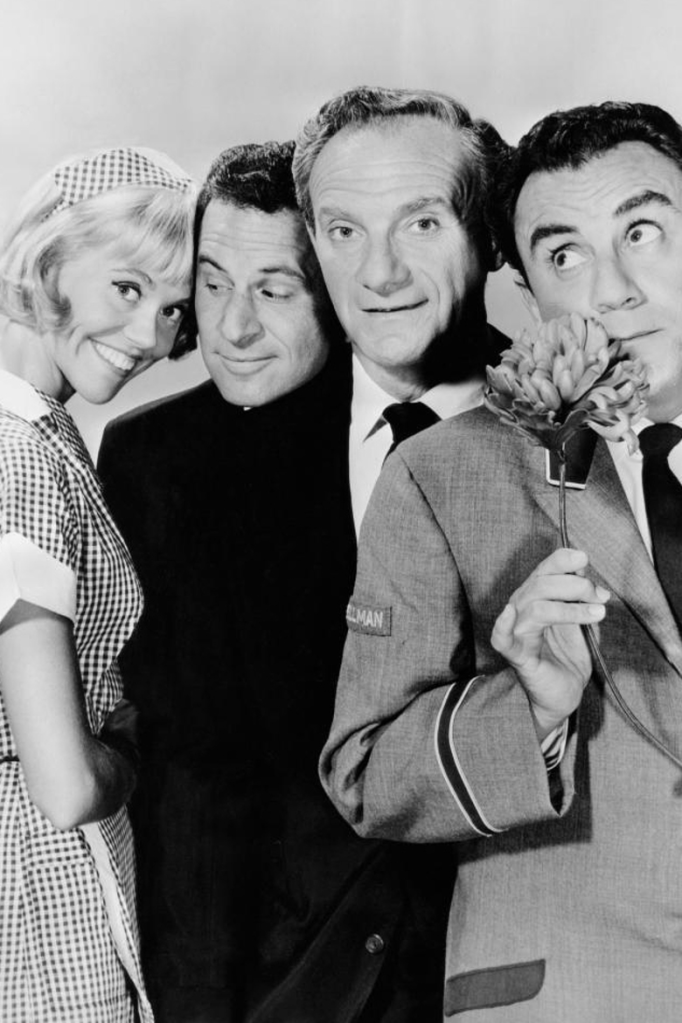
Jimenez is a bellhop at a luxury New York hotel. He lives in a special staff apartment, eats in the hotel kitchen, and interacts with most of the guests. He is surrounded by a great cast which we’ll get to know in more detail this month. Don Adams was Byron Glick, house detective. Jonathan Harris took on the role of Mr. Phillips, the hotel manager. Fellow bellhop Eddie (Gary Crosby) is always trying to get Jose to lose his rose-colored view of life. For season 2. Maggie Peterson plays waitress Susie.

The ratings were not great. Perhaps viewers had a harder time connecting this Jose to the caricature Jose. Certainly, more criticism came from the Latino community as the show went on. In addition to Jose, there was feedback on other shows that used stereotypical Mexican characters and in commercials like the Frito Bandito.

📷washingtonpost.com

Jose had one cameo role in Batman when he meets the duo and introduces himself as “My name—Jose Jimenez” in 1966. That was the final appearance of the character and a few years afterward, Dana read an obituary that he wrote for Jose at a Latino civil rights meeting in Los Angeles, and he became an activist for the Latino community, so there was some good coming out of the situation.

The show was canceled partway through season two. Another factor in the show’s ratings was the fact that it was on Sunday nights up against Lassie, a family favorite. However, the show did somehow receive an Emmy nomination for outstanding sitcom. No surprise it didn’t win. Despite being a mediocre show with some nugget of greatness here and there, it was up against McHale’s Navy, The Farmer’s Daughter, and the show that won, The Dick Van Dyke Show.

If The Bill Dana Show had just been a show about “a guy” who arrives from Mexico to work in a posh hotel, and we saw life through his eyes, good and bad in America, the concept could have been fun and more accepted. It appears that the writing was pretty good and it had a great cast. Jose was just not the character to build the show around.

Heigh-Ho Louis Nye!

Finishing off our “Men of November” series is Louis Nye.  If you watched television in the sixties, you will recognize Louis, but you might not know why.

Photo:

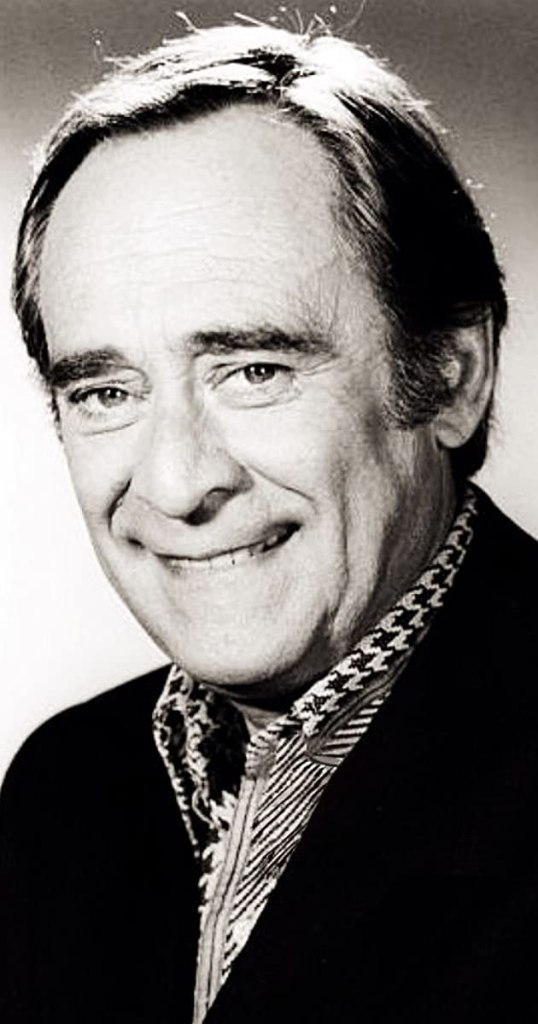
Born Louis Neistat in Connecticut in 1917, he was the son of parents who emigrated to the US from the Russian Empire and became naturalized citizens in 1911. Louis wanted to get involved in acting but his grades weren’t good enough for him to participate in the drama club.  He opted for work on WTIC Radio instead. He also joined the Hartford Players.

The work on local radio led to his decision to move to New York City to work on the radio, often on soap operas. Nye married songwriter Anita Leonard in 1940. Unlike many Hollywood couples, they remained married until Nye’s death.

**FILE** Steve Allen, third from left, and some of the original cast members of the popular 1950’s television show, “Steve Allen Show,” gathered in Beverly Hills, Calif. in this Oct. 4, 1990 file photo to honor Allen and to celebrate the re-broadcast of 100 episodes of his show on HA! TV Comedy Channel. They are, from left: Tom Poston, Don Knotts, Allen, Louis Nye, Pat Harrington Jr., and Bill Dana. Nye died Sunday at his home in Los Angeles after a long battle with lung cancer, his son, Peter Nye, told The Associated Press on Monday. He was 92. (AP Photo/Kevork Djansezian, FILE)

World War II interrupted his career. He was assigned to run the recreation hall in Missouri. He would entertain troops and was able to meet Carl Reiner, who had a similar sense of humor, and who was also part of Special Services performing in shows across the Pacific.

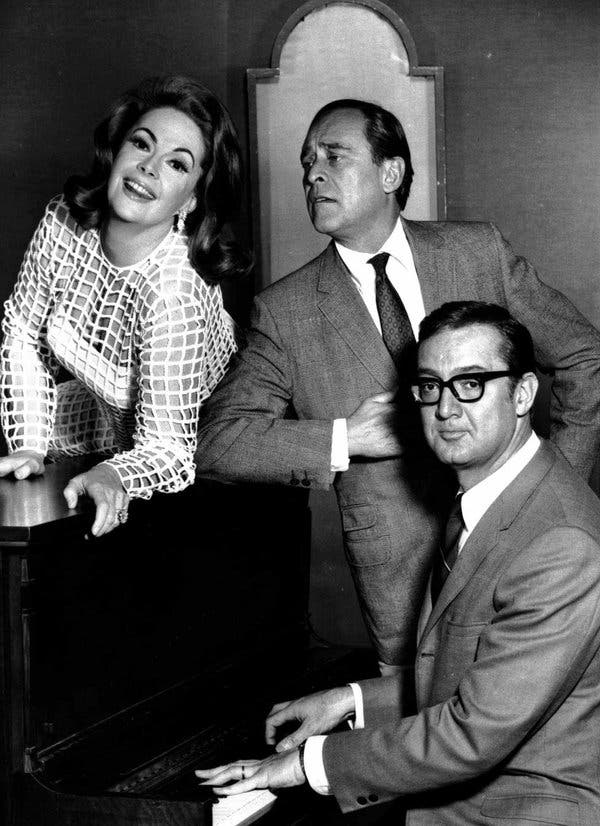
With Steve Allen and Jayne Meadows Photo: nytimes.com

After the war ended, he returned to New York, getting jobs on television and appearing on Broadway. His first tv role was on The Admiral Broadway Revue in 1949. He appeared on several shows during the fifties but was best known for his work on The Steve Allen Plymouth Show and the New Steve Allen Show. He became close to the entire cast which included Don Knotts, Tom Poston, Pat Harrington Jr., Dayton Allen, Gabriel Dell, and Bill Dana. Nye often portrayed wealthy citizens during the “Man on the Street” sketches. When he took on the role of Gordon Hathaway, the egotistical Country Club snob, saying “Hi-ho Steverino,” Allen often cracked up. When the show moved to Los Angeles, Nye went with it.

Photo: youtube.com

His first recurring role was that of dentist Delbert Gray on The Ann Sothern Show in 1960 and 1961. He was very busy during the sixties, appearing on a variety of shows including The Bob Hope Show, The Jack Benny Show, Mike Douglas, The Munsters, Jackie Gleason, and Phyllis Diller. From 1962-66, he would pop in on The Beverly Hillbillies as Sonny Drysdale, the spoiled stepson of banker Milburn Drysdale.

Photo: imdb.com

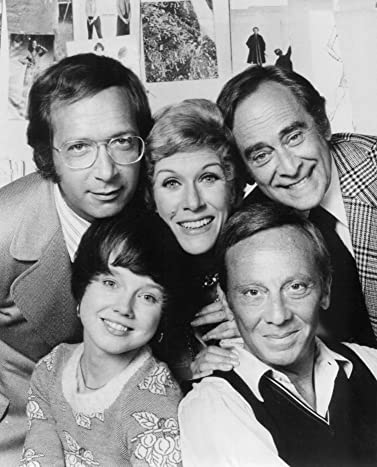
In the seventies, he could be seen on shows such as Laugh-In, Love American Style, Laverne and Shirley, Starsky and Hutch, and Fantasy Island. He was offered a permanent role on Needles and Pins in 1973. The show only lasted for 14 episodes. The series was about the garment industry. Women’s clothing manufacture Nathan Davidson (Norman Fell) works with a group of employees including characters played by Nye and Bernie Kopell.  It didn’t receive great reviews and many of the writers said it talked about the garment industry but showed very little and was set in one small spot, inhibiting what plots were even available.

During those decades Nye would also get offers on the big screen from time to time but most of the roles were smaller cameo parts. However, he appeared with a lot of celebrities in these epics including Bob Hope, Jack Lemmon, Lucille Ball, Dean Martin, Walter Matthau, and Jack Webb.

He also recorded several comedy albums using several of his characterizations. One of his most successful LPs was “Heigh-Ho Madison Avenue.” It parodied market research, advertising agencies and post-WWII society.  Some of the pieces on the album include “The Gray Flannel Blues,” “The Ten Commandments of Madison Avenue (Plus Big Bonus Commandments),” and “The Conspicuous Consumption Cantata.”

Asea on the Love Boat
Photo: drunk tv.com

He continued to keep busy in the eighties on a variety of shows including Here’s Boomer, Aloha Paradise, The Love Boat, The Cosby Show, and St. Elsewhere.

Curb Your Enthusiasm Photo: youtube.com

His last role was another recurring one where he played Jeff Garlin’s father on Curb Your Enthusiasm from 2000-2005. Nye passed away from lung cancer in 2005.

I’m not sure what to think about Nye’s career.  I think in the right role, he would have excelled in a television comedy or a big screen epic which he never had the opportunity to do. He was multi-talented and appeared on Broadway, in clubs, and on the radio, and he created comedy albums as well as appearing in movies and television. However, I often read quotes of his where he said he only wanted to be funny at parties and always considered himself a serious actor. He was so brilliant and funny with his 15 accents and wide range of characterizations that he seemed pigeon-holed as a comedy character actor early in his career. I wondered if he was sad that he never had the chance to appear in a classic drama, or if he accepted his successful career for what it was, just being thankful he was in the entertainment industry for his entire working life.

Photo: wikifandom.com

Since we cannot ask him directly, all we can do is tip our hats to him in appreciation for the decades of laughter and entertainment he provided for us. Thank you, Mr. Nye.

The Courtship of Eddie’s Father: A Different Love Story

In our quest to celebrate some of our favorite fathers, we jump into the world of Tom Corbett on The Courtship of Eddie’s Father.

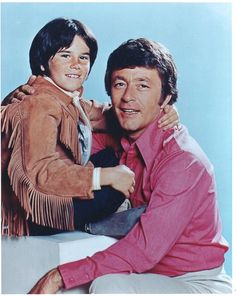
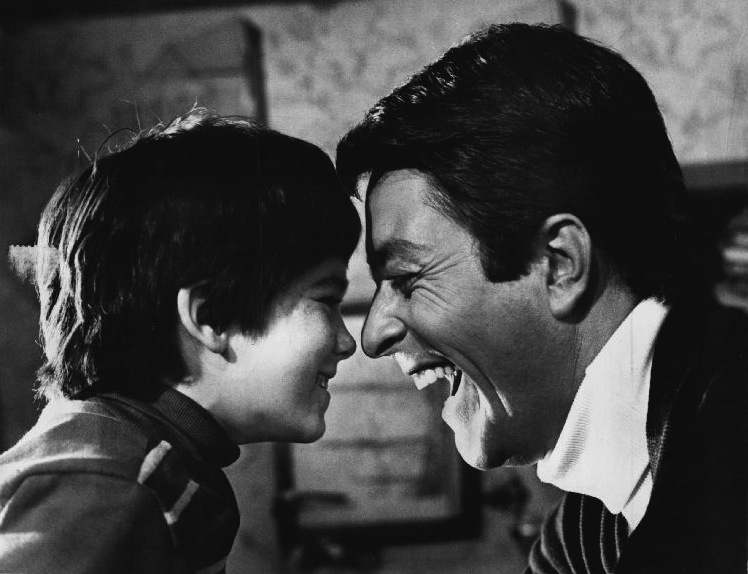
THE COURTSHIP OF EDDIE”S FATHER, Bill Bixby, Brandon Cruz, 1969-1972. TM and Copyright (c) 20th Century Fox Film Corp. All Rights Reserved. Courtesy:
Photo: tvdads.com

The series debuted on television in September of 1969 and lasted until spring of 1972. The show was based on a 1963 film starring Glen Ford and Ron Howard, which was based on a novel, The Courtship of Eddie’s Father by Mark Toby.  

Photo: pinterest.com

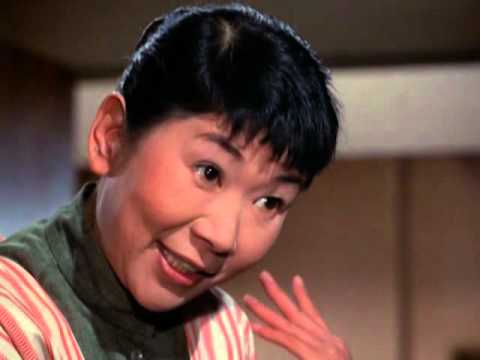
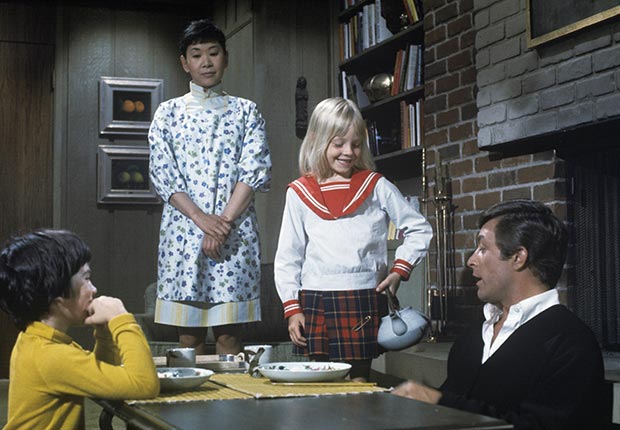
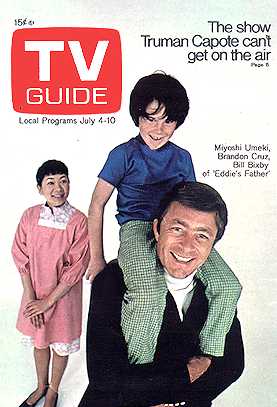
Tom Corbett (Bill Bixby) is a magazine publisher in his 30s. His wife Helen passed away, and he is raising his son Eddie (Brandon Cruz) who is six with the help of his housekeeper Mrs. Livingston (Miyoshi Umeki). Eddie thought his father needed to remarry, so he plotted to set his father up with various women. As the show continued, the plots were less about Tom marrying and more around daily life for him and his son. Rounding out the cast is Norman (James Komack), Tom’s friend and photographer for the magazine; Tina (Kristina Holland), Tom’s secretary; and Joey (Jodie Foster), Eddie’s friend.

Photo: dvdtalk.com
Komack and Holland

Mrs. Livingston was a bit formal, but we also saw her smile at some of Eddie’s antics. We knew she cared about him.  She called Tom “Mr. Eddie’s father.”

Photo: youtube.com

Miyoshi Umeki who played Mrs. Livingston would retire from acting after the show went off the air. She went to work with her husband who had a film editing equipment and rental business.

It was a talented cast, and everyone seemed to work well together. Tom was a loving and fun father but also made sure Eddie had discipline when necessary.  With all the chaos going on in America like the Vietnam War and the Manson Murders, it was a heart-warming show about a unique family. Each episode ended with a heart-to-heart talk between father and son.

Photo: pinterest.com

Here is a typical plot from the show. This episode from 1972 was titled “The Choice”: Tom starts dating Eddie’s substitute pediatrician, Liz Park. Before things get too serious between the two of them, Liz tells Tom that she is going to Switzerland for three years to study. Although they are attracted to each other, and it will be hard to break up, they decide to keep dating till she leaves. When they get closer, she decides not to go to Switzerland. After one of their dates, they come back to Tom’s and find Eddie with a high fever. Liz treats him and she realizes that pediatric surgery, her chosen field, is too important to give up and ends up leaving for Switzerland.

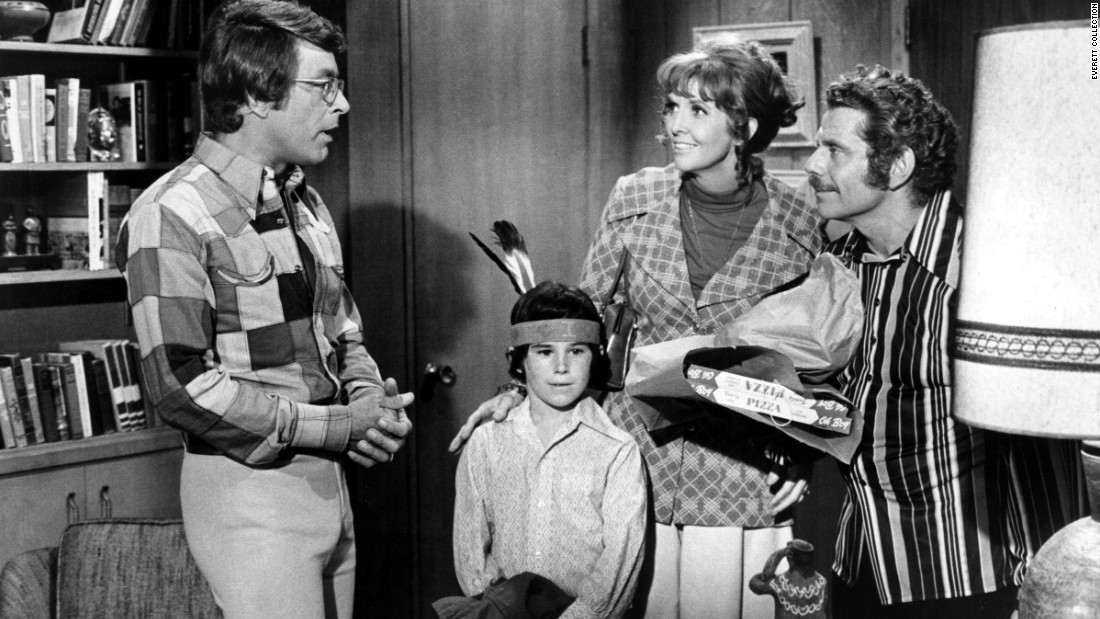
There was an impressive list of guest stars on the show including Willie Aames, Yvonne Craig, Bill Dana, Sammy Davis Jr., Will Geer, Pat Harrington, Tippi Hedren, Carol Lawrence, Anne Meara, Erin Moran, Pat Morita, Suzanne Pleshette, Lori Saunders, Jerry Stiller, Sally Struthers, Cicely Tyson, and George Takei.

Photo: cnn.com

James Komack was not only part of the cast, but he was the creator and executive producer of the show. During the run of the show, Bixby would try his hand at directing and directed eight episodes. (He would go on to direct 92 other episodes of shows as well as tv movies.) Other directors on the show included Hal Cooper, Harry Falk, Randall Hood, Leslie Martinson, Alan Rafkin, and Bob Sweeney.

The popular theme song was written and performed by Harry Nilsson. While the show was playing, scenes of Tom and Eddie bonding in various moments appeared. The lyrics were:

People let me tell you ’bout my best friend,

He’s a warm-hearted person who’ll love me till the end.

People let me tell you ‘bout my best friend,

He’s a one boy cuddly toy, my up, my down, my pride and joy.

People let me tell you ’bout him he’s so much fun

Whether we’re talkin’ man to man or whether we’re talking son to son.

Cause he’s my best friend.

Yeah, he’s my best friend.

Photo: memorabletv.com

Bixby received an Emmy nomination in 1971. (In that same year, Komack was nominated for producer and Umeki was nominated for a Golden Globe for supporting actress.)  The show continued to have good ratings for season two, but during the third season, Komack started putting more emphasis on his role. Bixby didn’t agree with the focus and ratings began to plummet, and the show was cancelled.

DVDs were released between 2011 and 2014.

Like so many of the popular 1960s shows, this one was slated for a reboot. Nicholas Cage wanted to remake the film but lost interest when his son got too old for the role. In 2003, the WB filmed a pilot based on the show with Ken Marino and Josh Hutcherson but it was never picked up.

Although the show was not real life, it did mirror it. Cruz came from a broken home and when it got too unbearable to stay there, Bixby let Brandon live with him. Cruz said Bixby’s life had some sadness and despair in it. His six-year-old son died from a throat infection and his wife, actress Brenda Benet, committed suicide less than a year after.

Cruz is now a case manager for Walking Miracles Malibu, a drug and alcohol recovery community. He has nothing but praise for Bixby. “James Komack was the producer, writer, co-star and director, but Bill set the tone of what went on the set. If Bill was happy, everybody was happy because he was the easiest guy to work with when he was happy, and that was pretty much all the time. He was a very private guy, he didn’t let a lot out.”

Photo: scifimusings.blogspot.com

Brandon relayed something that occurred on the set one day. “He showed everybody how to treat other people nicely. A guy got fired on the set one day, and I don’t know what he’d done, but he was one of my favorite guys on the crew. I told Bill, ‘Hey, I really like that guy.’ And he got his job back because Bill wanted me happy. It’s just the way he worked. It was a big family, and everybody loved working on that show.”

Photo: commons.wikimedia.org

Cruz and Bixby stayed close and in touch till Bixby died. They called each other on their birthdays, and Brandon’s son is named Lincoln Bixby Cruz.

The show demonstrated how close and loving Tom and Eddie were. They truly were best friends, and it’s nice to know some of that closeness carried over into their real life as well.