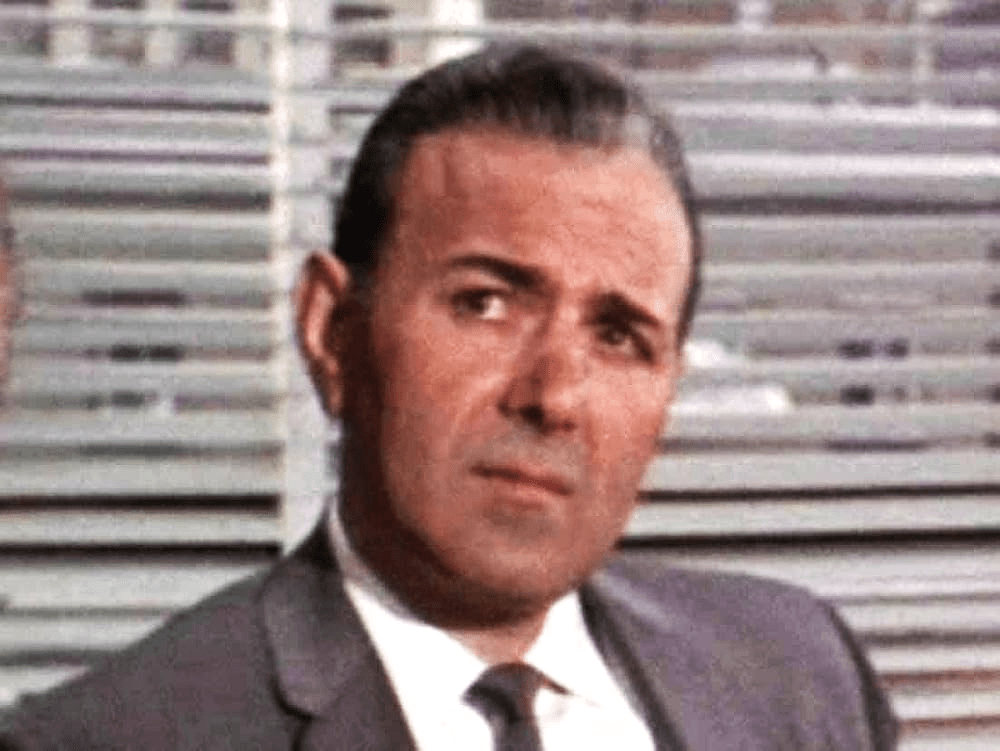
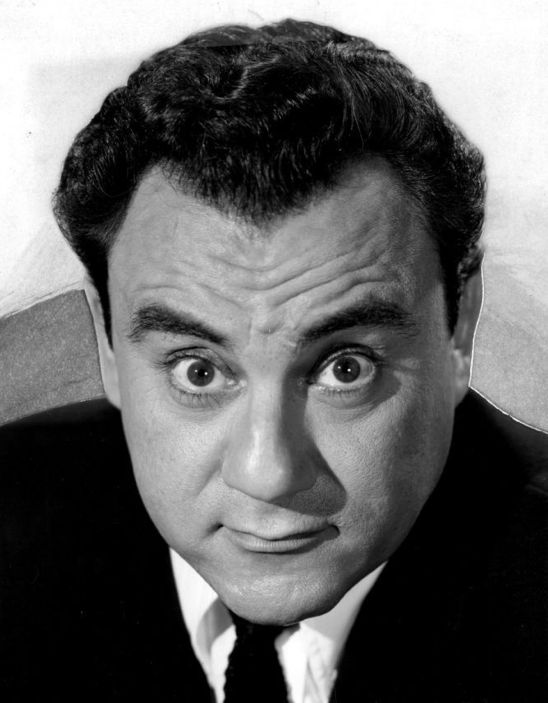
It’s November and it’s time for one of my favorite blog series, “What a Character.” Up today is Cosmo Sardo. Born in 1909 in Boston, he was lucky to keep his foot after an accident at age 14 when a car hit his bike and ran over his foot. After high school he majored in theatrical arts at the University of Massachusetts. Sardo began his career as a model in print ads for many companies including Sears Roebuck, Eddie Bauer, and Pepsi Cola.
📷imdb.com
Sardo made a reputation for himself in Boston theatrical circles before being cast in Oscar Wilde’s “The Importance of Being Earnest” in a downtown Los Angeles Theater in 1934.
In 1939 he made his way to Hollywood where he began a career in the film industry. If you can think of a profession, he probably played it: bartenders, retail clerks, postmen, bankers, waiters, detectives, reporters, businessmen, con artists, butlers, tailors, military men, cosmetologists, and barbers, which he perfected in real life. He even played a corpse in The Corpse Came COD.
Sardo’s father told him if he moved to Hollywood, he had to have a trade to fall back on. He got a job at John’s Barbershop which just happened to be located under Central Casting. And one day it paid off when he was offered a job. Sardo had always wanted to be an actor, so he left his barbershop to take acting classes. He said that his wife thought he was crazy and left him, but I could never find any source showing his marriage. I’m guessing this is one of those articles publicists made up. He signed with Warner Brothers in 1946 to play a barber in Humoresque because they knew he had owned a barber shop.
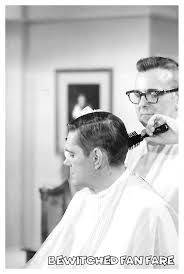
📷facebook.com Cosmo cutting Dick York’s hair
Later, he opened Cosmo’s Hairstyling Salon of Hollywood where so many famous clients were taken good care of. It was around the corner from Schwab’s Drugstore, the famous spot where so many careers were apparently launched. He would cut hair between his acting assignments. In an interview in the sixties, he said that most actors “usually don’t want their hair cut. They want it trimmed. I can make a man look like he never had a haircut at all.” Sardo also offered massage, face contouring, and mud packs.
This guy had an amazing 578 acting credits. His first job was the big-screen film Brother Orchard in 1940. His last was as a priest in Hill Street Blues in 1984.
His first television appearance was in 1952 in The Adventures of Superman. He would go on to make tons of appearances on shows. He never was a regular cast member for a show, but he often starred as many different characters on many episodes for the most popular shows. For example, he appeared on Charlie’s Angels 6 times, Columbo 7 times, The Love Boat 10 times, Bewitched 13 times, Batman and Man from UNCLE 14 times, The Untouchables and Have Gun Will Travel 15 times, and a whopping 81 Bonanza appearances where he often portrayed a bartender.
📷wikipedia.com
When he wasn’t cutting hair or making movies or television episodes, he could be found instructing at the Pasadena Playhouse, worshiping at his Catholic church, working for the Democratic party, and dining or golfing at the Los Angeles Country Club.
After his death, his biography said that he never married, so he devoted his retirement to help charitable and religious organizations. He passed away in 1989.
It is frustrating trying to tell the stories of these great character actors. There is almost no personal information about them apart from their birth, their death, and their career. As a barber, I’m sure Cosmo had a lot of great stories he could share.
I don’t know how many haircuts he gave, but with 578 acting credits which translated into 878 individual appearances, this was one busy man. How fun that he had a trade and attained his dream job and kept doing both successfully until his retirement.
Thanks for joining me today. We are having fun with this month’s blog series, “It’s Their Show,” and today we are taking a closer look at The Tom Ewell Show. The shows we are delving into this month were all movie stars jumping from the big screen to the small screen. Some of them landed on their feet and some didn’t.
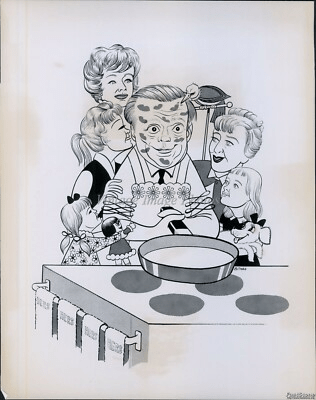
📷ebay.com
While most of the shows we are covering have a star we all know, Tom Ewell is no longer a household name. His first movie was in 1940, and he’s probably best known for The Seven-Year Itch with Marilyn Monroe. He did become a television fixture, starring in the soap Search for Tomorrow as well as a cast member of Baretta in the seventies and Best of the West in the eighties.
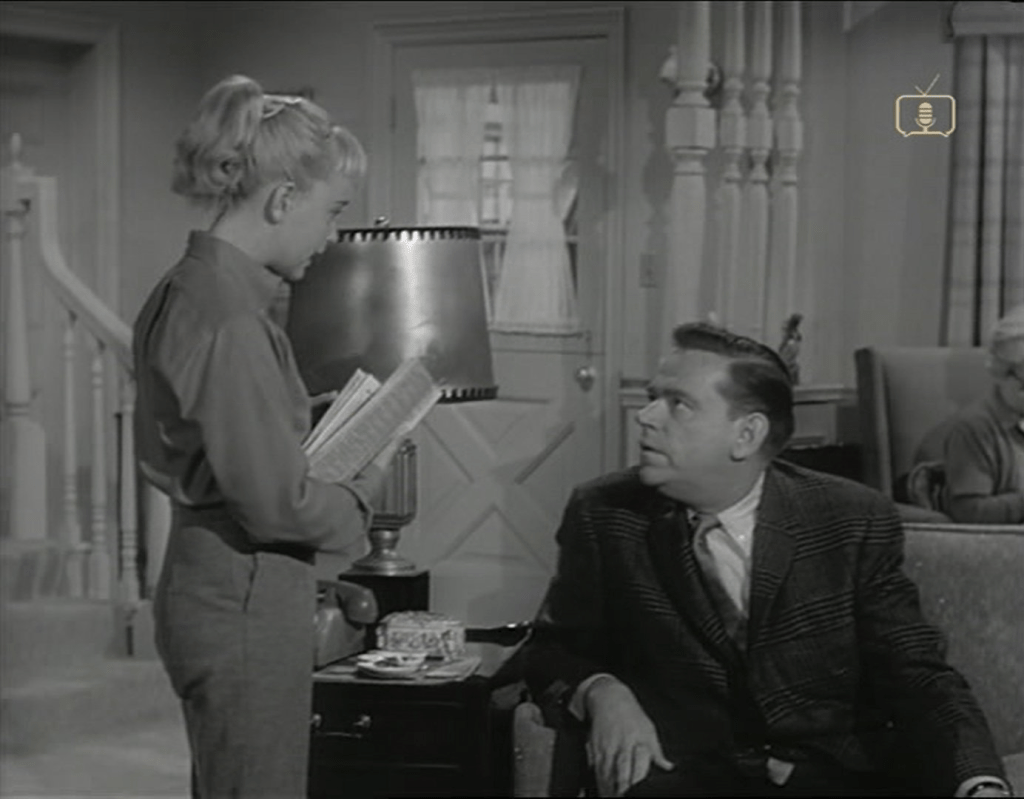
The Tom Ewell Show debuted on CBS in 1960 and was on for one season. The premise is about a guy who has to navigate life with a lot of women: his wife (Marilyn Erskine), daughters (Cynthia Cherault, Sherry Alberoni and Eileen Chesis), mother-in-law (Mabel Albertson), and a female dog and a parakeet.
Tom Potter is described as a “bumbling” father. I’m not sure why so many shows in the early days featured a wife who caused complications for her husband or a bumbling husband. Potter was a real estate agent. Rounding out the cast are friends pharmacist Howie Fletcher (Norman Fell) and Jim Rafferty (Barry Kelley).
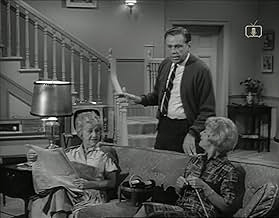
Potter loves sports, but the rest of his household is not too interested. Often, he is watching a sporting event on television while telling his family about the high points when they obviously could care less.
📷imdb.com
The concept of the show was set up in the opening which showed Tom looking around and then being put into a house before seeing the house overrun by women.
The show was created by Madelyn Pugh Davis and Bob Carroll Jr. who wrote for I Love Lucy. Pugh Davis said she based the show on her family. Her family had all girls and a mother-in-law in the house.
Ewell owned the production company in partnership with Davis and Carroll and Four Star Productions. Quaker Oats and Proctor and Gamble alternated sponsorship of the show.
Time reviewed the show after its debut and said “The Tom Ewell Show leads a relentless parade of situation comedies, all designed to show that American family life is as cute as a freckle on a five-year-old. The show, which might also be titled Father Knows Nothing, presents the comic with the excavated face as a bumbler named Potter who is trapped in the customary format: Harassed Man Beaten Down by Wife, Three Daughters, Mother-in-Law. In the opening episode, Ewell could find no better way to outsmart his spendthrift women than closing his bank account and ruining his own credit. For those who may have tuned out early, the women were all set to start spending again.” Not a great review.
📷imdb.com
This makes the female characters sound very unappealing, but on the show, his wife and daughters were delightful. His mother-in-law liked him and they often bantered back and forth; I think it’s worth watching the show just to see Mabel Albertson in action. However, the plots left a bit to be desired: Tom teaching his wife to drive a car, his daughter learning to play the tuba; and the typical sibling issues of everyone wanting to use the phone and the bathroom at the same time.
The show struggled finding viewers. Associated Press television critic Cynthia Lowry interviewed Ewell that fall, and he said that he had read both the positive and negative reviews of the show. He agreed with the critics who felt that Potter was too inept, and the comedy centered more on that and their family life. He said for December episodes, that issue would be addressed in the writing, and the family dog and parakeet were being dropped from the show. Unfortunately, it was not enough to attract viewers, and the show was canceled after one season.
📷youtube.com “Spelling Bee”
In an episode I watched, “The Spelling Bee,” from late November, Tom is trying to interest his family in golf. When he finally got them to watch a golf match, the females were more interested in what the golf spectators were wearing. And then his youngest daughter ran in and turned the station to a kid’s show. One of his girls is practicing her spelling to try to win a trip to Washington DC by winning the all-state spelling bee.
When Tom leaves the house, he continues to run into fathers and sons who are playing baseball, going fishing, working together, or talking about sports. Tom daydreams he has three boys, but we realize that he is holding a skein of yarn for his daughter while he does so. He tries to talk his oldest girl into going into the real estate business. Later he tries to talk his middle daughter Debbie into giving up spelling for golf. He also tries to get his wife to go bowling with him. When Tom realizes that one of his friends has a son trying to win the spelling bee as well, he turns it into a big sports event and is determined to beat them.
He buys a bunch of dictionaries and then gets up early to “train” Debbie. However, she had already left the house and when she returns, he finds out she’s been on the driving range practicing her golf, so they can be in a father and child golf match. He drills her on spelling the rest of the day. That night Debbie comes down with laryngitis.
📷imdb.com
Her grandmother gives her honey and lemon. The following night they attend the spelling bee, and Tom gives Debbie a pep talk, but then he reminds her he loves her no matter what. Of course, the final two contestants are Debbie and the son of Tom’s friend. She wins, and she and her dad get to travel to Washington, DC where they meet the President. The show ends with Tom telling his friend about all the great non-sport talents his girls have. It was a cute show, and the characters were all likable. There were a few great one-liners. It would not make my top 25 shows, but it was much better than many of the sitcoms in the sixties.
The show had a decent time slot. It was on Tuesday nights at nine, competing with Stagecoach West and Thriller. While both of those shows garnered decent ratings, neither of them was in the top thirty. The primary director was Hy Averback, who would later direct twenty episodes of MASH. So, they had the right elements in place, but the show just could never find its fans.
Larry Rhine talked about writing for the show. Rhine said Ewell was a nice man, but he said Ewell didn’t think the kids should be involved in the show much because they didn’t have the caliber of other actors. Rhine told Ewell they could consider them more as props which seems like a strange concept for a family show, considering that the episode I watched revolved around the daughters.
📷imdb.com
Rhine said Ewell found the show was over when he was on the set one day and he was called to the telephone about a trip he was supposed to take with CBS, and he was told that he was no longer part of the group because he had been fired.
I’m guessing part of the problem with this show getting renewed is that it debuted when westerns were still king and many of the television schedule spots were already filled with them. While it was definitely not a terrible show, the sixties were on the cusp of introducing very different sitcoms than the family-based ones that filled the fifties’ slots. By 1965 we would be tuning into Batman, Honey West, Hogan’s Heroes, The Smothers BrothersShow, and I Dream of Jeannie. However, that said, there are worse ways to spend a weekend than viewing a season of The Tom Ewell Show.
This month we are taking a look at some of our favorite “Crime Solvers of the Past.” Today we wrap up the blog series with The Felony Squad which ran three seasons, debuting on ABC in 1966.
📷blu-ray.com
Originally titled “Men Against Evil,” the show was going to be more of a soap opera feel which was broadcast twice a week. However, by the time the show aired, most of the personal relationships had been taken out of the plot. The series focused on Sergeant Sam Stone (Howard Duff) and Rookie Detective Jim Briggs (Dennis Cole). Rounding out the cast was Desk Sergeant Dan Briggs (Ben Alexander), also known as Dad to Jim and District Attorney Adam Fisher (Len Wayland). The first seasons included Captain Frank Nye (Barney Phillips) while later seasons featured Captain Ed Franks (Robert DoQui).
The show was known for having some big names in directing, writing, and guest stars. Many of the directors racked up more than 75 credits each and included George McCowan who worked on The Mod Squad and Cannon, Allen Reisner known for Hawaii Five-0, Lee Katzin who directed Mission Impossible, Laslo Benedek known for work on Perry Mason, and Vincent McEveety who directed stars in Murder She Wrote,Heat of the Night, and Simon & Simon. Howard Duff jumped behind the camera in season two to direct “Deadly Abductors” after directing seven episodes of Camp Runamuck a couple of years earlier.
Crafting scripts for the show were writers such as Richard Murphy who was the creator of this show, Don Brinkley who worked on Trapper John and Medical Center, Jack Turley who wrote for Cannon and The Man from UNCLE, and John Kneubuhl who also wrote for the Wild Wild West.
📷pinterest.com
A handful of the guest stars included Ed Asner, Richard Dreyfuss, Robert Duvall, Roddy McDowell, Ricardo Montalban, George Takei, Vic Tayback, and Cicely Tyson.
The Felony Squad theme was composed by Pete Rugolo. Rugolo had 83 credits in the business including writing music for a wide variety of television genres including Leave It to Beaver, The Fugitive, and Family. This theme was an instrumental and very reminiscent of a sixties action movie.
I couldn’t find a lot of reviews, but the New York Times’ Jack Gould described it as “a very old-fashioned and conventional yarn about tight-lipped detectives doing a day’s work.”
The series was on Monday nights until 1968 when it was moved to Fridays. The first two seasons the show was up against The Andy Griffith Show which was in the top ten. For the final season, the show moved to the weekend where it was up against an Andy Griffith Show spinoff, Gomer Pyle USMC, which was also a top ten.
The show obviously did well to stay on the air three years when it faced such tough competition. I wonder if being a 30-minute show as opposed to an hour was part of its downfall. No matter how great the writers are, it’s tough to get sophisticated and detailed enough with a plot to wrap up in half an hour. The show certainly found talented directors, writers, cast members, and guest stars. The show was shot in color and had a different feel to it, more realistic. The action is right in your face like you’re on set instead of watching from far off. Considering it maintained decent ratings before it was moved, it would have been interesting to see what would have happened if this show had been the competition with a newer show to see how it fared. Fans loved it, so if you want to see something different, check out a few episodes. I’m not sure why this series isn’t seen more, but YouTube is your best bet to find the most available episodes. Also, as a fun aside, if you want to see Stone, check out Batman’s second season episode, “The Impractical Joker,” when Duff as Stone peers out the window while watching the Dynamic Duo climb the wall.
As we wind up our “Go West Young Man” blog series, we turn our attention to CimarronStrip for the last blog of the series. This show was only on the air for one season, from 1967-68. It was produced by the creators of Gunsmoke, America’s most beloved western. Like The Virginian, it was a 90-minute show.
📷mubi.com
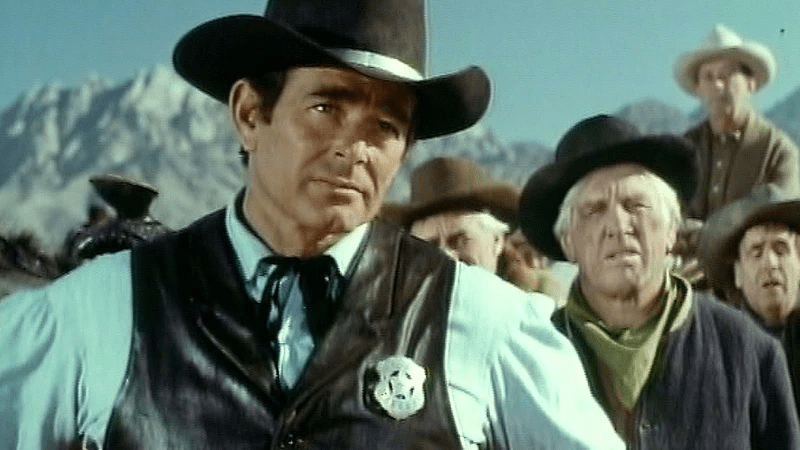
Set in the Oklahoma in 1890, the series occurred in a geographical region called No Man’s Land, an ungoverned area for several decades. Marshal Jim Crown (Stuart Whitman) tries to bring law and order there. Crown arrives only to learn that the sheriff has resigned, and it’s up to him to bring peace to the area with no Army support. We get to know Dulcey Coopersmith (Jill Townsend) who comes to live with her father, but upon her arrival, she discovers he is dead. Her father’s partner MacGregor (Percy Herbert) has let their Wayfarer’s Inn become a bit dilapidated, but Dulcey is determined to bring it back. Marshal Crown stayed there when he was in Cimarron City. Francis Wilde (Randy Boone) often served as Crown’s deputy.
📷pinterest.com
Rounding out the cast is the bartender at the Inn, Fabrizio (Jack Braddock); Major Covington at a nearby Army fort (Andrew Duggan); a Dr. Kihlgren (Karl Swenson); and Hardy Miller (Robert J. Wilke).
The show was on Thursday nights, up against Batman, The Flying Nun, and Bewitched on ABC. It faced Daniel Boone and Ironside on NBC. Definitely some tough competition.
The theme song was composed by Maurice Jarre, who was the scorer for the films Lawrence of Arabia and Doctor Zhivago for which he won two Oscars.
The show never attained the ratings numbers it needed to keep its place on the schedule. From what I have been able to find out, it was well written and well cast. Guest stars kept it interesting, and the scenery was beautifully filmed.
📷tvmaze.com
I’m guessing the main reason the show didn’t make it was just viewer fatigue with the western genre. There were already shows like Bonanza and Gunsmoke which were hugely popular. One more western might just have been one too many, no matter how good it was. In addition to the western series, some of the shows that were on the air when Cimarron Strip debuted included That Girl, Hogan’s Heroes, Mannix, Batman, Lost in Space, Get Smart, and Rowan and Martin’s Laugh In—very different choices than westerns. I do remember Arnold the pig on Green Acres always wanting to watch westerns on television. We still fall prey to this on the major three networks. After ER became popular, the next season featured ten new medical shows. And then most of them get cancelled, not necessarily because they’re bad but because it’s just an overload of medical shows.
Most people don’t want the same supper every night even if it’s steak or lasagna. That said, this seemed to be a steak kind of show, so just because it couldn’t survive the mass onslaught of westerns in the sixties doesn’t mean it’s not worth watching. If you check it out, let me know what you think.
As we get ready to “Go West Young Man,” today our blog series is getting to know the The Virginian (which is sometimes confusing because it was renamed The Men from Shiloh later for part of the series). This series debuted on NBC in 1962. It produced 249 episodes, running until 1971, making it the third longest-running western (Gunsmoke and Bonanza were the top two).
📷wikipedia.com
Lew Wasserman was involved with Universal, and they produced Wagon Train which was on NBC. Universal sold the series to ABC in 1962 after it had been on the air for three years, and NBC was not happy, but Wasserman told them that he had a new show for them, The Virginian.
It was also the first 90-minute western. Like Stagecoach West, it was set in the Wyoming Territory. While the pilot was black and white, the rest of the series was filmed in color.
The series was based on an Owen Wister novel, The Virginian: Horseman of the Plains which was published in 1902.
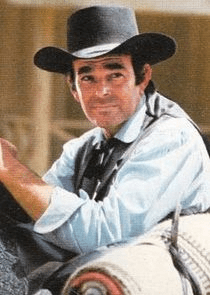
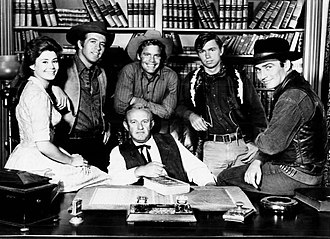
The series featured a foreman at the Shiloh Ranch near Medicine Bow played by James Drury. The foreman was never referred to by his name. Drury once said, “Nobody knows the name of my character, not even me.” His sidekick was Trampas (Doug McClure). Sheriff Abbott (Ross Elliott) also shows up on and off throughout the nine seasons. For the first four seasons, the ranch owner, Judge Henry Garth (Lee J. Cobb) and his daughter Betsy (Roberta Shore) also live there. The cast changed fairly often throughout the series, but Drury and McClure were along for the entire ride.
📷ebay.com
The plots of the show often revolve around themes of prejudice, injustice, being a responsible and hard worker, and standing up for the right thing.
During the final season, the show changed its title, and the series changed quite a bit. There was a new theme song, and it took on more of the character of the popular spaghetti westerns. Stewart Granger and Lee Majors joined the cast. While the ratings increased, the network was intent on cancelling the show, along with the rural purge that happened at that time.
Later when the show was no longer on the air, Drury discussed two of his castmates, one he admired and considered a friend and one he did not! About Grainger who joined the show for the last year, Drury said, “He was a disaster, and I couldn’t stand him. He wanted everything changed to make him the star of the show. . . . He also fired the whole camera crew and hired a new crew for his episodes.” However, on reflecting about his co-star Doug McClure, Drury recalled “off-screen Doug was quite like his character, and you couldn’t help but smile when he walked into a room because he was full of good humor and good spirits all the time. He could cheer anybody up. He became my best friend, and I still miss him terribly—you couldn’t ask for a better co-star.”
As you can imagine, being on the air for nine years meant a lot of guest stars showed up on the series, including Eddie Albert, Charles Bronson, Robert Culp, Joan Crawford, Bette Davis, Patty Duke, Robert Duvall, Harrison Ford, Jack Lord, Lee Marvin, Vera Miles, Leonard Nimoy, Ryan O’Neal, Robert Redford, George C. Scott, William Shatner and Franchot Tone.
📷facebook.com
The Virginian was on Wednesday nights for its entire run. When it began, it was up against Wagon Train on ABC while CBS ran CBS Reports and The Many Loves of Dobie Gillis. Both The Virginian and Wagon Train managed to hit the top thirty that year. The next year, its biggest competition was The Adventures of Ozzie and Harriet followed by The Patty Duke Show. The Nelsons hit the top thirty and The Virginian and The Patty Duke Show were in the top twenty. The show continued to be in the top twenty or top thirty for the rest of its run, hitting the top ten in 1966, despite being on at the same time as many popular sitcoms during those years, including Batman, The Beverly Hillbillies, The Courtship of Eddie’s Father, Gomer Pyle USMC, Lost in Space, MisterEd, and My Living Doll. It was still in the top twenty when it was canceled.
This show is fondly remembered by viewers who tuned it at the time. It’s been in syndication for decades, racking up new generations of fans. In one of his later interviews, Drury talked about the appeal of the show. He said, “People now tell me about their grandkids who discover the show on cable and start watching it. It’s a wonderful feeling to know the show is still viable after all these years.” That alone is reason to be proud of working on this show.
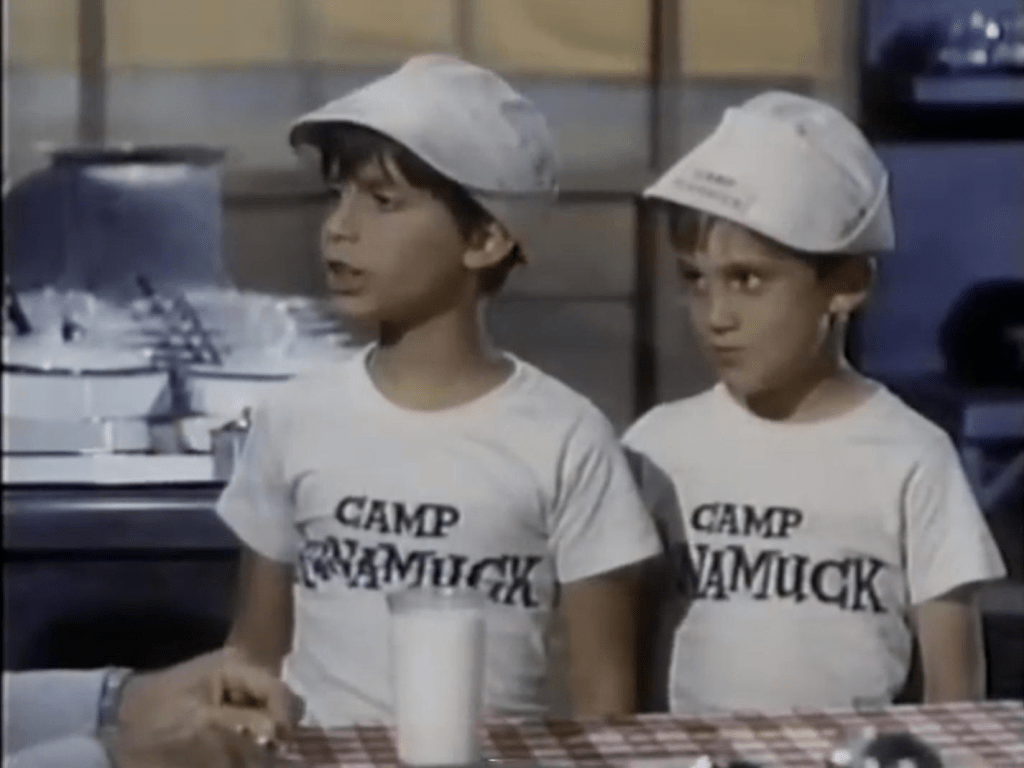
This month we are checking out a few sitcoms that are rarely remembered anymore. Today we are exploring the show Camp Runamuck. It debuted on NBC in 1965 and featured campers for 26 weeks before being cancelled.
📷imdb.com
Dave Madden was counselor Pruett; Commander Wivenhoe was played by Arch Johnson, and senior counselor Spiffy was played by David Ketchum. In the pilot, one of my favorites, Frank DeVol, played Doc Joslyn but illness forced him to hand over the part to Leonard Stone. Bobby Darrin sang the theme song.
If you are a fan of The Partridge Family, you will appreciate that this show was the introduction of actor Dave Madden, later Rueben who would manage the Partridges. Johnson began on television in the fifties, but this was his first cast role. Ketchum started his career a decade after Johnson and this was his second starring role after being in I’m Dickens, He’s Fenster in 1962. One camper who is featured in two of the 26 episodes is Maureen McCormick. This was the year she started her acting career, also appearing in Bewitched, The Farmer’s Daughter, and Honey West. Before becoming Marcia Brady, she would also show up in My Three Sons and I Dream of Jeannie.
Wivenhoe was an interesting camp leader. He didn’t like kids, didn’t like to part with his money, and didn’t appreciate the 6am morning wake-up song sung by the girls across the lake accompanied by a bugle. He did like playing golf and enjoying a quince for breakfast.
Across the lake was Camp Divine owned by Eulalia (Hermione Baddeley) who was helped by counselors Mahalia May (Alice Nunn) and Caprice Yeudleman (Nina Wayne).
The opening featured a peppy tune with fifes and you see the lake and hear the music before you see the camp counselors leading the campers (all in white; the poor laundry crew) marching down the road.
📷youtube.com
Most of the plots featured the counselors as opposed to the campers. Typical plots were the female campers being ordered to steal Wivenhoe’s bathtub so they could take a real bath and the boys getting it back. In another episode, the campers learn a civics lesson. They are given the task of electing a camp commander. However, the candidate who gets in becomes a dictator and tries to put everyone who had been in charge, namely the adults, in jail. This sounds vaguely familiar from the recent news.
In the credits I learned Cal Howard was in charge of visual gags. I never had seen that designation before in a sitcom. Howard, who was born in 1911 and passed away in 1993, had a long career as an actor and writer. He received 178 writing credits, mostly in animation. He worked for Walter Lanz and Walt Disney and wrote a few Bugs Bunny and Alvin and the Chipmunks episodes.
Just to add a sense of weirdness and whimsy to the series, two bears named Irving and Virginia would share their opinions of what was going on around the camp.
The series was up against The Wild Wild West and The Flintstones, pretty tough competition for the time. First of all it was on Friday nights when many viewers might be starting their weekend celebrations. The Flintstones was originally written for adults, but by 1965 families were watching the show together. The Wild Wild West was new, but immediately hit the top 30, and it was followed by another new CBS show, Hogan’s Heroes, and then Gomer Pyle, USMC, so most television fans were glued to that network Friday nights. Other new NBC shows included Get Smart, I Dream of Jeannie, and I Spy so competition was tough to retain a schedule spot. ABC didn’t have a lot of hits that year but they did debut three shows that I liked but all faded away within two seasons: Batman, Honey West, and Gidget.
Camp Runamuck might have gotten a second season if it didn’t have so much competition to deal with. If you loved camp as a kid, or hated camp as a kid, it might be worthwhile to watch a few shows and see what you think.
This month we are exploring The Bill Dana Show for our blog series. Last week we talked a bit about the show itself, and for the rest of the weeks, we are looking at some of the other cast members’ careers. Today we begin with Bill Dana himself.
📷findagrave.com
Dana was born William Szathmary in Quincy, Massachusetts in 1924. He was the youngest of six children. His older brother Arthur was fluent in several languages and inspired Bill to learn different accents.
Dana served with the US Army during WWII as a machine gunner and was awarded the Bronze Star Medal.
After the war, Bill enrolled at Emerson College. After graduation, he was hired as a page at NBC’s Studio 6B, or 30 Rock. He was also trying to break into comedy performing around New York. During the fifties he appeared on The Imogene Coca Show. He also did some writing and producing for The Spike Jones Show.
He met Don Adams and began writing routines for him in the fifties. He and Don would be part of each other’s lives for a bit. Don would be one of the cast members on The Bill Dana Show. Dana would appear on Adams’ show Get Smart, and Dana’s older brother Irving was the composer of the Get Smart theme song. Bill would also cowrite the script for the Get Smart film The Nude Bomb.
📷thenewyorktimes.com
In the late fifties, Steve Allen hired Dana as a writer. Bill created a character, Jose Jimenez, for the “Man in the Street” segments of Allen’s show. Soon Jose became his alter ego. He made appearances as Jose on The Red Skelton Show, The Spike Jones Show, The Danny Thomas Show, and The Ed Sullivan Show. He even had a comedy album featuring the character.
Dana told a story on Ed Sullivan’s show that some people truly thought he was Jose Jimenez. One lady who met him out and about asked if his birth name was Jose Jimenez and he told her, “No, it’s Bill Szathmary.” She said “Wow, no wonder you changed it to Jimenez.”
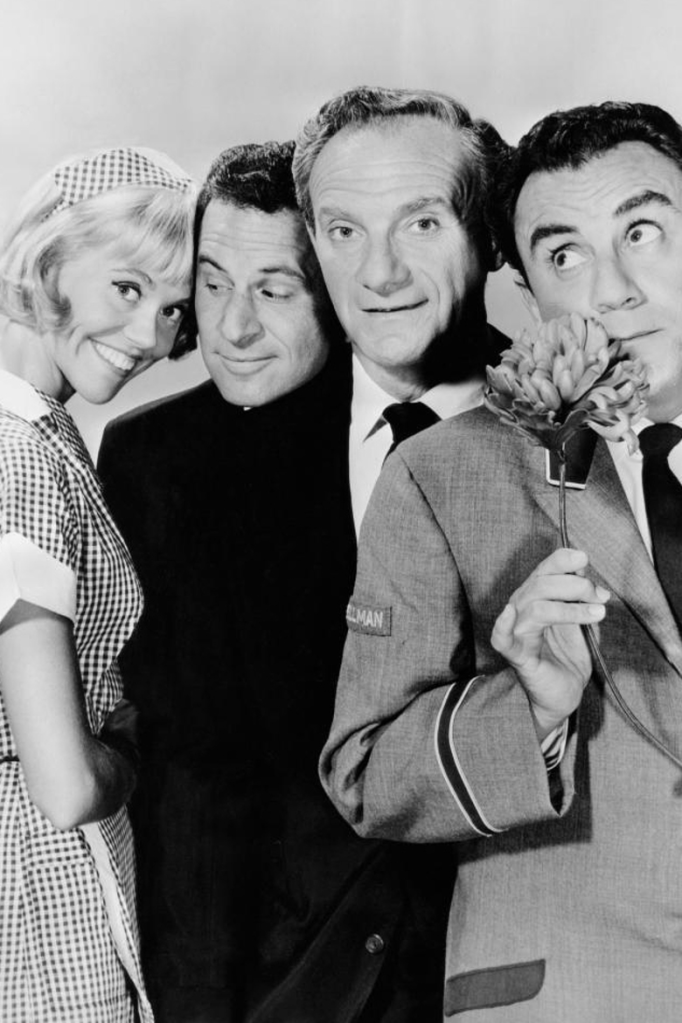
In 1961, Dana began a recurring role on The Danny Thomas Show. He played Jimenez as an elevator operator. People responded so well that Danny Thomas and Leonard Sheldon spun off the character, now a bellhop at a luxury New York hotel, and The Bill Dana Show was created. In addition to Adams, Jonathan Harrison was part of the cast and Maggie Peterson joined them in season two. The show was on the air for one and a half seasons.
As we discussed last week, some people saw Jimenez as a hard-working immigrant who noticed some of the crazy things Americans did, and others saw him as a stereotyped Latino caricature. The pre-show Jimenez fit the second description better and the show Jimenez leaned more toward the first portrayal. However, as the character developed, viewers were not flocking to the show. It was also up against Lassie which at the time was a huge family show on Sunday nights.
📷wikipedia.com
The last time Jimenez was on the screen as a character was a 1966 episode of Batman in a cameo on the famous wall. Later Dana apologized for his caricature of Jimenez and became a bit of an activist for Latino causes. The National Hispanic Media Coalition endorsed the Jose Jimenez character and invited Dana to sit on their advisory board.
Dana jumped back and forth from actor to writer for a couple of decades. He wrote the script for All in the Family’s episode “Sammy’s Visit” starring Sammy Davis Jr. He also wrote for Bridget Loves Bernie, Chico and the Man, Donny and Marie, The Smothers Brothers Comedy Hour, and Matlock.
His acting landed him in The Courtship of Eddie’s Father, Love American Style, The SnoopSisters, Police Woman, McMillan and Wife, Ellery Queen, Switch, Vega$, Fantasy Island, The Facts of Life, and Empty Nest among a few others.
He had recurring roles on two additional shows during his career. He was on St. Elsewhere as Howie Mandel’s character’s father for three episodes. He also was Angelo on six episodes of The Golden Girls.
One of his last projects was founding the American Comedy Archives at Emerson College. He and Jenni Matz interviewed more than 60 comedians for this archive, including Phyllis Diller, Norman Lear, Carl Reiner, Betty White, and Jonathan Winters.
Dana was a man of many talents. He also ran a talent management company and an advertising agency. He wrote a book, The Laughter Prescription, with Dr. Laurence J. Peter.
Dana passed away in June of 2017 at his home in Nashville.
Certainly, Dana had a full career. I think starting off with the Jose debacle probably kept him from getting different roles early in his career. He also didn’t seem to know what he wanted to be when he grew up. Was he a comedy writer? A dramatic writer? A variety show writer? Was he an actor? A talent agent? An author? Not that you can’t be more than one thing in life, but in the span of three decades he never seemed to settle on one or two careers. Hopefully he had fun and enjoyed all the different hats he wore.
This month our blog is devoted to The Bill Dana Show which was on the air for two seasons in the early sixties.
📷dvdplanetstore.com
Bill Dana is not a name remembered much anymore but, in the sixties, he was a huge celebrity. There is some tough talk about why he was so famous. During the late fifties and early sixties, especially as so many radio shows transitioned to television, there were some politically incorrect shows. This one teetered on the edge of it, in the same ways the show Life with Luigi did.
Bill Dana’s alter ego, Jose Jimenez, debuted on The Steve Allen Show in the late fifties. Jimenez was a Mexican immigrant. He saw the United States through a different lens than people who grew up here. He often was amused by what he saw going on around him. However, he was not the lazy stereotype Mexican. Jimenez was hard working and wise in many ways. He was not offensive in the way Amos and Andy were. Dana was a Hungarian Jewish man playing a Hispanic man so that was not well received either.
While I still love so many programs from the fifties and sixties that hold up well today and have delightful characters, many programs from this time make us cringe and we are embarrassed for the television industry at that time.
There are also many performers that may have bordered on sexual and ethnic political incorrectness, many of their characterizations may not be offensive, but I sure don’t find any humor in them.
📷 Jose Jimenez televisoinacademyawards.com
Remember this was during the Civil Rights Movement era, so things were beginning to get examined more closely in pop culture. Even if Jose was a good guy, his exaggerated accent set him up more of a caricature than a character.
While there was some blowback from the Latino community, many fans adored Jimenez. Danny Thomas and Sheldon Leonard decided to give Jose his own show after he made a few appearances on The Danny Thomas Show. NBC put the show on its schedule without even seeing a pilot because he was so popular.
While the quick sketches with Jose were in your face humor, putting the character in his own television series gave the writers time to develop him more and make him more dimensional. Leonard made this a workplace sitcom which was different for him since so many of their shows—The Dick Van Dyke Show, The Danny Thomas Show, That Girl, Good Morning World—were all balancing personal and work life. Earl Hagen, who wrote so many great tunes for the Leonard group, wrote this one as well.
The show aired September 22, 1963, and ran for a season and a half, ending January of 1965.
Jimenez is a bellhop at a luxury New York hotel. He lives in a special staff apartment, eats in the hotel kitchen, and interacts with most of the guests. He is surrounded by a great cast which we’ll get to know in more detail this month. Don Adams was Byron Glick, house detective. Jonathan Harris took on the role of Mr. Phillips, the hotel manager. Fellow bellhop Eddie (Gary Crosby) is always trying to get Jose to lose his rose-colored view of life. For season 2. Maggie Peterson plays waitress Susie.
The ratings were not great. Perhaps viewers had a harder time connecting this Jose to the caricature Jose. Certainly, more criticism came from the Latino community as the show went on. In addition to Jose, there was feedback on other shows that used stereotypical Mexican characters and in commercials like the Frito Bandito.
📷washingtonpost.com
Jose had one cameo role in Batman when he meets the duo and introduces himself as “My name—Jose Jimenez” in 1966. That was the final appearance of the character and a few years afterward, Dana read an obituary that he wrote for Jose at a Latino civil rights meeting in Los Angeles, and he became an activist for the Latino community, so there was some good coming out of the situation.
The show was canceled partway through season two. Another factor in the show’s ratings was the fact that it was on Sunday nights up against Lassie, a family favorite. However, the show did somehow receive an Emmy nomination for outstanding sitcom. No surprise it didn’t win. Despite being a mediocre show with some nugget of greatness here and there, it was up against McHale’s Navy, The Farmer’s Daughter, and the show that won, The Dick Van Dyke Show.
If The Bill Dana Show had just been a show about “a guy” who arrives from Mexico to work in a posh hotel, and we saw life through his eyes, good and bad in America, the concept could have been fun and more accepted. It appears that the writing was pretty good and it had a great cast. Jose was just not the character to build the show around.
This month we are starting a new blog series, Casting Celebrities. We’re going to take a look at four shows that featured a group of celebrities every week. We’ll learn more about Love, American Style; Fantasy Island; The Love Boat, and Supertrain. When we discuss Supertrain, we’ll also look at the small number of stars who appeared on all four shows.
Today we begin with Love, American Style. This show was an iconic 1970s show. Like Laugh In, the clothing, furnishings, and vocabulary do not make it timeless. But it was a lot of fun. This fast-paced anthology series featured two to four mini episodes each week, and between them were quick skits, often featuring a brass bed. Each smaller episode is titled “Love and the _______.”
📷gms.com The regular cast
A troupe of players was featured on each show for the in-between skits. These regulars included William Callaway, Buzz Cooper, Phyllis Davis, Mary Grover, James Hampton, Stuart Margolin, Lynn Marta, Barbara Minkus, and Tracy Reed. Margolin went on to a regular role in TheRockford Files; Tracy Reed was featured in McCloud and Knot’s Landing; Phyllis Davis was part of the cast of Vega$ and Magnum PI, and James Hampton will be familiar if you watched The Doris Day Show or F-Troop.
The show had a memorable and catchy theme song. Written by Arnold Margolin, the first year it was performed by The Cowsills. The snappy melody was set to the following words:
Love, Love, Love
Love, American Style, Truer than the Red, White and Blue. Love, American Style, That’s me and you.
And on a star-spangled night my love,
My love come to me. You can rest you head on my shoulder. Out by the dawn’s early light, my love I will defend your right to try.
Love, American Style, That’s me and you.
📷imdb.com
During the second and subsequent years that Love, American Style was on the air, the theme song was performed by the Ron Hicklin Group. The Ron Hicklin Group could be heard in a variety of motion pictures and commercials, and they also appeared on recordings with stars such as Paul Revere and the Raiders and Cher. John and Tom Bahler, brothers who sang under The Charles Fox Singers were also part of this group. The band provided television theme song recordings including Batman, That Girl, Happy Days, and Laverne and Shirley. They also did the singing for The Partridge Family theme and songs performed on the show as well as the Brady Bunch Kids. Ron retired in the early 2000s, and Tom does a variety of things. He is also known for writing Bobby Sherman’s hit, “Julie Do You Love Me?”. John married Janet Lennon, one of the Lennon sisters who performed on The Lawrence Welk Show. He currently lives in Branson and conducts the “new” Lawrence Welk orchestra.
Paramount Television developed the show. The executive producer of the show was Arnold Margolin, Stuart’s brother. There were 53 different directors during the four-year run. The series received Emmy nominations for Outstanding Comedy Series in 1970 and 1971; Best Music Composition in 1971, 1972, and 1973, winning in 1973; and winning the Emmy in 1970 for Outstanding Original Music and Lyrics.
📷rewatchclassictv.com
Many people wrote for the show, but Garry Marshall and Jerry Belson received the most credits. One of the writers, Peggy Elliott, was interviewed by the Huffington Post in May of 2013, and she talked about her time writing for the show.
“But the show I loved writing the most, was Love, American Style. For every other show, I was writing for characters created out of someone else’s head. Sure, we could create the occasional guest-star role, and we had been told to make every role, no matter how small, a real person. ‘Think of the actor who’s playing that delivery boy,’ I can hear Billy Persky, the co-creator or That Girl, say: ‘This is a big break for him — it’s the biggest role he’s had so far. Give him something to work with.’
But with Love, American Style, every character was our very own; every situation came out of our heads. Each segment of the hour the show ran each week was a one-act play created entirely by us. Added to the attraction was the fact that we could say and do things that were taboo on every other TV show in the early ‘70s. Arnold Margolin, co-creator of the show with Jim Parker, told me recently that the creative side of the network wanted the show to be more daring, while the censors kept their red pencils ready. There was a full-time position on the show just to run interference.
We must have put both sides through the hoops with one episode we wrote: ‘Love and The Hand-Maiden.’ A young guy was dating a centerfold model. As their relationship developed, he discovered that she had no problem with shedding her clothes, but she always kept her hands covered — with artful poses in magazines, and with gloves in real life. He became obsessed with seeing her hands and came up with one ruse after another to get her to take off her gloves. We had a ball writing it, with one double-entendre after another.”
📷imdb.com
If you were a star of any kind in the early 1970s, you most likely were on Love, American Style. The show produced 108 episodes, and those shows featured 1112 different actors. Some of the famous names showing up in the credits include Milton Berle, Sid Caesar, Phyllis Diller, Arte Johnson, Ozzie and Harriet Nelson, Regis Philbin, Burt Reynolds, Sonny and Cher, Flip Wilson, and Jo Anne Worley.
Brad Duke wrote a biography about Harrison Ford, and he said Ford had fond memories of appearing on Love, American Style. “He recalled that he had been given little time to prepare his wardrobe for the role of a philosophical hippie in the November 1969 episode, “Love and the Former Marriage.” He appeared on set with long hair and a beard thinking they were appropriate for the role. He was surprised when he was told he needed a haircut and trim and then was given a navy blue dress shirt and vinyl burgundy jeans with a large belt. They even had a scarf with a little ring to put around my neck. And I thought, someone has made a mistake here. So, rather than argue with the wardrobe people, I put on the clothes and went to find the producer. I walked on the set and he was pointed out. I tapped his shoulder and when he turned around he had on the same clothes I did. He was a hippie producer I guess. At least the check went through, and I got paid.”
The best way to get a good understanding of what the show was like is to look at a couple of the episodes.
January 23, 1970: Love and the Big Night
📷facebook.com
Starring Ann Elder, Buddy Lester, Frank Maxwell, Julie Newmar, and Tony Randall, this episode is often listed as a favorite of viewers. Randall is a married businessman who escorts his voluptuous secretary (Newmar) to her apartment after a late night at the office. Eager to get home to his wife, Randall hurriedly tries to open a stubborn jar of mayonnaise and winds up covered with mayo. Newmar cleans his suit, but while it’s drying, it’s stolen. After a series of amusing mishaps, Randall finally gets back to his own apartment and creeps into bed with his wife–only to find out she’s not there.
February 25, 1972: Love and the Television Set
📷that’s entertainment.com
It starred Harold Gould, Marion Ross, Ron Howard, and Anson Williams. Reading this list of names might give you a hint about what happened to this episode after it aired. Garry Marshall had written a pilot about a 1950s family that did not sell. He turned it into an episode for Love, American Style. George Lucas caught the episode and was impressed with Ron Howard and offered him a role in his new movie American Graffiti about 1950s teens. The movie was so popular that the network decided to put Marshall’s pilot in the fall line-up as Happy Days. Harold Gould’s role was given to Tom Bosley for the series. When Love, American Style went into syndication, this episode was retitled “Love and the Happy Days.”
October 22, 1970: Love and the Bashful Groom
📷listral.com
This is the episode I recall when I think of the series. When I watched it originally, I was staying overnight at my grandparents’ house and my grandmother was shocked at the “vulgarity.” It really seems quite tame today, but back then it probably was unexpected. She would approve of Tom Bahler marrying Janet Lennon though because I watched Lawrence Welk with her and my grandfather whenever I was at their house.
In this episode, Paul Petersen, Christopher Stone, Meredith MacRae, Jeff Donnell, and Dick Wilson are featured. Harold (Petersen) and Linda (MacRae) are getting married. He learns that she grew up in a nudist colony and is not comfortable being naked for his wedding. After a soul-searching talk with his best friend, and realizing he loves Linda enough to be uncomfortable, he decides to go through with the ceremony. He gets to the church a bit late and walks in, only to see that everyone else is dressed in their Sunday best. His bride informs him that they always dress up for weddings. One of the congregation members says something like “Let’s not make him uncomfortable,” and they all begin to undress. Of course, you see nothing improper, no naked bodies, only clothes flying. This was probably not the best episode to “expose” my grandmother to as a first glimpse of the show.
The show lasted for four years and was cancelled in 1973. In 1985, a reboot was created, but it was on in the mornings and only lasted a few months. The show was on at the same time as everyone’s favorite game show, The Price is Right. For the 1998 fall season, a pilot was created for prime time, but it was never ordered. While doing my research for this blog, I noticed that there was a Love, American Style project in production, so we may see it resurface again. I’m not sure I would want to watch a contemporary version of the show though. It was such a product of its time, and I fear what a current version would be like after seeing the reboot of Match Game which has been airing the past few years.
We are winding up our series: Bam! Pow! Batman Villains. Today it’s all about The Joker: Cesar Romero.
📷turnerclassicmovies.com
Romero was born in New York City in 1907. His father was an import/export merchant, and his mother was a concert singer. He grew up in Bradley Beach, New Jersey. His father lost most of his money during the 1929 Wall Street Crash.
Romero teamed up with dancer Lisbeth Higgins and they formed a professional dance partnership, appearing in nightclubs and theaters throughout New York City including the Ambassador Roof and the Montmartre Café. Although he had no professional training, he was often compared to Fred Astaire. He also was cast in several off-Broadway productions including “Stella Brady” and “Dinner at Eight.”
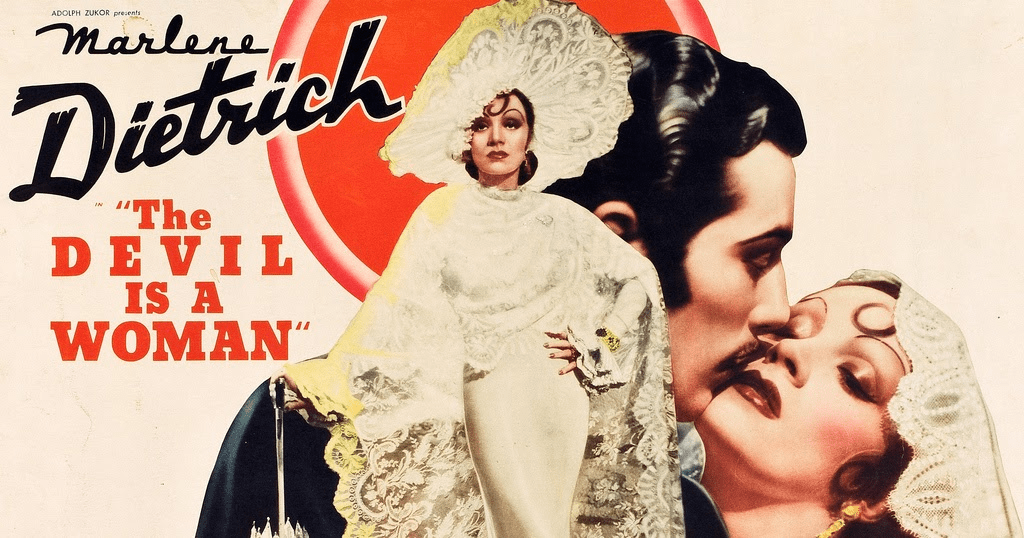
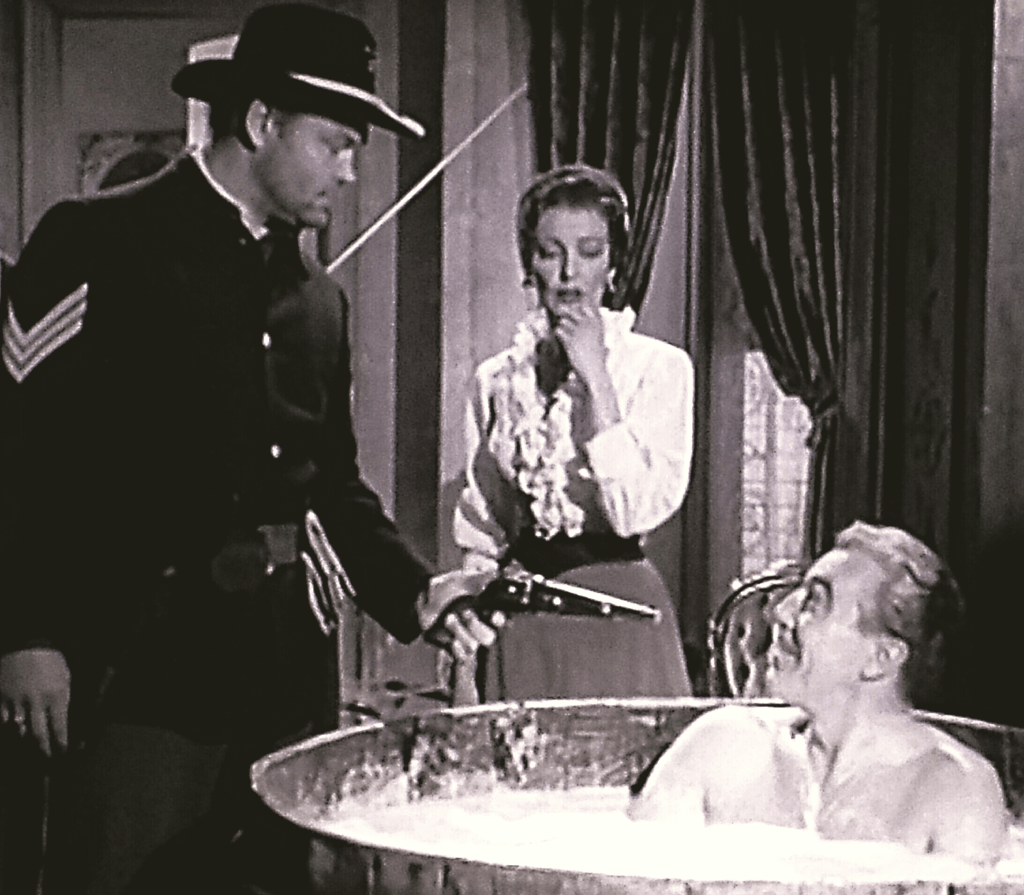
Later Romero would refer to himself as the Latin from Manhattan and he provided for his family members who followed him to Hollywood. He played the stereotypical Latin lover during the thirties and forties, including The Devil is a Woman with Marlene Dietrich in 1935. However, he also made westerns and did a bit of dancing during these decades on the big screen.
His friendship with Frank Sinatra brought him roles in Around the World in 80 Days, Pepe, Marriage on the Rocks, and Oceans’ 11.
📷imdb.com Wagon Train
In 1942, Cesar enlisted in the US Coast Guard, serving in the Pacific Theater of Operations. After his military career ended, Romero returned to his acting career.
His television career began in 1948 in the show, Variety. During the fifties he was primarily appearing on dramas, but he did show up on Private Secretary with Ann Sothern and continued his western roles on Wagon Train, Zorro, and Death Valley Days.
The sixties kept him extremely busy on television. He kept people laughing on Pete and Gladys, The Ann Sothern Show, Get Smart, and Here’s Lucy. He rode the range on Stagecoach West, Bonanza, Rawhide, and Daniel Boone. He stayed dramatic on shows including 77 Sunset Strip, Dr. Kildare, and Ben Casey.
📷wallpaper.com
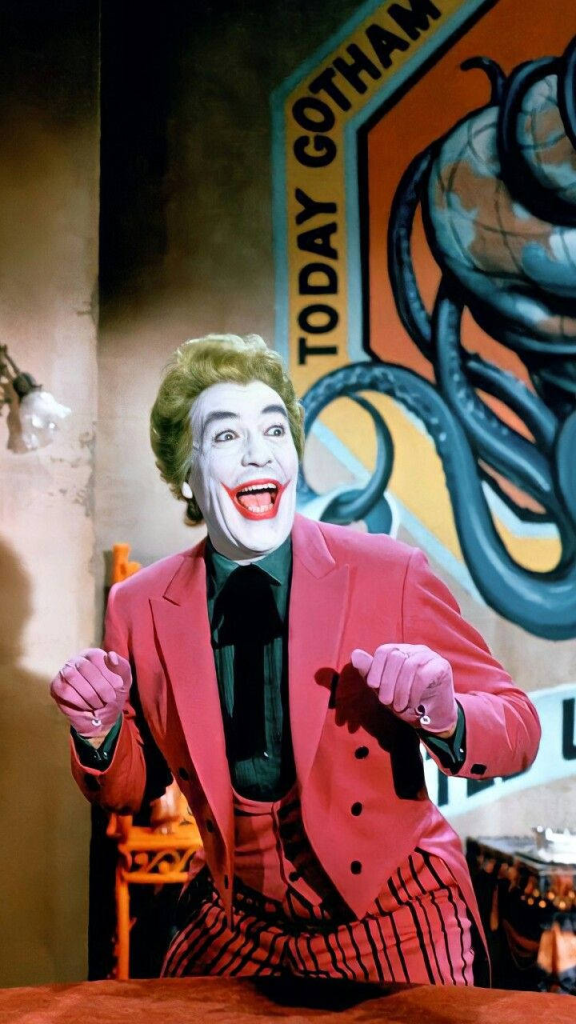
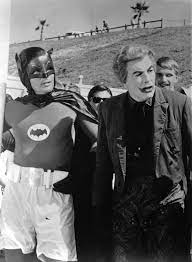
However, the show he was best known for in the sixties, is the show that made him part of my blog series this month, Batman. He had to endure a long time in the make-up chair. He refused to shave his mustache for the role, so white face makeup was smeared all over his face until it was hidden.
Romero admitted that this role reinvigorated his career. When he was offered the role of the Joker, he was 59 years old. Romero said the role was “the kind of part where you can do everything you’ve been told not to do as an actor. You can be as hammy as you want.”
He discussed how surprised he was when William Dozier called him about the show. He said Dozier told him that “the important characters were all villains. They had done the first two with the Riddler and the Penguin with Frank Gorshin and Burgess Meredith, and now they were ready to do the third, and the villain was the Joker. He said, ‘I would like you to play the part.’ So, I said I would like to read the script and know what it is all about. He said, ‘Come on over to the studio, and I will show you the film of the first episode.’ Of course, it was great. I said, ‘Let me read this Joker part, and if it is as good as the first one, hell yes, I will do it.’ So I read the script, and I thought it was a gas, and I said, ‘Sure, I’ll do it.’”
No serious villain, the Joker was cheerful and extroverted. He oozed goofiness and always appeared to be having a great time carrying out his nefarious activities. Dressed in his famous purple costume, he had his own automobile that could rival the Batmobile.
📷facebook.com
While most of the villains saw Batman and Robin as roadblocks in their evil schemes and problems to take care of, the Joker found great joy in taking down the superheroes. In one episode he says “Oh, but I must, I must! Why, outwitting Batman is my sole delight, my heaven on earth, my very paradise!”
You couldn’t miss him if you watched almost any television in the 1970s and 1980s. He appeared on a ton of shows, just a few of which included Bewitched, Nanny and the Professor, Love American Style, The Love Boat, Night Gallery, Mod Squad, Ironside, Medical Center, Charlie’s Angels, and Hart to Hart.
From 1985-88, he was a regular on Falcon Crest. Earl Hamner Jr., the creator of The Waltons, created this show featuring the Gioberti family, owners of Falcon Crest Winery. Romero played the love interest of matriarch Angela Channing, played by Jane Wyman.
He finished his career in the 1990s. He was in his eighties when he appeared on The Golden Girls, and Murder She Wrote, his last television role.
Romero also played a role in politics. As a registered Republican, he was very involved in many campaigns. He worked for Nixon-Lodge in 1960 and later supported Lodge in his run for President. When Lodge did not get the results that he hoped for, Romero turned his support to Barry Goldwater for the general election. He also worked for his friend George Murphy in his run in the California senate race. He later helped Ronald Reagan in his gubernatorial runs in California as well as his presidential campaigns.
It was reported in many articles that Romero had 30 tuxedos and more than 500 suits. That is not surprising because he had a clothing line, Cesar Romero Ltd. He was also a model and spokesperson for Petrocelli suits in the sixties.
Romero stopped acting in 1990. He remained busy though with several ventures including hosting classic movie programs on television. In 1994, Romero died from complications of a blood clot on New Year’s Day. He was being treated for bronchitis and pneumonia.
I enjoyed getting to know a bit more about Cesar Romero, but, I have to admit, that I don’t feel like I know him much better than I did before. He seemed to have been stereotyped as a Latin lover and then again as the Joker. I would like to go back and watch some of his appearances on westerns. It was hard to find much information about Romero beyond his career and political interests.
📷etsy.com
I know The Joker was not his most challenging role, but he will always have a place in America’s heart for the work he did on Batman as will these fun super villains we got to know this month.
















 thewritelife61