The Tom Ewell Show: Surrounded by Women

Thanks for joining me today. We are having fun with this month’s blog series, “It’s Their Show,” and today we are taking a closer look at The Tom Ewell Show. The shows we are delving into this month were all movie stars jumping from the big screen to the small screen. Some of them landed on their feet and some didn’t.
📷ebay.com

While most of the shows we are covering have a star we all know, Tom Ewell is no longer a household name. His first movie was in 1940, and he’s probably best known for The Seven-Year Itch with Marilyn Monroe. He did become a television fixture, starring in the soap Search for Tomorrow as well as a cast member of Baretta in the seventies and Best of the West in the eighties.

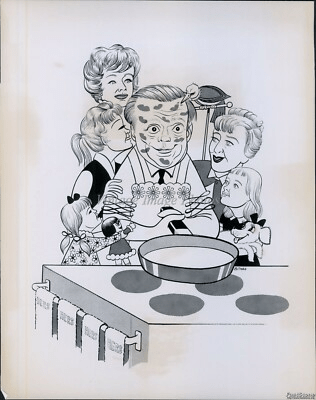
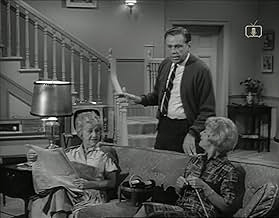
The Tom Ewell Show debuted on CBS in 1960 and was on for one season. The premise is about a guy who has to navigate life with a lot of women: his wife (Marilyn Erskine), daughters (Cynthia Cherault,  Sherry Alberoni and Eileen Chesis), mother-in-law (Mabel Albertson), and a female dog and a parakeet.

Tom Potter is described as a “bumbling” father. I’m not sure why so many shows in the early days featured a wife who caused complications for her husband or a bumbling husband. Potter was a real estate agent. Rounding out the cast are friends pharmacist Howie Fletcher (Norman Fell) and Jim Rafferty (Barry Kelley).

Potter loves sports, but the rest of his household is not too interested. Often, he is watching a sporting event on television while telling his family about the high points when they obviously could care less.
📷imdb.com

The concept of the show was set up in the opening which showed Tom looking around and then being put into a house before seeing the house overrun by women.

The show was created by Madelyn Pugh Davis and Bob Carroll Jr. who wrote for I Love Lucy. Pugh Davis said she based the show on her family. Her family had all girls and a mother-in-law in the house.

Ewell owned the production company in partnership with Davis and Carroll and Four Star Productions. Quaker Oats and Proctor and Gamble alternated sponsorship of the show.

Time reviewed the show after its debut and said “The Tom Ewell Show leads a relentless parade of situation comedies, all designed to show that American family life is as cute as a freckle on a five-year-old. The show, which might also be titled Father Knows Nothing, presents the comic with the excavated face as a bumbler named Potter who is trapped in the customary format: Harassed Man Beaten Down by Wife, Three Daughters, Mother-in-Law. In the opening episode, Ewell could find no better way to outsmart his spendthrift women than closing his bank account and ruining his own credit. For those who may have tuned out early, the women were all set to start spending again.” Not a great review.

📷imdb.com

This makes the female characters sound very unappealing, but on the show, his wife and daughters were delightful. His mother-in-law liked him and they often bantered back and forth; I think it’s worth watching the show just to see Mabel Albertson in action. However, the plots left a bit to be desired: Tom teaching his wife to drive a car, his daughter learning to play the tuba; and the typical sibling issues of everyone wanting to use the phone and the bathroom at the same time.

The show struggled finding viewers. Associated Press television critic Cynthia Lowry interviewed Ewell that fall, and he said that he had read both the positive and negative reviews of the show. He agreed with the critics who felt that Potter was too inept, and the comedy centered more on that and their family life. He said for December episodes, that issue would be addressed in the writing, and the family dog and parakeet were being dropped from the show. Unfortunately, it was not enough to attract viewers, and the show was canceled after one season.

📷youtube.com “Spelling Bee”

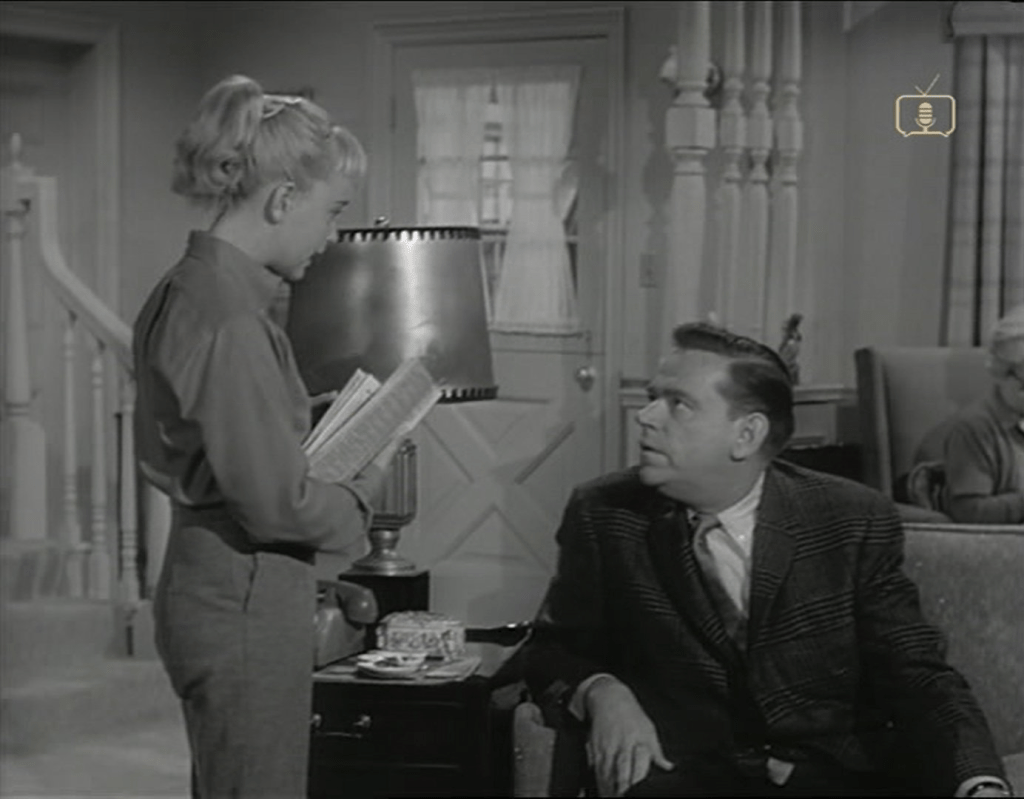
In an episode I watched, “The Spelling Bee,” from late November, Tom is trying to interest his family in golf. When he finally got them to watch a golf match, the females were more interested in what the golf spectators were wearing. And then his youngest daughter ran in and turned the station to a kid’s show. One of his girls is practicing her spelling to try to win a trip to Washington DC by winning the all-state spelling bee.

When Tom leaves the house, he continues to run into fathers and sons who are playing baseball, going fishing, working together, or talking about sports. Tom daydreams he has three boys, but we realize that he is holding a skein of yarn for his daughter while he does so. He tries to talk his oldest girl into going into the real estate business. Later he tries to talk his middle daughter Debbie into giving up spelling for golf. He also tries to get his wife to go bowling with him. When Tom realizes that one of his friends has a son trying to win the spelling bee as well, he turns it into a big sports event and is determined to beat them.

He buys a bunch of dictionaries and then gets up early to “train” Debbie. However, she had already left the house and when she returns, he finds out she’s been on the driving range practicing her golf, so they can be in a father and child golf match. He drills her on spelling the rest of the day. That night Debbie comes down with laryngitis.
📷imdb.com

Her grandmother gives her honey and lemon. The following night they attend the spelling bee, and Tom gives Debbie a pep talk, but then he reminds her he loves her no matter what. Of course, the final two contestants are Debbie and the son of Tom’s friend. She wins, and she and her dad get to travel to Washington, DC where they meet the President. The show ends with Tom telling his friend about all the great non-sport talents his girls have. It was a cute show, and the characters were all likable. There were a few great one-liners. It would not make my top 25 shows, but it was much better than many of the sitcoms in the sixties.

The show had a decent time slot. It was on Tuesday nights at nine, competing with Stagecoach West and Thriller. While both of those shows garnered decent ratings, neither of them was in the top thirty. The primary director was Hy Averback, who would later direct twenty episodes of MASH. So, they had the right elements in place, but the show just could never find its fans.

Larry Rhine talked about writing for the show. Rhine said Ewell was a nice man, but he said Ewell didn’t think the kids should be involved in the show much because they didn’t have the caliber of other actors. Rhine told Ewell they could consider them more as props which seems like a strange concept for a family show, considering that the episode I watched revolved around the daughters.

📷imdb.com

Rhine said Ewell found the show was over when he was on the set one day and he was called to the telephone about a trip he was supposed to take with CBS, and he was told that he was no longer part of the group because he had been fired.

I’m guessing part of the problem with this show getting renewed is that it debuted when westerns were still king and many of the television schedule spots were already filled with them. While it was definitely not a terrible show, the sixties were on the cusp of introducing very different sitcoms than the family-based ones that filled the fifties’ slots. By 1965 we would be tuning into Batman, Honey West, Hogan’s Heroes, The Smothers Brothers Show, and I Dream of Jeannie. However, that said, there are worse ways to spend a weekend than viewing a season of The Tom Ewell Show.

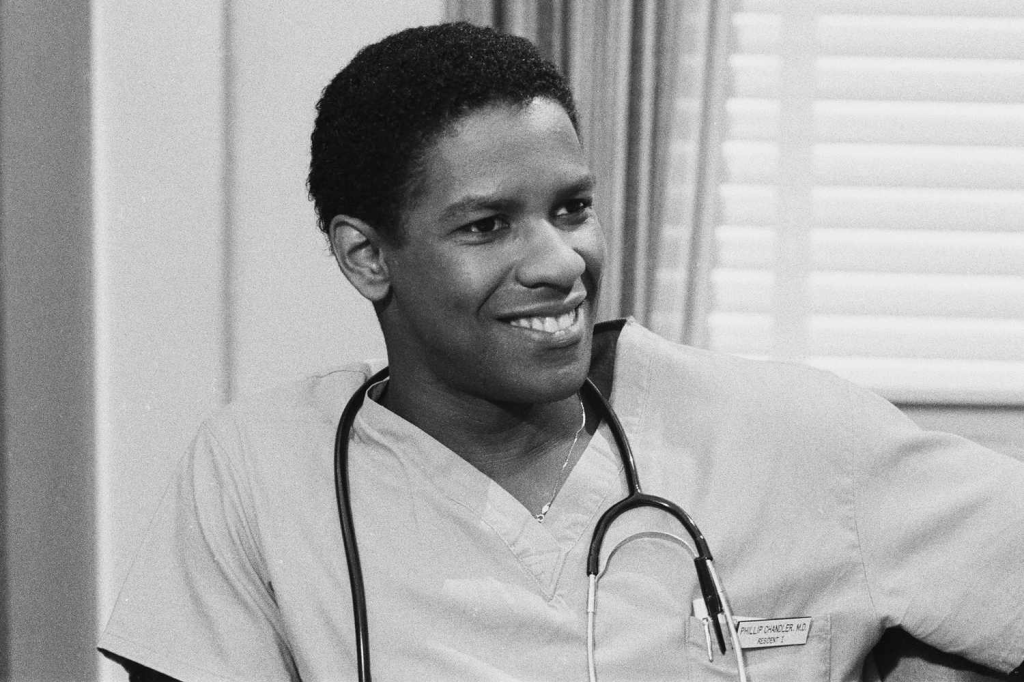
St. Elsewhere: Medicine Doesn’t Always Give Us The Ending We Wanted

Today we are winding up our blog series, “Examining Some of Our Favorite Medical Shows.” Six years seems to be the magic number of seasons for many medical shows and it was no different for our series today: St. Elsewhere.

Photo: starstills.com

St. Elsewhere was created by Joshua Rand and John Falsey. It aired on NBC from 1982-88. It was produced by MTM Enterprises, Mary Tyler Moore’s company that also produced Hill Street Blues; both shows had large casts, realistic plots, and continuing storylines.

The show was talked about a lot, but I was surprised to learn that it never ranked higher than 47th in the Nielsen ratings, and that was in the final season. The reason it stayed on the air so long despite lower ratings was that it did very well with the 18-49 year age group with the networks were trying to appeal to. It did win 13 Emmys for writing, acting, and directing. (Overall the show won 13 Emmys out of 62 nominations.)

St. Elsewhere was set in St. Eligius Hospital, a rundown Boston teaching hospital. Its elevators don’t work and they still use an ancient tube system to send messages from one floor to another. Apparently “St. Elsewhere” was a slang term that referred to not well-equipped hospitals that served patients who were turned away from more well-respected institutions. The building that served as the hospital façade was the Franklin House on East Newton Street in Boston, which was originally a hotel for women. Young working women lived there including Faye Dunaway after she graduated from Boston University.

The show intertwined the professional and private lives of the medical staff and patients. It dealt with many cutting-edge social issues including heart transplants, artificial hearts, AIDS, religious conflicts, suicide, and gender identities.

Photo: people.com

Surgeon Dr. Mark Craig (William Daniels) informs the staff that their hospital was considered a “dumping ground.” Craig helped train the interns along with Dr. Donald Westphall (Ed Flanders) and Dr. Auschlander (Norman Lloyd). Flanders was a popular character and the role was originally offered to Hal Linden who turned it down. Other members of the stellar cast included Ed Begley Jr. (playing Dr. Ehrlich), David Birney (playing Dr. Samuels), Mark Harmon (playing Dr. Caldwell), Ronnie Cox (playing Gideon), Helen Hunt (playing Clancy Williams), Howie Mandel (playing Dr. Fiscus), Christina Pickles (playing Nurse Rosenthal), and Denzel Washington (playing Dr. Chandler). This was a fitting role for Denzel who was a pre-med student in college.

Daniels was sent five scripts. He thought the writing was wonderful and having so many scripts displayed how the ensemble cast would be used. He might have a large part one week and then three weeks with small parts. He said Dr. Craig was like him in many ways. He ran the gamut from angry to nice in minutes. It fit his temperament and was wonderful to play him.

Daniels met a surgeon and followed him around the hospital, including in the operating room for an open-heart surgery procedure. He said he used some of the medical information, but he did not like the surgeon as a person and did not model Dr. Craig on him. He said using so much medical jargon was difficult and he had to learn about it before he went in to rehearse. He said that Dr. Craig had some funny lines in the show. He said he did not have any input with the writers on his character; in fact, they never really saw the writers.

Photo: ebay.com

Among the many guest stars were James Coco and Doris Roberts who both picked up Emmys as a mentally challenged boyfriend and a bag lady. It was an interesting storyline where two couples are followed through their medical care. One couple is upper middle class and the other has no money. Nothing is said; there are only observations of the action. The wealthier woman leaves the hospital with no cure but a high hospital bill for many tests. The bag lady, Cora, learns she needs to have both feet amputated because of gangrene, but she needs to take care of Arnie, her mentally challenged boyfriend, so she refused the surgery.

Roberts was asked about her role on the show in a Television Academy interview. She said Coco had received the script and called her to say she needed to audition for the role of his girlfriend. When Doris reached out, they declined, so she reached out to Bruce Paltrow, who was a producer and writer for the show, and she was hired. She did a lot of research watching homeless people. She realized that most people squatted because they did not want to lie down because they were worried about having things stolen. This is how her character got gangrene. When asked about what she thought happened to the character she said she thinks she died shortly after. Roberts got emotional discussing the role and said it still makes her cry. She said it was the best dramatic role she ever played.

Doris said one funny moment came at the Emmy Awards. When they called her name, she did not know what to do with her purse, so she handed it to Jimmy Coco. The next name called was his so he came on stage with the purse and mentioned he didn’t use one often but it came from Doris. Then a few nights later he was on the Tonight Show, and when he came on stage he had her purse and in it was a cigar, a half-eaten sandwich, and a few other items.

Photo: ebay.com

The show was classified as a drama, but it included comedy, as well as inspiring moments of interaction and care. One of these scenes is when Jack, a resident, has to deal with his wife’s death. She is an organ donor, and her heart is given to a female patient. Jack sneaks into the patient’s room when she is sleeping so he can listen to his wife’s heart.

Jazz musician Dave Grusin composed the theme. Grusin won twelve Grammys. He won an Academy Award for his score of The Milagro Beanfield War in 1988. He also scored some popular films including The Graduate, On Golden Pond, The Fabulous Baker Boys, and Tootsie. Before writing the theme for St. Elsewhere, he cowrote the themes for Good Times and Baretta.

One of the most interesting things about the writing on St. Elsewhere was the number of allusions to other television shows and movies and several cross-overs. There are many of these but some of the most fun ones for me included (1) the public loudspeakers often page characters from other television shows, (2) one of the characters on The White Shadow, Warren Coolidge, becomes an orderly and sometimes wears Carver high school shirts, (3) a psychiatric patient who watches The Mary Tyler Moore Show believes that he is Mary Richards and has an encounter with Betty White, and she says she is not Sue Anne Nivens, (4) Dr. Craig once mentions serving in Korea with B.J. Hunnicutt, and (5) the teaching doctors are seen at the bar at Cheers in one episode.

Photo: imdb.com

The hour-long show started on Tuesday nights. The show was canceled after the first year. Then Grant Tinker changed his mind and they were back on the air. For the second season, it was moved to Wednesdays where it remained until it was canceled.

The finale of this show gets talked about almost as much as Newhart. However, while fans loved the Newhart ending, there was a lot of controversy over the ending of St. Elsewhere.

Warning: This is a spoiler alert if you haven’t seen the show and want to watch it. After wrapping up several storylines, the final scene is a much younger Dr. Westphal and his son Tommy (Chad Allen) who has autism. Westphal is obviously a construction worker. Dr. Auschlander appears to be Westphal’s father. Tommy is playing with a snow globe and the two “doctors” discuss the fact that Tommy spends much of his day staring at the snow globe. They set the globe down and when the camera goes in close, we see St. Eligius inside.

We are left to assume that the entire series had been Tommy’s imagination. In other words, the show was fiction but the fiction was also fiction inside someone’s mind. Viewers understandably were confused and upset.

Photo: paleymatters.com

Later the cast did a special on Entertainment Weekly and was asked to share their thoughts about the finale. Here are a few of the comments. Chad Allen said, “From the mind of a young person whose fantasies were coming to life before him, it was neat.” William Daniels said he was “shocked, actually. I had no idea of their plans to do that. . . it was a provocative ending. A surprise to everybody.” Ed Begley Jr. felt that “it was quite fitting for what they had done the previous six years. They always tried to be out there, beyond the limits of what was being done before. They tried to think outside the box. . . . It was bold and shocking and upset some people.  . . . It was highly unpredictable, just like every episode.” Howie Mandel knew it would offend half the viewers and appeal to the other half, but he described it as “ahead of its time, pretty ingenious, and creative and not like anything else.” Mark Harmon had been killed off earlier in the series, but said, “It made me smile when I heard about what they did because it was so them. They made a choice. and the choice is interesting.” Noman Lloyd said he “never bought it. I said at the time we were shooting, ‘This is a cheat.’ For me, it was a cheat.”

I will admit this was not a show I regularly watched. I find the entire philosophy of the ending fascinating. Many felt they had been cheated by getting pulled into the lives of characters for six years that never existed. However, if they are on a television series, did they ever exist? It shows how real characters become to us when we invest in a show and invite these people into our homes every week.

If you didn’t watch the show in the eighties, you can find it on Hulu and make your own decision about the finale. I do admit that I never look at snow globes the same way anymore.

The Rockford Files: The Detective Voted Most Likely to Still Have An Answering Machine

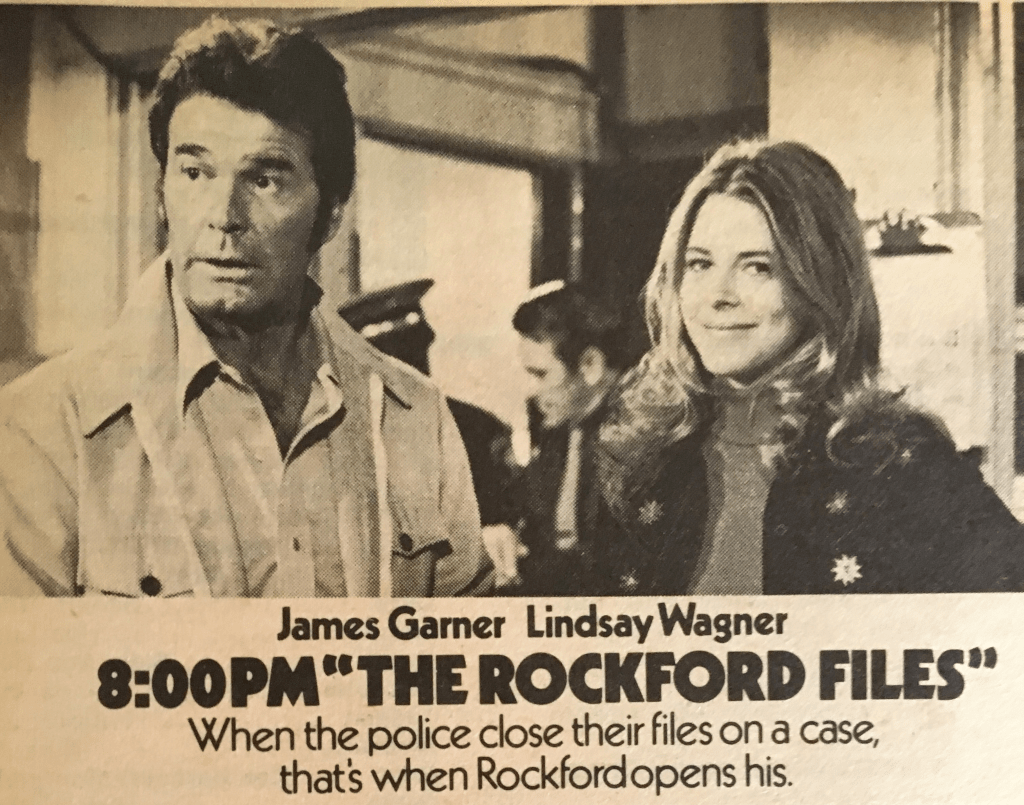
As we are taking a look back at some favorite crime shows, The Rockford Files with its memorable answering machine message opening and fun theme song, is one that definitely is worth exploring. The show was on NBC from 1974-1980.

Photo: thetvprofessor.com

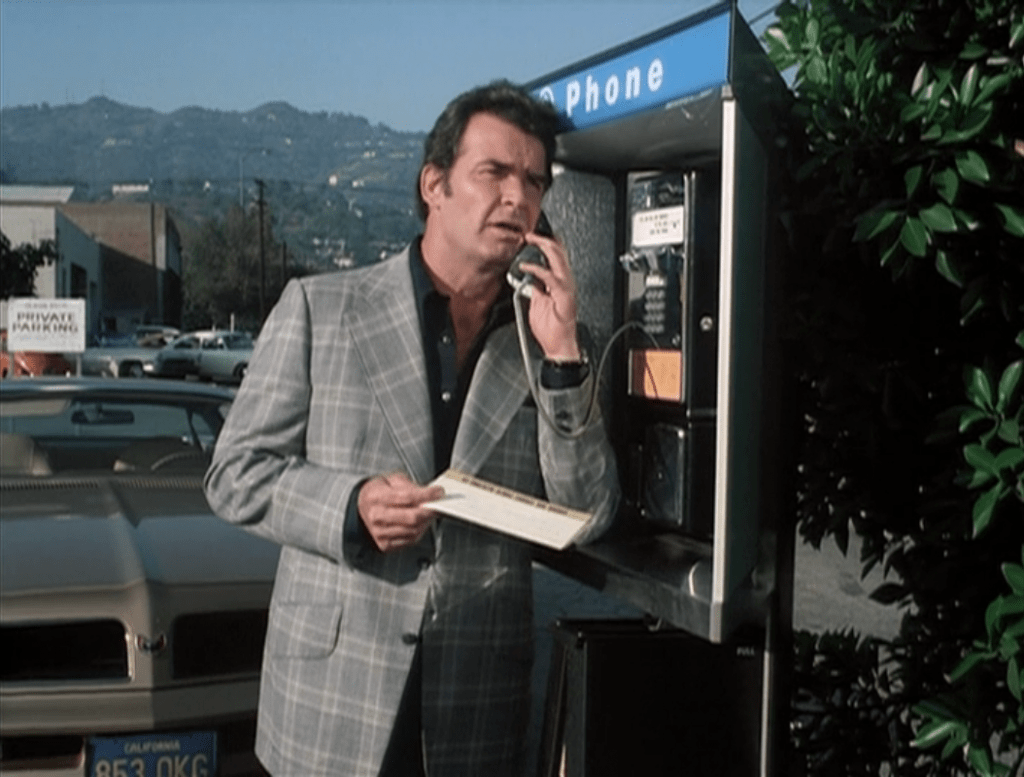
Jim Rockford (James Garner) is not the average TV detective of the seventies. He does not have an elegant apartment; his clothes come off the rack, not a designer’s showroom; and he doesn’t have a sexy assistant, just his dad, a former truck driver who sometimes helps him out. He lives in a small mobile home in a parking lot; the home also serves as his office.

Creators Roy Huggins and Stephen J. Cannell created the show. Huggins had also been the force behind Maverick which also starred Garner from 1957-1962. Robert Blake was also considered for this role, but Huggins cast him in Baretta, another one of his shows.

Rockford has a gun, but no permit for it. However, he prefers to talk his way out of most situations. He tends to work on cold cases, missing persons, and low-budget insurance scams.

The story was that Rockford was incarcerated in San Quentin for five years for a crime he did not commit. Eventually, he was pardoned, but now he is having a tough time making ends meet. He’s a private eye who charges $200 a day (about $1000 today) but he doesn’t get enough work to do more than pay the rent and incidentals.

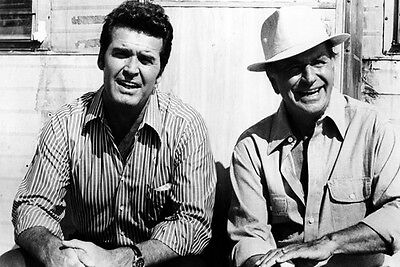
Garner with Noah Beery Jr. Photo: ebay.com

His father Joe (Noah Beery Jr.) nags Jim to find a more secure job and to settle down and get married. Jim’s friend Joe Santos (Dennis Becker), a sergeant for the LA Police Department, also helps him out from time to time.

Rounding out the cast were Evelyn “Angel” Martin (Stuart Margolin) who had been Jim’s friend in prison. His con artist schemes cause a lot of headaches for Jim. Beth Davenport (Gretchen Corbett) is Jim’s attorney and sometimes girlfriend. Lt Diehl (Tom Atkins) was on the first half of the show while Lt Doug Chapman (James Luisi) was on the final three seasons. Neither of them like Rockford much.

This show had an impressive list of guest stars, including Lou Gossett Jr., Isaac Hayes, Rita Moreno, Tom Selleck, and Dionne Warwick. Garner’s brother Jack also shows up in quite a few bit parts; you can see him as a policeman and gas station attendant, among other minor roles.

Photo: autoweek.com

Jim drove a gold Pontiac Firebird. Rockford was known for his “turn-around” to evade police and criminals, a procedure commonly taught to Secret Service agents. As Garner described it in his autobiography, “When you are going straight in reverse about 35 mph, you come off the gas pedal, go hard left, and pull on the emergency brake. That locks the wheels and throws the front end around.” Then you release everything, hit the gas, and off you go in the opposite direction.”

The theme song for the show was written by Mike Post and Pete Carpenter. It went through several versions over the years. It hit the Billboard Top Ten in 1975.

When I think of the show, the iconic answering machine introduction is what comes to mind. After two rings, you heard, “This is Jim Rockford. At the tone, leave your name and message. I’ll get back to you.” Typically, the message was its own little skit which help us get to know a little bit more about Rockford. The writers had to come up with 122 different messages during the run of the show.

Photo: travalanche.com

The show was popular with viewers throughout the four seasons. However, after being #12 in its first year, it fell to #58 by season five. In 1979, Garner was advised by his doctors to take some time off because he was suffering some knee and back problems, as well as dealing with an ulcer. Until then, he had performed many of his own stunts on the show. When the physical pain did not get dramatically better, Garner decided not to continue with the show, and the network canceled the program midseason.

It was also popular with critics. James Garner was nominated for Outstanding Lead Actor in a Drama in 1976, 1977, 1978, and 1979; he won in 1977. The show was nominated for Outstanding Drama Series from 1978-1980; the show won in 1978. There were an additional nine nominations with Margolin winning two and Rita Moreno winning two.

Photo: imdb.com

If you were a fan of the show, you will know a few of these fun facts about Rockford. One of his favorite foods was tacos, and he ate a lot of them on the show. When he needs an alias, he typically was Jim Taggert. Rockford’s full name is James Scott Rockford; the star of the show’s name is James Scott Garner. Rockford was a Korean vet, and one of his military friends was played by the great Hector Elizondo. He cares for a stray cat who lives near his home. And, last but not least, a running gag of the show is that even though Rockford’s job involves crucial details, he can never remember license plate numbers.

This show holds up well today. The show is on DVD and can be found on several cable channels. Check it out, even if you just want some inspiration for creative voice mails.

Sirota’s Court: It Never Got a Fair Trial

We are in the middle of my “Don’t Judge Me” blogs. Today I am picking up my gavel to make a ruling on Sirota’s Court.

Photo: filmaffinity.com

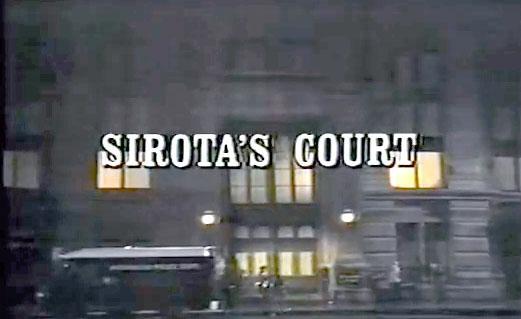
This sitcom made its debut December of 1976. By April of 1977, it had disappeared from the airwaves. It was produced by Peter Engel Productions and Universal Television.

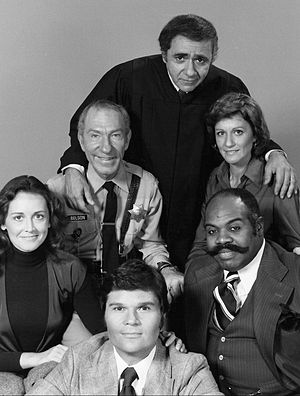
The show followed Judge Matthew Sirota (Michael Constantine) who sits on the bench for the night court. He works with, and has an off-again, on-again romantic relationship with, court clerk Maureen O’Conner (Cynthia Harris). The liberal public defender is Gail Goodman (Kathleen Miller) who battles with private attorney Sawyer Dabney (Ted Ross) and assistant district attorney Bud Nugent (Fred Willard). Bailiff John Belson (Owen Bush) has the judge’s back. Like the Mary Tyler Moore Show, the series devotes time to Judge Sirota’s professional and private lives.

Photo: ptwikipedia.com

If that concept sounds eerily familiar, it should. Seven years after Sirota’s Court left the air, Night Court appeared. Maybe Sirota’s Court was ahead of its time or could not survive the scheduled competition, but it’s hard not to see Night Court as an almost identical clone of this show. The newer judicial comedy featuring Harry Anderson would last nine seasons and produce 193 episodes.

In the original version, the Honorable Sirota incorporates a sense of humor and a boatload of common sense into his courtroom. Being in a large metropolitan city, Sirota is a surprisingly compassionate judge, considering the bizarre cases, the odd clients, and the eccentric court comrades he has to deal with. He often had to take on the role of referee between public defender Goodman who was trying to make the world a better place however she could, attorney Dabney who only cared about making a buck, and totally inept assistant district attorney Nugent.

The show employed a lot of different writers for only thirteen episodes. Twelve different writers were credited on the series. Some of the plots included Judge Sirota trying to prevent being named one of the ten worst judges in America, dealing with dentists who were using laughing gas on election night, or the night a full moon brings in an even more ridiculous roster of bizarre situations to rule on.

Photo: sitcomsonline.com

The show was on Wednesday nights. There was no way this series was going to obtain satisfactory ratings going up against All in the Family and Baretta. All in the Family was in the seventh year of its nine-year reign and still was in the top twenty. Baretta, which was in its third year, had a solid following and was in the top ten. In addition, the show took a lot of heat for one of its episodes, “Court Fear,” when the judge performed a same-sex wedding. It’s creator, Peter Engel, mentioned several times that the show “never got cancelled, it just sort of faded away.” Another factor may have been too many writers. Considering Jack Winter wrote 4 of the 13 episodes, that left 11 writers covering the other 9 shows. Perhaps there was not enough time to fully develop the characters with so many different perspectives.

Photo: tvtango.com

Considering there were only 13 episodes, it’s impressive that Sirota’s Court was nominated for an Emmy for Outstanding Art Direction or Scenic Design for a Comedy Series and for a Golden Globe for Constantine for Best Performance by an Actor in a Television Series, Musical or Comedy. Constantine was up against Tony Randall for The Tony Randall Show, Freddie Prinze for Chico and the Man, Alan Alda for MASH, and winner Henry Winkler for Happy Days.

Photo: pinterest.com

Unfortunately, I could not find DVDs for this show anywhere, even the rare and hard-to-find DVD sites. It would be interesting to compare it with Night Court and see how similar the two shows actually were. My ruling is that the show was competent to stand trial, but the powers that be were too quick to negotiate a settlement.