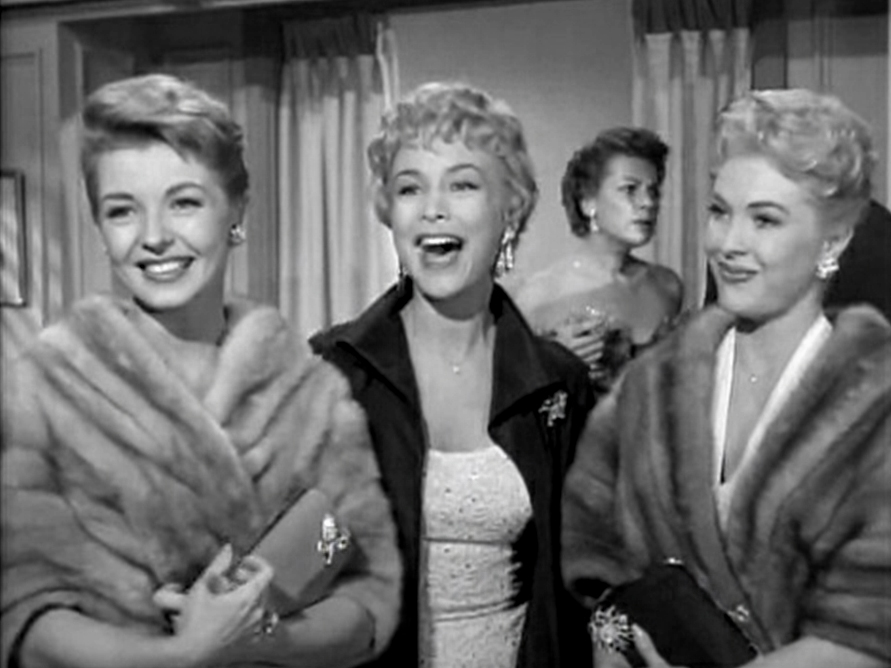
It’s 2026! And it’s a new month, so we are starting the year off with “Worth a Million.” This month we are learning about the careers of several of the cast members from How to Marry a Millionaire. This show debuted in 1957 and aired for two years. Up today is Lori Nelson.
📷imdb.com first season, How to Marry a Millionaire
According to imdb.com, the plot of the show is “Motherly Mike (Merry Anders), ditzy but sexy Loco (Barbara Eden), and sensible Greta (Lori Nelson) move to the big city to find themselves wealthy men to turn into husbands. After the first year Greta gets married with Gwen (Lisa Gaye) the new roommate in this syndicated series.”
In season two, Lori Nelson left the show. She felt she was the best actress in the series, and she did not like the development of her character. She claimed Anders got all the wisecrack dialogue while Eden was the sexy, bubbly star. So, the writers married Greta off to a gas station owner, and they moved to California. Lisa Gaye was then hired as Gwen to take her place.
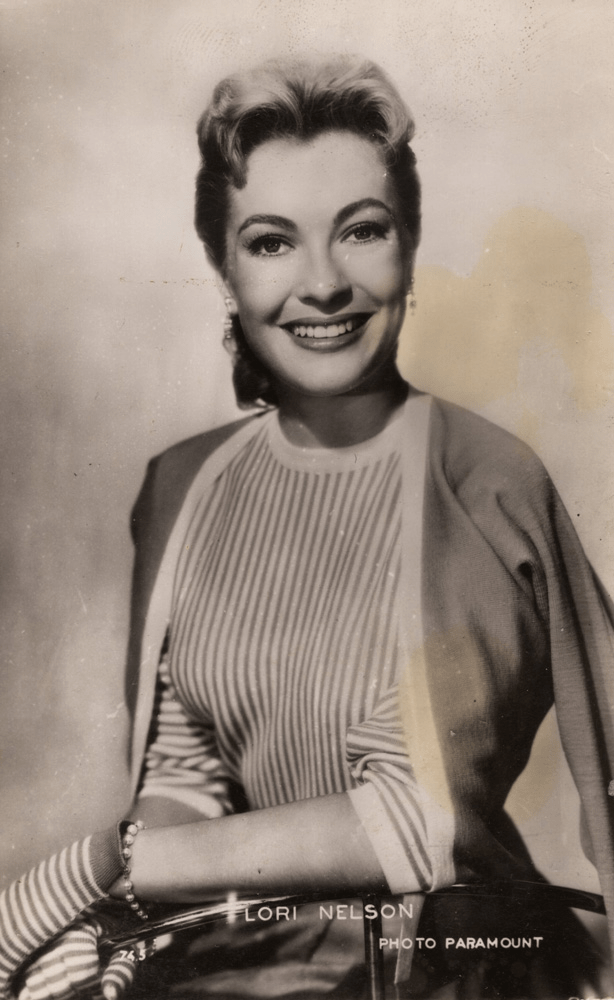
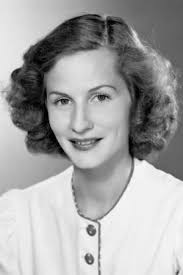
Lori was born Dixie Kay Nelson in New Mexico in 1933. Her father managed a metal mine company there. At age two she appeared in local theater productions. She was voted Santa Fe’s most-talented and beautiful child and toured the state as “Santa Fe’s Shirley Temple.”
By the time she was four, her family was living in California. By the ripe old age of five, Nelson won the Little Miss American pageant, and she toured veterans’ hospitals, took roles in local theater productions, and modeled for photographers.
📷virtualhistory.com
When she was seven, she contracted rheumatic fever and was bedridden for four years. After she recovered, she continued her entertainment work and became Miss Encino at age 17.
While working as a model in 1950, Nelson signed a seven-year contract with Universal-International. Her film debut was in a western, Bend of the River.
She continued to appear in films throughout her career, taking roles in 24, with her last one being the uneventful The Naked Monster in 2005. I sometimes wonder how movies like this ever end up on the big screen before someone with a bit of common sense stops it. The description for this one, according to imdb.com is “A brain-dead sheriff, a stolid secret agent, and a sexy scientist team with a grumpy retired monster fighter to battle a 60-foot, three-eyed cross between a man and a dinosaur.” However, if you have seen this movie and want to make a case for it, I’d love to hear more about it.
Nelson transitioned to television with her role in How to Marry a Millionaire. After she left the show, she continued to take offers from a variety of series, 18 in all, including Wagon Train, Tales of West Fargo, and Bachelor Father, with Family Affair being her last television appearance in 1971.
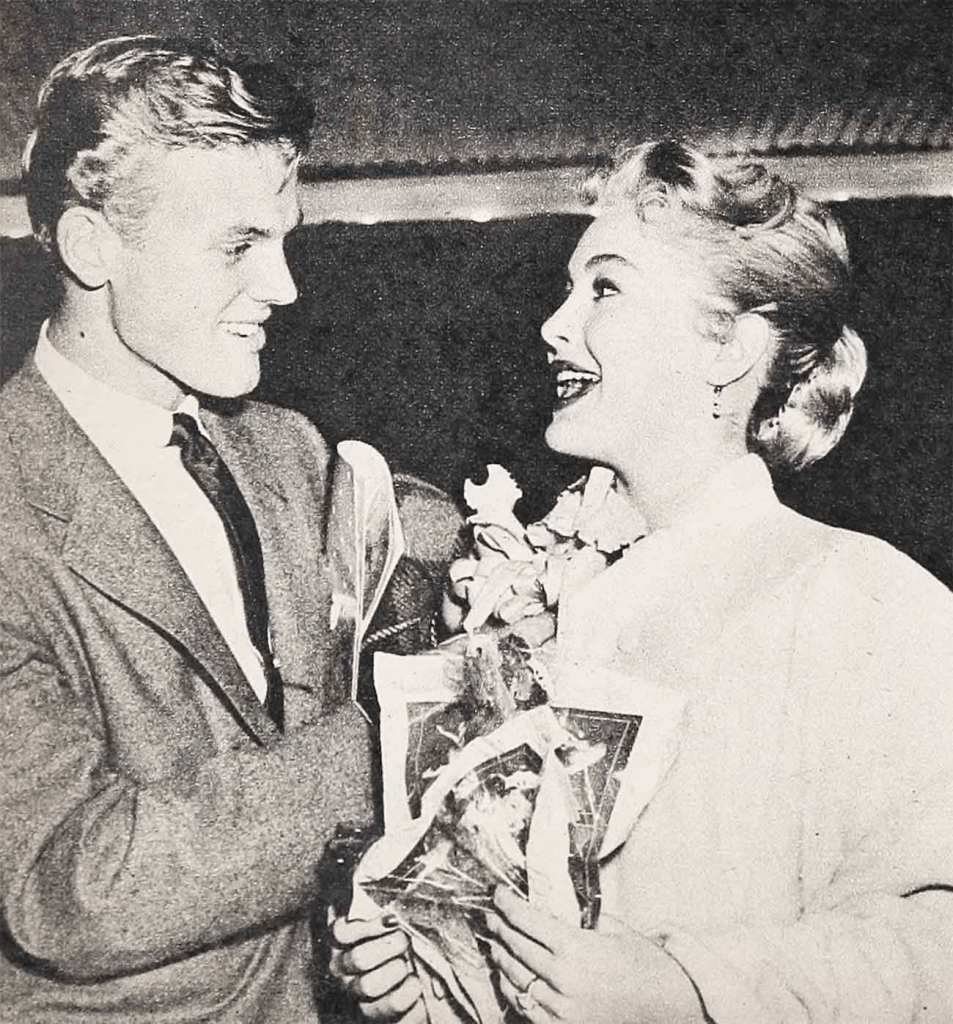
📷vintagepaparazzi.com with Tab Hunter
Nelson began dating Tab Hunter in the fifties and their friends thought they would marry. In his autobiography, Hunter relayed that he almost married Nelson, but he was also involved with figure skater Ronald Robertson at the time and was struggling to determine his sexual identity. Nelson and Hunter ended their relationship, but they remained friends, and she guest starred in several episodes of The Tab Hunter Show.
In 1960 Nelson married composer Johnny Mann and the couple had two daughters before divorcing in 1973. In 1983 she married Joseph Reiner, a police officer. After 1971, she was only in a handful of movies and videos. I’m guessing she didn’t miss the limelight; she said she always preferred popcorn and peanut butter to champagne and caviar.
Nelson died at age 87 from Alzheimer’s disease. I don’t think Nelson had the career that she had envisioned for herself, but I’m grateful we have her as part of the history of this blog and How to Marry a Millionaire. The episodes I watched had some witty dialogue and fun plots.
Welcome to October, and welcome to our blog series for the month, “Get Animated.” Up first on the schedule is Mister Magoo.
📷imdb.com
This show was originally aired from 1960 to 1962. It was produced by United Productions of America, and each episode was made up of five four-minute cartoons. Jim Backus voiced Mr. Magoo and other famous voice actors on the show included Bea Benadaret, Mel Blanc, Dawes Butler, June Foray, Paul Frees, Jerry Hausner, Frank Nelson, Benny Rubin, and Jean Vander Pyl.
Mr. Magoo’s first appearance was in 1949 in “The Ragtime Bear.” Created by Milard Kaufman and John Hubley, Mr. Magoo was originally a parody of Joseph McCarthy, a mean-spirited, hateful man. It was meant to protest the Hollywood Blacklist. However, Kaufman found himself on one of these lists and passed the character of Mr. Magoo to Pete Burness. Burness depicted Magoo as a senile old man who was too stubborn to admit his eyesight was going. Backus was already voicing Mr. Quincy Magoo in 1949, so he lived with the character for decades.
In 1964, a similar series debuted called The Famous Adventures of Mr. Magoo which was on one season, and What’s New Mr. Magoo popped up in 1977. Backus continued to voice Magoo until the 1997 big-screen movie when Leslie Nielsen took on the role.
The show won two Oscars for Best Short Subject, but these were both in the mid-fifties before the television show debuted.
📷pinterest.com
I remember watching reruns of the shows when I was a kid, and while I thought some of the shows were funny, I wasn’t a huge fan. I was much more into Scooby Doo, Josie and the Pussycats, and The Archies.
Many kids identified Mr. Magoo with a grandparent: an elderly person who wasn’t ready to accept the fact that they were aging and had some limitations. Mr. Magoo got into a lot of complicated situations because he couldn’t see very well and refused to admit it. He would do things like think he was walking into a men’s clothing store when he was in an army recruitment office and try to purchase clothing.
When making the talk show rounds in the sixties, Backus told a story about how he prepared for the series. He put a fake rubber nose that pinched his own nose, giving it a nasal twang. After being Magoo for a bit, he was able to produce the voice without the fake nose. One of Magoo’s taglines was “Oh, Magoo, you’ve done it again.”
One of the tough things about this show was Magoo’s houseboy Cholly, whose real name was Charlie. Cholly was a stereotype of a Chinese man featuring huge buck teeth and fractured English diction. While several shows had Chinese or Black employees during this era, most of them were not so negative. Rochester often got the better of Jack Benny on his show. On Bachelor Father, one of my favorite sitcoms, Bentley lived with his niece and Peter, his houseboy. But Peter was more of a brother and felt free to speak his mind to Bentley; he was not a demeaning caricature.
📷pinterest.com
Backus seemed to vacillate on whether he liked or detested Magoo. In an article from 2023, Jim Korkis talked about Backus’ relationship with the animated character. Backus once admitted that “I’d like to bury the old creep and get some good dramatic roles in movies. He’s a pain in the posterior. Every time I start to be a serious actor I lose out because someone—usually a producer—says I’m Magoo.” However, Jim also drove around in a car with the license plate “Q MAGOO.”
He said Backus saw his father in the Magoo character who was isolated from most of the world. Another influence for determining the voice was a character Backus developed for his nightclub act. Backus described him as “the loud man in the train club car.
In an Ohio State University publication, Backus said his association with Magoo helped him out one night. He was trying to reserve a table at a restaurant with no luck. He called back as Mr. Magoo, and they gave him a table right away.
As we continue our What a Character blog series, today we get to talk about the woman behind one of my favorite characters, Lillian Bakerman from The Bob Newhart Show. That woman is Florida Friebus.
Friebus was born in Massachusetts in 1909. She was named for her mother’s favorite aunt, not the southern state. Weirdly, her paternal grandmother was also named Florida. Her family was involved in the theater. Her father Theodore was a leading stage actor with Boston’s Castle Square Players and a silent film star. Her mom’s mother, Georgine Flagg, was part of the Augustin Daly stock company in Manhattan.
When she was only eight years old, Florida’s father passed away. Her mother had studied at the Dana Hall Schools and applied for a position of housemother there. Florida was able to study at Tenacre during this time. She participated in the first Christmas pageant in 1921. Florida not only learned a lot about acting, but she also was presented with classes in political history, music, art, languages, and literature.
📷facebook.com with Richard Waring
Friebus moved to New York to study at the Theater Guild School. She began her acting career in 1929 in when she appeared with the Civic Repertory Theater in “The Cradle Song.” In 1932, she worked on an adaptation of “Alice in Wonderland” with Eva Le Gallienne, and she took on the role of the Cheshire Cat.
In 1934, Friebus married Richard Waring. They would divorce in 1952, and she never remarried.
Friebus was elected to the Council of the Actors’ Equity Association in 1949, and she spent 16 years on the board.
Florida read stories to children on her KNXT show, Look and Listen, in Los Angeles.
📷imdb.com
Her first television role was in 1948 on The Ford Theater Hour. Her television drama appearances continued into the 1950s and she also appeared on several sitcoms, including The Goldbergs, Father Knows Best, Bachelor Father, and The Donna Reed Show. In 1959 she accepted a role that made her a household name: Winnie Gillis on The Many Loves of Dobie Gillis. For four seasons she tried to defend Dobie and his crazy dilemmas when his father became exasperated with him.
The show was based on a 1951 book, The Many Loves of Dobie Gillis by Max Shulman about the romantic adventures of a student at the University of Minnesota. Shulman wrote for the series. He would also write The Tender Trap which became a movie in 1955 and House Calls which became a 1978 movie; Shulman became head writer for the television series based on House Calls.
The sixties and seventies found Florida in a variety of both dramas and sitcoms. A few of these series included Ben Casey, Peyton Place, The Doris Day Show, The Mary TylerMoore Show, The Partridge Family, Gunsmoke, Room 222, and Barnaby Jones.
📷sitcomsonline.com
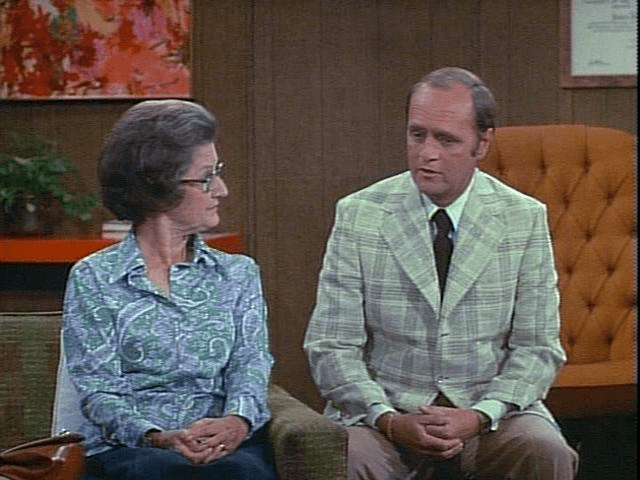
In 1972 she accepted the role of Lillian Bakerman on The Bob Newhart Show. During the show’s run, she made 19 appearances trying to encourage the other patients in her therapy group. She is often seen knitting while the group talks. One of her fears is flying, and her catchphrase is “Isn’t that nice.”
Her last appearance was in 1982 on The New Odd Couple as, who else but Mrs. Bakerman.
In 1988, Friebus passed away from cancer at 78 years old.
Welcome to the Riding the Range blog series. We are looking at some of the best-loved westerns from the fifties and sixties. Today Maverick is up.
📷bonanza.com
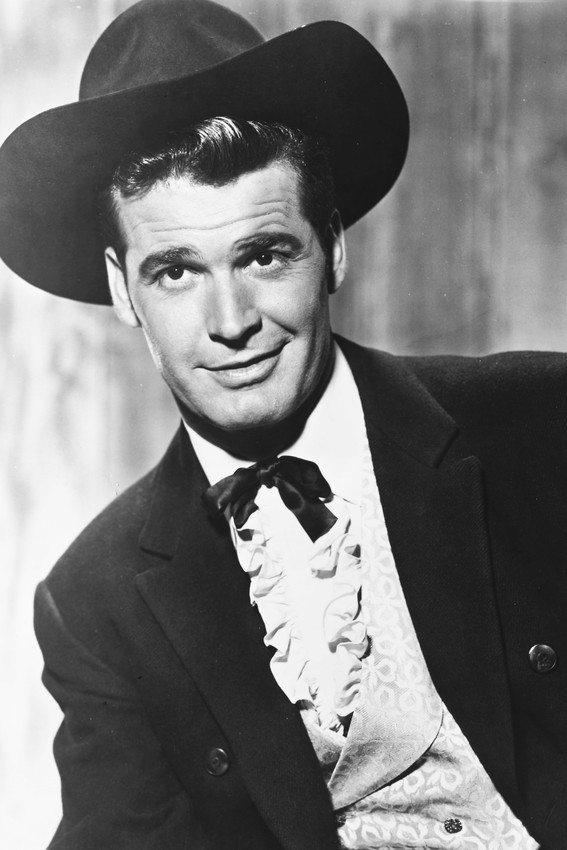
James Garner plays poker-playing Bret Maverick on this show that featured a bit more humor than some westerns. Set on riverboats and in old west saloons, the show ran from fall of 1957 through July of 1962.
The show, created by James Huggins, debuted on NBC on Sunday nights. It was up against some tough competition with Jack Benny which alternated weeks with BachelorFather. The show remained on Sunday nights for its entire run.
While Garner was the star, during the first season, Bret’s brother Bart (Jack Kelly) shows up. The brothers appear in alternate episodes, sometimes teaming up for a game or two. The brothers were drawn to adventure and to dangerous situations. They often found trouble in finances or love. However, they were true gentlemen and always did the right thing. Unfortunately, they were both slow with the gun, but fast with the fist. In one episode, Bart mentioned that “my brother Bret can outdraw me any day of the week, and he’s known as the Second-Slowest Gun in the West.”
📷wikipedia.com
After season three, Garner left due to contract disputes. Garner sued Warner Brothers for breach of contract. They had suspended him without pay during a writers’ strike. The studio claimed they had no scripts with the writers on strike, but court testimony revealed that they had about 100 scripts on hand and could have been filming, so Garner was released from his contract.
After Garner’s departure, Roger Moore made his appearance as Beau Maverick, cousin. The first choice to fill the role was given to Sean Connery who turned it down. Later Connery would play James Bond and his replacement when he left was Roger Moore. However, it wasn’t long before Moore chose to leave and was replaced by Robert Colbert as brother Brent.
📷westernclippings.com
During the last season, Colbert was just not called back or notified that he was no longer part of the show. However, they had a season to fill so Garner reruns were alternated with Kelly original episodes for the fifth season. I guess all the other Maverick brothers and cousins had moved out west. Are you confused yet because I am.
The announcer for the show was Ed Reimers. Reimers was the “Voice of Allstate” from 1957-1979, reminding people that they were “in good hands with Allstate.”
The theme song was written by David Buttolph and Paul Francis Webster.
There were some fun episodes on the show. “Shady Deal at Sunny Acres” featured Garner in a rocking chair, whittling and seeming to “ponder” a way to get $15,000 back which was stolen while brother Bart is running a complicated sting operation to do just that.
“Duel at Sundown” is fun for the cast. Clint Eastwood shows up as one of the bad guys. Edgar Buchanan and Abby Dalton are also featured in the show.
“Escape to Tampico” used items from the set of Rick’s Café Americain and the show includes to many Casablanca references to people and dialogue in the show.
📷flickr.com
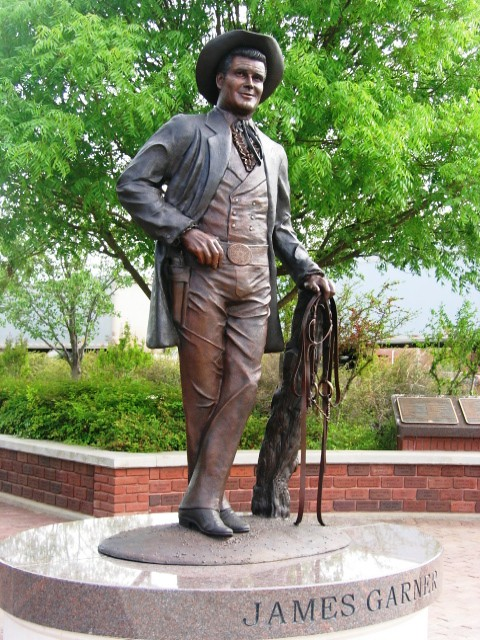
Despite the short time he was on the show, Garner got a statue in honor of his character. Norman, Oklahoma has a ten-foot-tall statue of Garner as Bret Maverick, which was dedicated in 2006.
It’s too bad that neither the network nor Warner Brothers could not get its act together with this show. It had a bit of everything: drama, comedy, romance, adventure. However, you are already starting off alternating the brothers, and with the constant replacements, it’s no wonder fans just walked away, and the ratings dropped drastically. Some of the episodes were so unusual and creative for their time that the show could have been a huge hit and a long-running show. I’m amazed the show managed to stick around for five seasons. Garner, Kelly, Moore, and Colbert all went on to prolific and successful careers in film and television.
We are starting a blog about Supportive Women, great actresses who made classic television so much better. I’m beginning with Joan Tompkins.
📷tvtime.com
Tompkins was born in 1915 in Mount Vernon, NY. She began her career in stock theater companies in New York in the thirties before appearing on Broadway in several shows including “My Sister Eileen,” “Pride and Prejudice,” and “Fly Away Home.” Henry Fonda was in several the plays with Joan.
In 1936 she married actor Stephen Ker Appleby in New York, but five years later they divorced. Appleby was born in Wales and known best for his 1960s movies. He lived to be 100. From 1942-1951 she was married to Bruce MacFarlane before they divorced. McFarlane died in 1967 and had 28 acting credits in television and film. Joan would then marry a third actor in 1951, Karl Swenson, “the man of a thousand voices.” The two worked together on the radio. Many fans of Little House on the Prairie would recognize Karl as Lars Hanson. Swenson obtained an amazing 175 credits, primarily on television during the two decades before his death.
After WWII Joan became a foster parent for a crippled Polish boy, Tomasz Machcinski. He later became a photographer. In 1994, their story was made into a documentary, “Child from a Catalog.” Machcinski’s life story was very interesting. He was born in the Kampinos Forest in Gorki, Poland. He spent his childhood living in hospitals and orphanages. After developing a relationship with Joan, he graduated as a precision mechanic in 1963. In 1966, he took up photography and created thousands of self-portraits. Some were as historic characters. He chose the stories, make up, and costumes. He once said that he didn’t “use wigs, tricks, but I use everything that happens to my body, such as hair regrowth, tooth loss, diseases, aging, etc.” He has had exhibits in Copenhagen, Beverly Hills, Warsaw, New York, and Paris. Machcinski passed away in 2022.
📷wallofcelebrities.com
Tompkins had a long radio career. She was the voice of Nora Drake on “This is Nora Drake” which was on CBS radio until 1959.
She began her television career in 1954 on an episode of Ponds Theater. Almost all of her 93 acting credits were for television shows. She had a recurring role on a soap, Valiant Woman, appearing in 176 of the 1027 episodes of the show as Marion Walker. Throughout the fifties, she showed up in several dramas as well as The Donna Reed Show, Bachelor Father, and Father Knows Best.
During the sixties, she had two recurring roles. She played Mrs. Brahms on Occasional Wife in 1966-67. I remember her on My Three Sons; between 1967-1970, she appeared as Lorraine Miller, Katie’s mom, nine times.
You can catch glimpses of her on many of your favorite shows from the sixties and seventies, including Hazel; The Danny Thomas Show; Perry Mason; Gomer Pyle: USMC; Dr. Kildare; The Man From UNCLE; Bewitched; Bonanza; The Brady Bunch; MarcusWelby, MD; The Mary Tyler Moore Show; The Mod Squad; and The Bob Newhart Show.
📷imdb.com My Three Sons
Her last television appearances were in 1980. She played Grandma Gertie in an episode of Eight is Enough and a physician in a made-for-tv film, The Night the City Screamed.
Karl and Joan moved to Beverly Hills where they founded an acting company. Karl directed the plays Joan appeared in. After Karl’s death in 1978, Joan joined a writing group and wrote several books. She died at home in 89.
Joan Tompkins is another one of those actresses that made television better during the fifties, sixties, and seventies. I’m glad we could learn a bit more about her and her career.
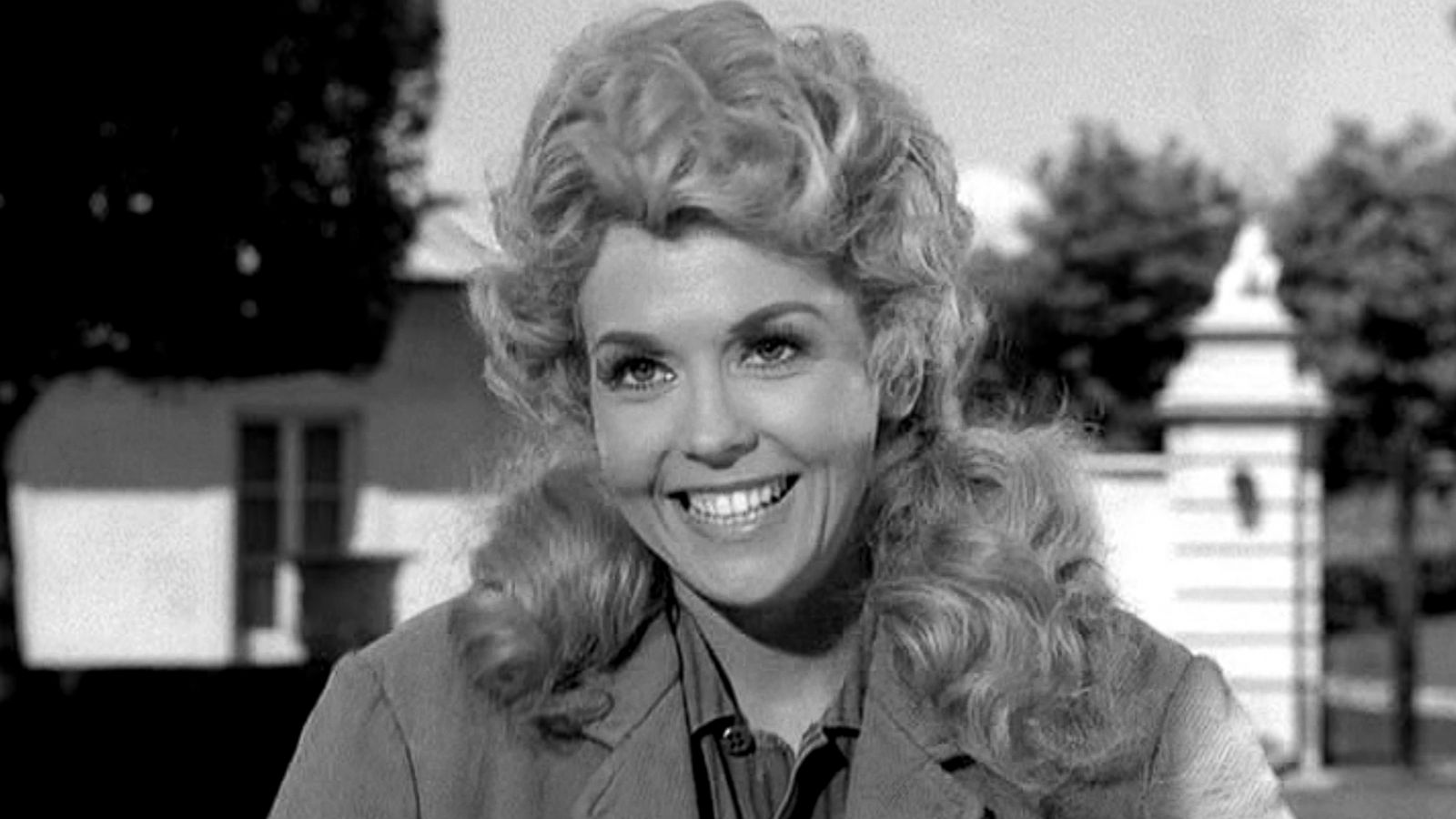
This month’s blog series is “Time for Some Texas Tea,” stars of The Beverly Hillbillies. We begin our series with Elly May Clampett, played by Donna Douglas. Born Doris Ione Smith in Baton Rouge, Louisiana in 1932, Douglas’s upbringing could not have prepared her for her most famous role of Elly May Clampett any better, because she was a tomboy and loved animals. She had eight male cousins, and she wore their hand-me-downs, went fishing with them, and pitched on an all-boy softball team. In high school, she played softball and basketball, but did switch to cheerleading as she got older. Like many of her classmates during that era, she married shortly after high school. After she had a son, she and her husband Roland Bourgeois divorced three years after their wedding.
Photo: imdb.com
Donna won Miss Baton Rouge and Miss New Orleans. She then made the move to New York. She was offered a job as an illustration model for toothpaste ads. She began taking acting lessons while in the city.
In 1958, at age 27 she began her television career. That year she would appear on The Phil Silvers Show, but she was credited with the name Doris Bourgeois, her married name. In 1959 she would appear on The Steve Allen Show, Tightrope, US Marshal, and Bachelor Father.
Her movie career began the same year. She appeared in Career and would go on to show up in six movies before 1970 including Bells Are Ringing, Lover Come Back, and Frankie and Johnny which she starred in with Elvis Presley. Although they remained friends, and Elvis once visited the cast when they were in Memphis filming, I read a few different sources that relate that Donna fell in love with Elvis and was heartbroken he did not feel the same way. Her last big-screen appearance in 2013, Chronicles of Life Trials, was also her last acting credit of her professional life.
With the debut of the sixties, her career took off, and she received roles on twenty television shows in the first half of the decade. You can catch her in a variety of series including Route 66, The Sunset Strip, Hennessey, Pete and Gladys, Dr. Kildare, Jack Benny, Mister Ed, and The Joey Bishop Show.
With Alan Hale Jr. on Mister Ed Photo: reddit.com
She had a recurring role on Checkmate in 1961 as Barbara Simmons. The plot of the show was that two friends, Don Corey (Anthony George) and Jed Sills (Doug McClure) operate a high-priced detective agency called Checkmate, Inc. in San Francisco. A British criminologist, a former Oxford professor named Carl Hyatt (Sebastian Cabot) helps them.
Photo: etsy.com
In 1960 and 1962 she was in The Twilight Zone in two memorable appearances: I remember watching “Eye of the Beholder” when I was younger and the horror of watching it never left me. In the episode, Douglas is a patient in a hospital having plastic surgery to make her more beautiful. The tension is built as they get ready to unwrap her face. You hear the nurses and doctors talking, but no one’s face can be seen After reminding her that the surgery was not guaranteed to be successful, they finally remove the bandages. We suddenly see the beautiful Donna Douglas. A nurse hands her a mirror and Douglas screams hysterically. Then things move back in the shot and as we see the medical personnel around her, we see they look a bit hideous in our standards, and Donna is devastated that she has to remain so “ugly.”
Photo: kunr.com
In 1962, Paul Henning was developing a new show about a group of hillbillies who strike oil and move to Beverly Hills to buy a mansion and live the good life. They have a hard time adjusting to the California lifestyle and being millionaires. Douglas beat out hundreds of actresses to get the part of Elly May.
Donna said that she was never allowed to change her lines in the script and that now actors have that freedom, but back then producers were in charge instead of the actors.
Douglas received more fan mail than any other cast member on The Beverly Hillbillies, and she spent hours autographing photos and responding to her fans.
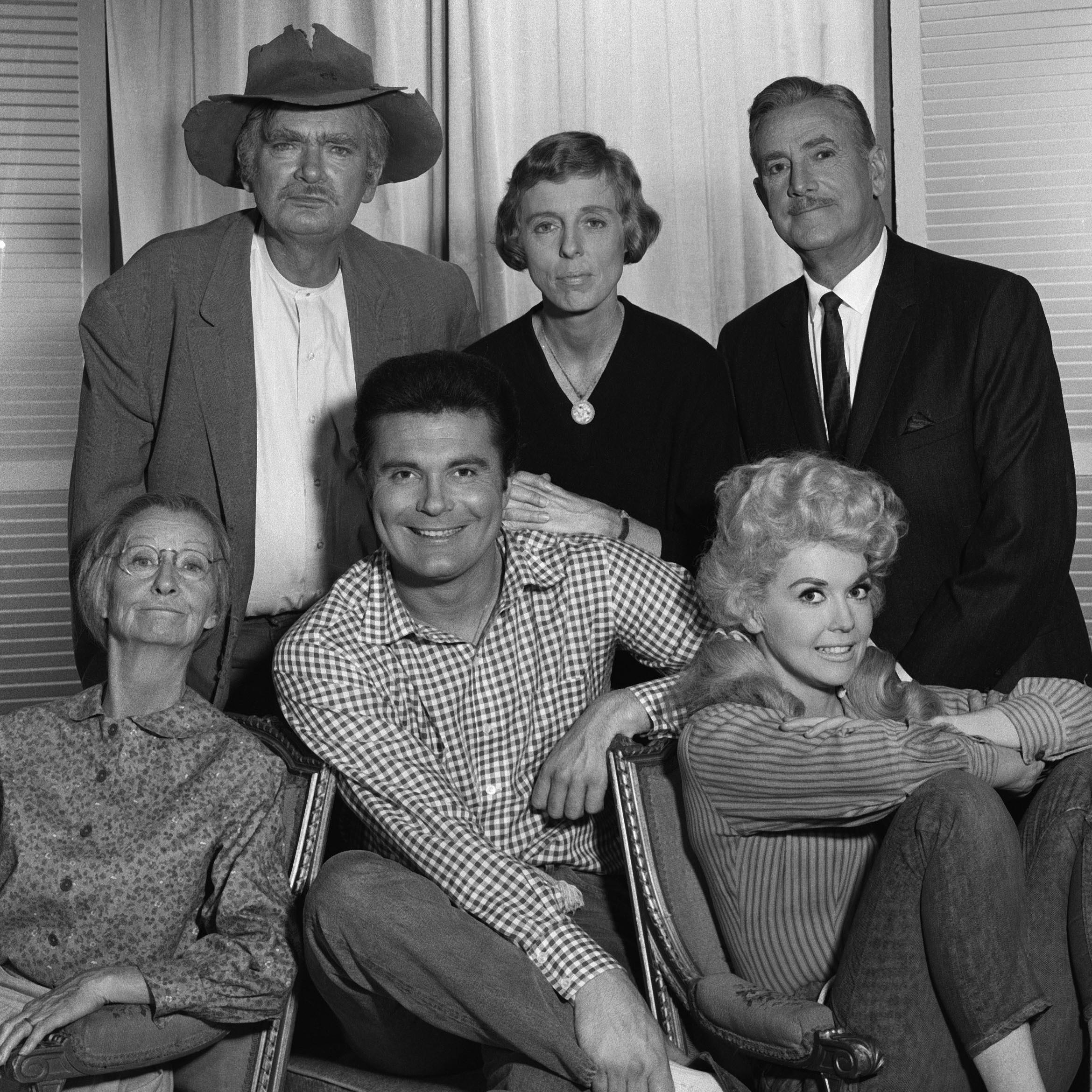
Apart from the spat between Nancy Kulp and Buddy Ebsen later in life, the cast of the show was very close. Douglas, Baer, and Ebsen attended Ryan’s memorial service. Irene Ryan put on a huge Christmas spread for the show’s cast and their families every year.
With Max Baer Photo: kroc-am.com
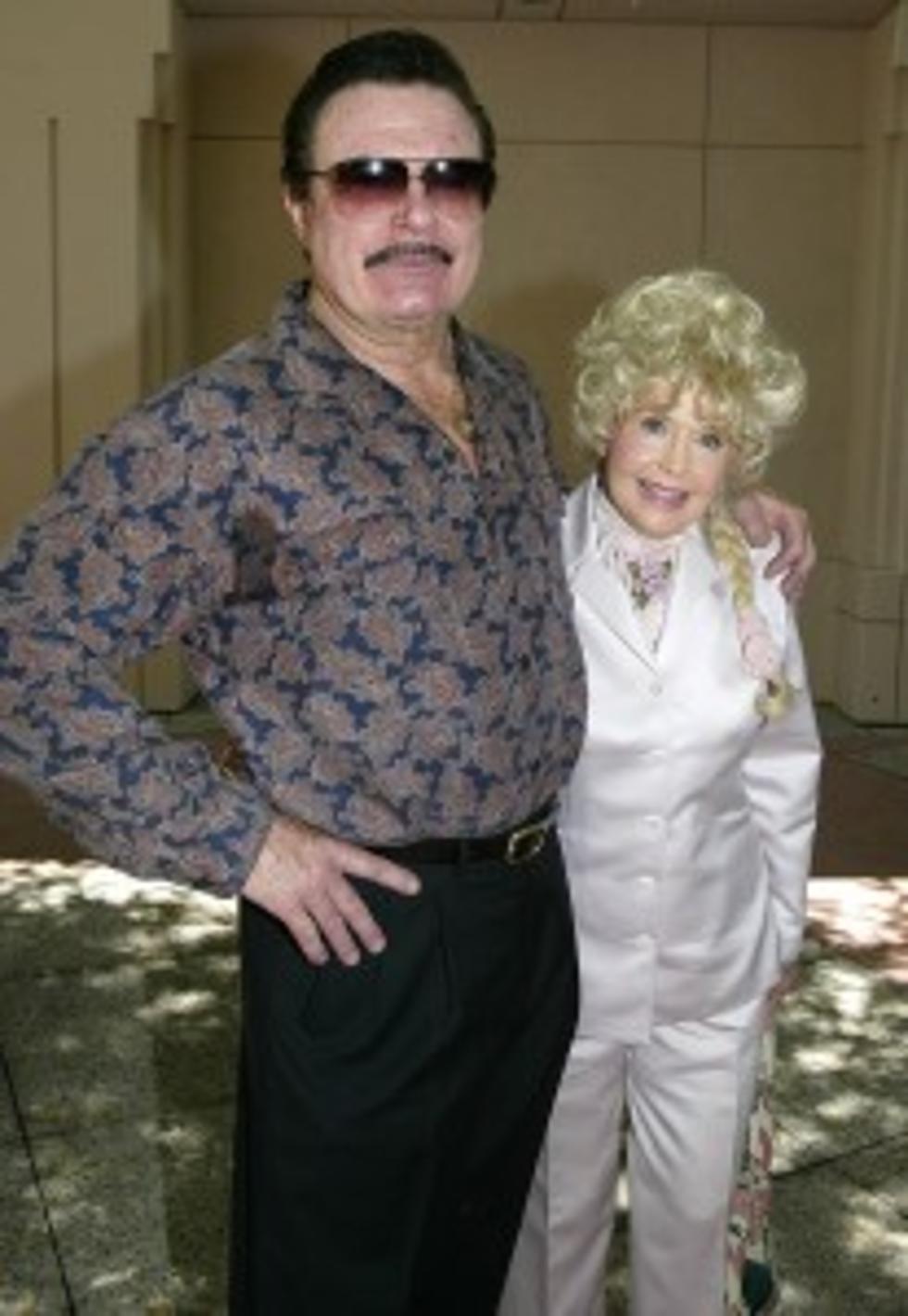
Douglas and Max Baer Jr. remained close friends for the rest of their lives Baer said “I spoke to her on a semi-regular basis. We weren’t the kind of people who would text, but we would call each other when there was something to share.” During the time of her death, one of Donna’s comments was, “Tell Maxie I thought I was going to get better.”
Max and Donna both visited Ebsen the week before he died, and Douglas gave a eulogy at his funeral. Later, when she discussed their relationship, she said he “was a wonderful man very much like my own father, a quiet, reserved, and caring person.”
After The Beverly Hillbillies was canceled, Donna took on a few roles in the seventies and could be seen on Night Gallery, Love American Style, Adam 12, and McMillan and Wife. During this decade she also tried marriage again with Robert Leeds, who had been the director for The Beverly Hillbillies. They married in 1971 and divorced in 1980. We only see Douglas once in the eighties on The Nanny, where she played herself.
Donna had two issues affecting her offers for television roles. After portraying Elly May Clampett for nine years, she was typecast in the role and her religious beliefs prevented her from appearing in anything in bad taste, immoral, or with nudity. She said she only wanted to do high-quality work and many of the scripts did not meet that criterion for her.
After her acting career, Douglas transitioned into gospel singing, real estate, and motivational speaking. She did not do much with her realty work, because she said while she told her clients all the things that were good about the homes, she also felt it necessary to tell them all the things that were bad about them which was not part of the corporate culture in LA at that time. She did perform frequently as a gospel singer and often gave talks for church youth groups, camps, and colleges. She recorded her first gospel album in 1982. Her gospel albums included “Back on the Mountain” and “Donna Douglas Sings Gospel I & II.” She also released several country records. This same year Donna enrolled at Rhema Bible Training Center in Broken Arrow, OK; she graduated in 1984 with a children’s ministry degree.
Douglas also penned a few books. She wrote Donna’s Critters and Kids: Children’s Stories with a Bible Touch and had an accompanying coloring book. In 2011 she wrote Miss Donna’s Mulberry Acres Farm. In 2013, she released a cookbook, Southern Favorites with a Taste of Hollywood. She included recipes from some of her acting friends including Max Baer, Pat Boone, Buddy Ebsen, Loretta Lynn, Gavin MacLeod, Dolly Parton, and Debbie Reynolds.
In a 2003 interview with “Confessions of a Pop Culture Addict,” she discussed her role of Elly May: “Elly May was like a slice out of my life. She is a wonderful little door opener for me because people love her, and they love the Hillbillies. Even to this day, it’s shown every day somewhere. But, as with any abilities, she may open a door for you, but you have to have substance or integrity to advance you through that door.” Donna also made the rounds for several fan conventions for the Beverly Hillbillies.
In 2011, Donna sued Mattel when they released an Elly May Barbie doll without her permission to use her likeness. It was settled behind closed doors, but you can still find the doll which came out in 2010 with a Samantha doll from Bewitched and a Jeannie doll from I Dream of Jeannie.
Donna also enjoyed gardening, responding to fan mail, and spending time with her friends and family. She moved back to Baton Rouge in 2005, and in 2015, she died from pancreatic cancer.
Some people might consider her career unlucky after the Beverly Hillbillies, because she was not able to attain the roles she really wanted to do. However, she was able to create new goals for herself, try out different careers in which she became successful.
Photo: tcm.com
As her life was moving from middle to older age, she was able to return home and spend the rest of the years in the place she loved and the place where her roots were. I think that is a successful and healthy life. She also chose to help raise money for charities and give back when she could have justified just enjoying her private life.
She is a great role model for all of us: strive for your dreams, adjust life when necessary, do your very best, give back to others, and remember where you came from. Pretty good advice and she walked the talk! Thank you for being you, Donna Douglas.
This month we are “Examining Our Favorite Medical Series.” Beginning in 1969 and staying on the air for seven seasons, this show was a show that the entire family could agree to watch. In fact, on The Partridge Family, there is at least one episode where the Partridges are watching Marcus Welby, MD.
Marcus Welby (Robert Young) is a family doctor who truly likes and knows his patients. Sometimes he even made house calls. Dr. Steven Kiley (James Brolin) is his business partner and they both rely on Nurse/Office Manager Consuelo Lopez (Elena Verdugo).
Produced by David Victor and David J. O’Connell, the show aired on Thursday nights. Victor also produced episodes of Dr. Kildare as well as The Man from U.N.C.L.E., Owen Marshall, Counselor at Law, and Lucas Tanner, among others. O’Connell produced episodes from several series but he was kept busy in the Editorial Department for a slew of shows, including Tales of West Fargo, Bachelor Father, Leave It to Beaver, The Jack Benny Show, Wagon Train, McHale’s Navy, and The Munsters. (In the future, I will definitely look into a show about editors for a blog.)
Welby and Kiley were very different. Kiley rode a motorcycle to work while Welby drove a sedan. Welby was a widower; he started his career as a doctor in the US Navy during the war. He enjoyed sailing on the ocean. Welby often wanted to use more radical treatments than his younger partner who was more conservative in his patient care. A lot of ailments were tackled on the series including impotence, depression, brain damage, breast cancer, epilepsy, Alzheimer’s, rape, and abortion.
Photo: WorthPoint.com
The two doctors had a private practice with operating privileges at Lang Memorial Hospital. Both doctors had girlfriends, Myra (Anne Baxter) and Janet (Pamela Hensley). Welby’s daughter (Christine Belford) and grandson (Gavin Brendan) were often on the set as was Kathleen Faverty (Sharon Gless), an assistant program director.
In season two the show made it to number one for ABC. Both Young and Brolin won Emmys and the show won an Emmy for Outstanding Dramatic Series.
After seven seasons of medical storylines, the show’s viewership began to wane. Many of the medical series were running out of steam at that time. Once ratings continued on the decline, the show was canceled.
Photo: decider.com
However, eight years later, The Return of Marcus Welby, MD aired. Young and Verdugo continued their roles although Brolin was no longer available. It must have done well, because a second movie was filmed in 1988–Marcus Welby, MD – A Holiday Affair. This would be the last acting role Young would accept.
I have many fond memories of watching this show when I was young with my family. Marcus Welby reminded me of our family doctors; he was kind, gentle, smart, and had a great bedside manner. And he made house calls! Don’t get me wrong, there are still many doctors with his characteristics and they kind of make house calls now over the computer but it’s not the same. Thanks, Dr. Welby, for caring for all of us for seven years.
This month we are looking at some of our favorite “Supportive Women.” Today we are taking a closer look at the career of Linda Evans.
Photo: vintageeveryday.com
Born Linda Evenstad in 1942 in Hartford, Connecticut, she was the middle child of three sisters. Both her parents were professional dancers. When she was six months old, the family moved to North Hollywood. Linda graduated from Hollywood High School with Stefanie Powers, who we will be talking about next week. Like Morgan Fairchild, who we will be discussing in two weeks, Linda took drama classes to help her deal with shyness.
Linda was engaged to Patrick Curtis, but they never married. He later became a press agent and married Raquel Welch.
Linda’s first two roles were on two of my favorite sitcoms. In 1960, she guest starred on Bachelor Father where Bentley Greg (John Forsythe) raised his niece Kelly (Noreen Corcoran) with the help of his houseboy Peter (Sammee Tong). Her second appearance was on The Adventures of Ozzie and Harriet. During the sixties, she would appear on a variety of shows including Dr. Kildare, Wagon Train, and My Favorite Martian.
Photo: pinterest.com
Her first made-for-tv movie was 1962’s Buttons with Beaus, and her first big screen feature came a year later in Twilight of Honor; her second movie was Beach Blanket Bingo in 1965 where she played Sugar Kane.
It was in 1965 that Evans began dating film director John Derek. They would marry in 1968 and separate in 1973 when Linda learned he was dating the actress who became known as Bo Derek.
1965 was also the year she was offered her first role as a regular cast member of a series. She became Audra Barkley from 1965-1969 on The Big Valley. The western was very popular. Similar to Bonanza, in this show, Victoria Barkley managed to raise her family and keep the villains at bay.
She and Barbara Stanwyck, who played her mother Victoria on the show, became very close. Stanwyck continued to refer to her as Audra after the show ended. Linda says Barbara was a great mentor and friend to her.
In 1967 when Derek was filming Evel Knievel’s famous motorcycle jump over the fountains at Caesar’s Place in Las Vegas, he asked Linda to take over one of the cameras, and she shot the famous footage of Knievel’s devastating crash.
During the 1970s she kept busy with television appearances on dramas including McCloud, Banacek, Harry O, McMillan and Wife, and The Rockford Files.
With “mom” Barbara Stanwyck Photo: imdb.com
In 1975, she married Stan Herman, a real estate tycoon. They were married four years before splitting up. She never married again.
From 1976-1977 she again accepted a role as a regular on the show Hunter. The series only lasted fourteen episodes before being canceled. Not to be confused with the show from the 1980s, in this one, US government special agents James Hunter (Tony Franciscus) and Marty Shaw (Evans) take on missions around the world. He posed as a bookstore owner, and her cover was a model. I admit I have never seen this show, but it sounds like a seventies version of I Spy.
During the 1980s, her career was split between two primary shows: The Love Boat and Dynasty. Dynasty was on the air from 1981-1989. When Dallas became extremely popular, ABC commissioned Aaron Spelling to come up with a primetime soap opera of its own. Evans was back on the air working with John Forsythe again as Blake Carrington, her wealthy husband. The basic premise of the show was that it was an upper-class version of the Hatfields and the McCoys with the Carringtons and the Colbys feuding in the oil business in Denver, Colorado.
Dynasty with Forsythe and Collins Photo: imdb.com
Evans and Forsythe remained close friends for the rest of his life. She said he was “so magical. This show was so serious and he was funny personally. We’d be fighting and people would be strangling each other and he made me laugh all day long, I’ll be forever grateful to him for that.” The person Linda was often strangling was Joan Collins who played Alexis Carrington Colby, Blake’s first wife.
By 1984 the show had reached number one in the rankings. Linda was nominated for an Emmy for Outstanding Lead Actress in a Drama Series in 1983. She was beat out by Tyne Daly from Cagney and Lacey.
After the show was canceled, Evans stepped out of the limelight for the most part. She did film five made-for-tv movies during the 1990s and guest starred on Germany’s version of The Love Boat, Das Traumschiff, in 2020. In 2021, she was in a big-screen feature, Swan Song.
In 2011 Evans published a book, Recipes for Life: My Memories, a combination of candid memoir and inspirational cookbook. Despite her perfect figure, one of her weaknesses is pizza. On premierspeakers.com on April 10, 2018, she was quoted as saying “I love pizza so much, that if you wake me up in the middle of the night and ask me if I’d like to eat a slice, I’ll say YES. Kenny Rogers used to have it delivered to me while I was filming The Gambler.
Photo: dailyexpress.com
Linda seemed to enjoy her career. She is remembered for several well-known characters in Audra Barkley and Crystal Carrington. While she has given up acting for the most part, I would not be surprised to see her back on the big screen for another part or two if it’s the right offer.
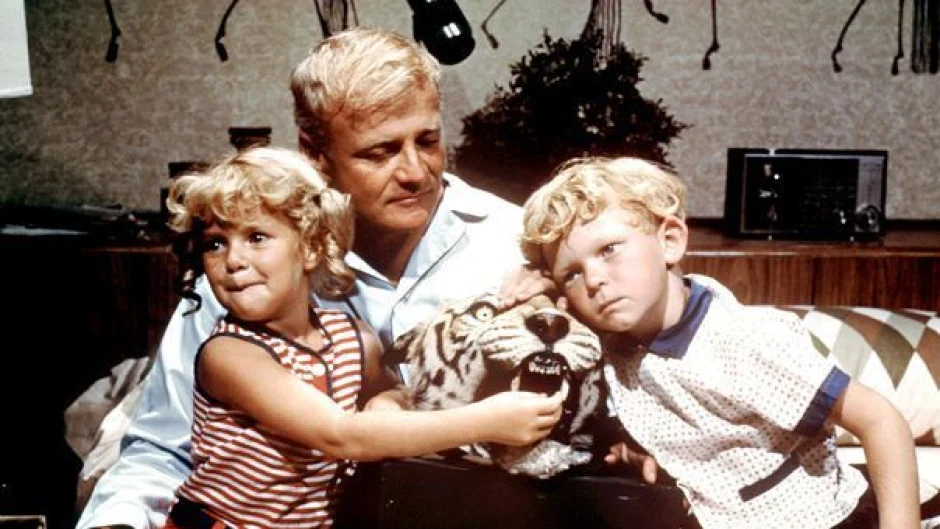
This month we are celebrating some of our favorite television families. Many families were single parents in the classic age. In the fifties, Bentley Gregg, a wealthy attorney, raised his niece with his houseboy Peter on Bachelor Father. Fred MacMurray raised his three boys in 1960. In 1966 Bill Davis (Brian Keith), a wealthy engineer, raised his two nieces (6-year old Buffy played by Anissa Jones and 15-year old Cissy played by Kathy Garver) and Buffy’s twin, nephew Jody (Johnny Whitaker) with his valet Giles French (Sebastian Cabot) on Family Affair.
The show was on CBS until 1971, producing 138 episodes during its five-year run.
The cast of Family Affair Photo: decades.com
The kids grew up in Indiana and now have to adjust to an apartment in Manhattan’s Upper East Side. Their uncle has to adjust from being a carefree bachelor to a parent of three children, and Mr. French’s quiet days are now noisy and full of small crises. The five of them become a family and learn rely on each other.
The show was created and produced by Don Fedderson and Edmund Hartman. Fedderson, who had been the creative force behind My Three Sons, sold the show to CBS without having to film a pilot.
There were a lot of similarities between the two shows. In addition to two single men bringing up the three siblings, their production schedules were similar. Fred MacMurray had been promised a schedule where all his filming was done in one or two blocks for the entire season. Likewise, Keith used two thirty-day blocks to shoot all of his scenes. Garver and Cabot probably had the hardest time filming. The kids could only work limited hours, so quite often when scenes required Cissy or Mr. French, they were talking to a “big paunchy guy from New York with a cigar in his mouth,” pretending to be one of the other cast members.
On My Three Sons, Dodi’s doll “Myrtle” was sold in toy stores. Buffy’s doll “Mrs. Beasley” was also sold to its youngest fans. Buffy often took the doll with her, and Mr. French was embarrassed when he had to “babysit” the doll. The 1967 Mrs. Beasley can still be found on sites like ebay, but be prepared to pay $500 for a doll in mint condition.
Cast with Mrs. Beasley. Photo: tvseriesfinale.com
Frank DeVol who wrote the theme for MacMurray’s show also composed the instrumental song for Family Affair.
Glen Ford was offered the role of Uncle Bill; this may have been because he played a single father in the movie version of The Courtship of Eddie’s Father. When he turned it down, the production crew turned to Keith.
Uncle Bill and Mr. French did not become perfect parents instantly. Uncle Bill often lost his temper, and Mr. French was not accustomed to having his tidy bachelor pad look like a cyclone hit it. Unlike other single-parent shows, the kids’ deceased parents were mentioned often and were kept a part of their life.
Kathy Garver reminisced about Keith later in life. She said that he was very much like his character: “He had three adopted kids, two biological kids and loved kids . . . He was a gruff ex-Marine, but he had a heart of gold.”
Ironically, the show was canceled during the big rural purge despite the fact that it was set in Manhattan, and it continued to do well in the ratings. CBS did air the show in syndication daily from its end until 1973.
Keith with his youngest costars Photo: closerweekly.com
While the cast appeared to be very close, there was a lot of dysfunction among the cast members after the show went off the air. In 1976, Anissa Jones died from an overdose; Jody Whitaker had a lot of addiction problems but then turned his life around. Sebastian Cabot had a stroke and died in 1977. Brian Keith who was devastated by Jones’ overdose and his real daughter’s suicide, was diagnosed with cancer and took his own life in 1997. Garver and Whitaker, the only survivors, both have appeared on Broadway in the past decades.
Like almost every popular show from the sixties, this one was rebooted in 2002. It was on the WB for thirteen episodes. Gary Cole took on the role of Uncle Bill while Tim Curry became Mr. French.
The Reboot Photo: imdb.com
Garver has accepted that she will always be known for her role as Cissy. There was an announcement in 2019 that a show titled Aunt Cissy starring Garver was going into production. It was a Travis Hunt Production filmed in LA. It has its own Facebook site, but it does not look like it ever aired. Six episodes were filmed, but I have not found any other information about the series.
In addition to Mrs. Beasley, there was a lot of merchandise associated with the show. Gold Key Comics published four comic books in 1970 based on the series. You can also find lunch boxes, puzzles, coloring books, View Master reels, a board game, and even a piece of luggage.
Although the plots were quite simple, this show was a favorite for many families. It was a series the entire family could enjoy. Fans watched the kids grow up for the five years it was on the air. Although Uncle Bill was quite wealthy, the family never appeared to be a rich one. The kids kept their Indiana morals. When I was researching for this blog, I found a lot of fans expressing fond memories and giving heartfelt tributes, and that is a true legacy for any show.
As we look back at some favorite crime dramas, this week we are traveling back sixty years. From 1965-1966, Honey West appeared in our living rooms. Only thirty episodes were produced, but the show was respected and worth remembering.
Photo: drunktv.com
The show was based on a novel series. Married couple, Gloria and Forrest “Skip” Fickling wrote the books. Skip had been a gunner in the US Army Air Force. According to Skip, they combined Marilyn Monroe and Mike Hammer for the character of Honey West. The novels were published from the late fifties to 1971, with eleven total.
West was one of the first female private eyes on tv. In an episode of Burke’s Law, Ann Francis showed up as Honey West which led to a spin-off. The series was developed by Gwen Bagni and Paul Dubov, writers on Burke’s Law. Aaron Spelling was listed as the producer.
Photo: drunktv.com
West has a partner Sam Bolt (John Ericson). Ericson never received another starring role in a series, but he was a successful actor, amassing 105 acting credits.
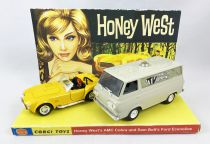
Honey is an interesting character. She has a hidden radio in her lipstick case, has a pet ocelot named Bruce, a colorful animal-print wardrobe, and a Cobra convertible. She shares an apartment with her Aunt Meg (Irene Hervey) who shows up in about half of the episodes.
West owns her own investigation firm which she inherited from her father. Her base of operations was behind a fake wall in her living room. She’s very smart and experienced in electronic surveillance. Bolt creates many of the gadgets she uses. They go undercover in a specially equipped van which had a sign “H.W. Bolt & Co., TV Service.” She and Sam could be the inspiration behind Maddie and David from Moonlighting.
Like James Bond, or Max Smart, she uses a number of high-tech instruments: an exploding compact, a garter belt gas mask, tear gas earrings. You don’t have to worry about Honey’s safety. Sam is an ex-Marine, and Honey attained a black belt in judo.
Photo: filmscoremonthly.com
Several of the episodes were written by Richard Levinson and William Link who would go on to write for Columbo and Murder, She Wrote.
The show was canceled after the first year for two primary reasons, one understandable and one which makes me shake my head. I understand that the network determined that it would be cheaper to import The Avengers and show it in the time slot. The second reason is a bit harder to understand: the show was in competition with Gomer Pyle USMC and could not hold its own in the ratings war. I say this with great respect to Jim Nabors whom I love and while Gomer Pyle was an ok show, it’s hard for me to picture it as a show that would draw more viewers than a crime drama.
Francis did receive Golden Globe and Best Actress Emmy nominations that year. She was beat out by Barbara Stanwyck for The Big Valley. The show was described as “sexy, sophisticated and delightfully funny.” According to most of the reviews of the DVDs, it holds up very well after sixty years and is still fun to watch.
Photo: lulu-berlu.com
They had some clever details in the show. There is often at least one instance when the last word of a sentence leads into a funny new scene. The actors often discuss television shows, wondering about their ratings. Honey pulls down an imaginary shade, so viewers won’t watch her sleep. It also had a jazzy theme written by Joseph Mullendore. He had created a lot of the music for Burke’s Law and would go on to provide music for other series, including Land of the Giants and Daniel Boone.
There were several drawbacks mentioned, most notably the lack of color. Not only was color becoming the norm by this time, but Honey West was a show that would have been enhanced by color. It was also criticized for being a 30-minute show. There was not enough time to truly develop both the plot and the characters’ relationships in such a short time.
Photo: pinterest.com
This show reminds me a bit of Barbara Eden’s show How to Marry a Millionaire and Bachelor Father, starring John Forsythe, in that both debuted in 1957; two series that I thought had clever writing, fun characters, witty dialogue, and elegant interiors. On one hand, it is sad it wasn’t given more of a chance to get established with viewers. On the other hand, it sounds like it has thirty mostly great episodes to watch. Maybe an early cancellation allowed the best shows to be saved. I think about I Dream of Jeannie which was released the same year as Honey West. The shows from the first year are fun to watch. Jeanne is witty, clever, mischievous, and smarter than she lets on. During the following years, the episodes were average at best and often sub-par. If I only had the first year’s episodes to watch, I would not feel like I was missing anything.
For less than $20, you can buy the entire DVD season of Honey West. And if it makes you want to go out and get a pet ocelot, who am I to judge?













 thewritelife61