Sylvia Field: What a Character

We are in the middle of our blog series for November, “What a Character!” Today we get to meet the delightful Sylvia Field.

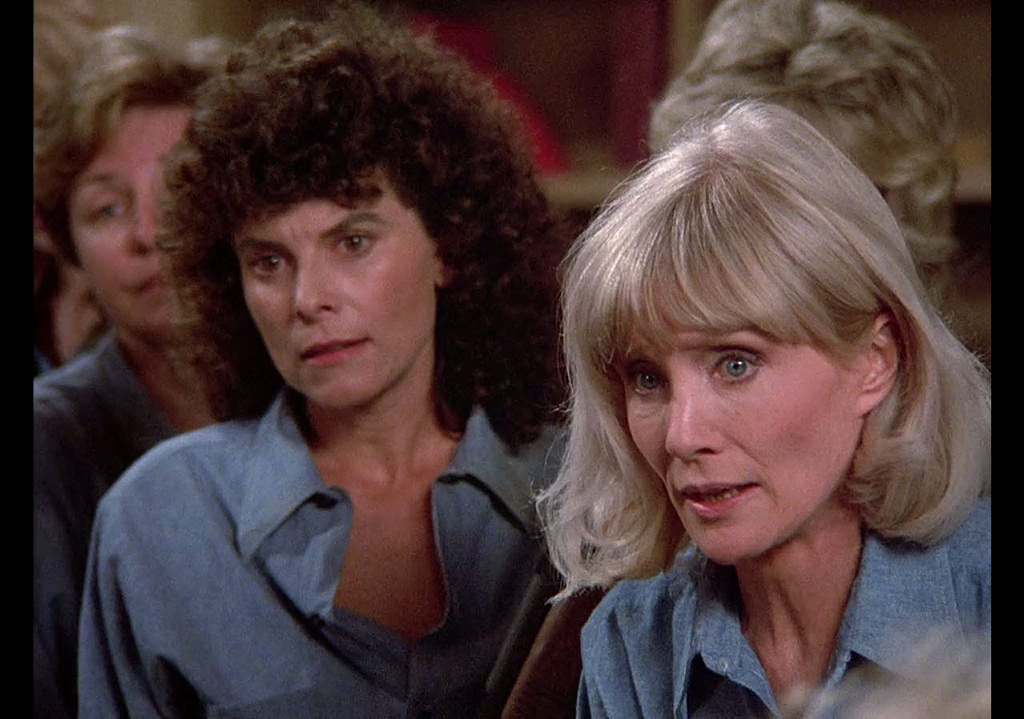
Born Harriet Louisa Johnson in 1901 in Allston, Massachusetts, Field always knew she wanted to act. When she was ten, she saw Maude Adams in “Peter Pan,” and she decided that would be her career as well. After being diagnosed with diphtheria, she was not allowed to attend school for a while. So, when she was feeling better, she ventured down the street to a motion picture company that was filming movies. She was allowed to join the cast and became the “leading lady of the extras.”  

📷facebook.com

Eventually she decided to move to New York. At only 17, she made her Broadway debut in “The Betrothal.” She never did go back to school.

📷wikipedia.com 1927 Broadway shot

A decade later she got her first shot at the big screen in The Home Girl. She was signed by Fox Studios in 1939. Her last acting credit was also for a film, The Cruz Brothers and Miss Malloy in 1980. While she fit a few movies in her career, most of her appearances were on television.

After she began her film career, she married Robert Frowhlich in 1924; they were only married five years. In 1930 she tried marriage again with Harold Moffat; he passed away eight years later. In 1941 she married Ernest Truex, and they remained together until his death in 1973.

Truex had an interesting background. He was born in Kansas where his father was a doctor. In exchange for medical services, one of his father’s patients gave Ernest acting lessons. Ernest performed Shakespeare as a five-year-old child, and was given the nickname, “The Youngest Hamlet.” As a nine-year-old, he and his mother toured the country while he performed. Before he was a decade old, he was in his first Broadway show with Lillian Russell.
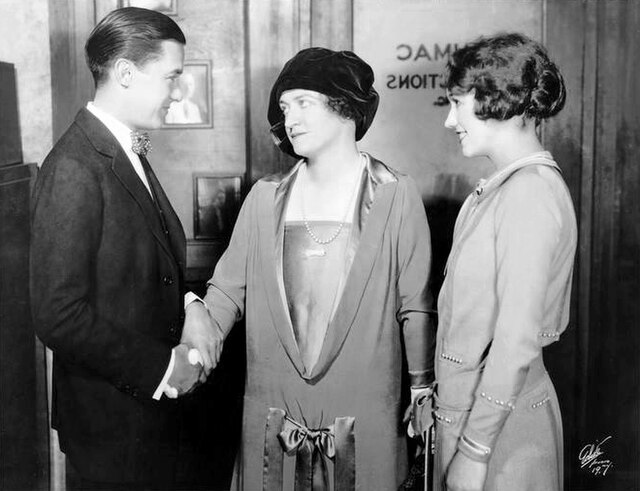
📷wikipedia. The Butter and Egg Man by George Kaufman

In the movies he played the quiet, ineffectual boss. Like Field, he was also a regular cast member in three shows. His were Jamie, Mister Peeper, and The Ann Sothern Show.

Field and Truex traveled around the country in plays together before starring in a local New York series featuring members of their family. The couple had a blended family with Field’s daughter Sally Moffat and Truex’s three sons. All four of the kids became actors. I’m guessing it was like The Adventures of Ozzie and Harriet. The show was on the air for three years before Truex and Field decided to move to California.

Sylvia’s first television appearance was on the Chevrolet Tele-Theater in 1948. She continued accepting roles on many of the drama shows through the mid-fifties. In 1952 she got her first cast role as Mrs. Remington on Mister Peepers. Ernest Truex was also part of the cast, playing Mr. Remington. They played the parents of Nancy, the school nurse, Mister Peepers’ fiancé. (Field and Truex would work together again on a 1966 episode of Petticoat Junction, “Young Love,” as well as in The Ann Sothern Show.)

📷who’sdatedwho.com Field and Truex

After Mister Peepers was canceled, she accepted a few spots on current shows including The Ann Sothern Show, Father Knows Best, Perry Mason, and The Thin Man.

In 1958 Sylvia received another cast offer to become Aunt Lila on both Annette and The Mickey Mouse Club. These shows shared cast members, so if you were cast on one of them, it was a buy one, get one deal.

Aunt Lila only lasted a year, which was a good thing, because Field was free to accept the role of Martha Wilson on Dennis the Menace, beginning in 1959. She defended Dennis to her husband George for almost four seasons.

Before the 1962 season, her tv husband Joseph Kearns passed away. For the season, Gale Gordon was brought in as George’s brother John, who was staying with Martha while George was away on personal business. However, the next year, Field was written out of the show, and John’s wife Eloise took her place, played by Sara Seegar. John and his wife bought the house from George and Martha, and no explanation was given to why they moved away. Sylvia and Jay North, who played Dennis, remained friends for the rest of her life.

📷WPRI.com Field, North, and Kearns

For the rest of her career, she would show up on television shows including Hazel, Occasional Wife, and Lassie. After Truex’s death, Sylvia accepted a couple of roles but spent much of her time fishing, golfing, watching baseball, and taking care of her avocado orchard. Eventually she had to move to a nursing home where she passed away in 1998.

I always enjoyed Martha Wilson. She and George took on the role of Dennis’s pseudo grandparents. While George was gruff, everyone knew he loved Dennis. Martha was more affectionate and always waiting with cookies, ready to hear about his latest exploits. Field seemed to have a great life. She had a prolific career and then was able to enjoy retirement which so many actors find impossible to do.
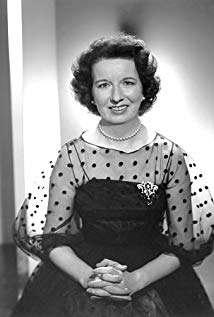
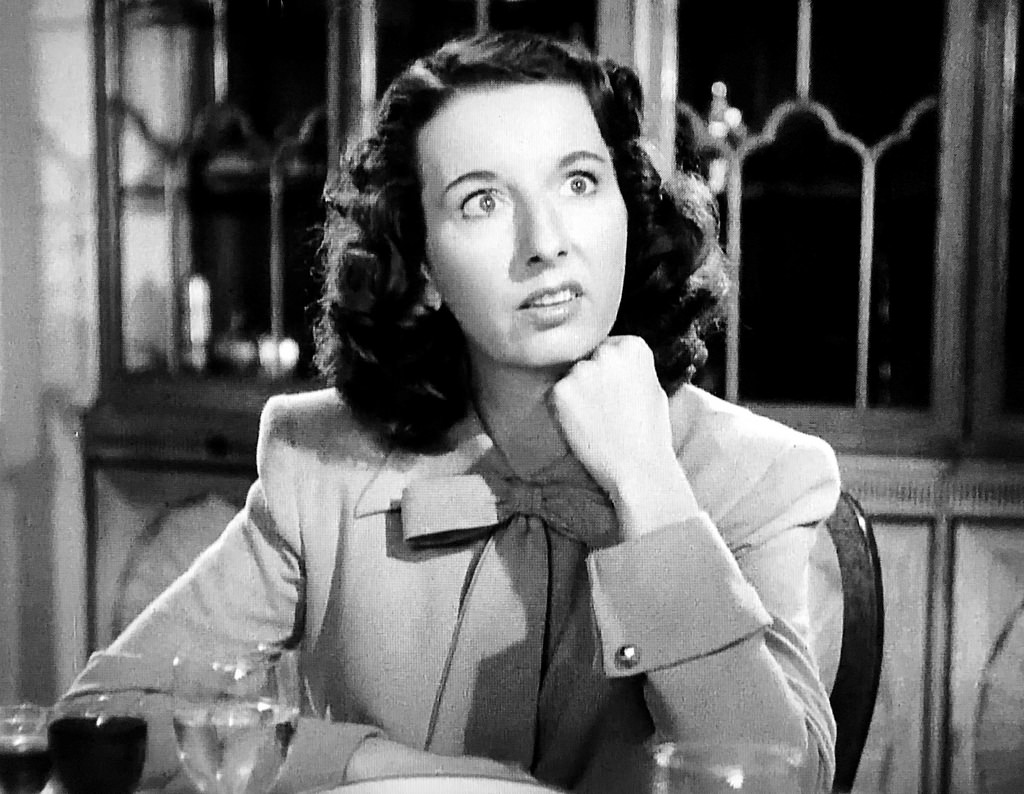
Just a Couple of Characters, Part 4: Mary Wickes and Susan Oliver

We wrap up our series Just a Couple of Characters this week with Mary Wickes and Susan Oliver. Mary and Susan are very different character actors, but you will immediately recognize them. Let’s learn a bit more.

Mary Wickes

Photo: imdb.com

It’s not surprising that Mary shortened her last name to “Wickes” after being born Mary Wickenhauser in 1910 in St. Louis. Her father was a banker, and the family had plenty of money. After high school, Mary attended Washington University in St. Louis, majoring in political science, planning a career in law. One of her professors suggested she try theater, and she dipped her toe into it doing summer theater in Stockbridge, Massachusetts.

Photo: flickr.com

After deciding a career in acting was for her, she moved to New York. She quickly found a role in “The Farmer Takes a Wife” on Broadway in 1934. In this show, which starred Henry Fonda, Mary was Margaret Hamilton’s understudy. Mary had a chance to perform during the run and received excellent reviews.

Photo: tcm.com
The Man Who Came to Dinner

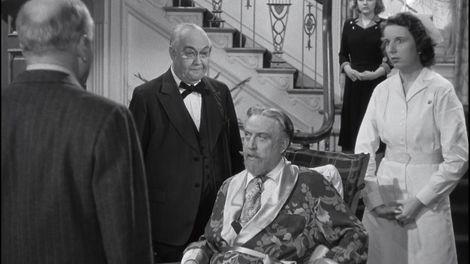
Mary understood that comedy was the field she needed to pursue. She was lucky enough to continue getting roles on Broadway, appearing in several shows throughout the 1930s, including “Stage Door” in 1936 and “Hitch Your Wagon” in 1937. She also was cast in “The Man Who Came to Dinner” as Nurse Preen with Monty Woolley. She continued to receive encouraging reviews. When Warner Brothers decide to turn the play into a movie, both Mary and Woolley were part of the cast. Mary became known for being a bit sarcastic and witty. She was given roles in the film, Now Voyager with Bette Davis, again playing a nurse.

Photo: viennasclassichollywood.com
By the Light of the Silvery Moon

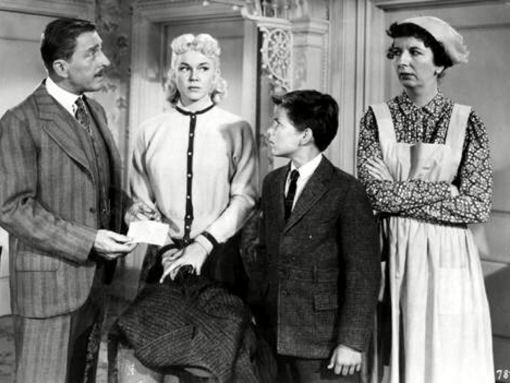
Mary flip flopped from Broadway to Hollywood, taking roles that interested her. She would appear in both Moonlight Bay (1951) and By the Light of the Silvery Moon (1953) with Doris Day; White Christmas (1954), and The Music Man (1962).

Mary had cornered the market in roles of smart-alecky teachers, nurses, and housekeepers in film. When she transitioned to television, she often continued in these roles. Her first two recurring roles were housekeepers named Alice on Halls of Ivy from 1954-55 and Katie on Annette in 1958. From 1956-1958, she played Liz O’Neill, Danny Thomas’s press agent on Make Room for Daddy. Throughout the 1950s she also appeared on numerous shows including Zorro.

Photo: pinterest.com

One of my favorite episodes with Mary was the 1952 episode “The Ballet” on I Love Lucy where Wickes played Madame Lamond, a formidable ballet teacher who taught Lucy. Wickes and Lucy would remain life-long friends. After Mary’s death, Lucie Arnez talked about her relationship with their family: “For my brother and me, Mary was just like one of the family. If any of us were sick or even in bed with a cold, Mary would show up at the backdoor with a kettle of chicken soup. She could be loud and boisterous and as demanding as any of the characters she played, but she was also very loving and giving. What a lady.” Mary would appear on numerous episodes of Lucille Ball’s other shows in the 1960s and 1970s.

Photo: aurorasginjoint.com

In the 1960s, Mary continued to show up on a variety of shows. We see her on My Three Sons, Bonanza, F-Troop, The Doris Day Show, The Donna Reed Show, and I Spy. She also had recurring roles on three shows during the decade: The Gertrude Berg Show, Dennis the Menace, and Temple Houston. In the Gertrude Berg Show, Mary was landlady, Winona Maxfield. She was hilarious on Dennis the Menace, playing Miss Cathcart, an older neighbor looking for a man. On Temple Houston, she played Ida Goff. Temple was Sam Houston’s real son who was a circuit-riding lawyer.  

Photo: en.wikipedia.org
The cast of Doc

As Mary aged, she progressed to the cranky relative or nosy neighbor type of character. In the 1970s she was a regular on Julia, Doc, and The Jimmy Stewart Show. On Julia, she was Dr. Chegley’s wife, Melba. She went back to her role as a nurse on Doc. On the Jimmy Stewart Show, she is Mrs. Bullard. Two of my favorite episodes of her from the 1970s were her roles on Columbo and M*A*S*H. On Columbo, Mary plays a landlady of a victim who’s been murdered. She and Columbo have a priceless conversation during the show, “Suitable for Framing” in 1971. On M*A*S*H, Mary played Colonel Reese who is observing Margaret and the nurses.

Photo: aurorasginjoint.com

In the 1980s, Mary’s schedule slowed down a bit. She did revive her role as a maid on The Love Boat in 1981. From 1989-1991, she took another regular role as housekeeper Marie Murkin on Father Dowling Mysteries.

Photo: hometheaterforum.com

In the 1990s, Mary was doing more voice overs. She taped five episodes of Life with Louie which aired from 1995-1997 and was Laverne in The Hunchback of Notre Dame in 1996. Unfortunately, she would not live to see them on the big screen. In 1995, she passed away after having respiratory problems. While a patient in the hospital, she fell and broke her hip. She died of complications caused by the surgery.

Mary never married or had children and as part of her legacy, she left a $2 million donation in memory of her parents to the Television, Film and Theater Arts at Washington University.

Susan Oliver

Photo: amazon.com

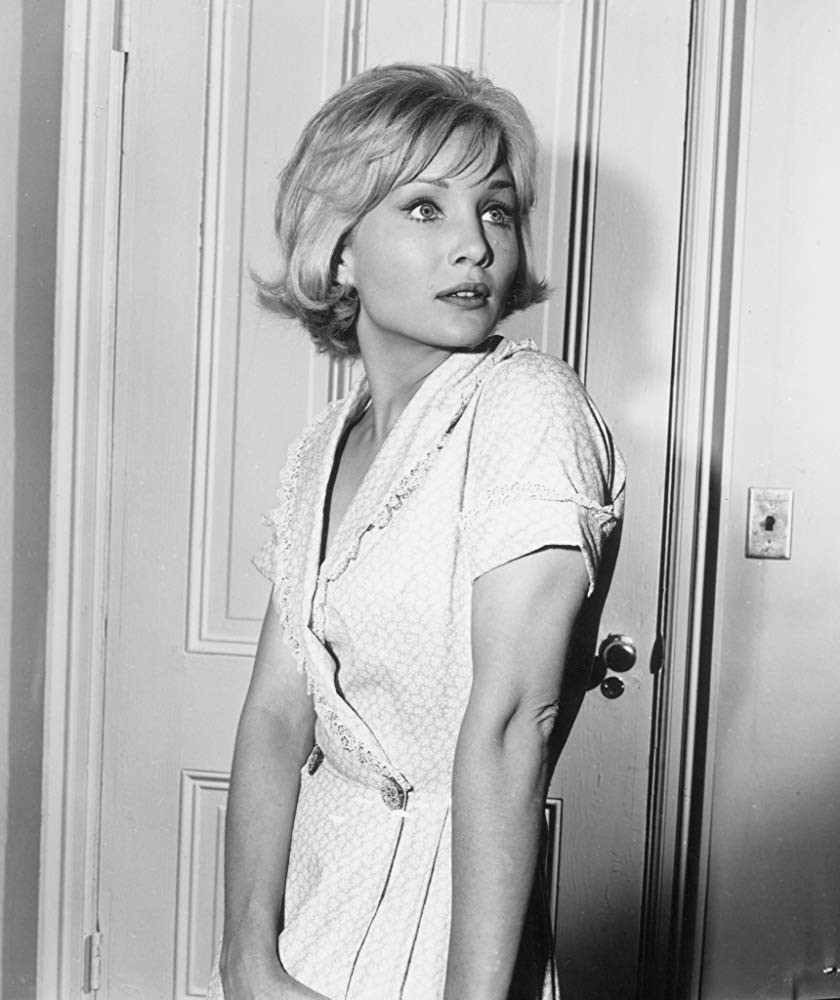
More than twenty years younger than Wickes, Susan Oliver was born in 1932 in New York City. Her real name as Charlotte Gercke. Her father was a political reporter for the New York World. Her parents divorced when she was quite young, and she grew up in boarding schools. She traveled with her father to Japan when he took a post there. She studied at the Tokyo International College, studying American pop culture. While Wickes was the wise-cracking comedic foil, Oliver was often the leading lady character with blue eyes, blonde hair and heart-shaped face.

Photo: trekdivos79.blogspot.com
on The Wild Wild West

In 1949, she traveled to LA to see her mother who had found her niche as “astrologer to the stars.” Susan then enrolled at Swarthmore College. After graduation, she continued acting courses at New York City’s Neighborhood Playhouse.

Her first Broadway part came in 1957 as the daughter or a Revolutionary veteran, “Small War on Murray Hill.”

Photo: manfuncle2014.blogspot.com
The Man from U.N.C.L.E.

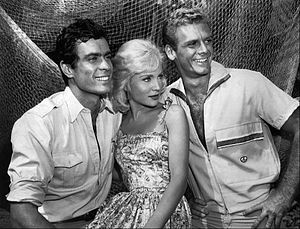
Returning to LA, she started a film career. Though she would appear in 15 big-screen movies, television is where she spent most of her time. She put in her due diligence in the 1950s and 1960s. Her first job was on The Goodyear Playhouse in 1955. She continued with a lot of drama and theater for the first few years of her career. She took roles in a variety of shows including: Father Knows Best, Suspicion, The David Niven Show, Bonanza, The Twilight Zone, The Adventures of Ozzie and Harriet, The Alfred Hitchcock Hour, Wagon Train, Route 66, The Fugitive, The Andy Griffith Show, Ben Casey, Mannix, Dr. Kildare, The Man from UNCLE, I Spy, Gomer Pyle, My Three Sons, and the Wild, Wild West.

Photo: imdb.com

I read several times that she turned down lead roles in series to retain her independence, but I never read any specific roles she turned down. In 1966 she accepted a recurring role of Ann Howard in Peyton Place. She had signed a contract for a year, but after five months, her character was killed on the show. She made a pilot for a show titled, “Apartment in Rome” that did not sell.

Photo: en.wikipedia.com
on Peyton Place

Oliver never did get another show of her own, but she continued to guest on shows throughout the 1970s and 1980s, including Love American Style, Gunsmoke, The FBI, Streets of San Francisco, The Love Boat, Magnum PI, Murder She Wrote, and Simon and Simon.

Photo: flickr.com
on Murder She Wrote

One of the reasons, she didn’t want to be tied down was her interest in flying. In 1959, a Boeing 707 she was a passenger on plummeted 30,000 feet for the Atlantic Ocean before leveling out. After that scare, she decided to learn to become a pilot. In 1964, she started flying single-engine planes. Bill Lear brought her on board to become the first woman to train on his new Lear Jet. She would star in a movie about Amelia Earhart. She also later wrote about her flying experiences in an autobiography, Odyssey: A Daring Transatlantic Journey in 1983.

Photo: imdb.com

In the mid-1970s, she stopped accepting most acting roles and quit flying. She enrolled at the 1974 AFI Directing Workshop for Women with peers Lily Tomlin, Margot Kidder, Kathleen Nolan, and Maya Angelou. During the final season of M*A*S*H she directed an episode of the show. She would later direct an episode of Trapper John, MD.

At age 58, Oliver was diagnosed with colorectal, and eventually lung, cancer. She died in 1990.

Oliver was an interesting actress. Apparently, she loved acting, but never wanted to be tied down. She not only was a aviator and director but a writer. She was a practicing Buddhist and a baseball expert as well.

Wickes and Oliver were very different women with very different interests and acting roles. They both remained single and devoted themselves to their careers. But they were both women who were always in demand for their acting ability.