The Jim Backus Show: It Was Hot Off the Wire

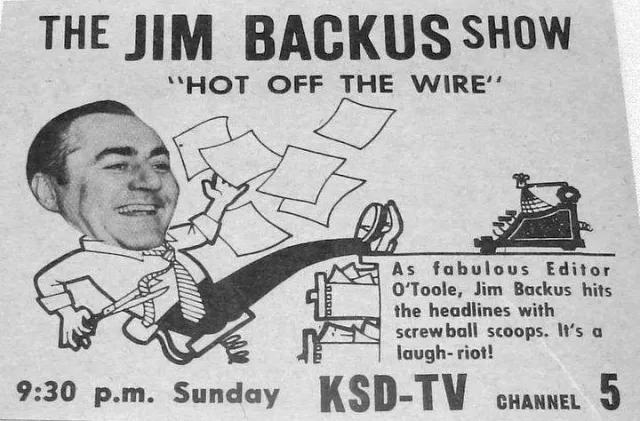
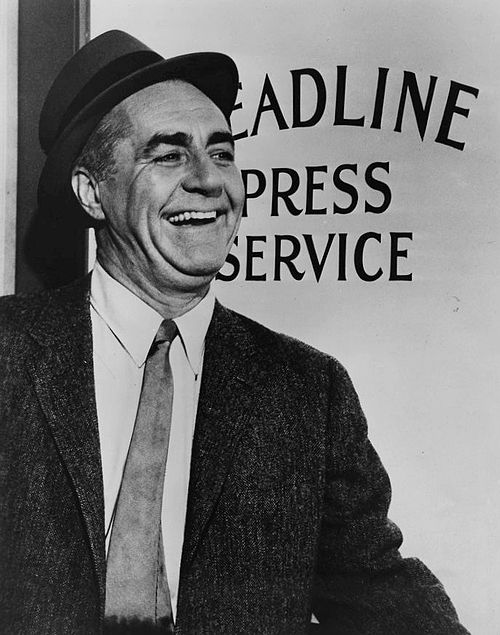
This month we are in a blog series, “It’s Their Show.” Today we are taking a closer look at The Jim Backus Show. Most people know Backus today as Mr. Howell on Gilligan’s Island. While he did show up on several television series, cartoons, and made-for-tv movies for Gilligan’s Island, Backus had a long and successful career without any Gilligan appearances. He started in the movies in 1948 and wound up his career with an amazing 253 credits.
📷thrillingdaysofyesteryear.com

In addition to being the voice of Mr. Magoo, Backus starred in several other series including I Married Joan and Blondie.

In 1960, The Jim Backus Show debuted.  It was one of the first syndicated shows, so it’s hard to gauge how it did against its competition. However, I will say what I can tell you is that there were still 13 westerns on the air during the week, so while the influence of the Plains was waning, it was still very popular. It was also a year that lots of stars had made the plunge to dip their toe into the television industry. There were 11 stars with their own shows that year in addition to Backus, including Jack Benny, Ann Sothern, Danny Thomas, Andy Griffith, and Donna Reed. 

The series had a great cast. They had several good directors, including Gene Reynolds who produced MASH and Lou Grant and a lot of good writers, including Jay Somers who would go on to create and write Green Acres. However, they had 14 directors and more than 40 writers to produce those 39 episodes. They also had a great line up of guest stars including Ken Berry, Charles Lane, Jayne Meadows, Zasu Pitts, Tom Poston, and Bill Quinn.
📷youtube.com

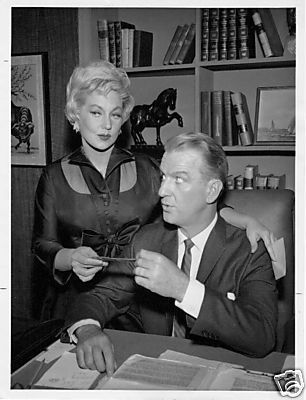
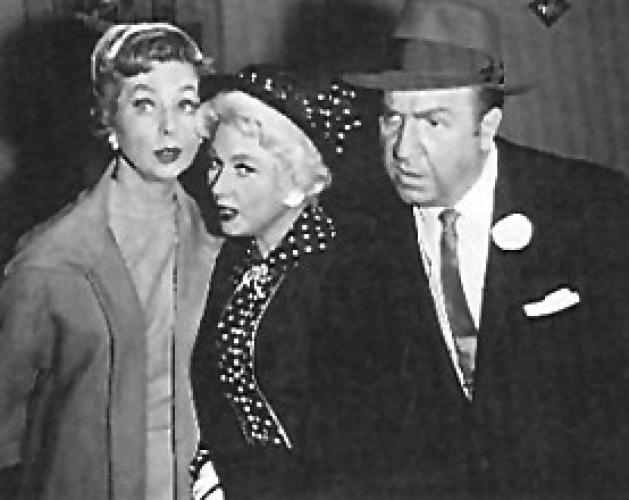
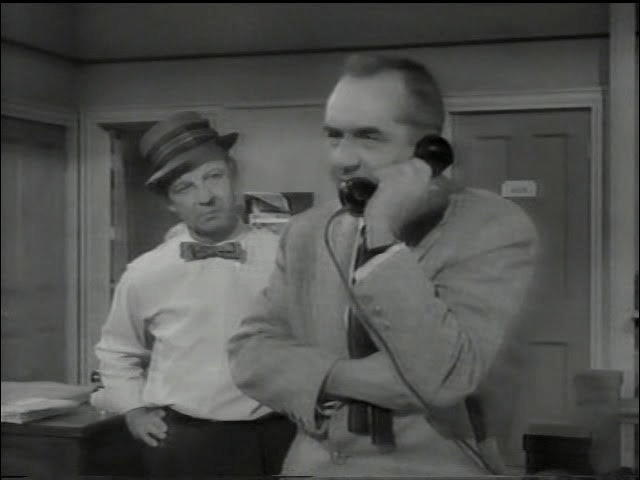
Backus is Mike O’Toole, the editor and owner of a news service struggling to make a go of it. He often doesn’t have the money to pay his rent or his staff’s salaries. Working with O’Toole are reporters Dora (Nita Talbot) and Dave (Bill McLean) as well as Sidney (Bobs Watson), their office boy. When they weren’t working, they spent some time at Heartless Harry’s, a bar downstairs that was popular with newspaper people. He truly was heartless, because he wouldn’t let anyone from Mike’s company in the bar unless they put down a $10 deposit.

One of the episodes I watched for this blog was #5, “No Help Wanted.” The opening pans the big city before moving down to the office of the wire service with Mike in the window joined by Dora.

The episode begins with Mike and Dora’s car breaking down in the middle of nowhere. There’s a large estate in the distance, but Mike won’t let Dora ask them for help until he’s tried to fix the problem himself.
Directed by Gene Reynolds and written by Dick Chevillat and Jay Sommers, the plot is that a retired stage actress, Catherine Lyden (Linda Watkins), has lots of money and loves living a normal life. Her former agent keeps trying to lure her back into show business. She decides to clean the maid’s house so she can hire someone, but when Dora and Mike meet her, they recognize her, and they think she is destitute and try to help her. After they get back to the office, they buy her some groceries and clothes. She tries to tell them that she has plenty of things and she doesn’t need their help. O’Toole writes a story about her having to work as a maid to make ends meet and puts a photo in the paper with her holding a pail and looking disheveled. When the article appears, several people contact her to try to help her out. When Mike and Dora get her contract from the playwright who is trying to hire her, they tell her that it’s a form to get a retraction from the paper.

After she signs it,  they tell her the truth, that it’s a five-year contract and she begins to cry. Surprisingly they never do find out she wasn’t down and out. They think she is crying from gratitude, and they leave.

📷internetarchive.com

There were some fun bits of dialogue especially between Dora and Mike, and the filming was very different from most sitcoms, but I was drawn in by it. One of the things that I found most interesting about this episode is the soundtrack. There is some laughter in the background, but you hear birds, the office machinery running, and the sounds of the city. It’s like you’re right in the location with the cast and hear what they would hear.

This was a tough episode for me though. First of all, I kept waiting for Lyden to be touched by the fact that they were trying to help her and maybe that made her realize the public missed her. However, she never cared that they were spending their hard-earned money on her. She truly was upset when they tricked her, and I found it tough to watch because they never learn she was not destitute and truly was happy and they have now made her miserable for five years. It just didn’t have that feel-good ambiance we expect our sitcoms to feature.
📷wikipedia.com

The series produced 39 episodes before being canceled. I’m guessing the fact that it didn’t make it had something to do with the fact that it was on different nights and times across the country.

Sometimes these shows are hard to find. They all had two names. The Tom Ewell Show was known as The Trouble with Tom, The Phyllis Diller Show was known as The Pruitts of South Hampton, and The Jim Backus Show went by Hot Off the Wire.  With so much competition from other stars trying to vie for their spot on the schedule and being a syndicated show, I’m guessing it was hard to lure enough fans to make it worthwhile to produce a second season of the show.
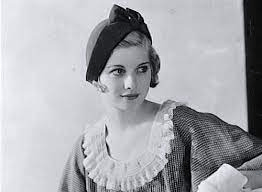
We Still Love Lucy

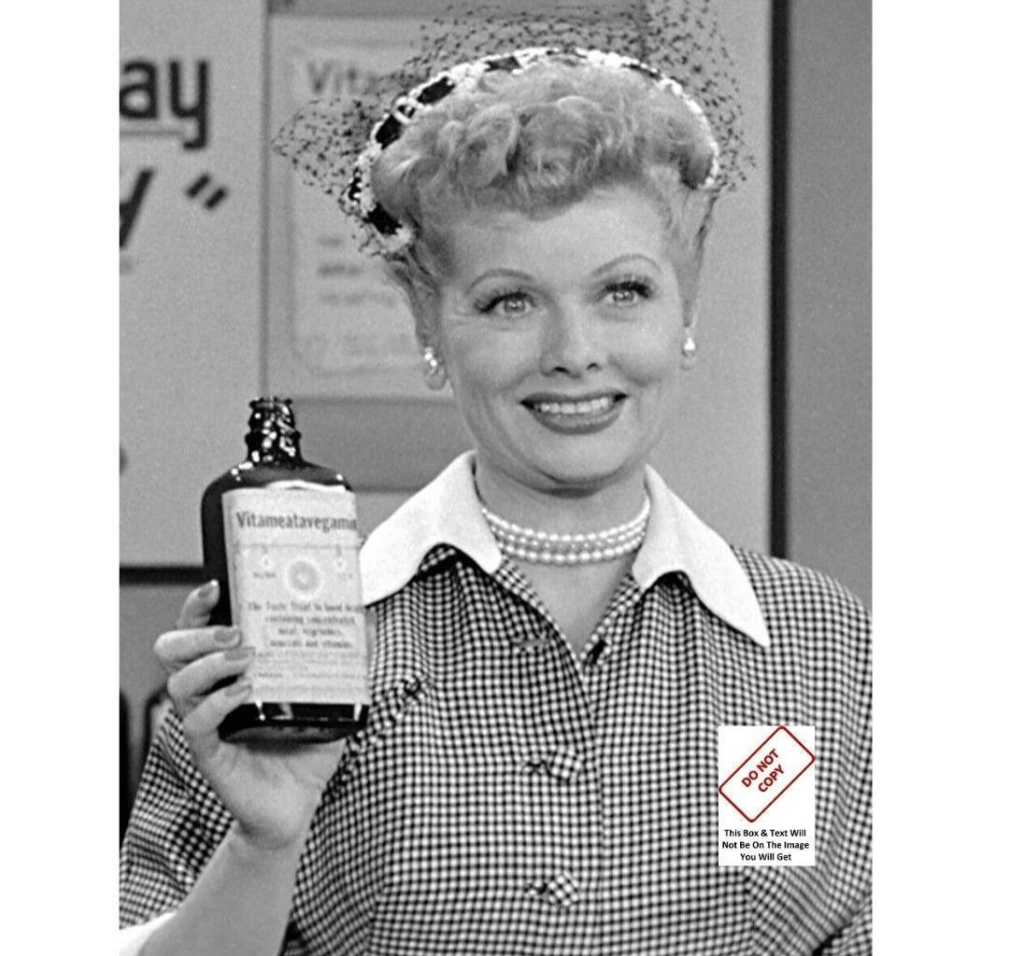
We have been learning a lot about Lucille Ball this month. We delved into I Love Lucy and why it was so important to American culture. We got to know Lucy as a person. And we discussed Jess Oppenheimer and the influence he had on her. Today we are finishing up the month by checking out three shows she starred in after I Love Lucy went off the air: they all debuted in the sixties.

The first show, the Lucy-Desi Comedy Hour, was an extension of I Love Lucy. It spun out thirteen one-hour specials that aired between 1957 and 1960. Five of them debuted during the 1957-58 season of I Love Lucy. The other eight were shown on the Westinghouse Desilu Playhouse and they featured the same cast as I Love Lucy.

Desi tried to talk the network into doing these specials the first year just to keep some freshness in the series, but he was denied the chance. By the last season, they agreed it might work.

During the final season of the series, both the Mertzes and the Ricardos move to the Connecticut suburbs. Apparently, the two couples were running an egg farm to make their living and Fred was Ricky’s manager.

Despite their move out of the City, many of these episodes feature Lucy’s meetings with famous guest stars. For example, in “Lucy Takes a Cruise to Havana,” Lucy meets Hedda Hopper. Production costs were estimated to be $350,000 but with the guest stars, these costs increased and rather than do ten episodes the first year, Arnaz was forced to spread them out over three years.

Ratings were good in the beginning but with the news of Lucy and Desi’s marriage in trouble, both this series and I Love Lucy started to lose viewership. By the time the last episode was filmed, the couple could not even talk without a fight erupting and they communicated by messages. The day after filming, Ball filed for divorce.

The theme song of the series was used with a bit of updating. That symbolizes all ten episodes. It was the same series, but it wasn’t. Had this type of programming happened throughout the original series it might have been more popular but coming on the heels of the ending of the show and the fans being aware that “Ethel and Fred” could barely tolerate each other in real life and then learning “Lucy and Ricky” were ready for divorce took a lot of the fun out of watching the show.

From 1962-68, Lucy attempted another sitcom. While Vivian Vance was no longer Ethel, she was a co-star for the first three seasons of the show. Gale Gordon who had been Lucy’s first choice for Fred Mertz in the early fifties was no longer under contract in 1962 and appeared in this series beginning in season two.

While Arnaz and Ball had divorced two years before this series debuted, they were still in business together. Their company, Desilu Productions, was struggling with the end of I Love Lucy. In 1961 four of their shows were canceled. By spring of 1962, only The Untouchables was still on the air.

Desi approached Lucy about returning to a weekly sitcom. She agreed if it could take the time slot on Mondays that I Love Lucy had, and if Vivian Vance was part of the cast, and the I Love Lucy writers were brought back. The new show, The Lucy Show, debuted Monday, October 1, 1962.

Lucy Carmichael lives with her two kids (Candy Moore and Jimmy Garrett) and Vivian Bagley (Vivian Vance), a divorced friend, and her son (Ralph Hart). Vivian was the first woman to be divorced on television. Her husband had left her a trust fund, so Lucy had to approach the bank often for funding for some of her harebrained projects and purchases. In season two, Gale Gordon took on the role of banker Mr. Mooney. The show had decent ratings and continued in its format until 1965. Lucy moves from New York to Los Angeles when her daughter goes to college in California. Vivian remarries and stays in New York. Lucy meets a new best friend, Mary Jane Lewis (Mary Jane Croft). When Lucy learns that Mr. Mooney is being transferred to the LA bank, their relationship continues, and eventually she works for him.

At the end of the second season, a dispute occurred between Lucy and the writers over a script Ball felt was not up to their standard, and the writers left. In 1964 Desi had resigned as head of Desilu, so Ball took over as president. Most specials, sports shows, and cartoons on CBS were now in color, but they refused to broadcast most of their series in color. Ann Sothern began appearing on the show as a countess to fill in the gaps of Vance being absent.

For the 1966 season, the show dropped all references to Lucy’s children, her trust fund and her life in New York. I don’t know why shows think viewers will just go along with these strange format revamps. Doris Day did the same on her show when her former life and children just disappeared one day and were never mentioned again. Because the show was set in California, a lot of guest stars were featured on the show, many of them bank customers.

During the last season of the show, Gary Morton, Ball’s second husband, was named executive producer of the show. He actually seemed to do well in this role. For this year, Ball was nominated and won an Emmy for the star of the show, the show was nominated for Emmys for best comedy show (but lost to Get Smart) and for the writing and for Gale Gordon as supporting comedy actor (who lost to Werner Klemperer of Hogan’s Heroes). The show was #2 in the ratings.

Surprisingly, this is when Lucy decided to end the show and put it into syndication. Even odder is the fact that she began a new show with a similar plotline that same year. Lucy and her real-life kids, Lucie and Desi Jr. joined the cast which included Croft, and Gordon with Vance making appearances during the run of the show. This show, like the other two, was on the air for six seasons.
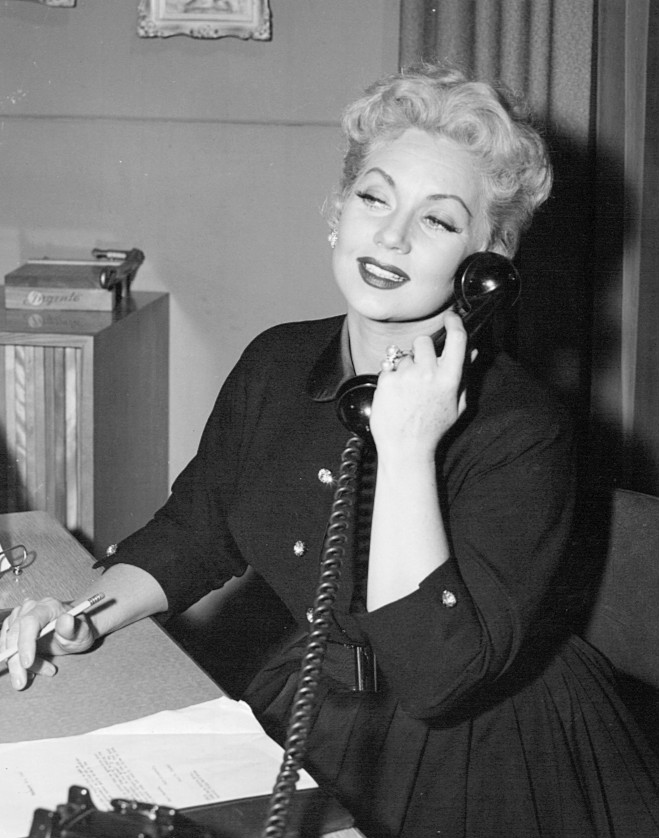
Ball as Lucy Hinkley Carter is living in LA, a widow with two children Kim and Craig, played by her own two kids. She works for her brother-in-law Harry Carter, played by Gale Gordon but now they are at an unemployment agency. Vance made six guest appearances on the show.

Again in this show, a number of famous guest stars showed up including Ann-Margret, Milton Berle, Carol Burnett, George Burns, Liberace, Eva Gabor, Helen Hayes, Dean Martin, Vincent Price, Ginger Rogers, Dinah Shore, Danny Thomas, Lawrence Welk, and Flip Wilson.

In 1973 the show fell out of the top ten, the first Lucille Ball show to ever do so. Lucy did a sixth season and then ended the show.

Lucille Ball deserved a break after this show ended. She had been on the air for 23 years. Little Ricky, or little Desi, had been born early in I Love Lucy history and now he was off on his own acting career. After 1974 when this show went off the air until her death in 1989, most of her projects were connected with I Love Lucy, although she was listed as executive producer for several shows including Mission Impossible and Mannix.

None of these post-I Love Lucy shows were much different from each other, but it proved that America still wanted to watch Lucy on the air. Television looked very different in 1974 than it did in 1951, and Lucille Ball influenced and inspired much of that change. I wonder if Lucy would be surprised to learn that fifty years after her final show ended its production, she is just as popular as ever and Lucy merchandise is unending. It says a lot about just how true it was that everyone loves Lucy.

Lucille Ball: A Force To Be Reckoned With

This month we are learning why We All Love Lucy. We’ll delve into her sitcoms and get to know Jess Oppenheimer and hear about his role in her television life. But today, we are starting with the woman herself, Lucille Ball.

📷facebook. A young Lucille Ball

Lucille Desiree Ball was born August 6, 1911, in Jamestown, New York. She was the only daughter of Henry Durrell Ball, a lineman for Bell Telephone, and Desiree Evelyn Hunt Ball. They lived at 60 Stewart Avenue. The family belonged to the Baptist Church there, and many of her relatives were among some of the first European settlers in Massachusetts.

The family moved frequently for her father’s career, but Jamestown always had a claim on Lucy, and they celebrate her in many ways there. The family lived in Montana, New Jersey, and Michigan before her father passed away from typhoid fever at age 27 in 1914.

Her mother returned to New York, living in Celoron, a summer resort on Chautauqua Lake. The road she grew up on is now named Lucy Lane. Celoron had an amusement park with a boardwalk, the Pier Ballroom, a roller coaster, a bandstand, and a stage.

📷Good Housekeeping

Lucy’s mother remarried four years later. It was her stepfather who encouraged Lucy to audition for his Shriner’s chorus line, which gave her the first taste of what it would be like to be in show business. When she was 16 the family returned to Jamestown.

When Lucy was only 14, she was dating a 21-year-old hoodlum. Her mother was devastated by the situation and finally enrolled Lucy in the John Murra Anderson School for Dramatic Arts in New York City to encourage her in her theater career. Ball did not love the school, and her instructors told her she would not be successful in the entertainment business. Luckily, Lucy did not take their comments to heart. She later said that “one of the things I learned the hard way was that it doesn’t pay to get discouraged. Keeping busy and making optimism a way of life can restore faith in yourself.”

In an attempt to prove the school wrong, Lucy began working as an in-house model for Hattie Carnegie. This was where she first changed her hair. Being a brunette, Carnegie taught Ball to bleach her hair blonde. Her modeling was interrupted for two years when she dealt with the effects of rheumatic fever.

At the ripe old age of 21, Ball returned to New York City to pursue an acting career. She went back to the Carnegie agency and became the Chesterfield Cigarette Girl.

📷Brittanica

In 1933 she was in Roman Scandals as a Goldwyn Girl; while playing a slave girl, she had to have her eyebrows entirely shaved off, and they never grew back. Some of the things an actor goes through for roles is crazy. After that movie she moved to Hollywood to try a film career. After becoming a contract player for RKO Radio Pictures, she received a decent amount of work. At this time, she met the Marx Brothers, appearing in Room Service. She also worked with Fred Astaire and Ginger Rogers in several musicals.

When she registered to vote in 1936, both she, her brother, and her mother registered as Communists. During that year she signed a document as a Communist supporting Emil Freed for assembly and was appointed delegate to the State Central Committee of the Communist Party of California.

Ball later claimed she never had a strong political affiliation. In 1944, Lucy can be seen in a newsreel fund raising for Franklin Roosevelt. She also mentioned that she voted for Eisenhower in 1952 when he was on the Republican docket. In 1953 Ball met with HUAC and gave a sealed testimony. She said that she voted Communist at her grandfather’s insistence and did not know she had been appointed a delegate. Before filming episode 68 of their show, her husband and co-star Desi addressed the audience and said Lucy was not a Communist; she was just influenced by her grandfather. He joked that “the only thing red about Lucy is her hair, and even that is not legitimate.”

📷pinterest

In the late thirties, she dabbled in radio to earn some additional money. She was a regular on “The Phil Baker Show” and on “The Wonder Show” where she met announcer Gale Gordon.

In 1940 Lucy met Desi Arnaz when they both appeared in the movie Too Many Girls. They fell in love immediately, and before the year was out, they eloped. Arnaz was drafted in 1942, but a knee injury kept him from active service, and he was placed in Hollywood organizing and performing USO shows for wounded GIs.

Lucy finally got her big break in 1943. Arthur Freed was making a movie based on the play “DuBarry Was a Lady”; he bought it for Ann Sothern, but when she turned it down, she recommended her best friend, Lucille Ball.

In 1944, Ball filed for divorce, but the couple reconciled before it went through. Lucy and Desi had Lucie in 1951 when Lucy was almost 40, and son Desi was born during the series and written into the scripts in 1953. Mom and son appeared on the first cover of TV Guide which came out in 1953.

📷HollywoodHistoricPhotos.com

Ball continued to make movies throughout the forties and kept a foot in radio. In 1948 she was cast as Liz Cooper on the radio show, “My Favorite Husband” on CBS.

When CBS wanted to transition the show to television, Lucy wanted Desi to be her television husband. CBS said no, so the couple went on the road with an act to prove the popularity of the them working together and CBS backed down.

The show was incredibly successful. (If you want to learn more details about the series and all the history that it produced, keep an eye out for my blog which will post January 13, 2025.) The couple created their own production company and had many “firsts” with technology producing their show. During filming breaks of the show, Lucy and Desi made two movies: The Long, Long Trailer in 1954 and Forever, Darling in 1956.

After years of turmoil and ups and downs in their marriage, the couple divorced. However, they continued to remain in each other’s lives through their children and their relationship. Later in life, Lucy said “Desi was the great love of my life. I will miss him until the day I die.”

📷closerweekly.com Ball and Vance

Lucy bought Desi’s share in the production company which produced a variety of shows including Mission: Impossible, Star Trek, and The Untouchables. In 1967 Lucy sold her shares to Gulf+Western, owned by Paramount, for $17 million, which would translate into $138 million today.

Lucy married Gary Morton in 1961. At the time, Morton was a comedian 13 years younger than Lucy. He said he had never seen an episode of I Love Lucy. Ball hired Morton for her production company, teaching him the television business.

For the next decade, Lucy worked on a number of television specials. She also tried sitcom life again. She starred in The Lucy Show from 1962-68 and in Here’s Lucy from 1968-1974. We’ll discuss these shows the last week of January. Many of Lucy’s friends appeared on these shows. Her close friends included Mary Jane Croft, Judy Garland, Ethel Merman, Barbara Pepper, Ginger Rogers, Ann Sothern, Vivian Vance, and Mary Wickes.

📷ebay.com

Ball kept busy acting during the early 1980s. Desi Arnaz passed away in 1986. In 1988 Lucy had a mild heart attack. She appeared at the 1989 Academy Awards show and she and co-presenter Bob Hope were given standing ovations. She died a month later. Lucy had been a heavy smoker, and her cause of death was abdominal aortic aneurysm which is seen more in smokers.

Lucy always sent flowers to Carol Burnett on her birthday. The day before she died, she ordered them, and they were delivered a few hours after Carol learned of her death.

Lucy was cremated and her ashes were interred in Forest Lawn Cemetery with her mother’s remains. In 2002, both women’s remains were moved to the Hunt family plot in Jamestown. In Jamestown you can find the Lucille Ball Desi Arnaz Museum & Center for Comedy and the Lucille Ball Little Theater.

In 2009 a statue of Lucy was erected in Celoron. Many people called it “scary,” and it became known as “Scary Lucy,” which I totally endorse. In 2016, a more lifelike statue was created to replace Scary, but the scary statue had become so popular, it was left on display with the new one as its neighbor.

📷youtube.com The different sides of Lucy

Those two statues symbolize my relationship with the show. I appreciate the show and everything it did to create the classic age of television. Whether it’s technical filming strategies, the writing, the way the business was run, everything was important in this show. However, I have to admit, it’s not a show I choose to watch. It changed the entire course of television in similar ways that All in the Family would do a few decades later, but I honestly don’t enjoy watching either of these series. That might be a fault in my genes, but I also have to be honest.

However, Lucy Ricardo, while we may think of her as naïve and sophisticated, traditional and unconventional, submissive and disobedient, was an important icon in the way that women thought about themselves in the fifties.

Women had been brought in to work and gain independence while so many men were overseas fighting, and then they were asked to give it all up and go back to a domestic and tranquil life. Leslie Feldman, a political scientist and author of The Political Theory of I Love Lucy, writes that Lucy was “a transitional figure—she’s on the cutting edge.  . . Are [women] going to stay home and be wives and mothers? Are they going to go to work? Or are they going to do both? And what if they really do better and earn more money than their husbands? What about that? That’s an element of Lucy too.”

📷biography.com

Lucy was a force in show business. While she was not alone in taking control of her own career—Donna Reed, Betty White, and Ann Sothern were also powerhouses in establishing their own companies and running them—Lucy did it with the nation watching her. Even the choices she made about whether to divorce Desi or not were all done in the public eye and were sending messages whether people chose to receive them or not.

Lucille Ball was an amazing actress and an amazing business person. Apart from whether I enjoy watching the show or not, it changed the history of television and the way sitcoms were written, cast, and remembered. Thank you, Lucille Ball, for not listening when your instructors told you that you would never make it in show business. You not only made it in television, you truly made television what it is today.

Cesar Romero: Batman’s Most Joy-Filled Villain

We are winding up our series: Bam! Pow! Batman Villains. Today it’s all about The Joker: Cesar Romero.

📷turnerclassicmovies.com

Romero was born in New York City in 1907. His father was an import/export merchant, and his mother was a concert singer. He grew up in Bradley Beach, New Jersey. His father lost most of his money during the 1929 Wall Street Crash.

Romero teamed up with dancer Lisbeth Higgins and they formed a professional dance partnership, appearing in nightclubs and theaters throughout New York City including the Ambassador Roof and the Montmartre Café. Although he had no professional training, he was often compared to Fred Astaire. He also was cast in several off-Broadway productions including “Stella Brady” and “Dinner at Eight.”

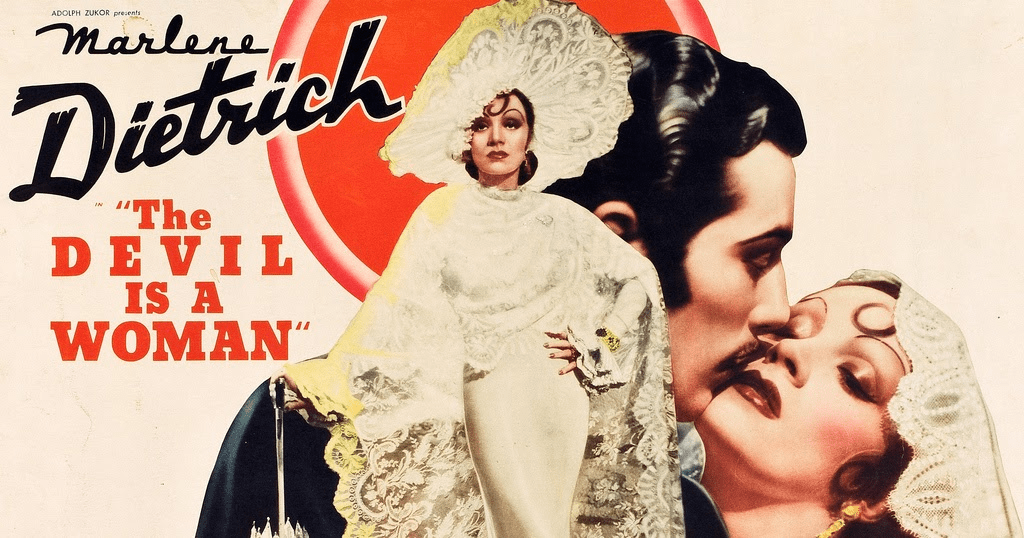
Later Romero would refer to himself as the Latin from Manhattan and he provided for his family members who followed him to Hollywood. He played the stereotypical Latin lover during the thirties and forties, including The Devil is a Woman with Marlene Dietrich in 1935. However, he also made westerns and did a bit of dancing during these decades on the big screen.

His friendship with Frank Sinatra brought him roles in Around the World in 80 Days, Pepe, Marriage on the Rocks, and Oceans’ 11.

📷imdb.com Wagon Train

In 1942, Cesar enlisted in the US Coast Guard, serving in the Pacific Theater of Operations. After his military career ended, Romero returned to his acting career.

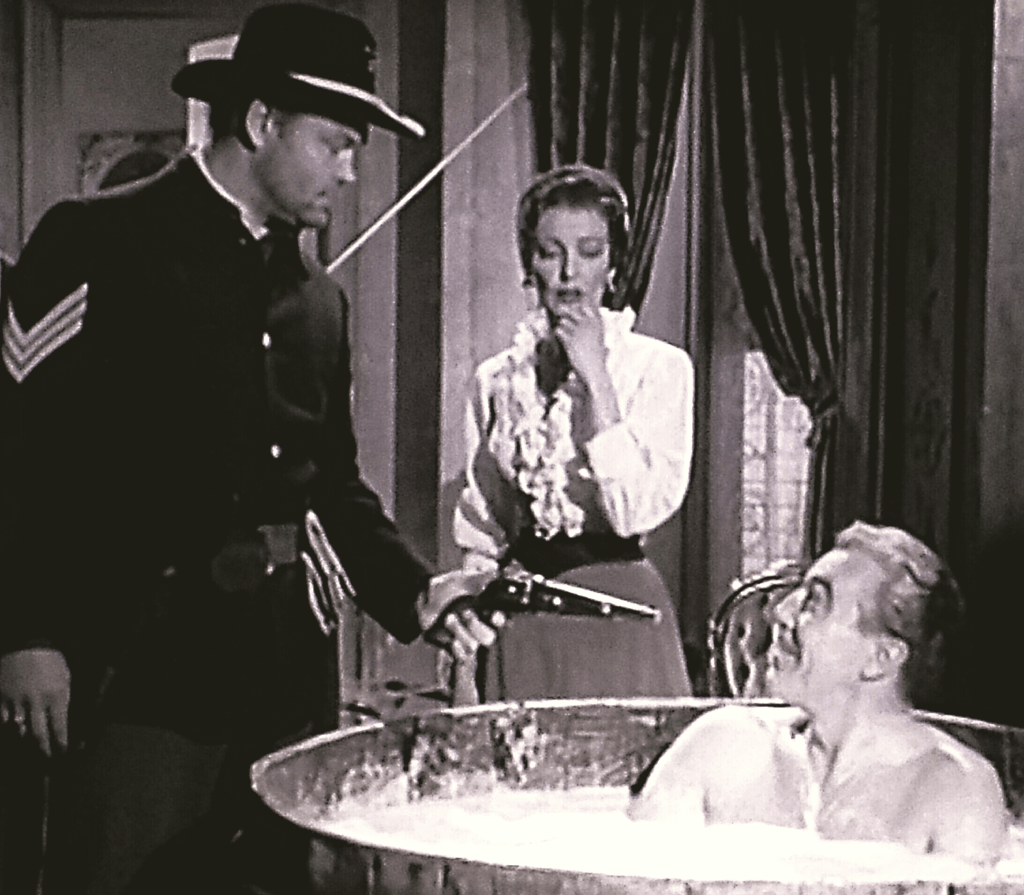
His television career began in 1948 in the show, Variety. During the fifties he was primarily appearing on dramas, but he did show up on Private Secretary with Ann Sothern and continued his western roles on Wagon Train, Zorro, and Death Valley Days.

The sixties kept him extremely busy on television. He kept people laughing on Pete and Gladys, The Ann Sothern Show, Get Smart, and Here’s Lucy. He rode the range on Stagecoach West, Bonanza, Rawhide, and Daniel Boone. He stayed dramatic on shows including 77 Sunset Strip, Dr. Kildare, and Ben Casey.

📷wallpaper.com

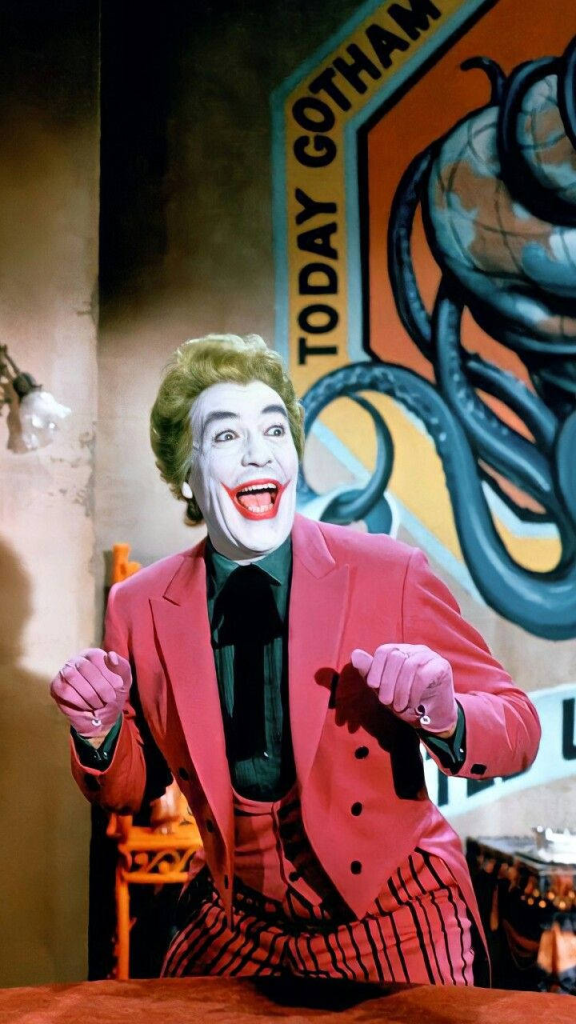
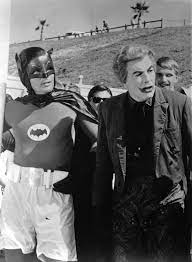
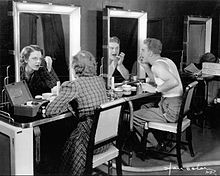
However, the show he was best known for in the sixties, is the show that made him part of my blog series this month, Batman. He had to endure a long time in the make-up chair. He refused to shave his mustache for the role, so white face makeup was smeared all over his face until it was hidden.

Romero admitted that this role reinvigorated his career. When he was offered the role of the Joker, he was 59 years old. Romero said the role was “the kind of part where you can do everything you’ve been told not to do as an actor. You can be as hammy as you want.”

He discussed how surprised he was when William Dozier called him about the show. He said Dozier told him that “the important characters were all villains. They had done the first two with the Riddler and the Penguin with Frank Gorshin and Burgess Meredith, and now they were ready to do the third, and the villain was the Joker. He said, ‘I would like you to play the part.’ So, I said I would like to read the script and know what it is all about. He said, ‘Come on over to the studio, and I will show you the film of the first episode.’ Of course, it was great. I said, ‘Let me read this Joker part, and if it is as good as the first one, hell yes, I will do it.’ So I read the script, and I thought it was a gas, and I said, ‘Sure, I’ll do it.’”

No serious villain, the Joker was cheerful and extroverted. He oozed goofiness and always appeared to be having a great time carrying out his nefarious activities. Dressed in his famous purple costume, he had his own automobile that could rival the Batmobile.

📷facebook.com

While most of the villains saw Batman and Robin as roadblocks in their evil schemes and problems to take care of, the Joker found great joy in taking down the superheroes. In one episode he says “Oh, but I must, I must! Why, outwitting Batman is my sole delight, my heaven on earth, my very paradise!”

You couldn’t miss him if you watched almost any television in the 1970s and 1980s. He appeared on a ton of shows, just a few of which included Bewitched, Nanny and the Professor, Love American Style, The Love Boat, Night Gallery, Mod Squad, Ironside, Medical Center, Charlie’s Angels, and Hart to Hart.

From 1985-88, he was a regular on Falcon Crest. Earl Hamner Jr., the creator of The Waltons, created this show featuring the Gioberti family, owners of Falcon Crest Winery. Romero played the love interest of matriarch Angela Channing, played by Jane Wyman.

He finished his career in the 1990s. He was in his eighties when he appeared on The Golden Girls, and Murder She Wrote, his last television role.

Romero also played a role in politics. As a registered Republican, he was very involved in many campaigns. He worked for Nixon-Lodge in 1960 and later supported Lodge in his run for President. When Lodge did not get the results that he hoped for, Romero turned his support to Barry Goldwater for the general election. He also worked for his friend George Murphy in his run in the California senate race. He later helped Ronald Reagan in his gubernatorial runs in California as well as his presidential campaigns.

It was reported in many articles that Romero had 30 tuxedos and more than 500 suits. That is not surprising because he had a clothing line, Cesar Romero Ltd. He was also a model and spokesperson for Petrocelli suits in the sixties.

Romero stopped acting in 1990. He remained busy though with several ventures including hosting classic movie programs on television. In 1994, Romero died from complications of a blood clot on New Year’s Day. He was being treated for bronchitis and pneumonia.

I enjoyed getting to know a bit more about Cesar Romero, but, I have to admit, that I don’t feel like I know him much better than I did before. He seemed to have been stereotyped as a Latin lover and then again as the Joker. I would like to go back and watch some of his appearances on westerns. It was hard to find much information about Romero beyond his career and political interests.

📷etsy.com

I know The Joker was not his most challenging role, but he will always have a place in America’s heart for the work he did on Batman as will these fun super villains we got to know this month.

Eddie Albert: The John Muir of Hollywood

This month we are looking at some of our favorite classic television actors. If you are a big fan of Oklahoma or Green Acres, you will be well acquainted with our star today, Eddie Albert. Let’s learn a bit more about his life and career.

Photo: imdb.com

Eddie was born Edward Albert Heimberger in 1906 in Illinois. When he was one, his family moved to Minneapolis. When he was six, he became a paper boy. He and his schoolmate, Harriet Lake, were in the drama club. Harriet would later change her name to Ann Sothern. After graduating in 1926, Albert enrolled at the University of Minnesota to major in business.

He began his career in earnest, but the stock market crash derailed his job search. He worked a variety of jobs including singer, trapeze artist, and insurance salesman.

Photo: closerweekly.com

In 1933 he moved to New York City and cohosted a radio show called “The Honeymooners-Grace and Eddie Show,” with costar Grace Bradt. He was on the show three years and then Warner Brothers offered him a contract.

Albert also had an early career on Broadway with lead roles in “Room Service” and The Boys From Syracuse.” He also began working on television. In 1936, NBC hosted a play of his “The Love Nest” on their experimental television station W2XBS, now WNBC.

His first movie role occurred in 1938 in Brother Rat. He would make 25 additional films during the next decade and then another 50 big-screen movies before his career ended, with his last one being the Narrator in Death Valley Days in 1995.

During his odd-job era, Albert had toured Mexico as a clown and trapeze artist with the Escalante Brother Circus while working for the US Army intelligence, photographing German boats in Mexican harbors. In 1942, he enlisted in the US Coast Guard. In 1943, he resigned in order to accept an offer as a lieutenant in the US Naval Reserve. He rescued 47 marines under heavy enemy fire in 1943 and was awarded a Bronze Star.

Eddie and Margo Photo: facebook.com

After returning from the War, Albert married Mexican actress, Margo. Their son also became an actor and their daughter took on the role of Eddie’s business manager. His son had more than 130 credits, the first being in 1963. You probably saw him on many of your favorite shows. Unfortunately, he passed away from lung cancer only a year after his father died.

During the late forties to the early sixties, Albert returned to Broadway for roles in “Miss Liberty,” “The Seven-Year Itch,” and “The Music Man.”

Albert had a long and active television career. During the fifty years that he was working in the industry, he appeared in almost 100 different shows. His first appearance was in the Ford Theater Hour in 1948.

Throughout the fifties, Eddie showed up in many of the early drama series on television. The sixties found him, along with most other actors of that decade, showing up on a variety of westerns, including Laramie, Tales of West Fargo, The Virginian, and Wagon Train. He was offered roles in several dramas as well, including Dr. Kildare, The Outer Limits, and The Man From U.N.C.L.E.

Photo: cinemacats.com

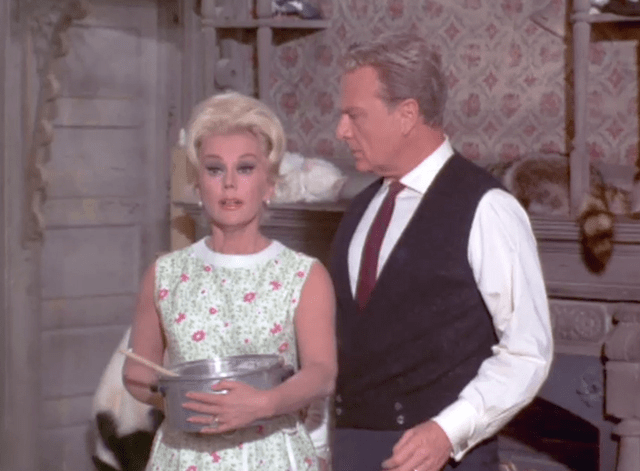
In 1965 he received the starring role of Oliver Douglas in Green Acres. For six seasons, he extolled the virtues of farming over the big city rat race. While Oliver had a harder time fitting into Hooterville life, his elegant wife Lisa was accepted immediately. If you have been reading my blog for a while, you know I love this show. I am more impressed with it now, fifty years later. There is so much sophisticated humor and wit in the show and I love getting to know the quirky characters who live in the Hooterville community. As Oliver Douglas, Albert was also on The Beverly Hillbillies and Petticoat Junction. The show was purged with the other rural comedies, even though the ratings were still quite high.

The seventies and eighties kept Albert busy on television and in films. He appeared on many shows including Columbo, McCloud, Here’s Lucy, Simon & Simon, Hotel, Murder She Wrote, and thirtysomething.

He opted to star in one more television series in Switch from 1975-78. He starred as ex-cop Frank McBride who started a detective agency with ex-con Pete Ryan (Robert Wagner).

Much of Eddie’s life was spent as an activist for social and environmental causes. He participated in the first Earth Day. He founded the Eddie Albert World Trees Foundation and was national chairman for the Boys Scouts of America’s conservation program. From 1985-1993, he was the spokesperson for the National Arbor Day Foundation. He was a trustee of the National Recreation and Park Association and became a member of the U.S. Department of Energy’s advisory board.

In addition, he was involved with Meals for Millions and was a consultant for the World Hunger Conference. Meals for Millions was a project that created nutritional meals for three cents each! They were sent to 129 different countries and added up to more than 6.5 million pounds of food. He and Albert Schweitzer participated in a documentary about malnutrition in Africa, and he often campaigned against DDT. He was also a director for the U.S. Council on Refugees and promoted organic gardening. Albert was also the founder of City Children’s Farms, a program to get inner-city kids involved in gardening.

I’m not sure when he had any other time for leisure and recreation, but he loved jogging, swimming, golfing, traveling, sculpting, beekeeping, sailing, reading, making wine, gardening, and playing guitar.

Photo: classicmoviehub.com

He 1995, Albert was diagnosed with Alzheimer’s disease. His son temporarily retired from acting to care for his father. In 2005, Eddie passed away from pneumonia.

When Albert passed away, we lost much more than an actor, although we did lose a great actor. I was so impressed with how much he did for the economy. He told a great story about his former costar Eva Gabor. She loved her fashion. They were great friends and like any couple, married or not, they had their differences. She never understood his passion for wildlife conservation. She asked him, “Every time you hear about a sick fish, you make a speech, vy?” And he patiently explained that we needed to preserve nature and save wild animals. A few days later she showed up in a gown made of feathers. He told her she should not be wearing it, and she said it was so chic. Albert told her that she was a role model, and when other women saw her gown, they would want one and many birds would die just to supply the feathers. Lisa just laughed and seriously said, “But Eddie, feathers don’t come from birds.” So he asked her where they did come from and she said, “Dahlink, Pillows! Feathers come from pillows.” In addition to being a great actor and an amazing activist, he was also a good and patient friend.

Everyone Could Use A Private Secretary

After learning a bit about the career of Ann Sothern last week, today we take a look at two of her shows: Private Secretary and The Ann Sothern Show. Although they were two different shows, the second almost seemed like a continuation of the first. To make things even more complicated, when the shows went into syndication, Private Secretary was renamed Susie and all the episodes of Susie would air, followed by The Ann Sothern Show and then back to Susie.

Photo: allposters.com

As we learned last week, Ann suffered from hepatitis for three years. With her medical bills mounting and less film work coming in, she needed to make a living, so she turned to television to revive her career.

After appearing in series of ten Maisie films earlier in her career, Ann had a solid fan base. Ann was a smart business woman and she had a 42% ownership in her new show, Private Secretary. The show debuted in 1953.

Sothern with Don Porter–Photo: pinterest.com

Ann portrays Susie MacNamara, a former actress and WAC WWII veteran; she is the secretary to Peter Sands (Don Porter), a talent agent. Susie often complicates life for her boss, although she means well.

One of her best friends was Violet (Ann Tyrell), their receptionist. Cagey Calhoun (Jesse White) is always trying to cause trouble for Peter as a rival talent agent.

Sothern with Ann Tyrell and Jesse White–Photo: episodate.com

While the scripts weren’t ground-breaking, they were well written and witty. Some shows reference one of Mr. Sands’ clients, actress Harriet Lake, which was Ann’s real name.

The show was noted for its state-of-the-art set decoration featuring IBM typewriters and Western Electric phone systems, as well as stylish furnishings.

Photo: wikimedia.com

The show was on Sunday nights on CBS and alternated weeks with highly rated Jack Benny Show.  I have never seen this with any other show but Lucky Strikes, the show’s sponsor also financed The Jack Benny Show on CBS and Your Hit Parade on NBC. So, when Your Hit Parade was on hiatus for summer, Private Secretary’s reruns were shown on that network and then new shows would begin in the fall back on CBS.

The show continued to have great ratings but in 1957, even though the show was renewed for the next year, Ann got into an argument with producer Jack Chertok and she left the series which ended. I could never find definitively why they argued, but it had to do with the show’s profits.  

Photo: wikipedia.com

Sothern was nominated for Best Actress Emmy for 1955, 1956 and 1957, losing to Loretta Young, Lucille Ball, and Nanette Fabray.

Instead of a sixth year of Private Secretary on CBS, The Ann Sothern Show debuted in 1958 as a weekly show. Chertok kept the rights to the title, hoping to get another actress to fill the MacNamara role. This show was created by Bob Schiller and Bob Weiskopf. Desi Arnaz would produce the show which worked out as Ann and Lucille Ball were very close friends. They appeared on each other’s shows.

In The Ann Sothern Show, Ann now plays Katy O’Connor, the assistant manager of an upscale New York hotel, The Bartley House. Her secretary is Olive Smith (Ann Tyrrell), the front desk clerk is Paul Martine (Jacques Scott), and the bell boy is Johnny Wallace (Jack Mullaney). Later Ken Berry replaced Mullaney as Woody Hamilton.

Many of the cast members from the former show appear on the new series. Although Katy has a boss she answers to, she has a lot of authority running the hotel. Katy’s first boss is Jason Macauley (Ernest Truex), a man who is dominated by his nagging wife Florence (Reta Shaw). When ratings were not great, Truex was replaced by Don Porter as James Devery. As in Private Secretary, there are some romantic currents between Katy and James. Olive’s boyfriend, a dentist, Dr. Gray, is played by Louis Nye. In season two, Jesse White showed up as Oscar Pudney an unethical newsstand owner near the hotel.

Sothern with Jacques Scott–Photo: wikipedia.com

The storylines often revolved around the personal life of the staff and stories about guests staying at the hotel. The concept provided the opportunity to attract a variety of guest stars during its run. In addition to Lucille Ball, actors who appeared on the show included Jack Albertson, Frances Bavier, Constance Bennett, Eva Gabor, Joel Grey, Van Johnson, Jayne Meadows, Howard McNear, Janis Page, Cesar Romero, and Connie Stevens.

Once again Ann was nominated for an Emmy is 1959 but lost to Jane Wyatt for Father Knows Best.

Post Cereals and General Foods were sponsors for this show, and the cast would often appear in commercials at the end of the show. Ann would then sign off with “Well, goodnight everybody. Stay happy!”
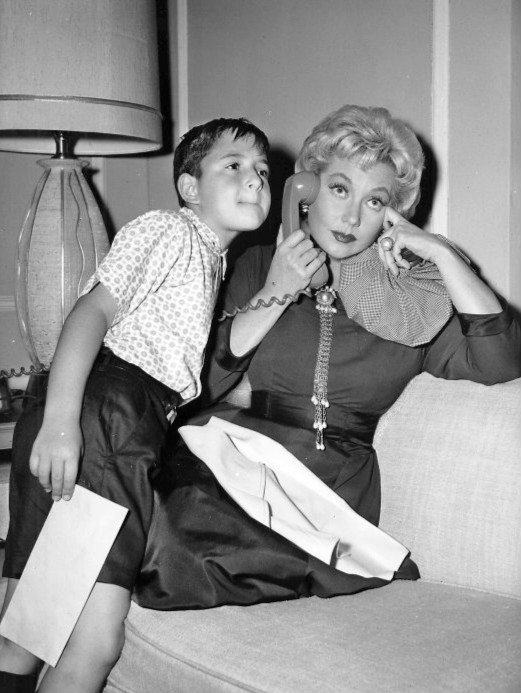
Photo: pinterest.com

For the second year, the show’s ratings were decent but not great. The show was moved to Thursday nights up against The Untouchables, a top ten show. The ratings declined, so it was cancelled.

The final episode ended in a cliffhanger. Mr. Devery finally realizes that he is in love with Katy and proposes to her. They kiss but the show ends before Katy can answer yes or no.

I remember watching the shows in syndication and I thought they were good. Ann Sothern appeared to be a likable person and a hard-working actress. Both shows were often in the top 25% of the ratings. With all the reboots that have been done, I have never heard of either of these shows as possibilities and they seem to be good options for a contemporary show.

If you want to check out the shows, Private Secretary has several DVD options. The only place I could find The Ann Sothern Show was on etsy, and the site specifically mentions that it is “not a retail set nor is this a commercial studio release.” Maybe with all the classic television networks debuting, we will see Private Secretary back on the air again soon.

Ann Sothern: An Actress Who Paid Her

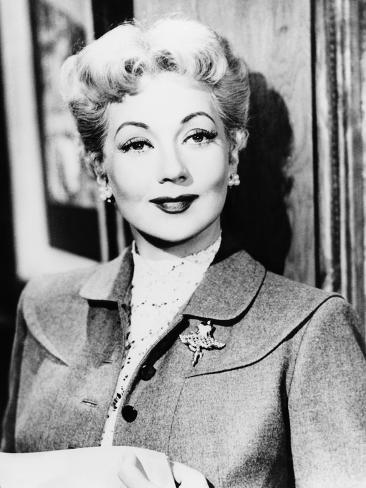
Ann Sothern was born Harriette Arlene Lake, a natural redhead, in 1909 in North Dakota. An interesting note, her paternal grandfather, Simon Lake, invented the modern submarine and her sister Marion was secretary to Abigail Van Buren of Dear Abby fame. She and her two sisters were raised in Minneapolis, Minnesota. At the age of five, she began taking piano lessons and studied at the McPhail School of Music where her mother was a piano teacher. By 11, she was an accomplished pianist, and she was singing solos in her church choir. At 14 she began taking voice lessons. During her time at the Minneapolis Central High School, she appeared in a variety of productions as actor or director.

Photo: pinterest.com

After her graduation, her mother moved to Los Angeles to become a vocal coach for Warner Brothers. Ann moved to Seattle with her father (her parents had divorced earlier) to attend the University of Washington, but she dropped out after her first year. Ann turned back to her singing talent and sang with Artie Shaw and His Orchestra.

While visiting with her mother, she did a screen test for MGM and was signed to a six-month contract. She had a variety of small bit parts but never received that break-out role. After meeting Florenz Ziegfeld at a party, he offered her a role in New York. When MGM chose not to pick up her option, she moved East to work for Ziegfeld. In 1930, she received her Broadway stage debut.

Photo: pinterest.com

In 1934, Columbia signed her to a contract. At this time, she changed her name to Ann Sothern and her hair color to blonde; “Ann” was for her mother and “Sothern” for Shakespearean actor E.H. Sothern. She was cast in a bunch of B movies, but, unfortunately, in 1936 her contract was not renewed.

A contract that was made that year was her marriage with Roger Pryor. They divorced in 1942. A week later, she married Robert Sterling with whom she had a daughter; they divorced in 1949.

Photo: oldtimeradio.com

At that time, she signed with RKO and again could just not find that perfect role, so she made the full circle, returning to MGM. MGM cast her in her first big-screen feature in 1939 as Maisie Ravier, which led to a series of Maisie films. The film was based on the book Dark Dame by Wilson Collison published in 1935.The property had been bought for Jean Harlow, but she passed away in 1937. In all, there were ten Maisie films. The popularity of the series led to a radio program, “The Adventures of Maisie,” which starred Sothern from 1945-47.

In 1949, Sothern was diagnosed with hepatitis. She contracted it after getting in serum injection during an English stage production. When she became ill, MGM let her go. Sothern suffered with the disease for three years. She was receiving a few supporting roles such as in The Blue Gardenia, but her medical bills were mounting, so she turned to television.

Sothern was offered her own sitcom in 1953. Titled Private Secretary, the show would last five years on CBS before transitioning to The Ann Sothern Show in 1958.

Photo: wikipedia.com

In Private Secretary, she appeared as Susie MacNamara, a secretary working for Peter Sands (Don Porter), a New York City talent agent. The series alternated weeks with The Jack Benny Show. Private Secretary had great ratings, placing in the top ten consistently. Sothern was nominated for an Emmy four years. Sothern had a 42% interest in the show and after the fourth year, she and Jack Chertok, producer, had a major disagreement and she left the show.

Sothern with Jacques Scott–Photo: wikipedia.com

The next year she showed up in The Ann Sothern Show, a very similar sitcom. Now Ann was Katy O’Connor an assistant manager at the Bartley House Hotel. Originally her boss was played by Ernest Truex but after dismal ratings, Don Porter was brought back as James Devery, hotel owner. The show’s ratings picked up significantly and were good until CBS moved the show to Thursday nights against The Untouchables. The show was cancelled in 1961.

Sothern with friend Lucille Ball–Photo: pinterest.com

Sothern returned to film features and made several appearances on Lucille Ball’s the Lucy Show as Countess Framboise. Ball was one of her best friends and called Sothern “the best comedian in the business, bar none.”

Ann was a good business woman. She opened the Ann Sothern Sewing Center in Sun Valley, Idaho, selling fabrics, patterns, and sewing machines in the 1950s. She also bought a cattle ranch in Idaho, A Bar S Cattle Co. In addition, she owned the production companies that produced Private Secretary and The Ann Sothern Show.

Photo: wordpress.com

Ann also continued with her early musical abilities. In the mid-fifties, she starred in a nightclub act in Las Vegas and Chicago. In 1958, she released an album, “Sothern Exposure.”

Jerry Van Dyke and his “mother”–Photo: youtube.com

In 1965, Sothern made a bad career move by signing on to star in the sitcom My Mother the Car with Jerry Van Dyke. Van Dyke played a lawyer who restored a 1928 antique car only to learn that it spoke to him through the radio as his mother. The show somehow lasted one season and has been named one of the worst sitcoms ever.

For the next two decades, Ann worked in both film and television but never had an iconic role. One of the issues she had to deal with during this time was a back injury. During a stock production in Florida, a fake tree fell on her back. She was put in traction and had to wear a back brace. She also developed a case of depression. For the rest of her life, she would suffer from numbness in her feet and need a cane to walk.

In 1987, Sothern had her final role in the film The Whales of August starring Bette Davis and Lillian Gish. She earned an Oscar nomination for her role.

Retiring to Ketchum, Idaho, Ann enjoyed the rest of her life in retirement and passed away from heart failure in 2001.

Photo:

Her long career spanned six decades and like so many early stars, she found work on stage, on radio, in film, and on television. Ann definitely paid her dues, spending more than a decade in Hollywood. If her health had not thrown her a curve, she might have become one of the top stars. What impressed me most was that after more than sixty years in the entertainment industry, she was able to retire to a place she loved and enjoy almost twenty years as part of a community with her favorite activities such as embroidery and outdoor fun.

Jeepers, Creepers, It’s Mister Peepers

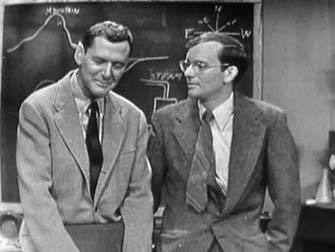
Mister Peepers was one of the first popular sitcoms.  It aired from July of 1952 until June of 1955. The show starred Wally Cox as Robinson J. Peepers. Peepers was a junior high school science teacher. A great cast surrounded him including history teacher Harvey Weskit (Tony Randall), Harvey’s wife Marge (Georgann Johnson), county nurse Nancy Remington (Patricia Benoit), English teacher Mrs. Gurney (Marion Lorne), and athletic coach Frank Whip (Jack Warden). (In the pilot, the coach was played by Walter Matthau.) Peepers developed a relationship with nurse Nancy, and her parents (Ernest Truex and Sylvia Field) also became part of the cast.

Photo: blogspot.com

The show featured some slapstick as well but it was not the primary form of humor. In one episode, the uncoordinated Mr. Peepers was playing basketball in the gym alone and somehow got stuck in the basket. In order to fulfill the evening obligations that he promised, he brings Mrs. Gurney’s flower club into the gym so he can lecture to them about potting soil while playing chess with a rival school’s champion as promised to Mr. Gurney.

Photo: wikiwant.com

Mr. Peepers is kind. In one episode, after injuring his finger, absent-minded Mrs. Gurney tries to help by bandaging it.  In addition to using half a roll of tape, Robinson informs Nancy that she bandaged the wrong finger.

Mister Peepers is a likable guy. He has some eccentric characteristics which make us like him even more. For example, he has an elaborate ritual to get his locker to open; on bring your pet to school day, he has to hide a cow; and sometimes he does things we all want to. On one episode, he comes upon a hopscotch board on the sidewalk and just like we would want to do, he plays it not realizing his girlfriend is watching him. However, Robinson has a bit of rebellion and sarcasm that keeps him from being too much of a goody-two-shoes.

Photo: tumblr.com

Tony Randall’s character Harvey was supposed to be a small role, but the producers liked him so much he became a regular. He is best friends with Robinson but they couldn’t be more different. Harvey is a lady’s man. However, Mr. Peepers only has eyes for Nancy even though it takes her a while to realize he is interested in her. The couple ties the not in 1954, producing a huge ratings boost.

In real life, Cox was experiencing the same situation when he married Marilyn Gennaro about the same time. When Benoit became pregnant in real life, she was also pregnant on the show.

When the Peepers found out they were having a baby, American Character Dolls Co wanted to make a “Peepers Baby Doll” in 1955. Polling indicated that viewers were hoping for a girl, so it went into production. Mister Peepers was cancelled before the doll debuted, but the company sold it anyway, although they did change the name.

Photo: blogspot.com

The show was aired live with an audience of 2500 at the New Century Theatre in New York. Preserved on 16mm kinescopes, there are currently 102 of the original 127 episodes in existence.  The kinescopes are being preserved by the UCLA Film and Television Archive and a DVD set has been produced.

The Ford Motor Company needed a summer replacement on Thursday nights so Mister Peepers debuted then. NBC decided it was too much pressure to do a live show, so it was cancelled. Fans were irate. After 2000 people called to complain and 15000 letters were received, the network had second thoughts, but their schedule was full.

MR. PEEPERS — Aired 09/15/1953 — Pictured: (l-r) Wally Cox as Robinson Peepers, Tony Randall as Harvey Weskitt (Photo by NBCU Photo Bank/NBCUniversal via Getty Images via Getty Images)

However, that fall, an opening occurred when Doc Corkle was cancelled after only three episodes. How bad does a show have to be to get axed after three episodes in 1952? I don’t know, but the summary of the show is that “Doc is a dentist plagued with money problems, teenage daughter problems, and a screwball stepsister Melinda.”

It says a lot about the quality of Mister Peepers that it was rated so highly and watched by so many fans because it was up against Private Secretary with Ann Sothern and The Jack Benny Show on Sunday nights. Tough competition.

See the source image
Photo: sitcomsonline.com

Critics liked the show and it was nominated for best situation comedy for the Emmys in 1953, 1954, and 1955. Wally Cox, Tony Randall, and Marion Lorne were all nominated as well. Each of the years the show was nominated it went up against Our Miss Brooks, Burns and Allen, and I Love Lucy which won in 1953 and 1954; Make Room for Daddy won in 1955. NBC made Wally Cox postcards which they handed out to tourists on the lot.

Wally Cox was an interesting guy. He was a brilliant man who studied acting with Stella Adler. His roommate was Marlon Brando whom he had been best friends with since grade school. His mother and grandmother were writers, and his dad was in advertising. Before he was able to earn a living in acting, he taught the lindy hop for $1.50 a lesson and made cuff links and tie clasps. While doing part-time jobs, he began doing standup at clubs like The Blue Angel and Village Vanguard.

Unfortunately, a lot of people will remember him only for his appearances on Hollywood Squares and as the voice of Underdog the cartoon hero. He was also famous for a Jockey Shorts commercial when he quipped, “Outside I might look like Wally Cox but inside I feel like Tyrone Power.” He passed away much too early, dying from a heart attack at 48.

Photo: latimes.com

Although Wally Cox was not Mister Peepers, their humor was similar. Cox wasn’t brash but he experienced life with a quiet subtle manner and was a genuinely funny guy. In discussing his time on the show, Cox said, “Mr. Peepers put me on the map and I love him.” I’m sure like many actors who were stereotyped early in their career, it was a bit of a love/hate relationship.  I’m sure you will love him too if you are able to watch some of the episodes.  Retro TV aired them in the past, but I don’t see the show on its current schedule. I also found the DVDs on amazon.com. Happy viewing!

Celebrating the Single Life: From Ann Sothern to Mary Tyler Moore

Today marks the beginning of National Singles Week. So, we’re taking a closer look at two women who were single and okay with it.

ann6

In the 1950s, Ann Sothern starred in two sitcoms that were almost one and the same. From 1953-57, we watched her in Private Secretary. Susie McNamara was the assistant to Peter Sands at his theatrical agency. When it went off the air due to contract disputes, Susie moved to a New York hotel, and in 1958, she morphed into Katy O’Connor. The show ran until 1961, and Sothern brought three of her former cast members to the hotel with her with new identities.

mary3

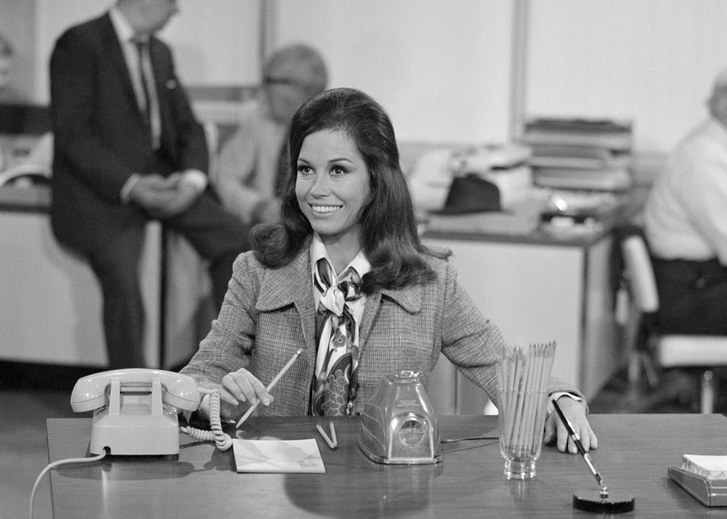
In 1970, we met Mary Richards. Mary is an independent career woman. She’d like to meet the right guy, but till he shows up, she’d rather be alone than in an unfulfilling relationship. Like Susie and Katy, Mary’s workmates become part of her extended family.

ann3

Ann Sothern was one of the first, if not the first, single working woman to appear on a sitcom. Susie previously worked as an actress and was a WAC in World War II. Her best friend Vi (Ann Tyrrell) is the receptionist at the agency. Susie often meddled in her boss’s private affairs, especially his female relationships. She could be described as a bit ditzy, but she also ran the office and was very bright.

ann10

Sothern was praised for her acting ability. She was nominated for Emmys three years in a row, but lost to Loretta Young in 1955, Lucille Ball in 1956, and Nanette Fabray in 1957. Lucille Ball, one of her closest friends, called Ann “the best comedian in this business, bar none.”

ann8

To ensure she came across as a serious career woman, great care was taken with the set. It was a state-of-the-art office with the most up-to-date equipment. Connie Brooks, on Our Miss Brooks, was praised by teachers for her realistic portrayal of an educator. Similarly, Ann Sothern was a heroine to secretaries throughout the country. In real life, Sothern was a smart business woman. She invested her money well, owned a variety of companies and a large ranch. She produced Private Secretary and insisted it be preserved on film. As a result, it went into syndication where it was titled “Susie.” From 1987-1990, it aired on Nick at Nite, creating a new fan base for the show.

ann1

The show holds up well. The scripts are a bit predictable and stereotyped, but it reflected the time. Susie McNamara gave young women hope that there was more to life than getting married and raising a family, although that was still an important role for women.

When Sothern was helping to run a posh hotel, Laura Petrie was at home, running her household. She gave up her dancing career to do so, but she was much more than a wife and mom. She and her husband were co-parenting at that time, and they were friends. She and Rob entertained a lot. Laura supported Rob’s friendship with Sally Rogers, one of his co-writers on this television show. She was a career woman who was very funny and smart, albeit lonely.

laura2

Nine years later, The Mary Tyler Moore Show debuted. Laura Petrie had become Mary Richards, a single career woman making her way to Minneapolis. Mary lived alone, dated infrequently, and spent a lot of her time at work or with her new best friend who lived in the apartment above her.

mary10

While we got to know Susie at work, we just got to know Mary. We saw her at her best and her worst. We saw her joyful, depressed, frustrated, angry, and saw her uncertainty as she navigated life alone.

mary7

Mary’s coworkers became her family. Mary wasn’t ditzy, although she occasionally did a ditzy thing or two. She didn’t try to fix her boss’s problems; she had problems of her own, but she was always there for her WJM family.

mary4

Mary would have liked to find the right guy, but until he came along she was satisfied with her life the way it was. She spent her money any way she wanted. She could wear her pajamas all day on Saturday. She had a fun, modern wardrobe. Work gave her great delight, and it also could be extremely stressful.

mary12 - Copy

Murray was her best friend at work. He and Mary shared a lot of life. We knew part of Murray was in love with Mary, but we also knew neither of them would ever act on any of those possible feelings since he was married.

murray

Mary was smart and funny. She was an assistant producer for the daily news. Her office space was not as elaborate as Susie’s. There was never enough money at work or at home.

mary8

The times had allowed Mary to move to the city by herself and set up a home. However, even Mary Richards was not allowed to be a divorcé. The network vetoed the original script and converted Mary to a formerly engaged girl whose relationship fell apart. During the run of the show, her boss’s wife asked for a divorce, so the show still ended up featuring a divorced character.

mary11 - Copy

The Mary Tyler Moore Show was one of the best-written shows in television history. Like M*A*S*H and The Bob Newhart Show, the ensemble of characters drove the show and they were realistic and likeable. The show received 29 Emmys, including three years in a row for Best Comedy (1975-1977). The series tackled a lot of social issues during its run, including equal pay for women, marital infidelity, ethical behavior when Mary goes to jail to protect a news source,  dealing with death of a friend, and Mary’s sleeping pill addiction–real issues facing women at that time.

This was a sophisticated show. It was not predictable. Mary was nice, sometimes too nice for her own good. When everyone else called Mr. Grant Lou, Mary couldn’t bring herself to do it. We were always rooting for her. She had hopes, dreams, and ambitions, and a realistic attitude about life.

mary13 - Copy

It seems like a big leap between Susie McNamara and Mary Richards, but there were a lot of smaller steps in between. Marlo Thomas’s That Girl provided another smart, funny woman who chose to give up her teaching job to pursue an acting career in New York. Ann Marie was another link in the chain that helped move women forward. While she did have a boyfriend and became engaged during the run of the show, Marlo Thomas ended the show with their marriage up in the air.

Marlo-Thomas-That-Girl-750x968

Mary’s life was more realistic than Susie’s. When the Ann Sothern Show ended, Katy and her boss (still played by Don Porter) kiss, and you know that they will end up married, and Katy will no longer be running the office.

murphy-brown-1-e1532979112153

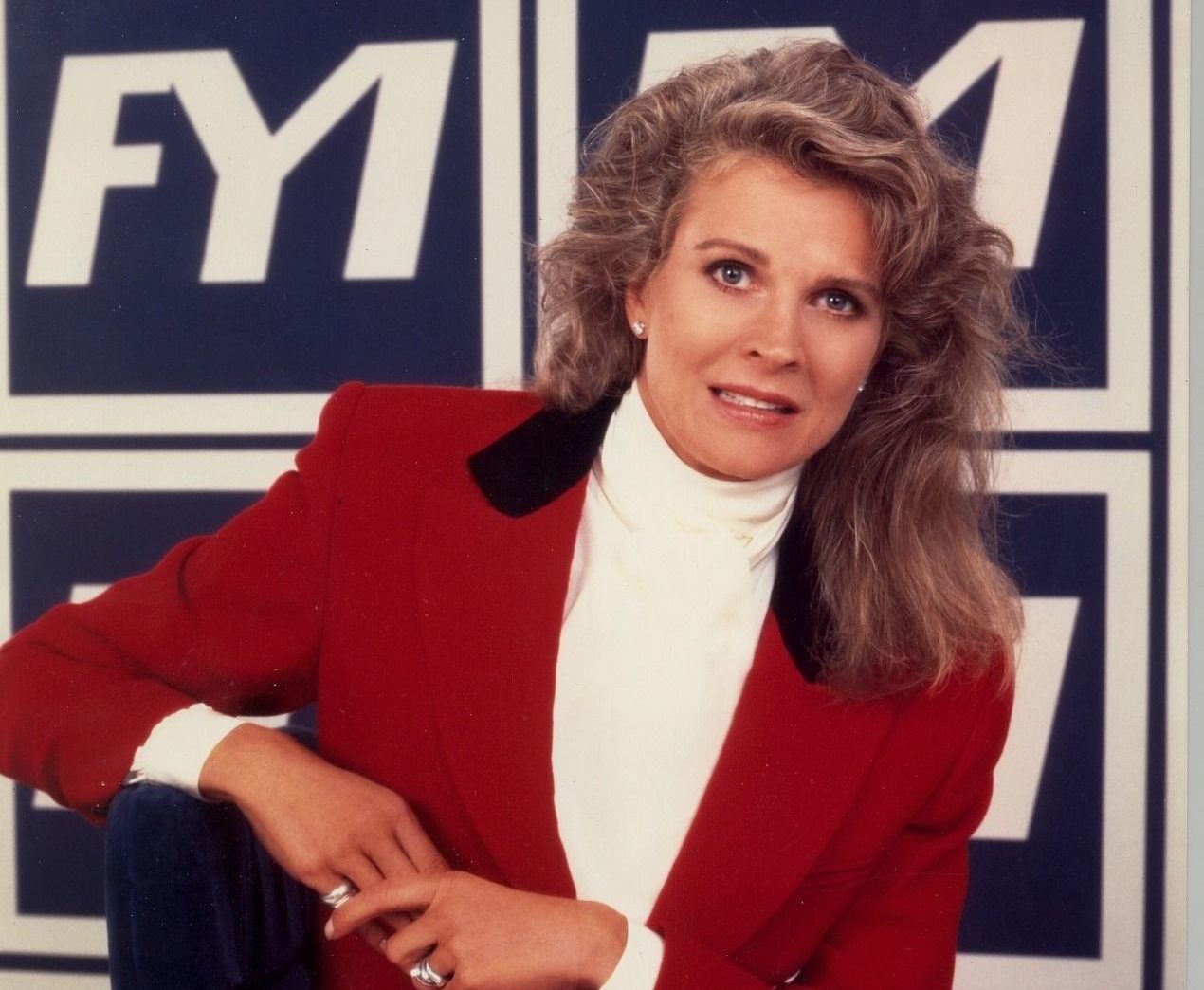
When Mary Tyler Moore’s show ended, everyone on the WJM staff was fired except the totally incompetent Ted Baxter. We don’t know what Mary will be doing, but she has choices. Perhaps she found another news job in a new city. I like to think she found a position in management at a local corporation. Maybe she fell in love with one of the employees she was supervising. I think when she retired and turned on the television, she was watching Murphy Brown’s FYI program, celebrating the leaps women were taking in the workforce.


Just When You Think It Can’t Get Any Weirder, It Does

Although I love The Big Bang Theory and Modern Family, there are a lot of shows on television today that make me shake my head.  It’s amazing what is airing when you scroll through the channels:  Vanilla Ice Goes Amish, I Cloned My Pet, Doomsday Preppers, and these are some of the best reality shows out there.  However, when I researched sitcoms from the classic era, I also found a lot of weird concepts there also.  Let’s take some time to look at a few of them.


unusual1

Boss Lady (1951)

Lynn Bari was Gwen Allen, owner and operator of Hillendale Homes Construction Co. which was owned by her father.  While this show would not seem unusual at all today, back in 1951 it was not common to see a woman the boss of a construction crew. This show began on the Dumont network and then switched to NBC for twelve episodes, running as a summer replacement from July to September 1952.


Where’s Raymond? (1953)

Believe it or not, this was a musical sitcom.  Ray Bolger (who had sang and danced as The Scarecrow in The Wizard of Oz) was a song and dance man named Ray Wallace living in Pelham, New York. He had a girlfriend named Susan (Marjie Millar) and a business partner Peter (Richard Erdman). Verna Felton from December Bride was his understudy’s mother-in-law. The show lasted 2 ½ years on ABC.


The People’s Choice (1955)

Ok, pay attention, because the basis of this show is confusing. Socrates (Sock) Miller played by Jackie Cooper is a Bureau of Fish and Wildlife Orinthologist studying to be a lawyer.  Honestly! He has car trouble one day and is picked up (and picked up) by the mayor’s daughter Mandy who thinks he should be on the city council. Sock decides to be a lawyer to support Mandy.   In the finale to year one, the two elope and conceal their marriage for the entire second season.  When the show came back for a third year, the mayor finds out about the marriage, Sock gets his law license, and Sock’s free-loading pal Rollo (Dick Wesson) moves in with the couple.  Now Sock is managing a real estate development. Just when you thought it could not get more confusing, Sock’s basset hound Cleo would do tricks and comment directly to the audience about situations occurring on the show. LSD had not even become a social problem yet, so it was not responsible for this show, so I’m not sure how this crazy mess stayed on the air for 104 episodes.


TSDDIAN EC004

Dick and the Duchess (1957)

Dick Starrett (Patrick O’Neal) is a claims adjuster in London.  There are some exciting scenarios to provide interest. He meets and marries Jane (Hazel Court) a duchess. She becomes his wife and assistant, although she still expects to live in the manner she has become accustomed to.  She humorously gets involved in his investigations. The network must not have thought she was that funny helping out because  CBS cancelled it after 25 episodes.


Mr. Ed (1961)

Let me say, I do not put Mr. Ed in the same category as Dick Van Dyke Show, That Girl, or Bachelor Father, but I don’t mind catching an episode or two now and then.  When looking at strange concepts for show, this one does have to go into the mix.

When the creator asked Young to appear in the show, he turned him down twice. A pilot was made without him. It did not sell, so producers Arthur Luben and Al Simon decided to enter it directly into syndication, and Young then agreed to take on the role. It was very successful, so CBS bought it.

Wilbur Post (Alan Young) is a married architect. Wilbur and his wife Winnie (Connie Hines) bought their house with a horse included. Their neighbors were played by Edna Skinner and Larry Keating. What no one else realized (including his wife), was that Wilbur was the only human who could understand Ed and talk with him.  Ed was quite the character; he was a hypochondriac; a voracious reader; a playboy, or play horse; loved Carl Bernstein and wanted to decorate his stable in Chinese modern.

The voice of Ed was a highly guarded secret until the show ended in 1967 when it was revealed to be Rocky Lane. Ed was played by Bamboo Harvester, a palomino. One interesting fact about this show is that it has been seen in 57 different countries.


My Mother the Car (1965)

This is another one of those shows you roll your eyes about.  Dave Crabtree (Jerry Van Dyke) lives in LA.  He wants to buy a new station wagon, and when he goes shopping, he realizes his mother’s voice is coming through the radio of a 1928 Porter.  Ann Sothern provides his mother’s voice. Of course, he buys the car which irritates his family, but they don’t know his secret. He also has to deal with a car connoisseur who wants to buy the car for his collection. Maybe it’s a Freudian slip, but I’m a bit offended that a mother is portrayed as an old jalopy as opposed to a new, sleek car, but I digress. This show was only on the air for a year and then the radio was turned off.


unusual11

The Second Hundred Years (1967)

Here is the premise of this one:  In 1900, 33-year-old Luke Carpenter (Monte Markham) is prospecting for gold in Alaska.  An avalanche occurs, and he is buried alive and frozen.

In 1967, Luke’s son Edwin, who is 67, is told that his father has been found alive.  Dad looks 33, but his identity and past has become a top-government secret.  He is released into the custody of Edwin (Arthur O’Connell) and grandson Ken (also Monte Markham). Luke has a hard time adjusting to life in the 1960s. I know you are surprised, but the show was cancelled after 30 episodes.


My World and Welcome to It (1969)

This show was based on James Thurber’s writings. The show was set in Connecticut where John Monroe (William Windom) was a cartoonist for Manhattanite Magazine. He was intimidated by his wife Ellen (Joan Hotchkiss). To escape his boring and nagging life, he escapes into a secret world where his cartoons come alive and he is a king. He drifted between real and fantasy lives. NBC cancelled the show after a year, but CBS picked it up and aired it from May-September of 1972. So, the presence of LSD does explain the writing on this one. What it doesn’t explain is that this show won two Emmys in 1970 : Outstanding Continued Performance by and Actor in a Leading Role in a Comedy Series and Outstanding Comedy Series. The competition for comedy included Love American Style, Room 222, The Bill Cosby Show, and The Courtship of Eddie’s Father.


The Roller Girls (1977)

Meet the Pittsburgh Pitts, an all-women roller derby team, owned and managed by Don Mitchell (Terry Kiser). The Pitts were pretty but useless when it came to roller derby. James Murtaugh played the team’s announcer Howie Devine. After four episodes, the network agreed this really was the pits and it was cancelled.


unusual14

Apple Pie (1978)

This show aired for one episode – I thought they used to call that a movie. (A couple sources say 2 episodes, perhaps a mini-series.) The show is set in Kansas City, Missouri. A hairdresser named Ginger Nell Hollyhock (Rue McLanahan) is lonely and decides to advertise in the local paper for a family. She ended up with a con artist, Fast Eddie (Dabney Coleman), a tap-dancer daughter, a son who wanted to fly just like birds do, and a grandfather figure (Jack  Guilford).


So, when you think you’ve seen it all before, you probably have. I would not be the least surprised to read that in the fall there will be a reality show that features a roller derby team, or a woman who advertised for a family in the personal ads, or an insurance adjustor married to royalty.

I do have to say that both Dick and the Duchess and My World and Welcome To It  seem to have some die-hard fans who appreciate the shows  I guess I should watch a few more episodes.

Listen up you sitcom developers; if you think you have a concept that’s a bit too far out there, it will probably be a big hit. After all, who would have guessed a show about an alien from Ork who traveled in an egg, and gave birth to a 79-year old man would score high ratings?