Before I get into my blog for the day, I just wanted to thank those of you who follow my blog and have been with me on this journey. Today is my 500th blog. I remember writing my first one and wondering if I would be able to come up with enough topics to last a year. Here we are almost ten years later!
Our theme for March is “Variety is the Spice of Life.” We are taking a look at several variety shows that debuted in the sixties and seventies. We’re ending the month with The Jim Nabors Hour.
📷imdb.com
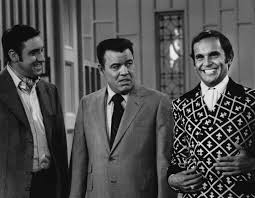
If people only knew Jim Nabors as Gomer Pyle, they were in for a treat once they tuned into this show. This show debuted on CBS in 1969 and ran until 1971. However, Nabors didn’t leave all of his Gomer Pyle life behind. Ronnie Schell and Frank Sutton, who played Duke and Sgt. Carter, joined this one as regulars along with Karen Morrow. In addition, the Tony Mordente Dancers and the Nabors Kids were available to help performances.
Nabors was tired of playing Gomer after five years and decided to end the show. He was often a guest on The Carol Burnett Show, and she was one of his best friends, so he opted for a variety show of his own.
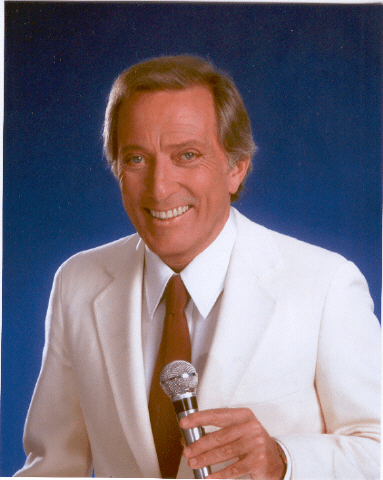
His first guest star was Andy Williams, and Don Knotts also made an appearance.
📷facebook.com
As a fun feature, each episode had a guest announcer who read the introduction to the show and shared the guests for the day. Mavis Nabors, Jim’s mom, was the first.
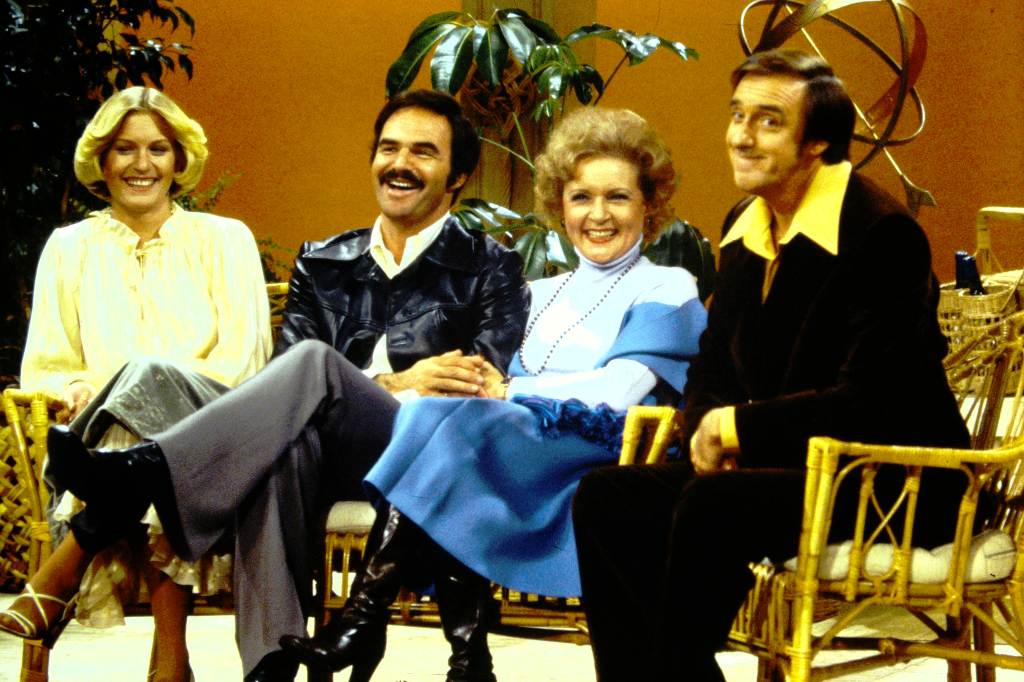
Nabors acquired an impressive guest list including Carol Burnett, Glen Campbell, Johnny and June Cash, Tennessee Ernie Ford, Rock Hudson, Shirley Jones, Ricky Nelson, Don Rickles, Kate Smith, and Jane Wyman.
The show started out strong and was #12 at the end of season one. It continued to rein in good ratings while it was on the air. Even though it was in the top thirty, it was canceled along with all of the other shows that were part of the 1971 rural purge.
📷imdb.com
According to YouTube channel’s “Classic Rural Comedies Facts and Trivia,” NBC wasn’t happy Nabors wanted to end his Gomer Pyle show when the ratings were still so good. However, they also didn’t want ABC or CBS to sign their star, so they reluctantly gave in to a variety show. Partway through season one, the network put pressure on Nabors to limit Sutton’s appearances and eventually demanded he get fired. Nabors refused, and many people assume that’s why it got thrown in with the rural sitcoms in the purge.
Sadly, there isn’t a lot of information about this show. A handful of shows are available on YouTube, but most of them are no longer available to watch. No one talked about this show during their television academy interviews, so stories are hard to come by about this variety series. Many people have fond memories of the show, and I guess that has to be enough for us to appreciate this show which ended before its time.
They say, “Variety is the Spice of Life” and we are going to see if that’s true this month. During the fifties, sixties, and seventies, variety shows were a big part of the television schedule. If you were a singer or a dancer, you likely had an opportunity to have your own show.
📷imdb.com
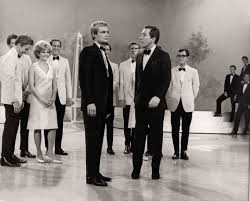
From 1962-1970, Andy Williams entertained us in our living rooms. Williams had a weekly series from 1962-1967 before deciding he wanted to cut back to three specials a year. By 1968 he changed his mind and went back to a weekly series that was on the air till 1971. When the show came back in 1968 it included more rock and roll, a talking bear, and psychedelic lighting which never seemed to fit what I thought of as Williams’ style.
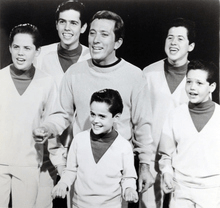
Like many variety shows, Williams had a cast of performers who helped out with skits and songs. During the run of his show, The Osmond Brothers, Jonathan Winters, Ray Stevens, and the Lennon Sisters were part of the act. In 1963 the show won for Outstanding Variety Series. Like Carol Burnett, guest stars also appeared weekly on the show. I remember watching his show, especially at Christmas and loved the Osmonds who Williams discovered at Disneyland; he originally introduced them as “a youthful barbershop harmony group from Odgen, Utah.”
📷thesaltlaketribune.com
Andy’s show debuted on NBC on Thursday nights. It was up against The Alfred Hitchcock Hour. The second season ended up on Tuesday nights taking on The Fugitive and The Jack Benny Show. Season three found it on Monday nights with the competition being a few new sitcoms and it continued in the same slot season four with Hazel as its strongest competitor. Believe it or not, season five found the show on Sunday night. No wonder it wasn’t in the top 30, no one could ever find it from year to year.
Once the show returned in 1968 with its 60s trippy themes it was on Saturday tackling the long-running The Jackie Gleason Show and the newer game shows Dating Game and Let’s Make a Deal. The only thing that changed the final year was that The Jackie Gleason Show was replaced with Mission Impossible. In addition to moving around so often, the show had to compete with a lot of other variety shows during that decade. Just a few others included Carol Burnett, Flip Wilson, Dean Martin, Dinah Shore, and Perry Como.
📷facebook.com
Eventually, Williams created his own very successful show in Branson, Missouri where he lived and performed until he passed away from bladder cancer in 2012.
I think overall Andy Williams had one of the more successful variety programs. No one did it better than Carol Burnett. I think Williams had a hard time trying to fit his style into the late sixties and early seventies. When he started, Perry Como and Nat King Cole were known for their variety series, but when his last show debuted, he was competing with people like Flip Wilson and Sonny and Cher. I’m exaggerating to a point, but it was like he began singing with Lawrence Welk and tried to change to singing with The Rolling Stones; he just needed to find his own lane and stay there.
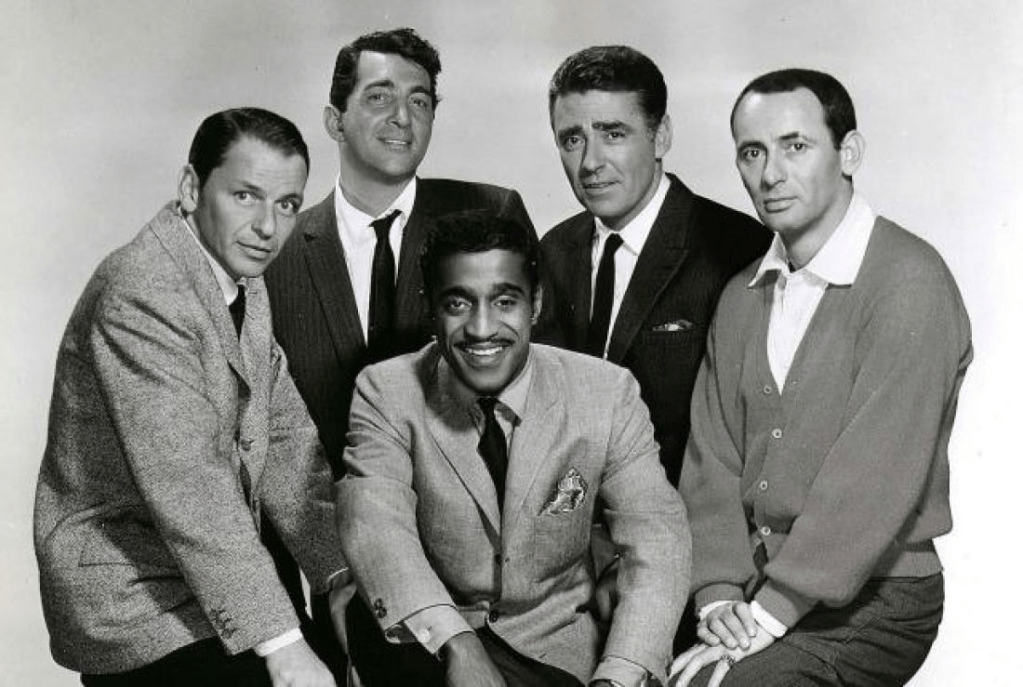
Although the Rat Pack have all passed on, their influence still surrounds us. We can listen to Frank Sinatra’s music channel on Sirius. Jerry Lewis and Dean Martin movies still play late at night. Sammy Davis Jr. and Peter Lawford can both be seen on a variety of sitcom reruns. One member we don’t see as often is Joey Bishop. While he is not as well known as the other friends, he actually was the only one of the group who starred in his own sitcom.
Photo: mentalfloss.com
Two series went by the name “The Joey Bishop Show.” One was a sitcom and aired from 1961-1965, producing 125 episodes. For most of the run, Joey played a talk show host named Joey Barnes. The other show was an actual talk show that he hosted which ran from 1967-1969 and produced 682 episodes.
Photo: amazon.com
This blog looks at the sitcom created by Danny Thomas and Louis F. Edelman specifically for Joey Bishop. Danny served as executive producer, and the show was filmed at Desilu Studios before a live audience. When it debuted in 1961, it was filmed in black and white. One episode was shot in color and then the second and third seasons followed suit. NBC canceled the show after season three and CBS picked it up but filmed that season in black and white again. I imagine fans of the show weren’t happy to go from color to gray tones again; it would be like visiting Oz and then being sent back to Kansas.
Photo: tumblr.com Version 2
Like The Andy Griffith Show, the pilot was an episode of the Danny Thomas Show. Joey played Joey Mason who was an incompetent public relations staffer. Danny arrives in Los Angeles exhausted but has no place to stay and is forced to sleep at Joey’s house with his parents and his two sisters, the younger one being Stella, an aspiring actress played by Marlo Thomas.
Photo: wikimedia.com
Before airing the next fall, the pilot had some revisions. Now Joey’s last name was Barnes. His father was dropped from the cast but two family members were added: a younger brother named Larry (Warren Berlinger) and a brother-in-law Frank (Joe Flynn) who was married to Betty (Virginia Vincent), the older sister. His mother continued to be played by Madge Blake who would go on to play Aunt Harriet on Batman.
Joey continued his public relations career and supports his family. The secretary at the PR firm, Barbara (Nancy Hadley) is his girlfriend. A lot of the plots revolve around family members taking advantage of Joey’s influence which they think is significant but is really almost nonexistent.
The show didn’t do well in the ratings, so it was retooled once again. Betty, Frank, and Barbara were all dropped from the show. The series was renewed for a second season, but the show would change its format again.
Photo: newsfromme.com Newly married
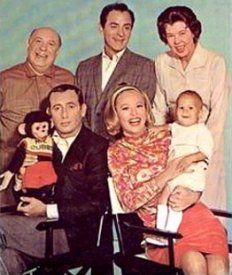
From season two on, Bishop became the host of a New York City talk show. The cast from the first season disappeared altogether in this fourth reincarnation. Abby Dalton plays Joey’s wife Ellie. The couple now live in a posh apartment building and, at the end of the second season, they have a baby boy. Hilda (Mary Treen) is the Barnes’ maid and baby nurse, and she often trades insults with Joey similar to the banter Florence and George had on The Jeffersons a decade later. The Jillsons (Joe Besser and Maxine Semon) are the superintendents of the building. Like Howard’s mother on The Big Bang, Maxine is heard but not seen. Guy Marks played Freddie, Joey’s manager.
Photo: akaguymarks.weebly.com Version 3
There were some rumors that Joe Flynn had been let go the prior season because he was too popular; this would mean that Bishop was so insecure that he was willing to totally revamp his show to get rid of one character. That doesn’t seem to make sense. However, Cynthia Lowry’s column in The Evening Independent from September of 1963 reported that “Actor’s feuds can be very fierce. Joe Flynn, who now plays the sarcastic Captain Binghamton in McHale’s Navy still is so annoyed with The Joey Bishop Show that he doesn’t even mention it in his list of acting credits – although he included brief appearances on Hawaiian Eye, Ozzie and Harriet, and The Eddie Fisher Show. Flynn played a sharp-tongued ne’er do well brother-in-law during the first year of the Bishop comedy, a role that was swept away with a lot of others when the series was completely revamped.”
One review for the second season by Bob Thomas, AP Movie-TV Writer in the Ocala Star-Banner from August of 1962 stated:
“About the only resemblance between last season’s Joey Bishop show and the coming season’s is the name. It’s still The Joey Bishop Show, NBC having vetoed the comedian’s suggestion to call it The New Joey Bishop Show. Bishop fans may be startled to find their hero is no longer a press agent but a late-night television comic. Furthermore, he has jettisoned his mother, bless her heart, for a curvy wife. And he has acquired a whole new bunch of pals. That Joey was able to make these changes is one the minor miracles of television. Just about everyone, Joey especially, agreed that something was wrong with last season’s shows. When a series pulls a wrongo, it is usually yanked at the first sign of spring. But the series had somehow managed to best its competition on ABC and CBS and rack up an impressive rating. So, when Joey promised a clean sweep in format for the next season, NBC went along. I found Joey in the midst of his fourth show, and absolutely happy – for him. That is, he smiled every 15 minutes. I asked what went wrong the first season. ‘I showed up,’ he replied. But on a more analytical basis, he continued: ‘We did many things wrong. We didn’t have enough time to prepare. We violated a very basic concept in comedy. When you have a clever comedian -and in modesty I think I am-you surround him with funny people. When you have a funny comedian, you surround him with clever people. I made the mistake of working with clever people,’ he said. ‘Now I am working with funny people – Guy Marks, who is a bright young comedian; Joe Besser, who can get laughs just walking on stage; and Abby Dalton from the ‘Hennessy Show, a brilliant talent.’”
Photo: sitcomsonline.com
Another review a few weeks later agreed: “Joey Bishop also returned to NBC – on Saturday night. This season he is more poised, more famous, and a successful established night club comedian. He also picked up a wife on the show. The first show involved one of those typical newlywed situations that television situation comedies specialize in. High point of the show, however, was an imitation by Guy Marks, who plays Joey’s manager, of a flamingo. Don’t ask how they managed to get that in, but it was very funny! —-”
Photo: youtube.com Despite the rumors, Bishop proves he’s a team player
Once again there was talk of feuding between the star and a cast member, this time Guy Marks, because he was receiving great reviews. Marks was around for the first 18 episodes and when he left, Corbett Monica came on board as Larry Corbett, Joey’s head writer.
The Montreal Gazette in January of 1963 featured an article by Dorothy Kilgallen that explained, “It’s no secret that the parting between Joey Bishop and Guy Marks was far from friendly, but no one revealed that they were close to the fisticuffs stage.” Some cast members sided with Marks. Other cast members claimed Joey was not egotistical and wanted everyone to succeed. I was not able to determine whose version was closer to the truth, but it is not surprising that the show didn’t last as long as it could have between constant cast changes and in-fighting on the set.
There were also some controversies regarding the writing on the show. In the book Sitcom Writers Talk Shop by Paula Finn, Irma and Austin Kalish who wrote for many great sitcoms in the sixties and seventies were interviewed. She asked the pair if they ever recycled stories for show. They responded no, and continued with this story:
“IK: We were once writing The Joey Bishop Show, and we went in to pitch shows to the story editor.
AK: We pitched five shows to him.
IK: And he said, ‘Those sound like good ideas, but you know, I have to pitch them to Joey first.’ And then our agent called and told us he got word that Joey didn’t like any of those ideas. Fine.
AK: Five weeks later–week after week after week after week after week–
IK: Our ideas came on.
AK: Our ideas were stolen. Eventually that guy, the story editor on The Joey Bishop Show, came to us for a job. Needless to say, what goes around comes around.”
Another great writer, Joel Rapp, shared another story about this series. “We had a contract for six Joey Bishop Shows and we wrote the first one, and then we went to watch the taping. And there were about three words of our script left in what they finally shot. We asked the producer what happened, and he said ‘Joey got hold of the script, and he changed everything.’ But we still got the writer credit, which was fine. So then we wrote a second script, and the same thing happened. So for the third script, we turned in thirty-six blank pages, and we were fired. And it was fine with us. We were making plenty of money and had other jobs.”
Of course, many guest stars appeared on the show as themselves being interviewed by Joey, including The Andrews Sisters, Edgar Bergen, Milton Berle, Willie Davis, Don Drysdale, Robert Goulet, Don Knotts, Jerry Lewis, Jack Paar, and Andy Williams.
Photo: sitcomsonline.com
Other guest stars who appeared on the show in roles other than themselves included Jack Albertson, Parley Baer, Frank Cady, Jackie Coogan, Nancy Kulp, Sue Ane Langdon, Howard McNear, Barbara Stanwyck, and Dawn Wells.
The theme song was also axed from the first season. “Sometimes I’m Happy” by Irving Caesar and Vincent Youmans was exchanged for “Joey” by Sammy Cahn and Jimmy Van Huesen.
Photo: allstarpicsfamousfix.com
During the third season, one episode was filmed but never shown. John F. Kennedy was a friend of the Rat Pack. On November 15, 1963 Vaughn Meader, who often impersonated the President, was filmed in an episode as the impersonator of President Kennedy. A week later the assassination in Dallas occurred, and the episode was never seen live or in syndication. Most of the sources I consulted could never determine if the episode had been archived or destroyed.
Following all the changes, the ratings had increased during season two but season three saw lower ratings once again, and NBC decided not to renew the show. At the same time, Danny Thomas decided not to return for a twelfth season in his show, so CBS picked up Joey’s show. However, the show went up against the much-loved Bonanza, and the ratings never recovered, so CBS then canceled the show after the fourth season.
Photo: commons.wikimedia.com
Chuck Rothman, who wrote a blog about the show May 28, 2017 on blogspot.com, described it as “filled with gentle comedy. The jokes may have worn a little thin, but the stories hold up surprisingly well. Barnes is a decent guy with a sense of humor and Bishop’s relaxed and subtle style—he never appeared to work to be funny—was charming to watch.”
Another viewer on imdb wrote that “personally, I failed to see the humor of the situations in this show that centered around a dull, middle-aged man who was still living with his mother . . . who was repeatedly being fired from his job.”
Obviously, they were describing two different versions of the show, but there certainly was a difference of opinion.
If you never had a chance to watch the show, Antenna TV began airing it in 2017; the network even transferred the first season’s 35mm film to a more modern technology so it can also be aired. Currently, you can view the show on Antenna TV at 7-8 am (EST) weekdays and 3-4 am (EST) Saturdays.
Photo: commons.wikimedia.org
I have watched a few of the shows on Antenna TV and enjoyed them. All the episodes I was able to watch were during the final three seasons, but it would be interesting to catch a couple from the first year and compare them.




 thewritelife61