The Love Boat: Overflowing with Celebrities

šŸ“·themeanderingtraveler.com

This month in Casting for Celebrities, we are looking at some of the shows that used television and movie stars in their casts every week. The Love Boat was on the water from 1977 until 1986. An extension of the show, The Love Boat: The Next Wave, was on from 1998-1999 with many of the original characters. Ā There were also four three-hour specials aired in 1986, 1987, and 1990.

If you are one of the five people in America that have never seen the show, it aired on ABC on Saturday nights. It was another Aaron Spelling production like Fantasy Island which we discussed last week.

A book, The Love Boats, by Jeraldine Saunders who was a cruise director for a passenger cruise line was used as the basis for the original made-for-tv movie in 1976.

The stars on this show played guests (and occasionally themselves) on the MS Pacific Princess run by Captain Merrill Stubing (Gavin MacLeod). His crew included Dr. Adam Bricker (Bernie Kopell), Purser Gopher Smith (Fred Grandy), bartender Isaac Washington (Ted Lange), and cruise director Julie McCoy (Lauren Tewes). In season three, Stubing’s daughter Vickie (Jill Whelan) came aboard. During the last three seasons, photographer Ace Covington Evans (Ted McGinley) joined the group and Judy McCoy (Patricia Klous) who was Julie’s sister took her place for the final two seasons.

šŸ“·julienslive.com

Lucky crew, this series was sometimes set on board the Pacific Princess or the Island Princess, depending on their schedules. A handful of other boats were used in several episodes and movies as well. Many of the shows were filmed in California. Unfortunately, both the Pacific Princess and the Island Princess were sold for scrap in 2013 and 2015 respectively.

Each episode contained several stories and all three titles are combined in one series title; for example ā€œCaptain & the Lady/Centerfold/One If by Land.ā€

Jack Jones sang The Love Boat theme. (Note: Dionne Warwick recorded the song for the final season, but I never learned why.) The lyrics were written by Paul Williams and the music was composed by Charles Fox. The words were:

Love, exciting and new
Come aboard, we’re expecting you
Love, life’s sweetest reward
Let it flow, it floats back to you

Love Boat soon will be making another run
The Love Boat promises something for everyone
Set a course for adventure
Your mind on a new romance

Love won’t hurt anymore
It’s an open smile on a friendly shore
Yes, love
It’s love

Love Boat soon will be making another run
The Love Boat promises something for everyone
Set a course for adventure
Your mind on a new romance

Love won’t hurt anymore
It’s an open smile on a friendly shore
It’s love, it’s love, it’s love
It’s the Love Boat, it’s the Love Boat

šŸ“·reddit.com

For its first seven seasons, the show was very successful. It usually ranked in the top twenty. However, after falling out of the top thirty and then the top fifty the next year, the show was canceled after nine years.

Spelling offered McLeod the role of Captain Stubing. Ted Lange did not have to audition. He was offered the role after being seen on a previous show, That’s My Mama. Spelling’s first choice for Dr. Bricker was Dick Van Patten but because he was involved with Eight is Enough, Kopell got the role. Lauren Tewes was chosen from a group of more than a hundred actresses auditioning for the role.
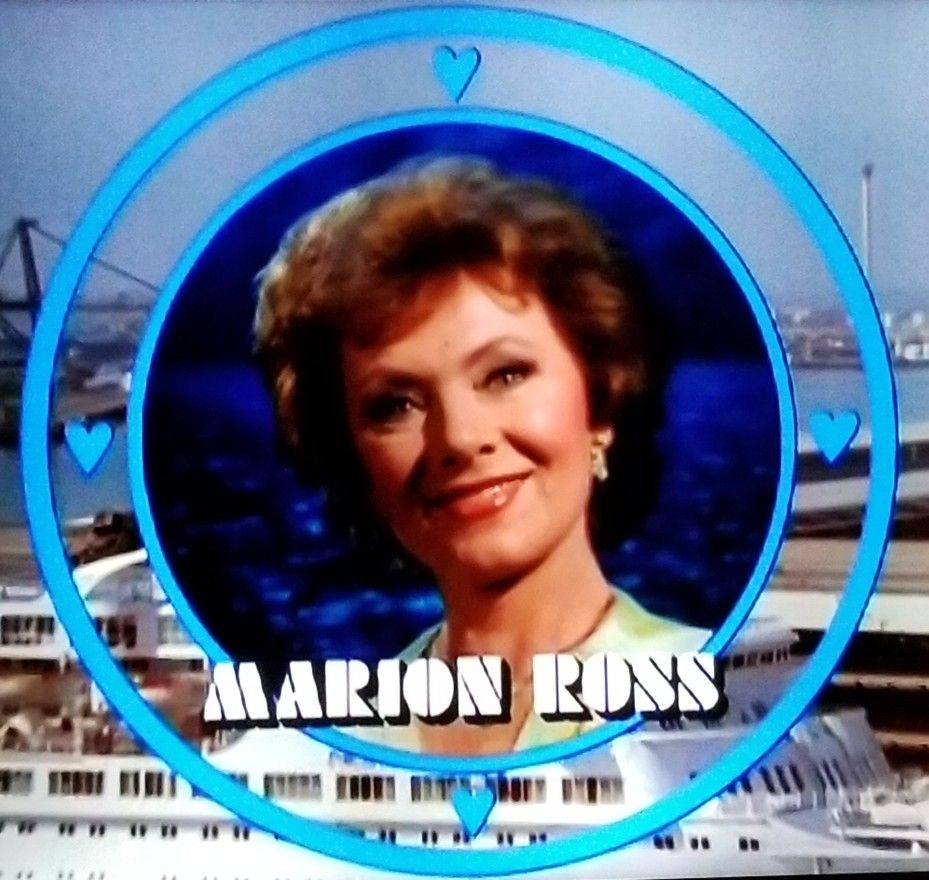
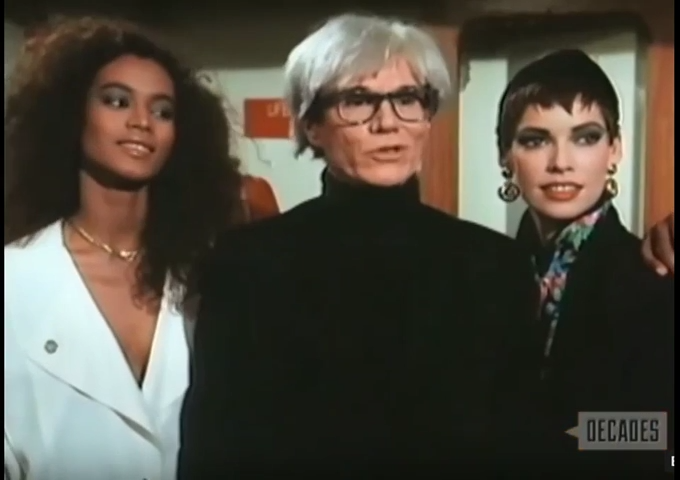
More than 550 guest stars appeared on the show during its run. There were movie stars like Gene Kelly, Ginger Rogers, and Joan Fontaine. There were Broadway stars including Ethel Merman and Robert Goulet. TV stars abounded like Don Adams, Lorne Greene, Florence Henderson, and Eve Arden. Music was represented by The Pointer Sisters, Cab Calloway, and Janet Jackson. Sports stars were on board including Dick Butkus and Joe Namath. And then there were the celebrities like Bob Mackie and Andy Warhol. Marion Ross holds the record with 14 appearances.
šŸ“·boingboing.com

For some reason, The Love Boat does not have the same ā€œtime warpā€ problems as Fantasy Island. It’s been translated into more than 29 different languages and appeared in more than 93 countries. It’s very popular in syndication.

Before the Hallmark Channel debuted, this is where you went to watch people fall in love every week. It’s hard to remember how many people just happened to run into an ex on the ship or meet the perfect soul mate after being mistreated.

Apparently, the cast is still close. In a recent interview, Lange said his experience on The Love Boat was life changing. He also said that the beauty of the show was that they are all still friends. ā€œI just directed Fred in ā€˜Give ā€˜em Hell Harry’ in Indiana and I’m going to New York to stay with Bernie and his wife. . . . Bernie is more like my brother, and Fred is like my best friend.ā€

Whelan described McLeod as an ā€œincredible, protective man. He was just like a dad.ā€

If you need a reminder that love is still alive and well, you can check out the show on DVD or on ME TV on Sundays.

TV Guide ā€œCoversā€ Our Viewing History

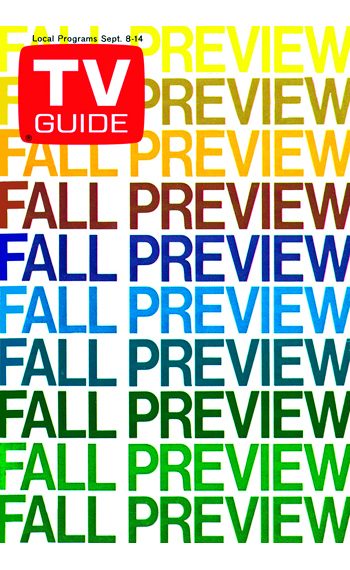
I love September. The beginning of fall conjures images of fall leaves, trips to the apple orchard, the sound of football games, and returning to a welcomed routine. One of my favorite autumn memories as a child and teenager was studying the Fall Preview of the TV Guide, so I could decide which shows were ā€œdo-not-missā€ series.

TV Guide is still available, but there was something special in being able to peruse the upcoming episodes, read the articles, and do the crossword puzzle. Don’t get me wrong, I’m not advocating going back to only three channels plus Public TV, but there was something comforting in knowing what would be on every day on every channel and knowing that all your friends were watching the same thing, and you could discuss it at school. That nostalgic feeling disappears when you are trying to look at 200 channels, not to mention Apple TV, Netflix, Amazon, and the many other options out there.

As much as I enjoyed TV Guide, I knew little about it, so I thought it would be fun to learn some of the history behind this almost-seventy-year-old publication.

In 1948, Lee Wagner printed the New York City area television listings in The TeleVision Guide which was sold on newsstands. Gloria Swanson who starred in The Gloria Swanson Hour appeared on the first cover. With the success of that magazine, Wagner went on to publish issues for both the New England and Baltimore-Washington, DC areas. In 1953, Walter Annenberg bought the series of publications and incorporated them into his Triangle Publications. Wagner would remain a consultant for that business until 1963.

The first magazine titled TV Guide was issued April 3, 1953. It was sold in ten cities and boasted a circulation of 1,560,000. The cover featured a photo of Lucille Ball’s newborn son Desi Arnaz Jr. with the headline, ā€œLucy’s $50,000,000 Baby.ā€ It cost 15 cents. For the first 52 years of its existence, it was digest size. Triangle Publications, headquartered in Radnor, PA, continued to buy local magazine listings, creating a national publication. Their contemporary building featured a large logo at the entrance, a vast computer system to save data on every television show and movie, and housed editors, production personnel and subscription processors.

In September of 1953, the magazine released its first Fall Preview edition and circulation increased steadily from then on. The guide was available by subscription or at grocery stores. Eventually a color section was added featuring television-related stories, articles about stars, and weekly columns. One of the columns was ā€œClose-Upā€ which looked at different types of programs. ā€œCheers and Jeersā€ was a critique page for specific programs, ā€œHits and Missesā€ rated shows from 0 to 10. In addition, certain years included horoscopes, recaps of soap operas, lists of sporting events and crossword puzzles. Next to each television show was a number corresponding to the local channel. A brief description of the program was given. Networks often ran ads for various shows.

Beginning in the late fifties, ā€œcolorā€ was set in a rectangular box for those shows that were broadcast in color. By 1972, the majority of programs were full-color, so the abbreviation ā€œBWā€ was used for shows not in color. Until cable television entered the entertainment business, listings began about 5 am and went until midnight. By August of 1982, the magazine began expanding its coverage of cable programming with ā€œCablePay Sectionā€ and ā€œCable and Pay-TV Movie Guide.ā€

In August of 1988, Triangle Publications was sold to the News American Corporation for $3 billion. It was one of the largest and the most expensive acquisitions at the time.

In March of 1996, TV Guide launched iGuide, a web portal. In June of 1998, News Corporation sold TV Guide to United Video Satellite Group for $800 million and 60 million shares of stock worth $1.2 billion. ā€œThe Robins Reportā€ a review column was added, ā€œFamily Pageā€ showcased family-oriented programs, and ā€œDon’t Missā€ which was select programs to watch during the week.

In 1999, TV Guide hosted a new award show, TV Guide Awards, telecast on Fox. Winners were chosen by TV Guide subscribers.

In 2002, to commemorate the 50th anniversary of the magazine, six special issues were created: ā€œTV We’ll Always Remember: Our Favorite Stars Share Fifty Years of Memories, Moments, and Magicā€; ā€œ50 Greatest Shows of All Timeā€; ā€œOur 50 Greatest Covers of All Timeā€; ā€œ50 Worst Shows of All Timeā€; ā€œ50 Greatest Cartoon Characters of All Timeā€; and ā€œ50 Sexiest Stars of All Time.ā€

As more cable channels were added, space became a premium and the magazine had to decide which ones to include. In September of 2006, TV Guide launched an updated website with expanded editorial and user-generated content not included in the print edition.

With more channels, less detail was available about shows, and by 2007, circulation had decreased from its peak of twenty million in 1970 to less than three million. The weekly publication went through several other sales. In 2014, it underwent a major redesign. Fourteen pages of listings were eliminated, and programming information was only provided for top-rated broadcast and cable networks and included several new sections including the ā€œRoush Reviewā€ where Matt Roush selected the top ten picks from the upcoming week. The size was then reduced to 7ā€ x 10ā€.

In 2015, it was sold once again to NTVB Media.

Two spinoff magazines were produced by TV Guide: TV Guide Crosswords and TV Guide’s Parents’ Guide to Children’s Entertainment.

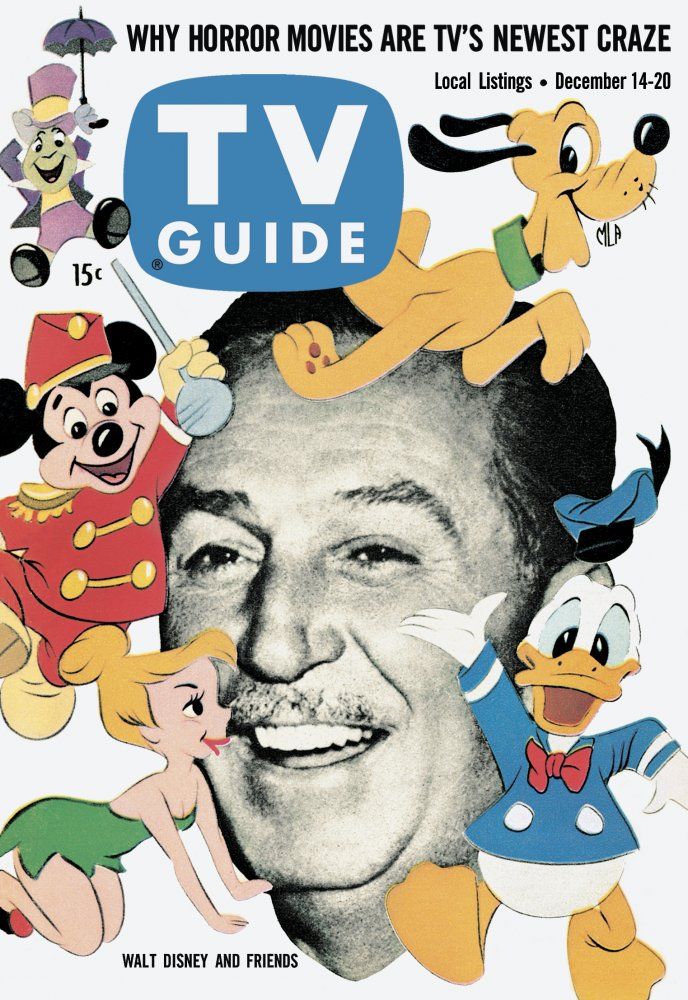
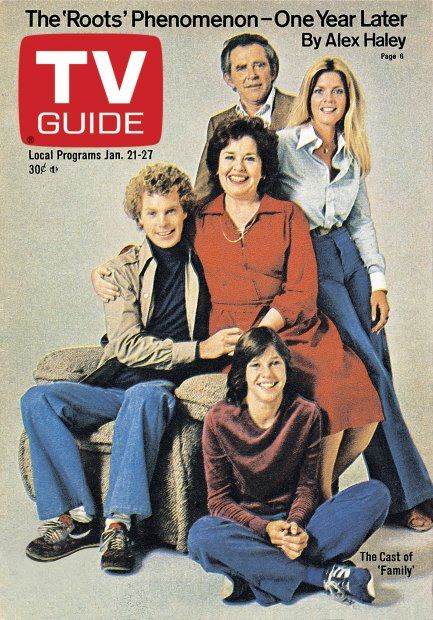
With over 3000 covers, almost every star and television show you can think of has been featured on the publication. The original 1953 cover of Desi remains the most expensive, valued at $3000. Another early cover of George Reeves as Superman runs a close second.

Lucille Ball has appeared on the most covers, with 39 total. Johnny Carson comes in second with 28 covers and Mary Tyler Moore and Michael Landon are tied for third place with 27 each.

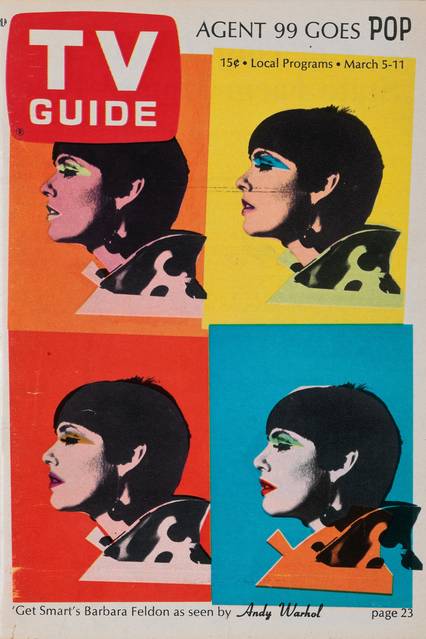
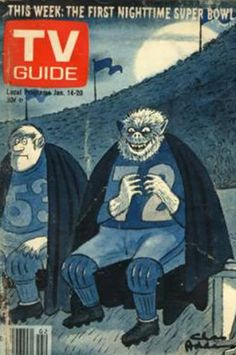
In addition to photographers’ covers, TV Guide has featured a variety of artists over the years including 37 Al Hirschfield pieces, two Charles Addams, one each by Norman Rockwell, Peter Max, Andy Warhol, and Dali.

I guess I’ll have to pick up a TV Guide next time I’m at the grocery store just to see how it compares to my fond memories. I’m guessing I will have to shell out more than $.15. Considering all the changes that have taken place in the television industry since the late 1940s, the magazine has been impressive keeping up with all the transformations and still providing a guide for our viewing.