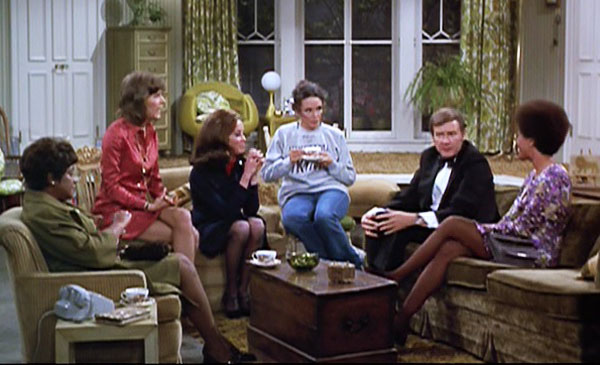
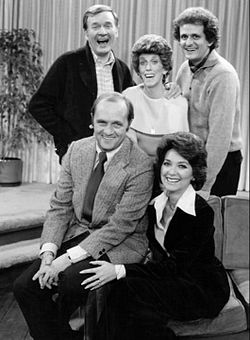
When trying to decide who to include in our Supportive Women blog series this month, Marcia Wallace was a no-brainer. Carol was one of my favorite characters on television on The Bob Newhart Show, and I love the fact that her role carried over into an episode of Murphy Brown.
Marcia Wallace was born in 1942 in Iowa. Her father owned a general store where she and her siblings often worked. After performing in a school play, one of her teachers encouraged her to pursue an acting career. After graduation, Marcia enrolled in Parsons College in Fairfield, Iowa where she received a full scholarship. She majored in English and Theater.
Upon her college graduation, Marcia decided to move to New York. The country gal had $148 in her savings. When she arrived in the Big Apple, she took on a variety of part-time jobs including typing scripts and substitute teaching. She joined a summer stock company and did a few commercials. She worked in a Greenwich Village nightclub for a year before creating an improv group, The Fourth Wall, with several friends. While she kept the friends, she lost 100 pounds.
Eventually, Wallace was offered a job with The Merv Griffin Show. When Merv decided to move to LA, he asked Wallace to move with them. She was able to obtain a few roles in series after moving to California. During the sixties and early seventies, she was on Bewitched, The Brady Bunch, Columbo, and Love American Style.
📷tvinsider.com
After Bill Paley had seen her on Merv Griffin, Grant Tinker (producer) called her to offer her a role on a new sitcom, The Bob Newhart Show. The role of Carol was written specifically for her.
Marcia loved her time on the sitcom. She said Bob was the Fred Astaire of comedy, making it look so easy. She also praised Bob for being a treasure. Because of the way the scripts were written, the show doesn’t date itself. It was about human relationships and people struggling to make them work and make life better.
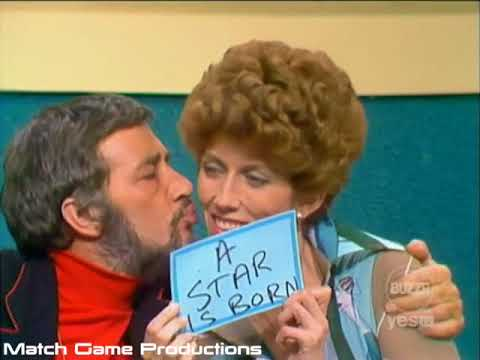
When The Bob NewhartShow went off the air six years later, Marcia jumped on the game show circuit. Shecould be seen on Password Plus; Super Password; Hollywood Squares; Crosswits; Hot Potato; The $25,000 Pyramid; Win, Lose, or Draw; Tattletales; To Tell the Truth; Family Feud; Card Sharks; and my favorite, Match Game.
📷youtube.com
Like so many actresses and actors who perform their role so well, Marcia was typecast after the show ended. In an interview, she said that “I have heard ‘You’re too recognizable for this part.’ I remember once, I desperately wanted to be on the series Nine to Five and they just weren’t going to see me because of that. Every once in a while, something would break my heart.”
Wallace also made appearances on The Love Boat and Fantasy Island in the seventies. During the eighties she would show up on CHiPs, Magnum PI, Taxi, Murder She Wrote, Night Court, and ALF, among other shows.
One of my favorite appearances of Wallace’s occurred in the mid-nineties on Murphy Brown. If you were a fan of that show, you know Murphy could not keep a secretary. There was even a support group that started of her former secretaries. However, when Carol Kester came to work for her, she was overjoyed. Carol was the role Wallace played on The Bob Newhart Show. Unfortunately for Murphy, at one point during the show, Bob Newhart shows up and convinces Carol to return to work for him and Jerry and Murphy lost her perfect assistant.
Most of Wallace’s work after 2000 was for voice work with one exception. In 2009, she had a recurring role on The Young and the Restless as Annie Wilkes for 14 episodes.
In 1985 Marcia was diagnosed with breast cancer. She survived it and became an activist and lecturer on the topic. In 2007, she won the Gilda Radner Courage Award for her work in this area.
In 1986 Marcia married Dennis Hawley in a Buddhist ceremony. Dennis renovated and managed hotels. The couple adopted a little boy, but Dennis passed away three years later.
📷imdb.com
In 1989, a new type of show debuted called The Simpsons. Marcia was asked to provide the voice of Edna Krabappel, school teacher. She probably did not realize she would be associated with that role for another 24 years. Her role as Edna did not end until her passing.
In addition to her television work, Wallace performed on stage. She produced and starred in “An Almost Perfect Person,” a female version of “The Odd Couple,” “Same Time, Next Year” and many others.
In 2004, Wallace published an autobiography, Don’t Look Back, We’re Not Going That Way. She honestly discussed her breast cancer, the loss of her husband, her nervous breakdown, being a single mother, and the ups and downs of her career.
Marcia died from pneumonia and sepsis in 2013. Her coworkers commented on her passing. Yeardley Smith, who voices Lisa on The Simpsons, said “Heaven is now a much funnier place because of you, Marcia.” Bob Newhart said that “Marcia’s death came as quite a shock, she left us too early. She was a talented actress and dear friend.”
📷onceuponascreen.com
I’m so sad that Marcia was typecast and unable to get the roles that she wanted. The networks were very shortsighted during those decades. They didn’t give television fans enough credit for being resilient enough to love the character of Carol while being able to love another character played by Wallace. You saw the same things happen to Adam West, Alan Alda, and Henry Winkler. If that perspective had continued, we never would have had Mary Richards on The Mary Tyler Moore Show or Jay Pritchett from ModernFamily. If someone could be a hit as Al Bundy and then go on to star in another show, anyone can get beyond being stereotyped. Marcia Wallace proved that anyone could survive life’s disappointments with determination and a sense of humor, and perhaps that was her greatest role for us.
As we continue looking at some of our favorite actresses, today we get to spend some time with Beverly Archer. Beverly was born in Oak Park, Illinois in 1948 but grew up in California.
Photo: behindthevoiceactors.com
Beverly knew she wanted to enter the acting profession and studied at both San Francisco State University and UC Santa Barbara where she majored in drama. But once she graduated, she decided acting wasn’t for her. She worked for Wells Fargo for two weeks and then accepted a job with Abbey Rents in Los Angeles where she worked for three years. She says she was lonely and not having fun, so she started taking acting classes again and working with theater groups.
Unlike a lot of actors who have to spend decades before nabbing their first series, the first two television roles Beverly received were regulars. However, Beverly paid her dues working in commercials before appearing on a series. She said they gave her confidence that she could make a living acting, so she was able to quit her job.
The Nancy Walker Show Photo: memorabletv.com
In 1976, she appeared on The Nancy Walker Show. She played Nancy’s daughter, Lorraine. In a recent interview with Sitcoms Online, Beverly said she ran into a guy she had done some theater with who had become an agent. He signed her and got her the audition for the show. Archer was reading the script with several other actresses but apparently, she was the only one who found the scene very funny. Nancy then read with her and the producers felt they could be family. She says she was in the right place at the right time.
With Oliver Clark on We’ve Got Each Other Photo: sitcomsonline.
Unfortunately, the show only lasted one season, but in 1977, Beverly was offered the role on We’ve Got Each Other. The plot for this show was that Stuart Hibbard (Oliver Clark) worked at home, cleaning and cooking while his wife Judy (Archer) worked in LA for photographer Damon Jerome (Tom Poston). Stuart had to deal with domestic situations and his next-door neighbor Ken (Martin Kove) while Judy dealt with work situations and secretary Donna (Renn Woods). Like her first show, this sitcom only lasted one season as sell.
In 1976 she accepted another permanent role as Mrs. Robert Bernard. She met her husband through an acting teacher. He was also an actor, doing a lot of voice-over work.
During the 1980s, she would receive offers to play recurring characters on four shows.
Photo: tumblr.com
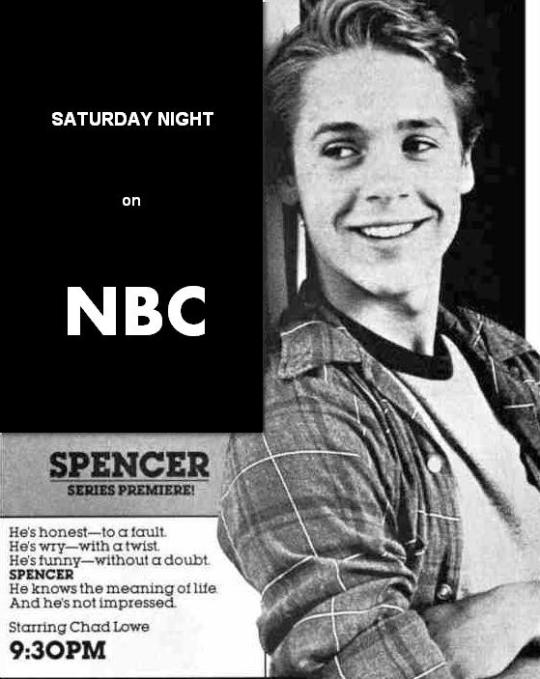
On Spencer, she played Miss Spier, a divorced friend of Spencer’s mother. Most episodes show Spencer, played by a very young Chad Lowe, humorously dealing with the drama of high school.
In 1985 she was on ten episodes of Washingtoon. This is a little-remembered show that aired on Showtime. The plots centered around a senator who wasn’t too bright and Archer was his secretary on the show.
In 1988, she appeared on ALF as neighbor Mrs. Byrd.
Photo: sitcomsonline.com
One of her best-known roles occurred on Mama’s Family. Beverly portrayed Iola Boylen from 1986-1990. In the Sitcoms Online interview, Archer talked about being on Mama’s Family. She explained that the network version was cancelled, and Joe Hamilton decided to recreate it in syndication. At that time, no one really did syndication shows. Archer says he was a pioneer in the field. Betty White and Rue McClanahan moved over to Golden Girls, so there was a gap for a new character and Archer was hired for the syndicated show. She says some of her favorite moments on the show were working with Ken Berry. She described him as the funniest person on the planet.
Photo: tumblr.com
Beverly tried her hand at writing and received credits for scripts for Mama’s Family, Working Girl and ALF.
In addition to these regular roles, she guest starred on a variety of shows, including It Takes Two, Family Ties, The Fall Guy, and My Sister Sam.
Photo: allstarpics.famousfix.com
During the decade of the nineties, Beverly was again lucky enough to gain a recurring role on five additional shows: Married . . . with Children, Aahh Real Monsters, Jumanji, The Young and the Restless, and Major Dad. On Married . . . with Children, she was a sexually repressed librarian who falls in love with Bud.
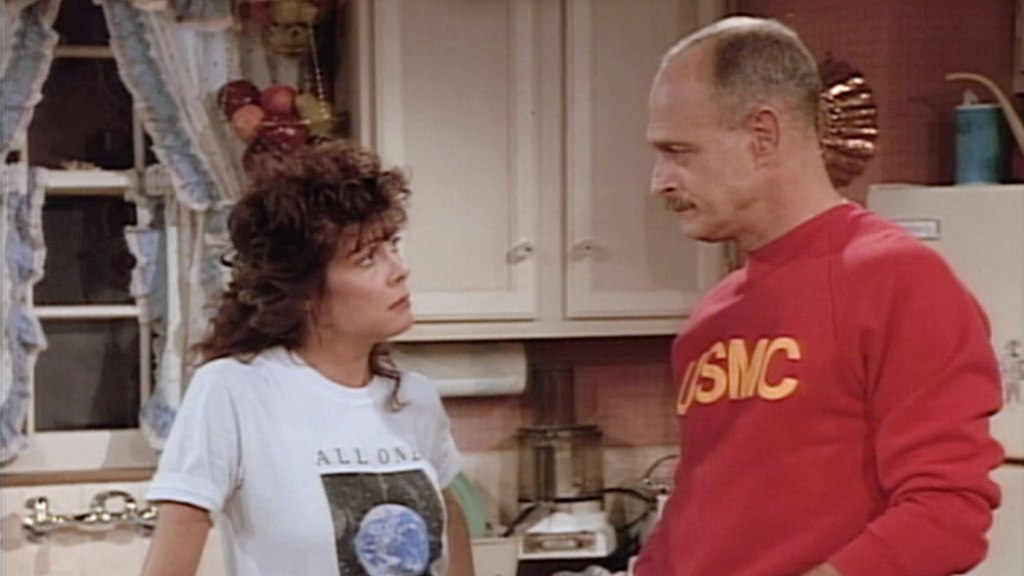
On Major Dad, she played the role of Alva Bricker, gunnery sergeant. During an interview with Jerry Buck in 1992, Archer says she used John Wayne for her role model for Alva because he was the only Marine she could remember. Describing her character on the show, Archer says “She’s the best Marine on the base. I think the driving force behind the characters is that she’s the best. But the personal stuff is fun to play. She has a wild sex life, but the crux is that she’s incredibly efficient as administrative chief of the commanding general’s office.”
Photo: ebay.com
After portraying so many school-marm types of characters, she was happy to have a different sort of character to work with. Beverly says Gunny has a macho-style to her femininity. She treated relationships the way men typically did. She didn’t want to be tied down to one man.
Beverly joined the cast in season two. Once again, she benefitted from the fact that several characters from the first season were let go. The show was produced by Rick Hawkins who also worked with her on Mama’s Family. Archer loved the fact that Gunny was so different from Iola on that show.
She also guest starred on nine shows, including Full House, Love and War, and Grace Under Fire throughout the 1990s.
Photo: avelyman.com
In 1995 she was part of the fun, satire, The Brady Bunch Movie, playing a teacher who gets caught stealing.
Beverly accepted that she was typecast in many of her roles. As she described it, “Nobody’s going to let me play a normal human being, certainly not a lead. Certainly not a normal next-door neighbor. I’m there to add a character twist. That’s my living and with this mug, what do you expect?”
Beverly retired in 2002. Beverly may have retired, but she was not sitting around the house twiddling her thumbs. She opened an antique shop in the Catskills in upper New York which she ran for about eight years, spending half the year in New York and half in California. She finally moved the shop to California to eliminate the bicoastal living.
Photo: Xiem Gallery
She also wanted to do a lot of traveling. Now she is sculpting with clay and getting to travel. She studied her craft in Italy. In 2008, Beverly had an exhibit at the Xiem Gallery in Pasadena, CA, entitled “2008: A Year of the Pig: A Beginner’s Journal.” The exhibit included some of her thoughts on her art:
“There was so much to learn. Despite the fact that I began with 365 pigs I never thought back then that I would be able to count on two hands the number of pieces I have made that are not critters. I cannot seem to divorce myself from them. Nor do I want to. Our relationship to other animals is quite a complex one, of course. We tend to imbue them with attributes and feelings we admire. We find our domestic companions delightful, amusing, courageous and intelligent…..all attributes we would like to see in ourselves. We even find the critters we eat to be companionable as well as useful. Perhaps I will branch out eventually. Perhaps to wild animals. We think them fascinating, noble and mysterious. And yet, we threaten them, hunt them or ignore them and fail them constantly. One can’t know for certain but I imagine that in years hence I will still be working on the animal form. There is so just much to learn.”
While I’m sad, her retirement took her out of our living rooms, she seems to have found a wonderful new career. Since writing my blog, and writing in general, has become my almost-retirement career, I understand the passion and satisfaction she is experiencing in her new art life.
Photo: famousbirthdays.com
When asked about the type of roles she wanted to play or would like to have if she had not retired, Beverly responded that “I loved doing comedy, and there is no greater gift than coming to work laughing every day.” I hope she is still laughing every day, and I thank her for the many days of laughter she provided for us.
As we wind up our “I Salute You!” blog series, we end with a show that may not be remembered as well as many other military shows: Major Dad. Created by Richard Okie, Earl Pomerantz, and John Stephens, the show debuted in September of 1989 and ran until spring of 1993, producing 96 episodes. Stephens was a producer on Gunsmoke and Simon and Simon (which McRaney also starred in), among other shows. Okie also produced Simon and Simon, along with Quantum Leap and more recently, Elementary. Pomerantz had been involved with both The Cosby Show and The Larry Sanders Show. Although the show is not seen often now, it won best sitcom in 1990.
Photo: next-episode.net
In September of 1989, Bonnie Churchill wrote an article for the Christian Science Monitor, “McRaney is Major Dad.” They discussed how the show was developed. As McRaney recounted: “‘The eighth and last season of Simon and Simon we began to get the skeleton of an idea . . . It centers around a rather conservative peacetime officer who falls in love with a newspaper reporter, who is rather liberal. She’s a single parent raising three daughters. They get married, and then the real fun begins. When we were discussing which branch of the service he’d be in, I voted for the Marines.’ McRaney also had a vote as co-executive producer, so he won.”
Photo: nbc.com
The show was on Monday nights for most of its entire run. The first season it went up against MacGyver and for half the season it was on against Alf and My 2 Dads for the second half. Season two with the move to Camp Hollister found the show going against MacGyver on ABC and both Ferris Bueller and Blossom on NBC, landing in the top 30. The show was again competing against MacGyver and Blossom for season three where it was in the top 10. In season four, MacGyver was gone with American Detective taking its place and Blossom still on NBC. But at some time during the last season, the network moved the show to Friday nights which resulted in the ratings plummeting and the show was no longer in the top 30 and was cancelled.
Photo: sitcomsonline.com
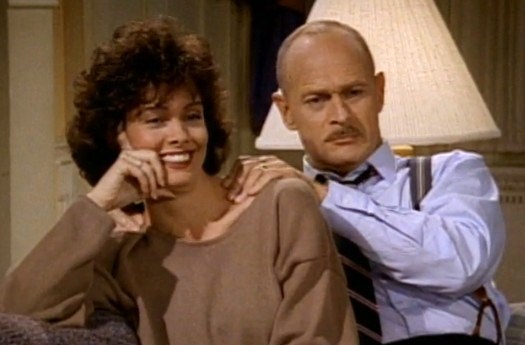
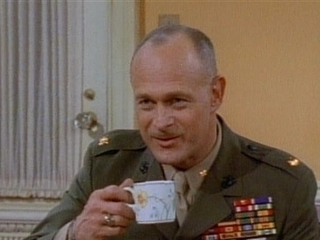
Major Dad starred Gerald McRaney and Shanna Reed as a newly married couple, John and Polly MacGillis. After left-leaning journalist Polly interviews conservative John, they fall in love. After a whirl-wind three-week romance, they decided to marry and the perennial bachelor’s life is turned upside down. Even though they are newly married, Polly has three daughters (Nicole Dubuc, Chelsea Hertford, and Marisa Ryan) from a previous marriage, so “Mac” must learn to live with a house of females. The girls are 6, 11, and 13. Mac has a hard-enough time learning to be a husband, let alone a father.
Photo: sharetv.com
The show takes place in Camp Singleton which is similar to the real Camp Pendleton where Mac is the commander of the infantry training school’s acquisition division. Rounding out the cast were Lt Holowachuk (Matt Mulhern), Sgt James (Marlon Archey), and secretary Merilee (Whitney Kershaw). Many of the scripts for the first season had to be rewritten due to the US’s involvement in the Persian Gulf War.
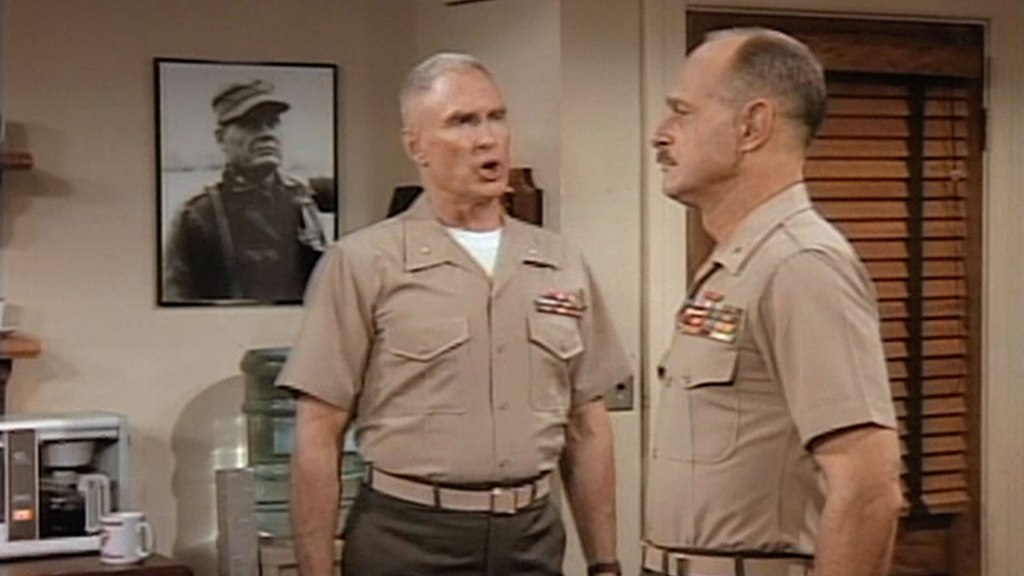
For the second season, the family moves to Camp Hollister, which is similar to Quantico. Mac has been promoted to staff secretary under Brigadier General Marcus Craig (Jon Cypher). Lt Holowachuk comes along as aide-de-camp. Beverly Archer plays Gunnery Sergeant Alva Bricker, known as Gunny, the general’s secretary.
Photo: sitcomsonline.com Gunny
She adds a lot of humorous elements to the show as a no-nonsense, set-in-her-ways woman who seems to have many romantic interests.
Polly becomes the managing editor for the Bulldog, the camp newspaper. She also writes two columns, “At Ease” and “The Suggestion Box.” Originally for the second season, several of the characters were being sent to Saudia Arabia, but because the Persian Gulf War ended, it was decided to send everyone to Camp Hollister instead.
Photo: nbc.com
Some famous faces that popped up on this show included Ruth Buzzy, Peggy Cass, Brian Keith, Vicki Lawrence, and Jameson Parker.
Photo: themoviedatabase.com Work Life
Most reviews I read thought the show came into its own after the move to Camp Hollister. It got very positive ratings. Many people appreciated the fact that Marines were shown in a positive light. Before filming the show, McRaney was sent to Camp Pendleton to learn about life as a Marine. He was able to talk with people about their life stories, be outfitted with a uniform, and even got an authentic haircut.
Photo: retrotvmemories.com Home Life
The show provided a realistic insight into the issues that military families face. In addition, the show moved back and forth between home life and career life, so the characters are more balanced and not one-dimensional. Current issues like base closures were often written into the scripts, and in 1990, an episode commemorated the 215th anniversary of the Marines and Dan Quayle, who was the Vice President, made an appearance on the show.
Photo: Wikipedia.com
As far as I could find, the show is not available on DVD. I also could not find any networks currently carrying the show, although there are online sights where you can watch it. Perhaps with all the networks now carrying syndicated shows, this series will have a second chance to find new generations of fans.
April does begin with April Fool’s Day, so this month we take a look at a few shows I call oddly wonderful. Some of them may be odd, some wonderful and some oddly wonderful. You get to decide. These are shows that were very different but popular hits.
In 1963, My Favorite Martian came to earth to live with a news reporter, Tim O’Hara. In 1978, Mork landed on earth from Ork and lived with Mindy. In 1986, ALF, aka Gordon Shumway, crashed into the Tanners’ garage and moved in with the family. In all three series, the extraterrestrial tries to adapt to earthly ways and causes a lot of complications for the people he lives with.
Photo: slate.com
ALF aired in September of 1986 on NBC. Producer Bernie Brillstein was asked to catch Paul Fusco’s show with his puppet character. Brillstein had managed Jim Henson, so he knew something about this type of comedy. He thought ALF was hilarious and could be the center of a new sitcom. The company was Alien Productions; Fusco became a co-producer and Tom Patchett helped create the series, wrote the scripts, and directed the episodes. ALF produced 99 episodes (in syndication, it was 102 since there were three one-hour episodes during its time on the air).
ALF was one of the first sitcoms to use Dolby surround sound. The show was one of the most expensive sitcoms to produce because of the technical elements surrounding the puppet and the long tapings that developed. To try to help out with the expenses, ALF was licensed for a variety of toys, foods, and other types of merchandise. One fun fact is that every episode was the name of a song. Some of the shows were named, “Hungry Like the Wolf”, “Stayin’ Alive”, and “Gotta Be Me.”
Photo: semestertimes.com
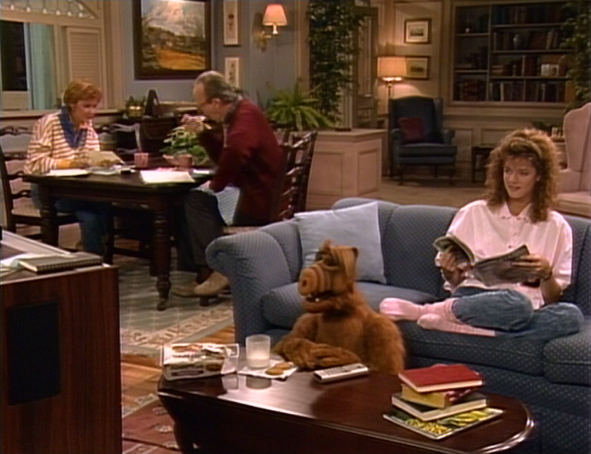
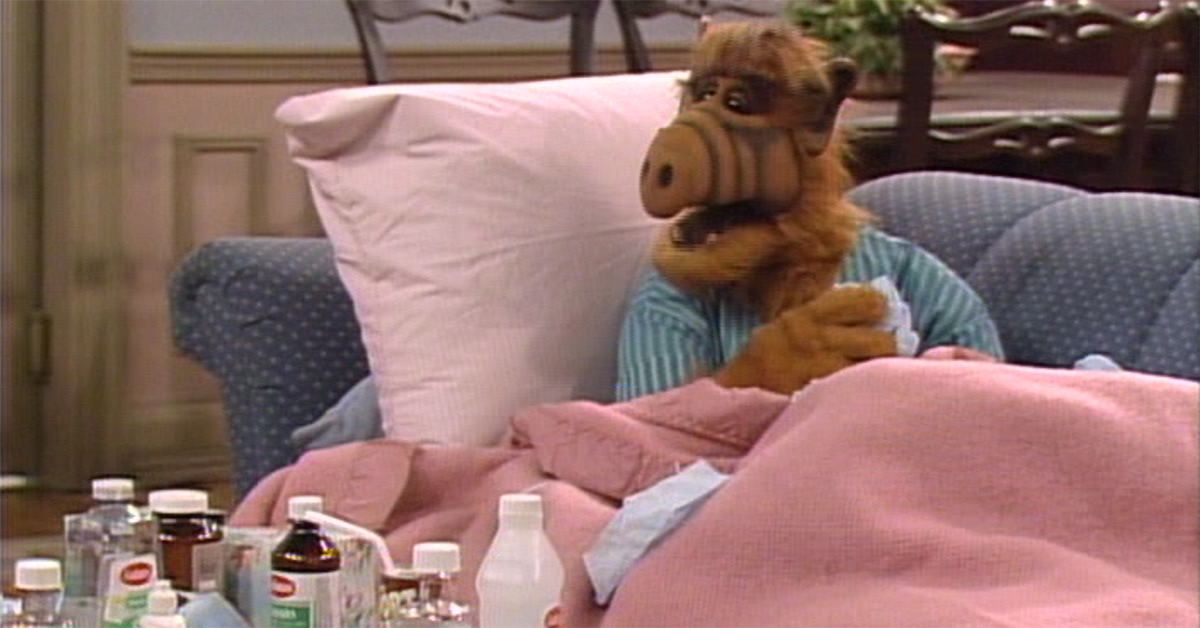
ALF (alien
life form) was a sarcastic, sometimes overbearing, character from Melmac. The Tanners
take him in to protect him after he crashes into their garage. Willie Tanner
(Max Wright) is married to Kate (Anne Schedeen) and they had two children, Lynn
(Andrea Elson) and Brian (Benji Gregory). The plan is for ALF to repair his
spaceship and then leave. Later ALF learns that his planet was destroyed by
nuclear war. Eventually he becomes part of the family as he develops affection
for them and vice versa.
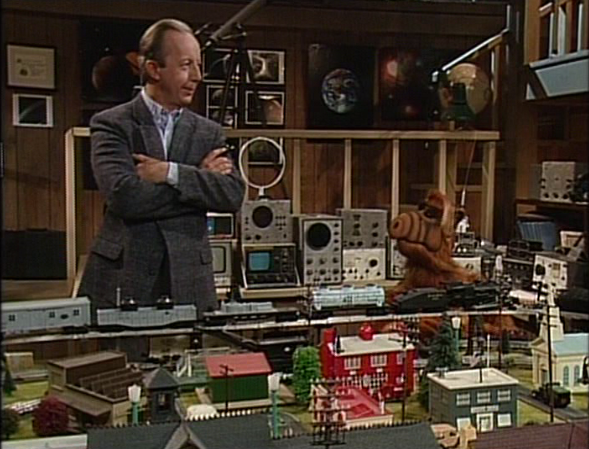
Of course, ALF causes no end of trouble for the Tanners. In one episode, Brian is building a model of the solar system as we know it. ALF reveals to him that there are two planets past Pluto which Brian includes and then gets in trouble for.
Photo: noiselesschatter.com
Like Mork, as ALF becomes closer to the family, he is exposed to several of their friends and family. He is friends with Willie’s brother Neal (Jim Bullock), gets to know a psychologist Larry (Bill Daily), has a love-hate relationship with Kate’s mom, Dorothy (Anne Meara), and builds a relationship with a blind woman, Jody (Andrea Covell), who never realizes that ALF is not human.
ALF meant well and often was trying to help someone else when he caused many of his problems.
When Anne Schedeen became pregnant in real life, a baby was written into the show named Eric. ALF temporarily lives in the laundry room but eventually he and Willie convert the attic into a small apartment.
Photo: popdust.com
ALF often talks about eating cats. On Melmac, cats are raised for food. However, he bonds with the Tanners’ cat Lucky and, when Lucky dies, he becomes very sad. He has one heart that is located in his right ear, and he has eight stomachs. ALF claims he came from a large family, his best friend growing up was Malhar Naik, his girlfriend was Rhonda, he attended high school for 122 years, and was captain of his bouillabaisseball team. The sport was played on ice but used fish parts as bats and balls, requiring nose plugs on warm days. Melmac apparently had blue grass, a green sky, and a purple sun.
Photo: metv.com
Despite the funny scripts and fond remembrances viewers had, it was a difficult show to work on. The human actors had trouble playing second fiddle to a puppet, and there were a lot of complications trying to film with ALF. The set was on high tension alert all the time. When the final scene was filmed, Max Wright, who had the hardest time adjusting to working with ALF, walked off the set and left without saying good-bye to anyone. Schedeen said “There was no joy on that set . . . it was a technical nightmare—extremely slow, hot and tedious.” A thirty-minute show could take 20-25 hours to shoot. Schedeen said she was fond of her screen children, but some adults on the show had difficult personalities. Later in life, Wright said he found out the show brought a lot of enjoyment to people and felt better about his time portraying Willie.
One of the issues was that the set was built on a four-foot platform with trap doors all over so ALF could appear anywhere. He was operated from underneath the set and the doors and holes could be treacherous. To avoid wear and tear on the real puppet, a stand-in was used to rehearse named RALF (rehearsal alien life form).
Photo: noiselesschatter.com
Luckily, none of all the problems behind the scenes leaked out to the public. The show was popular in season one. In season two, it reached number five. It continued to hold its own in season three, with tenth place. However, season four saw a sharp decline and the show came in at 39th. In March of 1990, NBC moved the show from Monday to Saturday, but the ratings continued to decline.
The show had one of the most interesting endings in sitcom history. The production team hoped by having a cliffhanger at the end of season four, they could convince the network to bring it back for a fifth season, but it did not work that way. The Tanners take ALF to a field where an aircraft is going to reclaim him. Suddenly he’s circled by a group of military automatons. No one knew if he would be taken to Area 51 or escape. Viewers were left wondering what happened to ALF. NBC executive Brandon Tartikoff later admitted to Fusco they had cancelled the show prematurely.
Photo: horrorgeeklife.com
Six years later, ABC aired a movie, Project: ALF. None of the original cast was in the film. The movie was not well received.
Photo: hobbydb.com
However, the
movie was not the end of ALF. The character has had more lives than all the
cats he ever ate combined. Marvel Comics developed a series of books in 1987
which ran for four years with 50 issues. An animated cartoon that aired Saturday
mornings which was a prequel to the show also ran for a couple of years.
One of the most unexpected outcomes of the show and, in my opinion, one of the funniest, was ALF’s talk show which aired on TV Land. ALF was a talk show host with none other than Ed McMahon as his sidekick. It was on for only seven episodes but featured guests like Drew Carey and Merv Griffin.
Photo: nathanrabin.com
Believe it or not, it didn’t end there. In 1987 while the show was still on the air, ALF appeared on an episode of Matlock. He was in an episode of Blossom when he denies her entrance to heaven in a dream. He was the only extra terrestrial to appear on The Love Boat: The Next Wave. He was a regular on Hollywood Squares. In addition to a bunch of other shows, he appeared on Good Morning America in 2011, on The Simpsons several times, twice on Family Guy, once in Young Sheldon, and a stuffed animal ALF was in a Big Bang Theory show. The guys buy a box at a garage sale after following someone they think could be Adam West. One of the items in the box is the ALF doll.
Photo: bigbangtheorywiki.wikinfofoundry.com
In addition
to shows, ALF appeared in a variety of commercials including telephones, Delta
Airlines, Super Bowl XLV, and Radio Shack.
If all that is not enough, in August of 2018, Variety reported that there was a possible ALF reboot coming from Warner Brothers. One of the rumored ideas is that ALF would emerge from Area 51 into a world that has drastically changed, somewhat like Austin Powers, I guess.
Photo: noiselesschatter.com
I’m not sure
that it would be a good idea to bring ALF back. The original is a classic and
extremely funny if you aren’t aware of all the background tension. I think we’ll
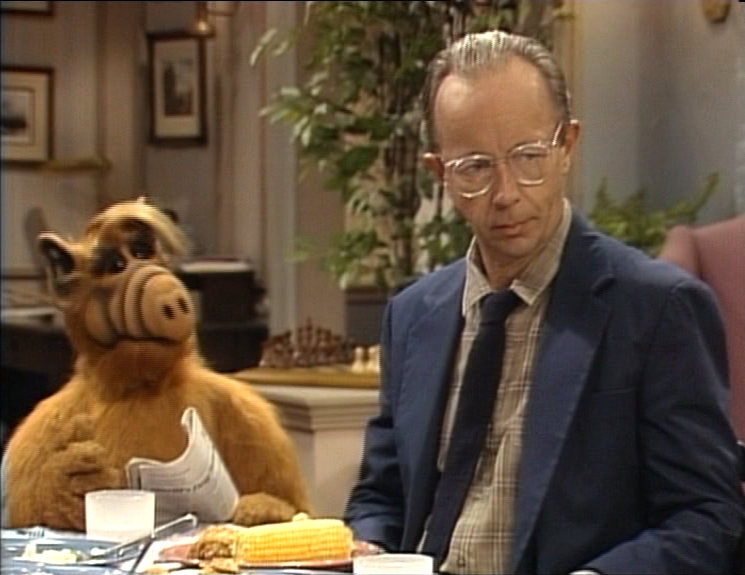
let the show speak for itself. Here is a typical example of the conversations
that Willie and ALF had around the breakfast table.
Willie: You
can’t vote, ALF, you’re not a citizen.
ALF: I’ll
apply for a green card.
Willie: That’s
only if you want a job.
ALF: Pass. (After a pause) I know, I’ll marry Lynn, become a citizen, and then drop her like a hot potato.
Willie: ALF .
. .
ALF: Sure, it
will be hard on her at first. She’ll cry, drink a little too much, join up with
a bongo player named Waquine.
Willie: ALF
ALF: You’d
like Waquine, he doesn’t like beets.
Willie:
Neither you nor Waquine may marry my daughter and you may not vote.
ALF: Fine, I
won’t have a voice in government. Waquine will get deported, and they’ll make
him eat beets.
Willie: How
many cups of coffee have you had today?
We all have those family members who seem to find fun catch phrases which get repeated by friends. Then there are those relatives who say something that drives us crazy and overuse expressions. That is what we’re talking about today: catchphrases from our favorite television shows. I prepared a list of twenty phrases that caught on with viewers. What seems strange to me are expressions that come from a series or movie that were never actually said. For example, “Play it again Sam,” from Casablanca is a well-known phrase. However, that line was never said in the actual movie. You often hear someone say, “Beam me up Scotty,” but once again, it was never said in Star Trek. The closest line was only used once, and it was, “Beam us up, Mr. Scott.”
I’ll list these memorable phrases by shows alphabetically and tell you how often they were used: none, one, fun, or overdone. I also rate them: green light means I like it, yellow if it was getting close to being overkill, and red for those expressions that never should have been used at all. Here we go.
Photo: thefamouspeople.com
The A Team – Pity the fool
Mr. T often says this on commercials, public appearances,and as a guest on other shows, but he never said it on The A-Team. Mr. T explained how this phrase came about on the Conan show one night, “When you pity someone, you’re showing them mercy. I didn’t start this pity stuff, it was in the bible. You’ll find pity so many times in the Bible and fool so many times, so I put ‘em together. Pity the fool,” Mr. T said. He added, “Lotta guys in the Bible [were] asking for pity. And then a lot of them were saying, I did a foolish act. So, I put ‘em together.”
Not only has he trademarked the phrase, but he actually had a series developed around the phrase which was the title of the show. It aired in October of 2006 and was off the air by November 6, so I pity the fool who stuck money into it.
Rating: None, Green– I can’t really give it a light because it was never used but it was a good expression at the time.
Photo: throwbacks.com
Alf – I kill me
The Tanner family members weren’t often amused by Alf’s jokes. When no one responded or someone shook their head at him, he was often heard to say, “I kill me.”
The phrase was so popular, a poster and a t-shirt were sold featuring it.
Rating: Fun, Green – I also thought Alf was pretty funny, even when the Tanners were not as impressed.
Photo: pinterest.com
Alice – Kiss my grits
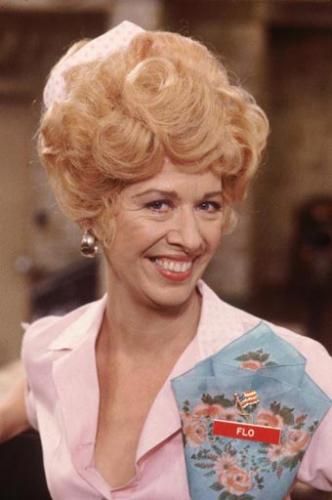
While Flo was a warm-hearted person who would do anything to help a friend, or Mel, she didn’t take any sass from anyone. Whenever someone did something to irritate her, she responded, “Kiss my grits.”
Rating: Overdone, Yellow– Only Flo could get away with using the phrase so often, but it did become a bit too much.
Photo: youtube.com
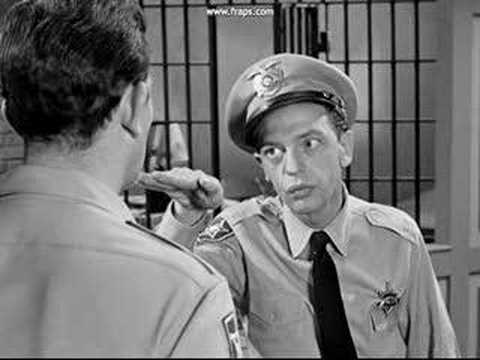
The Andy Griffith Show – Nip it in the
bud
Barney liked being on top of situations and being in charge.When something happened whether it was questionable behavior by Opie or a dangerous criminal activity being plotted, he was heard to say, “Just nip it, nip it in the bud.”
Rating: Fun, Green –Barney Fife was just a great character.
Photo: nme.com
Big Bang Theory – Bazinga
Sheldon learned about sarcasm during season 2 of the show. Whenever he said something sarcastic or something that proved others wrong in a humorous way, he would utter, “Bazinga.” The first time he used it, it was not actually in the script, but he added it and it stuck.
Rating: Fun-ish, Green– I added the “ish” because it can be overdone some shows
Photo: imdb.com
The Brady Bunch – Marcia, Marcia, Marcia
Jan didn’t like being the middle child. While Cindy was the cute younger one and Marcia the pretty older one, Jan often felt left out. When she was upset Marcia was getting attention or doing something she wanted to do, she would pout, “Marcia, Marcia, Marcia.”
In the Season 3 episode, “Her Sister’s Shadow,” Jan said, “all I hear all day long at school is how great Marcia is at this or how wonderful Marcia did that. Marcia, Marcia, Marcia!” Jan did not say the phrase much, but viewers sure did.
Rating: One, Green – I think every middle child understood what Jan meant. Apparently, viewers loved it, because it is an iconic quote for being only said one time. Actually, I always thought Jan was the cool one.
Photo: tvseriesfinales.com
Columbo – Just one more thing
When the bad guy thought he had gotten away with a crime, Columbo would often turn around and say, “Just one more thing,” and that “thing” was usually the evidence he needed to arrest someone.
Rating: Fun, Green – Even when we knew it was coming, it was fun to see how the villain of the week realizes he has been found out.
Photo: imgflip.com
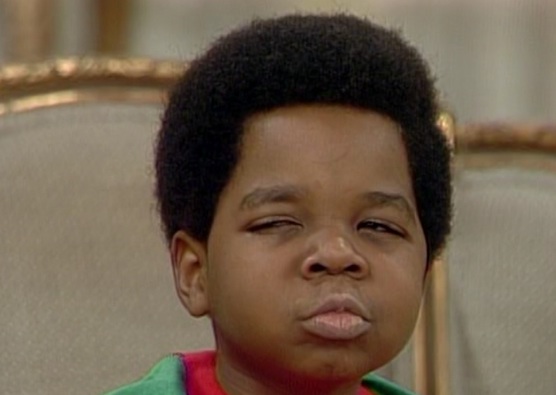
Diff’rent Strokes – What you talkin’
bout Willis?
Arnold was the “cute” kid in the Drummond family and often made others laugh. Whenever Willis said something Arnold didn’t want to do or thought should not happen, he would look at his brother and say, “What you talkin’ ‘bout Willis?”
Rating: Overdone, Red– Ok, I know I have a bias because this was one of those Norman Lear shows my readers know I don’t care for, but I do remember at the time, it was used a bit too often on the show. There is a fine line between defining a character and stereotyping a character.
Photo: tenor.com
Friends – How you doin’?
Joey was definitely the ladies’ man on Friends. He was always searching for his next social conquest. When he met a girl he wanted to get to know better, he often drawled, “How you doin?” It was a basic pick-up line, but he was so good looking, it almost always worked. While it became his catchphrase, it was not used for the first time until Season 4.
Rating: Fun, Yellow – It was a fun expression that is still used today but it was getting close to being overused.
Photo: bustle.com
Full House – Have mercy
Typically, it was Uncle Jesse who said, “Have mercy,” but occasionally another character would use it. He says Garry Marshall always told him he needed a catch phrase. He took on “Have mercy,” and it was probably one of the most-used phrases ever during the run of the show.
Rating: Fun, Green– I can still hear the exact tone of his voice whenever he used the line.
Photo: bondsuits.com
Get Smart – Missed it by that much
Maxwell Smart often messed up a spy mission, and 99 always saved the day. Often when the bad guys were put away and he was analyzing what had gone wrong, he would say, “Missed it by that much” which usually meant he was nowhere near to taking care of business.
Rating: Fun, Green– Everything on this show was fun and there were enough catch phrases that none of them took over.
Photo: tvparty.com
Good Times – Dy-no-mite!
The Evans were a close-knit family who lived in the projects. JJ was an artist and the class clown. His favorite expression was “Dy-no-mite!”
He revived his catch phrase in several Panasonic commercials in the mid-1970s.
Rating: Overdone, Yellow– Sorry, it’s my Norman Lear bias again, but I feel like not only did JJ Evans overuse this phrase, but you heard it from viewers everywhere you went. I agree that imitation is the sincerest from of flattery, so it worked, and people liked it, but I thought it was overdone.
Photo: people.com
Happy Days – Sit on it
I think every cast member used the phrase “Sit on it” at one point or another. It was said when someone said something or insinuated something a character didn’t like.
Rating: Overdone, Yellow– This was a fun phrase when it started but it was overused and overused by everyone on the show.
Photo: memorabletv.com
Hawaii Five-O – Book ‘em Danno
The original Hawaii Five-O would end each arrest with Steve saying “Book ‘em Danno.” They did not resurrect the phrase for the current Hawaii Five-0. However, if you were watching the November 30th episode in 2018, you saw the conclusion of an older cold case homicide and a comic book created the ending to the mystery and in the book, McGarrett did say, “Book ’em Danno.”
Rating: Overdone, Green– It was over used although it did not occur on each episode, but I gave it green because it worked and fit the situation when it was used.
Photo: theherald.com.au
Hogan’s Heroes – I know nothing
Sargent Schultz began saying “I know nothing” when he didn’t want to answer questions Hogan asked him. He realized Hogan could always get him to talk by offering him food of some type. Later, the prisoners were not afraid of telling Schultz things they were doing or planning to foil the Nazis’ plans, and whenever he heard them talking about an upcoming mission, he also emphatically said, “I know nothing.”
Rating: Fun, Green– Schultz said it a lot but that was fitting for his character.
Photo: cbsnews.com
The Honeymooners – Bang, zoom, to the moon, Alice
This particular phrase is quoted a lot. Actually, Ralph Kramden had many similar expressions such as Bang, zoom” or “To the moon Alice,” but they all had similar wording and inferred that he was threatening her. The phrase would not go over well in a show today. However, Alice was never worried. She knew Ralph loved her and was all bark and no bite. Of course, one of the expressions he also used in a lot of shows was “Baby, you’re the greatest.”
Rating: One, Red – I only saw one episode that used the exact wording that has become a quote of the show. While I know it was innocent fun back then, I can’t say I was ever fond of the expression.
Photo: dga.org
I Love Lucy – Lucy, you got some ‘splaining to do
Lucy always had some type of scheme in the works to get something she wanted. Often, it was something her husband had forbidden her to do. When he found out what she was up to, he often said, “Lucy, you got some ‘splaining to do” in his Cuban accent. Like Ralph Kramden, he rarely said this exact phrase; instead, he would tell her to “splain what happened” or “try to splain why you are here” or something along those lines. Viewers picked up on the exact wording that gets repeated still.
Rating: One, Green – Desi used similar words but not this exact phrase. However, when he used it, it was always an appropriate use because Lucy had done something that did need to be explained.
Photo: wvxu.org
Laugh In – Sock it to me
Because so many people on the show say, “Sock it to me” started by Judy Carne, it has become a famous line. Of course, the celebrity who got the most attention saying it was Richard Nixon.
Rating: Fun, Yellow– It was still fun because it was used in different situations and with different celebrities but if the show had continued, it might have been overdone.
Even kids who never heard of Lost in Space, quote “Danger Will Robinson” when they want to warn someone about an issue. The funny thing is it was only said one time on the show, but like The Brady Bunch, viewers have made it their own and it is now part of our lexicon.
Rating: One, Green– Although it was only said once, viewers have made it into a well-loved expression.
Photo: purpleclover.com
Welcome Back Kotter – Up your nose with a rubber hose
This was probably one of the most unusual catch phrases. The Sweathogs gave the image that they would not put up with nonsense and they made the rules. One of Vinnie Barbarino’s favorite insults was “Up your nose with a rubber hose.”
Rating: Fun, Green– I was not a huge fan of Welcome Back Kotter, but the phrase fit Barbarino, and he had enough other expressions, it was not overused.
I hope you had fun looking back at some of the expressions we grew up with in the 1960s, 1970s, and 1980s. It’s interesting to think about what current shows will produce catch phrases that kids will still be using in 2050.
Russell Johnson was born in Pennsylvania in 1924. He had six siblings. His father died from pneumonia when Russ was only 8, and his youngest brother died the following year. He was sent to Girard College, a boarding school for fatherless boys located in Philadelphia. He struggled early in his education, being held back for a year. In high school he made the National Honor Society.
In 1943, he married Edith Cahoon. They would divorce in 1948.
During World War II, Johnson joined the Army Air Corps and received the Purple Heart after his plane was shot down in the Philippines in 1945. Johnson flew 44 combat missions in the Pacific Theater. Once the war was over, Russ used his GI Bill to enroll in the Actors’ Lab in Hollywood to study acting. While there he met Kay Cousins, and they married in 1949 and were married until her death in 1980.
Johnson’s big-screen career began in 1952. He was a friend of Audie Murphy and would appear in three of his films in the early 1950s. He was in a variety of movies throughout the 1950s, mainly westerns and sci fi classics such as It Came fromOuter Space.
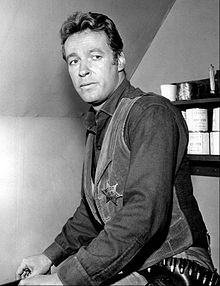
Russell began receiving roles on television in 1950. In the 1950s he would be seen on 28 different shows. In 1959 he was offered a role in a western, Black Saddle. Johnson was Marshal Gib Scott. The show was on for one season.
During the 1960s, Russell’s television work increased, and he appeared on 39 series including The Twilight Zone, Route 66, Ben Casey, Laramie, 77 Sunset Strip, OuterLimits, and Big Valley. In 1964 he was offered the role of The Professor on Gilligan’sIsland, replacing John Gabriel who was a teacher in the pilot. Roy Hinkley was a genius who made complex inventions from the simple materials he found on the island. As we have learned, most of the cast of Gilligan’s Island was typecast after the show was cancelled, and they had a hard time getting other roles. Johnson discussed this circumstance in a later interview: “It used to make me upset to be typecast as the Professor . . . but as the years have gone by, I’ve given in. I am the Professor, and that’s the way it is. . . Besides, the show went into syndication and parents are happy to have their children watch the reruns. No one gets hurt. There are no murders, no car crashes. Just good, plain, silly fun. It’s brought a lot of joy to people, and that’s not a bad legacy.”
Although he had trouble at first, he did go on to appear in 45 different shows from 1970-1997, including That Girl, Marcus Welby, Cannon, McMillan and Wife, LouGrant, Bosom Buddies, Dallas, Fame, Newhart, ALF, and Roseanne. He had a recurring role on Owen Marshall, Counselor at Law from 1971-1973.
In 1982, Russell married for a third time. He married Connie Dane, and they were married until his death from kidney failure in 2014.
In 1993, he published his memoirs, Here on Gilligan’s Isle.
Like so many of the tv icons in the 1960s—Barbara Eden, Adam West, Butch Patrick, David Cassidy, Maureen McCormick—Russell struggled with his alter ego, eventually accepting his role as the Professor. While being tied to one character for 50 years makes it tough to get the roles you want, it’s hard to be critical of a personality that gives such pleasure to decades of viewers and makes you a household name for half a century. Being given the chance to portray a character that America loves is a hazard of the business but is certainly better than never receiving a starring role.
You Never Know Who Might Show Up
With a show like Gilligan’s Island, you would assume it would be almost impossible to have guest stars. After all, they are on a deserted island. Except for the native people who might be living there, where would stars come from? Amazingly, Gilligan’s Island featured many guest stars over the years. Let’s look at a few of them.
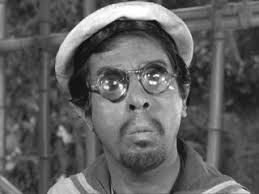
Vito Scotti appeared on four different episodes playing Dr. Boris Balinkoff, mad scientist, twice, a Japanese sailor, and a Japanese soldier who does not believe World War II is over.
Mel Blanc could be heard portraying a parrot several times and a frog.
Hans Conried visited the island twice as Wrongway Feldman, an incompetent pilot who had crashed on the island years before.
Kurt Russell was a modern-day Tarzan.
Richard Kiel, a Russian agent, pretended to be a ghost to scare the castaways off the island so he could have the oil rights. When the cast turns the tables and acts like ghosts, he didn’t stick around long.
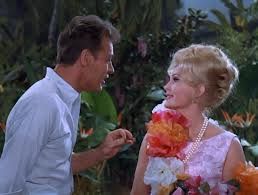
Zsa Zsa Gabor was a rich socialite who falls in love with the Professor.
Larry Storch is a robber hiding out on the island and pretending to be a doctor.
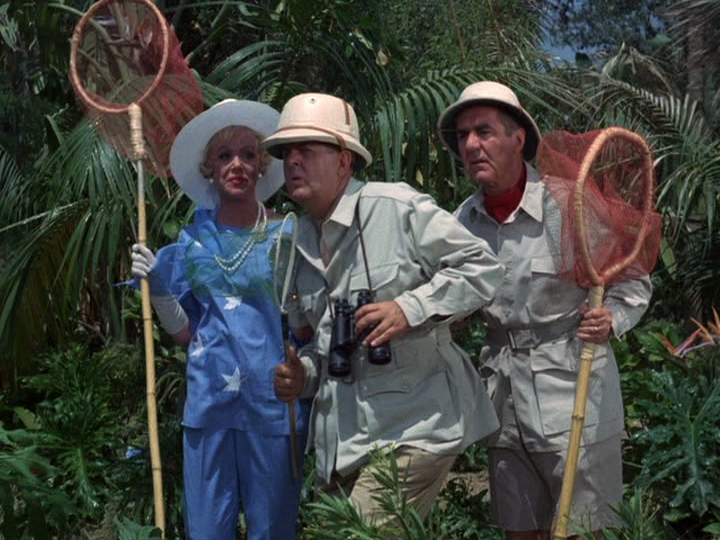
John McGiver was Lord Beasley Waterford, famous butterfly collector.
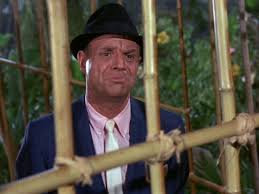
Don Rickles is con man Norbert Wiley who is hiding out on the island. He kidnaps Mrs. Howell and later Ginger, planning on getting ransom for each castaway. After the Professor puts him in jail, Ginger convinces them to let him out for a party. Norbert steals jewelry and other items from the castaways and leaves the island.
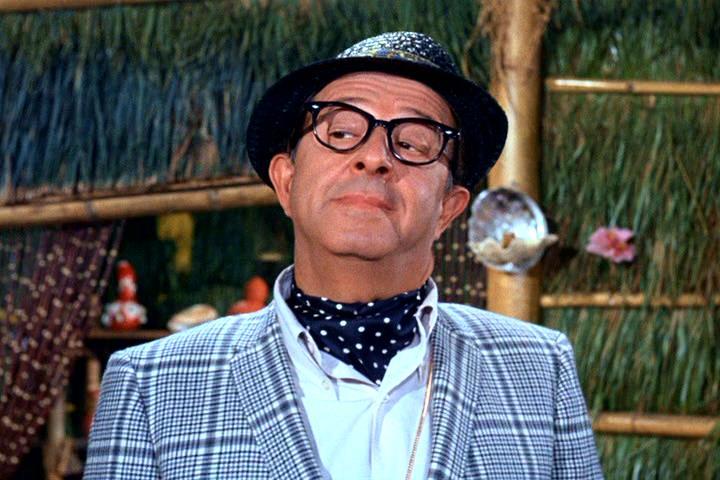
Phil Silvers crashes onto the island as Herbert Hecuba, arrogant movie producer. He orders everyone around like they’re his servants. He is not impressed with Ginger’s acting ability, so the castaways write and perform a play to show off her talents. In the middle of the night, Hecuba takes off with their play, claiming it as his own back in the US.
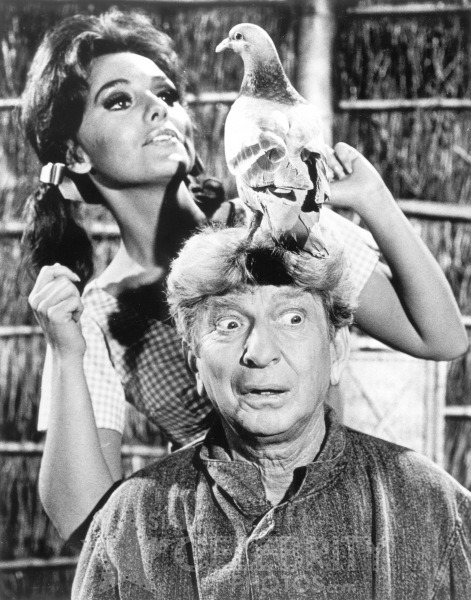
Sterling Holloway is an escapee from a prison and the owner of a pigeon. The Professor thinks he can get a message back to the States through the pigeon, but when Birdy finds out he is paroled, he sends the bird off first.
A variety of actors played natives on the show. In all, there were 54 guest stars given credit on the show.
In addition, Bob Denver, Tina Louise, and Jim Backus all had guest starring roles playing people who were look-alikes for Gilligan, Ginger, and Mr. Howell.
I guess it’s a good lesson to always keep up appearances because you never know who might show up when you’re stranded on an island.
There are several actors I find delightful; no other word quite fits. So, for the rest of this month, I thought it would be fun to get to know more about a few of them. Today we start with Bill Daily.
Bill was born in Des Moines, Iowa in 1928. His childhood was not innocent and carefree. His father was in prison, and Bill only saw him once. He died when Bill was very young. Life with his mother and step-father was not a walk in the park either. He rarely spent time with his mother, and he described his stepfather as a “terrible person.” He spent a lot of time in Kansas City with his aunt and uncle who were great role models for him.
When Bill was 12, his family moved to Chicago and he attended Lane Technical High School. Daily struggled in school because he had dyslexia, but he learned to use humor to make it easier. It started a pattern of using humor to overcome obstacles.
After school he decided to earn his living as a musician. He had learned to play the bass at a young age. He played with jazz bands all over the Midwest. He was drafted into the army and was sent to Korea with an artillery unit, but he later was transferred to an entertainment division. During the war, he met actor/musician Dick Contino, and the two would travel to various units giving shows. Contino would sing and play the accordion and Daily, who was an accomplished musician, would play the stand-up bass. He also developed a stand-up comedy bit.
Returning to the entertainment industry after his military stint, Daily began performing stand-up comedy. In 1949 Daily married his first wife Patricia Anderson. They adopted two children and divorced in 1976.
He enrolled at the Goodman Theatre School and worked for a Chicago NBC station, WMAQ as an announcer and a floor manager. When he was preparing for a Chicago-area Emmy Award broadcast, he asked an acquaintance Bob Newhart to develop a routine about press agents. That routine turned into “Abe Lincoln vs. Madison Avenue.” He described Bob as a shy man and a comic genius. He referred to him as “the nicest man that ever lived. The nicest man I ever met. Great father . . . great kids . . . great wife.”
Daily became a regular guest as a comedian on The Mike Douglas Show which was produced in Chicago. Steve Allen saw him and brought him on his show as a comedian and sidekick.
In the 1960s, Daily began his television career. He appeared on Bewitched, My Mother the Car, and TheFarmer’s Daughter. Sidney Sheldon liked his work and offered him a role of Major Roger Healey in the pilot of IDream of Jeannie.
The role of Major Healey turned into a regular costarring role. The show was on the air for five years from 1965-1970. Daily even got to write one of the episodes: “Jeannie the Matchmaker.”
In 1972 he appeared in Getting Together, a spin-off from The Partridge Family. He also was in The Mary TylerMoore Show, and two episodes of Love American Style. That same year, he got the role of Howard Borden on The Bob Newhart Show. Borden was a pilot, naïve and a bit excitable but a true friend. The show was on the air from 1972-1978. When it ended, he went back to guest starring on television series including TheLove Boat, Trapper John MD, and CHiPs.
In the mid-1970s, he became a semi-regular on Match Game, filling in when Richard Dawson left, appearing on 85 episodes. Daily described Charles Nelson Reilly as “brilliant.” He spent summers at Gene Rayburn’s home in Hyannis Port.
In 1977 Daily married for a second time. He met Vivian when they were both traveling and performing in Lover’s Leap. They had a daughter and divorced in 1980.
In 1985, Bill was offered his own show called Small & Frye. Daily played a neurotic doctor; unfortunately, the show only lasted three months before it was canceled. He tried another show of his own in 1988 called Startingfrom Scratch which lasted one season before getting the axe.
That would be his last regular series although he made four appearances on ALF as Larry the psychiatrist. ALF claimed to have learned about psychiatry from watching the Bob Newhart Show. Jack Riley, Elliot Carlin on Bob’s show, appeared as a patient on the show. Riley and Daily were friends from Chicago days.
I Dream of Jeannie continued to keep Daily busy as well. Two made-for-tv movies were made as sequels: I Dream of Jeannie . . . Fifteen Years Later in 1985 and I Still Dream of Jeannie in 1990.
Daily tried marriage for a third time in 1993. He and Becky were married until her death in 2010. I found it funny that the couple had a dog named Hi Bob, named for the line that he said over and over on the Newhart show.
Daily retired to Albuquerque. He was a weekly guest host on a radio station there from 2006-2009. He has also appeared in plays at Albuquerque Little Theater where several other celebrities have performed over the years.
In 2016 Gary Levine, a writer for the Naples Herald interviewed Daily by phone. Here is part of that interview:
“Daily explained that while he was capable and proficient at reading music, he was hurried to inform me of his inability to read. Bill indicated that he struggled with Dyslexia and was unable to read without assistance.
At this moment, you are likely wondering how an actor, unable to read, can adhere to a script.
“I memorized them, with my daughter.” As he and his wife found themselves unable to have children, the couple adopted two children, Patrick and Kimberley. Kimberley has since passed away, however, Daily credits her with assisting him to read and learn his lines. Patrick and Bill appear to be extremely close and reside near one another. Patrick works in the film industry doing camera work on various films and productions.
“The scripts were brilliant,” he remarked, “but I couldn’t read.” Daily continued, “I was so grateful that I was working.”
Expectedly, the dialogue quickly transitioned to Barbara Eden. Daily’s first adjective: ‘brilliant.’ He indicated that massive lines would form, desperate to see her, wherever they travelled. “It’s her! No one else could have played Jeannie. Don’t bother trying. I’ve tried many times. There’s no one. She had the look, the charm…she was sophisticated. There was no one like her…ever.”
Bill Daily just seems like a great guy who would get along with everybody. He has played two endearing characters in Roger Healey and Howard Borden. He seems to be enjoying retirement and working with a local theater in Albuquerque. His sense of humor is quite apparent in all of his interviews. Most impressive is how kind he seems to be, especially dealing with such an unhappy childhood.





























 thewritelife61