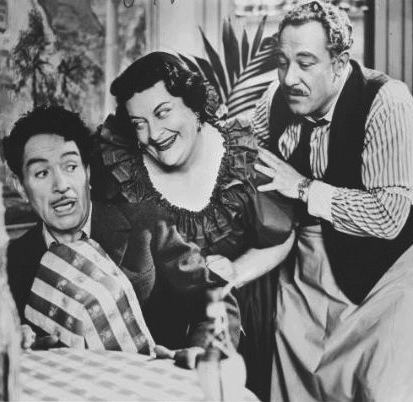
Where’s Huddles? You Only Have Ten Episodes to Find Him

This month’s blog series is titled “Get Animated.” Most of you are probably familiar with most of the shows we are discussing. However, today’s might be a bit more puzzling. It’s called Where’s Huddles?

📷imdb.com

This was a Hanna-Barbera Production that debuted on CBS in July of 1970. It was created as a summer replacement for Hee Haw. Some sources say it was replacing The Glen Campbell Goodtime Hour. The Campbell show had this timeslot in the fall and Hee Haw took if over for the winter. Both shows appeared on the schedule the following year.

When I was little, often either reruns were shown during the summer, or short-term replacement shows were created for potential long-term schedule spots.

This show was a primetime series meant to attract adults, much like The Flintstones was created to do with adult themes and a laugh track. I’m not gonna lie; I hated Hee Haw and I would have watched dentists performing root canals before watching Hee Haw.

📷ebay.com

The Flintstones had gone off the primetime schedule in 1966, so the network thought it might be time to try a new animation show in the evening.

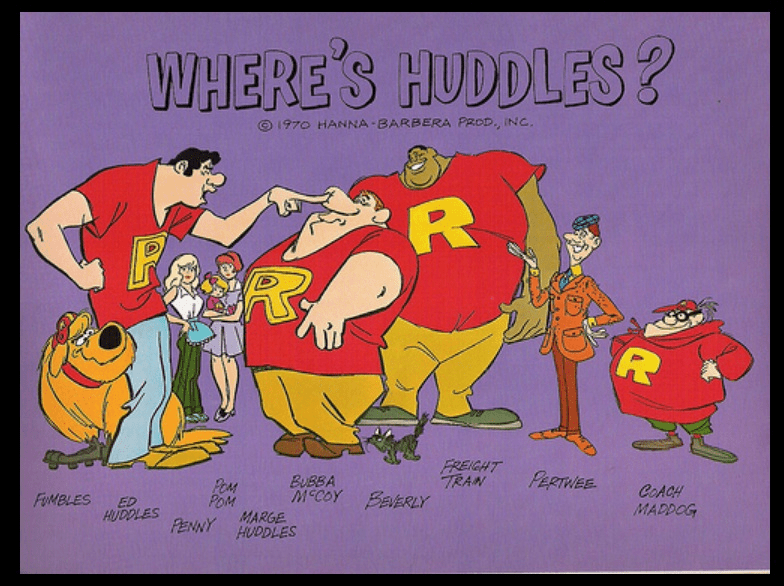
This series featured a professional quarterback, Ed Huddles (voiced by Cliff Norton). The team’s center, Bubba McCoy (voiced by Mel Blanc) is his neighbor. Rounding out the cast was Ed’s wife Marge (voiced by Jean Vander Pyl), Bubba’s wife Penny (voiced by Marie Wilson), PomPom, the Huddles’ daughter (Jean Vander Pyl), and another teammate Freight Train (voiced by Herb Jeffries). Claude Pertwee (voiced by Paul Lynde) was a grumpy neighbor who lived with his cat Beverley. He liked the wives, but he disliked the rest of his neighbors.

Huddles and company play for the Rhinos,  and their announcer was voiced by Dick Enberg, the voice of the Los Angeles Rams. Their coach was Mad Dog Maloney (voiced by Alan Reed).

As you can tell just by reading the descriptions, it was almost too similar to The Flintstones. Ed was taller and thinner than Fred and while his wife had red hair, it was a different style than Wilma.  Bubba’s wife was a more beautiful blonde. The characters on this show were voiced by many of the same people who worked on The Flintstones.

📷ebay.com

When the show wasn’t a hit, the network had to find a replacement show,  an unknown series, All in the Family, was put on the schedule.

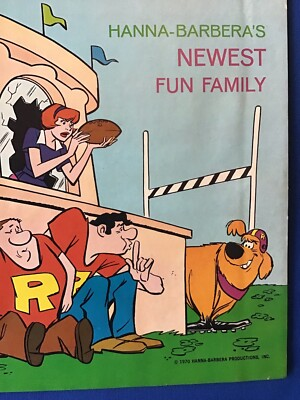
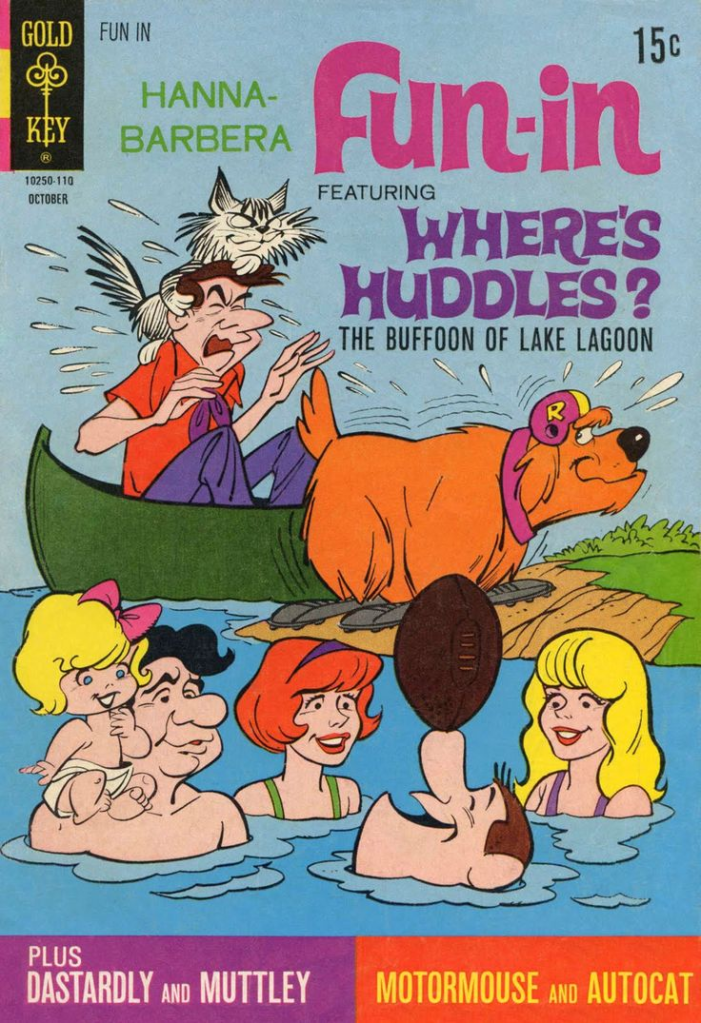
A comic book was released in 1971.

The theme song was similar but different for the opening and closing. The catchy tune’s lyrics were:

Opening: There’s a family down the street, the Huddles! The McCoys live right next door. Yes, I know the girls are alright Marge and Penny, but the fellas, they play football you know. Savages, that’s what they are. Give the ball and a cheer for Huddles, with point after touchdown every time! Savages!

Closing: There’s a family down the street, the Huddles! The McCoys live right next door. Give the ball and a cheer for Huddles, and he’s over the old goal line. With a point after touchdown every time!

📷pinterest.com

I don’t understand having the two variations, but the show wasn’t on long enough to tweak the theme anyway.

The show didn’t attract many viewers, and it was canceled after ten episodes. However, in the fall, Hanna-Barbera would try their hand at another series, one that I was much happier about- Josie and the Pussycats. You’ll learn more about this one next week.

Life with Luigi: To Be or Not To Be

As we take a look back at some Classic TV Shows this month, one of the shows I chose I hesitated about. As we all know, some shows included many stereotyped characters and oftentimes inappropriate portrayals. These shows include series like Amos n Andy, Beulah, and Lum and Abner which I just never write about.

📷wikipedia.com

I also think it is important to remember some of the shows from the past that make us wince or just turn off the dial now because it reminds us that we have a lot to learn but that we have made improvements in the current series on television. It’s a very complicated subject. If you read the differences of opinions Jimmie Walker had about his character JJ on Good Times compared to John Amos and Esther Rolle’s opinions of the character, you can see just how complex the issue is.

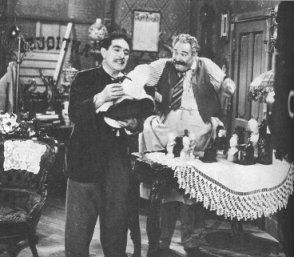
Life with Luigi could fall into this category for sure. However, it has a lot of fans and is still a big draw on Sirius Classic Radio. So, I decided to delve in and learn more about it. It was one of the earliest classic sitcoms transferred from the radio where it was aired from 1948-1953 to television. The show was created by Cy Howard who was the talent behind My Friend Irma. J. Carrol Naish voiced Luigi, and Alan Reed gave life to Pasquale in Life with Luigi.

Luigi Basco arrives in Chicago from Italy and has to make a new life for himself. He attends night school to learn English. His friend Pasquale is always trying to marry his daughter Rosa, played by Jody Gilbert, off to Luigi, who had no intention of being wed to her. Each episode began and ended with news in a letter to Luigi’s mom about his life in America.

📷alchetron.com

In 1952 CBS decided to air the show on television with Naish and Reed continuing their roles on the small screen. The program was sponsored by Instant Maxwell House Coffee. Norman Tokar was the director along with Mac Benoff who also wrote for the series with Lou Derman. Tokar would go on to direct many of the episodes of Leave It to Beaver and The Donna Reed Show. Benoff became a writer for The Danny Thomas Show while Derman wrote most of the Mister Ed scripts as well as writing for Here’s Lucy and All in the Family. The show followed I Love Lucy, so it had a great lead-in for a new show.

The series had good ratings, but the Italian American community was offended by the stereotyping of Italian immigrants even though (and perhaps more offensive) Naish was actually Irish. Because Luigi did not always understand English phrases, he took things too literally at times which I’m guessing was the problem for fellow Italians. CBS replaced the leads with Vito Scotti as Luigi, Thomas Gomez as Pasquale, and Murial Landers as Rosa. The revisions did not make anyone happy, and the show was finally canceled. The show ran its final episode in December of 1952.

Joseph Patrick Carrol Naish was a very versatile character actor who was born in New York City in 1896. He attended Catholic schools until he ran away from school at age 14 to become a song plugger. At 15 he enlisted in the Navy and after being asked to leave due to his age, re-enlisted during the war and was with the Army-Signals Corps in France. He learned eight languages during this time. He also spent some time in Paris singing and dancing with a group of performers.

📷radiospirits.com

While he was in California on the way to China, he was spotted by a Fox studio talent scout and landed a few roles. In 1929, he married another Irish actor, Gladys Heaney. With the dialects he had acquired in the Army, he easily portrayed Asians, Middle Easterners, Hispanics, Frenchmen, Germans, Native Americans, Italians, and East Indians. Time Magazine referred to him as “Hollywood’s one-man United Nations.” Ironically one of the parts he had a hard time obtaining was an Irishman because of his black hair and mustache.

In 1943, Batman was introduced in his first big-screen feature. The first evil villain he had to face was Naish as Prince Daka, a Japanese super spy. Daka had an atomic death ray, an alligator pit, and the ability to turn American scientists into zombies.

During his career, he would obtain almost 225 credits. In 1973, both Naish and his wife passed away. The couple had one child. When he was not acting, he spent time writing, singing, cooking, playing tennis, and playing golf.

Much of the late forties and early fifties were learning curves for television which led to the golden age. Life with Luigi was part of that learning curve. While many people felt the show was honest and well written, it offended a large part of the American population. It would not be the last show to do so. You might want to check out an episode or two for yourself and see how you feel about the show and its portrayals.

If It’s Friday Night, It’s Time for the Adults to Gather Round and Watch . . . Cartoons?

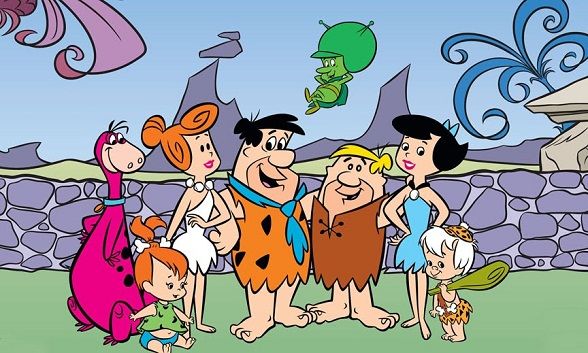
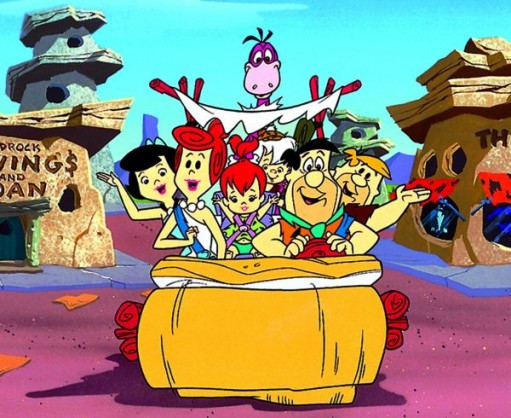
In September 1960 several iconic shows had their debut including My Three Sons and The Andy Griffith Show. On Friday nights at 8:30 eastern time, a very unusual show also began on ABC that fall:  The Flintstones.  Many viewers don’t realize that The Flintstones began life as a prime-time animated show aimed at adults. Created by Hanna-Barbera (H-B), it continued to run at night until April of 1966, a total of 166 episodes.

H-B went to New York for 8 weeks to pitch the show. After being turned down by every ntework, ABC decided to take a chance on it.  It was the most financially successful animated show for 30 years until The Simpsons was created. Variety described its premier as “a pen and ink disaster,” but the show was nominated for Outstanding Comedy, losing to The Jack Benny Show.
flint1

Set in Bedrock, population 2500, the Flintstones and the Rubbles were neighbors and best friends.  The show’s success had a lot to do with the fact that these Stone Age families participated in the same modern-day activities that families did in the 1960s. They relied on the same technology; it’s just that their technology was powered primarily by animals and rocks.

H-B considered other historical eras for the show.  They researched hillbillies, the Roman Empire, and American Indians before settling on Stone Age characters. The original title was The Flagstones.  It was then changed to The Gladstones, and, finally, The Flintstones. In the first creation, Fred and Wilma had a son — Fred Jr. H-B decided that they wanted both couples to be childless, so Fred Jr. was written out.  A Golden Book which came out in 1960 was released before the show changed its concept, and it features Fred Jr.

flint8

Let’s review the regular characters.

Fred Flintstone works at Slate Rock and Gravel Co. He had a quick temper but was a loving father and husband.  He is tall and broad with black hair. He was on a bowling team and belonged to the Loyal Order of Buffaloes, Lodge No. 26. Alan Reed was the voice of Fred. In one episode, Fred was supposed to yell “Yahoo.” Reed asked if he could say “Yabba Dabba Doo” which he based on a Brylcreem jingle his mother used to say, “A little dab’ll do ya.” That became his catchphrase.  In 1977, when the show was in syndication, Henry Corden took over after Reed passed away. Fred was based on Ralph Kramden. In a 1986 , article Jackie Gleason revealed that his attorney told him he could have easily won a lawsuit and stopped The Flintstones, but he advised against it or Gleason would have been known as the man who destroyed The Flintstones.

fred


flinta

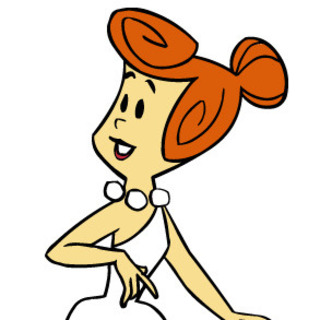
Wilma Flintstone is a practical and level-headed wife. She is a true redhead and loves to shop. She often has to get Fred out of bad situations or is forced to convince him to apologize to Barney or Mr. Slate. Jean Vander Pyl was the voice of Wilma.
wilma

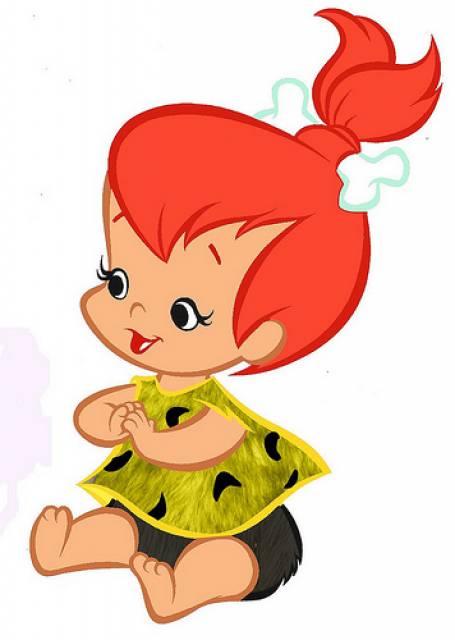
Pebbles Flintstone was born at the end of Season 3.  She wore bones in her hair for bows and was a happy little girl. Vander Pyl also played Pebbles.
pebbles

Dino is their purple pet.  He barks and often acts like a dog, but he is officially a prosauropod. The incredible Mel Blanc was the voice of Dino.

dino

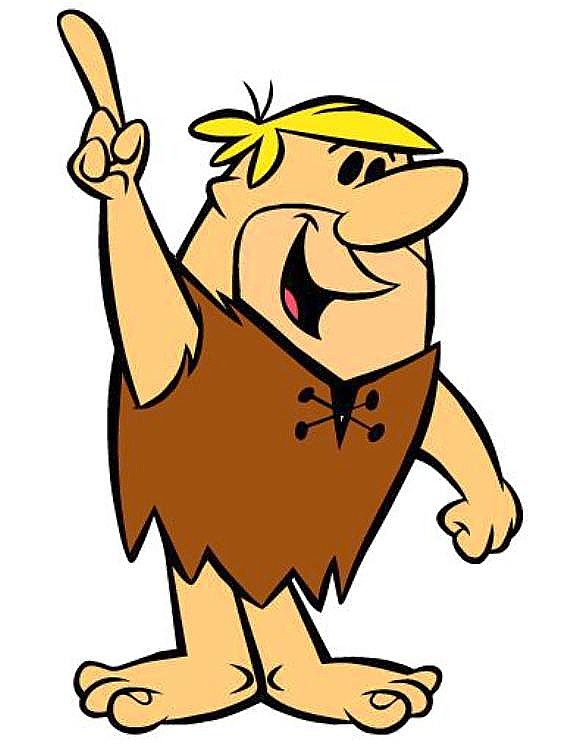
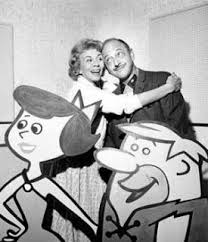
Barney Rubble is Fred’s best friend and next-door neighbor. He and Fred get into spats regularly. Barney is shorter than Fred, easy going, and friendly.  Barney was on Fred’s bowling team and part of the Water Buffaloes. Barney was also voiced by Mel Blanc. After Blanc’s death, several actors played Barney.
barnet

flintb

Betty Rubble is Wilma’s best friend.  They often conspire to get their husbands to mend their friendship.  Betty is a brunette. Bea Benaderet was the voice of Betty for seasons 1-4.  After her death, Gerry Johnson took over for seasons 5 and 6.

betty

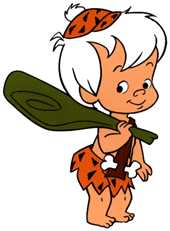
Bamm-Bamm is the Rubbles’ adopted son.  He is absurdly strong and says “Bamm-Bamm” a lot. Don Messick was the voice of both Bamm-Bamm and the Rubbles’ pet.
bamm bamm

Hoppy is Rubbles’ pet hopparoo (a cross between a kangaroo and a dinosaur).  He doesn’t appear until Season 5.

hoppy

More than 100 “guest” characters appear on the show, but several are better known and appear more often, including:

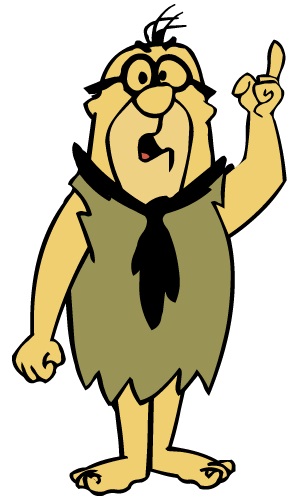
Mr. Slate owns the company where Fred works.  Sometimes Barney works there as well but it doesn’t seem to be consistent. Mr. Slate fires Fred a lot but always takes him back. John Stephenson voiced Mr. Slate.
mr slate

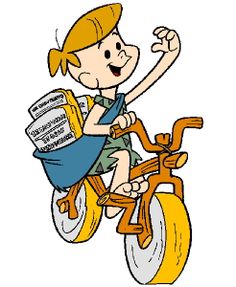
Arnold is the Rubbles’ and Flintstones’ paperboy. Fred doesn’t like him because Arnold can outsmart him. Don Messick played Arnold.
arnold

Joe Rockhead is a friend of Fred and Barney’s. He is mentioned in one show as being the chief of the Bedrock Volunteer Fire Department. Irwin Keyes played Joe.

joe

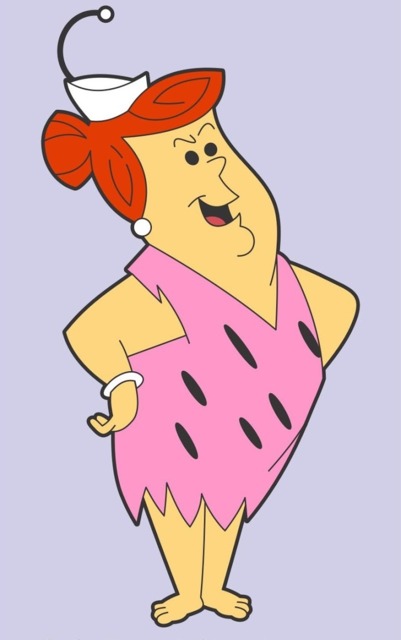
Pearl Slaghoople is Wilma’s mother.  She is hard to please and has always disapproved of Fred. Verna Felton and Janet Waldo played Pearl.
flint13

Gazoo is an alien who helps Fred and Barney.  He can only be seen by those two, small children, and pets. Harvey Korman was the voice of Gazoo. He appeared during the final season as a way to boost viewership. The show had begun to try to capture younger viewers during the final two seasons.

flint19


flint14

Many famous people also showed up on the show. The 6th episode of the 6th season featured Darrin and Samantha Stephenson from Bewitched. H-B produced the animated opening of Bewitched, so there was a tie-in. Other stars included Stony Curtis (Tony Curtis), Ann Margrock (Ann Margaret), and Cary Granite (Cary Grant) as well as the Green Bay Pachyderms.

One strange thing about the show was that the Flintstones home and furniture placement was not consistent.  You can see changes in almost every episode. Their address also changed. It was given as 345 Cave Stone Rd., 1313 Cobblestone Way, and 222 Rocky Way.

flint12

A theme song, “Rise and Shine” was created for the show and used in seasons 1 and 2. The tune was similar to Bugs Bunny’s theme, and in season 3 it was changed to “Meet the Flintstones.” A 22-piece jazz band and a 5-person singing group, the Skip Jacks, recorded it. When the show went into syndication, “Rise and Shine” was replaced with “Meet the Flintstones” for the first two seasons as well. Hoyt Curtin was in charge of the underscores for seasons 1-5 and Ted Nichols took over for season 6.
flintc

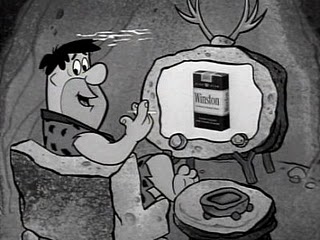
Believe it or not, the first two seasons were sponsored by Winston Cigarettes, and there were ads featuring Fred and Barney smoking. These seasons were aired in black and white. Seasons 3-6 would be in color. In season 3, Welch’s became the sponsor for the last four years. They created jelly jars which could be re-used as drinking glasses. At this point, it was decided that the Flintstones would have a baby. A boy was written into the script. A marketing director suggested they change it to a girl because girl dolls sold better. Based on his recommendation, they created Pebbles. Apparently, he was right because during the first few months, they sold 3 million of them. In season 4, Bamm-Bamm was adopted.

flint9

Some of the clever products included an alarm clock that is a bird, a bird car horn, a dinosaur crane, an octopus dishwasher, a pelican garbage can, a porcupine hairbrush, and a swordfish knife. Several famous brands were seen in the stone age such as Stoneway Pianos and Polarrock cameras.

The show was offered in syndication till 1997. Ted Turner purchased H-B in 1992, and The Flintstones ran on TBS, TNT, and the Cartoon Network. In 2000, Boomerang began airing the show where it continued until 2016. Now it’s only available on Boomerang’s subscription video-on-demand service.

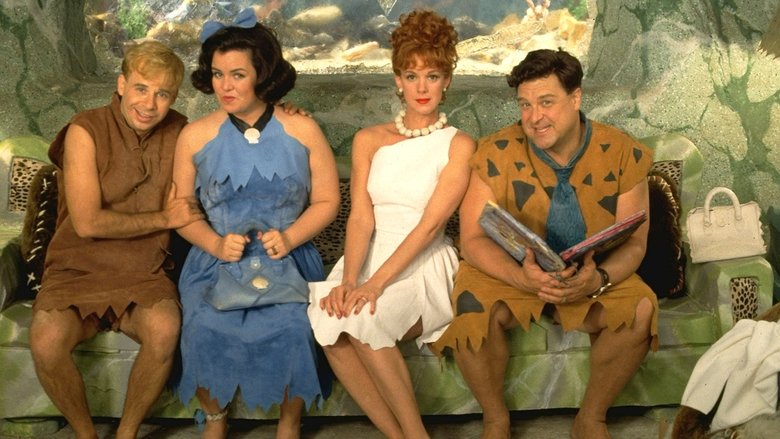
The Flintstones had 12 different television series versions and 13 tv specials produced. In addition, there have been 5 tv movies, 6 educational filmstrips and 2 big-screen films.
flint6

Two theme parks exist: Bedrock City in Custer, SD and Valle, AZ. A stage production took place in Universal Studios in Hollywood from 1994-1997. DC Comics produced a 2016 Flintstones comic book. Flintstones collectibles have been produced for almost 60 years.

flint7

Fifty-eight years after the debut of the show, Bedrock characters are still promoting products.  One-a-Day vitamins features Flintstones Chewables and Fruity and Cocoa Pebbles are made by Post.


A typical conversation between Fred and Barney is:

Fred: How can you be so stupid?

Barney: Hey, that’s not very nice. Say you’re sorry.

Fred: I’m sorry you’re stupid.
flintw

For the remainder of January, we will continue to look at prime-time animation series.