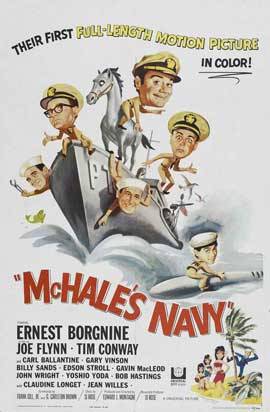
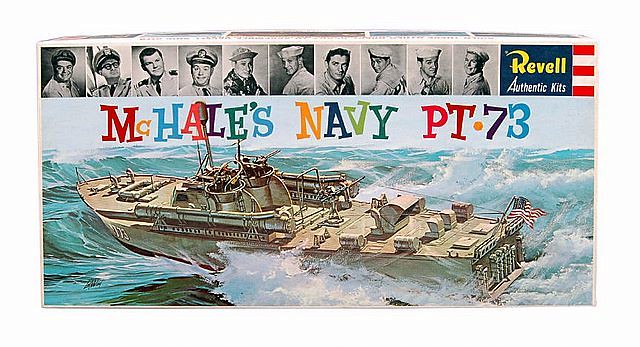
Bob Newhart: Laughing Through Life

This month I wanted to honor one of our most beloved television comedians: Bob Newhart. Next week we’ll spend some time learning more about The Bob Newhart Show.
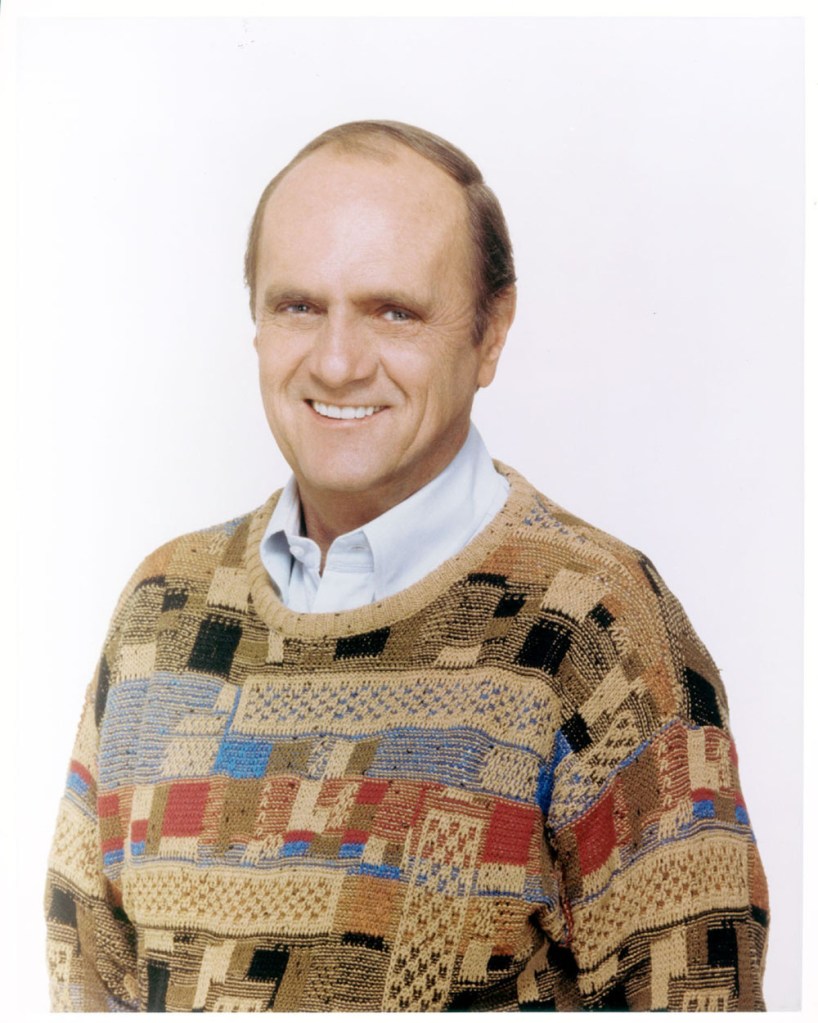
Photo: spotify.com

Newhart was born George Robert Newhart in 1929 in Oak Park, IL. He grew up in a typical midwestern family where his father was part owner of a plumbing and heating supply company, and his mom was a housewife. As a young boy, he always wanted to be called Bob. He had a Catholic education and went on to Loyola University of Chicago in 1947. Graduating in 1952 with a business degree, he was soon drafted into the US Army in the Korean war where he stayed until 1954. He considered getting a law degree and went back to Loyola. He decided not to pursue that; some sources site that he was asked to behave unethically during an internship which led him down a different career path.

He worked as an accountant and as an unemployment office clerk. In 1958 he was hired as a copywriter for Fred Niles who was a television producer in Chicago. It was while working here that Newhart and a colleague began entertaining each other by making telephone calls about absurd scenarios. They sent these to radio stations as audition tapes. A radio station disc jockey Dan Sorkin introduced Newhart to a Warner Brothers Records executive who signed him in 1959 based on those recordings. Bob then began creating stand-up routines which he performed at nightclubs.

Photo: discogs.com

He released an album in 1960 which changed his life. Titled, The Button-Down Mind of Bob Newhart, the comedy album made number one on the Billboard charts, and he won a Grammy for best new artist. A follow-up album, The Button-Down Mind Strikes Back was released soon thereafter. He would continue releasing comedy albums in 1961, 1962, 1964, 1965, 1967, 1971, and 1973.

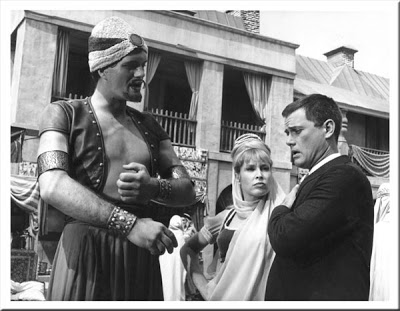
During a 2005 interview for American Masters on public television, Bob stated that his favorite routine was Abe Lincoln vs Madison Avenue which was on his first album. A promoter for Abraham Lincoln has to deal with his reluctance to boost his image. A tv director named Bill Daily suggested the routine to him. Daily would be known later as Howard Borden on The Bob Newhart Show (as well as Roger Healey on I Dream of Jeannie).

The success of that first album led to a variety show titled The Bob Newhart Show. It only lasted a year, but it did receive both an Emmy nomination and a Peabody award. Apparently, he didn’t enjoy his time during the show so much. Halfway through the season he wanted to quit, but his agent explained that being under contract meant that was not possible. At a later date, he referred to his first show, saying “It won an Emmy, a Peabody Award, and a pink slip from NBC. All in the same year.”

He began making the rounds on television shows, appearing on The Dean Martin Show 24 times and The Ed Sullivan Show 8 times. He guest hosted The Tonight Show Starring Johnny Carson 87 times. When discussing his appearances on Johnny’s show, he stated “I remember once when I emceed The Tonight Show in New York, I arrived with my manager’s son. After a while, they asked, ‘When are the rest of your people coming?’ I had to say, ‘This is it.’”

Photo: huffingtonpost.com

In 1962 Newhart accepted his first movie role, Hell is for Heroes, starring Steve McQueen. He would continue to do movie roles throughout his career including the Christmas classic Elf, but the small screen would make him famous.

In 1963 Buddy Hackett introduced Bob to Virginia Quinn, whose father was character actor Bill Quinn. They wed in January of 1963 and 57 years later are still happily married.

Photo: zimbio.com

For the next decade, he continued to accept movie and television roles. In 1972, television history was made when The Bob Newhart Show debuted. Until 1978, Newhart played Bob Hartley, psychologist, and we got to know his unusual patients, quirky co-workers, and eccentric friends, including neighbor Howard Borden. Bob chose a psychologist based partly on his old telephone routines. As he said, “Much of my humor comes out of reaction to what other people are saying. A psychologist is a man who listens, who is sympathetic.”

Photo:epiguides.com

In 1982, Bob gave television another go for another eight years. Simply titled Newhart, the show featured Bob as Dick Loudon, an innkeeper and author from Vermont. He still had quirky co-workers and eccentric friends.

Photo: austenauthors.net

On cue a decade later in 1992, Bob showed up in a new show even more simply titled, Bob as Bob McKay a comic book writer and artist who had retired long ago and was trying to get back into the workplace. Unfortunately, after 33 episodes the show was canceled due to low ratings.

Photo: imdb.com

In 1997, Newhart starred in his last sitcom, George and Leo. As George Stoody, a bookstore owner, Newhart offers a temporary home to a full-time magician and part-time criminal who recently robbed a Mafia-owned casino. The series failed to catch on with viewers, and it was canceled after a season as well.
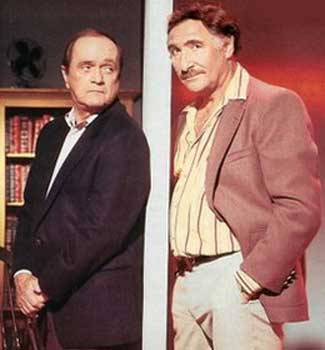
Photo: listosaur.com

Though he never took on another sitcom, Newhart has made appearances with recurring characters in several shows. In 2003, he showed up on ER as Ben Hollander. In 2005, he was Morty on Desperate Housewives. As Judson, he guest starred on The Librarians.

Photo: thewrap.com

Perhaps, younger audiences know him best as Arthur Jeffries or Professor Proton on The Big Bang Theory. He had been Sheldon’s boyhood hero who played the professor on television. Sheldon idolized the professor while the professor tolerated Sheldon.

Photo: upi.com

It’s hard to believe with all of his years being a successful television comedian, but Newhart won his first Emmy in 2013 for his role of Professor Proton. I can’t argue with the nominees for most of the 1970s during the airing of The Bob Newhart Show–names like Tony Randall, Jack Klugman, Alan Alda, and Hal Linden. Even with my bias of Norman Lear shows, I get nominating Carroll O’Connor every single one of those years. I understand the tough competition. What I don’t understand is the fact that he was never nominated during that eight-year period. When Jack Albertson wins, and Bob Newhart is not even nominated that is wrong. During the Newhart years, he was at least nominated three times. But I don’t understand it when John Ritter wins for Three’s Company or Richard Mulligan for Soap and no nomination for Bob Newhart. What especially appalls me is the fact that The Bob Newhart Show was only nominated one year; I can accept the fact that it got beat out by The Mary Tyler Moore Show. I cannot accept is that during this same time, Three’s Company, Mork and Mindy, and Welcome Back Kotter received nominations, and The Bob Newhart Show did not. Anyway, this blog is not about the television academy and its procedures, so let’s move on.

Photo: flickr.com

Even though he was never awarded with an Emmy for his time as Bob Hartley, TV Land placed a life-sized statue of Newhart in front of Navy Pier, complete with an empty couch. He was best friends with Suzanne Pleshette, his wife from the show, and spoke at her funeral. He remembered their time together, “Her laugh. Her laugh. We just laughed. We just had a great time. We all loved each other and respected each other and we got paid for it.” Bob also remains close friends with Marcia Wallace who played his receptionist Carol on the show.

Photo: sitcomsonline.com

While Bob has appeared as different characters throughout his career, he has also remained the same character. With his deadpan delivery and slight stammer, he perfected the straight-man role, surrounding himself with wacky castmates. He has often cited George Gobel and Bob and Ray as influences in his comedy career. When discussing his career choice, he explained “I like the humor to come out of character. When you’re going for a joke, you’re stuck out there if it doesn’t work. There’s nowhere to go. You’ve done the drum role and the cymbal clash and you’re out on the end of the plank.”
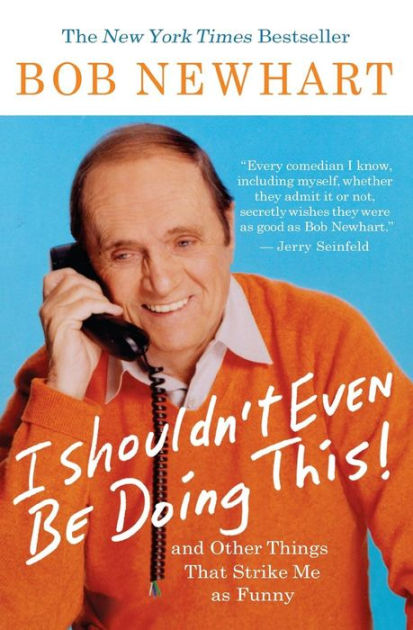
Photo: barnesandnoble.com

In 2006, he released a book I Shouldn’t Even Be Doing This. It’s a memoir with some of his classic comedy routines. Actor David Hyde Pierce reported that “the only difference between Bob Newhart on stage and Bob Newhart offstage is that there is no stage.”
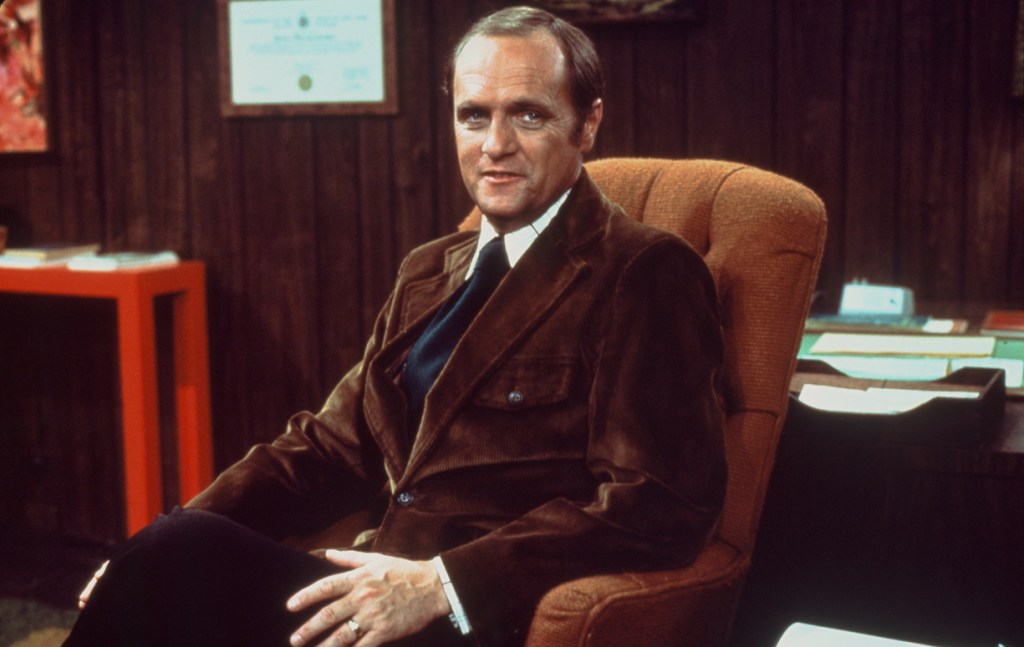
Photo: parade.com

I am so appreciative of those stars who agree to entertain us for our entire life, such as Betty White, Carol Burnett, and Bob Newhart. They are classic comedians who can make us laugh no matter what. Bob’s view on comedy was that “laughter gives us distance. It allows us to step back from an event, deal with it and then move on.” What an amazing career and what an amazing man. With all its negatives and sometimes destructive tendencies, television can be a harmful place, but a comedian like Bob Newhart demonstrates what a positive and uplifting experience television can be when done right. Thanks for doing it right for sixty years.
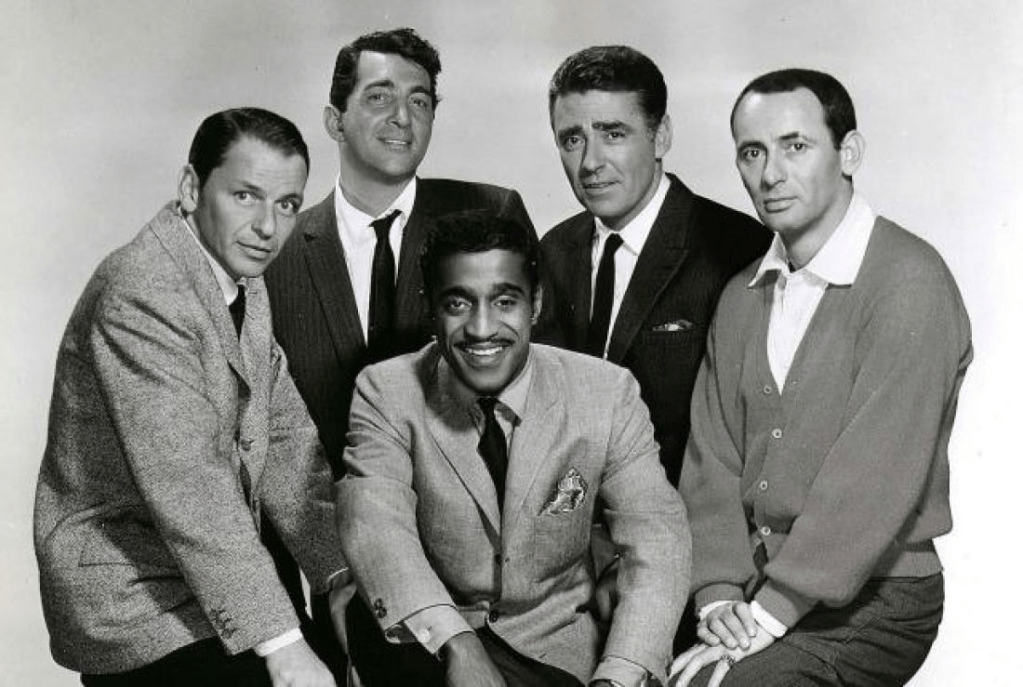
The Joey Bishop Show: Versions 1, 2, 3, and 4!

Although the Rat Pack have all passed on, their influence still surrounds us. We can listen to Frank Sinatra’s music channel on Sirius. Jerry Lewis and Dean Martin movies still play late at night. Sammy Davis Jr. and Peter Lawford can both be seen on a variety of sitcom reruns. One member we don’t see as often is Joey Bishop. While he is not as well known as the other friends, he actually was the only one of the group who starred in his own sitcom.

Photo: mentalfloss.com

Two series went by the name “The Joey Bishop Show.” One was a sitcom and aired from 1961-1965, producing 125 episodes. For most of the run, Joey played a talk show host named Joey Barnes. The other show was an actual talk show that he hosted which ran from 1967-1969 and produced 682 episodes.

Photo: amazon.com

This blog looks at the sitcom created by Danny Thomas and Louis F. Edelman specifically for Joey Bishop. Danny served as executive producer, and the show was filmed at Desilu Studios before a live audience. When it debuted in 1961, it was filmed in black and white. One episode was shot in color and then the second and third seasons followed suit. NBC canceled the show after season three and CBS picked it up but filmed that season in black and white again. I imagine fans of the show weren’t happy to go from color to gray tones again; it would be like visiting Oz and then being sent back to Kansas.

Photo: tumblr.com
Version 2

Like The Andy Griffith Show, the pilot was an episode of the Danny Thomas Show. Joey played Joey Mason who was an incompetent public relations staffer. Danny arrives in Los Angeles exhausted but has no place to stay and is forced to sleep at Joey’s house with his parents and his two sisters, the younger one being Stella, an aspiring actress played by Marlo Thomas.

Photo: wikimedia.com

Before airing the next fall, the pilot had some revisions. Now Joey’s last name was Barnes. His father was dropped from the cast but two family members were added:  a younger brother named Larry (Warren Berlinger) and a brother-in-law Frank (Joe Flynn) who was married to Betty (Virginia Vincent), the older sister. His mother continued to be played by Madge Blake who would go on to play Aunt Harriet on Batman.

Joey continued his public relations career and supports his family. The secretary at the PR firm, Barbara (Nancy Hadley) is his girlfriend. A lot of the plots revolve around family members taking advantage of Joey’s influence which they think is significant but is really almost nonexistent.

The show didn’t do well in the ratings, so it was retooled once again. Betty, Frank, and Barbara were all dropped from the show. The series was renewed for a second season, but the show would change its format again.

Photo: newsfromme.com
Newly married

From season two on, Bishop became the host of a New York City talk show. The cast from the first season disappeared altogether in this fourth reincarnation. Abby Dalton plays Joey’s wife Ellie. The couple now live in a posh apartment building and, at the end of the second season, they have a baby boy. Hilda (Mary Treen) is the Barnes’ maid and baby nurse, and she often trades insults with Joey similar to the banter Florence and George had on The Jeffersons a decade later. The Jillsons (Joe Besser and Maxine Semon) are the superintendents of the building. Like Howard’s mother on The Big Bang, Maxine is heard but not seen. Guy Marks played Freddie, Joey’s manager.

Photo: akaguymarks.weebly.com
Version 3

There were some rumors that Joe Flynn had been let go the prior season because he was too popular; this would mean that Bishop was so insecure that he was willing to totally revamp his show to get rid of one character. That doesn’t seem to make sense. However, Cynthia Lowry’s column in The Evening Independent from September of 1963 reported that “Actor’s feuds can be very fierce. Joe Flynn, who now plays the sarcastic Captain Binghamton in McHale’s Navy still is so annoyed with The Joey Bishop Show that he doesn’t even mention it in his list of acting credits – although he included brief appearances on Hawaiian Eye, Ozzie and Harriet, and The Eddie Fisher Show. Flynn played a sharp-tongued ne’er do well brother-in-law during the first year of the Bishop comedy, a role that was swept away with a lot of others when the series was completely revamped.”

One review for the second season by Bob Thomas, AP Movie-TV Writer in the Ocala Star-Banner from August of 1962 stated:

“About the only resemblance between last season’s Joey Bishop show and the coming season’s is the name. It’s still The Joey Bishop Show, NBC having vetoed the comedian’s suggestion to call it The New Joey Bishop Show. Bishop fans may be startled to find their hero is no longer a press agent but a late-night television comic. Furthermore, he has jettisoned his mother, bless her heart, for a curvy wife. And he has acquired a whole new bunch of pals. That Joey was able to make these changes is one the minor miracles of television. Just about everyone, Joey especially, agreed that something was wrong with last season’s shows. When a series pulls a wrongo, it is usually yanked at the first sign of spring. But the series had somehow managed to best its competition on ABC and CBS and rack up an impressive rating. So, when Joey promised a clean sweep in format for the next season, NBC went along. I found Joey in the midst of his fourth show, and absolutely happy – for him. That is, he smiled every 15 minutes. I asked what went wrong the first season. ‘I showed up,’ he replied. But on a more analytical basis, he continued: ‘We did many things wrong. We didn’t have enough time to prepare. We violated a very basic concept in comedy. When you have a clever comedian -and in modesty I think I am-you surround him with funny people. When you have a funny comedian, you surround him with clever people. I made the mistake of working with clever people,’ he said. ‘Now I am working with funny people – Guy Marks, who is a bright young comedian; Joe Besser, who can get laughs just walking on stage; and Abby Dalton from the ‘Hennessy Show, a brilliant talent.’

Photo: sitcomsonline.com

Another review a few weeks later agreed: “Joey Bishop also returned to NBC – on Saturday night. This season he is more poised, more famous, and a successful established night club comedian. He also picked up a wife on the show. The first show involved one of those typical newlywed situations that television situation comedies specialize in. High point of the show, however, was an imitation by Guy Marks, who plays Joeys manager, of a flamingo. Don’t ask how they managed to get that in, but it was very funny! —-”

Photo: youtube.com
Despite the rumors, Bishop proves he’s a team player

Once again there was talk of feuding between the star and a cast member, this time Guy Marks, because he was receiving great reviews. Marks was around for the first 18 episodes and when he left, Corbett Monica came on board as Larry Corbett, Joey’s head writer.

The Montreal Gazette in January of 1963 featured an article by Dorothy Kilgallen that explained, “It’s no secret that the parting between Joey Bishop and Guy Marks was far from friendly, but no one revealed that they were close to the fisticuffs stage.” Some cast members sided with Marks. Other cast members claimed Joey was not egotistical and wanted everyone to succeed. I was not able to determine whose version was closer to the truth, but it is not surprising that the show didn’t last as long as it could have between constant cast changes and in-fighting on the set.

There were also some controversies regarding the writing on the show. In the book Sitcom Writers Talk Shop by Paula Finn, Irma and Austin Kalish who wrote for many great sitcoms in the sixties and seventies were interviewed. She asked the pair if they ever recycled stories for show. They responded no, and continued with this story:

IK: We were once writing The Joey Bishop Show, and we went in to pitch shows to the story editor.

AK: We pitched five shows to him.

IK: And he said, Those sound like good ideas, but you know, I have to pitch them to Joey first. And then our agent called and told us he got word that Joey didnt like any of those ideas. Fine.

AK: Five weeks later–week after week after week after week after week–

IK: Our ideas came on.

AK: Our ideas were stolen. Eventually that guy, the story editor on The Joey Bishop Show, came to us for a job. Needless to say, what goes around comes around.”

Another great writer, Joel Rapp, shared another story about this series. We had a contract for six Joey Bishop Shows and we wrote the first one, and then we went to watch the taping. And there were about three words of our script left in what they finally shot. We asked the producer what happened, and he said Joey got hold of the script, and he changed everything. But we still got the writer credit, which was fine. So then we wrote a second script, and the same thing happened. So for the third script, we turned in thirty-six blank pages, and we were fired. And it was fine with us. We were making plenty of money and had other jobs.”

Of course, many guest stars appeared on the show as themselves being interviewed by Joey, including The Andrews Sisters, Edgar Bergen, Milton Berle, Willie Davis, Don Drysdale, Robert Goulet, Don Knotts, Jerry Lewis, Jack Paar, and Andy Williams.

Photo: sitcomsonline.com

Other guest stars who appeared on the show in roles other than themselves included Jack Albertson, Parley Baer, Frank Cady, Jackie Coogan, Nancy Kulp, Sue Ane Langdon, Howard McNear, Barbara Stanwyck, and Dawn Wells.

The theme song was also axed from the first season. “Sometimes I’m Happy” by Irving Caesar and Vincent Youmans was exchanged for “Joey” by Sammy Cahn and Jimmy Van Huesen.

Photo: allstarpicsfamousfix.com

During the third season, one episode was filmed but never shown. John F. Kennedy was a friend of the Rat Pack. On November 15, 1963 Vaughn Meader, who often impersonated the President, was filmed in an episode as the impersonator of President Kennedy. A week later the assassination in Dallas occurred, and the episode was never seen live or in syndication. Most of the sources I consulted could never determine if the episode had been archived or destroyed.

Following all the changes, the ratings had increased during season two but season three saw lower ratings once again, and NBC decided not to renew the show. At the same time, Danny Thomas decided not to return for a twelfth season in his show, so CBS picked up Joey’s show. However, the show went up against the much-loved Bonanza, and the ratings never recovered, so CBS then canceled the show after the fourth season.

Photo: commons.wikimedia.com

Chuck Rothman, who wrote a blog about the show May 28, 2017 on blogspot.com, described it as “filled with gentle comedy. The jokes may have worn a little thin, but the stories hold up surprisingly well. Barnes is a decent guy with a sense of humor and Bishop’s relaxed and subtle style—he never appeared to work to be funny—was charming to watch.”

Another viewer on imdb wrote that “personally, I failed to see the humor of the situations in this show that centered around a dull, middle-aged man who was still living with his mother . . . who was repeatedly being fired from his job.”

Obviously, they were describing two different versions of the show, but there certainly was a difference of opinion.

If you never had a chance to watch the show, Antenna TV began airing it in 2017; the network even transferred the first season’s 35mm film to a more modern technology so it can also be aired. Currently, you can view the show on Antenna TV at 7-8 am (EST) weekdays and 3-4 am (EST) Saturdays.

Photo: commons.wikimedia.org

I have watched a few of the shows on Antenna TV and enjoyed them. All the episodes I was able to watch were during the final three seasons, but it would be interesting to catch a couple from the first year and compare them.


.

Don’t Blink: Shows That Received Pink Slips by the Holidays

One thing I have learned doing blogs the past four years is how many shows don’t make it. Although every year has its share of flops, some years are just notorious for having weak programming. The late 1970s was a period of just truly awful shows. Bob Newhart who starred in The Bob Newhart Show decided to quit in 1978. When asked about ending the show, he said, “I could see what was coming in situation comedy, and I didn’t want to be a part of it. If we’d gone another year, they’d have had the guy and two girls living in the apartment above us, a Martian living on the same floor next door to three girl detectives. The floor below us would have been occupied by a fraternity and a sorority.” As bad as that sounds, the shows that the networks put on the air during this time were even worse. Let’s take a look at some of the programming that didn’t make it through a season in the late 1970s.

A Year at the Top

Photo: imdb.com
Note the young Paul Shaffer

Believe it or not, in 1976 Norman Lear teamed up with Don Kirshner of Rock Concert fame for a sitcom about the music business. This show was supposed to begin in January of that year but was delayed until summer with an entirely different cast. Two young pop stars Greg and Paul (Greg Evigan and Paul Shaffer—yes the Paul Shaffer from David Letterman) move to LA for their big break. They meet a potential agent named Hanover (Gabriel Dell) who agrees to sign them if . . . and if you think the concept is weird so far, get this: Hanover is the devil’s son, and they need to sign over their souls to become famous. The pair never actually sign the contract. It might have taken a year to get on the air but it only lasted five weeks.

Quark

Photo: newyorktimes.com

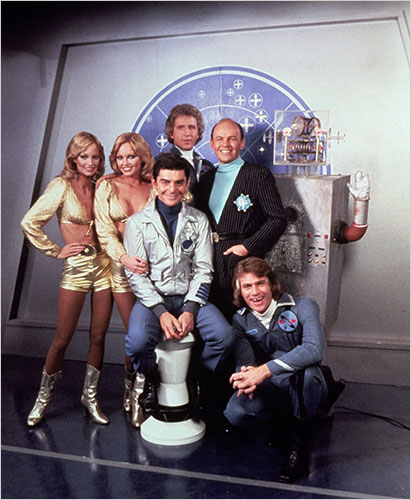
This show’s concept was also a bit of a reach. It took place on Perma 1, a space station in 2222. Adam Quark (Richard Benjamin) had a mission to clean up all the trash in outer space. Quark took orders from a giant disembodied head called, what else, The Head, along with Perma 1’s architect Otto Palindrome (Conrad Janis). If you think this sounds crazy, wait till you learn about Quark’s crew: a part fish/part fowl first officer, a humanoid vegetable named Ficus, clones Betty 1 and Betty 2, and Andy the Robot, a walking junk pile. I was surprised not that it was cancelled after two months, but that it lasted two months. I was also surprised to learn that Buck Henry was the creative force behind this series.

Sanford Arms

Photo: humormillmag.com

A year later in 1977 we have another interesting set-up. When Redd Foxx and Demond Wilson, the two stars, the only stars, left the show Sanford and Son, Norman Lear was left with a show title only. Aunt Esther (LaWanda Page) had been one of the cast members on Sanford and Son and suddenly she was at the hub of this new show. Phil Wheeler (Theodore Wilson) a widower with teenagers buys the house, the junkyard and Esther’s rooming house and tries to start a residential hotel. A month or so later, before he could even make his first payment, the show was done.

Another Day

Photo: wikipedia.com

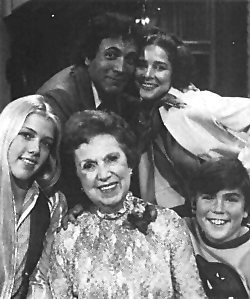
David Groh (who had played Rhoda’s husband) is Don Gardner, a struggling businessman who can’t make ends meet. His wife Ginny (Joan Hackett) has to get a job, and they both had to deal with their introverted son Mark (Al Eisenmann) and their extroverted daughter Kelly (Lisa Lindgren), as well as Don’s mom Olive (Hope Summers who had played Clara on The Andy Griffith Show) who is critical of all of them. Don struggled through a few episodes and was finished.

Apple Pie

Photo: wikipedia.com

A lonely hairdresser played by Rue McClanahan named Ginger-Nell Hollyhock placed ads in the newspaper for a family. The family that she “found” included a daughter (Caitlin O’Heaney) who tap-danced, a son (Derrel Maury) who wanted to fly like a bird, an elderly grandfather (Jack Gilford), and con-artist Fast Eddie (Dabney Coleman). The show was set in Kansas City in 1933. It took place during the Depression and depression is what anyone watching felt, although the pain was fleeting. After one episode the network decided no one wanted this family.

Hanging In

This one was so bad they didn’t want any evidence so there are no photos.

Another flop came along with a star who had been another star’s spouse. Bill Macy who played Maude’s long-suffering husband starred in this show as Louis Harper, a former football hero who did not have the right credentials to be a university president. He has a desire to help the underprivileged, but the rest of the faculty is more concerned about raising money. Other cast members included high-pressure dean Maggie Gallager (Barbara Rhoades), PR man Sam Dickey (Dennis Burkley), and housekeeper Pinky Nolan (Nedra Volz). No finals for this series; it was cancelled after a few weeks.

Hizzoner

Photo: imdb.com

David Huddleston plays Mayor Cooper who runs a small Midwestern town. The cast included the mayor’s secretary Ginny (Diana Muldaur), the mayor’s daughter (Kathy Cronkite, yes Walter’s daughter) and several other quirky characters. While the mayor is quite conservative, his children are left-wing liberals. Apparently, the mayor broke out into song at least once an episode. I guess, he was singing the blues because the show was cancelled after 7 episodes.

In the Beginning

Photo: collectors.com

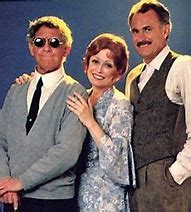
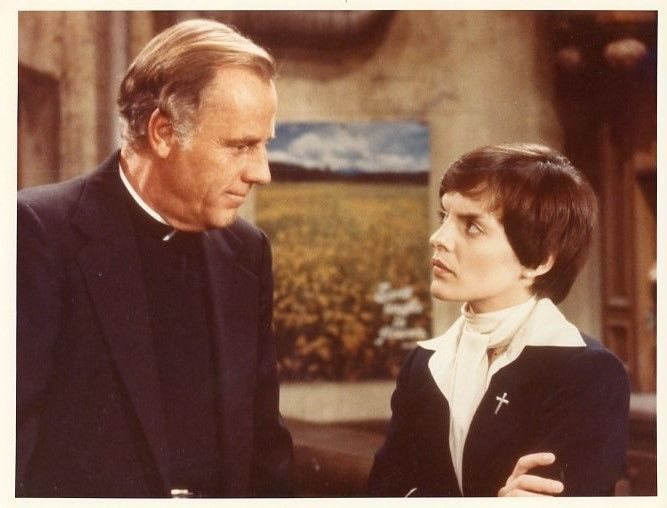
The year 1978 just keeps getting worse for television series. Father Daniel Cleary, played by McLean Stevenson, works in a community center in the heart of Baltimore. Sister Agnes (Priscilla Lopez) works with him. She loves her neighborhood; Father Cleary does not. She is fairly liberal and he is not. It ended almost before it began after seven episodes.

Miss Winslow & Son

Photo: sitcomsonline.com

In this one, an unmarried woman (Darleen Carr) who is an art designer, decides rather than marry a man whom she doesn’t love, she will become a single mother after getting pregnant. Her next-door neighbor Mr. Neistadter (Roscoe Lee Browne) hates kids. Her wealthy and snobby parents are divided about her situation; her father (Elliot Reed) is much more sympathetic than her mother (Sarah Marshall). Before the baby had its first check-up, the show was off the air.

13 Queen’s Boulevard

Photo: sitcomsonline.com

This show was about “a hilarious group of tenants in a garden complex in Queens, New York.” In the first episode, one of the tenants, Felicia Winters (Eileen Brennan) decides to host a class reunion and invites her best friend and spouse, her ex-husband, the class “sexpot,” Fat Hughie, and the class photographer. I don’t know what could possibly go wrong; however, not much went right since it was gone within two months.

Turnabout

Photo: bionicdisco.com

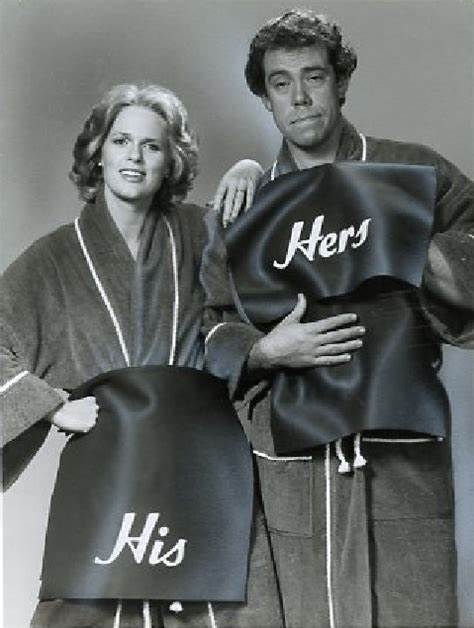
I get Freaky Friday, but in this series the husband and wife switch places. A magic statue allows them to inhabit each other’s bodies.  Sam Alston (John Schuck) is a sportswriter and his wife Penny (Sharon Gless) is a cosmetics executive. The couple tries to live both their own life and their spouse’s life whenever they switch back and forth. They also must focus on keeping the switch a secret. We never know who is who, and all the audience knew is they didn’t like either one of them, and the show was cancelled after a few weeks.

Waverly Wonders

Photo: sitcomsonline.com

NBC decided Joe Namath would be a good person to build a sitcom around. However, he’s not a football player in this show; he’s a former pro basketball player, Joe Casey, who now teaches history at Waverly High in Wisconsin. Linda Harris (Gwynne Gilford) is the principal and Mr. Benton, who they call “Old Prune Face” (Ben Piazza) was the former coach. The only problem is Joe Casey is a bad history teacher and a bad coach. That apparently makes for a bad show because it was cancelled after three episodes aired, although nine were made.

Struck by Lightning

Photo: metershow.com

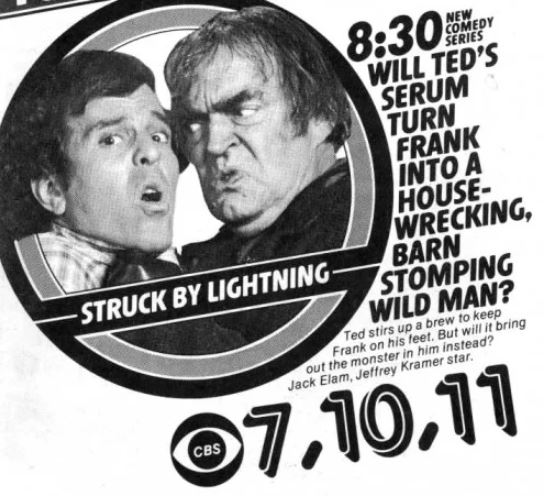
If you think the concept of some of these shows was weird, wait to you hear about this one. Frank (Jack Elam) is the caretaker of an old inn in Massachusetts. A science teacher, Ted Stein (Jeffrey Kramer) inherits the inn and decides to sell it. Then he realizes that Frank was really a 231-year-old Frankenstein monster. Ted just happens to be the great-great-grandson of the original Dr. Frankenstein. So, they decide to run the inn together. Rounding out the cast was Glenn (Bill Erwin) who had been living there forever, Nora (Millie Slavin) who managed the inn before Ted came, Noras son Brian (Jeff Cotler), and real estate agent Walt (Richard Stahl). Apparently, the only thing “great” about the show was Ted’s relationship to Frankenstein because the network canceled it after five episodes.

So, you might be wondering with all these awful shows, what made it on the air more than a couple of months during the late 1970s. In 1977 the only shows that made it to the next season were Three’s Company and Soap. In 1978 Mork and Mindy and Taxi were the “classics” followed by Diff’rent Strokes and WKRP in Cincinnati. Without Robin Williams, Mork and Mindy would probably have been another concept that would have lasted a couple of weeks. In 1979, out of 21 shows that debuted that fall, Facts of Life was the only one that returned for a second season. With the exception of Taxi and WKRP, I would not rate any of these shows true classics, although you could make a good case for Soap. Anyway, the bar was set pretty low for success during the late 1970s.

At least television viewers could go to the movies for a bit of entertainment.  This was the era of Animal House, Annie Hall, Close Encounters of the Third Kind, Grease, Kramer vs Kramer, Rocky, Saturday Night Fever, and Smokey and the Bandit. Things stayed pretty glum on the small screen until 1982 when Cheers, Newhart, and Family Ties saved us.

Where Did They Go? Television Characters Who Simply Vanished

It’s the Case of the Missing Character. While it sounds like a Perry Mason episode, it’s not unusual for television shows to suddenly have a cast member simply disappear without a trace, and no one seems to notice. Let’s look at some of our favorite shows where a character simply vanished.

The Brady Bunch

When it comes to disappearing characters, Oliver is often mentioned on The Brady Bunch. Oliver is a cousin who came to live with the Bradys during the final season while his parents were in South America. While it was weird that Oliver was around for a few episodes and then he was gone, someone could easily assume he went back home. However, I thought a bigger vanishing act was their dog Tiger. Tiger was involved in many plots during the first two seasons. When the show returned for the third season, no Tiger. In real life, the dog who portrayed Tiger was hit by a car; it seems as though we could have gotten an explanation about why the family suddenly lost their beloved pet.

Photo: imdb.com
Bonding with Tiger

The Doris Day Show

I have talked about the plot variations in The Doris Day Show several times in my blogs. The original concept in 1968 was that widow Doris Martin and her two sons left the city to move back to her dad’s ranch. In the second season, Doris drives back and forth from San Francisco to the ranch after getting a job as a secretary at Today’s World magazine. Rose Marie plays Myrna Gibbons her friend at work. In season three, the family moves into an apartment in San Francisco that is rented from the Palluccis who own a restaurant on the ground floor. Billy de Wolfe played their neighbor, a cranky bachelor who doesn’t like noise, especially made by children. However, he has a soft spot and becomes close to the family. In the fourth and fifth seasons, there is no mention of the father, the kids, Myrna, or the Palluccis! Doris is now a single person and is a staff writer for Today’s World.

Photo: sitcomsonline.com
Say goodbye Dad, boys, and Myrna

Family Matters

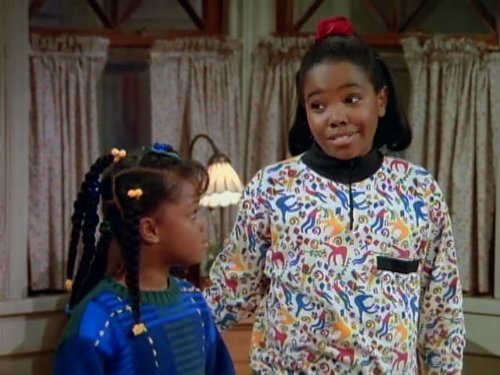
Family Matters featured the Winslows, a working-class family who lived next door to an annoying kid named Steve Urkel, and it aired for nine years. For the first four seasons, the Winslows have three children: two daughters and a son. During season five, Judy disappears. One source said that Judy asked for more money, and the network called her bluff and wrote her off the show. The Winslows talked about their two children; perhaps they had amnesia and just forgot they ever had a third child.

Photo: imdb.com
When there were two Winslow girls

Friends

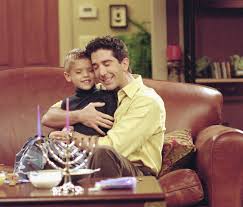
Ben was Ross’ son from his first marriage on Friends. He was very precocious and cute. During the first season, Ross talks about him all the time, and Ben spends time with both Ross and his ex-wife Carol, living close to Ross. By season two Ross rarely saw him, and did not really seem to spend much time worrying about that. Ben was so neglected on the show that when Ross and Rachel had a daughter, Ben never even met his own stepsister. His last appearance was in season 8. Apparently, Ross’s dad forgot about him too. He mentions Emma being his first grandchild. The character of Ben appears in only 18 of the 236 episodes.

Photo: thesun.co.uk
Before Emma

Happy Days

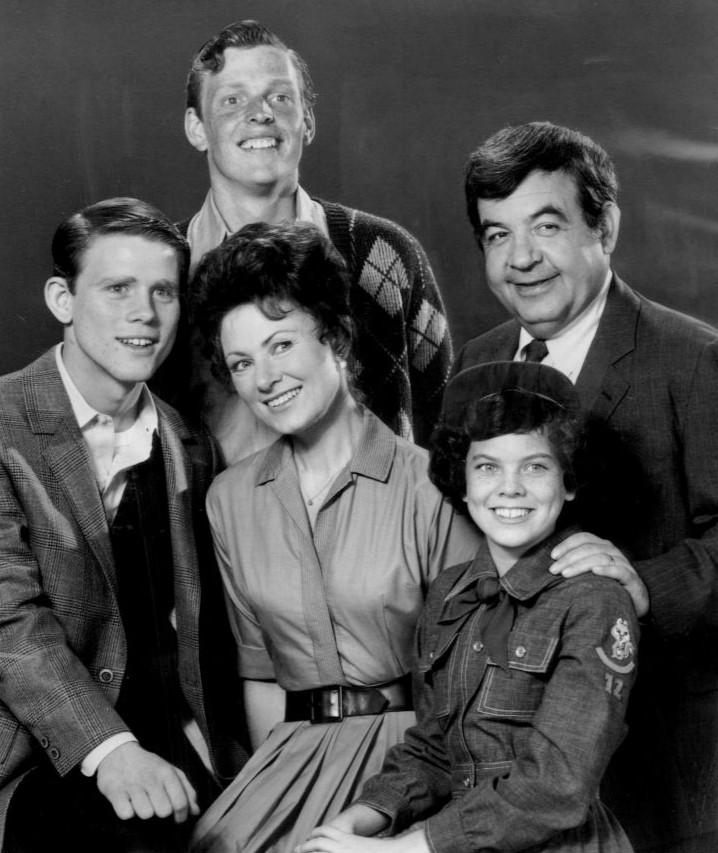
I remember watching “Love and the Happy Days” (a/k/a Love and the Television Set) when it aired on Love American Style in 1972. That episode became the pilot for the television series which began airing in 1974. Several characters were played by different actors in the pilot. Harold Gould played Howard Cunningham and Susan Neher played Joanie. Tom Bosley would take over the role of Howard and Erin Moran would play Joanie in 1974. Marion Ross as Marion, Ron Howard as Richie, and Anson Williams as Richie’s friend Potsie carried over to the new show.

Photo: wikipedia.com
With Chuck unless he photoshopped himself into the picture

What people might not remember is that in the pilot, Joanie and Richie had an older brother Chuck played by Ric Carrott. When the show began airing in 1974, Chuck was still around until he wasn’t. Gavan O’Herlihy played Chuck originally and was replaced by Randolph Roberts. After 11 episodes he just never showed up again, and none of the Cunninghams ever talked about him. At least on My Three Sons when Mike got married and moved away, the other characters mentioned him from time to time. Like the Winslows, whenever Mr. and Mrs. C mentioned their kids, they only had two.

King of Queens

Although this show was about a married couple, Doug and Carrie Heffernan, Carrie’s sister Sara (Lisa Rieffel) lives with them when the show begins. She is an aspiring actress, but by the sixth episode, she was just not around. Did she get a role in an off-Broadway play? Decide to go to Hollywood? We don’t know, but her father later talked about Carrie being an only child. Apparently, the writers couldn’t decide how to develop her character, so they just didn’t.

Photo: wiki-fandom.com
Taking sibling to new heights.

MASH

We fondly recall many spats in the Swamp between Pierce and Winchester. We also remember both Hunnicutt and Trapper, but do you remember Oliver Harmon Jones? Timothy Brown played Spearchucker Jones, a neurosurgeon who lived with Trapper, Hawkeye and Frank Burns during the first season. But then he just disappears with no explanation after six episodes.

In discussing the sudden disappearance of Jones on an online posting, Larry Gelbart replied “There were no black surgeons attached to MASH units in Korea.” However, research has indicated that there were at least two black surgeons in MASH units during the Korean war. Other reasons given for his removal was that budgetary cuts mandated getting rid of characters, and one source mentioned that the network did not want to deal with his nickname which could be taken as a racial slur. Spearchucker Jones was in both the original novel MASH and the movie which the television series was based on.  

Photo: pinterest.com
What did they do to Frank?

Again, this is a show about war; surely, the writers could have found a creative solution for his being gone. Other characters who left the show were involved in crashes or just simply went home.

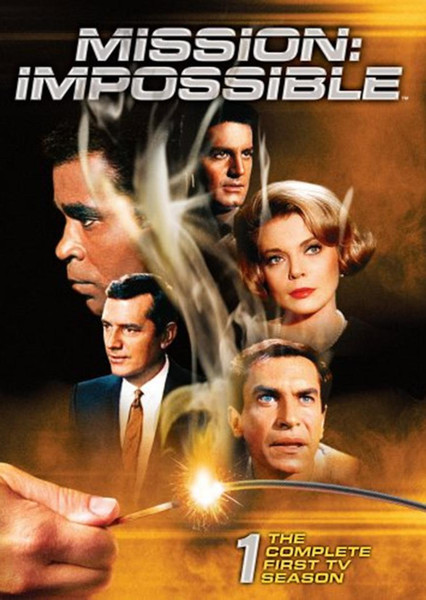
Mission Impossible

During the 1960s Mission Impossible was quite popular with its “your mission should you decide to accept it” plots. Dan Briggs played by Steven Hill led the team. Hill didn’t come back for the second season. He was an orthodox Jew and unable to work during the Jewish Sabbath which was making life difficult for the rest of the crew. Suddenly in season two, Jim Phelps is leading the team, but no one talks about what happened to Dan. Come on – this was a spy show; could we not have learned about a mission gone wrong which explained his disappearance. Actually, Briggs resurfaced on Law and Order thirty years later, so perhaps he was just hiding out for a few decades to protect his cover.

Photo: mycast.io
Life before Peter Graves

Night Court

Night Court had a tough time finding a public defender who could hold their own against Dan Fielding, played by John Larroquette. Ellen Foley played Billie Young for season one and most of season two. When the third season aired, the public defender was suddenly played by Markie Post. Post had been the first choice for the role originally, but she had a conflict with her contract in The Fall Guy. When that show was cancelled and she became available, Foley was simply replaced with no explanation as to why.

Photo: imdb.com
Perhaps Harry thinks if he can’t see Billie, he won’t know she was replaced.

Star Trek

If you watched the earliest Star Trek episodes, you’ll see Janice Rand, Captain Kirk’s secretary. Grace Lee Whitney was hired to play Janice. She was supposed to be a romantic interest for Kirk. She was a popular character during the first season, but in season two she just didn’t exist anymore.

Photo: youtube.com
Janice Rand

There were a couple of reasons for her disappearance. First of all, the network didn’t want Kirk tied down; they wanted him to be free to get involved with a variety of characters the crew met from week to week. Also, the show was too expensive and was forced to make some budget cuts, so she was let go. I understand the reasons why they let her go, but of all shows, couldn’t Star Trek come up with some interesting plot twist to explain her disappearance. Maybe she asked Scotty to beam her up but he waited too long and she’s just floating around somewhere in outer space.

Teachers Only

In its first incarnation (April to June 1982), the setting of this show was Millard Fillmore High School in Los Angeles. Diana Swanson played by Lynn Redgrave is an English teacher. Ben Cooper is the school principal, Michael Dreyfuss and Gwen Edwards are fellow teachers, Mr. Brody is the assistant principal, and Mr. Pafko is the janitor. Most of the scenes occurred in the faculty lunchroom and lounge from which students were excluded. When the show returned in February, the school was now Woodrow Wilson High School in Los Angeles with a new cast. Samantha Keating and Michael Horne are teachers, Spud Le Boone is the gym teacher and Shari is the principal’s secretary. What was even weirder is that Diana is now a guidance counselor, but the principal is still Mr. Cooper played by Norman Fell. I would give the writers a big, red “D” because they forgot to include a transition paragraph in their work.

Photo: wikipedia.com
Don’t put it in the yearbook–it could change before then!

For whatever reasons, sometimes producers think they are perfectly justified in simply eliminating characters without any type of explanation. In never seems like it was a great idea and, in the age of syndication, it makes even less sense. Let me know if you can think of other characters who just disappeared from the airwaves.

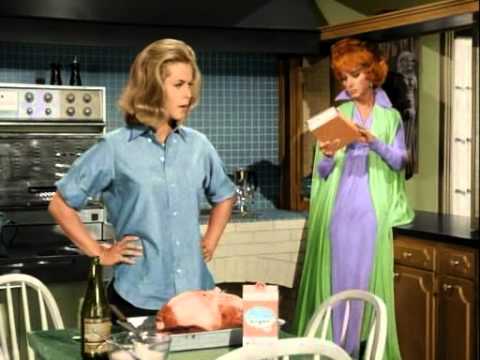
Bewitched vs I Dream of Jeannie: The Great Debate

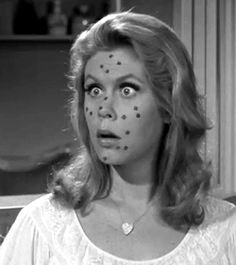
Do you get a bit nervous when you see someone twitch or blink in public? If so, you probably have a bit of MSD, magic stress disorder. It comes from watching Bewitched and I Dream of Jeannie reruns. Today, I am attempting to settle the long-debated Jeannie vs Samantha question. Let me state first that I am not considering the “who is hotter” question. That argument has been going on for five decades and is a personal preference, so I’ll continue to let those people who care and have an opinion debate that issue. Also, both women could provide any wish, so it’s not about what they could do for someone else by blinking or twitching for say a million dollars.

Photo: pinterest.com

My goal was to decide, from a mortal perspective, who would be the better woman to have a relationship with, be it a spouse, best friend, neighbor, or PTA co-chair.

Photo: kiwireport.com

There were a lot of similarities in the two shows. Bewitched began in 1964 and ran till 1972. I Dream of Jeannie debuted in 1965 and was cancelled in 1970, but had its beginnings in the movie, The Brass Bottle, a 1964 comedy about a modern man who accidentally acquires the friendship of a long-out-of-circulation genie. It starred Burl Ives, Tony Randall, and Barbara Eden. In this version, Ives is the genie, and Eden is Randall’s girlfriend, but it gave Sidney Sheldon the idea for the television series.

Both shows had an animated opening and a great theme song.

Also, both shows center around a relationship where the woman has magic powers, and the man has to live with the consequences.

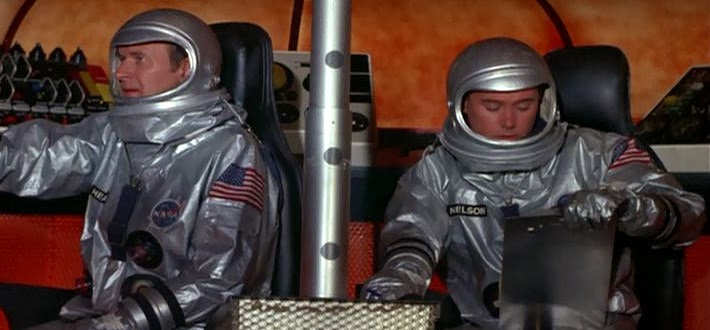
In the case of Bewitched, Darrin falls in love with Samantha and proposes before he learns she is a witch; with I Dream of Jeannie, Major Nelson finds Jeannie’s bottle on a beach after a space landing and then feels like he is “stuck” with her.

That said, let’s look at Life Issues, Friends and Family Issues, and Magic Issues to try to determine who would be the better person to have as part of your life.

Life Issues. In the area of life issues, I think most people would agree that Samantha understands life in the 20th century United States. Jeannie has to do some observing and reading to learn what that type of life means and different concepts confuse her, resulting in some uncomfortable situations for Tony.

Photo: youtube.com

Samantha lives a fairly normal life. She has taught herself to be a “regular” housewife. She cooks, cleans, and shops like her friends. Jeannie spends her days holed up at Anthony’s house, and no one can know she is there. Related to that is the fact that the majority of the time, Samantha wears the same type of clothing as everyone else in her community.

Photo: icollector.com

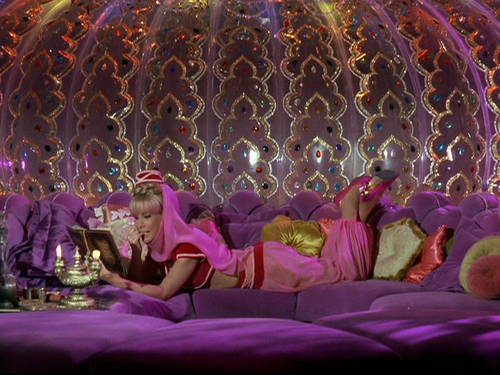
Jeannie does get to wear more fashionable clothing from time to time, but most of the time is spent in her pink harem outfit.

Another factor is how much damage could be done to their spouse’s career of to a friend or family member. Darrin is an advertising executive; really, there is not a lot of damage Sam can do. She can cause a client to leave the firm, but that’s not too significant. With Major Nelson being an astronaut, there are a lot of problems Jeannie can create when she pulls him into and out of outer space or causes NASA staff to question Tony’s reliability as an astronaut.

Photo: sayhellospaceman.blogspot.com

One of the biggest problems for Tony was Jeannie’s quick temper. While Samantha often was unhappy about certain things, Jeannie was a bit more vindictive. Samantha might cause someone who was being treated unfairly to acquire a skill they didn’t really have, usually a positive action. Jeannie was typically mad at Tony, and often the problem involved another woman, so Tony is the one who typically was put into a dangerous or complicated situation. She might send him to another century or put him in a torture chamber.

Photo: fanpop.com

A final life factor, which would have more repercussions in today’s social media age than in the sixties, is that Jeannie did not show up in photos. That meant she would have to blink a clone or add another complication like destroying the film to keep her invisibility a secret.

Photo: zcollector.com

There were a lot of family and friend matters that also come into play on this question. Samantha was not hidden from Darrin’s friends and family members, only her witchcraft was kept secret. That also became true for Jeannie after she and Tony Nelson married in the final season, but in the first four years there were often plots where Jeannie had to be explained or hidden, causing much confusion. Roger Healy did know of Jeannie’s existence which could be a positive or negative. Roger could help Tony keep her hidden or get Jeannie’s help when necessary, but occasionally he also caused problems by trying to get Jeannie to do things for him Anthony might not approve of.

Photo: sitcomsonline.com

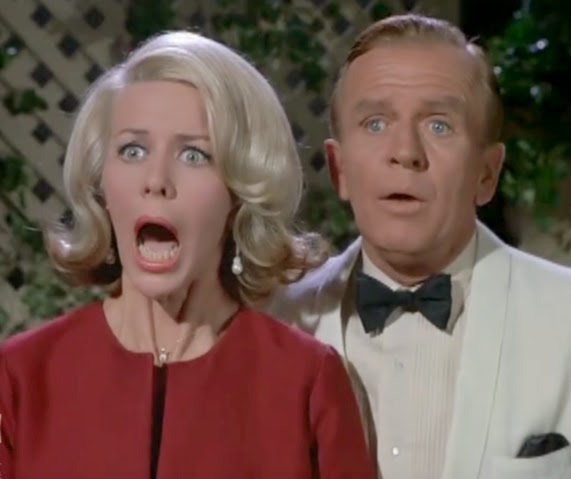
Both women had to deal with another character who was suspicious and always on the lookout to get an “a-ha” moment. In the case of Bewitched, Gladys Kravitz knew there were some strange things happening at the Stephens’ household.

Photo: enterstageright.com

She was constantly trying to peek in the window or capture some evidence when things seemed not quite right. However, her husband Abner thought she was crazy and didn’t give any credence to her hare-brained schemes so she remained a harmless busybody.

Photo: fanpop.com

In Jeannie’s case, Dr. Bellows was a psychiatrist and was also alarmed at things he saw or learned about Major Nelson. His wife Amanda was a co-conspirator, often trying to help him learn the truth behind what was going on.

Family Issues. Both Tony and Darrin had to deal with some wacky and quirky relatives.

Photo: en.wikipedia.org

Tony was forced to obey some more powerful relatives who were fierce and could cause great harm; they often showed up to threaten Tony. Darrin was really only threatened by his mother-in-law Endora.

Photo: pinterest.com

She often put a spell on him that affected his looks and made it hard for him to explain what was happening, but Samantha was always able to convince her to make things right. He was perhaps inconvenienced by some of her other relatives. Although he could be annoyed by them, we found them delightful and enjoyed hanging out with most of them, especially Uncle Arthur and Aunt Clara.

Two relatives that could cause some serious problems were Jeannie and Samantha’s “twins.” Jeannie had a sister that looked just like her except she traded blonde hair for black and a pink harem outfit for a blue one.

Photo: jerusalem.com

However, she could pretend to be Jeannie, and it was almost impossible to tell them apart. Sam’s cousin Serena looked a lot like her and also sported a black hairdo.

Photo: de.fanpop.com

However, Serena had a very different kooky personality and it didn’t take long to figure out who she really was. In Tony’s case, he could have been stuck with the other Jeannie for a long time without realizing it.

One other family concern was whether the children would follow in their mother’s footsteps. On Bewitched we did learn that both Darrin and Samantha’s children were a witch and a warlock which tripled the problems Darrin was living with. Since Jeannie and Tony never had children, we don’t know if they would have magical powers or not.

Photo: pinterest.com

Magic Issues. Both Jeannie and Samantha could come down with some strange illnesses related to their powers.

Photo: pinterest.com

While Jeannie often had to wait out the situation, Samantha had a personal physician available at all times, Dr. Bombay, who could usually cure her quickly.

The last question involves twitching versus blinking. Samantha’s magic was accomplished by sometimes raising her arm, but typically she twitched her nose. Jeannie would fold her arms over each other and lower her head while blinking. The two issues with their methods are that Sam’s magic was more subtle and if she turned just right, no one noticed what she was up to.

Photo: tumblr.com

Not only was Jeannie more obvious but if her arms were broken, she would have been helpless, as she mentions in one episode. It would be less likely for a nose to be broken, but not impossible, at least according to Marcia Brady.

One last magical issue was that Tony could in fact ban Jeannie to her bottle. Since he was her master, she had to obey him and even if she refused, once she was in her bottle, a cap could keep her there. Samantha was an equal partner with Darrin and there were no consequences for her that were any different from any other marriage. She was free to come and go and send him to the couch for the night when they had a disagreement.

Photo: blazenfluff.com

So, after reflecting on these issues, what is the determination? Jeannie definitely caused more problems, but she could be banned to the bottle. Samantha was more helpful, but her family caused Darrin a lot of stress.

Photo: pinterest.com

I guess I would have to say from my perspective at least, Samantha would be the person I would rather be friends with. Jeannie often misinterpreted situations or caused more problems while trying to make things better. She also had a temper that caused her to be blinking before thinking.

Photo: pinterest.com

With Samantha you could have a normal friendship without being subjected to any weird circumstances, and if you did get involved in something outlandish, she had the ability to freeze time till it got back to normal or put a spell on you to forget that you saw or heard anything abnormal. Whether you agree or disagree, I’d love to hear your thoughts.

The Smothers Brothers Comedy Hour: Fifty Years After Getting the Pink Slip

The late 1960s and early 1970s might have contained the most diverse television shows than any other era. In 1968, there were the rural comedies like Green Acres and The Beverly Hillbillies; there were the standard sitcoms, My Three Sons, Get Smart, That Girl, Bewitched; there were the remains of a few westerns including The High Chaparral, The Virginian, and Gunsmoke; there were crime and thrillers such as Hawaii Five-0 and Mission Impossible; there was the crime/western in The Wild, Wild West, there were gameshows on at night including Let’s Make a Deal, The Dating Game, and The Newlywed Game; there were sci-fi shows like Star Trek and The Land of the Giants; family shows like Lassie; and even Lawrence Welk.

In addition, there were a couple of shows that were a bit edgier and introduced more  provocative concepts and themes. The Mod Squad featured three teens who were helping solve crimes in lieu of jail time, and then there was the almost-impossible-to-describe Laugh In.

Photo: neatorama.com

Similar to Laugh In was The Smothers Brothers Comedy Hour which also debuted in 1967 featuring Tom and Dick Smothers. It had more of a variety format to it but it had the same topical and satirical humor.
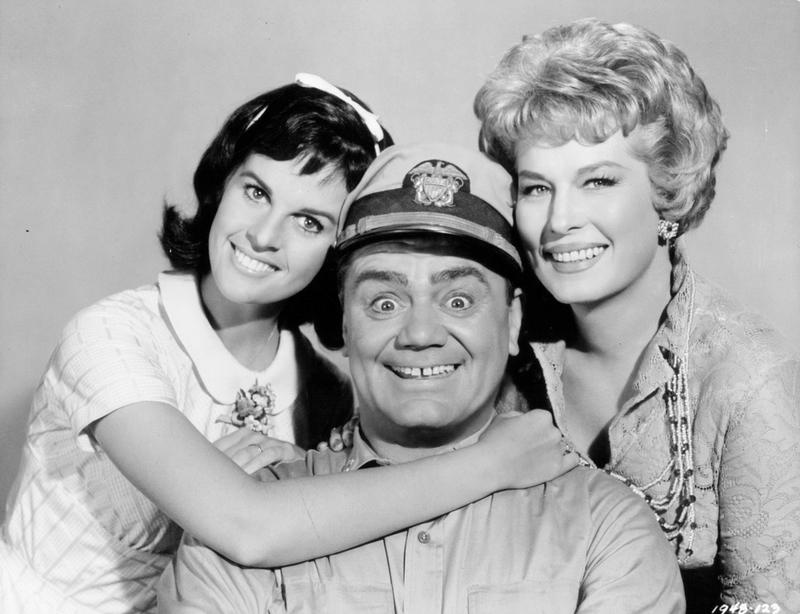
Photo: retrokimmer.com
The Who

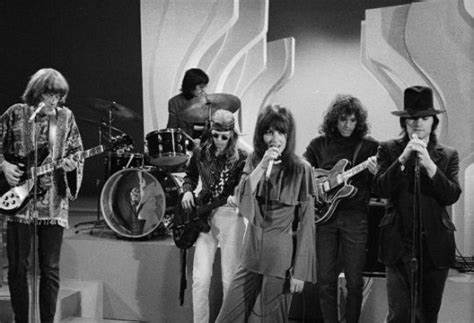
In addition to poking fun at politics, the war, religion, and current issues, you could tune in to the Smothers Brothers for some of the best and sometimes controversial music in the industry. Performers such as Jefferson Airplane, Steppenwolf, Simon and Garfunkel, The Who, Cream, Pete Seeger, and The Doors appeared on the show.

Photo: metro.com
Jefferson Airplane

The show aired Sunday nights against Bonanza on NBC; ABC aired The Sunday Night Movie in its first season and Hee Haw in its second season.

The series had some of the best writers on television: Alan Blye, Hal Goldman, Al Gordon, Steve Martin, Lorenzo Music, Don Novello, Rob Reiner, David Steinberg, and Mason Williams. Reiner and Martin both commented on the show in an interview by Marc Freeman in the Hollywood Reporter 11-25-2017 (“The Smothers Brothers Comedy Hour at 50: The Rise and Fall of a Ground-Breaking Variety Show”).  
Reiner relayed that “you had two cute boy-next-doors wearing red suits, one with the stand-up bass and the other with his guitar. They looked like the sweetest, most innocent kids. You got drawn to them, and then they hit you with the uppercut you didn’t see coming.”

Photo: tvbanter.net

Martin elaborated “When you have the power wrapped up in innocence, it’s more palatable. They were like little boys, but you also had Dickie there to reprimand Tommy when he would make an outrageous statement. It’s like the naughty ventriloquist dummy who can get away with murder as long as the ventriloquist is there to say ‘You can’t say that.’ It’s the perfect setup for getting a message across.”

Photo: pinterest.com
Jack Benny

In addition to the musical acts, hundreds of celebrities appeared on the show between 1967 and 1969, including Jack Benny, Carol Burnett, George Burns, Bette Davis, Jimmy Durante, Barbara Eden, Nanette Fabray, Eva Gabor, Shirley Jones, Don Knotts, Bob Newhart, Tony Randall, Ed Sullivan, Danny Thomas and Jonathan Winters, along with so many others.

Part of the show was the brothers’ ongoing sibling rivalry about whom their parents liked best. They also began to add political satire and ribald humor. Pat Paulsen delivered mock editorials about current topics such as the draft and gun control, and in 1968 he had a mock presidential campaign.

Photo: rollingstone.com
Pat Paulsen for president

Church sermon sketches poked fun at religion. The show lampooned many of the values older Americans valued, often delivering anti-establishment and pro-drug humor. No one was given an exception, and the show lambasted the military, the police, the religious right, and the government.

Battles over content were ongoing with the network. The network pulled Pete Seeger’s performance of his anti-Vietnam War song, “Waist Deep in the Big Muddy.” They nixed Harry Belafonte’s song, “Don’t Stop the Carnival” because it had a video collage behind him of the 1968 Democratic National Convention riots.

Younger viewers were tuning in, and despite the conflicts, the show was picked up for a second season. The network insisted they receive a copy of the show at least ten days in advance for editing. In April of 1969, William Paley canceled the show without notice. Some sources contend it was canceled by CBS president Robert Wood. Some sources cite the issue with unacceptable deadlines and others mention Tom Smothers lobbying the FCC and members of Congress over corporate censorship that brought about the firing. The brothers filed a breach of contract suit against the network and after four years of litigation, a federal court ruled in their favor, awarding them $776,300.

Photo: blogspot.com

Here’s a typical joke from the show that was not as controversial.

Tom: You can tell who’s running the country by how much clothes people wear, see?

Dick: Do you mean that some people can afford more clothes on, and some people have . . . less on? Is that what you mean?

Tom: That’s right.

Dick: I don’t understand.

Tom: See, the ordinary people, you’d say that the ordinary people are the less-ons.

Dick: So, who’s running the country?

Tom: The morons.

The Smothers Brothers elicited humor that was as topical, influential, and critical as anyone had ever heard before on television. Fifty years later, both the network and the brothers realized everyone over-reacted. If the Smothers Brothers had tried to play by the rules a bit, they would not have lost their platform to continue to help change what they saw as a messed-up culture.

Photo: Wikipedia.com

The CBS executives felt the program created too much controversy. In their defense, politicians, especially Lyndon Johnson and Richard Nixon, exerted a lot of pressure on the network. Remember this was a time of three networks and ads are what produced the profits to fund shows. The network received a boatload of hate mail daily about the program and, when viewers begin talking boycotting advertisers, executives sit up a bit straighter and listen.

The Smothers Brothers Show, a less controversial series, debuted in 1975. They had two specials on NBC later and another CBS series in 1988 but never regained the influence they had in the sixties. However, the show did help pave the way for a future that permitted, and later embraced, shows with controversy beginning with All in the Family, continuing with Saturday Night Live, and recently seen on shows such hosted by Jon Stewart and Stephen Colbert. Although the comedy spouted on the show would seem quite tame by today’s standards, the show had an important part in the history of television and the rights of free speech.

Photo: wvxu.com

I have seen some DVDs out there from this show, but they are pricey. Recently I saw season two going for $190. I do see Laugh In on Decades quite often, so perhaps The Smothers Brothers might show up somewhere too, although I’m not sure this show would hold up as well as Laugh In, but the musical performances would be fun to see.

Major Dad is AWOL

As we wind up our “I Salute You!” blog series, we end with a show that may not be remembered as well as many other military shows: Major Dad. Created by Richard Okie, Earl Pomerantz, and John Stephens, the show debuted in September of 1989 and ran until spring of 1993, producing 96 episodes. Stephens was a producer on Gunsmoke and Simon and Simon (which McRaney also starred in), among other shows. Okie also produced Simon and Simon, along with Quantum Leap and more recently, Elementary. Pomerantz had been involved with both The Cosby Show and The Larry Sanders Show. Although the show is not seen often now, it won best sitcom in 1990.

Photo: next-episode.net

In September of 1989, Bonnie Churchill wrote an article for the Christian Science Monitor, “McRaney is Major Dad.” They discussed how the show was developed. As McRaney recounted: “‘The eighth and last season of Simon and Simon we began to get the skeleton of an idea . . . It centers around a rather conservative peacetime officer who falls in love with a newspaper reporter, who is rather liberal. She’s a single parent raising three daughters. They get married, and then the real fun begins. When we were discussing which branch of the service he’d be in, I voted for the Marines.’ McRaney also had a vote as co-executive producer, so he won.”

Photo: nbc.com

The show was on Monday nights for most of its entire run. The first season it went up against MacGyver and for half the season it was on against Alf and My 2 Dads for the second half. Season two with the move to Camp Hollister found the show going against MacGyver on ABC and both Ferris Bueller and Blossom on NBC, landing in the top 30. The show was again competing against MacGyver and Blossom for season three where it was in the top 10. In season four, MacGyver was gone with American Detective taking its place and Blossom still on NBC. But at some time during the last season, the network moved the show to Friday nights which resulted in the ratings plummeting and the show was no longer in the top 30 and was cancelled.

Photo: sitcomsonline.com

Major Dad starred Gerald McRaney and Shanna Reed as a newly married couple, John and Polly MacGillis. After left-leaning journalist Polly interviews conservative John, they fall in love. After a whirl-wind three-week romance, they decided to marry and the perennial bachelor’s life is turned upside down. Even though they are newly married, Polly has three daughters (Nicole Dubuc, Chelsea Hertford, and Marisa Ryan) from a previous marriage, so “Mac” must learn to live with a house of females. The girls are 6, 11, and 13. Mac has a hard-enough time learning to be a husband, let alone a father.

Photo: sharetv.com

The show takes place in Camp Singleton which is similar to the real Camp Pendleton where Mac is the commander of the infantry training school’s acquisition division. Rounding out the cast were Lt Holowachuk (Matt Mulhern), Sgt James (Marlon Archey), and secretary Merilee (Whitney Kershaw). Many of the scripts for the first season had to be rewritten due to the US’s involvement in the Persian Gulf War.

For the second season, the family moves to Camp Hollister, which is similar to Quantico. Mac has been promoted to staff secretary under Brigadier General Marcus Craig (Jon Cypher). Lt Holowachuk comes along as aide-de-camp. Beverly Archer plays Gunnery Sergeant Alva Bricker, known as Gunny, the general’s secretary.

Photo: sitcomsonline.com
Gunny

She adds a lot of humorous elements to the show as a no-nonsense, set-in-her-ways woman who seems to have many romantic interests.

Polly becomes the managing editor for the Bulldog, the camp newspaper. She also writes two columns, “At Ease” and “The Suggestion Box.” Originally for the second season, several of the characters were being sent to Saudia Arabia, but because the Persian Gulf War ended, it was decided to send everyone to Camp Hollister instead.

Photo: nbc.com

Some famous faces that popped up on this show included Ruth Buzzy, Peggy Cass, Brian Keith, Vicki Lawrence, and Jameson Parker.

Photo: themoviedatabase.com
Work Life

Most reviews I read thought the show came into its own after the move to Camp Hollister. It got very positive ratings. Many people appreciated the fact that Marines were shown in a positive light. Before filming the show, McRaney was sent to Camp Pendleton to learn about life as a Marine. He was able to talk with people about their life stories, be outfitted with a uniform, and even got an authentic haircut.

Photo: retrotvmemories.com
Home Life

The show provided a realistic insight into the issues that military families face. In addition, the show moved back and forth between home life and career life, so the characters are more balanced and not one-dimensional. Current issues like base closures were often written into the scripts, and in 1990, an episode commemorated the 215th anniversary of the Marines and Dan Quayle, who was the Vice President, made an appearance on the show.

Photo: Wikipedia.com

As far as I could find, the show is not available on DVD. I also could not find any networks currently carrying the show, although there are online sights where you can watch it. Perhaps with all the networks now carrying syndicated shows, this series will have a second chance to find new generations of fans.

Surprise, Surprise, Surprise! It’s Gomer Pyle USMC.

Continuing my “We Salute You!” blog series, today we look at one of the most-loved television characters, Gomer Pyle.

Photo: pinterest.com
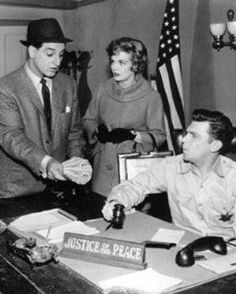
Danny Thomas in Mayberry

In the late 1950s Make Room for Daddy was one of the most popular sitcoms. On one episode in February of 1960, Danny found himself in Mayberry, picked up for going through a stop sign. Although Sheriff Taylor came off a bit of a country bumpkin, viewers enjoyed the episode and the following fall, The Andy Griffith Show (TAGS) aired on CBS. When the series debuted, Andy was portrayed more of a wise sage and the folks of Mayberry were a quirky but lovable bunch. The show was in the top ten every year it was on the air. In fact, it seemed to get better as it went, making #3 in 1966-1967 and #1 in 1967-68. Andy left the show the following year, and it turned into Mayberry RFD which continued for three more seasons. The first two it was also in the top 10 and the third year it slipped a bit into the top 15. Although it was one of the most successful shows on CBS’s schedule, it was eliminated with a lot of other popular shows in the famous rural purging in the early seventies.

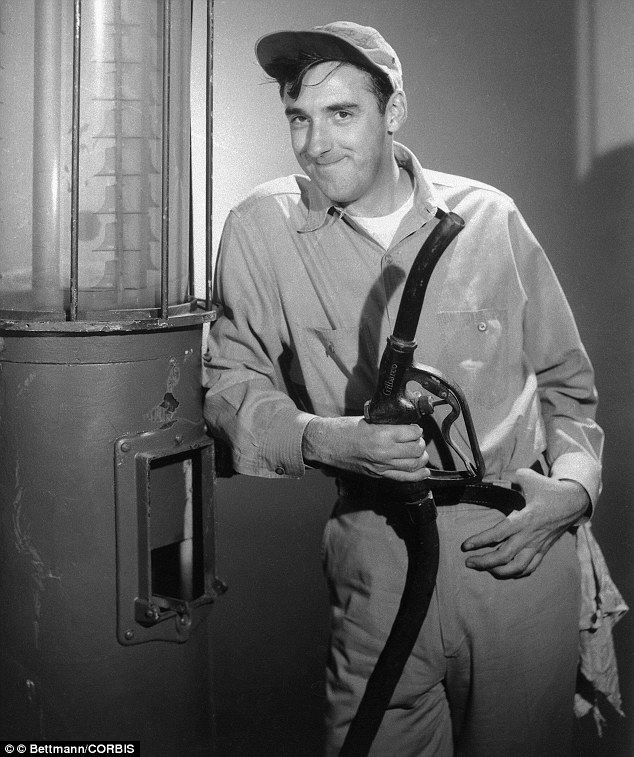
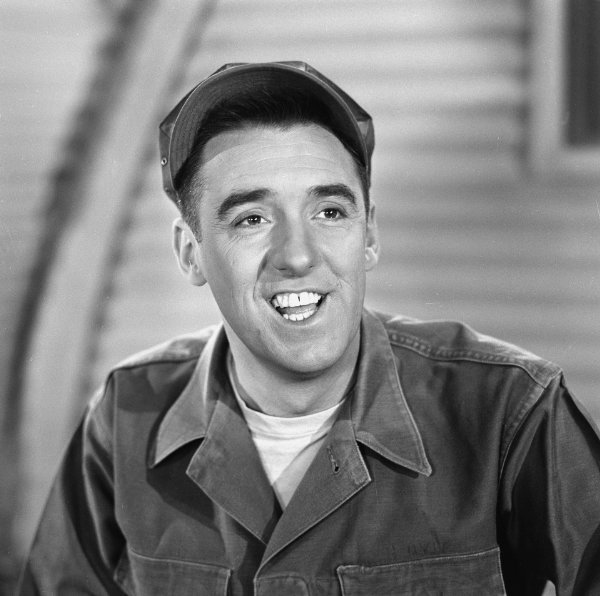
One night, Andy Griffith saw Jim Nabors performing at The Horn in Santa Monica and decided he would be a perfect fit for Mayberry. He offered him a job, and Gomer Pyle began working at Wally’s gas station.

Two writers, Everett Greenbaum and Jim Fritzell were said to have created the character. Greenbaum had dealt with an incompetent gas station attendant. He stopped by a station with motor trouble. The man could not think of any way to fix it except to keep adding gas to the tank, so Greenbaum thought a character based on him should be part of an episode on TAGS. He derived the name from Gomer Cool, a writer and Denver Pyle, the actor. Everett and Greenbaum (along with many TAGS writers) would continue to write for TAGS as well as Pyle episodes.

Gomer was one of the most popular characters on the show. Surprisingly he was only in 23 episodes in the two years he was with the show. Traveling around the country, you would be able to hear people repeating his “gawwwleee,” “surprise, surprise, surprise,”  or “shazzam” which all became part of our language at the time.

Photo: dailymailreporter.com
Gomer at Wally’s Gas Station

Because Gomer Pyle was so popular, Andy, Aaron Ruben, and Sheldon Leonard decided to give him his own show and Gomer Pyle USMC was created. In this show, Gomer who is naïve, kind-hearted and morally upright has to deal with life in the marine corps and his gruff Sergeant Carter (Frank Sutton). Although Carter gets driven to distraction by Pyle and his “do-gooding,” we all realize he has a soft spot for Pyle and his main concern is protecting him.

Photo: pinterest.com
Carter and Pyle

The show was on the air from 1964-69 and had a solid supporting cast. Like TAGS, Gomer Pyle USMC was in the top ten for its entire run.

Photo: mayberrywikia.com
With Ted Bessell

The show was on Friday nights, except for season three when it moved to Wednesdays. I was a bit surprised it stayed in the top ten, because it had some competition at times. Season one it was opposite Jack Benny and Twelve O’Clock High. Season two it went up against Honey West on one network and a variety of music shows on the other. Season three it was at the same time as Peyton Place and season four it was on opposite Star Trek.

Although the show depicted military life on base, war was never discussed. The series began at Camp Wilson in North Carolina and was moved to the fictional Camp Henderson in California. The actual show was filmed at Camp Pendleton and, along with TAGS, at Desilu’s Cahuenga studio and the RKO Forty Acres backlot. Unlike TAGS, Pyle used a single-camera setup because much of the shooting was outside.

Photo: pinterest.com
Don Rickles, Guest Star

The US Marine Corps worked with Leonard, giving the show unlimited access to their equipment because they felt the series was good for their image. The opening scene of the show was that of marching recruits from the Marine Corps Recruit Depot in San Diego. Nabors commented that it was very difficult for him to see that footage because so many of those service men were killed in Vietnam. In real life, Frank Sutton could not pass the Marine Corps physical for WWII but was able to serve in the US Army, taking part in 14 assault landings including Luzon and Bataan.

Photo: wikipedia.com

I had heard of universities bestowing honorary degrees to actors even if they did not attend the school, but I did not realize the military could do something similar. During the show, Gomer’s highest rank was Private First Class. In 2001, the US Marine Corps gave Nabors an honorary promotion to Lance Corporal, and in 2007 he was raised to Corporal.

Obviously, there were a lot of military vehicles used in the filming of the show. Chrysler Corporation provided them. Jeeps were also prominent in the show, but Jeep did not become part of Chrysler until 1987. As an aside, the vehicles for TAGS were provided by Ford.

Photo: sitcomsonline.com
Gomer and his friend Duke Slater

Pyle’s loyalty and good-natured attitude made him a favorite of both his platoon members and many of the women whom he came in contact with. One of Pyle’s friends was Duke Slater played by Ronnie Schell. Schell was written off after the third season when he left to star in Good Morning World. When that sitcom did not get renewed, he returned to Pyle. Some of the other platoon members included Roy Stuart as Corporal Boyle, Forrest Compton as Colonel Edward Gray, Ted Bessell as Frankie, and William Christopher as Lester.

Gomer gets to meet a lot of people when he goes to town. He especially loves movies and one of his favorite all-time pictures was Godzilla.

Photo: pinterest.com
Sergeant Carter and his girlfriend Bunny

As mentioned, Sergeant Carter eventually becomes a father figure to Gomer. Carter’s girlfriend Bunny (Barbara Stuart) also tried to help Gomer (I could not find anything to indicate that Roy and Barbara Stuart are related). Gomer often causes trouble between Carter and Bunny by trying to “help” Carter. In season three, Gomer also got a girlfriend in Lou-Ann Poovie (Elizabeth MacRae). She is a singer in a local nightclub, but eventually Gomer talks her into returning to Turtle Creek, NC to marry her old beau Monroe. She leaves but returns, informing Gomer she wants him for her boyfriend, and she gets a new job as a clerk at a record store.

Photo: sitcomsonline.com
Gomer and Lou-Ann

Several TAGS alumni made appearances on the show. Allan Melvin was part of the cast as Staff Sergeant Hacker for four years, Carter’s rival on the show. Denver Pyle who was Briscoe Darling on TAGS showed up on Gomer Pyle as a farmer. Andy, Aunt Bee, Goober and Opie all were seen at the base at one time or another, including when Opie ran away from home.

With a show on the air so long, many well-known guest stars showed up at Camp Henderson as well, including Carol Burnett, Ted Knight, Rob Reiner, Don Rickles, and Jerry Van Dyke.

Photo: directexpose.com

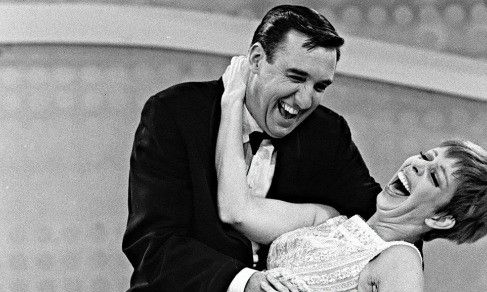
After the fifth season, Nabors expressed an interest to do a variety show, so Gomer Pyle was not renewed. He brought Ronnie Schell and Frank Sutton along for his new show which was on the air for two seasons. Carol Burnett called Nabors her good luck charm. He was one of her best friends and he was always on her season opener each year.

Photo: pinterest.com
Best Friends

In an interview with Jim for American Profile, writer Paulette Cohn (Jim Nabors Lives Happily in Hawaii, January 13, 2008) quoted Carol Burnett’s perspective of Nabors vs Pyle: “ ‘The one thing Jim has in common with Gomer is his kindness,’ says actress and comedienne Carol Burnett, Nabors’ long-time friend, who named him godfather to her daughter Jody. ‘He loves people and is very gregarious. But he is also very smart. Not that Gomer wasn’t, but Jim isn’t naïve. He keeps his eye on things.’ ”

Considering how popular Gomer Pyle USMC has been in reruns, I was surprised to learn it wasn’t until 2006 that CBS Home Entertainment released the show on DVD. By 2008, all the seasons were available.

Photo: blogspot.com

Let’s end with a few quotes that captures the essence of the show’s characters.

Gomer: I’m gonna be a fighting fool, you’ll see.

Sergeant Carter: Well, you’re halfway there.

************************************************************************

Gomer: One of my favorite little sayings is, ‘To avoid criticism, say nothing, do nothing, be nothing.’

************************************************************************

Gomer: A word of kindness is seldom spoken in vain, while witty sayings are as easily lost as the pearls slipping from a broken string.

***********************************************************************

Carter: All I can say is, if the idea of desertion ever crossed your mind, you’ll never find a better time to look into it.

************************************************************************

Carter: I don’t get it Pyle, how come you can knock that Phillips flat, yet you can’t handle that little Lombardi guy?

Gomer: Well sir, you see the big feller needed a lesson, the little feller didn’t.

Photo: abcnews.com

Although Gomer Pyle USMC might not be everyone’s cup of tea, it was a well-done and popular show. I think its success, like TAGS and many of the other shows considered classics, comes from the fact that it’s a character-driven show. We start to consider the characters our friends and enjoy spending time with them. The show can currently be seen on MeTV nightly at 9 pm EST.

McHale’s Navy: Set Adrift in a Sea of Comedy

Ahoy matey. We are currently in the middle of the “We Salute You!” blog series. Today we go behind the scenes of one of the most popular military sitcoms: McHale’s Navy.

Photo: blogspot.com

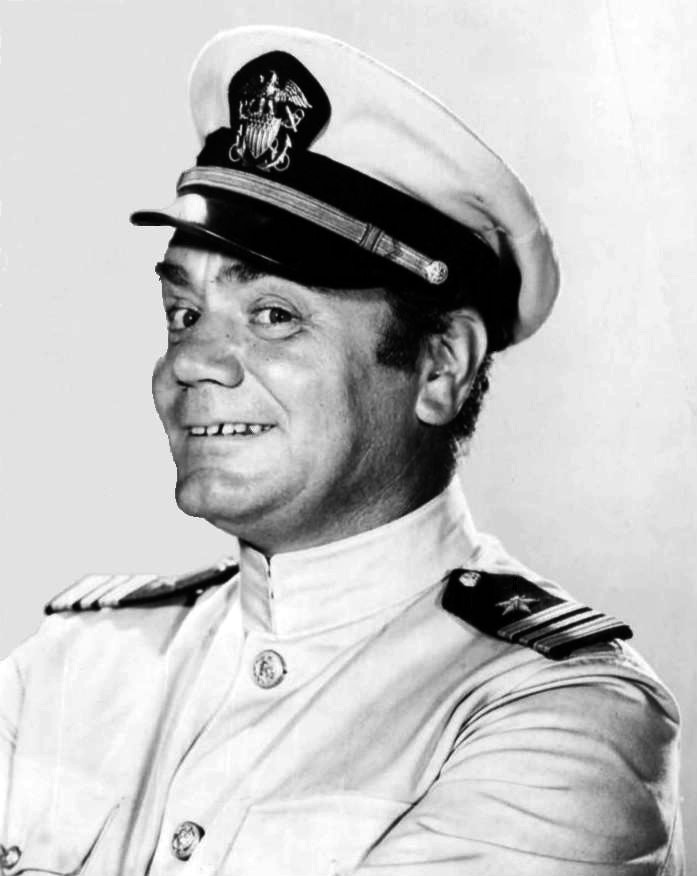
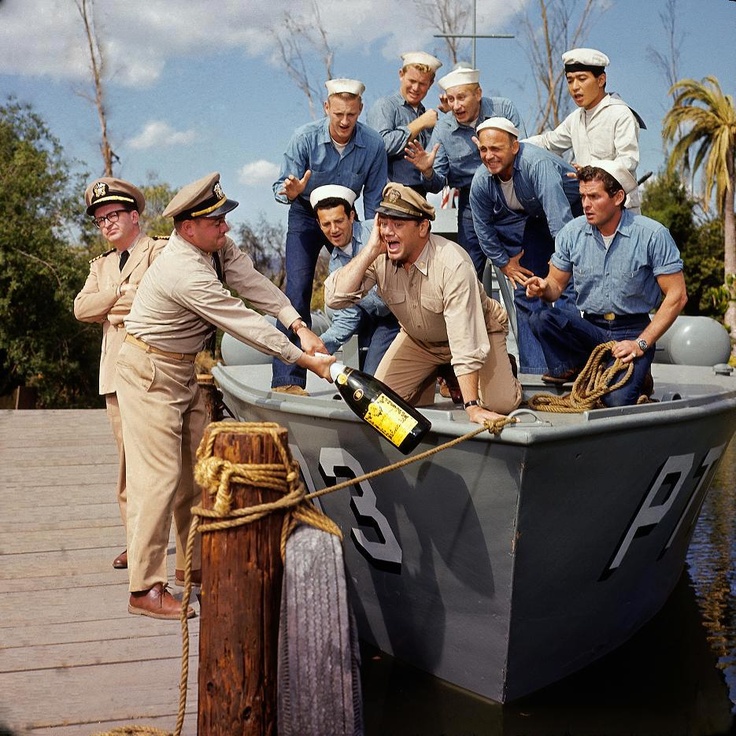
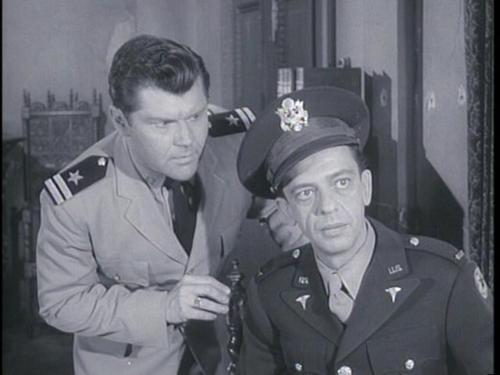
The series is centered around the adventures of a US Navy crew aboard the PT boat PT-73 during WWII. One of the best crews in the Navy, they often try to outwit Captain Binghamton (Joe Flynn) and his aide Lt. Carpenter (Bob Hastings). Stationed in the South Pacific, the crew often is involved in antics to make life more enjoyable during wartime. Quinton McHale (Ernest Borgnine) is fun-loving but sometimes has to reign his crew in when they go too far.

Debuting on ABC in 1962, the show sailed on for four seasons, producing 138 episodes. In April of 1962, a drama on Alcoa Premiere a/k/a Fred Astaire’s Premier Theatre aired that was titled Seven Against the Sea with Borgnine as the lead. It became the pilot for what would become McHale’s Navy.

Photo: thehollywoodreporter.com

Edward Montagne who was the producer of the new show had worked on The Phil Silvers Show. Montagne decided to turn the dramatic Seven Against the Sea into a “Bilko in the Navy” type of show. He recruited some of the actors and writers who had appeared on the prior series.

The basic plot of the show is that while these are respected, hard-working men when necessary, they have a lot of wacky schemes involving women, making money, and having fun. Captain Binghamton’s goal is to get rid of the entire bunch. The crew is said to live on an island across the bay from Taratupa, the fictional base. The geographic distance gives them extra time and more freedom to get into and out of their complicated situations.

Similar to The Phil Silvers Show, this sitcom also had a very large cast compared to most other shows.

Photo: wikiwand.com

McHale is a strong, competent leader and goes to great pains to protect his crew. He likes to wear Hawaiian type clothing when off duty. Sometimes the crew uses the PT boat to go deep-sea fishing or water skiing. When the crew has laundry, they put the clothes into a barrel with holes, add soap and drag it behind the boat. McHale speaks Japanese, Italian, and some of the local island dialects.

Photo: pauldavisoncrime.com

Ensign Charles Parker (Tim Conway) is McHale’s goofy second-in command. McHale calls him “Chuck.” Conway captured the lovable, naïve, bungler perfectly. He often refers to his home town Chagrin Falls, Ohio which was Conway’s hometown. Parker says he worked for the Chagrin Falls Gazette. Parker is too dizzy to get much respect, and his resume is full of errors and ineptitude. For example, it’s mentioned that he crashed a destroyer escort into a dock, and he called a naval airstrike on a gasoline dump. He has all the naval regulations memorized but can’t remember his serial number. From time to time, Parker is asked by the crew to impersonate President Roosevelt when calling Binghamton.

In the first episode, Parker is assigned to the crew. We learn that they have gone through several men already who could not put up with their insubordinate behavior and one of them even had a nervous breakdown. The men like Parker and treat him better than their previous ensigns.

Conway later stated that he and Ernest Borgnine had a wonderful working relationship both on and off the set. In the late 1990s, they would voice Mermaid Man and Barnacle Boy on  SpongeBob SquarePants.

Photo: pinterest.com

Captain Wallace Binghamton, who the crew calls “Old Leadbottom” because he once took a bullet in the butt, previously managed a yacht club, although at times it’s mentioned he was the editor of a yachting magazine. He is gruff and grumpy and dreams about being promoted. He spends much of his time trying to catch McHale and the boys in one of their schemes. He is blind without his glasses, so sometimes the crew knocks them off to prevent him from seeing something incriminating. One of his most-uttered lines is “Why me? Why is it always me?”

Photo: pinterest.com

A typical interaction between Binghamton and McHale follows:

Binghamton: Commander, how would you and your men like two weeks with nothing to do but play gin rummy, go surfing, have luaus with steel drum bands, dancing girls, hmm?

McHale: Two whole weeks? Woo hoo, oh that’d be a wonderful change sir. Yes sir.

Binghamton: Knock it off McHale. That’s what you do every week.

Photo: thewrap.com

Binghamton’s aide is Lt. Elroy Carpenter who is also inept. He talks too much and is clumsy. He often gets the brunt of Binghamton’s tirades.

Photo: pinterest.com

McHale’s crew is composed of Quartermaster George Christopher (Gary Vinson), Radioman Willy Moss (John Wright), Torpedoman’s Mate Lester Gruber (Carl Ballantine), Motor Machinist Mate Harrison Bell (Billy Sands), Gunner’s Mate Virgil Edwards (Edson Stroll), and Seaman Joseph Haines (Gavin MacLeod). Houseboy Fuji (Yoshido Yoda) was often found cavorting with the crew. He is boyish, fun loving, and loyal to McHale. Fuji was a deserter from the Japanese Navy, but the captain knows nothing about his existence. In exchange for not living in a POW section, he acts as houseboy for the crew.

Photo: groovyhistory.com

Although the crew is always chasing women and trying to throw parties that they can invite them to, McHale has several romantic relationships during the show. Nurse Molly Turner (Jane Dulo) from New Jersey is always trying to trap him in a serious relationship. Two other love interests are Kate O’Hara (Joyce Jameson) and Maggie Monohan (Jean Willes).

Photo: tumblr.com
The great Don Knotts

A lot of guest stars dropped anchor on the show including Jerry Colonna, Bernard Fox, Pat Harrington Jr., Arte Johnson, Ted Knight, George Kennedy, Don Knotts, Bernie Kopell, Sue Ane Langdon, Marlo Thomas, and Raquel Welch.

Photo: lingerandlook.com

The PT-73 is almost like a character on the show. It was a 72-foot type II Vosper motor torpedo boat. The war ended before the boat (PT-694) could be sent to Russia, and it was then purchased by Howard Hughes. He loaned or sold it to Universal Pictures.

Photo: Wikipedia.com

The set of the Pacific Ocean naval base was built on the back lot of Universal Studios.  After the show went off the air, it became an attraction on the studio tour.

In one episode, McHale replaces Binghamton temporarily during an inspection and learns what a hard job he actually has. While that gives him some respect for the captain, they still don’t see eye to eye. Sometimes Binghamton tries to get them legitimately transferred for a scheme and other times he is not above inventing a story such as the time he tried to get them sent away by telling a psychiatrist that they are suffering from combat fatigue.

Photo: pinterest.com

For the final season, the crew, including Fuji, is transferred to Italy to the coastal town of Voltafiore. Many plot twists come about from the crooked Mayor Lugatto and the quirky residents. The move probably came about to be able to add some additional plot lines but it was perhaps too far-fetched for viewers, and the show was cancelled.

The show had a consistent schedule for most of its run. The first season it was on Thursday night up against The Twilight Zone and Hazel. The second and remaining seasons it was on Tuesday nights against Red Skelton on CBS and a variety of shows on NBC, including the forgettable Redigo and You Don’t Say, as well as The Man from UNCLE, Hullabaloo, and Dr. Kildare.

Photo: moviepostershop.com

During the run of the show, two big-screen movies were made based on the series: McHale’s Navy in 1964 and McHale’s Navy Joins the Air Force in 1965. Borgnine was unavailable for the second film due to a schedule conflict. The first film brought in a respectable $2,250,000 and the second netted $1,500,000.

Photo: ebay.com

McHale’s Navy was a popular show both in the 1960s and in syndication. It may have been one of the first shows to produce related merchandise. Trading cards, comic books, a board game, 3-ring binders, and a model of the PT-73 were some of the items available to its fans. The show was well-written and the characters were fun and quirky. Unfortunately, a show like this can only sustain so many similar plots before it begins to feel like you’re watching repeats.

Photo: flickr.com
Revell :: McHale’s Navy :: PT 73 Boat

The show is currently on Antenna TV Saturdays from 7-8 pm eastern time. It is also available on DVD. Take some time and enjoy getting to know McHale and his PT-73 crew.

Operation Petticoat: The Submarine Was Pink, But the Cast Was Feeling Blue

As we continue our series, “We Salute You,” today we take a closer look at a show that might not be remembered by a lot of people, but it had a memorable cast.

Photo: tvtropes.com
The original

In 1959, Operation Petticoat hit the big screen. Directed by Blake Edwards, it starred Cary Grant and Tony Curtis. This WWII comedy centered around a US submarine, the USS Sea Tiger, that reluctantly must bring a group of female nurses aboard. The film also included Marion Ross, Dick Sargent, and Gavin MacLeod, who would go on to become part of McHale’s Navy and captain The Love Boat later in his career.

Photo: imdb.com
The original cast

Jump ahead a couple of decades and ABC airs a sitcom, Operation Petticoat, based on the movie. It would be on the air till 1979, producing 33 episodes. In the television series, John Astin takes on the Cary Grant role and Richard Gilliland has Curtis’s original role. In the new series, Jamie Lee Curtis, Tony’s daughter, played the role of Lieutenant Duran who was played by Dina Merrill in the movie.

Photo: fotogramas.com
The original group of women

For only 33 episodes, this show went through a lot of changes. It was supposed to be a one-hour series. A two-hour pilot was filmed, and several scripts were written. After viewing them, ABC decided it would be better as a thirty-minute show. The written scripts were revised to cover two shows each.

The show had a cast of 18 members, including five nurses. In addition to the nurses being aboard, the other continuing plot line was that the submarine was barely functional. It had been sunk earlier in the war and only somewhat restored, so it was a constant struggle to keep it working. Golf clubs operated the valves, a jeep wheel was used for a part, a girdle helped pump in the engine room, and what was most embarrassing to the men was its color of bubble gum pink, the only paint available when it needed to be painted. However, all this changed after the first 23 episodes.

Photo: simkl.com

When the show came back in season two, 15 of the 18 actors were gone, including the three main characters. The writers and producers from season one were also set adrift. For the second season, the entire plot line changed, making it a totally different show. Now the submarine was a lifeguard vessel helping pilots and sailors, and the nurses were part of the Navy and assigned to the ship.

Photo: cscottrollins.blogspot.com
Season 2 Nurses

During the 1977-78 season it was on Saturday nights. It was up against The Bionic Woman on NBC while CBS aired three different shows during the season in that time slot, We’ve Got Each Other, The Tony Randall Show, and The Ted Knight Show. For season two, it was moved to Friday nights where it went up against Different Strokes on NBC and The Incredible Hulk on CBS.

This show aired in an era where the networks struggled a lot with new shows. It’s amazing how many shows in the mid to late seventies lasted two to five episodes. There just seemed to be constant chaos, so this show lasted much longer than most of its competition. However, in this time of television turmoil, the fact that ABC would take a show that must have been somewhat successful and turn it upside down, replacing almost the entire cast, the writers and the producers amazes me.

You would not think a show set on a submarine would have many other actors in it, but during the year or so it was on, more than 80 additional actors appeared on the show, including JoAnn Pflug and Adam West.

While John Astin had a long television career, Jamie Lee Curtis undoubtedly has had the most successful career from this cast. In a recent interview in The New Yorker, “Jamie Lee Curtis Has Never Worked Hard a Day in Her Life” by Rachel Syme (December 1, 2019), Jamie discussed her time on Operation Petticoat. She said: “The show did not do well. And I was fired, along with eleven of the thirteen actors. (sic) I was devastated. I thought my life was over. I thought my career was over. I thought I would lose my contract. And two weeks later the audition for Halloween came up . . . It’s one of those good stories for people who’ve just been let go from their job.”

Photo: sitcomsonline.com

I think it’s important to look at some of those shows in television history that haven’t become classics; in this case, however, I think I’d skip the television show and buy the DVD from the original movie if you want to learn a bit more about life aboard the Sea Tiger.

Photo: tvguide.co.uk
Operation Petticoat – 1959