Florida Friebus: What a Character

📷danahallschool.com

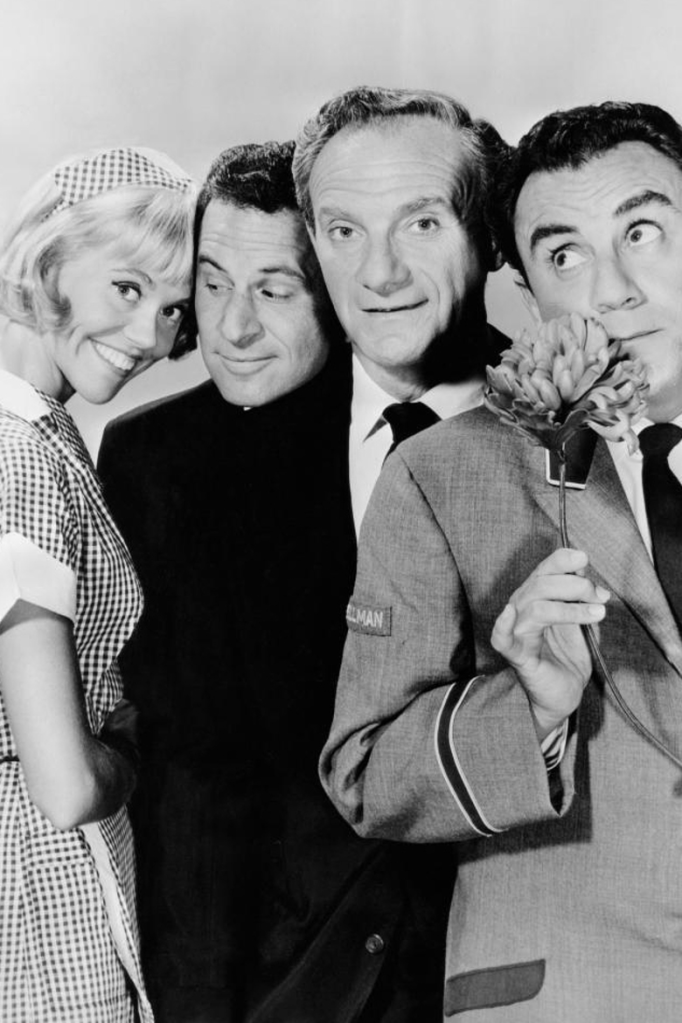
As we continue our What a Character blog series, today we get to talk about the woman behind one of my favorite characters, Lillian Bakerman from The Bob Newhart Show. That woman is Florida Friebus.

Friebus was born in Massachusetts in 1909. She was named for her mother’s favorite aunt, not the southern state. Weirdly, her paternal grandmother was also named Florida. Her family was involved in the theater. Her father Theodore was a leading stage actor with Boston’s Castle Square Players and a silent film star. Her mom’s mother, Georgine Flagg, was part of the Augustin Daly stock company in Manhattan.

When she was only eight years old, Florida’s father passed away. Her mother had studied at the Dana Hall Schools and applied for a position of housemother there. Florida was able to study at Tenacre during this time. She participated in the first Christmas pageant in 1921. Florida not only learned a lot about acting, but she also was presented with classes in political history, music, art, languages, and literature.

📷facebook.com with Richard Waring

Friebus moved to New York to study at the Theater Guild School. She began her acting career in 1929 in when she appeared with the Civic Repertory Theater in “The Cradle Song.” In 1932, she worked on an adaptation of “Alice in Wonderland” with Eva Le Gallienne, and she took on the role of the Cheshire Cat.

In 1934, Friebus married Richard Waring. They would divorce in 1952, and she never remarried.

Friebus was elected to the Council of the Actors’ Equity Association in 1949, and she spent 16 years on the board.

Florida read stories to children on her KNXT show, Look and Listen, in Los Angeles.

📷imdb.com

Her first television role was in 1948 on The Ford Theater Hour. Her television drama appearances continued into the 1950s and she also appeared on several sitcoms, including The Goldbergs, Father Knows Best, Bachelor Father, and The Donna Reed Show. In 1959 she accepted a role that made her a household name: Winnie Gillis on The Many Loves of Dobie Gillis. For four seasons she tried to defend Dobie and his crazy dilemmas when his father became exasperated with him.

The show was based on a 1951 book, The Many Loves of Dobie Gillis by Max Shulman about the romantic adventures of a student at the University of Minnesota. Shulman wrote for the series. He would also write The Tender Trap which became a movie in 1955 and House Calls which became a 1978 movie; Shulman became head writer for the television series based on House Calls.

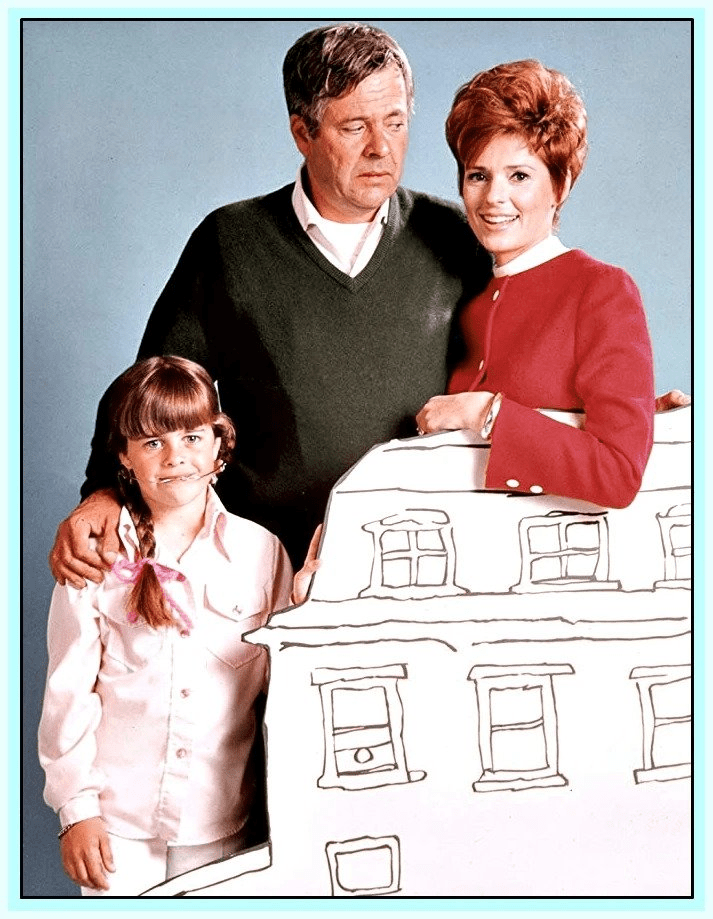
The sixties and seventies found Florida in a variety of both dramas and sitcoms. A few of these series included Ben Casey, Peyton Place, The Doris Day Show, The Mary Tyler Moore Show, The Partridge Family, Gunsmoke, Room 222, and Barnaby Jones.

📷sitcomsonline.com

In 1972 she accepted the role of Lillian Bakerman on The Bob Newhart Show. During the show’s run, she made 19 appearances trying to encourage the other patients in her therapy group. She is often seen knitting while the group talks. One of her fears is flying, and her catchphrase is “Isn’t that nice.”

Her last appearance was in 1982 on The New Odd Couple as, who else but Mrs. Bakerman.

In 1988, Friebus passed away from cancer at 78 years old.

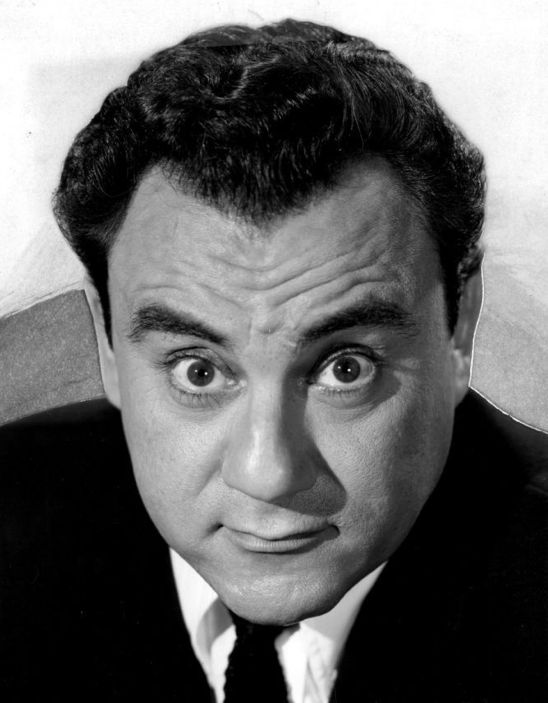
Noam Pitlik: What a Character

📷imdb.com

This month we are right in the middle of one of my favorite blog series, What a Character. This week we are delving into the career of Noam Pitlik; in addition to his acting, he won an Emmy for his work as a director. Which show? Let’s find out.

Pitlik was born in Philadelphia in 1932. After graduating from high school, he enrolled at Gratz College and later was a theater major at Temple University in 1954. Pitlik had a two-year stunt in the Army and earned a master’s degree in theater at New York University.

He began his acting career on WCAU in a western. In 1951, he was hired for the set design and construction crew for the Philadelphia Experimental Theater. He carried a bit of his hometown with him when he was part of the Summer Theater Guild in Indiana, Pennsylvania in the “Philadelphia Story.” He was hired for his Broadway debut in an off-Broadway production of The Threepenny Opera.”

📷imdb.com

In 1961 he moved to Los Angeles and received his first television roles, appearing on Cain’s Hundred and Dr. Kildare. Cain’s Hundred was not a show I remembered hearing much about. It was about a former underworld lawyer who works with the federal government to bring the top 100 criminals to justice. The show lasted one season. Pitlik had a variety of offers for shows throughout the sixties. Most of them were dramas and westerns, but we also see him on My Favorite Martian, The Munsters, Gidget, The Flying Nun, The Monkees, The Andy Griffith Show, The Doris Day Show, Get Smart, That Girl, and I Dream of Jeannie.

During the sixties, he married for the first time. His marriage with Jesse Blostein in 1967 would only last three years.

Pitlik also appeared in fourteen films and eight made-for-tv movies. The most memorable films are The Graduate, Fitzwilly, and The Fortune Cookie.

📷famousfix.com

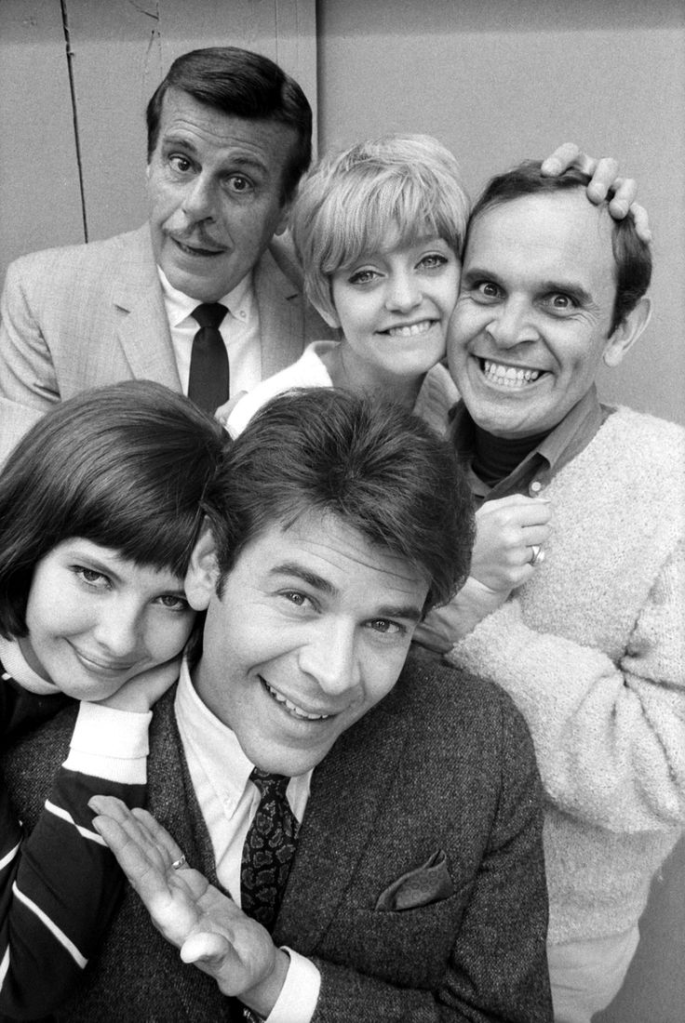
The seventies were his most prolific decade of acting. He appeared in 26 different series, often in 2-5 different episodes. You’ll see Pitlik in reruns in a variety of genres including Hogan’s Heroes, Room 222, Bewitched, Love American Style, All in the Family, The FBI, Cannon, Mannix, The Partridge Family, The Bob Newhart Show, The Odd Couple, and Barney Miller. His last acting appearance was in Becker in 1998.

The seventies were also when he tried the role of husband again, marrying Linda Hirsch in 1974; this marriage also lasted three years.

He began directing in the seventies and obtained 39 directing credits throughout the next two decades.

📷imdb.com

In an interview with Temple University for the Alumni Review in 1979, Pitlik said that the switch in his career was not “a case of my needing to change functions for economic reasons.  I used to figure out what I made a day as an actor, and it was obscene. I changed for emotional reasons. I had become very frustrated by the kinds of things I was doing in acting, and I was looking for a change in my life that would be more challenging. I enjoyed acting, but I never seemed to get enough to do.” His first episode as director was on The New Dick Van Dyke Show. He directed 12 episodes for The Practice and 11 for Taxi.

However, Barney Miller was where he perfected his skill as director for 102 of its 171 episodes. In 1979, he won an Emmy as Director for the show. He beat out Paul Bogart for All in the Family, Alan Alda and Charles Dubin for M*A*S*H, and Jay Sandrich for Soap. He also received a Peabody Award and a Directors Guild of America Award for his work on Barney Miller. He lost the Emmy in 1981 to James Burrows for Taxi. His co-nominees included Jerry Paris for Happy Days, Linda Day for Archie Bunker’s Place, Burt Metcalfe and Alan Alda for M*A*S*H, and Rod Daniel for WKRP in Cincinnati.

📷tumblr.com Cast of Barney Miller

In the Temple interview, Pitlik said that his “main responsibility is to create an atmosphere in which each of the people involved in the production can conform to their best work. Although a director oversees all aspects of the production, there are many people involved, and he’s dependent on all of them. There’s no more collaborative business than the television business. Each person contributes to the success or failure of a show whether he or she is a writer, actor, cameraman, or whatever.”

In 1995 he began directing episodes of The Home Court and did so for 14 of the 20 episodes. I must admit I do not remember this show at all. The synopsis was Sydney Solomon was a family court judge who had to deal with the toughest prosecuting attorneys and repeat offenders. However, her biggest challenges came when dealing with her kids, four boys aged 11-19.

📷pinterest.com

Pitlik had better luck with his third marriage to Susan Whittaker which lasted from 1986 until his death in 1999. Whittaker was a television producer. Noam passed away from lung cancer at age 66.

Like Jerry Paris, Pitlik had a very successful acting career before finding his passion behind the camera. If you are responsible for directing a series, Barney Miller is a great accomplishment. It was fun to learn more about his career both in front of and behind the camera.

The Marilyn Monroe of Television

📷elcinema.com

We are winding down our What a Character blog, about character actors in classic television shows. Today we are learning about Joyce Renee Brown, better known as Joi Lansing.

Lansing was born in Utah in 1929. Her father was a shoe salesman and orchestra musician, and her mom was a housewife.

Her parents divorced when she was young, and her stepfather Vernon Loveland adopted her. In 1940, the family moved to Los Angeles. Joi began modeling at 14 and was signed to an MGM contract, attending school at the studio.

Lansing began her film career in 1947, appearing in When a Girl’s Beautiful and Linda Be Good. She had uncredited roles in Easter Parade and Singing in the Rain, among others. Almost half of her 106 acting credits were for shorts and big-screen films.

📷rottentomatoes.com

Her first three marriages lasted less than some of her films. At 17 she was married for less than a year. In 1950 her marriage to Jerome Safron was annulled after four months, and her marriage to Lance Fuller in 1951 ended in divorce in 1953.

Her first television role came in 1952 in Racket Squad. This was a show I had not run across before, but it was on the air for three years. It had a Dragnet-like feel to it with the main character Captain Braddock explaining “What you are about to see is a real-life story, taken from the files of the police racket and bunco squads, business protective associations and similar sources around the country. It is intended to expose the confidence game – the carefully worked-out frauds by which confidence men take more money each year from the American public than all the bank robbers and thugs with their violence.

📷tumblr.com

The early fifties kept her busy in drama series. In the the mid-to-late fifties, she appeared on I Love Lucy, The Gale Storm Show, December Bride, Perry Mason, Maverick, The Jack Benny Show, and Richard Diamond, Private Eye.

From 1955-59 she had a recurring role on The Bob Cummings Show with 24 appearances as Shirley, a model. While she was attending UCLA, a writer for the show spotted her. After being cast as pinup girls and stereotyped as a beautiful bombshell, this series proved Lansing had acting abilities, and it propelled her to receiving offers for better scripts.

In 1960, Lansing married Stan Todd and they remained married until her death. However, they had been separated for years.

Lansing was also a recording star. In the early sixties, she performed with Xavier Cugat and Les Paul. She recorded several songs during the sixties.

📷wikiwand.com Klondike

The sixties were split between film and television work. She accepted roles on ten shows including Klondike (7 episodes as Goldie), The Untouchables, The Joey Bishop Show, The Adventures of Ozzie and Harriet (12 episodes as various characters), Petticoat Junction, and The Beverly Hillbillies (6 episodes as Gladys Flatt, wife of musician Lester Flatt).

Lansing was in her last movie, Bigfoot, and last television role, The Governor and JJ, in 1970. While on the set of Bigfoot, she met Alexis Hunter who was playing a monkey in the film. Obviously, this was not a film to highlight on the resume. According to Hunter, the two fell in love and were together for three years until Joi’s death. Same-sex relationships were forbidden in Hollywood at the time, so they told people they were sisters. They had similar looks, so they got away with it.

Joi died from breast cancer in 1972 at only 43 years of age. Joi had been diagnosed with both breast and ovarian cancer in 1970 but went into remission. As a disclaimer, Bigfoot was the only acting role Hunter was credited with, and the revelation of her relationship with Lansing was only known from a book that Hunter wrote in 2015. I could not find any other documentation to back up her claim.

📷facebook.com

I am torn about Lansing’s career. She certainly had a successful career on paper, but she never got the break she deserved with the right acting role. Considering that she had 106 credits and passed away at only 43, one has to wonder how many more credits she could have amassed if she had worked for another two decades. I know there is a fine line of Hollywood actresses who might have the looks but not the talent, but for those who have both, Hollywood is not often fair, stereotyping them into “dumb blonde” or “pinup” roles. I had only been familiar with Lansing from The Bob Cummings Show, so it was interesting to learn more about her and her career.

Dick Schaal: What a Character

📷wikipedia.com

Today we began our “What a Character” blog series. Typically, when we discuss character actors, we are looking at actors who were busy in the forties, fifties, and sixties, but in the past sixty years, there have been a lot of great character actors as well. Today we are looking at the career of Richard Schaal.

Schaal was born in Chicago in 1928. His dad was a machinist, and his mom was a telephone operator. After he graduated, he ran a construction company before joining the Second City comedy troupe in 1959, not long after it began.

In 1950 he married Lois Treacy. I could not find a divorce date, but it was some time before 1964. They had a daughter Wendy who is also an actress.

Eventually he made his way to California. He had seventeen film credits on his resume; most of them were not too memorable, but he was in The Russians Are Coming, The Russians Are Coming and Slaughterhouse Five.

📷imdb.com

Television is where he made most of his acting appearances. He began his TV career in 1964 in East Side/West Side. This was a show I had not heard of before. Apparently, it was on for one year and starred George C. Scott as a social worker trying to help his clients in the mix of cultures that makes up New York City.

Schaal would find a few more roles in the sixties on several shows including The Dick Van Dyke Show, That Girl, and I Dream of Jeannie.

In the sixties, Schaal met Valerie Harper and they married in 1964.

During the seventies, he collected roles on many sitcoms including The Doris Day Show, The Partridge Family, Love American Style, The Bob Newhart Show, and The Mary Tyler Moore Show.

📷foxnews.com

On The Mary Tyler Moore Show, he played Howard Arnell, Paul Arnell, Chuckles the Clown, and Dino. Not surprisingly, he made appearances on Rhoda and Phyllis.

In 1970, Schaal and Harper wrote a script for Love American Style for “Love and the Visitor” which aired on season two, episode 5 where a bridegroom ends up in the wrong girl’s bedroom. Harper said they were part of the Writers Guild, but their hearts were in acting and once she got the part of Rhoda, the writing stopped.

Harper discussed Schaal during an interview with the Television Academy. She describes him as her former husband and good friend. She said she and Schaal hosted a talk show with Skitch Henderson for about a year in the mid-sixties. They did interviews and sketches. She said after that they decided to move to Los Angeles.

📷imdb.com The Russians Are Coming The Russians Are Coming

The seventies were also a busy time for Schaal who continued to find roles on television. You can see him on dramas such as Nero Wolfe and Hardcastle and McCormick. He also was on sitcoms including Harper Valley PTA and Just Our Luck. He had a recurring role during this decade on Trapper John MD from 1981-85. The show was a sequel of M*A*S*H and portrayed Trapper later in life. Schaal played Dr. David Sandler. He also accepted a role on It’s a Living in 1980. His daughter Wendy was part of the cast. She has a very successful career and has appeared in many popular series. From 2005-2023, she was one of the voices in American Dad.

In 1980 he tried marriage a third time with Tasha Brittain. They would divorce in 1989.

📷pinterst.com

Schaal retired in 1990 and passed away in 2014 in Los Angeles. No cause of death was provided. He did have spinal surgery in the late 90s and was in a wheelchair after that.

Sadly, I could not find a lot of information about Schaal or his personal life. He had a successful career, but it’s too bad there wasn’t more improvisational work at the time. It sounds like he was very gifted in that area. He didn’t have as much luck in love, but at least, according to Valerie Harper, he was a great guy and they remained good friends. He was one of those character actors who added so much to the television industry, especially in the sixties and seventies.


The Elegance of What’s My Line

This month, we are looking at popular fifties stars and shows. While the show we are talking about today outlasted the fifties by almost another decade, it gained its popularity during the 1950s. Today we are learning about What’s My Line.

📷wikipedia.com

This panel game show was on CBS. It debuted in 1950 and ran until 1967. The show was produced by Mark Goodson and Bill Todman, and the working title was Occupation Unknown. Perhaps the title should have been What’s My Schedule. The show began on Thursday nights as a live show. Later in season one, it switched to every other Wednesday and then moved to every other Thursday. In October of 1950, it landed on Sunday nights where it would remain throughout the rest of its life.

The original series, which was usually broadcast live, debuted on Thursday, February 2, 1950, at 8:00 p.m. ET. After airing alternate Wednesdays, then alternate Thursdays, finally on October 1, 1950, it had settled into its weekly Sunday 10:30 p.m. ET slot where it would remain until the end of its network run on September 3, 1967.

📷imdb.com

Celebrity panelists ask contestants questions to figure out their occupation. While most of the contestants were not famous, there was a “mystery guest” segment. The panelists were blindfolded for this segment and asked questions to determine the celebrity. People enjoyed watching the panelists banter with each other and the sophisticated humor they shared with us.

Each episode had four panelists. The most famous panelists were Dorothy Kilgallen, Arlene Francis, and Bennett Cerf. John Daly was the moderator. The first show in the series featured New Jersey governor Harold Hoffman, Kilgallen, poet Louis Untermeyer, and psychiatrist Richard Hoffman. Later in season one, Arlene Francis came  on board with Kilgallen, Untermeyer and writer Hal Block. In season two, Cerf replaced Untermeyer and Steve Allen took over for Block in season three. When Steve Allen left to host The Tonight Show, comedian Fred Allen was part of the panel from 1954 until his death in 1956. Kilgallen was killed in 1965 and her replacement varied for two years. Her death is a mystery itself and well worth reading about. Many people think she was killed because of her investigation into JF Kennedy’s assassination.

📷facebook.com

The panelists started the series wearing business clothing, but by 1953 they shifted to formal attire with the men showing up in suits and ties and women in formal gowns and gloves. Unfortunately, we never got to see the beautiful colors of these clothes. Until 1966 everything was filmed in black and white. In the final season, the show was broadcast in color, but the kinescopes were saved in black and white.

Both critics and television viewers liked the show, and it won an Emmy for Best Quiz or Audience Participation Show in 1952, 1953, and 1958.

Because it was a game show, most of the 700 episodes were on kinescope, 16 mm filming. Because many original shows in that era were recorded via kinescope onto silver nitrate film, many networks destroyed recordings to recover the silver. After learning that the network was not keeping the recordings, Goodson and Todman offered to pay for the broadcast and retained the recordings from season three on, however many of those were also lost along the way. A variety of the episodes are stored at different archive centers around the country. My home state houses one from 1951 at the University of Wisconsin Center for Film and Theater Research in Madison.

📷facebook.com

The remaining kinescopes which have been digitized have been seen on television on the Game Show Network and 757 of them exist on YouTube.

Many of us remember the reruns and seeing the contestant come on stage and write their name on a chalkboard as Daily said “Will you enter and sign in please.” The very first contestant was Pat Finch who was a hat check girl at the Stork Club.

The first mystery guest was New York Yankees shortstop Phil Ruzzuto. Many of these guests used fake voices to answer questions. Some of the mystery guests who appeared on the show included Julie Andrews, Louis Armstrong, Lucille Ball, Jack Benny, James Cagney, Gary Cooper, Joan Crawford, Salvador Dali, Sammy Davis Jr., Doris Day, Aretha Franklin, Ava Gardner, Judy Garland, Jackie Gleason, Alfred Hitchcock, Bob Hope, Ginger Rogers, Roy Rogers, Eleanor Roosevelt, James Stewart, Elizabeth Taylor, and John Wayne.

📷littlethings.com Blindfolds come out for a mystery guest

The emcee would choose a panelist who could ask yes or no questions. If the answer was yes, they could continue until they got a no response and then the next panelist would be able to pose questions. If the contestants answered no, Daily flipped a card; when the contestant had ten cards, they won $50.

If you have heard of or even used the term “Is it bigger than a breadbox?,” you might want to know that it came from the show. Steve Allen asked the question in 1953, and it became a standard question after that night. In fact, on one episode, the guest was a breadbox maker, and when Daly could not help laughing at the question, Allen figured it out.

In 1967 The New York Times broke a story that CBS was canceling many of their game shows. None of the panelists had been told that the show was not renewed. Despite the fact that the low costs of the game shows made them profitable, the low ratings led the network to conclude that game shows were no longer suitable for prime-time schedules.

After the show was canceled in 1967, it did go into syndication five days a week. Soupy Sales joined Francis and Cerf on the panel of the reboot. A variety of other panelists took the fourth seat including Joyce Brothers, Jack Cassidy, Bert Convy, Joel Grey, Meredith MacRae, Henry Morgan, Gene Rayburn, and Nipsey Russell. The show ended in 1974. Cerf died during the run of the syndicated series.

It’s hard to believe, but Colonel Harland Sanders was on the show as founder of Kentucky Fried Chicken, although he was not easily recognized at the time, so he was not a mystery guest. While no president ever appeared while in office, Ford, Carter, and Reagan all appeared on the show.

📷youtube.com We switched to a first-name basis in the 70s

It would be fun to see this show on television today, but I’m afraid it would not be the same. In the way that Dick Cavett had a manner of interacting with guests to ask amazing questions with his humor and intelligence, this game show had that same atmosphere. Today, I think the banter would border more on crudeness than wit. There is something charming about a panel of very intelligent people talking with each other, trying to determine the identities of the people they were interviewing while being dressed to the nines that was fun to sit in on and be a part of. I guess that’s why this show is in our series where we are saluting the fifties because that was the era where it could shine.

Lawrence Welk: A Bubbly Personality

📷pinterest.com

When I started thinking about icons from the 1950s, Lawrence Welk was the first person who came to mind. I was very lucky in having grandmothers that were about 11 years apart in age, and I received different knowledge and experiences from each of them. I always remember one weekend when I was at my maternal grandmother’s house and we watched Ike and Tina Turner in Central Park. Later at my paternal grandmother’s house, we watched The Lawrence Welk Show.

Let’s learn a bit about Lawrence and then take a closer look at his television show. Welk was born in 1903 in North Dakota. His parents settled there after leaving Odessa, part of the Russian Empire, now Ukraine.

The house where Welk grew up is now a tourist attraction. Their life there was not easy. Their first winter was spent living in an upturned wagon covered in sod. Welk quit school in the fourth grade to work on the family farm. The community spoke Russian, and Welk did not learn English very well until he was 21.

Somehow, when he was 17, Lawrence convinced his father to buy him an accordion for $400 (about $5500 today). He later said that he “wanted a good accordion because the reeds kept breaking on those cheap accordions all the time. And I told my father if he would buy me the real good accordion, the best accordion that’s available, I would stay on the farm until I was 21 years of age.”

📷mobituaries.com

After turning 21, Welk performed with a variety of bands in North and South Dakota. In 1927, Welk graduated from the MacPhail School of Music in Minneapolis. He formed an orchestra which became the band for WNAX in Yankton, South Dakota. From 1927-1936, they were on a daily radio show which led to a lot of engagements throughout the Midwest. During the thirties, Welk had a big band that specialized in dance music playing “sweet” music, unlike Benny Goodman who played more rhythmic big bands.

When the band was playing at the William Penn Hotel in Pittsburgh, a dancer referred to their music as “light and bubbly as champagne.” Welk took on the phrase to describe his music for the rest of his career.

In 1931 Welk married Fern Renner; they would remain married until his death.

In the forties, Welk’s band began a ten-year commitment at the Trianon Ballroom in Chicago. It was not unusual to have thousands of people come to watch them play.

In 1941, Decca Records signed Welk. He would later record for Mercury Records and Coral Records before moving to Dot Records in 1959. In 1967, Welk bought back all his masters from Dot and Coral and joined Randy Wood in a new venture, Ranwood Records. In 1979, Welk bought out Wood.

📷pinterest.com

Welk moved to Los Angeles in 1951, so his family could have a stable home life. He produced a show called “The Lawrence Welk Show” on KTLA there which was broadcast from the Aragon Ballroom in Venice Beach. Four years later, ABC moved it to television. For the television show, the crew created a bubble machine to produce large bubbles that floated across the stage. It went through several variations until the soapy film did not land on instruments. Eventually, the machine was just used in the opening and closing of the show.

To appeal to a wider audience, Welk featured current songs as well as big band standards. Welk had a cast of performers who were on the show every week. Myron Floren played the accordion, Dick Kesner played the violin, Buddy Merrill was on guitar, and Pete Fountain took up the clarinet.

Some of those performers talked about their show in a 2021 article, https://www.kxnet.com/news/lawrence-welk-70-years-on-television/

📷womensinternationalmusicnetwork.com The Lennon Sisters

There were a lot of regulars on the show. The Lennon Sisters auditioned at Welk’s home. Kathy Lennon remembered that “Mrs. Welk was there . . . Mr. Welk came out and he indeed was sick. He had on a maroon, satin smoking jacket and velvet slippers. I mean it was like out of a movie somewhere. And he came, sat down on the couch, looked at us, and said, ‘Sing,’ just like that. So, we went over and hit the key on the piano and we sang . . . And he said, ‘Wow. Would you be on my Christmas show?’ And we were on every Saturday night after that for thirteen years.”

Bobby Burgess was one of the original Mouseketeers. He joined the troupe as a dancer in 1961. His dance partners included Barbara Boylan, Elaine Balden, and the one I remember, Cissy King. Burgess said that now he can enjoy watching the show. “I just love to watch the show now, because I was so focused on my dance routines that I never really got to sit down and enjoy it. Now I can turn on the reruns and enjoy Norma Zimmer or [husband and wife] Guy [Hovis] and Ralna [English].”

Ralna English said that “it was all beautiful music, beautiful sets, beautiful costumes and if you didn’t like something, wait a second.”

📷showbizdavid.com Bobby and Cissy

Other well-known performers included Jo Ann Castle, Gail Farrell, Joe Feeney, Larry Hooper, Sandy Griffiths, Mary Lou Metzger, Jimmy Roberts, and Tanya Falan Welk, Lawrence’s daughter-in-law. Norma Zimmer, mentioned above, was the Champagne Lady.

From 1955-1982, the show aired on Saturday nights. Until 1971 it was on ABC, and then the network canceled the show in the famous “rural purge” that got rid of Green Acres and Petticoat Junction, as well as a handful of other shows. Welk put his show into syndication for the next eleven years until his retirement. The show increased in viewership during that decade.

Welk took care of his money and expanded his business career. His company, Teleklew, Inc. invested in music publishing, recordings, and real estate. After the show ended, the corporation was renamed The Welk Group and included the Welk Music Group and the Welk Resort Group.

Lawrence also received four patents, including a musically themed restaurant menu, an accordion tray for serving food, and an accordion ashtray.

In 1992, Welk passed away from pneumonia.

As I mentioned, on Saturday nights, you can still tune in to PBS to catch a glimpse of what this show was all about, and maybe it will bring back some memories of your grandparents.


This is Your Life, Warts and All

📷themoviedatabase.com

Continuing with our blog series about stars and shows from the fifties, I immediately thought about the show that is somewhat documentary, somewhat variety, somewhat talk show—This is Your Life.

The show aired on NBC from 1952-1961. It was created and hosted by Ralph Edwards. Guests were lured to the show for various reasons only to learn that they were the star of the show with appearances by their former colleagues, friends, and family. Edwards tried a reboot in 1971 that only lasted for a year, and Joseph Campanella tried again in 1983 but it was not successful.

Edwards had been asked by the US Army to do something special for paraplegic soldiers at a rehab hospital in California. He decided to talk about a young soldier’s life to help him realize the value of his past and have hope for his future, something like It’s a Wonderful Life with Jimmy Stewart. In the forties, it became a radio show, alternating episodes about celebrities and ordinary people.

📷bigredbook.com Laurel and Hardy

Some of the most-loved episodes were about Johnny Cash, Dick Clark, Nat King Cole, Bobby Darrin, Don DeFoe, Shirley Jones, Buster Keaton, Laurel and Hardy, Harold Lloyd, Roy Rogers, Mack Sennett, Dinah Shore, Danny Thomas, Dick Van Dyke, and Betty White.

Some of his shows had complex elements and thought-provoking memories. In one episode, Rev. Kiyoshi Tanimoto was the guest. He survived the atomic bombing of Hiroshima. In the midst of bringing on family and friends, Edwards brought out Robert A. Lewis. Lewis was the copilot of the Enola Gay, the plan that dropped the bomb on Hiroshima. On another episode, Dr. Kate Newcomb from a small Wisconsin town talked about her million pennies drive. She was raising funds for a small community hospital. Viewers were so inspired, they donated more than $112,000 in pennies.

📷wikipedia.com

Some television fans loved the shows and the sentimental scenes; others made fun of the situations thinking it all too much. Edwards was criticized at times for bringing up subjects that were painful for the guests to endure on the air.

It caught on overseas as well and versions were produced in Australia, Chile, Denmark, France, Israel, the Netherlands, New Zealand, Norway, Peru, Spain, Sweden, and the United Kingdom.

The concept even made it into animation. In 1955 Warner Bros. animator Friz Freleng created “This is a Life?” which honored Bugs Bunny with Elmer Fudd as narrator. Daffy Duck, Yosemite Sam, and Granny all made appearances. In 1960, Walt Disney had “This is Your Life Donald Duck,” a tribute to Donald by Jiminy Cricket.

📷imdb.com

I have to admit that I have never seen the show; but I have seen tons of parodies about the series. The concept sounds good on paper but in the actual filming I think it got away from the producers and became a show that often forced people to live a bad experience all over again instead of just honoring where they currently were in their life journey.

Dinah Shore: Fifties Icon

This month we are taking a look at some of the biggest shows and personalities from the 1950s. We are beginning with Dinah Shore, a household name in the fifties.

📷smithsonianinstitution.com

Frances Rose Shore was born in 1916 in Tennessee. Her parents were Russian-Jewish shopkeepers. At eighteen months old, she was diagnosed with polio. The only treatment at the time was bed rest. She recovered under her mother’s nursing but retained a deformed foot and a limp. She loved to sing and often performed for customers at her parents’ store. Despite her limp, Dinah became active in athletics and was a cheerleader in high school.

She enrolled at Vanderbilt University, graduating in 1938 with a degree in sociology. Singing was still her passion, and she visited the Grand Ole Opry, making her radio debut on WSM, a Nashville station. She moved to New York, auditioning for many roles. She often sang the song “Dinah,” and when DJ Martin Block couldn’t remember her name, he asked for the Dinah girl and Dinah became her stage name. She sang with Frank Sinatra at WNEW in New York and performed with the Xavier Cugat orchestra in 1940. That year she also became a regular on “Time to Smile,” Eddie Cantor’s radio show. He taught her to develop comedic timing and how to connect with an audience.

📷thepophistorydig.com

In 1948 she was offered her own radio show, “Call for Music.” She also performed for the troops during WWII.

Shore married actor Robert Montgomery in 1943, and they were married almost twenty years. Sinatra’s valet claimed Shore and Sinatra had a long-term affair throughout the 1950s but I could never verify that.

During the fifties, Shore signed on with RCA Victor to record her music. “Love and Marriage” and “Whatever Lola Wants” were top 20 hits in 1955. In 1959 she went to Capitol Records for three years.

“The Dinah Shore Show” aired on radio on NBC in 1950. She was a very popular singer and entertainer throughout the fifties and sixties. The seventies transitioned her to television where she hosted Dinah’s Place from 1970-74, Dinah and Friends in syndication from 1974-1980. She talked with celebrities and interviewed experts about wellness, exercise, and home décor. Frank Sinatra shared his famous spaghetti sauce recipe, and Ginger Rogers showed her how to throw a clay pot. Tina Turner, David Bowie, and Iggy Pop all performed on her show. Shore won six Emmys for her television work.

📷closerweekly.com

During the sixties, Shore was romantically involved with Dick Martin, Eddie Fisher, and Rod Taylor and had a short marriage with Maurice Smith, a tennis player. She and Burt Reynolds had a well-known relationship for four years during the early seventies.

From 1989-1992 she hosted one additional show, A Conversation with Dinah on cable TNN.

In later years she was also able to spend more time on her hobbies of painting and cooking.

Shore was diagnosed with ovarian cancer in 1993 and passed away in 1994 from the disease. Her Palm Springs mid-century modern home was purchased by Leonard DeCaprio in 2014.

While Shore was seen on television more in the seventies, in the fifties she was beloved for her singing career and that’s when she became a household name.

Welcome To the Twilight Zone

As we wind up our Eerie Shows blog series, we are ending with a show I remember being both fascinated by and totally creeped out by – The Twilight Zone. In 1958 CBS purchased a teleplay written by Rod Serling called “The Time Element.” It was introduced by Desi Arnaz. It became an anthology series called The Twilight Zone and was on the air from 1959-1964.

This show had more lives than The Brady Bunch. A second version debuted in 1985 and was on four years on CBS. From 2002-2003, it appeared again on UPN hosted by Forest Whitaker. But that still was not the end. In 2019, a fourth reboot was on for a season. In addition to the reboots, Steven Spielberg produced Twilight Zone: The Movie in 1983 starring Dan Aykroyd, Albert Brooks, and John Lithgow. Leonardo DeCaprio was rumored to be putting together a current film and Aron Eli Coleite was hired to write the screenplay. Four years later, Christine Lavaf was brought on to write a script. I could not find any information whether this movie was still in the works or not.

In this blog, I am focusing on the original series. While the show could be described as fantasy or science fiction, the episodes covered a lot of genres including absurdism, dystopian fiction, suspense, horror, and psychological thrillers.

📷reddit.com

The opening is one many of us remember: “There is a fifth dimension, beyond that which is known to man. It is a dimension as vast as space, and as timeless as infinity. It is the middle ground between light and shadow, between science and superstition, and it lies between the pit of man’s fears and the summit of his knowledge. This is the dimension of imagination. It is an area which we call The Twilight Zone.” The “Twilight Zone” was a term used by US Air Force pilots when crossing the day and night sides above the world.

📷wired.com

The series was produced by Cayuga Productions, Inc., owned by Serling. There were a lot of other famous writers who penned episodes on this show. Of the 156 episodes, Serling, Charles Beaumont, and Richard Matheson wrote 127 of them. Other famous writers included Ray Bradbury, Earl Hamner Jr., George Clayton Johnson, and Jerry Sohl. Many of the episodes were social commentaries about nuclear war, McCarthyism, racial inequality, and the greed of capitalism.

One of the earliest shows, “The Monsters Are Due on Maple Street,” is a great example of the Cold War and McCarthy subthemes. It aired in 1960, and the themes are still relevant today. The residents of Maple Street are alarmed when they hear rumors of monsters from outer space in their neighborhood. After a shadow passes by and a loud roar is heard, the citizens start accusing each other of being aliens. One man dies, another is physically attacked, and rioting occurs. We watch the residents destroy each other without seeing aliens involved. The twist is that there are aliens. They cut the power, but they let the humans destroy themselves. The message was if we think communists are in our midst, we’ll invent evidence to prove it and attack each other while Russia simply sits back and watches us destroy each other.

📷powerpop.com

All the shows were filmed in black and white. Seasons one, two, three and five were half-hour shows, while season four was an hour long. The Twilight Zone was never very high in the ratings, and the show struggled to find sponsors during its run. To save some money in season two, the network decided to shoot episodes on videotape instead of film. I’ve heard of this happening with several television shows in the sixties, but I wasn’t sure what the difference was. Apparently, videotape was very primitive at that time. Using videotape meant that the show was “camera-cut” which means using four cameras on a sound stage. Location shooting was not possible, and editing the tape was almost impossible. These disadvantages, along with the poor visual quality, made it hard to work with, and the technology was abandoned after a brief trial period.

The original theme for season one was composed by Bernard Herrmann. Season two switched to a theme by Marius Constant which is the most-remembered theme song. (The Grateful Dead performed the theme in 1985 for the reboot, Johnathan Davis of Korn composed the 2002 version, and Marco Beltrami was on board for the 2019 revival. The 1983 movie used composer Jerry Goldsmith.)

📷imdb.com

Several actors were in more than one episode and are noted for their appearances in the show: Jack Klugman, Burgess Meredith, Warren Oates, William Shatner, Jack Warden, Fritz Weaver, and William Windom.

Everyone has their favorite scary episode. “The Dummy” from 1962 is about ventriloquist Jerry Etherson who thinks his dummy Willie is alive and evil. He locks Willie in a trunk, deciding to write a new act with another dummy, but Willie doesn’t like the plan.

In “The After Hours,” a woman is locked in a department store after hours and it seems as though the mannequins have come to life. Even though no one is left in the store, she is treated badly by several “salespeople.”

📷imdb.com

My most-remembered episode was “Eye of the Beholder.” Donna Douglas stars in this one about a young woman lying in a hospital bed with her head wrapped in bandages. She is waiting to see the outcome of a surgical procedure that was supposed to make her look “normal.” We see the bandages come off, we see the beautiful face of Donna Douglas, we see her look into a mirror, and then we hear her scream. When the scene pans out, everyone else has the face of a distorted pig and Douglas is devastated by her “ugliness.”

Also, like The Brady Bunch, the show has never been off the air since it debuted thanks to syndication. The episodes, despite being in black and white, have stood up to the test of time very well. Many things have changed in society since 1959, but people really have not changed much, and the stories are still applicable today. Newton Minnow who headed the FCC in 1961 is the person who called television a “vast wasteland.” The only series he praised was The Twilight Zone. (The US Minnow on Gilligan’s Island was named for Newton.)

📷paramountplus.com

There are some shows that are classics for their writing, some are classics for the quality of actors on the show, some are classics for their ability to transcend time and stay relevant for decades, and some are classics for the novelty they bring to the television schedule. The Twilight Zone is a classic because it does all these things and is as enjoyable to watch today as it was more than 60 years ago.

You Are About to Experience The Outer Limits

📷wikipedia.com

It’s Eerie Shows month. Last week we learned about Alfred Hitchcock Presents, a thriller anthology show. Today we have another anthology series of science fiction themes – The Outer Limits. The show examined the nature of man every week and included many classic science fiction themes such as life in outer space, time travel, and human evolution.

The original title of the show was Please Stand By. It was on ABC from 1963-65. Joseph Stefano was the producer for season one and the creative guiding force, writing more episodes than anyone else. He was the writer of Hitchcock’s film, Psycho. Harlan Ellison, a prolific writer, wrote two episodes for season two. Robert Towne wrote a script for the show and later received an Oscar for his writing for Chinatown.

The show also employed a well-known cinematographer in Conrad Hall. He worked on a variety of television shows and in film, winning Oscars for Butch Cassidy and the Sundance Kid, American Beauty, and Road to Perdition; he was nominated for another seven movies.

📷imdb.com

The shows began with a Control Voice saying:

“There is nothing wrong with your television set. Do not attempt to adjust the picture. We are controlling transmission. If we wish to make it louder, we will bring up the volume. If we wish to make it softer, we will tune it to a whisper. We will control the horizontal. We will control the vertical. We can roll the image, make it flutter. We can change the focus to a soft blur or sharpen it to crystal clarity. For the next hour, sit quietly and we will control all that you see and hear. We repeat: There is nothing wrong with your television set. You are about to participate in a great adventure. You are about to experience the awe and mystery which reaches from the inner mind to The Outer Limits.”

Seasons one and two were a bit different with season two focusing more on hard science. Sometimes we forget that special effects were not something these crew members had much experience with on television. Often, the cast was experimenting, just trying to find solutions to creating these new effects. Robert Justman, who was one of the assistant directors on the show, talked about how they created monsters on the show in his Television Academy interview. He said for one of the first monsters, they had planned to use a negative image instead of a positive one, but that was not enough. He got the idea to rub the image with Vaseline and it created these iridescent spots on it which gave them their monster.

📷moviemarket.com

The music for season one was by Dominic Frontiere and season two was supplied by Harry Lubin. Frontiere was credited with 59 shows and films, including Matt Houston and Vega$. Lubin was best known for his music on The Loretta Young Show and One Step Beyond.

Season one garnered good ratings and their fans were very loyal. However, the ratings dipped in season two after changing focus and moving from Monday to Saturday night. Stefano knew that competing with The Jackie Gleason Show on Saturday night meant the show was over, and he left before season two started.

The episodes of The Outer Limits were often confused with The Twilight Zone, not only by viewers but by actors appearing in them. We’ll learn more about The Twilight Zone next week.

Another fan of the show was Gene Roddenberry. He was often on set, and the show would become a big influence on Star Trek later in the decade. A lot of the crew, cast, costumes, and props on The Outer Limits made their way into Star Trek episodes.

📷theguardian.com

Like so many shows, this one was revived in 1995, and it ran for seven seasons.

I’m not sure why but I don’t remember watching this show in reruns the way I did The Twilight Zone. Maybe it was not shown as often or maybe it was on when our family was watching other shows, but it was interesting to learn what made it different from The Twilight Zone. I’m not sure how many of the “monster” episodes would compete with the special effects of today, but it’s worth taking a look at a few of them and the science they not only developed but the technology that was invented.