This is the last series in our Crime Drama November. When the pandemic was in full force, my husband and I watched a lot more television than we did before. One of the shows that we watched more of was Nash Bridges. While technology and clothing can always date a show, these shows held up very well. We never felt like we were time traveling. I decided to learn a bit more about it this month as we rediscover some of our favorite shows.
Photo: tvline.com
The show was produced by the Don Johnson Company and Carlton Cuse Productions in association with Rysher Entertainment for the first four seasons, and then Paramount Network Television acquired Rysher and was part of the mix. Don Johnson starred in the show as Nash Bridges along with his sidekick Joe Dominguez (Cheech Marin).
The show was on CBS for six seasons from 1996 to 2001. The introductory episode was written by Don Johnson and author Hunter S. Thompson. You can see Thompson in the pilot as a piano player.
Photo: ebay.com
Bridges and Dominguez were police officers with the San Francisco Police Department, working under the Special Investigations Unit. Nash is divorced and is good friends with his ex-wife Lisa (Annette O’Toole); they often hang out and talk about getting back together on and off during the show. They have a daughter who is a teenager when the show begins (Jodi Lyn O’Keefe); in later seasons, she works with her father. Nash’s father Nick (James Gammon) moves in with him partway through the series. Nash refers to everyone as “Bubba” or “Sister.” Nash had a lot of romantic relationships during the series, including a two-season one with Yasmine Bleeth as detective Caitlin Cross.
Dominguez comes back after retiring to be Nash’s partner; he is married and they have a child during the run of the show. Nash and Dominguez work with Harvey Leek (Jeff Perry) and Evan Cortez (Jaime Gomez).
Photo: tvseriesfinale.com
Nash’s pride and joy is a 1971 Plymouth Barracuda convertible, which had been his brother’s car before he was sent to Vietnam.
The investigators worked in a very interesting place. Their work space was a 177-foot floating vessel. The producers paid $175,000 for the working barge used in Seattle; they then put $1.1 million into adding a three-story glass and steel structure for the new set. When the show was canceled, the producers bought it for about $400,000. They planned to rent out the 11,000 square-foot set for movie shoots, videos, and parties. It can easily be used for a houseboat, factory, oil rig, or open-air restaurant.
Nash Bridges did well in ratings during its time on the air. The sixth season, the show was up against Law & Order: SVU. Paramount decided that $2 million dollars an episode was too much to pay for the show so they canceled it. It might have ended anyway, though, because Johnson was ready to be done. There were enough episodes for syndication, so Johnson continued to earn money from the show after it ended.
Photo: gizmostory.com
A year or so ago, USA Network featured Johnson, Marin, and Perry in a two-hour movie. Nash and Perry come back to help SIU crack a serial killer case. Nash convinces Dominguez to serve as a consultant from time to time. The movie left it open for a new series to begin with the team solving cases.
If you want to learn a bit more about what was going on behind the scenes, there are some fun options for you. Seasons one and two DVD sets include a Roundtable Discussion by the writers. On February 4, 2015, the Film Score featured a general discussion with Eddie Jboson, Velton Ray Bunch, and others about the music on the show (https://www.filmscoremonthly.com/board/posts.cfm?threadID=108116&forumID=1&archive=0).
Photo: slashfilm.com
Most fans seemed to enjoy the show, although the recent movie got mixed ratings. The show seems to have it all: two very different but close partners solve interesting crime cases while riding around in a really cool car and there are a lot of heartwarming scenes and humorous moments packed into the action. What’s not to like?
As we look back at some favorite crime dramas, this week we are traveling back sixty years. From 1965-1966, Honey West appeared in our living rooms. Only thirty episodes were produced, but the show was respected and worth remembering.
Photo: drunktv.com
The show was based on a novel series. Married couple, Gloria and Forrest “Skip” Fickling wrote the books. Skip had been a gunner in the US Army Air Force. According to Skip, they combined Marilyn Monroe and Mike Hammer for the character of Honey West. The novels were published from the late fifties to 1971, with eleven total.
West was one of the first female private eyes on tv. In an episode of Burke’s Law, Ann Francis showed up as Honey West which led to a spin-off. The series was developed by Gwen Bagni and Paul Dubov, writers on Burke’s Law. Aaron Spelling was listed as the producer.
Photo: drunktv.com
West has a partner Sam Bolt (John Ericson). Ericson never received another starring role in a series, but he was a successful actor, amassing 105 acting credits.
Honey is an interesting character. She has a hidden radio in her lipstick case, has a pet ocelot named Bruce, a colorful animal-print wardrobe, and a Cobra convertible. She shares an apartment with her Aunt Meg (Irene Hervey) who shows up in about half of the episodes.
West owns her own investigation firm which she inherited from her father. Her base of operations was behind a fake wall in her living room. She’s very smart and experienced in electronic surveillance. Bolt creates many of the gadgets she uses. They go undercover in a specially equipped van which had a sign “H.W. Bolt & Co., TV Service.” She and Sam could be the inspiration behind Maddie and David from Moonlighting.
Like James Bond, or Max Smart, she uses a number of high-tech instruments: an exploding compact, a garter belt gas mask, tear gas earrings. You don’t have to worry about Honey’s safety. Sam is an ex-Marine, and Honey attained a black belt in judo.
Photo: filmscoremonthly.com
Several of the episodes were written by Richard Levinson and William Link who would go on to write for Columbo and Murder, She Wrote.
The show was canceled after the first year for two primary reasons, one understandable and one which makes me shake my head. I understand that the network determined that it would be cheaper to import The Avengers and show it in the time slot. The second reason is a bit harder to understand: the show was in competition with Gomer Pyle USMC and could not hold its own in the ratings war. I say this with great respect to Jim Nabors whom I love and while Gomer Pyle was an ok show, it’s hard for me to picture it as a show that would draw more viewers than a crime drama.
Francis did receive Golden Globe and Best Actress Emmy nominations that year. She was beat out by Barbara Stanwyck for The Big Valley. The show was described as “sexy, sophisticated and delightfully funny.” According to most of the reviews of the DVDs, it holds up very well after sixty years and is still fun to watch.
Photo: lulu-berlu.com
They had some clever details in the show. There is often at least one instance when the last word of a sentence leads into a funny new scene. The actors often discuss television shows, wondering about their ratings. Honey pulls down an imaginary shade, so viewers won’t watch her sleep. It also had a jazzy theme written by Joseph Mullendore. He had created a lot of the music for Burke’s Law and would go on to provide music for other series, including Land of the Giants and Daniel Boone.
There were several drawbacks mentioned, most notably the lack of color. Not only was color becoming the norm by this time, but Honey West was a show that would have been enhanced by color. It was also criticized for being a 30-minute show. There was not enough time to truly develop both the plot and the characters’ relationships in such a short time.
Photo: pinterest.com
This show reminds me a bit of Barbara Eden’s show How to Marry a Millionaire and Bachelor Father, starring John Forsythe, in that both debuted in 1957; two series that I thought had clever writing, fun characters, witty dialogue, and elegant interiors. On one hand, it is sad it wasn’t given more of a chance to get established with viewers. On the other hand, it sounds like it has thirty mostly great episodes to watch. Maybe an early cancellation allowed the best shows to be saved. I think about I Dream of Jeannie which was released the same year as Honey West. The shows from the first year are fun to watch. Jeanne is witty, clever, mischievous, and smarter than she lets on. During the following years, the episodes were average at best and often sub-par. If I only had the first year’s episodes to watch, I would not feel like I was missing anything.
For less than $20, you can buy the entire DVD season of Honey West. And if it makes you want to go out and get a pet ocelot, who am I to judge?
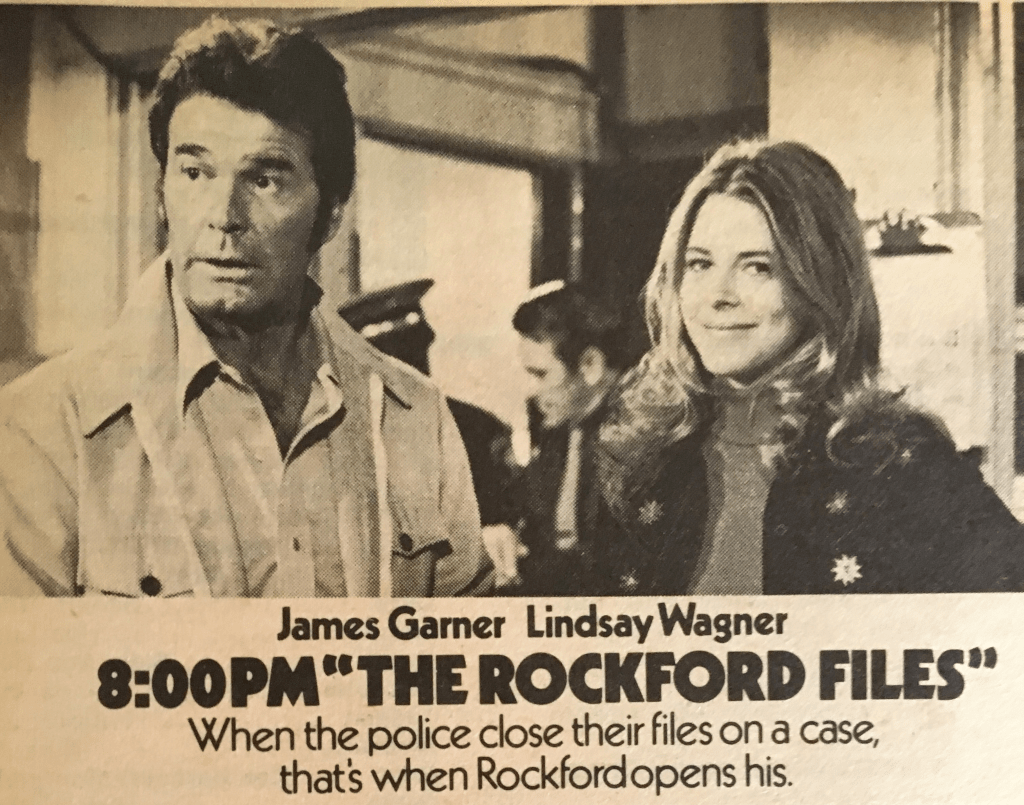
As we are taking a look back at some favorite crime shows, The Rockford Files with its memorable answering machine message opening and fun theme song, is one that definitely is worth exploring. The show was on NBC from 1974-1980.
Photo: thetvprofessor.com
Jim Rockford (James Garner) is not the average TV detective of the seventies. He does not have an elegant apartment; his clothes come off the rack, not a designer’s showroom; and he doesn’t have a sexy assistant, just his dad, a former truck driver who sometimes helps him out. He lives in a small mobile home in a parking lot; the home also serves as his office.
Creators Roy Huggins and Stephen J. Cannell created the show. Huggins had also been the force behind Maverick which also starred Garner from 1957-1962. Robert Blake was also considered for this role, but Huggins cast him in Baretta, another one of his shows.
Rockford has a gun, but no permit for it. However, he prefers to talk his way out of most situations. He tends to work on cold cases, missing persons, and low-budget insurance scams.
The story was that Rockford was incarcerated in San Quentin for five years for a crime he did not commit. Eventually, he was pardoned, but now he is having a tough time making ends meet. He’s a private eye who charges $200 a day (about $1000 today) but he doesn’t get enough work to do more than pay the rent and incidentals.
Garner with Noah Beery Jr. Photo: ebay.com
His father Joe (Noah Beery Jr.) nags Jim to find a more secure job and to settle down and get married. Jim’s friend Joe Santos (Dennis Becker), a sergeant for the LA Police Department, also helps him out from time to time.
Rounding out the cast were Evelyn “Angel” Martin (Stuart Margolin) who had been Jim’s friend in prison. His con artist schemes cause a lot of headaches for Jim. Beth Davenport (Gretchen Corbett) is Jim’s attorney and sometimes girlfriend. Lt Diehl (Tom Atkins) was on the first half of the show while Lt Doug Chapman (James Luisi) was on the final three seasons. Neither of them like Rockford much.
This show had an impressive list of guest stars, including Lou Gossett Jr., Isaac Hayes, Rita Moreno, Tom Selleck, and Dionne Warwick. Garner’s brother Jack also shows up in quite a few bit parts; you can see him as a policeman and gas station attendant, among other minor roles.
Photo: autoweek.com
Jim drove a gold Pontiac Firebird. Rockford was known for his “turn-around” to evade police and criminals, a procedure commonly taught to Secret Service agents. As Garner described it in his autobiography, “When you are going straight in reverse about 35 mph, you come off the gas pedal, go hard left, and pull on the emergency brake. That locks the wheels and throws the front end around.” Then you release everything, hit the gas, and off you go in the opposite direction.”
The theme song for the show was written by Mike Post and Pete Carpenter. It went through several versions over the years. It hit the Billboard Top Ten in 1975.
When I think of the show, the iconic answering machine introduction is what comes to mind. After two rings, you heard, “This is Jim Rockford. At the tone, leave your name and message. I’ll get back to you.” Typically, the message was its own little skit which help us get to know a little bit more about Rockford. The writers had to come up with 122 different messages during the run of the show.
Photo: travalanche.com
The show was popular with viewers throughout the four seasons. However, after being #12 in its first year, it fell to #58 by season five. In 1979, Garner was advised by his doctors to take some time off because he was suffering some knee and back problems, as well as dealing with an ulcer. Until then, he had performed many of his own stunts on the show. When the physical pain did not get dramatically better, Garner decided not to continue with the show, and the network canceled the program midseason.
It was also popular with critics. James Garner was nominated for Outstanding Lead Actor in a Drama in 1976, 1977, 1978, and 1979; he won in 1977. The show was nominated for Outstanding Drama Series from 1978-1980; the show won in 1978. There were an additional nine nominations with Margolin winning two and Rita Moreno winning two.
Photo: imdb.com
If you were a fan of the show, you will know a few of these fun facts about Rockford. One of his favorite foods was tacos, and he ate a lot of them on the show. When he needs an alias, he typically was Jim Taggert. Rockford’s full name is James Scott Rockford; the star of the show’s name is James Scott Garner. Rockford was a Korean vet, and one of his military friends was played by the great Hector Elizondo. He cares for a stray cat who lives near his home. And, last but not least, a running gag of the show is that even though Rockford’s job involves crucial details, he can never remember license plate numbers.
This show holds up well today. The show is on DVD and can be found on several cable channels. Check it out, even if you just want some inspiration for creative voice mails.
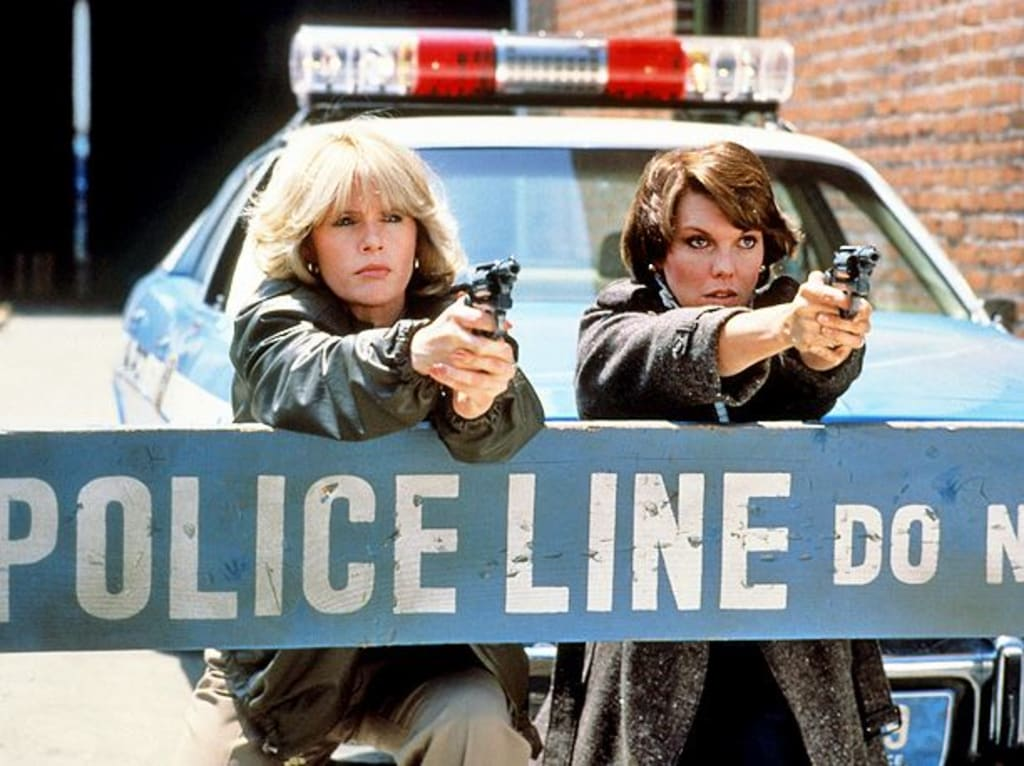
During the month of November we are going to learn about a few of my favorite crime dramas. As the saying goes, “Ladies first,” so we are beginning with Cagney & Lacey starring Sharon Gless and Tyne Daly.
Photo: datebook-sfchronicle.com
The show debuted in March 1982 and continued to May of 1988. We solve cases with a pair of detectives that seem very different from each other. Christine Cagney (Gless) is a career woman all the way while Mary Beth Lacey (Daly) is also busy raising her family. Cagney’s mother had been a well-to-do professional career woman. She was involved with Charles Cagney, a police officer; the two separated soon after the birth of Chris and her brother Brian. She swung back and forth between the upper-class world and the blue-collar world her father traveled in. She was also an admitted alcoholic and was only committed to her job. Lacey was louder and more talkative and quick to express her opinions. She was a mother first–living in a solidly middle-class world. The duo works in the 14th precinct in Manhattan. Unlike other crime dramas of the past, these two partners were not best friends. They did, however, totally depend on each other and trusted and respected each other. They would die for each other, if necessary, but they never had a close relationship or hung out together after work.
Photo: imdb.com
In the pilot movie, Loretta Swit from M*A*S*H was cast as Cagney; when the show was a go, she could not get out of her M*A*S*H contract, so the role was given to Meg Foster, but when it came back the next season, Gless took over and stayed for the rest of the run of the series. According to CBS, Foster was seen as too aggressive.
Filling out the primary cast was their supervisor, Lt. Bert Samuels (Al Waxman), fellow detectives Marus Petrie (Carl Lumbly) and Victor Isbecki (Martin Koye), and veteran detective Paul La Guardia (Sidney Clute). John Karlen played Lacey’s husband Harvey and her two sons were Harvey Jr. (Tony La Torre) and Michael (Troy Slaten). Cagney was involved with Sgt Dory McKenna (Barry Primus) who struggled with drug addiction and, later, a local attorney, David Keeler (Stephen Macht).
The show was actually canceled after six episodes in 1982. Executive producer Barney Rosenzweig was on a mission to reverse the decision. (Fun fact, Rosenzweig was married to the co-creator of the show, Barbara Corday, at the time, but later married Sharon Gless.) After casting Gless, the network relented. Ratings the next year weren’t that great either. CBS again canceled the show. Fans staged a letter-writing campaign to protest; Daly won the Emmy that year, so the network once again brought the show back. However, by the time they reached that decision, the sets had been destroyed and the stars let out of the contracts. Critics had always loved the show and during the six seasons it was on, either Gless or Daly won the Emmy for Best Lead Actress in a Drama every year. (It actually earned 36 nominations total with 14 wins overall including Best Drama in 1985 and 1986.) Season three found the show in the top ten.
Photo: pinterest.com Cast of Cagney and Lacey
Airing Monday nights, it held its own against Monday Night Football. However, midway through season seven, it was moved to Tuesdays up against thirtysomething. By spring, Cagney and Lacey had slipped to 53rd place and the network canceled it for the third time.
The theme song for the first season was “Ain’t That the Way” by Michael Stull and sung by Marie Cain. Season two brought about a new beginning using an instrumental theme composed by Bill Conti.
Although the series was over, the duo of Cagney and Lacey continued to attract viewers. They appeared in four made-for-television movies: The Return in 1994, Together Again in 1995, The View Through the Glass Ceiling in 1995, and True Convictions in 1996.
Photo: vocalmedia.com
No big surprise for those of you who regularly read my blog–a reboot was put together in January of 2018 featuring Sarah Drew and Michelle Hurd as Cagney and Lacey. In an echo from the past, the pilot was rejected by CBS.
Cagney and Lacey was an influential show. It was more than a show about two women leads though. It was brilliantly written and tackled tough issues: breast cancer, alcoholism, trying to balance the life of a mother with a career. The characters were two of the most interesting characters on television. They redefined what women could be; they acted and appeared like real women in their thirties. They were not Charlie’s Angels.
Photo: pinterest.com
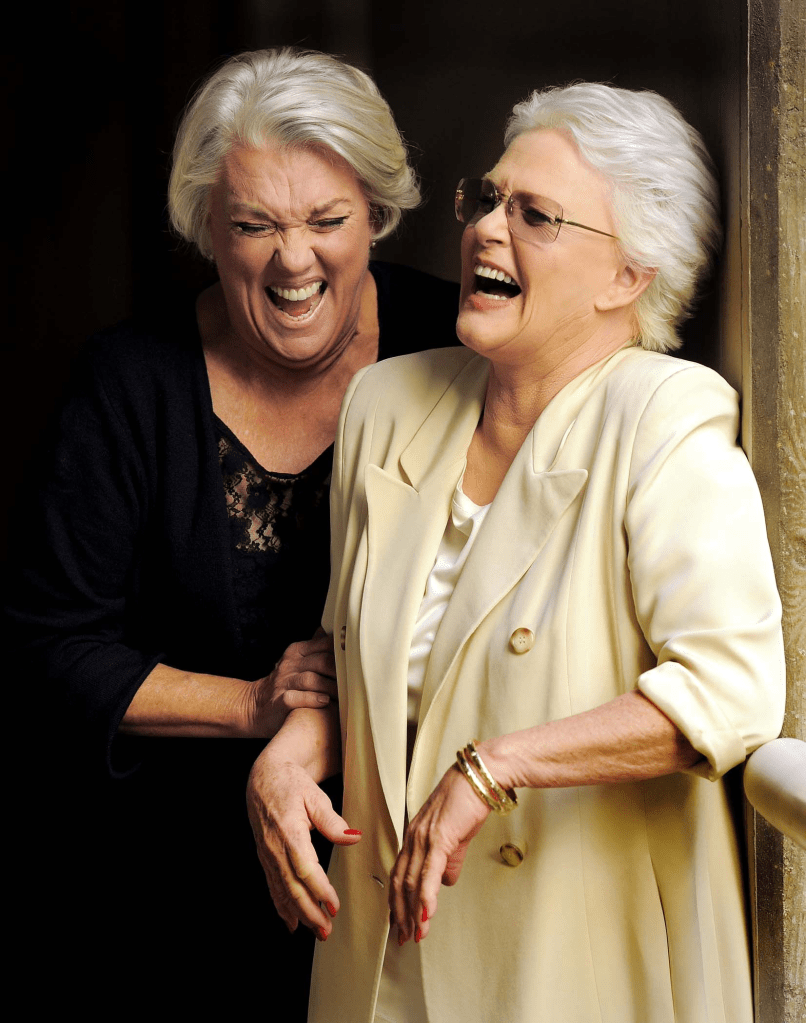
Cagney and Lacey were not close friends but Gless and Daly surely are. In an interview with Sarah Crompton in December of 2011, she described them as “sassy and attractive, they sit alongside each other, cracking jokes, finishing each other’s sentences.”
I love that we all can search for our dreams on television. Sharon Gless shared that “All my life, I sat in front of the little TV that we had and I watched the Oscars every year. My little heart would get so excited and where I lived in Hancock Park you could see the lights in the sky from the Hollywood Theater. Now I’ve made my career in television . . . this year I got into the Motion Picture Academy.” I love to picture another little girl sitting in her living room, watching Cagney andLacey and dreaming about becoming a police officer.
As we wind up our up close and personal blog series, we are focusing on Gavin MacLeod. I have mentioned Gavin MacLeod’s name a lot in my blogs, but I have never devoted an entire to blog to him, so today is the day. Gavin had an impressive career; he starred in three sitcoms but those three garnered him almost 500 episodes. In addition, he took on more than a hundred guest roles on both the small and big screen.
MacLeod was born Allan George See in 1931 in New York. His mother worked for Reader’s Digest, and his father was an electrician. In 1952, MacLeod graduated from Ithaca College with a bachelor’s degree in fine arts, studying acting.
On Perry Mason Photo: imdb.com
He served in the US Air Force where he wrote, produced, and directed plays. After his service, he moved to New York City. While tackling acting auditions, he worked at Radio City Music Hall. While working as an usher there, he met Joan Rootvik, a Rockette. They married in 1955 and had four children. About this time, he took on the name Gavin MacLeod. MacLeod was a tribute to his acting coach at Ithaca, Beatrice MacLeod.
His movie career began with three movies in 1958. He would make 20 more before 2005, including Operation Petticoat and The Gene Krupa Story.
His television appearances began in 1957 on The Walter Winchell File. He would make another lucky 13 performances during the fifties including The Thin Man and Whirlybirds.
On Hogan’s Heroes Photo: pinterest.com
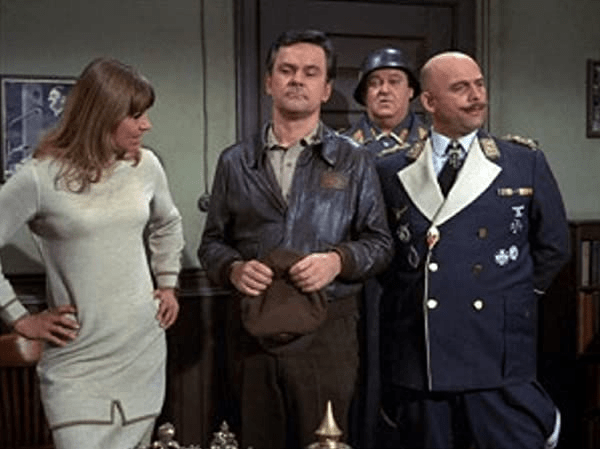
The sixties kept him busy. He took on comedy in The Dick Van Dyke Show, The Munsters, Gomer Pyle USMC, The Andy Griffith Show, My Favorite Martian, The Flying Nun, and several different characters on Hogan’s Heroes. Westerns called him for Rawhide, The Iron Horse, Death Valley Days, and The Big Valley. He landed dramas including The Man from UNCLE, Perry Mason, Ironside, Hawaii Five-0, and Ben Casey.
From 1962-1964 he starred as Happy in McHale’s Navy. The show continued until 1966, but Gavin left the show halfway through. He was dealing with alcoholism, and he received an offer to make the movie The Sand Pebbles with Steve McQueen. However, he remained close friends with Ernest Borgnine, the star of the show, until his death in 2012. (He quit drinking in 1974.)
Murray and Mary Photo: showbizcheatsheet.com
During the 1970s, he appeared on Love American Style, Charlie’s Angels, and Wonder Woman, but the character we loved best during that decade was Murray Slaughter on The Mary Tyler Moore Show. From 1970-1977, Murray sat next to Mary, helping her through the ups and downs of life. Gavin was originally auditioning for the role of Lou Grant, but ended up reading for Murray. He and Ted Baxter were enemies on the show, but he and Ted Knight were dear friends in real life. They had lived near each other before being cast in the show.
During the run of the show, Gavin and his first wife divorced, and he married his second wife Patti Steele. That marriage also ended in divorce in 1982. Patti became part of a Bible Study group after their divorce and became a Christian. Gavin reached out to her, also became a Christian, and they remarried in 1985.
Photo: travelweekly.com
Upon the ending of Mary’s show, he was immediately hired as Captain Stubing on The Love Boat. This time he was in charge of his coworkers. One of his best friends was Bernie Kopell who played Dr. Adam Bricker on the show. Gavin was on the seas for a decade. His best friend Telly Savalas (the lollipop-loving Kojak star) popped up on The Love Boat; the two were very close until Telly’s death in 1994.
When the show ended in 1987, he got a well-deserved break, but he still managed to find time to tour with Michael Learned in “Love Letters.”
Celebrating on Murder She Wrote Photo: imdb.com
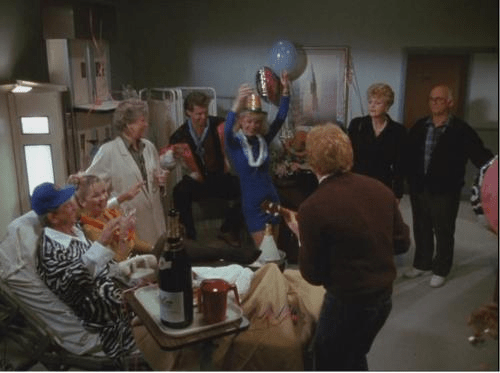
He landed a variety of television show appearances in the 1990s and 2000s, including Murder She Wrote, King of Queens, JAG, and That 70s Show. His final appearance was in 2014 on The Comeback Kids; then he decided to retire. He also did several musicals after The Love Boat including “Gypsy,” “Annie Get Your Gun,” and “Gigi.”
MacLeod and his wife hosted a show on marriage on Trinity Broadcasting Network for 17 years. He also served as the honorary mayor of Pacific Palisades from 2006-2011 when Sugar Ray Leonard took over.
The Love Boat was a big part of his life. Instead of being bitter about being typecast, he embraced the role. He celebrated his 80th birthday in 2011 aboard the Golden Princess with his family, celebrating with a 3D replica cake of The Pacific Princess, his boat on the show.
Photo: princesscruises.com
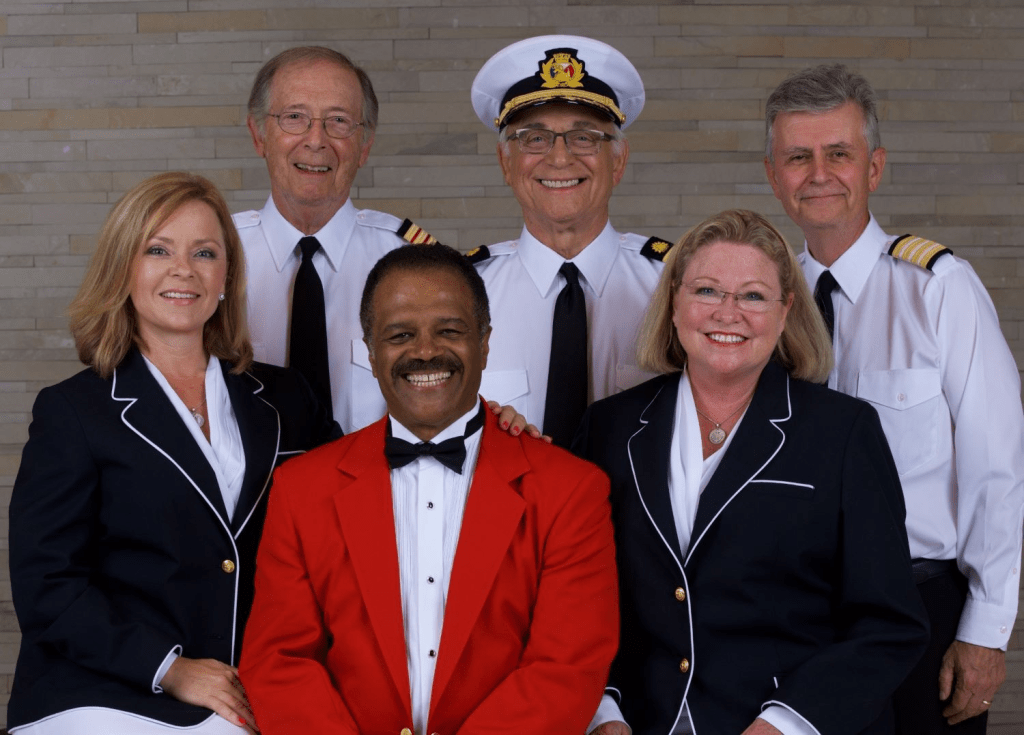
In 2013, MacLeod joined his former coworkers on The Talk for a cast reunion. Several members of the cast including Gavin took part in The Rose Bowl Parade in 2015.
The cast apparently was very close. Ted Lange who played bartender Isaac Washington mentioned the crew in an interview in 2017 with “The Wiseguyz Show,” saying “Oh yeah, sure, Gavin was wonderful. Gavin lives down here in Palm Springs and we’re still tight, all of us, Gavin and Bernie and Jill; we still see each other. Fred [who played Gopher] lives in a different state, we’re still close, we’re still good friends.”
In his spare time, Gavin enjoyed traveling, playing tennis, dancing, golfing, sailing, reading the Bible, and watching movies. Gavin passed away in May of 2021 at his home.
Photo: twitter.com
During the past decade, he released a memoir, This is Your Captain Speaking: My Fantastic Voyage Through Hollywood, Faith & Life. He explained his goal for writing this book: “My life has taken one incredible turn after another,” writes MacLeod. “I’ve gotten to do what I wanted to do. I’ve been a captain! I’ve been given this incredible gift of life and now I want to use it to give back. That’s why I’m sharing my story here, the fun parts and even some not-so-fun parts, in the hopes that maybe someone will take a nice walk down memory lane with me – and maybe I’ll even give someone a little bit of hope.”
Good memories and a little bit of hope is all we can ask for; thanks, Gavin, for giving that to us.
We are in the midst of getting up close and personal with some of our favorite television stars. Up today is Robert Conrad. Conrad was born Conrad Robert Falk in 1935 in Chicago. His parents were practically kids themselves when he was born at 17 and 15. His mother, Alice Hartman, was later the first publicity director for Mercury Records when she went by the name Jackie Smith. After divorcing Robert’s father, she later married Eddie Hubbard, a Chicago radio personality in 1948. They gave Robert one sibling before divorcing in 1958.
Photo: people.com
Conrad grew up in Chicago. He dropped out of school at age 15 to work for Consolidated Freightways and later was a milk truck driver for Bowman Dairy.
He studied theater arts at Northwestern University and then decided to pursue an acting career. He also studied singing with Dick Marx.
When he was 25 he met actor Nick Adams while visiting James Dean’s gravesite in Indiana. Adams had been a friend of James, and he talked Robert into moving to California for his acting career. (Adams died from an overdose in 1968.)
Adams was able to secure Bob a small part in the movie Juvenile Jungle which enabled him to join the Screen Actors Guild. Conrad continued to receive movie offers throughout his career, with his last role being in 2002 in Dead Above Ground.
In 1952 he eloped with Joan Kenlay. They had five children.
During the late fifties, Warner Brothers signed Conrad to an acting contract. He also worked in their recording division, releasing several versions including LPS, EPs, 33 1/3, and 45 rpm records. In 1961, he made the Billboard charts with Bye Bye Baby which hit 113.
In 1959, he made his television debut on Bat Masterson. He would appear in nine different series in 1959.
Photo: imdb.com
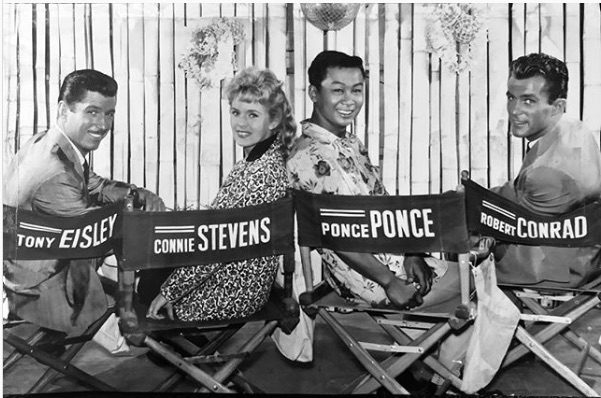
Warner Brothers created a detective show, 77 Sunset Strip. Conrad appeared on the show as detective Tom Lopaka. After appearing on four episodes, he was offered his own series, Hawaiian Eye which was on the air for four years. Set in Hawaii, this series featured Conrad as Thomas Jefferson Lopaka and his partner Tracy Steele, a Korean war vet and former city police detective played by Anthony Eisley. Their office was located at a swanky hotel where they were also the house detectives. Connie Stevens completed the trio as a scatterbrained nightclub singer and photographer Cricket Blake.
Photo: mortystv.com
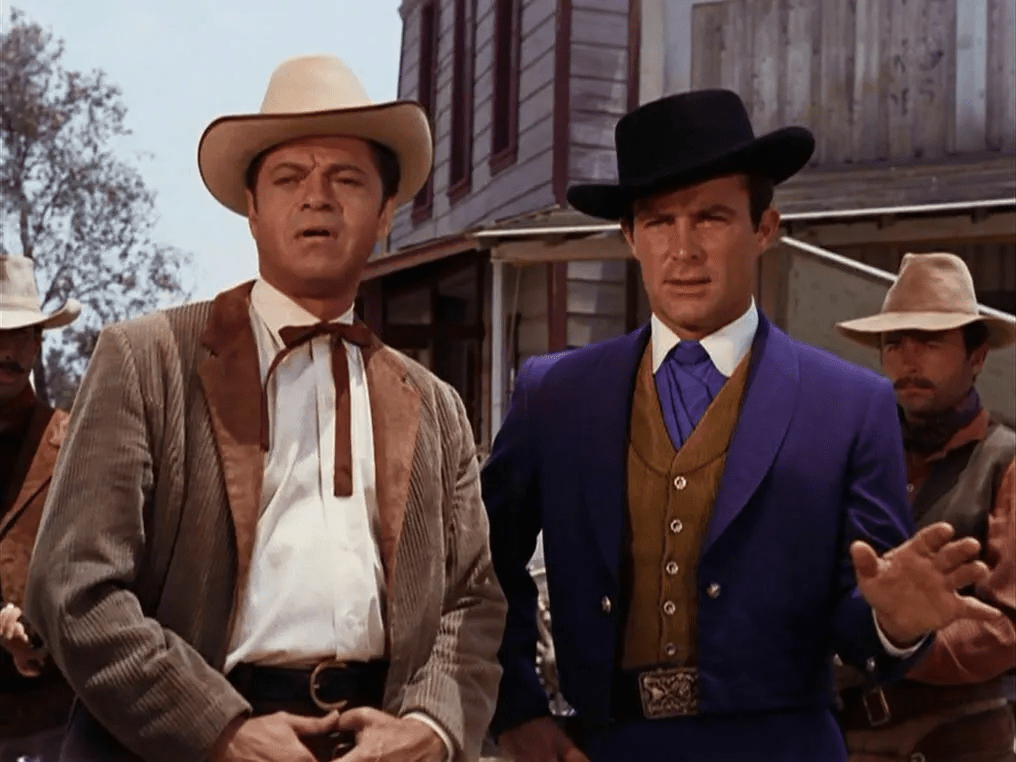
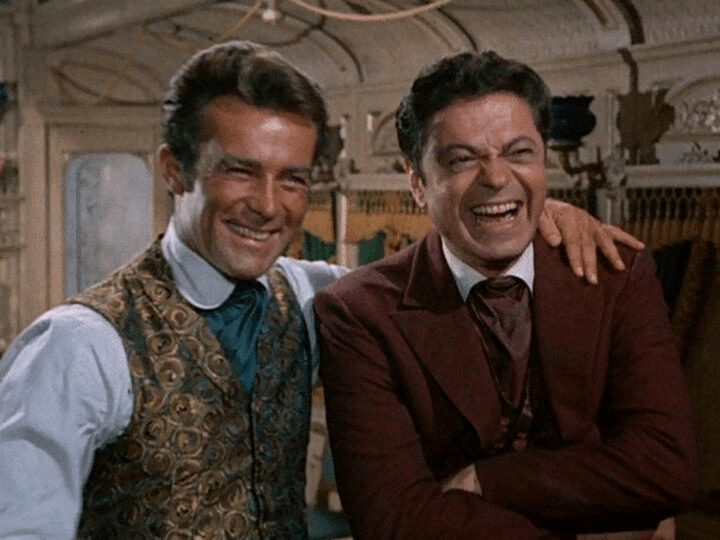
After the show went off the air, Conrad continued with several movies and television appearances until he received word in 1965 that he had been cast as government agent James West on the Wild Wild West with Ross Martin as his partner Artemus Gordon. For five seasons, the two agents worked together to solve cases primarily in the western region of the United States, often reporting to President Ulysses S Grant for their assignments. Conrad made $5000 a week for this show; it doesn’t sound like a lot today, but it was quite an increase from the $300 he made a week on Hawaiian Eye. Robert performed almost all of his own stunts on the show and was inducted into the Stuntman’s Hall of Fame.
Photo: pinterest.com
Later Conrad said he didn’t like that his character didn’t really act; it was just physical confrontation and stunts. He said he and stuntman Whitey Ford choreographed the fights. Although that made him unhappy, he enjoyed his time on the show because he loved working with Martin.
Conrad took on several television and movie roles for two years until he was offered another sitcom offer to star in The DA where he played LA District Attorney Paul Ryan. The show only lasted one season, but then he went directly into Assignment: Vienna where he played a rugged American spy Jake Webster. Unfortunately, this show only lasted eight episodes.
Photo: ebay.com Cast of Baa Baa Black Sheep
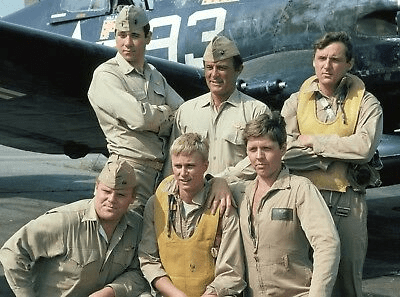
After this short-lived series, Conrad waited four years to try his hand at television again. From 1976-78, he took on the role of tough-guy ace pilot, Pappy Boyington in Baa Baa Black Sheep. Pappy led the US Marine Attack Squadron 214, a group of “black sheep” pilots who were not as committed to the Marines as they were having a good time. However, they were great at their job and desperately needed in World War II. Conrad directed three of the shows.
During the run of this show, Robert and Joan divorced after 25 years of marriage.
For the next fifteen years, Robert bounced back and forth between television appearances and movies. While he showed up on the big screen, television movies were where he earned most of his money between 1979-1995.
He would attempt to star in five additional series, none of which were very successful. In 1979, he was the star of The Duke about an ex-boxer Duke Ramsey who becomes a private investigator in Chicago. After only three episodes, the refs called the match. I’m guessing Conrad did his own boxing in this show because he was a semi-professional boxer and had an undefeated record of 4-0-1.
That same year he went on to star in A Man Called Sloane. Sloane is a freelance spy who often accepts assignments from a secret government agency. He must have had to go into hiding quickly because he was off the air after twelve episodes.
In 1983, Conrad married again. He and LaVelda Fann were married from 1983-2010.
In 1987 he joined High Mountain Rangers as Jesse Hawkes. Hawke led his family on adventures in the wilderness where he was employed in law enforcement and rescue. No one requested a baker’s dozen, so after twelve episodes, he was done again. The following year his series lasted half as long, six episodes only, when he played Jesse Hawkes once again, but on this version, he and his sons fight crime in San Francisco. Sticking with the same theme, in 1995 he became Griffin Campbell on High Sierra Search and Rescue, leading volunteers in a remote mountain town in dangerous rescue missions. Again, after six episodes, he was done.
While none of these shows could find an audience, there was some realism in the roles because Conrad was a deputy sheriff for eight years or so in Bear Valley, California where he lived.
For the last few years of his career, he took on various tv and movie roles. His last television role was in 2000 on Nash Bridges.
Photo: mortystv.com
After 2000, he managed to stay busy with a variety of projects. He ran for President of the Screen Actors Guild in 2005. In 2006 he provided introductory material for the DVD set of The Wild Wild West. He began hosting a weekly national radio show called The PM Show with Robert Conrad on DRN Digital Talk Radio.
In 2020, Conrad died from heart failure. He was 84.
It would have been interesting to see what Conrad’s career would have looked like if he had received some different types of roles. He did test for the role of Anthony Nelson on I Dream of Jeannie and was offered the role of Hannibal Smith on The A-Team but turned it down to pursue his own projects. I would have liked to see him in a comedy role.
We are up close and personal this month with some of our favorite male television stars, and Pernell Roberts is definitely on that short list. Pernell Roberts was well known to television viewers in the early sixties and the early eighties. Some fans might not even realize the two characters he was best known for, Adam Cartwright on Bonanza and Dr. John McIntyre on Trapper John, MD were played by the same man.
The Family of Bonanza Photo: toledoblade.com
Pernell Elven Roberts Jr. was born an only child in 1928. He was named for his father who was a Dr. Pepper salesman. During high school, Roberts played the horn, acted in several school and church plays, played basketball, and sang in the local USO shows. He enrolled at Georgia Tech but then enlisted in the US Marine Corps. He played both the tuba and horn in the Marine Corps Band while sometimes tackling the sousaphone and percussion parts. After his time in the Marines, he enrolled at the University of Maryland where he enjoyed participating in classical theater. He left college to continue his acting career.
In 1949, he had his professional stage debut in “The Man Who Came to Dinner” with Moss Hart and Kitty Carlisle. He then took on several roles in Philadelphia.
In 1951, Roberts married Vera Mowry; she was a professor of theatre history at Washington State University. They divorced in 1959. They had one son who was killed in a motorcycle accident in 1989.
In 1952, Roberts made the big move to New York City appearing in off-Broadway shows. Several of his costars were Joanne Woodward and Robert Culp. He performed several Shakespeare roles.
In 1956, Roberts made his television debut in Kraft Theatre. In 1957, he signed with Columbia Pictures. His first big-screen role was as Burl Ives’ son in Desire Under the Elms. His second role was with Glenn Ford and Shirley MacLaine in The Sheepman.
Roberts continued to accept television roles with ten appearances in 1958 and six in 1959.
Photo: simple.wikipedia.org
From 1959-1965 he would portray Adam Cartwright, Ben’s oldest son on Bonanza. Each of the brothers had a different mother, and Adam was the only Cartwright to attend college, studying architectural engineering. After acting in classical theater for so much of his early career, the transition to a weekly series was a difficult one for Roberts. He thought it a bit ridiculous that the independent sons had to get their father’s permission for everything they did. He wanted to act in a show with greater social relevance. So, although the show would continue until 1973, he left in 1965 after appearing in 202 episodes. The storyline was that Adam was traveling in Europe or living on the east coast. Bonanza producer David Dortort said Roberts was “rebellious, outspoken . . . and aloof, but could make any scene he was in better.”
The Odd Couple Photo: sitcomsonline.com
During this time on the show, Roberts married again in 1962; he wed Judith Roberts and they would divorce in 1971.
After leaving Bonanza, Roberts returned to theater, playing a variety of roles. He toured with many musicals including “The King and I”, “Kiss Me Kate”, “Camelot”, and “The Music Man.”
Pernell also became involved in the civil rights movement, joining Dick Gregory, Joan Baez, and Harry Belafonte in the sixties demonstrations including the March on Selma.
On Mission Impossible Photo: ebay.com
From 1972-1996, Roberts was married to Kara Knack. They also divorced.
Throughout the late sixties and seventies, Pernell continued appearing in television series and made-for-tv movies. You’ll see him in westerns such as Gunsmoke, The Big Valley, and The Virginian; spy genres including Wild Wild West, Mission Impossible, and The Girl from U.N.C.L.E.; crime shows including Hawaii Five-0, Mannix, Police Story, Ironside, Cannon, and TheRockford Files; and several medical series—Marcus Welby, West SideMedical, and Quincy. He even showed up on The Twilight Zone and The OddCouple.
Photo: televisionacademy.com
Perhaps he enjoyed those medical shows because he returned to television to star in his own series in 1979, playing Trapper John, MD. The plot was featured Trapper John from M*A*S*H later in his career at San Francisco Memorial Hospital where he was Chief of Surgery. He worked with a young surgeon who had also served in a MASH unit, Alonzo “Gonzo” Gates (Gregory Harrison). The series lasted seven seasons.
In 1979, he told TV Guide that he chose to return to a weekly show because he had “seen his father age and realized it was a vulnerable time to be without financial security.” Roberts felt the role allowed him to use his dramatic range of acting skills and to address important social issues.
In the 1990s, Roberts took on very few television appearances; his last television performance was in Diagnosis: Murder in 1997.
Roberts would attempt marriage one last time in 1999 when he wed Eleanor Criswell. When Pernell passed away in 2010 from pancreatic cancer after being diagnosed in 2007, they were still together.
Photo: Facebook.com
Pernell also enjoyed golfing, swimming, playing tennis, running, reading, cooking, and singing. He appeared on two record albums during his career. The cast of Bonanza recorded an album in 1959 and he released a folk music album in 1962, titled “Come All Ye Fair and Tender Ladies.”
He certainly had a long and varied career: music, movies, Broadway, and television. He also used his fame to help causes he believed in. I don’t think he is remembered as well as he should be. Maybe it’s because he left Bonanza too early to be included on a lot of the memorabilia that came out of that show or because there was such a gap between his two series that he starred in. Whatever the reason, I hope this blog has helped recall some of our memories of the three decades he spent entertaining us.
This month we are getting up close and personal with some of our favorite television stars. Today we are getting to know one of the most prolific actors to appear on classic television: Denver Pyle. Denver amassed acting credits for 263 different television series and movies during a fifty-year career.
Photo: Facebook.com
Denver was born Denver Dell Pyle in 1920 in Colorado, but not in Denver, in Bethune. His father was a farmer. His brother Willis became an animator who worked at the Walt Disney Animation Studios and UPA. Also, an interesting note is that Ernie Pyle, the famous journalist and war correspondent, was his cousin.
Photo: reddit.com
After his high school graduation, Pyle enrolled at Colorado State University but dropped out to pursue a show business career. He was a drummer for a band and then bounced around in different jobs including working in the oil fields, working shrimp boats in Texas, and as an NBC page. When WWII began, he joined the Merchant Marine. He was injured in the battle of Guadalcanal and received a medical discharge. Following his stint in the war, Pyle worked as a riveter at a Los Angeles aircraft plant. While there, he was spotted by a talent scout in an amateur theater production. Pyle decided he wanted a career in the entertainment business and trained under Maria Ouspenskaya and Michael Chekhov.
His first movie roles occurred in 1947 in The Guilt of Janet Ames and Devil Ship. He would continue polishing his film career for the next fifty years, with his last big-screen feature being Maverick in 1994.
When he was filming The Alamo with John Wayne in 1960, Wayne realized Pyle had an eye for photography. He made arrangements with the PR office to hire Pyle as the official set photographer for the film.
Photo: ladylavinia’s1932blog.wordpress.com
He received his first television role in 1951 in The Cisco Kid. He gravitated toward westerns and in the fifties would appear in many of them including Roy Rogers, Gunsmoke, The Range Rider, Hopalong Cassidy, Annie Oakley, The Gene Autry Show, The Adventures of Kit Carson, The Lone Ranger, The Adventures of Jim Bowie, and The Tales of West Fargo.
In 1955, Pyle married Marilee Carpenter. They had two children and divorced in 1970.
The sixties still provided many roles in westerns (The Life and Legend of Wyatt Earp, Have Gun Will Travel, Bonanza, The Rifleman, Gunsmoke, and Death Valley Days among others), but he also began appearing on dramas and sitcoms: to name a few, Route 66, The Dick Van Dyke Show, Dr. Kildare, The Twilight Zone, Perry Mason, and Gomer Pyle USMC.
On Dick Van Dyke Photo: sitcomsonline.com
In many of these shows, he returned nine or ten times to guest star in episodes. During the run of Perry Mason, Pyle would play a victim, a defendant, and a murderer on the show.
He received the first recurring roles of his career during this era on sitcoms. On Tammy, he played Grandpa Tarleton in 1965-66, and from 1963-66, he portrayed Briscoe Darling on The Andy Griffith Show. He only appeared in Mayberry six times but left a lasting impression on fans.
After playing Briscoe, Pyle invested in oil, buying oil wells thought to be near the end of their production. In the eighties, technology allowed the wells to produce more oil; Pyle made much more from oil than he did acting. However, he continued his career because he said, “I look at it this way, acting provides the cash flow I need for oil speculation, and besides that, I like acting. It’s fun.”
Doris Day Show Photo: thrillingdaysofyesteryear.com
His career did not slow down too much throughout the seventies and eighties. In the seventies, you could watch him in The Waltons, Streets of San Francisco, Cannon, and Barnaby Jones. The eighties featured him in The Love Boat, Murder She Wrote, Dallas, and LA Law.
During this time, he also received three other regular cast roles. From 1968-1970, he played Doris Day’s father in The Doris Day Show. From 1977-78. He was Mad Jack in The Life and Times of Grizzly Adams, and in 1979-85, he took on Uncle Jesse in The Dukes of Hazard. In fact, his last acting credit was for a made-for-tv movie where he once again portrayed Jesse in The Dukes of Hazzard Reunion! in 1997.
Dukes of Hazzard Photo: twitter.com
In 1991, Pyle married a second time. He wed Tippie Johnston and they remained married until his death. The couple did a lot of fundraising for charity including Special Olympics and Denver Pyle’s Children’s Charities. In addition, Pyle sponsored Uncle Jesse’s Fishing Tournament in Texas. For the ten years, he ran it, it raised more than $160,000 to support children’s needs.
In 1997, Pyle died on Christmas from lung cancer.
If you watch reruns from any decade of classic television, you will be very familiar with Denver Pyle. Although he was part of the cast in five very popular shows, it would have been fun to see him get the starring role in a show. It’s amazing to realize how many shows he was a part of. Considering he was in the television business for forty years and for almost fifteen of those years, he was busy being part of the cast of a weekly show, that left 25 years to amass 250 other series that he found time to appear on; that is almost one a month for 25 years—very impressive.
This month we are taking a close-up of five famous television male stars. If you were a television fan in the sixties, you will remember Larry Hagman as Tony on I Dream of Jeannie. If you watched Dallas in the eighties, you will remember him as the cad J.R. Ewing. However, Hagman had more than 100 acting credits and several other television starring roles, as well as credits as a producer and director. We’ll learn more about his career and these forgotten shows in this blog.
Photo: Idreamoflarry.com
Hagman was born in 1931 in Texas. His father was an accountant and lawyer who became a DA. His mother was the famous actress, Mary Martin. His parents divorced when he was five. When his mother received a Paramount contract, he lived with his maternal grandmother in Texas and California.
When Larry was nine, his mother married Richard Halliday. The couple had a baby in 1941, but Larry was sent to an academy, Black Foxe Military Institute and later to Woodstock Country School in Vermont.
His mother resumed her Broadway career in New York City, so Larry lived with his grandmother in California until she passed away when he was sent to live with his mother.
Photo: hollywoodreporter.com
Larry moved to back to Weatherford, his home town, to attend high school, and he graduated from there. Larry’s father wanted him to become a lawyer and join his practice. Larry worked for an oilfield equipment manufacturer for a summer, but was drawn to the acting profession. In the fall of 1949, he enrolled in Bard College in New York to major in drama and dance but he dropped out after his freshman year.
In 1950, Larry took on acting roles at Margaret Webster’s school, The Woodstock Playhouse in New York. The summer after his freshman year, he worked in Dallas as a production assistant and did some acting in Margo Jones’s theater company. He then traveled a bit with the St. John Terrell’s Music Circus. From 1951-1952, he appeared in “South Pacific” with his mother in London.
The following year, Hagman received his draft notice and enlisted in the Air Force. He was stationed in London and spent most of his military service entertaining troops in Europe.
Photo: tvseriesfinale.com
In 1954, Larry married Maj Axelsson. She grew up in Sweden and they met in London. They had two children and were longtime residents of Malibu, California. They were married until his death.
When he left the Air Force in 1956, he returned to New York City, appearing in a couple of off-Broadway plays. His wife made costumes for a variety of productions. In 1957, Hagman received his first television roles, appearing in West Point, Goodyear Playhouse, Studio One, and Omnibus. His Broadway debut was in “Comes a Day” in 1958.
Larry continued his dual Broadway and television careers through the remainder of the fifties. One of his roles was on Decoy, which was the first crime drama to star a female police officer (Beverly Garland) and he portrayed three different characters on Sea Hunt.
Searching for Tomorrow Photo: pinterest.com
In 1960 he had his first recurring role as Cliff Williams on Search for Tomorrow.
In 1964, he made began receiving offers to act on the big screen. He appeared in The Cavern, Ensign Pulver, and Fail Safe that year.
Hagman had been a heavy smoker but quit in 1965. He later became the chairman of both the American Cancer Society and the Great American Smokeout.
The next year, he received the role that made him a household name: Captain Anthony Nelson on I Dream of Jeannie. He rejoined the Air Force, but this time in a fictional service. The show was on the air for five seasons.
Photo: amazon.com
Two reunion movies were made later (I Dream of Jeannie: 15 Years Later in 1985 and I Still Dream of Jeannie in 1991), but Hagman was not in the cast. I read that he was busy with Dallas and family vacations during the times the movies were filmed. They did not replace his character; they focused more on Roger, Jeannie, and Tony’s son with Tony being unavailable on assignment. However, Hagman did appear with Bill Daily and Barbara Eden in several reunion-type shows, and he and Eden remained good friends.
When the show ended, Hagman took on various guest spots on shows including Love American Style. A year later, he again tried a sitcom role. He was cast as Albert Miller in The Good Life. He starred with Donna Mills as a couple who pose as servants. The show lasted a season before being canceled.
A year later there was a repeat of the cycle when he starred in Here We Go Again with Diana Baker as a newlywed couple moves into a home located near both their former spouses’ homes. Again, it lasted one season.
I read that his mother was forced to kick him out of the house when he lived with her and his stepfather because of his heavy drinking. After the cancellation of this show, his father passed away and he reconciled with his mother.
For most of the seventies, he continued guest starring in television shows including Marcus Welby, Barnaby Jones, MacMillan and Wife, and TheRockford Files and big-screen movies including Harry and Tonto and Superman.
Photo: nytimes.com
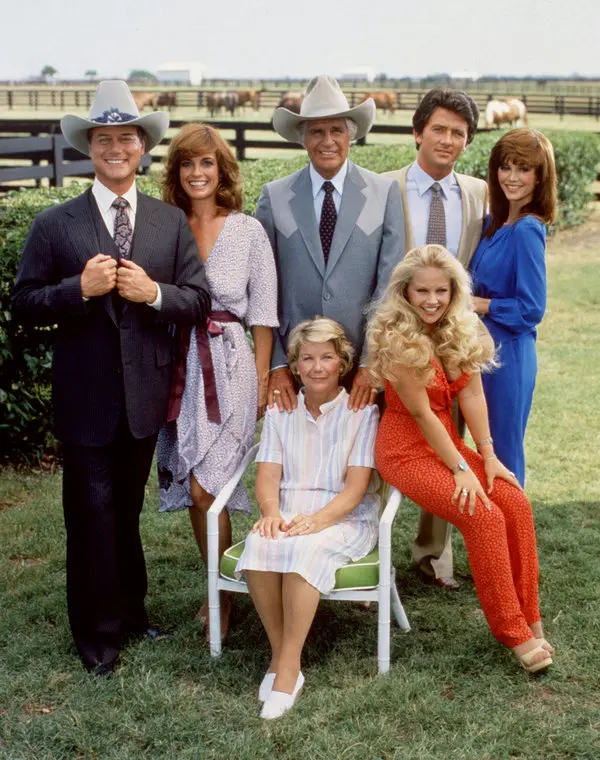
An entire new group of fans began watching Larry from 1978-1991 when he appeared as one of the major characters on Dallas. Two of the most-watched television episodes were the cliffhanger episode, “A House Divided” from 1980 when JR was shot (but viewers did not know who did it) and “Who Done It” when it was revealed that the shooter was his sister-in-law and mistress, Kristin.
Hagman was nominated for two Emmy Awards for his portrayal of JR in 1980 and 1981. He was beat out by Ed Asner for Lou Grant in 1980 and Daniel J. Travanti for Hill Street Blues in 1981.
Unlike I Dream of Jeannie, when reunion Dallas movies were made in 1996 and 1998, Hagman was part of the cast and listed as producer.
Larry always said Dallas was his favorite show, and he loved being a part of it. Both his children appeared on the show. His old costar Barbara Eden joined the cast for the final season as Lee Ann, fittingly as a character from JR’s past. The show was filmed at Southfork Ranch in Texas and after his death, Larry’s ashes were scattered there.
In an unusual reboot, Hagman reprised his role of Ewing on a new Dallas from 2012-2013.
Between the original and reboot of Dallas, Hagman once again received offers to star in two new series. One was Orleans in 1997 when he played Judge Luther Charbonnet. Unfortunately, the series only lasted for eight episodes, but he received some of the best reviews of his career for the role. In 2006, he took on the role of Burt Landau on Nip and Tuck which lasted one season.
Photo: latimes.com
Hagman also wore a directing hat. He began directing three episodes of I Dream of Jeannie in 1967. He would also direct two episodes of The Good Life, 32 episodes of Dallas (he also was listed as producer for 74 episodes), seven episodes of In The Heat of the Night in the early nineties starring one of his best friends Carroll O’Connor, and one feature film: Beware! The Blob which was a sequel to the cult classic 1958 horror film, The Blob. He produced a made-for-tv movie in 1993 called Staying Afloat which he also starred in. The plot was that Alex, a millionaire’s son, has trouble managing money so his father cuts him off. The IRS is pursuing him, and he has a lot of debt when an FBI agent offers to help with his financial issues if Alex becomes a government informant to take down a man who once burned Alex and he happily agrees.
In 1995, Hagman had a liver transplant after being diagnosed with liver cancer. He also had cirrhosis of the liver which was a result of heavy drinking. He had stopped drinking earlier in his life, but the damage was done.
In 2001, Larry added author to his resume after writing Hello Darlin’: Tall (And Absolutely True) Tales About My Life. In 2007, he gave an interview, sharing his passion for alternative energy creation. He and his wife had a solar-powered, energy-efficient home named “Heaven” in Ojai, California, where they promoted a green lifestyle. The couple also owned a home in Sundsvall, Sweden, her hometown and they visited there often.
In 2008, Maj was diagnosed with Alzheimer’s disease. Hagman cared for her as long as possible, but she required 24-hour nursing care by 2010.
The following year, Hagman learned he had Stage 2 throat cancer. He had the tumor removed and went into remission. In 2012, he was diagnosed with myelodysplastic syndrome, a preleukemia condition. The actor died in November from acute myeloid leukemia.
Hagman with Eden Photo: startsat60.com
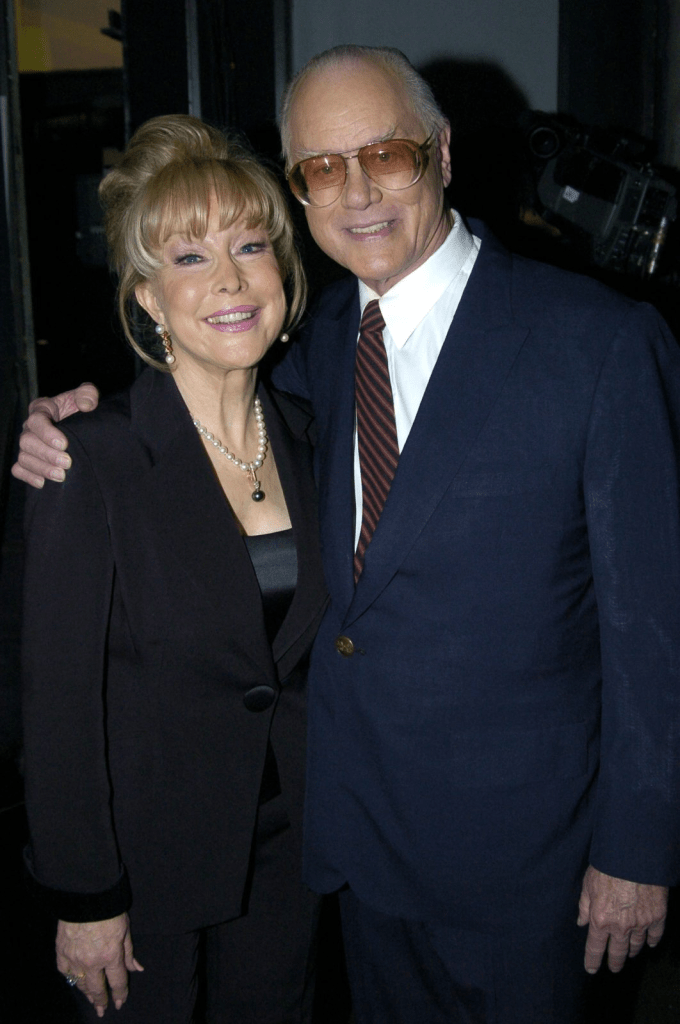
His friend Barbara Eden said, “Larry was one of the most intelligent actors I ever worked with.” Later she said that their on-screen chemistry on the set of Jeannie was not just work and their timing was right. She could not explain it; it was wonderful.
Two of his Dallas castmates were at his bedside when he passed away. Linda Gray who played his wife on the show said Larry was “her best friend for 35 years” and that “he brought joy to everyone he knew. He was creative, generous, funny, loving, and talented and I will miss him enormously. He was an original and lived life to the fullest.” His brother on the show was played by Patrick Duffy who said “Friday I lost one of the greatest friends to ever grace my life. The loneliness is only what is difficult, as Larry’s peace and comfort is always what is important to me.”
Hagman with Gray and Duffy Photo: huffpost.com
Fans reported that Hagman often had people who requested his autograph tell him a joke or sing him a song first.
Hagman said his idols were Jack Benny, John Wayne, Dick Powell, and his future Dallas castmates, Barbara Bel Geddes and Jim Davis. He credited his good friend Carrol O’Connor as his acting mentor, saying that, “Carroll is really my mentor. He knows more about show business than any other actor I know.” During his Dallas years, he paid that back by mentoring several coworkers including Charlene Tilton.
Hagman also enjoyed hunting, backpacking, fishing, skiing, sailing, golfing, and collecting canes, hats, flags, and art. I’m so glad that he was not typecast as Tony and was able to continue his career with several other sitcoms and that he truly enjoyed his many years associated with Dallas. When you love what you are doing, people love you for doing it.
September is What a Character month, and today we end our series with a look at the career of Herbie Faye. Faye was born in 1899 in New York City. He began working with Mildred Harris in vaudeville in 1928. Phil Silvers was one of the supporting cast members, and their friendship would prove fruitful for his future television career.
Photo: imdb.com
In the forties and fifties, Faye tried his luck on Broadway, appearing in a variety of shows including “Wine, Women, and Song” in 1942 and “Top Banana” in 1951.
He also began a career on the big screen in the fifties. His first film was the movie version of Top Banana in 1954. He would appear in 17 movies; in fact, his last acting credit was the movie Melvin and Howard in 1980. In between, he appeared in a variety of genres including Requiem for a Heavyweight starring Anthony Quinn, The Thrill of It All with Doris Day, and The Ghost and Mr. Chicken with Don Knotts.
In 1950, at the age of 51, Faye made his first television appearance. He appeared in two episodes of Cavalcade of Stars. You would have also seen him in Our Miss Brooks, The Goldbergs, and Hennessey in the fifties.
Photo: papermoonloveslucy.com
When Phil Silvers got his own show in 1955, he hired Faye to play Corporal Sam Fender which he did for 139 episodes between 1955 and 1959. This was a hilarious show and hasn’t lost its charm with time. In addition to the primary characters, there was a group of about a dozen secondary characters who appeared along with Faye. Eventually, the costs became too high, and the show was canceled.
Phil Silvers Show Photo: alchetron.com
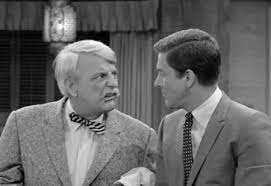
Faye was extremely busy in the sixties. He must have been good at his job because he was cast in more than one show on several of the series he worked for. He was four different characters on The Danny Thomas Show, six on The Dick Van Dyke Show, five on The Joey Bishop Show, two on My Favorite Martian, two on Bewitched, three on The Andy Griffith Show, four on The Gomer Pyle Show, two on I Dream of Jeanne, two on That Girl, four on Petticoat Junction, two on Mayberry RFD, two on Jack Benny as well as 27 other shows all in the sixties. On top of all those appearances, he was part of the cast for two additional television shows: The New Phil Silvers Show from 1963 to 1964 as Waluska and as Irv on Accidental Family in 1967.
In November of 2018, KJ Ricardo spotlighted Faye in her You Tube channel show about The Dick Van Dyke Show. Herbie was Willie, the deli owner who delivered lunch to the comic writers on the show. He appeared in six of the shows. In his first appearance, Rob is trying to leave the office because he thinks Mary is in labor but every time he tries to leave, the Danish cart is in the way. On the third and fourth episode, he starts critiquing the ideas the writers have and making
Willie Photo: televisonsnewfrontier.blogspot.com
comments on what works and what doesn’t. They are pretty funny.
He continued his busy career throughout the seventies when he made one-time appearances in eleven different shows including The Mary Tyler Moore Show, The Bob Newhart Show, Love American Style, Happy Days, and Barney Miller. He made multiple appearances on several other shows including Mod Squad (3), Here’s Lucy (4), The New Dick Van Dyke Show (4), The Odd Couple (6). He also had a recurring role on Doc where he played Ben Goldman from 1975-76.
Faye passed away in Las Vegas in 1980.
Herbie Faye was a very funny guy. He was just an average guy, but he had a way of focusing the viewers’ attention just on him for the brief time he appeared; he made the episodes he was in even better. I guess that is the ultimate definition of a great character actor.






























 thewritelife61