This week we are finishing up our “Supportive Women” blog series. If you watched a lot of television in the sixties and seventies, you will remember today’s blog star very well: Morgan Fairchild.
Photo: dallasfandom.com
Morgan Fairchild was born Patsy Ann McClenny in 1950 in Dallas, Texas. In grade school, she was too shy to read her book report in class, so her mother, an English teacher, signed her up for drama lessons. At age ten, she began performing in dinner theater and stock productions in Dallas which led to several local commercials.
In 1967 she married Jack Calmes; they would divorce in 1973.
In 1967, a young Morgan was hired as a double for Faye Dunaway in Bonnie and Clyde. At age 20 she was cast in her first movie where we could see her face, A Bullet for a Pretty Boy. She would receive roles for another 35 big-screen features during her career.
However, most of her work was on the small screen. Her first role was Jennifer Pace on Search for Tomorrow. She stayed with that show for four years but she would come back to soap operas on and off throughout her acting time and could be seen on The Bold and The Beautiful, Days of Our Lives, General Hospital, and most recently as Sydney Chase in The City in 1996. Most of her roles were the stereotype of an elegant and wealthy woman who will do whatever it takes to get what she wants.
In between work on soap operas, Morgan showed up on many of the most popular shows as a guest star or regular cast member. In 1976 she was on Kojak. After her time on Search for Tomorrow, during the 1970s she appeared on other dramas including Police Woman, Barnaby Jones, and Dallas and on sitcoms like The Bob Newhart Show, Happy Days, and Morkand Mindy.
Flamingo Road Photo: nbcwikifandom.com
During the 1980s she did make a few guest appearances on The Love Boat, Simon and Simon, Magnum PI, and Hotel. Morgan received an Emmy nomination for her appearance on Murphy Brown in 1989. However, it was during this decade that Fairchild was a regular cast member on three different shows: Flamingo Road, Paper Dolls, and Falcon Crest (attorney Jordan Roberts), all night-time soap operas.
Flamingo Road was based on a novel written in 1949. It features the small town of Truro, Florida. The wealthy citizens live on Flamingo Road in their mansions, while the lower classes do what they have to do to make that street their address. Morgan played a woman with one of the longest names on television: Constance Weldon Semple Carlyle. After two years, the show was done.
Photo: IthinkthereforeIreview.com
Paper Dolls was about the modeling world. Fairchild played Racine, an agent, and the show is about the jobs that her models take on including a perfume company that uses her models exclusively. The series only lasted for thirteen episodes.
Morgan played Jordan Roberts, an attorney, on Falcon Crest. This long-running drama from 1981-90 featured the Gioberti family who operates the Falcon Crest Winery in California.
In the nineties, she appeared on a variety of shows including Roseanne, Empty Nest, Murder She Wrote, Diagnosis Murder, Cybill, and Home Improvement.
Her career continued during the 2000s where you could see her on Dharmaand Greg and Hot in Cleveland, as well as five appearances on Friends as Chandler Bing’s mother Nora. She also had another series, Fashion House, in 2006 as Sophia Blakely. The concept of the show was another fashion-themed one where a ruthless executive played by Bo Derek defends her company against a hostile takeover.
Friends Photo:netflixlife.com
With so many movie channels, we forget today that for a few decades we could not watch movies on television. The networks came up with a solution: made-for-tv movies, and Morgan was a queen of the genre with thirty movies and six miniseries.
Morgan has continued to stay busy. She has two finished productions listed on imdb that have not been released yet.
Fairchild has used her platform as a celebrity to advocate for AIDS research, the pro-choice movement, and many environmental issues. She collects movie memorabilia, especially Marilyn Monroe items, and antique clothing. She seems to have had a long-lasting career. It would have been fun to see her star in a sitcom instead of just playing ruthless women who just care about fame and money.
This month we are looking at some of our favorite “Supportive Women.” Today we are taking a closer look at the career of Linda Evans.
Photo: vintageeveryday.com
Born Linda Evenstad in 1942 in Hartford, Connecticut, she was the middle child of three sisters. Both her parents were professional dancers. When she was six months old, the family moved to North Hollywood. Linda graduated from Hollywood High School with Stefanie Powers, who we will be talking about next week. Like Morgan Fairchild, who we will be discussing in two weeks, Linda took drama classes to help her deal with shyness.
Linda was engaged to Patrick Curtis, but they never married. He later became a press agent and married Raquel Welch.
Linda’s first two roles were on two of my favorite sitcoms. In 1960, she guest starred on Bachelor Father where Bentley Greg (John Forsythe) raised his niece Kelly (Noreen Corcoran) with the help of his houseboy Peter (Sammee Tong). Her second appearance was on The Adventures of Ozzie and Harriet. During the sixties, she would appear on a variety of shows including Dr. Kildare, Wagon Train, and My Favorite Martian.
Photo: pinterest.com
Her first made-for-tv movie was 1962’s Buttons with Beaus, and her first big screen feature came a year later in Twilight of Honor; her second movie was Beach Blanket Bingo in 1965 where she played Sugar Kane.
It was in 1965 that Evans began dating film director John Derek. They would marry in 1968 and separate in 1973 when Linda learned he was dating the actress who became known as Bo Derek.
1965 was also the year she was offered her first role as a regular cast member of a series. She became Audra Barkley from 1965-1969 on The Big Valley. The western was very popular. Similar to Bonanza, in this show, Victoria Barkley managed to raise her family and keep the villains at bay.
She and Barbara Stanwyck, who played her mother Victoria on the show, became very close. Stanwyck continued to refer to her as Audra after the show ended. Linda says Barbara was a great mentor and friend to her.
In 1967 when Derek was filming Evel Knievel’s famous motorcycle jump over the fountains at Caesar’s Place in Las Vegas, he asked Linda to take over one of the cameras, and she shot the famous footage of Knievel’s devastating crash.
During the 1970s she kept busy with television appearances on dramas including McCloud, Banacek, Harry O, McMillan and Wife, and The Rockford Files.
With “mom” Barbara Stanwyck Photo: imdb.com
In 1975, she married Stan Herman, a real estate tycoon. They were married four years before splitting up. She never married again.
From 1976-1977 she again accepted a role as a regular on the show Hunter. The series only lasted fourteen episodes before being canceled. Not to be confused with the show from the 1980s, in this one, US government special agents James Hunter (Tony Franciscus) and Marty Shaw (Evans) take on missions around the world. He posed as a bookstore owner, and her cover was a model. I admit I have never seen this show, but it sounds like a seventies version of I Spy.
During the 1980s, her career was split between two primary shows: The Love Boat and Dynasty. Dynasty was on the air from 1981-1989. When Dallas became extremely popular, ABC commissioned Aaron Spelling to come up with a primetime soap opera of its own. Evans was back on the air working with John Forsythe again as Blake Carrington, her wealthy husband. The basic premise of the show was that it was an upper-class version of the Hatfields and the McCoys with the Carringtons and the Colbys feuding in the oil business in Denver, Colorado.
Dynasty with Forsythe and Collins Photo: imdb.com
Evans and Forsythe remained close friends for the rest of his life. She said he was “so magical. This show was so serious and he was funny personally. We’d be fighting and people would be strangling each other and he made me laugh all day long, I’ll be forever grateful to him for that.” The person Linda was often strangling was Joan Collins who played Alexis Carrington Colby, Blake’s first wife.
By 1984 the show had reached number one in the rankings. Linda was nominated for an Emmy for Outstanding Lead Actress in a Drama Series in 1983. She was beat out by Tyne Daly from Cagney and Lacey.
After the show was canceled, Evans stepped out of the limelight for the most part. She did film five made-for-tv movies during the 1990s and guest starred on Germany’s version of The Love Boat, Das Traumschiff, in 2020. In 2021, she was in a big-screen feature, Swan Song.
In 2011 Evans published a book, Recipes for Life: My Memories, a combination of candid memoir and inspirational cookbook. Despite her perfect figure, one of her weaknesses is pizza. On premierspeakers.com on April 10, 2018, she was quoted as saying “I love pizza so much, that if you wake me up in the middle of the night and ask me if I’d like to eat a slice, I’ll say YES. Kenny Rogers used to have it delivered to me while I was filming The Gambler.
Photo: dailyexpress.com
Linda seemed to enjoy her career. She is remembered for several well-known characters in Audra Barkley and Crystal Carrington. While she has given up acting for the most part, I would not be surprised to see her back on the big screen for another part or two if it’s the right offer.
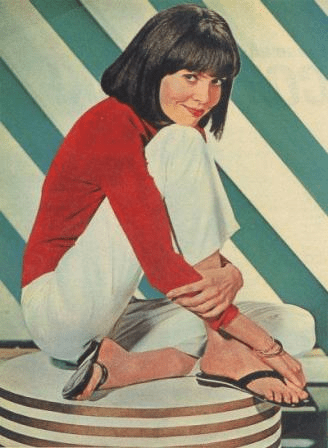
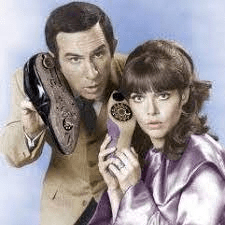
This month’s blog is taking a look at some Supportive Women. First up is Barbara Feldon, costar with Don Adams in Get Smart.
Photo: getsmartwikifandom.com
Feldon was born Barbara Anne Hall in 1933 in Pennsylvania, near Pittsburgh. During an interview with Emerson College, Barbara talked about the ecstasy of performing in a little band in first grade. When things stopped, she got to play her triangle, and the thought that everyone was watching her, and her mother’s pride in seeing her made her want to perform more. In sixth grade she went into the gym to watch her friend doing her ballet lessons. The teacher invited Barbara to join them and played Tchaikovsky’s Nutcracker music; that combination of music and movement took her away to another place. She was hooked at that point, and she knew that she wanted to dance.
She trained at the Pittsburgh Playhouse and then graduated from Carnegie Mellon University with a BA in drama in 1955. They didn’t have a dance program, and her mother thought Bennington, where she wanted to go for dance, was too expensive and too liberal. While she enjoyed acting, it never had the enchantment for her that dance did.
Feldon made her way to New York and studied at the HB Studio. She briefly had a career as a showgirl at the Copacabana. She said “that was my first professional job in New York and it was probably the highlight of my whole career. We got to dance with Jimmy Durante. Oh, my God, it was a thrill.” They replaced the girls every three months so, then she went on to appear in The Ziegfield Follies. She landed one job that never made it to Broadway. A friend of hers who was a model talked her into exploring a modeling career.
Photo: punkglobe.com
She worked as a model and was in a Revlon commercial about a hair pomade for men, Top Brass. Feldon said commercials were excellent training to get experience in acting. You do the same scene over and over, maybe more than forty times, but you have to keep that spontaneity. “You must remember to stress each word properly and come in on a split-second when that camera rolls.”
Like several actresses that we have discussed in this blog, before Feldon got her first big break, she appeared on a game show. In this instance, she was on The $64,000 Question in 1955, and she won the grand prize of $64,000 in the category of Shakespeare.
She didn’t use her winnings to buy a mansion or live the typical party life. She opened an art gallery with a man who was a photographer and ad man who was no longer interested in advertising named Lucien Verdoux Feldon. Barbara would be the subject of a Warhol pop art painting in 1965.
In 1958 Barbara married Lucien Feldon. They divorced nine years later. She had a longer relationship with one of the Get Smart producers, Burt Nodella and when that ended, she moved back to New York City.
After her commercial debut, she received offers for several television roles in the early sixties including The Man From U.N.C.L.E. and Flipper. She was also offered a chance to appear on East Side/West Side with George C. Scott. Colleen Dewhurst was her mentor and Scott’s wife. He asked her to play his girlfriend in the next episode. Talent Associates which produced the show was working with Mel Brooks and Buck Henry on a potential spy spoof called Get Smart. Her second television role was as a spy. So, when Talent Associates was casting for a spy on Get Smart, she was an obvious choice.
Photo: facebook.com
She turned down the role at first because she didn’t want to move from New York to California, but she did love the script. They agreed to offer her a two-year contract instead of a five-year contract, and she accepted. Her first review was in TV Guide which compared her to the dog and concluded that the dog came off better. She was devastated and humiliated. In later years, the reviewer rated her performance much better.
From 1965 till 1970, Feldon was known as Agent 99 working with Maxwell Smart for CONTROL. In both 1968 and 1969, she was nominated for an Emmy for Outstanding Lead Actress in a Comedy Series. Lucille Ball won for The Lucy Show in 1968 and Hope Lange won for The Ghost and Mrs. Muir in 1969.
Women at the time looked at Feldon as an example of a powerful woman; Feldon commented that young women said “she was a role model for them because she was smart and always got the right answer.” If you look closely in the early seasons, you will typically see Feldon sitting and Adams standing because she was taller than he was. Once she even had to bury her feet in the sand. While Adams was the blundering, awkward Smart, it was Agent 99 who was really the “smart” one, getting him out of trouble during their spy missions.
Feldon said that she is not a comedienne; she is an actress who can play comedy. She said that she is the worst person to tell a joke to because she doesn’t always get it. She never enjoyed drama much because the actual acting on camera was wonderful but the long, boring hours waiting were very tedious, and if you have a tearful scene, you have to be able to keep the momentum.
During the run of Get Smart, Feldon also appeared on Rowan & Martin’s Laugh In and The Dean Martin Show.
Photo: imdb.com
After the show ended, she would appear on 20 additional television series including Cheers and Mad About You. She made fifteen made-for-tv movies, one of which was a 1989 movie, Get Smart, Again. She also could be found in six big-screen films including The Last Request, her last acting role, in 2006.
During my research, I read an article where pop culture historian Geoffre Mark commented on one of her movies, Fitzwilly, which I admit I have never seen. He said that it was a gem of a movie and that “Dick Van Dyke is brilliant in it and Barbara plays his love interest and she’s brilliant in it. She was playing a version of herself: a beautiful, sensual, highly intelligent woman with a strong moral compass and a loving heart. That’s what the character is and that’s who Barbara is.” According to imdb.com, the plot of the 1967 movie is that a butler and the staff of an eccentric aged philanthropist whose family wealth is exhausted engage in larceny and crimes to maintain her lifestyle and provide funds for her charitable activities.
Feldon was offered a cameo in the Get Smart movie with Anne Hathaway and Steve Carrell in 2008, but she declined. She said that “times have changed too much. The psychology of the writers and the audience has changed radically. Get Smart belongs in the 1960s, or it’s not going to be Get Smart.”
Despite her comment of Get Smart staying in the sixties, in 1995 Feldon took on the role of Agent 99 again in a brief reboot of Get Smart. Feldon discussed that series with The (Westchester County NY) Journal News reporter Karen Croke in 2017. She said that she and Adams never became friends after the original Get Smart. She said he was a lovely man and very funny, but they had their jobs to do and did their acting and then parted ways for the day. After they worked together on this series, they became very close friends in a way they could not have in their original show. She said once Don Adams died, Max also died and she can’t do any work as 99 without Max now. That might be the real reason she turned down the cameo in the Carrell-Hathaway film.
Photo: imdb.com
Barbara said it’s hard to make friendships on a set because it’s more like a factory and when you’re not acting, you might be resting or talking to your agent. The only person she said she was able to maintain a good relationship with after acting with him, was Alan Alda.
Apparently, she still enjoyed games shows and she appeared regularly in several of them including Hollywood Squares and The $20,000 Pyramid.
Feldon lost interest in acting, but she did numerous television and radio commercials and documentaries. In 1977, Barbara hosted a news show called Special Edition. In the 1990s she had a one-woman show she took around the country. She has also taken up writing and had two of her pieces published in Metropolitan Magazine. She wrote a book about living as a single person in 2003 called Living Alone and Loving It. She also enjoys writing poetry. In talking about her book, Barbara said, “I had been in relationships my whole life. I’d been married, then had lived with someone for several years. After those, I just assumed I would find another relationship. But it didn’t happen. As time went on with some good guidance, I learned how to live alone really happily. I’ve met a number of people—men and women—who feel living by themselves is a second-rate life. I thought that was sad, and since I had this technique of living alone, I decided to write a book. And I’m really glad I did.”
Photo: pixels.com
Feldon said that she has nothing but gratitude for Get Smart. She said acting is not a kind career and you only have a few years to be able to find your place, and she is grateful for being in the right place at the right time. I think after learning about Barbara Feldon, she manages to put herself in the right place at the right time often.
Now, her life sounds almost perfect. She lives where she wants to, is open to meeting a lot of people, attends concerts, advocates for the arts, and travels and writes whenever she wants to. During her life, she has managed to learn from so many experiences and during her life journey she definitely “got smart.”
Today we are winding up our “I Robot” blog series. We began our journey with Buck Rogers in the 25th Century, an outer space drama that was not that successful. Today we are at the other end of the universe spectrum, discussing Star Trek: The Next Generation. You will be very familiar with this show if you were a teen or young adult in the late eighties and early nineties or if you were a devoted fan of The Big Bang Theory.
The Cast Photo startrek.com
Gene Roddenberry, the creator of Star Trek, brought Star Trek: The Next Generation to the small screen two decades later; this show would stay on the air for seven seasons, producing 178 episodes. The series is set in the 24th century; the original show was set in the 23rd. Earth belongs to the United Federation of Planets, and this show features a Starfleet ship, the USS Enterprise, as it explores the Milky Way.
Roddenberry served as executive producer, as did Maurice Hurley, Rick Berman, Michael Piller, and Jen Taylor. The show focuses on the mission and the personal lives of the crew members: Captain Jean-Luc Picard (Patrick Stewart), William Riker (Jonathan Frakes), Worf (Michael Dorn), Geordi La Forge (LeVar Burton), Deanna Troi (Marina Sirtis), Tasha Yar (Denise Crosby), Wesley Crusher (Wil Wheaton), Dr. Beverly Crusher (Gates McFadden), and our major concern today, Data (Brent Spiner).
Photo: startrek.com
The show was very popular, and by its fifth season, reached 12 million viewers. The show would go on to spur other Star Trek series and movies, as well as novels and comic books.
Critics also liked the show, and it received 19 Emmy Awards and a Peabody. In 1994 it became the first syndication show to be nominated for an Outstanding Drama Series Emmy.
The theme was also a nod to the original series, combining Alexander Courage’s original piece with Jerry Goldsmith’s theme for Star Trek: The Motion Picture released in 1979.
In an unusual deal, Paramount decided to broadcast the show in first-run syndication on independent networks. As a “barter syndication,” the show was offered to local stations for free. The station got five minutes of commercial time to sell to local businesses, and Paramount sold seven minutes to national advertisers. Stations had to agree to purchase reruns in the future, and only those stations that participated in this deal were able to purchase reruns of the original series which was still extremely popular.
Some sites stated that Paramount received $1 million for advertising for every episode; by 1992 the studio received $90 million a year and the episodes cost $2 million each to produce.
The show debuted in 1987. The first season did not start off so well. The show had a $1.3 million per episode budget. The staff had a lot of creative freedom, but many of the writers had disagreements with Roddenberry and left the show. They felt that Roddenberry was too strict with the themes and the characterizations. It’s hard to argue with his vision too much because it won several Emmys and was extremely popular.
Photo: treknews.com
Season two brought some critical changes to the series. Beverly Crusher was replaced by Chief Medical Officer Katherine Pulaski (Diana Muldaur). Whoopi Goldberg guest starred in her first episode. The plots were more sophisticated and there were some comic elements sprinkled throughout the drama.
Personnel changes were made for season three. Head writer Hurley was let go. Roddenberry suffered from some health issues which necessitated his stepping back and Berman took over more production chores. Season four had eight episodes nominated for Emmys. The episode “Family” was the only one that did not feature Data. Crusher left the show in season four as well.
Roddenberry passed away during season five. During season six, astronaut Mae Jemison came on board as Lt. Palmer, and Stephen Hawking appeared in the season six cliffhanger.
Photo: tor.com
The final season introduced themes that would carry into Star Trek: Deep Space Nine and Star Trek: Voyager. The finale of the show was filmed in Toronto where thousands of people watched in person.
The cast was surprised that the seventh season was the last one, because they had contracted for eight seasons. Paramount wanted to make several films and felt that the movies would be less successful if the television show was still airing. The cast must have been close because they claimed to be life-long friends, and in 1992 when Burton married, Spiner was best man and Stewart, Frakes, and Dorn were ushers.
Data was an android who served as lieutenant commander. Data’s perspective on humanity was similar to Spock’s in the original show. Spiner would also be cast as Data in 2020 in Picard. Data was found by Starfleet in 2338. He was the sole survivor on Omicron Theta in the rubble of a colony left after an attack from the Crystalline Entity.
Dr. Noonian Soong built Data on Omicron Theta. He had an evil twin, (who doesn’t have one on television?), named Lore. Eventually, Data dismantled Lore. One resource I read said that Data was destroyed during the Enterprise E’s battle with the Scimitar in 2378. I have to take their word for that because my Star Trek trivia is not advanced enough to confirm or deny it.
In 1974 Roddenberry created a project for television called The Questor Tapes. The show centered around an android who was studying humanity. When The Next Generation was proposed, Roddenberry reinvented this android and combined it with Xon, the curious Vulcan from Star Trek: Phase II and came up with Data. However, Spiner said he modeled Data after Disney’s Pinocchio.
Photo: aniandizzy.com
Fun fact, since we started with Buck Rogers in this month’s blog, Data has a positronic brain—in 1981, Buck Rogers used this same term in one of their episodes. They both were honoring Isaac Asimov who first used the term in his story “Runaround” in 1942.
According to Spiner, Data was pronounced “dat-uh” but Stewart, being British, said “day-tah.” On the show Data has a pet cat named Spot. Spiner was not fond of that idea because he was not a cat fan at all.
Data was supposed to be the Chief Science Officer, the same position Spock had on the original show. The uniform for that position was blue. Unfortunately, the blue clashed with his make-up. He was transferred to the Chief Operations Officer with a gold uniform. I never really understood why the Chief Science Officer could not wear a gold uniform. This was a new generation and I did not think that there were other shows from that century that made it impossible to portray that officer in gold? I mean, sports teams change their colors from time to time. However, if I am missing something, please feel free to enlighten me.
Obviously, comparing Buck Rogers to Star Trek: The Next Generation, it is easy to see why the Next Generation was on the air so much longer and attracted so many more fans.
Photo: startrek.com
Data was a fun character. While he can blink and age, we are reminded that he is not human. His duties with the crew included navigation and systems control. Because androids don’t sleep, he was able to take the night shift. Data was interested in literature and the humanities. He likes mysteries. Like Spock, with his lack of emotions, love is very hard, if not impossible, for him. He does make many friends though. He can’t get sick which is convenient if the rest of the crew is affected, but computer viruses can damage him. While he can process data in a millisecond, his inability to read human emotions is troubling for him. Although he does feel a bit arrogant; as he said “I am superior, sir, but I would gladly give it up to be human.” I can’t argue with his claim of superiority when I look around at some of the things humans have been doing the past three or four years.
If I had to go through life with a robot, based on the four we discussed this month, Data would definitely be my choice. I hope you had fun with this series.
We are in the midst of our blog series “I Robot.” If you read last week’s blog, you will remember we were discussing My Living Doll, a science fiction comedy from the mid-sixties created by Howard Leeds.
Cast Photo: twitter.com
Today we are moving ahead two decades to look at another Howard Leeds’ show from the mid-eighties called Small Wonder, another science fiction sitcom.
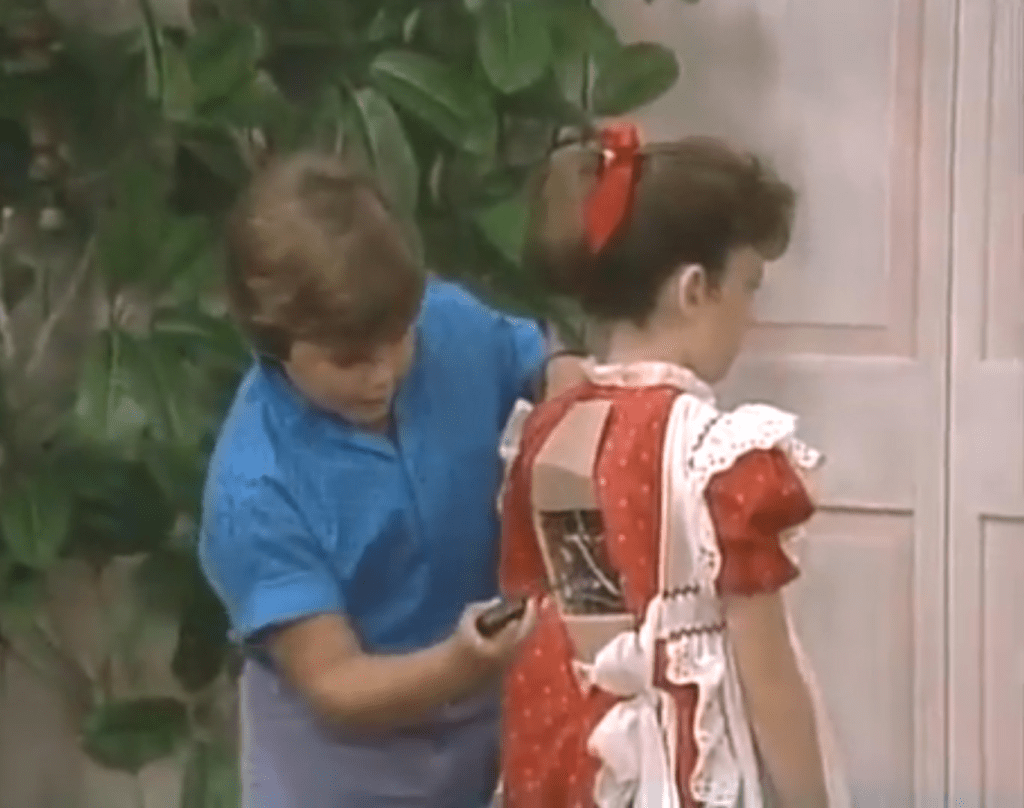
The concept of the show is that Ted Lawson (Dick Christie) and his family–wife Joan (Marla Pennington) and son Jamie (Jerry Supiran)–live in a typical residential area. Lawson has created V.I.C.I., an android that contains Voice Input Child Indenticant whom he calls Vicki (Tiffany Brissette). Lawson created the robot to help handicapped children, and she looks like a ten-year-old girl. Lawson has to take her home to learn about family environments and be “trained” for home service. Similar to Rhoda on My Living Doll, Vicki has an outlet under her right arm, a data port under her left arm, and an access panel in her back. She possesses superhuman strength and speed. Seth Green auditioned for the role of Jamie and, Candace Cameron Bure was up for the role of Vicki, along with 398 other girls.
The Lawsons have to keep her identity a secret and pass her off for a daughter they adopted. Their neighbor, ten-year-old Harriet (Emily Schulman), a la Gladys Kravitz, was very nosy and made the secret hard to maintain. Jamie works hard to scheme and find ways to get Vicki to make his life easier.
Rounding out the cast were Brandon and Bonnie Brindle (William Bogert and Edie McClurg) who were Harriet’s parents; Brandon was also Ted’s boss; Reggie (Paul C. Scott), Jessica (Lihann Jones), and Warren (Daryl Bartley), Jamie’s friends.
The show was on for four seasons and, of course, Brissette continued to grow and age, so in season three Ted gives Vicki an upgrade which allows her to wear current fashions, eat, and drink, making it easier to conceal her identity.
Photo: smallwonderreviewed.blogspot.com
Unfortunately for Leeds, this show has also been dubbed one of the worst sitcoms of all time, despite the fact that it was on for four years. Robert Bianco, TV critic for USA Today, wrote in 2002 that it was a contender for one of the worst TV shows of all time, and the BBC described it as the worst low-budget sitcom of all time (as an aside, the first season provided $300,000 per episode). Lest you think Leeds could not come up with a successful show; know that he also produced The Brady Bunch, The Ghost and Mrs. Muir, Silver Spoons, and The Facts of Life. He also wrote scripts for forty-two different shows.
Although it was not popular with critics, viewers seemed to enjoy it. The show was later sold to more than twenty countries, including Brazil, France, India, and Italy.
In 2015, Dave Nemetz spoke with Marla Pennington Rowan and Emily Schulman Webster about their time on the show. They both felt sorry for Brissette. She had a lot of skills such as singing, dancing, gymnastics, and piano playing, but all she could do on the show was to be a robot. She had to talk in a monotone while showing no emotions. Webster said it was so challenging for her but she was a pro. She mentioned that “she had to bite the inside of her cheeks to keep from smiling. That was tough. My heart sort of broke for her.”
Photo: pinterest.com
Both stars mentioned how hard the special effect filming was for Tiffany. It might be her head spinning around and around or lifting the couch with one arm to clean under it. Those scenes were filmed on Thursdays with the use of green screen technology. Webster said it was not easy and that “Tiffany had to endure it, it would take a lot of trial and error.” In addition to these talents, Vicki could shrink down to the size of a doll, extend to ten feet tall, channel electricity through her hands, and she possessed unlimited learning ability to improve products.
Rowan and Webster said the cast got along great, just like one big family. However, the parents of the minor stars surely did not. Three tutors were employed on the set because the parents could not agree on choosing the same one. Rowan mentioned that apparently, the parents thought they were the stars of the show.
The show was very popular with kids especially. However, power struggles were not confined to overbearing parents; the corporate level had plenty of controversy as well. I’m not sure why, but the show was owned by five different companies, and they did not agree on much either. Once they knew there were enough shows to put it into syndication the show was done. No one knew if they were going to be picked up for the next season or not; they weren’t, so there was never any finale produced.
One of the most memorable parts of the show might be the theme song. It’s lyrics are:
She’s a small wonder; pretty and bright with soft curls.
She’s a small wonder; a girl unlike other girls.
She’s a miracle and I grant you, she’ll enchant you at first sight.
She’s a small wonder, and she’ll make your heart take flight.
She’s fantastic, made of plastic; microchips here and there.
She’s a small wonder, brings love and laughter everywhere.
We understand her pain at watching the show. Photo:smallwonderrevisited.blogspot.com
So how did it work out for the trying parent/managers? None of the three children are actors any longer. Brissette is a nurse in Colorado, Supiran was broke and homeless in 2012 but is in a better place today, and Schulman Rowan writes cookbooks and is considering acting again. Her last role was in the show Christy in the mid-nineties.
If you watch Antenna TV you might be very familiar with the show. It’s no longer in the rotation, but I have watched it several times on the network in the past. It definitely is not anything I would clear my schedule for. I’m not sure I would classify it as the worst sitcom of all time; it seems in the past 40 years, we have come up with some pretty bad options. However, I certainly would not spend my time watching this one. I’m just going to chalk it up to fulfilling a need in the eighties on Saturdays that does not age well.
This month we are learning more about some of our favorite robots in this blog series called “I Robot.” Today we go back to the mid-sixties for My Living Doll.
Photo: pinterest.com
This was both a science fiction and comedy show that debuted in September of 1964. Jack Chertok produced it for Television Productions with CBS. The show was filmed at Desilu studios. Chertok had been the creative force behind My Favorite Martian. James Aubrey, president of CBS, approached Chertok about doing another show. He did not even require a pilot to be made. Chertok’s writers from My Favorite Martian, Bill Kelsay and Al Martin, created the show from an idea proposed by Leo Guild. Kelsay wrote many of the episodes for Date with the Angels starring Betty White and several My Three Sons plots. Martin wrote for many earlier shows and screenplays including Roy Rogers.
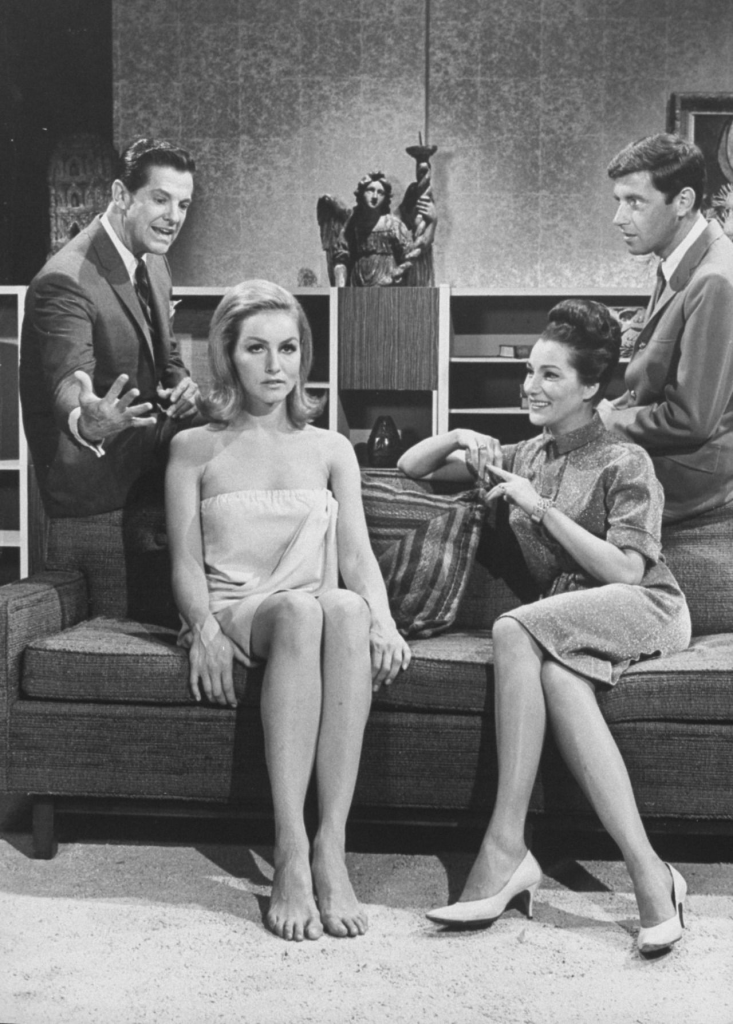
The plot they created was that Dr. Bob McDonald (Bob Cummings), a psychiatrist for the Air Force, was given Rhoda Miller (Julie Newmar), a lifelike robot to protect. He was trying to keep her out of the hands of the military. Rhoda’s formal name was AF709. Dr. Carl Miller (Henry Beckman) built her for the US Air Force but she eventually lands in McDonald’s care when Miller is transferred to Pakistan. His job is to help educate her to be the perfect woman while keeping her true identity a secret. Beauty marks on her back were the control buttons. Her main power switch was on her right elbow. Her eyes could be covered to prompt a system relaxation. Rhoda’s memory bank contained 50 million pieces of information. Bob told his coworkers Rhoda was Dr. Miller’s niece, and she took on the role of his secretary at the office, typing 240 words a minute. On other episodes, she learned to calculate where dice would fall and how to make trick shots playing pool.
In one episode, Rhoda is asked to play Chopin’s “Fantasie Impromptu” on the piano. Newmar actually played the piece herself. She had studied under concert pianist Dr. MacIntyre, and she said that scene is the only one she’s done with her playing the piano which had been her career choice before acting.
Meeting the Robot Photo: pinterest.com
Like I Dream of Jeanne, many of the episodes deal with Bob trying to keep Rhoda out of trouble while she is learning what society and the current culture is like. Rhoda learns human emotions throughout the first season; perhaps this would have led to a romantic relationship between the robot and the doctor.
Rounding out the cast was Peter Robinson (Jack Mullaney), Bob’s neighbor and coworker who thinks Rhoda is someone he wants to date. Irene Adams (Doris Dowling) plays Bob’s sister who moves in to act as housekeeper and chaperone so the neighbors are not suspicious of a single woman living there. On Love That Bob, Rosemary DeCamp played Bob’s sister who moves in to take care of the household for him. Mrs. Moffat was added later on as Peter’s housekeeper.
The show never really found its viewer base. The New York Times reviewer Jack Gould noted that it “very probably had the makings of a popular novelty hit . . . with Miss Newmar giving a light and amusing performance as the automated dish, the premise could work out . . . Bob Cummings, an old hand at chaperoning pretty girls, again is cast in his familiar assignment.”
Newmar didn’t feel that Cummings was the right actor for the role. She said that “They originally wanted Efrem Zimbalist Jr. It was not a flip part—it needed a straight actor who could play opposite this bizarre creature so the comedy would come off. That quality was lost when they hired Bob. The show could have been wonderful. I think it would have run for many seasons had they hired Efrem because he had the right qualities.”
Photo: yiddio.com
The ratings were not good; however, another issue was the fact that it was on Sunday nights against Bonanza, one of the most popular shows ever. In December, CBS moved the show to Wednesday nights but the ratings did not improve. In January, Cummings asked to be written off the show. CBS agreed but never got a replacement for him. He was said to have been transferred to Pakistan, and Robinson took over caring for Rhoda with his housekeeper living in his house again to keep the neighbors from talking.
Apparently, Cummings and Newmar never hit it off. She complained that he had tried to teach her to act and that he seemed unhappy that she was getting more press attention. Later Newmar stated that the real trouble on the set was Cumming’s addiction to methamphetamines. She said he had erratic behavior and became increasingly more depressed and insecure.
In her new home Photo: imdb.com
After Cummings left the show, another five episodes were aired, and then the show was canceled. The show ended up ranking 79th out of 96 shows. Two decades later, producer Howard Leeds would go on to create the show we will discuss next week, Small Wonder.
I was not able to confirm it, but I read several sources that said this show coined the term, That does not compute” which is what Rhoda said when she was asked something she did not understand.
During the summer of 1965, CBS aired repeats of the show. After that, the show was never seen on television again in the United States. Rumors were rampant about whether the 26 episodes had been damaged in a fire, hidden by Chertok, or destroyed. Two episodes seemed to have survived, but there were also reports that six or ten existed in all. CBS was able to obtain about half the episodes somewhere and released a DVD with them on it. We will have to see if the additional episodes ever show up or not.
Transitioning to Cat Woman Photo:designyoutrust.com
This was another of those shows that seemed to suffer from an identity complex. Cummings was known as a ladies’ man to viewers from his seasons on Love That Bob. If the show was not going for romance, then it seems that Newmar was correct in her assessment of Cummings being the wrong person for the role. With Bewitched debuting the same year and I Dream of Jeanne coming right on the heels of My Living Doll, it seems like one of the shows might not obtain enough viewers. Cummings’ addiction problems certainly did not help the show. Newmar should probably be happy the show ended when it did, allowing her to step into the role of Cat Woman on Batman. Like My Living Doll, Cat Woman had all the qualities Batman admired and wanted in a romantic partner, but unlike Rhoda who was not human, Cat Woman was all too human and too much of a villain to allow Batman to act on his passion for her.
Although the show debuted almost sixty years ago, many of the issues of working with a robot are still with us today as scientists work on giving robots a sense of humor and some empathy. We are seeing more of them in the workplace, and it will be interesting to see if any new shows take up the subject in the near future.
I am calling this month’s blog series, “I Robot.” We are taking a look at some popular shows that featured robots. I did not include Lost in Space in this group because I did devote a blog to the show that discussed that robot in some detail.
Cast of Buck Rogers Photo: pinterest.com
Today we start with a show that was a fan favorite in the 1980s, although full disclosure, I had never seen this show until I wrote this blog: Buck Rogers in the 25th Century.
Because Star Wars was so popular, Universal decided to develop a television show about space. Glen Larson was the primary face behind the creation. The original plan was to make a series of Buck Rogers made-for-tv movies for NBC. Larson was also behind the show Battlestar Galactica.
Universal changed plans and filmed a big-screen movie about Buck Rogers. It had good reviews, netting $21 million. After the success of the film, NBC asked for a weekly series. Buck Rogers was not a new concept; he was created in 1928 by Philip Francis Nowlan and had been featured in a variety of media including comic strips, books, and radio. The original movie was edited for television, and it became the first two episodes of the series.
The concept of the show was that Captain William “Buck” Rogers (Gil Gerard) was a NASA pilot commanding Ranger 3 which was launched into outer space in 1987. Because of a part malfunction, Buck is frozen for 504 years and his spacecraft is found in 2491. At this time, he learns the Earth was recovering from a nuclear war.
Photo: buckrogersguide.blogspot.com
Buck has to try to assimilate into the 25th-century culture. Because he was previously a pilot, he is placed in the Earth Defense department. Buck is often undercover. He works with Colonel Wilma Deering (Erin Gray), a starfighter pilot. Stargates were artificially created portals in space to help travel between stars. If you watch the episodes closely, you will notice a subtle shift in Wilma’s hair color. Gray was required to dye her hair blonde for the first season. As the season progresses, the color begins to fade and she was allowed to do that, so by the second season, she has brunette hair.
Another coworker is Twiki, a small robot (Felix Silla and voiced by Mel Blanc). Twiki provided much of the humor on the show. Also helping the trio was Dr. Theopolis (voiced by Eri Server), a small computer disk who understood Twiki and was part of the Computer Council. In the first season, the group received its orders from Dr. Elias Huer (Tim O’Connor).
It was a bit kitschy a la Batman. Several villains are involved in plots. In the first season, the “bad guy” was Princess Ardala (Pamela Hensley) who tried to conquer Earth. Most of the population resided in New Chicago and the rest of the planet was being explored again, and new cities were popping up like New Detroit, New Manhattan, New Phoenix, etc.
In the original story, Buck awakes after 500 years to learn that America was overrun by Mongol invaders and in ruins. Wilma and Dr. Huer are both part of that story, as are Killer Kane and Ardala Valmar.
The Villians Photo: moriareviews.com
For a show that did not produce very many episodes, a lot of celebrities were featured on the show including Gary Coleman, Jamie Lee Curtis, Peter Graves, Jack Palance, Markie Post, Dorothy Stratten, and Vera Miles. A few of the stars who played Batman’s foes show up on Buck Rogers including Cesar Romero, Frank Gorshin, Roddy McDowall, and Julie Newmar.
The opening theme music for the show was composed by Stu Phillips and arranged by Johnny Harris. Harris added a 45-second audio clip when Rogers is spinning and then begins with the main theme.
The show debuted in September of 1979. It was popular with viewers, but critics were not on board with the show. Gerard did not like the direction his character was taking. He was in favor of more series stories and felt like his character was just used to make continual jokes and not taken seriously. At times he even rewrote scripts to favor his character over other roles. There was a lot of tension on the set. Two of the writers and script editors left in the middle of the year. Gerard was reprimanded by the network, and he said he hoped that the series would not be picked up for a second season.
Photo: denofgeeks.com
James Van Hise said the show’s scripts “never took advantage of what they had at hand.” And he said Larson exploited a well-loved character in popular culture. John Javna in his book The Best of Science Fiction TV described the show as the worst science fiction show of all time. Bill Lengeman said the acting was wooden and specified that the episode “Space Rockers” was the worst episode of TV science fiction he had ever seen. Many critics were not happy with the way the women were treated in the second season. Ardala was dismissed, and Wilma lost her respectful position, almost becoming an inconsequential sidekick to Buck.
An actors’ strike delayed filming for season two. A new set of producers was brought in and the format was tweaked. Buck, Wilma, and Twiki were now on a spaceship called the Searcher with a mission to look for lost groups of humanity. Many of the previous characters were no longer part of the series, including Theopolis, Ardala, and Dr. Huer. The Starfighter on the series was created by Ralph McQuarrie and had been one of his designs for Battlestar Galactica.
Taking on more of a Star Trek aura, the new characters included Admiral Efram Asimov, a distant relative of Isaac Asimov (Jay Garner) who commands the Searcher; Hawk (Thom Christopher) an alien who represents the Bird people, now almost extinct; like Spock, he remained straight-faced while others are enjoying emotional moments; Dr. Goodfellow (Wilfrid Hyde-White) an elderly scientist; and Crichton (voiced by Jeff David) a robot built by Goodfellow who disdains humans.
The storylines became more serious and an underlying romance was hinted at between Buck and Wilma. Although the changes were what he asked for, Gerard later complained again about the show. Larson might have been second-guessing himself for casting Gerard. His first choice for the role was Kurt Russell. However, he was concentrating on his movie career and had no interest in coming back to television. Interestingly, Russell had been passed over for the role of Han Solo in Star Wars, losing to Harrison Ford. Ratings dropped in the second season. After only producing 21 episodes for season one, NBC canceled the show after 11 episodes in season two.
Despite the small number of shows produced, Universal released the show on DVD in 2004, but the first two episodes were replaced with the original big-screen movie. The series can also be streamed on NBC’s app.
New books and comic books were produced in the eighties. There were also several sets of action figures released by Mego. Milton Bradley debuted a Buck Rogers board game. You could also purchase jigsaw puzzles, model kits of space ships, die-cast toys, trading cards, and a lunch box.
Although the show garnered no Emmys for acting which is not surprising, it did receive five nominations. In season one, Bruce Broughton won for Outstanding Achievement in Music Composition for a Series. Other nominations included Outstanding Cinematography for a Series in season one, Outstanding Art Direction for a Series in season two, and Outstanding Costume Design for a Series in both seasons. The miniature sets for the landing bays and launch tubes were built with Styrofoam. Although they were inexpensive, combined with clever lighting, they appeared as complex architectural sets.
The show was beloved by its fan base. It’s hard to say why it had such a short life. There seem to be many reasons it didn’t last. With the success of Star Wars, everyone jumped on the outer space bandwagon, and the viewers could only watch so many of them. Gerard certainly did not help the ratings with his complaints and dissatisfaction with the show. Getting rid of Princess Ardala and reducing the role of Wilma to a minor character did not help retain female viewers. The show never seemed to be able to figure out what it was. Was it a Star Wars? Was it Batman? Was it Star Trek? It just seemed to not be very well planned or developed.
Twiki Photo: imdb.com
If you enjoy science fiction, it might be worth watching. After all, there are only 32 episodes, and if nothing else, you might want to watch to see if in the decades since it debuted, it still makes that list of worst science fiction shows. I’d be interested in hearing what you decide. As for this blog series on robots. I can happily relay that Twiki won the TV Land Awards in 2008 for Most Awesome Robot!
We have come to our final blog post about four interesting To Tell the Truth panelists. Today we are concentrating on Bill Cullen, who many of us associate with game shows during the era we grew up in.
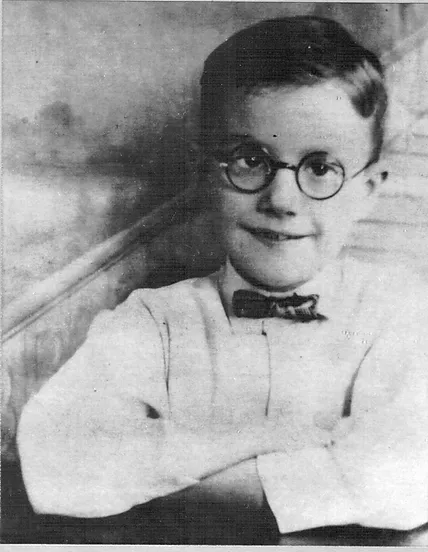
Born William Cullen in 1920 in Pittsburgh, Pennsylvania, he was an only child. His father owned a Ford dealership there. Like many children in that era, he was diagnosed with polio which left him with physical issues to deal with for the rest of his life. The combination of the effects of polio and a motorcycle accident in 1939, that left him hospitalized for nine months, made it difficult for him to stand or walk for long periods of time.
He was originally a pre-med student but had to leave school because of financial problems. After a break to earn some money, he later returned to college to earn a degree in Fine Arts.
During this time, Cullen was married to Ruth Harrington; the two would divorce in 1948.
In 1939, Cullen worked at WWSW, a Pittsburgh radio station. He was a disc jockey and a play-by-play announcer with Joe Tucker for the Steelers and the Hornets (an earlier hockey team). In 1943 he was hired by KDKA. In 1944 he moved to New York where he got a job as an announcer at CBS.
While working on CBS, he tried his hand at joke writing, supplying Arthur Godfrey, Danny Kaye, and Jack Benny with his humor. He also obtained a writing job for the radio show Easy Aces.
Photo: whosdatedwho.com
During WWII Cullen became a pilot and served in the Civil Air Patrol as an instructor. He had become a pilot at age 13, and it remained one of his great passions his entire life.
In 1945 he was hired as the announcer for a radio quiz show called Give and Take. In 1952, he worked with Mark Goodson and Bill Todman on Winner Take All. This relationship would bring him a lot of work during his gameshow career, and he would host numerous game shows during the late forties and early fifties.
In 1948, Bill tried marriage again, wedding singer Carol Ames. They were married seven years before calling it quits.
Photo: Hudson Theater – Facebook
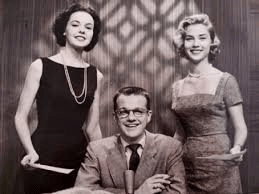
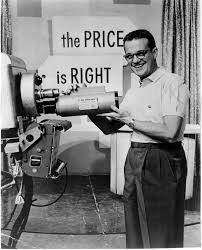
In 1952, Cullen made the move to television where he would become a household name. During the fifties, he hosted The Bill Cullen Show, Bank on the Stars, Place the Face, Name That Tune, and The Price is Right. Cullen beat out Dick Van Dyke as host of ThePrice is Right. Later it was determined the demands were too high for him when the show moved to prime time, and he was replaced by Bob Barker.
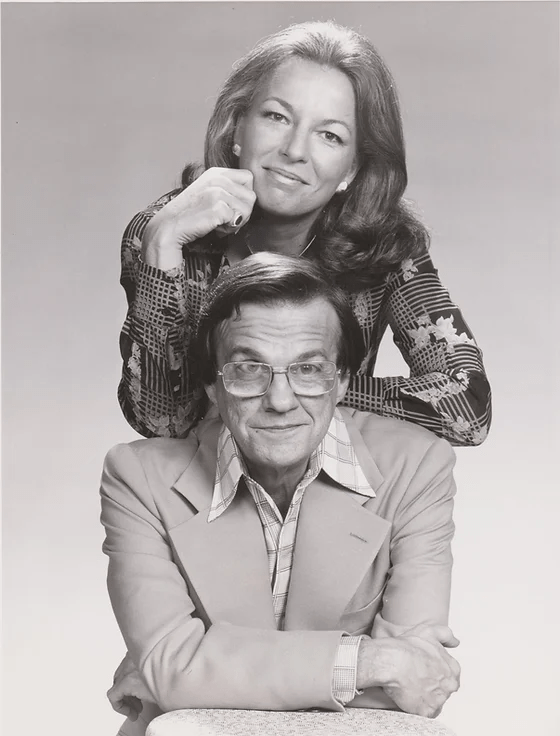
Not long after his divorce from Ames, Bill married dancer and model Ann Macomber. They would remain married until his death. She passed away in 2018.
He also appeared as a panelist on I’ve Got a Secret from 1952-1967, on To Tell the Truth from 1969-1978, What’s My Line, The Cross Wits, Password, Match Game, and Tattletales.
Not one to sit around, he also hosted Eye Guess, Three on a Match, Blankety Blanks, The25,000 Pyramid, Chain Reaction, Blockbusters, and The Joker’s Wild. After his stint with The Joker’s Wild, he retired.
After retirement, he was able to spend more time on his hobbies including photography, interior decorating, model airplanes, painting, magic tricks, raising fish, writing plays and poetry, learning the saxophone and guitar, and flying.
In 1969, Cullen got very ill and was diagnosed with pancreatitis that required surgery. The surgery and recuperation took quite a toll on him and left him 30 pounds lighter.
1962 TV Guide
In a TV Guide interview in 1984, Cullen said he was just lucky with game show offers. He said “This is how it happens every time. A known packager comes up with the idea for a new show. The network says do a run-through. They do. The network likes it, and they say, we’ll give you a pilot. Then the network says ‘Who are we going to get to host it?’ Then he says they have the discussion about hiring someone new or someone gets mentioned who didn’t work out on another show. They hire the staff and weeks before the pilot is scheduled, they say, ‘Let’s just go with Bill Cullen.’”
Cullen was nominated for an Emmy three times but only won for Three on a Match in 1973. It was said he hosted more than 25,000 episodes of television during his career. Cullen often filled in for other people including The Tonight Show when Johnny Carson took vacation, for To Tell the Truth when Garry Moore had throat cancer, and for Allen Ludden on Password when he was ill. During the 1960s, he was the first game show announcer to be working on all three networks at the same time. He was also the first game show host to appear on the cover of TV Guide in 1954, and he would go on to have six more covers.
With wife Ann Photo: billcullenarchives.com
It sounds like Cullen was more than satisfied with his career and had no desire to be a television star. With his limp and horn-rimmed glasses with thick lens, he said “I often ask myself, ‘How am I working? I’m certainly not the guy who appeals to women between the ages of 18 and 35.’” When asked if he had frustrations about his career, his response was, “If anything, the industry has treated me better than I deserve. If you don’t have high aspirations—and I don’t—it’s terrific. I like my niche. I’m never under great pressure, and I’ve made a lot of money over the years doing what I enjoy.”
If that isn’t a definition of success, then I’m not sure what is. I have to admit that I think being a panelist on a game show would be a pretty fun gig. I really enjoyed learning about the four panelists of the To Tell the Truth that I remembered watching on television when I was a youngster.
We are in the middle of learning more about four of the regular members of To Tell the Truth. We have looked at Orson Bean and Peggy Cass, and today Kitty Carlisle is up.
Photo: bingcrosbynewsarchive.com
Kitty was born Catharine Conn in 1910 in New Orleans. Her grandfather was the mayor of Shreveport, a Confederate veteran of the Civil War. He was on the USS Virginia as a gunner during the battle with the USS Monitor. Her father, a gynecologist, died when she was only ten. Her mother took her to Europe the following year. Apparently, her mother thought European royalty would be more likely to marry a Jewish girl than a wealthy American. Kitty was enrolled at some of the best schools on the continent: Chateau Mont Chois in Switzerland, Sorbonne and the London School of Economics. She studied acting at the Royal Academy of Dramatic Art in London and studied singing with Estelle Liebling who taught Beverly Sills.
In 1932 she and her mother returned to the United States, settling in New York. Under her stage name, Kitty Carlisle, she appeared in several operettas and musical comedies. She apprenticed with the Bucks County Playhouse in New Hope, Pennsylvania. She also appeared on the radio during the early thirties. She studied with Julliard teacher Anna E. Schoen-Rene and appeared in 16 theater productions.
Kitty dated George Gershwin for a while in the 1930s. In April of 2007 in an interview on NPR, Kitty talked about her relationship with George: “Oh, George was fun. George was a really most interesting man. He was an egomaniac, but then I’d grown up with egomaniacs, so that didn’t bother me. He did ask me to marry him, but he wasn’t in love with me, nor was I in love with him.”
Photo: charlesmatthewsblogspot.com
Not long after her arrival back home, she began her movie career. Her first film was Murder at the Vanities in 1934. She appeared with the Marx Brothers in A Night at the Opera. That must have been quite an experience. In a trivia post on imdb, Kitty is quoted as saying during her filming, “Groucho would come up to me from time to time to ask me, ‘Is this funny?’ Then totally deadpan he’d try out the line. I’d say, ‘No I don’t think it is funny,’ and he would go away absolutely crushed and try it out on everyone else in the cast. Chico was always playing cards in the back room and had to be called on the set. Harpo would work until about eleven o’clock. Then he’s stretch out on the nearest piece of furniture and start calling out at the top of his voice, ‘Lunchie. Lunchie.’”
Carlisle also made several films with Bing Crosby. However, her movie career never took the direction she was hoping for, and she only appeared in six movies, two as herself.
With Moss Hart Photo: theatermania.com
In 1946, she married playwright Moss Hart. The first time she met him was in Hollywood when she was introduced to several theater playwrights and musicians. She was so excited that she tripped over a cable and fell right in front of Moss. A few years later she was introduced to Moss at a dinner party at Lillian Hellman’s house. They would have two children. She appeared in several of his productions including “The Man Who Came to Dinner” in 1949.
They were married until 1961 when he passed away at their home. She never remarried; at one time she said, “When you’ve had the best of it, why fiddle around? He was so wonderful. He was so witty and it was such fun to be with him. I loved it and I loved him.” Carlisle lived another 46 years after his death and she did have several important romances, including a long-time relationship with Ivo John Lederer, a historian for sixteen years until his death in 1998.
In 1966, Kitty made her debut with the Metropolitan Opera in Strauss’s “Die Fledermaus.” Her final performance with the company was in 1973.
She also showed up on a couple of television shows: Nash Airflyte Theater in 1951 and Max Liebman Spectaculars in 1956, as well as one made-for-tv movie, Kojak: Flowers for Matty in 1990.
Photo: televisionacademyinterviews.com
Carlisle appeared on To Tell the Truth from 1956 to 1978 and again in reboots in 1980, 1990, and one episode in 2000. In fact, she was the only panelist to appear on every version of the game show. She always showed up elegantly dressed in evening gowns or beautiful dresses and jewelry. The show has a reboot currently on television, but if you have not seen it, the format was that three contestants all claimed to be the same person. The panelists ask them questions to try to figure out which one was really the person. Some of the original contestants on the show included aviator Douglas Wrong-Way Corrigan, a concert pianist who was also a judo expert; a female bullfighter, Winston Churchill’s butler, President Eisenhower’s barber, and a gondolier from Venice. Kitty also appeared on Password, Match Game, Missing Links, and What’s My Line.
After her fame on To Tell the Truth, she was probably best known for her support of the arts. She participated in a variety of councils and was chairman of the New York State Council of the Arts for two decades from 1976-1996, as well as other cultural institutions.
Later in her career, she performed in a one-woman show, telling anecdotes about the men she knew from musical theater including Irving Berlin, George Gershwin, Oscar Hammerstein, Alan Jay Lerner, Frederick Loewe, and Kurt Weill, performing some of their more famous songs.
Photo: playbill.com
Kitty died in 2007 from congestive heart failure after a battle with pneumonia.
Both Kitty and Moss wrote autobiographies. Carlisle’s is called Kitty: An Autobiography. Hart’s was Act One. Kitty said that she believed it was the best book ever written about theater life. Both books have a 4.5 rating. I have not had a chance to read Kitty’s book, but I did read Hart’s. It is a detailed look at how a boy born into poverty in New York was able to become a musical playwright. The book ends before Moss becomes famous. If you love the theater, it’s an amazing piece of history of early theater life in New York City.
I had a lot of fun learning about Kitty Carlisle. She overcame life with an overbearing mother who often criticized her and constantly reminded her she wasn’t the prettiest girl or the best singer or actress. She had a lot of interesting romantic relationships including a wonderful marriage, had two children, performed on stage and in movies and on television, and did an incredible amount of work to support the arts. I hope she knows how much we appreciate her. I am looking forward to reading her book to continue learning about her interesting life.
As we continue getting to know several of the panelists from To Tell The Truth, today we look at the career of Peggy Cass.
Photo: wikipedia.com
Mary Margaret Cass was born in 1924 in Boston. She attended Cambridge Latin School and after graduation became interested in acting. She joined the HB Studio in New York City, probably about the same time Orson Bean was there.
In New York, she was employed in various positions while waiting for her big break, including secretary, telephone operator, advertising solicitor, and model. She traveled to Australia with the USO for seven months. Her first role was in a traveling production of “Born Yesterday” where she was an understudy to Jan Sterling.
Cass married Carl Fisher in 1948; they divorced in 1965.
As Agnes Gooch in glasses Photo: imdb.com
Peggy’s Broadway debut came for “Touch and Go” in 1949. One of her next shows was Agnes Gooch in “Auntie Mame” (based on a book written by Patrick Dennis) which she won a Tony for. She was cast in “A Thurber Carnival,” a 1960 Broadway revue of James Thurber’s works.
She also tried her hand at movies. Her first movie was 1951’s The Marrying Kind. In 1958 she reprised her role as Agnes in Auntie Mame, receiving an Oscar nomination, 1961 found her in Gidget Goes Hawaiian. She would be cast in three movies in 1969 and 1970.
Cass accepted her first television role in a show I’ve never heard of in 1950: Nash Airflyte Theater. In addition to playhouse dramas, she was on The Phil Silver Show in 1958 and 1959. In 1961 she was a regular on The Hathaways, a show we discussed a few months ago. Cass as Elinor raised three monkeys (The Marquis Chimps) along with her husband (Jack Weston); the monkeys were stars, and Elinor was also their agent. After 26 episodes, the show was canceled.
The Hathaways Photo: imdb.com
After the cancellation, she would take roles in thirteen other television shows including Love American Style, The Love Boat, and Hotel. In two of the shows, she had regular roles: The Doctors with 145 episodes, an afternoon soap opera; and Women in Prison. This is another show I have never heard of; it was set in my home state. The synopsis on imdb lists it as a “comedy taking place in Cell Block J of the Bass Women’s Prison in Wisconsin. Some of the inmates are Vicki, a yuppie housewife framed for shoplifting by her husband; Dawn, who murdered her husband; Bonnie, an English prostitute; Eve, the old lady who has been there for at least 10 years; and Pam, serving time for computer crimes. Meg is the guard and Blake is the assistant warden. Cass played Eve.
Cass was also in the pilot of Major Dad. She played Esther Nettleton a secretary working for Major MacGillis.
With Jack Paar and JFK Photo: collectors.com
Cass appeared on The Tonight Show with Jack Paar in 86 episodes as one of his regular cast members. She also appeared on The Mike Douglas Show ten times and on The Merv Griffith Show 26 times.
I guess the reason I recognize her as a game show celebrity is because she was on 21 different game shows. I remember her best from To Tell the Truth which is also not a surprise because if you count episodes of the various versions, she appeared in 481 episodes.
Cass remarried late in life in 1980. Her second husband was Eugene Feeney. He was a former Jesuit priest and educator. That same year she had an interesting experience we all think about but don’t think really happens much. She needed a left-knee operation and engaged the services of Dr. Norman Scott, doctor for the New York Knicks. After the operation, while Cass was in the recovery room, she realized they had operated on her right knee, and they had to take her back in for a second surgery.
Photo: famousfix.com
In 1999 Cass died from heart failure.
I have to admit Cass’s role as Agnes Gooch is one of my favorite supporting actress roles. I’m not sure what her hopes and dreams were. I wish she had been cast in a second sitcom; it might have changed the trajectory of her career drastically. It was fun to learn a bit more about the woman behind Agnes.

















 thewritelife61