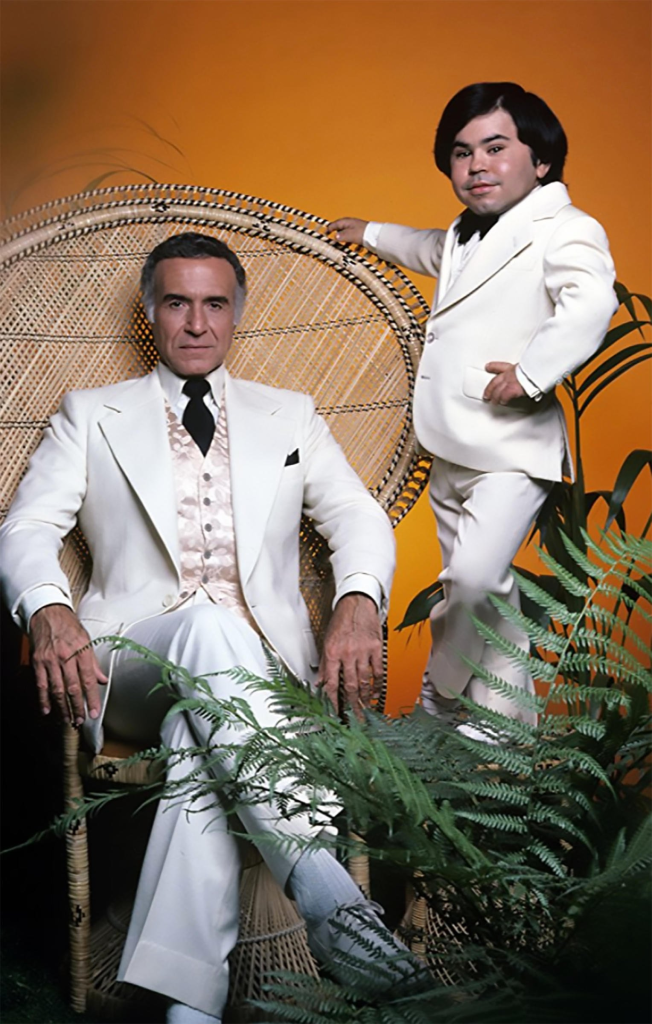
This month our theme is Casting Celebrities. We are looking at a few shows that relied on a cast of famous stars for their weekly episodes. The world of island drama with Mr. Roarke and Tattoo was on television from 1977 to 1984 on Fantasy Island. Ricardo Montalban was Mr. Roarke and Herve Villechaize was his assistant Tattoo.
Instead of a vacation cruise, guests paid to travel to the island for their fantasy of choice.
Before airing as a regular series, the plot was developed for two made-for-tv movies in 1977 and 1978. The show was put on the fall schedule in 1978. All we knew about the island is that it was a mysterious place located somewhere near Devil’s Island in the Atlantic Ocean. (Most descriptions locate it in the Pacific Ocean but the show references being near Devil’s Island which is in the Atlantic.)
Even if you did not watch the show, you probably quoted Tattoo’s weekly comment, “De plane! De plane!” which is what he shouted when he rang the bell to indicate that the guests arrived. In 1981 Wendy Schaal joined the cast as Roarke’s assistant Julie, and we later learned she was his goddaughter. Villechaize was replaced in the fifth season by Lawrence (Christopher Hewett from Mr. Belvedere) who took on the role of an English butler type of character. Apparently Villechaize caused problems for the producers. He continually propositioned women and quarrelled with the staff. When he demanded the same salary as Montalban, he was fired.
📷imdb.com
Once the guests departed the plane, Roarke gathered them around and explained to his assistant what the nature of their fantasy was. He then lifted his glass and said, “My dear guests, I am Mr. Roarke, your host. Welcome to Fantasy Island.”
The writers were a bit secretive about Roarke’s age. Some episodes mention he was friends with Helen of Troy and Cleopatra; others discuss the fact that he knew mermaids, ghosts, genies and even the devil (played by Roddy McDowall).
Most of the time, the guests’ fantasies did not work out quite the way they had planned. Roarke tried to use this as a life lesson. However, Roarke did make it clear that he had no way of interfering in a fantasy once it began, and the guests had to finish out the story.
According to the first television movie, guests paid $50,000 to live out their fantasy which would be about $175,000 today. Somehow a few people who were not well off won trips or Roarke accepted much less money, even $10, from one young girl.
📷womensworld.com
The plots of these fantasies varied quite a bit. Sometimes, someone was reunited with an old love. Sometimes they tracked down someone who had hurt, or even killed, a family member. Some had a tinge or more of supernatural elements.
The executive producer was Aaron Spelling. Spelling related a story that he and Leonard Goldberg were pitching some series ideas to ABC’s Brandon Stoddard. When he rejected all their ideas, a frustrated Spelling said, “What do you want? An island that people can go to for all their sexual fantasies will be realized?” Stoddard surprised them by saying yes.
The show was aired Saturday nights after The Love Boat for its entire run another Spelling show, which we’ll talk about next week.
📷giggster.com
Despite the exotic location, most of the series was filmed in Burbank, California.
The theme song behind the show was composed by Laurence Rosenthal.
The part of Roarke was first offered to Orson Wells, but Spelling put the kibosh on that because he knew Wells could be temperamental.
Like Love American Style, rather than each episode having a title, each individual fantasy story had its own title, which made for a lot of confusion.
📷dailymail.com
Unfortunately, the show doesn’t hold up as well today as Love American Style or The Love Boat. It screams 1980s with the fashions and content echoing other shows of the era like Dynasty. Often lines were insensitive to specific people groups and cultural standards.
If I had to rate the four shows we are learning about this month, I have to admit that Fantasy Island would be the last one I would opt for. But if you have never seen the show, you should check out at least a couple episodes.
This month we are starting a new blog series, Casting Celebrities. We’re going to take a look at four shows that featured a group of celebrities every week. We’ll learn more about Love, American Style; Fantasy Island; The Love Boat, and Supertrain. When we discuss Supertrain, we’ll also look at the small number of stars who appeared on all four shows.
Today we begin with Love, American Style. This show was an iconic 1970s show. Like Laugh In, the clothing, furnishings, and vocabulary do not make it timeless. But it was a lot of fun. This fast-paced anthology series featured two to four mini episodes each week, and between them were quick skits, often featuring a brass bed. Each smaller episode is titled “Love and the _______.”
📷gms.com The regular cast
A troupe of players was featured on each show for the in-between skits. These regulars included William Callaway, Buzz Cooper, Phyllis Davis, Mary Grover, James Hampton, Stuart Margolin, Lynn Marta, Barbara Minkus, and Tracy Reed. Margolin went on to a regular role in TheRockford Files; Tracy Reed was featured in McCloud and Knot’s Landing; Phyllis Davis was part of the cast of Vega$ and Magnum PI, and James Hampton will be familiar if you watched The Doris Day Show or F-Troop.
The show had a memorable and catchy theme song. Written by Arnold Margolin, the first year it was performed by The Cowsills. The snappy melody was set to the following words:
Love, Love, Love
Love, American Style, Truer than the Red, White and Blue. Love, American Style, That’s me and you.
And on a star-spangled night my love,
My love come to me. You can rest you head on my shoulder. Out by the dawn’s early light, my love I will defend your right to try.
Love, American Style, That’s me and you.
📷imdb.com
During the second and subsequent years that Love, American Style was on the air, the theme song was performed by the Ron Hicklin Group. The Ron Hicklin Group could be heard in a variety of motion pictures and commercials, and they also appeared on recordings with stars such as Paul Revere and the Raiders and Cher. John and Tom Bahler, brothers who sang under The Charles Fox Singers were also part of this group. The band provided television theme song recordings including Batman, That Girl, Happy Days, and Laverne and Shirley. They also did the singing for The Partridge Family theme and songs performed on the show as well as the Brady Bunch Kids. Ron retired in the early 2000s, and Tom does a variety of things. He is also known for writing Bobby Sherman’s hit, “Julie Do You Love Me?”. John married Janet Lennon, one of the Lennon sisters who performed on The Lawrence Welk Show. He currently lives in Branson and conducts the “new” Lawrence Welk orchestra.
Paramount Television developed the show. The executive producer of the show was Arnold Margolin, Stuart’s brother. There were 53 different directors during the four-year run. The series received Emmy nominations for Outstanding Comedy Series in 1970 and 1971; Best Music Composition in 1971, 1972, and 1973, winning in 1973; and winning the Emmy in 1970 for Outstanding Original Music and Lyrics.
📷rewatchclassictv.com
Many people wrote for the show, but Garry Marshall and Jerry Belson received the most credits. One of the writers, Peggy Elliott, was interviewed by the Huffington Post in May of 2013, and she talked about her time writing for the show.
“But the show I loved writing the most, was Love, American Style. For every other show, I was writing for characters created out of someone else’s head. Sure, we could create the occasional guest-star role, and we had been told to make every role, no matter how small, a real person. ‘Think of the actor who’s playing that delivery boy,’ I can hear Billy Persky, the co-creator or That Girl, say: ‘This is a big break for him — it’s the biggest role he’s had so far. Give him something to work with.’
But with Love, American Style, every character was our very own; every situation came out of our heads. Each segment of the hour the show ran each week was a one-act play created entirely by us. Added to the attraction was the fact that we could say and do things that were taboo on every other TV show in the early ‘70s. Arnold Margolin, co-creator of the show with Jim Parker, told me recently that the creative side of the network wanted the show to be more daring, while the censors kept their red pencils ready. There was a full-time position on the show just to run interference.
We must have put both sides through the hoops with one episode we wrote: ‘Love and The Hand-Maiden.’ A young guy was dating a centerfold model. As their relationship developed, he discovered that she had no problem with shedding her clothes, but she always kept her hands covered — with artful poses in magazines, and with gloves in real life. He became obsessed with seeing her hands and came up with one ruse after another to get her to take off her gloves. We had a ball writing it, with one double-entendre after another.”
📷imdb.com
If you were a star of any kind in the early 1970s, you most likely were on Love, American Style. The show produced 108 episodes, and those shows featured 1112 different actors. Some of the famous names showing up in the credits include Milton Berle, Sid Caesar, Phyllis Diller, Arte Johnson, Ozzie and Harriet Nelson, Regis Philbin, Burt Reynolds, Sonny and Cher, Flip Wilson, and Jo Anne Worley.
Brad Duke wrote a biography about Harrison Ford, and he said Ford had fond memories of appearing on Love, American Style. “He recalled that he had been given little time to prepare his wardrobe for the role of a philosophical hippie in the November 1969 episode, “Love and the Former Marriage.” He appeared on set with long hair and a beard thinking they were appropriate for the role. He was surprised when he was told he needed a haircut and trim and then was given a navy blue dress shirt and vinyl burgundy jeans with a large belt. They even had a scarf with a little ring to put around my neck. And I thought, someone has made a mistake here. So, rather than argue with the wardrobe people, I put on the clothes and went to find the producer. I walked on the set and he was pointed out. I tapped his shoulder and when he turned around he had on the same clothes I did. He was a hippie producer I guess. At least the check went through, and I got paid.”
The best way to get a good understanding of what the show was like is to look at a couple of the episodes.
January 23, 1970: Love and the Big Night
📷facebook.com
Starring Ann Elder, Buddy Lester, Frank Maxwell, Julie Newmar, and Tony Randall, this episode is often listed as a favorite of viewers. Randall is a married businessman who escorts his voluptuous secretary (Newmar) to her apartment after a late night at the office. Eager to get home to his wife, Randall hurriedly tries to open a stubborn jar of mayonnaise and winds up covered with mayo. Newmar cleans his suit, but while it’s drying, it’s stolen. After a series of amusing mishaps, Randall finally gets back to his own apartment and creeps into bed with his wife–only to find out she’s not there.
February 25, 1972: Love and the Television Set
📷that’s entertainment.com
It starred Harold Gould, Marion Ross, Ron Howard, and Anson Williams. Reading this list of names might give you a hint about what happened to this episode after it aired. Garry Marshall had written a pilot about a 1950s family that did not sell. He turned it into an episode for Love, American Style. George Lucas caught the episode and was impressed with Ron Howard and offered him a role in his new movie American Graffiti about 1950s teens. The movie was so popular that the network decided to put Marshall’s pilot in the fall line-up as Happy Days. Harold Gould’s role was given to Tom Bosley for the series. When Love, American Style went into syndication, this episode was retitled “Love and the Happy Days.”
October 22, 1970: Love and the Bashful Groom
📷listral.com
This is the episode I recall when I think of the series. When I watched it originally, I was staying overnight at my grandparents’ house and my grandmother was shocked at the “vulgarity.” It really seems quite tame today, but back then it probably was unexpected. She would approve of Tom Bahler marrying Janet Lennon though because I watched Lawrence Welk with her and my grandfather whenever I was at their house.
In this episode, Paul Petersen, Christopher Stone, Meredith MacRae, Jeff Donnell, and Dick Wilson are featured. Harold (Petersen) and Linda (MacRae) are getting married. He learns that she grew up in a nudist colony and is not comfortable being naked for his wedding. After a soul-searching talk with his best friend, and realizing he loves Linda enough to be uncomfortable, he decides to go through with the ceremony. He gets to the church a bit late and walks in, only to see that everyone else is dressed in their Sunday best. His bride informs him that they always dress up for weddings. One of the congregation members says something like “Let’s not make him uncomfortable,” and they all begin to undress. Of course, you see nothing improper, no naked bodies, only clothes flying. This was probably not the best episode to “expose” my grandmother to as a first glimpse of the show.
The show lasted for four years and was cancelled in 1973. In 1985, a reboot was created, but it was on in the mornings and only lasted a few months. The show was on at the same time as everyone’s favorite game show, The Price is Right. For the 1998 fall season, a pilot was created for prime time, but it was never ordered. While doing my research for this blog, I noticed that there was a Love, American Style project in production, so we may see it resurface again. I’m not sure I would want to watch a contemporary version of the show though. It was such a product of its time, and I fear what a current version would be like after seeing the reboot of Match Game which has been airing the past few years.
We are winding up the Sibling Rivalry series, and as promised, we are coming back to a comedy. In fact, this show had so much sibling rivalry, that could have been the title.
📷tvwunschliste.com
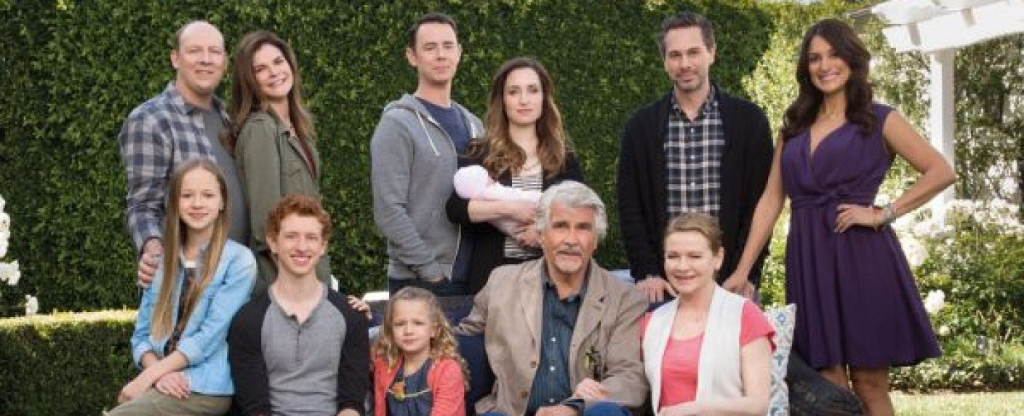
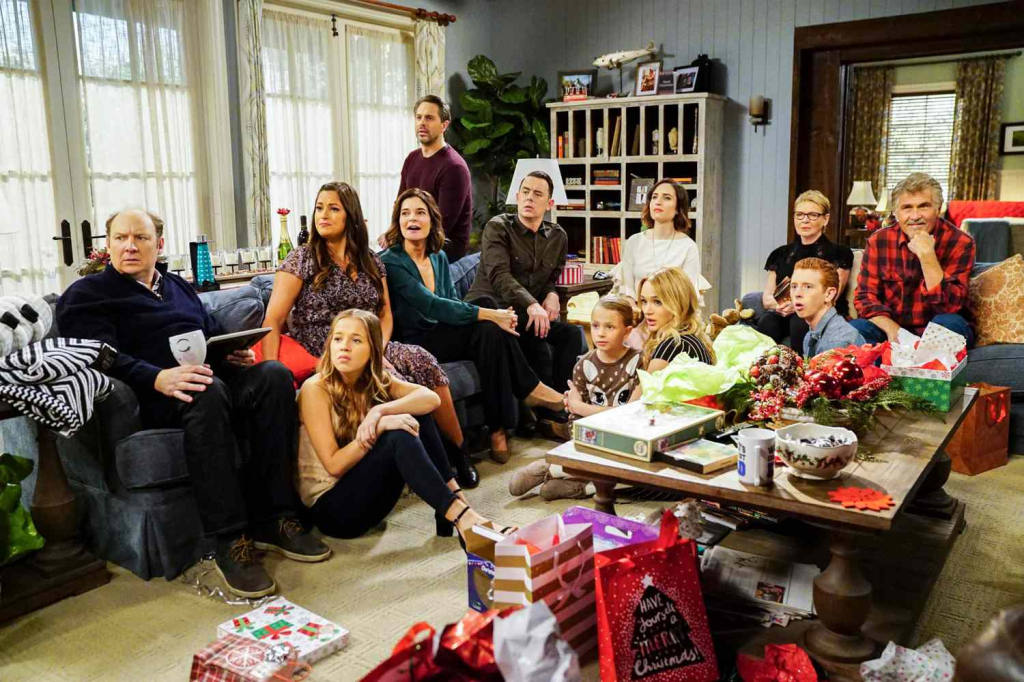
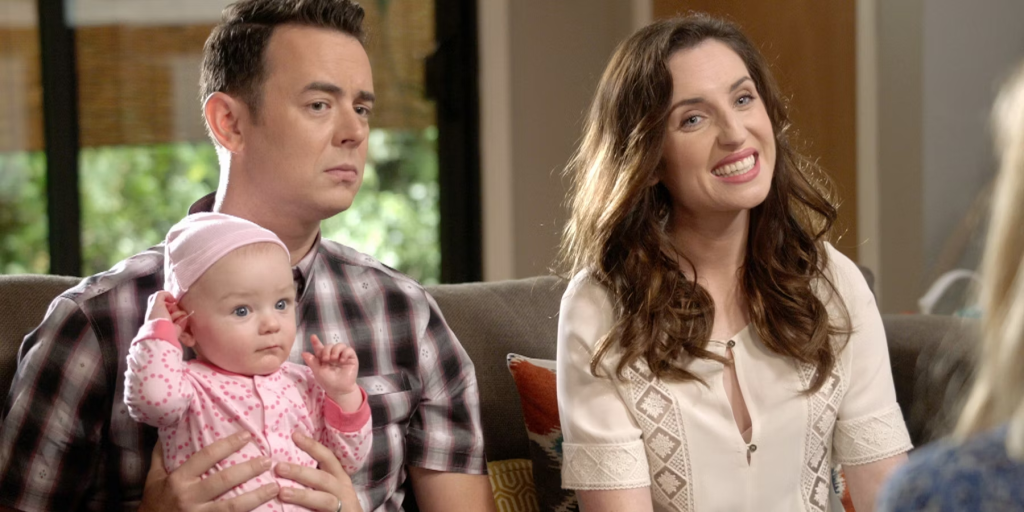
In 2015, CBS ordered a pilot called Life in Pieces, and it was on the schedule that fall. It was on the air for four seasons until it was canceled. This was a fast-paced and interesting show because it included four different stories each week. The show features the Short family who live in LA. Each episode breaks down into four “short” stories, and the fourth one tied them all together. Sometimes a story will go back in time, so we begin to understand the siblings’ relationships better.
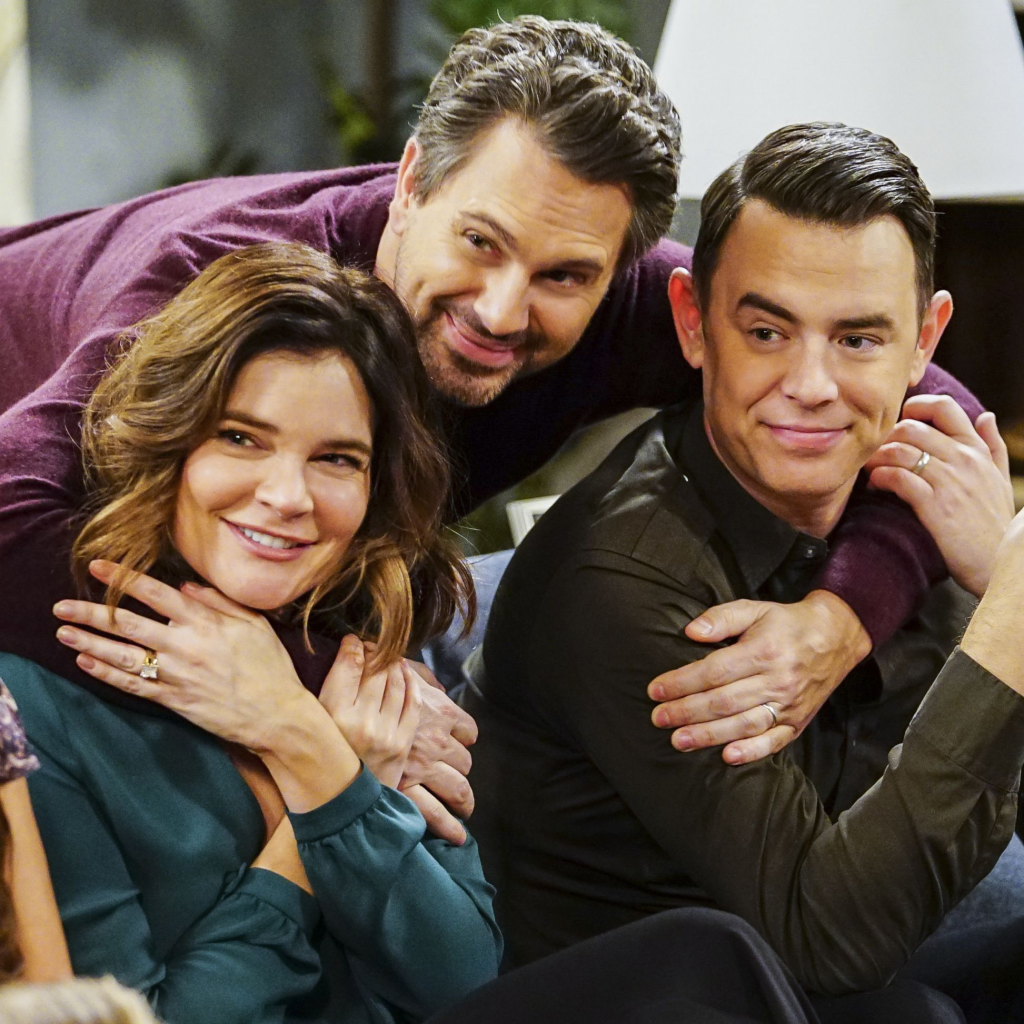
The show was blessed with a wonderful cast. John Doe Short (James Brolin) is a retired airline pilot. Joan (Diane Wiest), his wife, is a therapist. They are a bit quirky and may have lived in a commune in the sixties for a year or two too long. They have three kids: Heather (Betsy Brandt) who is married to Tim, a doctor (Dan Bakkedahl), with two daughters and a son; Matt (Thomas Sadoski) who is recently divorced and dates and then marries Colleen (Angelique Cabral) during the series; and Greg (Colin Hanks) who is married to Jen (Zoe Lister-Jones) with two kids.
📷goodhousekeeping.com
Heather and Tim are typical parents of teens and preteens. Matt is the stereotypical middle child. He lives in his parents’ garage and never seems to grow up. Even when he tries to do the right thing, it seldom works out that way. Greg is the most normal kid, but when he gets around his siblings, he often becomes dysfunctional.
Greg’s wife Jen is my favorite character. She is the ”realistic” relative and often makes asides and assumptions about the situations they find themselves in that we can relate to. She shares exactly what is on her mind, and we typically agree with her. My second favorite character is the other in-law, Tim. He just can’t do things the easy way. He ruins the Thanksgiving turkey, removes most of his eyebrow, and seems to screw up in a new way every week. But he is fun and easy-going and fits into the family.
Some of the characters had worked together before. Weist and Brolin played a married couple in the film Sisters in 2015. The Brolin-Hanks family must like working together. James Brolin appeared with Tom Hanks in Catch Me If You Can in 2002; their sons Josh Brolin and Colin Hanks were in W. in 2008, and then Brolin and Colin teamed up for this show.
There were many recurring characters on the show as well. My favorites were Gigi, Joan’s mother, played by Ann Guilbert; Martin Mull who plays a neighbor of John and Joan’s and is president of their HOA; and Professor Sinclair Wilde (Cary Elwes) who is Joan’s creative writing teacher.
📷entertainmentweekly.com
Season one found the show highly rated, just behind The Big Bang Theory, but by season three, the ratings had dropped significantly and early in season four, the network canceled the show but aired the remaining nine episodes that had been filmed. Many fans blamed the network because of the scheduling. Season one began in September, but the rest of the seasons kept getting pushed later and later. Season four didn’t air the first show of the series until April which means fans had not seen the show for almost a year. The network justified the cancellation because it saw declining ratings, was refused an ownership stake in the show, and wanted to bring in four new sitcoms for the next season.
Many of the complaints I read about this show said it was just a clone of Modern Family. I don’t agree at all. While this show had some of the best one-liners I ever heard in a television series, the humor was not consistent and sometimes, especially when it featured Joan and John, it was just weird. Jay and Gloria were not John and Joan. Modern Family had it all: good writing, fun characters, realistic plots. The Short family had it all but never in the same episode. Sometimes the writing was good, sometimes the characters were fun, and sometimes the plots worked. While I didn’t mind watching this show, especially to catch those ultimate one-liners, I never felt bad when I didn’t see it. I knew that I had missed a fun part of the week if I missed Modern Family. I could connect to the characters on the show in a way I only connected with Jen and Tim with on Life in Pieces.
Just to give you an idea of what this show was like, I’ll summarize the first episodes of each season below.
In season one, Matt walks in on Joan and John in an intimate moment; Joan attempts to lead a group therapy session; Jen hires a breast-feeding consultant couple; and Heather and Tim move into a new home, using a company that employs ex-cons.
Season two was Heather and Tim ask Clementine’s parents (their son’s girlfriend) to convince Clementine and Tyler to get an annulment; Tommy moves in with Colleen to the dismay of her roommate; John takes the wrong dose of medication which leads to several complications.
For season three Tim and Heather move into John and Joan’s home after their kitchen is destroyed; Matt and Colleen expect a monetary settlement from Colleen’s fall; and John tries to get Sophia (his granddaughter) back on track when she begins acting up.
📷gamerant.com
Last, but not least, season four began with the Shorts vacationing in the Yucatan; the accommodations are not what they expected; Heather is overprotective of Sophia; Jen and Greg learn that Matt and Colleen have been lying to the family.
If I am honest, I think the network did not do the show any favors by messing up the schedule, but it was not destined to last more than the few seasons it was on the air. However, if you disagree with me, I would love to hear your reasons for loving the show.
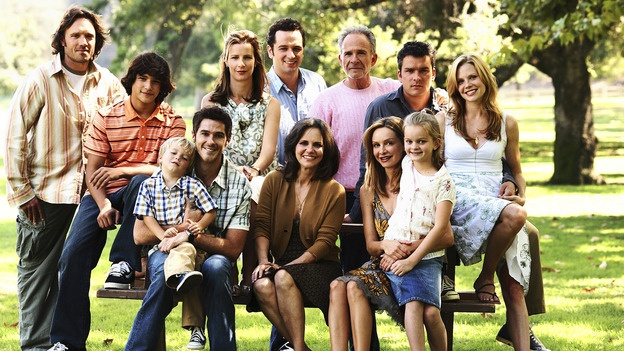
As we continue our blog series on Sibling Rivalry, I had to include the show Brothers & Sisters which went off the air more than a dozen years ago. This was always called a family drama, but it had a lot of comedic moments as well. It was created by Ken Olin of thirtysomething and Jon Robin Baitz, one of Broadway’s most successful playwrights.
I think what I loved most about this show was the cast. The Walker family’s matriarch was Nora Walker played by Sally Field. Her husband Bill (Tom Skerritt) passed away before the start of the show. He left the family his business, Ojai Foods, to run, and he left them a lot of secrets. Field and Skerritt had played a married couple before in Steel Magnolias in 1989.
📷tvcloser.com
The kids were Sarah (Rachel Griffiths), Kitty (Calista Flockhart), Tommy (Balthazar Getty), Kevin (Matthew Rhys), and Justin (Dave Annable). Bill’s mistress Holly (Patricia Wettig) and her daughter Rebecca (Emily VanCamp) are also regulars on the show, along with Saul (Ron Rifkin), Nora’s brother.
The pilot of the show looked a little different than the first episode. The Walker family had been the March family in the pilot—that reminds me of Little Women, not five siblings. Betty Buckley was Iva, the mother, who became Nora played by Sally Field. Kevin switched his name from Bryan after being played by Jonathan LaPaglia. There were a few other minor cast changes as well.
Of course, like in any normal family, the kids are very different. Sarah and Tommy work at the family business. Kitty is a conservative activist returning home. Kevin is a gay lawyer trying to deal with his identity, and Justin is the youngest, a former medical student, who came home from the Afghan War with some sad stories and an addiction problem. Sarah and Tommy both started the show married, and eventually they both went through a divorce. Kevin and Kitty both get married during the course of the show, so four spouses and children are added to the mix.
📷indiewire.com
Season one lets us get to know the siblings, and we learn about their dad through flashbacks. We also discover that he had a long-time mistress who has a child that may be another sibling.
The second season focused more on the personal lives of each character. Kitty is engaged. Kevin runs into an ex-boyfriend and begins seeing him again. Sarah gets a divorce and becomes a single parent. Tommy and Julia lose one of their twins while Nora begins dating.
Rebecca thought for most of season two she was a Walker but learns she is not and has to rework her relationship with the people she viewed as her siblings. Her father David, played by Ken Olin, was married to Wettig who played Holly in real life, so they needed little rehearsal for their relationship. Rebecca and Justin begin a romance when they realize they are not related. Then it is revealed that the siblings do indeed have a half brother and his name is Ryan (Luke Grimes). Holly gets entrenched in the family business, so Saul and Sarah leave the company to move on to other careers.
During season four, Kevin and Scotty toy with having a family. Kitty learns she has cancer. Sarah meets a man in France who moves to the US for her but it’s not as romantic back in California. Justin and Rebecca cancel their wedding when he returns to medical school; she finds out she is pregnant but then has a miscarriage.
📷entertainmentweekly.com
The final season finds Kitty’s husband Robert (Rob Lowe) in the hospital in a coma after a car accident. She turns off his life support. Kevin and Scotty begin the adoption process. The show ends with Holly having long-term memory problems. Nora finds a new profession in radio and meets up with her first love, Nick. It also brings us the revelation that Bill wasn’t the only one with secrets because Sarah is Nick’s daughter.
In looking at the plots and subplots from the different seasons, it could have been a very typical program about a family’s ups and downs. However, Ken Olin as producer ensured that this was a well-written and executed show. He also directed twenty of the episodes.
Another reason for the show’s success is that it was on Sunday evenings for its entire run. In early year, it didn’t have a lot of competition because the shows it was up against seemed to change quite a bit through seasons one and two. In 2009 the show was opposite Cold Case, but it kept its ratings in the top 30 for the third season in a row. In 2010 it lost the ratings battle to CSI: Miami and fell out of the top thirty before being cancelled the next year.
Fans fell in love with the show from the beginning, but it took longer to get the critics on board. The show received several Emmy nominations. Sally Field won for Best Actress in a Drama in 2007. That same year, Rachel Griffiths was nominated for Best Supporting Actress in a Drama but lost to Katherine Heigl from Grey’s Anatomy. In 2007, The Sopranos took home a lot of Emmy nominations. In 2008, Mad Men took over The Sopranos’ role. Field and Griffiths were nominated again, but Field lost to Glenn Close for Damages and Griffiths lost to Diane Wiest for In Treatment. In a déjà vu moment in 2009, Close again beat out Field for the Best Actress win.
Rob Lowe was smart to leave before the show ended. Like so many shows, it probably ran one season too long. I often look to the critics on imdb.com when I am considering a show or a movie. Their reviews are typically spot on when I watch the show. However, for this show, things were, like Olin’s thirtysomething, shows viewers absolutely adored or despised. I’ll leave you with two of the reviews, and you can watch an episode or two and decide where you fit on the spectrum.
“Brilliant Show by mtaffeot. 10/10. Brothers and Sisters is one of the finest TV dramas to come along in a very long time. The performances are superb from all involved, especially Sally Field, Rachel Griffiths, and Matthew Rhys.
Each Sunday night I am treated to one of the finest hours on television. The mixture of humor, drama and that whole family dynamic is very intriguing. This show takes you through a whole host of emotions in one sitting as the storylines of each family member unfold in such a way, it leaves you craving for the next episode.
The gay storyline involving Kevin and Scotty is outstanding. For once we have a complete and in-depth relationship between two men handled with maturity and intelligence. I’m so very pleased to see this on ABC network TV without much fuss being made. This is one of the finest gay storylines I’ve ever seen on TV.
Bravo to the writers, actors, and all involved in producing one of the finest TV dramas in years.”
Compare that review to this one:
“Can You Say: thirtysomething by Troubleboy. 2/10. Another dysfunctional family apparently representing today’s America, including a looney daughter as a conservative talk show pundit (gee, that’s unique) although Flockhart’s about 3 lbs heavier, but no less irritating, than Ann Coulter.
There’s no difference between this mob—their problems—and all the other sea of ‘look at me’ family-based reality programming on TV. How it garnered Golden Globes and has survived three seasons, one can only wonder.
Huff and Six Feet Under were head and shoulders over this dreg.”
📷pinterest.com
Obviously, there is a happy medium there somewhere. If you weren’t a thirtysomething fan, you probably won’t like Brothers & Sisters either. I was one of those people who loved thirtysomething in the eighties. I was also a huge fan of This is Us, which also had Olin on board. While I agree some of the plots on Brothers & Sisters were stretched to an almost unrealistic point, when the show was good, it was very good. The interactions between the siblings were very honest. They fought, they laughed, they cried, they got hurt, but they were always there for each other in the end. Were they dysfunctional? Yes, but I have yet to meet a family that isn’t. I hear rumors that there may be a few out there. But if we created a television show around them, I doubt the plots would be all that interesting. The show is not as well-written as This is Us, but it is so much better than a lot of what passes for television programming today. I’d love to hear your view on it.
This month we are examining shows about brothers and sisters in Sibling Rivalry. Today it’s Sisters.
📷cineblend.com
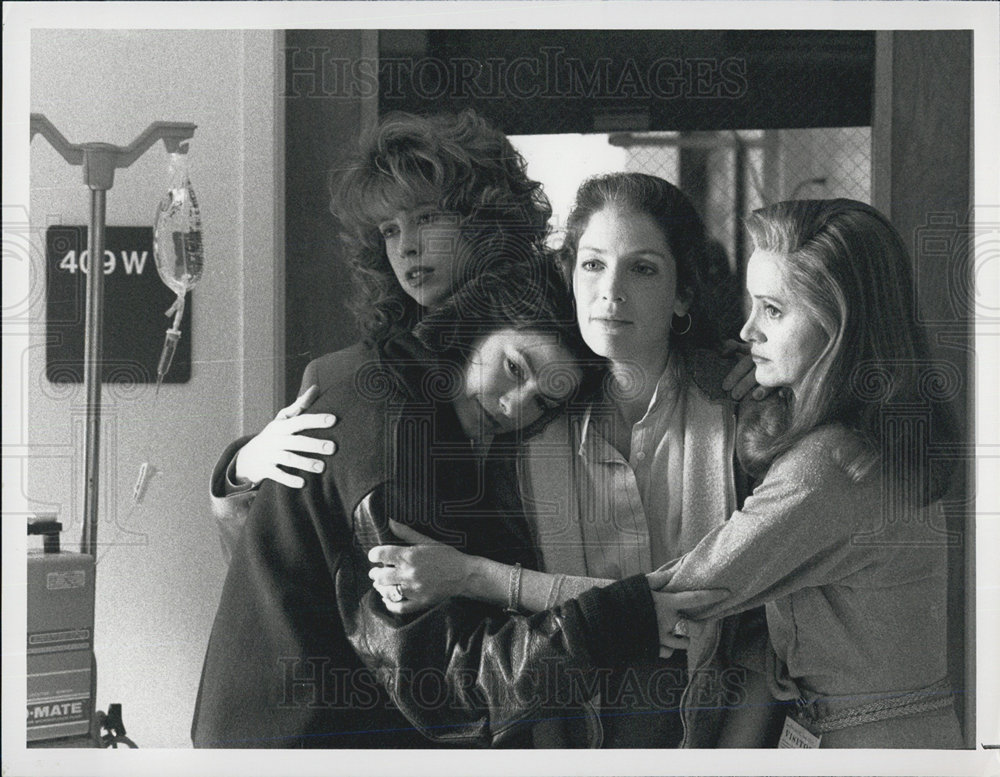
Sisters debuted on NBC in May of 1991 which was a weird time to start a show, but they decided to air seven episodes as a test run. It was successful, so it was put on the fall schedule for that year. It was on the air for six seasons. Ron Cowen and Daniel Lipman created the series and filled the role of producers.
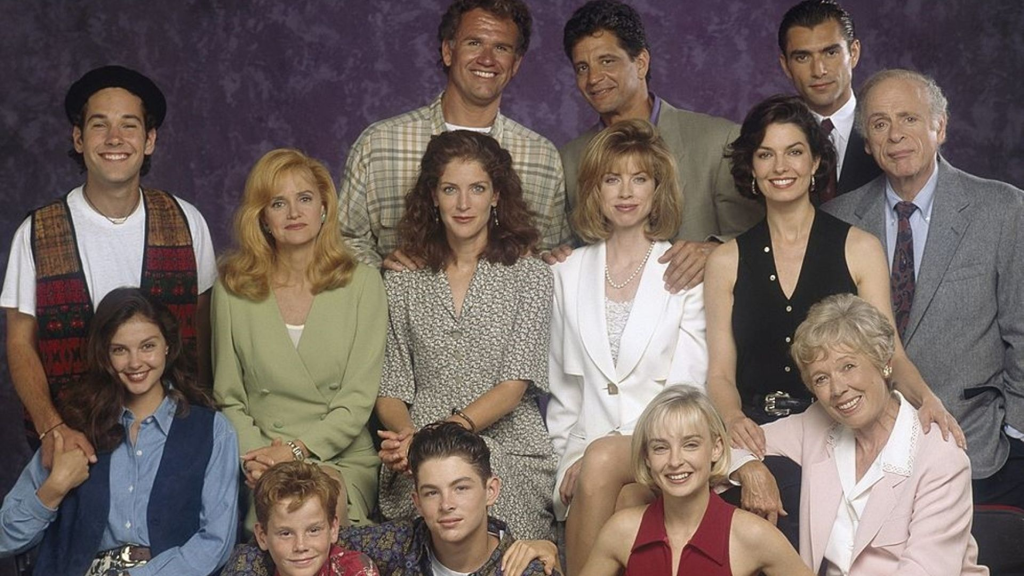
The show featured four sisters, the Reeds, who live in Winnetka, Illinois. The sisters were very different but were close. Their father had been a successful doctor who was not involved in the girls’ lives much but was involved in the lives of other women. Their mother Beatrice (Elizabeth Hoffman) became an alcoholic to help her through his absence and affairs.
📷reelgood.com
Dr. Reed made it known he wanted sons and the girls all were given “boy” nicknames. Alex (Alexandra) (Swoosie Kurtz) was the oldest. She was wealthy and married to Wade (David Dukes), a plastic surgeon. They have one daughter Reed (played by three actresses over the course of the show: Kathy Wagner [s1], Ashley Judd [s2-4] and Noelle Parker [s6]. Teddy (Theodora) (Sela Ward) was a laid-back artist who never could figure out what she wanted to do with her life. She has a daughter Cat (Heather McAdam) from her prior marriage. Georgie (Georgiana) (Patricia Kalember) was married to John (Garrett M. Brown) and was a stay-at-home mom of two boys, Evan (Dustin Berkovitz) and Trevor (Ryan Francis). Frankie (Francesca) (Julianne Phillips) the youngest, was a businesswoman trying to make a name for herself. She was a bit of a workaholic and an overachiever.
📷imdb.com
Ward was brought in to audition for the role of Frankie, but after reading the script she felt she was better suited to Teddy.
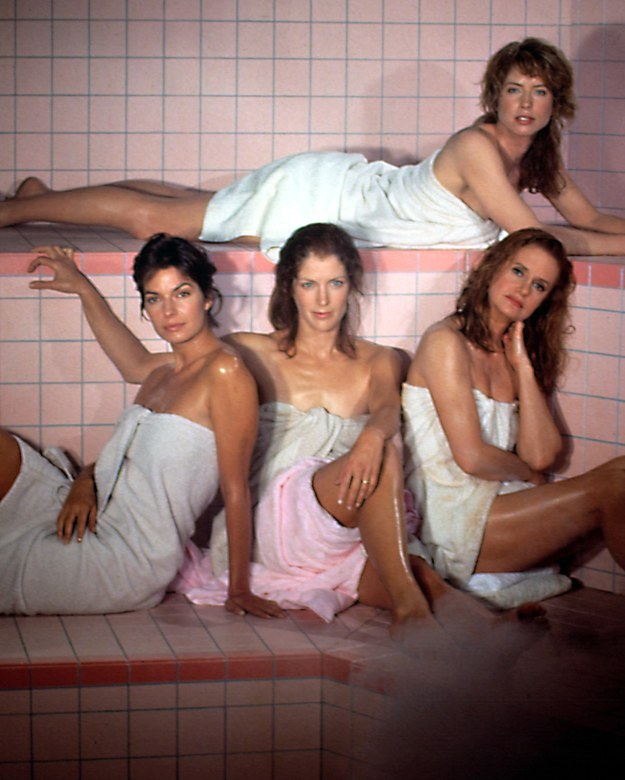
The first two seasons opened with the sisters having a weekly steam bath and chatting about what was going on in their lives. The sisters did not love this part of the show. Phillips said, “it was miserable.” She said “they were sprayed with mineral oil, sat in a cold towel for hours on a smoke-filled soundstage. . . . We were all severely uncomfortable, and it would go on forever.” Kalember said that it helped the actresses become close though. She said, “if you aren’t able to bond under those circumstances, you are not human.”
A lot of flashbacks are included on the shows, allowing us to learn where some of their personality traits developed and situations in their past that still influence the present. The show found the perfect blend of comedy and drama. They also had a few Moonlighting-like episodes where they were based on movies like The Wizard of Oz or the sisters were in fantasy situations.
📷parade.com Sela Ward
During season one Beatrice sells the family home and moves into a condo. She is arrested for driving under the influence. Alex suspects her husband of having an affair only to learn that he is a cross dresser. Teddy returns home to Winnetka and learns that her ex-husband Mitch (Ed Marinaro) is now dating Frankie. She struggles with this and pursues Mitch who discourages her. One night they end up together, but he asks Frankie to marry him, and they plan a quick wedding that Teddy ruins. Frankie stops seeing Mitch, and Teddy realizes she behaved badly and decides to go back to California; however, before leaving she learns Georgie’s son Evan has leukemia, so she stays to help her sister.
In season two, Georgie is dealing with Evan’s treatment. Alex realizes Wade has been cheating on her for six months and they divorce. Reed drops out of school to punish them. Frankie and Mitch spend some time together for a business investment and decide to elope. Teddy realizes she is pregnant and knows it is Mitch’s. She tells her family it was a one-night stand; later Mitch figures out it was his, but Teddy has a miscarriage. Beatrice starts dating Truman (Philip Sterling) who lives in a condo near her. Teddy gets a job at a boutique but that doesn’t last, and she goes through several jobs during the season, eventually designing clothing for local women. Wade tries to convince Alex to come back home and she oddly begins dating her plumber. Alex and Wade reconcile. Frankie learns she cannot have a child, so she asks Georgie to be her surrogate.
📷tvguide.com Swoosie Kurtz
Season three finds Beatrice eloping. There is an elaborate ceremony planned that they don’t show up to and Reed ends up marrying her boyfriend Kirby (Paul Rudd). Georgie gives birth to Thomas George and has a hard time not being a mom to him. Teddy finds an investor and is very successful but then he sells it to another person without consulting her. The new investor does not see eye-to-eye with Teddy’s vision, so she leaves the company. Frankie and Mitch divorce and fight over custody of Thomas. In another weird twist for Alex, she discovers she has breast cancer and develops a comedy routine to perform.
A lot of activity occurs in season four. Cat is raped and the police investigator, Falconer (George Clooney) helps her remember and identify him. He is eventually shot at the courthouse by a former victim. Frankie gets out of her stressful job and buys Sweet Sixteen, a local diner. Teddy runs into Falconer at an AA meeting, and they begin dating. Georgie struggles with a deep depression. Her son Trevor runs away from the school he was at and does not contact the family. Alex is hired for a television talk show. She meets Big Al (Robert Klein) who owns a large appliance store and sponsors her show. They eventually marry. Georgie and John have separated with all the drama in their family, and they reunite. You always know it’s a bad sign when another sibling is brought into the fold because it usually means ratings are down. In this show, Charley (Charlotte) (Sheila Kelley) meets her sisters because she needs a bone marrow match. None of them can help her but a donor is found, and she becomes part of the family. At the end of the year, Trevor returns after a tornado hits Winnetka, Reed comes home and gives birth to a daughter, Teddy and Falconer marry on a plane during a storm, and Big Al is arrested for tax evasion on his wedding night.
📷pinterest.com Patricia Kalember
Teddy learns in season five that she is not meant to be happy. Falconer is murdered by a criminal he was going to testify against in court, and Teddy starts drinking again. Georgie sees a therapist who causes her to remember things about her father molesting her that never happened. (The therapist was played by her real husband, Daniel Gerroll) They begin an affair, and she leaves John, thinking this is her great love, but the doctor ignores her. Frankie’s old investment ends in her managing a boxer whom she begins to date. Big Al gets out of prison and decides to run for mayor. Truman has Alzheimer’s and Beatrice has to deal with that. He wants her to end his life when the disease has advanced. She does and to help her afterward, Charley offers her a job as a receptionist at her free clinic. Teddy has a brief relationship with Jack Chambers (Philip Casnoff) the man who got Falconer’s transplanted heart. Frankie has moved to Japan to market a new cow character she created.
In the final season, Georgie goes to graduate school for psychology. She begins seeing a 24-year-old student. Teddy and Cat are carjacked. Teddy buys a gun for protection and is accidentally shot in the head with it. She is in a coma, and Alex convinces Dr. Sorenson (Stephen Collins) to operate. Teddy and Sorenson start a relationship after her recovery. Cat decides to enter the police academy. Reed returns to Winnetka after divorcing Kirby and losing custody of her daughter. She starts a high-priced prostitution company and Alex turns her in and Reed is sentenced to community service. Big Al needs a heart transplant which he survives.
📷imago.com Julianne Phillips
In the finale, Georgie reads her thesis about sisters which makes Alex and Charley mad. Beatrice has a major stroke and dies, which brings the sisters back together. Frankie moves back to Illinois. Georgie and John reconcile at Bea’s memorial service. Teddy is pregnant with a daughter she has already named Beatrice Rose.
The ratings for this show were never stellar. It was in the fifties for the early seasons but dropped to #75 for season five and #103 for season six. However, it received eight Emmy Award nominations. Sela Ward won for Outstanding Actress in 1994. Swoosie Kurtz was nominated that same year and in 1993. Kurtz was beat out by Kathy Baker for her role in Picket Fences.
I think the success of the show, despite some soap-opera-like plots was the fact that it blended humor with heart. Also, the actresses were believable as sisters. Phillips said that “if God himself came down and said, ‘I’m going to design a show: Who would you like to work with?’ you couldn’t pick better people.” She went on to say that “There was something that just clicked. That chemical, indescribable thing. There was a real comfort and connection. It doesn’t happen often.”
📷meethk.com
Kurtz agreed. She said that “from the beginning we had chemistry on camera, but we had chemistry in real life too. . . . I’m an only child, so I thought this is my chance. Siblings by proxy.”
I could not find out why, but the show is not available on DVD. There is an avid fan club for this series, and they have campaigned to bring it to Netflix or another streaming service, but so far, they have had no luck. It’s too bad because it is a show well worth revisiting. For now, you’ll just have to take my word for it.
This month our blog is all about Sibling Rivalry. It’s a bit unusual because it features two sitcoms and two dramas. I thought it might be fun to start and end with the sitcoms, and today we are learning all about My Sister Sam.
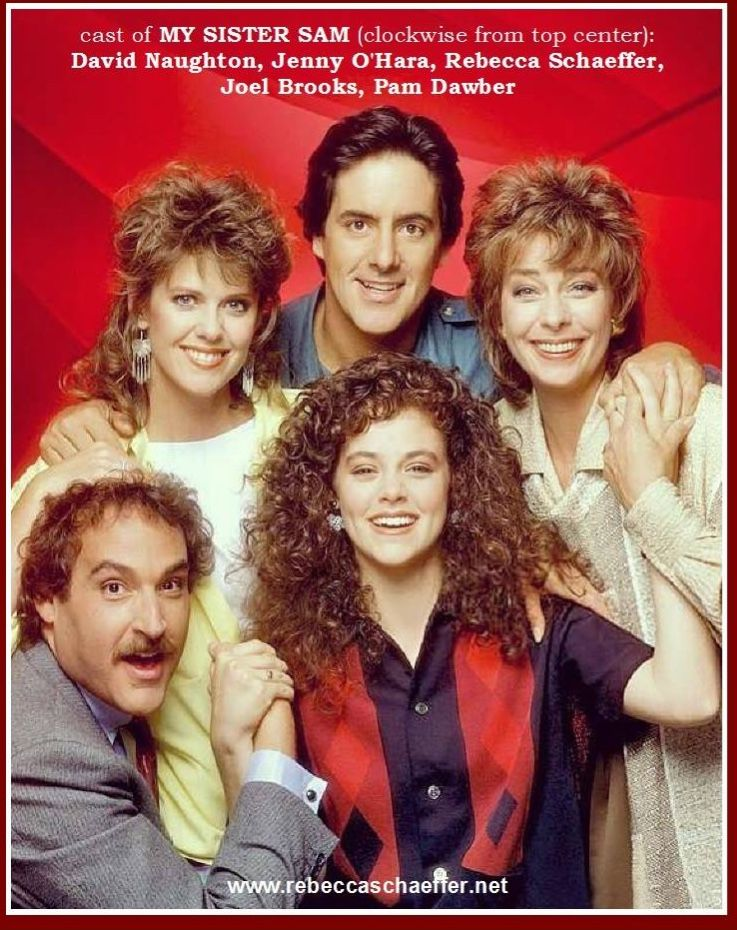
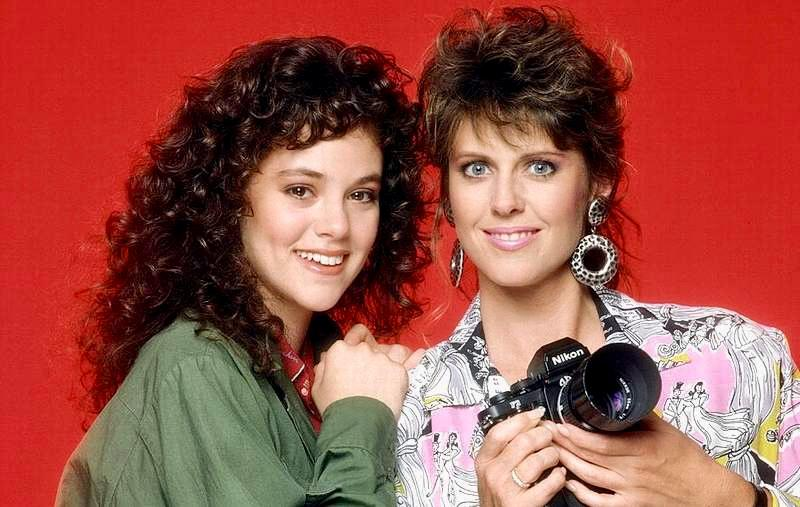
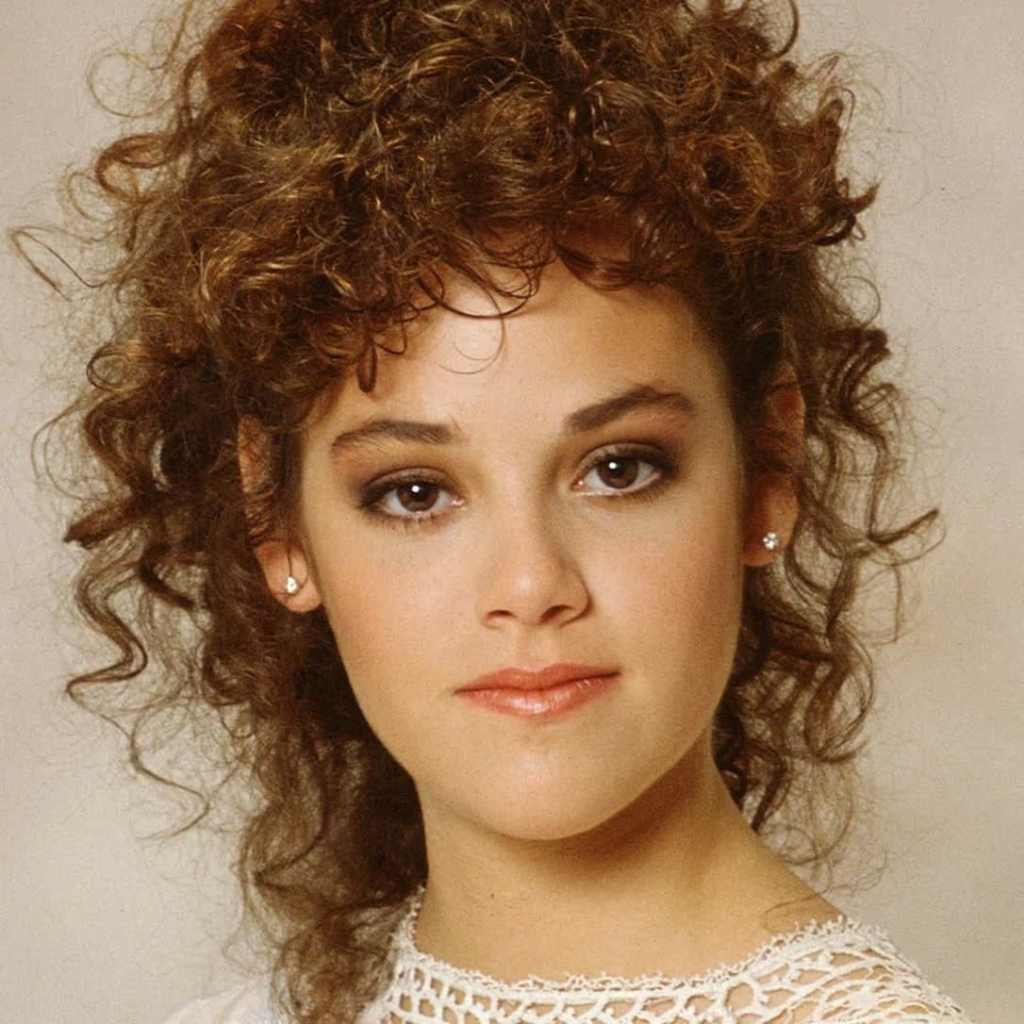
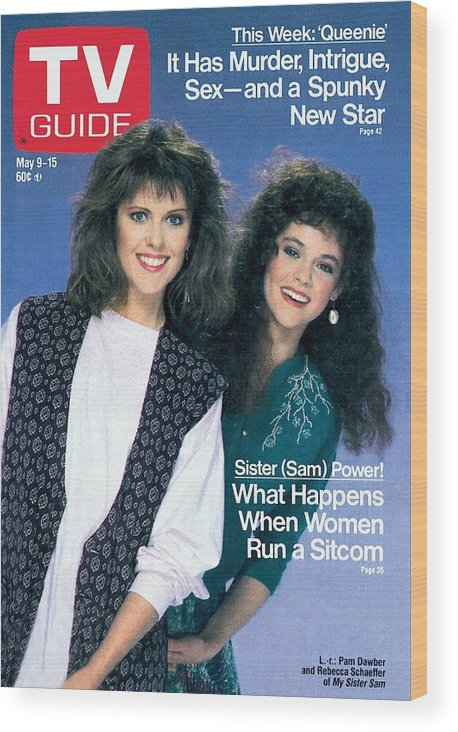
From 1986 to 1988, My Sister Sam aired on CBS. Samantha Russell (Pam Dawber) is a freelance photographer who lives in San Franciso. Her life is turned upside down when her 16-year-old sister Patti (Rebecca Schaeffer) shows up on her doorstep to live with her. They are 13 years apart in age, and Patti had been living with their aunt and uncle in Oregon since the death of their parents. In real life, Schaeffer grew up in Oregon.
The cast is rounded out by coworkers Jordan Lucas, Sam’s agent (Joel Brooks); her assistant Dixie (Jenny O’Hara); and neighbor/photojournalist Jack (David Naughton), who is a ladies’ man.
The sisters have great chemistry, but they have very different personalities. Sam is a bit uptight and alphabetizes her juices in the refrigerator. Patti is a Valley girl, very laid back and a wanna-be rock star who plays the guitar.
In a Chicago Tribune interview in 1987, Dawber gave her philosophy of the show: “I see Sam as a woman who’s successful, who has a beautiful apartment but who doesn’t have the answers. Plus, she has to cope with a teenager who’d put her sister on a pedestal—she moved in because she thought Sam’s life was perfect—but finds out that she’s pretty neurotic. I mean, here is a woman, for openers, who’s compulsively neat, who needs to have control in her life.”
📷imdb.com
Their personal relationship mirrored their television one. Dawber said she considered Schaeffer a sister. She mentored her and even invited her to move into her home in LA where Dawber lived with Mark Harmon, her then-boyfriend, now husband. Dawber said that “We just kind of fell into this sisterly thing, . . . Cause I’d had a sister. My sister passed away when she was 22 and I was 25. And so having another young girl in the house was something I was very comfortable with. It was good for us.”
Pam Dawber’s production company, Pony Productions, developed the show created by Stephen Fischer. The screenplay was written by Fischer and Diane English. Dawber wanted to base her character a bit on Mindy from Mork and Mindy. She said that she was “not a comedian. I’m a reactor to all the zany people who revolve around me.” English and Mimi Weber took on the producer role, with the show filmed at The Burbank Studio. English would go on to write for Murphy Brown.
The theme song, which I admit I don’t remember, was called “Room Enough for Two,” and it was written by Steve Dorff and John Bettis. Kim Carnes, who had a hit with “Betty Davis Eyes,” sang the song. Dorff later was the composer for Murphy Brown and Murder She Wrote. Bettis worked on The Godfather, Part III and Star Trek V.
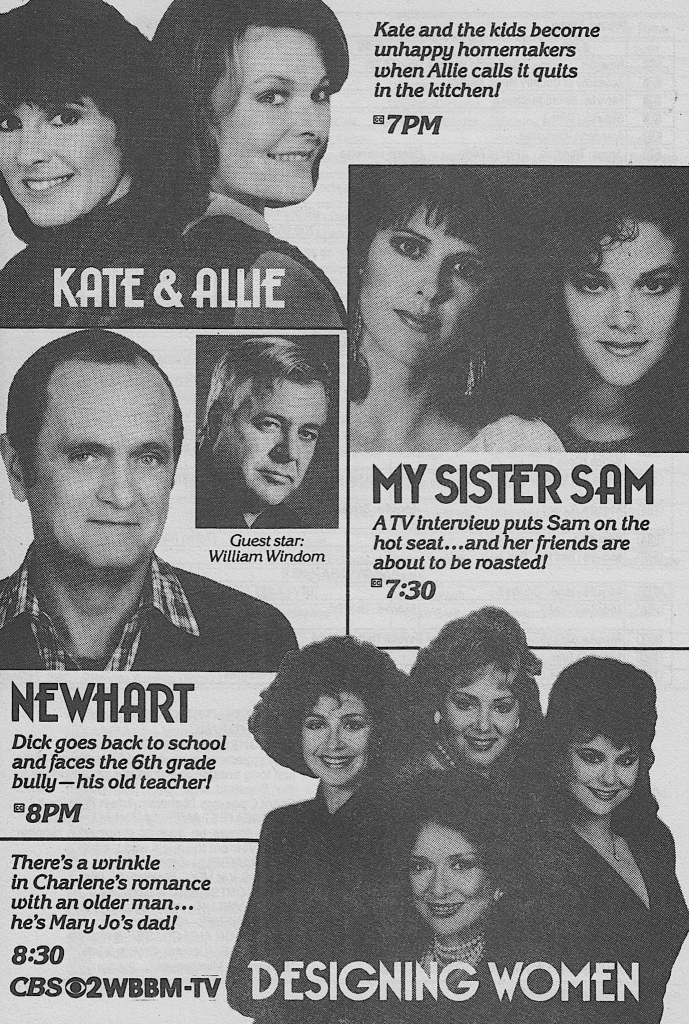
The show had a great time slot between Kate and Allie and Newhart on Monday nights. It ranked 21 overall. Of course, the networks rarely leave well enough alone, so they moved the show to Saturday nights opposite The Facts of Life. The end of the second season found the show down 50 points at 71overall. The network was toying with canceling the show, but after receiving a lot of fan letters, they brought it back in March of 1988. It moved to Tuesday nights and the ratings increased. However, the ratings did not stay that high, probably because the competition was Who’s the Boss and Matlock. In April, CBS canceled it outright, leaving 12 unaired episodes.
Sadly, a year after the show was canceled, Schaeffer was murdered in her home by an obsessed fan. After living with Pam, Schaeffer got her own place. She was living in West Hollywood when she was killed. Dawber said she told Schaeffer not to put her real name on her mailbox. Dawber had a scare with a stalker earlier in her career, and she learned not to put her real address on her driver’s license or anything that a fan could track you down with. Schaeffer didn’t listen and her name was on her mailbox.
The man who killed her, Robert Bardo, said he saw her in a promo in 1986 and began watching the show. He sent her fan letters. At one point, he flew from Arizona to LA to the studio to look for her. He took gifts to the studio several times, but studio security always stopped him. Bardo returned to Arizona. After the show was canceled, Schaeffer took on several movie roles which were very different from her role as Patti. One love scene enraged Bardo. Bardo was stopped from buying a gun due to mental health issues. He convinced his brother to buy him one for target practice. Then he boarded a bus to LA. He hired a private detective to find Schaeffer’s address; the detective located it through the Department of Motor Vehicles.
One morning Schaeffer was waiting for delivery of a script of The Godfather III for an audition with Francis Ford Coppola. Bardo rang her bell, and she answered thinking it was the delivery person. He introduced himself and told her she had sent him a card and photo after receiving fan mail. She explained she was busy that day, so he went to a local diner. He returned to her house, and she said he was wasting his time expecting any relationship with her. Then he shot her point blank. He got away and returned to Tucson but was apprehended a day later after running in and out of traffic, shouting that he was the one who killed Rebecca Schaeffer.
📷plex.com
Dawber was filled with grief and anger. She reunited with the cast of My Sister Sam for a Public Service Announcement for gun control, and she testified before Congress for stricter gun laws. After Schaeffer’s death, California passed an anti-stalking law in 1990. Now all fifty states have one on the books. Bardo was sent to California where he was found guilty of first-degree murder. He was sentenced to life in prison without the possibility of parole.
My Sister Sam was a ground-breaking show having women in so many of the critical roles. During the Chicago Tribune interview, Dawber said that “the significant thing is that My Sister Sam is a show about women that is run by women. . . . Not only are three of our five regular cast members women, but we have a female executive producer, two writer-producers, and a director. It really wasn’t intentional. It just happened that way.”
It would have been interesting to see how the show fared if it had kept its original time slot and the plots that would have been written as Patti became an adult. Did she begin to resemble her sister more or did she keep her carefree personality? And would her sister adopt some of her less serious traits? Almost every review I read about the show said it was genuinely funny, adorable, relatable, etc. With all the moving around the schedule and “is it on the air or not” decisions, only 44 episodes were created, so there aren’t enough for syndication or DVDs.
And of course, it’s devastating what happened to Rebecca Schaeffer. She was a rising star, and you have to wonder what type of career she would have had if she had lived more than 22 years. Dawber had to experience the death of another sister much too young to die. I’m glad a lot of laws came out of the experience, but it was such a brutal murder. Now, 35 years later, our country is still dealing with devastating murders because not enough laws have been created.
In this last blog in our series of Supportive Men, today’s actor might not be someone most people expect to see when talking about television. When most people think about Leslie Nielsen, they think of Airplane! and some of his other movies. While he did have a prolific movie career, he also has a well-deserved place in television. This guy amassed 259 (150 in television) acting credits during his six-decade long career.
📷tmdb.com
Nielsen was born in Saskatchewan, Canada in 1926. His mother was from Wales, and his father was a Royal Canadian Mounted Policeman. His older brother served in politics, being a Canadian Member of Parliament, a cabinet minister, and a Deputy Prime Minister of Canada. I read several sources that said his father was abusive, and Leslie wanted to move out as soon as possible.
Leslie enlisted in the Royal Canadian Air Force, serving until the end of WWII. He was legally deaf, wearing hearing aids most of his life, but he was able to train as an aerial gunner.
After the war, he worked as a disc jockey in Calgary, Alberta before enrolling at the Lorne Greene Academy of Radio Arts in Toronto. He was offered a scholarship at the Neighborhood Playhouse in New York.
📷wikipedia.com Bonanza
He made five television appearances in 1950 with the first being on The Actor’s Studio. He continued working in television, primarily on dramatic theater series, through the 1950s. In 1956, he had his first big-screen roles, appearing in four movies that year including Ransom, Forbidden Planet,The Vagabond King, (Nielsen later referred to this film as the “Vagabond Turkey”) and The Opposite Sex.
Leslie discussed his role in Forbidden Planet: “Supposedly a science fiction version of Shakespeare’s The Tempest . . . The Trekkies today regard it as the forerunner of StarTrek. I just had to wear a tight uniform and make eyes at Anne Francis. I was pretty thin back then.”
He became an American citizen in 1958 but continued to be proud of his Canadian citizenship as well.
While most of his credits for the late fifties were movies, he jumped back into television in the sixties, appearing in forty different shows. Many of them were dramatic theater roles, but you can spot him in Alfred Hitchcock Presents, Route 66, Wagon Train, DanielBoone, The Wild Wild West, Dr. Kildare, Bonanza, The Man From U.N.C.L.E., and Gunsmoke. His only recurring role during this decade was on Peyton Place where he played Kenneth and Vincent Markham in 18 episodes.
📷pinterest.com on M*A*S*H
The seventies were almost a repeat of the sixties. His recurring role was on The Bold Ones. He also appeared in Medical Center, Mod Squad, M*A*S*H, Barnaby Jones, Hawaii Five-0, Kojak, Columbo, and The Love Boat.
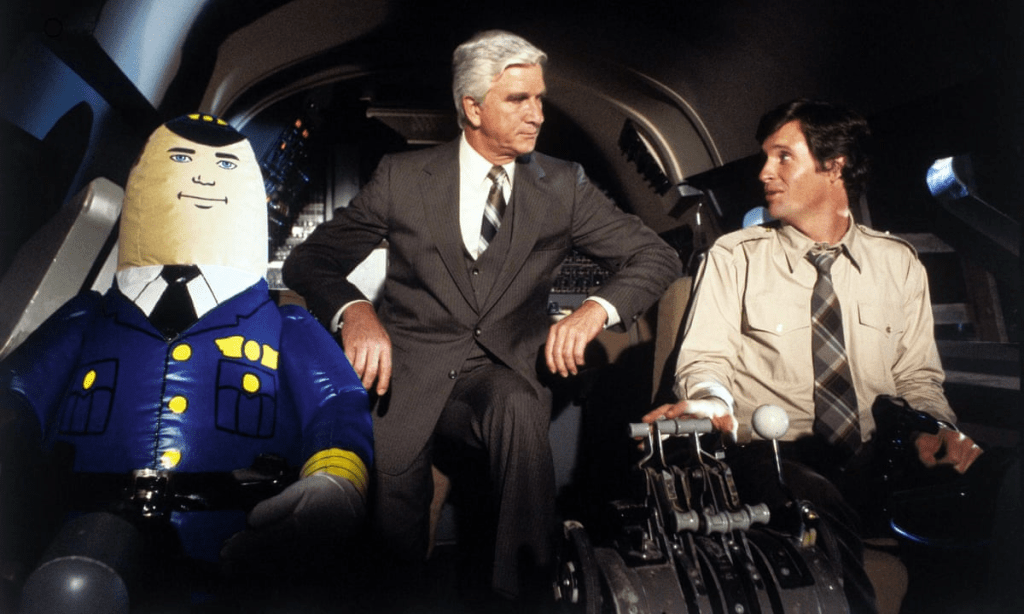
1980 brought him the role of Dr. Rumack on Airplane!. Nelson’s deadpan delivery of lines in that movie is what most fans today remember about his career. Of course, his response to the line of “Surely you can’t be serious?” of “I am serious. And don’t call me Shirley” is still repeated today. Leslie said, “he was pleased and honored that he had a chance to deliver that line.” Film critic Roger Ebert once called him “the Laurence Olivier of spoofs.”
📷themoviebuff.com Airplane!
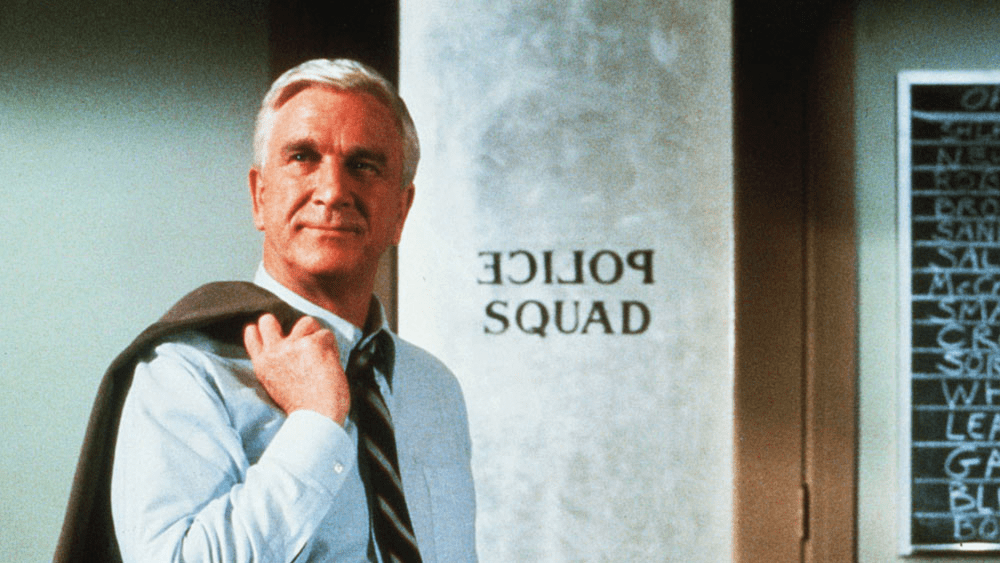
He continued in these types of roles in Police Squad and Naked Gun and the sequels. His movie roles increased in the eighties and nineties, but he continued to accept television roles off and on. You can catch him on Murder She Wrote, Highway to Heaven, Who’sthe Boss, The Golden Girls, and Evening Shade.
His roles continued throughout the 2000s until his death, but the last decade included fewer memorable shows, although he worked less overall. When reflecting on this, Neilsen said that “I’m afraid if I don’t keep moving, they’re going to catch me . . . I am 81 years old, and I want to see what’s around the corner, and I don’t see any reason in the world not to keep working. But I am starting to value my down time a great deal because I am realizing there might be other things to do that I am overlooking.”
📷npr.org Police Squad
While Nielsen was very successful in his career, he was not as successful with his marriages. From 1950-56, he was married to Monica Boyar. His longest relationship was with wife Alisande Ullman from 1958-1973. He then married Brooks Oliver for two years from 1981-83 and then Barbaree Earl from 2001-2010.
One of his hobbies was golfing, and he later did some humorous instruction videos about the sport. He once said, “I have no goals or ambition. I do, however, wish to work enough to maintain whatever celebrity status I have so that they will continue to invite me to golf tournaments.”
Nielsen died in his sleep in 2010 from pneumonia.
He received two Walk of Fame stars: one in Hollywood in 1988 and one in Toronto in 2001. Nielsen was known for his flatulence gags, especially on movie sets, and his tombstone says “Let ‘er Rip.”
While Nielsen’s career is impressive, what I loved most about him is that he seemed to thoroughly enjoy life. That’s a great reminder for us all. Our best role should be enjoying life to the best of our ability.
This month we are celebrating some of our favorite Supportive Men, actors who usually are not the star of a show but add the special flavor only they can to some of our favorite shows.
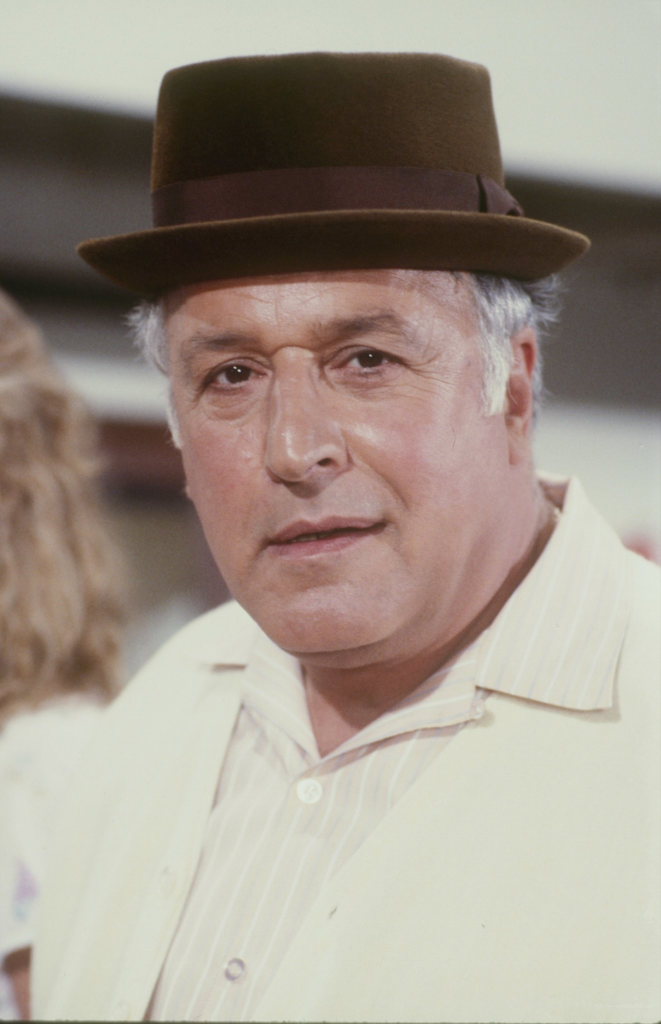
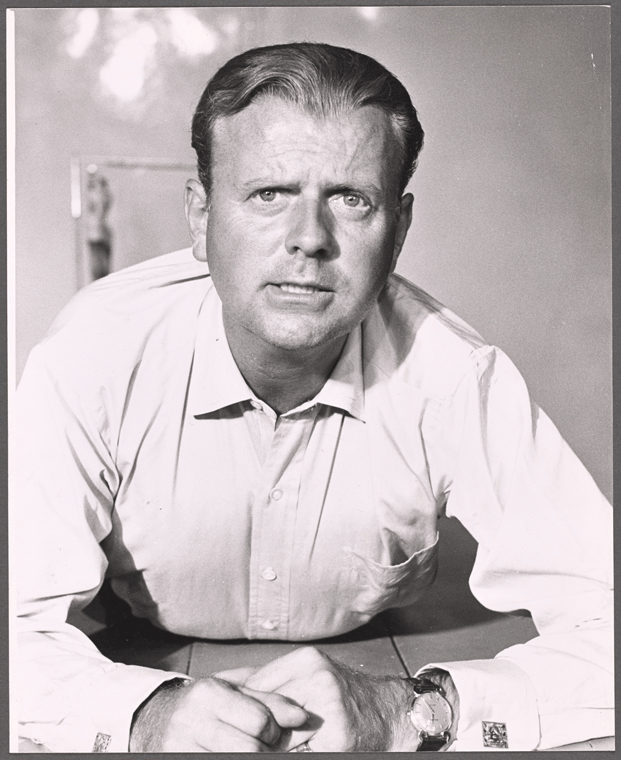
Before we move on to our topic today, can I just say a huge THANK YOU to all of you who have joined me on this journey through classic television. Today is my 400th blog and it has been so much fun. Next week will be 401, but for today we are looking at the career of Vic Tayback.
📷graduation photo
Most of us probably know him best as Mel on Alice; he played Mel Sharples in both the original movie, Alice Doesn’t Live Here Anymore, as well as the television show that was on for nine years.
Tayback was born in Brooklyn in 1930. His parents settled there after leaving Aleppo, Syria. During his teenage years, the family moved to California where he attended Burbank High School. He loved sports and played on a variety of teams, his favorite being football.
After high school, he enrolled at Glendale Community College. He also spent some time with the US Navy.
With his love of sports, he decided to attend the Frederick A. Speare School of Radio and TV Broadcasting to be a sports broadcaster. While there he was required to perform in a production of “Stalag 17” for one of his classes. He wasn’t thrilled about doing so, but he realized that he loved making people laugh and decided to switch his career to acting. While trying to break into the industry, he paid his dues driving a cab and working as a bank teller.
📷embarrassingtreasures.com Family Affair
The first of Tayback’s astounding 151 acting credits occurred in 1958 in a little-remembered series, Buckskin. This western was set in Annie O’Connell’s boarding house in Buckskin, Montana in 1880 and the stories were told by ten-year-old Jody. Vic continued to receive a few other appearances on television in the late fifties, as well as two films.
In the sixties, Tayback’s career took off. He would show up on 32 television episodes and 9 big-screen films, including With Six You Get Eggroll with Doris Day and Brian Keith. His tv roles were in comedies such as F-Troop, I Dream of Jeannie, Family Affair, Get Smart, The Monkees, and That Girl. He also could be seen in a variety of dramas that included 77 Sunset Strip, Dr. Kildare, Rawhide, Cimarron Strip, Star Trek, and Mission Impossible.
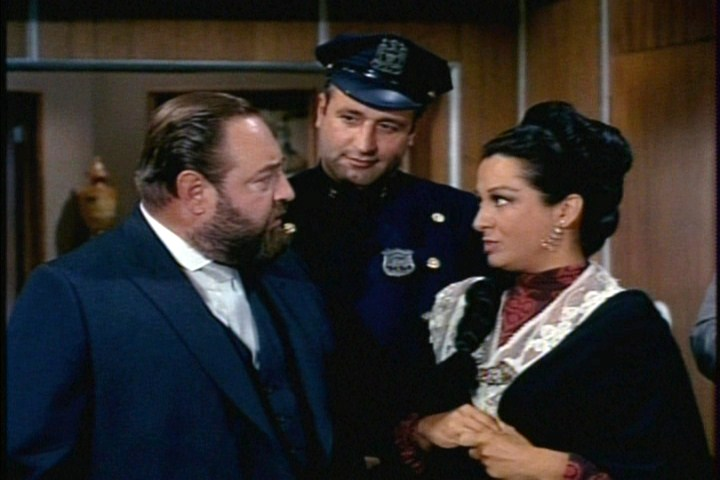
📷newyorkdailynews.com The Cheap Detective
The sixties also found Vic in the role of groom. In 1963, Tayback married Sheila Barnard, and they remained married until his death.
During the seventies, his appearances escalated to more than forty television series and ten movies. Some of his television shows included Bonanza, TheMary Tyler Moore Show, Bewitched, Columbo, Mannix, Ironside, Mod Squad, The Partridge Family, All in the Family, Barney Miller, Cannon, Medical Center, Family, and Hawaii Five-0. His movies included a few genres running from Disney’s The Shaggy DA to Papillon (Papillon was the story of a French convict who befriends a fellow criminal in South America in the 1930s, and he plans an escape).
It was during the mid-seventies that he was offered the role of Mel Sharples. In 1974 the movie was released, and the television show aired in 1976. The show was very popular with viewers. Vic said he and Mel were somewhat similar characters. While people still quote Flo on the show with her “Kiss my grits,” Tayback had his own tagline on the show, “Stow it.”
📷imdb.com Alice
If you didn’t see the show, it featured a greasy-spoon diner in Phoenix, Arizona. Alice moves there after the death of her husband with her son Tommy. She becomes a waitress at Mel’s along with sassy Flo and shy, gullible Vera. Despite the bad food, they have a lot of regulars who come in for a meal. If you want to visit the restaurant, the building it was based on is at 1747 NW Grand Ave in Phoenix and was called Pat’s Family Restaurant. (It was also featured in American Graffiti.) It is now called Mel’s Diner. According to Trip Advisor, it is ranked #448 out of 1795 restaurants in Phoenix.
📷imdb.com
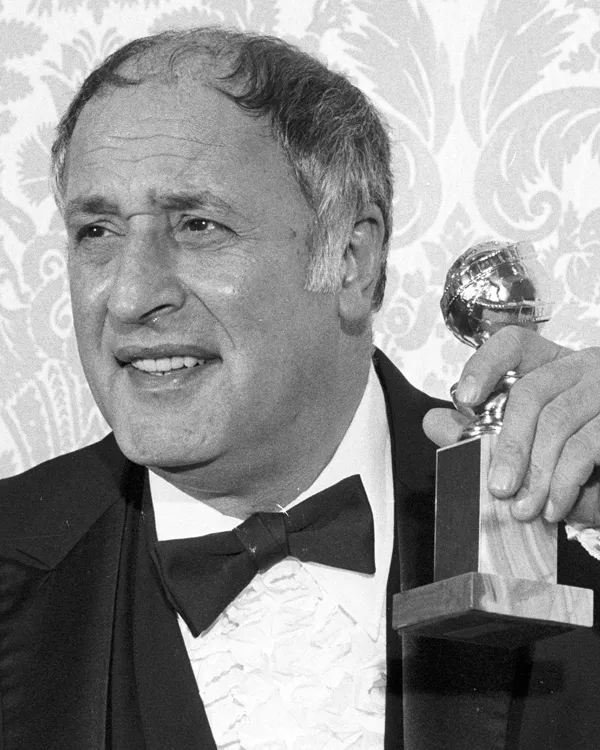
The role of Mel won Tayback Golden Globe awards in both 1979 and 1980. In 1978 he was nominated for an Emmy as Supporting Actor in a Comedy. While he did not win, he was in some amazing company. That year, fellow nominees included Harry Morgan and Gary Burghoff for M*A*S*H, Tom Bosley in Happy Days, and Rob Reiner from All in the Family, who took home the win that year.
The series aired on Saturday nights and the first year was in the top thirty. In 1977, its second season, it was moved to Sunday nights, following All in the Family where it rose into the top ten. In 1979, All in the Family left the airwaves, and Alice then followed One Day at a Time. Seasons three-five, it continued to be in the top thirty. In 1981, the show was moved to Monday nights up against M*A*S*H where it fell out of the top 30. However, season seven found it back on Sundays following The Jeffersons where it rose back into the top thirty. However, it took another dive in ratings the next year and then was cancelled. I think it probably stayed on the air a year or two beyond when it should have. However, interestingly enough, the year it was cancelled, CBS introduced 15 new shows. I’m not sure most people have ever heard of any of them; they were all gone by 1986 with the exception of The Twilight Zone (reboot) and West 57th, which was a news show aimed at younger audiences.
Vic was also an avid horse-racing fan and owned quite a few thoroughbreds. On Alice, Mel was also a track fan, and sometimes the writers asked Mel for names of horses they could use, and he often gave them names of his horses.
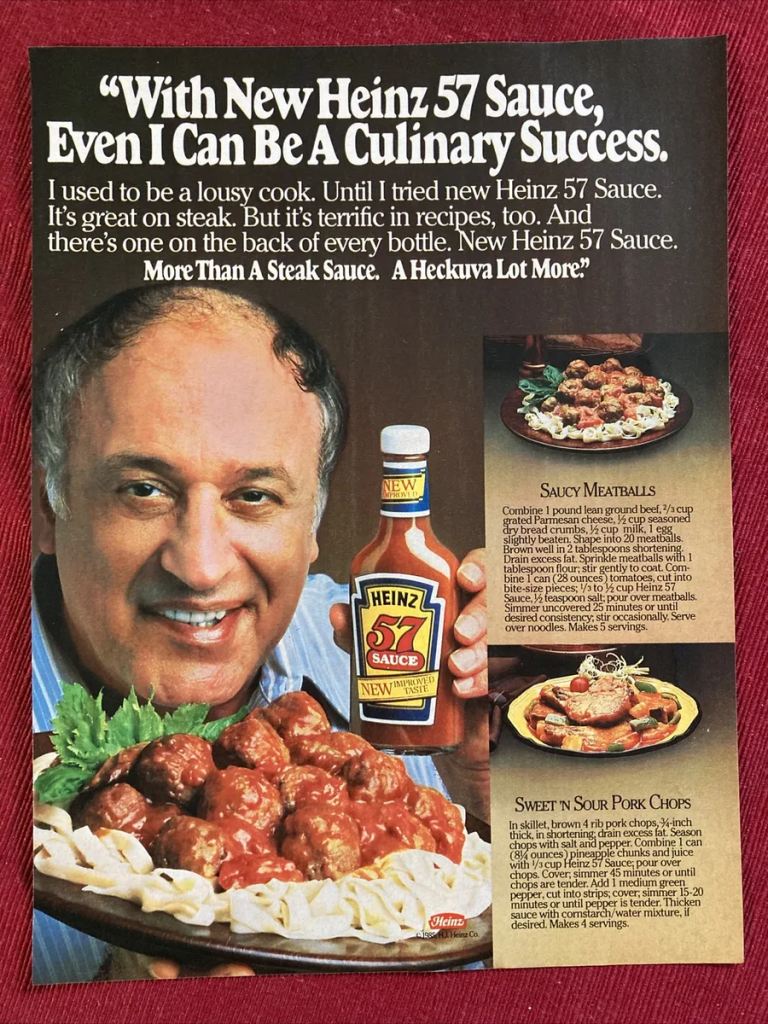
On the show, Vic was often made fun of for his bad cooking. In a 1985 interview he said, “If I walked into a restaurant, the other diners would look around and say, ‘I hope you’re not cooking.’” Heinz then offered him the role of spokesperson for their Heniz 57 sauce and his line in the commercials, was “I used to be a lousy cook.” He was also remembered for an Aqua Velva commercial he did with Pete Rose.
Unfortunately, Tayback was a heavy smoker which caused heart trouble for him. While doing Alice, he had a triple-bypass surgery. While he did try to quit numerous times, he just could never kick the habit. In 1990, he died from a heart attack at age 60.
📷goldenglobes.com
While we were cheated of several decades of performances from Vic with his early death, he did leave an amazing legacy in the Company of Angels theater in Los Angeles. According to its website, “In 1959, a group of actors, including Tayback, Leonard Nimoy, Richard Chamberlin, and Vic Morrow founded the theater to provide a space for actors and other theater artists to work on their craft free of commercial constraints.”
Thank you, Vic Tayback, for deciding to make people laugh in your career and investing in the future of acting so those memories continue in the future.
This month we are discussing Supportive Men, and I thought it was time to look at the career of Ted McGinley. He’s never been the star of a show, so he often sneaks under the radar, but he is someone we all recognize and appreciate.
📷decider.com
McGinley was born in Newport Beach, California in 1958. He could definitely pull off the California Surfer boy image, so it’s no surprise that he was into athletics, especially swimming, in high school. He worked as a lifeguard at the beach in the summer. USC gave him a scholarship for water polo, and he majored in urban planning and real estate.
Even though he was the MVP of his team, his scholarship was not renewed. He had been doing some modeling work on the side and with the lack of a scholarship, he decided to move to New York for more opportunities.
📷happydays.com
His modeling career spurred his acting career when he was spotted in GQ and cast as Roger Phillips, a Cunningham nephew from 1980-1984 on Happy Days. After winning the nationwide talent search, he had to face a steep learning curve with no acting experience at all. He doesn’t watch his early work on Happy Days because he hates to be reminded of his awkward performances. He said he “had to work on his lines at home and concentrate on the set before my cues. It was all so new. I’m bumbling away, and I hear stories of Ronny Howard, who forgot his lines just twice in seven-and-a-half- years.”
He studied his costars Henry Winkler, Marion Ross, and Tom Bosley. He also joined an improv class. He learned timing and great tips for developing acting skills.
He also spent four years on The Love Boat as Purser Ace Covington Evans from 1983-1987.
📷metv.com On The Love Boat
This was the decade his movie career began when he was cast in Revenge of the Nerds as Stanley Gable; McGinley reprised his role in the third and fourth Nerd movie franchise hits as well.
After The Love Boat ended, he made the rounds, appearing on shows that were popular including Dynasty, Hotel, and Perfect Strangers. He also took on several movie roles every year.
📷greginhollywood.com
In 1989, he joined the cast of Married . . . with Children as Al Bundy’s best friend Jefferson D’Arcy, which he called a great, great gig.” It was during this time, Ted married Gigi Rice.
McGinley kept busy for the rest of the 1990s and early 2000s, never going long in between movies or television appearances; he had recurring roles on several shows including Sports Night, The West Wing, and Charlie Lawrence. Many people don’t recall the last show, because it was only around for a short time in 2003. It starred Nathan Lane as a freshman congressman from New Mexico who lives near Graydon Ford, played by McGinley, a neighbor from the opposing political party.
He got another break from 2003-2005 when he starred on Hope & Faith.
📷tvseriesfinale.com Hope & Faith
McGinley has continued his busy streak since 2005, although he has not been part of a cast during the past two decades. He’s amassed 96 acting credits since 1982. In 2008, he took a stab at Dancing with the Stars, paired with pro dancer Inna Brayer. Unfortunately, he was the second contestant to be eliminated.
Considering McGinley got his first job without any acting experience and had to learn this skill thrown into the fire, he has developed a very successful career. His years on The Love Boat get lost because he is not part of the original crew. I have to admit, when I think of McGinley, I think of Jefferson D’Arcy. No surprise to those of you who have gotten to know me during these past eight years, Married . . . with Children was not a favorite of mine, but I appreciate the place it has in television history. I know a lot of people remember it fondly. I do remember McGinley fondly though for his supporting roles over the years.
We are discussing some of our favorite actors who were typically supporting actors. In the case of today’s subject, he did star in a television show, but he was so great in other assisting roles, we are including him here as well. Today we get to know Dick Van Patten.
📷nypldigitalcollections.com Off Broadway
Van Patten was born in 1928 in Queens, New York. His father was an interior decorator, and his mother worked in advertising. Joyce Van Patten is his sister. Van Patten began working as a model and actor while he was still a child. He was only four when he joined John Robert Powers, a modeling agency, where made $5 an hour.
His first Broadway appearance was in “Tapestry in Gray” when he was seven, and he appeared in many plays by the time he graduated from the Professional Children’s School in New York City.
At that time, he moved to Hollywood. In 1949 he accepted the role of Nels Hansen on the early sitcom, Mama, about a Norwegian family living in San Francisco. The show was on the air until 1957, for a total of 327 episodes.
In 1954 Van Patten married Patricia Poole. She was a professional dancer, part of the June Taylor Dancers on The Jackie Gleason Show. Their son Vincent was on Apple’s Way in the mid-seventies, with 65 credits to his name. He is married to Eileen Davidson, who is Ashley Abbot in The Young and the Restless.
📷wikipedia.com On the set with friend Dick Van Dyke
Van Patten’s sister Joyce also began her career as a child. With 160 acting credits, she also has been very busy for decades, starring in The Good Guys. She was married to Martin Balsam from 1957-1962, another prolific actor. Van Patten’s niece Talia, who has also amassed more than 100 acting credits, was married to George Clooney and then John Slattery, star of several shows including Mad Men. So, this is a well-known family in entertainment.
In the fifties and sixties, most of Van Patten’s roles on television were in dramas and a few westerns. In the seventies, he took on his first comedy roles, appearing on I Dream of Jeannie, The Governor and JJ, Arnie, That Girl, Sanford and Son, The Doris Day Show, The Paul Lynde Show, Love American Style, The New Dick Van Dyke Show, Maude, Phyllis, Happy Days, and One Day at a Time, among others. He also accepted a few drama roles on shows such as Cannon, Adam-12, The Streets of San Francisco, Medical Center, and Barnaby Jones. After appearing on The New Dick Van Dyke Show in 1971, Van Patten and Van Dyke became life-long friends.
He appeared in 36 movies, his first being Violent Midnight in 1963. Spaceballs, RobinHood: Men in Tights, and High Anxiety, all with Mel Brooks, were probably his best-known films. In 2014, Van Patten said working with Brooks was “great. It’s like a game. It’s not like work. He keeps you laughing the full day on the set. He’s just a funny man.” Van Patten also accepted 28 made-for-tv movie roles.
In 1977, he took on the role that would make him a household name: that of Tom Bradford on Eight is Enough. He played a newspaper publisher with eight kids. His wife dies early in the series, and Tom remarries.
Van Patten auditioned for the role of Tom Bradford but was not given the part. When the producers watched the first day of shooting, they scrapped the entire production. Fred Silverman then hired Van Patten.
📷showbizcheatsheet.com Cast of Eight is Enough
It’s interesting to wonder what his career would have been like if he had declined Eight is Enough and accepted the role he was offered of Dr. Adam Brinker on The Love Boat. Since he had already agreed to appear on Eight is Enough, the role went to Bernie Kopell.
In an interview with the St. Petersburg Times in 1989, Van Patten discussed his character on Eight is Enough: “Tom Bradford is a lot like the real me. He’s a man who always put his career second to his family. As long as everything was OK at home, he was OK too.”
Sadly, the cast did not learn of the cancellation of Eight is Enough from the network. Van Patten said “nobody called me to tell me it was canceled. I read it in the paper.”
Van Patten never received a starring role again, but he did keep very busy in the eighties and nineties appearing in many popular shows, including Love Boat, Murder SheWrote, The Facts of Life, Growing Pains, and Diagnosis: Murder.
He was in a handful of shows in the 2000s with Hot in Cleveland in 2011 being his last appearance on television.
He published a book in 2009 titled Eighty is Not Enough!, his memoir. He had also written Launching Your Child in Show Biz: A Compete Step-By-Step Guide and Totally Terrific TV Trivia. In 2001, he was honorary mayor of Sherman Oaks, California.
Van Patten was an animal advocate, and he created Natural Balance Pet Foods and the National Guide Dog Month to raise awareness and money for nonprofit guide dog schools.
Van Patten also participated in a variety of hobbies. Like Tom Bradford, he loved spending time with this family. He also owned thoroughbreds and attended horse racing events. He enjoyed playing poker, golf, swimming and reading. Most Sundays he headed to the tennis courts to meet Alan Alda, Mel Brooks, and Gene Wilder.
📷latimes.com
In 2006, Van Patten suffered a diabetic stroke. He made a full recovery and lived another nine years, passing away in 2015 from diabetes complications. He was still married to Patricia.
His son Tommy on Eight is Enough, Willie Aames, said Van Patten “was truly a gem who will be missed.” His second wife, Abby, on the show played by Betty Buckley, recalled that “every day on the set he was a happy, jovial person, always generous and ready to play, tease, and always keep us laughing. He was the consummate professional, a wonderful actor, master of comedy, and a kind and generous human being.”
📷imdb.com
Van Patten had an extremely successful career. For more than seven decades he was part of the entertainment community. In addition to his stage productions, films, and television work, he appeared in more than 600 radio show episodes and was in Weird Al Yankovic’s music video “Smells Like Nirvana.” He said that he had “fun doing this and going through my life. I’ve had a great life. It was exciting. I worked with the most interesting people, and I traveled all over the country.”
His reflection on his work is great advice for all of us. Van Patten said that he wanted to express the “single idea that has governed my entire life, that every moment of life is precious, that every step we take is an adventure, that every day on earth is a gift from God.” Thanks, Dick Van Patten, for leaving us with this inspiration and for taking your gifts and presenting them to us in the form of many wonderful memories.


















 thewritelife61