Before I get into my blog for the day, I just wanted to thank those of you who follow my blog and have been with me on this journey. Today is my 500th blog. I remember writing my first one and wondering if I would be able to come up with enough topics to last a year. Here we are almost ten years later!
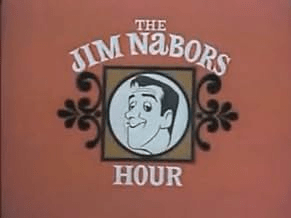
Our theme for March is “Variety is the Spice of Life.” We are taking a look at several variety shows that debuted in the sixties and seventies. We’re ending the month with The Jim Nabors Hour.
📷imdb.com
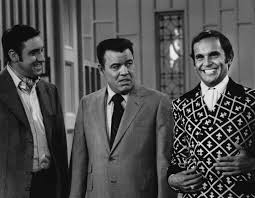
If people only knew Jim Nabors as Gomer Pyle, they were in for a treat once they tuned into this show. This show debuted on CBS in 1969 and ran until 1971. However, Nabors didn’t leave all of his Gomer Pyle life behind. Ronnie Schell and Frank Sutton, who played Duke and Sgt. Carter, joined this one as regulars along with Karen Morrow. In addition, the Tony Mordente Dancers and the Nabors Kids were available to help performances.
Nabors was tired of playing Gomer after five years and decided to end the show. He was often a guest on The Carol Burnett Show, and she was one of his best friends, so he opted for a variety show of his own.
His first guest star was Andy Williams, and Don Knotts also made an appearance.
📷facebook.com
As a fun feature, each episode had a guest announcer who read the introduction to the show and shared the guests for the day. Mavis Nabors, Jim’s mom, was the first.
Nabors acquired an impressive guest list including Carol Burnett, Glen Campbell, Johnny and June Cash, Tennessee Ernie Ford, Rock Hudson, Shirley Jones, Ricky Nelson, Don Rickles, Kate Smith, and Jane Wyman.
The show started out strong and was #12 at the end of season one. It continued to rein in good ratings while it was on the air. Even though it was in the top thirty, it was canceled along with all of the other shows that were part of the 1971 rural purge.
📷imdb.com
According to YouTube channel’s “Classic Rural Comedies Facts and Trivia,” NBC wasn’t happy Nabors wanted to end his Gomer Pyle show when the ratings were still so good. However, they also didn’t want ABC or CBS to sign their star, so they reluctantly gave in to a variety show. Partway through season one, the network put pressure on Nabors to limit Sutton’s appearances and eventually demanded he get fired. Nabors refused, and many people assume that’s why it got thrown in with the rural sitcoms in the purge.
Sadly, there isn’t a lot of information about this show. A handful of shows are available on YouTube, but most of them are no longer available to watch. No one talked about this show during their television academy interviews, so stories are hard to come by about this variety series. Many people have fond memories of the show, and I guess that has to be enough for us to appreciate this show which ended before its time.
Our theme for March is “Variety is the Spice of Life.” We are looking at several variety shows that debuted in the sixties and seventies. After discussing three shows that weren’t super successful on television, today we look at a long-running show: The Dean Martin Show.
📷chrisnersinger.com
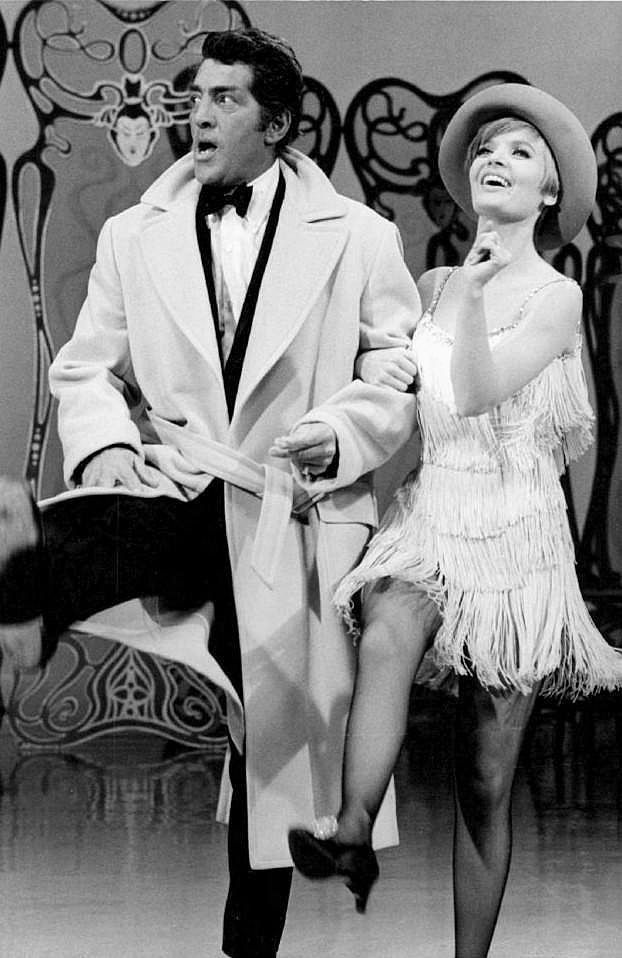
Debuting in 1965 and lasting nine seasons, The Dean Martin Show was on NBC. His theme song was the iconic “Everybody Loves Somebody.” For most of its life, it was on Thursday nights. Season nine brought a change of nights as well as a new format.
Like Judy Garland, whose show we learned about last week, Martin was not sure he wanted to commit to a television schedule, feeling as though he would not be able to take on his favorite movie roles and nightclub performances. So, he asked for a “list of musts” that he knew NBC would not agree to. He asked for a lot of money, a one-day-a-week work schedule of Sunday, and permission for him to only announce ads and sing when he felt like it. Imagine his surprise when they agreed to every demand.
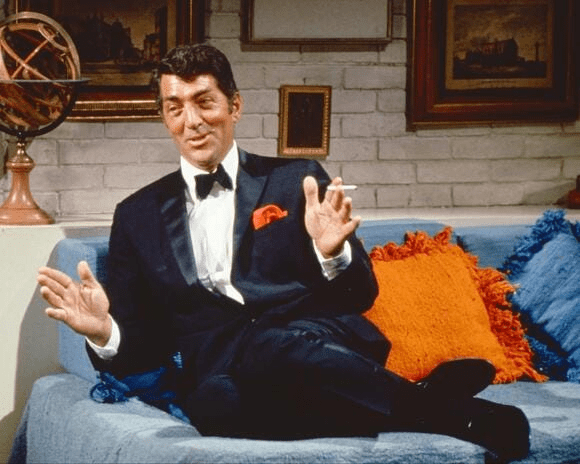
Martin always presented as a shy, drunk playboy, and he continued with this image for the television show. He made it obvious that he was reading his lines from cue cards and if he goofed, it became part of the taped show.
📷imdb.com
The show had a few recurring features every week. Martin typically sang two songs per show. Sometime during the show, a knock on the closet door led to Martin opening the door to reveal a celebrity guest and Martin himself didn’t know who would be on the other side of the door. The show usually ended with a production number featuring Martin and his guests.
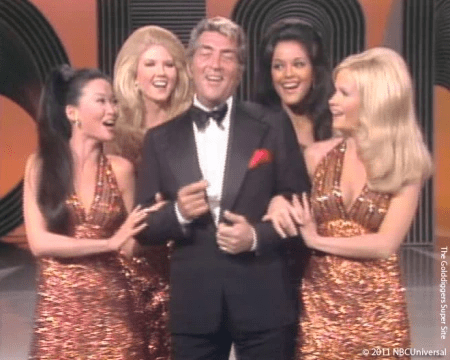
Cast members were hired who did sketches throughout the show. These stars included Tom Bosley, Rodney Dangerfield, Dom DeLuise, Kay Medford, Charles Nelson Reilly, and Nipsey Russell. In later seasons, The Golddiggers appeared. This was a group of chorus girls who first started on the summer replacement show. Not only were Martin’s goofs part of the show, but Charles Nelson Reilly once told a story that on the way to rehearsal, he was driving a convertible, and the script flew out of the car. He wasn’t too concerned though because he said the way the show was done, the script really didn’t matter much.
If you name a celebrity, they were probably on this show. Just a small sampling includes Eddie Albert, Steve Allen, Louis Armstrong, Lucille Ball, Tony Bennett, Rosemary Clooney, Sammy Davis Jr., Phyllis Diller, Duke Ellington, Ella Fitzgerald, Bob Hope, Ethel Merman, Bob Newhart, Dinah Shore, and Frank Sinatra.
The show was nominated for an Emmy 12 times including best variety, music or comedy series in 1968, 1969, and 1970.
📷wordpress.com Golddiggers
The show had decent ratings for the first year but after that it was never great, never awful. It was up against The Thursday Night Movie on CBS and a variety of different shows on ABC which changed from year to year all eight seasons. For the final season, the show was moved to Friday nights, against the popular Love American Style. From 1973-1974 it was titled The Dean Martin Comedy Hour and episodes were celebrity roasts.
The Television Academy did an interview with Greg Garrison, producer and director for The Dean Martin Show. He said there was some turmoil in the first year trying to figure out what this show was. He said they had Bertha the Elephant on one episode, and no adults were interested in that at 10 pm.
Garrison said Martin was extremely generous. Every year he gave Garrison a ten percent ownership in the show until he had 50%. Garrison then told him to stop offering him more because 50% was the most he would agree to. He described Martin as the kindest, nicest, and most generous man he knew. Garrison said he was able to do whatever he wanted to on the show and Martin never second-guessed him. Garrison said one of the hardest decisions he made was cutting Zsa Zsa Gabor’s sketch. He said she gave him no end of trouble, so he finally said they were done, and the sketch was cut. She protested and he told her she would get her check, but the skit was done and it was.
📷wikipedia.com
This was a successful show for almost a decade. It’s hard to find a lot of information about it though. Unlike The Carol Burnett Show where everyone was working together all the time, Martin only showed up on Sundays and most of the time it was the rest of the cast, so perhaps not as many stories were shared.
I watched an episode from 1970, and it was typical of a variety show for the time. Martin began by telling jokes like he put his contacts in backwards and looked at himself all night, so he got no sleep. He talked about going back to his neighborhood where the mayor had a car waiting for him, but luckily, he got out of the way just in time before getting hit. He also mentioned that he and his dog went to school together for years until they had to part because the dog graduated.
He then sang a song all the while holding onto his cigarette. In most of his appearances on the show he had a cigarette or a glass of apple juice purported to be alcohol. Ann Margaret and Bob Newhart were the guest stars in this one. He then went into a skit with Newhart. The show held up pretty well for being more than fifty years old. I admit I feel spoiled after watching The Carol Burnett Show, which I think is impossible to compete with for almost any other variety show, but Martin came across as likeable and the show was better than I anticipated. If you want to check out a few of them, you can get the “Best Of” his shows on Amazon.
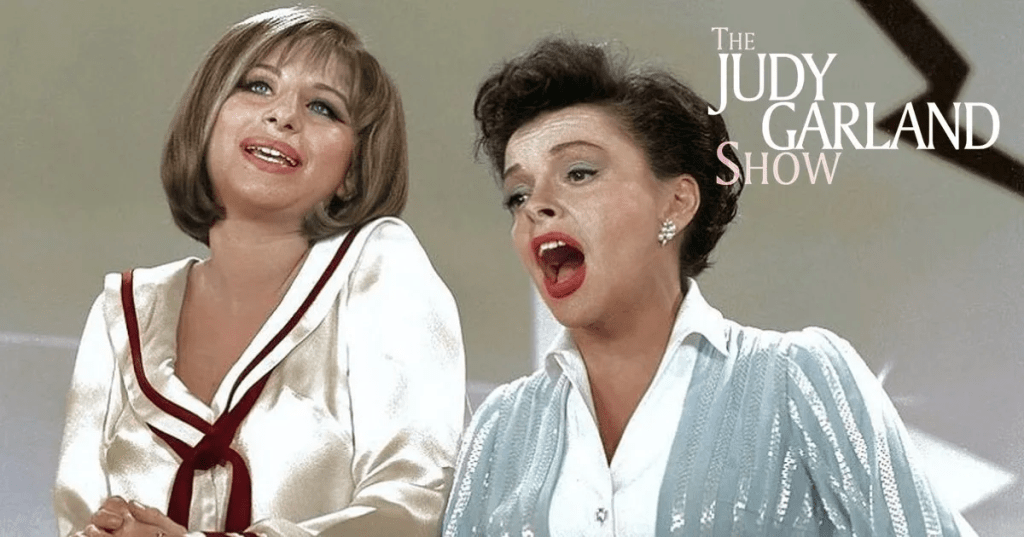
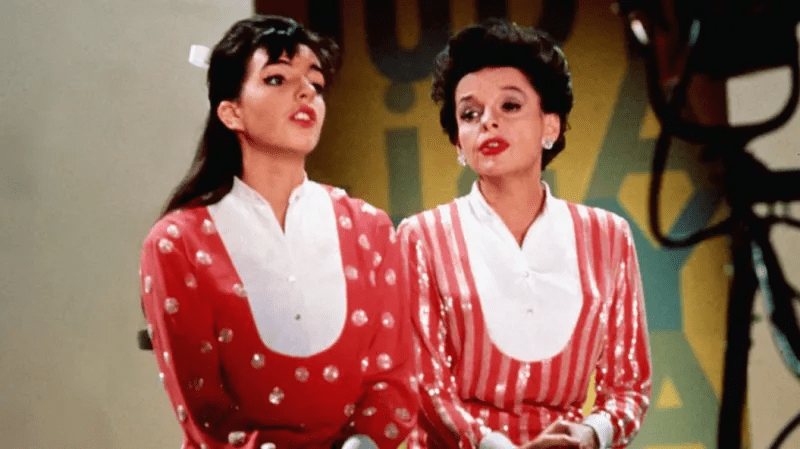
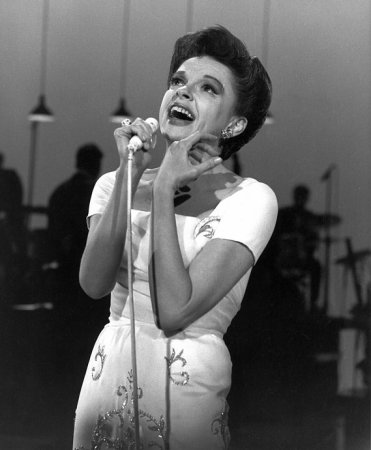
Our theme for March is “Variety is the Spice of Life.” We are looking at several variety shows that debuted in the sixties and seventies. Today we are learning about Judy Garland’s show. It’s hard to even know what to call this show. There was constant turmoil during the season it was on the air. It changed personnel, titles, formats, and all this after Garland and CBS had been at odds on past projects before this one even began.
📷barbaraarchives.com
Garland had not been comfortable committing to a weekly series, but she ran into some financial difficulties that forced her to rethink her views on television. When this show was being planned, Garland and CBS had been feuding for five years. Garland had been given a $300,000 contract with CBS to produce three specials. The first special in 1956 had great ratings, but then things fell apart. Garland’s husband and manager Sid Luft could not find any common ground with the network on the format of the second special. Garland filed a lawsuit for libel and breach of contract.
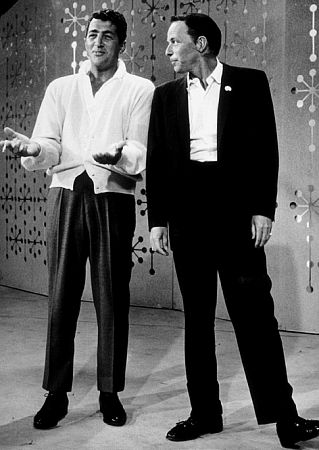
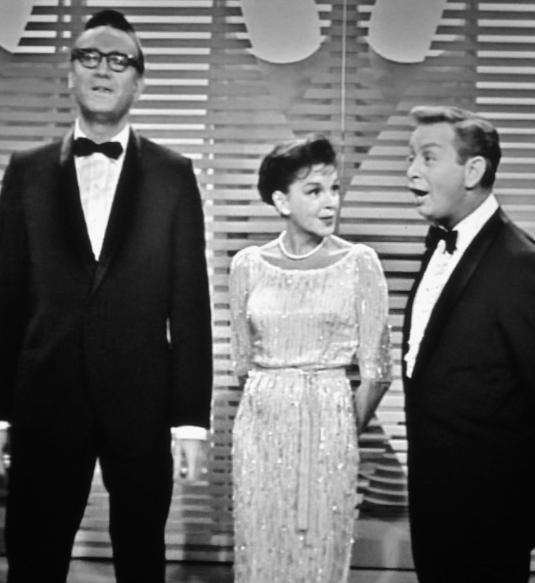
In 1961, as a negotiation of sorts, Garland and CBS agreed to try the specials again. In 1962 her special with Dean Martin and Frank Sinatra aired and received four Emmy nominations. At that point, CBS and Garland began to talk about a weekly series beginning in 1963. The third special with Phil Silvers and Robert Goulet was a pilot for the new series. It also received an Emmy nomination.
📷leighwiener.com
The show was cancelled after 26 episodes. Those 26 episodes had three different producers.
George Schlatter produced the first five episodes of the series. The job was originally offered to Bob Banner, but he declined because he was producing a series for Garry Moore and he didn’t want to move from California to New York. When he said no, Bob Finkel was approached, and he declined for the same reason. To make it more complicated, the network offered the job to a local guy, Bill Hobin, who worked with Sing Along with Mitch and was already on the east coast. He accepted the offer, only to learn that people associated with the show had also offered the job to George Schlatter who was willing to move to New York, and he had also accepted the position. It was settled with Schlatter retaining the producer role and Hobin becoming director, an awkward way to begin.
Schlatter got busy hiring. He brought on Mort Lindsey as orchestra conductor, Gar Smith as art director, Edith Head as costume designer, Mel Torme as musical arranger, and Danny Daniels as choreographer.
📷imdb.com
Schlatter hired Jerry Van Dyke as a series regular, and a few recurring pieces were created. In addition to performing, Garland had a segment “Born in a Trunk” where she told stories about her career. She also had a chat with a “surprise” guest every week. Van Dyke did some stand up and also showed up in sketches throughout the show with Judy. “Maybe I’ll Come Back” was chosen as the closing song over CBS objections, preferring her iconic “Over the Rainbow.”
I’m not sure why it changed after all the hoopla about trying to make producers move, but the show was taped at Studio 43 in Los Angeles. The studio underwent a $100,000 renovation for the show. Some of the changes were necessary and some were silly. A revolving stage was created and raised a bit which made sense. Judy’s dressing room was a replica of her Brentwood home which seems unnecessary and the hallway from her room to the stage was the yellow brick road.
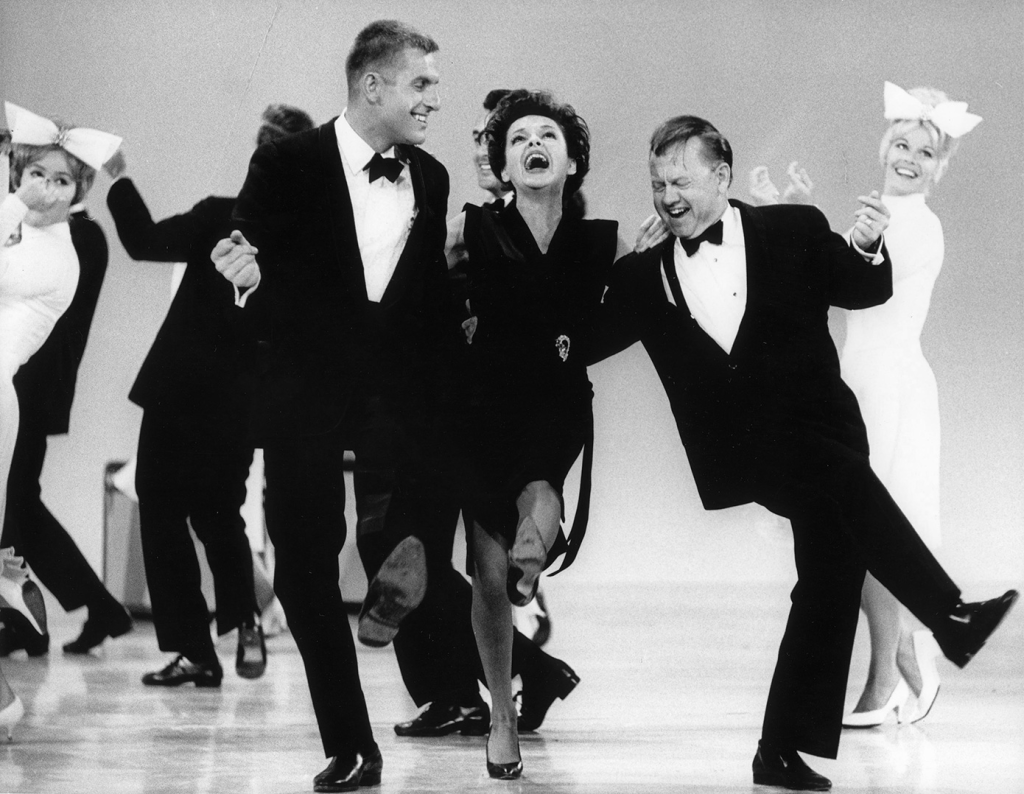
Judy did put her foot down about who her first guest would be; she wanted her old partner Mickey Rooney. It was filmed that way, but the way the episodes were aired made it look like the tenth episode. The seventh show taped with Donald O’Connor was the first episode that aired.
📷variety.com
The taping of the first show with Rooney included a star-studded audience including Lucille Ball, Jack Benny, Clint Eastwood, Agnes Moorehead, Dick Van Dyke, Natalie Wood and gossip columnists Hedda Hopper and Louella Parsons. For this opening, Judy wanted to have Cary Grant in the audience as well and introduce her with his iconic “Judy! Judy! Judy!.” Grant, however, passed because he had never actually said this line in any movie and he was tired of everyone associating it with him.
Schlatter was fired after a month and a half. Norman Jewison came in for the next eight shows which he indicated was all he was willing to do.
He had not liked Van Dyke’s jokes about Garland’s shortcomings, and he introduced a segment “Be My Guest” which Mel Torme wrote to allow Garland and her guest to perform together. Van Dyke was not popular with viewing audiences, so he was also gone as were many of the writers and the choreographer.
Bill Colleran jumped in as producer for episode 14 while the other episodes were still airing. He would remain with the show until it was canceled. Once again, the format was changed, focusing on Garland’s musical performances. Sometimes comedy was part of the show but only when the guest star was a comic like Bob Newhart or Shelley Berman.
📷imdb.com
Ratings had not increased through all of these massive changes, and the show was canceled before the end of January. The final seven shows were taped after the crew knew the show was done. At this point, the show was basically just Judy or Judy and a guest singing for sixty minutes, and the title became Judy Garland in Concert.
Torme stuck with the show through the entire mess and then was fired after 22 episodes when everyone knew there were only four left, and he was replaced by Bobby Cole, someone Garland had just met. He filed for breach of contract and included the details in his memoir. Fans reported they loved Garland, they just didn’t like anything else about the show.
Critics were of differing opinions. The San Francisco Chronicle characterized the show as “tasteful, elegant and exciting.” while the New York Herald Tribune wrote that “Miss Garland is fine, just fine. The rest of the show, however, needs help.”
Fans of the show formed a “Save The Judy Garland Show committee” and organized an early letter-writing campaign on behalf of the series, but their efforts were not enough to prevent the show from being cancelled. The final Judy Garland Show, another concert episode, was broadcast on March 29, 1964.
Schlatter discussed his time on The Judy Garland Show. He was hired after working for the Dinah Shore Show. He said he encouraged the child in her to come out and the two of them had a lot of fun. He said the first five shows were filmed on time and under budget, but he got fired after they were done. CBS told him the shows were “too special.” They wanted Garland to show more warmth which Schlatter thought she already did. After he left, the show featured her sitting on stools and talking more rather than performing.
📷instagram.com
There seem to be a lot of reasons why the show only lasted one season. There was the revolving door with cast, writers, producers, and a lot of turmoil about the format of the show. CBS president James Aubrey was said to “intensely dislike” Judy for some reason and did not keep that a secret. The show was up against Bonanza on NBC which almost insured its demise. Bonanza was in the top ten, a very popular program. And, this was during a time when the family probably had one television and the family often gathered to watch it together Sunday nights. Most families are going to choose Bonanza over The Judy Garland Show.
While Judy needed the money, the pressures and stress filming this show did not help her mental health. As someone who had experienced addiction issues for a while, she had trouble dealing with the infighting and criticism of her show although most critics went out of their way to give her positive feedback. Sadly, within five years of the show being canceled, Garland was dead from an overdose of sleeping pills. It’s too bad that this show which might have brought her financial comfort and happiness just added to her stress in the entertainment business.
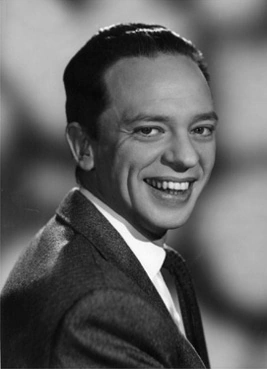
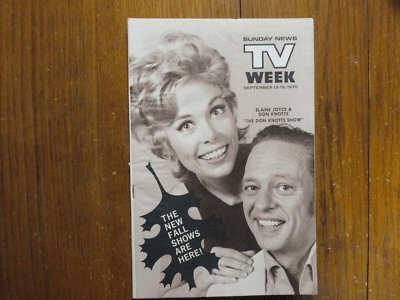
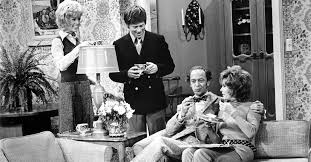
This month our theme is “Variety is the Spice of Life.” If I mention the name Don Knotts, almost everyone probably pictures Barney Fife from Mayberry. You might also think about some of his well-known movies including The Ghost and Mr. Chicken or The Shakiest Gun in the West. However, you might be surprised to know that Don Knotts had his own variety show on NBC for a season in 1970.
📷wikifandom.com
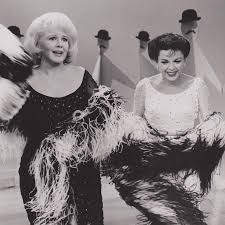
Don had a few regulars in his cast including Gary Burghoff, Louis Nye, and Elaine Joyce. He had musical guests interspersed with skits. Joyce might have made the worse choice in her entire career when she agreed to join this show because to do it, she turned down a chance to be part of the cast of The Carol Burnett Show.
Two recurring skits were about the process it took to put a weekly television show together and another one was similar to one Carol Burnett and Harvey Korman did called “The Front Porch” with Don and a guest sitting on a rocking chair discussing life.
Knotts’ show did not attract viewers. After a few episodes, the network hired Bob Sweeney who had directed The Andy Griffith Show. Don said Sweeney “came in and made some changes in the writing staff. Then he made some changes in the show creatively. And he did a good job, He improved the show, I thought.” Sweeney also hired Burghoff for the show.
While Andy Williams debuted the Osmond Brothers, Don’s claim to fame for his variety show was debuting The Carpenters.
While there were a lot of variety shows on television, the schedulers didn’t do Knotts any favors. His show was up against The Mod Squad on ABC and The Beverly Hillbillies and Green Acres on CBS. That is some tough competition. And this was an era when a family typically had one television, and the entire family had to agree on what they were watching together.
During his Television Academy interview, Don discussed his show. “We did all kinds of things, but in the end, the show just couldn’t compete with shows like The Carol Burnett Show, Donny & Marie, or Sonny & Cher. There was tremendous competition that season for variety, because everybody and his brother had a variety show.”
I think Don was right about why his show failed, but even with so many variety shows, I think there were a few other problems with this one. There were 12 other variety shows on the air during this year, including Knotts’ friend Jim Nabors, but scheduling was a huge barrier to overcome.
📷facebook.com
Also, Knotts was introduced to America as a cast member of The Steve Allen Show, and he was great on that one. I think the country wasn’t ready to accept him as a host on a show though. He spent his entire career as Barney Fife, an over-confident sidekick who helped the sheriff in Mayberry. His movie characters were all nervous, timid people who found a surprising way to beat the bad guys. Suddenly he was the star of the show and it’s a tough typecasting role for fans to adjust to.
That said, I’m putting this failure on the network for having too many variety shows on the air and not scheduling them against each other so the most popular ones rose to the top. And this was in the early seventies. Think about the shows that were starting at the time, very different shows from the fifties and sixties hits. Knotts was not the only one to fail at this time, so he could chalk it up to a life lesson learned and quickly wipe it from his memory.
They say, “Variety is the Spice of Life” and we are going to see if that’s true this month. During the fifties, sixties, and seventies, variety shows were a big part of the television schedule. If you were a singer or a dancer, you likely had an opportunity to have your own show.
📷imdb.com
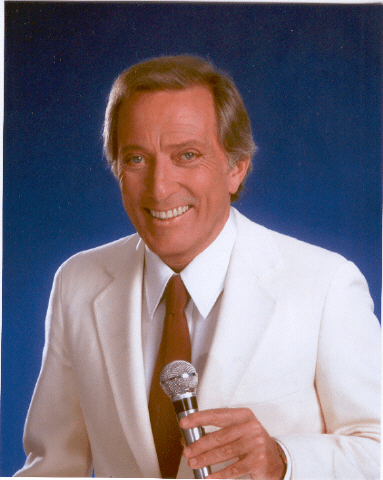
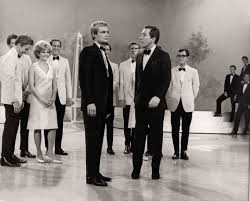
From 1962-1970, Andy Williams entertained us in our living rooms. Williams had a weekly series from 1962-1967 before deciding he wanted to cut back to three specials a year. By 1968 he changed his mind and went back to a weekly series that was on the air till 1971. When the show came back in 1968 it included more rock and roll, a talking bear, and psychedelic lighting which never seemed to fit what I thought of as Williams’ style.
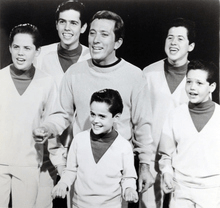
Like many variety shows, Williams had a cast of performers who helped out with skits and songs. During the run of his show, The Osmond Brothers, Jonathan Winters, Ray Stevens, and the Lennon Sisters were part of the act. In 1963 the show won for Outstanding Variety Series. Like Carol Burnett, guest stars also appeared weekly on the show. I remember watching his show, especially at Christmas and loved the Osmonds who Williams discovered at Disneyland; he originally introduced them as “a youthful barbershop harmony group from Odgen, Utah.”
📷thesaltlaketribune.com
Andy’s show debuted on NBC on Thursday nights. It was up against The Alfred Hitchcock Hour. The second season ended up on Tuesday nights taking on The Fugitive and The Jack Benny Show. Season three found it on Monday nights with the competition being a few new sitcoms and it continued in the same slot season four with Hazel as its strongest competitor. Believe it or not, season five found the show on Sunday night. No wonder it wasn’t in the top 30, no one could ever find it from year to year.
Once the show returned in 1968 with its 60s trippy themes it was on Saturday tackling the long-running The Jackie Gleason Show and the newer game shows Dating Game and Let’s Make a Deal. The only thing that changed the final year was that The Jackie Gleason Show was replaced with Mission Impossible. In addition to moving around so often, the show had to compete with a lot of other variety shows during that decade. Just a few others included Carol Burnett, Flip Wilson, Dean Martin, Dinah Shore, and Perry Como.
📷facebook.com
Eventually, Williams created his own very successful show in Branson, Missouri where he lived and performed until he passed away from bladder cancer in 2012.
I think overall Andy Williams had one of the more successful variety programs. No one did it better than Carol Burnett. I think Williams had a hard time trying to fit his style into the late sixties and early seventies. When he started, Perry Como and Nat King Cole were known for their variety series, but when his last show debuted, he was competing with people like Flip Wilson and Sonny and Cher. I’m exaggerating to a point, but it was like he began singing with Lawrence Welk and tried to change to singing with The Rolling Stones; he just needed to find his own lane and stay there.
Alice Pearce does not have the number of acting credits that many golden- age character actresses possess because she passed away at an early age. Many of us recognize her as Gladys Kravitz.
📷closerweekly.com
Pearce was born in New York City in 1917. She was an only child. Her father was a foreign banking specialist, and her family moved to Europe when she was a toddler. They had what I would imagine was a magical life, living in Brussels, Antwerp, Rome, and Paris. However, Alice was not a fan of Europe and never went back. In an article in the Buffalo News in July of 1965 she said that she hated living there and just wanted to be an average American kid who was allowed to walk to the movies or the drug store without a chaperone.
While living in Europe, she fell off a swing at age nine after losing her grip on the chain and landed on her chin. From that point on, she had an underdeveloped chin.
Pearce enrolled in Sarah Lawrence College in 1940, graduating with a degree in drama. After graduation, Alice moved to Maine to do summer stock. Leonard Stillman saw her there and cast her in “New Faces of 1943,” where she received great reviews.
Although her parents did not approve, Alice began working as a comedienne in nightclubs, auditioning on Broadway. Her parents didn’t know much about theater at the time, and they didn’t see it as a stable career. She moved to New York and sold underwear at Macy’s to make ends meet.
📷rottentomatoes On the Town
Alice always had a sense of humor about herself and her looks. She related a story in an interview with the Buffalo News in February of 1965 that during this time she and a few women performed at army camps and hospitals during the war. She said they were at a hospital one day and Imogene Coca was walking down the hall to do the show. One man in a bathrobe saw her and yelled that if they all looked like her, he was going back to bed. A minute later, Alice appeared. The man said they did all look alike and he went back to bed.
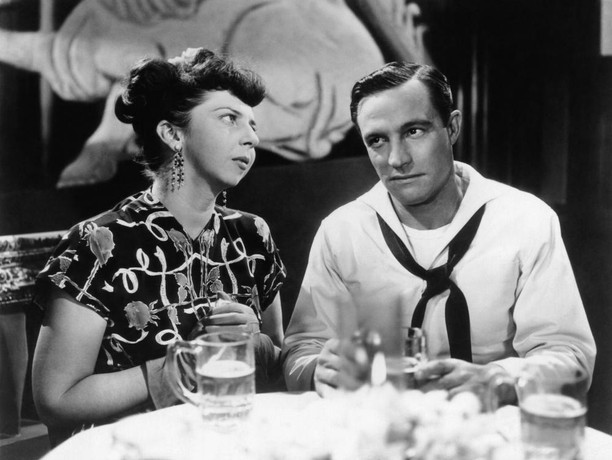
From 1944-46, she was a cast member in the original Broadway production, “On the Town.” Gene Kelly was so impressed with her performance that he brought her to Hollywood as a cast member in the big-screen film of the play in 1949. In both versions, Alice played Lucy Schmeeler, a “unsexy adenoidal” blind date.
Her performance in On the Town was so popular that she was given her own television variety show, The Alice Pearce Show which she described as “fifteen minutes of songs, topical skits, and me.” Pearce co-hosted the show with pianist Mark Lawrence. It was on for fifteen minutes every Friday, but it was cancelled after six episodes.
📷moviestillsdb.com The Disorderly Orderly
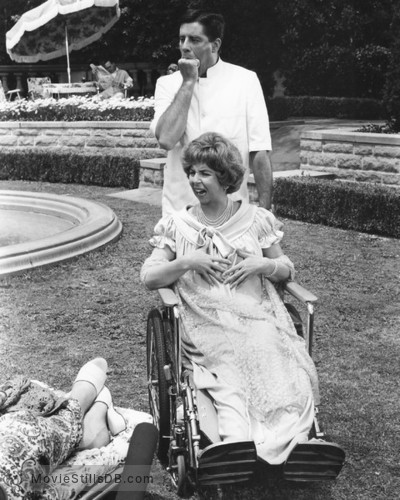
Throughout the fifties, Pearce continued to appear on Broadway and on the big screen. Alice had fourteen film roles. She was spot-on as a hypochondriac in The Disorderly Orderly with Jerry Lewis as she describes her numerous physical ailments and symptoms.
I think Alice was hoping for a more prolific film career. After her death, an AP article that ran in many national papers related a story Pearce had told several times. She said that for one audition she went to, they were looking for an “Alice Pearce type,” so she thought it was a shoe in. About ten women were in the waiting room. Alice did her audition but didn’t get the part!
During the fifties, she appeared on 13 television series, many of them dramatic playhouse shows. In 1953, Alice was cast in two sitcoms, and both would last a year. In Jamie, she appeared in eight episodes as Annie Moakum. The show was about an orphan, Jamie, who lands in one “foster” home after another until he moves in with Aunt Laurie where he meets Grandpa; the two of them become best friends, sharing a variety of adventures.
In The Jean Carroll Show, Alice played their neighbor in six episodes. This show only lasted three months. It was a typical sitcom about Jean, her bumbling husband Herbie and her daughter who doesn’t even have a first name in the credits.
Alice found herself in sixteen series during the sixties including Many Happy Returns. Many Happy Returns was a show that only lasted 26 episodes. It starred John McGiver as Walter Burnley who was a supervisor of the Returns Department at Krockmeyer’s Department Store. A widower, he lives with this daughter played by Elinor Donahue and her husband Bob and daughter Laurie.
📷facebook.com
1964 was a great year for Pearce. When she was in the Broadway production of “Bells Are Ringing,” she met director Paul Davis whom she married in 1964. At that time, Davis owned one of the top art galleries in Los Angeles. Alice loved art and did some painting herself.
That same year she was asked to play the role of Grandmama in The Addams Family. She turned down the part which went to Blossom Rock.
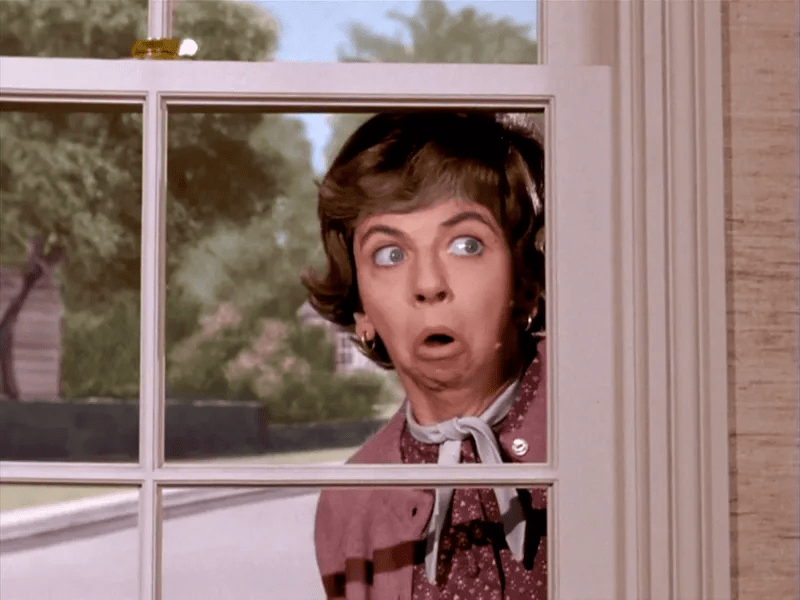
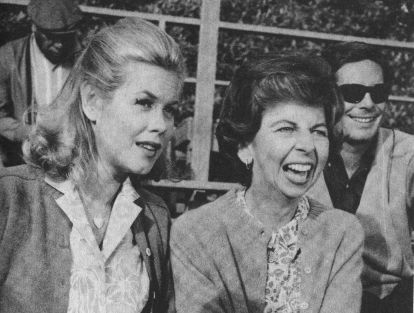
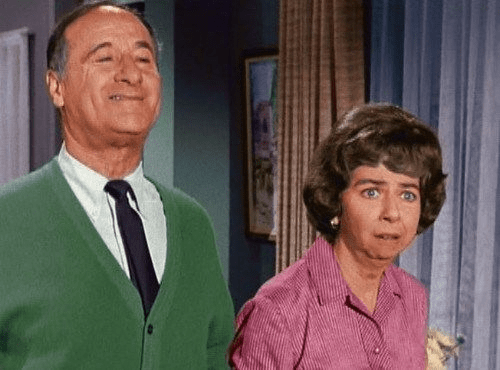
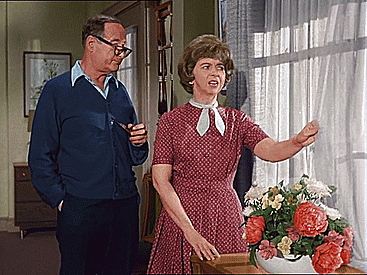
It ended up being a good career move to turn down The Addams Family, because later in 1964 she was offered the role of Gladys Kravitz on Bewitched. She was perfect as the nosy neighbor always in the Stephens’ business. After spying on her neighbors and seeing something that could not be explained logically, she would shrilly yell, “Abner, Abner” and relate the newest situation. Of course, witchcraft always took care of the problem before she could prove anything odd had occurred, and she was considered eccentric and high strung by the other neighbors and her husband. Pearce appeared in 27 episodes before passing away from ovarian cancer in 1966 at age 48. She was adored by her Bewitched family.
Alice had been acting for a couple of decades and had become a household name. In the July 1965 Buffalo News interview, Alice mentioned that even though she was 47, her parents had moved to La Jolla, California and still felt acting was a phase she would outgrow.
In 1966, Doris Day’s movie The Glass Bottom Boat was released. Pearce and George Tobias were cast as next-door neighbors in the film. Although they weren’t named Gladys and Abner, the Fenimores were a carbon copy of the Kravitzes.
Alice was diagnosed with terminal cancer before she joined the Bewitched cast. After she died, Elizabeth Montgomery and her husband William Asher offered Davis a job as director on the show. He had stepped away from his career to help care for Alice.
Alice worked until the last two weeks of her life. She commented on how her attitude helped her deal with her diagnosis: “I feel the progress of the disease in my case is unusual because of my mental attitude. I am a supremely happy woman. I have never been beautiful, but I have been blessed with a rich career and the love of two fine men. The strength I have found in the devotion of my dear Paul is beyond measure.”
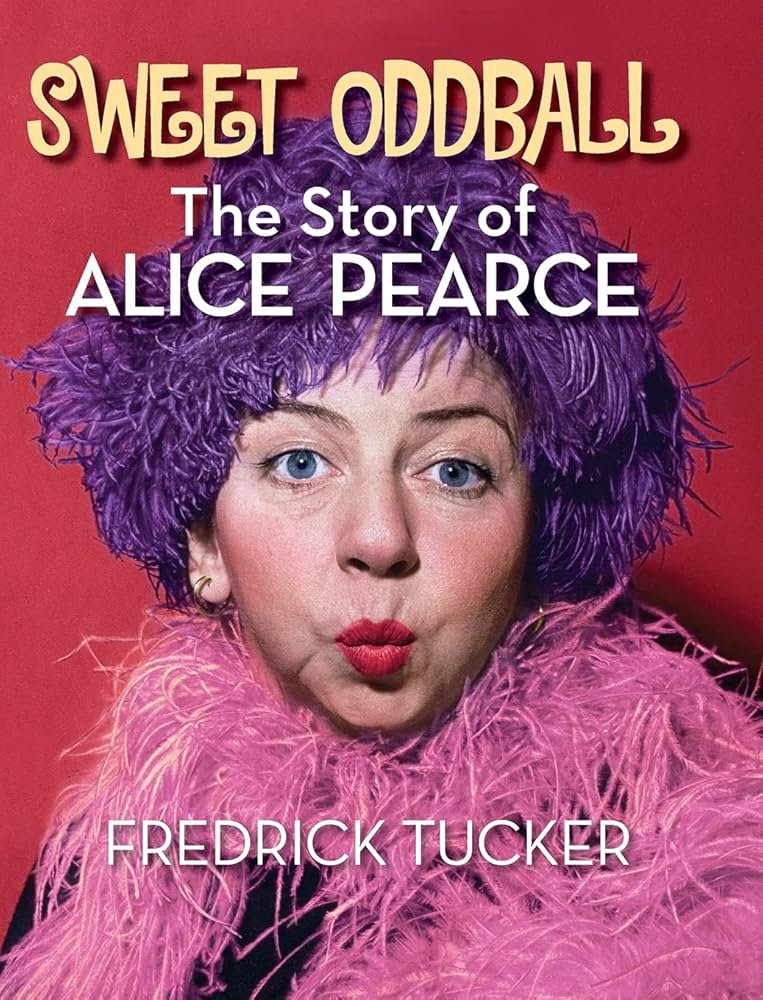
Frederick Turner wrote a book, Sweet Oddball: The Story of Alice Pearce. He recalled a quote that he had heard about Pearce, describing her as “’the adenoidal lass with the most beautiful, homely face on Broadway who carved out a unique career playing wallflowers, nitwits, nags and oddball characters.” I think Alice would be just fine with that description. Although she left us much too soon, she was an amazing comedienne who I’m sure would have had a long and satisfying career, and perhaps her own sitcom, had she lived a few more decades.
As we learn about a few Bewitching characters this month, I had to include the Kravitzes, Abner and Gladys, a/k/a George Tobias and Alice Pearce. Today let’s take a closer look at the career of George Tobias.
📷pinterest.com The Kravitzes
Tobias was born in New York in 1901. He was the son of Russian-Jewish immigrants, and his parents were active in the Yiddish theatre. After his older brother joined them, they tried to discourage George from following in their footsteps. In a St. Louis Post Dispatch interview in 1940, Tobias said “They made up their minds very definitely that I was not going to spend my life nearly starving as they did. They wanted me to be a doctor or lawyer, but I knew from a very early age that I would follow the same career as my mother, father and brother . . . so whenever I got an acting job in between other jobs, I had to keep it from my family.”
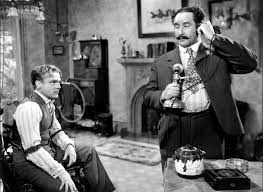
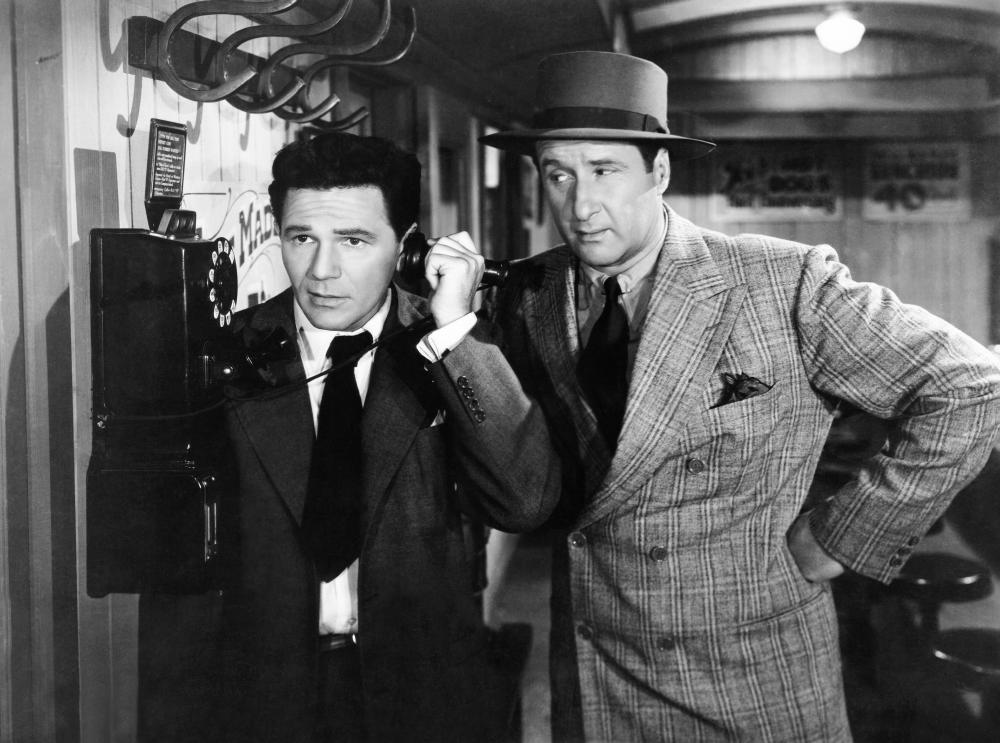
At age 15, Tobias was in local productions, making his Broadway debut at age 23. In 1939, Warner Brothers offered him a contract, and he appeared in 65 big-screen productions during his career, including parts in This is the Army and Marjorie Morningstar. Tobias appeared in four Oscar Best Picture nominees: Ninotchka (1939), Sergeant York (1941), Yankee Doodle Dandy (1942), and Mildred Pierce (1945).
Tobias’s television career began in 1954 in Our Miss Brooks. He would go on to earn 34 additional television credits before he retired in 1977.
📷imdb.com With James Cagney in The Strawberry Blonde
His first cast role was in Hudson’s Bay playing Pierre Falcon in 1959. This show centered on Hudson’s Bay Company and its fur trade shortly after North America’s colonization. Trappers, explorers, Native Americans, and both the French and British navigate the territory, seeking fortune, fame, and adventure.
In 1960, he showed up as Penrose on season one of Adventures in Paradise in a show about the adventures of the Tiki III and crew as they sailed from island to island through the South Pacific, carrying cargo and the odd passenger from one drama to another.
From 1964-1971, Tobias was part of the Bewitched cast as Abner Kravitz. He put up with his wife Gladys despite thinking she was high strung, delusional, and just plain kookie.
In 1966, Doris Day’s movie The Glass Bottom Boat was released. Pearce and George Tobias were cast as next-door neighbors in the film. Although they weren’t named Gladys and Abner, the Fenimores were a carbon copy of the Kravitzes.
📷tvinsider.com 1946 Nobody Lives Forever
George’s last regular role was in The Waltons during seasons one and two when he played junkman Vernon Rutley.
While Tobias took on a few more roles before retiring, 1977 was his last year of acting, appearing on Tabitha when he reprised his role of Abner Kravitz. Tabitha was Darrin and Samantha’s daughter, now an adult.
Tobias passed away in 1980 from bladder cancer. He never married or had children, although he had a 40-year on-and-off relationship with actress Milicent Patrick. Patrick had an active career in entertainment from 1941-1961; she was also a commercial artist, fashion designer, and children’s book illustrator.
Even though Tobias was no longer living, he had one more adventure to journey through. The hearse with his body was stolen on its way to the mortuary. The car was in a fender-bender, and while the two drivers exchanged information, a carjacker made off with the hearse. The car and body were found shortly afterward.
📷pinterest.com
In his book, Bewitched Forever, Herbie J. Pilato discusses how rugged and tough Tobias was in real life. He said he was “quite the equestrian. He owned and trained many horses, loved to play polo, and was a volunteer mounted policeman.” David White, who played Larry Tate, told Pilato that George “was a sheriff out in Peach Blossom, California, where he lived. He had a badge and everything.”
I always like Abner and Gladys Kravitz. I’m happy Tobias stuck to his guns and continued with his acting career, despite his parents’ worries. It sounds like he had a happy and successful life.
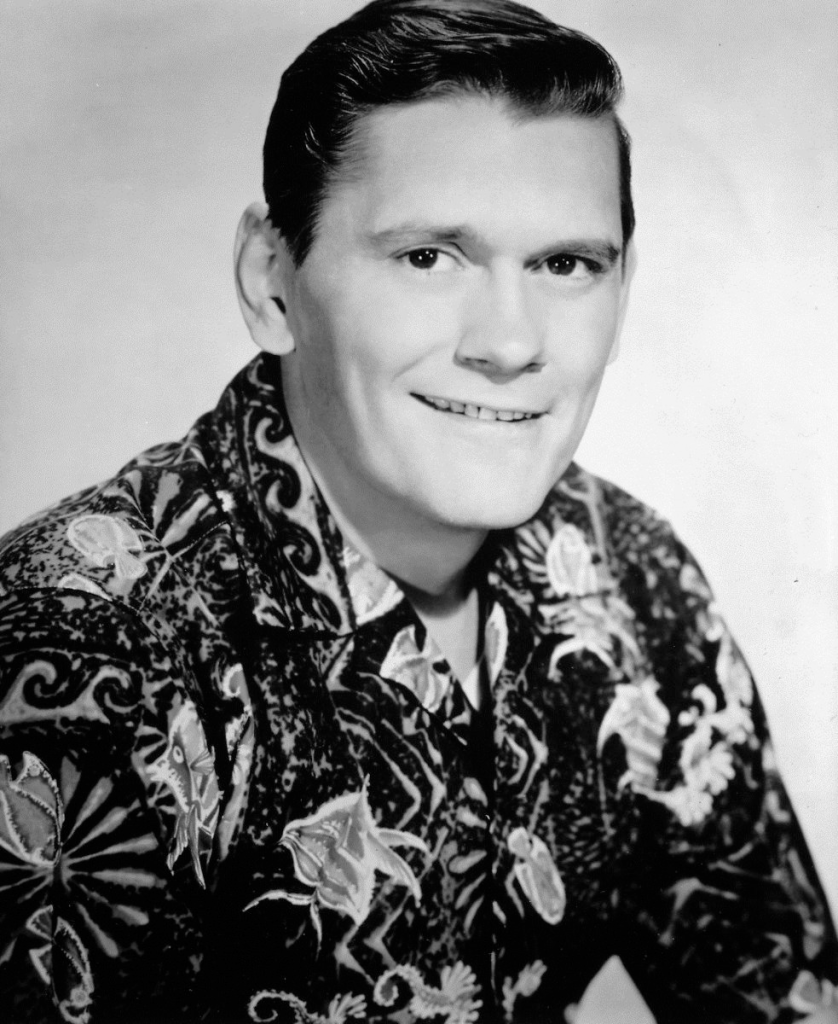
This month we are learning about some Bewitching characters and their careers. Today we get to learn more about Dick York, the first actor to portray Darrin Stephens.
📷imdb.com the first Darrin Stephens
York was born in 1928 in Fort Wayne, Indiana, part of a working-class family; his father was a salesman, and his mother was a seamstress. During his younger years, the family relocated to Chicago, and at 15 he began acting on the radio in “That Brewster Boy.”
He would appear in hundreds of radio episodes and instructional films before heading to New York City in 1951 where he lived at the YMCA. In New York, he appeared on Broadway and then began his film career. That same year, York married Joan Alt. While he was doing the radio show “Jack Armstrong, All-American Boy,” they met when she came in to do a commercial.
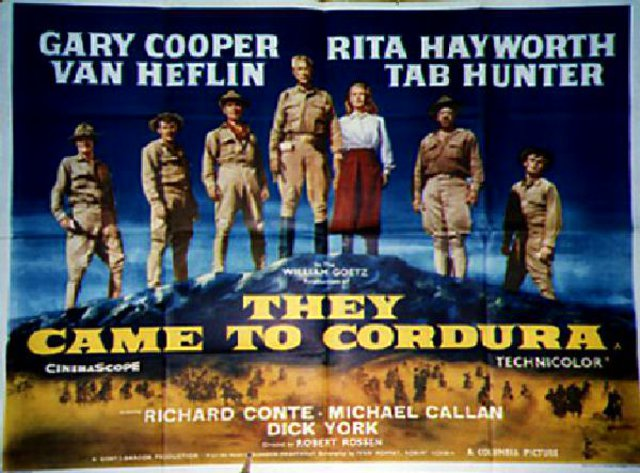
In 1959, he was filming They Came to Cordura with Gary Cooper and Rita Hayworth when he suffered a back injury on the set. As York described it, “Gary Cooper and I were propelling a handcar carrying several wounded men down a railroad track. I was on the bottom stroke of this sort of teeter-totter mechanism that made the handcar run. I was just lifting the handle up as the director yelled ‘Cut’ and one of the wounded cast members reached up and grabbed the handle. Now, instead of lifting the expected weight, I was suddenly, jarringly, lifting his entire weight off the flatbed—180 pounds or so. The muscles along the right side of my back tore. They just snapped and let loose. And that was the start of it all: the pain, the painkillers, the addiction, the lost career.”
However, the injury didn’t catch up with him at that exact moment. A year later he was offered a role in Inherit the Wind. He would end up in ten films during his career, but it was television where he spent most of his time.
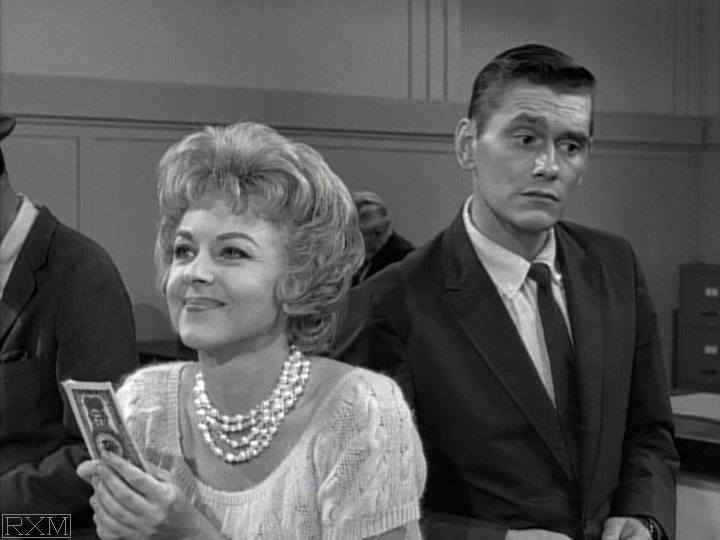
📷imdb.com The Twilight Zone
A couple of years later he was part of the cast of Going My Way for a season. His television career continued, and you’ll see him in episodes of The Twilight Zone, Dr. Kildare, Alfred Hitchcock Presents, Route 66, and Wagon Train, among others.
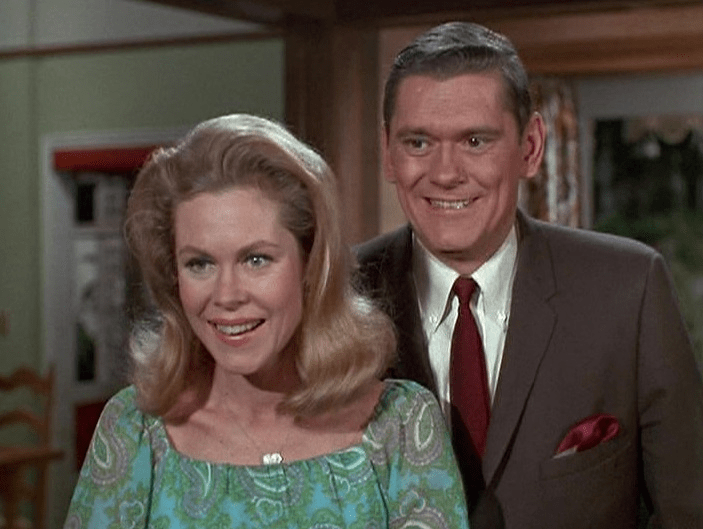
In 1964 he was offered the role that made him a house-hold name, Darrin Stephens on Bewitched. York was with the series for five years and was nominated for an Emmy in 1968. York was nominated along with Richard Benjamin from He and She and Brian Keith and Sebastian Cabot from Family Affair, but they were all beat by Don Adams from Get Smart.
His back caused him a lot of pain while on the Bewitched set. The crew constructed a wall where he could lean between scenes, but half-way through season three, he was diagnosed with a degenerative spine condition which often sent shooting pains through his body. Watching seasons three and four, Darrin often can be found lying down or on the couch in many of his scenes.
Things escalated during the fifth season. York fell ill with a temperature of 105 degrees. He was feeling awful but decided to try to get through a few scenes. He was sitting on a scaffolding with Maurice Evans, Samantha’s dad on the show, when he told a crew member that he thought he should get down. “He started to help me down and that’s the last thing I remember until I woke up on the floor. That’s about all I remember of the incident . . . I’d managed to bite a very large hole in the side of my tongue before they could pry my teeth apart.” While he was in the hospital, he and William Asher had the tough talk about his future, and he agreed he needed to quit; he was then replaced with Dick Sargent.
In his autobiography, York says the next 18 months found him bedridden and dependent on painkillers. He got off the meds, but it took six months. He was able to beat his addiction. He and Joan had five children that needed care.
📷wikipedia.com
The family struggled economically after his addiction. In the mid-seventies, a real estate investment of theirs failed, and they were forced to go on welfare. In the early eighties the couple moved to Michigan to help care for York’s mother-in-law; they were surviving on a $650 monthly pension from the Screen Actors Guild.
York always kept a positive attitude. While he was bedridden, he made phone calls to help raise money for the homeless. He said, “I’ve been blessed. I have no complaints. I’ve been surrounded by people in radio, on stage, and in motion pictures and television who love me. The things that have gone wrong have been simply physical things.” He tried to revive his career, appearing on Simon & Simon and Fantasy Island, but it was just too late.
In addition to his back issues, York smoked three packs of cigarettes a day, and he eventually was diagnosed with emphysema. By 1989, he needed oxygen to help him breathe. He passed away from complications of the disease in 1992 at the young age of 63.
What a sad and painful ending to such a promising career. It’s amazing that someone in that kind of torment could still reach out to help others and try to spin a positive attitude about what he was grateful for. Thank you, Dick York, for leaving us with 68 great roles and the chance to get to know Darrin Stephens.
Welcome to February! This month we are learning about some Bewitching characters, four actors who appeared on the show Bewitched: Dick Sargent, Dick York, George Tobias, and Alice Pearce. We are beginning with Dick Sargent.
📷imdb.com Darrin #2
Richard Cox was born in California in 1930. He later changed his name to Dick Sargent for his career. Sargent’s mother, Ruth McNaughton, was an actress using the name Ruth Powell. His father was a manager for many famous Hollywood actors including Douglas Fairbanks and Erich von Stroheim.
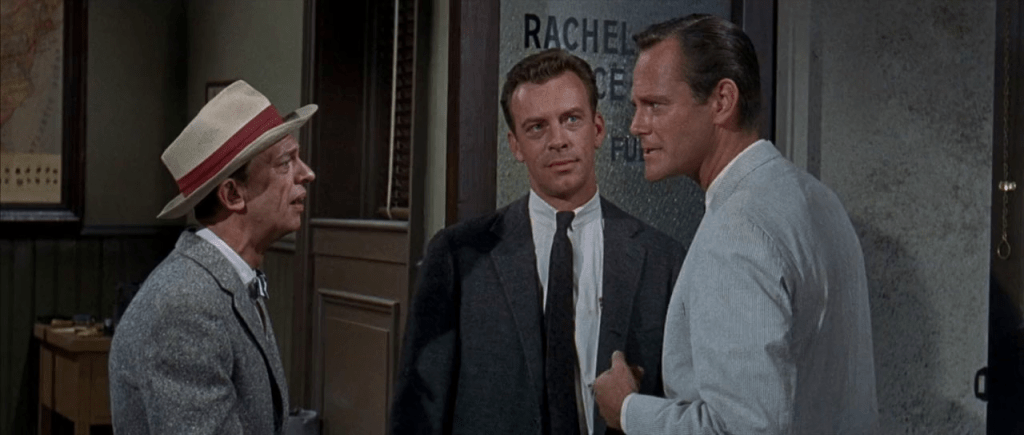
Dick majored in drama at Stanford University, appearing in a couple of dozen plays with the Stanford Players. After graduation, he began his movie career with his first film, Prisoner of War in 1954 starring Ronald Reagan. He had small roles in 35 films during his career including Love Me Tender with Elvis Presley, Operation Petticoat with Cary Grant, and That Touch of Mink with Doris Day. 1954 was also the year he began his television career in I Married Joan. Sargent would go on to appear in another 78 series before his career ended.
In the sixties he had his first roles as a cast member. He was in One Happy Family in 1961, Broadside in 1964, and The Tammy Grimes Show in 1966.
📷imdb.com The Ghost and Mr. Chicken
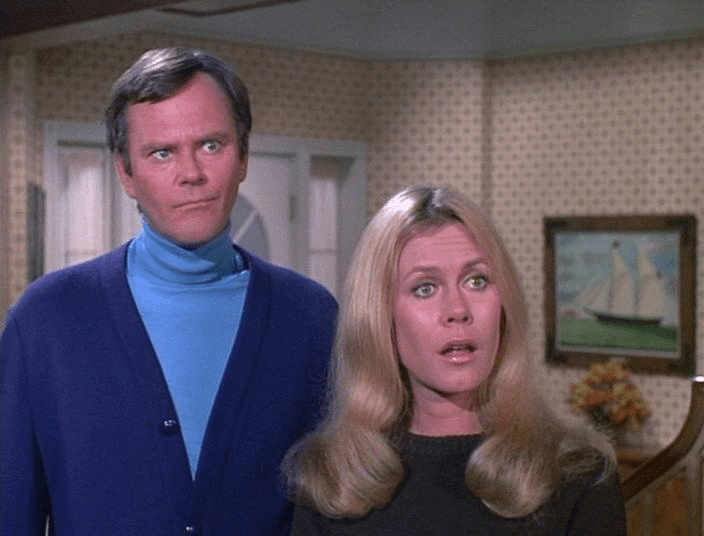
He was cast as Darrin Stephens in Bewitched from 1969-1972.
Sargent was originally asked to play Darrin in the pilot of Bewitched, but he was under contract with Universal, so he had to turn it down. I will admit, he had great credentials and a great career, and I appreciated his acting ability and admired him for his charitable work, but to be honest, I never liked him as Darrin, much preferring Dick York. I felt the same way about Sandra Gould who replaced Alice Pearce; she was a fine actress, but she just wasn’t Gladys.
It was more than the fact that they were both replacements. Dick York just seemed to have all the great traits of Darrin, and I understood why Samantha fell in love with him, even when he was being stubborn and unreasonable. However, with Sargent, he seemed to have a touch of arrogance and impatience. I also think York’s mannerisms gave more depth to the role and provided more humor. However, I do think the writing was much better in the early years, so if Sargent had been free to accept the role from the beginning, maybe his character would have been more likable.
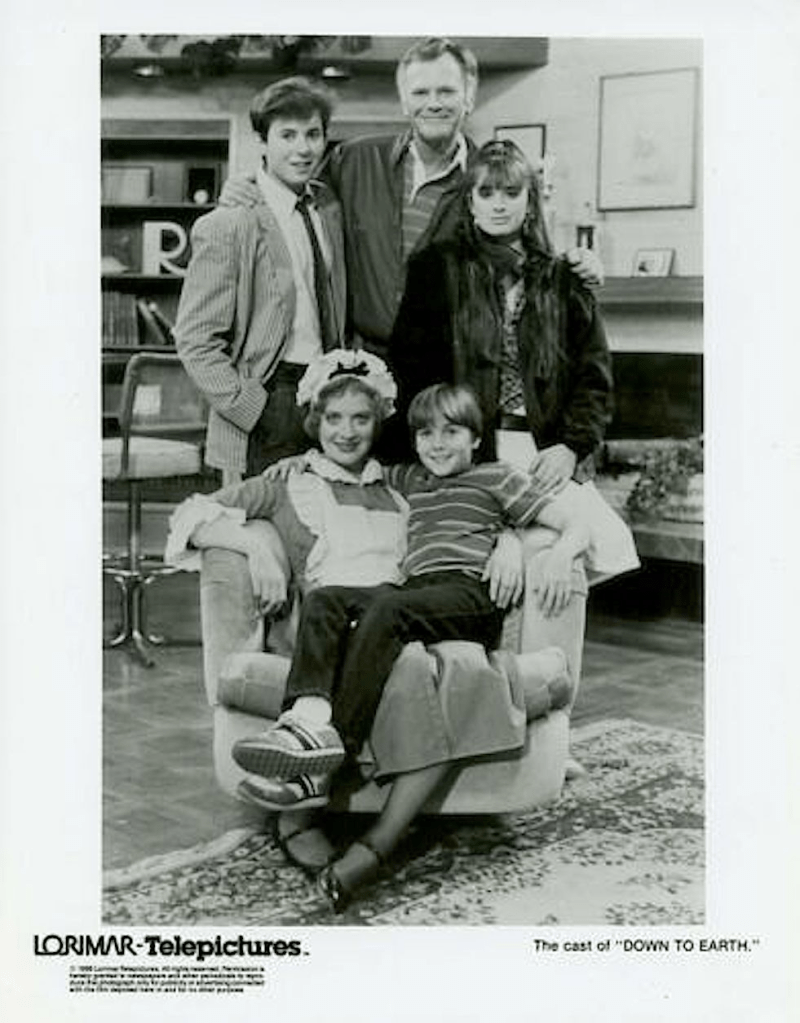
Sargent’s only other regular cast role came in 1984 in Down to Earth. There were a lot of weird plots on sitcoms in the eighties, and this was one of them. After being struck down by a trolley in 1925, Ethel MacDoogan, a flapper, waits in heaven for a chance to help a family and earn her wings. That chance arrives in the form of the Preston family with Sargent as the father.
In between 1972 and 1984 he continued his television roles appearing on I Dream of Jeannie, Here’s Lucy, Taxi, Alice, Fantasy Island, Charlie’s Angels, The Waltons, and Murder She Wrote.
Sargent was an advocate for many charities. He and Sally Struthers raised money for the Christian Children’s Fund. He also worked on behalf of Special Olympics, World Hunger, AIDS Project Los Angeles, and the American Foundation for AIDS Research.
Sargent was a closeted gay man for much of his career, but in 1991 on National Coming Out Day, he admitted that he was gay. He said he felt he had to open up because he was concerned about the high rate of suicide among young, gay men. Sargent said when he finally came out at age 61, “It was such a relief. I lived in fear of being found out. Now it’s given me a whole new mission in life.”
📷threads.com
In 1989, Sargent was diagnosed with prostate cancer and passed away five years later.
Despite my preference for Dick York as Darrin, Sargent had an amazing career. He was able to continue in both film and television until he passed away in 1989. He gave back to the community and tried to make the world better for children, which I greatly appreciate. Whether you prefer York or Sargent, they were both Bewitching characters who helped make the show a favorite for decades.
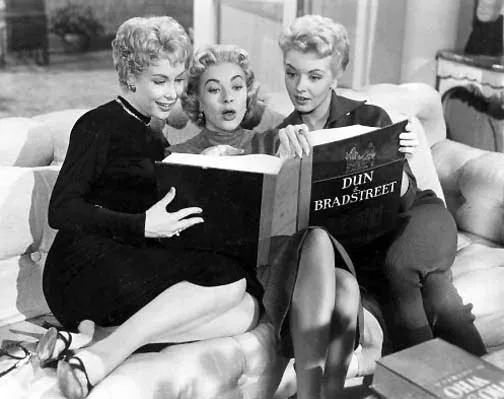
We started the year off with “Worth a Million,” learning about the careers of several of the cast members from How to Marry a Millionaire. This show debuted in 1957 and aired for two years. Today we focus on Merry Anders.
📷pinterest.com
According to imdb.com, the plot of the show is “Motherly Mike, ditzy but sexy Loco, and sensible Greta move to the big city to find themselves wealthy men to turn into husbands. After the first year Greta gets married with Gwen the new roommate in this syndicated series.”
Merry Anders, who played Mike, also had a small part as a model in the 1953 Marilyn Monroe movie that the series was based on.
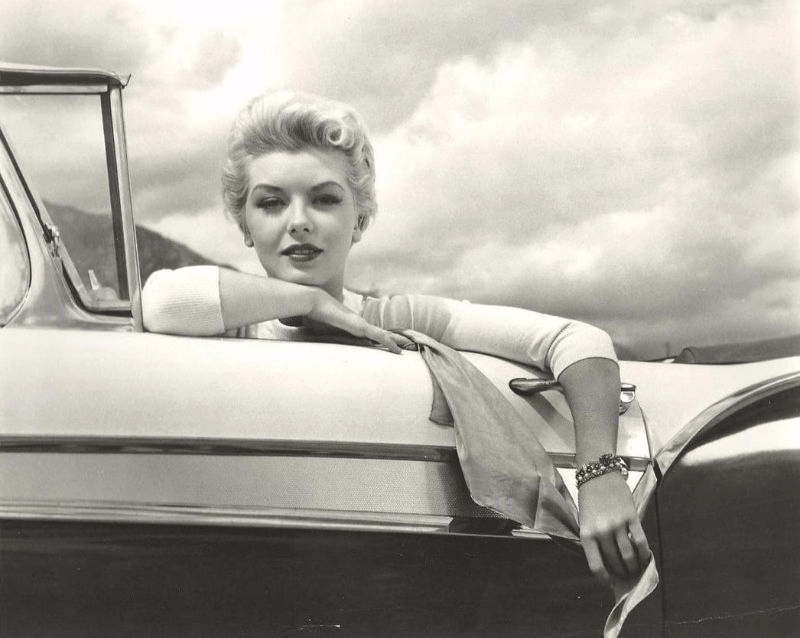
Anders was born Merry Anders in Chicago in 1934. When she was 15, she and her mother visited Los Angeles for two weeks and never left. Former actress Rita Leroy encouraged her to begin a modeling career, and Anders studied acting at the Ben Bard Playhouse. A talent scout spotted her there, signing her to a film contract for 20th Century Fox in 1951.
📷vintageeveryday.com
Her first film was Golden Girl that same year. She continued with small roles on the big screen and various offers on television before being offered a cast role in It’s Always Jan in 1955. When it was canceled, she took the part of Mike on How to Marry a Millionaire. Her next cast role came a decade later on Dragnet.
Anders was married to John Stephens, a producer, but they separated after four months. He was abusive, and when she found out she was pregnant, she divorced him.
By 1968 it was clear that her career was in a rut, and she accepted a job as a receptionist at Litton Industries. Her last role was a two-part Gunsmoke story which aired in 1971. In 1972, she officially retired from acting. She became a customer relations coordinator at Litton where she remained for another twenty years.
📷wikipedia.com On Gunsmoke
She shared that she had a couple of years where she only grossed about three thousand dollars, and she couldn’t make a living. She said, “her dad wrote her a letter and said, ‘Get out of that movie business, get yourself a decent job, girl!’ I was divorced and it’s hard to raise a child, have a nice home, put up the appearance of success, drive a car in perfect running shape and everything when you’re on unemployment.”
In 1986 Anders married again, this time to engineer Richard Benedict and they were together until his death in 1999. Anders passed away in 2012, but no cause was shared. Before her retirement, she was in 45 big-screen films including Three Coins in theFountain, Desk Set, and Airport. Add another 46 television shows including The Ann Sothern Show; Richard Diamond, Private Detective; Bonanza; Perry Mason; and Get Smart. Overall, she racked up 91 credits in two decades which is impressive. I hope she enjoyed her life after acting and was able to share lots of great stories with her family and friends.
 thewritelife61