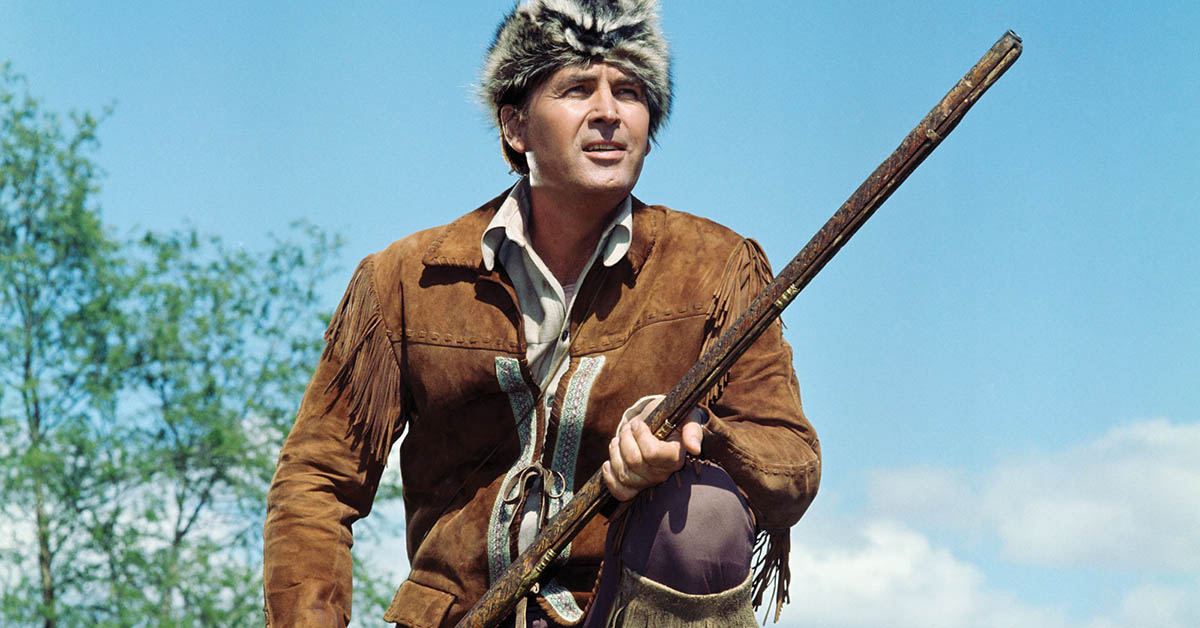
Welcome to the Riding the Range blog series. We are looking at some of the best-loved westerns from the fifties and sixties. Today Maverick is up.
📷bonanza.com
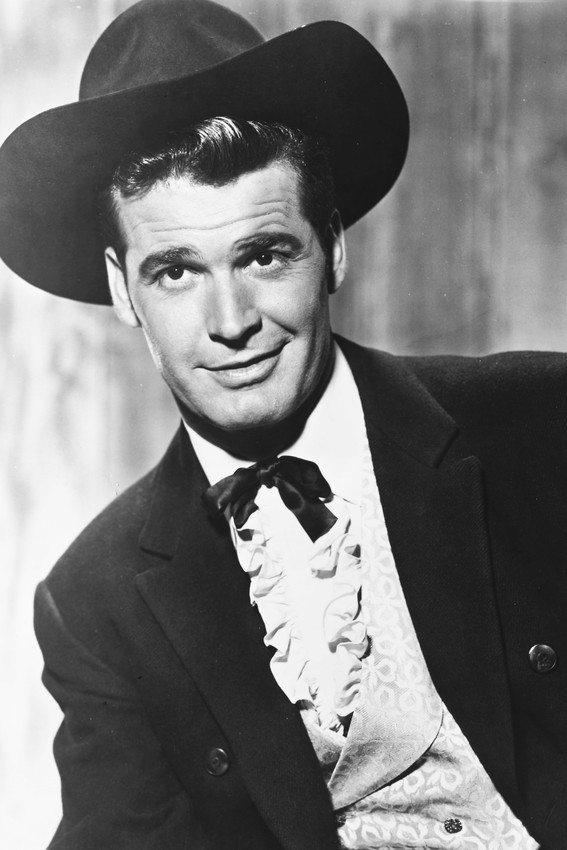
James Garner plays poker-playing Bret Maverick on this show that featured a bit more humor than some westerns. Set on riverboats and in old west saloons, the show ran from fall of 1957 through July of 1962.
The show, created by James Huggins, debuted on NBC on Sunday nights. It was up against some tough competition with Jack Benny which alternated weeks with BachelorFather. The show remained on Sunday nights for its entire run.
While Garner was the star, during the first season, Bret’s brother Bart (Jack Kelly) shows up. The brothers appear in alternate episodes, sometimes teaming up for a game or two. The brothers were drawn to adventure and to dangerous situations. They often found trouble in finances or love. However, they were true gentlemen and always did the right thing. Unfortunately, they were both slow with the gun, but fast with the fist. In one episode, Bart mentioned that “my brother Bret can outdraw me any day of the week, and he’s known as the Second-Slowest Gun in the West.”
📷wikipedia.com
After season three, Garner left due to contract disputes. Garner sued Warner Brothers for breach of contract. They had suspended him without pay during a writers’ strike. The studio claimed they had no scripts with the writers on strike, but court testimony revealed that they had about 100 scripts on hand and could have been filming, so Garner was released from his contract.
After Garner’s departure, Roger Moore made his appearance as Beau Maverick, cousin. The first choice to fill the role was given to Sean Connery who turned it down. Later Connery would play James Bond and his replacement when he left was Roger Moore. However, it wasn’t long before Moore chose to leave and was replaced by Robert Colbert as brother Brent.
📷westernclippings.com
During the last season, Colbert was just not called back or notified that he was no longer part of the show. However, they had a season to fill so Garner reruns were alternated with Kelly original episodes for the fifth season. I guess all the other Maverick brothers and cousins had moved out west. Are you confused yet because I am.
The announcer for the show was Ed Reimers. Reimers was the “Voice of Allstate” from 1957-1979, reminding people that they were “in good hands with Allstate.”
The theme song was written by David Buttolph and Paul Francis Webster.
There were some fun episodes on the show. “Shady Deal at Sunny Acres” featured Garner in a rocking chair, whittling and seeming to “ponder” a way to get $15,000 back which was stolen while brother Bart is running a complicated sting operation to do just that.
“Duel at Sundown” is fun for the cast. Clint Eastwood shows up as one of the bad guys. Edgar Buchanan and Abby Dalton are also featured in the show.
“Escape to Tampico” used items from the set of Rick’s Café Americain and the show includes to many Casablanca references to people and dialogue in the show.
📷flickr.com
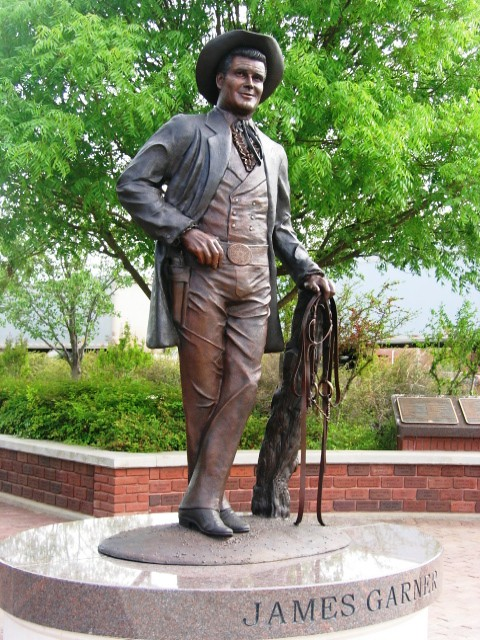
Despite the short time he was on the show, Garner got a statue in honor of his character. Norman, Oklahoma has a ten-foot-tall statue of Garner as Bret Maverick, which was dedicated in 2006.
It’s too bad that neither the network nor Warner Brothers could not get its act together with this show. It had a bit of everything: drama, comedy, romance, adventure. However, you are already starting off alternating the brothers, and with the constant replacements, it’s no wonder fans just walked away, and the ratings dropped drastically. Some of the episodes were so unusual and creative for their time that the show could have been a huge hit and a long-running show. I’m amazed the show managed to stick around for five seasons. Garner, Kelly, Moore, and Colbert all went on to prolific and successful careers in film and television.
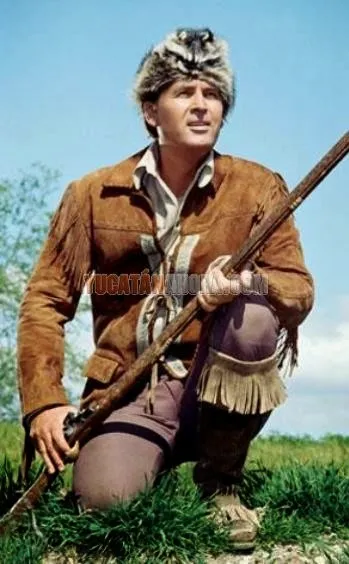
This month we are Riding the Range. Up first is Daniel Boone. I remember watching this series with my son when he was in second and third grade and loved everything western. He bought vintage western board games and read western stories. He wore a cowboy hat around the house with a pair of boots. Email was somewhat new then, but he was able to contact Fess Parker and Clayton Moore. They both sent him back nice emails, and Clayton Moore sent him an autographed biography.
When I decided to do a series about westerns and include Daniel Boone, I was surprised to learn that it was on the air from 1964-1970. That means it went off the air when I was in fourth grade—I always assumed it was produced in the fifties.
The series was on NBC during those years. It starred Fess Parker as Daniel Boone and Ed Ames as Mingo, his Cherokee friend. Boone’s wife Rebecca was portrayed by Patricia Blair and his son Israel was played by Darby Hinton. Dallas McKennon played store owner Cincinnatus. For the first two seasons before just vanishing, his daughter Jemima (Veronica Cartwright) was on and for the final two seasons, Rosy Grier, former NFL player, was Gabe Cooper.
📷epguides.com
From Cartwright’s complaints, it seems that Blair complained about having an older daughter and felt it made her seem older than she wanted to appear, so the show just got rid of a kid. If you have read my former blogs about disappearing characters, you realize that this is just one of many shows that insult viewers’ intelligence enough to just remove a character without an explanation, assuming everyone will just accept it.
Unfortunately for kids who tuned in to learn about their hero, the show did not contain a lot of historical accuracy. The show is set in the 1770s and 1780s in the town of Boonesborough, Kentucky. Daniel Boone had ten children, but only two in this show. In real life, Boone was an explorer, but on the series, he was much more of a family man. One episode was centered around Aaron Burr, but it was about an event that happened in 1806?!?!
The inconsistencies were so bad that at one point, the Kentucky legislature condemned the show. A coalition of activists asked the local television station to not air 37 different episodes in reruns because they were offensive to the local Native Americans.
Oddly, one area they did try to stay true to was the construction of the fort. They used authentic wooden pegs to build it like it would have been at the time, and it collapsed, having to be replaced by modern construction. Why the fort was the only authentic fact they worried about is beyond me.
📷military.com
Ed Ames did not love playing Mingo on the show. He admitted that he signed on for a regular paycheck, assuming the show would not last long. In 1968, he told TV Guide “Work is tight and if you get a decent part on Broadway every three years, you’re lucky. Whereas you can just keep hackin’ ‘em out week after week on TV. And then, of course, you have to eat.” He ended up getting more fan mail than Parker, and it caused some bad blood between them.
There were three versions of the theme song used during the show’s run. It was written by Vera Matson and Lionel Newman. Fess Parker originally sang the song for the show, but later seasons used a version by the Imperials. The song played up Boone as a larger-than-life hero:
“Daniel Boone was a man. Yes, a big man.
With an eye like an eagle and as tall as a mountain was he.
Daniel Boone was a man. Yes, a big man.
He was brave, he was fearless, and as tough as a mighty oak tree.
From the coonskin cap on the top of ol’ Dan to the heel of his rawhide shoe,
The rippin’est, roarin’est, fightin’est man the frontier ever knew.”
Parker not only sang for the show, but he directed five of the episodes.
📷dvdtalk.com
Although the history was embarrassing on the show, the series is often celebrated for the attitude Daniel Boone displayed that every man was to be treated with respect and as an equal. That is not to say that it was ever politically correct, as we think of that term today, but for the era it debuted, it was a refreshing, perspective. One episode that demonstrates this is season 2, episode 4. Rafer Johnson (an Olympian and civil rights activist) plays a former enslaved person who is stealing trappers’ furs to sell to earn money to return to Africa. Boone tells him he can’t condone the stealing and “arrests” him for that crime. However, he takes him into his custody to protect him and raises enough money for him to travel to Africa, refusing to return him to the former slave owner.
📷wikipedia.com
Before the show ended, Parker wanted to open a Daniel Boone amusement park in Kentucky. He bought some land near the junction of I-71 and I-75, but before he could build Frontier World, another park opened nearby in Ohio and Boone’s never happened. He did later buy a ranch in California and started the Fess Parker Winery.
I guess Fess Parker enjoyed making people dizzy whether it was riding a roller coaster, drinking wine, or trying to figure out if the television Boone was a good or bad influence on the fans who watched the show.
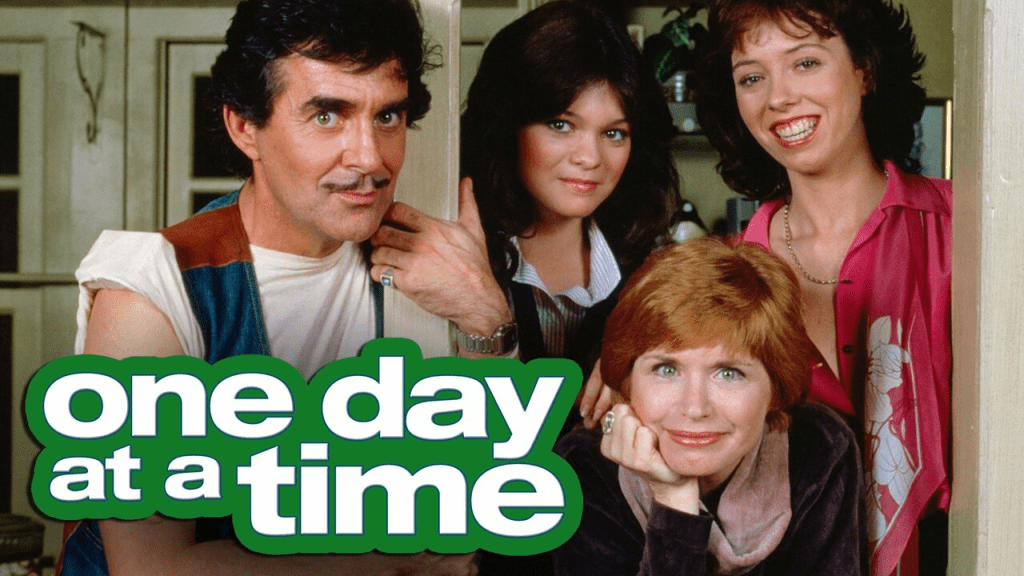
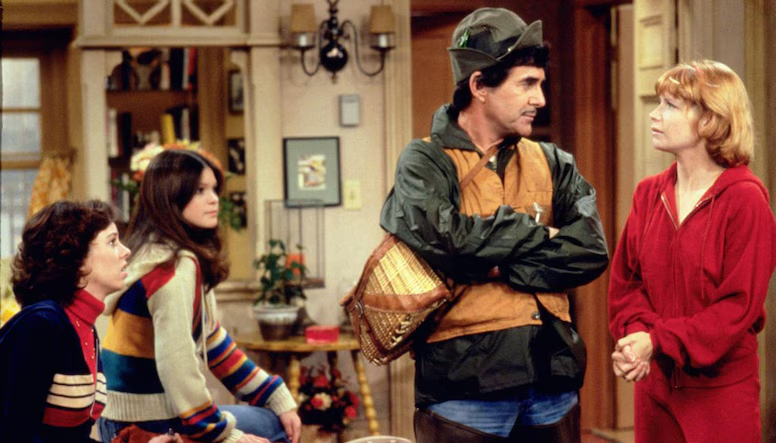
For this Reboot series, we are ending with One Day at a Time. This show was about a divorced mom, Ann Romano (Bonnie Franklin) whose father is not in the picture much anymore. She moves her two teenaged daughters, Barbara (Valerie Bertinelli) and Julie (Mackenzie Phillips) from Logansport, Indiana to Indianapolis. Barbara is the funny daughter who is always doing the right thing, while Julie is rebellious and angry. Schneider (Pat Harrington Jr.) is their building supervisor, and he takes on a bit of a parental role with the girls.
📷tvinsider.com
In the early seasons, Ann dates her divorce lawyer David (Richard Masur). However, after becoming engaged, Ann realizes David wants children of his own and she is not ready to go down that road again, so they break up. Her ex remarries and he eventually enters their lives again.
Julie marries Max (Michael Lembeck), a flight attendant, and they eventually have a daughter. Barbara marries a dental student Mark (Boyd Gaines). In the finale, Ann decides to take a job in London and Schneider moves to Florida to take care of his niece and nephew.
The series was created by husband-and-wife team Whitney Blake and Allan Manings. Blake was Dorothy Baxter on Hazel. Blake based the show on her experiences as a single mother raising three children. It debuted in 1975 and aired until 1984.
📷enews.com
Franklin was not happy with the scripts in the first season. She said that she threatened to quit unless the quality improved for the second season.
Phillips dealt with substance abuse, and she was fired after the fifth season. She did come back later for a few appearances. When she entered rehab in 1980, the plot was that Julie and Max moved to Houston. In the seventh season, she returned for a two-part episode. In the final season, she collapsed on the set. When the producer asked her to take a urinalysis test, she told them not to bother and she was fired for the last time. Lembeck continued with the show, and he raised their daughter after it was said Julie left them. While Phillips was unkind, to put it nicely, to Bertinelli early in the series, they eventually became closer. Bertinelli was one of the few people who stood by her after she released a shocking autobiography. Later Glenn Scarpelli joined the cast as Alex. His father had been Ann’s boyfriend and after his father dies in a car accident, Alex asks to move in with Ann and Barbara.
📷mentalfloss.com
Family members Nanette Fabray and Shelly Fabares both took roles in the series; Nanette played Ann’s mom and Shelly was a coworker. Howard Hesseman also joined the cast as Sam who would marry Ann.
The show was filmed before a studio audience. That surprised me a bit. I went back to watch a few shows for this blog, and I was surprised how dark the series was for a sitcom. Many of the shows, especially Norman Lear shows, were not very light-hearted. I remember liking this show as a teenager/young adult, but I must admit, they were hard to sit through the second time around, and it is not a show that I would choose to watch again.
The theme song was “This Is It.” Brill Building composed the music with lyrics by Jeff and Nancy Barry. Polly Cutter sang the song.
It is amazing that the show did so well in the ratings because it was moved around on the schedule eleven times during its run. For most of its life, it was in the top 20.
📷tmz.com
The show still had decent ratings after its nine seasons, but Franklin decided she was ready to be done. Harrington was the only cast member to win an Emmy. A 1984 spinoff was discussed for Schneider, but that show never came to fruition. It seems fitting for Harrington to win the Emmy. He has 166 acting credits, and appeared in movies with Elvis Presley and Robert Redford. He said 100 actors auditioned for the role of Schneider. He said that he was a family man with four kids and needed to put food on the table, so he went for it.
In 2005, there was a One Day at a Time Reunion on CBS. Franklin, Phillips, Bertinelli, and Harrington discussed their time on the show. The documentary featured private interviews with Masur, Fabares, Fabray, Lembeck, and Scarpelli.
At least three seasons were released on DVD, but I have not seen any references to seasons four-nine.
📷deadline.com
In 2017 a reboot was made of One Day at a Time. Three original cast members showed up on the new series. Phillips appeared as a counselor and former veteran leading a support group with PTSD, Glenn Scarpelli was in season three, and Lembeck directed the season one episode “Sex Talk.”
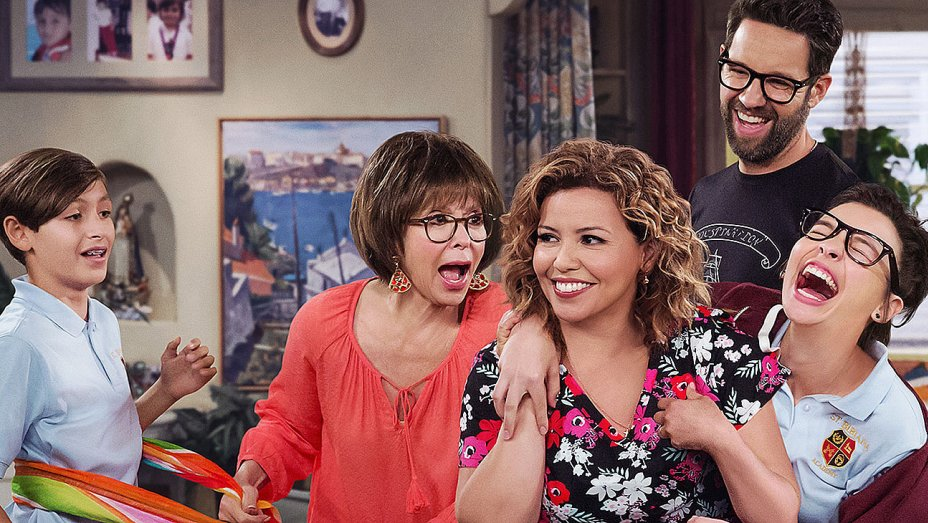
The remake was developed by Gloria Calderon Kellett and Mike Royce with a Latino cast for Netflix. The stars were Justina Machado, Todd Grinnell, Marcel Ruiz, Stephen Tobolowsky, and Rita Moreno. The Cuban family lives in LA. A single mother and former veteran dealing with PTSD, Penelope Alvarez (Justina Machado) lives with her daughter, Elena (Isabella Gomez), and son Alex (Marcel Ruiz), and her mom Lydia (Rita Moreno). Pat Schneider (Todd Grinnell) is the supervisor. Penelope works for Dr. Leslie Berkowitz (Stephen Tobolwsky). The reboot also focused on some tough subjects including mental illness, immigration, sexism, homophobia, gender identity, and racism. It aired for four seasons.
The critics were all on board. It was listed as one of the best shows of 2017 and received a variety of awards including four Emmy nominations. Robert Lloyd of the Los Angeles Times wrote that it was “lively without being rushed” and David Wiegand of the San Francisco Chronicle felt it “was nicely written . . . and the performances are almost universally engaging.” Verna Gay of Newsday called Machado “flat out terrific.”
📷superlagar.live
This time around, Gloria Estefan sang “This Is It.”
The series was canceled after four seasons. The network said it did not have enough viewers, despite the fact that Rotten Tomatoes gave it a 100% rating for every year. It was praised for dealing with many hard subjects and featuring a matriarchy of three generations of women who make their way through life and support each other even when they don’t agree with each other.
I think that the failure of this show to make it to five seasons is a common factor that we will see in streaming shows. Networks had more of an incentive to keep shows around when there were fewer options. Now there are so many shows available that it’s almost impossible to know what is available to watch. Considering that three networks used to get most of the viewers tuning in, now you can multiply that by hundreds. I’m not sure what it will take to keep a show running more than three years anymore.
I hope you enjoyed taking a look at four reboots that succeeded in bringing back original viewers and building a new fan base for themselves. I’d love to hear if any of these were shows you would root for.
Before I get into our topic today, I just want to thank all of you who have been supporting my blog. Today marks the first blog of my ninth year. Not sure where the time went, but it has been so much fun and I have learned an incredible amount of television knowledge. I spent some time this summer putting together new schedules, so I’m committed to 2030 for more fun and learning.
This month we are Rebooting. Almost every month I mention some reboot or another about a show that was on in the fifties, sixties, seventies, or eighties. Many of them have been on and off the air in a blink. Some of them stuck around for a season or two. Others rivaled the original in the quality of the scripts and characters in the reboot. Those more popular shows are the shows we are zeroing in on this month.
📷pinterest.com
Today is all about MacGyver. The original show was on ABC from 1985-1992. Created by Lee David Zlotoff, this show starred Richard Dean Anderson. Henry Winkler and John Rich were the executive producers.
Angus MacGyver (Anderson) was a secret agent. MacGyver works for the Phoenix Foundation in LA. He is an agent for the Department of External Services, a made-up agency. He had been a bomb team technician in the US Army Special Forces in Vietnam and was a scientist majoring in Physics at Western Tech. The show started out with moderate success and gained a loyal following. MacGyver creates things from ordinary objects to solve complex problems. These creations were vetted by scientists before being integrated into the plots.
Arsenio Hall mentioned in 1989 that he heard “MacGyver” used as a verb meaning “to do the impossible.” In 2015, the term did become part of the Oxford Dictionaries to mean “make or repair an object in an improvised or inventive way, making use of whatever items are at hand.”
MacGyver prefers not to carry any firearms due to an accident in his childhood which resulted in the death of a friend. Instead, he packs a Swiss army knife and a roll of duct tape.
MacGyver lives on a houseboat which was credited to Winkler. His favorite sport is hockey, and he often sports a Calgary Flames hat. He also enjoys racecar driving, chemistry, and baccarat. What he does not like are heights.
📷reddit.com
Joining MacGyver was Pete Thornton (Dana Elcar), his boss and best friend. When Thornton was made director of operations at the Phoenix Foundation, he brought MacGyver into the program. His other friend is Jack Dalton (Bruce McGill).
In a weird meeting of the minds, Rich was working on a sitcom called Mr. Sunshine for ABC, Winkler was finishing his run as the Fonz on Happy Days, and Zlotoff was producer for Remington Steele on NBC. The three got together to propose MacGyver, and ABC found room in its schedule for the series.
Winkler convinced Anderson to audition for the role of MacGyver after seeing him on The Love Boat.
During its second season, MacGyver became a bigger hit.
📷theconversation.com
So, what are some of the fun inventions MacGyver came up with: using jumper cables, a generator, and 2 quarters, he invented a welder. With satellite parts and a plastic shield, he made a hang glider. A blood pressure pump and alarm clock became a lie detector test. A bazooka was made from a muffler, gear shift knob, seat cushion stuffing and a cigarette lighter. And sunglasses with nail polish remover and a lamp equal a spectroscope.
From 2016-2021, a reboot series debuted on CBS which owns the rights to both series after acquiring the original series from Paramount Television. In 2015, Winkler signed on to produce the reboot with James Wan and R. Scott Gemmill for CBS. The reboot was canceled in 2021. In this version, Lucas Till became MacGyver.
📷dashboardonfire.com
Anderson was asked if he had seen the reboot in 2019. His response was that “I have, and I’m not real crazy about it, I’ll be honest. They approached me early on. They’d done a test for the show and found it wasn’t as attractive as they wanted it to be, so they called and asked if I wanted anything to do with it, and I said no. It’s a business, but . . . I don’t think they’ve been fair or true to the series. They’re shooting up everybody and there’s so much going on that you don’t see the thought process that we prided ourselves on. You know, MacGyver sees the problem, he sees the solutions to the problem, you see him gathering the solution, and then solving the problem. In this new one, its boom-boom-boom, and it happens so fast.”
Perhaps this lack of letting viewers in on the process and adding more violence hurt the reboot. The series was never a huge hit. I read several reviews from fans of the original show that referred to some of the issues. One said that George Eads isn’t the same free spirit that Jack was on the original. Making MacGyver part of a team instead of a maverick agent was also mentioned. A couple reviewers said that the original not only explained the scientific processes but there was a moral embedded into most episodes about the use of technology or social behavior.
While these are all valid viewpoints, other factors that might have had more to do with the series ending was the decline in numbers and the dysfunction on the set. From season four to five, the series lost 20% of its audience which is quite a bit.
📷tvseriesfinale.com
After learning about the show’s cancellation, Till wrote on his Instagram account that “the past five years have been what I will look on later as the most formative years of my life. Lots of tough, lots of love. I made lifelong friends, actually no, family. I learned to push myself to new limits, breaking through and through and through. Was nervous to take up the mantle of an icon and you guys allowed me into your homes and accepted me. I’m like the Roger Moore of MacGyvers now thanks to your support.” While he dwells on the positive things that came out of the show, the “tough” things he was referring to was probably the toxic work environment created by executive producer Peter M. Lenkov. I read many articles that discussed the difficulties he created in filming before he was fired in 2020.
Given the difficulties of the show and the differences between the original and the reboot version, it’s probably not surprising it was cancelled, but I think the fact that it went five years before being cancelled is a win for the cast.
This month we are looking at some recent reboots of popular shows from the the past. We are ending our series with what I think was the best of the reboots in recent history: Hawaii Five-O.
Originally, one source said the show was developed with a house detective for a chain of Hawaiian hotels. Someone on the production team thought it would limit the plots too much, so it was expanded to crime throughout Hawaii.
📷imdb.com
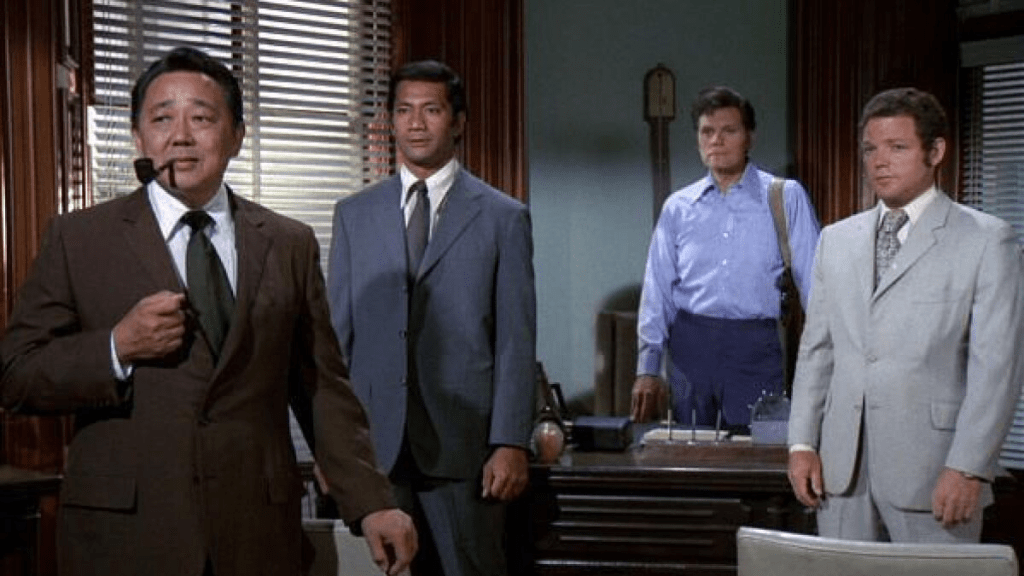
From 1968 to 1980, Hawaii Five-O was on CBS. Created by Leonard Freeman and set in Hawaii, it starred Jack Lord as Captain Steve McGarrett, former Korean War veteran. McGarrett heads a special task force appointed by the governor. His team includes Danny Williams (James MacArthur), Chin Ho Kelly (Kam Fong), Kono Kalakaua (Zulu). Police officer Duke Luekla (Herman Wedemeyer) lent a hand often. The task force is run out of offices at the Iolani Palace.
Richard Boone was offered the part of McGarrett, but he turned it down. Gregory Peck was also in consideration for the role. Eventually, Jack Lord auditioned on a Wednesday, received the part, and was in Hawaii filming on Monday. Lord was the only actor to appear in all 281 episodes of the series. A couple members of the cast came on board with little-to-no acting experience. Zulu, who played Kono, was a beach boy and local DJ. Fong, who played Kelley, had been a police officer in Honolulu for sixteen years before retiring to work in real estate.
McGarrett and his team investigated crimes by international secret agents, organized crime syndicates, and ordinary criminals. Some of the villains were played by celebrities including Gavin MacLeod, Ross Martin, and Ricardo Montalban.
📷internetmoviefirearmsdatabase.com
McGarrett’s ongoing battle throughout much of the series is with Wo Fat (Ihigh Dhiegh), a rogue intelligence officer from China. In the finale, “Woe to Wo Fat,” McGarrett is finally able to land him in jail. However, the series ends with Wo Fat retrieving a file from his boot, making us wonder if we might be able to escape. The name “Wo Fat” came from a restaurant in downtown Honolulu.
In the original show, little time was given to the personal lives of the team; the plots all centered around solving the crime of the week.
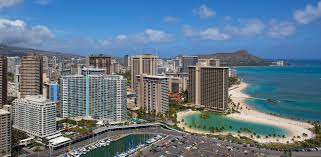
The show was filmed in Hawaii: the first location was in Pearl City in a hut where the roof leaked and rats gnawed at cables; then it moved to Fort Ruger and for the final four seasons, a set was built at Diamond Head. Hawaii had only been a state for nine years when the series started, so most Americans were not familiar with the islands.
📷instrumentationengineering.com
Fans often talked about the beauty of the scenery for the show. They also appreciated the intelligent writing and believable plots.
Many locals were used in the show, partly because the television and movie industry was not well represented in Hawaii, so everyone learned along the way. This made the cast much more diverse than most shows in the sixties.
The show was known for its theme song written by Morton Stevens. The Ventures recorded the theme, and it reached No. 4 on the Billboard Hot 100 chart. It was popular with high school and college bands across the country; when I was a majorette in the mid-seventies, it was one of the songs our band performed.
One of the most popular catchphrases from the seventies was “Book ‘em Danno,” a phrase used sparingly in the reboot.
The original Five-O was the longest-running crime show until Law & Order surpassed it in 2002. In began on Thursdays but moved to Wednesdays later in the year. From 1971-1974 it aired on Tuesdays. In 1975 it started out on Friday nights, moving to Thursdays where it stayed till 1979. That December it moved to Tuesdays for two months before switching to Saturdays for the rest of its run. This doesn’t seem like a great strategy for keeping fans.
📷facebook.com
While the show was popular with viewers, its only two Emmy wins were for music composition. It received ten nominations, but the only person to be nominated for acting was a special guest appearance by Helen Hayes in 1976. There were no nominations for acting, writing, or best series.
A one-hour pilot for a reboot was made in 1996 but never aired on television. Written by Stephen J. Cannell, it starred Gary Busey and Russell Wong as the Five-O team along with MacArthur who returned as Danny Williams, now governor of Hawaii.
📷releasedate.me
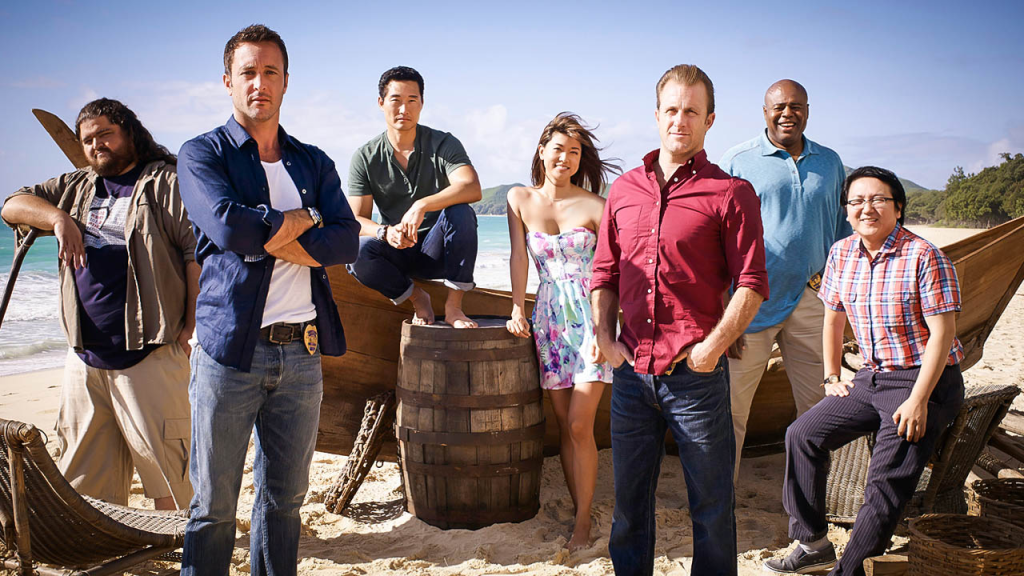
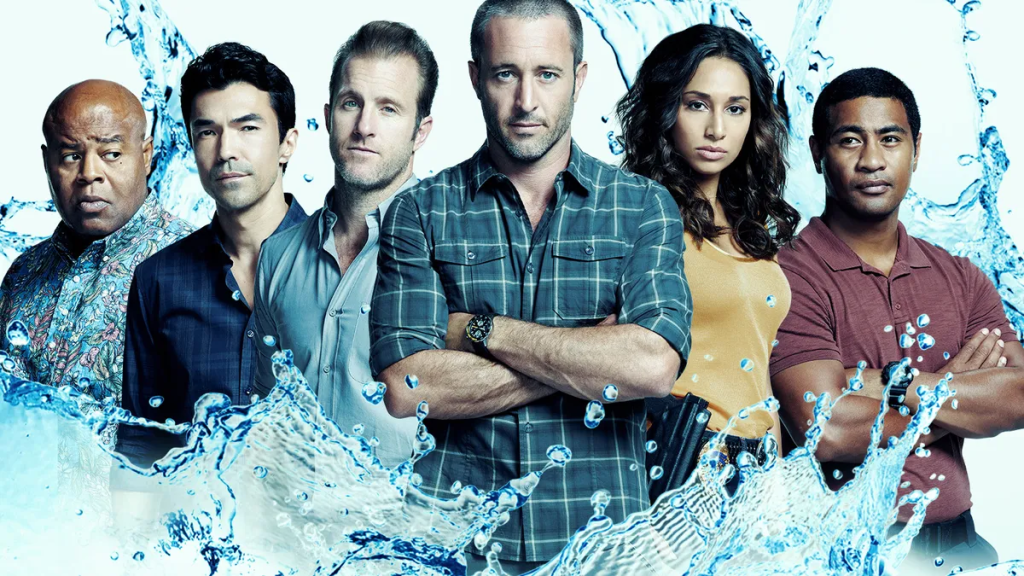
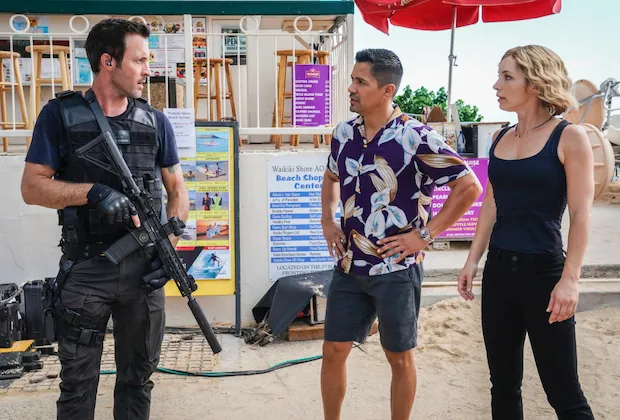
The reboot we are discussing today began in 2010, also on CBS. To distinguish it from the original show, it was Hawaii Five-0 (using a zero in place of a capital letter O). Most of the characters are similar to the original. They are still a special task force appointed by the governor who is now a woman, Pat Jameson (Jean Smart). Steve McGarrett (Alex O’Louglin), a former Navy SEAL and son of Jack Lord’s character, partners with Danny Williams (Scott Caan) in this version. Other teammates included Chin Ho Kelly (Daniel Dae Kim) and Kono Kalakaua (Grace Park). Kono’s gender switched from the a male to bring a female perspective to the team.
For the eighth season Tani Rey (Meaghan Rath) and Junior Reigns (Beulah Koale) came on board. Several other regulars during the years included Lou Grover (Chi McBride), medical examiner Max Bergman (Masi Oka), Jerry Ortega (Jorge Garcia), Chin’s classmate and a local conspiracy theorist whose vast knowledge often comes in handy, and Sgt Duke Lukela (Dennis Chun) is still around from the original show.
📷tvguide.com
A season or two into the show, Steve’s girlfriend, Lt. Catherine Rollins (Michelle Borth) works with the team and Adam Noshimuri (Ian Anthony Dale) joins the group. When Dr. Bergman heads overseas, he is replaced by Noelani Cunha (Kimee Balmilero). Another member of the surrogate family is Kamekona (Taylor Wily) who owns a food stand. He often helps the team because he knows almost everyone and has great intel for Steve and Danny. In this version, Steve’s father was a cop and Steve is still hunting down Wo Fat to avenge his father’s death. Chin and Kono are cousins and eventually Kono and Adam marry.
O’Loughlin was born in Canberra, Austrialia on August 24, 1976, and Caan was born in Los Angeles on August 23, 1976, but since Australia is twenty-four hours ahead of the US time, they were essentially born on the same day. Perhaps that’s why they had such great chemistry. Their witty bantering is fun to listen to. They remind me of an older couple who have been married a long time. They know each other so well, and can afford to be critical, because you know they have each other’s backs and would die for each other if they needed to.
This new version continued to show the beauty of the Hawaiian Islands. Viewers learned more about the culture of the state.
📷spoilertv.com
In the reboot we also got to know the characters much better; half the show concentrated on their personal lives and how those lives sometimes had an effect on what they did as detectives, right or wrong.
Peter M. Lenkov, who was one of the creators of this reboot, was also part of the team that debuted MacGyver and Magnum PI reboots, all of which are set in Hawaii.
The show was popular with viewers when it returned to the schedule. The Honolulu Advertiser wrote that “a smart script, slick production values and maybe a splash of nostalgia got the remake of Hawaii Five-0 placed on the CBS prime-time lineup this fall.”
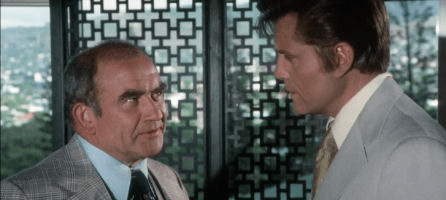
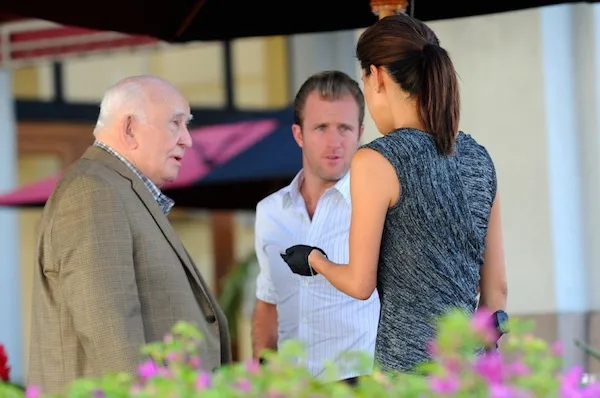
One fun carryover from the original series was the character of August March. Played by Ed Asner in the original show in season two, March was a jeweler who was arrested by Lord’s character. In season three of the reboot, August March is back played by Asner again.
📷inner toob.com Asner on the original . . . and
The series debuted on Monday nights. Season four found it on Fridays where it stayed for the final seven seasons.
Viewers had strong reactions to the theme song. For the early shows, the original theme song was used but updated which fans did not appreciate, so the original theme was used for most of this series as well.
the reboot. 📷tvline.com
The new show had a positive impact on Hawaii’s economy. Businesses that were featured on the show saw an increase in visitors. When McGarrett mentioned Kona Brewing Company beers were his choice of beverage, sales shot up 60%.
One fun fact for those car collectors is that Jack Lord drove a Mercury Marquis in several seasons of the first show. On this edition, Steve works on his father’s car. The owner, stuntman John Nordlum, allowed the show to use the car, which still has its old license plate of F6-3958.
📷micoope.com
Comparing these shows is a little tough because television culture and shows changed so much during the 42 years that the show was off the air. The original series had 281 episodes while the reboot comes in with 240. I remember watching the original as a kid, and it was just another police drama to me. Personally, I like the reboot. Continuing to portray the culture as another character adds a lot of charm to the show. I would rather see the personal lives of the characters especially because they spend a lot of time out of work together and that adds to their team chemistry. I also like the banter between Steve and Danny.
There have been many reboots of classic shows, especially on other streaming services, and most of them do not live up to the original standards at best and can be plain awful at worst. This is one of the few that did it right and succeeded for all the right reasons. If you never saw the original, check out a season or two and compare the shows for yourself.
This is Reboot Month, and we are comparing and contrasting several shows that got rebooted after 2000. For the next three weeks we are traveling to Hawaii. Today we get to stop at the home of Magnum, P.I.
Tom Selleck starred as Thomas Magnum, a private investigator living in Oahu. The show first aired on CBS in December of 1980 and went off the schedule in May of 1988.
📷facebook.com
The role of Magnum was offered to Kevin Dobson who turned it down. Tom Selleck had been the star of six different pilots that were unsuccessful in becoming shows, but he was offered this role after Dobson declined. After Selleck was given the role of Magnum, he was offered the role of Indiana Jones in Raiders of the Lost Ark. He had to decline due to his show, so the part was given to Harrison Ford. However, an AFTRA/SAG strike in 1980 delayed the production of the television show, so if he had a crystal ball, Selleck would realize that he could have finished filming Raiders before the television show began filming.
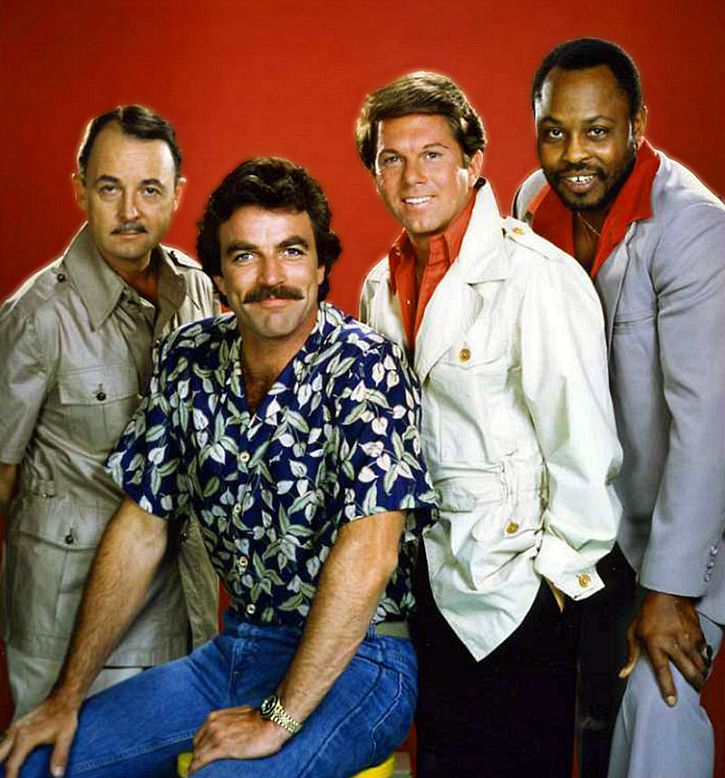
Magnum lives in a guest house on an estate, Robin’s Nest, owned by Robin Masters, a famous author. We understand that Magnum helped Masters out and now Masters allows him to live on the estate for no charge. Masters has also provided Magnum with his car to drive, a Ferrari 308 GTS. The only person he really reports to is “Higgy.” Higgy is ex-British Army sergeant major, Johnthan Quayle Higgins III (John Hillerman).
📷pinterest.com
In the first show, Magnum is not a fan of Higgins but as the series continued, a respect and fondness was built between the two men. Other cast members include T.C. Calvin (Roger E. Mosley), a friend who owns a helicopter charter service and Rick Wright (Larry Manetti) who owns a local bar. Mosley was a licensed helicopter pilot, but he was banned from doing his own stunts. Both men help Magnum out on cases quite often. They are former Marines whom Magnum served with in Vietnam. The Vietnam connection was an important part of the show. Previously most shows about Vets portrayed them as dealing with post-traumatic syndrome, but this show featured three competent, close comrades from the war, and it changed the way the Vietnam War and the veterans were regarded by popular culture and American viewers.
Rounding out the cast were Lt. Yoshi Tanaka (Kwan Hi Lim), a police lieutenant in the homicide division and Agatha Chumley (Gillian Dobb), Higgins’ friend who obviously has a crush on him.
Higgins lives in the main house on the estate with two Dobermans named Zeus and Apollo. Higgins also bargains with Magnum for favors to get use of the tennis courts, wine cellar, and other amenities of the main house. Higgins considers Magnum an inconvenience; he was living at the estate to write his military memoirs.
📷TMZ.com
In reality, the Masters estate was known to Hawaiians as the Anderson Estate, Pahonu, owned by a local politician. The grounds were used by the royal family to raise green sea turtles, and the pond is listed on the National Register of Historic Places. It had an 11,000-square-foot house; a boat house, which served as the guest house on the show; a gatehouse; and private tennis courts.
In January 2014, the then owner Barbara Cox Anthony sold it and in April of 2018, the estate was demolished.
For the first nine episodes, the theme music was a jazzy piece written by Ian Freebaim-Smith. However, it was replaced by a more up-tempo theme by Mike Post and Pete Carpenter, and it hit the Billboard Hot 100, ranking 25th in 1982.
The show was very popular with viewers. Men wanted to be Magnum and women wanted to date Magnum. The show received 17 Emmy nominations, picking up a win for Selleck in 1984 for Best Actor in a Drama and for Hillerman in 1989 for Best Supporting Actor in a Drama. It ranked in the top 20 for its first five seasons.
📷onlyinyourstate.com lagoon used on Magnum PI
One of the reasons the show was set in Hawaii is because CBS had its Hawaii production offices running for Hawaii Five-O. Since that show ended in 1980, it made sense to film Magnum there and continue the production division.
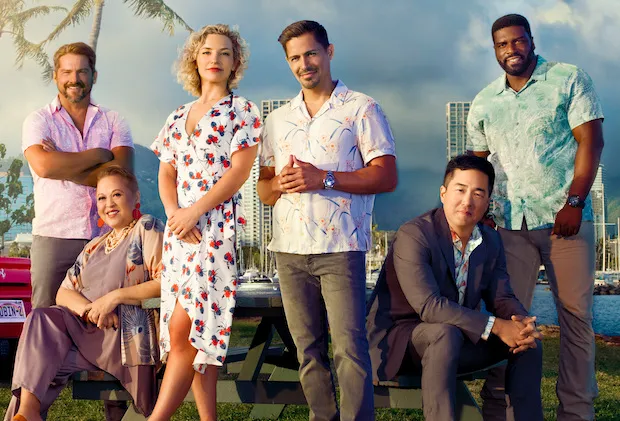
Thirty years later Magnum was back in Hawaii. This time it was Jay Hernandez as Thomas Magnum, former Navy seal. While he still lived at Robin’s Nest, he worked with Juliet Higgins (Perdita Weeks), an ex-MI6 Agent who runs the estate. Kumu Tuileta (Amy Hill) also lives onsite as the estate’s cultural curator. Magnum allows Robin Masters to write about his life as a Navy seal in exchange for living on the estate, but he has no income, so he becomes a private investigator with the help of “Higgie” who becomes his partner in season two.
In this version, Magnum also has use of Robin’s Ferrari. The shows were filmed in Hawaii. Robin’s Nest was Kualoa Ranch, a set where Jurassic World was also filmed. Several beaches throughout the island were also used, and the show received a traditional Hawaiian blessing before it began.
📷tvline.com
Like the original show, Rick Wright (Zachary Knighton) and T.C. Calvin (Stephen Hill) are friends and former Marines. Rick owns a bar the friends frequently visit and T.C. does island helicopter tours. They both pitch in to help Magnum when their skills are needed on a case. Another ally is Gordon Katsumoto (Tim Kang), a Honolulu police detective.
Magnum and Higgins have a definite sexual attraction and they become close friends working together, but for the first few seasons one of them is always involved with someone else. Eventually they realize they both have feelings for each other and start a relationship.
The series was on CBS for four years. When CBS and the producers couldn’t reach an agreement for a fifth season, the show was canceled. The cancellation was bad for the cast and crew, but it also affected many of the locals. Hawaii’s film industry planned on firing 350-400 employees.
I’m not sure why they could not come to an agreement. While the show never achieved the ratings of the earlier show, it had a decent following.
NBC picked it up with a two-season, twenty-episode contract. NBC ended up going with ten episodes per season. They showed the ten episodes of season five by April 2023 and then fans realized that the sixth season would not be shown until some time in 2024. The entertainment industry was facing a writers’ strike as well. It’s interesting that writers’ strikes affected both of the Magnum series.
📷meaww.com
The network had three options: renew the show for a sixth season, extend the cast’s options, or release the actors and cancel the series. NBC decided to cancel the show. Unfortunately, after the months-long break between the fourth and fifth season, the network change and schedule change, the show never did very well. You also have to consider that the “should we, shouldn’t we” relationship between the two stars had lost some of its magic when they got together and had to discuss more practical matters. The show was canceled again in June of 2023.
📷tvline.com When Reboots come together
I’m not sure why the reboot of Hawaii Five-0 did so well (which we will talk about next week), but the reboot of Magnum did not. The original Hawaii Five-0 was definitely about the investigations while the reboot included the officers’ personal lives as well. I think people liked Jack Lord, but the show was about solving crimes. Magnum P.I. says it in the name, the show was about Magnum and, more specifically, it was about Tom Selleck as Magnum. It was hard for Hernandez to follow in those footsteps no matter how good of an actor he was. I’m guessing a lot of the fans who turned on the show the first time for nostalgic reasons did not bond with the show in the same way they did the original.
I will admit I watched some Hawaii Five-0 and Magnum episodes from the originals, but I was busy during those years, and I didn’t see many and they weren’t shows on my “must-watch” list, although I liked the episodes I did see.
I thought the rebooted Magnum was a decent show on its own. It probably would not be one I would have continued to watch, however, while Hawaii Five-0 definitely made me a fan of the new series.
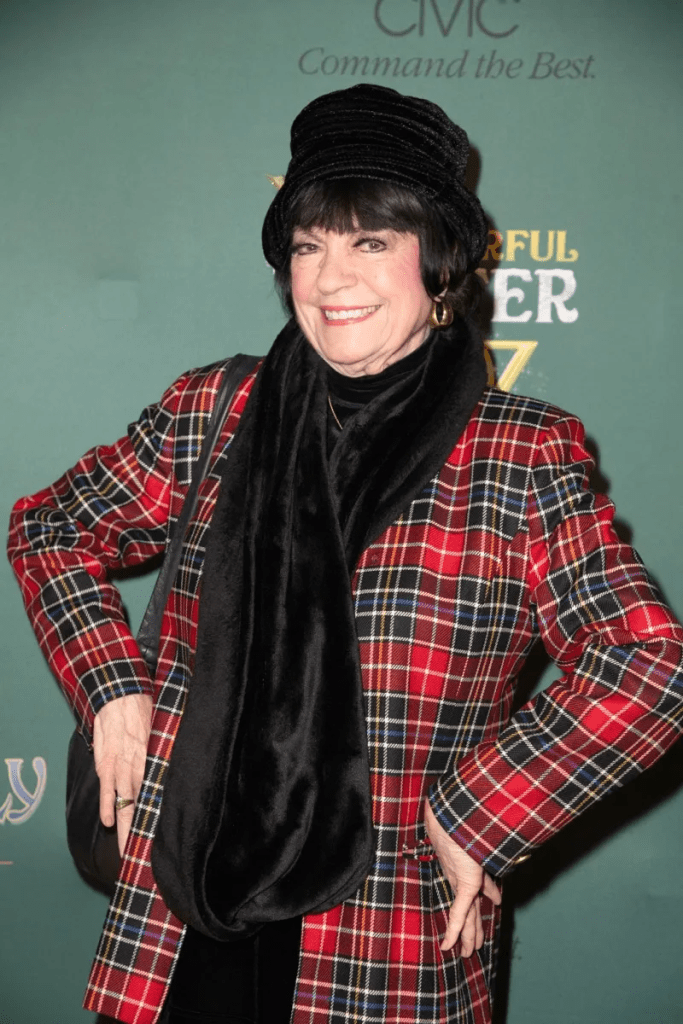
We are winding up a blog series about Supportive Women. One of the women I wanted to include was Jo Anne Worley. I didn’t know much about her apart from her appearances on Rowan & Martin’s Laugh-In and being in my favorite made-for-television movie, The Feminist and the Fuzz.
Jo Anne was born in 1937 in Lowell, Indiana. Her loud voice was not an acting tool. She always felt she was loud. She said, “I have a big mouth, and I’m sorry to say I’ve always had one. When I was young, in church, I never sang with everybody else. I only mouthed the hymns, so I wouldn’t drown anyone else out. I have my quiet moments. But I don’t have many.” She was named school comedienne at her high school.
In one interview with a Lowell reporter, she said “I’ll never forget the place I’d work every summer while in high school. It was called Robert’s Hotel, Gas and Café, and it was at the intersection of US 41 and Highway 2. They had an old juke box in the café where I worked, and I’d sing and joke around whenever the business was slow, which seemed like most of the time.”
After graduation, Worley moved to Blauvelt, New York to work with the Pickwick Players. She was later offered a scholarship to Midwestern State University in Wichita Falls, Texas. After two years at the school, she moved to Los Angeles City College and enrolled at the Pasadena Playhouse. Her first musical role was in “Wonderful Town.”
📷hellodolly.com
In 1961 she was in the off-Broadway musical show “Billy Barnes Revue” with Charles Nelson Reilly and Larry Hovis (who was Carter on Hogan’s Heroes). The original show in 1959 featured Bert Convy, Joyce Jameson, Patti Regan, Ken Berry, Ann Guilbert, Jackie Joseph, and Len Weinrib.
Jo Anne was in two episodes of The Many Loves of Dobie Gillis in 1961-2. During the rest of the sixties, she was offered several big-screen roles.
In 1964 she was given a role in “Hello, Dolly.” A year later she developed her own comedy and singing act in Greenwich Village where she was discovered there by Merv Griffin.
📷palmspringslife.com Laugh-In
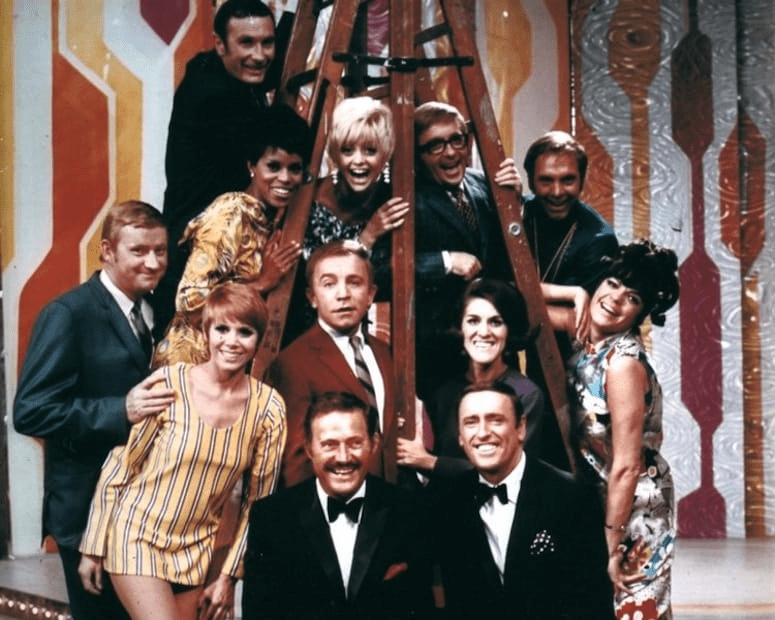
Griffin encouraged her to appear on his show which she did forty times. Like Marcia Wallace, who we learned about last week, her appearance on Merv Griffin was seen by someone who recommended her for a new show. In this case, George Schlatter cast her in Rowan & Martin’s Laugh-In.
Worley left the show in 1970. She made guest appearances on The Tonight Show Starring Johnny Carson. She also appeared on several game shows, including SuperPassword, HollywoodSquares, and many versions of Pyramid.
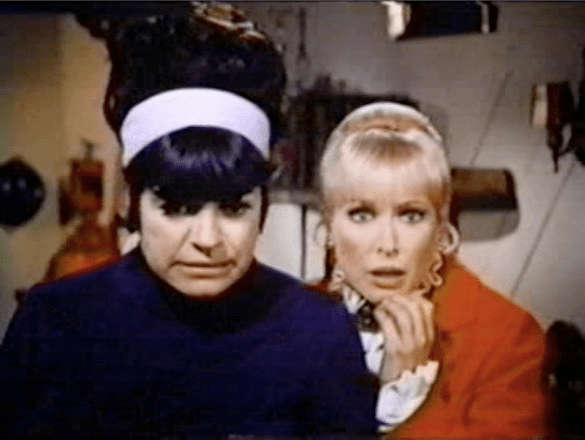
In 1971 she made the television movie I discussed above, The Feminist and the Fuzz. It starred David Hartman, Barbara Eden, Farrah Fawcett, Worley, Julie Newmar, and Henry Morgan. I would love to see it again.
For most of her career, Worley would be providing voices for animation. However, she appeared in a handful of shows during the seventies and eighties, including Adam 12, Love American Style, Hawaii Five-0, CHiPs, Murder She Wrote, The Love Boat, MadAbout You, Curb Your Enthusiasm, and The Middle.
📷modcinema.com Feminist and the Fuzz
In 1975, Worley married Roger Perry. They would stay together for 25 years, divorcing in 2000. Perry has 95 acting credits and appeared in many popular shows in the seventies, eighties, and nineties. He was also in The Feminist and The Fuzz. After divorcing Worley, he would marry actress Joyce Bulifant.
During the seventies and eighties, Worley did a lot of regional theater in Milwaukee and several cities in California.
In the 1990s she got involved with Disney and provided her voice for Beauty and the Beast and A Goofy Movie. She also was on several Disney series including Kim Possible and the Wizards of Waverly Place.
📷bestlife.com
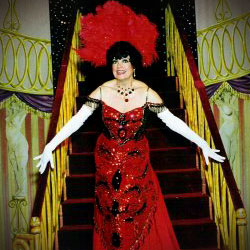
She was in a limited run of a musical production of “The Wizard of Oz,” playing the wicked witch of the west in 1999. In 2007, she appeared on Broadway as Mrs. Tottendale in “The Drowsy Chaperone,” and she reprised the role in 2015 at The Cape Playhouse. She was also cast in “Wicked” as Madame Morrible in 2008.
Jo Anne Worley once said, “my goal in life is to be the kind of person my dog thinks I am.” That seems to be good advice for all of us. It was fun getting to know a little more about this funny woman. We love her as much as her dog did.
When trying to decide who to include in our Supportive Women blog series this month, Marcia Wallace was a no-brainer. Carol was one of my favorite characters on television on The Bob Newhart Show, and I love the fact that her role carried over into an episode of Murphy Brown.
Marcia Wallace was born in 1942 in Iowa. Her father owned a general store where she and her siblings often worked. After performing in a school play, one of her teachers encouraged her to pursue an acting career. After graduation, Marcia enrolled in Parsons College in Fairfield, Iowa where she received a full scholarship. She majored in English and Theater.
Upon her college graduation, Marcia decided to move to New York. The country gal had $148 in her savings. When she arrived in the Big Apple, she took on a variety of part-time jobs including typing scripts and substitute teaching. She joined a summer stock company and did a few commercials. She worked in a Greenwich Village nightclub for a year before creating an improv group, The Fourth Wall, with several friends. While she kept the friends, she lost 100 pounds.
Eventually, Wallace was offered a job with The Merv Griffin Show. When Merv decided to move to LA, he asked Wallace to move with them. She was able to obtain a few roles in series after moving to California. During the sixties and early seventies, she was on Bewitched, The Brady Bunch, Columbo, and Love American Style.
📷tvinsider.com
After Bill Paley had seen her on Merv Griffin, Grant Tinker (producer) called her to offer her a role on a new sitcom, The Bob Newhart Show. The role of Carol was written specifically for her.
Marcia loved her time on the sitcom. She said Bob was the Fred Astaire of comedy, making it look so easy. She also praised Bob for being a treasure. Because of the way the scripts were written, the show doesn’t date itself. It was about human relationships and people struggling to make them work and make life better.
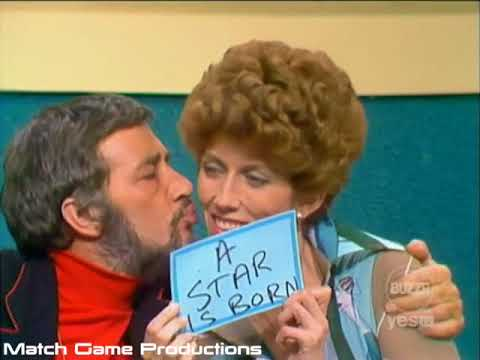
When The Bob NewhartShow went off the air six years later, Marcia jumped on the game show circuit. Shecould be seen on Password Plus; Super Password; Hollywood Squares; Crosswits; Hot Potato; The $25,000 Pyramid; Win, Lose, or Draw; Tattletales; To Tell the Truth; Family Feud; Card Sharks; and my favorite, Match Game.
📷youtube.com
Like so many actresses and actors who perform their role so well, Marcia was typecast after the show ended. In an interview, she said that “I have heard ‘You’re too recognizable for this part.’ I remember once, I desperately wanted to be on the series Nine to Five and they just weren’t going to see me because of that. Every once in a while, something would break my heart.”
Wallace also made appearances on The Love Boat and Fantasy Island in the seventies. During the eighties she would show up on CHiPs, Magnum PI, Taxi, Murder She Wrote, Night Court, and ALF, among other shows.
One of my favorite appearances of Wallace’s occurred in the mid-nineties on Murphy Brown. If you were a fan of that show, you know Murphy could not keep a secretary. There was even a support group that started of her former secretaries. However, when Carol Kester came to work for her, she was overjoyed. Carol was the role Wallace played on The Bob Newhart Show. Unfortunately for Murphy, at one point during the show, Bob Newhart shows up and convinces Carol to return to work for him and Jerry and Murphy lost her perfect assistant.
Most of Wallace’s work after 2000 was for voice work with one exception. In 2009, she had a recurring role on The Young and the Restless as Annie Wilkes for 14 episodes.
In 1985 Marcia was diagnosed with breast cancer. She survived it and became an activist and lecturer on the topic. In 2007, she won the Gilda Radner Courage Award for her work in this area.
In 1986 Marcia married Dennis Hawley in a Buddhist ceremony. Dennis renovated and managed hotels. The couple adopted a little boy, but Dennis passed away three years later.
📷imdb.com
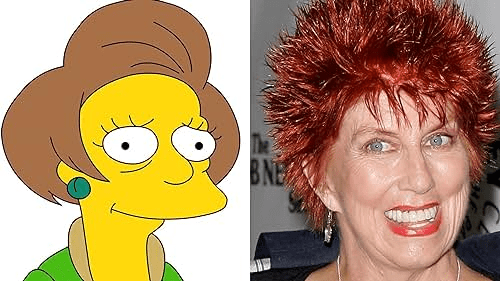
In 1989, a new type of show debuted called The Simpsons. Marcia was asked to provide the voice of Edna Krabappel, school teacher. She probably did not realize she would be associated with that role for another 24 years. Her role as Edna did not end until her passing.
In addition to her television work, Wallace performed on stage. She produced and starred in “An Almost Perfect Person,” a female version of “The Odd Couple,” “Same Time, Next Year” and many others.
In 2004, Wallace published an autobiography, Don’t Look Back, We’re Not Going That Way. She honestly discussed her breast cancer, the loss of her husband, her nervous breakdown, being a single mother, and the ups and downs of her career.
Marcia died from pneumonia and sepsis in 2013. Her coworkers commented on her passing. Yeardley Smith, who voices Lisa on The Simpsons, said “Heaven is now a much funnier place because of you, Marcia.” Bob Newhart said that “Marcia’s death came as quite a shock, she left us too early. She was a talented actress and dear friend.”
📷onceuponascreen.com
I’m so sad that Marcia was typecast and unable to get the roles that she wanted. The networks were very shortsighted during those decades. They didn’t give television fans enough credit for being resilient enough to love the character of Carol while being able to love another character played by Wallace. You saw the same things happen to Adam West, Alan Alda, and Henry Winkler. If that perspective had continued, we never would have had Mary Richards on The Mary Tyler Moore Show or Jay Pritchett from ModernFamily. If someone could be a hit as Al Bundy and then go on to star in another show, anyone can get beyond being stereotyped. Marcia Wallace proved that anyone could survive life’s disappointments with determination and a sense of humor, and perhaps that was her greatest role for us.
We are learning about some of our favorite female character actresses. Today we are learning more about the life of Virginia Sale.
📷champaigncounty history museum.com
Virginia was born in 1899 in Illinois. Her father Frank was a dentist, and her mother Lillie Belle was a poet and truant officer for the Urbana Illinois School District. After graduation, she attended the University of Illinois for two years and then transferred to the American Academy of Dramatic Arts in New York where she graduated in the early twenties. Her brother Charles was a vaudeville comic, and he persuaded her to go to Hollywood to pursue a film career.
She began her career in Hollywood as an extra. In 1931, she did an interview for the Kansas City Star where she said “I had known an assistant director [named Ned] when I lived in New York. He introduced me to King Vidor, then casting for The Crowd. He gave me quite a good bit in the picture, although it lasted only five days. When asked how much salary I wanted, Ned told me to say $350 a week. ‘Well, I think you ought to work for us for $25 a day’ the casting director said. ‘That’s an awful comedown I protested,’ trembling in my boots. ‘All right then, let’s compromise on $35 a day,’ he said. I was awfully glad to get it.” That would be almost $600 a day currently.
📷x.com
During her first two years in Hollywood, Virginia lived at the Hollywood Studio Club. She appeared in 54 films between 1930 and 1935.
The Hollywood Studio Club was created as a safe place for starlets to live. Mary Pickford, along with several other women, was trying to raise money to construct a new building to house actresses. Will Hays gave $20,000 and soon after the studios contributed. Julia Morgan was hired as the architect. She designed an Italian Renaissance Revival style building that opened in 1926. The first floor had a spacious lobby, a library, writing rooms, a dining room, and a stage. The upper stories were single, double, and triple rooms. Men were only allowed to be on the first floor. You had to be between 18-35 years old, be seeking work as an actress, and could stay a maximum of three years. A hundred women lived there, paying $10-15 a week for room and board.
📷mayberrywikifandom.com
Barbara Hale, Donna Reed, Dorothy Malone, Ann B. Davis, Barbara Eden, Sharon Tate, and Sally Struthers were just a few of the women who lived there. The most famous resident was Marilyn Monroe. After the culture shift in the sixties and seventies, the residents decreased until the Club could no longer financially exist. In 1975 the doors were closed, and the contents were auctioned off.
In Hollywood Sale was often cast as an older woman, even though she was still in her twenties. She entered the movie entertainment business just as silent films were ending. Her first role was in Legionnaires in Paris in 1927. During her film work, she met actor and studio executive Sam Wren, and they married in 1935. In 1936 they had twins named Virginia and Christopher.
In the thirties, Virginia developed a one-woman show based on her life growing up in Illinois which she called “American Sketches.” She performed the piece more than 6000 times throughout the thirties, forties, and fifties, even touring Europe during WWII. This sounds like it would have been a fun show to see. Some of the different pieces of the performance included: “Traveling on the Illinois Central” where she portrays a mother trying to keep her son under control after a visit with relatives; “Life of the Party” where she is a giggling, talkative woman who annoys a young man she is trying to impress; “Mealtime in Indiana” where she impersonates a housewife trying to get ready for the Ladies Guild while preparing supper for her family; “Three O’Clock in the Morning” as a weary hostess trying to get her guests to go home, and “I Remember Abraham Lincoln” where she is Grandma Willoughby reminiscing about her encounters with Lincoln.
📷rottentomatoes.com
She also received some radio work, including a serial, For Those We Love, playing Martha the maid every Sunday for eight years.
Her film career continued to develop during those decades and she appeared in Topper, When Tomorrow Comes, They Died with Their Boots On, and Night and Day.
Sam served in WWII as part of the Air Corps. When he returned home, he had a six-year position as executive secretary for the Actor’s Equity. He was an executive at both Warner Brothers and Columbia studios.
📷imdb.com Topper
In 1949 as television was developing, she and Sam created a sitcom, Wren’s Nest which featured the life of the Wrens starring Virginia, Sam, and the twins. The show aired three times a week. Virginia took over writing duties on the show. Many of her scripts were based on real events that happened to the family. The series contained 47 episodes.
During the fifties, Sale took a break from the big screen, focusing on television shows and commercials. She appeared in several series in the fifties, but she hit her stride during the sixties. If you watch a lot of television from that decade, you can catch her in a variety of shows including The Many Lives of Dobie Gillis, Ben Casey, The BeverlyHillbillies, Wild Wild West, The Andy Griffith Show, Green Acres, and I Spy. She had a recurring role on Petticoat Junction where she played several characters. Her final television role was in Police Woman in 1975.
Sam passed away in 1962, and Virginia lived another thirty years, dying in 1992 from heart failure. Both Sam and Virginia are buried in Arlington National Cemetery. She spent her final years at the Motion Picture and Television Country Hospital in Woodland Hills, California.
📷
Sale could thank Mary Pickford for her home once again. Pickford was part of the Motion Picture Relief Fund which she founded with Joseph Schenck and Reverend Neal Dodd. When several former Hollywood stars died destitute in the thirties, 48 acres were purchased in the San Fernando Valley to build a Motion Picture Country House. In 1948, the Motion Picture Hospital was dedicated on the grounds. Later television actors were invited to live there as well. By that time, the site included a retirement community with individual cottages, administrative offices, and a hospital. Fees are based on the ability to pay. Actors, artists, backlot men, cameramen, directors, extras, producers and security guards are all eligible to live there. To live there, residents must be at least 70 and have worked in the entertainment industry for at least 20 years.
It was fun to learn not only about Virginia Sales but also the places she lived at the beginning and the end of her career.
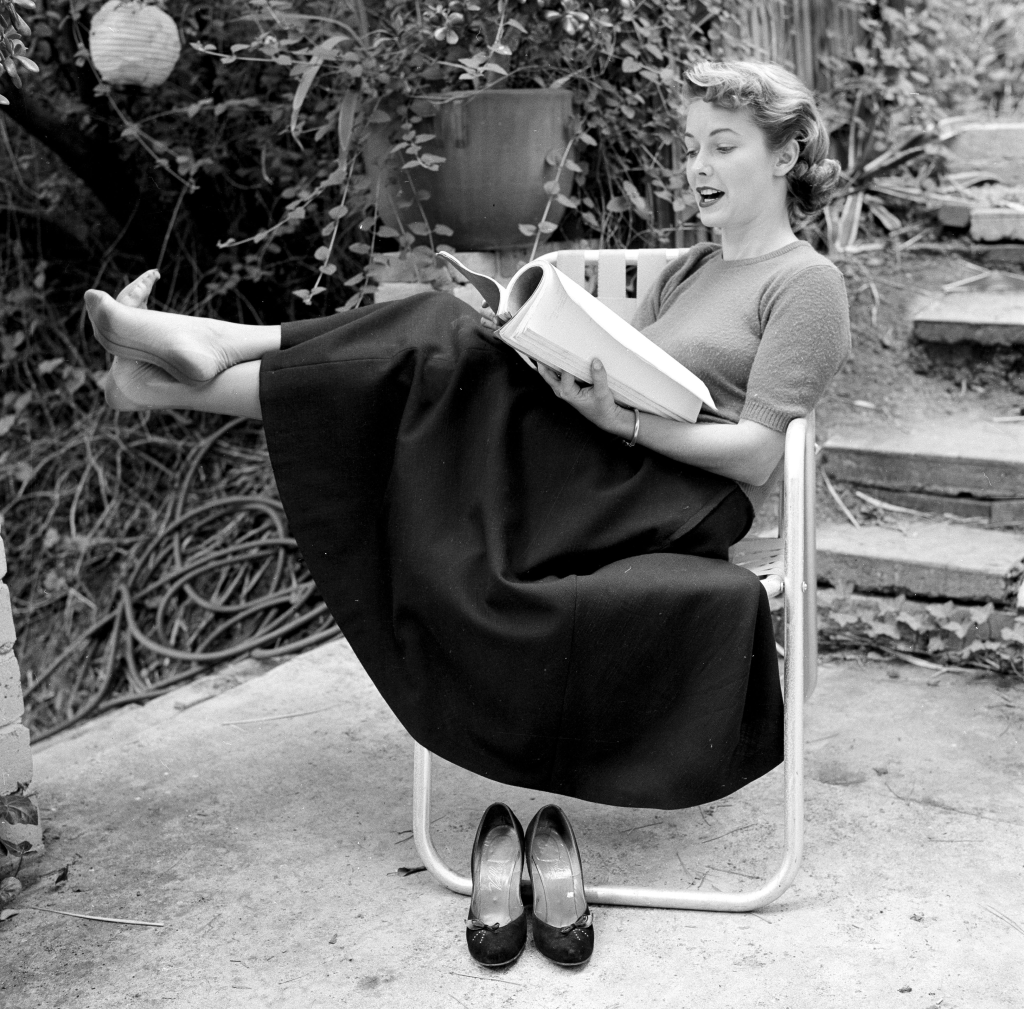
During this month of Supportive Women, I am excited to learn more about Vera Miles. For four decades, Miles appeared in our homes as well as on the big screen. With 162 credits, she may have visited your living room more than most of your family members.
📷facts.net
Vera Ralston was born in Boise City, Oklahoma in 1929. She grew up in Pratt, Kansas, and later she moved to Wichita where she graduated from high school and worked nights as a Western Union operator-typist. In 1948 she won the Miss Kansas pageant and was third runner-up in the Miss America contest that year. Miss Minnesota won the crown.
A year later she moved to Los Angeles to pursue a career in television and movies. Not long after arriving in Hollywood, Vera married photographer and stuntman Bob Miles. One source said that she enrolled at UCLA, hoping to become a teacher.
Bob Miles has 13 acting credits and 14 stuntman credits. The cast of Bonanza must have liked him because he appeared as a stuntman 99 times and as an actor on the show 76 times.
📷photos.com
After the birth of her children, she began doing some modeling and taking on a few roles to help provide income. Vera used her husband’s last name because there was already a Vera Ralston in the industry.
She appeared as a contestant in a 1951 episode of You Bet Your Life with Groucho Marx. Along with her partner, she won $8 in the quiz portion of the show but gave the wrong response to the De Soto-Plymouth question which was “Who was the first Chief Justice of the Supreme Court?” When Groucho asked her what titles she had held as a beauty contestant, in addition to Miss Kansas, she mentioned that she was Miss Chamber of Commerce, Miss Wichita, Miss Texas Grapefruit, and Miss New Maid Margarine.
She received her first movie role in 1950 and her first credit in 1952. In The Rose Bowl Story, a romantic comedy, she played a Tournament of Roses Queen. She would appear in about 40 additional movies during her career and quite a few made-for-television movies as well. She often worked with Alfred Hitchcock and was cast in Psycho.
In 1951 she appeared on Fireside Theater, her first television role. While she had more than 100 credits performing on television, surprisingly she never starred in a series. The only recurring character she had was Ernestine Coulter on My Three Sons.
📷fotogrammas.com
In 1956 she married Gordon Scott after divorcing Miles in 1954. They also divorced in 1960. Scott appeared to only work in Hollywood for a five-year period according to imdb.com. From 1960-1971 she tried marriage again with Keith Larsen, but their marriage also ended in divorce. Since the third time was not the charm, for two years in the mid-seventies, she wed Robert Jones but that ended in divorce as well.
During the fifties, she fit roles around her movie appearances, and you can see her in episodes of dramatic theater shows. In the sixties, she had no trouble finding work and she showed up on The Twilight Zone, Route 66, Wagon Train, I Spy, The Man from UNCLE, The FBI, and Mannix. Work did not slow down in the seventies, and you can spot her in a variety of shows including Gunsmoke, Hawaii 5-O, Bonanza, Cannon, Columbo, and Barnaby Jones. She might have taken thing a bit easier in the eighties, but she still worked on four or five shows a year, including Magnum, PI; Little House on the Prairie; TheLove Boat; Hotel; and Murder She Wrote. Her last credit was for a movie titled Separate Lives in 1995.
📷imdb.com
Miles was a member of the Church of Jesus Christ of Latter-Day Saints and visited Salt Lake City quite often.
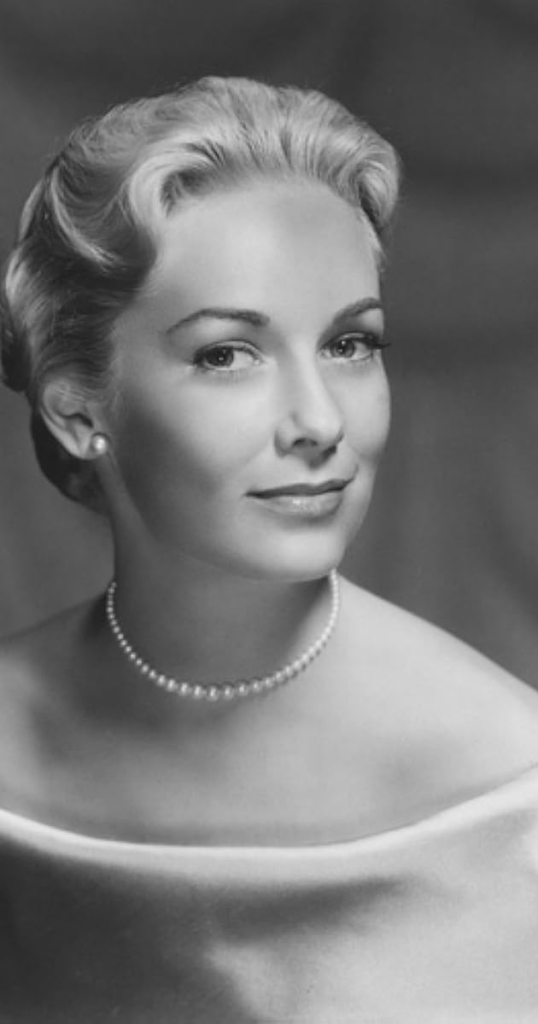
Early in her career, Miles appeared to be almost a clone of Grace Kelly but that never materialized into a movie star career. Hitchcock hired her for Vertigo with Jimmy Stewart, but her pregnancy caused her to back out of the movie, and Kim Novak received the starring role. Perhaps, that movie would have changed the trajectory of her film career. I’m surprised that she was never given an opportunity to star in a television show. With 162 credits, she had a prolific and busy career. I will definitely try to spot her when I watch some of my favorite classic shows.


























 thewritelife61