Hey Mulligan! The Mickey Rooney Show


This month our blog series is “It’s Their Show.” Today we are taking a look at The Mickey Rooney Show. This show debuted on NBC in 1954. It was on for one season, producing 39 episodes.

📷singingnewstv.com

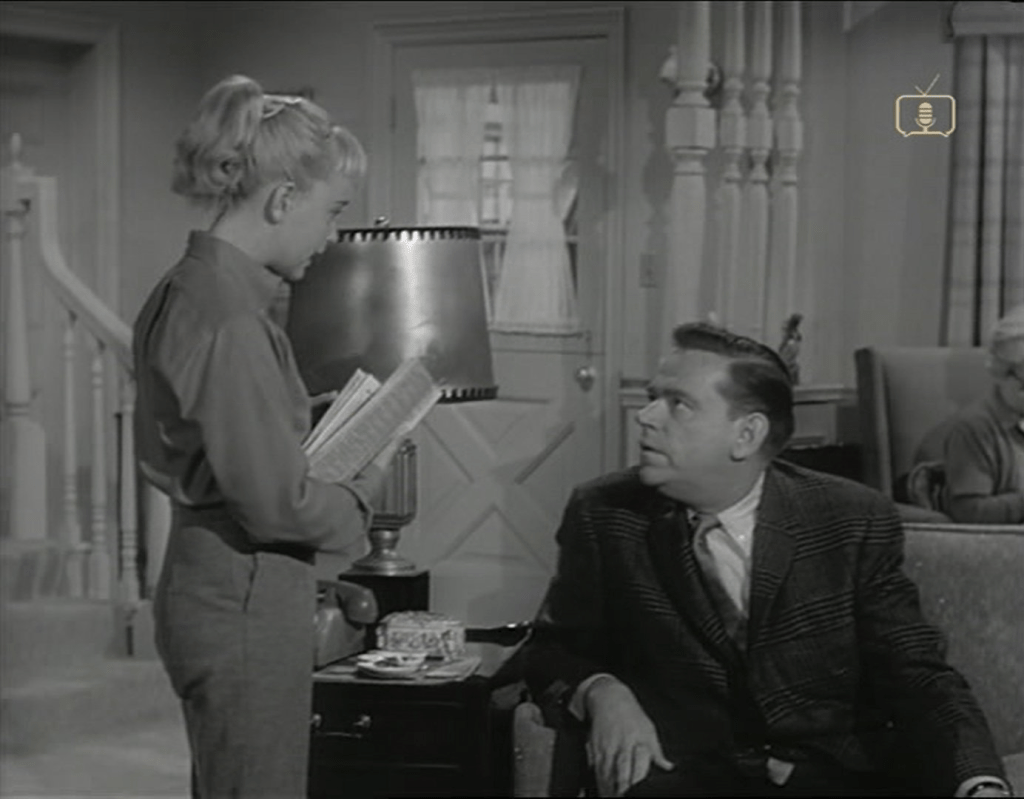
Rooney plays Mickey Mulligan, a Guest Relations Staff member who works at a television network, hoping to land an acting career by taking acting lessons at night. It’s interesting that they set the show at a television network, because only 56% of families had televisions in 1954. It’s also interesting that Rooney was playing a young adult, although he was in his mid-thirties.

Mulligan is not content with his salary of $47.62 a week. Lucky for him, his girlfriend Pat (Carla Balenda) is a secretary to the studio program manager, Charles Brown (John Hubbard). Rounding out the cast is the head of the network (John Hoyt) and Mickey’s best friend Freddie (Joey Forman). Freddie also works at the network, and the two friends often grab lunch at the Hamburger Hut.

📷internetarchive.com

To make ends meet, Mickey lives with his parents, Joe (Regis Toomey) and Nell (Claire Carleton). Joe is a retired police officer who met his wife when he arrested her because she was a burlesque dancer.

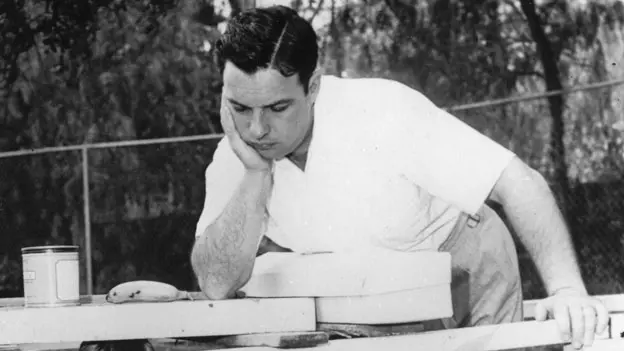
There were a lot of talented people behind the camera on this show. Blake Edwards was one of the creators,  an executive producer, and one of the writers on the show. He would write and produce several shows including Richard Diamond Private Detective and Peter Gunn before moving into movies in the sixties. Later in life he would be known for the Pink Panther movies and marrying Julie Andrews.

Van Alexander was an arranger for Capitol Records, and he produced the soundtrack for the show. He was a collaborator with Ella Fitzgerald and worked on Bewitched and I Dream of Jeanne as well as big-screen productions.

📷BBC.com Van Alexander

Leslie H. Martinson was one of the primary directors for the show, working on 33 of the episodes. In a Television Academy interview, he discussed working on the series. He said he often had to shoot around Mickey’s role because Mickey was off at the racecourse and then they’d film him when he showed up. He said Rooney was a genius with the way he reacted to things and often his expressions made the entire scene worthwhile.

NBC scheduled the show on Saturday night against The Jackie Gleason Show, which was one of the most popular shows on television at the time. There were some derogatory comments made about Gleason by Rooney that got leaked to the public, and it caused a lot of turmoil for the show before it even aired.

📷amazon.com

The show started with a tagline, sort of like the beginning of That Girl had. While Rooney is boxing, someone yells “Hey Mulligan.” I watched episode 8 of the first year, “Tiger Mulligan.” In this episode, Mulligan’s parents are watching television when Mickey comes home from the gym where he’s working out to be an amateur boxer. His dad is ecstatic, but his mom is not too happy. His girlfriend agrees with her, and she doesn’t like having to sit around by herself at night. His mom, who is a fun character, convinces him that he’s trained too hard and is overly weak. She sets him up by gluing some items to the shelf and making a jar impossible to open. He thinks his mom is stronger than he is and that he needs to pull out of the fight. However, his dad realizes what she’s up to and when he calls her on it, Mickey gets excited for the match. However, at the ring he realizes that his opponent looks like a weakling but has a strong right arm. The fight ends with both of them passing out when they see blood. I really enjoyed the writing, the characters, and the music; I will say that the laugh track was a bit hard to get used to though.
I know something has to go up against the big hits on the television schedule, but it seems like this would have been a fun show if it had competed against a show that wasn’t in the top ten. The entire series is available on DVD if you want to check it out.

McNultey v McNutley: Still Professing Comedy

Thanks for joining me this month in our blog series, “It’s Their Show.” As it became obvious that television wasn’t going away and movie stars were only hurting themselves shunning the industry, several celebrities decided to make the jump and star in their own show on the small screen. Ray Milland was one of the first stars to tackle the task. Milland had been known for many great movies including The Lost Weekend, for which he won an Oscar, and Dial M for Murder.

📷raredvds.com

His show was originally titled “Meet Mr. McNutley,” but it became The Ray Milland Show. This is one of those shows that fans remember fondly as very funny and well written.

The show debuted in 1953 and ran for two seasons, two very different seasons. In the first season, McNutley is an English professor at Lynn Haven College for Women. Although all the students find him attractive his wife (Phyllis Avery) understood that this was not affecting her marriage. Rounding out the cast were their neighbors Pete and Ruth Thompson (Gordon Jones and Jacqueline DeWit) and the college dean (Minerva Urecal) who was not swooning over McNutley.

📷wikimediacommons.com

When the show returned for its second season, his name is now Mr. McNulty and he is a drama professor, moving from New England to Comstock University in California, a coed college. Dean Dodsworth (Lloyd Corrigan) and his wife (Madge Blake) take the place of their neighbors in this version.

The first season, CBS put the show on Thursday nights where it was up against Groucho Marx’s You Bet Your Life, a top ten program. Although many things changed from season one to season two, what stayed the same was that the show was still up against You Bet Your Life and Groucho’s show was still in the top ten. Ray’s show was cancelled at the end of the second season.

The producers of the show were Joe Connolly and Bob Mosher. The partnership would have some minor success in the early sixties after this show went off the air (Bringing Up Buddy, Ichabod and Me, Calvin and the Colonel) before hitting it big as the writers and producers for Leave It to Beaver and The Munsters. They were also behind The New Leave It to Beaver Show in 1997.

📷idahoseniorindependent.com “The Christmas Story”

I watched the Christmas episode from the second season for this blog. Peg gets involved with the local orphanage and agrees to host a child for Christmas. She is a difficult child and makes life and the holidays very unpleasant for the couple. However, as viewers, we are in on a scene where Susie (Beverly Washburn) reveals why she is so mean. She decides to become the perfect child so the couple will take her to the orphanage Christmas party, but her goal is to expose Santa as a fake to the other kids, and the show ends with an unexpected twist. It was a heart-warming story, and the humor was a bit subdued, but I enjoyed the episode. I was impressed by Washburn’s portrayal of a bad, good little girl. By the way, Washburn is still acting; she’s probably best remembered for her role in Old Yeller.

Milland would attempt another television series in 1959, and that show also ran for two seasons. As Markham, he portrayed a former attorney turned private detective who solved crimes around the world.  

It’s too bad that the network never gave this show a chance to move to a spot in the schedule where it didn’t have so much competition. I thought it was more sophisticated than some of the sitcoms during the fifties. I’m guessing that it might have been a big hit.

Sale of the Century: Might Feel Like a Century Ago

This month our blog series is “Life is Just a Game,” and we are looking back at some of the game shows that debuted in the fifties and sixties. Today we are ending our series with Sale of the Century.

📷tvinsider.com Host Jim Perry

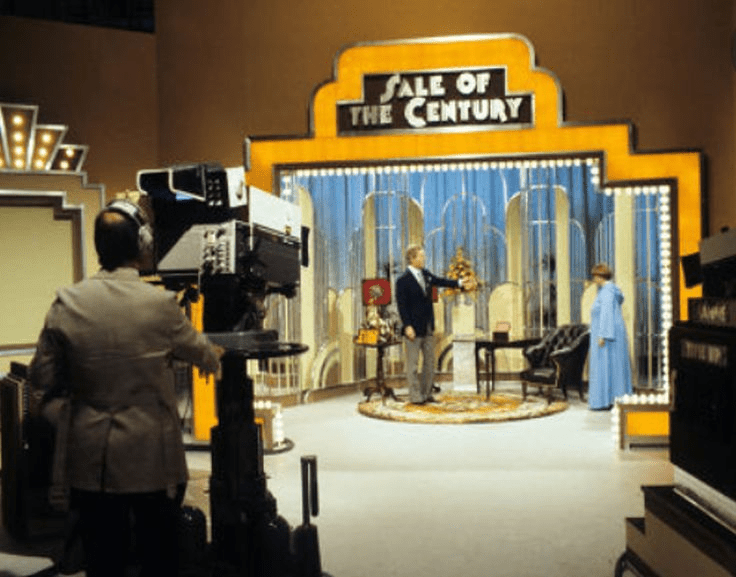
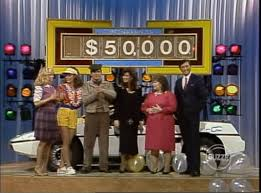
On September 29, 1969, three game shows debuted on NBC. Letters to Laugh-In and Name Droppers didn’t last long. The third was Sale of the Century. Compared to the other game shows we have learned about this month, Sale of the Century was not a long-lived show; it was canceled in 1973. I don’t remember the first two years of the show when Jack Kelly was the host, but I remember watching with Joe Garagiola, a former baseball player, when he did the emcee tasks. I loved this show for some reason. From 1983-1989 another version was aired, hosted by Jim Perry.

Jack Kelly was best known as Bart Maverick in the show Maverick from 1957-1962. He took a break from acting to host this game show but after two years, he decided to go back to his acting career. He ended up with 120 credits, so he was a busy and well-respected actor. After this show, he did appear regularly in Get Christie Love and The Hardy Boys/ Nancy Drew Hour.

📷buzzerblog.com

Joe Garagiola was a baseball player with the St. Louis Cardinals, Chicago Cubs, Pittsburgh Pirates, and San Francisco Giants from 1946-1954. In 1951, he led the National League in fielding percentage for catchers. He later did some color commentary for his son’s team, the Arizona Diamondbacks. He did give acting a try and ended up with 3 credits, two which were playing himself. However, game shows was where he made his mark, hosting for He Said, She Said; To Tell the Truth; Strike It Rich; and Joe Garagiola’s Memory Game.

Jim Perry was the typical game show host. He started out in show business as a singer and worked with Sid Caesar in his comedy routines. In the seventies he began doing game shows. In total, Jim Perry hosted approximately ten different game shows (including unsold pilots) in a career that spanned about 25 years. 

📷pinterest.com instant bargains

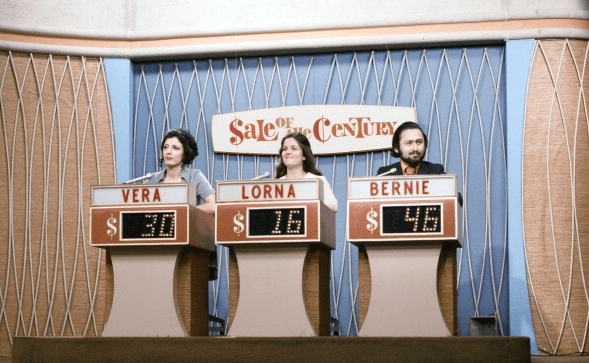
In the original version of the television game show, there were three contestants who each started the game with $25, and the host would ask a general-knowledge, trivia-type question. Whoever answered it got $5. The second half of the game, the questions were worth $10. They also lost that amount if they gave the wrong answer. Off and on during the game a dinging would be heard, and an Instant Bargain was brought on stage. The bargain was a great prize at a reduced rate, like a television for $15. Whoever was leading got a chance to buy the item; if they did, that amount of money was taken off their board. Whoever won the game got to go shopping with their money or they could come back the next day to try to win more in order to buy a bigger prize.

Like the other game shows we learned about, none of the original episodes were kept because they were recorded over. The UCLA Film and Television Archive does have nine episodes of the show in its collection. There are also some episodes from 1985-86 and 1992-94 versions that ran on USA later.

📷gameshowswiki.com

The theme song was composed by Al Howard and Irwin Bazelon. Howard was also the executive producer of the show. I couldn’t find any other composing done by Howard. He would later produce Supermarket Sweep from 1992-1994. According to imdb.com, Bazelon wrote the score for the television production of What Makes Sammy Run?, and incidental music for “The Taming of the Shrew” and the “Merry Wives of Windsor” for the Shakespeare Festival Theatre in Stratford, Connecticut. He joined ASCAP in 1955, and his compositions include “Brass Quintet,” “Five Pieces for Cello, Piano,” “Five Pieces for Piano,” “Sonatina,” and “Piano S.”

You could play the game at home with Milton Bradley’s versions from the original series or the American Publishing Corp.’s game from 1986.

Fun fact, Tim Hollerin of Connecticut was the show’s biggest winner. In 1985, he took home cash and other prizes to the value of $166,875.

📷facebook.com

I’m guessing that this show wouldn’t hold up as well after so many decades. The general trivia questions might not resonate with this generation, and prices are so incredibly different, that it might just feel very dated. That said, I would love to catch an episode or two because I do remember enjoying it so much.

The Word is . . . Password

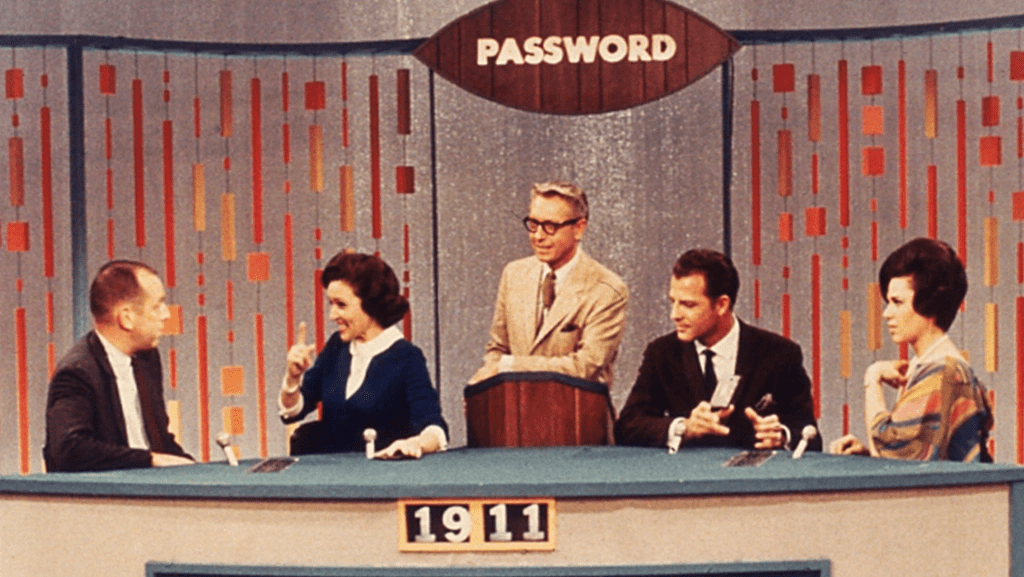
This month our blog series is “Life is Just a Game,” and we are looking back at some of the game shows that debuted in the fifties and sixties. Today we are taking a peek back at Password. A funny moment occurred that first year when one of the celebrities was Jack Benny. The word he had to describe was “miser,” and he said, “Me” which got a lot of laughs.

📷boomerjourney.com

The Goodson Todman partnership created many game shows over the years. One of their first was Password. It debuted in 1961 on CBS at 2pm ET. Allen Ludden, a former G.E. College Bowl host was chosen as the emcee. Ludden is also known as the husband of Betty White whom he met on the game show.

Ludden was born in Mineral Point, Wisconsin. After his father passed away from Spanish flu, his mother later remarried, and the family ended up in Texas. Ludden graduated from the University of Texas with honors in 1940, later returning for his Masters in English. He served in the US Army in charge of the Pacific theater entertainment district. In 1948, he became the program director for New York radio station WCBS and in 1959 was program coordinator for all CBS owned-and-operated stations. Ludden began hosting shows for teens and then College Bowl. His opening catch phrase while hosting Password became “Hi Doll” which he said was meant for his mother-in-law Tess White.

📷instagram.com Carol Burnett and Elizabeth Montgomery

The rules of the game were that teams were formed with one contestant and one celebrity. The word was given to one player on the team and the other player had to guess what the word was based on one-word clues. If the player failed to guess the word within the five-second time period, play passed to the opposing team. This continued until the word was guessed. The quicker the word was guessed, the more points a team received.

The first team to reach 25 points won $100 for the contestant. That partnership got to play the Lightning Round where the celebrity gave the clues, and the contestant got five passwords within a minute. They received $50 for each right answer.

On July 11, of 1966 Secretary of Defense Robert McNamara updated the country on the progress of the Vietnam War one afternoon. CBS went with the coverage of the live news while NBC aired its soap opera Days of Our Lives and ABC aired its new show which began the same day, The Newlywed Game. Quite a few people turned off CBS that day and during the next few months, Password continued to lose viewers to these two shows. The next spring, Password was cancelled.

After the show was canceled, reruns were sold to CBS which it placed in syndication in the late 1960s. It became so popular that the show began to be filmed again in Hollywood. In 1971, it was placed on the network schedule when Dark Shadows ended. It held its own until 1973 when The Young and the Restless took a huge share of the market, and both Password and Jeopardy saw deep declines in ratings. In 1973 Password won the first Daytime Emmy Award for Outstanding Game Show.

In 1974 the show became Password All-Stars; in 1978 it became Password Plus; and in 1984 it became Super Password. CBS revived the show in 2008 as Million Dollar Password, but it ended by 2010. Jimmy Fallon produced a new version beginning in 2022 with Keke Palmer as host.

📷people.com

Sadly, the episodes from the first version no longer exist. There were rumors that the videotapes were recycled and used for Family Feud.

The Milton Bradley Company introduced a home version of the game in 1962, releasing 24 editions from then until 1986 which they also did with Concentration.

I always enjoyed watching this game. One of my favorite portrayals of the show was when Oscar Madison and Felix Unger go on Password during an episode of The Odd Couple. Since you can’t watch the original shows, check out the Odd Couple episode (season 3, episode 11) for some fun.

📷mooningemini.com The Odd Couple on Password

Concentration: Let’s Take a Minute To Think About It

This month our blog series is “Life is Just a Game,” and we are looking back at some of the game shows that debuted in the fifties and sixties. Concentration was broadcast beginning in 1958. It was on the air in one form or another until 1991. One of the tough things about these game shows is that many of them had different versions that occurred off and on for decades and some created nighttime series as well.

📷wikipedia.com

Concentration combined the memory game where kids match up pairs with a rebus puzzle that was revealed underneath when game pieces were matched. It was created by Jack Barry and Dan Enright. Barry had a few credits for writing and acting (he played a reporter on both Batman and The Addams Family). He met Dan Enright at WOR radio in New York, and they formed a partnership in 1947 producing The Joe DiMaggio Show. In 1953, the pair began creating game shows and that is where most of their career was spent.

Norm Blumenthal created the rebus puzzles for the original game. He ended up preparing 7300 television puzzles and all the puzzles used in the home game sold by Milton Bradley. (MB developed 24 different editions of the home game during its run beginning in 1958 and ending in 1982.) Norm’s first puzzle was “It Happened One Night,” and his last puzzle was “You’ve Been More Than Kind.” Blumenthal is also the author of When Game Shows Ruled Daytime TV and Picture Puzzle Pandemonium.

📷pinterest.com

At that time, most game shows were produced in New York, and Concentration was filmed at 30 Rockefeller Plaza.

The original version was on NBC for fourteen and a half years. Hugh Downs was the host, and Bob Clayton was the announcer. When Hugh left the show in 1969 to concentrate more on The Today Show, Clayton took over duties except for a brief six-month period when Ed McMahon took the lead. The hosts all wore navy blue blazers with the Concentration logo embroidered on the breast pocket.

Hugh Downs did a bit of everything during his career. He was an actor, broadcaster, announcer, tv host, news anchor, producer, author, game show host, and music composer. He is best known for being Jack Paar’s sidekick on The Tonight Show from 1957-1962, hosting Concentration from 1958-1969, being part of the cast of The Today Show from 1962-1971 (1239 episodes), and hosting Live from Lincoln Center for PBS from 1990-96. He was also one of the first inductees into the American TV Game Show Hall of Fame in Las Vegas in 2007.

📷etsy.com

Bob Clayton became a vaudeville singer at age 15 and after high school studied drama. After graduation, he became a radio announcer and continued as an announcer for most of his career except for a brief foray into acting when he appeared in Jerry Lewis’ The Bellboy.

In addition to the original show, there were two nighttime versions and a syndicated version that was on from 1973-78. In 1987 it was revived again as Classic Concentration hosted by Alex Trebek until 1991.

While the different versions featured slightly different concepts, rules, and prizes, we’ll just look at the original. Two contestants competed against each other. The first contestant called out two numbers; there were 30 numbers on the board. If they matched, the contestant had that prize added to their board. If they didn’t match, the other person got their turn. Matched numbers revealed part of the puzzle. The winner was the first person to figure out the puzzle. In addition to prizes, there were Wild Cards which matched any card, Take One Gift from your opponent, and Forfeit a Gift. The contestant who solved the puzzle received all the prizes on their board. Champions could return until they lost or won 20 games.

The show was on every weekday. It moved around from 11:30 to 11 to 10:30. In 1966, the show was filmed and broadcast in color. The series easily beat its competition in the mornings until 1972 when The New Price is Right debuted on CBS at the same time. It took away 50% of Concentration’s viewers and the show was canceled in early 1973.

📷ebay.com

The Concentration theme was composed by Paul Taubman. Taubman owned a club overlooking Central Park called The Penthouse Club. He played quintessential lounge music on the organ and piano. He provided background music for many game shows and was the musical director and musician for 5053 episodes of the soap opera The Edge of Night.

I always enjoyed watching this show growing up. When I was in upper grade school, one of our neighbors appeared on the show and won a mink coat among other prizes. With all the game shows that have been resurrected in nighttime versions the past two years, I wonder why this one has never returned to the air.

The Felony Squad: They Were Men Against Evil

This month we are taking a look at some of our favorite “Crime Solvers of the Past.” Today we wrap up the blog series with The Felony Squad which ran three seasons, debuting on ABC in 1966.

📷blu-ray.com

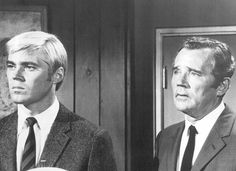
Originally titled “Men Against Evil,” the show was going to be more of a soap opera feel which was broadcast twice a week. However, by the time the show aired, most of the personal relationships had been taken out of the plot. The series focused on Sergeant Sam Stone (Howard Duff) and Rookie Detective Jim Briggs (Dennis Cole). Rounding out the cast was Desk Sergeant Dan Briggs (Ben Alexander), also known as Dad to Jim and District Attorney Adam Fisher (Len Wayland). The first seasons included Captain Frank Nye (Barney Phillips) while later seasons featured Captain Ed Franks (Robert DoQui).

The show was known for having some big names in directing, writing, and guest stars. Many of the directors racked up more than 75 credits each and included George McCowan who worked on The Mod Squad and Cannon, Allen Reisner known for Hawaii Five-0, Lee Katzin who directed Mission Impossible, Laslo Benedek known for work on Perry Mason, and Vincent McEveety who directed stars in Murder She Wrote, Heat of the Night, and Simon & Simon. Howard Duff jumped behind the camera in season two to direct “Deadly Abductors” after directing seven episodes of Camp Runamuck a couple of years earlier.

Crafting scripts for the show were writers such as Richard Murphy who was the creator of this show, Don Brinkley who worked on Trapper John and Medical Center, Jack Turley who wrote for Cannon and The Man from UNCLE, and John Kneubuhl who also wrote for the Wild Wild West.

📷pinterest.com

A handful of the guest stars included Ed Asner, Richard Dreyfuss, Robert Duvall, Roddy McDowell, Ricardo Montalban, George Takei, Vic Tayback, and Cicely Tyson.

The Felony Squad theme was composed by Pete Rugolo. Rugolo had 83 credits in the business including writing music for a wide variety of television genres including Leave It to Beaver, The Fugitive, and Family. This theme was an instrumental and very reminiscent of a sixties action movie.

I couldn’t find a lot of reviews, but the New York Times’ Jack Gould described it as “a very old-fashioned and conventional yarn about tight-lipped detectives doing a day’s work.”

The series was on Monday nights until 1968 when it was moved to Fridays. The first two seasons the show was up against The Andy Griffith Show which was in the top ten. For the final season, the show moved to the weekend where it was up against an Andy Griffith Show spinoff, Gomer Pyle USMC, which was also a top ten.

The show obviously did well to stay on the air three years when it faced such tough competition. I wonder if being a 30-minute show as opposed to an hour was part of its downfall. No matter how great the writers are, it’s tough to get sophisticated and detailed enough with a plot to wrap up in half an hour. The show certainly found talented directors, writers, cast members, and guest stars. The show was shot in color and had a different feel to it, more realistic. The action is right in your face like you’re on set instead of watching from far off. Considering it maintained decent ratings before it was moved, it would have been interesting to see what would have happened if this show had been the competition with a newer show to see how it fared. Fans loved it, so if you want to see something different, check out a few episodes. I’m not sure why this series isn’t seen more, but YouTube is your best bet to find the most available episodes. Also, as a fun aside, if you want to see Stone, check out Batman’s second season episode, “The Impractical Joker,” when Duff as Stone peers out the window while watching the Dynamic Duo climb the wall.

77 Sunset Strip: A Bit Kookie

As we continue with our “Favorite Crime Solvers of the Past,” we turn to 77 Sunset Strip. Even if you never watched the show, you might be familiar with the theme song where they snapped and kept repeating “77 Sunset Strip.”

📷facebook.com

Created by Roy Huggins, the show debuted on ABC in 1958 and ran until spring of 1964. This was the third appearance by Detective Stuart Bailey. In 1946, Huggins’ novel, The Double Take, was published. In 1948, Bailey stepped into the big screen, starring in I Love Trouble played by Franchot Tone. A decade later he showed up on television played by Efrem Zimbalist Jr.

Bailey, a former WWII secret agent and foreign languages professor, works with former government agent Jeff Spencer (Roger Smith). Their office is at 77 Sunset Strip, Suites 101 and 102. Suite 103 is occupied by Suzanne Fabry (Jacqueline Beer), a French switchboard operator who handles phones for several clients including Bailey and Spencer. Occasionally she helps them solve a crime.

Other characters come and go from the offices including Roscoe (Louis Quinn), who gives out horse-racing tips when he’s not at the track; he often is an operative for the duo.

📷allposters.com

Gerald “Kookie” Kookson (Ed Byrnes) is a bit of a kook. He loves rock and roll, is witty, appreciates looking good, and works as a valet at the club next door. But he wants to be a private detective and makes full partner during the show. Kookie provides some comedy with his slang like “ginchiest” for coolest or “piling up Zs” for sleeping. During season 2, Byrnes asked for more money with his character expanding his role, but the answer was a firm no, so he left the show. Warner Brothers eventually settled with him, and he returned in May of that year.

Other occasional visitors include Lt. Roy Gilmore (Byron Keith) and the Frank Ortega Trio (played by themselves), a jazz band, who perform next door. They recorded for Warner Brothers who was also behind the television show.

The show had a fun, witty edge to it making it interesting to watch the interactions of the characters in addition to the crime solving. Bailey and Spencer were updated versions of forties’ noir detectives. Some of the shows had very different plots, something like the shows Moonlighting would feature a few decades later. “The Silent Caper” had no dialogue and, in another one, Bailey finds himself in a ghost town and he’s the only main character in the episode. During the last season in “The Target,” roles were played by crew members who were usually behind the camera including director William Conrad, associate producer James Lydon, and writer Tony Barrett.

Guest stars were plentiful and included Robert Conrad, Dyan Cannon, Cloris Leachman, Shirley MacLaine, Elizabeth Montgomery, Mary Tyler Moore, Roger Moore, William Shatner, Marlo Thomas, Robert Vaughn, and Adam West.

📷starstills.com

Mack David and Jerry Livingston wrote the famous theme which became a top 10 hit on the Billboard chart. The duo worked on several other Warner Brothers crime shows including Surfside Six, Bourbon Street Beat, and Hawaiian Eye, all based on the 77 Sunset Strip formula and exotic location.

By 1963, ratings were declining and the show revamped. If you read my blog often, you realize this is one of my pet peeves. If they want to change the casts, I understand that. However, in this one, like so often, Bailey is suddenly working alone and there is no mention made of any of the other characters, just as if they never existed. They did this on Happy Days, The Doris Day Show, and several other popular series.

In addition to booting the cast, Jack Webb was brought in as executive producer and William Conrad as director. And if the name William Conrad sounds familiar, yes, it is the same person as the man who starred on Cannon. During the fifties and sixties, Conrad racked up 32 directing credits.

Bailey is now a solo investigator. The title didn’t change, but the old office is no longer there nor the club nor the theme song. A new one written by Bob Thompson was used, and the show took on a darker, more serious nature. Bailey gets a secretary named Hannah who we rarely see.

📷ebay.com

The show was on Fridays for its entire run, just switching time slots now and then. By season two it was in the top ten. In seasons three through five, it got its biggest competition from Route 66, which it beat in the ratings. The final season, the show got moved to a later slot, going up against The Alfred Hitchcock Hour but, neither of them were in the top thirty.

Big surprise, viewers weren’t fans of the changes or the more serious tone of the show, and they drifted away. The show was cancelled in February. Efrem Zimbalist Jr. moved over to the FBI. Roy Huggins had a hugely successful career. He would write for and create more top shows including Run for Your Life, Maverick, Alias Smith and Jones, The Rockford Files, and The Fugitive. Viewers at least got the satisfaction of knowing that making such drastic changes to the show caused the end of that story. Stream a few of the early seasons on Philo, Roku, or Pluto TV and let me know what you think.

What Do I Spy with my Hawaiian Eye?

Welcome to this month’s blog series, “Crime Solvers of the Past.” Before there was Hawaii Five-0 or Magnum PI, there was Hawaiian Eye.

📷wikipedia.com

Warner Brothers was looking for possible television series to create. They sent one of their story editors, Jack Emanuel, to Hawaii to get some inspiration for a crime series, and Hawaiian Eye was born.

The show debuted on ABC in the fall of 1959 and continued until April 1963. Like the above-mentioned shows, this one also features a partnership. Tom Lopaka (Robert Conrad) and Tracy Steele (Anthony Eisley) own a detective agency that also provides security services, and it’s called Hawaiian Eye. The Hawaiian Village Hotel is one of their biggest clients and they provide an office/living space for the firm. Rounding out the cast was Cricket Blake (Connie Stevens), a local photographer and singer who helps the guys out; Kim Quisado (Poncie Ponce), a cab driver who plays the ukelele; Greg McKenzie (Grant Williams), a former engineer who helps out and later joins the firm, and Philip Barton (Troy Donahue), the hotel social director. Lt. Danny Quon (Mel Prestidge) also shows up off and on when the boys need help from the local police force.

Sprinkled among the 134 episodes, you’ll find lots of great character actors and guest stars popping up.

📷facebook.com

Robert Wagner was originally chosen for Lopaka, but he turned it down to continue his movie work. Warner Brothers produced this one, so there was a bit more feel of a movie set.

Ponce was the only cast member actually born in Hawaii, and when the show aired, his entire hometown shut down in order to watch their local boy. Ponce only ended up with 8 acting credits, one in Speedway with Elvis Presley. Most of his career was spent in the music side of the entertainment business singing and playing. While he played a uke on the show, in his personal life this talented guy also played piano, trumpet, sax, and harmonica. In fact, he was seen by William Orr, head of Warner Brothers as a singing waiter. Orr was so impressed he signed him for the show. However, he was not as impressed with his waiting abilities, so he became a cab driver!

Connie Stevens also started and ended her career in the music business. She was part of a cast for three television shows but garnered 72 acting credits during her career.

📷fanpix.net

The opening of the show was a voiced over with a narrator introducing the cast who is frolicking around in the water and on the beach. In the background a chorus sings “Hawaiian Eye” repeatedly.

The plots seem fun for the time. The duo helped a woman who thinks her husband is trying to kill her, chased down a former spy, investigated hotel crime, and there is a bit of a Love Boat feel to the show where one of the partners falls in love, and lots of women are strolling around the island.

It was not shot in Hawaii but in Burbank, in black and white film; the fact that it often takes place at the hotel, it’s not noticeable we’re not on the Island. It’s just missing the lush scenery the later series feature.

📷tvtime.com

The show aired Wednesday nights with its primary competition The Perry Como Show and I’ve Got a Secret which were top thirty shows the first season but had fallen out of the top thirty by season two, so maybe Hawaiian Eye gained some of their viewers. Season three, in addition to Perry Como, the show was up against The Dick Van Dyke Show. For its final season, it moved to Tuesday nights and was on at the same time as The Red Skelton Show and The Jack Benny Show which were in the top twenty and ten respectively. That seemed to end any hopes the show had to continue, and it was cancelled.

Unfortunately, I can’t find anywhere the DVD set was released but there are streaming services with it and a few private sellers with sketchy quality. If you enjoyed Hawaii Five-0 or Magnum, check out some of the episodes on YouTube. From everything I could find, the show had a great cast with a lot of chemistry, some interesting music performances, comic relief from Ponce, and good writing, everything you want to see in a popular series.

Richard Diamond, Private Detective: Living His Best Life

This month we are discovering some of our favorite “Crime Solvers of the Past.” Up today is a show I listen to on old-time radio quite often: Richard Diamond, Private Detective.

Dick Powell stared on the radio series which began in 1949, and the show ended its run four years later in 1953.

📷wikimedia.org

The television show went on the air in the summer of 1957. CBS aired the show through fall of 1959 when it moved to NBC for its final season. It was much more common in the fifties and sixties for shows to shift networks.

David Janssen starred as Diamond, a former cop in the New York Police Department. The television show kept the film noir atmosphere. It also kept the New York City location and showcased Diamond’s wit and charm with the ladies. Rounding out the cast was Diamond’s former superior Lt. Dennis McGough (Regis Toomey).

The third season moved Diamond to Los Angeles, and everything took on a new look. His life became more glamorous, and he lived in the Hollywood Hills and had a swimming pool. Apparently, private eyes earned a much bigger fee in Los Angeles. After taxis in New York, Diamond drove a new convertible which included a car phone, a high-tech feature for that time period. Lt. McGough remained in New York, and the LA police weren’t so fond of Diamond and his interference with their cases.

📷thrillingdetectives.com

Diamond’s phone calls are collected by Sam.  Often she passes the messages on to Diamond on his phone car. Car phones were pretty cool in this era. We don’t see her face, but we do see her legs on a regular basis. I’ll take their word for it that Sam was played by Mary Tyler Moore for part of season three and Roxane Brooks filled out the rest of year three and season four. No one knew who Sam was until Mary Tyler Moore modeled hosiery in the TV Guide and let the cat out of the bag. She was immediately fired and replaced with Brooks. I also read a version that Moore asked for a raise and was denied it and fired, which prompted her to talk about her identity as Sam on the show.

The theme also took on a contemporary jazz score that was now used for the theme song.

📷famousfixx.com

Apparently, NBC demoted Diamond because for the final season, he lost his ranch house with the fireplace and sunken living room. He lived in an apartment and worked from a typical, small office. The show lost a lot of its elegance, and fans probably missed Diamond’s former life after getting used to him in year three. Lt. Pete Kile (Russ Conway) has now found mutual respect with Diamond and the two of them work together on many of his cases. He also has an understanding with Karen (Barbara Bain), his new girlfriend.

Guest stars were plentiful on the show. Some of the appearances included Claude Akins, Ed Begley, Joey Bishop, Whitney Blake, Charles Bronson, Jack Cassidy, Jack Elam, Charles Lane, and Ruta Lee.

📷posterazzi.com

ABC aired the show on Thursday nights up against Zorro and You Bet Your Life, both shows in the top thirty. The next season it moved to Sunday nights and took on The Loretta Young Show. NBC moved the show to an earlier time slot on Mondays against The Kate Smith Show and the popular western Cheyenne. I’m guessing most families tuned in to one of its competitor’s series that early in the evening.

Maxwell House sponsored season one and Kent Cigarettes took over for season two. It seems that in the fifties coffee and cigarettes are what kept most detectives going.

From what I’ve concluded, the show didn’t age as well as the radio show. It lost some of its comedy and playful dialogue and became more somber and serious. The fact that Richard’s living conditions changed three times, along with the spot on the tv schedule where the show lived, probably didn’t help viewers stay tuned.

Let me qualify that I read many people’s views of the show who thought some of the seasons as high quality as you could get. However, I am just going to keep listening to the radio show and take a pass on watching Diamond’s more stressed-out, serious side on television.

Cimarron Strip: Steak, Anyone?

As we wind up our “Go West Young Man” blog series, we turn our attention to Cimarron Strip for the last blog of the series. This show was only on the air for one season, from 1967-68. It was produced by the creators of Gunsmoke, America’s most beloved western. Like The Virginian, it was a 90-minute show.

📷mubi.com

Set in the Oklahoma in 1890, the series occurred in a geographical region called No Man’s Land, an ungoverned area for several decades. Marshal Jim Crown (Stuart Whitman) tries to bring law and order there. Crown arrives only to learn that the sheriff has resigned, and it’s up to him to bring peace to the area with no Army support. We get to know Dulcey Coopersmith (Jill Townsend) who comes to live with her father, but upon her arrival, she discovers he is dead. Her father’s partner MacGregor (Percy Herbert) has let their Wayfarer’s Inn become a bit dilapidated, but Dulcey is determined to bring it back. Marshal Crown stayed there when he was in Cimarron City. Francis Wilde (Randy Boone) often served as Crown’s deputy.

📷pinterest.com

Rounding out the cast is the bartender at the Inn, Fabrizio (Jack Braddock); Major Covington at a nearby Army fort (Andrew Duggan); a Dr. Kihlgren (Karl Swenson); and Hardy Miller (Robert J. Wilke).

The show was on Thursday nights, up against Batman, The Flying Nun, and Bewitched on ABC. It faced Daniel Boone and Ironside on NBC. Definitely some tough competition.

The theme song was composed by Maurice Jarre, who was the scorer for the films Lawrence of Arabia and Doctor Zhivago for which he won two Oscars.

The show never attained the ratings numbers it needed to keep its place on the schedule. From what I have been able to find out, it was well written and well cast. Guest stars kept it interesting, and the scenery was beautifully filmed.

📷tvmaze.com

I’m guessing the main reason the show didn’t make it was just viewer fatigue with the western genre. There were already shows like Bonanza and Gunsmoke which were hugely popular. One more western might just have been one too many, no matter how good it was. In addition to the western series, some of the shows that were on the air when Cimarron Strip debuted included That Girl, Hogan’s Heroes, Mannix, Batman, Lost in Space, Get Smart, and Rowan and Martin’s Laugh In—very different choices than westerns. I do remember Arnold the pig on Green Acres always wanting to watch westerns on television. We still fall prey to this on the major three networks. After ER became popular, the next season featured ten new medical shows. And then most of them get cancelled, not necessarily because they’re bad but because it’s just an overload of medical shows.

Most people don’t want the same supper every night even if it’s steak or lasagna. That said, this seemed to be a steak kind of show, so just because it couldn’t survive the mass onslaught of westerns in the sixties doesn’t mean it’s not worth watching. If you check it out, let me know what you think.