Angie: Always on the Move

This month we are learning about sitcoms with one name, and today is Angie. Angie had a short run from February 1979 until September of 1980, producing 36 episodes. It was one of the few Garry Marshall shows not to be a long-running hit. He created it with Dale McRaven. We all know Marshall’s amazing career with Happy Days, Laverne and Shirley, The Odd Couple, not to mention all of his great movies. McRaven also had a prolific career as a producer and writer. He’s listed as producer for The Partridge Family, The Betty White Show, Mork and Mindy, and Perfect Strangers. His writing credits includes all of these shows, as well as The Dick Van Dyke Show, That Girl, Get Smart, The Odd Couple, and Room 222 among others.

📷ihearthollywood.com

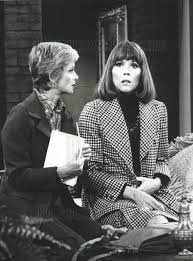
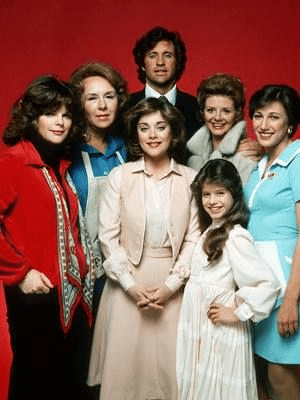
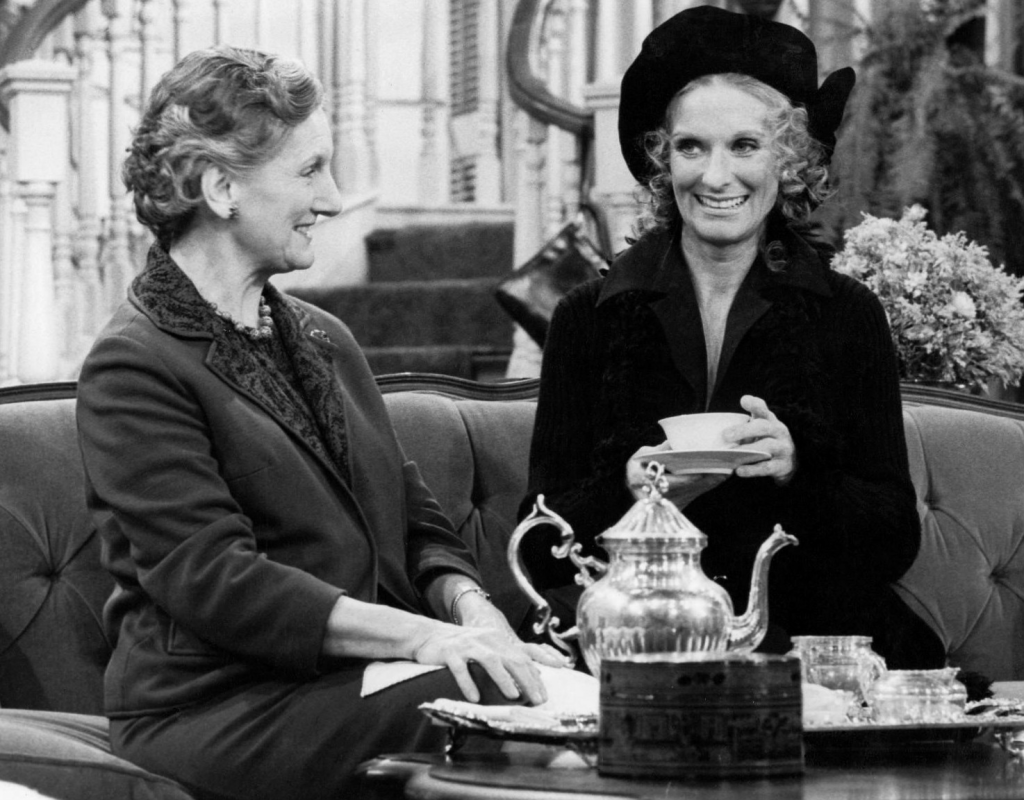
The cast was quite talented: Donna Pescow played Angie, Robert Hays was her boyfriend-later-husband, the amazing Doris Roberts was her mother Theresa before Raymond came along, and Debralee Scott played her sister Marie.

Bradley Benson is a young pediatrician who comes from a wealthy family comprised of his stuffy father Randall (John Randolph), his overbearing sister Joyce (Sharon Spelman), and her daughter Hillary (Tammy Lauren). The show is set in Philadelphia.

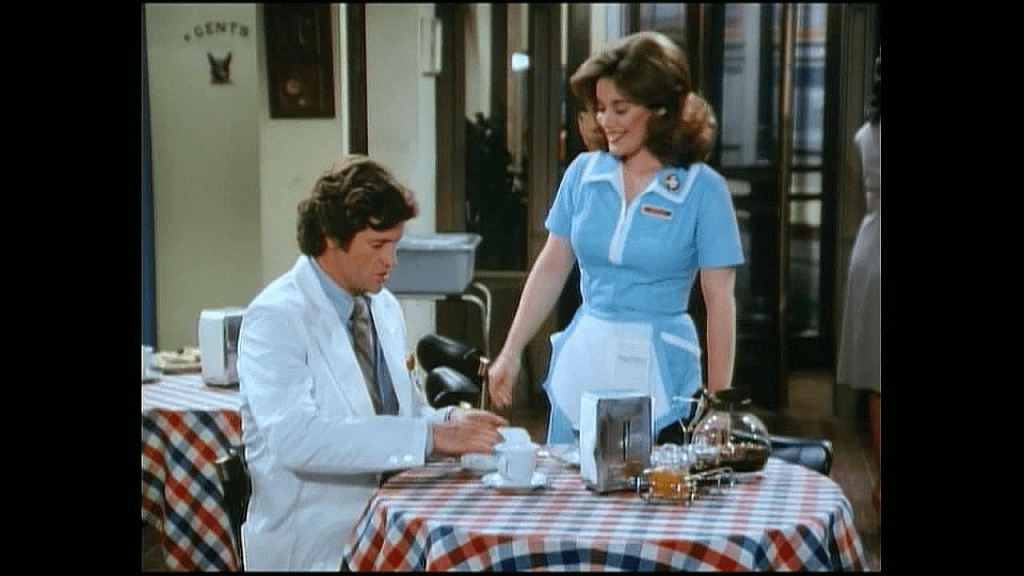
Angie is a coffee-shop waitress who falls in love with Brad. Many scenes are set in the diner with Angie’s friend and co-waitress Didi (Diane Robin). When their families argue about wedding plans, Brad and Angie elope. Later Angie’s mother plans a small family wedding for the two families to get to know each other, and Brad buys the coffee shop for Angie.

At the beginning of the second season, Angie sells the coffee shop to buy a salon with her mother.

📷imdb.com

The theme song was “Different Worlds,” written by Norman Gimbel and Charles Fox. Gimbel is still hard at work and has amassed 494 credits so far while Fox has 131 credits for many impressive television series and big-screen films. Maureen McGovern sang it; she’s best known for her top-forty hit “The Morning After.”

The show was sandwiched between Happy Days and Three’s Company on Tuesday nights, which ensured great ratings. This one was fifth its first week. The show just could not find its fan base. By the end of the season, the Nielsen ratings had fallen drastically, and the show had moved to Monday nights following Monday Night Football. Angie wasn’t the only show to struggle in this time slot. Once it was moved, three other shows—One in a Million, Goodtime Girls, and Laverne and Shirley—all tried this scheduling spot. I’m not sure if the shows were just not very good in 1979, if people were too busy to watch television, or the network heads were inexperienced, but when you look at the schedule from 1979 most prime times had a different show in the slot every season of the year. When it’s not only one show on a network moving, but many shows on a network moving and then all networks having a bunch of shows moving, how are viewers supposed to figure out where anything was? Out of the 54 new shows debuting in 1979, by the next season every network basically had one hit show out of the bunch: ABC-Hart to Hart, CBS-Trapper John MD, and NBC-The Facts of Life. While these are all decent shows, none of them were classics in my opinion. In 1980 another 30 shows were brand new.

📷rewatchclassictv.com

The show was put on hiatus. It did return in April on Saturday nights, but it was officially canceled in May.

When you look at this show on paper, it had all the right elements. First of all, we have Garry Marshall and Dale McRaven, very successful creators and writers. The cast was amazing. Even the theme song was composed and sung by extremely talented people. Then you have the fact that there were not a lot of great shows debuting this year; a decent show should have crushed it. So, what happened here?

I think I’m putting the blame for this one on the network. I watched the pilot and while pilots are meant to pull you back for the next one, most pilots aren’t the best of the series. Some of the pilots for shows I love are almost dreadful. This pilot was not dreadful. The characters were likable, the writing was funny, and the theme was not overdone over the years. It was similar to The Mothers-In-Law from a decade earlier but more of a Dharma and Greg (which came two decades later) where they fall in love despite their economic differences.

📷youtube.com

This series was better than a lot of shows that are currently on the air. I did watch another later episode where the couple elopes. Once again, the writing was good and the characters were a bit eccentric, but the writers knew how far to go to keep them likable and charming rather than odd. If ABC had kept it in a time slot for more than a month or two and given it a bit of time, it might have been a big hit.

If you want to check it out, let me know what you think. For a late seventies/early eighties show, it’s aged very well.

Phyllis: Relocating Was a Bad Move

This month we are looking back at one-named sitcoms, and we can’t forget Phyllis. A spinoff from The Mary Tyler Moore Show, it aired in the fall of 1975 and ran for two seasons. James Brooks, The MTM producer, was involved slightly as a consultant but Ed Weinberger and Stan Daniels were in charge.

📷TVInsider.com

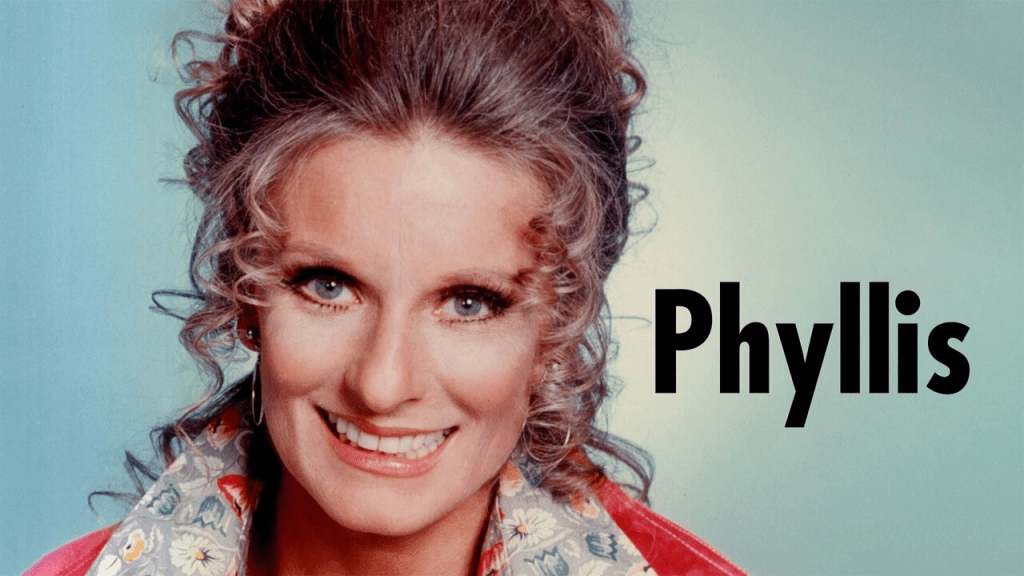
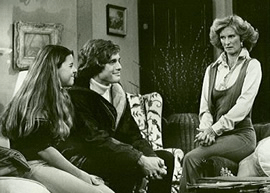
In this series, Phyllis Lindstrom (Cloris Leachman) and her daughter Bess (Lisa Gerritsen) leave Minneapolis and move to San Francisco after Phyllis’ husband passes away. Her in-laws still live out west in the area where she and Lars lived as newlyweds. Even though Lars was a doctor, his death left his family broke. Life is interesting with three generations under one roof. Lars’ father Judge Jonathan Dexter (Henry Jones), Lars’ mother Audrey (Jane Rose), and Phyllis and her daughter navigate life with their grief, new surroundings, and complicated life situations.

Phyllis applies for an assistant in a photography studio. Her first boss is Julie (Barbara Colby). After Colby was murdered, Liz Torres took on the role and Valerie Harper’s (who played Rhoda on the MTM show) ex-husband Richard Schall plays Leo, a photographer at the studio who doesn’t make life easy for anyone. Phyllis is not only used to being pampered and not working, she also never was shy about sharing her opinions with anyone around her.

The network scheduled the show on Monday nights after Rhoda and before All in the Family, so it became an instant top ten hit. Leachman was nominated for lead actress in a comedy but lost the Emmy to Mary Tyler Moore. In addition to Moore, Leachman’s competition included her previous coworker Valerie Harper for Rhoda, Lee Grant for Fay, and Bea Arthur for Maude.

Once again, as we’ve seen a few times this month, when ratings began to slip a bit, the network turned the show upside down. For season two, the photography studio was sold, and Phyllis was without a job again. She then goes to work for the San Francisco City Supervisor and is put into the middle of political chaos. Rhoda was also having some trouble with ratings and was rehabbed. Their competition was Little House on the Prairie which continued to rake in lots of viewers.

By 1976, Rhoda had regained many of its viewers, but Phyllis was continuing to decline. It was dropped for the next season. At one point, Mother Dexter (Judith Lowry), the judge’s mother, has a boyfriend Arthur Lanson played by Burt Mustin who later becomes her husband. Henry Jones and Burt Mustin’s scenes are probably the highlights of the shows.

📷tvseriesfinale.com

Alan Burns discussed casting the role of Phyllis on The Mary Tyler Moore Show. He said Leachman’s instincts were terrific, and she made the role amazing. James Brook said that Marlin Brando called Leachman the best actor he ever saw come out of The Actor’s Studio. Obviously, the character of Phyllis was a successful and popular one. I think that The Mary Tyler Moore Show was so well loved for the ensemble cast. Pulling Phyllis out of that “family,” and placing her across the country probably wasn’t the formula for a successful spinoff.  They would have been better off to give her a brand new show of her own which could feature her highly rated acting ability.

Arnie: Trying to Adjust to a White Collar

This month it’s all about one-named sitcoms and today it’s all about Arnie. Arnie is a series that isn’t talked about much anymore. It debuted in 1970 on CBS and was on the air for two years.

📷imdb.com

David Swift created this series. Swift was a successful director, producer, and writer. He created and wrote for Mister Peepers, The Interns, and Camp Runamuck before Arnie. He also wrote the screenplay for both the 1961 and 1998 version of The Parent Trap. Swift accumulated 51 credits for writing, 23 for directing including The Parent Trap from 1961, and 5 for producing.

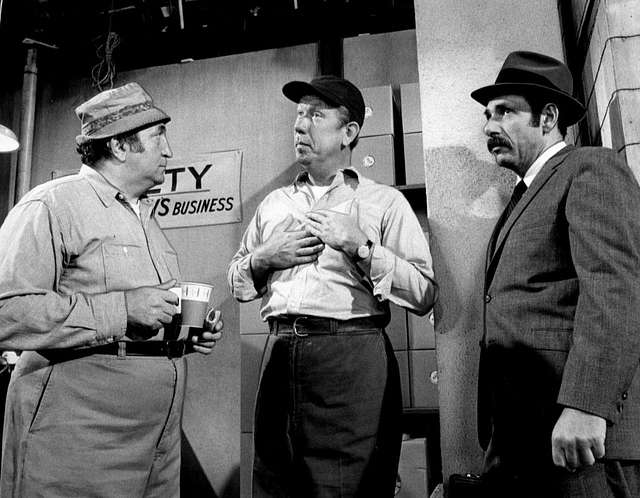
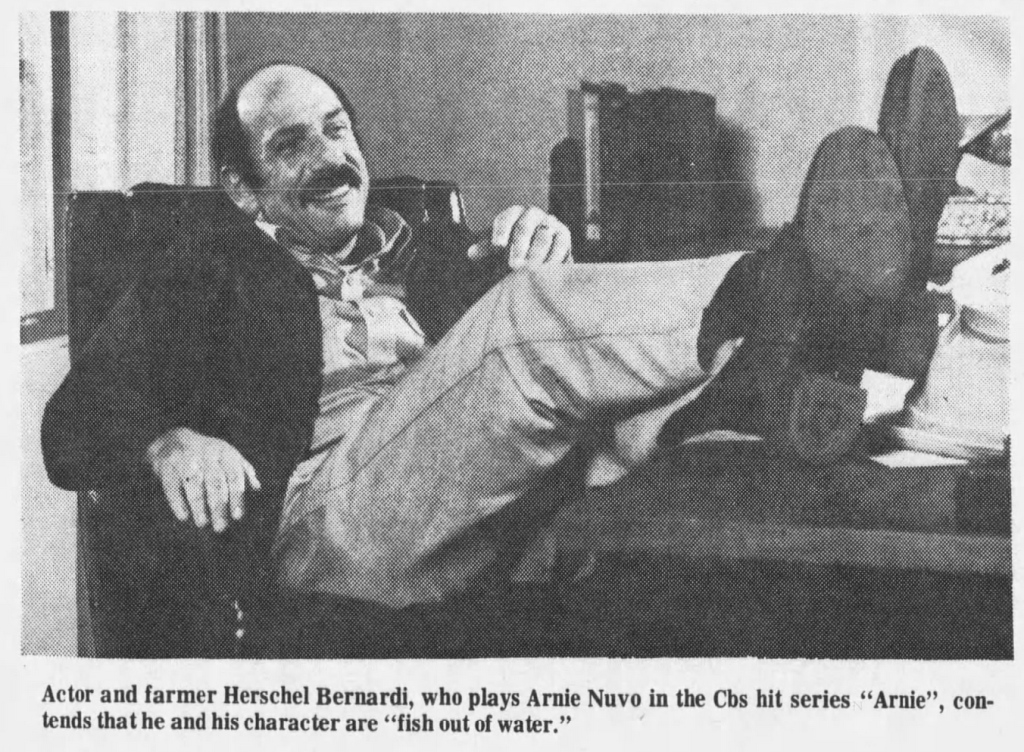
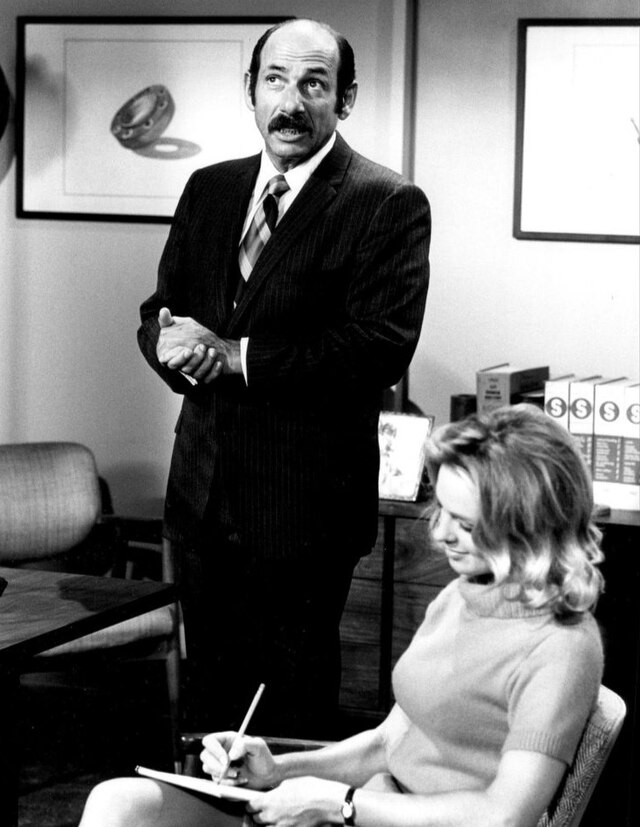
Arnie Nuvo (Herschel Bernardi) is a blue-collar employee at Continental Flange Co. who was promoted to an executive position out of the blue. Arnie tries has a difficult time related to his very wealthy boss and he still has a lot of friends outside of management. He still has a union card so he can mediate difficult labor situations and is respected by the workers.

Sue Ane Langdon played his wife Lilian, Del Russel was his son Richard, and Stephanie Steele was his daughter Andre. Rounding out the cast was Elaine Shore, his secretary Felicia; Tom Pedi, his friend Julius, who still works on the dock; and Roger Bowen, his boss Hamilton Majors Jr.

📷pinterest.com

The show was scheduled before The Mary Tyler Moore show on Saturday nights. Surprisingly, it received an Emmy nomination for best comedy series, but it didn’t receive very high ratings. Getting an Emmy nomination was impressive for this year. Its competition was Love American Style, The Mary Tyler Moore Show, The Odd Couple, and the winner, All in the Family.

Like it typically did, the network (and I’m not picking on CBS, they all did it), decided immediately to turn things topsy turvy instead of giving it some time. Arnie’s neighbor played by Dick Van Patten was let go and Charles Nelson Reilly, a tv chef named The Giddyap Gourmet, moved next door.

The series was moved to Monday night following My Three Sons which was moved from Saturday nights to Tuesday nights as well. That probably didn’t help the ratings because this was the last season of My Three Sons. As much as I love that show, it should have stopped a year earlier than it did. To make it more confusing half-way through the second season, Arnie moved back to Saturday and My Three Sons ended up on the schedule Thursday nights. Both shows were canceled by spring.

📷tralfaz.com

In addition to all the moving around, when it returned for its second season it was up against Monday Night Football, so I’m guessing that spot didn’t help attract people after it moved. Saturday nights its competition was weak; it was primarily up against the movie of the week, The Pearl Bailey Show, and Cade’s County.

The Television Academy interviews included both Eddie Foy and Dick Van Patten discussing this show.

Foy talked about the casting and said Bowen was the best cast member. He said it was a bit of a bland show, not a break-through series, but he thought Herschel was a big star at the time after starring in Zorba. Foy said it was a great show to work on and everyone in the cast had fun.

📷en.wikipedia.com

Dick Van Patten also talked about his time on the show. He said he had come to California for a play and while he was performing, Shirley Booth approached him and said she wanted him to talk to someone about joining the cast of Arnie as the neighbor. Van Patten said he didn’t remember much about the show which supports Foy’s view of it being a bit bland.

It sounds like the network was trying to take advantage of Bernardi’s fame at the time and maybe didn’t take as much care as it should in designing the perfect show for him.