Josie and the Pussycats: On Every Network At the Same Time

We are winding up our blog theme for October, “Get Animated.” I think II saved the best for last. When I remember watching cartoons as a kid, I was fairly neutral on most of them. I liked Tom and Jerry and The Jetsons. I did not like the Dudley Do-Right/Penelope Pitstop group of characters. I was indifferent to most cartoons until I was ten and a new one debuted. I loved Josie and the Pussycats. I couldn’t really relate to Foghorn Leghorn, but I got Josie.

Dan DeCarlo created “The Archies,” and in 1970 he came up with “Josie and the Pussy Cats.” He later found out that in addition to the comic books, a cartoon was being given to Hanna-Barbera and he was not getting any of the profits from the sale.

Carlo discussed how he came up for the idea: “I went to United Feature with  . . . Josie. . . They asked for more  . . . [it was too much] . . . I shoved Josie, and concentrated on Willie Lumpkin . . . When the strip ended, I quickly submitted the Josie strip back to Publishers and Harold Anderson, and he sent it back to me . . . I took it to Archie to see if they could do it as a comic book. I showed it to Richard Goldwater, and he showed it to his father, and a day or two later I got the OK to do it as a comic book.”

Sixteen episodes ran the first season, and they were repeated the next year. Season three moved to outer space and that didn’t do much for me. This group was rerun again in season four. The final two years, 1974-76, just continued to show these same 32 episodes. Oddly during these final two years, you could catch the cartoon on ABC, CBS, and NBC.

📷tvinsider.com

The reason I loved this show is because it was all about girl power. Josie and the Pussycats was a teen pop band who toured the world. Somehow, they managed to get into the same types of mysteries the Scooby Doo gang did; they even had their own van. Josie was the lead singer, songwriter and guitarist for the band. Her co-band members were Valerie who played the tambourine and drummer Melody. Valerie was the first Black character to be a regular member of a Saturday morning cartoon.

Rounding out the cast were roadie Alan and twins Alexandra and Alexander. Alexander was their manager, but he was not the brave boy leading the women; he was more cowardly and afraid of his sister who caused a lot of trouble for the band. Alexandra also had a cat Sebastian.
📷blogger.com

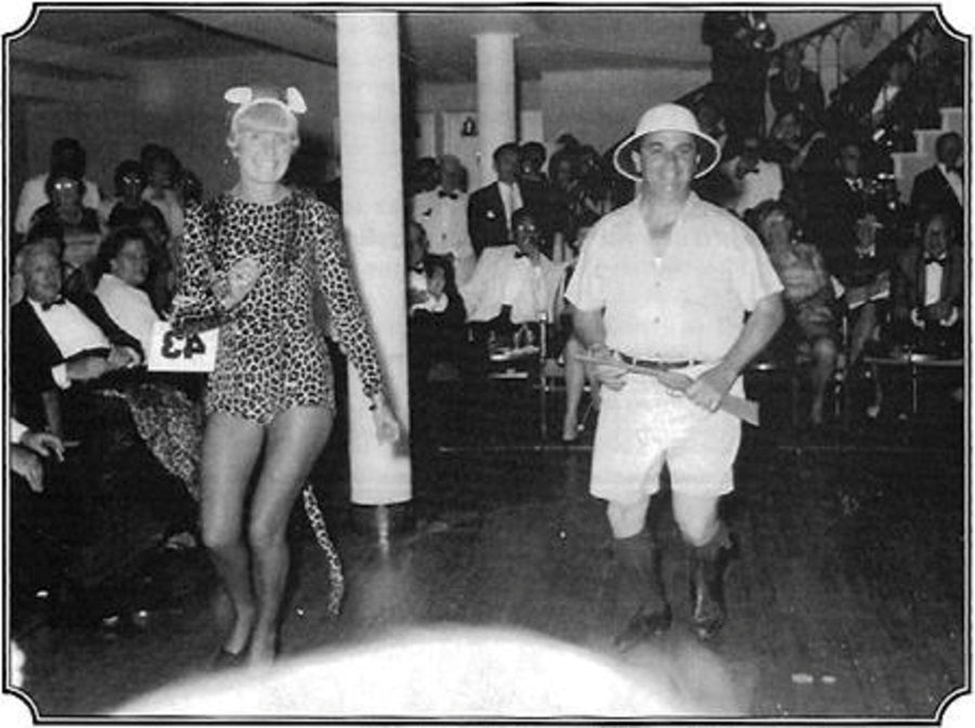
Like The Partridge Family or The Monkees, a song was featured each episode usually during a chase scene. And like The Partridge Family, they wore special costumes, usually leopard print ones. Don’s wife shared a story about the inspiration behind the costumes. In 2002, she told Blake Bell that “we were going on a cruise. I had a friend . . . she made me a costume and that was the pussycat costume. . .  I brought the costume . . . Dan . . . decided it should be made a little bit sexier. I had a hat with a point on the forehead, cut around the eyes . . . he thought we would just use the ears. When we had the whole costume together that’s when Josie was created actually [based] with the style of this costume.”

Each episode had a formula with the band on their way to their next performance when they get mixed up in an adventure, often caused by Alexandra. They might meet a mad scientist or villains like The Wild Wild West featured where they wanted to take over the world or use some terrible invention to harm a lot of people. Alexandra also wanted to steal Alan away from Josie, so that was often behind her mischievous plots.

📷saturdaymorningsforever.com

Josie was voiced by Janet Waldo, but her singing was done by Kathleen Dougherty. She was the redhead of the group. Valerie’s words were voiced over by Barbara Pariot and her singing by Patrice Holloway. She was a brunette. Melody, the blonde, was voiced by Jackie Joseph and her singing was done by Cheryl Ladd. It was Ladd’s first television project. Alan was played by Jerry Dexter. Alexander had the distinct voice of Casey Kasem and his sister was Sherry Alberoni. We also heard Don Messick as Sebastian during the episodes.

The only thing I didn’t love about the show is that Melody was portrayed as the stereotypical dumb blonde. She was naïve and easy to confuse. Her ears wiggled when danger was near.

📷hanna-barberawikifandom.com

Hanna-Barbera put together a real-life girl group to not only provide the singing voices but to record an album. There was a talent search to find singers who looked like the cartoon characters.

The theme song was titled, what else, “Josie and the Pussycats.” It was written by Hoyt Curtin, Hanna, and Barbera. It was based on a tune that had been used briefly on The Jetsons. Capitol/EMI Records released an album and two 45-RPMs in 1970. The two songs that were most popular were “Every Beat of My Heart” and “Stop, Look, and Listen.” Kellogs, the sponsor of the show, also offered four 45s, if consumers sent a form in from the back of a cereal box.

The outer space episodes from season 3 were based on the band taking a promotional photo in front of a new spaceship. Alexandra pushes the group aside, accidentally triggering the launch sequence which sends them all into outer space. For some reason, Valerie knew how to fly the spacecraft. In this version, which is similar to the original 16, the wacky people they encounter are from other planets rather than cities on Earth.
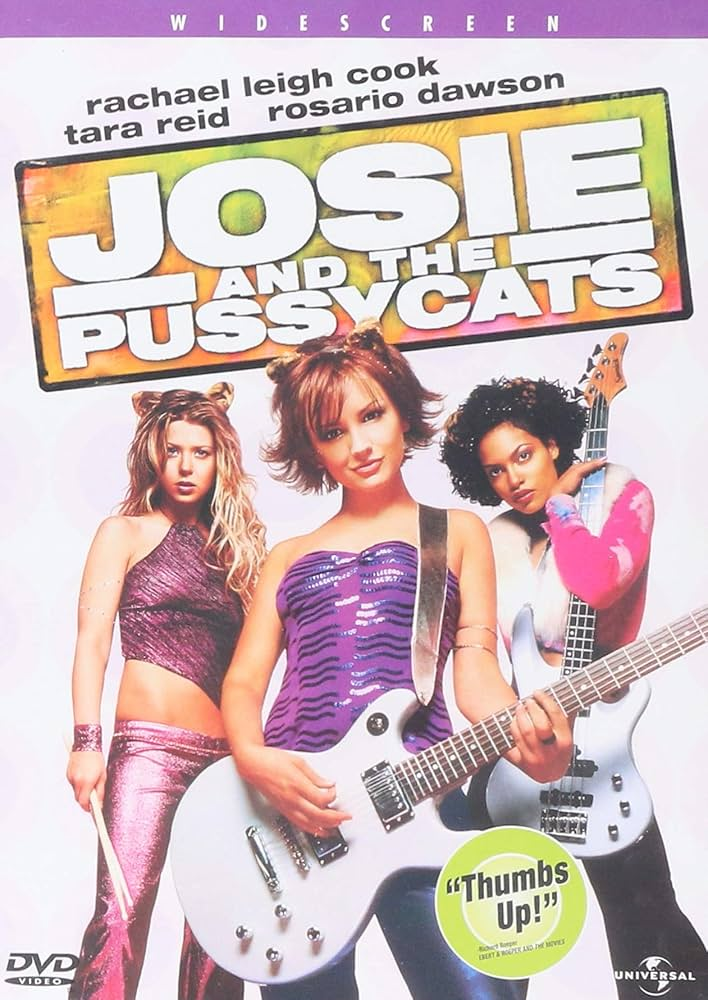
A complete DVD set was released in 2007. The group has made a few encore performances. In 2001, there was a live action movie which I don’t remember at all. In 2016 a comic book was released, and in 2017, Riverdale, a live-action show, featured the trio as students at Riverdale High.

Josie and the Pussycats was never meant to be the mainstay The Archies was. I did love The Archies as well, with a poster on my wall and comic books on my bookshelf. However, Josie was just what I was looking for as a ten-year-old in 1971. I could easily imagine myself on tour, solving mysteries, and outwitting Alexandra. I thought about revisiting the original sixteen episodes for this blog, but I could not bring myself to do it. The ten-year-old is content remembering how fun these cartoons were, and I didn’t want to disappoint her by revealing how well they do or don’t hold up today. If you decide to take a trek back in time, let me know what you think about the show.

Where’s Huddles? You Only Have Ten Episodes to Find Him

This month’s blog series is titled “Get Animated.” Most of you are probably familiar with most of the shows we are discussing. However, today’s might be a bit more puzzling. It’s called Where’s Huddles?

📷imdb.com

This was a Hanna-Barbera Production that debuted on CBS in July of 1970. It was created as a summer replacement for Hee Haw. Some sources say it was replacing The Glen Campbell Goodtime Hour. The Campbell show had this timeslot in the fall and Hee Haw took if over for the winter. Both shows appeared on the schedule the following year.

When I was little, often either reruns were shown during the summer, or short-term replacement shows were created for potential long-term schedule spots.

This show was a primetime series meant to attract adults, much like The Flintstones was created to do with adult themes and a laugh track. I’m not gonna lie; I hated Hee Haw and I would have watched dentists performing root canals before watching Hee Haw.

📷ebay.com

The Flintstones had gone off the primetime schedule in 1966, so the network thought it might be time to try a new animation show in the evening.

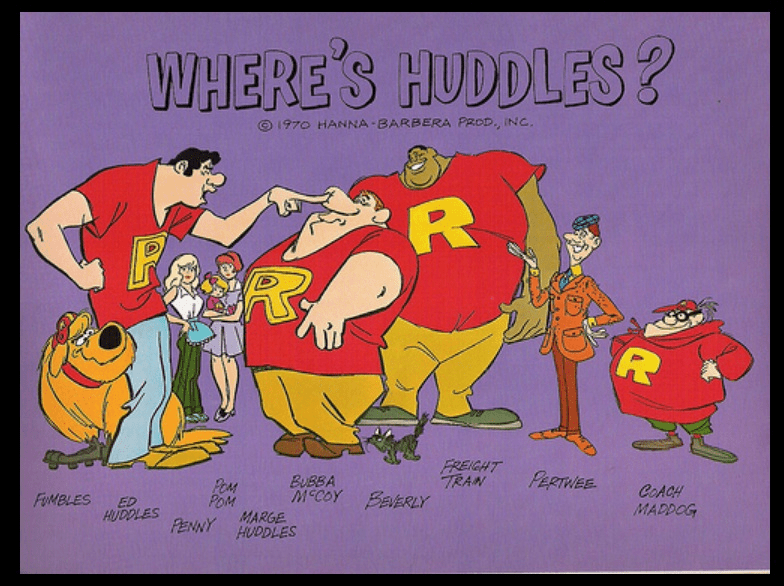
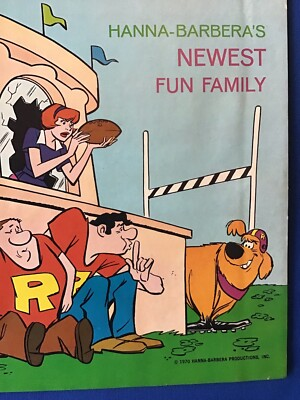
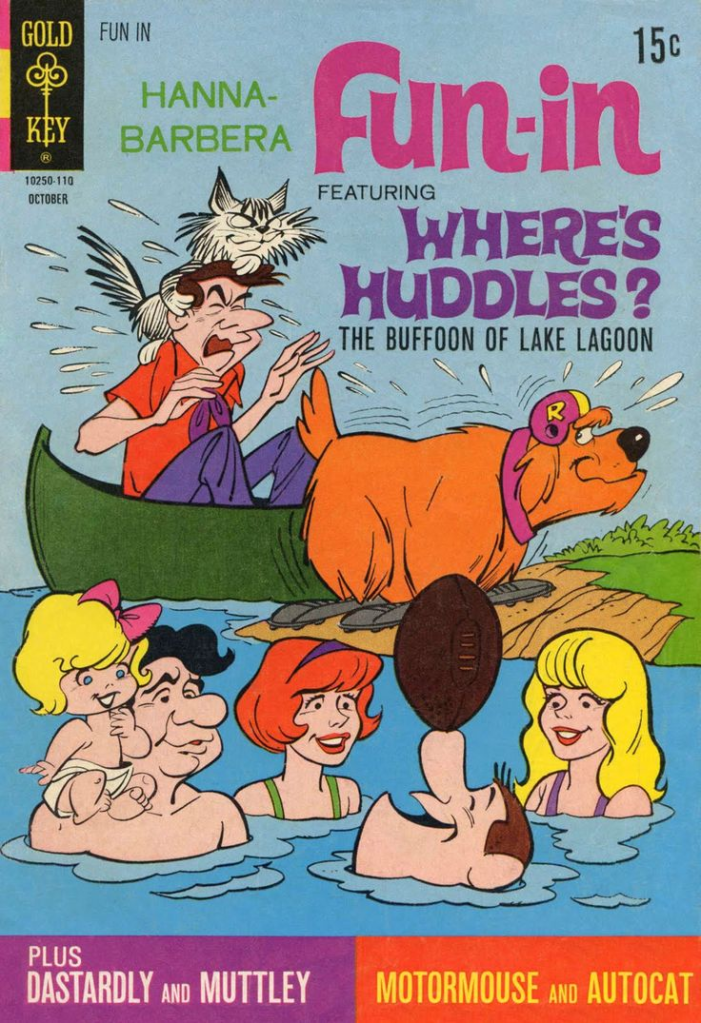
This series featured a professional quarterback, Ed Huddles (voiced by Cliff Norton). The team’s center, Bubba McCoy (voiced by Mel Blanc) is his neighbor. Rounding out the cast was Ed’s wife Marge (voiced by Jean Vander Pyl), Bubba’s wife Penny (voiced by Marie Wilson), PomPom, the Huddles’ daughter (Jean Vander Pyl), and another teammate Freight Train (voiced by Herb Jeffries). Claude Pertwee (voiced by Paul Lynde) was a grumpy neighbor who lived with his cat Beverley. He liked the wives, but he disliked the rest of his neighbors.

Huddles and company play for the Rhinos,  and their announcer was voiced by Dick Enberg, the voice of the Los Angeles Rams. Their coach was Mad Dog Maloney (voiced by Alan Reed).

As you can tell just by reading the descriptions, it was almost too similar to The Flintstones. Ed was taller and thinner than Fred and while his wife had red hair, it was a different style than Wilma.  Bubba’s wife was a more beautiful blonde. The characters on this show were voiced by many of the same people who worked on The Flintstones.

📷ebay.com

When the show wasn’t a hit, the network had to find a replacement show,  an unknown series, All in the Family, was put on the schedule.

A comic book was released in 1971.

The theme song was similar but different for the opening and closing. The catchy tune’s lyrics were:

Opening: There’s a family down the street, the Huddles! The McCoys live right next door. Yes, I know the girls are alright Marge and Penny, but the fellas, they play football you know. Savages, that’s what they are. Give the ball and a cheer for Huddles, with point after touchdown every time! Savages!

Closing: There’s a family down the street, the Huddles! The McCoys live right next door. Give the ball and a cheer for Huddles, and he’s over the old goal line. With a point after touchdown every time!

📷pinterest.com

I don’t understand having the two variations, but the show wasn’t on long enough to tweak the theme anyway.

The show didn’t attract many viewers, and it was canceled after ten episodes. However, in the fall, Hanna-Barbera would try their hand at another series, one that I was much happier about- Josie and the Pussycats. You’ll learn more about this one next week.

Scooby Doo And the Many Loves of Dobie Gillis

This month our blog series is “Get Animated,” and today we are taking a look at the Scooby Doo gang. Launched in 1969, Scooby Doo was created by Joe Ruby and Ken Spears for Hanna-Barbera Productions.

📷imdb.com

The show featured five teenagers who work together to solve mysteries. It ran on ABC from 1969-1976 when it moved to ABC until 1985. Since then there have been several reboots, a new show A Pup Named Scooby Doo, and several movies, but today we are focusing on the original series.

Fred Silverman, head of daytime programming at CBS, was looking for a new series that could take on the popularity of The Archies. Silverman had a concept in mind of a group of friends who played rock concerts and solved mysteries. The original concept was called Mysteries Five featuring Geoff, Mike, Kelly, Linda, W.W., and a bongo-playing dog called Too Much.

Designer Iwao Takamoto was brought on board. Takamoto had been incarcerated at Manzanar, a concentration camp in WWII. He began sketching scenes to pass the time. In 1945, Takamoto was hired by Walt Disney Studios with no experience or education apart from the sketching he taught himself during the war. At Disney he worked on Lady and the Tramp. He later worked for Hanna-Barbera and worked on The Flintstones in addition to Scooby Doo. After reading a dog breeder’s description of a pedigree Great Dane, he created Scooby, adding a hump back, bowed legs, and several features that were not highly rated in dog show winners.

📷facebook.com Denver, Weld, Hickman

The teens were based on the cast of The Many Loves of Dobie Gillis. That show was on the air from 1959-1963. The Scooby gang became Fred based on Dobie Gillis (Dwayne Hickman), Daphne based on Thalia Meninger (Tuesday Weld), Velma based on Zelda Gilroy (Sheila James), and Shaggy based on Maynard Krebbs (Bob Denver). Silverman based the dog’s name, Scooby Doo on Frank Sinatra’s doo-be-doo-be-doo in “Strangers in the Night.” The title became Scooby Doo, Where Are You?

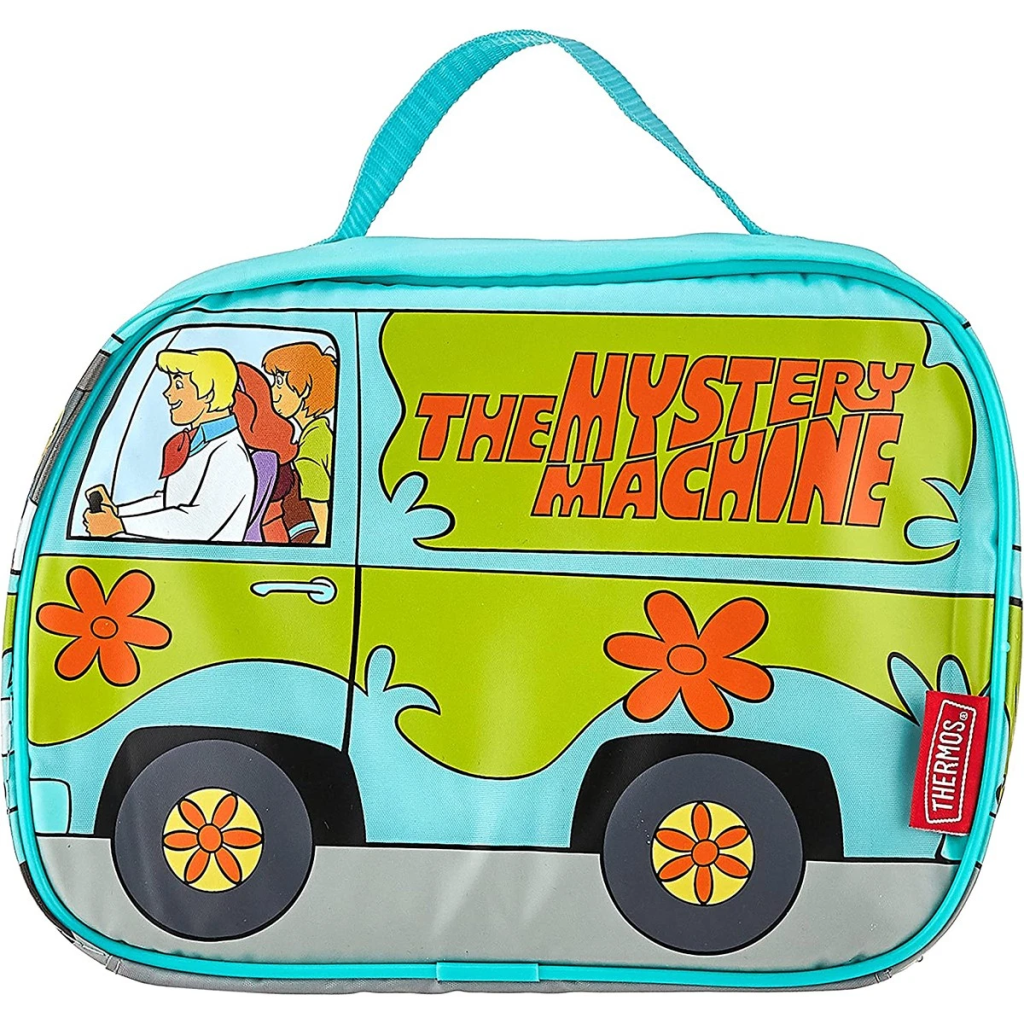
When the show aired the voices were Don Messick (Scooby), Casey Kasem (Shaggy), Frank Welker (Fred), Nicole Jaffe (Velma), and Indira Stefanianna (Daphne). The group of friends traveled in the Mystery Machine, a very-sixties-looking van with psychedelic colors and flowers.

📷mentalfloss.com

As they travel the country, they run into situations where ghosts and paranormal activity threaten the locals. The plots were pretty basic, like the Hallmark Christmas movie formulas, the kids ran into someone being scared by a ghost, zombie, etc., and the kids would decide to help out their new friend. Eventually after at least one person, often Shaggy, went missing, before the kids unmasked the villain who turned out to be a human they had already dealt with in their investigation.

The ratings were amazing with up to 65% of viewers tuning in on Saturday mornings. It was renewed for a second season in 1970; however, a season of cartoons was only eight episodes.

In later years, the series received two Emmy nominations.

David Mook and Ben Raleigh wrote the theme song which was performed by Larry Marks.

Gold Key Comics published comic books starting in December 1969. It was drawn by Phil DeLara, Jack Manning, and Warren Tufts. The first ones were adaptations of the television shows, but eventually new stories were created. The series has been published off and on the past six decades.

This brand has sold billions of dollars of merchandise since it first began. In fact it sold a billion in 2004 alone. The early items included a board game in 1973, lunch boxes, coloring books, records, and underwear. The years since have featured a ton of items including a kids’ multivitamin, Scooby Snack dog treats, Barbie dolls, and Hot Wheels.

I loved this show growing up. The kids seemed fun and sophisticated and we all wanted to solve mysteries. For years there was a Mystery Machine in the town where we lived when my boys were little, and I felt nostalgic whenever I saw it parked around town.

Oh Magoo, You’ve Done It Again

Welcome to October, and welcome to our blog series for the month, “Get Animated.” Up first on the schedule is Mister Magoo.

📷imdb.com

This show was originally aired from 1960 to 1962. It was produced by United Productions of America, and each episode was made up of five four-minute cartoons. Jim Backus voiced Mr. Magoo and other famous voice actors on the show included Bea Benadaret, Mel Blanc, Dawes Butler, June Foray, Paul Frees, Jerry Hausner, Frank Nelson, Benny Rubin, and Jean Vander Pyl.

Mr. Magoo’s first appearance was in 1949 in “The Ragtime Bear.” Created by Milard Kaufman and John Hubley, Mr. Magoo was originally a parody of Joseph McCarthy, a mean-spirited, hateful man. It was meant to protest the Hollywood Blacklist. However, Kaufman found himself on one of these lists and passed the character of Mr. Magoo to Pete Burness. Burness depicted Magoo as a senile old man who was too stubborn to admit his eyesight was going. Backus was already voicing Mr. Quincy Magoo in 1949, so he lived with the character for decades.

In 1964, a similar series debuted called The Famous Adventures of Mr. Magoo which was on one season, and What’s New Mr. Magoo popped up in 1977. Backus continued to voice Magoo until the 1997 big-screen movie when Leslie Nielsen took on the role.

The show won two Oscars for Best Short Subject, but these were both in the mid-fifties before the television show debuted.

📷pinterest.com

I remember watching reruns of the shows when I was a kid, and while I thought some of the shows were funny, I wasn’t a huge fan. I was much more into Scooby Doo, Josie and the Pussycats, and The Archies.

Many kids identified Mr. Magoo with a grandparent: an elderly person who wasn’t ready to accept the fact that they were aging and had some limitations. Mr. Magoo got into a lot of complicated situations because he couldn’t see very well and refused to admit it. He would do things like think he was walking into a men’s clothing store when he was in an army recruitment office and try to purchase clothing.

When making the talk show rounds in the sixties, Backus told a story about how he prepared for the series. He put a fake rubber nose that pinched his own nose, giving it a nasal twang. After being Magoo for a bit, he was able to produce the voice without the fake nose. One of Magoo’s taglines was “Oh, Magoo, you’ve done it again.”

One of the tough things about this show was Magoo’s houseboy Cholly, whose real name was Charlie. Cholly was a stereotype of a Chinese man featuring huge buck teeth and fractured English diction. While several shows had Chinese or Black employees during this era, most of them were not so negative. Rochester often got the better of Jack Benny on his show. On Bachelor Father, one of my favorite sitcoms, Bentley lived with his niece and Peter, his houseboy. But Peter was more of a brother and felt free to speak his mind to Bentley; he was not a demeaning caricature.

📷pinterest.com

Backus seemed to vacillate on whether he liked or detested Magoo. In an article from 2023, Jim Korkis talked about Backus’ relationship with the animated character. Backus once admitted that “I’d like to bury the old creep and get some good dramatic roles in movies. He’s a pain in the posterior. Every time I start to be a serious actor I lose out because someone—usually a producer—says I’m Magoo.” However, Jim also drove around in a car with the license plate “Q MAGOO.”

He said Backus saw his father in the Magoo character who was isolated from most of the world. Another influence for determining the voice was a character Backus developed for his nightclub act. Backus described him as “the loud man in the train club car.

In an Ohio State University publication, Backus said his association with Magoo helped him out one night. He was trying to reserve a table at a restaurant with no luck. He called back as Mr. Magoo, and they gave him a table right away.