This Doctor Made House Calls Every Monday Night

As we wind up our blog series, “The Movie Came First,” we finish with a show from the late seventies, House Calls. The original movie hit the big screen in 1978. The description of the movie is that Charley is a surgeon who’s recently lost his wife. He embarks on a tragicomic romantic quest with one woman after another until he meets up with Ann, a single woman, closer to his own age, who immediately and unexpectedly captures his heart.
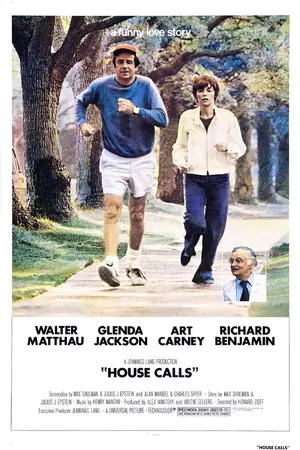
House Calls (1978) movie posters
Photo: cinematerial.com

Walter Matthau played Charley and Glenda Jackson was Ann. Art Carney and Richard Benjamin were cast as friends and doctors who work with Walter. Max Shulman and Julius Epstein wrote the screenplay.

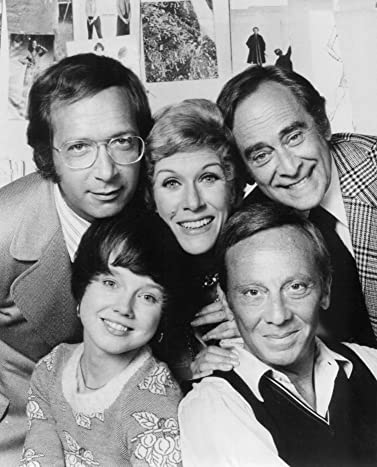
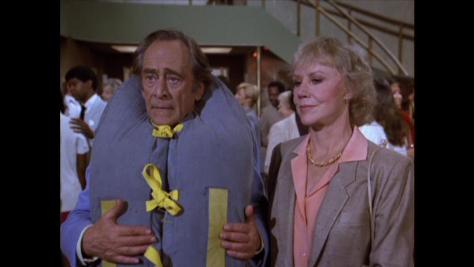
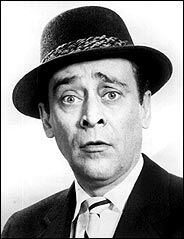
Jump ahead to 1979 and we find House Calls on the television schedule. The writers/creators are still Julius Epstein and Max Shulman. The same four top characters are featured but I thought it was interesting that only three of them got new names. Instead of Charley Nichols, we now have Wayne Rogers as Charley Michaels, Lynn Redgrave took on the role of Ann Anderson in place of Ann Atkinson. Charley’s coworkers are Amos Weatherby played by David Wayne where the original character was Amos Willoughby but Benjamin’s Norman Solomon role is now Normon Solomon, just one vowel change played by Ray Butenika. If there is a meaning behind the names, I never learned about it. Charley and Normon are the Hawkeye and Trapper of the hospital community and Willoughby is the senior doctor who tries to reign them in and doesn’t fire them only because they’re such good doctors.

In this version of the story, Charley and Ann are dating. He’s a surgeon at a San Francisco hospital and she is the new administrative assistant. He doesn’t like to conform to rules, while she insists on it, so while they are dating in their personal life, they often butt heads in the work life.
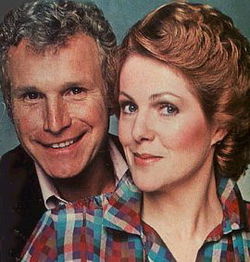
Photo: wikipedia.com

Redgrave and Rogers had a great chemistry and apparently the relationship of the three doctors provided a lot of funny situations. Providing additional humor were practical head nurse Bradley played by Aneta Corsaut, an older but enthusiastic candy striper Mrs. Phipps played by Deedy Peters, and everyone’s favorite character to hate, Conrad Peckler (Mark Taylor), the executive who was trying to bring order to the hospital.

Fans and critics liked the show; Redgrave was nominated for an Emmy and a Golden Globe, but lost the Emmy to Isabel Sanford for The Jeffersons in 1981.

1980 TV Guide Ad Mash "Christmas" EPS House Calls "Christmas" EPS CBS TV |  Tv guide, 1980s tv shows, Holiday movie

CBS scheduled the show for Monday nights after MASH, Rogers’ previous show. Its competition was Monday Night Football/Baseball on ABC and The Monday Night Movie on NBC. The show stayed on Monday nights for its final two years up against Flamingo Road on ABC and depending on the time of year, Monday Night Football or Dynasty on NBC. The first season it was in the top 20; the second year, it jumped to the top ten and the third season it was in the top 30.

During season three, Lynn Redgrave left the show. There is some confusion as to why she left. Universal Television claimed there was a dispute about her salary; Redgrave insisted it was because the studio would not allow her to breastfeed her baby between takes.

Photo: sitcomsonline.com

Her leave was explained on the show by Charley reading a letter out loud to the staff that she had gone back to England to marry her former husband. After more than two years of the relationship developing between Ann and Charley, I’m guessing that the audience didn’t buy the abrupt ending of their romance. Sharon Gless was brought in as Jane Jeffries who develops a similar relationship with Charley. I’m also assuming that fans weren’t thrilled to think Charley would jump right into a new relationship with Ann’s replacement and the chemistry just wasn’t the same. The network cancelled the show after season three even though it was still in the top 25.

1982 Press Photo-Sharon Gless-House Calls - Sitcoms Online Photo Galleries
Photo: sitcomsonline.com

In an interview on “Pop Goes the Culture,” Rogers discussed the show. He said that he loved his time on House Calls. He related that the pilot had been filmed with another actor and for whatever reason, they needed to replace him and called Rogers to see if he was willing to take over the role.

He said he truly enjoyed working with Redgrave and she was very gifted. He wasn’t sure how much of her firing had to do with the baby demands and how much was subterfuge for more money, but she was managed by her husband at the time and the entire situation backfired. Rogers especially loved her use of language, and they would sometimes improvise tongue twisters into the script.
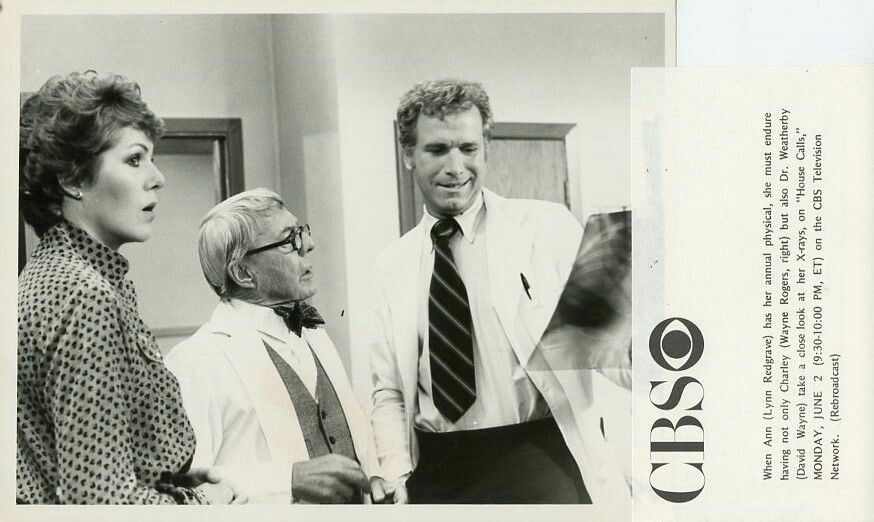
Photo: pinterest.com

He said like MASH, the show took a serious subject and turned it on its head. One of his favorite episodes had to do with medical marijuana. The older Willoughby was growing pot in the hospital for his patients’ use. He said it was a very funny episode. Rogers wrote two episodes and directed three of them. He talked about one of the shows he wrote, “Institutional Food” which he took a different take on hospital food which was always stereotyped as bad. In this situation, the hospital had a Mexican chef whom everyone liked. He didn’t have a green card and was getting ready to be deported, so the hospital staff was trying to come up with a solution. Finally, Charley decides to adopt this man as his son so he could continue to cook for them.

Rogers was very upset they took the show off the air. They were currently the eleventh most popular show when it was cancelled. He said he wrote a letter to the head of the network programming and to Bill Paley to protest. Paley invited him to lunch in his private quarters but refused to put the show back on the air.

I did find several episodes of the show on YouTube but did not see the DVDs available. I have to admit I saw this show infrequently and never saw the original movie, so I will add that to my list of things to watch in the future. This one sounded like a fun show, but I guess if I’m going to watch Wayne Rogers as a doctor, I’d rather continue watching reruns of MASH. It makes you wonder how long the show would have lasted if the network had not fired Redgrave.

Please Don’t Eat the Daisies and Other Parenting Advice

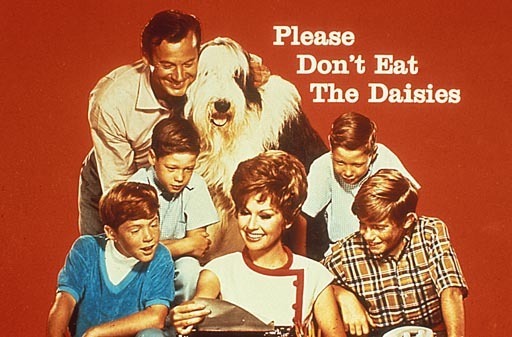
We are in the middle of our series, “The Movie Came First,”and today we look at a show from the mid-sixties, Please Don’t Eat the Daisies.

Based on a book by humorist Jean Kerr, Please Don’t Eat the Daisies was featured on the big screen in 1960. Doris Day and David Niven star in this movie about a former professor who becomes a drama critic named Larry McKay and his wife Kate. The couple, along with their four sons, moved from Manhattan to an older home in the country. Kate settles into the community, warmly received by the local citizens while Larry continues his social life in New York City. Their lifestyles clash when she thinks he is having an affair and he has to figure out his priorities. In real life, Jean Kerr’s husband Walter was a theater critic for the New York Herald Tribune, and they did indeed have four boys.

Photo: pinterest.com

If you have wondered where the title comes from, it’s a song Doris Day sings to a group of kids in the original movie.

Photo: fanpop.com

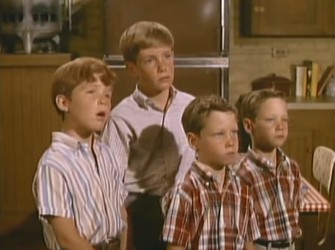
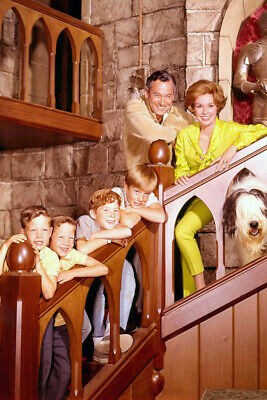
The television series which aired in 1965 was loosely based on the movie. In this version, the Nashes live in Ridgemont, New York. Jim (Mark Miller) is a college English professor and Joan (Patricia Crowley) is a newspaper columnist. The four boys are played by Kim Tyler, Joel Nash, Jeff Fithian, and Joe Fithian, the latter two being twins. Rounding out the cast was neighbor Marge (Shirley Mitchell) and the Nashes’ huge sheep dog, Ladadog.

Joan was not the happy homemaker many sitcom wives were during this era; she actually disliked housework and her column was a humorous look at family life. Her four mischievous boys gave her a lot of material.

Photo: fineartamerica.com

The episodes had some funny moments but were pretty typical for 1960s television. In one episode, the Nash family is the subject of a University-produced show, “At Home with the Faculty.” Joan wants to decrease their normal confusion and chaos by creating an unrealistic look for the family. Another episode, “Just While You’re Resting,” features Joan trying to please too many community residents by getting involved in too many organizations. Ellen Corby as the housekeeper makes one of her first appearances on the show trying to maintain order in the Nash household.

The Nash Family Four Years Before the Brady Bunch
Photo: ebay

The show was on NBC for two years and produced 58 episodes. In season one it was on Tuesday nights against Rawhide and Combat!. It did well in the ratings which makes sense to me considering the other two shows probably split the same audience. For season two, the network moved the show to Saturday nights where it was up against The Jackie Gleason Show on CBS and The Newlywed Game on ABC. When the ratings fell, NBC cancelled the show.

I always wonder a bit when I see a show that had 58 episodes but 40 writers. Kerr was given credit for all 58 episodes, but I could not find anything to indicate if she just received credit because of her book or if she actually participated in the writing. Of the other 39 writers, only 3 of them worked on more than two episodes and 80% of them only wrote one storyline. While I think having a community of writers for a show is a good idea, when you have that many different voices in two years, I think the scripts become more plot driven than character driven and we don’t get to know the characters intimately.

A rare quiet moment
Photo: 50plusworld.com

I do remember watching reruns of this show when I was younger and I remember liking it, but it was not one I specifically made time to watch. When I watched the opening on YouTube, I was immediately taken back to my childhood hearing the bouncy theme music. It begins with an animated sheepdog and then introduces each of the family members, landing back on the animated dog again. I could not find anywhere to watch the original episodes or buy DVDs of the show.

I admit I love all the Doris Day comedies, and Please Don’t Eat the Daisies is no exception. I feel like this is a running refrain this month, but all the movies we are looking at for this series were successful and fun-to-watch movies, so you’ll never feel that you wasted time watching these big screen treasures instead of their television cousins.

Father of the Bride is Better on the Big Screen

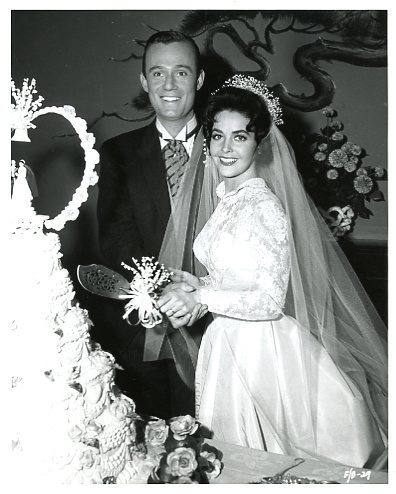
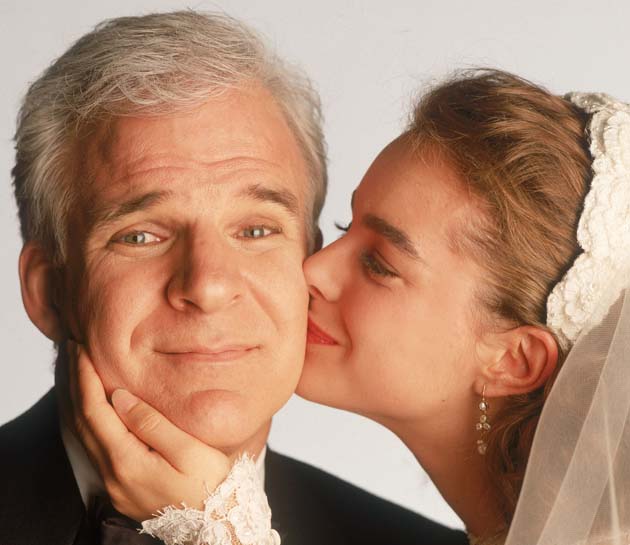
We’re continuing our blog series, “The Movie Came First.” Today we get to learn more about Father of the Bride. Whether you gravitate to Elizabeth Taylor and Spencer Tracy in the original movie or Kimberly Williams-Paisley and Steve Martin in the remake, you might have enjoyed the television show which aired in 1961. All three versions feature a father whose daughter is getting married, as he deals with the emotional pain of losing her, the financial reparations, and the disorganized turmoil that goes into planning the wedding.

The movie starred Elizabeth Taylor as Kay Banks with Spencer Tracy and Joan Bennett as her parents, Ellie and Stanley. Her fiancé Buckley Dunstan is portrayed by Don Taylor and his parents are Billie Burke and Moroni Olsen as Doris and Herbert. The film was nominated for Academy Awards for Best Actor in a Leading Role (William Holden won for Sunset Boulevard), Best Picture (All About Eve was the winner), and Best Writing, Screenplay (also Sunset Boulevard as winner).

Stanley narrates his feelings and perspectives throughout the film. For example, he talks about losing his daughter: “Who giveth this woman? This woman. But she’s not a woman. She’s still a child. And she’s leaving us. What’s it going to be like to come home and not find her? Not to hear her voice calling “Hi Pops” as I come in? I suddenly realized what I was doing. I was giving up Kay. Something inside me began to hurt.”

Photo: hulu.com

He also shares his thoughts on weddings: “I would like to say a few words about weddings. I’ve just been through one. Not my own. My daughter’s. Someday in the far future I may be able to remember it with tender indulgence, but not now. I always used to think that marriages were a simple affair. Boy meets girl. Fall in love. They get married. Have babies. Eventually the babies grow up and meet other babies. They fall in love. Get married. Have babies. And so on and on and on. Looked at that way, it’s not only simple, it’s downright monotonous. But I was wrong.”
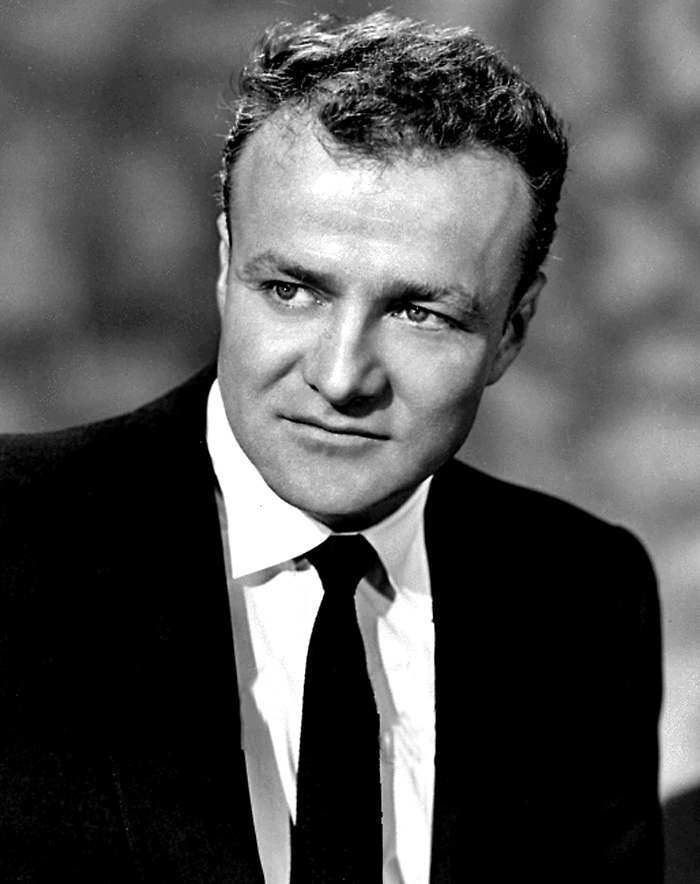
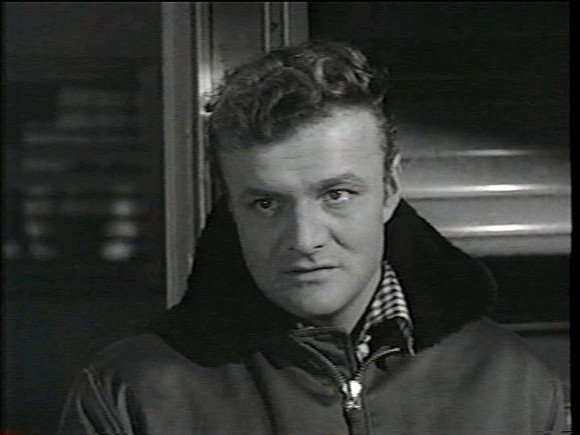
Photo: wikipedia.com

In 1961 the movie was reworked for the small screen, produced by MGM Television. The characters remained the same. In the tv version, Leon Ames was Stanley, Ruth Warrick was Ellie, Myrna Fahey was Kay, Burt Metcalfe was Buckley, Ransom Sherman was Herbert, and Lurene Tuttle was Doris. We also see Ruby Dandridge cast as their housekeeper Delilah and Rickie Sorenson as Tommy, Kay’s little brother.

The first shows in season one featured an animated cupid holding a magic wand to start the show, but the season transitioned into a photo of the entire cast gathered on the Banks’ staircase.

Photo: youtube.com

The sponsors of the show were Campbell’s Soups and General Mills.

I was surprised to see that there were 24 writers but then in looking through the episodes, the majority of the shows mirrored the movie so closely it was more of rewriting than writing.

Photo: blogspot.com

The show aired on Friday nights and its competition was The Dinah Shore Show and 77 Sunset Strip. I would have thought given the adult themes of 77 Sunset Strip, this show would be a popular family show to watch. However, the ratings must not have been very good, because it was cancelled after one season. Not many of the shows debuting this fall even lasted the season. In addition to Father of the Bride, the following shows were cancelled: The Bob Cummings Show, The Hathaways, Holiday Lodge, Ichabod and Me, Margie, Mrs. G Goes to College, Oh, Those Bells, One Happy Family, Room for One More, and Window on Main Street. The successful season debuts included Car 54 Where Are You?, The Dick Van Dyke Show, Mr. Ed, Hazel, The Lucy Show, and The Joey Bishop Show.

Photo: amazon.com

YouTube has the opening credits, but I could not find anywhere to watch episodes of this show. I guess my recommendation would be to forget about the show and watch the 1950 or 1991 movie version. I’m not often a fan of reboots of movies, but I love the Steve Martin-Diane Keaton version of this movie, so both films are great choices. Better yet, watch them both and then choose your favorite.

Photo: amazon.com

Christmas Gifts for the Television Fan

If you are looking for a unique gift for your favorite sitcom fan, please take a minute to check out my series– Classic Television: The Stories Behind Your Favorite Television Shows and Stars, Volumes 1-4. They’re available on Amazon.

I also have a series set in 1950 about the Montgomery Clan, primarily four sisters: Victoria, Leslie, Isabella and Meg. Volumes 1-3 are currently available with Volume 4 coming out in Spring of 2021 and also available on Amazon.

Happy Holidays,

Diana

Learning How to Marry a Millionaire Can Be Fun

Today starts a fun, new blog series, “The Movie Came First.” For the month of December, we’ll be learning about shows that began life as a big-screen movie. Our first sitcom is How to Marry a Millionaire.

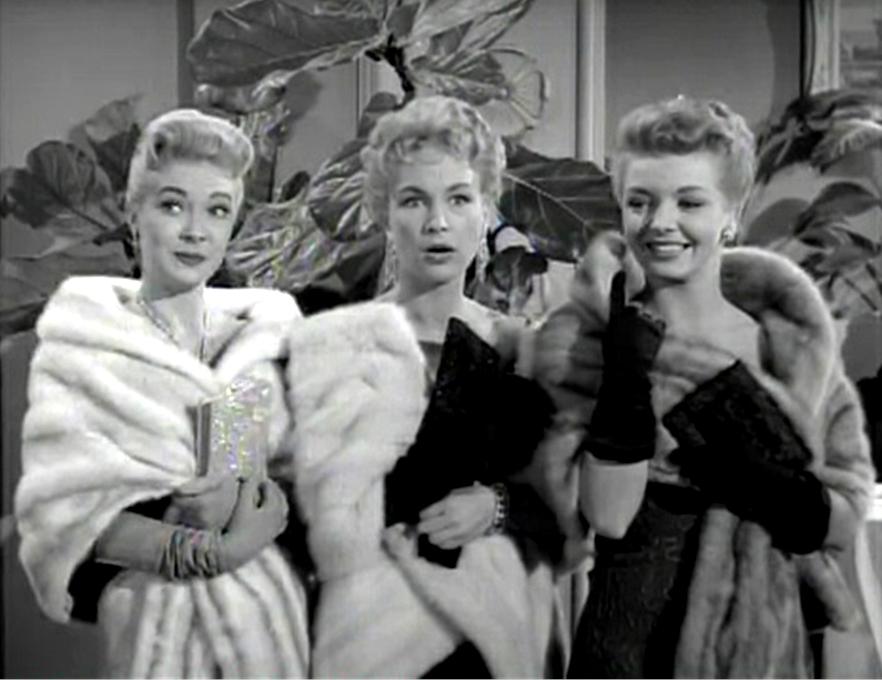
In 1953, Betty Grable, Marilyn Monroe, and Lauren Bacall starred in a comedy romance about three women who make a pact to help each other find millionaires to marry but end up finding love instead. Their love interests are played by Cameron Mitchell, David Wayne, and Rory Calhoun.

An interesting fact about this movie is that it was the first one filmed in Cinemascope. In order to highlight the incredible sound, the movie begins with an orchestra performance. It was a bit awkward because it has nothing whatsoever to do with the movie, but is an interesting intro. It was also the first movie to air on television when it appeared on NBC Saturday Night at the Movies in September of 1961.

Another fun fact about the movie is that Merry Anders who would appear in the television show had a bit part as a model in the film.

Photo: filmaffinity.com

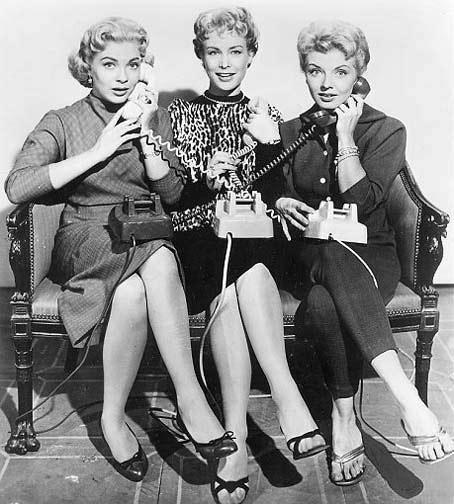
In 1958, the movie came to the small screen with Merry Anders (Mike) filling Lauren Bacall’s role, Barbara Eden (Loco) is the sexy bombshell Monroe played, and Lori Nelson (Greta) is the neutral one in between played by Grable. Greta is the co-host of a quiz show, Go for Broke. Mike, whose real name is Michelle, works as a secretary on Wall Street, and Loco is a fashion model. One of the weekly gags is that Loco has terrible eyesight, but thinks men don’t like girls in glasses, so she often has mishaps not seeing correctly.

In order to find a wealthy husband, they found a chic penthouse apartment while wearing designer clothing even if they could not afford to eat. I guess that’s why they went on a lot of dinner dates.

Photo: imdb.com

The girls are often short of money and have trouble paying the rent on time. Mr. Blandish (Dabbs Greer), their landlord, is always threatening to evict them. The elevator operator Jesse (Jimmy Cross) sometimes helps and sometimes hinders the trio with their get-rich-husbands schemes.

The pilot was filmed in 1957 with Lori Nelson as Greta but her roommates at the time were played by Charlotte Austin (Loco) and Doe Avedon (Mike, who had been married to photographer Richard Avedon). By the time the show was sold in 1958, the roles had been recast and after looking at more than seventy auditions, the producers picked Eden and Anders.

Photo: sitcomsonline.com

Anders discussed the camaraderie of the three stars. She said they were amazingly similar. She said they all wore size 8, all drove Thunderbirds, and all had French poodles and this was before they met. Anders had tested for the role of Mike and Loco because she had been playing a lot of ditzy blonde roles. When she was given the role of Mike, Eden was brought on board as Loco. Anders said the cast worked hard. After filming all week, they did late night interviews and early morning shows. One weekend they were sent to New York for a personal appearance. They got back late Sunday night and still had to be at work early Monday morning.

Photo: wundaba.ne

The second season found Nelson out with Lisa Gaye as Gwen in. Nelson claims she was the best actress and that she decided to move on, disliking her character’s development. Other sources say she was fired because she gave an interview criticizing her role. Nelson said her role wasn’t defined well with Anders getting the “Eve Arden wisecracks” and Eden being the sexy, bubbly personality. Greta supposedly married a gas station owner and then moved to California. Only thirteen episodes were aired for season two and then the show was cancelled.

Photo: imdb.com

Barbara Eden was interviewed for the Television Academy and discussed her time on the show. She said she was doing a play in LA when director Mark Robson saw her. He offered her a role in his new movie Peyton Place. However, the studio gave the part to another actress who was under contract at the time; but because of Robeson’s interest, they brought Eden in for a test at Fox. One of the television executives called her and said he had seen the test and read her notices for the LA play and was wondering if she was interested in doing a television series.  He asked her to go to the Fox Western studios for some still shots. When she got there, she thought the part was still in the process of being cast, but realized the stills were being taken because she had the part and the other girls were her costars.

Photo: amazon.com

Eden said she was a huge fan of Marilyn Monroe and had seen the original movie. She felt trying to take on the part by imitating Marilyn would have ended badly because she could never compete with Marilyn’s version, so she took the part and made it her own. Like Anders, she also said the three costars were close and became good friends.

Eden said the time on the show was her “finishing school.” She learned so much about filming before the cameras, lighting details, and building stamina. The stars sometimes filmed up to thirteen hours a day in three-inch heels which she said was painful. After long days, they would be given new dialogue to learn for the next day’s shooting. It was a very tough job but prepared her for film work.

Photo: etsy.com

If you like cultural history, the show is fun to watch just to see the wardrobes and settings. The clothing was provided by Mr. Mort. Mortimer Goldman owned his design business in 1952, producing mid-priced stylish dresses. During the run of the show, Stan Herman came on board as a designer. Throughout the sixties, Herman’s designs were the height of fashion. Stan Herman later opened his own design studio, producing items under his label as well as for other companies. In the 1990s he began appearing on QVC with his design line of comfortable clothing and sleep ware.

The show was pitched to the three major networks, but they all passed on the series. So, in 1958, NTA Film Network sold the show into syndication to 115 stations. It packaged a three-series deal including Man Without a Gun and This is Alice.

Photo: imdb.com

Both critics and fans liked the show, but it had some tough competition. The show aired Friday nights against The Adventures of Ellery Queen, The Wide World of Disney, and Rawhide. Eden said she never knew exactly why the show was cancelled. She assumes that because Fox was trying to be the fourth network and it didn’t work out at the time, all the Fox shows were just dropped.

So, what happened to the NTA network? The company that referred to itself as the fourth network launched in 1956 with 100 affiliate stations. Twentieth Century Fox bought half of the company with the intention of producing original programming. The shows were filmed and then mailed to each station. By 1961, the network was losing money and the flagship station was sold to the Educational Broadcasting Corporation which later became National Educational Television and eventually PBS. One of their largest stations, KTTV in Los Angeles became part of the Fox television network, co-owned by Twentieth Century Fox, part of 21st Century Fox.

Photo: boomtownamerica.com

I was able to watch a few of these shows online. I’m not sure how the fourth network’s ownership affected syndication. Youtube has four episodes available. For this blog, I watched the first episode again. The jokes were a bit overdone and the laugh track was annoying, but I’ve seen worse. There were some charming moments in the show, and Barbara Eden’s comic ability was obvious with some funny scenes about her failure to wear glasses. Take some time to check out one of these four episodes to see what tv looked like in the mid fifties.

Heigh-Ho Louis Nye!

Finishing off our “Men of November” series is Louis Nye.  If you watched television in the sixties, you will recognize Louis, but you might not know why.

Photo:

Born Louis Neistat in Connecticut in 1917, he was the son of parents who emigrated to the US from the Russian Empire and became naturalized citizens in 1911. Louis wanted to get involved in acting but his grades weren’t good enough for him to participate in the drama club.  He opted for work on WTIC Radio instead. He also joined the Hartford Players.

The work on local radio led to his decision to move to New York City to work on the radio, often on soap operas. Nye married songwriter Anita Leonard in 1940. Unlike many Hollywood couples, they remained married until Nye’s death.

**FILE** Steve Allen, third from left, and some of the original cast members of the popular 1950’s television show, “Steve Allen Show,” gathered in Beverly Hills, Calif. in this Oct. 4, 1990 file photo to honor Allen and to celebrate the re-broadcast of 100 episodes of his show on HA! TV Comedy Channel. They are, from left: Tom Poston, Don Knotts, Allen, Louis Nye, Pat Harrington Jr., and Bill Dana. Nye died Sunday at his home in Los Angeles after a long battle with lung cancer, his son, Peter Nye, told The Associated Press on Monday. He was 92. (AP Photo/Kevork Djansezian, FILE)

World War II interrupted his career. He was assigned to run the recreation hall in Missouri. He would entertain troops and was able to meet Carl Reiner, who had a similar sense of humor, and who was also part of Special Services performing in shows across the Pacific.

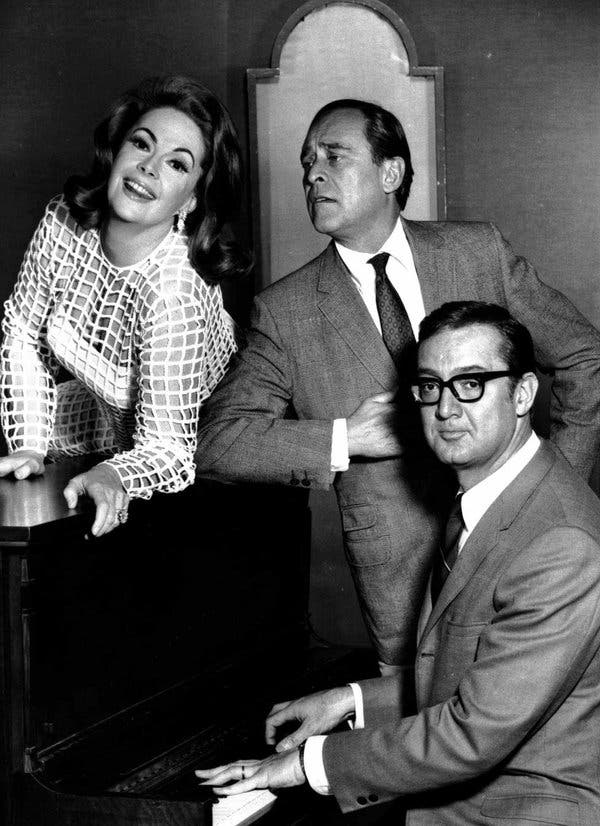
With Steve Allen and Jayne Meadows Photo: nytimes.com

After the war ended, he returned to New York, getting jobs on television and appearing on Broadway. His first tv role was on The Admiral Broadway Revue in 1949. He appeared on several shows during the fifties but was best known for his work on The Steve Allen Plymouth Show and the New Steve Allen Show. He became close to the entire cast which included Don Knotts, Tom Poston, Pat Harrington Jr., Dayton Allen, Gabriel Dell, and Bill Dana. Nye often portrayed wealthy citizens during the “Man on the Street” sketches. When he took on the role of Gordon Hathaway, the egotistical Country Club snob, saying “Hi-ho Steverino,” Allen often cracked up. When the show moved to Los Angeles, Nye went with it.

Photo: youtube.com

His first recurring role was that of dentist Delbert Gray on The Ann Sothern Show in 1960 and 1961. He was very busy during the sixties, appearing on a variety of shows including The Bob Hope Show, The Jack Benny Show, Mike Douglas, The Munsters, Jackie Gleason, and Phyllis Diller. From 1962-66, he would pop in on The Beverly Hillbillies as Sonny Drysdale, the spoiled stepson of banker Milburn Drysdale.

Photo: imdb.com

In the seventies, he could be seen on shows such as Laugh-In, Love American Style, Laverne and Shirley, Starsky and Hutch, and Fantasy Island. He was offered a permanent role on Needles and Pins in 1973. The show only lasted for 14 episodes. The series was about the garment industry. Women’s clothing manufacture Nathan Davidson (Norman Fell) works with a group of employees including characters played by Nye and Bernie Kopell.  It didn’t receive great reviews and many of the writers said it talked about the garment industry but showed very little and was set in one small spot, inhibiting what plots were even available.

During those decades Nye would also get offers on the big screen from time to time but most of the roles were smaller cameo parts. However, he appeared with a lot of celebrities in these epics including Bob Hope, Jack Lemmon, Lucille Ball, Dean Martin, Walter Matthau, and Jack Webb.

He also recorded several comedy albums using several of his characterizations. One of his most successful LPs was “Heigh-Ho Madison Avenue.” It parodied market research, advertising agencies and post-WWII society.  Some of the pieces on the album include “The Gray Flannel Blues,” “The Ten Commandments of Madison Avenue (Plus Big Bonus Commandments),” and “The Conspicuous Consumption Cantata.”

Asea on the Love Boat
Photo: drunk tv.com

He continued to keep busy in the eighties on a variety of shows including Here’s Boomer, Aloha Paradise, The Love Boat, The Cosby Show, and St. Elsewhere.

Curb Your Enthusiasm Photo: youtube.com

His last role was another recurring one where he played Jeff Garlin’s father on Curb Your Enthusiasm from 2000-2005. Nye passed away from lung cancer in 2005.

I’m not sure what to think about Nye’s career.  I think in the right role, he would have excelled in a television comedy or a big screen epic which he never had the opportunity to do. He was multi-talented and appeared on Broadway, in clubs, and on the radio, and he created comedy albums as well as appearing in movies and television. However, I often read quotes of his where he said he only wanted to be funny at parties and always considered himself a serious actor. He was so brilliant and funny with his 15 accents and wide range of characterizations that he seemed pigeon-holed as a comedy character actor early in his career. I wondered if he was sad that he never had the chance to appear in a classic drama, or if he accepted his successful career for what it was, just being thankful he was in the entertainment industry for his entire working life.

Photo: wikifandom.com

Since we cannot ask him directly, all we can do is tip our hats to him in appreciation for the decades of laughter and entertainment he provided for us. Thank you, Mr. Nye.

The Many Roles of Brian Keith

We are right in the middle of our “Men of November” blog series, and today we spend some time getting to know a prolific television and film star, Brian Keith.

Photo: wikipedia.com

Brian Keith (Robert Alba Keith) was born in 1921 in New Jersey. His parents were both actors. They divorced shortly after his birth and at age 2, he moved to Hollywood and made his acting debut in a silent film, Pied Piper Malone, at the age of three.

While his mother was relocating for stage and radio work, his grandmother raised him on Long Island, New York.

His father remarried in 1927, but his second wife, Peg Entwistle, was involved in a tragic incident which is one of the Hollywood legends. She committed suicide by jumping of the H of the iconic Hollywood sign.

See the source image
Photo: pinterest.com

After high school graduation, Keith joined the US Marine Corps from 1942-5. He served as a machine gunner and received an Air Medal.

In an interview with the Press and Sun-Bulletin in 1966, Keith related that he had no intention of becoming an actor. He had a passion for a career at sea and wanted to go to school at the Merchant Marine Academy. He said unfortunately, “You can’t be a ship’s officer without passing a few math courses and I came up with a big fat zero in algebra. In fact, no matter how many times I repeated the course, it still came up zero. So, it was goodbye Navy career.”

After the war, Brian decided to follow in his parents’ footsteps and made his Broadway debut in 1948 in Mister Roberts. His father played Doc in the same production.

While working on television, Keith also began appearing on the big screen. During his career, he would he would make 65 movies. In the fifties he was in Storm Center with Bette Davis and The Young Philadelphians with Paul Newman.

Crusader Photo: sitcomsonline.com

While continuing to appear on the stage, television was starting to pull him in that direction. He was given his first television role in 1951 in Hands of Mystery. He did a variety of television work in the 1950s, starting off in more dramas and ending the decade in westerns. Last week we learned a bit about Gale Gordon. If you remember, Gale starred in a short-lived series called The Box Brothers, and Brian happened to be in one of those episodes in 1957. From 1955-56, he received a regular role on Crusader, making 52 episodes. He starred as Matt Anders, a journalist who, in the aftermath of his mother’s death in a Nazi concentration camp during World War II, travels the world to battle injustice.

The Westerner Photo: nostalgiacentral.com

Moving into the sixties, Keith continued his western appearances and was given the lead in Sam Peckinpah’s television series, The Westerner. Unfortunately, it only lasted for 13 episodes. Keith said that “only four or five of those were any good, but those four or five were as good as anything anybody has ever done.” He played Dave Blassingame, a cowboy drifter who sometimes does questionable things trying to earn enough money to buy a ranch, but in the end, always does the right thing.

The Parent Trap Photo: pinterest.com

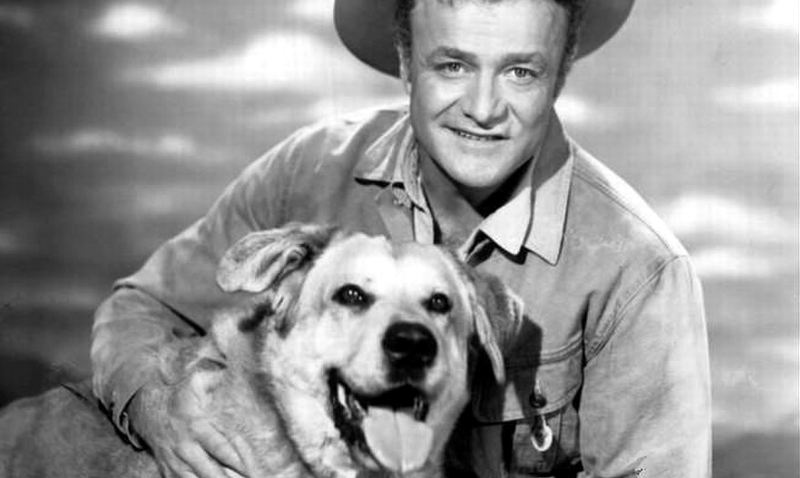
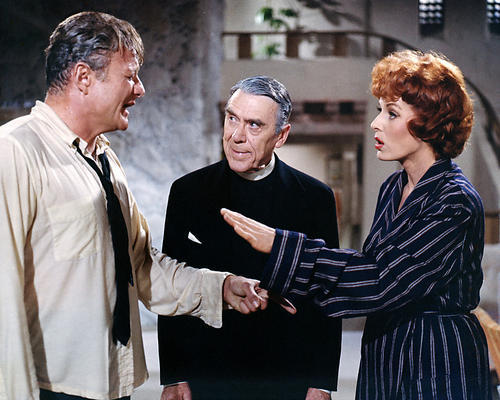
It was also in the sixties that he began his connection with Disney, starring in The Parent Trap in 1961.

During this decade, he was offered a show of his own that he is probably best known for—Family Affair. From 1966-1971, he appeared as Bill Davis, an engineer, who takes in his two nieces and nephew when their parents are killed. Kathy Garver, Anissa Jones, and Johnny Whitaker played the kids and Sebastian Cabot was Mr. French, who helped raise the children. Keith received three Emmy nominations for Best Actor in a Comedy Series, but lost to Don Adams for Get Smart from all three years, 1967-1969, (In 1968 Sebastian Cabot was also nominated for Best Actor and the show was nominated for Best Comedy in 1968 and 1969, losing to Get Smart.)

Photo: dailytimes.com

Brian received the same type of contract as Fred MacMurray did in My Three Sons. It allowed him to tape his work in two-three months, leaving three-quarters of the year for traveling, relaxation, and film work.

With Six You Get Eggroll Photo: pinterest.com

During the series’ run, he continued to make films including With Six You Get Eggroll with Doris Day.

The Brian Keith Show Photo: pinterest.com

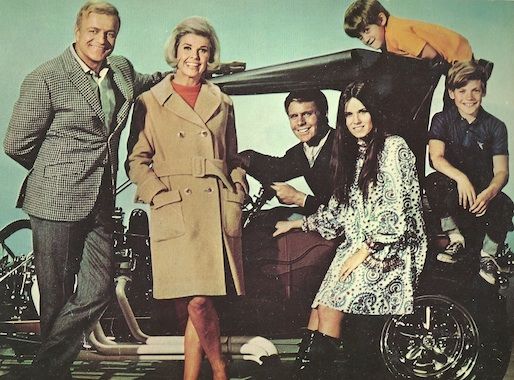
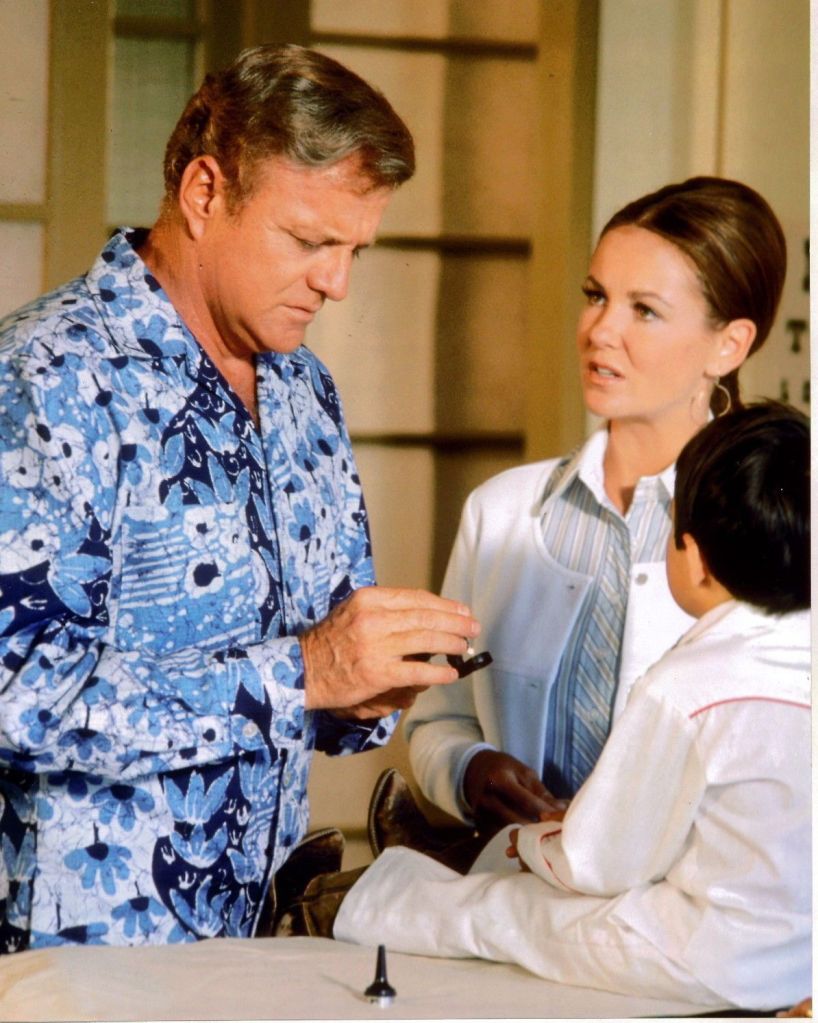
When Family Affair ended, it set off a rapid production of shows starring Keith, most of them with short runs. The Brian Keith Show was on air from 1972-74; Keith was pediatrician Dr. Sean Jamison and worked with his daughter played by Shelly Fabares. Keith said he accepted the role because the show was produced by Garry Marshall and it was shot in Hawaii.

Photo: amazon.com

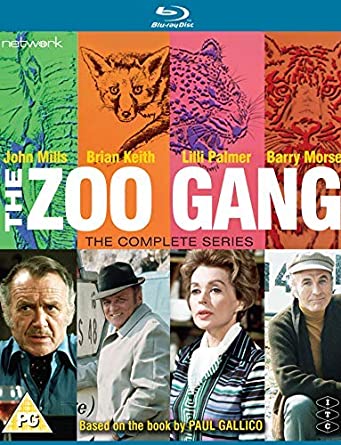
In 1974 he accepted the lead in a six-part miniseries, The Zoo Gang about a group of underground French resistance fighters. In 1975 we saw him in Archer, a television series about a detective which also ran only six episodes. Keith described Archer as “an underdog. He gets beaten. He’s no superhuman. He drives a broken-down Mustang. He’s not particularly fond of the finer things in life. Music is noise to him, painting is decoration, sculpture is ‘that stuff’ and he doesn’t read books.”

Hardcastle and McCormick
Photo: pinterest.com

In 1983, Keith co-starred with Daniel Hugh Kelly in Hardcastle and McCormick. Keith portrayed a retired judge Milton Hardcastle while Kelly was ex-con Mark McCormick. The duo team up because the ex-judge was tired of people getting off on technicalities. The show was on the air for three years.

Photo: sitcomsonline.com

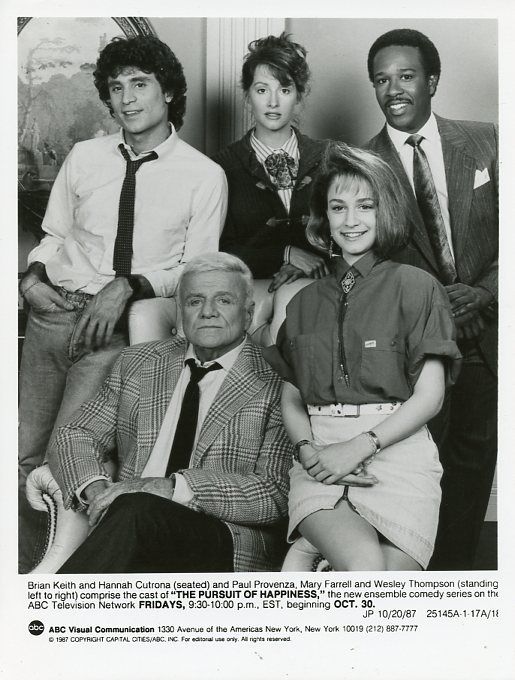
The following year, he began a stint on The Pursuit of Happiness which only lasted for ten episodes. In a different role for him, he played Professor Roland Duncan who taught at a small college in Philadelphia.

Photo: sitcomsonline.com

1989 found him on Heartland which was also cancelled after ten episodes. On this show, Keith played BL McCutcheon, an older farmer who loses his farm and moves in with this daughter and her family, a bit of a rural Archie Bunker.

During the 1990s, Keith showed up on a variety of shows including Young Riders, Evening Shade, Major Dad, Cybill, Pacific Blue, and Walker Texas Ranger. He tried his hand at one more sitcom, starring in Walter and Emily. After 13 episodes, the show was finished. Keith is Walter Collins. He and his wife Emily (Cloris Leachman) help raise their grandson while their son Matt travels for his sports writing career.

Keith lived on a 200-acre ranch in Redlands, California. Brian had a lot of hobbies including golfing, swimming, cooking, sailing, horseback riding, spending time with his family, painting, and reading. When asked about whether he wanted to live a long life, he said, “If I live to be a hundred—and I hope I do—I won’t have time to read all the books I want to read or talk to the people I want to know. Not party talk. That’s a waste of time. Real talk.”

While Keith had a successful career, his personal life was not as sunny. He was married three times to Frances Helm from 1948 to 1954, to Judy Landon, an actress who made an appearance on Family Affair from 1954 till 1969, and to Victoria Young, another actress who showed up on The Brian Keith Show as a nurse, from 1970 till his death.

See the source image
Photo: pinterest.com

He also suffered from several physical problems. He had been a long-time smoker, and suffered from both emphysema and lung cancer. He had been a spokesperson for Camel Cigarettes in the 1950s but quit smoking in the late 80s.

Brian’s son, Michael died from pneumonia when he was eight. In 1997, his daughter Daisy committed suicide when she was 27. Daisy had also entered the acting profession and worked with her dad on Heartland. Daisy’s death and financial problems pulled Keith into a depression and he committed suicide in June of 1997.

Early in his career, Keith established a stereotype as the handsome, burly guy with the gruff voice, but he transitioned into that character who also had moments of warmth and humor.

See the source image
Photo: amazon.com

I love his performance in The Parent Trap, and I like to picture Keith as being Mitch in real life, a guy who loves his kids and his ranch and takes pleasure in a variety of outdoor activities but also savors reading on the porch.

Keith remained close to Maureen O’Hara, his costar in the Parent Trap as well as with Kathy Garver and Johnny Whitaker. (Anissa Jones died from a fatal overdose in 1976 at age 18.)

See the source image
Photo: pinterest.com

With more than 166 acting credits, Keith had a full and successful career and brought a lot of enjoyment to generations of fans during his six decades as an actor. He had to endure a lot of heartache off the camera. Both Family Affair and Hardcastle and McCormick are worth watching if you have a free weekend. You can also see a lot of amazing performances of his on the large screen.

Here’s Lucy . . . and Gale Gordon

We are in the third blog of our series “The Men of November.” Born Charles Thomas Aldrich Jr. in 1906, Gale Gordon is remembered fondly for being Lucille Ball’s nemesis on several of her television sitcoms.

See the source image
Photo: oldtimeradio.com

Both his parents were entertainers, and they traveled to England to perform when he was only one. For eight years, he lived in England. After returning to the United States for a few years, Gordon returned to London to complete his education at the Woodbridge School in Suffolk.

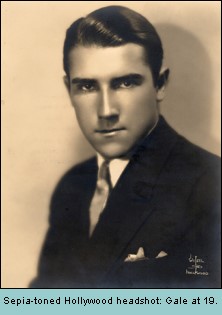
Gale at 19 Photo: lucyfan.com

Gale followed in his parents’ footsteps, and his first theatrical job was as an extra in “The Dancers” in 1923. Richard Bennett (father of Constance and Joan Bennett) starred in the stage production. Gordon worked as Bennett’s dresser, and Bennett taught him all about make-up, mentored him as an actor, and helped him to develop his voice.

By 1925, Gordon traveled to Hollywood, tackling roles in stage, film, and radio. Gordon talked about his first radio performance: “They asked me to come to a Hollywood studio in 1926 and try this new thing called ‘radio.’ They didn’t pay me, of course. They just wanted to fill up some time. So, I sang, ‘It Ain’t Gonna Rain No More, No More’ and accompanied myself on the ukulele. You might say I almost killed radio before it was born. I haven’t played an instrument on the air since.”

Photo: radiospirits.com

In seven short years, Gordon became the highest-paid actor in radio in Hollywood. He was the male lead for Mary Pickford in her serial. He was on almost every popular show on the air. It wasn’t unusual for him to appear on three or more programs in a week. Gordon was the first actor to play Flash Gordon in 1935.

His radio work also provided some other benefits. While appearing on an episode of Death Valley Days in New York, he met Virginia Curley. They married in 1937.

Gale and Virginia
Photo: lucyfan.com

In 1941, after playing primarily dramatic roles, Gordon became a regular on Fibber McGee and Molly. Playing Mayor LaTrivia, Gale was on the show for a dozen years. There was a brief interruption in 1942 when he left the show and enlisted in the US Coast Guard for three years. He rose to the rank of Petty Officer First Class, and his service took him around the world to many dangerous places.

One of the roles he is best known for was Principal Osgood Conklin on Our Miss Brooks. Gordon described Conklin in a TV Guide interview: “There was nothing subtle about Osgood. No nuances. Just a lot of very satisfying acid, bluster, and bellowing, with an occasional weak moment of cordiality thrown in for leavening.  It was practically impossible to overplay him. Even when he was being cordial, he was like an elephant trying to waltz.”

In 1950, he could be heard as John Granby on Granby’s Green Acres which later became the sitcom Green Acres.

With Bea Benederet
Photo: wikipedia.com

While trying to reign in the chaos at Madison High School as Osgood Conklin, Gale was also the refined banker, Rudolph Atterbury, on My Favorite Husband, Lucille Ball’s radio comedy. Atterbury’s wife was played by Bea Benederet.

As television gained popularity, it was inevitable that some of radio’s favorite shows would make the transition to the small screen. While it was entirely possible to play several different characters on the radio, television production didn’t offer the same flexibility. When My Favorite Husband was retooled for television as I Love Lucy, Ball planned on bringing Gordon and Benederet along with her. However, Gale was committed to Our Miss Brooks, and Bea was playing a major role on Burns and Allen on television.

Asked about those days, Gale described himself as “a quiet, reserved, pipe-smoking homebody.” He said he always had a good balance of professional and personal interests. In addition to acting, he wrote books (Nursery Rhymes for Hollywood Babies and Leaves from the Story Trees), painted, and maintained a ranch. He and Virginia bought a 150-acre property about three hours away from Hollywood. They grew carob trees. Gordon was not a rancher in name only; he raised the trees, built the house, installed the plumbing, completed carpentry and handiwork, put in a swimming pool, and built a two-story building that served as garage and studio.

Our Miss Brooks Photo: amazon.com

In 1952, Eve Arden decided to take Our Miss Brooks to television. While Gale continued his role as Conklin on the show, he also guest starred on a couple of I Love Lucy episodes. Our Miss Brooks had a successful run for four years.

When the show ended in 1956, CBS was quick to sign Gordon on for another show. They paired him with Bob Sweeney in The Box Brothers (sometimes called The Brothers). Unfortunately, the series only lasted for 26 weeks.

The Box Brothers Photo: imdb.com

In 1958, Gordon was a regular on Sally where he played department store owner Bascomb Bleacher. He also appeared with Walter Brennan on The Real McCoys.

In 1959, December Bride which aired from 1954-1959, went off the air, spinning off a new show Pete and Gladys starring Harry Morgan and Cara Williams. Morgan appeared as Pete Porter on December Bride. On the new show, Gale played Pete’s Uncle Paul.

Dennis the Menace Photo: pinterest.com

In 1962 he was cast as Mr. Wilson on Dennis the Menace. At the same time, Lucille Ball was creating a new show, The Lucy Show. She wanted Gordon to appear as Mr. Barnsdahl, a banker. When he was not available, Lucille turned to Charles Lane. She said she loved working with Lane, but always wanted to work with Gale again, so when Dennis the Menace was cancelled, she quickly signed Gordon; Lane moved over to Bea Benederet’s new sitcom, Petticoat Junction, as the despicable Homer Bedloe. And thus Theodore J. Mooney was born.

Photo: welovelucy.com

For the next eleven years, through several different series titles, Lucy and Gale worked together. They would both retire in 1974. When describing his time on Lucy’s shows, Gale related in a Good Morning America interview in 1982 that “I always had a wonderful feeling of anticipation going to work every week, which is very, very rare. I don’t care what business you are in. But to really look forward to getting into the nitty gritty and working hard for four days—which is all the time we had to do the show—is really unique. To look forward to it for eleven years, that’s doubly unique.” He went on to praise Lucy for her work ethic: “Her attitude has never changed. Every show she ever did was always the most important show of her life. And I think that is the secret of her success.”

See the source image
Photo: oldtimeradio.com

One surprising thing I learned was that Gordon was known for his ability to do cartwheels. He can be seen doing them on several episodes of Here’s Lucy. At the time, he was earning $25,000 an episode. Compare that to today when the stars of The Big Bang Theory received a million dollars an episode.

Gale and Virginia enjoyed twenty years of retirement. Virginia would pass away in 1995 at Red Terrace Health Center in Escondido, California. One month later, Gordon died from lung cancer at the same facility.

In 1999, Gale was inducted into the Radio Hall of Fame. Known for playing a variety of gruff, formal professionals, everyone knew that the bellow and bluster his characters spewed was great acting. In real life, Gale was one of the sweetest, kindest men around. He once said, “I am never nasty—unless I get paid for it.”

See the source image
Photo: wikipedia.com

It’s hard to describe the influence Gale Gordon has had on generations of actors and the number of hours of entertainment he has provided to generations of television and radio fans. It’s always fun to listen or watch Connie Brooks trying to pull a fast one over on Osgood Conklin or Lucy Carmichael trying Mr. Mooney’s patience with her latest scatter-brained plan. Thank you Gale Gordon!

Dave Madden: A Magical Career

We are right in the middle of “The Men of November” series where we learn about some of our favorite actors from the classic age of television. Today we focus on a comedian who is best known for his role of a family band manager—Dave Madden.

Photo: discogs.com

Madden was an American born in Ontario, Canada in 1931. He spent his early childhood in Port Huron, Michigan and then was sent to live with his aunt and uncle in Terre Haute. His father had died and his mother had a job where she had to travel. When he was 13, he had a very bad bike accident which left him immobilized. He had a head-on collision with a car going about 45 mph. He broke his leg and fractured his skull. They pumped him with penicillin which saved his life. He was in the hospital for about three months because they had to keep breaking his leg. During the months he spent recuperating, he learned about magic from a book his aunt brought him called 101 Tricks You Can Do, and he later developed a comedy act that featured magic.

Appropriately enough, he served as the joke editor for his high school paper, writing his own material. He attended Indiana State Teachers College for a semester and then dropped out to enlist in the Air Force. He was assigned to Special Forces and sent to Libya where he entertained the troops. He even performed a magic show for the King of Libya.

When his time in the Air Force was over, he attended the University of Miami, majoring in communications and graduating in 1959.

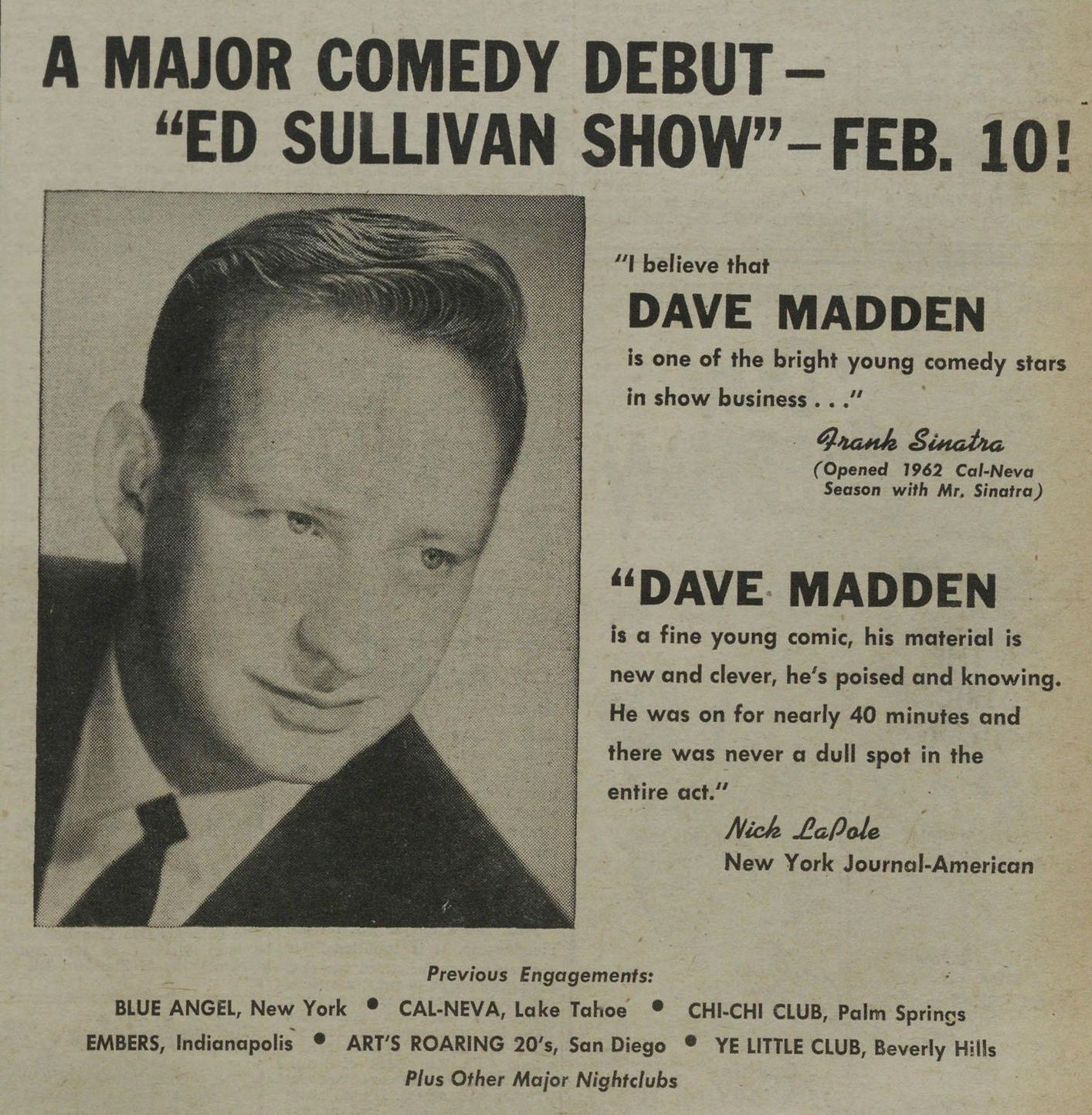
Madden took his comedy act on the road. His manager booked him in Palm Springs during the Palm Springs Golf Classic, and the Rat Pack came in one night. After the show, Frank Sinatra went backstage and asked if Madden would be his opening act in Lake Tahoe in July.

Tralfaz: The Unhappy Man With the Confetti
Photo: trafaz.com

He and Sinatra hung out and one night in his bungalow he said Madden should be on The Ed Sullivan Show and picked up the phone and called Ed in New York. That call resulted in Sullivan booking him for three episodes.

His manager had a club in Beverly Hills, The Ye Little Club, and he called Madden who was in town because his regular singer was sick. Madden helped him out, and a Screen Gems writer, Jerry Davis, was in the audience with Nat King Cole’s manager. Nat was Madden’s favorite singer and his manager asked if he would do an eight-week tour with him. Unfortunately, Cole died soon after and Madden never even got to meet him.

Photo: ebay.com

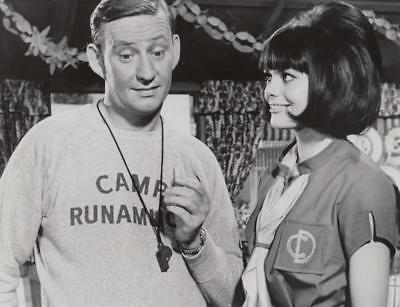
Jerry Davis called Madden and asked him if he was interested in filming a pilot which led to an offer for a regular role on Camp Runamuck which debuted in 1965. The show lasted a season with 26 episodes. Madden had never acted before, and he said it was a great experience. The show was primarily about the camp counselors. Madden met Dave Ketchum on the show and they became friends. Later, the role of Reuben Kincaid was narrowed down to Dave Ketchum and Madden.

Photo: dailymail.com

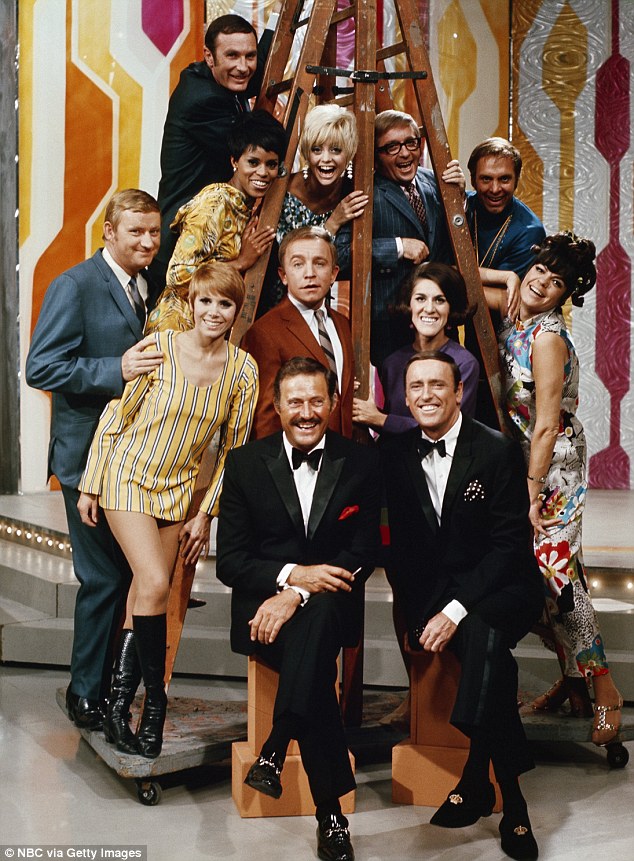
A year later, Madden was offered a spot on Laugh-In. Rowan and Martin had seen his act in Reno and invited him on the show. Madden said that filming the show was not much fun. He said apart from the opening and closing jokes and cocktail party, most of the segments were individual ones. He described a day where he might go in at 10 am, and there would be 2 cameramen, a director and a light man. He would film a dozen skits which would be shown over the course of the season. None of the rest of the cast would be there.  So, it was long and boring work.

Photo: washingtonpost.com

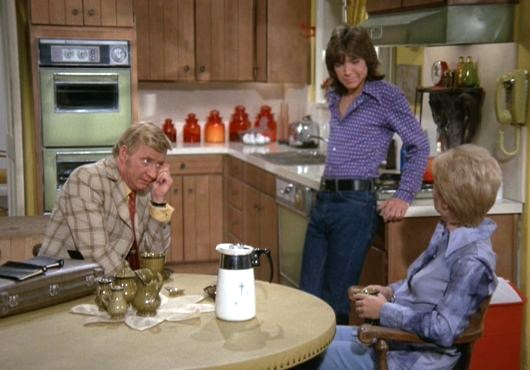
After two years with the wacky cast, he accepted the role that would make him a household name. As Reuben Kincaid, he managed the Partridge family on a new series based on the life of The Cowsills. The show aired Friday nights following The Brady Bunch and was on the air from 1970 till 1974.

Some of the scenes I loved the most on the show was when Reuben would lay on the couch to watch tv with the family or hold Shirley’s yarn while she knitted—just everyday family activities. Unfortunately, he and Shirley were not as close as they could have been because Madden and Shirley’s husband Marty Ingels did not hit it off.

Photo: jafosnews.com

Filming The Partridge Family was not always fun either. He said it could be very boring.  The cast might have three to four pages of scripts that take place in the dining room.  The whole family would sit around the table and they would have to change the lighting every time someone else spoke. He said you could arrive at 7 am and leave at 3 pm and never leave the dining room.

Photo:

While one of the running gags on the show was that Reuben and Danny had a battle of wits ongoing, in their personal lives, Reuben took Bonaduce into his home when his house was not a safe place. He said Danny’s mother was worried about Danny being home on the weekends when his father was home, so she asked Madden if Danny could stay with him at his bachelor pad on weekends. Madden said he didn’t drink and had small groups of people over, so it was not a problem to have Danny staying there.

Photo: starcasm.com

Madden said that he learned that The Partridge Family was cancelled because someone in his apartment building read it in the newspaper—a crummy way to learn you no longer had a job.

During this time period, Madden was on two episodes of Love American Style which was also part of the Friday night schedule and two episodes of Bewitched. When Madden recalled his time on Bewitched, he said he was with the same secondary actor for both episodes, Herb Ellis. He said that Elizabeth Montgomery was very gracious.

After the end of The Partridge Family, Madden appeared on an episode of Happy Days. In 1976, he would have a part in Eat My Dust!, a movie developed by Ron Howard who played Richie Cunningham on Happy Days. It was one of only two big screen features Madden was in. The other movie Madden had a role in was the family favorite, Charlotte’s Web in 1973. Madden was the voice of the ram.

In the late seventies, Madden could be seen on a variety of shows including Starsky and Hutch, Barney Miller, The Love Boat, and Fantasy Island.

In 1975, Madden took a break from his acting schedule to marry Nena Arnold. They had two children and divorced ten years later.

Playing Carrie Sharples on CBS-TV's... - Martha Raye Scrapbook ...
Photo: facebook.com

In the late seventies, he would be offered another recurring role. He began eating at Mel’s Diner on Alice from 1978-1985, as Earl Hicks. He was also Alice’s son’s basketball coach. The Hicks character was meant to be a guest shot, but the producers liked his interaction so much that he ended up doing 35 episodes. He really enjoyed working on the show because it was done before a live audience. He said it was like doing a one-act play every week. The cast rehearsed for a few days and then shot the show at one time.

In the late eighties, Madden also joined the cast of Focus on the Family’s Adventures in Odyssey. In 1990 he created his own character, curmudgeonly window washer Bernard Walton, which he would voice until 2008.

From 1970 or so on, Madden did a lot of voice-over work. When he had more time for it, it was very profitable. He said he made more money between 1985-1990 doing that then all four television series combined; he was making more than $250,000 a year just in voice work.

He stayed busy throughout the 1990s, showing up on The New Leave it to Beaver, Life with Lucy, Ben Stiller, Married . . . with Children, and Boy Meets World. His last credited role was on Sabrina the Teen-age Witch in 1998, where he appeared with other Laugh-In cast members.

He had another memorable event in 1998 when he married his former college girlfriend Sandy Martin.

🎼THE PARTRIDGE FAMILY - gallery - Season Two - 5/22/72, Susan Dey ...
Photo: pinterest.com

If you watched The Partridge Family, you might remember the episode where Danny and Reuben have a bet to see if Danny can lose weight and if Reuben can quit smoking. Madden was a long-time smoker in real life and that episode inspired him to quit, although he had been thinking about quitting for a while.

Madden had always been interested in cameras, buying his first one in the service.  He began to experiment with photography on the set of The Partridge Family. He said it was illegal to bring a camera to the set, so he began taking photos of the crew when they were filming away from the regular set. He then made gifts for the crew and then began filming the director. By that time, people were so used to him having a camera around, no one called him out on photographing the cast. He would bring his camera to work with him, taking photos of the cast and crew. It turned into a life-long hobby.

The Partridge Family 4x05 Reuben Kincaid Lives - ShareTV
Margaret Hamilton
Photo: sharetv.com

One of the benefits of working in the industry was meeting so many beloved actors like Lucille Ball. On The Partridge Family, Madden enjoyed working with Ray Bolger who played Shirley’s dad and Margaret Hamilton who played Reuben’s mother. He said he would chat with Ray between takes and hear stories from Hamilton about The Wizard of Oz. He said Hamilton was a real pro and they were both very nice people.

Tumblr
With Gale Gordon on Life with Lucy
Photo: tumblr.com

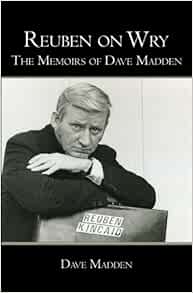
During retirement in 2007, he wrote his memoirs, Reuben on Wry: The Memoirs of Dave Madden.

Reuben on Wry: The Memoirs of Dave Madden: Madden, Dave ...

In January of 2014, he passed away in hospice care, suffering from complications of myelodysplastic syndrome, a disorder that results from poorly formed or dysfunctional blood cells.

For someone who began his first magic performance because of a serious injury and was hired for a sitcom without ever having acted, Dave Madden had a very fun and successful career. I must admit, I have many great memories of him as Reuben Kincaid. He seemed to be a very nice and easy-going individual who worked hard and enjoyed his life. You can’t ask for more than that. Thanks for the memories Dave Madden.

Bert Convy: A Multi-Talented Star

I’m calling this series “The Men of November.”  We are taking a look at five actors who contributed to television during the classic decades of the 1940s-1980s. I’ve decided to take them in alphabetical order so we are starting with Bert Convy.

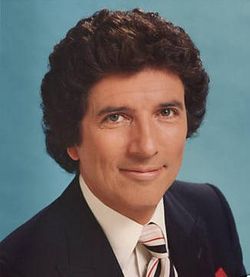
Photo: findagrave.com

Born in St. Louis in 1933, Convy’s family moved to Los Angeles when he was seven.  His focus was athletics, not acting, in school. When he was 17, the Philadelphia Phillies gave him a contract to play in their minor league system which he did from 1951-1952. In 1951 he played for the Klamath Falls Gems (Oregon), and in 1952 he split his time with the Salina Blue Jays (Kansas) and the Miami Eagles (Oklahoma).

Once he realized baseball was not going to be his career, he joined The Cheers, who released a top ten hit called “Black Denim Trousers and Motorcycle Boots” in 1955. Convy opted to enroll at the UCLA School of Theater, Film and Television, earning a BA.

Photo: amazon.com

Like Ken Berry, he was a performer in the Billy Barnes Revues which was popular in the fifties and sixties. In 1956, he was an usher on Art Linkletter’s popular show House Party. He appeared in several early television series throughout the late fifties, including Those Whiting Girls.

In 1959 he married Anne Anderson. They had three children and were divorced in 1991.

Perry Mason
Photo: imdb.com

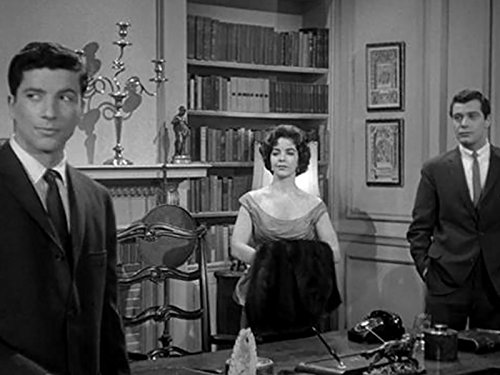
He showed up on the small screen a lot during the sixties, primarily in detective shows including Perry Mason in 1960. His first feature role was in the big screen drama Susan Slade starring Troy Donahue and Connie Stevens in 1961. He also spent a part of this decade on Broadway in ten different productions.

Photo: imdb.com

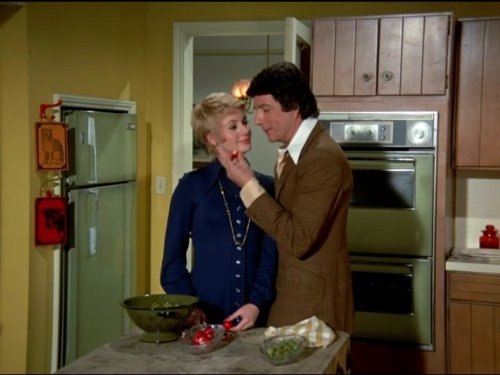
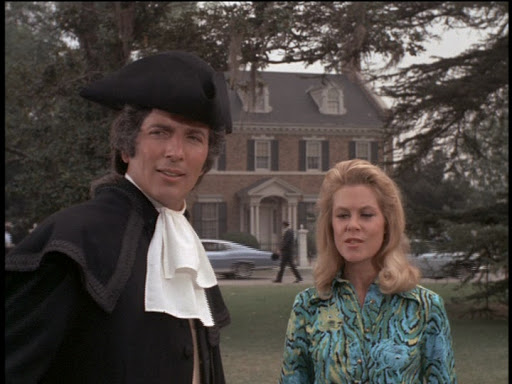
The decade of the seventies found him balancing roles in both detective (Mission Impossible, McMillan and Wife, Police Story and Charlie’s Angels among many others) and comedy shows (including Bewitched, Love American Style, and Karen). He appeared on The Partridge Family as a politician who dates Shirley. You get the distinct impression that they ended up together once the kids were out on their own. He also portrayed one of Mary’s boyfriends on The Mary Tyler Moore Show.

As Paul Revere on Bewitched
Photo: fanpop.com

He received his first recurring role in 1974, playing Lt. Steve Ostrowski on The Snoop Sisters. The show starred Helen Hayes and Mildred Natwick as two sisters, one widowed and one never married, who are mystery writers that also get involved in real murders.

Silver Scenes - A Blog for Classic Film Lovers: The Snoop Sisters ...
Photo: silverscenes.com

Two years later he starred in a short-lived variety show with the convoluted title of The Late Summer Early Fall Bert Convy Show. The title alone probably doubled the advertising budget. When I say short-lived, I mean I could only find one episode of the show which featured Don Knots.

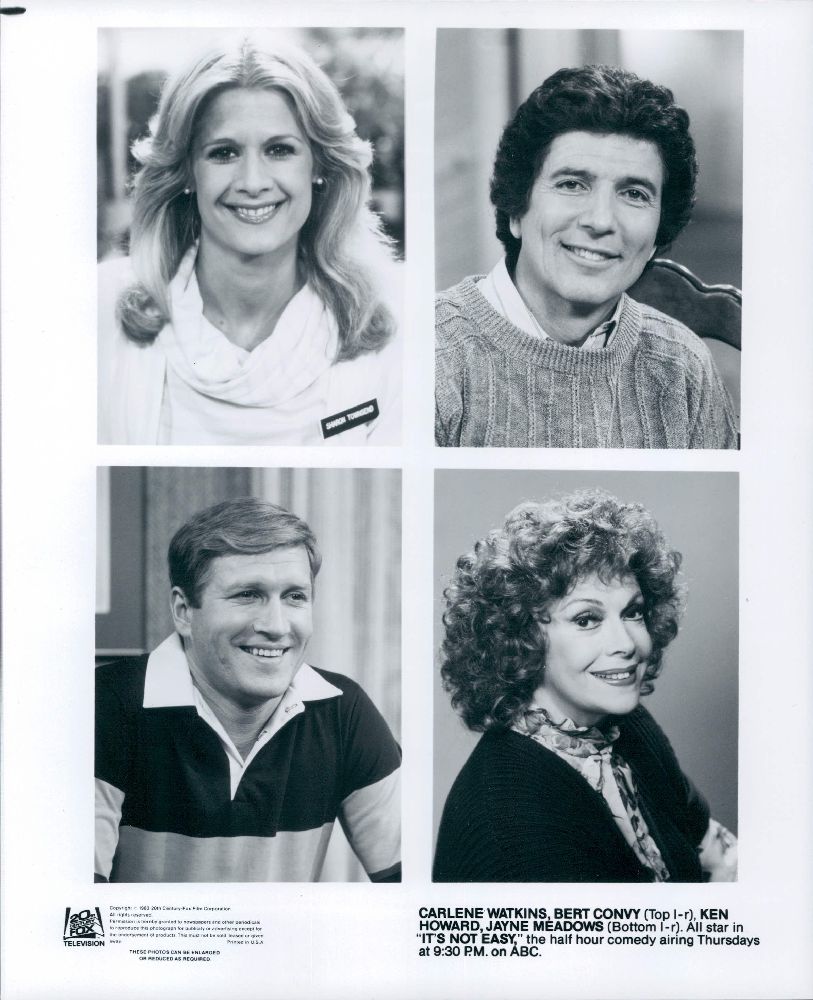
He was offered another permanent role in 1983 on It’s Not Easy. Originally Larry Breeding was given the role and made the pilot, but he passed away after a car accident. This show only lasted for 11 episodes. The plot is that Jack and Sharon have divorced. Sharon has remarried and she and her husband Neal (Convy) have decided to live across the street from Jack so it’s easier for the kids. Jack and Neal do not like each other.

Photo: sitcomsonline.com

He appeared in a few series during the eighties including Aloha Paradise, Fantasy Island, Murder She Wrote, Hotel, The Love Boat and The People Next Door.  

Cannonball Run Poster
Photo: moviemarket.com

While he would make ten big screen and fifteen made-for-television movies, two of them involved his buddy Burt Reynolds. Convy appeared in Semi-Tough in 1977 and Cannonball Run in 1981. The two friends developed a production company, Burt and Bert Productions.

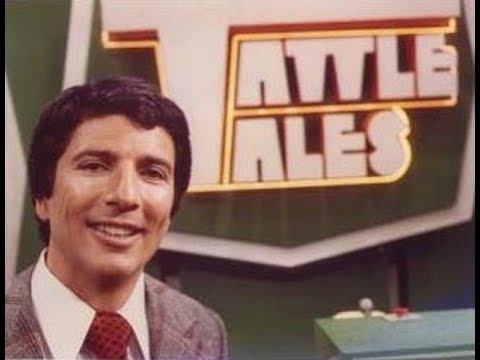
Convy was probably best known for his game show work. He was a panelist during the sixties and seventies on a variety of shows including What’s My Line, To Tell the Truth, Match Game, and Password. He hosted Tattletales, Super Password and Win, Lose or Draw. His emceeing of Tattletales resulted in an Emmy for Best Game Show Host in 1977.

Photo: youtube.com

In April of 1990, Convy collapsed and was diagnosed with cancer. The brain tumor was inoperable, forcing his retirement. His last credit was as himself on It’s Garry Shandling’s Show in 1990. He married his second wife Catherine Hills during the winter of 1991, and he passed away in July of 1991.

Sadly, Convy was never offered that perfect role that made him an icon, but he certainly had a full career. He had a lot of talents: acting, singing, and the personality to host game shows. I think it was his smile that always made him a favorite with me.